Home Blog Page 607

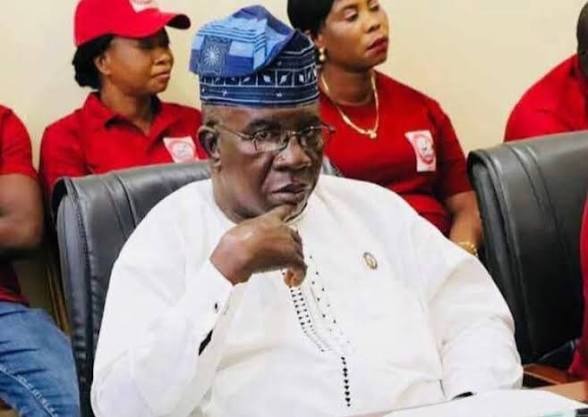
Lagos APC’s newly elected asst. publicity secretary dies

0

The All Progressives Congress (APC) in Lagos State has expressed shock and deep sorrow over the sudden death of its newly elected Assistant Publicity Secretary, Mr Karamo Yesiro.

The News Agency of Nigeria (NAN) reports that Yesiro’s passing came barely 24 hours after his re-election as the party assistant publicity secretary at the Lagos State APC Congress held at Onikan Stadium.

The deceased was expected to be part of the newly elected Lagos State APC executives meant to be inaugurated at the party secretariat on Thursday.


In a statement issued on Wednesday in Lagos by the party’s spokesman, Mr Seye Oladejo, the party described Yesiro’s passing as a painful and tragic loss.

Oladejo said that the late party chieftain died shortly after being entrusted with the responsibility of serving in the State Executive Council.

Ads by
“The Lagos State Chapter of the APC received with profound shock and deep sorrow the news of the sudden demise of our newly elected Assistant Publicity Secretary, Hon. Karamo Yesiro.

“Yesiro’s death came at a time when his energy, commitment and passion for progressive politics were most needed.

“Having just been entrusted with the responsibility of serving in the State Executive Council, he embodied dedication, loyalty and an unwavering belief in the ideals of our party,” Oladejo said.

The spokesman noted that although his tenure was tragically cut short, the late Yesiro left a lasting impression on colleagues and members of the party.

“His enthusiasm, humility and readiness to serve left a lasting impression on colleagues and members alike.

“He was a vibrant party man whose contributions to the growth and stability of the APC in Lagos State will not be forgotten,” he added.

Oladejo said the party leadership and entire membership extended heartfelt condolences to the deceased’s immediate family, political associates, friends and supporters.

“On behalf of the leadership and entire membership of the Lagos APC, we extend our heartfelt condolences to his immediate family, political associates, friends and supporters during this difficult time.

“We pray that Almighty God grants his family the strength to bear this irreparable loss and grants his soul eternal rest,” he said.

He added that the party stood united in mourning the painful departure of the late Assistant Publicity Secretary.

“Karamo Yesiro will be remembered for his service, commitment and belief in the progressive cause. May his soul rest in perfect peace,” Oladejo said.

(NAN)

Premier League title race not over vows Guardiola after Man City held by Forest

0

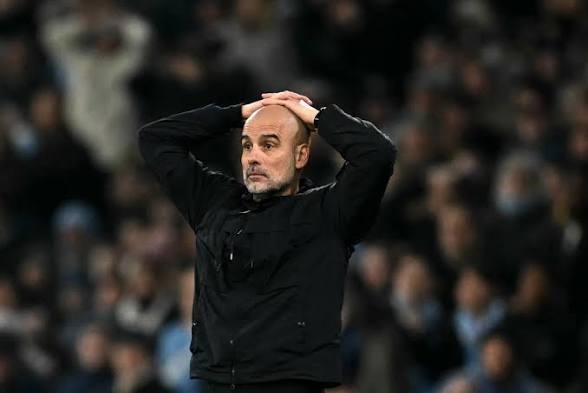
Manchester City’s Spanish manager Pep Guardiola reacts during the English Premier League football match between Manchester City and Nottingham Forest at the Etihad Stadium in Manchester, north west England, on

Pep Guardiola insisted the Premier League title race is not over after Manchester City’s shock 2-2 draw against lowly Nottingham Forest handed the initiative to leaders Arsenal.

Pep Guardiola’s side twice squandered the lead at the Etihad Stadium as goals from Antoine Semenyo and Rodri were cancelled out by Morgan Gibbs-White and then Elliot Anderson.

Savinho had a shot cleared off the line by Murillo with the last kick of the game to compound City’s frustration.

Their failure to kill off Forest was bad enough but the news from the south coast was even worse as a 1-0 win for leaders Arsenal at Brighton left the title race out of City’s control.

Arsenal are now seven points clear of City and have the destiny of the title in their hands as they chase their first English crown since 2004.

City have a game in hand on the Gunners, who visit the Etihad in April but Guardiola will rue another game in which his side lost control in the second half.

Not for the first time this season, City slipped up in the second half, taking the total number of points dropped from winning positions this season to 13.

But Guardiola is adamant City can still overhaul Arsenal in their last nine games.

“Still many games to play, them (Arsenal) one less,” Guardiola said.

“There are games where we don’t deserve it. Today we played in general good for 90 minutes.

“It’s not about this action or that action. In general, when we analyse the game, the game was well played.”

Guardiola would not be drawn on a penalty claim for City late in the game when Haaland went down after knocking the ball past Forest goalkeeper Mats Sels, with the decision cleared by VAR.

“Always I believe we have to do it much better to make sure the officials don’t intervene,” Guardiola said.

“It’s our responsibility to be better. If we have to rely on them it’s impossible. Nothing more to say.

“In the end we created a lot against a team that is really defensive.

“We were dynamic. We missed maybe more contact with Erling (Haaland), his incredible movements, we have to look for him a bit more, but in general it was well played.”

The momentum in the title race is now firmly with Arsenal, but Guardiola’s attention is switching to this weekend’s FA Cup fifth round clash with Newcastle before a Champions League last 16 first leg against Real Madrid.

“The feeling is we have one game less to play,” Guardiola said when asked about the title race.

“Now it is Newcastle, always the thought is about what’s next.

Vanguard

2027 Polls: Mass Resignations Expected Nationwide By March 23

0


By Taiwo Ogunmola-Omilani, Snr Correspondent

Political appointees nursing Governorship and legislative ambitions both at the states and National levels are expected to resign their appointments latest by March 23, 2026.

The developmnet would see a mass resignation of those holding political offices across the three tiers of Government except those who hold elective positions at the States and Federal level.

According to the new Electoral Act 2026 and the revised timetable released by the Independent National Electoral Commission (INEC), the conduct of party primaries, including the resolution of disputes arising from them, will commence on April 23 and end on May 30, 2026.

As a result of the development, those who are nursing Political ambitions are expevcted to vacate office at lease 30 days to the commencement of Party Primaries for the respective positions they wish to vie for.

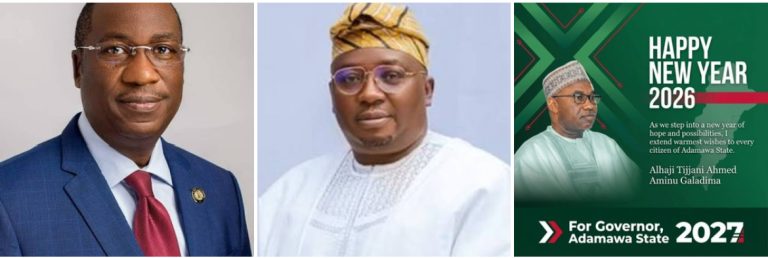
Some of the notable Political office holders expected to tender their letters of resignation anytime soon include the Minister of Power, Mr. Adebayo Adelabu, who has signified his interest to contest the Oyo State governorship election in 2027.

During an engagement with stakeholders in the Nigerian Electricity Supply Industry in Lagos towards the end of last year, Adelabu had hinted that he would love to achieve some feats “before I leave office”.

In a trending video in October 2025, Adelabu formally declared his intention to run for governor in Oyo, recalling how he lost to the incumbent Governor Seyi Makinde in 2019 and 2023.

“I have now paid my dues. I contested against Seyi (Makinde) in 2019. In 2023, I also contested against Seyi, then as the sitting governor. But in 2027, God has shown that it’s our turn. It’s Adelabu’s turn. Anything that belongs to Adelabu belongs to us all,” he said last year.

Also expected to tender his resignation letter is the Executive Secretary of the Petroleum Technology Development Fund (PTDF) , Mallam Ahmed Galadima Aminu who has expressed an ambition to contest the Adamawa Gubernatorial election next year.
The incumbent Governor, Alhaji Umaru Fintiri concludes his Eight-Year Two terms by May 29, 2027.
The resignation earthquake is expected to reverbrate across the states and the Federal level espectially for Political appointees.

In Lagos state, it is being speculated that the Education Minister, Mr Tunji Alausa is planning to join the race for a successor to Governor Babajide Sanwo Olu, who will complete his statutory two terms by May 29, next year.

Former Governor Akinwunmi Ambode is also on the cards for the Lagos State No one Slot, but he has no position to resign from.

However, it is also being speculated that the Deputy Governor, Dr. Kadir Obafemi Hamzat is being considered by the Governance Advisory Council (GAC) members as a successor to Governor Sanwo Olu. The GAC is the topmost political decsion making body of the All Progressives Congress (APC) in Lagos.

The GAC was instrumental to the exit of Ambode as a one term Governor of Lagos in 2019, even when people thought the second term was in the bag for him. The ratified the incumbet, Sanwo Olu, who them almost unknown in Lagos Politics as a successor to Ambode and he defeated the incumbent at the Party primary in 2018.

If Hamzat agrees to put his hat in the ring, observers are of the view that he would be the aspirant to beat for the APC candidacy in Lagos for 2027. In his case, he needs not resign his position to contest as an elected Political office holder.

Power firms install 677,942 meters in one year

0


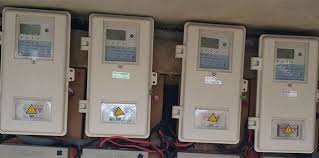
Nigeria’s electricity distribution companies ended 2025 with a modest improvement in customer metering, closing December with 6,966,584 metered customers and a national metering rate of 57.27 per cent, fresh data released by the Nigerian Electricity Regulatory Commission have shown.

The latest figures seen on Wednesday indicate that 109,556 customers were newly metered in December alone, up from 88,592 recorded in November, signalling a late-year acceleration in meter deployment across the 11 distribution companies.

As of December 2025, the total number of active electricity customers, defined as those billed or who vended electricity at least once within a 12-month period, stood at 12,163,412. Of this figure, 6,966,584 have been metered, leaving about 5.19 million customers still on estimated billing.

The data disclosed that the number of metered customers in Nigeria’s power sector moved closer to the seven-million mark for the first time, rising to 6,966,584 as of December 2025.

This represents an increase of 677,942 meters within the 12 months of 2025, compared to 6,288,642 metered customers recorded in December 2024. In percentage terms, this translates to a 10.78 per cent year-on-year growth in metered customers.

The national metering rate also improved significantly from 46.57 per cent in December 2024 to 57.27 per cent in December 2025, an increase of 10.7 percentage points.

Data show that meter installations equally rose from 572,055 end-use customer meters deployed in 2024 to 677,942 in 2025, indicating an additional 105,887 meters installed year-on-year, an 18.51 per cent increase in annual installations.

However, the gains were recorded against a shrinking customer base. The number of active customers in the Nigerian Electricity Supply Industry dropped from 13,503,342 as of December 31, 2024, to 12,163,412 in December 2025, a decline of 1,339,930 customers, representing a 9.92 per cent reduction.

Despite the improvement in coverage, more than four out of every 10 electricity customers remain unmetered, underscoring the scale of Nigeria’s longstanding metering deficit.

The 57.27 per cent metering rate recorded in December 2025 reflects gradual progress driven by regulatory pressure and ongoing initiatives, but significant gaps persist in achieving universal metering across the country.

A month-on-month analysis of the sector’s performance shows steady growth in metering between November and December 2025. As of November 2025, the total number of metered customers stood at 6,857,028, representing a national metering rate of 56.54 per cent out of 12,128,611 active customers. Within that month alone, distribution companies installed 88,592 new meters.

By December 2025, the number of metered customers had increased to 6,966,584, pushing the national metering rate to 57.27 per cent. The total active customer base also rose slightly to 12,163,412. Notably, meter installations accelerated during the month, with 109,556 customers newly metered, 20,964 more than the figure recorded in November.

The data indicate that metering growth outpaced the increase in active customers, resulting in a 0.73 percentage-point improvement in the national metering rate within one month. The December performance suggests a stronger push by distribution companies to close the metering gap before year-end, although millions of customers remain on estimated billing.

The data further reveal that while the number of active customers rose by 34,801 within one month, metering growth outpaced customer expansion, resulting in a 0.73 percentage-point improvement in the national metering rate.

In the period under review, Ikeja, Eko, and Abuja DisCos emerged as leading distribution companies in meter installations.

A breakdown of the December 2025 metering performance across the 11 electricity distribution companies showed wide disparities in coverage, with only a few operators crossing the 70 per cent threshold.

In Abuja DisCo’s franchise area, active customers stood at 1,341,807, out of which 1,044,014 have been metered, translating to a 77.81 per cent metering rate. The company added 19,953 new meters during the month, reinforcing its position among the top performers.

Similarly, Eko DisCo maintained one of the highest coverage levels nationwide, recording 550,764 metered customers out of 641,411 active users, representing an 85.87 per cent metering rate. Ikeja DisCo posted the strongest performance overall, with 1,130,213 of its 1,308,042 active customers metered, resulting in an 86.40 per cent coverage. Ikeja installed 7,748 new meters in December.
In the mid-tier category, Port Harcourt DisCo recorded 678,446 metered customers out of 1,057,858 active users, representing a 64.13 per cent metering rate, with 17,471 new meters installed. Benin DisCo achieved a 53.45 per cent metering rate after metering 564,500 of its 1,056,069 customers, deploying 17,928 meters within the month.

Ibadan and Enugu DisCos posted similar coverage levels slightly above 51 per cent. Ibadan metered 1,267,503 of its 2,444,715 active customers, with 11,298 new installations, while Enugu recorded 847,109 metered customers out of 1,641,569 active users, but added only 1,538 new meters in December.

However, several DisCos continued to trail significantly behind the national average. Jos DisCo recorded 257,258 metered customers out of 818,628 active users, representing a 31.43 per cent metering rate, despite installing 13,626 meters during the month. Kaduna DisCo posted a 34.42 per cent coverage with 187,050 metered customers from a base of 543,497, while Kano DisCo recorded 35.35 per cent, having metered 282,319 of its 798,718 customers.

Yola DisCo remained among the lowest performers, with 157,408 metered customers out of 511,098 active users, translating to a 30.80 per cent metering rate, even as it deployed 4,763 meters in December.

Overall, the sector recorded 12,163,412 active customers in December 2025, of which 6,966,584 were metered, reflecting a national metering rate of 57.27 per cent. A total of 109,556 customers were newly metered within the month, underscoring ongoing efforts to narrow the country’s persistent metering gap.

The improvement in metering rates comes amid persistent complaints from consumers over estimated billing practices.

Consumer groups have repeatedly argued that closing the metering gap is critical to restoring trust in the electricity market, improving revenue assurance for DisCos, and reducing disputes.

They note that metering remains central to the financial viability of Nigeria’s power sector. Without accurate consumption data, distribution companies struggle with revenue leakages, energy theft, and billing inefficiencies, challenges that ultimately affect liquidity across the entire value chain, from generation companies to gas suppliers.

Despite the progress recorded in 2025, the numbers show that approximately 5.19 million active customers were still unmetered as of December.

At the current monthly average deployment rate of roughly 100,000 meters, analysts estimate that it could take several more years to fully eliminate the metering deficit unless deployment is significantly scaled up.

Commenting on the latest metering figures, the Executive Director and Convener of PowerUp Nigeria, Mr Adetayo Adegbemle, said that although progress had been recorded, the pace remained insufficient to close the country’s wide metering gap in the near term.

“From the data presented against the metering gap, we still have a long way to go. Yes, there have been improvements, but if we look at where we are headed, the rate is still very slow,” he said.

Adegbemle stressed that the government must explore alternative strategies to accelerate meter deployment, noting that recent interventions under the Distribution Sector Recovery Programme were a step in the right direction.

“The DISREP meters that the minister recently received at the port are supposed to total about five million units. That is a move in the right direction. What we need to do now is ensure proper monitoring and make sure these meters are installed in the right places,” he stated.

He added that accountability was critical, particularly as the programme is being financed through a World Bank facility.

“It is going to help us a lot, especially since it is a World Bank loan and something we have to pay back. The monitoring aspect is not just for the government alone; it is the duty of every Nigerian. We must ensure transparency and proper deployment if we truly want to build and strengthen the power sector,” Adegbemle said.

As Nigeria deepens its electricity market reforms and state-level regulatory transitions gather momentum, metering performance is likely to become a key benchmark for operational efficiency and consumer protection in 2026.

Punch
Alleged terrorism: AGF takes over Malami, son’s trial

0


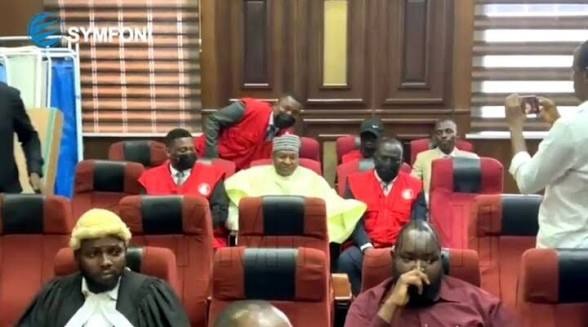
The Attorney-General of the Federation, Lateef Fagbemi (SAN), has assumed control of the prosecution of a former AGF, Abubakar Malami (SAN), and his son, Abdulaziz, over alleged terrorism-related offences and unlawful possession of firearms.

File photo of the Attorney-General and Minister of Justice, Lateef Fagbemi
The development emerged on Wednesday at the Federal High Court in Abuja when the Director of Public Prosecutions of the Federation, Mr Rotimi Oyedepo (SAN), informed the court that the case file had been transmitted from the Department of State Services to the Office of the Attorney-General of the Federation.

“My lord, I was informed by counsel to the DSS that the case file has been transmitted to the office of the AGF,” Oyedepo told the court.

He sought an adjournment to enable the prosecution to review the case file and take an informed decision, adding that a short date would suffice.

“We ask your lordship for a very short date. If we have four days, it will be enough,” he said.

Counsel for the defendants, Mr Adedayo Adedeji (SAN), did not oppose the application but urged the court to strike out the charge if the prosecution failed to open its case on the next adjourned date, alleging lack of diligent prosecution.

Responding, the DPPF described the defence’s proposed application as premature.

Justice Joyce Abdulmalik subsequently adjourned the matter to March 10, 2026, for commencement of trial and directed the prosecution to formally open its case on that date.

The DSS had arraigned Malami and his son on terrorism-related charges, including alleged refusal to prosecute suspected terrorism financiers and unlawful possession of firearms.

In the charge marked FHC/ABJ/CR/63/2026, Malami is accused of knowingly abetting terrorism financing by allegedly refusing to prosecute suspected terrorism financiers whose case files were forwarded to him while he served as Attorney-General of the Federation and Minister of Justice.

The defendants were also accused of storing firearms at their residence in Gesse Phase II Area, Birnin Kebbi Local Government Area of Kebbi State, without lawful authority.

Specifically, the prosecution alleged that in December 2025, Malami and his son possessed, without a licence, a Sturm Magnum firearm, 16 live cartridges, and 27 expended cartridges—an act said to be preparatory to terrorism and contrary to the Terrorism (Prevention and Prohibition) Act, 2022, as well as the Firearms Act.

At their first appearance on February 3, the defendants pleaded not guilty to all charges.

On the last adjourned date, the court admitted them to bail in the sum of N200m each, with two sureties in like sum.

They were, however, ordered to be remanded at the Kuje Correctional Centre pending the perfection of their bail conditions.

As part of the conditions, one of the sureties must own landed property in Maitama or Asokoro, Abuja, and deposit the title documents with the Deputy Chief Registrar of the court, alongside a valid international passport.

The sureties were also directed to depose to affidavits of means and submit two recent passport photographs.

Malami and his son were further ordered to surrender their international passports and submit recent passport photographs to the court.

Punch

I won’t die anytime soon, Obasanjo declares at 89

0


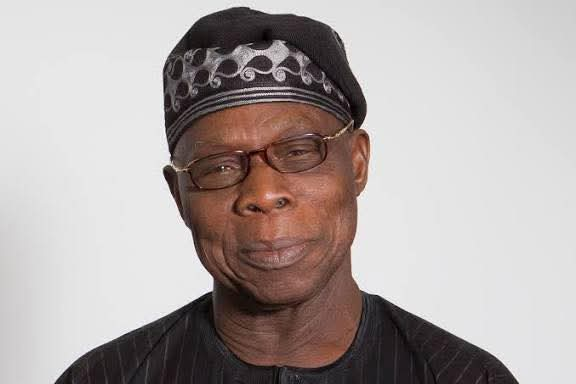
Former President, Chief Olusegun Obasanjo, has said that at 89 years, he won’t die anytime soon.

He condemned those circulating a fake letter in which he was purportedly speaking about his death, saying they were only wasting their time because “I dey Kampe.”

The former president disclosed this on Wednesday while delivering a colloquium titled “Burden and Blessing of Leadership: Reflections from Global Africa to the World” held as part of the ceremonies lined up to mark his 89th birthday in Abeokuta.

Obasanjo was born on March 6, 1937.

The former president said at 89 years he had no doubt that God did not make a mistake to keep him alive and reasonably healthy at his age.

He slammed those wishing him dead, saying he would remain on the earth surface agile and healthy for as long as his Creator wanted.

“For my final note in this address, I want to point your attention to the work of some never-do-well.

“They publish and circulate a fake paper credited to me that I am writing, giving notice of my death, pafuka.

“That is their wish and surely not God’s wish for me. God has assured me that He has more for me to do on earth, and He has given me the wherewithal to do it.

“And those who wish otherwise are going to be dealt with by God Himself. I dey kampe as usual,” the former President said.

Earlier, the former President had lamented the leadership crisis that he said had, for decades, stifled Africa’s development, growth, and economic prosperity.

“Africa is not a problem to be managed but a promise to be fulfilled through honest, courageous, selfless, incorruptible and transformational leadership,” he said.

He explained that genuine leadership carried immense burdens, citing his own incarceration and near execution under the military junta of the late Gen Sani Abacha as part of that burden.

Highlighting Africa’s unrealised potential, he said, “By every measure of natural endowment, Africa should be a continent of prosperity, stability, peace, security and global influence.

“Instead, a major part of the continent remains a theatre of preventable disease and suffering, starvation, conflict, insecurity and poverty.”

Obasanjo identified leadership failure, not geography or history, as the primary cause.

“The primary cause is the failure of those entrusted with power to lead for the people and serve them rather than against them; to build institutions rather than subvert them; to welcome accountability rather than flee from it, to ensure equity and justice rather than enthrone injustice, inequality and inequity.”

He warned that many leaders arrive with promises but soon govern for personal or familial gain, undermine democracy, and erode institutions.

“The same young reformer who promised accountability begins to silence the press, harass the judiciary, and intimidate civil society.

“All institutions become perverted only to serve the interest of the leader, his family, political accomplices and business interests,” he said.

To close the leadership gap, Obasanjo stressed the need for leadership formation, not just training.

“We must invest not only in teaching leaders what to do, but in forming leaders who are constituted and imbued with attributes and values to do the job the right way,” he said.

The former President urged young Africans to take democracy seriously and commit to governance that is accountable, transformational, transparent, and oriented toward the common good.

“A continent that fails its youth does not merely waste a generation; it plants the seeds of instability that will haunt the next several generations,” he said.

Reflecting on personal leadership experiences, Obasanjo described the loneliness and moral weight of decision-making, from commanding troops in the Nigerian Civil War to serving as Nigeria’s President from 1999 to 2007.

“The loneliness I speak of is the loneliness of final decision… your decision will affect millions of lives. That weight settles on one pair of shoulders – the leader’s shoulders,” he explained.

“I remember a few days before the Nigerian Civil War ended in January 1970. I was commanding the Third Marine Commando Division.

“My troops were positioned for the final push. Hundreds of thousands of Igbo civilians were trapped, starving, dying. On one side was the imperative of ending the war quickly to stop further suffering.

“On the other was the risk that a military advance would deepen the humanitarian catastrophe. No textbook told me what to do. No senior officer was going to make that call. It was mine alone. I made it. We saved lives by not shelling Owerri. History has rendered its verdict,” he said.

He stated that a leader also carried the burden of being the repository of other people’s hopes — hopes that are often larger than any human being can satisfy.

Obasanjo said that “When I was elected President in 1999, the Nigerian people had endured years of military dictatorship, economic stagnation, and institutional decay.

“They did not elect a president, some of them thought; they elected a miracle performer. And when the miracle did not arrive in full measure overnight — as it never can — I could hear the murmurs of some of them. This is the burden: to be elevated by hope and measured by time, often simultaneously.

The former President said that with leadership also comes the burden of principle, adding that “True leadership requires the willingness to hold a position when it is unpopular, to say no when yes would be more convenient, to name a truth that powerful interests wish suppressed.

“This costs friendships. It costs alliances. It sometimes costs your freedom — as I learned in the prison under Sani Abacha, where I was held for three and a half years, tried before a kangaroo tribunal, and very nearly executed.”

He also highlighted the blessings of leadership, citing achievements such as Paris Club debt relief and the establishment of the Economic and Financial Crimes Commission to recover stolen public funds.

“The blessing of having done the right thing when doing the wrong thing would have been easier. That is the first blessing of leadership: the opportunity for moral self-definition. Not who others say you are,” he said.

On his personal well-being, Obasanjo affirmed that he remained strong at 89 and condemned those spreading false news of his death.

“God has assured me He has more for me to do on earth, and He has given me the wherewithal to do it. I dey kampe as usual,” he added.

Punch

Oyo 2027: Jostle for Adelabu’s ministerial seat heats up

0


Interested individuals are already jostling for the seat of the Minister of Power, as the current minister, Adebayo Adelabu, prepares to contest the Oyo State governorship election, The PUNCH has learnt.

This is even as stakeholders urged President Bola Tinubu to appoint a technocrat as his replacement.

Barring any last-minute change of plans, Adelabu is expected to resign his appointment in the coming weeks to vie for the Oyo governorship ticket under the All Progressives Congress.

According to the new Electoral Act 2026 and the revised timetable released by the Independent National Electoral Commission, the conduct of party primaries, including the resolution of disputes arising from them, will commence on April 23 and end on May 30, 2026.

During an engagement with stakeholders in the Nigerian Electricity Supply Industry in Lagos towards the end of last year, Adelabu had hinted that he would love to achieve some feats “before I leave office”.

Some aides of the minister confided in our correspondent that Adelabu made the remark because he has the intention to contest the governorship race in Oyo State.

In a trending video in October 2025, Adelabu formally declared his intention to run for governor in Oyo, recalling how he lost to the incumbent Governor Seyi Makinde in 2019 and 2023.

“I have now paid my dues. I contested against Seyi (Makinde) in 2019. In 2023, I also contested against Seyi, then as the sitting governor. But in 2027, God has shown that it’s our turn. It’s Adelabu’s turn. Anything that belongs to Adelabu belongs to us all,” he said last year.

Contacted about when the minister is likely to resign, his media aide, Bolaji Tunji, said the president had not directed cabinet members with political ambitions to step down.

“We need to await development, as I am not sure the President has said those with political ambition should resign,” Tunji told our correspondent.

Our correspondent gathered that individuals interested in Adelabu’s job are already lobbying the presidency, knowing full well that he would resign to pursue his gubernatorial ambitions.

Meanwhile, stakeholders appealed to Tinubu to ensure he puts a round peg in a round hole, saying the new minister must be a technocrat.

Speaking with our correspondent, a power sector expert, Bode Fadipe, advised the president to appoint a technocrat as Adelabu’s replacement.

According to Fadipe, anybody to replace Adelabu should be someone with knowledge of the power sector and one who has a national agenda instead of self-interests.

“My choice will be a technocrat who has knowledge of the power sector and whose agenda is national rather than personal interest,” Fadipe stated.
Also, the Convener of PowerUp Nigeria, Adetayo Adegbemle, said whoever is appointed to replace Adelabu, if he eventually resigns, must have a clear understanding of the assignment.

Adegbemle argued that such a person must understand the challenges of the power sector and must have demonstrated that understanding prior to appointment.

He stated that before the inauguration of the Tinubu government, he had published an agenda that spoke directly to the challenges of the power sector, and when Adelabu was appointed as the power minister, he believed that his background in the finance sector would be a benefit to the power sector.

“Prior to the inauguration of Tinubu’s first term, I wrote and published an agenda that spoke directly to the challenges of the power sector, and when this present minister was appointed, I believed his background in the finance sector would have been of benefit.

“However, ministerial appointments being majorly political, I would expect that anyone being appointed should have a clear understanding of the assignment on hand, understand the challenges of the power sector, and have displayed this understanding before being appointed,” he said.

The PowerUp Nigeria convener added that the next minister should reduce political interference in the sector, saying the minister should not play politics with issues affecting the sector.

“I would also expect that such a person be able to play less politics with the power sector, as it is clearly our path to industrialisation, creation of jobs, and basically, an economy-oriented decision that is able to see the office and power sector as economy-driving ones,” Adegbemle advised.

A professor of energy, Dayo Ayoade, argued that Adelabu’s replacement should not be someone with political ambition. He appealed to the president to consider a technocrat with solid knowledge of that power sector.

“The sector is collapsing; we need a technocrat. We need someone who can manage the crisis that we are in,” the don said.

But in a dissenting voice, the coordinator of the Electricity Consumers Forum, Adeola Samuel-Ilori, said that the ministry should be run by the Permanent Secretary till next year.

“He (Tinubu) should let the ministry be run by the permanent secretary till next year when the election will be done and a new cabinet formed if he wins,” Samuel-Ilori said.

According to him, the ministry has always been on autopilot. “The man (Adelabu) was and is still a banker, not an engineer. I think his appointment was for political patronage and reward, even though another ministry would have been better for such consideration, but it’s a big gamble; hence, no minister should be employed once he resigns except if the man has no name to protect, because there is nothing on the ground for such an appointee to do,” Samuel-Ilori stated.

Adelabu, a former Deputy Governor (Operations) at the Central Bank of Nigeria, was appointed by Tinubu in 2023 to oversee the country’s deteriorating power ministry. His appointment generated reactions from some stakeholders who argued that he lacked the technical expertise to manage a sector as critical as power.

However, the Oyo-born politician maintained at the time that he was appointed to reform the power sector and not to operate as an engineer or a technician. Adelabu is expected to resign his ministerial appointment soon if he proceeds with his bid for the Oyo governorship race.

Punch

State police: IG sets up panel to propose framework

0


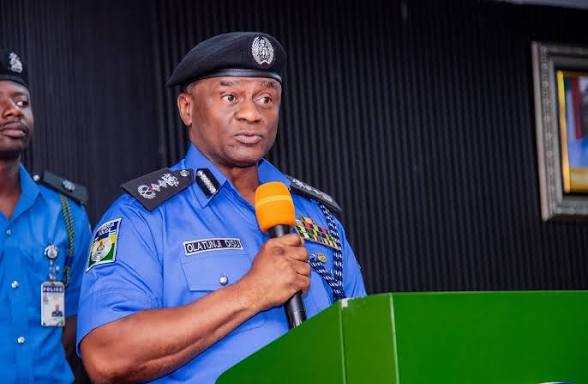
Newly sworn-in Inspector-General of Police, Tunji Disu, on Wednesday inaugurated a committee on the establishment of state police.

As part of ongoing discussions on policing reforms, President Bola Tinubu, had, last Wednesday, during the breaking of fast with senators at the Presidential Villa, Abuja, urged the leadership of the 10th Senate to initiate constitutional amendments to provide for the establishment of state police.

The President said decentralised policing would strengthen security at the grassroots and improve rapid response to threats within states, noting that the current centralised structure required constitutional review to accommodate the proposed reform.

Speaking during the inauguration, Disu said the committee’s task was to examine the concept of state policing as part of efforts to strengthen Nigeria’s internal security architecture and improve community-based policing.

He said the committee would review existing policing models within and outside Nigeria, assess community security needs, propose an operational framework for state police structures, and address issues of recruitment, training, standards, funding, accountability and oversight.

“Among other responsibilities, the committee is expected to review existing policing models within and outside Nigeria, assess community security needs and emerging risks across the country, propose an operational framework for the establishment and coordination of State Police structures, address issues relating to recruitment, training, standards, and resource allocation and develop robust accountability and oversight mechanisms to ensure professionalism and public trust,” he said.

Disu said state police formation could provide localised policing services focused on community safety, conflict prevention, neighbourhood patrols, and early response to emerging threats.

“This collaborative arrangement will encourage specialisation, strengthen professionalism, and ultimately deliver more effective security outcomes for our citizens,” he added.

The steering committee is chaired by Prof. Olu Ogunsakin, Director-General of the National Institute for Police Studies, Abuja, with CP Bode Ojajuni as secretary.

Other members are DCP Okebechi Agora, DCP Suleyman Gulma, ACP Ikechukwu Okafor, CSP Tolulope Ipinmisho and CP Emmanuel Ojukwu (retd.).

Also speaking shortly after his swearing-in as the substantive Inspector-General of Police, Disu disclosed that he had constituted a committee to develop the Nigeria Police Force’s position on the proposed establishment of state police.

He said, “The committee was set up early this morning to look into the issue of State Police from the angle of the Nigeria Police.

“We don’t want it to seem as if others are taking decisions, and we, the most important people concerned, did not do anything. We want to ensure that the best thing is done,” the IG stated.

He emphasised that the police was not opposed to state police, describing it as a partnership rather than a threat to the Force.

“State police has come to stay, and the police should be able to do their own part in making it succeed. The police are not afraid. Our jobs are not being taken. It’s just an issue of partnership,” Disu said.

Disu sworn-in

Disu took the oath of office at 2:53pm on Wednesday following the reading of his citation by the State House Director of Information and Public Relations, Mr. Abiodun Oladunjoye.

The ceremony was witnessed by Vice President Kashim Shettima, cabinet members, and other dignitaries.

Also in attendance were the Secretary to the Government of the Federation, Senator George Akume; National Security Adviser, Nuhu Ribadu; Chief of Staff, Femi Gbajabiamila; Minister of Police Affairs, Senator Ibrahim Gaidam; FCT minister, Nyesom Wike; and Head of Service, Mrs. Esther Walson-Jack.

Disu’s confirmation comes barely a week after President Tinubu appointed him acting IGP following the resignation of Kayode Egbetokun on February 23, 2026.

Ex-officers back committee

A retired Assistant Inspector-General of Police, Ali Amodu, described the Inspector-General of Police’s decision to set up a special committee on state policing as “a right step in the right direction.”

Speaking on the development, Amodu said the committee would provide professional input and advise the Presidency on the proposed decentralisation of the Nigeria Police Force.

“The decision or the thought of the IG in setting up a special committee is a right step in the right direction. The committee will actually provide the thinking, and then they will give advice to the Presidency because it is the police that they want to decentralise. It is good that the authority will want to hear from them,” he said.

Amodu said, “As far back as 1981, I was a young superintendent. I came back from the UK and I actually made a suggestion to the police authority then that they should think of decentralising the police force because I saw the pattern in the UK.

“I said we can moderate our own and make adjustments. I was a very young officer, but the old hands were very angry with me to have said this. I remember my commissioner of police then said, ‘Young man, we sent you to the UK for detective training, and you are coming back thinking they should form a modality on how to decentralise the force.’”

Amodu added that the idea was now gaining traction globally. “The thing is coming to light. Light is shining on that area. It’s happening in many parts of the world,” he said.

According to him, policing differs from military operations because it requires close interaction with local communities.

“The police are not like the army or any arm of the Armed Forces. You work with the people, and people want to appreciate their own person. It is at that time they will be comfortable to even pass information which is needed for policing all over the world,” he said.

He also referenced ongoing legislative discussions on constitutional amendments, noting that the current constitution provides for a single police force.

“Just a few days ago, I heard the Senate President say that before the end of the year they will look into how the Constitution and see if it can be amended because the present Constitution says Nigeria has one police force. So, if we want to decentralise, they must amend that section of the constitution. I think they are working on it. Let’s see how it is going to work out,” he added.

On his part, a former Commissioner of Police, Lawrence Alobi, also backed the constitution of the committee, describing it as a professional and proactive move.

“It’s the right thing to have done because the police affair is all about policing, and police can come and handle police issues effectively,” Alobi said.

He stated that the committee should clearly define the structure and supervisory framework for state police formations.

“The committee should advise on the structure and how the state police would be supervised. Maybe they should be under the AIG in zones or the DIGs would have supervisory roles over them,” he said.

Alobi stressed the need to address jurisdictional issues in advance to avoid operational conflicts.

“If the structure is not determined now proactively and it is established, I don’t know the case, but if a case is committed in a state and the suspect is in another state, and the police from one state go there to get the suspect, how will the police in that state treat them when they come? This is something that needs to be determined. It should already be established and practiced,” he said.

He added, “I think the system is running in the right direction and doing the right thing.”

Middle East crisis

Meanwhile, Disu disclosed that the Nigeria Police Force wass closely monitoring Islamic groups with allegiance to Middle Eastern countries following the escalating US-Israel-Iran conflict, warning that developments in the Middle East could trigger repercussions in Nigeria.

“Everywhere in the world, we are aware that is what we call intelligence policing. Our ears are to the ground. We know we have groups of people, different kinds of Islamic sects in Nigeria. We have those who pay allegiance to this eastern part of the world as well,” Disu stated.

He added, “So we know if anything happens in the eastern part of the world, the repercussion will come to us.

“So, we are putting all necessary actions. You can see policemen on patrol, and most importantly, we are talking to them to ensure that they do not take law and order into their hands.”

The IGP’s statement comes amid heightened tensions in the Middle East following US and Israeli airstrikes on Iranian targets over the weekend and Iran’s retaliatory missile attacks on Israeli and American military installations.

Nigeria is home to significant Islamic groups with ideological and sometimes organisational ties to Middle Eastern countries, particularly Iran and Saudi Arabia.

The Islamic Movement in Nigeria, led by Sheikh Ibrahim El-Zakzaky, is known for its pro-Iranian stance and Shia Islamic orientation, while several Sunni groups maintain connections with Saudi Arabia and other Gulf states.

Punch

FEC Approves ₦1.2trn Road, Bridge Projects Across Six States

0


(FEC) has approved a series of major road and bridge projects valued at over ₦1.2 trillion, aimed at improving critical infrastructure and enhancing connectivity across the country.

Minister of Works, David Umahi, disclosed this during a press briefing with journalists at the State House, Abuja, on Wednesday, following the FEC meeting presided over by President Bola Ahmed Tinubu.

Among the projects approved is the reconstruction of the 103-kilometre Ibadan–Ife–Ilesa dual carriageway at a cost of ₦427 billion. The project, which had previously recorded minimal progress, has been re-awarded to ensure completion.

FEC also approved the review, rescoping and redesign of the 132-kilometre Kano–Kongolam Road into a three-lane concrete carriageway at ₦334 billion. The road links Kano, Jigawa and Katsina states and will feature solar-powered streetlights and closed-circuit television (CCTV) installations to enhance security.

In Nasarawa State, the council approved ₦203 billion for Phase Two of the Keffi–Nasarawa–Abaji Road project, covering the rehabilitation of 129.3 kilometres.

Similarly, ₦91 billion was approved for the completion of the remaining 71 kilometres of the Suleja–Minna dual carriageway, with one carriageway already awarded.

For Lagos State, FEC approved ₦5.6 billion for the detailed design, costing and preparatory works for the demolition and reconstruction of the iconic Carter Bridge.

The design phase will be handled by Advanced Engineering Consultants.
Additionally, ₦146 billion was approved for the reconstruction of an 86-kilometre affected section of the Abuja–Lokoja Road. The project will involve multiple contractors, including Julius Berger.

Umahi said the approvals reflect the Federal Government’s commitment to accelerating infrastructure development, improving road safety, and boosting economic activities nationwide.

PRESIDENT TINUBU CELEBRATES FORMER PRESIDENT OLUSEGUN OBASANJO AT 89

0


President Bola Tinubu felicitates former president and elder statesman, Chief Olusegun Obasanjo, on his 89th birthday on March 5.

This was disclosed by Bayo Onanuga
Special Adviser to the President
on Information & Strategy.

The President rejoices with Chief Obasanjo, whose towering influence in the country, Africa, and beyond is significant.

President Tinubu notes the courage and sacrifices of the elder statesman, who previously served the nation as military Head of State from 1976 to 1979, handing over power to a civilian president in
1979, and later as the first civilian president in the fourth republic, 1999-2007.

President Tinubu affirms the historic experiences of the former leader, including leading troops to preserve Nigeria’s unity at the warfront, serving time in prison for speaking out against tyranny, and consistently pursuing Africa’s political and economic interests.

As Chief Obasanjo turns 89, the President acknowledges the zeal and wisdom he has brought into Nigeria’s development process through his books and regular interventions, revealing a depth of patriotism to nation-building.

President Tinubu prays for more years of good health, strength, and wisdom for the former president as he continues to serve the nation and humanity.