Home Blog Page 604

US court jails Nigerian six years for $5m COVID-19 fraud

0


A United States District Court has sentenced a 34-year-old Nigerian, Adepoju Babatunde Salako, to six and a half years’ imprisonment for his role in a $5m COVID-19 pandemic relief fraud.

PUNCH Metro learnt on Thursday from a statement published on the website of the United States Department of Justice that Salako, who resides in Philadelphia, Pennsylvania, was handed a 78-month federal prison term after pleading guilty to wire fraud conspiracy and money laundering conspiracy.

The statement added that as part of his plea agreement, Salako also agreed to plead guilty to seven additional counts of wire fraud in the District of Alaska.

It noted that the court further ordered him to pay $2,581,002.50 in restitution to victims of the fraud.

“The United States Attorney’s Office for the District of Colorado announces that Adepoju Babatunde Salako, 34, of Philadelphia, Pennsylvania, was sentenced to 78 months in federal prison after pleading guilty to one count of wire fraud conspiracy and one count of money laundering conspiracy.

“As part of the plea agreement, Salako also agreed to plead guilty to seven counts of wire fraud in the District of Alaska. The defendant was ordered to pay $2,581,002.50 in restitution to the victims of his crimes,” the statement read.

According to court documents, Salako participated in the scheme for most of 2021, exploiting economic relief measures introduced during the COVID-19 pandemic.

“Throughout most of the year 2021, Salako was part of a conspiracy that stole more than $5m from the Paycheck Protection Program, the Economic Injury Disaster Loan programme, and 30 state unemployment programmes through several complex schemes,” the statement added.
Providing further details, the statement said Salako and two accomplices used stolen identities to obtain fraudulent loans and unemployment benefits.

“In one scheme, Salako and two co-conspirators used information belonging to identity theft victims to fraudulently obtain PPP loans and unemployment benefits, and submitted fraudulent applications for EIDL loans.

“Salako’s role was to receive money from romance scam victims and government agencies and launder the proceeds, primarily to China and Nigeria, for a fee of approximately 25 per cent,” it stated.

Reacting to the sentence, the United States Attorney for the District of Colorado, Peter McNeilly, condemned the fraud and reiterated the government’s resolve to prosecute offenders.

“Mr Salako and his criminal associates exploited innocent people and stole millions of dollars from American taxpayers. We are committed to finding and prosecuting fraudsters and, as this sentence demonstrates, these criminals will pay a high price for their actions,” he said.

Also commenting, the Special Agent in Charge of the United States Postal Service Office of Inspector General, Northeast Area Field Office, Matthew Modafferi, warned that severe penalties await those who abuse public trust.

“The sentence imposed on the defendant stands as a clear warning that serious consequences await anyone who exploits government resources to commit criminal acts,” the statement added.

Punch

Borno: Hundreds still missing after Boko Haram attack

0


Suspected Boko Haram terrorists have abducted more than 300 residents during a deadly attack on Ngoshe community in Gwoza Local Government Area of Borno State midnight on Wednesday, forcing thousands of survivors to flee to neigbouring Pulka community, where many have been forced to sleep on roads and in school buildings for fear of further attacks.

The PUNCH had earlier reported that suspected Boko Haram insurgents killed an unspecified number of civilians and abducted several women after launching an attack on a military post in the community.

Sources told our correspondent that the terrorists first stormed the military base in Ngoshe before unleashing violence on residents at about 1am on Wednesday.

Eyewitnesses said the assault lasted for several hours, leaving panic and destruction in its wake, before the air component of Operation Hadin Kai was deployed to repel the attackers and disperse them into the surrounding forest.

They added that the insurgents burnt several houses before retreating.

According to reports on Thursday, the Nigerian military also killed scores of the Boko Haram terrorists after their attack on the Ngoshe military base, which reportedly left nine soldiers dead.

After the raid, surveillance aircraft tracked the insurgents along known escape routes and carried out precision airstrikes on their positions, killing more than 50 fighters, the reports added.

The spokesperson for the Borno State Police Command, ASP Nahum Daso, confirmed the attack to The PUNCH, noting that many residents were still unaccounted for.

“Some civilians whose number is yet to be ascertained were affected or killed during the attack. Several others are still missing and may have been abducted and taken towards the Mandara Mountains,” he said.

Daso added that authorities were still working to determine the full extent of the abductions.

“As of now, we have not completed the process of establishing the total number of those taken away. If reports about the Chief Imam being missing are confirmed, we will verify and update you accordingly,” he said.

As of the time of filing this report, efforts to obtain an update from the spokesperson of the police and the spokesperson of Operation Hadin Kai, Lt. Col. Sani Uba, were unsuccessful as calls placed to his phone were not answered.

Meanwhile, the Senator representing Borno South Senatorial District, Ali Ndume, condemned the attack during an interview with journalists on Thursday, revealing that more than 100 residents were still missing.

According to the senator, the insurgents overran the military formation in Ngoshe before unleashing violence on the community.

“The military base in the community (Ngoshe) was dislodged, with some major equipment destroyed. Residential houses and property worth millions of naira were also set ablaze,” Ndume said.

“As it is, details about the unfortunate Ngoshe incident are still sketchy, but information at my disposal revealed that many of the fleeing terrorists were neutralised by the air component of the Joint Task Force North-East, Operation Hadin Kai.”

He added that the attack also claimed the lives of several prominent members of the community.

“Unfortunately, the Chief Imam of Ngoshe and some elders, as well as soldiers, were among those slaughtered or killed,” the lawmaker said.

Ndume further disclosed that many residents remained unaccounted for following the raid.

“More than 100 people are still missing or abducted during the attack, while thousands of civilians, mostly women and children, have been displaced and are currently taking refuge in Pulka community,” he added.

Some survivors who fled the violence and are currently sheltering in Gwoza described the attack as devastating and appealed for urgent humanitarian assistance.

The District Secretary of Ngoshe, Shuaibu Dabawa, said the scale of the abduction was massive, claiming that more than 300 residents were taken away by the insurgents.

“When they attacked, we heard sporadic gunshots and immediately fled into the bush for safety, where we spent the entire night,” Dabawa said.

“More than 300 people were abducted by the terrorists during the attack. There is currently no military presence in Ngoshe, which has heightened security concerns,” he added.

Dabawa also expressed deep concern about the fate of elderly residents left behind in the town.

“Our immediate worry is that some elderly people remain trapped in the community alongside several dead bodies. Many of us escaped with nothing except the clothes we were wearing. The town has been completely deserted,” he said.

He added that displaced residents were now scattered across Pulka, with many sleeping in open spaces while others have taken shelter at the Central Primary School in the town.

“We are appealing for urgent military reinforcement and food assistance for the affected families,” he said.

One of the survivors, Audu Bello, said it was difficult to immediately determine the exact number of those abducted without proper verification from affected families.

“It was a mass abduction. Only families whose relatives were taken can give a clearer picture of the number of victims,” Bello said.

“For many of us, we managed to escape after hearing sporadic gunshots. It was an unfortunate incident that has devastated many families. Several households have now been split apart, with some members in Pulka while others are scattered in unknown locations seeking safety,” he added.

Another survivor, Amina Halidu, lamented the harsh living conditions confronting displaced residents who fled to Pulka following the attack.

According to her, many of the victims are currently sheltering at the Central Primary School in Pulka under extremely difficult conditions.

“Many people are now camped at Central Primary School in Pulka. There is no water, no food and no proper shelter. Most of the displaced persons are women and children. We are appealing for urgent government intervention,” she said.

When contacted for comments, the Director-General of the Borno State Emergency Management Agency, Ali Abdullahi, neither answered calls nor responded to text messages as of the time this report was filed.

The Borno State Commissioner of Information and Internal Security, Usman Tar, told The PUNCH on Thursday night that the state had intervened and provided support for the survivors.

He said, “There is a standing protocol by the state government for providing support to people that are affected by conflicts.
“In the case of Ngoshe, the people were assembled at Pulka, a nearby town to the area, and immediate support came from the local government.”

Tar added, “In addition, the state government, through the state emergency management agency, has dispatched palliatives to all the victims and each household. The items include rice, sugar, millet and blankets. It will get to them tomorrow (today).

“Currently, the people are comfortable and the military is on top of the situation and making sure that there is a security corridor for the transportation of the items to the victims.

“We have also dispatched healthcare and sanitation officials to the location to make sure there is no outbreak of a pandemic.”

On the number of missing persons, the commissioner added, “We are in the process of verification, the actual figure is yet to be ascertained.”

Meanwhile, our correspondent learnt that the Chief of Army Staff, Lt-Gen Waidi Shuabi, will visit the Ngoshe community on Friday.

Security sources, who confirmed the visit to The PUNCH, said the COAS would interface with the victims and access the situation.

Punch

Senate summons ex-NNPC boss Kyari over N210tn audit queries

0


The Senate on Thursday summoned the immediate past Group Chief Executive Officer of the Nigerian National Petroleum Company Limited, Mele Kyari, over an alleged N210tn expenditure by the national oil company between 2017 and 2023, which the lawmakers say has not been properly accounted for.

Invited alongside Kyari are the former Chief Financial Officer, Umar Isa, and the former Group General Manager of the National Petroleum Investment Management Services, Bala Wunti.

The Senate committee handling the probe threatened to issue warrants of arrest against the former management officials if they fail to appear before it on a date to be communicated.

The committee also questioned why the national oil company allegedly spent about N5bn on the change of name from the defunct Nigerian National Petroleum Corporation to the Nigerian NNPC Limited.

Chairman of the committee, Senator Aliyu Wadada (Nasarawa West), read the resolutions to journalists. He said the summoned former management team should appear before the panel.

They are to come alongside the incumbent Group Chief Executive Officer, Bayo Ojulari.

Wadada stated: “NNPCL should refund the sum of N210tn, being the combined sum of N103tn and N107tn, which were not properly accounted for as contained in the audit reports. The NNPCL should and must account for the two figures.

“The second resolution of the committee is that the NNPCL should remit to the treasury all production costs charged against crude oil revenue for the period under review, since NNPCL and its subsidiaries, including NAPIMS, do not directly produce crude oil.
“Thirdly, the immediate past management of NNPCL and NAPIMS, which includes Mele Kyari as the then GCEO, Umar Ajia Isa as the then CFO, and Bala Wunti as the then GGM, NAPIMS, should appear before the committee and be led by the present management along with the external auditors that served within the period under review.

“Fourthly, the Auditor General for the Federation should carry out a forensic audit review of the audited financial statements of NNPCL for the period under review in line with Section 85 of the Constitution of the Federal Republic of Nigeria (1999 as amended).”

He added that the committee considered the N5bn expenditure on the corporation’s name change unacceptable, adding that “Satisfactory explanations must be given.”

According to Wadada, the resolutions followed the inability of NNPCL to provide satisfactory responses to 19 questions raised by lawmakers from the audit report.

“NNPCL, in response, claimed the N103tn represented cumulative amounts expended by NNPCL Joint Venture partners from JV Cash Calls 2017. That response is unacceptable, and the figure of N103 trillion remains unresolved.

“The subsidy receivables, according to the audited financial statement of NNPCL, stood at N107tn. As of December 2023, NNPCL recorded N107tn as sundry receivables, some allegedly owed by different banks and other entities. When combined, NNPCL needs to properly account for N210tn,” he explained.

Despite the concerns, the committee reaffirmed its support for the administration of President Bola Tinubu, noting that the Federal Government remained committed to promoting transparency, probity, and accountability in the management of public funds.

Punch

DIG Mba, others retire, seven AIGs for promotion

0


A Deputy Inspector-General of Police, Frank Mba, alongside several other senior officers, will be retiring from the Nigeria Police Force, following recent changes in the leadership of the force.

This is just as seven Assistant Inspectors-General of Police have been slated for promotion to the rank of Deputy Inspector-General of Police.

The exit of Mba and other DIGs followed the exit of the former Inspector General of Police, Kayode Egbetokun, and the confirmation of Tunji Disu as the new Inspector General of Police.

Disu was sworn in on Wednesday as the 23rd indigenous IGP.

The official portrait of the Inspector-General of Police, Olatunji Disu
Sources at the Force Headquarters said the DIGs had been preparing to leave but were waiting for a signal which had yet to come.

“The DIGs are very ready to leave, but they are waiting for signals. Many of them had moved their belongings from their offices in anticipation of their retirement.

“Maybe when the AIG slated for promotion comes, they will leave,” one of the sources told our correspondent.

Another source said seven AIGs are slated to visit the Police Service Commission on Friday for their promotion exams, paving the way for the retirement of Mba and others.

“Seven Assistant Inspectors-General of Police have been slated for promotion to the rank of Deputy Inspector-General of Police, which will lead to their retirements.

“The officers are Margreth Ochalla, Kenechukwu Onwuemelie, Ishiaku Mohammed, Zachariah Fera, Zango Ibrahim, Umar Shehu Nadada, and Muhammed Abdul Sulaiman.

“They are expected to appear before the Police Service Commission in Abuja on Friday for promotion,” the source said.

The PSC’s spokesman, Torty Kalu, did not deny or confirm when contacted.

MBA, one of the DIGs set for retirement, is a trained lawyer. He obtained a law degree from the University of Lagos and was called to the Nigerian Bar in 2002 after attending the Nigerian Law School, Abuja.

He later earned a Master’s degree in Law with distinction from the University of Dundee in Scotland.
He also attended several international programmes, including the FBI National Academy in Quantico, United States, and leadership courses at Harvard University and the University of Oxford.

During his career, he served as Commissioner of Police in Ogun State and as Commissioner of Police in charge of the Border Patrol Force at the Force Headquarters.

He also held operational commands as Area Commander in Ajah and FESTAC in Lagos.

Punch

US-Iran war: Marketers, Dangote trade words over petrol price

0


Amid the escalating tensions in the Middle East, data from the Major Energies Marketers Association of Nigeria has shown that a litre of imported petrol is about N64 cheaper than the one produced by the Dangote Petroleum Refinery.

However, the refinery debunked the report, challenging importers to defy the ongoing airstrikes in the Middle East and bring in petroleum products.

The PUNCH reported on Monday that the Dangote refinery increased its gantry price from N774 to N874. The adjustment followed a jump in oil prices to $84 per barrel, up from below $70, days before the airstrikes involving the United States, Iran, Israel, and other countries.

Following the increment, filling stations on Tuesday raised their pump prices to as high as N937, depending on the location. Before the Middle East crisis deepened over the weekend, some filling stations had already been selling petrol at prices ranging between N812 and N839, but the crisis disrupted the global fuel market, affecting Nigeria and other countries.

However, data by MEMAN indicated that Dangote’s petrol gantry price was N874 per litre as of Monday, while the landing cost of imported petrol was N809.37 per litre, showing a difference of about N64 between the two sources.

MEMAN also reported that Dangote’s diesel price was N1,169.42, while imported diesel was N1,125.70 per litre.

However, officials of the Dangote refinery, who did not want to be mentioned because of the sensitivity of the matter, said some importers were projecting a false narrative to ensure the Federal Government continues to issue import licences.

“Anybody can go to Apapa to get the landing cost, and anybody who likes should go to Iran and import. Some people just want us to depend on imports. Isn’t it time we ended that dependence on foreign products?

“Some people want importation to continue, and that’s not normal. You keep importing what can be produced locally. Is that a good thing? How do you expect our children to survive? Nigerians will import and destroy what we have locally,” an official said.

Aside from pricing, another official said Nigeria should be thankful to the Dangote refinery for shielding the country from the fuel crisis that could have paralysed commercial activities.

“Let’s think about what could have happened to Nigeria if we didn’t have a refinery in Nigeria at this time. Assuming there is no Dangote refinery in Nigeria, economic activities would have been paralysed by now.

“Many countries are not so lucky, and they are now facing long queues at filling stations. Dangote has saved Nigeria from that fuel crisis. This has taught us that there’s nothing like one’s country, and we must always be prepared,” he said.

In its report, MEMAN explained that the downstream sector saw a major upward price adjustment on Monday, driven by the Dangote refinery raising its gantry price by N100, bringing it to N874 per litre.

The shift, triggered by rising global crude costs, pushed retail pump prices above N900 per litre. Many private depots reportedly paused sales briefly to recalibrate their pricing in response.

“The market is currently in a state of high uncertainty. With Brent crude climbing above $80/bbl due to escalating geopolitical tensions (specifically the US-Israel-Iran conflict), analysts warn that the cost of petrol remains under significant pressure. If crude prices continue toward the $90/bbl mark, domestic pump prices could potentially reach N1,100 by next month,” MEMAN said.

On Wednesday, motorists flocked to petrol stations across Britain in a scramble for fuel as fears of a new oil crisis caused by the Iran war grew, according to a report by The Mirror UK.

Frustrated drivers complained on Wednesday about UK petrol stations running out of fuel and long queues at forecourts after hostilities erupted in the Middle East. Prices have risen by as much as 11 pence per litre in some locations.

In contrast, Nigeria relies on the Dangote refinery for an adequate fuel supply amid the geopolitical tensions. Petrol prices in Nigeria surged on Tuesday, but no queues were reported at filling stations. Analysts attribute this to the Dangote refinery reducing Nigeria’s dependence on imported fuel.

Commentators highlight the Dangote refinery’s role in shielding Nigeria from such disruptions. “Imagine a Nigeria without a refinery; we would be experiencing endless queues, black market prices, businesses slowing down, and an economy held hostage by fuel scarcity.

“Today, we stand at a turning point. The Dangote Petroleum Refinery & Petrochemicals is more than steel and pipes — it is energy security, economic power, job creation, and national pride,” an industry player who spoke in confidence stated.

During a recent meeting with refiners and stakeholders, the Dangote refinery assured them of sufficient fuel supply, though it noted challenges from insufficient crude, requiring some reliance on foreign feedstock.

The PUNCH reports that Dangote outpaced importers to supply approximately 62 per cent of the nation’s petrol in January 2026.

This development, revealed in the fact sheet from the Nigerian Midstream and Downstream Petroleum Regulatory Authority, signals a growing reliance on domestic refining capabilities and a potential reduction in the country’s longstanding dependence on fuel imports.

According to the NMDPRA’s State of the Downstream Sector report for January 2026, the total average daily supply of petrol reached 64.9 million litres per day in January.

Of this volume, receipts from domestic refineries — primarily driven by Dangote, the only petrol-producing refinery at the moment — accounted for 40.1 million litres per day, while imports by oil marketing companies and the Nigerian National Petroleum Company Limited stood at 24.8 million litres per day.

This marked the first time in the 13-month period covered by the report (from January 2025 to January 2026) that domestic production had exceeded imports, reversing a trend where foreign supplies often dominated the market.

The NMDPRA attributed the surge in domestic output directly to “improvement in supply from DPRP” — the Dangote Petroleum Refinery and Petrochemicals — which increased its PMS contributions from 32 million litres per day in December 2025 to 40.1 million litres per day in January 2026.

Crude supply denial
Meanwhile, the Dangote refinery has said that local crude producers are refusing to supply feedstock to its facility, forcing it to rely more on imported crude. In a statement on Thursday, the refinery defended its recent N100 increase in the gantry price of petrol.

While reassuring Nigerians of its unwavering commitment to serving as a stabilising force amid recent shocks in the international oil market, the refinery said the conflict in the Middle East has led to the shutdown of some refineries and cutbacks in refinery production across the world.

This, it said, is leading to a global scarcity of petroleum products, as China has banned the export of gasoline and diesel. “The Dangote refinery will ensure that Nigeria is insulated from these supply shocks by prioritising supply to the domestic market. This is one of the many benefits of domestic refining,” it said.

According to the statement, the conflict in the Middle East has driven global crude and freight prices sharply higher, with benchmark Brent prices rising by about 26 per cent within a short period to above $84 per barrel.

In response, the refinery implemented a measured adjustment of N100 per litre in its ex-depot price of petrol, representing an increase of about 12 per cent.

The refinery said it has absorbed 20 per cent of the cost escalation for now to cushion the domestic market, despite continuing to source crude at prevailing international market prices, whether purchased locally or from foreign suppliers.

“It is worth noting that Nigerian crude oil is more expensive than the Brent benchmark price by $3 to $6 per barrel. After adding freight of $3.50 per barrel, crude oil will be landing in our tanks between $88 and $91 per barrel. For context, crude oil was landing in our tanks at about $68 per barrel when our ex-depot price was N774/litre,” the refinery stated.

According to the company, the refinery receives five cargoes every month from the Nigerian National Petroleum Company Limited instead of 13 cargoes, adding that the cargoes are paid for at international market prices.

“Furthermore, while we receive about five cargoes a month from NNPC, which we pay for in naira, these cargoes are priced at international market prices plus premium and fall short of the 13 cargoes which we require to support sales into Nigeria. We, therefore, end up procuring foreign exchange at open market rates to pay for crude cargoes purchased from local and international traders.

“The high crude cost is compounded by the fact that Nigeria’s upstream producers have failed to supply crude oil to the refinery as required under the Petroleum Industry Act, forcing us to source a substantial portion through international traders who charge an additional premium,” it stated.

As a private enterprise operating in a deregulated environment, the Dangote refinery added that it has remained responsive and has made significant sacrifices by aligning pricing with market realities to ensure sustainability, particularly as it sources all its crude at prevailing international market prices, whether locally or from foreign suppliers.

“Selling below cost would undermine its ability to procure crude, sustain production, and guarantee uninterrupted supply to Nigerians. Despite these pressures, local refining at this scale continues to reduce exposure to international supply disruptions, moderate foreign exchange demand, and protect the country from severe shortages during periods of global instability,” the refinery added.

The refinery said it is also accelerating the deployment of compressed natural gas-powered trucks to cushion the impact of global shocks, enhance nationwide distribution efficiency, reduce logistics costs, and improve delivery timelines across the downstream sector.

“The rollout is scheduled to commence this month,” it announced, saying, “We remain committed to transparency, operational excellence, and the long-term objective of securing sustainable energy security and stability for Nigeria at an affordable cost.”

Efforts to get the reactions of the Nigerian Upstream Petroleum Regulatory Commission, the agency in charge of the domestic crude supply obligation, were unsuccessful. The NUPRC spokesman, Eniola Akinkuotu, did not reply to messages sent to him.

Similarly, the spokesman of NNPC, Andy Odeh, declined to comment when contacted by our correspondent on Thursday.

Experts speak

Meanwhile, as Dangote and modular refineries demand sufficient crude supply in the face of low crude production, experts have called on the government and operators to ramp up production.

An energy expert, Professor Emeritus Wumi Iledare, said meeting oil production targets would depend far less on ambitious projections of the government and far more on practical and on-the-ground actions.

Iledare told The PUNCH that the government must prioritise improved security around oil assets, reduce operational disruptions, fast-track regulatory approvals, and create a stable operating environment that allows existing fields to produce at full capacity.

According to Iledare, Nigeria earned about N55tn from crude oil in 2025, up from roughly N50tn in 2024. “While this is an improvement, it still fell short of what the Federal Government expected for the year,” he said. The don noted that the main issue was not oil prices but production.

He explained that the government planned to produce 766.5 million barrels in 2025 but managed to get only about 599.6 million barrels, saying that means close to 167 million barrels were not produced, and the revenue that could have come with them was lost.

“Looking ahead to 2026, meeting oil production targets will depend far less on ambitious projections and far more on practical, on-the-ground actions. The government must prioritise improved security around oil assets, reduce operational disruptions, fast-track regulatory approvals, and create a stable operating environment that allows existing fields to produce at full capacity,” he stated.

He added that supporting investment in maintenance and infill drilling—while ensuring policy consistency—will be critical to converting planned barrels into actual barrels. The expert called on the Independent Petroleum Producers Group to lead the charge by reopening shut-in wells.

“In this regard, the IPPG holds a key role in near-term production expansion. With appropriate economic and policy incentives, re-entry into shut-in wells in the onshore and shallow-water basins could deliver meaningful production gains within the year,” Iledare explained.

A professor of economics, Segun Ajibola, said the crude production volume is dependent on several factors, many of which are beyond the immediate control of the government itself.

According to him, the government can deploy resources towards oil exploration, but the overall impact depends on technical cooperation by partners, the joint ventures, happenings in the global oil market, and the environmental conditions, among others.

Ajibola maintained that the Nigerian situation is somehow complex, as the key agency in charge, the NNPC, has been enmeshed in controversies over the period.

Punch
Concurrent Ramadan, Lent Fasting a Divine Message of Unity to Nigerians says Remi Tinubu

0


Nigeria’s First Lady, Oluremi Tinubu, has said the coincidence of the fasting seasons of Christians and Muslims is a clear message from God urging Nigerians to embrace unity and peaceful coexistence.
She made the remark during an interfaith Breaking of Fast gathering (Iftar/Lent) she hosted for women drawn from various sectors of society.

According to the First Lady, the simultaneous observance of the Ramadan and Lenten seasons sends a powerful signal about the need for harmony among Nigerians, regardless of religious differences.

Quoting the Bible, she noted that Jesus emphasized love and unity.
“Jesus said in the Bible that He did not come to abolish the law, but the laws Moses brought down from the mountain can be summarized in two: love God and love one another,” she said.

Drawing from her nearly four-decade interfaith marriage to President Bola Tinubu, Senator Tinubu highlighted the importance of tolerance and mutual respect in fostering national unity.
She said her marriage is an example that people of different faiths can live peacefully together.

“Today, like I said, is indeed a great day. It is a day that God made for us to gather together, especially women from different backgrounds. Since the Ramadan fast was announced and the Lenten season began at the same time, it was like God was speaking to us as a nation,” she said.

“Recently, we know a lot of things have been going on and people are trying to target our religious beliefs. But we Nigerians know that most of the time that is not the case. Some of us are married to men of different faiths and we have lived together for many years. For me, it’s been almost 40 years.

“I can tell you that I cannot remember when both of us raised our voices at each other—maybe not more than twice in those 40 years. We have been mature and respectful, and I believe that is the best way to live together.”

Speaking on the theme of the lecture at the interfaith gathering, the First Lady challenged women, particularly those in public life, to contribute positively to national development.
“Most women in this room either hold public offices themselves or are married to men in public office. As wives, you also have important roles to play,” she said.

Senator Tinubu also urged Nigerians to abandon what she described as an “entitlement mentality” and instead focus on service and responsibility.
She emphasized the need for women to mentor younger generations, stressing that experienced individuals must guide the youth with values and wisdom.

“We all have a lot of work to do, especially for the young people. You have to mentor them. The old school is still modern, and we have real intelligence to pass on to the next generation,” she added.

In a lecture delivered at the event, a Director at the National Open University of Nigeria, Prof. Ganiyat Adejoke Adesina-Uthman, addressed what she described as a growing crisis of trust in public office.

Speaking on the topic, “Serving with Excellence, Compassion and Integrity in Public Life,” she stressed that integrity must remain non-negotiable for public servants.

“If you are lacking in integrity, then you are clearly a fraud. Your name and your character must be the same. Be careful to do what is right in the eyes of everyone,” she said.

Onafowokan Advocates Standardisation, Value Addition to Boost Intra-African Trade

0


BY TAIWO OGUNMOLA -OMILANI

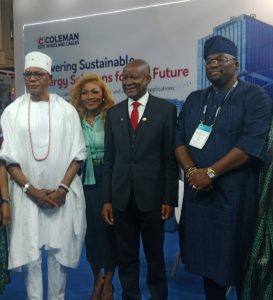
The Managing Director and Chief Executive Officer of Coleman Technical Industries Limited, George Onafowokan, has called for greater standardisation and increased value addition to enhance intra-African trade and strengthen regional industrial growth.

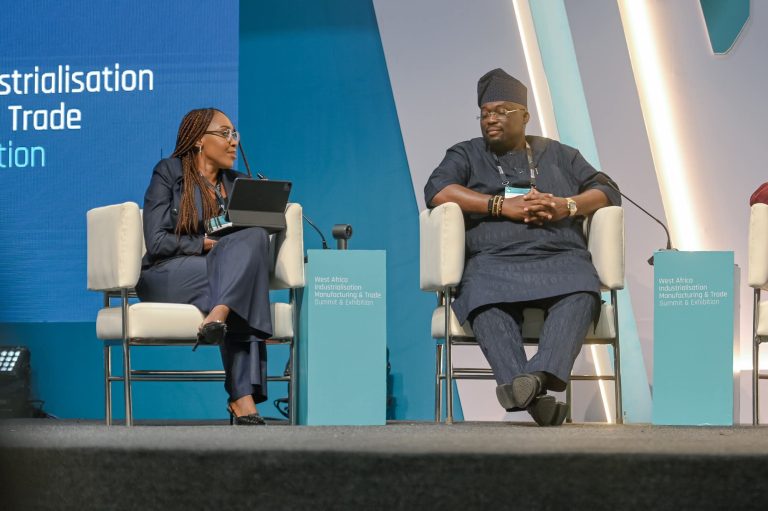
Onafowokan made the remarks during a panel session at the West Africa Industrialisation, Manufacturing & Trade Summit & Exhibition currently holding at the Landmark Centre.
Speaking at the event, which brought together industry leaders and policymakers, Onafowokan identified the lack of harmonised standards and persistent logistics bottlenecks as major obstacles to trade across African countries.

The panel featured several business leaders, including Vice President of the World Trade Center Lagos, David Oke; Taiwo Ajetunmobi representing the Nigeria-China Strategic Partnership; Founder and CEO of SeedaTree Capital, Bowale Adeoye; and Founder/CEO of Matta, Mudiaga Mowoe.
Call for Harmonised Standards
Onafowokan noted that although some progress has been made in product standardisation across the continent, the lack of mutual recognition of standards continues to slow trade.

“We’ve made progress in standardisation, but whatever standard is used should be acceptable across countries. If a product is approved in Nigeria, it should be acceptable in Ghana or Cameroon,” he said.
According to him, certification itself is not the major challenge; rather, the difficulties lie in the movement of goods and people across borders. He pointed to multiple border charges, poor road networks and policy inconsistencies as key factors hindering trade within West Africa.

“Each country sees border crossings as revenue sources, which ultimately frustrates trade. If I produce in Nigeria and want to move goods to West Africa, it should be seamless,” he stressed, while calling for improved container transport systems and simplified logistics across the continent.

Shift from Raw Materials to Value Addition

Onafowokan also emphasised the need for African economies to move away from exporting raw materials and instead focus on building competitive regional supply chains.
Drawing a comparison with China, he noted that although the country imports about 40 per cent of the world’s copper, it processes the resource into finished goods and exports them at significantly higher value.

“They buy raw materials, process them into finished products, and export them at multiple times the original value. That is how you build a strong trade balance,” he explained.

He lamented that Africa continues to export crude oil, cocoa and other raw commodities, only to import refined petroleum products and finished chocolate at higher costs.

“It does not make sense that we see ourselves as the world’s raw material source and the biggest consumers of the finished products made from those same materials,” he said. “Until we wake up and prioritise value addition, our non-oil exports will never surpass oil exports.”

The Coleman boss urged governments to adopt balanced trade policies that support local manufacturing rather than encourage import dependence.

“We should encourage the importation of raw materials duty-free if they will be processed locally, but discourage the export of unprocessed materials,” he said.

He also stressed that government policies must deliberately support industrialisation and job creation, particularly given that over 70 per cent of Nigeria’s population is under 25.
“Government should be the enabler, not the driver of business. The private sector drives business, while the government creates the environment,” he added.

Commenting on the significance of the gathering, Onafowokan described the summit as one of the first industrial platforms in West Africa with a strong business-to-business focus.

“This is different from the usual business-to-consumer exhibitions. It creates opportunities for inter-business collaboration and also provides a forum where government and private sector players can engage directly on improving ease of doing business,” he said.

According to him, such platforms are vital for strengthening integration within the West African business ecosystem.

developments, Onafowokan warned that geopolitical conflicts affecting global oil markets could negatively impact manufacturing through rising energy and logistics costs.

“In any conflict scenario, crude oil prices rise, and that affects energy, transportation and production costs across industries. We hope it remains temporary,” he said.

Ogun’s Industrial Growth
Onafowokan, who also serves as Chairman of the Manufacturers Association of Nigeria, Ogun State chapter, described the state as Nigeria’s fastest-growing industrial hub.

“Ogun State today is the biggest hub for industry in Nigeria. Businesses and factories are opening consistently because the state provides space, infrastructure and an accommodating environment,” he noted.

He urged governments at all levels to sustain policies that promote industrial expansion and job creation.

Minister’s Commendation

Also speaking, the Minister of State for Industry, Trade and Investment, John Enoh, commended Coleman Technical Industries Limited for its reputation and quality output, urging Nigerian manufacturers to leverage excellence to expand their footprint within and beyond the country.

The summit continues with further sessions focused on deepening regional trade integration, strengthening supply chains and accelerating West Africa’s industrial transformation.

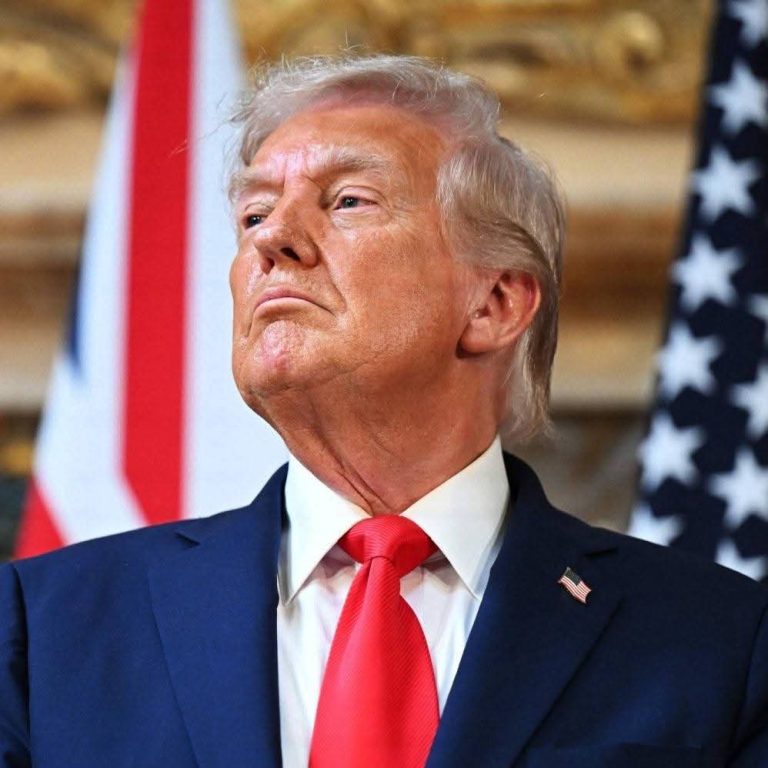
President Trump announces he must be “PERSONALLY” involved in the selection of Iran’s next leader

0

Trump said the son of Ayatollah Khamenei — Mojtaba Khamenei — is an “UNACCEPTABLE” successor

“Khamenei’s son is unacceptable to me. We want someone that will bring harmony and peace to Iran,” Trump tells Axios

“Khamenei’s son is a lightweight. I have to be involved in the appointment, like with Delcy [Rodriguez] in Venezuela.”

NO RADICAL CLERICS! The Islamic regime must be 100% DONE. 🇺🇸 🇮🇷

False claim against Tinubu: Court adjourns Sowore’s trial over judge’s absence

0


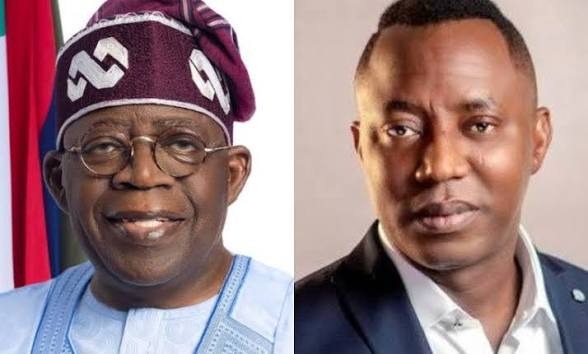
The Federal High Court in Abuja, on Thursday, adjourned the trial of the publisher of Sahara Reporters, Omoyele Sowore, on alleged defamatory remarks against President Bola Tinubu, for continuation of hearing.

The case, scheduled for Thursday, could not proceed due to the absence of Justice Mohammed Umar in court.

Although the lawyer for the prosecution, Akinlu Kehibde, SAN, and that of the defence, Marshall Abubakar, were in court, including the defendant and the prosecution witness, Justice Umar, the trial judge, was said to be in another official engagement.

Sowore is being prosecuted by the Department of State Services (DSS) for allegedly making a false claim against the person of President Tinubu by referring to him as “a criminal” in a post he made on his “X” and Facebook accounts.

Justice Umar had, on Feb. 4, rejected two documents tendered by Sowore.
The judge, in a ruling, declined an oral application by Sowore’s lawyer, seeking an order admitting a set of documents comprising printouts of publications in evidence.

The publications include media reports about DSS’ dismissal of 115 officials for misconduct; the Economic and Financial Crimes Commission (EFCC) charging five ex-governors with corruption; EFCC’s sacking 27 of its officials over fraud and misconduct; and EFCC’s arrest of some ex-staff of the NNPCL over N7.2 billion fraud.

In the ruling, Justice Umar agreed with the DSS lawyer that the best opportunity for the defendant to tender the documents is during the conduct of his defence.

The judge held that since the first prosecution witness (PW-1), Cyril Nosike, an operative of the secret police, being cross-examined by Abubakar, said he knew nothing about the publications contained in the documents, such documents could not be tendered through the witness.

In the second ruling, the judge rejected another set of documents which comprised print-outs of publications which Abubakar claimed showed that President Tinubu allegedly called former President Goodluck Jonathan “a drunkard and sinking fisherman” and where he also called former President Olusegun Obasanjo “an expired meat”.

The judge marked the documents rejected for the same reason he gave in rejecting the first set of documents.

Justice Umar, however, frowned at the report by the prosecuting lawyer that a member of the defence team had live streamed previous proceedings in the case and urged the court to order an investigation to identify the person behind it.

Although Abubakar denied that any member of the defence team was involved and claimed that it could have been done by the DSS or people in the presidency, the judge said such conduct amounted to contempt of court.

Abubakar urged the court to only caution against a repeat of such an incident but to decline the request by the prosecuting lawyer that an investigation be ordered by the court. (NAN)

Nigeria Resolves OPL 245 Dispute, Paving Way for Deepwater Oil Development

0

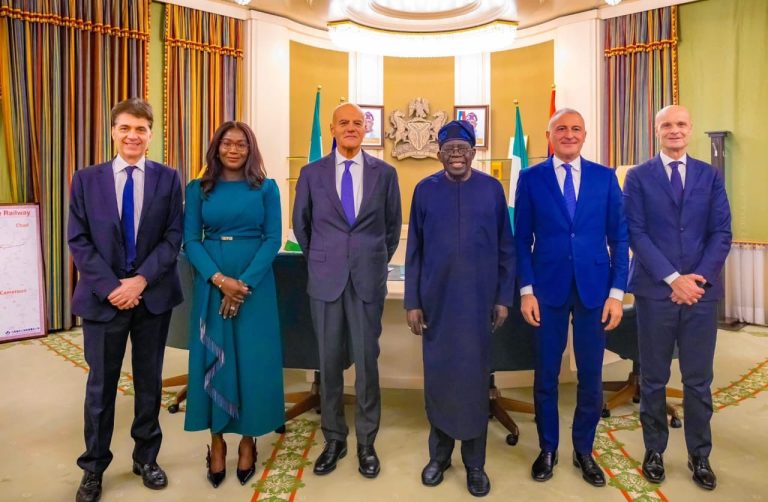
Bola Ahmed Tinubu has announced the resolution of the long-running dispute over Oil Prospecting Licence (OPL) 245, bringing to a close a saga that has lasted more than 15 years and potentially unlocking major investments in one of Nigeria’s largest untapped deepwater oil blocks.

The settlement, signed in Abuja, involves the Federal Government of Nigeria, Italian energy company Eni and its subsidiary Nigerian Agip Exploration Limited.

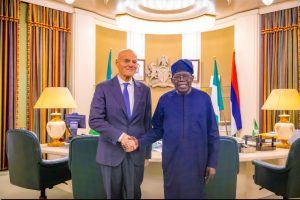
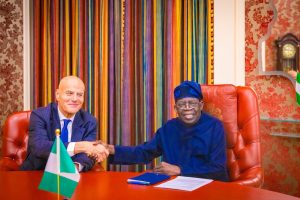
The agreement was disclosed during a meeting at the State House attended by Eni’s Chief Executive Officer Claudio Descalzi, Chief Operating Officer Guido Brusco, Head of Sub-Saharan Region Mario Bello, Managing Director of NAEL Fabrizio Bolondi, and the President’s Special Adviser on Energy, Olu Arowolo-Verheijen.
Tinubu said the resolution sends a strong signal to international investors about Nigeria’s commitment to transparency and stability in the energy sector.

“This resolution sends a clear signal to global investors that Nigeria is prepared to address legacy issues transparently, uphold the rule of law, and create a stable environment for long-term capital,” the President said.

The agreement clears the path for a Final Investment Decision on the Zabazaba–Etan deepwater project, which is expected to increase Nigeria’s crude oil production by about 150,000 barrels per day.
Officials described the settlement as a significant milestone aligned with the reforms introduced under the Petroleum Industry Act and broader efforts to strengthen fiscal governance and investor confidence in the sector.
Arowolo-Verheijen noted that the revised arrangement improves on a previous 2011 agreement by offering better value to Nigeria while providing investors with greater predictability.
“The revised terms strike a balanced outcome, ensuring stronger value accretion and safeguards for the Federation,” she said.

The OPL 245 block, estimated to contain up to nine billion barrels of oil, has been embroiled in controversy since it was first awarded in 1998 to Malabu Oil and Gas, a company linked to former petroleum minister Dan Etete.

Subsequent transfers to Eni and Shell in 2011 triggered international corruption investigations, including allegations of more than $1 billion in bribes. Although courts in Italy and other jurisdictions later acquitted the companies, prolonged legal disputes stalled development of the oil block.

Tinubu commended the efforts of several government institutions involved in resolving the dispute, including the Office of the Attorney General of the Federation, the Ministry of Petroleum Resources, the Nigerian Upstream Petroleum Regulatory Commission, and NNPC Limited.

The resolution forms part of broader reforms introduced since 2023 aimed at attracting fresh investment into Nigeria’s oil and gas industry.