Home Blog Page 597

IPMAN Urges FG to Slash Crude Oil Costs for Dangote Refinery Amid Soaring Petrol Prices

0


The National President of the Independent Petroleum Marketers Association of Nigeria (IPMAN), Abubakar Garima, has appealed to the Federal Government to lower the cost of crude oil supplied to the Dangote Petroleum Refinery in a bid to curb the escalating prices of Premium Motor Spirit (PMS), commonly known as petrol, which have now surpassed ₦1,000 per litre in several states.

It was reported that Nairametrics, Garima attributed the recent price hikes to volatile global oil markets, exacerbated by ongoing tensions in the Middle East, including the United States-Israel conflict involving Iran. These international factors have driven up crude oil prices, making it challenging for the Dangote Refinery to source affordable feedstock, which in turn affects domestic petrol production and distribution.

“Government support for domestic refining could help moderate prices, suggesting that crude supplied to the Dangote Refinery should be offered at more favourable terms rather than strictly at prevailing international market prices,” Garima stated.

He emphasized that such an intervention would enable the refinery to reduce its ex-gantry prices, allowing independent marketers to offer cheaper petrol to consumers and stabilize the market.

The call comes amid widespread reports of petrol pump prices climbing to ₦1,070 1,100 per litre in northern Nigeria and ₦1,030 ₦1,050 per litre in the South-West

Depot prices for marketers have also risen to between ₦1,000 and ₦1,010 per litre, compounded by additional costs for transportation and logistics.

This surge follows the Dangote Refinery’s recent adjustment of its gantry price by ₦221 within just four days, from ₦874 per litre to ₦995 per litre, leading to retail prices exceeding ₦1,050 per litre nationwide and causing supply shortages in areas like Lagos and Ogun.

Industry experts note that supporting the Dangote RefineryAfrica’s largest with subsidized or favorably priced crude could promote energy self-sufficiency and alleviate the economic strain on Nigerians amid rising inflation and fuel costs.

LP crisis: State chairmen urge INEC to reject Nenadi Usman’s planned congress

0

The State Chairmen Forum of the Labour Party on Monday called on the Independent National Electoral Commission (INEC) to reject a memo allegedly submitted by a controversial caretaker committee led by Nenadi Usman, notifying the commission of plans to conduct fresh party congresses from March 26.

The forum, which said it comprises all state chairmen elected during the party’s congresses held on December 6, 2025, also urged INEC to sanction Usman and members of the caretaker committee over what it described as an unlawful attempt to organise another round of congresses.

In a statement issued by the party’s National Publicity Secretary, Obiora Ifoh, the forum argued that the planned congresses violate the party’s constitution and existing electoral guidelines.

According to the statement, INEC had earlier declined a request by Usman to conduct congresses and warned that the caretaker committee lacked the authority to act on behalf of the party.

Ifoh maintained that the party leadership had previously stated that Usman was not a member of the Labour Party, adding that her communications with the electoral commission demonstrated what he described as ignorance of the party’s constitution.

He explained that under the party’s constitution, only the National Executive Council (NEC) has the authority to fix the date, time and guidelines for the conduct of congresses.

He further noted that executives at the state, local government and ward levels have a tenure of four years, making any attempt to organise fresh congresses barely months after the December 2025 exercise unconstitutional.

“The notice for another congress cannot be valid under the Labour Party constitution when the tenure of those elected in December 2025 still subsists,” he said.

Ifoh cited an INEC letter dated February 16 which, according to the party, rejected the caretaker committee’s earlier request.

The forum therefore asked the electoral commission to disregard what it described as a fresh memo dated March 3, 2026, notifying INEC of plans to hold new congresses beginning March 26.

To him, the forum also suggested that INEC should consider designating an official to oversee the party’s affairs in order to restore order within the party.

The statement described as unlawful any attempt by a caretaker committee to dissolve elected party structures and replace them with appointed officials.

“Tenure of elected officers is sacrosanct and guaranteed in the Labour Party constitution, and there is no provision granting a caretaker committee powers to dissolve elected party structures across the federation,” it added.

Ifoh also noted that the party leadership has appealed a judgment of the Federal High Court of Nigeria related to the dispute.

Sun

Actress Beverly Osu opens up on being underpaid in entertainment industry

0

Beverly Osu, a Nigerian actress and reality star, has stated that she believes she should be a billionaire by now due to her hard work.

She argued that her entertainment portfolio should be enough to make her an a billionaire in every African currency.

The movie star bemoaned that, but this is not the case because she has been underpaid over the years.

Speaking in a recent episode of Ghacha’s Chough podcast, Osu said, “I have worked so hard, my portfolio is enough to make me a billionaire not just in Nigeria but in Africa.

“I am a very humble person but I know that my portfolio is enough to make me a billionaire.

“So, I am fighting for better wages. I have tried different facets of the entertainment industry. From being a luxury model to video vixen to reality TV star and now actor. I have paid my dues.

Sun

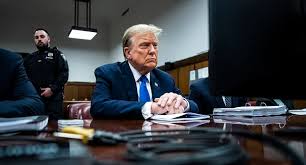
Trump defends Iran war decision as oil tops $100

0

Global oil markets surged past the $100 per barrel mark on Sunday for the first time in nearly four years, as escalating hostilities in the Middle East triggered fears of prolonged supply disruptions across global energy markets.

Both major crude benchmarks West Texas Intermediate (WTI) and Brent crude climbed by more than 15 per cent as trading opened, reaching levels last recorded during the early months of the 2022 Russian invasion of Ukraine.

The sharp rally followed intensifying tensions involving Iran, raising fresh concerns about stability in the world’s most critical oil-producing region.

Despite the spike in global energy prices, Donald Trump, President of the United States, defended the military action against Iran, describing the economic impact as necessary to eliminate what he called Tehran’s nuclear threat.

In a message posted on social media, Trump argued that the temporary surge in oil prices was a small cost compared to the long-term security benefits.

“Short-term oil prices, which will drop rapidly when the destruction of the Iran nuclear threat is over, is a very small price to pay for U.S.A., and world safety and peace,” he said, insisting that the market reaction would be short-lived.

Much of the market anxiety stems from the near halt of maritime traffic through the Strait of Hormuz, a strategic shipping corridor responsible for transporting roughly 20 per cent of the world’s crude oil and natural gas supply.

Energy analysts warn that prolonged disruptions in the waterway could significantly tighten global supply chains. Oil producers across the Gulf region have already begun scaling back production, while airstrikes targeting fuel facilities in Tehran have heightened fears of retaliatory attacks on energy infrastructure in neighbouring countries.

Officials in Washington, however, maintain that the disruption will likely be temporary. US Energy Secretary Chris Wright said the global market remains well supplied and predicted that shipping activities through the Strait of Hormuz could resume soon with military protection for commercial vessels.

Iran currently accounts for about four per cent of global oil production, according to data from the U.S. Energy Information Administration, though international sanctions have limited its export volumes in recent years.

Sun

CSOs suspend planned protest in Lagos, demand immediate investigation

0


The Coalition of Civil Society Organizations has announced the suspension of it’s planned protest in Lagos over the decision of the Lagos State Commissioner of Police, Jimoh Moshood, to declare the Youth Forum leader of the Ojomu Royal Family, Hammed Tajudeen, as a wanted person.

In a statement by its Chairman, Adeyemi Olorunsogo, the coalition expressed deep concern over what it described as persistent bias and selective actions by the Commissioner of Police against certain members and youths of the Ojomu Royal Family.

The coalition had earlier issued a seven-day ultimatum, scheduled to expire on March 9, 2026, during which it demanded an investigation into the matter.

The group had also planned to stage a peaceful protest should its demands remain unmet.

However, the coalition announced that it has decided to suspend the planned protest for an additional seven days following the recent change in leadership within the Nigeria Police Force.

According to the group, the decision was taken to allow the new leadership adequate time to review the issues raised and ensure justice is served.

Despite this gesture, the coalition expressed regret over what it described as continued actions by the Lagos CP allegedly aimed at satisfying certain sponsors.

The group specifically condemned the arraignment of some suspects at the Ogba Magistrate Court on March 6, 2026, which it claims is part of a deliberate attempt to further discredit Hammed Tajudeen.

Furthermore, the coalition raised serious concerns over what it described as the failure of law enforcement authorities to arrest individuals allegedly captured on camera destroying properties belonging to Hammed Tajudeen and others within the Ajiran community.

The group therefore questioned why those individuals have yet to be arrested and called on the authorities to ensure a fair, transparent, and impartial investigation into the matter.

The coalition warned that if decisive action is not taken within the extended timeframe, it may be left with no option but to mobilize peaceful protests and other lawful civic actions to demand justice.

APC govs at war over NWC positions

0


What was supposed to be a celebration of an expanding ruling party is fast degenerating into a ferocious war of attrition, as the All Progressives Congress (APC) prepares for its 2026 National Convention, billed to hold in Abuja this month.

The Convention, seen as the most important gathering since the party’s 2022 congress, governors elected on its platform are locked in bitter disagreements over the sharing of National Working Committee (NWC) positions, with zoning, presidential ambition and the calculations of 2027 general polls taking centre stages.

Multiple senior party sources, speaking to Daily Sun under the condition of anonymity, confirmed that the Progressives Governors’ Forum has held at least two closed-door sessions in Abuja that ended without resolutions.

The sticking point, sources say, is a familiar one. There are disagreements on which geopolitical zone takes which NWC office and who, within each zone, gets to name the candidates. “The governors are not fighting over principle,” one source told Daily Sun bluntly. “They are fighting over power. Every position on that NWC is a lever for 2027.”

The APC’s forthcoming National Convention is of strategic importance as it may confirm or restructure the NWC, which manages the party’s day-to-day affairs. Zoning considerations are expected to feature prominently. However, balancing has never come easily for the party. In 2022, a similar battle over NWC positions nearly derailed the convention.

This time, the stakes are arguably higher. The APC now has no fewer than 30 governors in its fold, swelled by a wave of defections from the opposition Peoples Democratic Party (PDP). The main disagreement, Daily Sun gathered, revolves around three NWC positions; the Deputy National Chairman (North), the National Organising Secretary, the National Publicity Secretary, and the Deputy National Publicity Secretary.

The aforementioned offices will be critical instruments for managing delegate lists, primaries and media narratives in the run-up to the 2027 general elections. Governors elected on the platform of the APC Governors’ Forum are unhappy, Daily Sun has gathered. A senior party source said many governors feel blindsided by earlier declarations.

For instance, it was learnt that the North West is pushing hard for enhanced representation in the NWC. The North Central, which currently provides the National Chairman in Professor Nentawe Goshwe Yilwatda, insists on maintaining the status quo.

The APC has inaugurated its National Central Coordinating Committee for the 2026 national convention. The inauguration ceremony held at the party’s national secretariat in Abuja, was presided over by APC National Chairman, Professor Yilwatda. During the inauguration, he said the move reflects the party’s commitment to internal democracy and organisational discipline.

Former Governor of Katsina State, Aminu Bello Masari, serves as Chairman of the Committee, with former Senate President, Anyim Pius Anyim, as Vice Chairman I; Governor AbdulRahman AbdulRazaq of Kwara State as Vice Chairman II; Governor Hope Uzodimma of Imo State as Treasurer and Governor Mai Mala Buni of Yobe State as Secretary. Multiple sources revealed that at least three governors on the committee itself hold conflicting positions on zoning and have been quietly lobbying from their respective regions to hold firm until their demands are met.

The new entrants to the party from the PDP and other parties in recent months, present a category of their own. In many states, including Delta, Enugu, Bayelsa and Taraba, allies of the defected governors emerged as state chairmen, effectively giving the new entrants firm control of party machinery.

Amid the unfolding drama, President Bola Tinubu has shown no sign to intervene. Instead, he has tactically given governors the leeway to control the affairs of the party.

Sun

Tinubu govt sued over mass phone-tapping rules

0


President Bola Tinubu

The government of President Bola Tinubu has been dragged to court over “the failure to withdraw the patently unlawful mass phone-tapping rules known as ‘Lawful Interception of Communications Regulations, 2019.’”

The lawsuit by the Socio-Economic Rights and Accountability Project (SERAP) followed allegations by the former Kaduna State governor, Mallam Nasir El-Rufai, that the National Security Adviser (NSA), Nuhu Ribadu’s phone conversation was intercepted.

In the suit number ECW/CCJ/APP/11/26 filed last Friday at the ECOWAS Community Court of Justice, Abuja, SERAP is seeking: “a declaration that the failure of the government to withdraw the Interception of Communications Regulations is unlawful and a violation of Nigeria’s international human rights obligations.”

SERAP is seeking “a declaration that the failure of the government to withdraw the Interception of Communications Regulations constitutes an official endorsement of unlawful mass phone-tapping rules, as the Regulations are patently unlawful, and violate the rule of law, democratic principles, and the right to privacy.”

SERAP is also seeking “an order directing and compelling the Nigerian government to immediately withdraw the Interception of Communications Regulations, and to commence a legislative process to ensure that any interception regulations are in conformity with Nigeria’s international human rights obligations.”

In the suit, SERAP is arguing that, “the Regulations establish a sweeping mass phone-tapping regime that violates Nigerians’ constitutionally and internationally guaranteed human rights including to privacy and freedom of expression.”

SERAP is also arguing that, “Where powers affecting fundamental human rights are exercised in secrecy and concentrated in political authorities without independent supervision, the risks of arbitrariness are substantial.

“Surveillance measures that lack strict necessity, proportionality and independent judicial oversight can easily be weaponised against political opponents, journalists, civil society actors and election observers.”

“The Regulations also raise serious concerns as Nigeria approaches the 2027 general elections. Broad and weakly safeguarded interception powers create a real risk of abuse during politically sensitive periods.”

The suit filed on behalf of SERAP by its lawyers, Kolawole Oluwadare, Oluwakemi Oni, Valentina Adegoke and Maryam Mumuni, read in part: “Secret surveillance and bulk data collection create a permanent risk of misuse, profiling and abuse, particularly given the formidable technologies available to state authorities.

“The mere retention or storage of personal data relating to an individual’s private life constitutes an interference with this right—whether or not the data is subsequently accessed or used.

“In an electoral climate, even the perception that private communications are being monitored can chill political organising, investigative reporting and voter mobilisation.

“The Regulations grant overly broad and vague powers to intercept communications on grounds such as ‘national security,’ ‘economic wellbeing,’ and ‘public emergency,’ without adequate judicial safeguards, independent oversight, transparency, or effective remedies.

“Free and fair elections depend on confidential communications, protected journalistic sources and open democratic debate. Any misuse of intercepted data for intimidation, political advantage or disinformation would fundamentally undermine Nigerians’ right to political participation and electoral integrity.

“As 2027 approaches, interception powers must be narrowly defined, subject to prior independent judicial authorisation and backed by effective remedies. Without robust safeguards, these Regulations risk threatening privacy rights, freedom of expression and the credibility of Nigeria’s democratic process.

“Any restriction on the right to privacy must strictly comply with the principles of legality, necessity and proportionality. The Regulations fail all three tests.

“The Regulations normalise surveillance as routine state practice and invert the presumption of privacy by criminalising interception except as permitted under the Regulations.

“The Office of the United Nations High Commissioner for Human Rights has made it unequivocally clear: mass surveillance programmes based on indiscriminate and blanket collection of personal data are arbitrary per se and can never satisfy the requirements of legality, necessity, and proportionality.

“The Nigerian government has a positive obligation to adopt clear laws, effective safeguards, independent oversight mechanisms and accessible remedies to prevent abuse. These duties extend not only to state agencies but also to private actors, including telecommunications providers and technology companies.

“The Nigerian Communications Commission (the Commission) while purportedly exercising its powers under section 70 of the Nigerian Communications Act, 2003 adopted the ‘Lawful Interception of Communications Regulations, 2019 (The Regulations).

“Under Regulation 4, broad discretionary interception powers are granted to the National Security Adviser and the State Security Services, with minimal clarity regarding the scope or limits of such discretion.

“The provision also extends to communications within and outside Nigeria and grants blanket immunity to licensees acting ‘in good faith.’ Such broad and vaguely defined powers create significant risks of abuse, including political misuse.

“The inconsistencies in the Regulations create serious legal concerns. Regulation 4(1) limits interception powers to the National Security Adviser (NSA) and the State Security Services (SSS), and Regulation 12(1) reiterates this restriction.

“However, Regulation 23 on ‘Interpretation’ expands the category of ‘authorised agencies’ to include additional bodies such as the Nigeria Police Force, National Intelligence Agency, Economic and Financial Crimes Commission, National Drug Law Enforcement Agency, and any other agency the Commission may designate.

“This creates ambiguity and undermines legal certainty. Nigerians cannot reasonably know which authorities are empowered to intercept their communications, making the Regulations unpredictable and prone to arbitrary application and abuse.

“By delegating authority to the Commission to expand the list at its discretion, Regulation 23 effectively grants unfettered administrative power, contrary to constitutional guarantees of privacy under Section 37 of the Nigerian Constitution and Nigeria’s binding international human rights obligations.

“Such regulatory ambiguity threatens the rule of law, weakens accountability mechanisms, and increases the risk of abuse, particularly in politically sensitive contexts or during elections. Clear, narrowly defined statutory limits are essential wherever state authorities are empowered to intrude upon private communications.

“Regulation 8 is particularly troubling, as it permits interception without a warrant in situations involving consent, threats to life, or actions in the ‘ordinary course of business.’ These grounds are overly broad and clearly susceptible to abuse.

“Even where warrants are required, applications are made ex parte and without adversarial safeguards. Grounds such as ‘national security’ and ‘economic wellbeing’ are insufficiently defined, undermining the principles of legality and foreseeability.

“The Regulations also fail to require notification of individuals who have been subjected to surveillance, either during or after interception. Without notification, the ability of individuals to challenge unlawful surveillance is severely undermined.

“Private communications form part of individuals’ intimate sphere and personal development. In the digital age, protecting these rights requires exceptional vigilance.

“The Regulations supposedly establish under Regulation 2 a ‘legal and regulatory framework for the lawful interception of communications in Nigeria.’

“Under Regulation 6, intercepted communications may be retained for the duration of an investigation and archived for up to three years. There is no clarity on conditions governing storage, destruction, and oversight of retained data.

“Regulation 9 compels disclosure of encryption keys and access mechanisms by licensees and private persons. This provision weakens cybersecurity for everyone and fails to provide safeguards for journalists, lawyers, and human rights defenders whose communications require heightened protection.

“Regulations 10 and 11 require licensees to install interception equipment and prohibit services without interception capacity. These provisions effectively discourage privacy-enhancing technologies and undermine secure communications, thereby chilling freedom of privacy, expression and association.

“Emergency interception powers under Regulation 12 allow warrantless surveillance on broad grounds, including ‘national security’ and ‘organised crime’, without prior judicial authorisation. Vague national security grounds violate the right to privacy.

“Regulations 13 to 15 grant extensive powers of entry, seizure, and execution without establishing an independent review mechanism. Likewise, Regulation 19 limits reporting to the Attorney General of the Federation, a political appointee, without independent parliamentary or judicial oversight.

“While SERAP acknowledges the government’s responsibility to address national security and organised crime, such objectives must be pursued within constitutional and international human rights limits. The Regulations are neither necessary in a democratic society nor proportionate.”

No date has been fixed for the hearing of the suit.

Sun

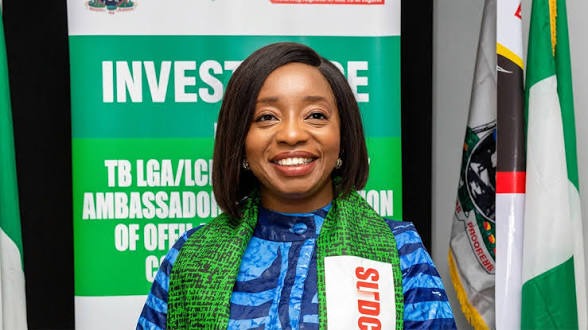
Sanwo-Olu’s wife commends Wema Bank on women empowerment

0


Wife of Lagos State Governor, Mrs Ibijoke Sanwo-Olu, has hailed Wema Bank for its sustained commitment to women’s empowerment and inclusive economic growth in Nigeria.

She gave the commendation at the bank’s 2026 International Women’s Day celebration in Lagos.

The event, regarded as one of the largest International Women’s Day gatherings in the banking sector, brought together dignitaries, public figures and women leaders from various sectors to discuss issues surrounding women’s empowerment and economic inclusion.

Mrs. Sanwo-Olu commended the leadership of Wema Bank for consistently initiating programmes that support women and promote inclusive growth.

She also conveyed the goodwill message from the Governor, Mr. Babajide Sanwo-Olu.

“I am pleased to be associated with today’s gathering, an initiative of Wema Bank to commemorate this year’s International Women’s Day and celebrate women,” she said. “The leadership of Wema Bank has consistently championed initiatives that empower women and promote inclusive growth in our society.”

She emphasised that financial inclusion remains a critical tool for advancing women’s economic empowerment, noting that access to credit, savings, investments and digital banking solutions enables women to expand their businesses, support their families and contribute to national development.

She commended the bank for designing products and platforms that specifically address the financial needs of women, thereby helping them build economic confidence.

“As a state, every initiative we have curated to support women stems from the realisation that our women deserve the best,” she said. “When a woman is empowered or given opportunities, the benefits extend far beyond her immediate sphere of influence.”

She also stressed that women’s empowerment requires continuous commitment from the government, financial institutions, corporate organisations, civil society groups and families.

She expressed optimism that the gathering would encourage deeper collaboration and innovative ideas aimed at building a society where women are given equal opportunities to thrive.

“Empowerment is not a one-day conversation,” she added. “It requires sustained commitment. I hope this gathering will spark deeper collaboration, bolder ideas and renewed determination to build a society where no woman is left behind.”

The event featured a diverse lineup of notable personalities, including the UN Women Resident Representative to Nigeria and ECOWAS, Ms. Beatrice Eyong; filmmaker, Funke Akindele; television host, Morayo Afolabi-Brown; singer, Waje; dancer and creative entrepreneur, Kaffy; vocalist, Yinka Davies; drummer, Ara; television anchor, Olive Emodi and actor, Daniel Etim Effiong.

Participants at the event explored this year’s theme, “Give To Gain,” alongside the bank’s discussion topic, “When Women Gain, We Grow,” highlighting the broader social and economic impact of empowering women.

Sun

Fresh price war erupts as fuel marketers battle for market share

0


•Warn petrol could hit N1,500/litre over Middle East conflicts
•Fuel price changes driven by market forces –NMDPRA

A fierce petroleum products price war, triggered by the Middle East crisis, erupted at the weekend among fuel marketers. It pushed petrol cost to a little over N1,000 per litre, with some far-flung jurisdictions reporting far higher figures.

The National President, Petroleum Products Retail Outlets Owners Association of Nigeria (Billy Gillis-Harry), Mr. Billy Gillis-Harry, warned yesterday that the situation in the petroleum sector is deteriorating and that Nigerians could face steep increases in fuel prices if local refineries are not urgently rehabilitated.

He cautioned that if the ongoing disruptions persist, petrol prices could surge to nearly N1,500 per litre, while diesel may surpass N2,000 per litre in the near term.

Mr. Gillis-Harry emphasised that petrol is vital for everyday consumption and diesel is crucial for powering manufacturing and industrial activities.

He stressed that unchecked price hikes would exacerbate inflation, increase transportation costs, and drive up the prices of goods across the country.

At the heart of the crisis is the battle for the control of the market share by the respective fuel marketing companies.

Findings by Daily Sun across major and independent marketers on Sunday revealed aggressive marketing strategies by the various filling stations to retain their customers which have led to a price war.

Curiously, the MRS filling station, a key partner of the Dangote refinery led the price chart at N1,057 per litre, Mobil: N1,050, TotalEnergies: N1,050 and AP: N1,030.

For most independent marketers, prices were pegged at N1,100 per litre.

The situation has also prompted Nigerian National Petroleum Company Ltd retail outlets to raise petrol prices for the second time in just four days.

The state-owned retail outlets increased petrol price on Saturday to N967 per litre, from N960, representing a N7 per litre price hike.

The latest petrol hike by NNPC Ltd followed an earlier price hike from N875 to N960 per litre.

Last Monday, the Dangote Refinery raised its petrol gantry price by N100 per litre, lifting the ex-depot rate from N774 to N874 amid renewed volatility in global crude oil markets. Following the adjustment, major filling stations in Abuja and Lagos quickly revised their pump prices, selling petrol at N930 and N960 per litre, up from N830 and N875 respectively. In a statement released last Thursday, the refinery’s management explained that the increase was driven by sharp spikes in crude and freight costs, caused by ongoing geopolitical tensions in the Middle East, which have disrupted refining operations and tightened the global supply of petroleum products.

The company noted that the conflict has forced the shutdown of some refineries and reduced output across several parts of the world, contributing to a global shortage of refined petroleum products.

“Dangote Petroleum Refinery & Petrochemicals reassures Nigerians of its unwavering commitment to serving as a stabilising force amid recent shocks in the international oil market,” the statement said.

The refinery added that the price adjustment raised its ex-depot petrol price by N100 per litre, representing an increase of about 12 per cent.

“The refinery implemented a measured adjustment of N100 per litre in its ex-depot price of Premium Motor Spirit, representing an increase of about 12%,” the company explained.

Despite the increase, the refinery said it absorbed part of the rising costs in order to cushion the impact on the domestic market.

“The refinery has absorbed 20% of the cost escalation, for now, to cushion the domestic market,” it said.

The refinery explained that the cost of crude oil sourced for its operations has risen significantly, noting that Nigerian crude currently trades above the global Brent benchmark.

But five days after raising its gantry price to from N774 to N874 per litre, the refinery yet again, jacked up prices on Saturday morning to N955 per litre, marking a sharp N221 rise in five days.

Meanwhile, PETROAN has called on the Group Chief Executive Officer (GCEO) of the Nigerian National Petroleum Company Limited (NNPC Ltd.), Mr. Bayo Ojulari, to urgently facilitate the commencement of production at Nigeria’s local refineries.

Gillis-Harry made the call at Ignatius Ajuru University of Education, Port Harcourt, while delivering a keynote address on the theme “Deconstructing Energy Trilemma,” organised by the Department of Petroleum Economics and Policy Studies.

Also reacting, the Nigerian Midstream and Downstream Petroleum Regulatory Authority (NMDPRA) says fluctuations in fuel pump prices are a direct result of market dynamics under Nigeria’s deregulated downstream petroleum sector.

The authority’s spokesperson, George Ene-Ita, said this in an interview with the News Agency of Nigeria (NAN) in Abuja while reacting to the recent increase in fuel pump prices linked to the ongoing Middle East crisis.

Many motorists in Abuja have expressed concern and dissatisfaction over the recent hike in prices of Premium Motor Spirit (PMS) called fuel, which were previously sold between N875 and N880 per litre.

Currently, independent marketers are selling fuel between N960 and N1,000 per litre and above, while outlets of the Nigerian National Petroleum Company Limited are selling at about N960 per litre.

Nigerians have expressed concern on the justification for the increase in pump price and the implications to the country.

Ene-Ita said the variations in pump prices across the country were not due to regulatory interference but were driven by supply and demand forces within the market.

“Nigeria has been operating a fully deregulated downstream petroleum regime since the inception of the current administration.

“Therefore, pump price vagaries are purely as a result of market dynamics,” he said.

He explained that under a deregulated framework, petroleum product prices responded to prevailing market conditions.

He added that the policy direction was aimed at allowing market forces to determine prices while encouraging competition, efficiency and increased investment in Nigeria’s downstream oil and gas sector.

According to the PETROAN President, the ongoing conflict involving Israel, the United States and Iran is driving global petroleum prices to extremely alarming levels.

He noted that persistent drone and missile attacks pose serious threats to the Strait of Hormuz, a vital shipping route that accounts for about 30 per cent of global crude oil transportation.

“The situation is worsening. Before the war, petrol sold at N774 per litre (Gantry price). Currently, as tensions intensify, PMS sells between N950 and N970 per litre (Gantry price). This represents an overall increase of about 25 per cent

For AGO (diesel), the price was N950 per litre before the war but has risen to N1,400 per litre today. Diesel has, therefore, recorded an increase of about 47 per cent,’’.

He emphasised the urgent need to rehabilitate Nigeria’s local refineries to enable immediate production.

He explained that domestic refining would reduce exposure to international market shocks, since crude oil is abundantly available to the NNPC Ltd.

Local refineries, he said, are less vulnerable to global disruptions compared to privately owned refineries that rely on imported crude.

He assured Nigerians that the reform policies of President Bola Tinubu will ultimately bring relief to citizens and stimulate economic growth.

Sun

Fear grips PDP members over leadership as Appeal Court rules today

0


• Chieftains speak on possibility of party not fielding candidates in 2027 polls

Palpable anxiety has gripped the Peoples Democratic Party (PDP) as the Court of Appeal is set to give its judgment on the leadership tussle, which has polarised the party between Governor Seyi Makinde backed National Working Committee (NWC) and National Caretaker Committee supported by the Minister of the Federal Capital Territory (FCT), today.

The Court of Appeal had, after submissions from the feuding parties last month, reserved judgment on the dispute. Party sources told Daily Sun that ahead of the expected judgment, the PDP supporters in the two camps are apprehensive as to where the pendulum would swing. “Everybody is waiting. It is a court judgment and everybody is agitated. Nobody is sure of anything,” a party source said.

The PDP crisis escalated after the November 15 and 16 National Convention in Ibadan last November, which elected the Tanimu Turaki-led NWC and announced the expulsion of the FCT minister, Nyesom Wike; former Ekiti State Governor, Ayo Fayose; Senator Samuel Anyanwu; Kamaldeen Ajibade and Umar Bature among others, as well as the dissolution of the State Working Committees (SWCs) in six states.

In a retaliatory move, the Wike camp, which had dismissed the convention as a jamboree, constituted a 13-member National Caretaker Committee headed by Abdulraham Mohammed to run the affairs of the party, pending the election of new NWC members and also announced the expulsion of Bauchi State Governor; Oyo State Governor, Seye Makinde; Zamfara State Governor, Lawal Dauda; Umar Damagum; Adolphus Wabara and Chief Olabode George, among others.

Prior to the Ibadan convention, the PDP has been embroiled in crisis following a tussle between the PDP governors on the one hand and the FCT minister on the other hand, over the control of the party’s machinery ahead of the 2027 polls. While a Federal High Court in Abuja directed the party not to go ahead with the convention, an Oyo State High Court in Ibadan, gave the PDP a go-ahead for the exercise.

In the aftermath of the convention, there are also two conflicting judgments on the PDP crisis. While the Federal High Court, Ibadan, nullified the outcome of the convention. The Oyo State High Court upheld the exercise.

While the Court of Appeal judgment is expected to bring some clarity to the leadership tussle in the PDP, some party chieftains are apprehensive that the prolonged crisis is threatening the participation of the party in the 2027 polls, as the case may eventually end at the Supreme Court.

The party’s problem, in respect to the next general election, is compounded by the new electoral act, which compels political parties to submit a digital register of all its members nationwide to the Independent National Electoral Commission (INEC) 21 days to the nomination of party candidates for election.

Section 77 (2) of the Electoral Act 2026 mandates every political party to maintain a digital register of its members, while Section 77 (4) prescribes that “Each party shall make such register available to the Commission not later than 21 days before the date fixed for the party primaries, congresses or conventions.” In addition, Section 77(7) states that “a party that fails to submit the membership register within the stipulated time shall not be eligible to field a candidate for that election.”

According to INEC timetable for the 2027 polls, the primaries to choose party candidates is scheduled to be held between April 23 to May 30. Consequently, political parties are expected to submit their digital register to the electoral commission on April 2.

Immediate past PDP deputy national youth leader, Timothy Osadolor, told Daily Sun that he is afraid that the party has been weakened considerably, such that it might be an exercise in futility for anyone to seek to contest the 2027 polls on the platform of the party. He stated that some members of the party, interested in contesting the next general election, are already looking for alternative platforms to actualise their aspiration.

Osadolor said: “Even if the leadership crisis is resolved before the commencement of primaries, the damage is already done and there is no way any credible candidate will stand a chance, no matter how popular he or she might be. The countless litigation have weakened the party base; there are still those who are skeptical that all of these, fielding candidates might be an exercise in futility. I have that fear too.”

Similarly, a chieftain of the PDP from one of the South West states, who pleaded anonymity, told Daily Sun that members of the party were afraid as to whether the party would be able to participate in the 2027 polls. The PDP chieftain, who is also eying a national assembly seat in the 2027 election, noted that though Oyo State Governor has asked his supporters interested in the next general election to start campaign on the PDP platform, they are afraid that their efforts might come to nought at the end of the day.

According to him, “People who want to contest under the PDP are apprehensive. Although the governor said they should campaign on the platform of the PDP, they are apprehensive that the case might not be resolved and if eventually resolved against their faction, even if they have won election, it might be an exercise in futility.

“The fear is real in respect of what the Court of Appeal decides. The Supreme Court will eventually have the final say. And whatever nomination on the strength of the Court of Appeal judgment might be a nullity. Look at what is happening in Osun and Ekiti. The party has no candidates in the governorship contests in the two states. It is a big issue.”

Nonetheless, the factions are making separate plans for the general election. The Turaki camp is currently conducting digital membership registration, while the Wike camp is holding congresses in some states. Officials of the two camps, who spoke to Daily Sun before the date for judgment was fixed, had expressed hopes that the judiciary would act expeditiously.

National Publicity Secretary of the Turaki-led NWC, Ini Ememobong, told Daily Sun that the PDP has done its part in preparation for the nomination of candidates for the 2027 polls, noting that it was waiting for the court to give its verdict.

“We have done our part in preparation for the primaries. We are hopeful that with the new timetable, the court will be more expeditious in its judgment.”

Similarly, a member of the Caretaker Committee, Okechukwu Osuoha, told Daily Sun, that there was no cause for alarm, noting that the committee, relying on the judgment of the Federal High Court, Ibadan, which nullified the convention, is going ahead with preparation for the next general election. However, Osuoha expressed hope that the Court of Appeal would give its verdict on the leadership issue soon.

He said: “There is no cause for alarm. The National Caretaker Committee, which I am a member, has already started work by holding congresses in some states. The National Convention has been scheduled to take place on March 29 and 30. The Court of Appeal had heard the matter and reserved a date for judgment. I am believing that it will come very soon. We are doing whatever we can do to be up to date.”

Sun