Home Blog Page 572

Cardoso: Nigeria’s financial reforms boosts shock resistance, investor confidence

0


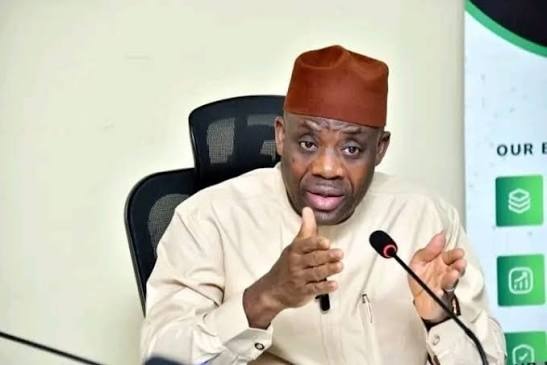
Governor of the Central Bank of Nigeria (CBN), Mr. Olayemi Cardoso, has said that Nigeria’s recent monetary and financial-sector reforms have strengthened the country’s capacity to withstand external shocks and restored investor confidence.

Speaking at the Africa Capital Forum in London on Tuesday, on the sidelines of President Bola Ahmed Tinubu’s state visit to the United Kingdom, Cardoso highlighted that disciplined policy measures and institutional reforms had created a more resilient financial system.

He noted that Nigeria’s foreign exchange market now enjoys greater transparency and liquidity, with a new FX manual simplifying trade and investment processes and removing many former capital controls.

Cardoso also announced the near-finalisation of the new Payments System Vision for Nigeria, aimed at positioning the country as a regional leader in digital and cross-border payments.

Reporting on the bank recapitalisation programme, the CBN Governor said over 30 banks had met the new capital requirements, with verification ongoing for the rest. “About 28 per cent of investment in the recapitalisation came from foreign sources,” he added, highlighting renewed confidence in Nigeria’s financial stability.

He further explained that diaspora remittances had grown substantially, helping diversify foreign exchange reserves and making them more resilient to global volatility.

“Our focus going forward is to protect the hard-earned stability we have accomplished so investors and stakeholders can plan with confidence,” Cardoso said, pledging transparency and ongoing communication to maintain trust and avoid past policy missteps.

On the digital finance agenda, he noted that the CBN is working closely with Nigeria’s fintech sector to remove regulatory bottlenecks and support innovations that enhance financial inclusion across Africa.

Cardoso also stressed the importance of coordination between fiscal and monetary authorities, noting that the inclusion of fiscal representatives on the CBN Board and Monetary Policy Committee is critical for sustainable growth.

He reported that inflation had declined sharply, exchange-rate stability had improved, and reforms had positioned Nigeria for significant growth driven by domestic investment, oil-sector reforms, and renewed global trust.

“We will continue to maintain stability, not only in inflation but in the FX market, with more transparency and consistent reporting,” he said, adding that the CBN would remain vigilant in managing inflation.

The Governor emphasised that Nigeria’s macroeconomic reforms have shifted the country from stabilisation to capital mobilisation, making it “an economy to watch very closely” as growth drivers strengthen and the banking system becomes one of Africa’s most robust.

He concluded by stating that the CBN is reviewing its policies to develop a predictable framework that minimises discretion while supporting meaningful and sustainable financial growth.

Vanguard
CAF AFCON Saga: 5 times championship titles were decided after final whistle

0

In sport, the final whistle is supposed to settle everything. Trophies are lifted, medals awarded, and history seemingly written in stone. Yet, in rare and often controversial circumstances, governing bodies have stepped in after the fact to overturn final results, stripping winners and rewriting outcomes.

The latest example came at the AFCON 2025 Final, where Senegal were initially crowned champions before being stripped of the title following disciplinary action over a walk-off incident, with Morocco subsequently awarded a 3–0 victory.

Here are five notable instances where sports championship titles did not stand after the final had been played.

1. 2000 Sydney Olympics Women’s 4x400m Relay: USA stripped of gold

The United States team initially celebrated Olympic gold, but years later, the victory was overturned following the doping scandal involving Marion Jones. As a result, the team was stripped of its medal and the title reassigned, marking one of the most high-profile relay disqualifications in Olympic history.

2. 2004 Athens Olympics Men’s Shot Put: Gold reassigned after retest

Ukrainian shot putter Yuriy Bilonog originally stood atop the podium, only for his result to be invalidated years later after a positive doping retest. The gold medal was subsequently awarded to another athlete, reinforcing the long-term impact of anti-doping reviews.

4. CAF Champions League 2019 Final: Title decided after abandonment

The final between Esperance and Wydad Casablanca ended in chaos after a VAR dispute halted play. CAF initially ordered a replay but later reversed that decision and awarded the title to Esperance, effectively settling the outcome off the pitch after the final had collapsed.

5. 2012 London Olympics Women’s 4x400m Relay: Medals reshuffled after doping cases

Jamaica’s women’s 4x400m relay team was elevated from bronze to silver at the London 2012 Olympics after Russia was stripped of its silver medal following a doping violation by Antonina Krivoshapka, the International Olympic Committee announced.

Vanguard

TB kills every 83 seconds in Africa as 2.7m infected

0


… As WHO warns of funding crisis

Every 83 seconds, Tuberculosis, TB, continues to exact a devastating toll across Africa, killing one person and infecting millions more, even as health authorities insist the disease can be eliminated with urgent and sustained action.

In a message to mark World Tuberculosis Day 2026, the World Health Organisation WHO, Regional Director for Africa, Dr. Mohamed Janabi, revealed that in 2024 alone, tuberculosis claimed 378,000 lives in the region while 2.7 million people fell ill, accounting for about a quarter of the global burden.

Despite the grim statistics, Janabi said the continent stands at a critical turning point, with new tools, treatments and political commitments offering a real chance to end the disease.

“Every 83 seconds, tuberculosis claims a life in the WHO African Region. Yet, amidst this crisis lies unprecedented opportunity,” he said.

Observed under the theme, “Yes! We Can End TB: Led by Countries, Powered by Communities,” this year’s campaign underscores the importance of strong national leadership, sustained funding and grassroots involvement in tackling the epidemic.

According to the WHO, measurable progress has already been recorded across the region. Between 2015 and 2024, tuberculosis-related deaths dropped by 46 per cent, while incidence declined by 28 per cent.

Several countries have also met key global milestones. South Africa reached the 2025 target for reducing TB incidence, while Mozambique, Tanzania, Togo and Zambia achieved a 75 per cent reduction in TB deaths.

Health experts attributed these gains to improved access to rapid diagnostic tools and the introduction of shorter, more effective treatments, particularly for drug-resistant tuberculosis.

A major breakthrough is the six-month all-oral BPaLM regimen, which has recorded success rates exceeding 85 per cent. The African region is currently leading global adoption of the treatment, with uptake among drug-resistant TB patients rising sharply from nearly zero in 2023 to about 40 per cent in 2024 — the fastest globally.

Janabi noted that these achievements demonstrate that “determined leadership, strengthened health systems and community engagement can deliver measurable results.”

However, he warned that significant gaps still threaten progress.

An estimated 600,000 people with tuberculosis in the region remain undiagnosed or untreated each year, while only just over half of patients have access to WHO-recommended rapid diagnostic tests.

The situation is further complicated by the continued spread of drug-resistant TB, with about 62,000 new cases of rifampicin-resistant tuberculosis recorded annually.

Beyond the health impact, the economic burden on affected families remains severe. Nearly 70 per cent of households dealing with tuberculosis face catastrophic costs, the highest proportion globally.

“These challenges are compounded by insufficient investment,” Janabi said, noting that the African region requires about 4.5 billion dollars annually for a comprehensive response but currently faces a funding shortfall of 3.6 billion dollars.

He stressed that closing these gaps will depend largely on political will and domestic investment by African governments, in line with commitments made at the 2023 United Nations High-Level Meeting on Tuberculosis.

World leaders at the meeting pledged to reach 90 per cent of people affected by TB with prevention and care services, cut TB deaths by 90 per cent, and eliminate catastrophic costs for households by 2027.

Janabi emphasised that achieving these targets will require integrating TB services into stronger primary health care systems, alongside coordinated, whole-of-government efforts.

He also highlighted the critical role of communities in driving progress, noting that community health workers, civil society groups and TB survivors are central to finding undetected cases, supporting treatment adherence, and reducing stigma.

“Their leadership ensures that national commitments translate into real progress for people and families,” he said.

Reaffirming WHO’s commitment, Janabi said the organisation would continue to support countries through technical guidance, capacity building and partnerships aimed at expanding access to diagnostics, improving treatment and strengthening surveillance systems.

He called on governments, donors and partners to act decisively.

“I call on governments to increase domestic investment and accelerate implementation of national TB strategies. I call on partners and donors to help close the critical funding gap. And I call on communities to continue their essential role in reaching vulnerable populations and holding us all accountable,” he said.

With the right mix of leadership, funding and community action, Janabi maintained that ending tuberculosis in Africa is achievable.

“Ending TB is within our reach. Yes, we can end TB.”

Vanguard

MAN: Coleman’s Backward Integration Strengthens African Value Chains

0


The Director-General of the Manufacturers Association of Nigeria (MAN), Segun Ajayi-Kadir, has praised the backward integration efforts of Coleman Technical Industries Limited, saying the company’s strategy aligns with the broader goal of building stronger industrial value chains across Africa.

Ajayi-Kadir said Africa must bridge the gap in industrial capacity by developing the ability to process and add value to its abundant natural resources rather than exporting them in raw form.

“Africa must bridge the gap in industrial capacity. Countries like the Democratic Republic of Congo have abundant resources but lack the capacity to maximise their value. What we have seen here, especially the backward integration efforts, fits perfectly into the narrative of building stronger African value chains,” he stated.

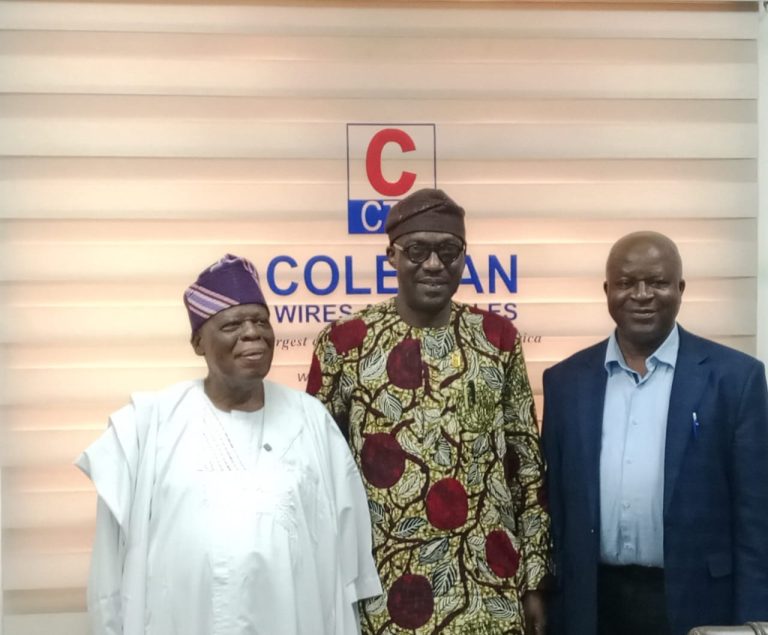
He made the remarks on during a courtesy visit by a MAN delegation to the Coleman factory in Sagamu, Ogun State, where the team toured the facility and held discussions with the company’s leadership.

The MAN Director-General also commended Coleman for its leadership in Nigeria’s manufacturing sector, describing the company as a “champion” that the association is eager to partner with in advancing industrial development.

Ajayi-Kadir conveyed apologies on behalf of the President of MAN, Francis Meshioye, who was unable to attend the visit due to other pressing engagements.

He noted that Ogun State has increasingly emerged as a key manufacturing hub in Nigeria, with the state competing strongly with other industrial centres across Africa in terms of the number of manufacturers operating within its borders.
According to him, the factory tour provided deeper insight into Coleman’s growth trajectory and its strategic investments in telecommunications and power infrastructure through the production of wires and cables.

“Nobody imagined that tele-density would grow this fast, and that government would be working towards expanding communication access across the country. At the heart of that development is connectivity, and we are happy that Coleman is right at the centre of it,” he said.

Ajayi-Kadir added that Coleman’s vision of expanding beyond Nigeria into West Africa and other parts of the continent aligns with regional integration objectives and the need to strengthen intra-African industrial collaboration.

He further highlighted the association’s ongoing advocacy for policies that prioritise local manufacturing and encourage Nigerians to patronise locally produced goods.

According to him, MAN’s upcoming general meeting will focus on advancing industrial policies that promote a “Nigeria First” approach while recognising companies that have distinguished themselves as leaders in the manufacturing sector.
“One of the things we intend to do this year is to showcase our champions in manufacturing, and Coleman is certainly one of those champions we are proud to work with,” Ajayi-Kadir said.

Responding, the Chairman of Coleman Technical Industries Limited, Solomon Onafowokan, thanked the MAN delegation for the visit and for taking the time to inspect the company’s facilities.

Onafowokan said the visit provided an opportunity for the association to see firsthand the scale of operations at the Sagamu plant and better understand the company’s contributions to Nigeria’s industrial growth.

“We are very delighted to receive you and grateful that you took the time to go round the factory. When people see what we are doing physically, they understand our work better and the scale of what we are building,” he said.
He added that the company values its longstanding relationship with MAN and looks forward to deeper collaboration aimed at strengthening Nigeria’s manufacturing sector.

“We appreciate your visit and the opportunity to hear your observations. Sometimes you cannot see yourself clearly, so it is important for partners like MAN to share what they believe about the work we are doing,” Onafowokan said.

21-year-old man faces trial over alleged smartphone, gold necklace theft

0


A 21-year-old man, Sounde Gafar, was on Wednesday arraigned before a Grade A Customary Court sitting at Mapo in Ibadan, Oyo State, over the alleged theft of a smartphone and a gold necklace valued at N2.5 million.

Gafar, however, pleaded not guilty to the one-count charge of stealing.

The President of the court, Mrs O. E. Owoseni, granted bail to the defendant in the sum of N200,000 with two reliable sureties in like sum.

Owoseni said the sureties must each provide evidence of tax payment to the Oyo State Government and a receipt from the Ibadan Electricity Distribution Company.

She adjourned the matter until April 30 for trial.

The prosecutor, Insp Ayodele Ayeni, told the court that the defendant committed the offence on March 6 at about 4:00 a.m. in the Mokola area of Ibadan, Oyo State.

Ayeni added that Gafar allegedly stole an iPhone 14 Pro Max valued at N1 million and a gold necklace valued at N1.5 million, bringing the total value to N2.5 million.

According to him, the items belong to one Goddey Yakub, the complainant.

The prosecutor stated that the offence contravened Section 390(9) of the Criminal Code, Cap. 38, Vol. II, Laws of Oyo State, 2000.

Israeli strikes hit central Beirut, kill 6

0


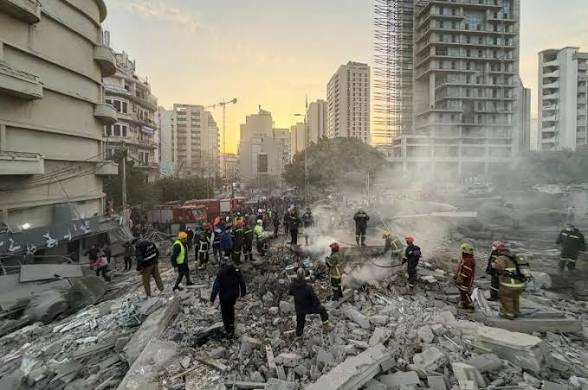
Israeli airstrikes struck central Beirut and the city’s southern suburbs early Wednesday, killing at least six people and injuring 24 others, according to Lebanon’s health ministry.

A loud explosion was reported in the Bashoura area, which had also been targeted in an strike last week.

A building at the site was reduced to rubble, according to a photographer on the scene.

The strike followed a warning issued by the Israeli military.

Lebanon’s state-run National News Agency said one of the strikes hit an apartment in the Zokak al-Blat neighbourhood in central Beirut.

The area was targeted last week when Israeli forces struck a branch of Al-Qard Al-Hassan, a financial institution associated with Hezbollah.

Another strike hit the Basta district, where witnesses reported hearing multiple explosions.

The areas struck are located near key Lebanese government sites, including the finance ministry and the headquarters of the prime minister.

The strikes came hours after Hezbollah launched dozens of rockets into northern Israel overnight, marking a further escalation in cross-border hostilities.

Iran executes suspected Mossad spy

0


Iran on Wednesday executed a man accused of spying for Israel’s foreign intelligence service, as violence across the Middle East intensified with deadly missile exchanges and airstrikes.

Iran’s Tasnim news agency reported that the man had been arrested in a rural area west of Tehran during the 12-day conflict between Iran and Israel in June.

Authorities alleged that he supplied images and sensitive information about strategic locations to Israel’s Mossad.

Iranian officials have detained numerous individuals suspected of espionage since the June conflict, with unconfirmed reports indicating that more than 10 people have been executed.

Human rights organisations have long criticised Iran’s use of capital punishment, arguing that it is frequently deployed to silence dissent.

According to the United Nations, more than 1,000 executions were carried out in the country last year.

Lagos 2027: Education Minister, Others May Resign

0


•••Alausa Endorsed As Next Governor – Source

Following a presidential directive that political appointees seeking to contest the 2027 general elections should resign by March 31, there are strong indications that the Minister of Education, Dr. Olatunji Alausa, may step down to contest the Lagos State governorship election.

The Lagos Monitoring Team gathered that, barring last-minute changes, Alausa may tender his resignation next week, as his governorship bid has already received the backing of powerful political forces and blocs within the All Progressives Congress (APC) in the state.

A credible source, who requested anonymity, confided in our reporter that Alausa has been endorsed.

“Dr. Alausa has been endorsed by the main political blocs. He is a technocrat, a remarkable and outstanding professional, and he is also a Muslim, while the current governor is a Christian. After four years of Governor Akinwunmi Ambode (a Christian) and eight years of Governor Sanwo-Olu, the Muslim ummah have been agitating for another Muslim leader to govern the state.

“However, without dwelling on religion, as it is just one of the factors working in Alausa’s favour, the most important thing is that he is qualified, prepared, and ready to lead the state. This is what the power blocs have recognised,” the source said.

Born in Epe on April 18, 1965, Alausa previously served as Minister of State for Health and Social Welfare and is an accomplished nephrologist. He is a US-trained medical expert known for focusing on systemic reforms in both healthcare and education.

He graduated with a Bachelor of Medicine and Surgery (MBBS) from the University of Lagos in 1993 and completed his residency in internal medicine at Royal Bolton Hospital and the University of Newcastle (1995–1997) before moving to the United States.

He served as Chief Medical Resident at Cook County Hospital, Chicago (1997–2001), and later worked as an Assistant Professor at Rush University Medical School. He also founded the Kidney Care Center and Dialysis Care Center in the United States.

As Minister of State for Health, Alausa worked assiduously and introduced various reforms focused on improving health indices and strengthening healthcare infrastructure.

As Minister of Education, he has prioritised strengthening the management of tertiary institutions, aligning curricula with industry needs, and improving university administration.

Dr. Alausa is widely regarded as a technocrat who brings private-sector experience and value-based management to public service. He is considered a strong contender for the office of Governor of Lagos State.

Aside from Alausa, there are several other serious contenders within the APC. These include former Governor Akinwunmi Ambode; current Deputy Governor Dr. Kadri Obafemi Hamzat; Chief of Staff to the President and former Speaker of the House of Representatives, Rt. Hon. Femi Gbajabiamila; former Lagos State Head of Service and current Principal Private Secretary to the President, Mr. Hakeem Muri-Okunola; and Chief of Staff to the Governor, Mr. Tayo Ayinde (Bufalo).

Others include the Speaker of the Lagos State House of Assembly, Rt. Hon. Mudashiru Obasa; Senator representing Lagos East, Senator Mukhail Adetokunbo Abiru; member representing Ikorodu Federal Constituency, Babajimi Benson; Chairman/CEO of the Nigerians in Diaspora Commission (NiDCOM), Hon. Abike Dabiri-Erewa; and Commissioner for the Environment and Water Resources, Hon. Tokunbo Wahab.

While it is not yet confirmed whether Gbajabiamila and Muri-Okunola will resign to pursue their governorship ambitions in line with the presidential directive, developments in the coming days and weeks are expected to provide key insights into who has secured the backing of influential power blocs to succeed Governor Babajide Sanwo-Olu in 2027.

credit: Lagos monitoring team

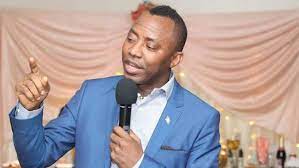
2027 elections: Sowore vows to challenge political establishment

0


Former presidential candidate and leader of the African Action Congress (AAC), Omoyele Sowore, has pledged to take a bold stand against Nigeria’s political establishment ahead of the 2027 elections.

Speaking on Channels TV’s Morning Brief, Sowore vowed that his party would “force the democratic space open, whether they like it or not, in a revolutionary way,” signaling a direct challenge to the ruling elite and mainstream political actors.

He criticized current politicians, accusing them of prioritizing personal gain over national development, saying he could not align with those whose “only agenda… is to come and loot, destroy and render this country one of the worst countries in the world.”

On President Bola Ahmed Tinubu’s recent visit to the United Kingdom, Sowore questioned the value of such trips, arguing that Nigerian musicians often bring more economic benefits to the country than official presidential excursions.
“The visit doesn’t bring anything to Nigeria that Nigeria cannot get,” he said.

“Sometimes, some of these our musicians who go and perform in the UK bring more money into the country than when the president travels to the UK or anywhere,” he added.

He continued that “Nigeria has got a lot more to offer than the UK has to offer Nigeria. If Nigeria had been properly governed over these years, our economy would probably be competing with or bigger than that of the United Kingdom by now.”

Criticizing the practice of seeking foreign investments through ceremonial visits, he said, “…we are back in 2026 to put on Christmas dress to go and kneel before the king or queen to get investments. If you have it right, investors will come to your country.”

Sun

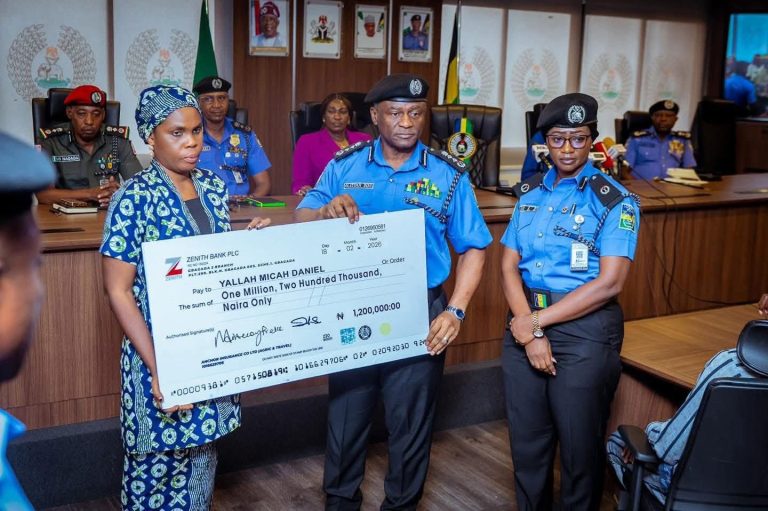
IGP DISU PRESENTS ₦2.4BN CHEQUES TO FAMILIES OF 1,075 FALLEN OFFICERS

0

…REAFFIRMS COMMITMENT TO PERSONNEL WELFARE

The Inspector-General of Police, IGP Olatunji Rilwan Disu, psc(+), NPM, today presented cheques to One Thousand and Seventy-Five (1,075) beneficiaries and next-of-kin of deceased police officers under the Group Life Assurance and IGP Family Welfare Schemes, at a ceremony held at the Force Headquarters, Abuja.

The cheques, amounting to a total sum of Two Billion, Four Hundred and Thirty-Five Million, Four Hundred and Twenty-One Thousand, Five Hundred and Eighty-Four Naira, Eleven Kobo (₦2,435,421,584.11), cover policy years 2018/2019, 2020/2021, 2021/2022, 2022/2023, as well as 2024/2025 and 2025/2026, including outstanding insurance claims recovered from previous years.

In her remarks, the Force Insurance Officer, ACP Lydia Ameh, stated that the disbursement reflects the determination of the IGP Olatunji Disu to prioritize the welfare of officers and their families.

She noted that the payments represent recoveries from long-standing insurance obligations and emphasized that decisive steps have been taken to ensure compliance by insurance providers and prevent delays in claims settlement. She reaffirmed the commitment of the Force Insurance Unit to efficient, transparent, and accountable service delivery.

In his response, the IGP described the ceremony as a solemn recognition of the sacrifices made by officers who lost their lives in the line of duty, noting that the welfare of personnel remains a central pillar of his administration.

He emphasized that the presentation goes beyond financial support, representing the Force’s enduring obligation to honour the courage, service, and commitment of its fallen heroes while standing firmly by their families.

IGP Olatunji Disu psc(+) NPM assured everyone that efforts would be intensified to strengthen welfare frameworks, improve administrative efficiency, and eliminate delays in the processing and disbursement of benefits.

He further noted that the Force will leverage modern technology to enhance transparency, streamline claims processing, and ensure accountability in welfare administration.

The Nigeria Police Force reiterates its commitment to the welfare of its personnel and the families of fallen officers, recognizing that their sacrifices remain invaluable to the peace, security, and stability of the nation.

DCP ANTHONY OKON PLACID psc(+) mni
Force Public Relations Officer
Force Headquarters, Abuja
18th March, 2026