Home Blog Page 563

Report of bandits drowning in Sokoto river is fake news – NIWA

0


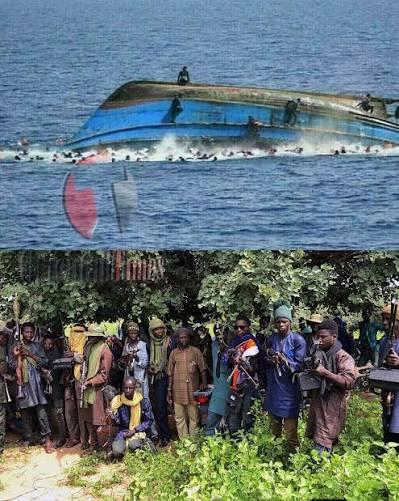
The National Inland Waterways Authority (NIWA) has debunked reports alleging that about 150 bandits drowned in a boat mishap at Sabon Gida area in Sabon Birni Local Government Area of Sokoto State.

NIWA Area Manager in charge of Sokoto Zonal Office, Mr Bello Bala, dismissed the report, describing it as fake in an interview with the News Agency of Nigeria (NAN) on Monday in Sokoto.
Bala said that there was no such incident, adding that the mentioned river was not navigable.

He appealed to the media to be wary of spreading misinformation and always verify news from credible sources, assuring that the authority was always readily available to respond.

The area manager reiterated that NIWA had been engaging riverine communities on safety measures, guidelines, use of life jackets, and other considerations on water usage.

He stressed that if there was such an incident, community members would report to the water users association leaders.
Meanwhile, a source from 8 Division of the Nigerian Army Sokoto also confirmed that the report was fake, as there was no such occurrence in the areas.

The source, who pleaded for anonymity, said troops were present across the areas and there was no report on boat capsising bandits from all parts.

Arteta’s costly gamble on Kepa backfires in Cup final loss

0


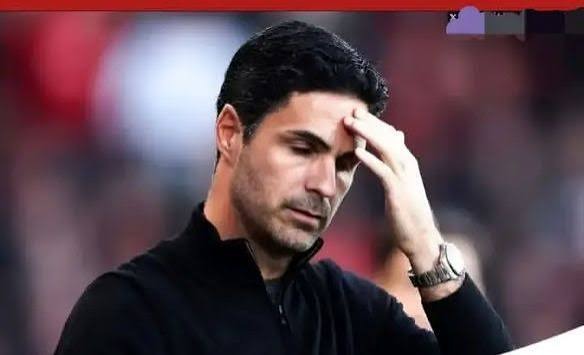
Arsenal manager Mikel Arteta’s choice to stick with Kepa Arrizabalaga will be one that haunts him as it proved costly in Sunday’s Carabao Cup final against league rivals Manchester City.

The News Agency reports that any talk of an Arsenal quadruple this season was firmly put in the bin after a miserable display at Wembley allowed Manchester City to win 2-0.

Arteta, known for ruthlessness, showed sentiment by retaining cup goalkeeper Kepa for the Carabao Cup final, in spite of Arsenal’s long wait for a major trophy since 2020.

Kepa’s costly error, allowing Rayan Cherki’s cross slip, gifted Nico O’Reilly the opener as Manchester City quickly doubled their lead to seal victory.

The decision to bench first-choice David Raya drew sharper scrutiny, especially after City’s goalkeeper James Trafford delivered a commanding performance.

Trafford, initially signed as City’s number one before Gianluigi Donnarumma’s arrival, produced a crucial triple save to deny Kai Havertz and Bukayo Saka.

He kept a clean sheet, while questions over Kepa’s selection dominated discussions following Arsenal’s disappointing defeat.

Former striker Chris Sutton criticised the decision, questioning why managers trust second-choice goalkeepers in finals instead of fielding their strongest line-up.

“I never understand why managers play their second-choice goalkeepers in cup finals.

“You’re trying to win a trophy, why wouldn’t you play your number one to give yourself the best possible chance? That’s common sense.”

Arsenal remain in contention for the FA Cup, Premier League, and UEFA Champions League, sustaining hopes of a historic treble despite their Carabao Cup final disappointment.

The Gunners must now channel full focus on the league and Europe, as they aim to capitalise on their strong position and salvage silverware this season.

Osimhen undergoes scan over arm injury

0


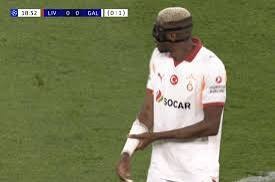
Galatasaray striker Victor Osimhen arrived in Istanbul on Sunday night for a scan on the arm injury he sustained last Wednesday in their UEFA Champions League match against Liverpool at Anfield.

Osimhen is scheduled to undergo additional medical testing on Monday (today) to determine whether surgery is required.

According to Turkish outlet Forza Cimbom, “Victor Osimhen is arriving in Istanbul tonight (Sunday). Following tomorrow’s (Monday’s) check-up, planning for surgery will be on the agenda depending on the fracture’s condition.”

Galatasaray are sweating over the fitness of the star striker, who could miss between three to five months of action after he was forced off with the injury against Liverpool.

Osimhen was brought down in the first half after a challenge from Ibrahima Konaté, and the club later confirmed that the Nigerian had fractured his arm.

Following the game, Galatasaray released an update on Osimhen’s condition, noting that a decision will be made on whether the 27-year-old will undergo surgery.

“In the first half of our away match against Liverpool in the Champions League round of 16 second leg, our player Victor Osimhen took a blow to his arm and completed the first half, but following checks at half-time, he was not played in the second half due to the risk of a fracture in his arm,” the club said in a statement.

“After the match, under the supervision of our medical team, examinations at the hospital revealed a fracture in our player’s right forearm, and it was cast. A decision regarding surgery will be made in the coming days following further evaluations.”
The 27-year-old had previously spent time in Nigeria, where he made public appearances with his arm in a cast.

It is unclear whether the striker will have surgery, which may take three to five months to recuperate from.

Despite their Champions League exit, Galatasaray will continue to rely on Osimhen’s attacking ability in their chase for the Super Lig and domestic cup crowns.

He has 19 goals and seven assists in 29 games in all competitions this season, helping the club take a four-point lead in the league.

He also had seven goals and three assists in ten UEFA Champions League games before their elimination.

According to Turkish journalist Ali Naci Küçük, the situation is being continuously followed, and an early return is possible depending on the course of recovery.

“The fracture healing with the cast is the hoped-for best-case scenario. The issue of Osimhen’s surgery will be evaluated next week.”

Sun

$16m TEF grant: Agric, fashion, ICT lead 2026 entrepreneur cohort

0


The Tony Elumelu Foundation (TEF) has said agriculture, fashion, and information and communication technology (ICT) emerged as the leading sectors in its 2026 entrepreneur cohort funded under a $16 million grant.

The foundation also disclosed that women account for the majority of the new beneficiaries, while 30 per cent are drawn from rural areas, reflecting a push for gender inclusion and wider access to opportunities.

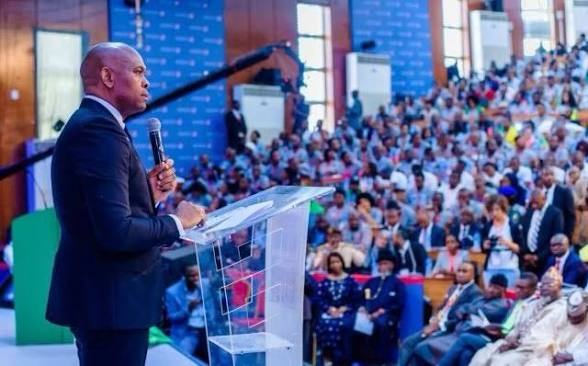
The announcement was made during the unveiling of the 2026 cohort in Abuja at the weekend.

Speaking at the event, Founder of TEF, Mr Tony Elumelu, said Africa’s future depends on empowering entrepreneurs, stressing that governments alone cannot drive the continent’s development.

He noted that the foundation’s philosophy of Afrocapitalism is centred on creating economic opportunities, reducing poverty, and spreading prosperity through enterprise.

According to him, “No one but us will develop Africa. The future of our continent is in your hands. The greatest betrayal of our young generation is if we fail to create jobs for them.

“What we do is not because we have so much, but because we believe in creating opportunities for others to succeed.”

In her remarks, Chief Executive Officer of TEF, Somachi Chris-Asoluka, said the 2026 programme will support 3,200 young entrepreneurs across Africa, with each beneficiary receiving $5,000 in non-refundable seed capital, alongside business training, mentorship, coaching, and access to networks.

She disclosed that the initiative will be implemented in four cohorts throughout the year in collaboration with global partners including the IKEA Foundation, UNICEF’s Generation Unlimited, the Dutch government, the United Nations Development Programme (UNDP), the Rwanda Ministry of Youth and Arts, the European Union, and German development agencies.

Chris-Asoluka noted that the programme attracted over 260,000 applications, demonstrating the growing entrepreneurial drive among young Africans, while a rigorous five-stage selection process combining technology and expert review ensured transparency and fairness.

According to her, after multiple screening stages, the final cohort represents all 54 African countries, with about 75 per cent aged between 18 and 35.

She added that the cohort spans key sectors including agriculture, ICT, fashion, food and beverage, as well as emerging areas such as green economy, healthcare, and education.

Chris-Asoluka further revealed that the foundation has strengthened its training modules to include artificial intelligence, stressing that African entrepreneurs must embrace innovation to remain competitive globally.

She emphasised that small and medium-scale enterprises (SMEs) remain central to solving Africa’s unemployment challenge, noting that entrepreneurship is critical to achieving large-scale job creation.

The TEF CEO also highlighted the foundation’s impact since inception in 2015, stating that over $100 million has been disbursed to more than 24,000 entrepreneurs, who have collectively generated over $4.2 billion in revenue and created about 1.5 million jobs, while positively impacting more than 4.2 million households.

She said: “We received over 260,000 applications from across the continent. 260,000 visions for a better, brighter future. Our selection process is built on structured criteria, blind scoring, and multiple independent reviews to ensure fairness and transparency.

“Only entrepreneurs can create the jobs at the scale Africa needs. It is not governments or big businesses that will create the millions of jobs our continent desperately needs.

“We are equipping our entrepreneurs not just with funding, but with business management training, AI knowledge, mentorship, and access to networks to help them succeed.”

Sun

Airfare hike imminent as M’East tensions push aviation fuel to N2,557/litre

0

•Domestic airlines battle losses amid plunging traffic

As tensions flare between the United States, Israel and Iran, Nigerian passengers may soon feel the heat, with aviation fuel (Jet A‑1) soaring to N2,557 per litre.

The growing crisis is forcing domestic airlines to consider hiking ticket prices to stay afloat.

Data from major Nigerian airports obtained by Daily Sun reveal that Sokoto currently has the highest aviation fuel price in the country at N2,557 per litre. It is closely followed by Kano at N2,554 per litre, while both Port Harcourt and Asaba report rates of N2,543 per litre.

Fuelling at Nnamdi Azikiwe International Airport, Abuja is at N2,538 per litre, while Enugu stands at N2,535 per litre.

Airlines buy Jet A1 in Warri airport at N2,530 per litre, Anambra airport at N2,529 per litre, Asaba airport at N2,528 per litre, while Lagos is the least at N2,500 per litre.

These prices took effect on March 20, 2026,

This comes as the Federal Competition and Consumer Protection Commission (FCCPC) warns of possible sanctions against domestic airlines over rising ticket prices. Aviation fuel, which accounts for 40 to 55 per cent of airline operating costs, has surged 100 per cent recently and forced carriers to absorb substantial losses.

An airline executive told Daily Sun that the situation is compounded by a decline in passenger traffic, leaving domestic operators grappling with both higher expenses and reduced revenue.
At the time of filing this report, average domestic flight fares remained around N92,000. However, an airline executive told Daily Sun that carriers are closely monitoring the situation, warning that if aviation fuel costs continue to rise, fare hikes across operators are likely inevitable.

“We are in a very difficult situation and most Nigerian airlines are losing money. We are operating at a loss. When fuel alone is consuming more than half of what we earn from ticket sales, there is no other path forward other than adjusting fares or grounding aircraft and neither option is good for the industry or passengers.

“The situation is compounded by a drop in passenger traffic because this is the off peak period. You carry passengers from Lagos to Abuja and the number of passengers can’t even fuel the aircraft. We are all struggling to stay afloat,” he said.

Foreign carriers have not been immune to the pressure of the war either. Several international airlines have quietly reduced their capacity on major routes or deploying smaller aircraft

Carriers such as Air France-KLM said they were considering options that could include cancelling routes in some parts of the world with less stable fuel reserves.

While Europe currently has enough stocks to supply airlines in the next month or so, other countries are more dependent on Gulf flows and could see shortages sooner.

Ben Smith, the chief executive of Air France-KLM, said that while there was currently no concern about fuelling planes for the 12-hour trip to south-east Asia, there was a risk that return flights could be compromised.

He said: “We’re putting in plans today to draw up scenarios on how we would deal with the shortage of fuel.

“South-east Asia is much more dependent on fuel coming over the Gulf than Europe is. If there’s no fuel, you can’t fly.”

Sun

Persistent fuel price surge leaves households, businesses gasping

0

• Marketers strained as Nigeriams seek intervention

“It was akin to a midnight coup. We didn’t see it coming. It appears the Middle East conflict is hitting Nigeria hardest. We’re choking at home. Our businesses can’t breathe. It’s crazy”.

That was how many commuters, motorists and business owners described their experience on Sunday, when they got to fuel pumps and discovered that petrol prices had been adjusted upward.

In Lagos, many filling stations sold petrol at N1,333/litre on the average. It was hitherto N1,250. It sold for about N1,550 in some parts of Abuja and the north.

Daily Sun learned that oil marketers raised their prices in response to Dangote Refinery who raised its price at the weekend. Stakeholders are already raising concerns over the volatilities in Nigeria’s downstream petroleum sector, warning of mounting economic pressure and fear of a monopolistic market structure.

Dangote Refinery in a notice sent to marketers late Friday night, disclosed that its ex-depot (gantry) price had been raised from N1,175 per litre to N1,245 per litre, while the coastal price was also adjusted upward.

The development has further strained consumers and businesses already grappling with high living costs.

Daily Sun exclusively reported last Friday that two private depots: Parker and Zamson had adjusted ex-depot (gantry) price to N1,200 per litre in response to the surging crude market, reflecting the growing pass-through effect of international oil volatility on domestic fuel costs in a deregulated environment. The report predicted that the rise in gantry price by the two depots could set the tone for the likelihood of another round of pump price increases.

The latest hike marks the fourth fuel price hike by Dangote Petroleum Refinery in March. Earlier this month, PMS was increased from around N774 to N875, then N995, N1,175, and now N1,245 per litre.

“Please be informed that due to the current global geopolitical situation, which has further escalated, the PMS gantry and coastal prices have been reviewed and updated as outlined below,” the notice read.

The notice showed that the gantry price increased by N70 per litre, while the coastal price rose from N1,512,648 per metric tonne to N1,606,518 per metric tonne.

According to the refinery, the new pricing regime takes effect from midnight on Saturday.

“Please note that the revised price will apply to all unloaded gantry and coastal volumes and is effective from 12am on the 21st of March 2026,” it stated.

Reacting to the surge, the National President of the Petroleum Products Retail Outlets Owners Association of Nigeria, Billy Gillis-Harry, warned that persistent instability in the Middle East could trigger even higher fuel prices in the coming weeks.

According to him, the situation reinforces long-standing concerns among stakeholders about the emergence of a dominant player in the market.

“If the crisis in the Middle East continues, prices will inevitably rise,” he said, stressing that the current trend validates fears of a monopoly-driven pricing environment.

Gillis-Harry noted that the implications go beyond fuel pricing, pointing to wider economic distortions as rising energy costs continue to outpace stagnant incomes.

“We are seeing a situation where energy costs are increasing, while salaries remain largely unchanged. This puts enormous pressure on households and businesses,” he said.

He explained that the challenges in the sector are deeply rooted in structural inefficiencies across the energy value chain, particularly in crude oil production and distribution systems.

“Every sector of the economy is affected. We must identify the key pressure points and address inefficiencies in the system. The crude oil value chain remains central to resolving many of these issues,” he added.
The PETROAN President further emphasised the need to shift from short-term crisis management to long-term sustainability, calling for strategic investments in infrastructure, security, and logistics.

“Strengthening transportation networks, improving operational systems, and ensuring safety across the value chain are critical steps toward achieving stability,” he said.

He also highlighted persistent operational challenges, including supply chain disruptions, seasonal constraints, and logistical bottlenecks, which continue to undermine efficiency in the downstream sector.

While acknowledging that current indicators suggest a worsening outlook, Gillis-Harry maintained that opportunities still exist to reposition the sector through deliberate reforms and a balanced approach to energy development.

“We must consider both fossil fuels and emerging energy alternatives in shaping policies that reflect our local realities,” he said. The unfolding developments have once again brought into focus the delicate balance between deregulation and oversight in Nigeria’s petroleum market.

For many stakeholders, the recent price hikes are not only a reflection of global oil dynamics but also a test of the country’s ability to prevent market distortions while ensuring energy security.

As fuel prices continue to climb amid global uncertainties, industry observers say Nigeria faces a critical moment in determining whether it can stabilise its downstream sector or slip further into volatility driven by both domestic constraints and international pressures.

Meanwhile, the Dangote refinery also last Friday reiterated that Nigeria has retained one of the lowest petrol prices globally despite recent increases driven by geopolitical tensions in the Middle East. It maintained that industry data has shown the stabilising role of Dangote Petroleum Refinery & Petrochemicals in cushioning the domestic market.

Quoting data from GlobalPetrolPrices.com, the refinery said petrol in Nigeria currently averages $0.88 (N1,191.39) per litre, significantly below the global average of $1.32 (N1,787.08) per litre, based on an exchange rate of N1,353.85 to the dollar, saying this places Nigeria among the more affordable fuel markets globally, even as international prices continue to rise.

“Across key markets, petrol prices are notably higher, with the United States at $1.075 (N1,455.39), India at $1.095 (N1,482.47), and South Africa at $1.189 (N1,609.73) per litre. Prices rise further in advanced economies, including the United Kingdom at $1.874 (N2,537.11), France at $2.152 (N2,913.49), and Germany at $2.343 (N3,172.07), while Hong Kong records as high as $3.967 (N5,370.72) per litre.

Nigeria also compares favourably within the West African region, where petrol prices are higher in Togo at $1.192 (N1,613.79), Benin at $1.218 (N1,648.99), Ghana at $1.240 (N1,678.77) and Cameroon at $1.478 (N2,000.99) per litre,” the refinery stated.

Meanwhile, prices of food, goods and essential services have surged across markets in the Federal Capital Territory (FCT), leaving traders, consumers, and households struggling to cope, a survey by the News Agency of Nigeria (NAN) has revealed.

The rise in prices is largely linked to the recent hike in petroleum products, driven by geopolitical tensions in the Middle East. The development has sent ripple effects across the economy, inflating the cost of food, water, electricity-dependent services, and transportation.

At Orange Market along Abuja-Keffi Road, widely regarded as a bulk food hub, a basket of tomatoes that sold for N9,000–N10,000 in February now goes for between N30,000 and N35,000. A big bag of onions, previously N15,000–N25,000, is now N40,000–N45,000, while smaller baskets rose from N3,000–N3,500 to N4,000–N5,000.

Similar spikes were observed across other markets. At Lugbe Market, a dustbin basket of sweet potatoes doubled from N1,000–N1,200 to N2,000–N2,500, while five tubers of yam increased to N8,000–N10,000 from N6,000–N6,500. White beans now sell at N1,500–N1,600, up from N800–N1,300. Karu, Wuse, Utako, and Nyanya markets reported comparable increases, with prices of pepper, tatashe, and yams all climbing steeply.

The hike extends beyond food. Ice blocks, sachet water, and cold drinks have surged due to fuel-driven electricity challenges. Mr. Simon Adolo, an Imueti Table Water distributor, said: “Light issues have been a big challenge… Now, we rely more on diesel; we spend a lot of money just to produce water. The profit is very small.”

Mrs. Esther Gabriel, an ice-block dealer in Nyanya, said block prices jumped from N500 to N800 due to poor power supply. “I buy diesel and fuel for generators because we rarely get five hours of light. This is ripping me off and stifling my business,” she lamented.

Households are also feeling the pinch. Agnes Joseph, a resident of Apo Resettlement Area, noted that a bag of sachet water, previously N350–N400, now costs N450–N500. Mrs. Rosemary Akor highlighted service inflation, saying a recent haircut for her two children cost N3,000 compared to N1,400 weeks earlier. Baker Mrs. Rebecca Terve reported steep increases in baking materials, while yam seller Alhaji Jibrin Abdullahi said transport costs from Benue to Abuja had tripled.

Consumers are calling on the government to act. Ms. Ifeoma Atuegwu, a single mother of three, appealed for intervention, saying: “My standard of living is dropping daily. The government must address fuel and transport costs to stabilize markets and living conditions.”

Traders and citizens alike are urging the Federal Government to implement immediate measures to cushion the effects of fuel hikes and ensure basic goods and services remain accessible. The consensus is clear: without decisive action, the cost of living will continue to soar.

Sun
Ministers, aides in panic mode, as Tinubu withholds endorsements

0


• Aspirants barred from lobbying president

There is a growing tension in the Federal Executive Council (FEC), following President Bola Tinubu’s directive that all appointees in his administration nursing elective positions should resign before March 31, in line with the provisions of the Electoral Act.

The announcement by President Tinubu, Daily Sun has gathered, is causing ripples within the corridors of power in the Federal Capital Territory, Abuja.

It was also gathered that President Tinubu, unwilling to openly take a stand ahead of the primaries in the states, has fenced off several ministers and top aides who have been lobbying for his “anointing” before resigning to pursue their 2027 political ambitions.

In a move that has sent shockwaves through the political atmosphere in Abuja, the President, it was gathered, has refused to grant private audiences to the appointees seeking his blessing or endorsement for governorship and legislative positions.

Instead, it was learnt that the President has insisted that any appointee wishing to contest must first test his or her popularity at the grassroots without his endorsement.

Findings by Daily Sun revealed that since the March 31 resignation deadline was communicated via the Office of the Secretary to the Government of the Federation (SGF), George Akume, several ‘super ministers’ have made frantic attempts to secure a commitment from the President.

The efforts to have a one-on-one meeting with the President, it was learnt, is for the appointees to get a clear nod from the President and avoid potential face-offs with the governors who are unwilling to be influenced by Abuja connection.

“The President is a veteran of the trenches,” a high-ranking APC chieftain told Daily Sun. “He told a group recently that he is not a ‘kingmaker of appointees’ but a President for all. His message is simple: If you think you are popular enough to lead your state, go home, resign and prove it to the delegates.”

This fencing off has left many appointees in a dilemma. Under the Electoral Act 2026 and the lingering Section 84(12) of the 2022 Act, the window for ‘political moonlighting’ has been shut.

Section 84(12) explicitly bars any political appointee from being a delegate or an aspirant in a primary unless they have resigned.

With the Independent National Electoral Commission (INEC) scheduling party primaries for the end of April, any appointee still in office by April 1 faces automatic disqualification.

However, there are anxieties in some states, especially in the North East, South West and North Central. Seven ministers, barring any last minute changes, will turn in their resignation letters and join the political fray. Adebayo Adelabu, Minister of Power from Oyo State is one the appointees touted as the potential candidate of the All Progressives Congress (APC) for the governorship polls in Oyo State.

Bosun Tijani, Minister for Communications is one of the key contenders for the governorship ticket of the APC in Ogun State. It is unclear if he will throw in the towel and join the race in the coming days.

Saidu Alkali, Minister for Transportation and former three-term senator, has been working steadily from Abuja to position himself for the APC governorship ticket in Gombe State. He is considered as one of the top contenders.

Muhammad Ali Pate, Minister of Health, is among the leading APC aspirants for the governorship ticket in Bauchi State. Sources say he is still weighing his options and trying to secure the nod of President Tinubu before he resigns.

Yusuf Maitama Tuggar, Minister of Foreign Affairs, is a leading aspirant in Bauchi State. He is expected to square off with Pate for the APC governorship ticket.

Abubakar Kyari, Minister of Agriculture, is widely expected to mount a challenge for the governorship ticket in Borno State. A position currently held by Governor Babagana Zulum. Kyari served as a senator and represented Borno North from 2015 until 2022 and is a long-time political associate of Vice President Kashim Shettima. Bernard Doro, Minister for Humanitarian Affairs, is expected to resign and contest for Plateau North senatorial seat. The national chairman of the APC is from Plateau State. The Governor of the State, Caleb Manasseh Mutfwang, recently defected to the ruling APC.

As the March 31 deadline approaches, the ‘departure lounge’ at Aso Rock remains crowded, but quiet. The bravado of previous weeks has been replaced by calculated whispers, as ambitious aides weigh the risk of jumping into the political deep end without the president’s lifejacket.

Sun

IGP Did Not Disband All Police Tactical Units, Orders Streamlining and Restructuring

0


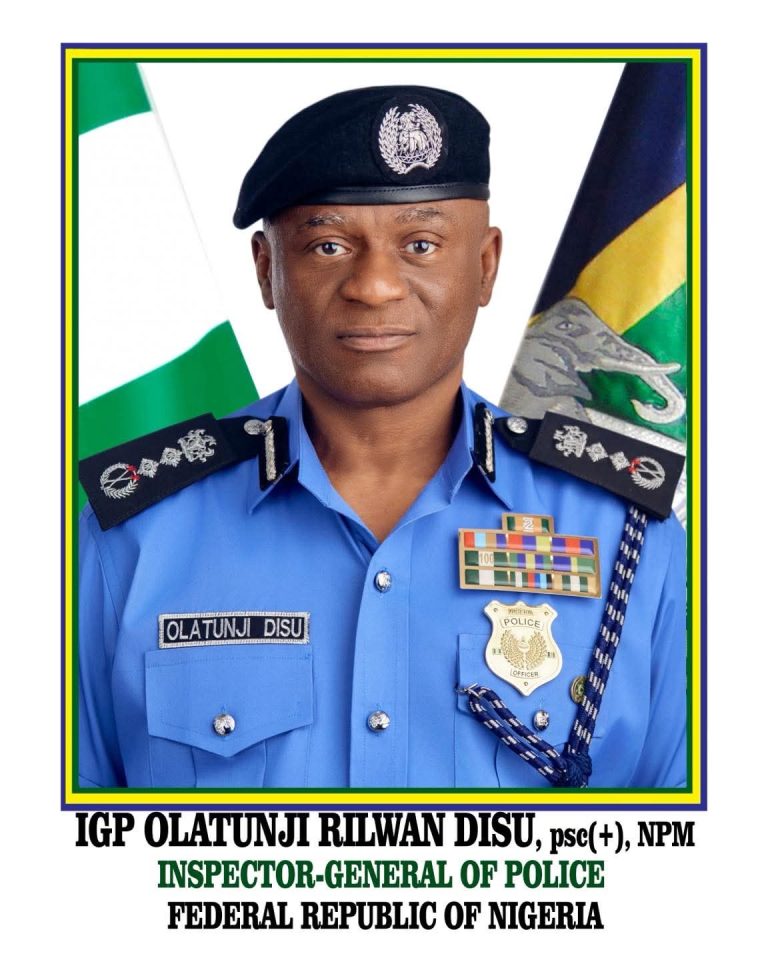
The Nigeria Police Force has dismissed as false reports claiming that the Inspector-General of Police, IGP Olatunji Disu, ordered the disbandment of all police units and squads at state commands across the country.

In a statement, the Force said the publication, circulated by some online media platforms, misrepresented the directive of the IGP, who did not order the outright dissolution of all tactical teams nationwide.
According to the statement, the IGP is aware of growing public concerns over the operations of police tactical teams and the proliferation of multiple units created by Commissioners of Police and heads of formations, a development that has drawn public criticism.
The Force noted that while the IGP recognises the critical role of tactical teams in crime-fighting, he is concerned that their unchecked spread has depleted manpower at police divisions and posts, while also contributing to misconduct and abuse by poorly supervised teams.

To address the situation, the IGP directed that tactical teams at the zonal and state command levels be reduced to a maximum of five, while area commands and divisional levels are to have no more than three teams.
The restructuring, the statement explained, may be implemented through the merger or disbandment of units, depending on the discretion of heads of formations.

The police also clarified that the directive does not apply to state government-backed security outfits such as Lagos State’s Rapid Response Squad, Oyo State’s Special Response Squad, Bayelsa’s Operation Doo-Akpor, and similar structures in other parts of the country.

The Force said the move is expected to free more personnel for deployment to police stations and improve service delivery, while also reducing complaints linked to the excesses of tactical teams.

It added that the decision is in line with the IGP’s commitment to accountability, improved supervision, and building a more people-friendly police force.
The statement was signed by the Force Public Relations Officer, DCP Anthony Okon Placid, at the Force Headquarters, Abuja.

Kwankwaso Hosts Obi, Makinde, Dickson in Kano for Sallah Celebration

0


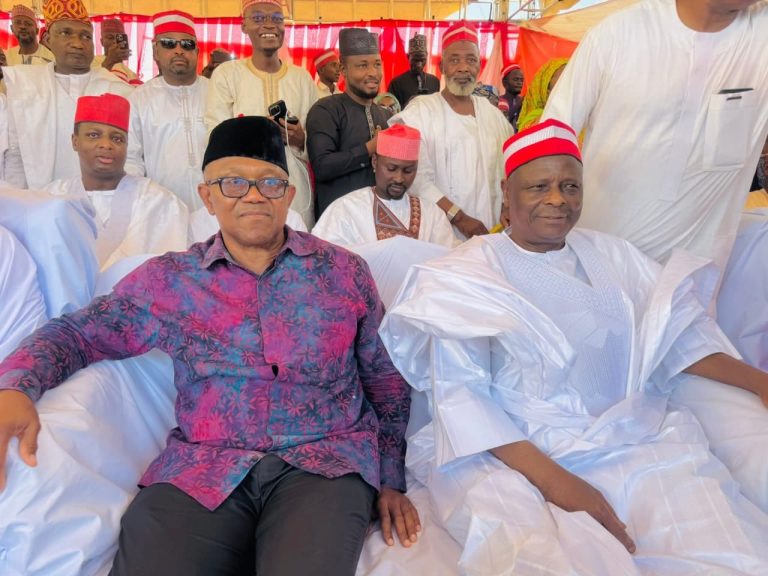
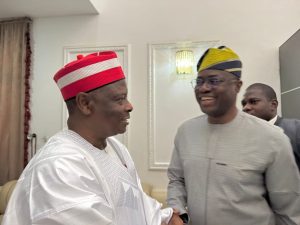
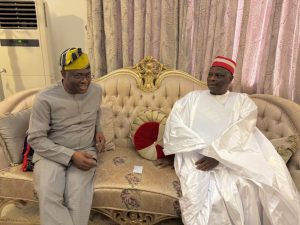
Former Kano State Governor, Rabiu Musa Kwankwaso, has hosted former Labour Party presidential candidate Peter Obi, Oyo State Governor Seyi Makinde, and former Bayelsa State Governor Seriake Dickson at his Kano residence as part of the Sallah celebration.

Kwankwaso, in a message shared after the visit, expressed delight at receiving the prominent political figures during the festive occasion.

He described the gathering as a joyful Sallah celebration and extended his goodwill to Nigerians, wishing everyone peace, blessings, and prosperity.

The visit comes amid the Eid festivities, with political leaders across the country joining Muslim faithful in marking the celebration and sharing messages of unity and goodwill.

Umahi declares new era of road construction, warns against sabotage

0

Says concrete roads to replace ‘failed asphalt’, urges citizens to protect infrastructure

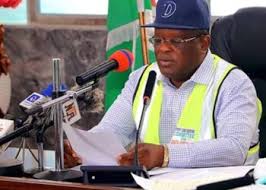
The Minister of Works, David Umahi, has declared that Nigeria is stepping into a new era of durable road construction.He made the declaration during an extensive inspection of Federal Government projects in Rivers State—warning that public negligence and misuse could undermine massive investments.

Umahi, who toured the Eleme–Onne axis of the East-West Road, the Bodo–Bonny Road, and the Port Harcourt–Aba highway, on Saturday, said the country is deliberately shifting from asphalt to concrete technology to ensure longevity and value for money.

According to him, “This is a new era. Concrete roads are the answer to the nature of our soil. Asphalt roads cannot last 10 years in most cases.”

In a strong appeal, Umahi warned against the growing practice of parking heavy-duty trucks on completed road sections, describing it as a major threat to infrastructure durability.

“No road is designed to carry static loads,” he cautioned. “When trucks park on these roads, they destroy them. And if destroyed, it will not be easy for government to rebuild.”

He urged Nigerians to take ownership of public assets, stressing that safeguarding roads is a collective responsibility.

“The minister cannot be everywhere. We must protect our own,” he added.

At the 15-kilometre Eleme–Onne section, Umahi commended contractor Reynolds Construction Company for maintaining high standards despite funding disruptions.

He disclosed that the project, valued at over ₦230 billion, experienced delays after funding from the Nigerian National Petroleum Company (NNPC) was halted in August 2025. However, intervention by President Bola Tinubu restored financing and accelerated work.

Umahi explained that the seemingly slow pace is due to the technical nature of the job, which involves deep excavation, stone reinforcement, and concrete layering.

He said completion of the carriageway may extend slightly beyond May to June or July to accommodate added features such as solar lighting, landscaping, and retaining structures.

On the Bodo–Bonny Road, the minister described the project as a landmark achievement, noting that vehicles can now travel directly from the mainland to Bonny Island for the first time

Additional works, including solar streetlights and tree planting, have been approved, while plans are underway to dualise connecting routes and introduce tolling for maintenance.

Inspecting the Port Harcourt–Aba Road, Umahi blamed years of delay on poor funding and weak execution by contractor China Civil Engineering Construction Corporation.

He noted that only nine kilometres had been completed in eight years—and that section had already deteriorated due to asphalt failure.

The project has now been redesigned with concrete, achieving over 95 percent completion, with a target for commissioning by May 2026.

Umahi also highlighted the growing role of indigenous firms, singling out Julius Berger Road Builders for exceptional performance.

According to him, local contractors are demonstrating capacity and commitment, in some cases undertaking projects without upfront payment.

The minister stressed that road infrastructure is central to Nigeria’s economic transformation, noting that poor roads hinder trade and productivity.

“Even when other sectors are working, without good roads, development is limited,” he said.

He called on the media and the public to support the government’s efforts by showcasing progress and exposing acts that could damage infrastructure.

As Nigeria invests heavily in road development nationwide, Umahi’s message remains clear: the success of this new construction era will depend not only on government policy—but on whether citizens choose to protect or sabotage it.

Guardian