Home Blog Page 559

Ikeja Electric cites generation drop for Lagos outages

0

Ikeja Electric (IE) says residents and businesses across Lagos are experiencing reduced electricity supply following a nationwide drop in power generation.

Mr Kingsley Okotie, Head of Corporate Communications, IE, said this in an interview with the News Agency on Tuesday in Lagos.

Okotie attributed the development to insufficient gas supply to thermal power plants, the country’s major source of electricity generation.

“The ongoing reduction in electricity supply is largely due to a nationwide drop in power generation, caused by limited gas supply to thermal power plants.

“This has significantly reduced the energy available on the national grid and, consequently, the allocation to Ikeja Electric and other distribution companies,” he said.

He noted that the shortfall had affected electricity distribution to customers, resulting in intermittent outages and load shedding across its network.

Okotie, however, assured customers of the company’s commitment to equitable and efficient distribution of the limited power available.

“The management regrets the inconvenience caused and appreciates the patience and understanding of our customers during this period.

“We remain committed to distributing the available power as efficiently and equitably as possible,” he said.

The spokesman urged customers to remain patient as efforts continued at the national level to improve gas supply and stabilise power generation.

The development has worsened electricity challenges in Lagos, with residents and businesses lamenting poor supply.

Some residents, who spoke in separate interviews , said the situation had increased their dependence on generators and raised operating costs.

Mrs Kemi Adebayo, a frozen food trader, said she relied heavily on generators to preserve her goods.

“I run my generator more than I use public power. If there is no light, my goods spoil. If I use fuel, I lose profit. Either way, I am losing,” she said.

Mr Sani Ibrahim, a welder, described the situation as unsustainable.

“We spend more on diesel than on raw materials. Sometimes, customers leave because we cannot deliver on time,” he said.

Also, Mrs Roseline George, a civil servant, said erratic power supply had worsened the impact of rising temperatures.

“It has been very hot, and there is no constant electricity supply. We rely on rechargeable fans and take plenty of water,” she said.

However, experts say persistent challenges, including gas supply shortages, recurring grid disturbances and sectoral debts, continue to limit electricity generation in the country.

They warn that unreliable power supply could further constrain productivity and economic growth if not urgently addressed.

Iran war may push Nigerians to work from home – Dangote

0


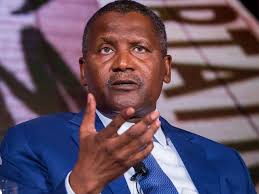
President of the Dangote Group, Aliko Dangote, has cautioned that the escalating tensions in the Middle East could push Nigeria and other African nations toward adopting pandemic-style work-from-home policies if the situation worsens.

Dangote issued the warning on Monday after a meeting with President Bola Tinubu at the latter’s residence in Ikoyi, Lagos. He voiced strong concerns about the ripple effects of fluctuating global oil prices on African economies already weighed down by debt.

The industrialist stated, “If this thing doesn’t de-escalate, you know, normally we in Africa, we don’t have any reserves in terms of savings.


“And so, people normally go out and look for money for the next day or for even the same day. Some of them, if they don’t work that day, they won’t eat.”

Pointing to global responses to energy-related pressures, Dangote referenced Indonesia’s approach, where workers have been directed to operate on a four-day work week, with authorities considering a shift to full remote work similar to measures seen during the COVID-19 period.

“In some countries today, what they’ve done, they asked everybody to work from home because they cannot afford it.

“I think Indonesians also only go to work four days a week. And they will look at the situation if it doesn’t improve, they will ask everybody not to go to work anymore.

“We will do like that time of COVID, where people will work from home,” Dangote stated.

He warned that Africa risks bearing a heavier burden from a crisis it has little control over, especially as rising costs may outpace governments’ ability to adjust wages.

“It’s not only energy. Some people will try and take a chance and say, ‘Ah, this is an opportunity. So, let me make money.’

“So, if this thing doesn’t de-escalate, it is going to keep going up and up and up, and governments cannot really and add to salaries.
“So, people will really, really feel the pinch,” he stated.

Dangote stressed that the impact would be most severe on everyday workers and small-scale entrepreneurs, particularly those reliant on fuel-powered operations such as barbers, bakers, and small industries.

“People who are barbers, people who make bread, people who have industries, who have to pay for their own generators, you know, I mean, you can see what is happening,” he said.

He urged for collective prayers and swift global action to resolve the conflict.

“We just need all hands-on deck to pray that this thing comes to an end,” the Dangote Group chairman stated.

Commenting on President Tinubu’s recent official trip to the United Kingdom, Dangote expressed confidence that the visit would boost investment prospects for Nigeria.

He pointed to the £746 million infrastructure deal secured during the trip, noting that its significance goes beyond the financial value.

“It has not been easy dealing with the British, getting this kind of money out of them. They too, they are struggling on their own. But I think this is to show confidence — it’s not about the money. It’s about the confidence in Nigeria,” Dangote said.

According to him, the agreement could pave the way for further international partnerships.

“The moment that they do that, there will be other countries that will follow suit. Germany will come, others will line up and start coming up,” he stated.

Dangote also disclosed that Nigerian investors can now access financing from the UK Export Finance agency, which he described as a largely underutilised funding source.

“For Nigerian investors, it has shown that we can also go to the same agency and tap the resources. It means that the agency now is open for business for Nigerians, and we will go as private people to look for them to give us support,” he explained.

Vanguard

ICPC Arraigns El-Rufai, Adoga Over Alleged Public Property Conversion, Money Laundering

0


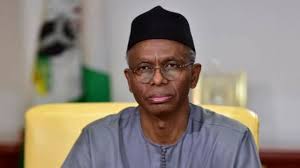
Former Kaduna State Governor, Nasir El-Rufai, and Joel Adoga have been arraigned before a Federal High Court in Kaduna over allegations bordering on conversion and possession of public property, as well as money laundering.

According to the charge preferred against them, the two defendants are facing trial on multiple counts related to the alleged offences.

At the arraignment, El-Rufai and Adoga were expected to take their pleas before the court.
The prosecution is being handled by the Independent Corrupt Practices and Other Related Offences Commission (ICPC).

Middle-East war: Business closures, job losses loom — NECA, NLC, LCCI, ASBON

0

—Say soaring fuel prices could cripple economy

—Urge immediate govt’s action to save situation

LAGOS — The Nigeria Employers Consultative Association, NECA; Nigeria Labour Congress, NLC; Lagos Chamber of Commerce and Industry, LCCI; and the Association of Small Business Owners of Nigeria, ASBON, yesterday, raised fresh concerns over the worsening impact of rising global oil prices on the country’s economy.

They also warned of looming business closures and job losses, noting that businesses and households are facing mounting pressure as energy costs surged.

The business groups spoke yesterday as the price of petrol remained high in Lagos, Abuja and other parts of the country despite the price of crude falling below $100 per barrel.

However, the 31 governors of the All Progressives Congress, APC, rose from a meeting late Sunday night, promising to roll out palliative measures to cushion the effect of the increase in the price of petroleum products caused by the ongoing Middle East crisis.

NECA noted that the spike in crude oil prices, rather than translating into economic gains, is creating a paradox in Nigeria, where increased oil revenues are accompanied by rising production and living costs.

This trend, NECA warned, is eroding purchasing power, squeezing profit margins, and threatening the survival of businesses across key sectors.

Director-General of NECA, Adewale-Smatt Oyerinde, who raised the concern, described the situation as alarming, stressing that the current trajectory could trigger widespread economic hardship if urgent measures are not taken.

“What we are witnessing is Nigeria’s oil paradox. Rising crude oil prices are pushing up domestic energy costs, squeezing businesses and worsening the cost of living for citizens,” he said.

He pointed out that fuel prices had surged sharply in recent days, with petrol selling above N1,300 per litre in some areas, while diesel prices were approaching N1,800 per litre, underscoring the direct impact of global oil market fluctuations on the domestic economy.

Oyerinde emphasised that energy costs remain central to economic activities, noting that any increase in fuel prices has immediate and far-reaching consequences.

“Once fuel prices rise, the effects are immediate and widespread — transport costs increase, food prices rise, and the overall cost of doing business escalates,” he stated.

He further warned that businesses, particularly in manufacturing, agriculture, and logistics, are already under severe strain as operating costs continue to climb.

The NECA boss added: “For many firms that rely on diesel for operations, current price levels are becoming increasingly difficult to sustain. Profit margins are shrinking, and businesses are being forced to either pass on costs or scale down operations.’’

He explained that while the Middle East crisis has contributed significantly to the surge in global oil prices, the situation has also exposed long-standing structural weaknesses within Nigeria’s energy sector, including under-investment, poor infrastructure and supply inefficiencies.

“This situation is not only driven by external factors; it is also reflecting ongoing constraints within the energy value chain, including supply inefficiencies and infrastructure limitations,” Oyerinde said.

He cautioned that failure to address these challenges promptly could lead to dire consequences for the economy.

“If this trend continues unchecked, we risk business closures, job losses, and a deeper cost-of-living crisis,” he warned, and called on government to urgently stabilise the downstream sector and provide targeted support for vulnerable industries.

He also stressed the need for long-term reforms, noting that Nigeria’s economic resilience will depend not on oil price movements, but on how effectively the country manages its resources and addresses systemic challenges.

“This is a moment to strengthen institutions, improve transparency, and invest in sustainable energy solutions,” he said.

Soaring fuel prices threaten businesses, jobs, says NLC

Speaking in a similar vein, President of the Nigeria Labour Congress, NLC, Joe Ajaero, said that soaring fuel prices are putting businesses and jobs at risk.

According to him, President Bola Tinubu and the government do not need intervention from organised labour or the employers’ body to understand that the Middle East crisis is having a serious negative impact on businesses, jobs and Nigerians.

He said: “This crisis has brought both gains and losses for the government. The government is making huge revenues from the crisis, which has also doubled the budget benchmark. Clearly, this is more money for the government.

“The government should use part of these funds to cushion the impact on citizens. It is a statement of fact that businesses and jobs are at risk. Even the President does not have to wait for interventions from labour and employers to know that citizens need relief.

‘’The government must know how to manage emergencies. Emergencies are unplanned and unprepared for; that is why they are called emergencies.

“We hear that APC governors are planning to roll out some relief measures. What kind of relief measures are they planning? The wage award announced by government two years ago has still not been paid. Civil servants are still battling over it.”

LCCI, ASBON react

On her part, the Director General of Lagos Chamber of Commerce and Industry, LCCI, Dr. Chinyere Almona, said: “Rising geo-political tensions linked to the Iran conflict in the Middle East has triggered volatility in global energy markets, potentially increasing transportation and logistics costs.

“With the risk of exchange-rate volatility, amid disruptions to global supply chains, renewed pressure in the foreign exchange market could increase the cost of imported raw materials, machinery, pharmaceuticals, and food items, thereby pushing up production and consumer prices.”

Similarly, President of Association of Small Business Owners of Nigeria, ASBON, Dr Femi Egbesola, stated: “The current situation of rising global uncertainty raises genuine concerns.

“Combined with depreciation of the naira, small businesses are facing higher costs for imports, raw materials, energy, and financing, which significantly weakens our ability to survive and grow.

“If appropriate steps are not taken to mitigate effects of the crisis, this could trigger a ripple effect of job losses, and even business closures.”

Consumers groan as petrol hits N1,371/litre in Abuja, Lagos, others

Meanwhile, petrol stations in Abuja again raised the price of petrol yesterday, following a recent increase in the gantry price by Dangote Refinery, with NIPCO selling at N1,371 per litre and AYM Shafa at N1,370 per litre, among the highest rates recorded.

Checks by Vanguard also showed that NNPC Retail increased its pump price to N1,361 per litre, up from N1,261 per litre last week.

Dangote’s partner station, MRS, similarly raised its price to N1,367 per litre from N1,270 per litre previously.

The latest adjustments indicated that petrol prices have risen by about 55 per cent in the past three weeks, following the initial increase by Dangote Refinery.

After the first gantry price hike, retail outlets in Abuja adjusted pump prices on March 3, with NNPC Retail selling at N975 per litre, up from N875, while AYM Shafa increased its price to N960 from N880 per litre.

Three days later, marketers raised prices again, with NNPC selling at N1,068 per litre and AYM Shafa at N1,098 per litre.

A further increase in the gantry price triggered multiple hikes on Monday, March 9. NNPC initially raised its pump price to N1,161 per litre before increasing it again later in the day to N1,267 per litre. AYM Shafa followed a similar pattern, moving from N1,230 per litre in the morning to N1,300 per litre by the close of business.

Prices dipped slightly two days later, with NNPC selling at N1,161 per litre and AYM Shafa at N1,230 per litre. However, the relief was short-lived, as prices climbed again three days later to N1,267 per litre at NNPC Retail and N1,300 per litre at AYM Shafa.

It’s becoming unbearable, consumers react

Speaking to Vanguard at NNPC Retail outlets in Kugbo and an AYM Shafa station in Karu, yesterday, consumers lamented the rising cost of petrol, accusing the Federal Government of failing to take action.

A civil servant, Isa Kabir, said deregulation should not translate into unchecked profiteering, urging government intervention.

“The rate of increase is too high, and the government needs to act. Deregulation does not mean marketers cannot be regulated. What we are seeing now is profiteering and racketeering. Government cannot claim to be unaware.

“From N880 per litre at the beginning of the month to N1,370 in just three weeks is excessive. In other countries affected by the crisis in Iran, price changes are not this extreme.

“In a country without a social safety net, this will push more Nigerians into poverty. Many vehicles are already off the road, and some workers now prefer to work from home because transport costs have become unaffordable,” he added.

Also speaking, a taxi driver, Michael Ade, said N10,000 now buys just a little over seven litres worth of petrol.

“A month ago, that amount would have bought nearly 12 litres. It used to be enough for a trip from Jikwoyi to Wuse Market and back.

‘’Now, seven litres cannot cover the same distance. Passengers have to pay more, fares have risen to N2,000 from N1,200 just last week,” he said.

Ade appealed to government to act swiftly, saying “they should intervene before things get out of hand. The removal of subsidy should not mean Nigerians are left to suffer,” he added.

In Lagos, checks revealed that petrol is still selling at very high rate, ranging from N1,335 per litre to N1,340, despite the fact that crude price has fallen below $100 per barrel, following US President, Trump’s decision to extend by five days the ultimatum given Iran to open up the Strait of Hormuz, which expired yesterday.

Specifically, Emadeb Energy, NNPC Limited, MRS Oil Nigeria, Bovas Group, Rainoil Limited and Seaman’s are selling at N1,335, N1,325, N1,332, N1,325, N1,340 and N1,320 per litre, respectively.

Reacting in an interview with Vanguard, the Chief Executive Officer of Petroleumprice.ng, Olatide Jeremiah, said: “The drop in oil prices has created panic among operators, as depot traders are rushing to offload products amid the possibility of further price cuts by the Dangote refinery.

“The downstream market is likely to remain unstable in the coming weeks as long as the ongoing US–Iran conflict continues to drive volatility in the global oil market.”

Also speaking, President of the Petroleum Products Retail Outlets Owners Association of Nigeria, Billy Gillis-Harry, said: “As I said recently, crude oil prices will continue to fluctuate, leading to instability in petroleum product prices in Nigeria and other nations but Nigerians should avoid panic buying.”

APC govs to rollout palliatives

Apparently responding to the harsh economic environment the Middle East war has caused, the Progressive Governors Forum, PGF, comprising 31 governors of All Progressives Congress, APC, has pledged to roll out palliative measures to cushion effects of the war on Nigerians.

Rising from a meeting in Lagos on Tuesday night, the governors in a communique signed by chairman of PGF and government of Imo State, Hope Uzodimma, also stated that security remains the top priority of APC governors, even as they pledged to support President Bola Tinubu’s reform initiatives.

The communique read: “Members agreed that macroeconomic correction must steadily mature into lower hardship, wider opportunity, job creation, food affordability, enterprise growth, and improved quality of life.

“The forum further observed that the current conflict in the Gulf could heighten inflationary pressures through disruptions in global energy supply chains, with direct implications for household welfare and production costs.

“The PGF, therefore, resolved to deepen collaboration in food production, MSME support, youth enterprise, and targeted social interventions.

“Members further agreed that states would expand palliative measures and other support programmes for vulnerable citizens in order to cushion the likely effects of inflation while ensuring that economic adjustment is accompanied by social justice and practical hope.”

The communique read further: “National direction and the burden of leadership; the forum undertook a review of the national political, economic, and security environment. Members noted that moments of reform are often difficult because they ask a nation to move beyond old comforts into a more durable future.

“The PGF, therefore, reaffirmed that responsible leadership must be judged not only by its response to present pressures, but also by its courage to lay the foundations of long-term stability, productivity, and inclusion. the PGF reiterated that security remains the first condition of development. The Forum commended Mr. President’s resolve to confront insecurity through stronger national coordination, international collaboration, and institutional reform, and welcomed his commitment to deepen engagement with friendly countries in pursuit of joint solutions to security and other development-related matters.

The forum, therefore, called for sustained investment in intelligence, coordination, technology, border vigilance, and community-based early warning systems.

“Members also emphasized that enduring peace requires not only force of law, but also trust in institutions, opportunity for young people, and a social ethic that rejects violence as a means of grievance.”

On federal-state partnership for national renewal: the forum emphasized that Nigeria’s progress will be accelerated when the Federal and State Governments work in disciplined partnership, guided by constitutional responsibility and a shared development vision.

“In this regard, the governors reaffirmed their support for stronger policy coordination in infrastructure, agriculture, energy, transportation, healthcare, education, and social investment. They resolved to continue aligning state-level initiatives with national priorities while preserving the autonomy of state as laboratories of innovation and delivery.”

Tight security as El-Rufai appears in court over alleged money laundering

0

Security was on Tuesday beefed up around the Federal High Court of Nigeria sitting in Kaduna as operatives of multiple agencies took strategic positions ahead of the arraignment of former Kaduna State Governor, Nasir El-Rufai, over alleged corruption-related offences.

As early as 7:00 a.m., heavily armed personnel drawn from the Department of State Services, Nigeria Police Force, Mobile Police Force, and the Nigeria Security and Civil Defence Corps were deployed to key entry and exit points leading to the court premises located near the old site of the Nigerian Defence Academy.


Vehicles were forced into a single lane from the Ungwan Sarki axis through Kawo, leading to a traffic gridlock in the area.

The development followed an earlier announcement by the Independent Corrupt Practices and Other Related Offences Commission (ICPC) that it would arraign El-Rufai on Tuesday before the Federal High Court in Kaduna.

In a statement issued by its Head of Media and Public Communications, John Odey, the commission disclosed that El-Rufai would be arraigned alongside one Joel Adoga in suit number FHC/KD/73/2026.

According to the anti-graft agency, the charges border on alleged conversion and possession of public property, as well as money laundering.

The ICPC further revealed that a separate charge, marked KDH/KAD/ICPC/01/26, had also been filed against El-Rufai and one Amadu Sule before a Kaduna State High Court, with counts including abuse of office, fraud, intent to commit fraud, and conferring undue advantage.

The commission noted that both charges were filed on March 18, 2026, adding that the date for arraignment in the state court would be communicated in due course. It maintained that El-Rufai had been duly served, reaffirming its commitment to due process and the rule of law.

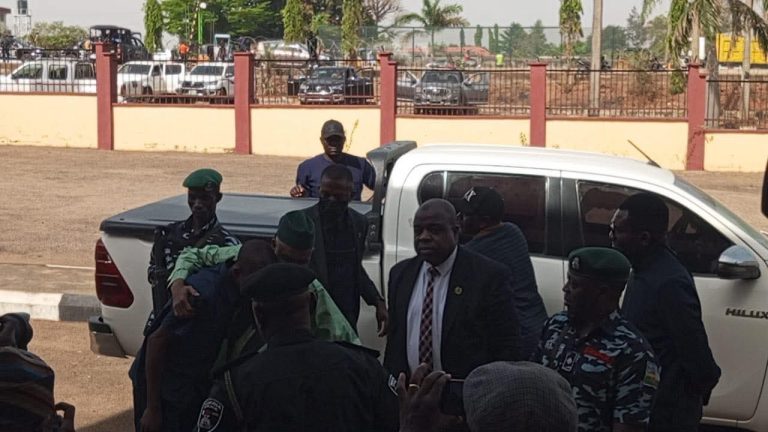
Meanwhile, El-Rufai arrived at the court premises under heavy security at about 9:00 a.m. in a Hilux vehicle. He remained inside the vehicle for over 30 minutes before being escorted into the courtroom at about 9:34 a.m.

Dressed in a light green babanriga with a cap, he was heavily guarded as operatives of the ICPC and the Department of State Services formed a protective cordon around him while ushering him into the courtroom.

Vanguard

Hamzat, Yayi, Alli may emerge APC consensus gov candidates

0


The All Progressives Congress is moving toward a consensus arrangement to settle on Deputy Governor of Lagos State, Obafemi Hamzat, as its governorship candidate for the 2027 election in Lagos State.

Similarly, the party stakeholders are said to also favour the senator representing Ogun West and Chairman, Senate Appropriations Committee, Olamilekan Adeola, popularly known as Yayi, for Ogun State, and the senator representing Oyo South Senatorial District, Sharafadeen Alli, for Oyo State.

The purported decisions emerged from a meeting of APC stakeholders from the three states with President Bola Tinubu in Lagos on Sunday night.

Tinubu had hosted Vice President Kashim Shettima and 23 governors at his Lagos home for the Eid el-Fitr celebrations and sources with knowledge of the matter told The PUNCH that the President and party stakeholders from Lagos, Ogun and Oyo held another meeting to take critical decisions ahead of next year’s general elections.

The Independent National Electoral Commission has scheduled the Presidential and National Assembly elections for January 16, 2027, and the governorship and State Houses of Assembly elections for February 6, 2027.

In its released timetable, INEC stated that political parties were expected to conduct their primaries between April and May 2026, with candidates emerging by the end of May.

The Electoral Act 2026 (amended) provides that candidates of political parties may be selected either through a consensus arrangement or direct primaries.

For the APC, the party traditionally favours a consensus approach, highlighting the popularity of such candidates and their track record of winning elections.

President Tinubu returned to Lagos on Friday following a two-day state visit to the United Kingdom. He spent part of his Sallah break in the commercial city, attending to key political matters, including discussions on potential successors in the South-West states ahead of the 2027 elections.

In the South-West, only Lagos, Ogun, and Oyo states will hold governorship elections in 2027, and the President is prepared to lead the party to victory from his zone.

Multiple sources at the Lagos meeting of South-West APC stakeholders with Tinubu confirmed that the session was lengthy, involving detailed deliberations on party strategy and candidate selection.

One of the sources, who spoke on condition of anonymity, said, “The choices of Hamzat, Yayi, and Alli were arrived at after a prolonged discussion with the President, taking into account the collective opinions of those present and the popularity of the candidates in their respective states.”

Among those at the meeting were Chief of Staff to the President, Femi Gbajabiamila; Senate Leader, Opeyemi Bamidele; Governors Babajide Sanwo-Olu (Lagos), Dapo Abiodun (Ogun), and Biodun Oyebanji (Ekiti); and Executive Chairman of the Nigeria Revenue Service, Zaccheaus Adedeji, among other top stakeholders.

The source added that the report presented to the President had been prepared during an earlier meeting at the Senate Leader’s residence in Abuja about two weeks prior.

Consensus, compensations

The meeting reportedly acknowledged dissenting voices against the recommendations but agreed to work towards a consensus to provide a “soft landing” for aspirants who might be affected by the arrangement.

“In Lagos, the Minister of Education, Tunji Alausa, is still lobbying to emerge as the consensus candidate.

“Though some online reports suggested he will resign to pursue the governorship, he has insisted on remaining in office and focusing on delivering the Renewed Hope agenda,” another source privy to the meeting said.

Other serious aspirants for the Lagos governorship ticket on the APC platform include Gbajabiamila, former Governor Akinwunmi Ambode, Speaker of the State House of Assembly, Mudashiru Obasa, Chief of Staff to Governor Sanwo-Olu, Tayo Ayinde, Private Secretary to the President, Hakeem Muri-Okunola, Senator representing Lagos East, Tokunbo Abiru, Commissioner for the Environment, Tokunbo Wahab, Jide Adediran (Jandor), and Samuel Ajose (SMA).

In Ogun State, the selection of Yayi reportedly conflicts with Governor Abiodun’s preference.

“The governor seems to be backing Senator Shaibu Afolabi Salisu of Ogun Central, due to his role in Abiodun’s 2019 election.

“However, former governor and party leader, Chief Olusegun Osoba, does not support this choice,” a source said.

It is also understood that former Governor Senator Ibikunle Amosun is expected to contest for the Ogun Central senatorial seat in 2027, potentially displacing Salisu.

“The governor is reportedly seeking ways to compensate Salisu while paving the way for Amosun,” the source added.

In Oyo State, the choice of Alli appears to have the backing of the majority of APC stakeholders in the state, as well as the Olubadan of Ibadan, Oba Rashidi Ladoja, a former Oyo State Governor.

Alli, a former Secretary to the Oyo State Government and Chief of Staff under Ladoja, later served as Chairman of Odu’a Investment before becoming senator for Oyo South.

The lagos meeting also reportedly considered Remi Oseni, a member representing Ido-Ibarapa East, as a strong candidate due to his grassroots popularity and performance in the House of Representatives.

The lawmaker was described as a grassroots mobiliser who enjoys popularity among the people. He is also seen as the most performing lawmaker in the House of Representatives from Oyo State.

The report also stated that the Remi Oseni Committee of Friends is relying on over 200,000 members in the state to boost the governorship ambition of the lawmaker.

The meeting, according to the sources, however, agreed to cede the Senate seat for Oyo South to Oseni, to compensate him for his popularity and goodwill.

“The committee agreed to offer Oseni the Oyo South Senate seat as compensation, acknowledging his support base of over 200,000 members,” the source said.

The discussions also reportedly noted that Alli might serve only one term as governor to allow for the emergence of a candidate from outside the Ibadan zone in 2031.

Other APC aspirants eyeing the Oyo governorship seat include the 2023 governorship candidate of the party, Teslim Folarin; senator representing Oyo North, Abdulfatai Buhari; Minister of Power, Bayo Adelabu; former Oyo Deputy Governor, Rauf Olaniyan; lawyer, Akeem Agbaje; former Minister of Communications, Adebayo Shittu; former Oyo Health Commissioner, Azeez Adeduntan; Saheed Oladele, Gbenga Adegbola, and Kunle Busari, the son of the late Ibadan strong politician in the First and Second Republic, Chief Busari Adelakun, popularly known as Eruobodo.

Multiple sources at the meeting told The PUNCH that issues surrounding the Minister of Power, Bayo Adelabu, were also raised.

It was learnt that the minister does not enjoy the popularity that could make him win the Oyo governorship election against the candidate of the incumbent Governor Seyi Makinde.

It was gathered that one of the conclusions of Adelabu’s non-popularity in the state was the House of Representatives by-election midwifed by the minister, but which was lost to the Peoples Democratic Party.

The sources said those at the meeting told the President that the Oyo State chapter of the party was divided over the choice of the minister, as he does not enjoy a good relationship with party leaders and members in the state.

It was also gathered that the only candidate that would be acceptable to all divides in the party was Alli.

“Adelabu does not have the popularity to win the governorship against Governor Seyi Makinde’s anointed candidate,” a source said, citing his candidate’s loss in the House of Representatives by-election that he midwifed.

“The state chapter of the party is divided over his candidacy, and Alli is seen as the only aspirant acceptable to all factions,” the source added.

The PUNCH reported that Adelabu ran on the Accord platform for the 2023 governorship election in the state against Teslim Folarin of the APC.

Earlier in 2019, his choice and endorsement by the late former Governor Abiola Ajimobi polarised the party, leading to defections of major chieftains of the party at the time. Adelabu eventually lost the election to Makinde.

In the March 18, 2023, election, Adelabu came a distant third, polling 38,357 votes, again trailing far behind Makinde, who won with over 563,000 votes.

The minister had dumped the party after he lost the ticket to Folarin at a primary held at the Liberty Stadium, Ibadan.

While Adelabu has since returned to the party and was rewarded with a ministerial position, those in the Folarin camp had yet to really benefit from the Federal Government appointments.

The source also stated that the minister had been advised against resigning from the cabinet as his chances are not bright.

When asked why Adelabu has not resigned to pursue his governorship ambition, one of the sources present at the meeting told The PUNCH that none of the ministers and other appointees eyeing positions had been able to secure a buy-in from the President.

He said, “He cannot just resign like that without an assurance that he will be the consensus candidate of the party. He knows his position is not certain. Once he resigns, the President will appoint a replacement, and he may not have the chance to return to the cabinet.

“It is better for him to clear his chances first before jumping the gun. He won’t have a second chance at a ministerial appointment, at least for now.

“The power crisis in the country is not in his favour, and once he leaves and a replacement can solve some of the problems, Adelabu may not return.”

Next steps

Stakeholders from Oyo State are expected to meet in Abuja on Friday, March 27 to deliberate on compensations for other aspirants before Alli formally declares his governorship bid.

Multiple sources confirmed that the report to the President does not mark the conclusion of the process, as underground consultations are ongoing nationwide to secure buy-in from all aspirants.

“The APC believes in consensus over direct primaries,” a source said, adding that “Direct primary is a strenuous process, but all aspirants will be accommodated in the spirit of fairness and justice.”

APC consensus option

The APC has begun consultations with stakeholders and aspirants on the possibility of adopting consensus candidates for governorship and National Assembly elections ahead of its forthcoming national convention.

The move, party sources say, is aimed at fostering internal cohesion and reducing post-primary disputes, which have historically trailed candidate selection processes across major political parties.

Speaking in an exclusive interview with The PUNCH, the Deputy National Organising Secretary of the APC, Nze Chidi Duru, said while the party may lean towards consensus arrangements, it would not shut the door against aspirants seeking to test their popularity through primary elections.

He explained that the approach aligned with democratic principles and global political practice, particularly where incumbent officeholders were seeking re-election.

Duru said, “It is not that we are likely, we will have a consensus. That is an indication of the APC being a democratic party. But should it happen that there is a member of the party who would like to throw his hat in the ring? He is more than welcome.

“We do not think that in any place in the world where we have democracy we can glean from. If there is a sitting President, he will always be given the first right of refusal.

“And in this case, the rank and file of the party, the structures, organs have indicated a preference that Mr President should continue in the work that he is doing for Nigeria,” he added.

The APC chieftain noted that the “first right of refusal” principle is anchored on performance, party ideology and the need to present candidates capable of delivering on the party’s manifesto.

On whether the arrangement could be extended to governorship and other elective positions, Duru said he supports granting incumbents the opportunity to seek a second term.

“It is my personal view that executives who have done one term and have an opportunity for a second term should be granted the right of first refusal for the reasons I have espoused.

“It is on that basis that political parties are kept on their toes to ensure that those who occupy offices deliver on the mandate of the party knowing fully well that those occupying those offices, when it is time for re-election, will be offered the automatic tickets, first right of refusal, and be presented to the electorate in the given constituency.

“So, there are two things that go for it. One, the party is vigilant. The party holds those in positions accountable to deliver on the mandate that they have given them. And then of course, the motive that comes with the next election, of which they have a right to contest again at that election, is that if they do not perform, then they will lose the election. So, there is something that goes for that first right of refusal,” he stated.

Imposition or consensus?

Meanwhile, the Nigerian Political Science Association and the Coalition of United Political Parties have accused Nigerian politicians of prioritising imposed decisions over genuine consensus, warning that such practices undermined democratic processes and political fairness in the country.

In an exclusive interview with The PUNCH on Monday, NPSA president, Professor Hassan Saliu, emphasised that while consensus was positive when sincerely achieved, he expressed concern that Nigeria was currently witnessing the imposition of candidates rather than genuine agreements.

He stated, “If truly they achieve consensus, I don’t see anything bad in it. But once there is dissent, even from one person, the wall of consensus breaks down. Consensus freely reached and agreed to is what I support, not one that is forced or imposed.

“If all of them agree beforehand to support a candidate, that is acceptable. If there is no dissent, fine. But if there is even one dissenting voice, then the wall of consensus breaks down.

“The challenge is how to achieve a consensus that everyone genuinely agrees to. So, what I see happening, is imposition. Some leaders intimidate others to step down, withdraw, or even prevent their supporters from attending the congress or convention where candidates are to be elected. And this is not good for democracy.”

Also, the CUPP publicity secretary, Mark Adebayo, stated that consensus should remain an internal matter for political parties, noting that in Nigeria, the common practice was the imposition of candidates.

He stated, “Consensus, for me, should be an internal party matter. If a political party chooses to adopt a consensus approach in selecting its candidate for an election, nobody should begrudge the party. It should be the decision of each party.

“Consensus candidature can have both positive and negative outcomes. Sometimes it promotes peace within the party because, when genuinely achieved, it reflects the choice of a particular constituency, state, zone, or local government.

“However, what is defined as consensus in Nigeria is often different. Frequently, someone at the top simply declares, handpicks, announces and even imposes a candidate for a position.

“This practice generates internal conflicts and bad blood within political parties. The electoral act now allows for either consensual or direct primaries. Not all political parties will find this easy. I believe the framers of the act should have allowed parties the option of direct, indirect, or consensual methods, rather than removing indirect primaries entirely.”

However, Duru addressed concerns that automatic tickets for incumbents could trigger internal discontent, pointing to constitutional provisions that allowed elected executives to seek a second term.

He said, “It is not for nothing that the Constitution provides the possibility for elected executive governors and the President of the country to run for a second term. I believe that party members will always understand that once it’s a constitutional provision, you cannot deny or exclude the possibility of a re-election.”

Findings by The PUNCH indicate that the debate over consensus candidacy versus direct primaries has remained a recurring issue within Nigerian political parties, often pitting party leadership against grassroots aspirants seeking a level playing field.

Duru’s comments come ahead of the APC’s national convention scheduled to hold in Abuja from March 27 to March 28, 2026, where key decisions on party structure, strategy and preparations for future elections are expected to be taken.


credit: punch

Group Seeks Probe, Sanctions Over Alleged Misrepresentation by Apapa Lawmaker

0


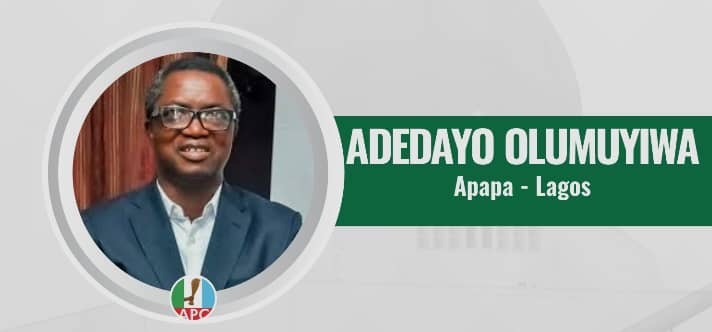
A civic organisation, the Lagos Advocacy Group (LAG), has called for urgent disciplinary action against the member representing Apapa Federal Constituency in the House of Representatives, Hon. Samuel Adedayo, over allegations of misrepresentation and diversion of constituency-related projects and palliatives.

In a press release issued and signed by the group spokespersons, Kemi Kasumu on Monday in Lagos, expressed concern over reports that the lawmaker sponsored a bill seeking the establishment of a Federal Medical Centre in Ajase-Ipo, Kwara State, said to be his hometown, instead of attracting such a project to Apapa Federal Constituency, which he represents.

The group described the development as a violation of the core duty of representation, stressing that elected officials are expected to promote the welfare, development and collective interests of their constituents.
According to LAG, the reported decision to facilitate the siting of a federal healthcare facility outside Apapa raises serious ethical and governance concerns, especially as the constituency continues to grapple with major healthcare infrastructure challenges despite its strategic importance and dense population.

The organisation also raised alarm over alleged diversion of palliative materials reportedly meant for residents of Apapa. It said claims that rice and fertilisers intended to ease economic hardship were either poorly distributed or unaccounted for would amount to a serious breach of public trust if proven.

LAG further alleged that there were reports of intimidation, threats and disregard for party leadership and internal democratic structures, actions it said undermine discipline and the values expected within the All Progressives Congress (APC).

The group urged the Lagos State leadership of the APC, under the chairmanship of Pastor Cornelius Ojelabi, to immediately set up an independent, transparent and time-bound investigation into the allegations.

It also demanded that Adedayo be compelled to provide a formal public explanation, while insisting that any constituency-linked project should be redirected to Apapa in line with the mandate of representation.

According to the group, appropriate disciplinary measures should be activated if the allegations are substantiated.
LAG also noted what it described as growing calls for the recall of the lawmaker by some constituents, saying the development reflects rising public dissatisfaction and loss of confidence, even though recall remains a constitutional process.

The advocacy group urged party leaders, civil society organisations and oversight institutions to handle the matter with urgency, insisting that the integrity of representation, credibility of public office and trust of the electorate must be protected.

Niger Delta Chamber targets $5bn investments, 500,000 jobs

0

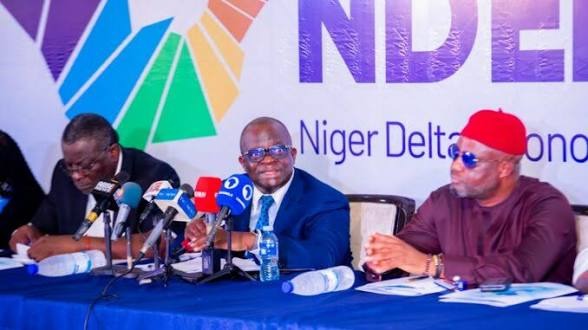
The Niger Delta Chamber of Commerce, Industry, Trade, Mines and Agriculture (NDCCITMA) has unveiled plans to attract up to five billion dollars structured investments to the oil-producing region in five years.

Chairman of the NDCCITMA, Amb. Idaere Gogo Ogan, who disclosed this at a pre-summit conference ahead of the Niger Delta Economic and Investment Summit in Port Harcourt, Rivers State, said the initiative would catalyse no fewer than 500,000 direct and indirect jobs as well as spur investments and create wealth.

He said the summit with the theme: “Driving Investment, Innovation, and Industrial Growth in the Niger Delta”, slated for Port Harcourt on May 19-21, 2026, would deliberate on investment mobilisation, enterprise growth, industrial expansion, and regional coordination.

President Bola Tinubu is expected as the special guest while the Prime Minister of Barbados, the Hon Mia Amor Mottley, will be the keynote speaker.

Ogan stated that the recent Niger Delta Business Roundtable brought together policy-making leaders, investors, entrepreneurs, development institutions, and strategic stakeholders from across the nine Niger Delta states, and that the clear message from the event was for the region to transit from ambition to implementation.

Also speaking, the NDCCITMA Secretary and chairman of the summit local organising committee, Dr. Solomon Edebiri, said the economic and investment summit was a strategic initiative designed to reposition the region as a competitive hub for investment, enterprise development, and sustainable industrialisation.

Dr. Edebiri noted that the Niger Delta was known for its contribution to Nigeria’s economy through oil and gas, stressing however that its legacy lies on its diverse wealth and its untapped opportunities, which the summit seeks to highlight and unlock.

‎

‎He added that the organising committee has lined up various activities to promote the event, including a road show across the Niger Delta states, in Lagos and the Federal Capital Territory as well as a follow-up press conference.

Sun

Mbah: Tinubu’s reforms biggest economic shift in decades

0


•As NGX, UBA laud Enugu as top investor
Governor Peter Mbah is putting Enugu state on the global investment map, attracting foreign investors eager to seize opportunities across the state’s thriving economy

Mbah said investors should expect between 25 and 40 per cent return on their investments, noting that global manufacturers and international partners were already establishing a presence in the state, recognising its strategic position as well as the opportunities and reform agenda that were underway.

The governor, who was on the president’s entourage during the state visit to the United Kingdom, UK, spoke at the UK-Nigeria Project Agglomeration Compact 2026 delivered by Mutandis Africa, a pan-African investment and trade facilitation platform in collaboration with the Dr. Zacch Adedeji-led Nigeria Revenue Service (NRS) in the House of Lords on the sidelines of Tinubu’s visit.

The investment forum brought Enugu State, senior federal government officials, and private sector leaders to engage directly with the UK’s senior investor community, including private equity funds, sovereign wealth investors, development finance institutions, infrastructure platforms, pension capital, and family offices.

He said, “We have numerous projects that have been curated for international investors: the international airport currently being expanded in Enugu is designed to serve a regional population of approximately 30 million people, thus transforming Enugu into a gateway for the entire southeast economic corridor, linking surrounding states whose economies are themselves growing rapidly.

“In tourism and hospitality, Enugu’s natural landscape, a hill-top city surrounded by waterfalls, caves and remarkable scenery, is being repositioned as a destination for both leisure and business travel. New hotels, a conference centre and revitalised resorts are being developed to support this vision.

“In agriculture, we are modernising production through agritech and commercial farming initiatives that strengthen food security while building export-oriented value chains.

“Power drives every modern economy. Today, more than 50% of the region still lacks reliable electricity, creating an opportunity to deliver dependable power to over 15 million people.

“In healthcare and education, we are expanding services across communities to build the skilled workforce and stable environment that serious investment requires.

“And at the heart of this transformation lies one of our most ambitious developments: a new smart city spanning approximately 10,000 hectares, currently breaking ground, designed to become a modern commercial and residential hub for the region.”

Mbah further hailed President Tinubu’s reforms, especially the structural shift where he said states were being increasingly empowered to act as economic engines in their own right.

“Importantly also, under President Tinubu’s leadership, bold reforms have been implemented to restore macroeconomic stability and improve investor confidence. The foreign exchange market has been unified, fiscal reforms are strengthening transparency, and the Nigeria Tax Act is helping to create a modern fiscal architecture designed to support long-term investment,” he added.

He said Tinubu’s UK visit signaled a paradigm shift that now enables subnational governments to also drive economic growth.

“For Nigeria, it signals a new era in which sub-national governments are not simply administrators, but active stewards of economic growth.

“For investors, it marks an opportunity to engage not only with a country, but with dynamic regions within that country that are building credible, bankable opportunities,” he said.

Speaking, Chairman of the Nigerian Exchange Group, NGX, Dr. Umaru Kwairanga, and the Group Managing Director/CEO of the United Bank for Africa, Oliver Alawuba, reinforced Governor Mbah’s message and Enugu State’s current strategic positioning as one of Nigeria’s leading sub-national economies.

Kwairanga said the NGX was on track to deliver three times its performance in 2025 due to rising investor confidence and key policy drivers, particularly the ongoing banking sector recapitalisation.

Speaking on the outcome, Founder/CEO of Mutandis Africa, Chinelo Anohu, said investors, who were drawn from various global economies, were very eager to key into the various opportunities, with special focus on aviation sector and real estate sector opportunities. They are also keen on bringing in smart solutions that would support Enugu’s Smart Schools and Smart City.

“The governor’s astute delivery of opportunities in the state and mastery of relevant data were quite compelling. Post-event event transaction processes will commence immediately,” she added.
Sun

MC Oluomo insists he remains NURTW president amid Baruwa takeover claims

0


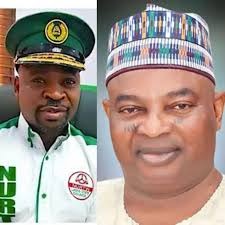
Musiliu Ayinde Akinsanya, popularly known as MC Oluomo, has insisted that he remains the National President of the National Union of Road Transport Workers (NURTW), dismissing claims of a leadership takeover by Tajudeen Baruwa.

The development follows reports that Baruwa had taken control of the union’s national secretariat, citing court judgments he believes validate his position.

The move has triggered fresh tension within the NURTW, with both camps asserting authority over the union’s leadership.

Reacting in a statement shared on his Instagram page, MC Oluomo described the incident as “forceful takeover,” maintaining that the legal process regarding the dispute is still ongoing and has not been concluded.

He maintained that, as he was not directly involved in the court decision, it could not be used to remove him from office. He believes that the case is still pending in court and should be given due process.
“The National President wishes to intimate members of the union and the general public that he was not a defendant in the purported judgment. The judgment has been appealed, and a stay of execution has been duly entered,” the statement read.

He added that he has not engaged with Baruwa or any other party due to the pending litigation, noting that security agencies are already monitoring the situation.

“He has not engaged with Mr Baruwa or any individual, aware that cases are pending in court. The situation is under the control of security agencies,” he said.

Reaffirming his position, MC Oluomo stated that he remains the legitimate president of the union, while urging members nationwide to remain calm and avoid actions that could escalate tensions across motor parks.

“Alhaji Musiliu Ayinde Akinsanya remains the National President of NURTW,” he concluded.

Sun