Home Blog Page 557

VP Shettima Arrives Zamfara to formally receive Governor Lawal into APC

0


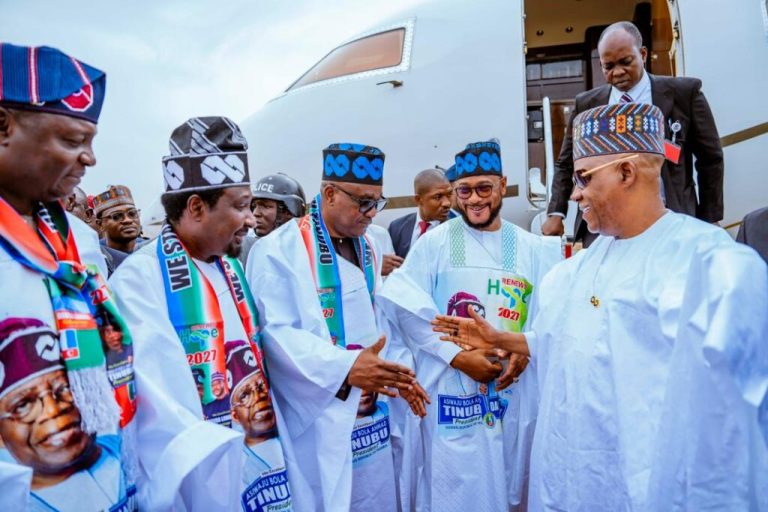
Vice President Kashim Shettima has arrived in Gusau international airport, Zamfara State, for a grand rally to formally receive Governor Dauda Lawal into the APC.

The Vice President, on behalf of President Bola Ahmed Tinubu, along with the APC National Chairman, Prof. Nentawe Goshwe Yilwatda, are leading APC Governors to officially welcome the Governor of Zamfara into the party.

Nigeria’s power woes stem from system failures, not resource shortage –Experts

0


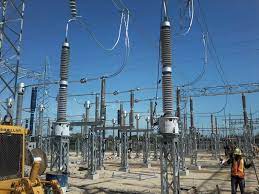
Global attention, yesterday, focused on Nigeria’s power sector, with experts stressing that the country’s electricity crisis stems from systemic failures, not energy shortages.

The experts spoke at the CeraWeek in Houston,Texas on the topic: Continental Opportunity: Scaling Energy Access in Africa’s Resource-Rich Economies.

They emphasised that Nigeria’s enduring electricity crisis was not the result of resource scarcity but a stark failure of planning, coordination and execution across the energy system.

Silvia Macri, Associate Director, Africa and Middle East Power and Renewables Lead at S&P Global Energy, said the country’s vast natural gas reserves have not translated into reliable power due to deep structural inefficiencies across the energy value chain.

Nigeria, she noted, has a reliable installed capacity of about seven gigawatts, a level considered grossly inadequate for its large and rapidly growing population.

“The issue is not just about how much resource the country has, but whether the entire system, from production to delivery, is functioning efficiently,” she said.

Macri identified critical gaps spanning gas supply, infrastructure, and electricity delivery as the root causes of the crisis.

Key among them, according to her are: Limited gas pipeline infrastructure, restricting supply to power plants weak transmission and distribution networks which hinders delivery to consumers.

Others are: Underinvestment in generation capacity which leaves demand unmet.

She stressed that solving Nigeria’s electricity problem requires a holistic approach rather than isolated interventions.

“It’s about connecting all parts of the chain, upstream, midstream and downstream and ensuring they are all adequately developed,” she added.

The session also highlighted financial and policy-related constraints that continue to deter investment in Nigeria’s power sector.

Also speaking, Director, Upstream Solutions, S&P Global Energy, Laura Sima, noted that infrastructure projects, particularly pipelines and grid systems, often yield low returns, making them unattractive to private investors.

“Infrastructure is essential, but not necessarily profitable. That raises the question of who should finance it,” the expert said, pointing to government as a critical player in bridging the gap.

In addition,she pointed out that concerns over payment reliability remain a major obstacle. “Gas suppliers are often not paid consistently, undermining confidence and discouraging further investment,”.

The Director, Upstream Solutions and Technical Research, Upstream Intelligence, Africa, S&P Global Commodity Insights, Justin Cochrane, further pointed to currency volatility as a significant barrier.

He explained that investors face losses when revenues earned in naira depreciate against the U.S. dollar, a common scenario in Nigeria’s macroeconomic environment.

“You invest in dollars and get paid back in a weakening local currency. That’s a serious challenge for investors,” he said.

Despite Nigeria’s abundant gas reserves, estimated at over 200 trillion cubic feet, much of the resource remains untapped due to infrastructure and market limitations.

The experts noted that across Africa, only a fraction of discovered gas resources is currently in production, with many projects stalled by lack of infrastructure and viable commercial frameworks.

Macri also highlighted the growing role of renewable energy in addressing short-term supply gaps. Renewables, she said, are quicker and cheaper to deploy, particularly for off-grid and decentralized solutions.

However, she emphasised that gas-fired power remains essential for ensuring stability and supporting intermittent renewable sources.

Beyond Nigeria, panelists observed that Africa is becoming increasingly attractive to global energy investors, especially as geopolitical tensions prompt companies to diversify away from traditional regions like the Middle East.

The continent’s vast, underexplored basins and rising energy demand position it as a key future growth market.

Still, experts warned that without structural reforms, improved governance, and sustained investment in infrastructure, countries like Nigeria may continue to struggle to convert resource wealth into reliable power supply.

Experts said resolving the crisis will demand coordinated reforms, strategic investments, and robust policies to fully harness Nigeria’s energy potential.

Sun
N12.4bn NCC fine won’t fix poor telecom service without recovery engineering – Expert warns

0


A Senior Software Engineer at Oracle, Mr. Sheriff Adepoju, has cautioned that Nigeria’s planned N12.4 billion fine on telecom operators over poor service delivery may not translate into improved user experience without deliberate investment in recovery engineering.

Adepoju made this known in Abuja while reacting to the decision by the Nigerian Communications Commission (NCC) to sanction operators for breaches of service standards.

The commission also disclosed ongoing efforts to strengthen its enforcement mechanisms to ensure greater compliance.

The move followed a directive by the Minister of Communications, Innovation and Digital Economy, Bosun Tijani, mandating the NCC to introduce automatic penalties for network failures within 90 days, aimed at tightening accountability in the sector.

However, Adepoju stressed that while penalties may punish operators after service failures, they do not inherently improve the systems required to resolve such failures faster.

He identified recovery engineering, the structured process of restoring services quickly and efficiently after disruptions as the critical missing link.

To him, telecom networks are routinely affected by fibre cuts, power outages, equipment faults, software glitches, and congestion during peak periods.

“Without strong recovery systems, these disruptions often lead to prolonged outages and poor customer experience.

“Recovery engineering is the combination of tools, processes, and trained responses that ensure disruptions are detected early, assigned promptly, resolved safely, and clearly communicated to users,” he explained.

He noted that in the absence of such systems, customers are left in frustrating cycles of repeated service failures, vague timelines, and ineffective customer support.

Citing recent data from the NCC, Adepoju highlighted the rapid growth in telecom demand, with monthly mobile data usage rising from about 518,000 terabytes in January 2023 to over 1.23 million terabytes by November 2025.

Broadband subscriptions also climbed to approximately 109.6 million by December 2025, pushing penetration to 50.58 percent.

He warned that demand is outpacing operators’ ability to recover quickly from routine failures, meaning that service disruptions now have wider economic and social consequences as more Nigerians rely on mobile connectivity for work, education, and financial transactions.

Adepoju further outlined key elements of effective recovery engineering, including rapid fault detection, clear responsibility assignment, controlled system restoration, and proactive safeguards to prevent minor issues from escalating into prolonged outages.

He further emphasised that transparent customer communication must be integrated into the recovery process, not treated as an afterthought.

“Customers want honest updates and realistic timelines. That is only possible when communication is tied to actual recovery steps like detection, diagnosis, repair, and verification,” he said.

Sun

In London, Mbah ignites investors’ interest in Enugu

0

…NGX, UBA affirm Enugu’s positioning as an emerging investors’ haven

… Tinubu’s economic reforms most significant in decades – Mbah

Governor of Enugu State, Dr. Peter Mbah, has ignited foreign investors’ interest in the state with prospective investors expressing the readiness to immediately key into opportunities across various sectors of the state’s economy.

Mbah said investors should expect between 25 and 40 percent return on their investments, noting that global manufacturers and international partners were already establishing a presence in the state, recognising its strategic position as well as the opportunities and reform agenda that were underway.

The governor, who was on the president’s entourage during the state visit to the United Kingdom, UK, spoke at the UK-Nigeria Project Agglomeration Compact 2026 delivered by Mutandis Africa, a pan-African investment and trade facilitation platform in collaboration with the Dr. Zacch Adedeji-led Nigeria Revenue Service (NRS) in the House of Lords on the sidelines of Tinubu’s visit.

The investment forum brought Enugu State, senior federal government officials, and private sector leaders to engage directly with the UK’s senior investor community, including private equity funds, sovereign wealth investors, development finance institutions, infrastructure platforms, pension capital, and family offices.

He said, “We have numerous projects that have been curated for international investors: the international airport currently being expanded in Enugu is designed to serve a regional population of approximately 30 million people, thus transforming Enugu into a gateway for the entire southeast economic corridor, linking surrounding states whose economies are themselves growing rapidly.

“In tourism and hospitality, Enugu’s natural landscape, a hill-top city surrounded by waterfalls, caves and remarkable scenery, is being repositioned as a destination for both leisure and business travel. New hotels, a conference centre and revitalised resorts are being developed to support this vision.

“In agriculture, we are modernising production through agritech and commercial farming initiatives that strengthen food security while building export-oriented value chains.

“Power drives every modern economy. Today, more than 50% of the region still lacks reliable electricity, creating an opportunity to deliver dependable power to over 15 million people.

“In healthcare and education, we are expanding services across communities to build the skilled workforce and stable environment that serious investment requires.

“And at the heart of this transformation lies one of our most ambitious developments: a new smart city spanning approximately 10,000 hectares, currently breaking ground, designed to become a modern commercial and residential hub for the region.”

Mbah further hailed President Tinubu’s reforms, especially the structural shift where he said states were being increasingly empowered to act as economic engines in their own right.

“Importantly also, under President Tinubu’s leadership, bold reforms have been implemented to restore macroeconomic stability and improve investor confidence. The foreign exchange market has been unified, fiscal reforms are strengthening transparency, and the Nigeria Tax Act is helping to create a modern fiscal architecture designed to support long-term investment,” he added.

He said Tinubu’s UK visit signaled a paradigm shift that now enables subnational governments to also drive economic growth.

“For Nigeria, it signals a new era in which sub-national governments are not simply administrators, but active stewards of economic growth.

“For investors, it marks an opportunity to engage not only with a country, but with dynamic regions within that country that are building credible, bankable opportunities,” he said.

Speaking, Chairman of the Nigerian Exchange Group, NGX, Dr. Umaru Kwairanga, and the Group Managing Director/CEO of the United Bank for Africa, Oliver Alawuba, reinforced Governor Mbah’s message and Enugu State’s current strategic positioning as one of Nigeria’s leading sub-national economies.

Kwairanga said the NGX was on track to deliver three times its performance in 2025 due to rising investor confidence and key policy drivers, particularly the ongoing banking sector recapitalisation.

Speaking on the outcome, Founder/CEO of Mutandis Africa, Chinelo Anohu, said investors, who were drawn from various global economies, were very eager to key into the various opportunities, with special focus on aviation sector and real estate sector opportunities. They are also keen on bringing in smart solutions that would support Enugu’s Smart Schools and Smart City.

“The governor’s astute delivery of opportunities in the state and mastery of relevant data were quite compelling. Post-event event transaction processes will commence immediately,” she added.

Sun

‘I wasn’t arrested’ — Kaduna cleric counters Obi, ADC chieftains

0

Ahmad Umar, a Kaduna-based Islamic cleric, has refuted claims that he was detained by the Department of State Services (DSS), following a recent visit by Peter Obi, the former presidential candidate.

In Tuesday post on his X page, Obi alleged that Umar was arrested shortly after hosting him in Kaduna last Sunday.

However, in viral video which circulated hours after Obi’s post, Umar refuted the claim, insisting he was neither detained nor mistreated.

Between Reform and Reality: Yuguda’s Appointment Sparks Debate

0


At a time when the All Progressives Congress (APC) is striving to reinforce internal discipline, credibility, and public trust, the appointment of former Bauchi State governor, Isa Yuguda, as Secretary of the party’s Convention Committee has sparked intense debate among political observers.

Under the leadership of President Bola Ahmed Tinubu, the APC has consistently projected itself as a party committed to reform, accountability, and progressive governance. However, this recent decision raises a fundamental question: can a party that seeks to inspire confidence afford to place individuals burdened by persistent allegations of corruption.

Public records and multiple reports over the years have linked Isa Yuguda’s tenure as governor (2007–2015) to a range of serious allegations. Among them are claims of contract fraud involving unaccounted sums estimated at over ₦212.2 billion. There have also been allegations bordering on abuse of office, diversion of public funds, and money laundering. Notably, in 2017, the Economic and Financial Crimes Commission (EFCC) secured an interim forfeiture order on a property reportedly linked to him in Bauchi State an action that underscored the seriousness of the concerns, even if not all cases reached definitive judicial conclusions.

Further reports referenced allegations of misappropriation involving approximately ₦312 billion. Additional issues, including investigations into aircraft transactions and an alleged ₦18.1 billion loan scheme tied to questionable financial dealings, remain part of the broader narrative that has followed his public service record. they nevertheless form part of the public domain and cannot be ignored in political decision-making.

Equally troubling is the case involving Yuguda’s former aide, Sanusi Mohammed Isa, who was investigated by the Independent Corrupt Practices and Other Related Offences Commission (ICPC). The investigation reportedly uncovered assets including about 220 residential flats across multiple states valued at approximately ₦1.85 billion, far exceeding what could reasonably be linked to his official earnings. the ICPC maintained concerns significant enough to pursue an appeal, raising further questions about the environment under which such wealth accumulation occurred.

Beyond these allegations, there are also criticisms regarding Yuguda’s performance in subsequent public roles, including his tenure as Pro-Chancellor and Chairman of the National Open University of Nigeria (NOUN). Observers have pointed to concerns about administrative effectiveness and institutional stability during that period issues that, taken together, further complicate the argument for entrusting him with a sensitive party assignment.

This is not merely a legal debate; it is a question of perception, credibility, and political judgment. In a democratic setting, leadership is as much about integrity as it is about competence. the weight of repeated allegations can erode public confidence and weaken the moral authority of any institution that appears to overlook them.

To be clear, President Bola Ahmed Tinubu’s administration has demonstrated a strong commitment to national development and institutional reform. The APC, under his leadership, continues to play a central role in shaping Nigeria’s political and economic trajectory. However, the strength of that vision depends significantly on the quality, credibility, and public perception of those entrusted with key responsibilities within the party structure.

In this context, appointing individuals whose records remain clouded by controversy sends a conflicting signal one that risks undermining the very principles the party seeks to uphold. Political appointments, particularly within strategic committees, should reflect not only experience but also unquestionable integrity and public trust.

Ultimately, if the APC is to sustain its image as a party of reform and responsibility, it must be deliberate in its choices. Figures surrounded by longstanding allegations regardless of legal technicalities may not represent the standard of leadership the party aims to project.

In politics, perception matters. And in moments like this, the difference between progress and contradiction lies in the decisions a party chooses to make.

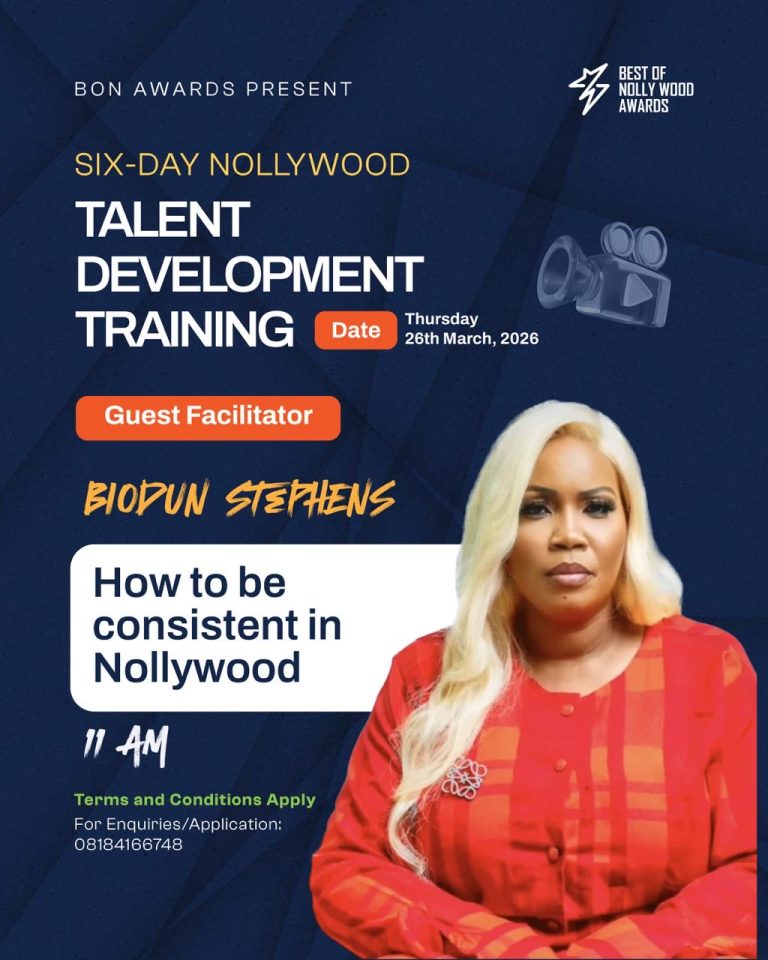
DG of NFVCB, Dr. Shaibu Husseini, to Declare Nollywood Training Open

0

The Best of Nollywood (BON) Awards, in collaboration with Odi-Olowo/Ojuwoye LCDA, is pleased to announce that the Director-General of the National Film and Video Censors Board (NFVCB), Dr. Shaibu Husseini, will officially declare open the upcoming Nollywood Talent Development Training for youths in Odi Olowo.

The training programme, scheduled to hold from March 25th to 28th, 2026, is designed to empower young creatives with the skills, knowledge, and industry exposure needed to succeed in Nigeria’s thriving film industry.

Dr. Husseini’s presence underscores the importance of the initiative and highlights the Federal Government’s commitment to the growth and regulation of the Nigerian film sector. As a respected film scholar, critic, and administrator, his role in declaring the training open is expected to inspire participants and reinforce the value of professionalism and standards within Nollywood.

The four-day training will feature top industry practitioners, including Biodun Stephens, Segun Arinze, Tope Duker, Grace Babalola, Sanjo Adegoke and Judith Audu, alongside other notable facilitators, who will guide participants through intensive sessions in acting, directing, scriptwriting, and film production.

Organisers noted that the training is specifically tailored for the youths of Odi Olowo, with a focus on discovering raw talent, building capacity, and creating pathways into the creative economy.

The BON Awards continues to play a leading role in promoting excellence and capacity building within the Nigerian film industry, and this collaboration with Odi-Olowo/Ojuwoye LCDA marks another significant step in that direction.

For enquiries and participation details, interested individuals can contact 08184166748.

Signed
Organising Committee
Best of Nollywood (BON) Awards

Insecurity: Ndume alerts FG over escalating terrorist attacks in Borno

0

…Calls for better equipment of troops as Ngoshe, Pulka levelled down

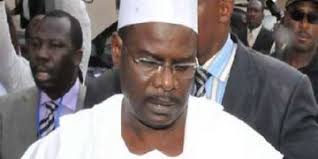
Former Senate Leader, Ali Ndume, has raised the alarm over renewed insurgent attacks in Borno State, warning that Nigerian troops were being outgunned by terrorists due to inadequate equipment.

Ndume, who represents Borno South Senatorial District, made the disclosure on Tuesday while speaking with journalists in Abuja, following an assessment visit to affected communities.

The lawmaker had, over the weekend, visited Ngoshe and Pulka alongside the Borno State Governor, Babagana Zulum, to evaluate the level of destruction caused by the attacks.

Findings revealed that fighters from Boko Haram, in collaboration with Islamic State West Africa Province, carried out coordinated assaults on Ngoshe in Gwoza Local Government Area, killing several soldiers, the village head, and community elders, including a woman. A number of women and children were also abducted during the raid.

Although the Nigerian Army has since regained control of the affected communities, Ndume expressed grave concern that the troops were initially overwhelmed by the superior firepower of the insurgents.

“I am calling on the federal government to double its efforts in equipping the Army with sophisticated arms and ammunition,” he said.
“I gathered that our soldiers lack adequate ammunition and had to withdraw from Ngoshe and Pulka because the terrorists overwhelmed them. It was days after reinforcement that they regained the area. Nothing was left standing in Ngoshe and Pulka.”
Describing the scale of destruction, Ndume said the communities had been reduced to rubble, with barely any structure left intact.

“I have visited Ngoshe; it is something you cannot fully describe unless you have seen it. It has been brought down to ground zero. The destruction is complete. There is nothing left standing except one small mosque,” he said.

The senator commended Governor Zulum for personally visiting the affected areas and spending a night in Pulka, noting that the gesture had significant psychological impact on displaced residents.

He also called on the federal government to urgently support the Borno State Government in rebuilding the devastated communities and providing relief to displaced persons currently taking refuge in Internally Displaced Persons (IDP) camps.

“The people are resilient. I interacted with them, and many are determined to return home rather than relocate to cities. Since they have that determination, the government must act swiftly to rebuild the communities,” he added.

Ndume further disclosed plans to raise the matter at the National Assembly, hinting at a possible motion to galvanise legislative intervention, even as he urged immediate executive action to address the humanitarian and security crisis.
“I will engage my colleagues in both chambers of the National Assembly. We will take necessary steps, but we expect the federal government to intervene without delay,” he said.

While commending the Nigerian Army for eventually reclaiming the affected communities, Ndume insisted that sustained support, improved weaponry, and strategic reinforcement remain critical to preventing future occurrences.

Sun

Tinubu inherited 268 projects, N13trn debt — Umahi

0

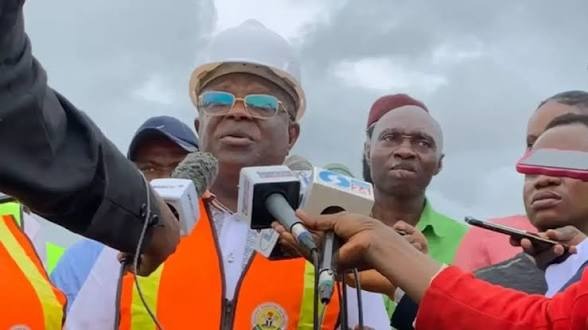
Minister of Works, Sen. David Umahi has revealed that President Bola Tinubu inherited very terrible debts of N13trn and over 268 projects across the country.

He said the President has been fixing the projects and the new ones.

Umahi stated this on Monday evening while inspecting some projects in South East including ongoing construction of Abakpa junction flyover, Enugu, Eke-Obinagu flyover, Enugu and the Enugu–Onitsha expressway.

He said before the President took over the mantle of leadership, drivers couldn’t drive through many roads for one hour without having challenge of bad road

The Minister said such challenges are becoming a history based following massive project construction across the country by the President.

“We inherited very terrible debts, over N13trn and over 268 projects as at May, 2023.

“You are aware that you can’t drive through any road for one hour in this without having challenge of bad road but that is becoming a history based on what the President is doing.

“We thank God almighty for the life of the President and I am happy that our people’s complaints about road challenges are becoming much less.

“Everything will not be completed over night but we are very committed, we are not distracted, we are carrying out the directive of Mr. President to ensure that the entire country is properly connected with roads and bridges”, he stated.

Umahi directed the reopening of 15-kilometre stretch of the Enugu–Onitsha expressway on or before 31st of this month for public use to ease transportation challenges and boost economic activities across the South East following its advanced stage.

According to him, the directive is part of the Federal Government’s commitment to providing immediate relief to road users while ensuring long-term infrastructure durability.

He noted that the Enugu–Onitsha and Enugu–Port Harcourt corridors are among the most strategic routes in the South East, historically plagued by traffic congestion, tanker accidents, and deteriorating pavement conditions.

He expressed optimism that ongoing reconstruction efforts would permanently reverse the trend.

Highlighting intergovernmental collaboration, Umahi commended Enugu State Governor, Peter Mbah, for supporting federal projects, particularly the Abakpa flyover project.

He disclosed that the Enugu state government contributed to compensation payments and facilitated the relocation of critical utilities, including high-tension power lines and water pipelines.

Project contractor of the Abakpa junction flyover, Engineer Chimalo Ezeugo, said piling works are ongoing, with 15 out of the required 40 piles already completed and additional ones in progress. The project is expected to span approximately 800 metres, with a delivery timeline of one year.

Ezeugo explained that the flyover would connect key routes within the Enugu-Abakpa axis and significantly improve traffic flow, particularly in high-density areas such as Trans-Ekulu and the Government Reserved Area (GRA).

Also speaking, Resident Engineer on the Enugu–Onitsha project, Engineer Lawrence Ubi, confirmed that the 15-kilometre section is about 95 per cent complete and structurally sound. He assured that the road meets required engineering standards and is ready for use.

Wike pledges deeper Japan ties to boost Abuja’s transformation

0

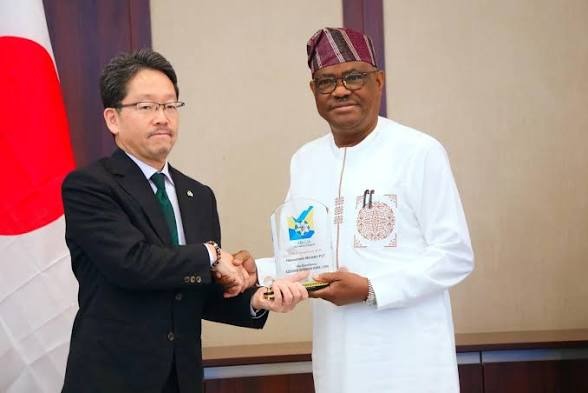
The Minister of the Federal Capital Territory (FCT), Nyesom Wike, has reaffirmed the administration’s commitment to forging stronger ties with Japan, aiming to fast-track Abuja’s development in line with its master plan.

Wike gave the assurance during a courtesy visit by the Japanese Ambassador to Nigeria, Suzuki Hideo, and officials from the Japan International Cooperation Agency (JICA) in Abuja, Nigeria’s capital.

The minister praised Japan’s pivotal role in developing and reviewing the Abuja Master Plan, describing it as essential for the city’s long-term growth. “I want to sincerely commend you for having confidence in the government of Nigeria and in particular the Federal Capital Territory,” Wike said.

“You have contributed to education, health, nutrition, and other critical sectors that impact directly on our people. You have been working closely with the FCDA on the Abuja Master Plan. That is very key for us. We will continue to cooperate with you to ensure that this is actualised.

He highlighted Japan’s support in education, including teacher training programmes in Tokyo and infrastructure for quality learning. Wike identified agriculture and urban development as priority areas for future collaboration, promising an enabling environment to realise President Bola Tinubu’s Renewed Hope Agenda.

Suzuki echoed the sentiment, stressing Abuja’s centrality to Nigeria’s progress. “The development of Abuja is crucial for driving Nigeria’s progress. Japan and JICA have been implementing various projects in infrastructure, healthcare, and economic development,” he stated.

He disclosed ongoing initiatives in waste management and industrial development, including a plastics value chain project with the United Nations Industrial Development Organization (UNIDO), with a pilot facility nearing handover. He also noted JICA’s efforts to upgrade the Abuja Master Plan for improved residents’ quality of life and sustainable urban growth.

JICA Nigeria Chief Representative Ishigame Keiji outlined the agency’s broad interventions in water, power, health, agriculture, and education within the FCT. He revealed support for reviewing the 1979 Master Plan to meet needs up to 2050, emphasising infrastructure expansion, economic growth, and climate resilience.

“Once the updated plan is completed, we are ready to move into priority infrastructure development, backed by our global experience in large-scale projects,” Keiji said, underscoring the enduring Nigeria-Japan partnership for sustainable FCT growth.