Home Blog Page 551

Nigeria losing fight against corruption, NLC, CSOs warn

0


The Nigeria Labour Congress (NLC) has warned that the country is steadily losing the battle against corruption and illicit financial flows (IFFs), as entrenched systems of looting continue to undermine governance, economic growth, and citizens’ welfare.

The warning came at a meeting of trade unions and civil society organisations (CSOs) focused on strengthening coalitions to combat kleptocracy and illicit financial flows, where labour leaders said the country’s anti-corruption framework has failed to deliver meaningful results.

Speaking at the event, NLC General Secretary, Emmanuel Ugboaja, described the situation as a war for the soul and wealth of Nigeria, noting that despite years of reforms and interventions, corruption remains deeply institutionalised.

Ugboaja, who was represented by NLC Assistant Secretary-General, Onyeka Chris cited findings from a labour-backed study which revealed that corruption in Nigeria is no longer limited to isolated incidents but driven by a system of kleptocracy, where public institutions are captured and used to serve elite interests.

He explained that massive financial leakages, particularly through inflated contracts, weak regulatory systems, and capital flight, have deprived the country of critical resources needed for infrastructure, healthcare, education, and job creation.

The labour leader also criticised what he described as selective enforcement of anti-corruption laws, where low-level offenders are prosecuted while politically exposed persons evade justice through influence and patronage.

He further warned that weak rule of law, compromised institutions, and constitutional protections such as immunity clauses have created a culture of impunity, allowing corruption to thrive unchecked.

He said: “We are not here to merely discuss problems and produce another communique for the shelves. We are here because we are at war which we seem to be losing. It is a war for the soul and the wealth of Nigeria, and we have assembled the necessary forces to change the terms of engagement. Our people must win and Nigeria must win.

“We are confronting a system of kleptocracy, where the state itself has been captured and weaponized by a parasitic elite. They govern for their own gain, treating the treasury as their private account and the nation’s resources as their inheritance.”

Ugboaja further explained that the aim of the engagement was to move from analysis to action by building a coalition that is not just a talking shop but a fighting front.

“We will forge a structure with clear roles, responsibilities, and decision-making mechanisms that ensures we are agile, strategic, and effective. We will develop a national action plan that identifies our priority advocacy areas and charts a clear way forward,” he added.

Also speaking, the Deputy Regional Director for Africa at the Solidarity Center, Margie Peters, said corruption and illicit financial flows pose a direct threat not only to economic stability but also to democracy and social development.

Peters noted that African countries continue to lose substantial revenues to illicit practices, weakening governments’ ability to provide basic services and protect vulnerable populations.

“Illicit financial flows rob citizens of access to essential services and erode trust in public institutions,” she said, adding that empowering workers and civil society is critical to reversing the trend.

In his remarks, James Eustace, representing the Tax Justice and Governance Platform, said civil society groups are intensifying advocacy for transparency, accountability, and fiscal justice, particularly in the implementation of tax policies and financial regulations.

He noted that the platform, which brings together organisations such as ActionAid, Oxfam, Christian Aid, and CISLAC, has played a key role in pushing for reforms aimed at curbing illicit financial flows and promoting equitable economic policies.

Participants at the meeting agreed that the current anti-corruption approach requires a major shift, stressing that government institutions alone cannot address the crisis without sustained pressure from organised labour and civil society.

They called for urgent reforms, including stronger whistleblower protections, enforcement of beneficial ownership transparency, judicial independence, and mechanisms for the recovery and accountable use of stolen assets.

The stakeholders also emphasised the need for a coordinated national and international response to dismantle the structures enabling illicit financial flows, warning that failure to act decisively could further weaken Nigeria’s democracy and economic prospects.

Sun

FG reaffirms commitment to establishment of state police

0


Nigeria Police Force officers

• IGP submits framework to Senate
From Okey Sampson, Umuahia and Adesuwa Tsan, Abuja

The Federal Government has reaffirmed its commitment to the establishment of state police to strengthen national security and foster a peaceful environment for all citizens.

Minister of the Ministry of Police Affairs, Senator Ibrahim Gaidam, made this known when he held a meeting with a delegation from the Steering Committee on the State Police Establishment Framework, constituted under the leadership of the Inspector General of Police.

Senator Gaidam reaffirmed the Federal Government’s resolve to decentralise policing structures in alignment with its Renewed Hope Agenda.

He noted that bringing policing closer to communities will significantly enhance responsiveness, intelligence gathering, and overall effectiveness in tackling security threats at the grassroots level.

“The dynamic nature of today’s security landscape demands innovative and localized solutions. State policing is no longer optional, it is imperative.”

Gaidam commended the Inspector General of Police, Tunji Disu, for the swift implementation of policy directives aimed at improving policing efficiency across the country.

“Such proactive leadership demonstrates a shared commitment to safeguarding lives and property nationwide.

Chairman of the Steering Committee, Prof. Olu Ogunsakin had earlier outlined the Committee’s ongoing efforts to develop a comprehensive and practical framework for the successful establishment of state police systems.

He emphasised that the initiative is designed to deliver a stronger sense of safety and public trust in law enforcement institutions.

He assured the Minister of the Inspector General’s full support in building a modern, resilient, and community-oriented security architecture capable of addressing present and future challenges.

As momentum builds around decentralising policing, IGP Disu has also presented a comprehensive framework for the establishment of state police to the Deputy Senate, Barau Jibrin, who chairs the Senate Committee on the Review of the 1999 Constitution of Nigeria, for legislative imput and legal backing.

The submission was made at the National Assembly where the lawmaker received the draft on behalf of the committee yesterday.

The 75-page document was presented on behalf of the IGP by Professor Ogunsakin, who chairs the Nigeria Police Force committee set up to develop modalities for state policing.

Titled “A Comprehensive Framework for the Establishment, Governance and Coordination of Federal and State Police,” the report outlines the proposed operational structure for state police, including governance models and coordination mechanisms between federal and sub-national policing systems.

Disu, in the submission, said the report encapsulates the professional insights and strategic recommendations of the Nigeria Police Force, drawn from extensive consultations and a thorough assessment of the legal, administrative, and operational implications of establishing state police.

“The report covers the considered views, professional insights and strategic recommendations of the Force, derived from extensive consultations and a careful assessment of the operational, legal and administrative implications of instituting State Police in Nigeria.

“It is our expectation that the contents of this report will meaningfully contribute to ongoing deliberations and assist in shaping informed, balanced, and pragmatic decisions on this critical aspect of national security architecture,” he said.

He noted that the document was formally forwarded to the Senate Constitution Review Committee as the Force’s institutional input into the ongoing constitutional amendment process.

Senator Barau commended the IGP for what he described as a proactive intervention, noting that the move aligns with the security reform agenda of President Bola Ahmed Tinubu.

He assured that the committee would subject the framework, alongside other memoranda received, to thorough scrutiny as part of efforts to review the nation’s grundnorm and strengthen Nigeria’s security architecture.

Sun

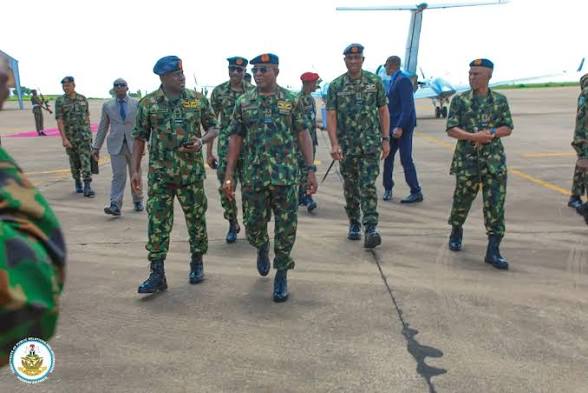
Centre Commends Nigerian Military’s Intensified Operations in North Central

0

*Centre Commends Nigerian Military’s Intensified Operations in North Central, Charges Armed Forces to Deepen Gains and Ensure Peaceful Easter Across The Country*

The Civic Centre for National Security and Civic Responsibility (CCNSCR) has commended the Chief of Defence Staff, General Olufemi Oluyede, and the Armed Forces of Nigeria for what it described as “notable and encouraging improvements” in security operations across Nigeria’s North Central region.

In a statement issued on Thursday and signed by its Executive Director, Dr Johnson Audu, the group said recent military gains in the region reflect a renewed operational drive and stronger coordination under the current leadership of the Armed Forces.

The group noted that communities across several North Central states, previously plagued by banditry, violent attacks, and persistent security disruptions, are beginning to witness a gradual restoration of order, improved troop presence, and more responsive military interventions.

According to the statement, these developments point to a more proactive and intelligence-driven approach by the military, resulting in the disruption of criminal networks and the containment of threats that had long destabilised parts of the region.

“The Civic Centre for National Security and Civic Responsibility commends the Chief of Defence Staff, General Olufemi Oluyede, for the renewed sense of direction and operational coordination within the Armed Forces. The emerging security improvements across the North Central region are both significant and reassuring,” the statement reads.

The group observed that sustained offensives targeting criminal enclaves, alongside increased surveillance and rapid deployment capabilities, have contributed to weakening the operational capacity of armed groups.

It added that the military’s growing ability to secure key transport routes and respond swiftly to distress situations has helped restore public confidence in affected communities.

Dr Audu said the Armed Forces deserve recognition for maintaining pressure on criminal elements despite the complex and evolving nature of security challenges in the region.

“The men and women of our Armed Forces continue to demonstrate resilience, discipline, and commitment in the face of difficult operational realities. Their efforts in safeguarding lives and stabilising communities across the North Central deserve national commendation,” he said.

While applauding the progress made, the group emphasised that the current gains must be consolidated and sustained to prevent any relapse into widespread insecurity.

It urged the military to intensify ongoing operations and maintain strategic momentum in order to ensure that recent improvements translate into lasting peace across the region.

“These gains, while commendable, remain fragile. It is imperative that the Armed Forces sustain the current operational tempo and continue to apply pressure on criminal elements to ensure that stability is not only achieved but preserved,” the statement added.

The group specifically charged the military leadership to replicate emerging pockets of stability across other troubled areas, stressing that consistent presence and sustained engagement are critical to long-term success.

Looking ahead to the Easter period, the CCNSCR called on the Armed Forces to ensure heightened vigilance and robust deployment to guarantee a peaceful and secure celebration across the country.

“We urge the military to sustain and intensify its efforts to ensure that Nigerians across all regions can observe the forthcoming Easter season in peace and safety. The goal must be to replicate and expand current security improvements nationwide,” the statement said.

The group also underscored the importance of citizen cooperation in supporting the work of security agencies, noting that lasting security cannot be achieved through military action alone.

It called on residents of the North Central region and Nigerians at large to remain vigilant, share credible information with security agencies, and resist any form of collaboration with criminal groups.

“Security is a shared responsibility. Citizens must actively support the Armed Forces through vigilance, cooperation, and a collective rejection of all forms of criminality. The fight against insecurity requires a united national effort,” Dr Audu said.

The statement further encouraged community leaders, civil society groups, and local institutions to strengthen grassroots engagement and promote a culture of peace and mutual responsibility.

It stressed that trust between citizens and the military remains a critical factor in sustaining recent gains and preventing the resurgence of violence.

The CCNSCR concluded by reaffirming its support for the Armed Forces and its commitment to promoting civic participation in national security, urging all stakeholders to remain resolute in the collective effort to secure the nation.

“The progress recorded in the North Central region must serve as a foundation for broader national stability. With sustained military effort and active citizen collaboration, Nigeria can move steadily towards lasting peace and security,” the statement said.

Oluremi Tinubu meets Melania Trump at White House summit on AI, education

0


Oluremi Tinubu, Nigeria’s first lady, on Wednesday attended the “Fostering the future together summit” hosted by Melania Trump, her US counterpart, at the White House in Washington, DC.

Oluremi was among 45 first ladies, including France’s Brigitte Macron, who attended the event aimed at “expanding access to educational tools” and protecting children in digital environments.


credit: thecable

Reno Omokri Defends Otedola, Says Public Anger Is Misplaced

0


Former presidential aide and commentator, Reno Omokri, has defended billionaire businessman Femi Otedola following criticism that trailed a viral video of the entrepreneur enjoying a holiday in Singapore.

In a statement posted on social media, Omokri questioned the outrage directed at Otedola, insisting that the businessman had committed no offence by spending his personal wealth on leisure.

According to him, the backlash against Otedola was unfair and reflective of what he described as misplaced anger among some Nigerians facing economic hardship.
Omokri argued that Otedola, as a private investor and industrialist, should not be blamed for the country’s socio-economic challenges. He said the businessman had, over the years, contributed positively to Nigeria’s economy by investing in key sectors, creating jobs, and supporting local production.
He particularly referenced Otedola’s investments in the power sector, describing it as one of the most difficult sectors in which to do business in Nigeria.

He also noted that Otedola had a record of philanthropy and anti-corruption advocacy, recalling his role in exposing a high-profile bribery scandal involving former lawmaker Farouk Lawan.

Omokri further said Otedola had committed substantial personal resources to charitable causes, including the construction of university hostels, hospitals, and shelters for internally displaced persons, especially in the North-East.

He maintained that individuals like Otedola and fellow industrialist Aliko Dangote should be encouraged rather than vilified, stressing that they are part of the solution to Nigeria’s development challenges.

Beyond his defence of Otedola, Omokri used the opportunity to weigh in on broader national economic concerns, arguing that Nigeria’s biggest challenge is not necessarily governance alone, but rapid population growth in relation to economic expansion.

He claimed that while Nigeria’s economy had recorded notable growth in recent years, the benefits were being undermined by rising population figures in some parts of the country.
Drawing comparisons with countries such as China and India, Omokri said population control policies played a major role in their economic transformation and should serve as lessons for Nigeria.

He also called for greater personal responsibility among citizens, particularly in relation to family planning and economic preparedness.
Omokri concluded by urging Nigerians to focus their frustrations on structural issues affecting development rather than directing hostility at private citizens who, in his view, are contributing to national growth.

Dangote Refinery Cuts Petrol Gantry Price by N75 to N1,200 Per Litre

0


The Dangote Petroleum Refinery has reduced its gantry price for petrol by N75, bringing the new rate to N1,200 per litre.
The spokesman for the Dangote Group, Anthony Chiejina, disclosed this in a statement, noting that the refinery also lowered its coastal price to N1,153 per litre.

According to him, the price adjustment comes amid ongoing tensions in the Middle East, which continue to shape developments in the global oil market.

He said: “Dangote Petroleum Refinery & Petrochemicals has reduced its gantry price for petrol to N1,200 per litre and its coastal price to N1,153 per litre.”
Chiejina added that the latest reduction represents a downward review of the refinery’s pricing structure and is expected to affect fuel supply costs across distribution channels, including depots and retail outlets.

The development is expected to have implications for marketers and consumers, as changes in gantry pricing often influence pump prices and the broader cost of fuel distribution across the country.

Lagos judiciary begins Easter vacation April 3

0


The Lagos State Judiciary has disclosed that its 2026 Easter vacation will run from April 3 to April 10.

This is contained in a statement signed by the Chief Registrar, Mr Tajudeen Elias, and made available to newsmen on Thursday in Lagos.

Elias said the vacation was approved by the State Chief Judge, Justice Kazeem Alogba, pursuant to Order 49 Rule 4(b) of the High Court of Lagos State (Civil Procedure) Rules, 2019.

According to Elias, court activities will resume on April 13.

The chief registrar said arrangements for handling urgent cases during the vacation were in place.

He said the arrangements ensured that each judge assigned to vacation duty would handle urgent applications related to substantive cases assigned to him or her.

He added that urgent applications whose substantive cases had not been assigned would be handled by judges to whom such applications were specifically assigned.

Elias said that notwithstanding the provisions of Order 49 Rule 4, any cause or matter might be heard by a judge during the vacation where it was urgent.

He added that this would be subject to the conditions prescribed by Order 49 Rule 5 of the High Court of Lagos State (Civil Procedure) Rules, 2019, being observed and complied with.

Oodua Youth Parliament passes vote of confidence on Defence Minister

0


The Oodua Youth Parliament (OYP), a youth-led organisation committed to national unity and development, has expressed its unwavering support and confidence in the leadership of the Minister of Defence, General Christopher Musa, following his assumption of office.

In a statement signed by its National Speaker, Aare Abdulmajeed Oyeniyi, the parliament commended the defence minister’s leadership credentials, professional experience, and commitment to strengthening Nigeria’s security architecture at a critical period in the nation’s history.

The youth parliament reiterated its strong condemnation of recent terrorist attacks in parts of the country, describing such acts as desperate attempts by weakened insurgent elements seeking to create fear despite significant operational setbacks suffered in recent years.

According to OYP, available security developments indicate that insurgency in the North-East has been substantially degraded, noting that remaining attacks largely represent isolated actions by fragmented groups attempting to project continued relevance.

“As a youth organisation with networks across the country, we believe terrorism has been technically defeated in its organised form in the North-East. What Nigerians are witnessing are remnants of defeated insurgents attempting to create the impression of continued strength,” the statement said.

The parliament further urged political actors, particularly members of the opposition, to conduct political engagement responsibly and avoid actions or rhetoric capable of politicising national tragedies or undermining collective security efforts.

OYP also commended President Bola Tinubu for appointing General Musa to lead the Ministry of Defence, describing the decision as one that placed an experienced and strategic security professional in a position critical to national stability.

The parliament highlighted key achievements and contributions associated with General Musa’s service record, including:

Security Sector Reforms: Initiatives aimed at improving professionalism, coordination, and operational effectiveness within Nigeria’s security institutions.

Youth Engagement Initiatives: Support for youth-focused programmes promoting vocational development, peacebuilding, and community stability.

OYP also praised the Minister’s vision for modernising Nigeria’s security infrastructure and strengthening regional cooperation in addressing transnational security threats.

The parliament announced that it had unanimously passed a vote of confidence on General Musa, reaffirming its belief in his capacity to advance ongoing reforms and enhance national security outcomes.

“We are confident that General Musa’s leadership, experience, and strategic direction will continue to drive progress in Nigeria’s security sector. The Oodua Youth Parliament pledges its continued support toward promoting peace, unity, and national stability,” the statement added.

The youth body reaffirmed its readiness to collaborate with government institutions, security agencies, and civil society stakeholders in advancing initiatives that promote peace and sustainable security across Nigeria.

Sun

Atiku demands release or prosecution of cleric detained over alleged coup plot

0

Former Vice President Atiku Abubakar has called for the immediate release of Kaduna-based cleric, Sheikh Sani Khalifa Zaria, describing his continued detention without trial as a grave violation of his fundamental rights.

Atiku made the call in a statement issued by the Atiku Media Office on Wednesday following rumour that circulated that the cleric had died in detention.

The ex-VP noted that the cleric has reportedly been held since December 2025 over allegations of involvement in a coup plot, yet has not been formally charged before any court of law.

Atiku said this prolonged detention is without due process and raises serious constitutional and human rights concerns.

Atiku noted that even a subsisting order of the Federal High Court directing that the cleric be presented in court has been ignored, an action he described as a direct affront to the rule of law and judicial authority.

“There can be no democracy without strict adherence to the rule of law. No security agency is above the Constitution, and none has the power to treat the rights of citizens as privileges to be dispensed with at will,” the African Democratic Congress (ADC) chieftain said.

He further warned that the continued detention of Sheikh Khalifa – without access to his family, legal counsel, and adequate medical care – amounts to a gross violation of his constitutional rights.

Atiku cautioned that normalising such conduct by security agencies poses a significant threat to Nigeria’s democratic foundations and risks eroding the fundamental rights guaranteed to all citizens.

He also expressed concern over growing public speculation surrounding the cleric’s condition, noting that the silence of the authorities has only deepened uncertainty and mistrust.

“Nigeria cannot continue to claim the status of a democracy while the rights of its citizens are routinely and brazenly violated,” he stated.

Atiku therefore called on the relevant security agencies to either release Sheikh Sani Khalifa immediately or charge him before a competent court without further delay, insisting that anything short of this constitutes unlawful detention and an abuse of power.

Sun

Electricity supply will be better within two weeks – Adelabu’s aide assures Nigerians

0

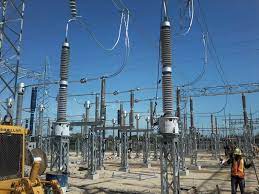
Chief Technical Adviser to Minister of Power, Adebayo Olowoniyi, said Nigerians would see marked improvement in electricity supply as maintenance work on a major gas pipeline is expected to be completed within two weeks.

In an appearance on Arise TV on Thursday, Olowoniyi also defended the Minister of Power, Adebayo Adelabu’s recent apology over epileptic power supply in the country.

On Tuesday, Adelabu tendered a public apology to Nigerians over the crippling and persistent outages witnessed in the last month.

Olowoniyi said the minister’s apology reflected strong leadership rather than an admission of personal culpability.

He said, “I think, first of all, I’d like to start with the apology from the Honourable Minister, which we believe is all about taking leadership in the sector.

“Not necessarily directly his fault for the challenges that we have, but as the Minister of Power, he just took—it was the right leadership step to say, okay, I take ownership of this issue, and I’m going to prefer a solution that would ensure power supply comes back in the shortest available time.”

He hinged the electricity supply crisis on disruptions to a key gas pipeline that supplies fuel to power plants, noting that about 75 per cent of Nigeria’s electricity generation is gas-dependent.

Olowoniyi said, “One of the major gas pipelines in Nigeria was undergoing maintenance, and gradually that process is being completed. We’re sure that within the next two weeks, full gas pressure will be back on the gas pipelines, and the power plants will be able to get enough gas at least to go back to their level of generation that they had in the last two to three months.”

He added, “I would already say that from yesterday, we would have gradually started to see some improvement as the pressure on the pipeline gradually starts to build up, and we will see continuous improvement over the next couple of weeks,”

Sun