Home Blog Page 546

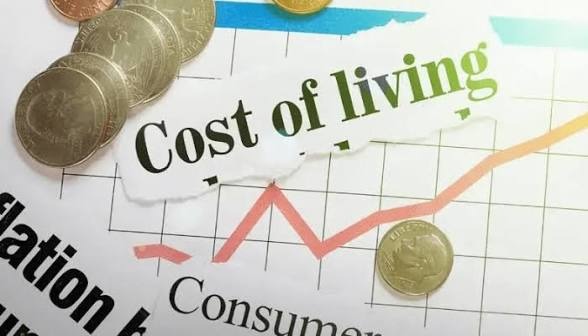
Rising cost of living: Labour, economists put FG under pressure

0

NLC demands wage award, tax relief
Devt experts, MAN, LCCI, others call for controlled crude pricing, crude supply to local refineries

Amid sustained increases in fuel prices and its attendant deepening economic hardship, oil industry, economic and development experts have called on the Federal Government to adopt controlled crude oil pricing for domestic refineries as a strategy to stabilise petroleum product costs in Nigeria.

They also outlined practical steps to curb rising fuel prices in Nigeria, stressing that solutions must address the entire value chain rather than focus solely on refining.

The Nigeria Labour Congress (NLC) is also calling on the government to urgently implement wage awards and tax relief measures to cushion the impact of the escalating cost of living on workers and ordinary Nigerians

The experts submitted that prioritising crude allocation to local refineries, strengthening domestic refining capacity, reducing distribution costs, promoting alternative energy, and providing targeted consumer relief would make Nigeria less vulnerable to global price shocks and ensure that the benefits of local refining reach ordinary consumers through cheaper fuel.

Governments at all levels, the experts say, should increase food imports, tackle insecurity and prioritise rehabilitation of state-owned refineries as part of efforts to ameliorate the situation.

The stakeholders warned that unless urgent and coordinated measures are taken, rising fuel costs will continue to drive inflation, increase transportation fares, and worsen living conditions for millions of citizens.

Economists, others counsel govt

Group Managing Director/Chief Executive Officer of Bristol Investments Limited, Chijioke Ekechukwu, said Nigeria, as an oil-producing nation, has the capacity to insulate its domestic fuel market from global volatility by controlling the price of crude supplied to local refineries.

Ekechukwu also stressed the need for stronger border controls to curb the smuggling of petroleum products to neighbouring countries, noting that such leakages further strain local supply and contribute to price instability.

“We can actually ensure that crude supplied to our refineries is sold at a controlled price and not at prevailing global market prices. If this is done, petroleum product prices can remain relatively stable in Nigeria,” he said.

On his part, Professor of Economics and Public Policy at the University of Uyo, Akpan Ekpo, urged the government to take both short-term and long-term measures to address the rising cost of living caused by the hike in the price of petrol.

“To cushion the extraordinary increase in food prices in the short term, the government may need to import food.

In the long term, however, Nigeria must take agricultural production more seriously and address security challenges so that farmers can return to their farms and increase food output.”

Also speaking, renowned economic and development expert, Aliyu Ilias, faulted the country’s failure to fully develop its refining capacity and alternative energy sources, describing the situation as avoidable.

“I think CNG would have solved the problem if it was efficiently implemented. Having more working refineries, especially our Nigerian-owned refineries, would have solved it, but we have failed to do it,” he said.

He further called for stronger regulatory oversight by the Nigerian Midstream and Downstream Petroleum Regulatory Authority (NMDPRA), noting that fuel prices often rise rapidly without adequate monitoring.

“There should be proper monitoring. Within weeks, we see filling stations increasing prices. If we also had sufficient reserves that could last up to four months, it would help cushion the impact of global market shocks,” he added.

What Nigerian workers want – NLC

Meanwhile, NLC President Joe Ajaero decried the surge in petrol prices, which he said has risen to between N1,170 and N1,400 per litre, describing the development as a direct burden on Nigerian workers.

Ajaero warned that the situation has exposed the fragility of Nigeria’s downstream petroleum sector, stressing that reliance on market-driven pricing tied to global oil fluctuations leaves the country vulnerable.

The labour leader called for immediate government intervention, including the introduction of a wage award and cost of living allowance (COLA), tax relief for workers, and the urgent rehabilitation of public refineries in Port Harcourt, Warri, and Kaduna.

He also urged the government to ensure that any projected oil windfall from the ongoing global crisis is channelled towards alleviating the suffering of Nigerians.

“The costs of PMS and AGO have made transportation a noose around workers’ necks. Food inflation is galloping, and meagre wages are being swallowed by this induced scarcity. When a worker cannot afford to go to work, the economy stops. When a family cannot afford three meals a day, society sits on a keg of gunpowder.

“The government cannot foreclose any action that would offer succour. We demand an immediate intervention. It is the duty of the state to act to prevent the agony of its citizens and not wring its hands in hopelessness, mouthing the Middle East war.

“The NLC subsequently demands: An immediate Wage Award and Cost of Living Allowance (COLA) for all workers to cushion the high cost of living. Current wages are stipends of starvation.

“An expansion and overhaul of Cash Transfers to ensure transparency, and that they reach the most vulnerable, with increased value to match inflation.

“Immediate Tax Reliefs for Workers and a stoppage of all regressive taxes on low-income earners, including the proposed tax on the informal economy. Taxing the minimum wage is extortion.

“A timeline for the full-scale operationalisation of all public refineries. The Nigerian state must be held accountable for the billions spent on turnaround maintenance. Nigerian workers are being pauperised and massively suffering. We are not a statistic; we are the engine of this nation. When the engine overheats, the entire vehicle crashes.

“The about N30 trillion only oil windfall expected to accrue to Nigeria as a result of the current Middle East war must not grow wings like the Gulf War oil windfall but should be invested in the Nigerian people. It should be used to cushion the negative effects of the crisis in Nigerian people.

“The government must engage in sincere social dialogue with Nigerian workers and the broader citizenry. Using the Middle East war as an excuse to further impoverish Nigerians is unacceptable. The primary duty of the government is to ensure the welfare of the citizenry. We demand action. We demand justice. We demand survival.”

Similarly, Publicity Secretary of the Crude Oil Refiners Association of Nigeria (CORAN), Eche Idoko, said international crude prices, exchange rate volatility, and logistics costs are the main drivers of pump prices.

While stressing that increasing crude allocation to the Dangote and other refineries can help, he emphasised that this must be done strategically, with local refineries given priority access to crude, fair pricing models adopted, the naira-for-crude framework stabilised, and downstream logistics improved.

Billy Gillis-Harry, President of the Petroleum Products Retail Outlets Owners Association of Nigeria (PETROAN), called for the urgent restoration of full operations at the Port Harcourt Refinery to break monopolistic constraints and boost domestic supply.

He also advocated temporary food security initiatives, accelerated adoption of alternative energy such as compressed natural gas (CNG) and liquefied petroleum gas (LPG), and ongoing engagement among oil and gas stakeholders to ensure long-term energy security and price stability.

Energy policy analyst Ayodele Oni of Bloomfield Law Practice stressed that practical, coordinated solutions are needed to address global oil shocks, subsidy removal, and a weak naira.

He recommended stabilising the naira and prioritising foreign exchange for petroleum inputs, deepening domestic refining while ensuring competitive downstream markets, improving logistics and monitoring, promoting cleaner energy alternatives, as well as protecting vulnerable households through targeted support rather than broad subsidies.

The experts agreed that prioritising crude allocation to local refineries, strengthening domestic refining capacity, reducing distribution costs, promoting alternative energy, and providing targeted consumer relief would make Nigeria less vulnerable to global price shocks and ensure that the benefits of local refining reach ordinary consumers.

Organised private sector proffers solution

Director General of the Lagos Chamber of Commerce and Industry (LCCI), Dr Chinyere Almona, said the escalation of global crude oil prices to about $112 per barrel, alongside the fourth upward review of Dangote Refinery’s gantry price to approximately N1,245 per litre, signals intensifying pressure in Nigeria’s downstream market, with pump prices trending toward N1,500 per litre.

She noted that the development is rapidly transmitting inflationary shocks across transportation, food, and industrial production.

According to her, the persistent fuel affordability challenge reflects a structural supply deficit, as Nigeria’s daily petrol demand of 50 to 53 million litres continues to outpace effective domestic refining capacity.

Almona stressed that government intervention should focus on strategic market stabilisation rather than price suppression.

She added that stabilising the naira through improved foreign exchange liquidity and policy coordination is essential, given the strong exchange-rate pass-through into fuel pricing.

She also called for policy clarity and consistency to reinforce investor confidence in the deregulated regime.

She urged the Federal Government and the Nigerian National Petroleum Company Limited to enforce domestic crude supply obligations under the Petroleum Industry Act, ensuring consistent allocation of more than 300,000 barrels per day to local refineries, particularly the Dangote Refinery.

She added that a transparent naira-for-crude framework would reduce foreign exchange exposure, lower production costs, and stabilise output.

Almona further called for a clear, rules-based pricing framework by regulators, accelerated operationalisation of modular refineries, and maintenance of strategic imports as a short-term buffer to stabilise prices.

Addressing constraints such as foreign exchange volatility, logistics inefficiencies, and distribution bottlenecks, she said, remains critical to improving market efficiency.

President of the Manufacturers Association of Nigeria (MAN), Francis Meshioye, said the impact of rising fuel costs on manufacturing is significant, particularly in transportation of raw materials and finished goods, as well as staff commuting expenses.

He noted that increased operational costs are forcing businesses to pass additional expenses to consumers, while rising energy costs are driving up production and material costs.

Meshioye warned that weak consumer demand, driven by declining disposable income, could eventually lead to job losses, although manufacturers would strive to maintain their workforce.

Chairman of the Lagos chapter of the National Association of Small Scale Industries (NASSI), Gertrude Akhimien, described the fuel-price situation as a multidimensional challenge affecting business viability and household welfare.

She recommended short-term measures, including stabilising supply, removing avoidable delays, implementing targeted subsidies for essential sectors, suspending non-essential taxes on fuel importers, and expanding local refining capacity.

She also advocated publishing weekly fuel-price data and establishing consumer helplines to report market abuses.

Akhimien added that higher transportation costs are squeezing margins across logistics-heavy sectors such as retail, manufacturing, agriculture, and shipping, while small businesses face immediate livelihood risks that could increase unemployment and poverty.

She urged emergency price-stabilisation measures, cash relief through grants and soft loans for businesses, targeted subsidies for transport operators, improved electricity reliability, and dedicated fuel allocations for agriculture and food distribution.

SMEs expert and LCCI member, Daniel Dickson Okezie, said rising fuel costs are affecting every sector, leading to higher prices of goods and services and reduced patronage for small businesses.

He called for temporary fuel subsidies and closer monitoring of filling stations to prevent exploitation.

He also suggested government collaboration with Dangote Refinery to prioritise domestic supply and reduce exports, warning that prolonged high fuel prices could worsen economic hardship and increase migration pressures.

Project Lead, Calabar and Gulf of Guinea Municipal and Trade Centre, David Etim, proposed a fully integrated fuel monitoring and anti-smuggling system to track petroleum products from the refinery to the final destination.

He said digital registration of trucks, GPS tracking, and real-time monitoring could curb smuggling, improve supply, and help stabilise prices.

Stakeholders agreed that while administrative controls may offer short-term relief, sustainable price moderation will depend on structural reforms that expand domestic supply, foster competition, and improve transparency across the petroleum value chain.

Sun
IWD: Lafarge Africa, Leadway Health offer free breast cancer screening in Lagos

0


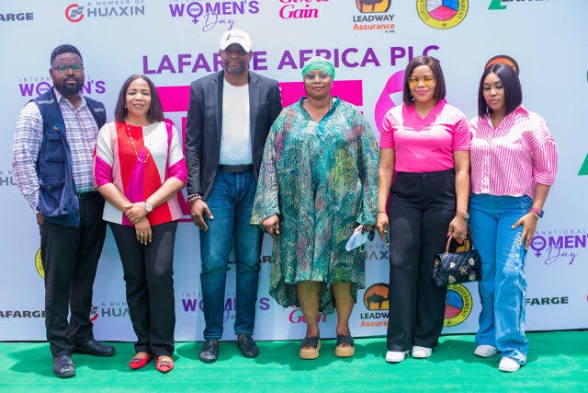
In a demonstration of corporate social responsibility, Lafarge Africa Plc, in partnership with Leadway Health, offered free breast health screenings to women at the Primary Health Care Centre, Akerele, Surulere, Lagos, in celebration of International Women’s Day 2026.

The initiative provided women with professional health checks, expert guidance, and vital education on early detection, underlining the life-saving importance of regular breast screenings.

Participants were also encouraged to adopt proactive health practices and share awareness within their communities at the programme with the theme: theme, ‘The Give to Gain Blueprint: Investing in Women for Sustainable Impact.’

“At Lafarge Africa, empowering women goes beyond creating opportunities; it also involves safeguarding their health. By bringing essential healthcare services closer to the community, we remove barriers that often prevent women from seeking timely medical attention,” the company said.


Gabriel Pollyn, Head of Sustainability and Sponsorship at Lafarge Africa, listed the initiative bridging gaps in healthcare access and empowering women to take ownership of their health.

He noted that breast cancer, while prevalent, is highly treatable when detected early.

Dr. Olukemi Albert-Udoh, Occupational Health Coordinator at Lafarge Africa, explained the screening process and urged participants to disseminate knowledge to family and friends to amplify awareness.

Dr. Atere Abisola, Team Lead at Leadway Health, provided practical insights on the importance of early detection and what screenings entail.

Adetoro Baiyewu, Health Supervisor for Surulere Local Government Area, commended Lafarge Africa for bringing essential healthcare services to the grassroots.

She added that the exercise would ensure that women access life-saving information and early detection opportunities.

Sun

NIGER EAST AND THE QUEST FOR SENATOR MUSA’S CONTINUITY

0


By Suleiman Adamu

The people of Niger East Senatorial District have proverbially tasted the honey and its sweetness, and are most unwilling to let go of it. For so many who are used to sloganeering and emotive politics, the clamour for the continuity of Senator Sani Musa remains a surprise, but for those moved by tangible people-oriented programmes, it is not.

Indeed, it is no longer news that there is a serious quest for his return to the National Assembly. What is indeed news is the momentum and compelling clamour by the resilient constituents, who are unwilling to go back to the harrowing days of political false promises and sweet-talking.

Equally, the push for his continuity is associated with the several laudable projects and enduring people-focused programmes carried out by the radical leader and objective grassroots mobiliser. While over eighty-five percent of the constituents, cutting across all walks of life, have avowed their loyalty to him and are determined to ensure his return to continue his good works for humanity, even his traducers are agreed on the fact that his very rich and enduring legacies of developmental physical and social infrastructure, including several intentional advocacy initiatives, remain unbeatable, far-reaching, and valuable assets never before witnessed in the annals of the history of Niger East, and a sound testimony of the reasons he has to continue.

A purpose-driven advocate of social justice and governance inclusivity, Senator Sani remains an indomitable fulcrum and purpose initiator of people-based projects.
His sound and calculative strategic advocacy remains ageless, as it targets core areas of human existence, notably education, healthcare, and economic empowerment, and various stimulus programmes that remain exclusive, undeniable and capable of being tested empirically, with a periodic and intentionally targeted farmers’ support, coupled with a boost for small-scale businesses.

Senator Musa’s signature works all resonate with a man who has decided to uplift the living standard and general well-being of his people and the larger public. A highly focused and detribalised Nigerian, Senator Sani has indeed carved a niche for himself, demonstrating same in driving monumental and far-reaching developments all around his constituency, deliberately influencing policies, decisions, and programmes that underpin and holistically target his people, attracting immense benefits to the entire region.

Leadership to Senator Sani includes a clear understanding of the imperatives of strategic interest and partnership, and being able to harness same for national and subnational growth and development. Hence, he has invested time and other valuable resources in pragmatic and sustainable interpersonal and political relationships, engagements, and synergy using his clout and congruence.

These are attested to by the numerous developments witnessed within local communities and at the constituency level, and stimulating impact even on the contiguous communities. A reliable and trusted parliamentarian, Senator Musa remains among the first eleven in the Senate who know their onions and stand very tall amongst their constituents.

Through constant and responsive town hall meetings and interactive sessions, he is in touch with his people, from where he receives feedback and adjustment strategies. His political sagacity, coupled with a life of God-directed spirituality, has become his consistent stepping stone to progress and growth in life.

Through this lifestyle entrenched in intrinsic humility, he has been able to foster unity and cooperation amongst stakeholders, leading to a robust relationship which has consistently led to improvement in the life of his constituency and positive impact on the security of lives and properties. Senator Sani has variously championed the collective cause of the people of Niger East Senatorial District, utilising the wealth of his vast experience and resting on his larger-than-life influence, earning him an unrivalled reputation as a dedicated pragmatic transformational leader and establishing him as a competent leader with the capacity to get things done at the right time and in the right way.

A highly committed personality with a life devoted to the progress of humanity, Senator Musa’s life is positively rooted in ensuring that lives are improved, humanity is happy, and hope is constantly renewed, especially in the Niger East District. Accordingly, he has enhanced infrastructural development through the construction of several hundred kilometres of roads and bridges, brought about peaceful coexistence and interrelationship through the construction of community centres, enhanced access to health facilities through the provision and equipping of health centres and medical equipment, and the creation of health and security awareness.

Senator Sani has enhanced education through the establishment and construction of new primary and secondary schools, equipped with state-of-the-art educational materials and ICT equipment, and the training of youths in digital skills. A master driver of economic empowerment, Senator Sani is known for his consistent life of sacrifice and economic empowerment. Through this initiative, he has supported small-scale businesses, distributed food and non-food materials, and supported farmers with a focus on food security and availability, while enhancing the development and growth of sustainable entrepreneurship through loans, provision of scholarships, and targeted training of youths to meet the sustainable development goal programmes.

Indeed, his strategic peace initiatives have led to the relative peace and peaceful coexistence experienced in the Niger East Senatorial District, as he prioritises the promotion of peace, unity, and social solidarity and cohesion. Senator Musa Sani remains a strong and formidable force of social sustainability, ensuring the boosting and improvement of electricity supply in his constituency.

Senator Musa Sani’s many works of empathy and his devotion to his people make him a continuous choice of the people of Niger East Senatorial District and the reason for their clamour for his continuity.

*Adamu writes from Suleja

‘Marry him, get benefits’ — OPM pastor sparks outrage over marriage proposal for adopted autistic son

0


Chibuzor Chinyere, the general overseer of Omega Power Ministry (OPM), has apologised following widespread backlash over a social media post in which he sought a wife for his adopted son, who is autistic.

The controversy began when the cleric shared a photo on Facebook of himself and the young man, identified as Aboy.

In the post, Chinyere offered significant financial incentives to any woman willing to marry him.

He explained that the boy had been abandoned at his church gate by unknown parents and had been raised under his care.

credit thecable

APC Dismisses Report on 2027 Nomination Form Prices as Fake

0


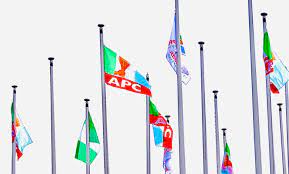
The All Progressives Congress has dismissed as false a media report claiming to contain the prices of its expression of interest and nomination forms for the 2027 General Elections.

In a statement issued by the party’s National Publicity Secretary, Felix Morka, the APC said the purported “price list” being circulated in some sections of the media did not originate from the party.

The party stated categorically that no decision has been taken and no official announcement has been made regarding the sale or pricing of nomination and expression of interest forms for the 2027 elections.

According to the APC, the report is entirely false and should be treated as misleading information intended to create confusion among party members and the public.

The ruling party urged its members, the media and the general public to disregard the report in its entirety, insisting that any official information concerning preparations for the 2027 polls would be communicated through the appropriate party channels.
The statement was signed by Felix Morka on behalf of the APC.

Sanwo-Olu Promises More as Lagos Ranks Among Top 10 in Ease of Doing Business

0


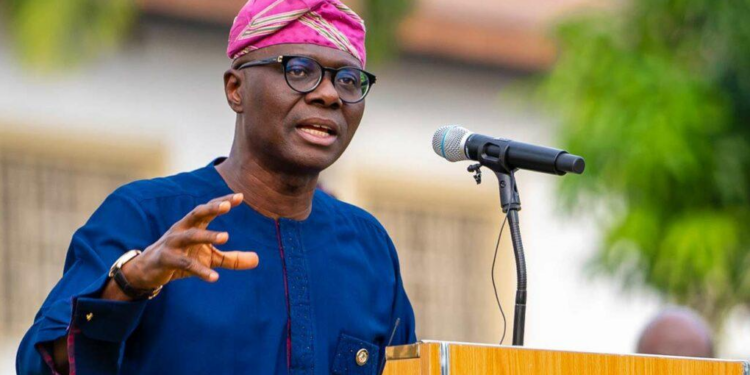
Lagos State Governor Babajide Sanwo-Olu has pledged to deepen reforms and attract more investments after Lagos emerged as one of Nigeria’s top 10 performing states in the 2025 Subnational Ease of Doing Business Report.

Other states listed among the top performers are Kaduna, Oyo, the Federal Capital Territory (FCT), Ogun, Enugu, Plateau, Ekiti, Kano and Nasarawa.
The report showed that states implementing key reforms have recorded up to 40 per cent reduction in business registration timelines, over 30 per cent improvement in land administration efficiency, as well as significant progress in digital service delivery and dispute resolution.

Director-General of the Presidential Enabling Business Environment Council (PEBEC), Princess Zahrah Mustapha Audu, announced the ranking during a roundtable with members of the diplomatic community and strategic partners in Abuja.
According to Audu, the outcome reflects the impact of sustained reforms across the states and sends a strong signal to investors.

“These achievements are not abstract metrics; they are signals to investors that Nigeria is becoming more predictable, more transparent, and more competitive,” she said.
Reacting to Lagos’ inclusion among the leading states, Sanwo-Olu said the recognition was a reflection of deliberate efforts by his administration to build a favourable environment for both local and foreign investors.

“This is the result of deliberate efforts by our government to create a positive environment for local and foreign investments, not just to thrive but to ensure good returns. We will continue to push for more investments and make our state a truly business-friendly place,” the governor said.

The event, held in collaboration with the British High Commission, UKAID and other development partners, focused on linking investment capital to Nigeria’s top-performing states.
Audu, however, stressed that while progress has been made, the major task remains ensuring that reforms produce tangible benefits for businesses and investors.

“As important as progress is, progress alone is not enough. The real question before us is this: can reforms translate into results? Can they deliver faster permitting processes, clearer regulatory pathways, and efficient capital deployment? Because ultimately, capital flows where certainty grows,” she said.

She explained that PEBEC is currently focusing on three critical areas: improving the quality and coordination of regulations to ensure policies are practical and transparent, enhancing service delivery through platforms such as ReportGov for real-time feedback on business challenges, and deepening reforms at the state level where most business activities take place.
Also speaking at the event, the Minister of Budget and Economic Planning, Senator Abubakar Bagudu, said Nigeria’s ambition of building a $1 trillion economy would depend significantly on the role of states and the private sector.

“We feel confident that with that mindset, led by the private sector, we can create a $1 trillion economy, supported by the response that our economy has experienced to doing what is right,” he said.

In a goodwill message, Lagos State Commissioner for Commerce, Cooperatives, Trade and Investment, Mrs Folashade Bada, who represented Governor Sanwo-Olu, said Lagos’ ranking was the outcome of deliberate and sustained reforms.

“Our position is not accidental. It is the outcome of sustained institutional reforms, policy discipline, and a clear recognition that capital flows where there is clarity, confidence, and continuity,” she said.

Bada disclosed that Lagos contributes more than 30 per cent of Nigeria’s Gross Domestic Product and accounts for over 60 per cent of the nation’s commercial and industrial activities.

She said the state’s long-term economic transformation is being driven by the Lagos State Development Plan 2052, which is designed to ensure policy continuity across administrations.

According to her, the Lagos State Industrial Policy 2025–2030, expected to be launched soon, is aimed at promoting a production-driven and export-oriented economy.
She added that reforms in land administration, construction permits and tax systems have improved transparency and reduced delays for businesses, while digital platforms introduced by government agencies have made service delivery more efficient.

Bada noted that low-risk construction permits in the state are now processed within 15 working days, while investments in fibre-optic infrastructure, transport systems and logistics have further strengthened Lagos’ appeal to investors.

She also said the state has built a strong public-private partnership framework to ensure projects are structured to international standards, with clear risk-sharing arrangements and predictable processes for investors.

Ondo monarch attacked by lone assailant in palace, injured, hospitalised

0

Ondo govt warns principals against illegal fees

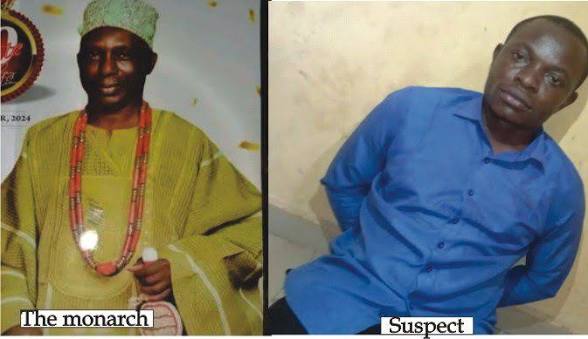
A first-class monarch, in Ondo State, the Owa of Ogbagi, Oba Victor Olasehinde Adetona, has been attacked by a lone assailant in his palace in Akoko North West council area of the state.

The incident has sent shockwaves across communities in the state, coming barely a month after the traditional ruler of Agamo community, Oba Jacob Kehinde Falodun, was murdered in his palace.


Eyewitnesses said the monarch was physically attacked and injured by the assailant, identified as Tope Adelani, who stormed the palace around 11 a.m.

The royal father suffered multiple injuries and was rushed to a private hospital,where he was hospitalised.

Sources said Adelani, a frequent visitor to the palace, had met with the monarch to request employment as a driver. The monarch reportedly told him there was no vacancy but assured him he’d be contacted when an opportunity arose.

Shortly after the interaction, the monarch left for his farm, leaving Adelani in the palace. Trouble started upon his return, as Adelani allegedly trailed him into the palace, seized his phones, and switched them off.

The situation escalated into a violent confrontation, with Adelani attacking the monarch. Members of the monarch’s family who intervened were also assaulted.

A palace source said that the suspect was later overpowered by guards and handed over to the police.

A knife was recovered from Adelani, raising concerns over his motive.

The Ogbagi Youth Assembly condemned the attack, describing it as “unacceptable and contrary to the values and heritage that define Ogbagi people”.

Reacting to the attack, the youths described it as “unacceptable and contrary to the values and heritage that define Ogbagi people.

According to them ” the traditional institution remains a cornerstone of unity and identity, deserving of utmost respect and protection.

“The Ogbagi Youth Assembly stands firmly in solidarity with His Royal Highness, Oba Victor Adetona Ojo, the Odagbaragaja III.

“We reject in totality any action that disrespects our revered traditional institution.

“What has happened is not only an attack on an individual, but an affront to our collective heritage.”

They also used the opportunity to call for calm among residents, particularly urging youths of the community to remain law-abiding and avoid any form of retaliation that could escalate tensions further.

“We are united in protecting our cultural heritage and traditional values. We call on all sons and daughters of Ogbagi-Akoko to support efforts aimed at strengthening security around the palace.

“If adequate measures had been in place, this unfortunate situation might have been prevented.”

Contacted for comments, the state police command spokesperson DSP Jimoh Abayomi, confirmed the attack but said that the incident was not reported at the police station but to the Nigeria Securiry and Civil Defence Corps NSCDC.

Efforts to speak with the the security agency’s spokesperson, Daniel Aidamenbor, on the attack of the monarch, proved abortive.

Meanwhile, the shocking development has thrown the community into fear and anxiety.

Residents have expressed concern over the safety of the traditional ruler.

They have therefore called for improved security within the palace premises across the state.

Vanguard

Tinubu: APC Does Not Seek One-Party State, Reaffirms Commitment to Democracy

0

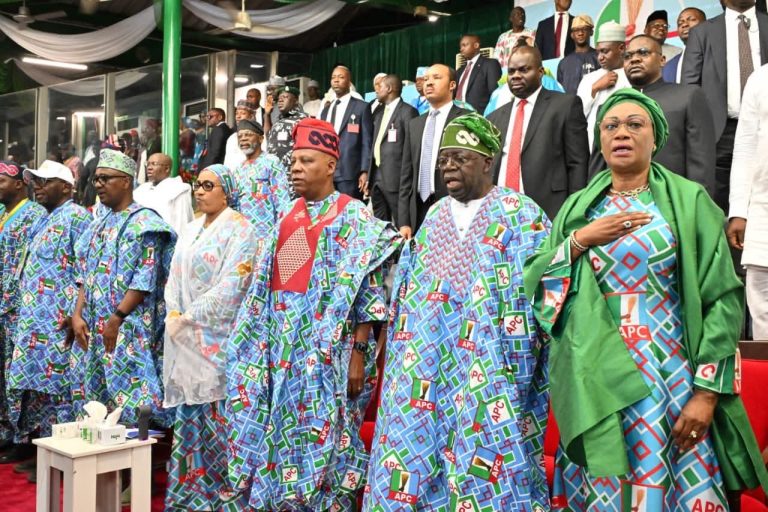
President Bola Ahmed Tinubu on Friday declared that the All Progressives Congress (APC) does not seek to turn Nigeria into a one-party state, insisting that democracy can only flourish through healthy competition and a credible opposition.

Speaking at the 4th Elective National Convention of the APC held at Eagle Square, Abuja, Tinubu said the ruling party remains committed to democratic ideals, national development, and internal unity.

Addressing party members, delegates and stakeholders, the President described the convention as a defining moment for both the APC and Nigeria’s democratic journey, saying it offered the party an opportunity to renew its commitment to the principles on which it was founded.

He said the convention’s theme, “Unity in Progress: Consolidating the Renewed Hope Agenda,” underscored the need for cohesion within the party and the country, stressing that progress cannot be achieved without unity.

Tinubu recalled the formation of the APC 13 years ago, when political actors from different backgrounds came together with what he described as a patriotic resolve to rescue Nigeria from economic and political decline.
According to him, the party was built on the belief that Nigeria can be better governed and that leadership must be driven by vision, discipline, justice and development.
He paid tribute to the founding members of the party and called for a moment of silence in honour of former President Muhammadu Buhari and other deceased leaders and members of the APC, saying their sacrifices must not be in vain.

The President warned against internal division, personal ambition and indiscipline, saying such tendencies have the potential to weaken political parties more than electoral defeat.
“Our greatest strength has never been in our size or numbers, but in our unity,” he said, urging party faithful to remain focused on the collective good.

Tinubu said the APC must continue to be seen not merely as a platform for winning elections, but as a vehicle for national transformation and inclusive governance.
He used the occasion to address concerns that the APC’s growing political influence could threaten multiparty democracy, dismissing such claims.

“Let me reiterate, especially to those who often lament and misunderstand us: we do not seek a one-party state,” the President said.
He added that he believes in a vibrant opposition that can challenge government policies and contribute to national development through constructive criticism.

However, Tinubu criticised opposition parties for what he called persistent attacks on the Electoral Act 2026, arguing that the law emerged from due legislative process, including public hearings and scrutiny by the National Assembly.

He said the Act reflects Nigeria’s collective effort to strengthen its electoral system and assured that his administration remains committed to the rule of law, credible elections and the protection of democratic institutions.

On governance, Tinubu said the APC administration had remained focused on implementing the Renewed Hope Agenda, which he described as more than a campaign slogan but a guiding philosophy for national renewal.

He acknowledged that the reforms introduced by his government had imposed sacrifices on Nigerians, but insisted they were necessary to lay the foundation for long-term prosperity.

According to him, the administration has made progress despite global economic pressures and geopolitical instability, including the impact of the ongoing US-Israeli-Iranian conflict.

The President listed achievements in infrastructure development, including the construction of highways and concrete-and-steel roads, as well as the modernisation of seaports and airports.

He also cited tax and fiscal reforms, social investment programmes, and efforts to strengthen national security as evidence of his government’s commitment to national development.
Tinubu said Nigeria’s economic outlook was improving, pointing to stronger foreign exchange buffers, a booming stock market, trade surpluses, and improved investor confidence.

He further claimed that inflation had declined for eight consecutive months to 14.45 per cent, while food prices were easing and business confidence was gradually returning.
The President also said Nigeria’s oil and gas sector had become more attractive to foreign investors, adding that the country’s Eurobond issuance was oversubscribed by 400 per cent and that Nigeria had exited the FATF Grey List, which he described as a sign of renewed global financial credibility.
On electricity, Tinubu admitted that the country still faces serious challenges, including debts owed to generation companies and gas suppliers, as well as outdated transmission infrastructure.

He said the government had taken steps to address the sector’s challenges through the planned establishment of the Grid Asset Management Company (GAMCO), which is expected to inject about 1,600 megawatts into a new transmission corridor.
Speaking directly to young Nigerians, Tinubu said the future of the country depends on their active participation in governance and nation-building.
He urged the APC to create more opportunities for youth to serve not just as supporters, but as decision-makers within the party and government.
He also pledged greater inclusion for women, saying the party must expand opportunities for women to lead, influence policy and shape the country’s democratic future.

“A party that excludes women weakens itself; a party that empowers women will be stronger and more resilient,” he said.

Tinubu called on all delegates, aspirants and stakeholders participating in the convention to conduct themselves peacefully and with integrity, urging them not to allow contests or outcomes to divide the party.

“At the end of this convention, our party must be the victor,” he said.
The President commended members of the Convention Planning Committee and several governors and party leaders for their roles in organising the event, singling out former Katsina State Governor Aminu Bello Masari, former Senate President Anyim Pius Anyim, and several APC governors for praise.
He also specially acknowledged Ogun State Governor Dapo Abiodun for his role as chairman of the venue sub-committee and for supporting the convention’s logistics and setup.

Tinubu urged those elected at the convention to lead with humility, courage and integrity, warning that the future of both the APC and Nigeria’s democracy depends on responsible leadership.

He also celebrated the influx of new members into the APC over the past two years, including governors, senators and lawmakers from other political parties, describing it as a sign of Nigerians’ confidence in the party.

He charged party leaders to sustain the APC’s growth through transparent leadership and proper management of its membership structure.
The President concluded by praying for the continued success of the APC and the progress of Nigeria.

Alleged terrorist informants arrested in Plateau

0

Plateau State Police Command has arrested several armed robbery suspects, including informants linked to terrorists, and recovered three locally fabricated AK-47 rifles along with other dangerous weapons.

The arrests and recoveries were made during recent intelligence-led operations, the police said.


Parading the suspects and exhibits before journalists in Jos on Saturday, the Commissioner of Police, CP Bassey Ewah, commended members of the public for providing credible information that led to the successes.

Ewah said the operations underscored the command’s commitment to protecting residents of the state.

He added that the police remained open to public scrutiny and criticism to improve service delivery.

“We are open to criticism because it is only when you are criticised that you know where you are not doing well,” he stated.

The CP highlighted the arrest of armed robbery suspects from Langtang South, which followed a report by a victim.

He said the Divisional Police Officer acted swiftly in collaboration with the Armed Robbery Section of the Criminal Investigation Department (CID).

The command also recovered three locally fabricated AK-47 rifles, two locally made revolvers, other pistols, and rubber guns used in criminal activities.

Ewah attributed the recovery of the firearms to reliable and actionable intelligence from members of the public.

“We want to thank our partners out there for believing in us, for trusting in us, and sharing information that has led to the removal of these firearms,” he added.

He disclosed that the suspects, who include those linked to kidnapping and terrorism through information sharing, would be charged in court for prosecution.

The CP praised the robust partnership with the Plateau State Ministry of Justice, particularly the Attorney General, for ensuring diligent prosecution of cases.

He also appreciated the media for publicising police efforts and urged continued collaboration to make Plateau safer.

Our correspondent reports that exhibits, including the firearms, were displayed during the briefing.

Ewah assured that the owners of the recovered rifles would face charges, as the court would determine the legality of their possession.

Vanguard

Lagos APC Denies Delegates Were Stranded, Accuses Sahara Reporters of Spreading Falsehood

0


The Lagos State chapter of the All Progressives Congress (APC) has dismissed as false a report by Sahara Reporters alleging that delegates from the state were stranded due to the non-release of mobilisation funds.

In a statement issued on Friday, the party described the publication as “another fake story” and accused the online platform of deliberate misinformation aimed at misleading the public.

The party said all duly accredited delegates from Lagos State were transported to Abuja in an orderly and coordinated manner, contrary to claims that they were abandoned at airports or motor parks.
According to the APC, the delegates were conveyed comfortably and provided with decent accommodation upon arrival in Abuja, making the report “sensational” and untrue.

The party also clarified that neither the Lagos State Government nor Governor Babajide Sanwo-Olu is responsible for financing party activities, stressing that the APC handles its logistics and finances through its internal structures.

It said any attempt to link party arrangements to the state government was misleading and intended to create confusion among members of the public.

The Lagos APC further accused Sahara Reporters of having a history of publishing false and unverified reports, alleging that such stories are often designed to serve ulterior motives.

The statement added that it was not surprising that such a report came from a platform whose publisher, according to the party, is also an opposition figure occupying multiple roles within his political party.
The party urged Nigerians to be cautious of sensational headlines and to rely only on credible and verified sources of information.

Reaffirming its commitment to party unity and governance, the Lagos APC said it remains focused on supporting progress and stability in Lagos State and across the country.
The statement was signed by the Lagos APC Spokesman, Hon. Seye Oladejo, and dated March 28, 2026.