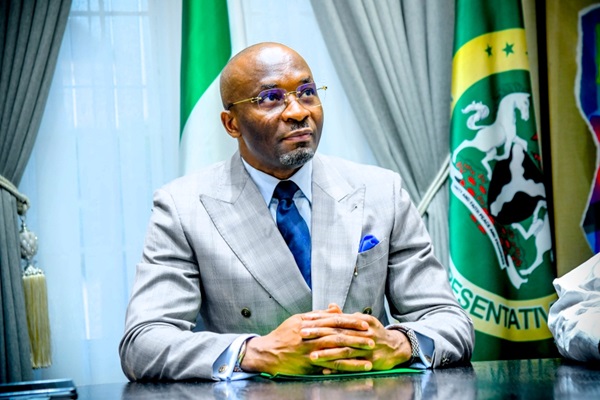
The Minister of Aviation and Aerospace Development, Festus Keyamo, has criticised Peter Obi for suggesting that Nigeria could have accumulated more wealth if public funds were kept in banks to earn interest.
Obi, the presidential candidate of the Nigeria Democratic Congress (NDC), made the suggestion during an interview with a radio station in Nasarawa State on Wednesday.
In a post on X, Keyamo described Obi’s argument as unintelligent and claimed the politician’s approval ratings had fallen significantly. “This dumbness is beyond measure. I really don’t know whether to laugh or to cry. No wonder his approval ratings have plummeted so badly,” the minister wrote.
Keyamo further declared that Nigeria had avoided a major setback by not electing Obi.
“Nigeria did not just dodge a bullet; it ducked a massive howitzer!” he added.
During the interview, Obi argued that depositing money in banks to generate interest could significantly increase the country’s wealth.
“I wish everybody in this country left money in the bank; they have interest. Nigeria would have been so rich that we don’t know what to do with money,” he said.
Obi also spoke about his approach to publicising government projects, explaining that his administration did not consider elaborate ceremonies and television coverage necessary for projects financed with public funds.
He said citizens could see the work being done by the government without such publicity, while acknowledging that his approach might have been mistaken.
“We did what we were doing with public money, so the public already see us working, so why are we going to do the ceremony or showing it on TV? Maybe I was wrong, but that was what happened,” Obi said.
Keyamo’s reaction followed the comments, with the minister challenging Obi’s position on public finances and using the exchange to criticise his political standing.
A Federal High Court in Abuja has nullified the recognition of Imo State Governor Hope Uzodimma as the All Progressives Congress candidate for the Imo West Senatorial District in the 2027 general elections and ordered the Independent National Electoral Commission to publish the name of former governor Rochas Okorocha.
Justice Obiora Egwuatu, in his judgment, also restrained Uzodimma from parading himself as the APC senatorial candidate for the January 16, 2027 election, holding that he did not win the party’s May 18, 2026 primary.
The judge declared that Okorocha emerged as the lawful winner of the primary, which was monitored by INEC, and directed the APC to submit his name to the electoral commission as its candidate.
Justice Egwuatu held that the nomination of Uzodimma breached Sections 29 and 32 of the Electoral Act and failed to comply with the APC’s guidelines for conducting primary elections.
He consequently declared that it was unlawful and fraudulent for the party to have forwarded Uzodimma’s name to INEC as the winner of a primary election he did not win.
The judge held, “That the publication of Hope Uzodimma’s name by INEC as the winner of the primary election is wrongful and unlawful.”
He further ruled, “That the INEC publication of the name of Hope Uzodimma on August 1 as APC Senatorial candidate for Imo West is hereby set aside and in its place, INEC is ordered to restore the name of Rochas Okorocha.”
Justice Egwuatu also faulted INEC for accepting Uzodimma’s nomination despite what he described as overwhelming documentary evidence showing that the governor was not the lawful winner of the primary.
He declared, “Rochas Okorocha is the lawful winner and is entitled to have his name submitted to INEC.”
The judge held that INEC was bound by the report of its own officials, which, according to him, clearly established that Okorocha won the May 18 primary.
In reviewing the evidence presented before the court, Justice Egwuatu questioned the authenticity and consistency of documents submitted by the APC to justify Uzodimma’s nomination.
He said, “Majority of the documents tendered by APC to support the purported nomination of Uzodimma (3rd respondent) contradict each other, indicating that they were clearly fabricated for the unlawful purpose of nominating the 3rd respondent as candidate.
“In view of the doubt cast on the authenticity of the documents, the court cannot ascribe probative value to the purported documents.”
The judge said documents signed, certified and released to Okorocha following a formal request showed that the former governor secured the majority of lawful votes cast in the primary across the 10 local government areas that make up the senatorial district.
He identified discrepancies in the accounts given by different APC officials regarding how the primary was conducted.
According to the judge, one document submitted by the party indicated that Option A4 was used for the exercise, while another document from a member of the party’s National Working Committee claimed that a consensus arrangement produced Uzodimma as the candidate. Justice Egwuatu said another document from a different NWC member, however, claimed that a direct primary was conducted for the same election.
He described the conflicting accounts as significant, particularly because votes were reportedly allocated to the aspirants despite the claim that Uzodimma emerged through consensus.
The judge subsequently ordered the APC to forward Okorocha’s name to INEC and directed the commission to replace Uzodimma’s name with that of the former governor.
The dispute arose from conflicting claims over the outcome of the APC primary for the Imo West Senatorial District ahead of the 2027 general elections.
Okorocha challenged Uzodimma’s recognition as the party’s candidate, arguing that the outcome announced in favour of the incumbent governor did not reflect the result of the primary monitored by INEC.
Uzodimma was declared the winner of the primary and recognised by INEC, which maintained that the official results showed that the governor polled 230,464 votes, while Okorocha received 1,098 votes.
However, a separate document subsequently circulated, purporting to show that Okorocha won the primary with 150,780 votes.
Okorocha filed a suit at the Federal High Court in Abuja, marked FHC/ABJ/CS/1854/2026, challenging the outcome of the primary and INEC’s recognition of Uzodimma as the party’s candidate.
The former governor asked the court to determine whether the commission was right to recognise Uzodimma as the winner, relying on the disputed primary results and other issues raised in his suit.
The suit also raised questions about Uzodimma’s eligibility to contest the 2027 senatorial election while serving as governor, with Okorocha asking the court to consider the relevant constitutional provisions.
Speaking with journalists following the judgment, counsel to Okorocha, O.J. Aboje, described the judgment as a vindication of his client, whom he noted had been accused in the media of forging the results.
“Firstly, we’re happy. You recall that in the last few weeks my client has been accused in the media of forging documents; he did this, he did all that. But you have all heard the court.
“Like it’s always said, the court is the last hope for the common man, even though my client is not a common man. He has been vindicated,” Aboje said.
Meanwhile, Okorocha’s son, Amen Rochas, who is also his (Okorocha’s) Special Adviser on Political Matters, commended the judiciary for its fair judgment, despite what he alleged were attempts to arm-twist the courts using fake news.
“I must salute the judiciary. With all this fake news that happened just recently, I’m sure it was to arm-twist the judiciary, but they stood firm,” he said.
He also commended his father for remaining focused on President Tinubu’s campaign despite overwhelming pressure arising from the dispute.
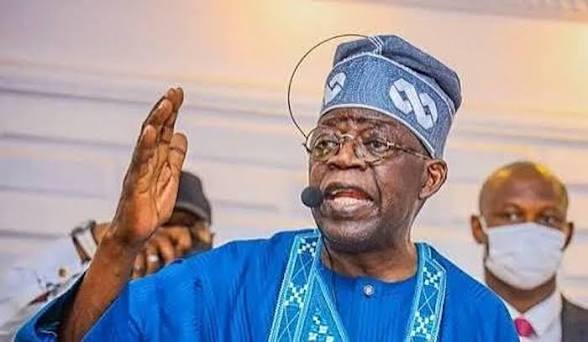
Former Vice-President Atiku Abubakar has challenged President Bola Tinubu to release daily photographs and video footage of his activities in Makkah, Saudi Arabia, where he is scheduled to perform the Islamic pilgrimage of Umrah.
Atiku, in a statement issued on Wednesday by Phrank Shaibu, Director of Strategic Communication of the African Democratic Congress (ADC) Presidential Campaign Council, questioned the President’s planned itinerary and demanded verifiable evidence of his participation in the religious rites.
The Presidency had announced that Tinubu would depart Abuja on Thursday for Makkah to pray for Nigeria and seek divine guidance. He is expected to return to the country next week. According to a statement by the President’s Special Adviser on Information and Strategy, Bayo Onanuga, the trip would provide Tinubu with an opportunity for spiritual reflection and prayers for Nigeria’s peace, unity, stability and progress.
While in Makkah, the President is expected to perform the rites associated with Umrah, a pilgrimage to the holy city that can be undertaken at any time of the year.
However, the ADC Presidential candidate alleged that intelligence available to him suggested that Tinubu might travel to France after making a brief appearance in Makkah.
He called on the Presidency to publish current, date-stamped photographs and videos showing the President at the Kaaba and participating in the pilgrimage.
“If President Tinubu is truly travelling to pray for Nigeria, the Presidency should release clear, current, date-stamped photographs and videos each day showing him at the Kaaba and participating in the rites of Umrah,” Atiku said.
Atiku Abubakar argued that Nigerians had a right to know the President’s itinerary and daily engagements, particularly because the trip had been presented as a spiritual mission for the country.
He also raised questions about Tinubu’s health and an alleged $20bn loan request involving a French business partner, urging the Presidency to address the issues and provide details of the trip.
Atiku said he and other Nigerians would join the President in praying for the country’s peace and progress, but insisted that the religious purpose of the visit should not be used to avoid public scrutiny.
“No one should invoke the name of Almighty Allah in vain,” he said.
Atiku further maintained that Nigerians were entitled to know the President’s daily engagements and how the trip was being funded.
Meanwhile, the Presidency said Tinubu would commission equipment acquired by the Nigerian Air Force at the Presidential Wing of the Nnamdi Azikiwe International Airport before departing Abuja.
The President’s planned visit comes amid heightened political activity ahead of the 2027 general election, with opposition figures continuing to question the administration’s policies and decisions.
The All Progressives Congress (APC) has clarified a viral comment by one of its chieftains, Alwan Hassan, who claimed that ministers pay billions of naira to secure appointments.
The party’s National Publicity Secretary, Felix Morka, said Hassan was not referring to the administration of President Bola Tinubu when he made the statement.
Speaking during an interview on Arise Television’s Prime Time on Wednesday, Morka explained that Hassan’s remark about ministers paying billions was made in a historical context and should not be interpreted as a description of what is happening under the current administration.
He maintained that the comment was not about appointments in Tinubu’s government.
According to him, the comment has been taken out of context and misinterpreted by members of the opposition to blackmail the present administration.
The APC image-maker insisted that appointments under the Tinubu administration are based on merit, competence and capacity to deliver, and not on financial inducement.
The clarification comes amid heated reactions on social media after Hassan alleged that ministerial slots are bought with billions of naira.
Morka urged Nigerians to disregard the insinuation that ministers in Tinubu’s cabinet paid money to secure their positions.
“When Alwan Hassan said ministers pay billions to be appointed, he was not speaking about the current administration. It was in a historical context.
“His frame of thought was not talking about the present but the past. As a public commentator, you sometimes generalise without drawing lines,” Morka said.
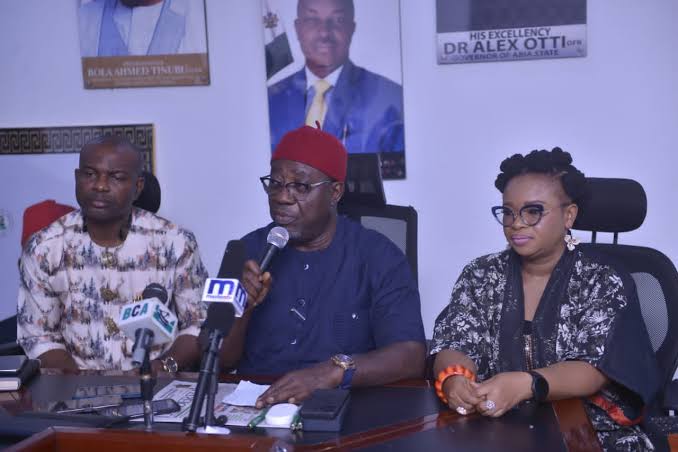
Abia State Government said it is strengthening preventive measures against the Ebola virus disease that is currently ravaging Congo Democratic Republic, where over 4,000 have been reportedly recorded.
Commissioner for Information, Okey Kanu, who made the disclosure in Umuahia, the state capital, while briefing newsmen, explained that the preventive measures against Ebola are being activated in the state following consultations with the Coordinating Minister of Health and Social Welfare, Professor Muhammad Ali Pate.
The commissioner urged Abia residents not to panic, but observe good hygiene and avoid large crowds. He disclosed that government would embark on public awareness campaign across the state to educate residents on preventive measures.
“Ebola virus disease can be serious and even life-threatening, but can be prevented as well. Our people are advised not to panic, but observe good hygiene practices and, as much as possible, avoid large crowds at this time,” Kanu said.
Meanwhile, the Abia State government has approved financial assistance for 130 Abia citizens who were rescued from South Africa, including the family of a man that was killed in the former apartheid enclave. Kanu said each of the 130 eligible returnees affected by xenophobic attacks in South Africa will get N1 million, while each family of deceased victims will receive N20 million.
He revealed that the approval was part of measures to support their reintegration and economic recovery, and, also, covers the screening and evacuation of 100 stranded Abians from South Africa, including transportation to their respective destinations upon arrival in Nigeria.
The commissioner explained that the N1 million assistance would also be extended to returnees who funded their journeys back to Nigeria themselves, in addition to the support earlier provided to 31 returnees. He said more than 160 returnees were expected to benefit from the emergency financial assistance within the next one or two months, adding that the 100 stranded Abians in South Africa were expected to return to Nigeria in November, with the specific date to be announced later.
The commissioner stressed that the state government was committed to ensuring that the returnees were not only evacuated safely but, also, given the necessary support to rebuild their lives and livelihoods.
“In line with the governor’s directives, the ministry is developing a long-term reintegration plan that will address the livelihoods, economic empowerment and other identified needs of the returnees,” Prince Kanu stated.
Prince Kanu added that the Ministry of Poverty and Alleviation and Social Protection had coordinated the reception of 12 returnees in three groups, including assistance by the Redeemed Christian Church of God (RCCG) to facilitated their reunion with their families in different locations.
The Niger Data Mobilisation Team and indigenes of the Nkpa community in Abia State have given the Deputy Speaker of the House of Representatives, Benjamin Kalu, and his former campaign Director-General, Trump Eke, 72 hours to withdraw a defamation suit against public interest advocate, Darlington Agoha, over his criticism of the execution of the N1.3 billion Nkpa Road project.
The ultimatum was issued, on Monday, at the High Court premises in Umuahia, where the group, led by Dixon Uwakwe, accused the plaintiffs of attempting to intimidate a citizen for demanding accountability over a Federal Government-funded infrastructure project.
The controversy centres on the Nkpa Road project, reportedly funded with N1.3 billion from the Federal Government’s Ecological Fund, which the community alleged remained partly uncompleted despite the substantial allocation, while some completed sections had already deteriorated.
Uwakwe said the community’s intervention went beyond the legal dispute involving Agoha, insisting that residents deserved explanations about the execution of the project, the quality of work delivered, and the utilisation of public funds.
“Mr. Darlington Agoha’s only crime was daring to demand basic accountability and transparency from the leadership of our constituency,” the group said in a statement.
The community alleged that Agoha had faced legal pressure for about two years after raising questions about the road project, describing the defamation action as an attempt to discourage citizens from scrutinising government-funded infrastructure.
It maintained that residents had a legitimate interest in knowing why sections of the road allegedly remained incomplete and why portions already constructed had deteriorated.
Counsel to Agoha, Vincent Nwabueze, also criticised the lawsuit, alleging that it was intended to intimidate citizens who questioned the execution of public projects.
Nwabueze claimed that the contractor had been fully paid despite the alleged failure to complete the road, adding that its condition continued to impose hardship on residents. However, Eke defended the legal action, maintaining that the plaintiffs were entitled to seek judicial redress over statements they considered defamatory.
“The matters that we feel are defamatory are before the court. It is left to the court to decide whether or not he has defamed me and the person of the Deputy Speaker.”
Eke acknowledged Agoha’s right to protest against what he considered poor infrastructure delivery, but argued that the exercise of that right did not prevent persons who believed their reputations had been damaged from approaching the court.
Reacting to the 72-hour ultimatum, he said the community was free to express its grievances but insisted that the judiciary would determine the merits of the case.
“They have a right to issue an ultimatum. It is part of our democratic culture. You will always have your say. The court will have its way,” Eke said.
The community, however, insisted that the suit should be withdrawn and that the questions surrounding the execution of the Nkpa Road project should be addressed transparently.
The allegations over the project’s funding, execution, and alleged defects remain disputed, while the defamation suit is pending before the court.
Dad Freez Slams Toluwani Sings’ Family Over Use of ‘Sodiq’ Name
Popular media personality Dad Freez has criticised the family of late gospel musician Toluwani Sings over the repeated use of the name ‘Ṣọ̀dííkì’, describing it as disrespectful to the singer’s religious beliefs and legacy.
Dad Freez’s reaction followed remarks by a man identified as Toluwani Sings’ uncle, who repeatedly referred to the late musician as Ṣodiq in a speech delivered in a mixture of Yoruba and Pidgin English.
Reacting to the remarks, Dad Freez described the repeated use of the name as a “toxic family trait”, arguing that it could undermine the late musician’s Christian identity.
According to him, while it might be acceptable to acknowledge Toluwani Sings by mentioning the name he was also known by, repeatedly referring to him as Ṣọ̀dííkì was disrespectful to his memory.
Dad Freez maintained that the late musician was known as a gospel singer and identified as a Christian, insisting that his religious convictions should be respected even after his death.
He said, “If you truly care about the legacy of Toluwani Sings, call him Toluwani Sings. That is what he is known as. He’s not Muslim; he did not identify as Muslim. Stop calling him Ṣodiq.
The media personality also questioned the apparent contradiction between efforts to honour the late singer, including the reported decision to move his burial site closer to his mother, and the continued use of a name he claimed the musician did not identify with.
Although Dad Freez said he did not share the beliefs of gospel musicians, he stressed that respecting Toluwani Sings’ legacy required acknowledging his faith and the identity by which he was publicly known.
He described the repeated references to Ṣọ̀dííkì as a form of subtle disrespect and invited his followers to share their opinions on the controversy.
ADC candidate calls relief desperate attempt to contain public anger • TUC rejects NLC deal, demands N300,000 salary for lowest-paid worker • Retirees allege betrayal, demand inclusion, payment of outstanding palliatives
The Federal Government’s N70,000 monthly transport allowance for public servants has sparked a widening controversy, with former vice president and African Democratic Congress (ADC) presidential candidate, Atiku Abubakar, describing the intervention as a desperate attempt to contain public anger over economic hardship, while the Trade Union Congress of Nigeria (TUC) outrightly rejected the agreement signed by the Nigeria Labour Congress (NLC) even as pensioners protested their exclusion. The backlash, which came barely 24 hours after the Federal Government and NLC signed the six-month allowance agreement, has exposed disagreements over the adequacy, coverage and sustainability of the intervention, with TUC demanding a permanent salary increase that could raise the pay of the lowest-paid worker to N300,000, while the Nigeria Union of Pensioners (NUP) accused government and organised labour of abandoning retirees.
Atiku, in a statement by the Director of Strategic Communication of his Presidential Campaign Council, Phrank Shaibu, said the allowance amounted to an admission by the Tinubu administration that its economic policies had made life unbearable for millions of Nigerians.
He argued that the cost-of-living crisis extended far beyond transportation and could not be addressed through a temporary payment restricted to public servants when private sector workers, traders, artisans, transport operators and millions of Nigerians outside formal employment were equally affected.
“The Tinubu administration is scrambling from one announcement to another, showing its failure to grasp the crisis. The cost of living crisis reaches beyond transport: energy, food, rent and other essentials affect every part of daily life.
“Barbers pay more to power their clippers; restaurant owners face higher cooking costs; shopkeepers struggle to keep prices down; school bus operators pay more for fuel; and families still must buy food. Every business and household is affected. Does hardship end at the bus stop?”
Atiku questioned the fairness of restricting the intervention to serving public servants, saying the beneficiaries represented only a fraction of Nigerians struggling with rising prices.
“If public service workers receive N70,000 monthly for transport from November, what happens to private sector workers, traders, small businesses, transport operators and millions without formal jobs? The public workforce is only a fraction of Nigeria’s population. A temporary allowance for some cannot solve a national crisis.
“The agreement also leaves the effective date for a new minimum wage unresolved. The government must publish payment dates, explain eligibility and say when wage negotiations will produce a decision.”
Atiku further questioned the value of the allowance against prevailing fuel costs, arguing that it would provide only limited relief to households and businesses facing multiple financial pressures.
“Any genuine relief is welcome, but a six-month allowance cannot undo this hardship. At about N1,400 per litre, N70,000 buys roughly 50 litres of petrol. What meaningful difference can 50 litres make over an entire month?” he asked.
In a more scathing criticism of the administration’s economic policies, the ADC presidential candidate accused the government of creating the hardship through its decisions and subsequently resorting to temporary interventions to manage public dissatisfaction.
“What Nigerians are witnessing is a government that set the house ablaze with its reckless policies, then pretends to fight the inferno by throwing ice cubes at the flames. A temporary N70,000 allowance cannot extinguish a cost-of-living crisis this government ignited.”
Atiku also criticised the administration’s previous relief initiatives, including its compressed natural gas programme and the recently announced 90-day cost-of-living action plan, alleging that they had failed to deliver meaningful reductions in household expenses.
“This is the pattern: the fuel discount failed, the 90-day cost-of-living plan failed before it began, and now comes another temporary payment. The government promised CNG would lower transport costs, but that promise has failed. For Nigerians still paying more to commute, the CNG programme is another scam of promises, while families face the same unaffordable prices.
“These rushed announcements smack of political bribery and corruption. Tinubu has shown no genuine intention of clearing the monumental mess caused by his hasty subsidy removal. He offers temporary payments instead of confronting the consequences,” he alleged.
The former vice president said he had proposed a transparently managed production subsidy for fuel refined in Nigeria as an alternative measure to reduce costs and provide relief.
“Tinubu must not punish 250 million Nigerians for the corruption and leakages of a few thousand. His arrogance prevents him from reconsidering a cocky decision, while families and businesses pay the price.
“N70,000 may help with transport, but it cannot explain why work, food and running a business have become unaffordable. Nigerians need lasting relief, decent wages and an economy that rewards honest work. When will life become affordable again?” he asked.
The Federal Government approved the N70,000 monthly transport allowance for six months, beginning in November, following a conciliation meeting with the NLC at the Federal Ministry of Labour and Employment on Tuesday, October 27.
The resolutions were signed by Minister of Labour and Employment, Dr Muhammad Maigari Dingyadi; NLC President, Joe Ajaero; Director-General of the Budget Office of the Federation, Tanimu Yakubu, and other government and labour representatives.
However, TUC, in a statement issued on Wednesday by its President, Festus Osifo, and Secretary-General, N.A. Toro, dismissed the arrangement as another temporary intervention that would neither adequately address workers’ hardship nor provide lasting financial security.
The congress argued that the Federal Government did not need to wait for fresh minimum wage negotiations before approving a substantial increase in salaries, pointing out that no law prevented employers from paying above the statutory minimum.
“Government does not require minimum wage to be negotiated before increasing workers’ pay as there is no maximum wage law in the country.
“Temporary wage awards are not sustainable and far-reaching. How do we go back to the same wage award that never benefited all workers? How can workers be expected to trust fresh promises when previous obligations remain outstanding?” the congress asked.
TUC maintained that government could raise the salary of the lowest-paid worker to N300,000 and introduce corresponding adjustments for other categories of workers, rather than repeatedly approving short-term allowances that would expire without addressing the underlying problem of inadequate earnings.
It recalled that the wage award agreed upon by the Federal Government and organised labour on October 2, 2023, was intended to provide temporary relief pending the conclusion of minimum wage negotiations in 2024.
According to the congress, some workers were still owed one or two months of the previous award, while others received nothing, with more than 80 per cent of states and the informal sector allegedly failing to implement any form of wage award.
“From the foregoing we further reiterate our demand for a pay raise for all government workers as salary is the only consistent and far-reaching pay that workers could rely upon.
“Government must move beyond policy announcements and demonstrate tangible improvements in the living conditions of Nigerians,” it said.
The congress also demanded prompt payment of salaries and pensions, protection of jobs, action against exploitative labour practices and measures to reduce the cost of essential goods and services.
It called for renewed efforts to revive the productive sector and create decent employment opportunities, insisting that government interventions must be adequately funded and accompanied by clear implementation timelines.
While TUC challenged the adequacy of the allowance, pensioners raised a separate objection, accusing government and organised labour of excluding retirees from an intervention meant to cushion the effects of economic hardship.
National President of NUP, Godwin Abumisi, who spoke through the union’s Deputy National President, Abdullahi Usman, at a press briefing on Wednesday, described the exclusion as unjust and insensitive to the plight of Nigerians who had devoted their productive years to public service.
The union argued that pensioners faced the same rising transportation costs, food prices and healthcare expenses as serving workers, often with fewer financial resources and greater medical needs.
“The Nigeria Union of Pensioners (NUP) strongly condemns the exclusion of pensioners from the newly approved N70,000 monthly transport allowance for serving public servants, describing the decision as unjust and a further demonstration of the challenges confronting retired Nigerian workers,” it said.
NUP questioned why serving workers were considered deserving of relief while their retired counterparts, many of whom depended entirely on inadequate pensions, were left out.
“Pensioners also depend on public transportation to access hospitals, attend medical appointments, purchase food and other essential items, and participate in everyday economic activities. Many have no source of income beyond their pensions, which are often inadequate to meet their basic needs amid persistent increases in the cost of living.
“The Union therefore questions the rationale for excluding retirees from the transport allowance when they face similar, and in many cases more difficult, economic circumstances than their counterparts still in service,” it said.
In a direct criticism of organised labour, NUP accused those who negotiated the allowance of failing to protect the interests of retired workers, describing their omission as a betrayal of colleagues who had already completed their years of service.
The union said the development reflected the “insensitivity of civil servants to the plight of their former colleagues, now retired, who they will eventually join in the retirement ship.”
It warned serving workers and labour leaders against treating pensioners’ welfare as a separate concern, arguing that every public servant would eventually retire and face similar challenges.
“NUP stresses that the welfare of serving workers and pensioners should not be treated as competing interests. Rather, both groups deserve fair consideration in government policies designed to ease the economic burden on Nigerians,” it said.
Beyond the N70,000 allowance, the pensioners revived controversy over the Federal Government’s October 2, 2023 agreement with NLC and TUC, under which N25,000 monthly palliatives were promised to 15 million vulnerable households, including eligible pensioners, for three months.
The union said the commitment, amounting to N75,000 per eligible beneficiary, remained unfulfilled for pensioners more than three years after the agreement.
“More than three years later, the Union demands a clear explanation of the status of the commitment and why vulnerable pensioners covered by the agreement have not received the promised support,” it said.
NUP called on the Federal Ministry of Humanitarian Affairs and Poverty Reduction, headed by Dr Bernard Doro, to explain the status of the programme, identify obstacles to implementation and provide a definite timetable for settling outstanding payments.
It also appealed directly to President Bola Tinubu to intervene by extending the N70,000 allowance to eligible pensioners or approving an equivalent support package to address their transportation expenses.
The union demanded meaningful consultation with pensioners’ representatives in future negotiations affecting workers’ welfare, warning that it would pursue all lawful means to protect its members if government failed to address their concerns.
Meanwhile, TUC also renewed its demand for the immediate implementation of the outstanding Consolidated Health Salary Structure (CONHESS) adjustment agreed with the Joint Health Sector Unions (JOHESU).
The congress said health workers suspended their industrial action in good faith following a conciliation process involving the Federal Government and organised labour, but the agreed adjustment had remained unimplemented seven months after the settlement.
“This continued failure to honour an explicit commitment violates the principle of good faith, undermines confidence in collective bargaining and is absolutely unacceptable to the TUC.
“The Federal Government must immediately implement the agreed CONHESS adjustment, honour the JOHESU agreement, publish a clear implementation timetable, provide the necessary budgetary provisions and resolve all outstanding matters in consultation with the relevant unions,” it said.
TUC pledged continued support for affected health workers and warned that it would pursue lawful measures to compel implementation.
“The TUC demands tangible action, not further assurances. Workers are not asking for favours; they are demanding social and economic justice that protects their dignity and livelihoods.
“Workers’ welfare is not a privilege. Agreements must be honoured. Workers’ rights must be respected. Government must comply,” the congress declared.
The union said it was awaiting the outcome of a scheduled meeting with the Federal Government before deciding its next course of action.
Under Tuesday’s agreement with NLC, the Federal Government also undertook to begin paying arrears of peculiar allowances approved with effect from May 1, 2026, in November, with the outstanding amount to be settled in three equal monthly instalments.
The government further agreed to clear 19 months’ arrears of allowances owed to health workers within three months, beginning in December 2026.
On the national minimum wage, both parties agreed that a negotiation committee would be constituted and commence work immediately, although differences remained over the effective date for implementation.
The parties also referred workers’ demand for tax relief to the National Economic Council (NEC), while the National Salaries, Incomes and Wages Commission (NSIWC) was directed to conclude verification of hazard allowance claims submitted by the Federal Ministry of Agriculture and Food Security within two weeks.
On the outstanding CONHESS adjustment, the commission promised to update the cost implications within three weeks for consideration by the Presidential Committee on Salaries.
The Federal Government and NLC agreed to reconvene in one month to review implementation of the resolutions, while state and local governments were encouraged to participate in the intervention process.
The growing controversy comes barely a week after NEC endorsed a 90-day economic action plan aimed at reducing living costs, improving food affordability and easing transportation expenses.
The council, at its 161st meeting on October 22, chaired by Vice President Kashim Shettima, approved measures covering food prices, coordinated taxation, priority projects, investment bottlenecks and household support.
It also backed a joint federal-state financing arrangement to expand the use of compressed natural gas and electric vehicles, with relevant authorities directed to work with transport unions and operators to ensure that savings from cheaper energy translated into reduced passenger fares.
Shettima urged governors and government institutions to ensure that economic reforms produced tangible improvements in affordable transportation, healthcare, employment and household financial security.
With Atiku questioning the economic rationale behind the allowance, TUC demanding permanent salary increases and pensioners protesting their exclusion, the Federal Government faces mounting pressure to explain how its latest relief measure will address the wider cost-of-living crisis and avoid the implementation failures that have dogged previous agreements.
President Bola Tinubu has directed the immediate clearance of more than 300 containers of electricity equipment that have remained at Nigerian ports for years, with some reportedly stranded for between 14 and 20 years.
The Minister of Power, Olasunkanmi Tegbe, disclosed this on Wednesday while briefing journalists after the Federal Executive Council (FEC) meeting presided over by Tinubu at the State House, Abuja.
Tegbe said the President had directed the Ministry of Power to work with the Nigerian Ports Authority (NPA) and the Nigeria Customs Service (NCS) to resolve outstanding charges and customs-related issues delaying the release of the containers.
He described the prolonged detention of the equipment as unacceptable, noting that previous administrations had failed to settle the relevant charges and complete the necessary clearance procedures.
According to the minister, the government would reconcile outstanding payments where necessary to facilitate the release of the equipment.
However, he said the materials would undergo technical assessments after clearance to establish their condition and determine whether they could still be used.
Equipment found to be serviceable would be deployed to ongoing electricity infrastructure projects, while obsolete or unusable materials would be handled appropriately.
Tegbe did not disclose the total value of the stranded equipment, the amount required to settle the outstanding charges or the deadline for completing the clearance exercise.
The directive forms part of the Federal Government’s broader efforts to address weaknesses in Nigeria’s electricity transmission network and improve the use of available power infrastructure.
The minister also announced that the Federal Executive Council had approved the commencement of procurement for the proposed East and West Super Grids, which are expected to increase Nigeria’s electricity transmission capacity from about 5,000 megawatts to 19,000MW within two years.
He said the proposed grids would strengthen transmission links between different parts of the country and enable the national network to accommodate more electricity.
According to Tegbe, the projects would connect strategic transmission corridors, including routes extending from Sokoto through Abuja to other locations.
He described the procurement approval as an important step towards improving the capacity and resilience of the national electricity network.
Tegbe further announced three FEC approvals aimed at addressing transmission constraints in Abuja, Lagos and the Lagos-Shagamu industrial corridor.
One project involves constructing a 33kV double-circuit underground and overhead transmission line connected to the Katampe Transmission Substation. Another covers the design, manufacture and supply of three 300MVA, 330/132/33kV power transformers for the Ikeja West Transmission Substation, which serves Lagos and neighbouring areas.
The third project involves reconstructing and upgrading the 35.6-kilometre Itumola-Mapasin-Shagamu 132kV transmission line from a single-circuit to a double-circuit facility.
The minister said the projects were designed to reduce transmission bottlenecks, improve grid stability and accommodate growing electricity demand.
The government has also begun a nationwide technical audit of electricity infrastructure to identify ageing, weak and underperforming facilities that require repairs or replacement.
Tegbe said the exercise, which began four weeks earlier, covers three major energy zones: Lagos and its surrounding industrial corridor; the Abuja-Kaduna-Kano axis; and the Enugu-Onitsha-Benin axis.
He explained that the findings would guide future investment decisions and help the government prioritise projects needed to improve grid reliability.
On the financial challenges facing the sector, the minister disclosed that the Federal Government had paid ₦1.23 trillion out of ₦3.3 trillion owed to gas suppliers and other electricity industry stakeholders.
He said the outstanding liabilities had contributed to gas supply difficulties affecting power generation companies and limiting electricity production.
Tegbe added that the government was working to improve coordination between the Transmission Company of Nigeria (TCN) and the Nigerian Independent System Operator (NISO), saying clearer separation of their responsibilities would strengthen grid operations.
The government is also considering greater private-sector participation in managing power assets to improve operational performance.
The minister disclosed that construction had started on a new National Control Centre in Osogbo to replace the existing facility, which he said was built 64 years ago.
The new centre is expected to strengthen real-time monitoring and coordination of electricity transmission across the country.
He also said the government was working to energise completed transmission substations in Kano, Katsina, Bauchi and Gombe, among other locations.
On renewable energy, Tegbe said 14 federal universities had received operational solar mini-grids with capacities ranging from one to five megawatts. Another 11 universities were benefiting from similar interventions through the Tertiary Education Trust Fund, while five teaching hospitals were receiving solar installations under a programme implemented with the Federal Ministry of Health.
The minister said the clearance of stranded equipment, alongside transmission upgrades, debt payments and renewable energy projects, formed part of the government’s efforts to address longstanding challenges in Nigeria’s electricity supply system.
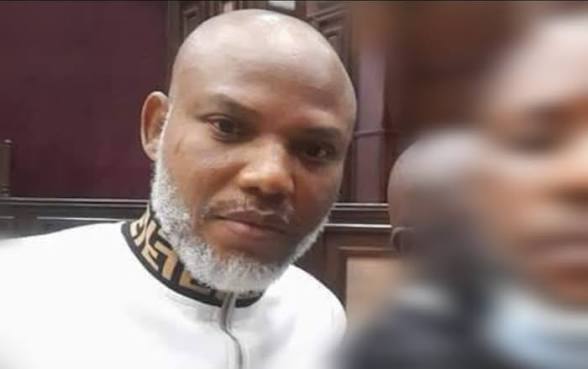
A United States-based group, Rising Sun Foundation USA, has offered $10,000 to anyone who can produce a Nigerian judicial precedent establishing the legality of convicting a defendant under a law repealed before judgment.
The foundation said the challenge arose from the November 20, 2025 conviction of Indigenous People of Biafra (IPOB) leader, Nnamdi Kanu, by Justice James Omotosho of the Federal High Court, Abuja.
In a statement signed by its chairman, Dr. Maxwell Dede, of Massachusetts, USA, the group challenged the statutory basis for the conviction, arguing that the Terrorism (Prevention) (Amendment) Act 2013 relied upon for the terrorism counts had been repealed.
It addressed the challenge to Justice Omotosho, legal practitioners, academics and institutions worldwide, asking them to produce a qualifying judicial authority.
The foundation argued that the conviction offended Section 36(12) of the 1999 Constitution, which requires that an offence be defined and its penalty prescribed in a written law before a person can be convicted.
According to the group, a repealed penal statute could not, by itself, provide the written-law foundation required by the Constitution.
However, Justice Omotosho addressed the repeal objection in his judgment, relying on Section 98(3) of the Terrorism (Prevention and Prohibition) Act 2022. He held that the provision preserved proceedings commenced under the earlier legislation and that its repeal did not invalidate Kanu’s trial.
The foundation disputed the sufficiency of that position, insisting that anyone relying on a savings provision must explain how it satisfied the constitutional requirement for a written law defining the offences and prescribing the penalties imposed.
It maintained that a general savings clause did not automatically make a repealed penal statute an operative law.
In support of its position, the group cited Aoko v. Fagbemi (1961), a High Court decision concerning conviction for an offence not defined in written law.
It also relied on Temple Nwankwoala v. Federal Republic of Nigeria (2018), citing Justice Olabode Rhodes-Vivour’s statement that a trial under a repealed law, “no matter how well conducted and decided,” was a nullity. In that case, however, the Supreme Court upheld the conviction after finding that the statute under which the appellant was tried remained valid.
The foundation dismissed Ogbomor v. State (1985) and Boniface Adonike v. State (2015) as answers to its challenge, contending that the convictions in those cases rested on existing laws. It also said decisions permitting correction of an erroneous statutory citation on a charge sheet would not qualify.
The group further alleged a contradiction in Justice Omotosho’s reasoning, saying he cited State v. Egigia (2024) on page 72 of the judgment for the proposition that a repealed law had ceased to have legal life.
“A judge cannot explicitly write down that a repealed law is legally dead and devoid of life, and then turn around to base a criminal conviction upon that very same dead law,” the foundation said.
It described the offer as “open and unconditional,” promising payment into any bank account worldwide within seven working days of verification.
Although it acknowledged that the challenge would not determine Kanu’s pending appeal, the foundation maintained that failure to produce a qualifying precedent would support its contention that no such authority existed.