Home Blog Page 539

INEC Chairman Leads Charge on Procurement Integrity as Commission Deepens 2027 Election Preparedness

0


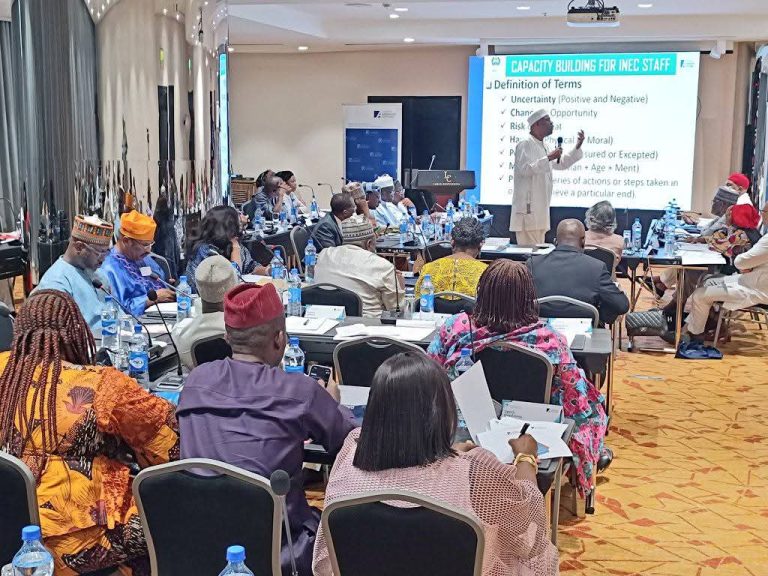
The Independent National Electoral Commission (INEC) has progressed to the second day of its landmark three-day capacity building workshop for National Electoral Commissioners and the Commission’s Management Staff, with the Chairman, Prof. Joash O. Amupitan, SAN, leading deliberations to reinforce procurement integrity as a cornerstone of credible elections.

The Chairman’s presence at the Day Two sessions underscored the Commission’s unwavering commitment to strengthening procurement systems ahead of the 2027 General Election. Having declared the workshop open on Monday through the National Commissioner, Mrs. May Agbamuche-Mbu, Prof. Amupitan joined participants in person, actively engaging facilitators and contributing to discussions on enhancing transparency, accountability, and operational efficiency in procurement processes.

His participation reaffirmed the Commission’s position that procurement is central to electoral credibility, as it directly impacts the timely delivery of sensitive materials, deployment of technology, and overall election logistics. He emphasized that robust procurement planning and strict adherence to regulatory frameworks are critical to ensuring election readiness and public confidence in the electoral process.

Day Two featured highly interactive sessions, with National Commissioners and Directors contributing practical insights drawn from past electoral cycles. The engagements provided a platform for candid reflections on procurement challenges, institutional lessons, and strategies for strengthening compliance with established guidelines. Participants interrogated key issues around procurement timelines, vendor management, and risk mitigation within the context of Nigeria’s complex electoral environment.

The first session, titled “Building Procurement Capacity for Election Readiness,” was delivered by Mr. Nelson Ojougboh of the Bureau of Public Procurement (BPP). He highlighted the importance of early and strategic procurement planning, noting that aligning procurement activities with the national budget cycle is essential to avoiding delays and ensuring value for money. He further emphasized the statutory implications of non-compliance, warning that procurement without a valid plan constitutes a violation of extant regulations.

Mr. Ojougboh also introduced participants to newly revised Standard Bidding Documents, designed to enhance transparency, standardization, and efficiency in public procurement. Discussions that followed enabled participants to examine practical implementation challenges and explore ways to adapt the frameworks to the specific demands of electoral operations.

The second session, “Risk Management in Public Procurement Process in Nigeria,” was facilitated by Prof. Prince Michael Ikupolati, who provided a comprehensive overview of procurement-related risks and mitigation strategies. He outlined key vulnerabilities, including operational inefficiencies, financial uncertainties, compliance gaps, and reputational risks, stressing that proactive risk management is essential to safeguarding public resources and institutional integrity.

Prof. Ikupolati also emphasized the role of insurance instruments such as performance bonds and contractor risk coverage in ensuring accountability and protecting government investments. He noted that effective enforcement of these mechanisms is critical, particularly in large-scale, time-sensitive operations such as national elections.

The third session, “Procurement Planning as the Foundation for Electoral Readiness,” was delivered by Mrs. Nanzok Bukata, who underscored the centrality of structured planning to successful procurement outcomes. She highlighted the need for comprehensive needs assessment, market analysis, and integration of procurement plans with the electoral calendar, noting that statutory timelines leave little room for delays or adjustments.

Mrs. Bukata further stressed the importance of documentation, transparency, and adherence to due process, emphasizing that clear records and open procedures are essential to maintaining public trust and institutional credibility. Her presentation resonated strongly with participants, who shared experiences on the importance of early engagement with end-users and accurate specification of procurement requirements.

Throughout the day, discussions were enriched by contributions from Commissioners and Directors, whose experiences provided practical context to the technical sessions. The interactive format fostered knowledge exchange and reinforced a shared commitment to strengthening procurement systems within the Commission.

As deliberations concluded for the day, participants expressed a collective resolve to institutionalize best practices and lessons learned from the workshop. The engagement not only deepened technical capacity but also strengthened the Commission’s culture of integrity, accountability, and professionalism.

The active involvement of the INEC Chairman highlighted the strategic importance of procurement reform as part of the Commission’s broader preparations for the 2027 General Election. His leadership signaled a clear commitment to ensuring that all procurement activities meet the highest standards of transparency, efficiency, and value for money.

With the workshop continuing into its final day, the Commission remains focused on consolidating gains from the sessions and translating them into actionable frameworks that will support the successful delivery of a credible, transparent, and well-managed electoral process in 2027.

Enugu workers jubilate as Mbah approves promotion, conversion of 2,114 civil servants

0


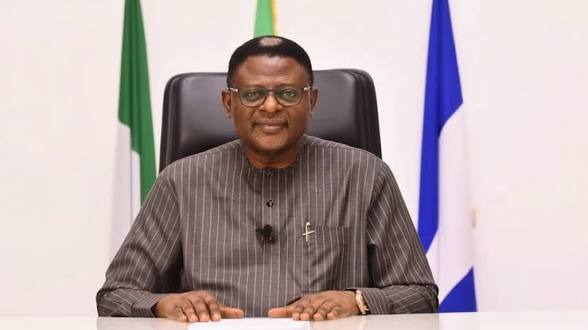
Civil servants in Enugu State have expressed widespread excitement following the approval of promotion and conversion for 2,114 public workers by Governor Peter Mbah.

The affected workers participated in the November/December 2025 promotion and conversion exercises conducted across the state civil service.

The approval, which takes immediate effect, also covers the financial implications of the new ranks, ensuring that beneficiaries begin to enjoy their upgraded status without delay.

Chairman, Enugu State Civil Service Commission, Mr. Robison Odo, who made the disclosure, yesterday, in Enugu, described the gesture as timely and morale-boosting, likening it to an Easter gift for workers. He said the exercise cuts across officers on Grade Levels 01 to 17, who successfully passed the promotion interviews.

“The Executive Governor recently approved the release of the promotion and conversion of 2,114 officers who participated in the 2025 exercise. The approval also takes immediate effect with the financial benefits attached,” Odo said.

He assured that the commission would expedite implementation of the governor’s directive.

Odo commended the administration for its sustained commitment to workers’ welfare, noting that prompt payment of salaries, pensions, and gratuities had become a hallmark of the government.

He further highlighted the state’s N80,000 minimum wage as exceeding the national benchmark, describing it as a clear demonstration of the governor’s worker-friendly policies.

“Workers are genuinely excited. This is a strong motivation for improved productivity and commitment to service. We deeply appreciate the governor for prioritising our welfare despite ongoing infrastructural development across the state,” he added.

The commission’s chairman pledged continued discipline, innovation, and productivity within the civil service to align with the administration’s development agenda.

Also speaking, the Head of Service, Dr. Godwin Anigbo, said the governor’s policies had created an enabling environment for workers to embrace reforms and deliver optimally.

He noted that the administration’s focus on innovation had transformed the public service, equipping workers with modern skills required for efficient service delivery.

“We are working closely with the Civil Service Commission to ensure that workers are adequately prepared to align with the government’s reform-driven agenda. The administration has introduced forward-looking initiatives that are repositioning the service for greater efficiency,” Anigbo said.

He added that the government’s investment in capacity building, including the training of civil servants in digital competencies, was facilitating the transition from analogue to technology-driven operations. Anigbo also lauded the approval for the establishment of a public service training institute, describing it as a critical step towards strengthening institutional capacity and improving service delivery.

Despite the state’s heavy investment in infrastructure and other capital-intensive projects, he said the administration had maintained a strong commitment to workers welfare.

Bauchi gov defects from PDP to ADC amid deepening crisis

0

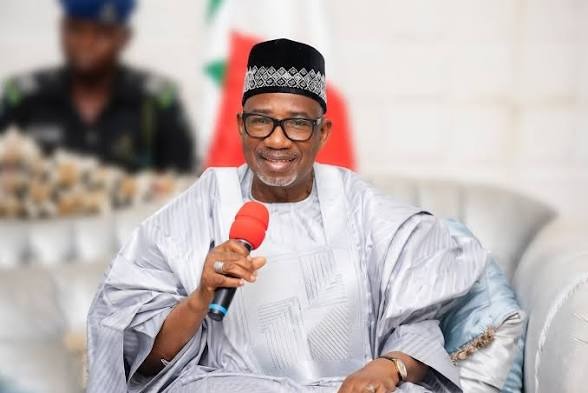
Governor of Bauchi State, Bala Mohammed, has disclosed that he is at the final stage of consultations to defect from the Peoples Democratic Party (PDP) to the African Democratic Congress (ADC), with a formal announcement expected tomorrow.

The governor made this known after an executive meeting with a high-powered ADC delegation led by former Secretary to the Government of the Federation, Babachir Lawal, in Bauchi.

Mohammed, chairman of the PDP Governors’ Forum, said his decision followed unsuccessful efforts to reconcile internal divisions within the PDP.

“I have pursued all avenues for reconciliation, but it has not worked. Our people are putting me under extreme pressure.”

He revealed that two committees—one at the national level in Abuja and another in Bauchi—were set up to explore political options, including a possible move to the ruling All Progressives Congress (APC), but noted that the efforts did not yield results. “Sadly, we have discovered that we cannot remain where we are not wanted. We must find a place within the opposition where our destiny aligns.”

The governor also alleged that the Minister of the Federal Capital Territory, Nyesom Wike, frustrated reconciliation moves within the PDP as well as attempts to facilitate his entry into the APC. “I even met with Mr. President three times to initiate reconciliation, but it didn’t work because certain individuals insisted on having their way.”

Mohammed described the ADC as a more acceptable platform for opposition forces currently engaging with him, noting that discussions were productive and nearing completion.

“We are very cautious of the timeline. Everything will be concluded by Thursday so that we can move forward together without being left out,” he stated.

Reaffirming his political leaning, the governor said he has always thrived in opposition politics and remains focused ahead of the 2027 general elections.

“The ADC presents an existential solution, and we will not let this opportunity slip,” he declared.

Earlier, Lawal said the delegation was sent by ADC National Chairman, David Mark, as part of efforts to unite opposition forces ahead of 2027.

He stressed that only a united front of well-meaning Nigerians could effectively challenge the current administration, warning of serious consequences if the present political trajectory continues beyond 2027.

Lawal described Governor Mohammed as a “fearless fighter,” adding that his entry into the ADC would significantly strengthen the party’s position.

Sun

INEC chairman calls for stronger legal framework

0


Chairman of the Independent National Electoral Commission (INEC), Prof. Joash Amupitan, has called for the development of a stronger and more responsive legal framework to address emerging governance challenges in the digital age.

Amupitan made the call at the 47th Founders’ Day Lecture of the Nigerian Institute of Advanced Legal Studies (NIALS), held at the Ayo Ajomo Auditorium, University of Lagos, yesterday.

The lecture, themed: “Civic Participation, Rule of Law and Accountable Governance in a Digital Era,” focused on the intersection of technology, law, and governance in contemporary society.

According to the INEC chairman, the rapid evolution of the digital environment has significantly transformed governance across the globe, necessitating urgent reforms in Nigeria’s legal and institutional frameworks to safeguard democratic processes.

He stressed that the digital era demands stronger collaboration among legal scholars, policymakers, technologists, and civil society organisations to build an inclusive and accountable governance structure.

Amupitan noted that while technology has enhanced citizens’ participation and improved transparency, it also poses significant risks, including misinformation, digital manipulation, data breaches, and concerns surrounding artificial intelligence.

“These developments continue to test the nation’s legal system, underscoring the need for laws that can keep pace with technological advancements,” he said.

He warned that technological innovations must not outstrip regulation or undermine democratic institutions, urging stakeholders to adopt forward-looking legal frameworks.

Reflecting on the significance of the event, Amupitan described it as an opportunity to assess the legacy and relevance of NIALS in driving legal reforms and national development.

He emphasized that institutions remain relevant through adaptability, responsiveness, and societal impact, rather than historical achievements alone.

The INEC chairman commended NIALS for its contributions to legal development, describing it as a critical bridge between theory and practice in legal scholarship. He further urged the institute to deepen its engagement with emerging issues in digital governance.

In his remarks, the Director-General of NIALS, Prof. Abdulqadir Abikan, reaffirmed the institute’s commitment to advancing legal knowledge and supporting governance through research.

Abikan said the Founders’ Day Lecture reflects the vision of the 1966 conference of the Nigerian Association of Law Teachers, which led to the establishment of the institute despite the disruptions caused by the civil war.

He paid tribute to past legal icons and former directors-general whose contributions shaped NIALS into Nigeria’s apex legal research institution.

According to him, the institute continues to support government agencies through research in areas such as criminal justice, environmental law, anti-money laundering reforms, and consumer protection.

He disclosed that NIALS recently concluded a MacArthur-funded project that produced policy bulletins, case digests, and 23 drafted court rules and practice directions.

Abikan added that the institute trained 972 participants in 2025 through 31 capacity-building programmes, excluding public lectures and hybrid seminars.

He, however, acknowledged challenges including inflation, staff attrition, and the institute’s temporary office status in Abuja, noting that progress is being made to address them.

The director-general also announced the recovery of the institute’s long-disputed property in Dolphin Estate, Ikoyi, following a 16-year legal battle.

He appealed to the Attorney-General of the Federation, Lateef Fagbemi, to support the completion of the institute’s permanent headquarters in Abuja.

Sun

LAGOS AND THE RETURN OF MONTHLY SANITATION

0


By Tayo Ogunbiyi


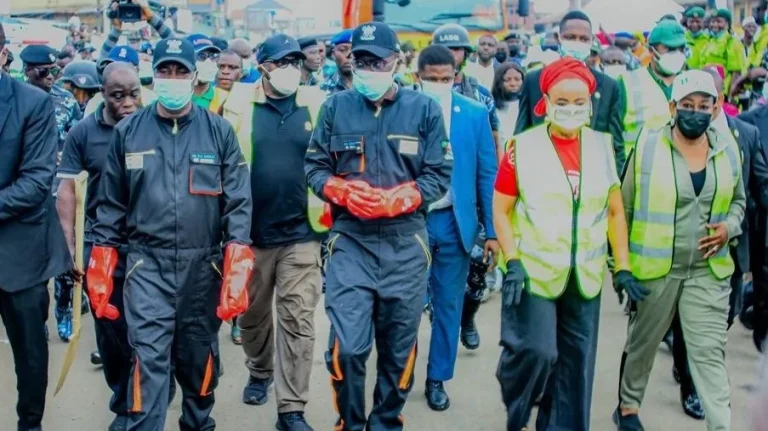
It is no longer news that the Lagos State Government is reintroducing the monthly environmental sanitation exercise. Recall that the State Governor, Mr. Babajide Sanwo-Olu, recently flagged off the reintroduction of the monthly exercise, saying it will be taking place every last Saturday of the month from 6.30 a.m. to 8.30 a.m.

The governor, who spoke at the symbolic flag-off of the monthly exercise organised by the Ministry of the Environment and Water Resources, held at Mushin-Agege Motor Road corridor, Lagos, noted that a clean city is not achieved by government alone but by the daily actions of the people who live in it.

The governor, who emphasised that movement will not be restricted in the state during the two hours, appealed to the residents to voluntarily comply with the directive or face the wrath of the Environmental Management Law 2017.

He said, “The condition of our streets, our markets, our drainage channels, and our public spaces reflects how seriously we take our responsibility to one another and to the environment we share. In a city as large and dynamic as Lagos, maintaining a clean and healthy environment must remain a collective civic duty”.

Since the governor made the pronouncement, it has been met with diverse reactions. While many see it as a welcome and laudable development, others see it as an unnecessary move. In a pluralistic society like Lagos, such assorted sentiments are largely not unexpected.

It is, however, important to stress that, being one of Africa’s most vibrant and rapidly growing megacities, Lagos requires collective commitment to environmental sustainability.

Therefore, by bringing back the monthly sanitation exercise, the government is demonstrating responsible and responsive governance aimed at safeguarding public health, promoting environmental cleanliness, and strengthening community participation in maintaining a livable city.

The reintroduction of the exercise reflects the unwavering determination of the government to uphold the highest standards of environmental management while encouraging residents to take ownership of their immediate surroundings.

For decades, the exercise has played a vital role in instilling a culture of cleanliness and civic responsibility among residents.

Its return would not only help address sanitation challenges but would also promote public awareness about proper waste disposal, drainage maintenance, and environmental hygiene.

It is, thus, another bold step to strengthen preventive public health measures, reduce environmental hazards, and protect communities from sanitation-related challenges.

The condition on the streets, markets, the drainage channels, and public spaces reflected the seriousness with which everyone must take responsibility for the environment that they all share. In a city as large and dynamic as Lagos, maintaining a clean and healthy environment must remain a collective civic duty and responsibility that all residents must uphold.

The return of the monthly exercise offers an opportunity for all residents to revive the culture of environmental consciousness in all the communities and in society. The exercise will be driven by awareness, partnership, and voluntary participation, just as the government continues to strengthen the waste management system in the State.

Lagosians need to understand that careless dumping of waste on the streets and into the drains would make this infrastructure dilapidated. Actions as simple as disposing of materials such as plastic bottles, wood, wrappers, and solid wastes, among others, responsibly can make a real difference.


It is, thus, crucial for residents to imbibe the culture of regular sanitation as this will prevent the spread of communicable diseases.

In a city of over 20 million people, the reintroduction of the monthly sanitation is more than a policy announcement. It is a reckoning with what it truly means to govern a megacity and what it demands of the people who live in it.

Perhaps the most important aspect of the return of the monthly sanitation is that it is now an obligation for the residents and not mandatory. This is a subtle but significant shift aimed at strengthening civic responsibility without the rigid enforcement measures previously associated with the monthly environmental sanitation exercise.

The new approach is designed to encourage voluntary compliance among residents, while still emphasizing the importance of maintaining a clean and healthy environment across the state.

The term “obligatory” reflects a moral and civic duty expected of all Lagosians, rather than a strictly enforced directive backed by movement restrictions.
Under the revised framework, residents, businesses, and communities are expected to take ownership of their immediate environment by ensuring proper waste disposal, regular cleaning of drainage systems, and adherence to environmental laws.
While there may no longer be enforced lockdowns during sanitation hours, enforcement agencies will continue to monitor compliance and penalize indiscriminate waste disposal.
Environmental experts have described the policy adjustment as a pragmatic response to the realities of a rapidly growing megacity like Lagos. They note that sustainable sanitation practices are better achieved through continuous habits rather than periodic exercises.
As the state continues to grapple with challenges such as flooding and waste management, the success of the “obligatory” sanitation model will depend largely on the willingness of Lagosians to embrace environmental responsibility as a daily practice.
The onus is, therefore, on all residents of Lagos State, community development associations, market groups, youth organisations, and civil society stakeholders to embrace this initiative wholeheartedly.

Environmental sustainability is a shared responsibility, and the success of this exercise depends largely on the cooperation and active participation of all Lagos residents.

With the cooperation and necessary buy-in of all stakeholders, the policy would significantly contribute to the continued transformation of Lagos into a cleaner, healthier, and more sustainable megacity.

The quality of our lives, as human beings, is considerably a reflection of the quality of the environment in which we dwell. Therefore, we need to change our attitude toward environmental issues. When we imbibe positive attitudinal change towards the environment, we are sure of living free of any pollutants or hazards that we might introduce into our environment through human-induced activities.

Protecting the environment is, without doubt, the best way to protect ourselves against diseases and other harmful environmental hazards.

Traditionally, talks on environmental protection often center on the role of government, legislation, and law enforcement. However, environmental protection ought to be the duty of all people and not simply that of the government.

Therefore, we all need to embrace a positive attitude towards the environment. Parks should not be turned into marketplaces, toilets, refuse dumps, or places where animals graze. Failure to control animals or allowing their defecation or engaging in an unhygienic use of fountains, pools, or water in the parks, gardens, and open spaces would be counterproductive and, as such, must be discouraged.

With natural disasters occurring across the world, as a result of the abuse of the environment, it is time for everyone to rethink their attitude toward the environment. As previously stated, it is whatever we give to the environment that it gives back to us.

Community leaders, traditional rulers, religious leaders, NGOs, and other stakeholders should work in partnership with the state government to ensure that current gains in the sector are sustained. It is only in doing this that the government’s massive investment in protecting the environment will not be a waste.

· Ogunbiyi is Director of Public Enlightenment & Community Relations, Ministry of Information & Strategy, Alausa, Ikeja.

Breaking News: Lagos Police Withdraws Task Force From Traffic Enforcement Duties

0

The Lagos State Police Command has ordered the immediate withdrawal of the Lagos State Environmental Sanitation and Special Offences Unit, popularly known as the Taskforce, from all traffic control and traffic contravention enforcement duties across the state.

The directive, issued by the Commissioner of Police, Tijani Fatai, is part of ongoing efforts to tidy up Lagos’ often-chaotic traffic management structure and ensure that only the appropriate agencies handle road-related enforcement.

In a statement on Tuesday, the Police Public Relations Officer, SP Abimbola Adebisi, said the move was aimed at promoting professionalism, accountability, and clarity among security and enforcement operatives. He stressed that although the Taskforce had been pulled out of traffic operations, it would continue all other statutory functions without interruption.

The statement said, “The Lagos State Police Command wishes to inform the general public that the Commissioner of Police, CP Tijani Fatai, psc, mnips, has directed the immediate and complete withdrawal of the Lagos State Environmental Sanitation and Special Offences Unit (Taskforce) from traffic control and traffic contravention enforcement across the State.

“This directive is part of ongoing efforts to streamline traffic management operations and ensure professionalism, accountability, and clarity in the discharge of duties. It is important to note that while the unit has been withdrawn from traffic-related responsibilities, all other assigned duties and operational mandates of the unit remain fully in force.”

Adebisi also cautioned residents against assuming that every officer branded “Taskforce” belongs to the Lagos State Environmental Sanitation and Special Offences Unit. He urged motorists to verify the identity of enforcement personnel before making allegations, noting that several taskforce bodies operate within the state.

“The Command also wishes to enlighten members of the public that the Lagos State Environmental Sanitation and Special Offences Unit is not the only Taskforce operating within Lagos State. Residents and motorists are therefore strongly advised to always verify the identity of personnel and agencies before making allegations or assertions, particularly in matters relating to traffic enforcement.

“The Lagos State Police Command remains committed to safeguarding lives and property while ensuring that all operations within the State are carried out in accordance with the law and best practices. Members of the public are encouraged to remain law-abiding and cooperate with all legitimate security agencies.”

Police Arrest Edo Suspect Over $550,000 Transnational Fraud, Identity Theft

0

The Nigeria Police Force, through the INTERPOL National Central Bureau (NCB) Abuja, has recorded a major breakthrough in the investigation of a transnational fraud, identity theft, and money laundering case involving a United States-based victim.

The development, according to the police, is in line with the ongoing efforts of the Inspector-General of Police, IGP Olatunji Rilwan Disu, to combat cyber-enabled crimes and strengthen the force’s response to cross-border financial offences.
Police said the case was reported by an American woman who was allegedly defrauded of $550,000 between October 2025 and January 2026.

In a coordinated operation carried out in Benin City, Edo State, between March 23 and 26, 2026,
operatives of INTERPOL NCB Abuja, acting on credible intelligence, tracked and arrested the suspect on March 26.
The suspect was identified as Emwanta Eghosa Smith, a resident of Uselu, Edo State.

A preliminary investigation revealed that the suspect allegedly orchestrated the fraud by impersonating prominent government officials and other notable public figures to gain the confidence of the victim.

Police said the victim was subsequently deceived into transferring funds through cryptocurrency platforms.
Further investigations showed that proceeds of the alleged crime were laundered through the purchase of five vehicles and an unfinished property in Benin City, all of which have been secured as exhibits.

Police also disclosed that counterfeit $10,000 was recovered from the suspect during the operation.

Reaffirming the commitment of the force to tackling cybercrime and related offences, IGP Disu said the Nigeria Police Force would continue to intensify efforts against cyber-enabled financial crimes, identity theft, and transnational fraud.

He also stressed the importance of sustained collaboration with international law enforcement partners to ensure that offenders are brought to justice and victims adequately protected.

The police, meanwhile, advised members of the public to remain vigilant in their online interactions, especially those involving financial transactions, and to promptly report suspicious activities to law enforcement agencies.
DCP Anthony Okon Placid
Force Public Relations Officer
Force Headquarters, Abuja

Surulere politics: CAN, Islamic clerics differ over alleged marginalisation of Christians

0

*It can undermine peaceful coexistence — CAN

*It’s unfounded, misleading— CCIA


LAGOS — THE Christian Association of Nigeria, CAN, and the Council of Chief Imams and Alfas, CCIA, yesterday, bickered over the alleged marginalisation of Christians in political leadership in Surulere local government area of Lagos State.

CAN petitioned Governor Babajide Sanwo-Olu over the development, saying it was troubling and could undermine peaceful coexistence in the community.

However, the Council of Chief Imams and Alfas, CCIA, in Surulere, faulted the position of the Christian body, saying it does not reflect the true reality of the Surulere community.

It can undermine peaceful coexistence — CAN

CAN, in a letter by its Surulere Chairman, James Akingboye and nine other officials, said the development is troubling and could undermine peaceful coexistence in the community.

According to the association, only Desmond Elliot, a member of the Lagos State House of Assembly, is a Christian among the 13 political office holders from Surulere at the federal and state levels.

The Christian umbrella body said other political figures from the area, including Chief of Staff (CoS) to the President, Femi Gbajabiamila; Fuad Laguda, House of Representatives’ member; Sulaimon Bamidele, chairman of Surulere LGA; and Muiz Dosumu, Vice-Chairman of the council, are Muslims.

The CAN asked Governor Sanwo-Olu to ensure fairness in political representation in the area.

The petition reads: “Our community is composed of both Christians and Muslims who have lived together peacefully and have contributed equally to its growth and stability.

“This letter is not written to incite tension but to firmly state that a sustained imbalance in political appointments is neither healthy nor acceptable in a pluralistic community such as ours.

“Equity in leadership must reflect the religious diversity of our population.

“Presently, there is only one Christian occupying a political position within the party framework.

“Any attempt to remove or replace this sole representative would effectively eliminate Christian participation at a meaningful decision-making level.”

It’s unfounded, misleading— CCIA

Reacting to CAN’s petition, the Council of Chief Imams and Alfas (CCIA), Surulere, Lagos State, insisted that Christians are not marginalised on religious grounds in the distribution of political offices within Surulere.

It also warned that religious platforms should not be used as instruments for advancing political interests.

The CCIA said: “We wish to state categorically and without ambiguity that this claim is unfounded, misleading, and does not reflect the true reality of our community.

“Surulere has long been known as a peaceful and cosmopolitan local government where people of different religious backgrounds coexist harmoniously. Political participation and leadership within Surulere have never been determined by religious affiliation, but rather by interest, participation, competence, and democratic engagement. Individuals who contest elections and emerge as candidates do so through established political processes, not on the basis of religion.

“The Council finds it necessary to emphasise that no known Christian political office holder in Surulere has come forward at any time to complain of discrimination or marginalisation on religious grounds. On the contrary, Surulere has consistently produced and supported leaders from diverse religious backgrounds who have served and continue to serve with distinction.

“While we respect the role of the Christian Association of Nigeria (CAN), Surulere Chapter, as a religious body, we strongly caution against allowing religious platforms to be used as instruments for advancing political interests disguised as religious concerns. Such narratives, especially at a time when political activities are gaining momentum ahead of elections, risk creating unnecessary tension and division within an otherwise peaceful community.

“We firmly believe that religion should unite rather than divide us, and it must not be exploited to create fear, suspicion, or discord among the people. Surulere has a proud history of religious tolerance and mutual respect, and this must be preserved at all costs.

“The Council of Chief Imams and Alfas maintains a cordial and respectful relationship with all political office holders from Surulere, irrespective of their religious affiliations. We have always engaged constructively in matters that promote peace, development, and the collective well-being of our people.

“We, therefore, call on all stakeholders, including religious and political leaders, to exercise restraint, promote unity, and avoid statements or actions that could drag Surulere into needless political or religious turmoil.

“Let it be clearly stated that the peace and harmony of our community are paramount, and no individual or group should be allowed to undermine them for any reason.

“Surulere belongs to all of us — Muslims, Christians, and people of all backgrounds — and together, we must continue to build a community anchored on peace, fairness, and progress.”

Vanguard

Spain discovers drugs tunnel to Morocco

0

This undated handout photo released on March 31, 2026 from Spain’s Policia Nacional shows the entrance to a tunnel between Morocco and Spain. Photo by POLICIA NACIONAL / AFP.

Spanish police, on Tuesday, said they had uncovered a technologically sophisticated and “maze-like” underground tunnel used to smuggle tonnes of hashish from Morocco to Spain’s North African exclave of Ceuta and Europe.


This undated handout photo released on March 31, 2026 from Spain’s Policia Nacional shows the entrance to a tunnel between Morocco and Spain which police discovered in the enclave of Ceuta and which was used to smuggle tonnes of hashish. Photo: POLICIA NACIONAL / AFP
The investigation found the site in Ceuta concealed under an industrial warehouse that was protected by pumping and soundproofing systems to avoid detection, police said in a statement.

The bottom of the three-level tunnel, which led directly to Morocco, resembled “a maze typical of a mine”, equipped with trolleys “that moved on a rail system of complex construction and characteristic of perfectly designed feats of engineering”.

The bales of hashish were prepared and stored on the middle level, from where they were lifted “thanks to a system of cranes and pulleys designed to move heavy loads”, the police said.

The entire structure is 19 metres (62 feet) deep, but investigators cannot determine how long the tunnel is “because it is flooded”, the officer responsible for the operation, Antonio Martinez, explained at a press conference.

The tunnel, measuring 1.2 metres high and 80 centimetres wide, was “well-equipped” and “purpose-built” by “an extremely powerful organisation” that contacted other groups to transport the drug in speedboats and fishing vessels, he added.

Police began their investigation in February 2025, seizing more than 17 tonnes of hashish and 1.4 million euros ($1.6 million) in cash in various operations in Ceuta and mainland Spain over several months.

They also made 27 arrests, including the network’s two suspected leaders.

One of them, based in Morocco and held on March 26, is also suspected of running another drug tunnel police dismantled in Ceuta last year.

Spain’s close ties with Latin America and proximity to Morocco, a top cannabis producer, make it a key entry point for drugs into Europe.

Its small Mediterranean coastal exclaves of Ceuta and Melilla, adjacent to Morocco, share the European Union’s only land borders with Africa.

Vanguard

Gov Otu rolls out free Easter transportation for residents

0


Gov. Bassey Otu of Cross River has flagged off a free Easter transport service for state residents to ease the transportation burden during the Easter holidays.

The governor, who flagged off the programme on Tuesday in Calabar, emphasised his administration’s resolve to prioritise the welfare of the people.

Otu, represented by his deputy, Dr Peter Odey, noted that the initiative was intended to ensure that residents travelled freely during the Easter season without fear or financial strain.


“I am happy to be here again. I was here in Dec. 2025 to flag off the Christmas free transport services, which, to the glory of God, we sustained and even visitors who came for the carnival enjoyed it.

“I am back again this Easter period to roll out another people-centered programme to ameliorate the sufferings of the people occasioned by the high cost of fuel,” he said.

According to him, this is the fourth edition, and the administration will continue to sustain the initiative in the state.

Similarly, Mr Ekpenyong Akiba, Special Adviser to the Governor on General Duties, said the initiative aligned with the state government’s social-economic intervention strategy.

Akiba, who is also the scheme’s coordinator, said the government remained committed to sustaining the scheme to support residents during this critical period of high travel demand.

On his part, Mr Ephraim Okon, Special Advisor to the governor on transportation, said the initiative was in partnership with the transport unions, adding that the drivers were exempted from daily tolls.

Okon noted that the drivers would receive small incentives at the end of the programme that would run through the Easter period.

‘’We also have supervisors who will be in each of the vehicles to ensure that the drivers do not take money from the commuters for the duration of the programme,” he said.

The News Agency of Nigeria (NAN) reports that the scheme would ensure free vehicular transportation from Calabar to other local government areas in the state, and also free boat services to Creek Town and Bakassi.NAN further reports that within Calabar metropolis, 55 buses were provided to transport commuters within the city free of charge from 7 a.m to 7 p.m. daily.

Vanguard