Home Blog Page 522

Nigerian Stock Market Edges Higher as Investors Weigh Equities, Bonds, Currency Moves

0


The Nigerian equities market closed slightly higher in the latest trading session, as the benchmark index advanced by 0.28 per cent, pushing the year-to-date return to 30.19 per cent.

Despite the positive close, market activity reflected mixed sentiment. Trading volume declined by 12.74 per cent, pointing to softer investor participation, while total trade value rose marginally by 0.82 per cent, suggesting the execution of selective high-value transactions.
At the close of trading, UNIVINSURE and OMATEK emerged as the day’s top gainers, while FTGINSURE and DEAPCAP topped the losers’ chart.
Financial services remained the dominant sector on the Nigerian Exchange, supported by sustained interest in banking stocks.

WEMABANK led the market in trade value, while ACCESSCORP posted the highest trading volume for the session. In contrast, the insurance, consumer goods, and industrial goods sectors came under bearish pressure.

On the corporate disclosure front, notable filings were recorded from UNILEVER, DANGCEM, and CONHALLPLC, while NREIT released its audited financial statements for the year ended December 31, 2025. Most of the affected stocks closed flat, although CONHALLPLC gained 5.96 per cent.
In the fixed income market, interbank rates reversed their recent downward trend, with the overnight rate rising by six basis points to close at 22.31 per cent.

Trading in the local bond market remained largely subdued, except for a sharp increase in yields on 2027 maturities, which rose by about 160 basis points. This contrasted with the slight yield decline recorded on the 2033 paper.

The Treasury bills market, however, saw improved sentiment, as average yields contracted by 4.3 basis points, reversing the previous session’s bearish trend. The decline was most pronounced on 2027 maturities, where yields fell by an average of 13.4 basis points, compared with a near one basis point decline across other tenors.

In the Eurobond market, bullish momentum persisted across the curve, with average yields falling by 24 basis points, extending the rally from the previous session. Yields on 2030 maturities dropped by 28 basis points, while longer-dated papers declined by about 20 basis points, lifting prices on most tenors above par.

Meanwhile, the naira weakened slightly in the currency market, with the dollar rising by 0.4 per cent to close at ₦1,387/$1. The local currency is now up 0.4 per cent month-to-date but remains down 2.9 per cent on a year-to-date basis.

The euro and pound also strengthened against the naira, with EUR/NGN and GBP/NGN rising by nearly one per cent to settle at ₦1,606 and ₦1,839 respectively.
Nigeria’s foreign reserves continued their downward trend, falling to $48.94 billion, despite relatively supportive conditions in the global commodities market.

In the oil market, Brent crude plunged 14.3 per cent to $94.77 per barrel after former United States President Donald Trump announced a two-week ceasefire with Iran, raising expectations of a possible reopening of the Strait of Hormuz and easing fears of severe supply disruptions linked to the ongoing conflict.

Lagos Court Jails Six for Environmental Offences in Mile 2, Oshodi

0

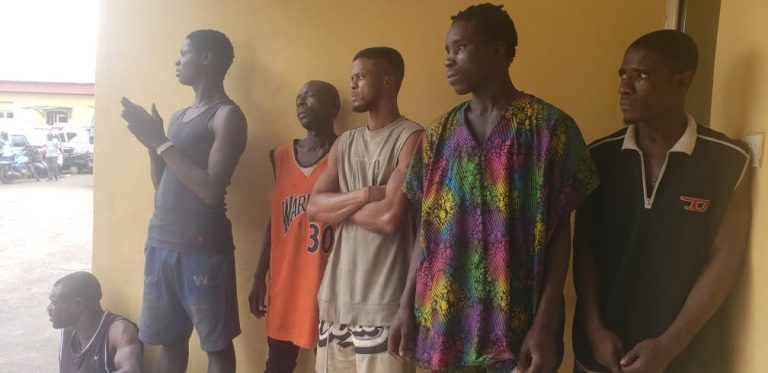
Six persons arrested for environmental offences in the Mile 2 and Oshodi areas of Lagos have been convicted and sentenced to prison.

The Commissioner for the Environment and Water Resources, Tokunbo Wahab, disclosed that the suspects were apprehended earlier on Wednesday during an enforcement operation in the affected areas.

The convicted persons were identified as David Williams, Alabi Nurudeen, Felix Agu, Chukwuebuka Inyegboro, Ige David and Anthony Afor.

According to the commissioner, the six suspects were subsequently arraigned before a Magistrate Court sitting in Bolade, Oshodi, where they all pleaded guilty to the charges preferred against them.
Following their guilty plea, the court convicted and sentenced each of them to four months imprisonment.

The development, Wahab said, underscores the Lagos State Government’s continued enforcement of environmental laws under its #ZeroToleranceLagos campaign.

INEC Chairman Warns Broadcasters Against Misinformation Ahead of 2027 Polls

0

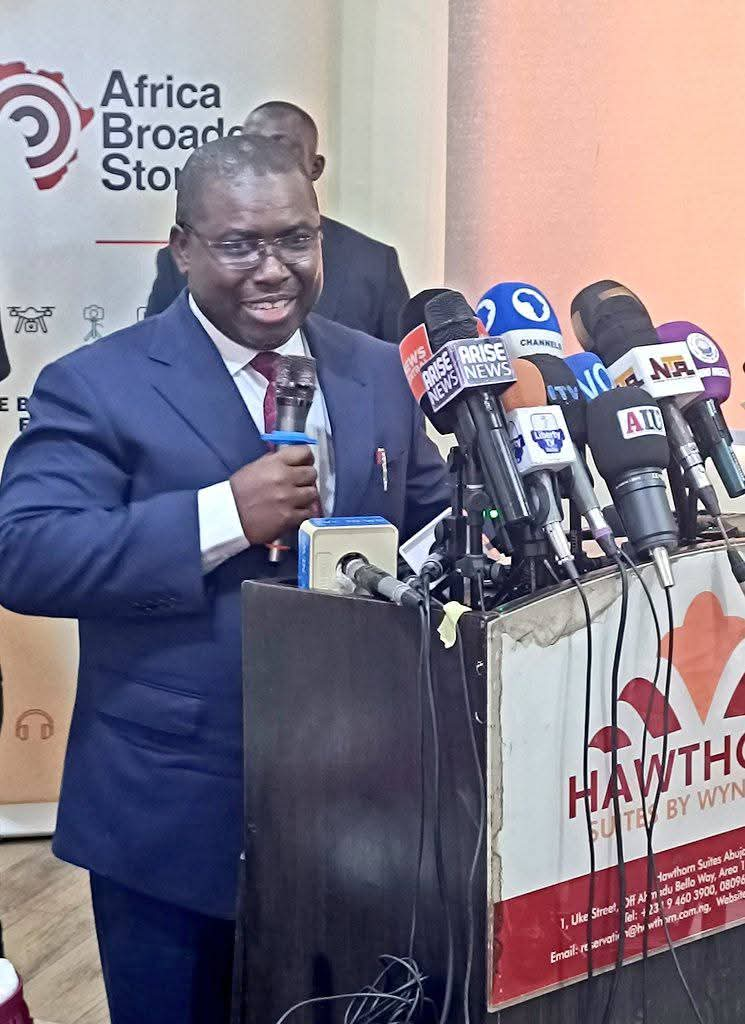
The Chairman of the Independent National Electoral Commission (INEC), Prof. Joash Amupitan, SAN, has warned broadcast media organisations against the spread of misinformation, saying the credibility of the 2027 General Election will depend largely on how responsibly Nigeria’s airwaves are managed.

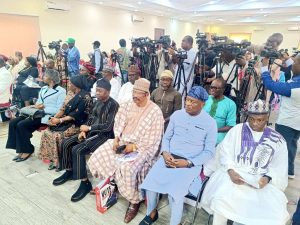
Amupitan gave the warning on Tuesday, April 8, 2026, while speaking at the 81st General Assembly of the Broadcasting Organisations of Nigeria (BON).

He said the information space has become a major battleground in modern elections, stressing that the greatest threat to credible polls may no longer be physical disruption, but the rapid spread of false information through unverified broadcasts.

The INEC chairman urged media organisations to strictly comply with the provisions of the Electoral Act 2026, particularly those guiding political broadcasting. He noted that with 22 registered political parties in the country, broadcasters are under a legal obligation to provide equal access to media platforms for all parties.
According to him, fairness in airtime allocation and political coverage is not optional but a statutory requirement.

Amupitan also drew attention to legal provisions prohibiting the use of abusive, inflammatory or divisive language capable of inciting ethnic, religious or sectional tensions. He warned that irresponsible broadcasting could undermine national unity and threaten the electoral process.

He further reminded broadcasters of the mandatory 24-hour “cooling-off period” before Election Day, during which political campaigns and advertisements are not allowed. He said the measure is intended to give voters time to reflect and make informed decisions without last-minute pressure or misinformation.

While acknowledging the constitutional right to freedom of expression, the INEC chairman maintained that such freedom must be exercised within the bounds of the law. He said the airwaves, being a public resource, must be used responsibly and fairly during elections.

Amupitan said INEC and the National Broadcasting Commission (NBC) have complementary roles in ensuring the integrity of political broadcasting, but noted that regulatory overlaps, weak enforcement and the convergence of traditional and digital media have made effective monitoring more difficult.

He also raised concerns over what he described as perceived incumbency advantage in state-owned media, as well as the increasing commercialisation of political airtime, warning that such practices could place smaller political parties at a disadvantage and erode the level playing field needed for credible elections.

To address the challenges, he called for stronger collaboration among regulatory agencies, clearer legal definitions of equal access, improved fact-checking mechanisms and greater transparency in political advertising, including full disclosure of sponsorship and pricing.
Amupitan urged broadcasters to place truth and professionalism above profit by verifying information before airing it and taking deliberate steps to combat fake news.
He also called on the media to play a more active role in mobilising citizens to participate in the electoral process.

Reaffirming INEC’s commitment to transparency, the commission’s chairman advised media organisations to rely on the commission’s official platforms as authoritative sources of electoral information, assuring them of continued engagement through designated spokespersons.

He said the credibility of the 2027 General Election would depend not only on logistics and technology, but also on the integrity of the information environment, urging broadcasters to act in the best interest of Nigeria’s democracy.

Why Asiwaju Bola Ahmed Tinubu missed today’s project commissioning in Lagos, by Aide

0


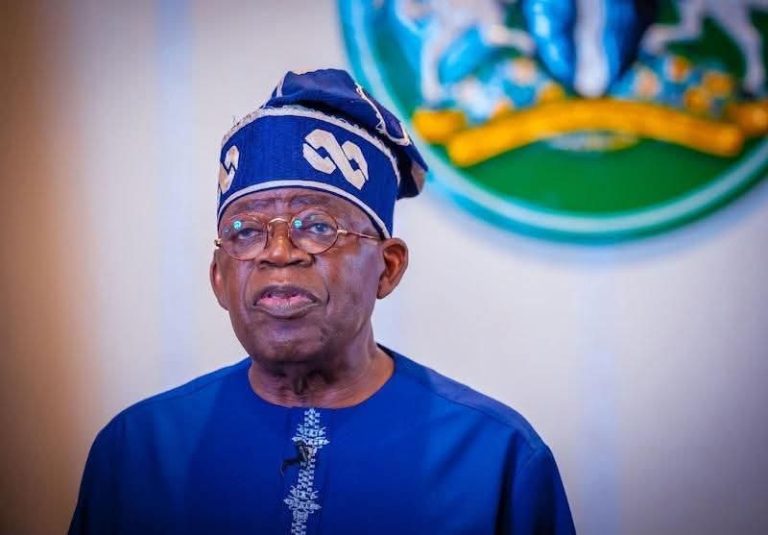
The Special Adviser to the President on Public Communications and Orientation, Sunday Dare, has explained that President Bola Tinubu was unable to attend a scheduled project inauguration in Lagos due to ongoing security briefings.

Dare disclosed this during an interview on Channels Television on Wednesday, stating that the President prioritised national security developments over the event.

According to him, “Yes, the president is in Lagos, and I’m sure beyond the pictures, you know that the president has been busy with state matters.”

He added that recent security concerns across parts of the country required the President’s attention, noting, “You will know the last 10 days, right from the attack in Jos, we’ve seen the developments.”

Dare said Tinubu had been “busy taking constant briefs” and “has to prioritise when it comes to state matters, especially security.”

The presidential aide further explained that the President remained actively engaged with security agencies, saying he was “monitoring development, working with the intelligence community, and taking constant security briefs.”

credit: Punch

PDP Visits ADC, Condemns Alleged Attacks on Opposition Parties

0


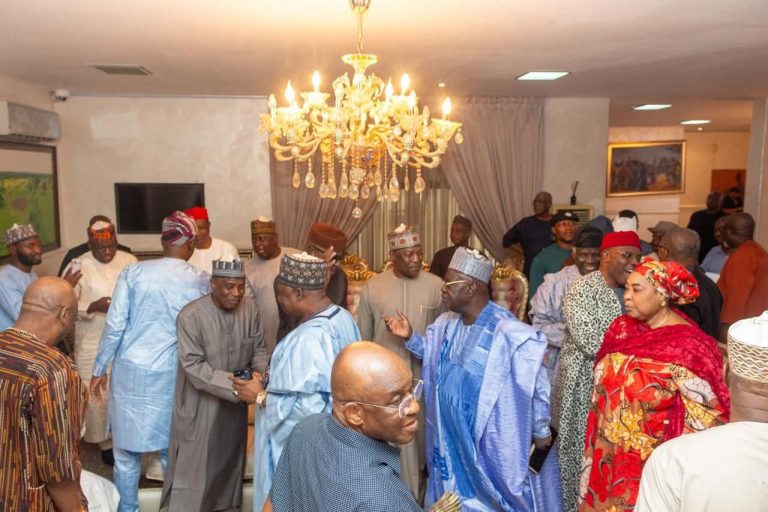
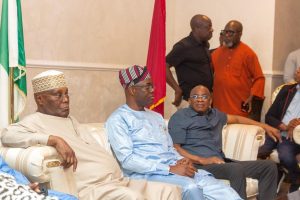
The leadership of the Peoples Democratic Party (PDP) has paid a solidarity visit to the African Democratic Congress (ADC), condemning what it described as recent political attacks targeted at opposition parties in Nigeria.

During the visit, the PDP said opposition parties were facing a growing and shared threat, warning that actions capable of undermining democratic principles and political plurality must be resisted.
The party noted that it had also experienced similar pressures in recent times and stressed the need for vigilance and stronger collaboration among opposition forces to safeguard Nigeria’s democracy.

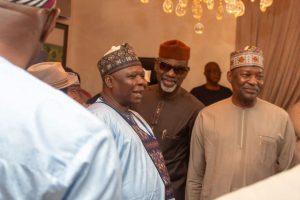
The high-powered PDP delegation was led by prominent party figures, including Governor Seyi Makinde, Kabiru Tanimu Turaki (SAN), Senator Adolphus Wabara, Professor Jerry Gana, former Governor Babangida Aliyu, Ambassador Taofeek Arapaja, Hajiya Inna Ciroma, General Ishaya Bamayi, Rt. Hon. Fred Agbedi, and Comrade Ini Ememobong.

The delegation was received by key leaders of the ADC, among them Atiku Abubakar, Senator David Mark, Kashim Imam, Senator Rabiu Musa Kwankwaso, Senator Aminu Waziri Tambuwal, Senator Tunde Ogbeha, Peter Obi, Liyel Imoke, Rauf Aregbesola, Rotimi Amaechi, and Bolaji Abdullahi.

Responding on behalf of the ADC leadership, the party expressed appreciation to the PDP for the visit and reiterated what it described as an existential threat to democracy in Nigeria, particularly through efforts aimed at weakening major opposition parties.
Both parties, however, affirmed the need for continued engagement and cooperation in defence of democratic values, political inclusion, and the country’s democratic institutions.

The statement was signed by Comrade Ini Ememobong, National Publicity Secretary of the PDP, on April 8, 2026.

Oyewogha of Ode-Aye Ikale, High Chief Olatubara Ikutiminu, Dies at 86, Burial Holds Thursday

0


BY TAIWO OGUNMOLA -OMILANI

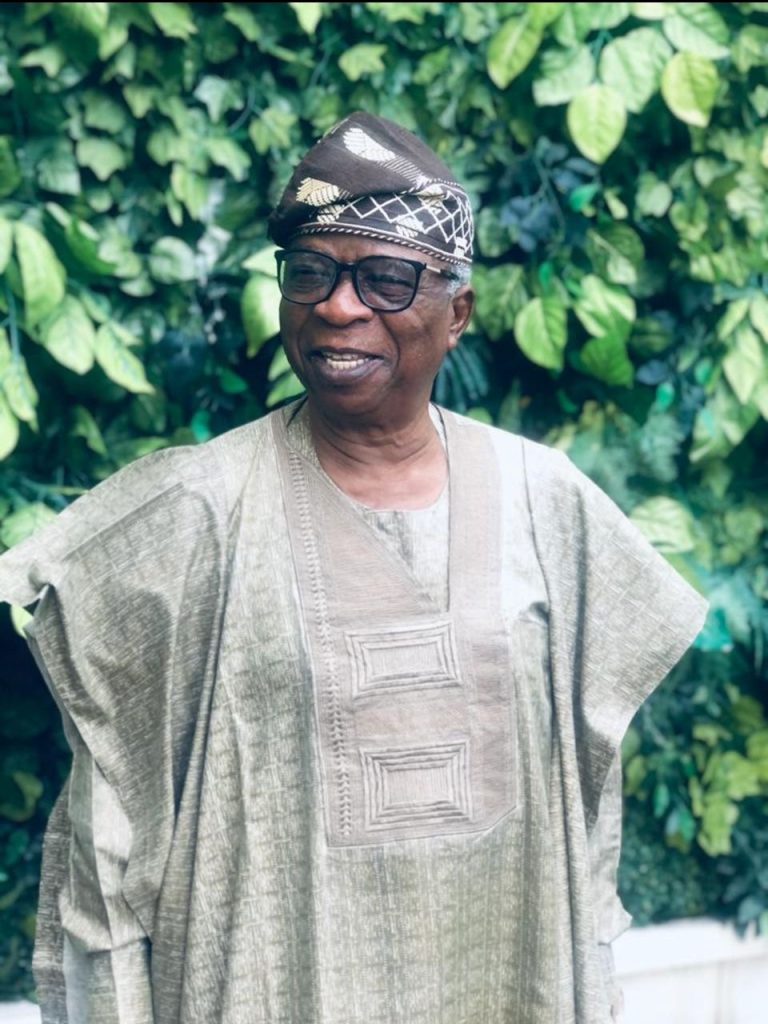
Sons and daughters of Ode-Aye in Ikale land, Ondo State, and across the world have continued to pay tribute following the death of one of the kingdom’s most illustrious sons, High Chief Olatubara Ikutiminu, the Oyewogha of Ode-Aye Ikale.

Chief Ikutiminu, a retired Major General and revered community leader, died on March 20, 2026, at the age of 86 at his residence in Lagos.

Reacting to the news, His Royal Majesty, Oba Michael Adetoye (Ogungbemi I), the Jegun of Idepe-Okitipupa, thanked God for what he described as a life of impact and service. He said the royal family and the people of Okitipupa would greatly miss the late chief for his numerous humanitarian contributions.

The monarch described the late Oyewogha’s life as one marked by service, devotion, and exemplary leadership to his community and the nation.
Announcing the death on behalf of the family, Prince Adesupo Eniola described Chief Ikutiminu as an extraordinary personality and an iconoclast whose legacy would remain indelible in Ikale land and beyond.

Also speaking, High Chief S.K. Ogunboye, the Akinluwa of Aye, described the death as a monumental loss to the entire Ode-Aye Ikale community, noting that many of the deceased’s landmark projects and achievements in the town remain unmatched across the local government area.
In his tribute, Sir Chief Moses Akinmade portrayed the late Ikutiminu as a charismatic leader and exemplary patriot, saying virtually all major community-driven projects in Ode-Aye bore his imprint either as a leading figure or as part of the vanguard that conceptualised and executed them.

He added that, in demonstration of his commitment to the development of his community, Chief Ikutiminu inaugurated Ikale Bitumen Ltd and later secured a Federal Government licence to establish Ode-Aye Refinery & Petrochemicals Ltd.
Describing the deceased as a noble and God-fearing man with a gentle and admirable character, Eniola said the family was celebrating “a life of resplendent virtue, unwavering devotion, selfless service and boundless love to those around him, his community and the country at large.”
He further eulogised the late chief as “a virtuoso of kindness, a maestro of compassion, and a paragon of generosity,” whose life stood as a shining example of love for humanity.

Speaking on the burial arrangements, Eniola disclosed that a Service of Songs was held on April 7, 2026, at RCCG Redemption Parish, Festac Town, Lagos.

He added that the lying-in-state will take place on April 9, 2026, at St. Luke’s Anglican Church, Ilamoye, Ijesha, Lagos, while the wake-keep will hold later the same day at his residence in Ode-Aye, Okitipupa, Ondo State.

According to him, the funeral thanksgiving service will be held on Thursday, April 10, 2026, at St. Christopher’s Anglican Church, Ode-Aye, Ondo State.

“Chief was the glue that held the family, extended family, Ikale, and Ode-Aye together worldwide; the anchor that kept everybody grounded, and the beacon that guided us through life’s storms,” Eniola said.

He added that Chief Ikutiminu’s legacy of love, kindness, devotion, and philanthropy would continue to inspire generations, while his memory would remain a blessing to all who knew him.

OJOTA- OPEBI LINK BRIDGE AND LAGOS INFRASTRUCTURE RENEWAL

0


Tayo Ogunbiyi


Transportation is the lifeblood of any society. It determines how quickly workers get to their jobs, how efficiently goods move across markets, how accessible services are to citizens, and how effectively a city can sustain its own growth.

Where mobility is efficient, cities thrive. Where mobility is constrained, cities struggle—no matter how strong their economic potential may be.

Across the world, from New York to London, from Singapore to Dubai, the most successful cities have understood one simple principle: transportation infrastructure is not an afterthought—it is the foundation upon which all other systems depend.

Without it, productivity declines. Costs increase. Quality of life deteriorates. And over time, the very advantages that define a city begin to erode.

As populations grow and economic activity intensifies, existing road networks—often designed for a different era—begin to experience strain. Traffic congestion becomes more frequent. Travel times increase. Informal routes emerge as temporary solutions, often creating new challenges rather than resolving existing ones.

The result is a cycle of inefficiency. In Lagos State, nowhere is this more evident than in major corridors that connect residential, commercial, and industrial zones.

Among the areas most affected by these challenges has been the corridor linking Ojota, Maryland, Mende, Opebi, and Allen—a critical axis within the Ikeja metropolitan zone.

For years, this corridor has served as a major route for commuters moving between the mainland and key commercial districts. However, the absence of a direct and efficient linkage between these areas has meant that traffic is often funnelled through a limited number of roads.

Routes such as Mobolaji Bank Anthony Way and adjoining streets have carried a disproportionate burden of vehicular movement.

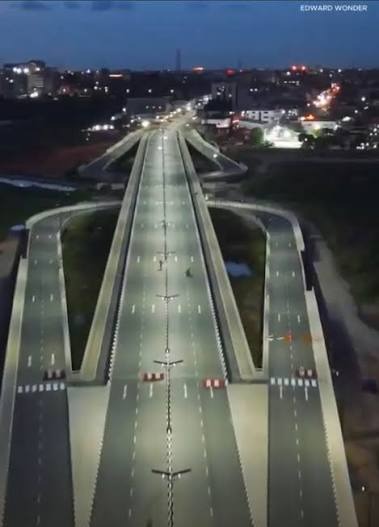
It is in response to this long-standing challenge that the Ojota–Opebi–Link Bridge was conceived, completed, and commissioned. The project, which was originally conceived by the administration of former Governor Bola Tinubu, was revived and officially flagged off in January 2022 by Governor Babajide Sanwo-Olu. This makes it both a legacy project and a continuation of long-term urban planning in Lagos.

The bridge project is a hybrid infrastructure system, consisting of roads, elevated bridge sections, and approach structures. It has a total length of 3.89 km, and a road length of 2.83 km, with pedestrian walkways, bicycle lanes, drainage systems, and space for emergency parking/breakdowns, among others. The design reflects modern urban mobility standards, incorporating non-motorized transport infrastructure.

The project is to create an alternative route that redistributes traffic, reduces congestion, and improves connectivity across key parts of the city. But beyond this immediate objective lies a deeper significance. This project represents a shift from reactive traffic management to proactive urban planning. Instead of merely responding to congestion as it occurs, it addresses the structural gaps that create congestion in the first place.

The bridge establishes a direct connection between Ojota and Opebi, extending towards Allen and linking seamlessly with surrounding road networks. In doing so, it opens up a new corridor of movement—one that reduces reliance on overburdened routes and provides commuters with viable alternatives.

This is critical. Because in urban transportation, flexibility is key. A city with limited route options will always experience bottlenecks. A city with multiple, interconnected pathways can distribute traffic more efficiently. By expanding the network, this project enhances the overall resilience of Lagos’ transportation system.

There are also measurable benefits that emerge from such interventions. Travel time is reduced. Commuters who previously spent extended periods navigating congested routes now have access to a more direct and efficient pathway. This has implications not only for individual convenience but for economic productivity.

When time is saved, it can be redirected towards more productive activities. When movement becomes predictable, planning becomes easier. And when transportation costs decrease, businesses operate more efficiently.

Another important dimension is accessibility. The bridge improves connectivity between residential areas and commercial centres. It facilitates easier movement between neighborhoods such as Opebi, Allen, Maryland, and Ojota—areas that play significant roles in the economic life of Lagos.

This enhanced connectivity supports commerce, encourages investment, and contributes to the overall dynamism of the city. A city with limited route options will always experience bottlenecks. A city with multiple, interconnected pathways can distribute traffic more efficiently.

By expanding the network, this project enhances the overall resilience of Lagos’ transportation system.


However, the significance of this bridge extends beyond its immediate function. It reflects an important principle in urban development: infrastructure must anticipate growth.


Lagos is not static. Its population will continue to increase. Its economic activity will continue to expand. The demands on its transportation system will only intensify. Projects like this are therefore not just solutions for today—they are investments in the future. They create capacity. They provide flexibility. They position the city to manage growth more effectively.


There is also a broader lesson here about the nature of development.

Infrastructure of this scale is rarely the result of short-term thinking.

It requires vision. It requires planning. And perhaps most importantly, it requires continuity.


Many of the challenges this bridge addresses have been known for years. The need for improved connectivity within this corridor has long been recognised. What we see today is the culmination of that recognition—translated into action.


It is also important to emphasize the role of road users. The effectiveness of any transportation system depends, in part, on how it is used. Responsible driving, adherence to traffic regulations, and respect for shared spaces all contribute to the efficiency of the system. Infrastructure provides the framework, but behaviour determines outcomes.


By and large, the coming of the Ojota–Opebi Link Bridge represents more than the addition of a new structure to the cityscape.

It represents a strategic intervention in one of the most critical aspects of urban life—mobility. It reflects an understanding that growth must be supported by systems that enable movement, reduce friction, and improve efficiency.


For Lagos, it is a step towards a more connected city. A city where movement is easier. Where time is better utilised. And where the experience of urban life is enhanced.

With the current pace of infrastructure development across the state, it is quite clear that Lagos is on the fast track toward bridging its road infrastructure deficit. The once familiar narrative of bad and broken roads is now changing for the better.

Meanwhile, residents and commuters are urged to make good use of all public infrastructures being developed across the state. The way to safeguard public property is for all to be vigilant and report vandals to police or community leaders for appropriate action.

It is only when everyone realizes that the manhole covers are meant to serve our interests that the trend of vandalism will be maximally contained.

Under whatever guise, no one has any right to damage, steal, or vandalise public infrastructure. A state that has many needs to use its scarce resources can ill afford to waste such resources on replacing vandalized property by the same citizens it is working hard to serve.

Ogunbiyi is Director, Public Enlightenment and Community Relations, Ministry of Information & Strategy, Alausa, Ikeja.

2027: Nigerians don’t want one-party rule – Peter Obi, Amaechi

0


Opposition figures staged a peaceful #OccupyINEC protest in Nigeria’s capital on Wednesday, warning against what they see as a slide toward one-party rule and urging the government to protect the country’s democracy.

The protest, held at the headquarters of the Independent National Electoral Commission (INEC), drew opposition political leaders and supporters who say they are increasingly concerned about the direction of the country’s democracy and the credibility of the electoral process ahead of the 2027 election.

Speaking at the protest ground, Peter Obi, Labour Party presidential candidate in the 2023 election, said, “We are simply holding a peaceful demonstration to say that we cannot have a one-party system in our country. It is a democratic nation.

“We are appealing to those in government: do not destroy our democracy. We need it for our children and for generations to come. Nigerians must have the freedom to choose who leads them. This is critical for our country.”

Former Minister of Transportation and ex-Rivers State governor, Rotimi Amaechi, addressed the crowd, taking aim at the current administration.

“Imagine a president who came to power and the first thing he did was to change the national anthem… and gave us hunger.

“He said he would give us roads; up till now, they have not given us roads. The money is gone. By the grace of God, they will lose the election,” Amaechi said.

Organisers claim the protest is part of a larger effort by opposition figures and civic groups to safeguard democratic institutions and ensure fair elections.

They insisted that the demonstration remained peaceful, even while security personnel, who were plainly outnumbered, patrolled the INEC facility.

Sun

NBA commends Ododo on rule of law, good governance

0


The Lokoja Branch of the Nigerian Bar Association (NBA) has commended Governor Ahmed Usman Ododo for his commitment to the rule of law and the promotion of good governance across the state.

The commendation was given during a courtesy visit to the Governor at the Government House, Lokoja, on Wednesday, where the leadership of the association praised the administration’s strides in governance and institutional strengthening.

Speaking on behalf of the association, the Chairman of the branch, Barrister Sumaila Abbas, applauded Governor Ododo for what he described as verifiable achievements across critical sectors of the economy. He noted that the administration’s respect for the rule of law has reinforced public confidence in governance and democratic institutions in the state.

Barrister Abbas further assured the Governor of the association’s continued support in advancing policies that promote justice, equity, and development. He emphasised that while the NBA remains a partner in progress, it will not hesitate to offer constructive criticism through appropriate channels whenever necessary, in line with its role as a watchdog of society.

Responding, Governor Ahmed Usman Ododo expressed appreciation to the association for its support and recognition of his administration’s efforts. He reaffirmed his commitment to upholding the rule of law and sustaining policies that promote transparency, accountability, and inclusive development.

The Governor also called on the NBA to strengthen its collaboration with the State Ministry of Justice, particularly the Commissioner for Justice and Attorney General, to further enhance the justice delivery system in Kogi State.

Governor Ododo reiterated his resolve to continue to give his best in service to the people, stressing that his administration remains focused on building a just, secure, and prosperous state.

The visit underscores the importance of synergy between government and professional bodies in deepening democratic governance and strengthening institutions in Kogi State.

Sun

Group urges Sultan to issue Fatwa against terrorism

0


A civic group, One Nation One Law, has called on the Sultan of Sokoto, Muhammadu Sa’ad Abubakar, to issue a strong religious declaration condemning terrorism as part of efforts to tackle Nigeria’s lingering insurgency.

In a statement signed by its President, Benson Sunday, the group said the country’s counter-terrorism strategy must move beyond military operations to include decisive ideological engagement, noting that extremist groups such as Boko Haram and the Islamic State West Africa Province (ISWAP) continue to carry out attacks despite years of security interventions.

The group described the persistence of attacks, including those carried out during major religious periods, as a sign that the current approach is inadequate.
According to the statement, terrorism in the country is driven not only by armed fighters but also by extremist ideologies that aid recruitment and attempt to justify violence.
“The war cannot be won by bullets alone. It is a battle of ideas as much as it is a battle of force,” the group said, stressing the need to confront and dismantle radical narratives.

It urged the Sultan, as a leading Islamic authority, to issue a clear and widely communicated fatwa denouncing terrorism, arguing that such a move would help counter misinterpretations of religion and weaken the ideological base of insurgent groups.

The group warned that silence or lack of clarity from influential religious leaders could embolden extremist elements, stating that “ambiguity empowers extremism.”
Reaffirming its position on national unity, the group also called for a unified legal system across the country, insisting that multiple legal frameworks weaken governance and hinder effective justice delivery.

It further expressed concern over what it described as mixed signals in the anti-terror war, particularly suggestions of possible leniency or pardon for suspects, warning that such narratives could undermine accountability.
While commending the Nigerian Armed Forces for their sacrifices, the group maintained that military efforts alone would not end terrorism if the underlying ideologies are not addressed.
The group also highlighted the humanitarian toll of the insurgency, including widespread displacement, loss of lives and destruction of communities, and called for urgent, comprehensive action to end the crisis.

Sun