Home Blog Page 519

UNICEF, stakeholders spark health sector reform across states in Nigeria

0


Stakeholders in healthcare delivery sector have identified the lack of effective and efficient leadership, governance and poor management as foremost contributors to the unsavory health outcomes in Nigeria. The stakeholders spoke at the stakeholders’ workshop in Yola, Sokoto and Ilorin under the auspices of the United Nations Children’s Fund (UNICEF) led health governance strengthening projects organised in partnership with Development Governance International (DGI) recently.

The project tagged, Enhancing Leadership, Governance and Management Capacities (ELGMC) was put in place to enhance the governance and management capacities of the State Primary Health Care Development Agencies (SPHCDAs) and other Primary Health Care (PHC)-related agencies in the pilot states of Adamawa, Kwara, and Sokoto. The aim is to support evidence-based policy, planning, financing, implementation, and monitoring of gender- and adolescent responsive PHCs and Reproductive, Maternal, Newborn, Child and Adolescent Health+ Nutrition (RMNCAH+N) services, as well as addressing Gender Based Violence (GBC). The project will assess the leadership, governance, and management capacities of the relevant agencies involved in PHC management in the target states. It will also develop an organisational capacities-strengthening plan for addressing the identified gaps with agreed interventions. ELGMC will also address identified leadership, governance, and management capacity gaps by implementing organisational capacity strengthening plans through competency management and leadership training, tools, policy development, and focused mentoring.

The stakeholders noted that despite the measureable progress and some improvement in health indicators in Nigeria, there are still challenges including the significant and noticeable gaps in access to healthcare, high out-of-pocket expenses, deficiencies in health infrastructure, workforce retention and funding.

It was however noted that the most crucial operational challenge is leadership, governance and management. This, according to them is noticeable in key areas including weak policy guidance, sub optimal system functionality, ineffective regulations, weak inter-agencies and sectorial collaboration and synergy, poor oversight and low accountability.

The project Lead and UNICEF Health Specialist, Dr. Emmanuel Emedu, noted the significance of the ELGMC project while addressing programme coordinators, programme officers and consultants. He explained that effective leadership, governance and management of health system is a must “because when you are able to establish robust and sound management and governance system that is resilient, health service delivery will be seamlessly integrated into the world of health development agenda of states.”

Deputy Governor and Chairman Adamawa State PHC Task Force, Prof. Kaletapwa Farauta who spoke at the state stakeholders workshop for the project in Yola, strengthening leadership, governance and management in PHC is fundamental to improving planning, implementation, monitoring, and accountability.

“These elements are essential if we are to achieve improved access and utilization of high impact RMNCAH+N services across our state.” He expressed deep appreciation to UNICEF and DGI for the commitment in strengthening health system in Adamawa State. “Their partnership is critical to build a stronger, more resilient and people oriented Primary Health Care system that delivers quality services,” she noted.

The Commissioners for Health in Kwara State, Dr. Amina El-Imam and his Sokoto State counterpart, Dr. Faruk Wurno who were also key participants at their respective state stakeholders’ workshops, were also upbeat on the transformative possibilities of the project for their states. While El-Imam stated that experience has shown that technical skills are not in short supply. “What is deficient are the soft skills. We need to create more values, more results and translate programmes and policies to meaningful benefits for the state and its people through effective leadership and governance and efficient management. We must start implementing what we learn in this workshop immediately and support the project to improve our health environment.”

Wurno commended UNICEF and DGI for the project and expressed confidence that it will assist the state to achieve improved capacities in the health care management. “The state government will provide necessary support for the 5 goals of the project to be achieved in the state.”

On the overall impact of the project, Chief Executive Officer, DGI, Dr. Gafar Alawode said, the project will be iterative in nature and will involve all the critical stakeholders. “In each of the three states, we will assess the capacities to develop policies, implement it and at the same time to have the necessary leadership attitude towards improving overall health outcomes; in doing the assessment, we are going to work with the stakeholders to identify what the challenges are in terms of knowledge gaps in terms of leadership gaps, in terms of skills gap and in terms of the necessary tools to work with,” he added.

The stakeholders’ workshop to intimate key participants drawn from ministries, departments, agencies, local governments and non-governmental organisations, discussed the methodology of the projects and elicited buy in, participation and cooperation of stakeholders. The review of organisation assessment tools, training of state teams, pre-assessment engagement with leaders of key institutions and online self-assessment with key stakeholders have already been concluded.

The next stages will involve focus group discussion with management staff of focus institutions, key informant interviews with key senior officials, data analysis and the development of draft capacity assessment report. These will be followed by the design and implementation of capacity strengthening plan as well as the focused mentoring and handholding.

Alawode however commended demonstrated passion and commitment of the leadership of health management in the three pilot states for the project.

Sun
Tomato farmers predict steady price hike from May Price-hike

0


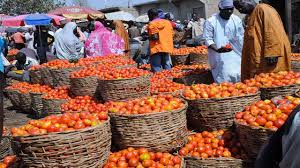
The Tomatoes Growers and Processors Association of Nigeria (TOPAN) has predicted a steady increase in the price of the produce between May and June 2026.

The Kaduna State Chairman TOPAN, Mr Rabiu Zuntu, disclosed this in an interview with the News Agency on Friday in Lagos.

Zuntu noted that although there is no particular time for tomatoes planting season up north, seasonal weather variations can affect the production of the produce.

“Although we can plant tomatoes all-year-round, we cannot assure quality harvest all-year-round.

“Some farmers are harvesting now, while others are transplanting, and others are harvesting.

“Tomatoes are still available for sale but the price of the produce is gradually on the increase.

“Come May/June, the prices of tomatoes will be very expensive, so now is a good time to stock up the produce. There’s always a scarcity within that period.

“This is because of the nature of the weather in the north around that period, the weather is usually very hot and tomatoes cannot resist such hot temperature,” he said.

Zuntu said the price of tomatoes have started rising up in the north.

“A 50kg rafia basket of tomatoes sells from N20,000 as against N7,000 to N10,000 that was sold earlier in the year.

“While a crate of tomatoes up north is sold between N10,000 and N15,000 as against N5,000 to N6,500 sold earlier in the year.

“In most part of Kano State, where there is bumper harvest, they are rounding off their harvest. So, tomato is not that available there and most buyers have turned to where they can find it now, mostly within Kaduna State and some parts of Plateau State.

“So, that’s why the supply has decreased and the tomato supply and cost is determined by the law of demand and supply,” he said.

It was reported that a 50kg basket of tomatoes in Lagos, at the moment, sells between N40,000 and N60,000 depending on the size and quality.

Police arrest 24-year-old cultist linked to armed robbery in Cross River

0


The Cross River State Police Command has apprehended a twenty four years old cultist – Fode Bassey in connection with armed robbery, cultism, and unlawful possession of firearm.

Bassey was allegedly part of a four man gang that attacked a victim on the 29th of March, 2026, stealing a solar battery and cash totalling over five hundred thousand naira.

Confirming the attack, the Cross River State Police Public Relations Officer ASP Sunday Eitokpah released a statement detailing the operation.

According to him, “On 1st April 2026, at about 10:13hrs, following a report made on 29th March 2026, one Edim was attacked by a group of four armed youths.

“The assailants, armed with cutlasses and a firearm, inflicted injuries on the victim’s left hand and threatened him with death if he resisted.

“They stole a bag containing a Delight solar battery valued at One Hundred and Eighty-Five Thousand Naira (₦185,000.00) and cash totaling Three Hundred and Twenty-Six Thousand Naira (₦326,000.00).

“Acting swiftly, police detectives tracked and arrested Fode Bassey “M”. The suspect confessed to the crime and revealed that he and his accomplices are members of the Vikings Secret Cult Confraternity.

“A locally fabricated pistol was recovered from his possession. Investigation is ongoing, with efforts intensified to apprehend the remaining suspects”, he said.

ASP Eitokpah assured residents that the command remains unwavering in its commitment to the safety of lives and property across the State.

While urging members of the public to remain vigilant, he solicited for any useful information to aid ongoing investigations.

Sun

42-yr-old married lady recently declared missing, found with a man inside Ondo hotel room

0


A 42-year-old married woman, Mrs. Tilewa Olatunde Funke, who was reported missing on Friday, April 3, 2026, has been found in a hotel room in Ondo State with a 55-year-old man identified as Isa Alaba. Her family said she left Ilara-Mokin for Akure at about 10 a.m. that day and could not be reached afterward, as her phone remained switched off.

The disappearance raised alarm among her relatives and the local community, prompting a search by security operatives. She was eventually traced to a hotel in the Ugbe-Akoko area, roughly 124 kilometres from Ilara-Mokin.

A source revealed, “She was not abd¥cted as initially feared. She left on her own without informing anyone and was later found with the man in the hotel.”

The Police Public Relations Officer, DSP Jimoh Abayomi, confirmed the incident and cautioned the public against spreading misinformation or taking actions that could cause unnecessary panic. “This situation created avoidable alarm and diverted resources meant for real emergencies,” he said.

DSP Abayomi also stressed the importance of family communication, noting that many such situations could be resolved through dialogue rather than escalating into public concern.

Police Debunk ‘Terror Attack’ Video in Abuja, Arrest Suspect for Incitement I’m

0


The Nigeria Police Force has dismissed as false a viral video alleging an ongoing terrorist attack in the Federal Capital Territory (FCT), Abuja, describing the claims as misleading and malicious.

The statement was signed by Force Public Relations Officer, Anthony Okon Placid.

In a statement, the Force said no such incident occurred, stressing that the video was deliberately manipulated using unrelated footage sourced online to create panic, incite fear among residents, and undermine confidence in the security architecture of the nation’s capital.

Following preliminary investigations, police operatives arrested a suspect, identified as Pam Joseph, in connection with the creation and dissemination of the false content. The arrest, according to the police, was based on credible intelligence and digital forensic analysis linking the suspect to the video’s origin and circulation.

The police emphasized that while citizens have the right to freedom of expression, such rights do not extend to spreading misinformation capable of threatening public peace and national security. It urged the public to verify information before sharing and avoid actions that could incite fear or disorder.

The suspect remains in custody and will be charged to court upon the conclusion of investigations.
Reaffirming its commitment to maintaining public order, the police said it would continue to monitor digital platforms and take decisive action against individuals involved in spreading false or misleading information.

Nigerian Stock Market Extends Gains Despite Weak Trading Activity

0


The Nigerian equities market maintained its upward trajectory, closing on a positive note as the benchmark index rose by 0.28 percent, pushing the year-to-date return to 30.56 percent.

Despite the gain, market activity weakened significantly, with trading volume dropping by 35.13 percent, reflecting subdued investor participation.

Total trade value also declined by 2.10 percent. Market breadth closed negative, as 27 stocks recorded losses compared to 24 gainers, suggesting a mildly bearish undertone beneath the overall market growth.

Top gainers for the session included TRANEXPR and INTENEGINS, while LIVINGTRUST led the decliners, followed by RTBRISCOE.

Sectoral performance showed that the financial services industry remained the primary driver of market activity, buoyed by strong trading in banking stocks. Notably, ACCESSCORP emerged as the most traded stock, rising from its position as the second most traded in the previous session.

On the corporate front, the Nigerian Exchange (NGX) announced the delisting of DN Tyre & Rubber Plc and Greif Nigeria Plc due to non-compliance with regulatory requirements.
Fixed Income Market Shows Mixed Sentiment
In the interbank segment, funding conditions remained stable, with the Open Repo Rate (OPR) and Overnight (O/N) rate unchanged at 22.00 percent and 22.31 percent, respectively.

The local bond market recorded mild bullish sentiment, as yields declined marginally by an average of 1.9 basis points.

Demand was concentrated on 2023 and 2034 maturities, while mid-tenor instruments between 2029 and 2032 experienced some selling pressure, resulting in a 7 basis points increase in yields.

The Treasury bills market remained robust, extending strong demand from the primary auction into the secondary market. The auction recorded a bid-to-cover ratio of 4.04 times, with the highest demand seen in the 364-day tenor at 4.8 times, leading to a 23 basis points drop in the stop rate. Continued buying interest in the secondary market further drove yields lower by 14.2 basis points.
Conversely, the Eurobond market faced a risk-off sentiment, with yields rising by an average of 5.6 basis points.

Naira Appreciates as Reserves Dip Slightly
In the currency market, the naira appreciated by 2.0 percent against the US dollar to close at ₦1,358.82. The USD/NGN pair strengthened by 1.6 percent month-to-date and 4.8 percent year-to-date.
However, Nigeria’s foreign reserves declined marginally by 0.1 percent, as the Central Bank of Nigeria continued its foreign exchange interventions.

Meanwhile, global oil prices rose, with Brent crude oil gaining 4 percent amid mixed investor reactions to developments surrounding a truce between the United States and Iran.

Travel advisory doesn’t reflect overall security situation across Nigeria –FG

0


The Federal Government has faulted the United States advisory directing the departure of non-emergency personnel from its embassy in Abuja as a precautionary measure based on internal protocols.

It reassured Nigerians and international partners that public institutions remain fully operational, with no disruption to governance, economic activity, or daily life.

In the statement yesterday, Minister of Information and National Orientation, Mohammed Idris, the government also highlighted ongoing, measurable gains in security operations across multiple regions, driven by coordinated military efforts, intelligence-led interventions, and strengthened inter-agency collaboration.

“These efforts continue to reduce threats in affected areas while sustaining stability in the majority of the country.”

He said sustained security operations, combining military action, intelligence-led interventions, and closer inter-agency coordination are producing tangible gains.

“Recent efforts in several affected regions have disrupted criminal networks, limited the activities of armed groups, and improved safety in vulnerable communities.

“Our security agencies remain actively engaged in protecting lives and property, and the results of these efforts are increasingly evident.”

Acknowledging that every country has the right to issue travel advisories based on its own assessment, the Federal Government also urged balanced and up-to-date reporting that reflects the progress being made.

“We encourage our international partners to continuously engage with Nigerian authorities to obtain a more comprehensive and current understanding of the situation on the ground,” Idris said.

The Federal Government however reiterated its commitment to sustaining security improvements, protecting citizens and visitors, and assured the international community that Nigeria remained a safe and welcoming destination for all.

In a security alert issued on April 8, 2026, the United States Diplomatic Mission to Nigeria said the authorisation was as a result of the deteriorating security situation in Abuja.

The United States Diplomatic Mission to Nigeria said: “On April 8, 2026, the U.S. Department of State authorised the voluntary departure of non-emergency U.S. government employees and family members from U.S. Embassy Abuja due to the deteriorating security situation. The U.S. Embassy in Abuja will remain open but will have limited ability to provide emergency services to U.S. citizens in Nigeria. The Embassy, in consultation with the State Department, will reassess this status regularly. The U.S. Consulate General in Lagos will continue to provide routine and emergency services to U.S. citizens in Nigeria.”

The United States Diplomatic Mission to Nigeria further said the Department of State Travel Advisory for Nigeria remained at Level 3, recommending that travellers reconsidered travel to Nigeria due to crime, terrorism, civil unrest, kidnapping, armed gangs, and inconsistent availability of health care services.

The United States Diplomatic Mission to Nigeria advised United States nationals on actions to take which included: “Have a personal emergency action plan that does not rely on U.S. government assistance.

“U.S. citizens in Abuja should consider departing if you do not need to remain for emergency or essential purposes.

“Take advantage of commercial transportation options, if you wish to depart Nigeria.

“Ensure your U.S. passport is valid and accessible in case of emergency departure.

“Keep family and friends informed of your travel plans and whereabouts.

“Enroll in the Smart Traveler Enrollment Program (STEP) to receive security updates.

“Monitor local media for breaking news on the security situation.

“Avoid crowds and demonstrations.”

The United States Diplomatic Mission to Nigeria likewise directed United States nationals to be aware of their surroundings, keep a low profile, review their personal security plans and keep cell phone charged in case of emergency.

Other actions as directed by the United States Diplomatic Mission to Nigeria were that United States nationals should vary travel routes and times, especially when going to and from the airport.

“For additional information about threats and risks to travelers in Nigeria, please visit the Nigeria Destination Information page on travel.state.gov,” the United States Diplomatic Mission to Nigeria also said.

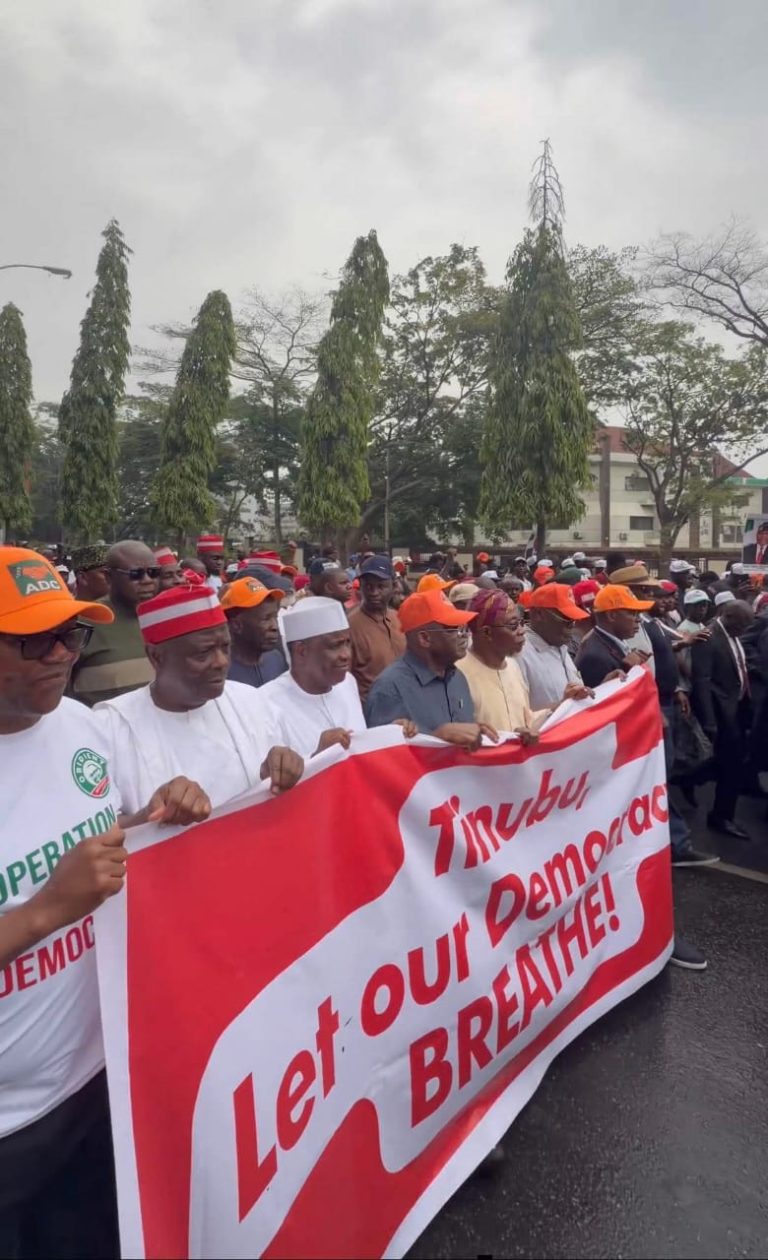
David Mark-led ADC prays court to reverse INEC’s decision

0


Senator David Mark-led leadership of the African Democratic Congress (ADC) has prayed the Federal High Court in Abuja to reverse the decision of the Independent National Electoral Commission (INEC).

INEC officially removed the names of Senator Mark and Ogbeni Rauf Aregbesola as national chairman and national secretary respectively of the African Democratic Congress (ADC) from its official portal and website on April 1.

Mark also urged Justice Emeka Nwite to grant an order of mandatory injunction setting aside INEC’s refusal to attend or monitor the ADC’s congresses or convention, pending the hearing and determination of the instant suit.

He equally sought an order of mandatory injunction directing INEC to forthwith restore and maintain the names of all ADC’s National Working Committee (NWC) in its records and portal, prior to the institution of the suit, and pending the hearing and determination of the substantive suit.

The motion on notice, dated and filed on April 7 was filed by Mark’s new lawyer, Sulaiman Usman.

The motion by the former Senate president, who is the embattled national chairman of ADC, is in reaction to the March 12 Court of Appeal’s judgment in a suit instituted by Nafiu Bala Gombe before Justice Nwite.

The motion, which sought three reliefs, was brought pursuant to Order 26, Rules 1, 2, 3 and 4 of the Federal High Court (Civil Procedure) Rules, 2019; the inherent jurisdiction of the court and under the equitable jurisdiction of the court to grant injunctive reliefs.

The reliefs sought include; “an order of mandatory injunction, setting aside the decision, act, or directive of the respondent removing the names of the applicant’s National Working Committee from its official portal and the decision of refusal to attend or monitor the applicant’s congresses or convention pending the hearing and determination of the suit.

He sought an order of mandatory injunction, directing INEC to forthwith restore and maintain records of the names of Senator David Mark as National Chairman and Ogbeni Rauf Aregbesola as National Secretary, as well as all members of the National Executive Committee.

He sought an order restraining INEC from tampering with, or otherwise interfering with the said leadership records of the 1st defendant, recognising or giving effect to any contrary or competing claims, pending the final determination of this suit.”

Giving a seven-ground argument why the application should be granted, the lawyer submitted that the Court of Appeal, in its ruling delivered on March 12, ordered the parties to maintain the status quo ante bellum.

Usman argued that the “status quo ante bellum” referred to the last lawful, uncontested state of affairs prior to the institution of the suit.

“As at Sept. 2, 2025, when this action was instituted, the 2nd defendant (Senator David Mark) was the recognised National Chairman of the 1st defendant.

“The said leadership structure had already been constituted.

“The plaintiff had already resigned his prior office and had no subsisting role within the party,” he said.

The lawyer further stated that INEC, acting under a misapprehension of the Court of Appeal order, removed the names of the said leadership from its portal.

He said the electoral umpire then adopted a position of non-recognition and created a vacuum in the leadership structure of ADC.

Usman argued that INEC’s actions were inconsistent with the true meaning of the Court of Appeal order, capable of rendering the subject matter of the suit nugatory and prejudicial to Mark and Aregbesola.

“The law is settled that a mandatory injunction may be granted at an interlocutory stage to restore a party to the position wrongfully altered.

“This is a proper case for the exercise of the equitable jurisdiction of this honourable court,” the senior lawyer submitted.

Also, in another motion on notice dated April 2 but filed April 7 on Mark’s behalf, the lawyer sought an order granting accelerated hearing of the suit.

Usman, who prayed the court for an order abridging the time within which the parties are to file and exchange all processes in the suit, also sought an order directing that the suit be heard on a day-to-day basis until its final determination.

On why the case should be given accelerated hearing, the lawyer stated that the suit had raised fundamental issues affecting the leadership structure of the ADC, a registered political party.

He said the subject matter of the suit has far-reaching implications for democratic governance and political participation.

According to him, the Court of Appeal has already directed that the matter be heard expeditiously.

He said the present uncertainty surrounding the leadership of ADC is affecting its internal administration, impeding its participation in political activities and creating avoidable institutional confusion.

Usman further stated that the continued pendency of the suit is capable of rendering the subject matter nugatory, encouraging parallel structures and conflicting claims.

The lawyer, who said that the court has the power to accelerate proceedings in deserving cases, said it is in the interest of justice to determine the matter without delay.

Justice Nwite had, on Sept. 4, 2025, declined to grant an application seeking to stop Mark-led leadership of the ADC, pending the hearing of the substantive suit.

The judge had refused the three prayers sought in the ex-parte motion filed by Mr Gombe, a former Deputy National Chairman of ADC, and moved by his lawyer, Michael Agber.

Rather, the judge had directed Gombe, the plaintiff in the suit, to put all the defendants on notice to show cause why the motion should not be granted.

The judge then adjourned the matter until Sept. 15, 2025, for the defendants to show cause.

However, the Mark-led ADC approached the Appeal Court to challenge the lower court’s jurisdictional power to hear the suit and the appellate court ordered the parties to go back to the trial court and maintained status quo ante bellum pending the determination of the case.

Gombe, in the suit marked: FHC/ABJ/CS/1819/2025, had sued ADC, Mark, Aregbesola, INEC and Chief Ralph Nwosu as 1st to 5th defendants respectively.

Nwosu was the former ADC national chairman who stepped down for David Mark leadership.

TUC urges FG to channel oil windfall to local refineries

0


The Trade Union Congress of Nigeria (TUC) has urged the Federal Government to deploy excess crude oil revenue to subsidise local refineries, warning that failure to act could push the price of Premium Motor Spirit (PMS) to as high as N2,000 per litre.

TUC President, Festus Osifo, made the call during a press briefing in Abuja on Thursday, highlighting the strain rising fuel costs are placing on Nigerian workers.

“The persistent increase in petrol prices, driven by global crude volatility and naira depreciation, is worsening economic hardship for workers across the country,” Osifo said.

He attributed the surge partly to international tensions involving the United States, Israel, and Iran, which have disrupted global oil supply, and warned that the weakening naira is compounding inflationary pressures and eroding the real value of salaries.

To address the crisis, Osifo proposed that the government channel at least 60 percent of excess crude revenue—generated when international oil prices exceed the 2024 budget benchmark of $64.85 per barrel—into subsidising crude supplied to domestic refineries, including the Dangote Refinery and other modular facilities.

He explained: “Even if government-owned refineries are fully operational, petrol prices may not drop significantly unless crude supply is subsidised. Selling crude at international rates to local refineries still results in high pump prices.”

Osifo also called for stabilising the naira, noting that exchange rate stability would reduce the cost of imported energy and other goods. He reiterated TUC’s support for the commercialisation of state-owned refineries, stressing that reducing government interference could improve efficiency and profitability in the sector.

Addressing alternative energy, the TUC president expressed concern over the slow development of Compressed Natural Gas (CNG) infrastructure, acknowledging the policy’s potential but warning that its short-term impact remains limited due to inadequate refuelling facilities.

On national security, Osifo lamented the persistent insecurity across Nigeria, emphasizing that no meaningful development can occur in an unsafe environment. While commending the efforts of the armed forces, police, and intelligence agencies, he urged the government to equip security operatives with modern tools, intelligence, and technology to tackle insurgency and criminality more effectively.

On labour matters, Osifo noted the intense pressure facing workers in both public and private sectors.

He revealed ongoing discussions around wage reviews and collective bargaining agreements to align with current economic realities, stressing the need for broader interventions to protect workers from inflation and rising living costs.

“The cost of petrol is heading towards N2,000 per litre, depending on your location. It has deeply affected the purchasing power of Nigerian workers,” Osifo said.

“Let the government take at least 60 percent of excess crude revenue and use it to subsidise crude supplied to refineries. Subsidising production directly ensures immediate reduction in petrol prices.”

TUC plans to formally communicate its proposals to the Federal Government, including the Presidency, to ensure prompt implementation of measures to ease the hardship facing Nigerians.

Edo, Bauchi, Ondo, Taraba, Ebonyi lead as Lassa fever deaths hit 167 in 2026

0


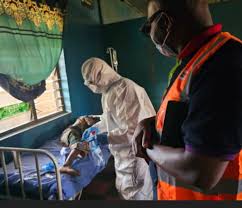
Lassa fever fatalities have risen sharply in 2026, in spite of a decline in new confirmed cases in the latest reporting week, the Nigeria Centre for Disease Control and Prevention (NCDC), said in its Epidemiological week 13 report released yesterday in Abuja.

The Commission disclosed that 167 deaths have been recorded in 2026, noting that the case fatality rate (CFR) is 25.2 percent, significantly higher than the 18.5 percent recorded during the same period in 2025.

According to the report, 26 new confirmed cases were recorded in week 13, a decrease from 51 cases reported in the previous week.

The cases were reported across seven states Edo, Bauchi, Ondo, Taraba, Ebonyi, Benue, and Kaduna.

However, the agency noted that the overall burden of the disease remained high, with a total of 663 confirmed cases out of 3,831 suspected cases reported across 22 states and 93 Local Government Areas in 2026.

”The number of suspected and confirmed cases has increased compared to the same period in 2025,” the report stated.

The NCDC identified Bauchi, Ondo, Taraba, Edo, and Benue as the most affected states, accounting for 85 per cent of all confirmed cases.

It added that young adults between the ages of 21 and 30 remained the most affected group, with a median age of 30 years.

The report also highlighted persistent challenges driving the high fatality rate to include late presentation of cases, poor health-seeking behaviour, and high cost of treatment.

Other factors the report said include poor environmental sanitation and low awareness levels in high-burden communities.

In spite of these concerns, no new infections among healthcare workers were recorded during the reporting week.

In response to the outbreak, the NCDC said it had activated a multi-partner Incident Management System to coordinate national response efforts.

Lassa fever It also said that the agency in collaboration with partners such as WHO, UNICEF, and MSF, had intensified surveillance, contact tracing, and public awareness campaigns.

It added that targeted interventions, including healthcare worker protection plan and infection prevention strategies, were being implemented in high-burden states.

The agency urged state governments to strengthen year-round community engagement and called on healthcare workers to maintain a high index of suspicion for Lassa fever to ensure early detection and treatment.

Public health experts are of the opinion that rising fatality rate in spite of improved response efforts, underscore the urgent need to address systemic gaps in early diagnosis and access to care.

Lassa fever is an acute viral haemorrhagic illness caused by the Lassa virus and is primarily transmitted through contact with food or household items contaminated by rodents.

Nigeria records cases of the disease annually, particularly during the dry season when human exposure to infected rodents increases.

Health authorities say early detection, prompt treatment and strict infection control measures remain critical to reducing mortality and preventing outbreaks.