Home Blog Page 507

Court fixes May 26 for DSS to open case against Malami, Son

0


The Federal High Court sitting in Abuja has fixed May 26 for the Department of State Services (DSS) to open its case of alleged terrorism against the immediate-past Attorney General of the Federation (AGF), Abubakar Malami, SAN, and his son, Abdulaziz.

It was reported that the DSS is prosecuting Malami and his son on allegations bordering on terrorism offences before Justice Joyce Abdulmalik.

At the resumed hearing, Akinlolu Kehinde, SAN, who appeared for the prosecution (DSS), told the court that an amended five-count charge had been filed to replace an earlier one on which they had been arraigned.

Kehinde applied to withdraw the earlier charge and requested the amended one be read to the defendant for the pleas to be taken afresh.

Lawyer to the defendants, Shaibu Aruwa, SAN, confirmed that his clients were served with the amended charge and agreed that the fresh charge be read to the defendants.

Malami and his son are alleged to have in December 2025, connived to commit acts of terrorism.

The were accused of having in their possession and without licence, a Sturm Magnum 17 – 0101 firearm, a 16 Redstar AAA 5’20 live rounds of cartridges and 27 expended Redstar.

When the charge was read out to Malami and his son, both pleaded not guilty, following which Kehinde sought a date for the commencement of trial.

Aruwa did not object to a date for trial, but prayed the court to allow the defendants remain on the bail earlier granted them by the court, which conditions they had met.

With Kehinde not opposing Aruwa’s oral application, Justice Abdulmalik held that the defendants should continue on the bail earlier granted them on Feb. 27 which conditions they had met.

The judge then adjourned the matter until May 26 and June 15 for trial.

In count one of the amended charge, Malami and Abdulaziz were alleged to have, sometime in December 2025, at Geeze Phase II Area, Birnin Kebbi LGA, Kebbi, engaged in preparation to commit acts of terrorism.

They were alleged to have possessed and without license, a Sturm Magnum 17 – 0101 firearm, Sixteen (16) Redstar AAA 5’20 live rounds of Cartridges and Twenty-Seven (27) expended Redstar.

The offence is said to be contrary to and punishable under Section 29 of the Terrorism (Prevention and Prohibition) Act, 2022.

The prosecution accused them of possessing Sixteen (16) Redstar AAA 5’20 live rounds of Cartridges without a license contrary to Section 8 (1) (b) (ii) of the Firearms Act, CAP F28, Laws of the Federation of Nigeria, 2004, among others.

Israel indicts woman for spying for Iran

0


Israel’s State Attorney’s Office on Wednesday filed an indictment against an Israeli woman suspected of committing security offences on behalf of Iran, said the Israel Police.

The defendant, Shomou Abed, an Arab Israeli from the northern city of Nazareth, was arrested in March in a joint operation by police and the domestic security agency Shin Bet, the police said in a statement.
Investigation revealed that since October 2025, Abu Abed was in contact with an Iranian handler and carried out multiple tasks in exchange for payment.

The tasks allegedly included photographing sensitive sites, such as military bases and the Haifa oil refineries, and providing information about a former security official.

Grandfather in police net for impregnating granddaughter

0


The Niger State Child Right’s Agency says a 65-year old
grandfather, Musa Gado, is detained in Police custody for allegedly impregnating his 16-year old granddaughter, (name withheld).

The Director General of the gency, Hajiya Kaltume Mohammed, made this known to newsmen in Minna on Wednesday.

She said that a Deoxyribo Nucleic Acid (DNA) Test confirmed that Gado, the maternal grandfather of the victim from Mashegu LGA of the state, is the biological father of the four-month old baby delivered by his granddaughter.

According to the DG, the suspect made several fruitless attempts to abort the pregnancy.

She revealed that the victim’s father, Mr Lawal Nababa, registered a complaint in 2025 for alleged repeated sexual assaults on his daughter by her maternal grandfather.

The director general said at the time the matter was reported at the agency, the victim was six months pregnant and was kept in the agency’s custody until she delivered a baby boy in December 2025.

She said the teenager, whose parents are still alive, was reportedly taken by her maternal grandmother since childhood.

Mohammed however, said the suspect had denied responsibility of the act, thus forcing the agency to order for the DNA test that was conducted in a laboratory outside Nigeria at the cost of N500,000.

“When the girl was brought to the agency, she was actually six months pregnant. We had to do some medical checkups and she was kept under the custody of the agency from that time and now.

“She gave birth in December and we agreed that the only way we could get to the root of the matter and establish the fact was to go for the DNA test, which was agreed by both parties.

“After she gave birth, we waited for her to be strong before we went for the paternity test and within five weeks the result came out and it was announced that the grandfather was the father of the baby because the result was 99.9999 per cent positive,” she said.

The director general revealed that the suspect, currently in Police custody, would be charged to court after police had completed its investigation.

Mohammed also disclosed that the agency was currently handling six similar cases, including that of a father who had been having carnal knowledge of his biological daughter.

“Child molestation and rape is alarming in the state.

“I assumed office as the DG Niger State Child Rights Agency in November 2025, and honestly, we have had a lot of issues of rape where children were molested by their parents, neighbours and some people within the community.

“Right now, we have six cases we are prosecuting and the most important one we are handling right now is that of the 16-year old girl who was impregnated by her grandfather.

“This case was reported to the agency by the father of the girl on 5th October 2025,” she said.

RRS Arrests Suspected Vandal on Third Mainland Bridge, Recovers Stolen Road Studs

0


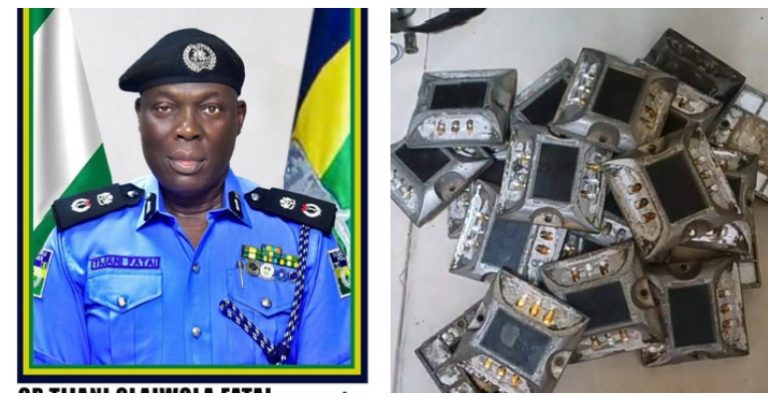
Operatives of the Rapid Response Squad (RRS) of the Lagos State Police Command have arrested an 18-year-old suspected vandal on the Third Mainland Bridge while allegedly tampering with critical road safety infrastructure.

The Police Public Relations Officer, SP Abimbola Adebisi, confirmed the incident in a statement issued on April 15, 2026, in Ikeja.

The arrest, which took place on April 6, 2026, at about 5:30 p.m., was part of ongoing efforts by the Command to safeguard public infrastructure and ensure the safety of road users across Lagos State.

The suspect, identified as Dogara John, was reportedly caught in the act of removing reflective road studs installed on the bridge to enhance visibility and guide motorists, particularly at night and during adverse weather conditions. A search conducted at the scene led to the recovery of 20 reflective studs in his possession.

Police authorities noted that the removal of such installations poses a serious risk to motorists, especially on high-traffic routes like the Third Mainland Bridge, where road studs play a crucial role in preventing accidents and maintaining lane discipline.

The Commissioner of Police, Lagos State Command, CP Tijani Fatai, reiterated the Command’s zero tolerance for vandalism and the destruction of public infrastructure. He emphasized that such acts not only endanger lives but also undermine efforts to maintain safety and order in the State.

He further urged residents to remain vigilant and report any suspicious activities, particularly around public facilities, to the nearest police station or via the Command’s emergency lines.

Nigerian Army Dismantles Bandit Camps in Bauchi, Sustains Offensive Operations

0


The Nigerian Army has recorded further gains in its ongoing clearance operations against bandit elements, sustaining coordinated offensives across identified criminal enclaves in Bauchi State.

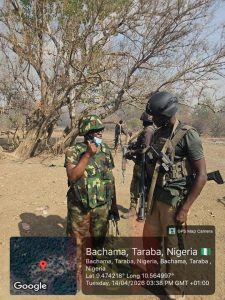
Troops of the 33 Artillery Brigade, working in conjunction with the Office of the National Security Adviser (ONSA), carried out a major clearance operation in the Dajin Madam Forest.

The mission led to the destruction of several bandit camps, including the notorious Azuge and Hari camps, significantly disrupting criminal activities in the area.
During the operation, a number of bandits were neutralized, while others fled under sustained military pressure. Troops also took into custody 19 family members of the bandits, comprising six women and 13 children. Several motorcycles used by the criminals for movement were destroyed, further weakening their operational capacity.
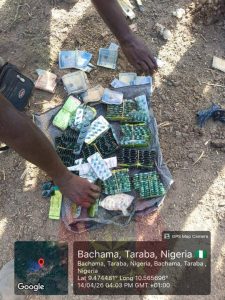
Recovered items from the operation included an AK-47 magazine, packs of tramadol, a police uniform, multiple military uniforms, and two horses—evidence of the group’s activities and attempts to impersonate security personnel.
Troops have since established a firm hold within the Dajin Madam Forest to consolidate gains and prevent the return of fleeing bandits.

In a related development, troops conducted a follow-up clearance operation in Mainamaji, exploiting recent airstrikes on bandit hideouts in the general area. The operation recorded no contact with criminal elements, indicating that sustained military pressure has significantly reduced bandit presence and movement.

The Nigerian Army reiterated its commitment to maintaining momentum in ongoing offensives until lasting peace and security are restored. It also urged members of the public to continue supporting security agencies with timely and credible information.

Ohanaeze Progressive Council Disowns Statement Against Former Governors’ Endorsement of President Tinubu for Second Term

0


***Says South-East Leaders Acted in Igbo Interest

The Ohanaeze Progressive Council (OPC) has vehemently disowned and condemned the reckless, ill-advised, and deeply disrespectful statement issued by the so-called Ohanaeze Youth Council (OYC) declaring the South-East Forum of Former Governors as “persona non grata” in Igboland.

In a press statement, the National President of the Ohanaeze Progressive Council, Comrade Ugo Benjamin, described the OYC’s action as “an act of shameless youthful arrogance and cultural sacrilege that has no place in the dignified traditions of Ndigbo.”

“This is not how Igbo people behave,” Comrade Benjamin said. “In Igboland, respect for elders, leaders, and statesmen is not optional—it is sacred.

“These elders are accomplished sons of the soil who have served our people with distinction.

“For a fringe group of loud-mouthed youths to wake up and declare them outcasts is not only laughable but a disgusting display of disrespect that spits on the very face of Igbo culture and tradition.”

Comrade Benjamin praised the leaders as “visionary statesmen who have consistently placed the interest of Ndigbo above personal ambition.”

He highlighted their developmental legacies, their proven track records in governance, and their commitment to the South-East even after leaving office.

“These are men have fought for Igbo interest at the national level with courage and intelligence.

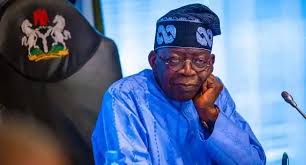
“Their decision to endorse President Bola Ahmed Tinubu for a second term is not betrayal—it is strategic patriotism of the highest order.

“It is a bold move to secure the future of our region through engagement, development, and inclusion rather than the childish confrontation and isolation peddled by the OYC,” he stated.

The OPC leader hailed President Bola Ahmed Tinubu as a transformative leader whose administration has opened new doors for the South-East.

“President Tinubu is a man of action, a unifier, and a visionary whose Renewed Hope Agenda is delivering real dividends across Nigeria.

“The South-East leaders who have endorsed him understand what many short-sighted youths cannot see: that the path to addressing marginalization is not through endless protest and isolation, but through strategic alliance with a President who respects competence and rewards loyalty.

“Their support is in the best interest of Ndigbo, and history will vindicate them,” Comrade Benjamin declared.

He accused the OYC of acting out of mischief, hunger for cheap relevance, and possible external sponsorship aimed at dividing the South-East ahead of 2027.

“These so-called youth leaders have no electoral value, no grassroots following, and zero respect for the wisdom of our elders.

“Their disgraceful statement is nothing but political hooliganism and an attempt to blackmail respected leaders who have refused to be used as tools for selfish agendas.

“We reject it in its entirety. We stand firmly with our leaders and we urge all well-meaning Ndigbo to do the same,” he added.

Comrade Ugo Benjamin warned that any further attempt to ostracize or disrespect these leaders would be resisted by the majority of progressive Igbo youths and elders who value unity, respect, and progress over empty noise-making.

“The Ohanaeze Progressive Council stands for responsible youth leadership that uplifts rather than destroys.

“We call on all Igbo sons and daughters to ignore the divisive rantings of the OYC and rally behind the statesmen who are working tirelessly for the interest of Ala Igbo within the Nigerian project under the capable leadership of President Bola Ahmed Tinubu.”

How Junaidu is charting the Renewed hope at IST

0


By Sam Osagie

The necessity for national reconstruction within Nigeria’s economic governance has brought the emergence of a distinguished figure in person of Barrister Aminu Junaidu, who is the Chairman and Chief Executive Officer of the Investment and Securities Tribunal. This is a man who do not merely occupy office; but redefine it. He is a personality who do not merely inherit system; but refine it. In his tenure of just less than 6 months, his leadership has transcended from routine administration to the noble realm of institutional renaissance.

Since assuming office on the 26th of October, 2025, for a five-year tenure under the appointment of Bola Ahmed Tinubu, Barrister Junaidu has demonstrated that visionary leadership remains the indispensable catalyst of institutional excellence. His emergence at the helm of the Tribunal is now seen as the commencement of a reformist era; an era structured by diligence, inclusiveness, judicial dispatch, and international relevance.

From the very inception of his tenure, he reportedly oversaw a formal and orderly transition process, thereby setting the tone for legality, civility, and continuity in governance. He never lingered on the ceremonial handover but swiftly moved into performing his duties with steadfast commitment and discharging his responsibilities with admirable conscientiousness, thereby showing a hallmark of serious leadership that entails practical execution, rather than rhetoric. Under his leadership the IST has recorded significant improvements in administrative efficiency, staff morale, and inclusiveness.

One of the most remarkable features of his administration has been the execution of an inclusive system of management, one which resonate deeply with the president Tinubu’s Renewed Hope Agenda of inclusive governance. It has been observed in many institutions how morale is undermined when leadership becomes aloof, sectional, or imperious. But under Junaidu, staff members are said to be happy with the atmosphere of participation that was introduced into the system. He has created a workplace that is suffused with dignity and respect, one which has naturally translated into higher output and stronger institutional loyalty with productive personnel.

Junaidu appears to understand intuitively that indeed, modern management science consistently affirms that organisations rise or fall not by policy documents, but on the professional and emotional executions made its leadership. Therefore, he promoted collegiality over coercion, further showing that authority need not be harsh to be effective, and discipline need not be oppressive to command respect.

Yet, despite this commendable internal harmony, his external performance has become even more consequential. Reports indicate that Tribunal has also achieved better case management and faster adjudication timelines due to its speedy dispensation of justice under his watch. Truly, nothing revitalises a judicial or quasi-judicial institution like public trust in its efficiency. It’s known that for many years across many jurisdictions, litigants have lamented procedural delays, endured adjournment stress, and cumbersome case management systems. But when a tribunal becomes known for timely decisions, legal practitioners naturally return to it with renewed confidence. Investors also gain reassurance that commercial grievances can be resolved without much delay. On this note, Junaidu is not only adjudicating disputes; he is solidly building economic confidence.

Junaidu reforms has shown practical alignment with the President Bola Ahmed Tinubu’s Renewed Hope Agenda of President Bola Ahmed Tinubu, one which is impossible to ignore. No wonder that in Barrister Junaidu, one sees a public servant translating presidential philosophy into measurable administrative reality.

While Mr President is rebuilding confidence in Nigeria’s economy, Junaidu is strengthening the legal infrastructure that solidifies investment; Where the President calls for renewed hope, Junaidu stood to offer renewed trust in adjudicatory institutions; Where the President advocates competent governance, Junaidu demonstrates managerial competence. This synergy existing between executive vision and institutional implementation has been the pillar of successful governance, one that requires steady implementation.

Perhaps, the impressive thing in all these is the growth rate of international recognition the Tribunal is getting under his stewardship. It was recorded that the visitation of the Ethiopian Ambassador to Nigeria visited the Tribunal on March 13, 2026, with a view to learning from its processes, was an engagement that produced positive remarks. Subsequently, also on March 27nd , 2026, another delegation from Ethiopia’s capital market institutions also visited to understudy the Tribunal’s operations and share in its experience.

However, it should be understood that it’s no ordinary diplomatic courtesy for foreign governments and regulatory observers to study a Nigerian institution as a model. This is an action that signals credibility, prestige, and excellence. For too long, African institutions have often looked outward to Europe, North America, or Asia for templates of best practice. Therefore, for Ethiopia to look toward Nigeria’s Investment and Securities Tribunal, it is a testament to the progress achieved under Barrister Junaidu’s watch.

This further suggests that the Tribunal has become not merely a body which only engage in domestic dispute-resolution, but an emerging continental reference point in capital market adjudication. By giving the Tribunal more visibility on the international stage, Barrister Junaidu contributes profoundly to Nigeria’s position in Africa.

Moreover, it is worthy of note to also commend the economic legacy of the institution he now leads. It is also on record that the Tribunal has handled cases valued at over one trillion naira since its establishment, a reflection of its of its commitment to market dispute resolution. To perfectly steer an institution such as investment and securities Tribunal in the right direction, such task will require legal maturity, international dexterity, and strategic composure. These, Barrister Junaidu embodies. His legal pedigree and administrative experience evidently prepared him for the task, and it is not surprising that he is performing above expectations.

Another thing that is profoundly symbolic about his tenure is the reassurance it has given Nigerians that public institutions can still be trusted. In a time when many Nigerians seek evidence on trusting public institutions, asking if it can still work, his leadership offered an encouraging example. It proves that leadership still matters and reform is possible. It demonstrate that when responsibility is entrusted into competent hands, institutions won’t remain stagnant relics of bureaucratic fatigue.

Furthermore, Nigeria’s quest for deeper domestic and foreign investment has made institutions like the Investment and Securities Tribunal become even more indispensable, because securities trading, pension investment, infrastructural financing, corporate expansion, and transaction across border all depend, directly or indirectly on confidence in legal redress. Thus, the Tribunal is not optional to development; it is central to it. This why in many ways, Junaidu exemplifies the type of technocratic patriotism urgently required by Nigeria.

Therefore, Junaidu deserves commendation that acknowledges his service. He deserves support, which shouldn’t be seen as a favor, but as an encouragement. He deserves national attention because, good examples should be amplified. He is a masterpiece worth celebrating.

Barrister Junaidu is the perfect reflection of the Renewed Hope Agenda of President Bola Ahmed Tinubu. He is charting a bold and commendable new course of action at the Investment and Securities Tribunal. Through leaders of his calibre, Nigeria will smoothly continue its march toward a future where governance is efficient, where justice is actualized timely, and where hope is notslo merely a slogan, but a lived national reality.

Osagie, an investment manager writing from Lagos.

Obafemi Hamzat: Scrutinizing The Man Who May Become The Next Governor Of Lagos State

0


In the ever-evolving chessboard of Lagos politics, succession conversations often begin long before election season officially arrives. And as the 2027 governorship race gradually enters public discourse, one name increasingly echoes through political circles, policy rooms, and grassroots conversations: Dr. Obafemi Kadri Hamzat.

Whether by design, destiny, or political calculation, Hamzat, born on September 19, 1964 and married to Oluremi, has emerged as perhaps the most visible, talked about and institutionally prepared figure in the conversation about who may occupy Alausa after Governor Babajide Sanwo-Olu. If Lagos chooses experience, technocratic competence, and continuity over political theatrics, then Hamzat may well be the man to beat.

Unlike many politicians whose public careers began in party structures, Hamzat’s rise was first forged in academia and professional excellence. An engineer by training, he earned a degree in Agricultural Engineering from the University of Ibadan, Oyo State before adding a master’s degree and later a doctorate in System Process Engineering from Cranefield University, England. His academic trajectory, no doubt, established him early as a serious-minded intellectual with a strong technical and analytical grounding.

And in a political environment where anti-intellectualism sometimes thrives, Hamzat has consistently projected the image of a cerebral leader – one more comfortable discussing policy frameworks, digital transformation, and governance systems than engaging in populist grandstanding and unnecessary controversies.

Before politics finally arrested him, Hamzat had built a reputation in engineering, systems management, and technology-driven administration. His expertise in technology and infrastructure made him a natural fit for public service at a time when Lagos was aggressively modernising its governance systems.

That technical competence became his entry point into the political establishment. He served as Commissioner for Science and Technology, later Special Adviser on Works. Across these roles, he developed a reputation as a policy wonk and implementation-driven administrator.

Interestingly, Hamzat’s political evolution has been unusual by Nigerian standards.
He is not usually the loudest politician in the room. In fact, he is rarely seen engaging in needless drama. He does not even dominate headlines with flamboyant rhetoric. Yet, within Lagos’ political machinery, his influence has steadily grown.

Born into a politically conscious family, his late father, Oba Mufutau Hamzat, was himself a notable political figure in Lagos. But unlike many second-generation politicians who rely solely on legacy, Hamzat has spent nearly two decades building his own political résumé. His eventual emergence as Deputy Governor in 2019 was not accidental; it was the culmination of years of strategic positioning, administrative competence, and loyalty within the Lagos APC establishment. Since then, he has served as Governor Sanwo-Olu’s dependable deputy, helping to shape and execute the administration’s developmental agenda.

Several factors, of course, make Hamzat a compelling governorship prospect. First, he understands Lagos and its operations as an ‘insider.’ Unlike other contenders who know little about the bureaucracy, infrastructure ecosystem, and policy architecture of the state as intimately as he does.

Second is that he is a technocrat with measurable governance experience.

Third is political acceptability, especially within the APC hierarchy. Yes, Hamzat is widely viewed as disciplined, loyal, and non-disruptive – traits often prized in succession politics.

The fourth is public perception. To many Lagosians, he projects calm intelligence, competence, and seriousness – qualities that contrast favourably with the theatrics often associated with Nigerian politics. Recent endorsements and increasing public succession conversations further reinforce his growing profile as a leading contender.

Challenges, however, cannot be ruled out. Especially because Lagos politics is never straightforward.
Competence alone often does not secure power in Nigeria. Political equations involving zoning, ethnic balancing, party interests, religious leaning, godfatherism, and grassroots calculations will all influence who eventually gets the nod.

Nonetheless, Obafemi Kadir Hamzat represents a rare breed in Nigerian politics: the scholar-technocrat who successfully transitioned into high-level political leadership without sacrificing his intellectual identity.
He has the education, the experience, the institutional knowledge, and the political grooming to govern Lagos. But whether he eventually becomes governor will depend not only on his credentials but on how well he navigates the intricate power dynamics of Lagos politics, under the firm grip of President Bola Ahmed Tinubu, in the months ahead.
But one thing is clear: If Lagos chooses preparation over populism, competence over noise, and continuity over experimentation, OKH may indeed be the man who becomes the next governor of Lagos State.

– Azuh Arinze, FNGE, is the Publisher/Editor-in-Chief of YES INTERNATIONAL! Magazine and author of important books like The CEO’s Bible 1 and 2, Anything and Everything Journalism, Success Is Not Served A La Carte, My Story of Many Colours, etc

Guinness Nigeria Plc Announces ₦2.00 Interim Dividend Following Strong Q1 2026 Performance

0


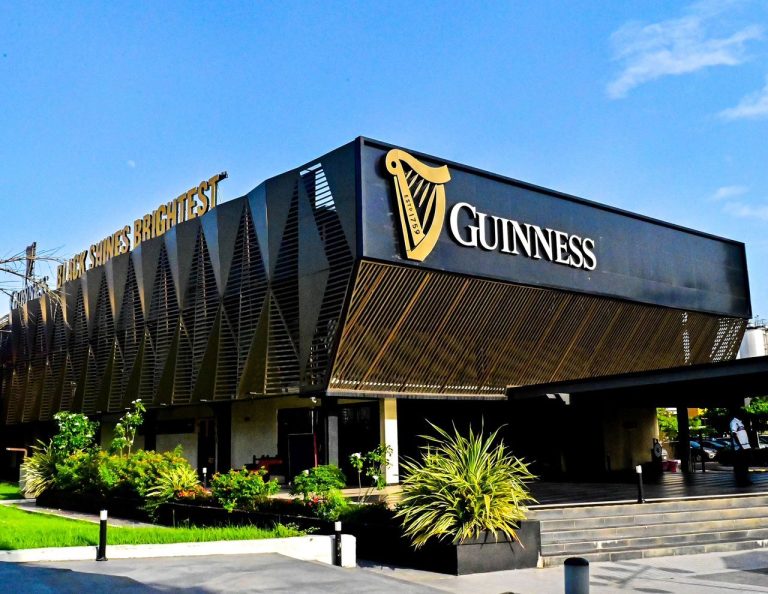
Guinness Nigeria Plc has announced an interim dividend of ₦2.00 per ordinary share for the quarter ended 31 March 2026, signalling a strong earnings recovery and renewed focus on shareholder returns.
The Company delivered Profit After Tax of ₦10.39 billion in Q1 FY2026, representing a 48% year-on-year increase from ₦7.03 billion in Q1 FY2025. Earnings per share rose to ₦4.74 from ₦3.21 in the prior period.
Revenue grew by 4% to ₦122.77 billion, while operating profit remained resilient at ₦17.18 billion despite margin pressures. Notably, net finance costs declined significantly to ₦1.43 billion from Q1 FY2025 of ₦7.72 billion, supporting bottom-line growth.
The interim dividend translates to a total payout of approximately ₦4.38 billion, based on 2.19 billion shares outstanding. The qualification date is April 20, 2026.
The dividend will be paid from distributable profits in line with Sections 426–428 of the Companies and Allied Matters Act 2020.
This marks a significant step in restoring consistent shareholder value distribution following the Company’s strong FY2025 performance, with management maintaining a balanced approach between reinvestment and returns.
Commenting on the results, the Board Chairman, Prof. Fabian Ajogwu (SAN), said: “The Board is pleased to declare this interim dividend, which reflects both the quality of earnings achieved in Q1 FY2026 and our commitment to disciplined capital stewardship. A 48% growth in Profit After Tax is not accidental, it is the result of sustained governance oversight, strategic clarity, and the dedication of our management team and employees. As a Board, we remain firmly committed to rewarding our shareholders while ensuring that Guinness Nigeria is positioned for sustainable, long-term growth. This dividend is a statement of confidence in our business, our people, and the resilience of our strategy.”
The Managing Director/Chief Executive Officer, Girish Sharma, added: “Our capital allocation decisions remain grounded in disciplined execution, financial prudence and a clear focus on long-term value creation. The interim dividend reflects the outcome of improved operational efficiency and a measured approach to capital deployment, while maintaining balance sheet strength and performance stability.”
Guinness Nigeria remains focused on sustaining profitability, strengthening its balance sheet, and delivering long-term value to shareholders.
.

𝗙𝗮𝘆𝗼𝘀𝗲 𝗶𝗻𝘀𝗶𝘀𝘁𝘀 𝗠𝗮𝗸𝗶𝗻𝗱𝗲 𝗽𝗹𝗼𝘁𝘀 𝘁𝗼 𝗿𝗲𝗺𝗼𝘃𝗲 𝗢𝗹𝘂𝗯𝗮𝗱𝗮𝗻 𝗱𝗲𝘀𝗽𝗶𝘁𝗲 𝗼𝗳𝗳𝗶𝗰𝗶𝗮𝗹 𝗱𝗲𝗻𝗶𝗮𝗹𝘀

0

Former Ekiti State Governor, Ayodele Fayose, on Tuesday renewed his allegation that Oyo State Governor, Seyi Makinde, is plotting to remove the Olubadan of Ibadanland, Rashidi Ladoja, despite earlier denials by the state government and the palace.

Fayose, in a statement posted on his official X account, alleged, “Those who are still in doubt, Governor Seyi Makinde’s plot to remove the Olubadan of Ibadan, Oba Rahidi Adewolu Ladoja, should just keep their fingers crossed and follow unfolding events,” alleging that recent accusations against the monarch were part of a broader plan to justify action against him.

He said, “They denied any rift between Olubadan and Makinde after my making same public. But now, they are accusing the Olubadan of plotting to impeach Governor Makinde,” adding that claims of partisanship against the monarch were “parts of the orchestration… to prepare grounds for the Olubadan to be queried.”

The renewed claim comes amid fresh political tension in the state, as the Chief Whip of the Oyo State House of Assembly, Gbenga Oyekola, distanced himself from alleged moves by some lawmakers to impeach the governor.

Oyekola, who represents Atiba State Constituency, said in a statement on his verified Facebook page that he was not part of any such plan, stressing that he would not engage in activities capable of destabilising the state.

“I hereby completely disassociate myself from any arrangement or activity that has the potential to disrupt the peace of Oyo State. I was never invited, never consulted, and was not part of any such meetings or arrangements,” he said.

He reaffirmed his loyalty to the governor, stating, “I cannot and will not be disloyal to my boss… I remain firmly committed to the peace, unity, and continued progress of Oyo State.”

Fayose’s latest comments follow earlier allegations he made that there was a plan to depose the Olubadan, which both the Oyo State Government and the monarch had dismissed.

Fayose had, on his X handle, written that Makinde was plotting to remove Ladoja as Olubadan of Ibadanland.

He wrote: “I heard reliably that Governor Seyi Makinde of Oyo State is plotting the removal of the Olubadan of Ibadanland, Oba Rahidi Adewolu Ladoja.”

The media aide to the Olubadan had said there was no rift between the palace and the government, “It will be most unfortunate if it is not a rumour. Though I read it just the way you read it online. I don’t see the cause of friction between the governor and Olubadan of Ibadanland,” he said.

While the state Commissioner for Information and Orientation, Dotun Oyelade, maintained that the government had “never contemplated, discussed, or planned such an action,” describing the allegation as baseless.

“By now, Nigerians know who and what to believe, especially when the information comes from a particular quarter. Oyo State Government has never contemplated, discussed, or planned such an action.

“There has to be a credible motive for every government action, and this, coming from the unofficial spokesman of our opponents, is better put in the refuse dump where it belongs. Desperate politics foists thoughtless propaganda and reduces democracy into a joke,” he said….

credit: punch