Home Blog Page 505

20m measles deaths averted since 2000 in Africa – WHO

0


Measles vaccinations have saved nearly 20 million lives in Africa since the year 2000 and more than 500 million children were protected through routine immunisation, but the continent remains offtrack in the fight against vaccine-preventable diseases.

The findings come in the first-ever detailed analysis of immunisation targets in Africa, published on Wednesday by the World Health Organisation (WHO) and Gavi, the Vaccine Alliance.

It also documents progress and challenges in expanding immunisation coverage against a broad range of vaccine-preventable diseases, as well as ongoing efforts to achieve targets under a global strategy known as the 2030 Immunisation Agenda.

The analysis covers the years from 2000 to 2024 which saw increased vaccination coverage in Africa as 44 countries introduced a second dose of measles-containing vaccine into routine programmes.

Coverage rates rose from five per cent to 55 per cent during this period while supplemental inoculation campaigns delivered 622 million vaccinations.

Together, these efforts have halved measles deaths in the African region and led to a 40 per cent drop in overall cases.

Additionally, nine countries reported consistently low measles incidence rates in 2023 and 2024, while Cabo Verde, Mauritius and the Seychelles were verified in 2025 as having eliminated measles and rubella – the first sub-Saharan African countries to achieve this milestone.

“Africa has made remarkable progress in less than a generation, expanding immunisation and saving millions of young lives,” Dr Mohamed Janabi, WHO Regional Director, said.

“But the progress is uneven, and even slowing, leaving too many children unprotected as key targets are still missed. We must urgently strengthen routine immunisation to leave no child behind.”

Routine schedules currently protect against 13 vaccine-preventable diseases, compared to eight in the year 2000.

Since then, meningitis deaths have fallen by nearly 40 per cent, the malaria vaccine has been introduced in 25 countries, and at least 1.9 million lives were saved through vaccination in 2024 alone— some 42 per cent due to measles vaccination.

The 2030 agenda envisions a world where all people fully benefit from vaccines. It aims for 90 per cent coverage at four key life stages to protect against diphtheria, pertussis (whooping cough), measles and the human papillomavirus (HPV).

Despite the progress made to date, Africa is still off track when it comes to reaching the 90 per cent target as immunisation coverage is uneven and many children are still being missed.

WHO and Gavi call for continued investment and strong political commitment to sustain gains and protect future generations.

They are also working with governments to widen vaccination coverage, including to accelerate and scale up the introduction of new vaccines such as those for malaria and HPV.

The new analysis “demonstrates the immense life-saving power of vaccines when immunisation is prioritised as a matter of policy,” Dr Sania Nishtar, the Gavi CEO., said.

“At the same time, we must acknowledge that these immunisation outcomes reflect very different realities, and we have more work to do to ensure we are consistently able to reach children, even in the most fragile and remote contexts,” she added.

2027: No northerner pulls more votes than I do – Atiku

0


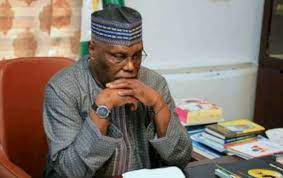
Nigeria’s former Vice President, Atiku Abubakar, has said that he commands more votes in the north than the other political figures in the region.

Atiku made the claim during an interview with Arise TV’s Prime Time programme on Wednesday.

He stated that none of the following: Aminu Tambuwal, former governor of Sokoto and serving senator, Rabiu Kwankwaso, ex-governor of Kano and former defence minister, and Nasir el-Rufai, former governor of Kaduna and former minister of the Federal Capital Territory (FCT), measures up to him in terms of electoral strength in the north.

“Can you tell me, among the current leaders in the north, who has more votes than I have?

“I mean, you are talking about figures like Tambuwal, you are talking about figures like Kwankwaso, and others, and el-Rufai, and also the emerging political figures.

“None of them has got that northern bloc vote as much as I have got,” Atiku said.

While acknowledging Kwankwaso’s influence in Kano, Atiku added that the voting base in the state is now divided.

“Well, the absence of it may affect, but even in his own case, you can see how Kano is now split between himself and his former governor.

“So there is even a split in that,” Atiku noted.

Sun

Lagos expands health insurance coverage with community enrollment drive

0


The Lagos State Government has intensified its push for universal health coverage, taking its grassroots health insurance campaign to Odi-Olowo Ojuwoye Local Council Development Area (LCDA) with a bold mix of policy enforcement, community engagement and financial inclusion measures.

At a stakeholders’ forum tagged “Ilera Eko, Ilera Ibile” held in Ilupeju on Wednesday, the Lagos State Health Management Agency (LASHMA) rallied traditional rulers, market leaders, health professionals and community groups to drive mass enrollment into the state’s social health insurance scheme, Ilera Eko.

Speaking, Permanent Secretary, LASHMA, Dr. Emmanuella Zamba, described the engagement as a decisive move to close the healthcare access gap at the community level. She said the initiative goes beyond advocacy, positioning it as a coordinated strategy aimed at ensuring no resident is excluded from affordable healthcare. “This is not just another gathering. It is a platform for collective action to guarantee equitable healthcare access for every Lagos resident.”

Zamba revealed that the outreach forms the first phase of a three-pronged campaign agreed upon during a February 2026 retreat involving all 57 Local Government Areas (LGAs) and LCDAs under Conference 57. “The next phases will include aggressive door-to-door sensitisation and a strict compliance monitoring system at the local government level.”

She underscored the backing of Governor Babajide Sanwo-Olu, pointing to an Executive Order mandating compulsory enrollment into the state’s health insurance scheme. In a significant policy shift, she disclosed that the equity fund for vulnerable residents has been increased to N3 billion and elevated to a first-line charge, ensuring sustained funding for indigent populations.

At the local level, Chairman, Odi-Olowo Ojuwoye LCDA, Seyi Jakande, translated policy into action by announcing the sponsorship of 1,000 vulnerable residents for immediate enrollment into the scheme. He described healthcare as a cornerstone of economic growth and community stability, stressing that the initiative would significantly improve living standards.

Jakande highlighted that Ilera Eko offers a wide range of services, including consultations, surgeries, maternal care, physiotherapy and telemedicine, delivered through an expanding network of accredited providers. He also pointed to ongoing investments in primary healthcare, including facility upgrades, immunisation drives and plans to commission additional centres.

The campaign, which drew strong backing from development partners, with Clinton Health Access Initiative (CHAI) reaffirmedits support. Its representative, Cynthia Kukoyi, pledged continued technical assistance, particularly in executing the planned door-to-door enrollment drive across communities.

On the operational front, LASHMA officials stressed that the scheme is designed to eliminate the burden of out-of-pocket healthcare spending. LASHMA Area Coordinator, Odi-Olowo Ojuwoye LCDA and Mushin LGA Mrs. Ogunnaike Adewunmi noted that enforcement of mandatory health insurance has already commenced, urging residents to enroll without delay.

Head, Business Development, LASHMA, Olatunji Rotimi unveiled flexible payment options, including the “Pay Small, Small” model, which allows residents to spread premium payments over time, alongside cooperative-based enrollment systems that provide immediate access to care.

Signalling strong grassroots buy-in, the traditional ruler, Sikirulah Olamide Williams, described the programme as a major step toward healthcare equity, urging artisans and traders to participate actively. Similarly, Iyaloja Adebimpe Muftiat emphasised the economic value of good health, calling on market men and women to take advantage of the scheme.

In her closing remarks, Medical Officer of Health, LCDA, Abimbola Folabi pointed to ongoing improvements in service delivery, including the upgrade of primary health centres to 24-hour operations and the introduction of electronic medical records.

FG domesticates new policy to tackle cosmetic-related health risks in Nasarawa

0


The Federal Ministry of Health and Social Welfare, in partnership with Resolve to Save Lives and the World Health Organisation, has flagged off a four-day state engagement on cosmetics safety policy and its implementation plan in Nasarawa State, with a strong call for stricter regulation to curb the influx of substandard products.

The programme, held from April 13 to 16 at Paradise Hotel, Lafia, brought together key stakeholders across regulatory agencies, health institutions and industry players to address gaps in cosmetics safety and chart a roadmap for implementation at the state level.

Speaking at the event, the Director in charge of the Cosmetics Safety Management Programme at the Federal Ministry of Health and Social Welfare, Mr. Okhakhu Paul said the engagement was aimed at identifying state-specific gaps and strengthening measures to safeguard public health.

“We are in Nasarawa State to look at the peculiar gaps, problems and issues relating to cosmetics safety. Our interest is the safety of users and producers of cosmetic products,” he said.

He explained that although a national policy exists to regulate cosmetics, gaps in enforcement and compliance have led to rising cases of adverse cosmetic events across the country.

“People use one form of cosmetic product or the other and come down with adverse cosmetic events. Complaints are coming to government on what is being done to protect Nigerians,” he stated.

Paul expressed concern over the influx of unregulated products through porous borders, stressing the need for coordinated action among agencies.

“If cosmetic products come in unchecked, the Customs and port health services, including NAFDAC, must work together to prevent infiltration. That is why we have assembled stakeholders here to nip the problem in the bud,” he added.

He noted that the policy must be domesticated at the state level, with a clear action plan and funding framework to ensure effective implementation.

“The state is expected to adapt the policy and develop an action plan that reflects its peculiarities. Funding is critical, and while partners and donors are supporting, the bulk of responsibility lies with the state government,” he said.

Also speaking, the Director of Pharmaceutical Services at the Nasarawa State Ministry of Health, Pharmacist Christopher Ishaleku, noted that gaps in existing regulatory frameworks had previously hindered effective control of cosmetics production and use in the state.


“Before now, there were regulations guiding the production, distribution and usage of cosmetics in the state, but gaps in the system made effective control difficult. Everybody was operating on their own,” he said.

He, however, expressed optimism that the new policy would bring order and improve standards.

“Now that we have a policy, we will bring manufacturers together and ensure they follow due process. Nobody will just wake up, mix substances and claim to have produced cosmetics. There must be regulatory compliance to protect public health,” he added.

Ishaleku emphasized that the state would collaborate with the National Agency for Food and Drug Administration and Control (NAFDAC) to enforce standards while focusing on sensitization and data gathering.

“Our role is to provide information on registered producers and support sensitization, while NAFDAC handles enforcement. We will also ensure producers use safe raw materials free from harmful substances,” he said.

On its part, NAFDAC reaffirmed its readiness to implement the policy, noting that the agency has been adapting to emerging challenges, particularly in rapidly urbanizing areas.

A Chief Regulatory Officer of the agency, Abdullahi Adamu Mako said Nasarawa’s growing population, especially in Karu axis, presents unique regulatory challenges.

“Nasarawa is evolving rapidly in terms of urbanization, particularly in Karu, which is like a mini Lagos. That is why we established additional operational presence in Maraba to strengthen coverage,” the officer said.

He added that the agency has intensified public awareness campaigns through community outreach and partnerships.
“We go to markets, churches, mosques and schools to enlighten people. We are also collaborating with youth corps members to reach more communities through drug-free clubs,” he said.

Reaffirming the agency’s commitment, the official declared: “We are willing, ready and able to execute whatever is required to implement this policy.”

The Sun Reports that Stakeholders at the event stressed the need for sustained awareness, improved funding and inter-agency collaboration to tackle the menace of substandard cosmetics and ensure consumer safety across the state.

Sun

Nigeria Extradites Murder, Drug Trafficking Suspect to UK

0


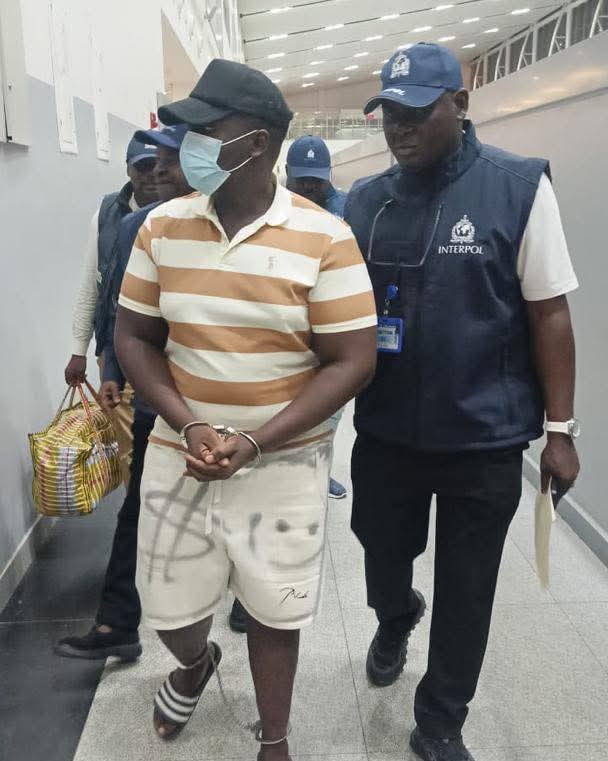
The Nigeria Police Force, through the INTERPOL National Central Bureau (NCB) Abuja, has successfully extradited one Matthew Chukwuemeka Adebiyi to the United Kingdom to face charges of murder and drug trafficking.

The Force Public Relations Officer, DCP Anthony Okon Placid, confirmed the development in a statement issued from the Force Headquarters, Abuja.


The extradition followed a formal request by United Kingdom authorities in September 2024, seeking the location, arrest, and transfer of the fugitive over his alleged involvement in the murder of Joshua Boadu on June 18, 2018. Adebiyi reportedly fled to Nigeria after the incident to evade arrest. He is also accused of involvement in the supply of crack cocaine, a Class-A controlled drug, between October 2017 and March 2018 in the UK.

The suspect was arrested on January 23, 2025, by operatives of INTERPOL NCB Abuja. Subsequently, extradition proceedings were initiated at the Federal High Court, Lagos Judicial Division, under Suit No. FHC/L/CS/416/2025.

On February 16, 2026, Justice A.O. Faji granted the application for his extradition in line with the Extradition Act, Cap E25, Laws of the Federation of Nigeria, 2004.

Following the court’s approval and the execution of a surrender warrant by the relevant Nigerian authorities, the fugitive was formally handed over to UK law enforcement officials on April 14, 2026, at the Murtala Mohammed International Airport, Lagos, for prosecution.

The Inspector-General of Police, Kayode Egbetokun, reiterated the commitment of the Nigeria Police Force to strengthening international police cooperation and ensuring that Nigeria does not serve as a safe haven for fugitives.

We’re not part of ADC coalition, NNPP tells Atiku

0


The New Nigeria Peoples Party (NNPP) says it is not a member of the coalition group on the platform of the African Democratic Congress (ADC), faulting former vice president Atiku Abubakar on the claim.
In a statement on Thursday, NNPP National Secretary, Mr Ogini Olaposi, clarified that the party has no intention of joining or collapsing into the ADC.

“We are so surprised that Abubakar, a frontline presidential aspirant of the ADC could make such an assertion, that NNPP is now in ADC,” he said.

It was reported that Abubakar, on a live television interview with Mr Charles Aniagolu of Arise television, listed and included NNPP as a member of the coalition group in ADC.
Olaposi stated that membership of Sen. Rabiu Kwankwaso, Dr Ahmed Ajuji, Elder Buba Galadima and the Kwankwasiya Movement in the ADC had nothing to do with NNPP as a political party.
“Kwankwaso and his kwankwasiya movement are members of the coalition group and there are verifiable evidence that some members of the group followed Kwankwaso to the new party.

“NNPP is not after anyone or group but merely a political party seeking to contest elections in Nigeria like other political parties.
“We have nothing against the ADC but we also do not want to be part of it.

“The Memorandum of Association we had with the Kwankwasiya movement expired after the 2023 general elections. Kwankwaso and others were equally expelled from the NNPP.
“We can also say that some members of the Kwankwasiya movement joined the APC with their leader,” he said.

Olaposi said the kwankwasiya members who followed Kwankwaso were in the minority and it’s their hope that ADC was not deceived by the rented crowd seen in Kano when former Kano State governor joined them.

He said majority of the Kwankwasiya Movement group were now in APC.

JAMB Commences 2026 UTME Nationwide, Records Smooth Start

0


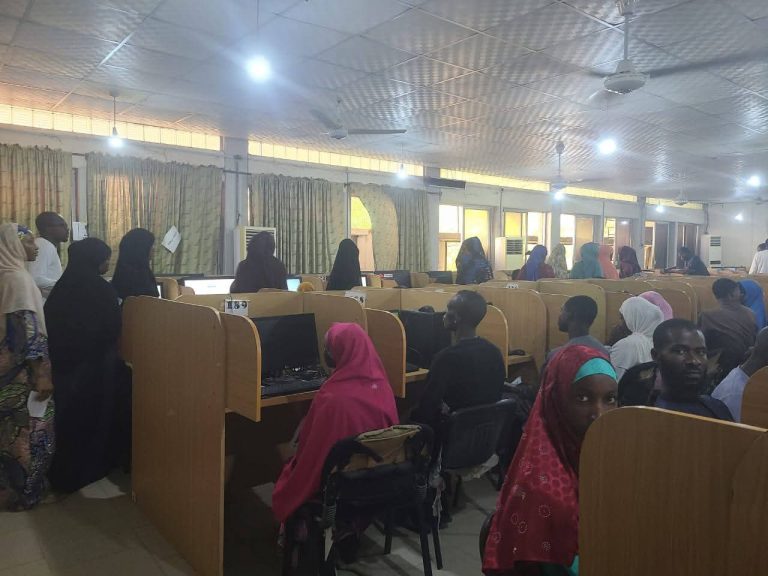
The Joint Admissions and Matriculation Board (JAMB) has commenced the 2026 Unified Tertiary Matriculation Examination (UTME) across the country, with reports indicating a smooth start in many centres.

At the 23 Technology Limited, NAF Valley Estate Computer-Based Test (CBT) Centre, a total of 250 candidates were expected for the first session, out of which 223 were present.
Accreditation of candidates began at 6:30 a.m. and lasted for two hours, ahead of the examination, which started promptly at 8:30 a.m.

Both the accreditation and examination processes proceeded without hitches.
However, during the verification process, one candidate could not be verified and was consequently disqualified from sitting for the examination.

The CBT centre is scheduled to conduct three sessions of the UTME, with a total of 750 candidates expected for the day.

The first session is expected to end by 10:30 a.m., while verification for subsequent sessions is already underway.

JAMB Commences 2026 UTME Nationwide, Records Smooth Start

The Joint Admissions and Matriculation Board (JAMB) has commenced the 2026 Unified Tertiary Matriculation Examination (UTME) across the country, with reports indicating a smooth start in many centres.

At the 23 Technology Limited, NAF Valley Estate Computer-Based Test (CBT) Centre, a total of 250 candidates were expected for the first session, out of which 223 were present.
Accreditation of candidates began at 6:30 a.m. and lasted for two hours, ahead of the examination, which started promptly at 8:30 a.m.

Both the accreditation and examination processes proceeded without hitches.
However, during the verification process, one candidate could not be verified and was consequently disqualified from sitting for the examination.

The CBT centre is scheduled to conduct three sessions of the UTME, with a total of 750 candidates expected for the day.

The first session is expected to end by 10:30 a.m., while verification for subsequent sessions is already underway.

Insecurity escalating to war situation – Arewa

0


The Arewa Consultative Forum (ACF) has declared Nigeria’s worsening insecurity a national emergency, warning that the situation has escalated into what it described as a “state of war” threatening the country’s survival.

This was contained in a communiqué issued yesterday at the end of the 38th meeting of the ACF Board of Trustees in Abuja penultimate Saturday.

The meeting, chaired by Alhaji Bashir M. Dalhatu, brought together prominent northern leaders, policymakers and former public officials to deliberate on the state of the nation.

In its statement, the forum said Nigeria’s security challenges had evolved beyond isolated incidents of insurgency and criminality, into widespread and persistent crises.

It cited ongoing violence, ranging from insurgency in the North-East to banditry and mass kidnappings in the North-West and North-Central, as well as communal clashes and farmer-herder conflicts across several regions.

“The scale, persistence and human cost of violence demand a fundamental shift in national priorities,” the communiqué stated, stressing that the crisis must now be treated as the country’s overriding emergency.

The ACF expressed deep concern over the human toll of the conflict, noting that hundreds of thousands of Nigerians had been killed or displaced in states such as Borno, Plateau, Niger and Kwara.

It added that the casualties extend to members of the armed forces, including senior officers, while countless families had been torn apart and communities destroyed.

Beyond the humanitarian impact, the forum warned that insecurity was severely undermining Nigeria’s economy.
It highlighted the disruption of agricultural activities in the North, breakdown of supply chains, rising inflation and the collapse of rural livelihoods as key consequences of the ongoing violence.

“The longer the crisis persists, the more expensive it becomes to fix,” the statement noted, emphasising that investment in security should be seen as a prerequisite for economic recovery rather than a competing priority.

Calling for decisive action, the ACF urged the Federal Government to adopt what it described as a “war-time approach” to address the crisis.

This includes temporarily scaling down spending on non-essential projects and redirecting national resources, leadership focus and energy towards restoring security.

“Extraordinary threats require extraordinary measures,” the forum said, adding that development efforts must be properly sequenced, with security taking precedence.

The communiqué concluded with a stark warning that Nigeria stands at a critical crossroads, where failure to act decisively could jeopardise the nation’s stability and future.

It stressed that until citizens can live, work and travel safely, other national ambitions would remain unattainable in practice.

“The path forward is clear: secure the nation first decisively, comprehensively and without delay,” the forum stated.

The meeting was attended by several notable figures, including former government officials, security chiefs, diplomats and academics, while others participated virtually.

Sun

Tinubu not imposing his view on NWC, compelling governors -Yilwatda

0


National leadership of the All Progressives Congress (APC) has dismissed claims that President Bola Tinubu is imposing his views on the National Working Committee (NWC) of the party and or on governors.

The ruling party NWC also described the recently concluded national convention of the opposition coalition party, the African Democratic Congress (ADC) as a beer parlour gathering.

Speaking at a world conference in Abuja yesterday, the national leadership argued that the opposition party is clearly running against the court judgment in conducting the convention, stressing it will come to nothing.

“The Supreme Court ruled recently on the case but what the ADC did organising a convention was clearly against the judgment of the court but they decided to go ahead with what I will call beer parlour gathering.

“The problem with the so-called coalition party is that it is infested with virus members. Any political party that does not respect its ideology is bound to continue having challenges. The problem with the ADC is that it does not respect its ideology,” Basiru noted.

Both the National Chairman, Nentawe Goshwe

Yilwatda and the National Secretary, Ajibola Basiru, who addressed myriads of issues, argued that President Tinubu has given listening ears to the party’s leadership and the governors.

They dismissed the impression that the ruling party is jittery ahead of the forthcoming presidential election particularly over votes from the North-West, insisting that the political structures of both Rabiu Musa Kwankwaso and Mallam Nasir El-rufai in Kano and Kaduna have been weakened completely.

“The Ganduje block is still very intact apart from our party’s governorship candidate in the 2023 election. We currently have two Senators and the other blocks don’t have a single House of Representatives member which leaves the Kwankwaso political blocks vulnerable. The entire political structures of Kwankwaso and that of the El-Rufai have been weakened to compete against the APC. I can tell you that the APC will win more votes in the North-West in next year’s presidential election than ever before,” Yilwatda boasted.

He specifically warned that the party will not guarantee automatic tickets to any member contrary to claims that the ruling party is planning for a consensus option.

On the status of the membership of the FCT Minister, Nyesom Wike, Yilwatda said he was free to join the APC but noted that nobody will compel him.

Sun