Home Blog Page 50

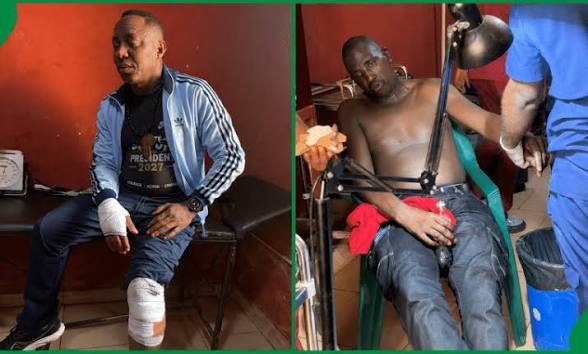
I was beaten like a criminal – Sowore recounts Ekiti attack

0

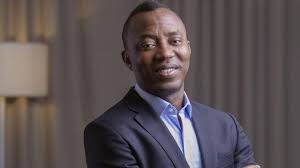
The African Action Congress (AAC) presidential candidate, Omoyele Sowore, has spoken about the attack on him in Ado-Ekiti, Ekiti State.

Sowore, who recounted his experience during an interview on Channels Television’s Politics Today on Friday, said some suspected thugs descended on him and beat him mercilessly.

He disclosed that the incident occurred in broad daylight at a restaurant in Ado-Ekiti, where he had gone to meet with some of his supporters.

“They beat me like a criminal. They came from nowhere, about 20 of them, armed with sticks and bottles. They said they will kill me if I come to Ekiti again,” Sowore said.

He said the attackers were captured on CCTV, but alleged that the police and the Department of State Services, DSS, have seized the footage to cover up the incident.

Sowore said he sustained injuries on his face and body and had to be rushed to a hospital for treatment.

He accused the Ekiti State government of sponsoring the attack to silence opposition voices in the state, an allegation the state government has not yet responded to.

The activist said despite the attack, he will not be intimidated and will continue to fight for justice and democracy in Nigeria.

“I am not afraid. They can beat me, they can arrest me, but they cannot stop me from speaking the truth,” he added.

The attack on Sowore has continued to generate reactions on social media, with many Nigerians condemning the incident and calling for the arrest of the perpetrators.

Sun

Akwa Ibom: Eno approves 13th-month bonus for pensioners, seeks votes for APC in 2027

0

Akwa Ibom: Eno approves 13th-month bonus for pensioners, seeks votes for APC in 2027

Akwa Ibom State Governor Pastor Umo Eno has approved the payment of a 13th month pension bonus to all pensioners in the state, as well as a one-off N10,000 welfare support in November 2026.

Speaking at Ibom Hall ground, Uyo, during the presentation of a merit award by the state council of the Nigeria Union of Pensioners and a second-term endorsement, Eno noted that pensioners deserved to rest well after their impressive and meritorious service to the state.

Eno said he was particularly impressed by the pensioners’ sense of gratitude and assured them that the state government, under his leadership, would continue to prioritise the welfare of pensioners and elderly citizens in the state.

“This is indeed humbling to me. It shows that you are truly technocrats with a laudable sense of organisation. You may be retired but not tired. I celebrate and appreciate you greatly.

“I am now directing that N10,000 be added to the November 2026 pension payment of every pensioner in support of your welfare.”

He urged them also to enrol in the state’s health insurance scheme, which he said was free for those aged 65 and above, to enable them to enjoy quality healthcare and a good rest.

Eno recalled that he had promised to clear the backlog of gratuities, stressing that N100 billion had so far been paid out of the accumulated N111 billion since 2012. He assured them that the balance would be cleared before the end of his first term.

He commended President Bola Ahmed Tinubu for making funds available to states, which, according to him, had made it possible for him to keep his promise of clearing the arrears of gratuity.

Eno called on the pensioners to vote massively for President Tinubu in the 2027 elections to ensure the continued availability of funds for the prompt payment of gratuities and pensions, as well as other welfare packages.

He charged pensioners from Ikot Ekpene Senatorial District to vote for the re-election of the Senate President, Senator Godswill Akpabio.

Responding, the National President of the Nigeria Union of Pensioners, Comrade Mazi Godwin Ikechukwu Abumisi, lauded Governor Eno for his exceptional compassion and care for pensioners in the state.

Abumisi particularly commended Eno for his impressive leadership and visionary development strides, and directed all pensioners in the state to ensure that Eno was rewarded with a second-term mandate by massive votes in 2027.

Earlier, in his welcome remarks, the State Chairman of the Nigeria Union of Pensioners, Pastor Sylvester Nkodo, thanked Governor Eno for his compassionate and impactful leadership, adding that his commitment to the welfare of the elderly and retired public servants was heartwarming and unprecedented.

“Governor Umo Eno is a true leader with the heart for humanity who deserves prayers and support from the people. I urge pensioners to support his administration.”

Sun

Hamzat kept his word to be best deputy gov in Lagos’ history – Sanwo-Olu

0

Hamzat kept his word to be best deputy gov in Lagos’ history – Sanwo-Olu

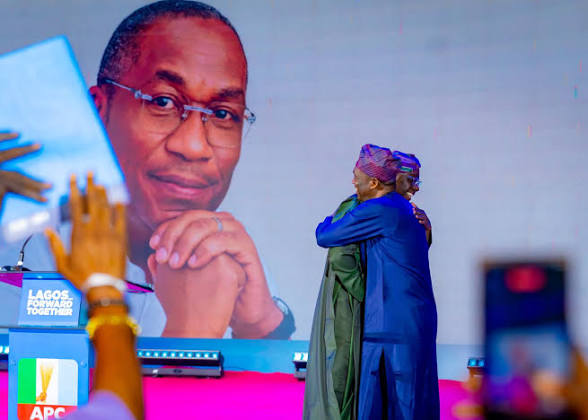
Governor Babajide Sanwo-Olu has described his deputy, Dr Obafemi Hamzat, as the best deputy governor in Lagos history, saying he kept a promise made on day one of their administration.

Sanwo-Olu said this in a long personal statement posted on X on Friday night, hours after Hamzat unveiled his governorship manifesto tagged “The Lagos PROMISE – Ileri Eko” at the Wole Soyinka Centre for Culture and Creative Arts, National Theatre, Iganmu.

The governor used the post to explain why he is backing Hamzat to succeed him when Lagosians go to the polls on February 6, 2027.
“Most of you know this story, but none of you have heard it from me,” Sanwo-Olu stated.

He recalled how Hamzat, who had 13 years of public service under Asiwaju Bola Tinubu and Babatunde Fashola, wanted to be governor in September 2018 and had the record and backing to win.

He stated, “Back in September 2018, Femi Hamzat wanted to be Governor of Lagos State. He had thirteen years of public service under Asiwaju and BRF, with the record and backing to win. Then party leaders asked him to step aside for me.”

According to Sanwo-Olu, “It takes a rare man to put down what he wants without nursing a grudge. Femi shook my hand and five weeks later, agreed to run beside me. I have never forgotten that.”

Sanwo-Olu, who first endorsed Hamzat on April 27 during a consultation visit to Lagos House, Marina, said only someone who worked closely with Hamzat could judge his character.

“Anyone can read a CV but only the person in the room with a man when the cameras leave can tell you who he really is. For 2,711 days, I have been in that room with him,” he said.

Sanwo-Olu listed defining moments of their seven-year administration, from COVID-19 to major infrastructure delivery.

“When COVID-19 hit, when we faced our hardest weeks, when the Blue and Red Lines ran and when the Lekki Deep Sea Port opened, Femi was there. Long before any ribbon was cut, he was asking the tough questions an engineer asks,” Sanwo-Olu said.

He contrasted Hamzat’s role with the ceremonial deputy role seen in many states.
“In many states, deputies are kept in reserve. On day one, Femi promised to be the best deputy governor in Lagos history. He kept his word. In seven years, there has not been a single day I wondered whose side he was on. We have had one government, one direction, and one voice,” he said.

Sanwo-Olu framed Lagos succession since 1999 as a relay race. The state has been governed by Tinubu (1999-2007), Fashola (2007-2015), Akinwunmi Ambode (2015-2019) and himself since 2019 – all from the same progressive political family.

“Lagos runs on a relay system. The baton is never passed to a runner standing still. You run at full speed inside the exchange zone, together, before the pass. That is how Lagos has been governed for 27 years, from Asiwaju to BRF, to Ambode, to me,” he said.

He highlighted Hamzat’s technocratic pedigree. Hamzat was Commissioner for Science and Technology under Tinubu, where he drove the state’s e-governance digitisation, and Commissioner for Works and Infrastructure under Fashola, where he supervised projects including the Lekki-Ikoyi Link Bridge. He holds a doctorate in engineering and is the son of Oba Olatunji Hamzat, a close political associate of the first civilian governor of Lagos, Alhaji Lateef Jakande.

“Femi is a deputy governor like no other. He built the Lekki-Ikoyi Link Bridge under Fashola, digitised government under Asiwaju and holds a doctorate in engineering. His father served Lateef Jakande. This is in his blood,” Sanwo-Olu said.

The governor also defended the continuity model against critics who say Lagos recycles the same pool of leaders.

“Critics say Lagos keeps choosing from the same pool. I say Lagos trains its people. With major projects underway and a master plan stretching to 2052, this is not the time to experiment,” he said.

Hamzat, who lost the APC governorship primary in 2014 to Ambode and stepped down for Sanwo-Olu in 2018, unveiled a seven-point manifesto on Friday.

The PROMISE acronym stands for People First, Renewal, Opportunity, Machinery of Government, Inclusion, Security and Resilience, and Everyday Dignity.

Sanwo-Olu argued that Hamzat’s bid is a continuation, not a new experiment.

He said, “What Femi presents today is not a campaign promise cooked up on a bus, it is the next leg of a race we have been running since 1999.

“Lagos does not hand the baton to a man standing still. Today, you have seen the man who is already running. Let us move forward together with The Lagos PROMISE.”

Sun

Workers’ leaders at war

0

…As TUC, NLC rift deepens
•Osifo accuses Ajaero of short-changing workers in 2023 negotiations
•Says NLC leader has no power to negotiate on behalf of TUC members
•Ajaero to Osifo: Provide evidence I short-changed workers, have interest in CNG

The President of the Trade Union Congress (TUC), Festus Osifo, has accused his Nigeria Labour Congress (NLC) counterpart, Joe Ajaero, of shortchanging Nigerian workers during negotiations with the Federal Government following the removal of fuel subsidy in 2023.

Osifo, who made the allegation during an interview on a national television network on Friday morning, said Ajaero rushed into negotiations with the government and was about to sign a watered-down two-point proposal despite the TUC having earlier submitted a 10-point demand.

But Ajaero, in a chat with Saturday Sun, challenged Osifo to provide evidence to back his allegations.

Osifo, however, said the TUC had presented its demands to the Federal Government, explaining the rationale behind each of the proposals, but Ajaero moved ahead with negotiations without consulting the congress.

According to him, the TUC only became aware of the development through information received from its contacts and had to intervene to ensure that some additional demands were included in the agreement.

“When we submitted it, let’s assume on a Monday, a meeting was fixed. The Federal Government said they would review it and get back to us within three days.

“The next day, Ajaero quickly went there without submitting any demand at all. He was about to sign a two-point position on what should be done, and it was watered down.

“Information got to us, we ran there and told him no, but finally, we were able to do some little damage control and add one or two things to it. That completely short-changed Nigeria,” he said.

The TUC president also accused Ajaero of undermining the congress whenever it presented what he described as superior arguments during engagements with the government.

He said the disagreement between the two labour unions was not new, adding that the TUC had consistently maintained an independent position on issues affecting workers.

Osifo also faulted the NLC president over the Federal Government’s proposed N70,000 monthly transport allowance for workers, insisting that the arrangement was not negotiated by Ajaero but announced by President Bola Tinubu.

He said the TUC had rejected the proposal because of its experience with the 2023 wage award, which he claimed was poorly implemented, with payments delayed and some workers failing to benefit.

According to him, although the 2023 wage award was approved on October 2, implementation did not commence until February, while subsequent payments were also delayed by several months.

“We explained to government that that wage award, we don’t like it. Because the one of 2023, although implemented well, how do we bring another system that wasn’t implemented well previously?

“When you look at that wage award that was approved October 2nd in that communiqué, there was no start of implementation on October 2nd. They never started. They now waited till February before they paid February and March. They didn’t pay again. The other two months, the payment was made like three, four months later,” he said.

Osifo maintained that the TUC had proposed a more sustainable intervention through an increase in workers’ salaries rather than another temporary allowance.

He explained that the TUC had also advocated a review of workers’ earnings, with discussions on a new minimum wage to commence subsequently.

On the N300,000 minimum wage proposal attributed to the TUC, Osifo said the figure was an illustration of the congress’s demand and not a fixed amount it expected government to accept without negotiations.

He said the immediate priority was to secure a salary increase, while negotiations on a new minimum wage could begin around February if an agreement on salary adjustment was reached.

The TUC president further accused Ajaero of attempting to negotiate on behalf of TUC members without the TUC’s involvement, insisting that the NLC had the right to negotiate for its affiliates but not for members of another labour centre.

He disclosed that the TUC had over 300,000 members in the federal civil service, stressing that their interests could not be negotiated without the congress being represented at the table.

“Ajaero must understand that he does not have the right to negotiate on behalf of organised labour. He does not have the right to negotiate for TUC members. He has the right 100 per cent to negotiate for NLC members,” he said.

Osifo also alleged that personal interests influenced some of Ajaero’s positions, citing the NLC president’s reported interest in participating in the compressed natural gas (CNG) business.

He said the TUC had distanced itself from any industrial action or labour campaign it considered driven by political or personal interests.

The TUC president, however, maintained that his organisation remained committed to improving workers’ welfare, including through sector-specific collective bargaining agreements.

He cited his experience as former president of the Petroleum and Natural Gas Senior Staff Association of Nigeria (PENGASSAN), saying negotiations under his leadership resulted in the signing of over 500 collective bargaining agreements with improved conditions of service.

Osifo also called for the inclusion of pensioners in discussions on workers’ welfare, lamenting that their concerns had been largely neglected in recent engagements with the government.

He said the TUC would continue to press for measures that would provide lasting relief for workers and retirees.

However, reacting to the allegations in a chat with our correspondent, Ajaero challenged Osifo to produce evidence that he was about to sign a watered-down two-point proposal during the 2023 negotiations.

“About to sign and you are asking me. Is ‘about to sign’ the evidence you have? Where is the document that I signed?” he queried.

On the allegation that he had an interest in the CNG business, the NLC president demanded evidence from Osifo, insisting that he would not respond to claims based on hearsay.

“Does this make sense? Did he tell you the interest in CNG? If he doesn’t produce the evidence I will not respond. Hearsay evidence cannot avail,” he said.

Ajaero also questioned the basis of Osifo’s allegation that he short-changed workers, asking: “How can someone accuse you of short-changing workers without citing instances?”

Sun

Rainbow Coalition: APC mounts pressure on govs

0

Rainbow Coalition: APC mounts pressure on govs

  • Says Wike’s multi-party arrangement no threat to ruling party’s candidates

The ruling All Progressives Congress (APC) has begun to pile pressure on its governors to deliver votes in their states. The party is urging them to work for its success at every level of the 2027 elections.

The National Secretary of the party, Ajibola Basiru, who spoke in an exclusive interview with Saturday Sun, said governors must deliver for the presidential, governorship, National Assembly and State Houses of Assembly candidates of the APC.

“The governors have the responsibility to deliver for all the candidates of the APC in their states,” Basiru said. “They said it publicly, and they should work hard to deliver.”

He said the duty of each person is clear. “Everybody’s responsibility is clear-cut,” he added. “There should be no problem about delivering, as a governor, for all the candidates of our party in your state.”

The push comes amid a public row between the Progressive Governors’ Forum and the Minister of the Federal Capital Territory, Nyesom Wike. The row is over Wike’s Rainbow Coalition.

Basiru said the coalition does not bother the party. He said Wike’s support for President Bola Ahmed Tinubu is a welcome development. But he insisted that the party will not fold its arms.

“Anybody who is interested in partnering with the party to deliver the President is a friend of the party,” he said. “But as the President has said, we will campaign for all our candidates, for President, governor, Senate, House of Representatives and State Assembly.”

He said Wike has not asked the party for help. “Wike has not come to ask us for any support,” Basiru said. “He has not asked for financial resources or logistics, so I am not bothered about what he does.”

He added that he is happy that the minister has agreed to coordinate the President’s campaign in Rivers State and the FCT. Asked if Wike’s moves could hurt APC candidates, Basiru said the party could not stop anyone from backing the President. “I am not a clairvoyant,” he said. “Unless our candidates were not popular before, we will mobilise for them.”

On claims that Wike is backing PDP members against some governors, he said he knew nothing of it. “The governors have not come to complain to us,” he said.

Basiru also defended the President’s first term. He said the economy had stabilised and that allocations to states now stand at about N2 trillion monthly. He added that more than 1.6 million students have received education loans, and over 10 million Nigerians have received cash transfers.

He said the President’s plan to skip some campaign events has nothing to do with his health. “The reason the President may not attend cannot be laid on alleged ill health,” he said. “He is very fit.”

On the opposition, he said the APC has won more than 80 per cent of recent by-elections. “In Osun, the ADC polled barely 17,000 votes, while our party, even though we lost, polled over 444,000,” he said. “Even the rejected votes in Osun were more than 20,000.”

On state police, Basiru said he had sponsored a bill on it as a senator. He said states now have the resources to protect lives and property, and that the Constitution provides safeguards against abuses.

Sun

Police debunk Sowore’s alleged abduction

0

•Say AAC candidate injured during altercation in Ekiti, receiving treatment at police hospital
From Priscilla Ediare, Ado-Ekiti

Following reports that circulated on the social media that the presidential candidate of the African Action Congress (AAC), for the 2027 election, Omoyele Sowore, was allegedly kidnapped by armed thugs in Ado-Ekiti, capital of Ekiti State, and his whereabouts unknown, the State Police Command has debunked the allegation, and described the claim as untrue and baseless.

This was contained in a statement issued by the Command’s Spokesperson, SP Sunday Abutu, on Friday, and made available to newsmen.
The statement, entitled, “Ekiti Police Command debunks alleged kidnap of AAC presidential candidate”, and clarified the circumstances surrounding incident.

It reads: “The attention of the Ekiti State Police Command has been drawn to a message circulating on social media alleging that Mr. Omoyele Sowore, the African Action Congress (AAC) presidential candidate in the forthcoming presidential election, was kidnapped by armed thugs in Ado-Ekiti, with his whereabouts unknown.

“The Command wishes to categorically clarify that Mr. Sowore was not kidnapped. Rather, preliminary information indicates that he had an altercation with some individuals at a restaurant around Dalimore area, Ado-Ekiti, following which the Police were immediately alerted.

“Upon receiving the report, Police operatives swiftly mobilised to the scene and successfully rescued him. He, however, sustained a minor injury and is currently receiving medical attention at the Police Hospital, Ado-Ekiti.

“The Commissioner of Police, Ekiti State Command, CP Falade Adegoroye Michael, has ordered a discreet investigation into the incident to establish the full circumstances surrounding the altercation, identify all individuals involved and ensure that anyone found culpable is brought to justice.

“The Command calls for calm and urges members of the public to disregard the misleading narrative of an alleged kidnapping, and refrain from circulating unverified information capable of creating unnecessary panic and tension.

“The Ekiti State Police Command remains committed to the protection of lives and property, irrespective of political affiliation, status or background, and assures the public of its continued determination to maintain law and order across the state.”

It was gathered that Sowore who participated in last year’s Ikogosi Marathon road race held in the state, had also visited Ekiti to participate in the Ikogosi 2026 Marathon 17.5km road race billed to hold today, Saturday, October 31, 2026 in the state.

Volunteers of this year’s road race are expected to converge at Ilawe roundabout in Ekiti South West Local Government Area, the starting point, by 7:00am and will finish at the Ikogosi Warm Springs and Resorts in Ekiti West Local Government Area of the state.

Sun

2027: Atiku’s son dumps dad, teams up with Wike for Tinubu

0

•Donates buses for Tinubu’s re-election, pledges 2m votes

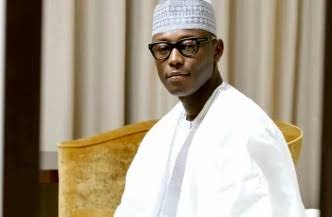
Abba Atiku Abubakar, son of the presidential candidate of the African Democratic Congress (ADC), Atiku Abubakar, has revealed that he has teamed up with the Minister of the Federal Capital Territory (FCT), Nyesom Wike, to re-elect President Bola Tinubu during next year’s presidential election.

Speaking while presenting 10 campaign buses to the leadership of of the ruling All Progressives Congress (APC) in Abuja on Friday, he promised to win Adamawa, his home state and mobilise two million votes for President Tinubu’s re-election.

He said that having worked for his father in two previous presidential elections, he will now work to deliver President Tinubu because he has better programmes and prospects to win the election.

“I recognise that political decisions, particularly those that differ from the positions of individuals with whom one shares personal or family relationships, often attract considerable public attention. I am equally conscious that my own political decision may be viewed within this context.

“However, I wish to make one fundamental point: political conviction is a matter of personal judgement, conscience and the freedom of every individual to make independent choices.

“My decision to establish and lead the Haske Bola Tinubu Organisation is a deliberate political choice, one I have made in my personal capacity and with a firm belief in the direction we have chosen to pursue. I hold no reservations about the right of others to their differing political opinions, just as I expect my own convictions to be respected.

“Our democracy is strengthened when individuals are free to make independent political choices, engage in constructive dialogue and support the leadership and political platforms they believe best represent their aspirations,” he said.

On the transportation intervention of 10 luxurious buses, he said: “As part of our commitment to complementing the President’s reform agenda with practical interventions, the Haske Bola Tinubu Organisation is introducing a transportation support initiative through the initial provision of 10 luxury buses.

“This initiative is designed to ease transportation challenges, reduce the burden of commuting on ordinary Nigerians and demonstrate that political support must go beyond rhetoric to include tangible contributions to the lives of citizens.

“We intend to commence this programme in the Federal Capital Territory, Abuja, before progressively expanding the initiative to other parts of the federation. For us, supporting the President’s Renewed Hope Agenda must translate into meaningful actions that positively affect the everyday lives of Nigerians,” he said.

Sun

Isaac Fayose mocks Sowore over attack, urges him to join fight against APC

0

Political commentator Isaac Fayose has called on the presidential candidate of the African Action Congress (AAC), Omoyele Sowore, to work with other opposition parties ahead of the 2027 general elections to challenge the ruling All Progressives Congress (APC).

Fayose made the appeal while reacting to the alleged attack on Sowore and members of his campaign team in Ekiti State on Friday.

He said he was not sympathetic towards Sowore over the incident, accusing the AAC candidate of repeatedly attacking the presidential candidate of the Nigeria Democratic Congress (NDC).
According to Fayose, Sowore and other opposition figures should set aside their differences and unite against the APC-led government of President Bola Tinubu, whom they have a common political interest in challenging.

In a video he shared on his Facebook page, Fayose said, “instead of attacking Peter Obi, you can see now that we have a bigger enemy. APC led by President Bola Tinubu is the enemy of our country.

“They are the ones destroying our democracy, they are the ones killing our democracy. We need to come together to fight them.

“You are busy attacking Peter Obi and now you have been attacked. You can see.

“When they did it to us in Benue, Plateau and other places, you were looking. You think you are the actor but now you are in the hospital. Democracy in Nigeria is gone.

“I don’t feel sorry for you. Leave Obi alone let us concentrate on the real enemy of the people which is APC. Let us join hands to chase them away”.

Sun

CANEX WKND: Turning Africa’s cultural power into economic wealth

0

By Ehi Braimah

​

Each time I discuss Nigeria’s rich cultural heritage with friends and colleagues, it evokes feelings of a broad colourful canvas of costumes, music, dances, and the visual arts, not to mention our foods and drinks. When we extend the conversation to the rest of Africa, the world usually listens to our stories. Nigerian musicians are taking Afrobeats to international audiences; Nollywood productions are travellingacross borders; African fashion designers are attracting global attention and writers are challenging conventional narratives about the continent. 

These creative endeavours do more than entertain as they influence perceptions, shape identities and create economic opportunities.

This is why the forthcoming Creative Africa Nexus Weekend (CANEX WKND) is particularly significant. Scheduled for November 5–8, 2026, at the Wole Soyinka Centre for Culture and Creative Arts in Lagos, the event will bring together creative professionals, investors, financiers, policymakers and business leaders from Africa and the diaspora.

Organised by the African Export-Import Bank (Afreximbank), in partnership with the Federal Government of Nigeria, the African Union Commission and the African Continental Free Trade Area (AfCFTA) Secretariat, CANEX WKND aims to connect African creative talent with investment, markets and commercial opportunities. Its theme, “One People, United in Culture, Creating for the World: From FESTAC ’77 to CANEX ’27,” captures the relationship between cultural identity and economic ambition.

The event should be understood as more than a colourful gathering of artistes, performers and entrepreneurs. It presents an opportunity to rethink how Africa organises, finances and commercialises its creative industries.

Culture as an economic asset

For too long, discussions about Africa’s cultural heritage have concentrated on its historical and social significance. Those dimensions remain important, but culture also possesses considerable economic value. Music, film, fashion, publishing, visual arts, design, gastronomy and sport can generate income, create jobs, attract tourism and expand exports.

The global visibility of Afrobeats and Nollywood illustrates the possibilities. Nigerian music has developed international audiences, while the country’s film industry has established a distinctive presence in global entertainment. African fashion, cuisine and literature are also contributing to the continent’s growing cultural influence.

However, international popularity does not automatically translate into commensurate economic returns for creators and their home countries. For example, a song can become a global sensation without its creators possessing the commercial infrastructure required to maximise royalties. 

The challenge, therefore, is to move from visibility to value creation. Africa must develop creative businesses that can produce consistently, compete internationally, protect their intellectual property and retain a greater share of the revenue generated by their work. This requires a combination of investment, professional management, appropriate regulation, reliable infrastructure and access to markets.

CANEX WKND offers a platform for bringing these elements together.

From FESTAC ’77 to a commercial future

Nigeria’s hosting of CANEX WKND carries historical significance. In 1977, Lagos hosted the Second World Black and African Festival of Arts and Culture, popularly known as FESTAC ’77. The festival assembled artistes, writers, musicians, performers and cultural representatives from Africa and the diaspora in a remarkable expression of Pan-African identity.

Culture journalist, enthusiast and practitioner, Jahman Anikulapo who is also the Editorial Director of Naija Times, an online newspaper, says FESTAC demonstrated the capacity of culture to unite people across geographical boundaries and historical experiences. According to him, FESTAC also affirmed the importance of African heritage in a world where the continent’s stories were frequently interpreted through external perspectives.

Almost half a century later, the central challenge has evolved. It is an opportunity for researchers to explore how Africa must preserve the spirit of cultural solidarity while building commercially sustainable creative industries.

The approaching 50th anniversary of FESTAC in 2027 provides an opportunity to assess what has been achieved and what remains unfinished. Cultural celebrations are valuable, but their legacies should extend beyond performances, exhibitions and commemorative ceremonies. They should inspire institutions, businesses and policies that enable creative professionals to build enduring careers.

What Lagos can learn from Algiers: Turning deals into lasting impact

The case for CANEX WKND is strengthened by the results recorded at its 2024 edition in Algiers, Algeria. Held from October 16 to 19, the gathering attracted nearly 4,000 participants from 81 countries, featured 108 exhibitors and facilitated and agreed deals valued at more than US$540 million, according to Afreximbank. These figures suggest that a creative economy platform can do more than bring artistes together; it can connect cultural production with finance, investment and commercial partnerships.

One of the most significant transactions was a €245 million global facility agreement with New World Television (NWTV) to part-finance its acquisition of sports broadcasting rights across 24 African countries. The agreement demonstrated the commercial value of sports content and the opportunities available when African businesses secure the resources to acquire and distribute premium media rights.

Afreximbank also announced a US$3 million financing facility for Mediwood Studios to support the expansion of Tunisia’s film industry. This targeted intervention highlighted the importance of financing production capacity, with potential implications for employment, skills development and the growth of a regional film ecosystem.

Another initiative, CANEX Presents the Angels, demonstrated how smaller creative enterprises could attract investment through direct engagement with potential backers. At the pitch session, angel investors committed US$350,000 to support three creative businesses. Cameroonian fashion designer Kibonen Nfi received a US$250,000 pledge from investor Moji Hunponu-Wusu, while a consortium committed a further US$100,000 towards investments involving Kibonen Nfi and Zimbabwean designers Pam Samasuwo-Nyawiri and Thulani Ngazimbi.

The event also invested in emerging African storytellers. CANEX Shorts selected three winners from 147 submissions for its short-film competition, with cash prizes awarded to filmmakers from Ghana, Kenya and Botswana. The CANEX Prize for Publishing in Africa recognised Cassava Republic Press for Female Fear Factory, a book by Pumla Dineo Gqola.

These initiatives connected creative recognition with opportunities for professional development, financing and market exposure. They also demonstrated the breadth of the creative economy, from broadcasting and film production to fashion, publishing and short-form storytelling. This is why the Lagos edition should facilitate similar and bigger deals.

Afreximbank has committed US$2 billion to support Africa’s creative industries over the 2024–2027 period. The challenge is to ensure that the commitment translates into accessible finance, viable businesses, stronger production capacity and sustainable employment across the continent.

CANEX WKND 2026 should build on Algiers by demonstrating that the platform can facilitate transactions and help turn financial commitments into enduring economic outcomes.

Financing talent and viable businesses

One of the most important barriers confronting African creative entrepreneurs is access to finance. Conventional lenders may consider creative businesses too risky because their assets are often intangible, revenues can be unpredictable and intellectual property is not always easy to value or use as collateral. 

This financing gap prevents many businesses from expanding beyond small-scale operations. The CANEX Finance Summit and Deal Room provide opportunities for eligible creative businesses to present commercially viable projects to financiers and investors. For the Lagos edition, the priority should be to convert networking into transactions.

Investors need credible projects, transparent financial information and confidence that contractual obligations will be honoured. Entrepreneurs, in turn, need fair financing terms, mentorship and access to the expertise required to manage growth.

Not every creative idea will become a viable business, and not every project will attract investment. The objective should be to build a system in which promising enterprises can be assessed fairly and supported according to their commercial potential.

Governments and development finance institutions should also explore financing models suited to the creative sector, including guarantees, equity investment, revenue-based financing and facilities that recognise intellectual property as a potential source of economic value without abandoning sound commercial discipline.

Intellectual property and the value of ownership

Africa’s creative ambitions also depend on effective intellectual property protection. A creator’s work is an economic asset. Copyright, trademarks, licensing agreements and other legal protections help determine who can use that work, under what conditions and who receives payment. When these arrangements are weak or poorly enforced, creators risk losing income even when their work achieves widespread recognition.

Digital technology has expanded opportunities for African content to reach global audiences. Streaming services, social media, online publishing and digital marketplaces have reduced some traditional barriers to distribution. But they have also made it more important to understand licensing, royalties, digital rights management and the commercial terms governing the use of creative content.

While African governments must strengthen the institutions responsible for protecting intellectual property, there is also a need for stronger commercial literacy. Talent alone is not enough. Creators must understand contracts, negotiate distribution agreements, maintain records of ownership and distinguish between immediate exposure and long-term commercial value.

Africa should not be satisfied with exporting creativity while surrendering control over the assets that make it valuable.

AfCFTA and the opportunity of a continental market

Another reason CANEX WKND matters is its relationship with the African Continental Free Trade Area. Africa’s creative entrepreneurs need access to markets beyond their national borders. The AfCFTA provides a framework for expanding intra-African trade, including trade in services. However, the existence of a continental trade agreement does not automatically eliminate practical barriers.

Differences in regulations, payment systems, customs procedures, professional standards, distribution infrastructure and consumer markets can still complicate cross-border business. Language differences also require attention, particularly when creative products move between Anglophone, Francophone, Lusophone and Arabic-speaking markets.

CANEX WKND can help bridge these gaps by bringing businesses together, encouraging partnerships and identifying practical obstacles that policymakers need to address. The objective should be to create a more integrated African marketplace in which talent, capital, services and creative products can move more efficiently. Such a market would also strengthen the continent’s negotiating position with international distributors, technology platforms and investors.

Lagos must deliver more than hospitality

Hosting CANEX WKND provides Nigeria with an opportunity to demonstrate its creative capacity and strengthen its position as a meeting point for African commerce and culture.

Lagos is an appropriate setting. Its music, film, fashion, publishing, advertising, entertainment and technology ecosystems provide a foundation for engagement between creative professionals and commercial partners. The city also offers international participants access to Nigerian entrepreneurs and a wider network of African businesses.

But the benefits of hosting a major international gathering should not be measured only by attendance, hotel occupancy, media coverage or the visibility of prominent personalities.Nigeria must ensure that local creative businesses participate meaningfully. Small and medium-sized enterprises should be able to meet prospective buyers, access technical expertise, explore financing and build partnerships that survive beyond the event. Emerging artistes and entrepreneurs should have opportunities to learn from established professionals and investors.

The government should also consider what happens after the delegates leave. Improved coordination among relevant ministries, stronger industry data, clearer regulations and more accessible support for creative businesses would provide a more durable legacy than a successful four-day programme.

This matters particularly as Nigeria prepares to host the Intra-African Trade Fair in 2027. CANEX WKND can help build relationships and demonstrate the organisational capacity required for a larger continental trade gathering.

Technology and the next generation

Technology is reshaping the creative economy. Artificial intelligence, digital production tools, online distribution and new payment systems are changing how content is created, marketed, distributed and monetised.

For Africa’s young creative professionals, these developments offer opportunities to reach global audiences without necessarily depending on traditional gatekeepers. However, they also introduce questions about copyright, consent, fair remuneration, data ownership and the use of creative material to train artificial intelligence systems.

African policymakers and industry leaders should ensure that innovation does not undermine the rights of the people whose creativity gives these technologies value.

Investment in skills is equally important. Training in production, design, digital marketing, business management, financial literacy and intellectual property can help transform informal creative activity into sustainable enterprise. Access to affordable broadband, reliable electricity, appropriate workspaces and production facilities remains essential.

It must be noted that Nigeria’s minsters, Jumoke Oduwole (Investment, Trade and Industry), and Hannatu Musawa (Art, Culture, Tourism and the Creative Economy) have been strong advocates for a creative economy that is treated as a serious contributor to our economic diversification.

Measuring success beyond the spectacle

CANEX WKND provides a valuable opportunity to celebrate African creativity, but the event’s most important achievements may not be visible on the concert stage or the fashion runway.The Lagos edition should establish a clear framework for measuring success. Organisers and relevant institutions should report the value of deals announced, the financing actually disbursed, the number of businesses supported, the jobs created or sustained, the markets entered and the cross-border contracts completed.

They should also track outcomes for young people, women-led enterprises and emerging creative professionals. These indicators would provide a clearer picture of whether CANEX is strengthening the foundations of the creative economy or merely generating temporary excitement.

A post-event scorecard, followed by periodic progress reports, would distinguish announcements from completed transactions and identify areas where further intervention is required. Such transparency would strengthen investor confidence and help policymakers determine which financing models produce the greatest economic value.

CANEX WKND 2026 offers an opportunity to advance that agenda. Its significance lies in helping to build an economy in which African stories, designs, performances and ideas generate sustainable value for African people.

Braimah is a PR specialist, marketing strategist, and publisher/editor-in-chief of Naija Times (www.ntm.ng) and Lagos Post (www.lagospost.ng). He is also a strong advocate of African prosperity, and can be reached throughehi.braimah@neomedia.com.ng
Ondo Businessman, Akinbolusere Kayode Tolufe, Reportedly Dies by Suicide After Emotional Video

0

A popular Ondo businessman and owner of Esther Estate, Akinbolusere Kayode Tolufe, has reportedly died by suicide after recording an emotional video expressing frustration over challenges in his family.

In the video, Tolufe announced that he was leaving all his properties to his wife, Akinbolusere Adenike Esther, and their three children.

He said he was making the recording voluntarily and on behalf of himself and his family, while explaining his decision to hand over his properties to his wife.

Tolufe reportedly took responsibility for the challenges in his marriage, describing his wife as supportive and saying she had stood by him from the beginning.
Speaking in the video, he said:

“I was the one that scared her, I caused all of this problem happening. She gave birth to three kids for me and never for once caused a problem for me.

Everything I want she supports. But it was me that forgot how everything started and caused all the problems.