Home Blog Page 499

Nigeria ‘bleeding from within’ over missing N34.44tn revenue – Peter Obi

0

The former presidential candidate of the Labour Party, Peter Obi, has expressed concern over what he described as massive revenue leakages in Nigeria, warning that the country is “bleeding from within” despite rising earnings.

In a statement released on X on Saturday, Obi referenced recent World Bank estimates indicating that Nigeria generated approximately ₦84 trillion in federation revenue over the past three years. He noted that 41% of these funds—around ₦34.44 trillion—were not remitted to the Federation Account.

He further observed that this figure exceeds the combined ₦34 trillion allocated for capital projects in the 2024 and 2025 Appropriation Bills, describing the comparison as a reflection of the scale of the issue. According to him, the development suggests systemic problems in public finance management, which he said have continued to deprive critical sectors such as healthcare, education and infrastructure of necessary funding.

The former presidential candidate called for greater transparency and accountability in revenue management, urging leaders to redirect public resources towards national development priorities.

“It is deeply troubling to read recent World Bank reports indicating that, while Nigeria’s Federation Revenue surged to ₦84 trillion in just three years, a staggering 41%, amounting to ₦34.44 trillion, never reached the Federation Account.

“This sum exceeds the combined ₦34 trillion earmarked for capital projects in the 2024 and 2025 Appropriation Bills, a comparison that underscores the gravity of the situation and signals that something is fundamentally wrong.

“This is not a mere oversight; it points to institutionalised corruption on a massive scale. In 1994, when the Okigbo Panel reported about $12.4 billion from the Gulf War oil windfall as unaccounted for, Nigerians were outraged, and the nation shook with indignation.

“Today, an even more troubling situation appears to be unfolding, yet it is met with a disquieting silence.

“We are trapped in a lethal paradox: earning more as a nation, yet having less to invest in healthcare, education, and infrastructure. From 2025, systemic ‘deductions’ have allowed agencies to capture more resources than entire states and even critical ministries.

“These leakages explain why countries with fewer resources are outperforming us across key development indices. With such a broken system, how can we fix power, strengthen our schools, build resilient healthcare, or develop critical infrastructure?

“Nigeria has no business being poor. We must stop these leakages through disciplined, transparent leadership driven by character. It is time to redirect our hijacked resources back to the people and move Nigeria into the league of developed nations.

“With our collective resolve to change this corruption-infested system, a New Nigeria is possible,” Obi stated.

Sun

First Lady Commissions Abanraje Secondary School in Lagos

0
L-R Hon. Kehinde Joseph, Representative of governor Sanwo-Olu, Commissioner for Basic Education Jamiu Alli-Balogun, Representative of first Lady, Hon. Alawiye King and former Lawmaker, Bisi Yusuff at the official commissioning of Abanraje secondary school in Alimosho Lagos on Saturday.


BY TAIWO OGUNMOLA -OMILANI


Nigeria’s First Lady, Oluremi Tinubu, on Saturday commissioned the newly renovated Abanraje Secondary School in Alimosho Local Government Area of Lagos State, describing the project as a significant investment in human capital development.

The school was renovated by a member of the Lagos State House of Assembly representing Alimosho Constituency II, Hon. Kehinde Joseph.

Speaking at the event through her representative, Special Adviser to the President on Strategic Planning, Hon. Alawiye King, the First Lady commended the lawmaker for prioritising education and dedicating the project to the benefit of the people.

She noted that true representation is measured by lasting legacies, particularly in education, adding that the initiative would help shape the future of thousands of children.

“We have not just built classrooms, but schools that will open doors for children to achieve their dreams and fulfil their potential,” she said, while expressing gratitude for the honour of having the school named after her.

Tinubu also highlighted the importance of education as a tool for reducing poverty, improving health outcomes, and fostering peace, noting that the project aligns with global efforts such as the United Nations Sustainable Development Goal 4 on quality education.

She urged school administrators to maintain the facilities and encouraged parents and the host community to take ownership of the institution, stressing that it belongs to them collectively.

Addressing students, the First Lady charged them to remain focused, work hard, and uphold discipline, adding that the school would nurture future leaders across various professions.

Also speaking, the Speaker of the Lagos State House of Assembly, Mudashiru Obasa, appealed to residents of Alimosho to support the All Progressives Congress (APC) in the 2027 general elections.

He praised Hon. Kehinde Joseph for his performance, urging constituents to support his return for a third term, describing him as one of the best lawmakers in the Assembly.

“There is only one choice, which is APC. Bola Ahmed Tinubu has done well, so do not listen to contrary voices,” Obasa said, while congratulating the people of Alimosho on the new school.

Governor of Lagos State, Babajide Sanwo-Olu, represented by the Commissioner for Basic Education, Jamiu Alli-Balogun, assured residents of the provision of qualified teachers and quality education in the school.

He described the commissioning as a beacon of hope, reiterating that education remains the master key to a brighter future.

In his remarks, the convener of the project, Hon. Kehinde Joseph, said the initiative was inspired by the long distances children in the area previously had to travel to access education. He noted that the new school would bring learning closer to the community.

An APC chieftain and former lawmaker in the area, Hon. Bisi Yusuff, also commended the project, stating that investing in education helps steer young people away from crime and opens pathways to better opportunities.

Other dignitaries at the event included party leaders and stakeholders such as the APC Chairman in Lagos State, Cornelius Ojelabi, represented by Muyideen Jokomban, and member of the Governance Advisory Council, Rabiu Oluwa, among others.

Lagos Deploys 1,710 Public Toilets, Seeks Private Sector Support to End Open Defecation

0

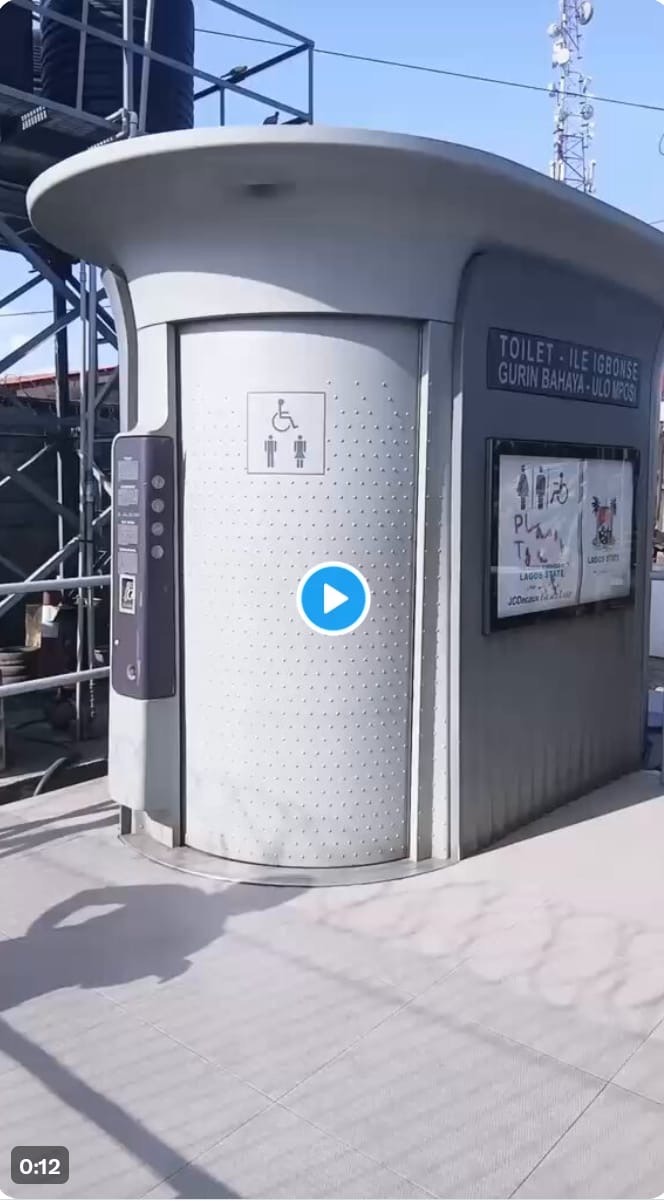
The Lagos State Government has disclosed that it has provided 1,710 functional public toilets across the state as part of ongoing efforts to eliminate open defecation and improve sanitation.

The Commissioner for Environment and Water Resources, Tokunbo Wahab, said the facilities have been strategically located to serve residents and visitors, noting that the initiative is part of a broader commitment to achieving a cleaner and healthier environment.

Wahab, however, stressed that government efforts alone are insufficient to tackle the sanitation challenge, calling on private businesses—including filling stations, banks, eateries, and other public-facing establishments—to make their restroom facilities accessible to the public where feasible.

According to him, such collaboration would significantly expand access to sanitation services and complement government infrastructure.

The commissioner also reiterated that the state would continue strict enforcement of environmental sanitation laws, warning that individuals caught engaging in open defecation would be arrested and prosecuted in line with existing regulations.

He described the measures as essential to safeguarding public health, preserving human dignity, and maintaining environmental cleanliness.
Wahab emphasized that access to proper sanitation is a shared responsibility, urging residents and businesses to actively support the state’s efforts to keep Lagos clean, safe, and habitable.

Cross River: Scholars, technocrats rally support for Tinubu, Otu, Jarigbe

0


Ahead of the 2027 general elections, a coalition of scholars, technocrats and other stakeholders in the Cross River North Senatorial District, under the JARILEAGUE, has officially endorsed President Bola Ahmed Tinubu, Governor Bassey Otu, and Senator Jarigbe Agom for re-election.

The endorsement followed an extraordinary meeting in Calabar, where members conducted what they described as an objective assessment of the leaders’ impact on the state and nation.

Speaking at the session, the coalition’s coordinator, Professor Egaga Patrick of the University of Calabar, stated that the decision was rooted in the visible progress recorded despite prevailing economic challenges.

He specifically cited the Tinubu administration’s infrastructure projects, tax reforms, and subsidy removal as necessary steps toward repositioning the national economy.

Turning to state-level performance, the group commended Governor Bassey Otu for “deliberate innovations” in the education sector and the revival of Tinapa and the Obudu Mountain Resort.

On the legislative front, the group highlighted the scorecard of Senator Jarigbe Agom, noting that at least one project—ranging from solar-powered boreholes and road grading to healthcare facilities—is either completed or ongoing in each of the 54 wards within the senatorial district.

Further commendations came from community leader Ntufam Effenji Odey, who praised the trio’s commitment to youth development, while Professors Jacob Owan and Anthony Bullem described the endorsement as a reflection of public confidence in “purposeful leadership”.

Sun

Osun APC governorship aspirant declares for senate seat, demands consensus slot

0

The Chairman of Mutual Benefits Assurance, Dr Akin Ogunbiyi, has said he hopes to emerge as the consensus candidate of the All Progressives Congress (APC) for the Osun West Senatorial District.

Ogunbiyi, who was a governorship aspirant, made the remarks in Iwo yesterday during a stakeholders’ meeting with APC leaders in the senatorial zone, where he declared his ambition for the Senatorial seat.

He said the leadership of Osun West is aligned with him and that they have agreed to support Bola Oyebamiji as the APC governorship candidate.

Ogunbiyi, who contested the governorship ticket, added that since the party has already chosen consensus for the governorship ticket, the zone should also adopt consensus for his senatorial ambition.

He claimed he is the only aspirant being unanimously backed for the senatorial seat, stating that the party leaders have unified behind him.

According to him, his antecedents, profile and experience would benefit the people if elected as senator. He also cited his education and the fact that he employed over 5,000 people through a company he started more than 31 years ago, saying this experience equips him to serve effectively.

Ogunbiyi further said he is doing everything possible to support Oyebamiji’s governorship campaign and believes he has a strong chance of becoming the consensus senator for Osun West.

Saturday Sun notes that former deputy governor Benedict Alabi and governorship aspirant Dotun Babayemi, who attended the meeting, are also in the race.

Sun

Hijab: Sheikh Gumi fumes as Abuja CBT centre blocks candidate from UTME hall

0


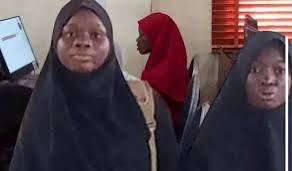
Islamic cleric Sheikh Ahmad Gumi has demanded an investigation into allegations that a school in Abuja blocked a female candidate from writing the Unified Tertiary Matriculation Examination (UTME) for wearing a hijab.

Gumi made the call in a Facebook post on Saturday following the circulation on social media of a video that captured the incident.

In the video shared by Northern Magazine, security personnel at the Joint Admissions and Matriculation Board (JAMB) Computer-Based Testing (CBT) centre located within the unnamed school could be seen appearing to turn away a hijab-wearing female candidate during security checks while admitting other candidates not wearing one.

Gumi said such behaviour should not be tolerated.

He said, “A school in Abuja prevented a Hijabi from entry in the JAMB hall, as reported.

“This needs to be investigated and the centre punished. What kind of bigotry is in our country? This should never be tolerated.”

SunOnline reports that a similar incident was reported at the Esther Oshikoya CBT Centre in Ibadan, Oyo State, on Thursday.

Reacting to the incident in a statement signed by its Public Communication Advisor, Fabian Benjamin, JAMB blamed it on “overzealous” ad hoc staff and emphasised that the action was not part of its official procedures.

The examination body said it directed that no candidate wearing a hijab should be asked to remove or alter it.

Sun

State Police: IGP under fire over 60-month proposal

0


When Olatunji Disu assumed office as the Inspector General of Police (IGP), terrorists and other criminal elements were and are still holding the nation by the jugular.

Soon after he was decorated, the IGP got the mandate of President Bola Tinubu to work out modalities for the establishment of State Police. He later set up a committee to work out a framework for the decentralisation of the police force in the country.

The IGP’s recent pronouncement of a 60-month take-off plan for the new era of policing has, however, infuriated many Nigerians and interest groups who had under successive governments, clamoured for the decentralisation of the force in order to bring policing closer to the people.


IGP’s position disappointing – MBF, Coalition of Northern Groups

The Middle Belt Forum (MBF) and the Coalition of Northern Groups have come down hard on the IGP, describing his stance as disappointing. The groups noted that Nigeria is headed for more disaster.

Dr Bitrus Pogu, President of the MBF, said the stand of the IGP was disappointing, adding that President Tinubu made a mistake in relying on the IGP, whom he noted is only interested in protecting his office.

Pogu said: “To us, it’s a disaster, let the president refer to individual states to give their recommendations.

“Before the military took over governance after the 1966 coup, we saw gradually how Native authority police, which we can equate with the State Police was in existence and was serving the needs of our native authorities and communities; and at that time people were not even concerned about the existence of the Nigerian Police, and many people only knew the Native Authority Police for maintaining law and order. The other security operative they saw at that time were palace guards of the traditional rulers.


“After the first coup, the military now merged everything and abolished the Native Authority Police just because we created states, starting with 12, and gradually increased to 36 plus the FCT.

“We are only saying we need policing to be close to the people. For the IGP to take that position, he’s just saying, leave insurgency to continue the way it is, and let my office enjoy the benefits of the funds that are coming into the security network while Nigerians continue to bleed. It is unacceptable to us and it’s unfortunate that such a recommendation has been made.

“We, the Middle Belt Forum and southern friends of the socio-cultural groups have established a committee, comprising very senior retired police and retired military officers – former IGPs are members of that committee. They are going to give recommendations that we believe would serve Nigerians better.

“We need County Police because we are pluralistic in terms of religion and we are so rich in diversity, especially in the Middle Belt, where the majority of nationalities exist; some of such people will not even be served at the state level, but at local government level.

“So, we will bring out something that we believe is workable, which will serve Nigerians better, but what the IG has done is unacceptable.

Aliu Jaliu Charanchi, National Coordinator of Coalition of Northern Groups, said the 60-month timeline is not just disappointing, but also a cruel insult to Nigerians.

According to him, his group once opposed the creation of state police because of fear of abuse, but when the centralised system failed completely, they had to embrace it as necessary.

“Now, you tell us to wait for five more years. That is not policy, it is negligence. People are dying today, not in some distant future.

“The North is under siege, bandits, terrorists, and criminal gangs are tearing communities apart. This is a national emergency, not a bureaucratic exercise. Any delay in security reform is reckless and inexcusable.

“As for the IGP, he has no moral ground to dictate this process. Asking the beneficiary of a broken system to midwife its reform is absurd. He is not sincere; he is protecting power, not people. His silence in the face of bloodshed says everything.

“State policing is a constitutional matter; it belongs to the legislature and the Nigerian people, not an overreaching police chief. Yet, what do we have? A National Assembly that has proven itself weak, indifferent, and complicit. When leaders admit they know about the violence and still fail to act, it stops being incompetence, it becomes complicity. “Enough is enough. Nigerians deserve action, not excuses.”

Afenifere kicks against 60-month transition plan

Pan-Yoruba socio-political organisation, Afenifere, has rejected the proposed 60-month transition period for the take-off of state police.

The group warned that such a delay could derail efforts to tackle Nigeria’s worsening insecurity. It described the plan as unrealistic and counterproductive, and insisted that the country could not afford to wait for five more years to confront escalating violence, kidnapping, and terrorism.

“It is no longer news that criminality, even in the form of terrorism, is at an alarming level in Nigeria. Many of us believe that decentralising the police is one of the most effective ways of addressing this intractable problem,” Afenifere said.

Reacting to the proposal linked to the IGP, the group queried the rationale behind the timeline.

“Does it mean Nigeria should wait for another five years to tackle insecurity? No. If the police authorities think so, many Nigerians, including Afenifere and the Yoruba people, strongly disagree. We want urgent action,” it stated.

Afenifere’s National Publicity Secretary, Jare Ajayi said insecurity remains Nigeria’s most critical challenge, warning that no meaningful progress can be made without safety.

“Without security, the economy, politics, and social life become secondary. Only those who are alive, safe, and healthy can participate in national development.

“Today, lives have become relatively cheap, given the rate of kidnappings, attacks on communities, and displacement of citizens. Are we to wait for five years to end this?” he asked.

Ajayi argued that Nigeria’s centralised policing structure has failed, citing global examples of decentralised systems.

“Countries like the United States, India, and Canada operate decentralised policing with proven effectiveness. That is the direction Nigeria must go,” he said. He insisted that if the Federal Government is serious, State Police should become operational before the end of 2026.

While acknowledging the need for constitutional amendments, Ajayi proposed an interim measure. “A presidential order can allow willing states to establish their own police immediately, while the National Assembly fast-tracks constitutional reforms,” he said.

South-East groups fault IGP

The Igbo Heroes and Icons Foundation (IHIF), and the Coalition of South East Youth Leaders (COSEYL) have raised concerns over the proposed 60-month timeline for the creation of State Police in Nigeria, stating that the plan fails to match the urgency of the country’s worsening security situation.

National Coordinator of IHIF, Chinedu Nsofor said the timeline is too long in the context of rising insecurity across different parts of the country. The group pointed to persistent incidents of kidnapping, banditry, and violent attacks affecting communities nationwide, arguing that delayed implementation would not address immediate threats.

“Security interventions require faster response measures, even if broader structural reforms are still being developed,” the group declared.

While acknowledging that the IGP has a duty to provide professional input on policing strategies, IHIF stressed that creating State Police remains a constitutional issue under the National Assembly and state legislatures.

“Technical recommendations from the police are expected, but decisions on timelines and implementation ultimately rest with political authorities,” Nsofor said. The group questioned whether the extended timeline reflects administrative caution or institutional reluctance to decentralise policing. It noted, however, that parts of the proposal, including safeguards against misuse and defined funding structures, show attempts to address common concerns around state policing.

IHIF argued that Nigeria’s centralised policing system has long faced criticism over response time and local intelligence gathering. “Decentralisation, if properly structured, could improve efficiency,” the group said, but warned that delays in rollout risk prolonging existing security gaps.

It called for a more time-bound approach that balances legal requirements with urgent intervention needs. It suggested phased or pilot schemes could run while constitutional processes continue.

Also South-East youth leaders under the aegis of COSEYL rejected the IGP’s 60-month timeline for the take-off.

The Igbo group faulted the IGP’s proposal and implementation plan, describing it as being over-prolonged and disconnected from current security realities.

President General of the group, Comrade Goodluck Ibem said the five-year delay comes at a time when kidnapping, banditry, communal clashes and violent criminality continue to escalate nationwide.

The group said Nigerians need responsive, community-based policing structures now as a five-year wait risks further loss of lives and property.

It’s insincere, insensitive – Tivi group

President General of Mdzough U Tiv Worldwide, Chief Iorbee Ihagh, condemned the 60 months proposed by the IGP for the establishment of State Police, pointing out that it is insincere and insensitive in the face of killings across the country. Ihagh, a retired Comptroller of Prison, while flaying the IGP’s proposal, said in view of the heightened killings in the country, the establishment of State Police should take immediate effect.

He noted that the police chief’s suggestion that it should be implemented in 60 months, after he must have left office, shows the president wants to stay and leave office without doing anything for Nigerians.

He said: “It’s not good at all. I don’t know why the president is behaving the way he is. There are a lot of killings everywhere in Nigeria and he is not bothered about it and the government exists primarily for the protection of lives and property.

“Look at how a General was killed and it didn’t move him. If a soldier of that rank can be killed and nothing happens, they will just say they are in control; that it won’t happen again but the next day it happens again.

“State Police is the most important thing we need now. Why wait for 60 months? By that time he will be out of office. That is if he wins the next election, I don’t think he is qualified.

“That is his thinking, he is not thinking for the country, he is not working for the country; he is working for his own interests. People are dying economically; they are killing people every day; there is hunger everywhere, fuel price is going up and he is making a lot of money; what is he doing with the money? So I condemn that 60 months proposal. I’m not in support. The creation of State Police should be with immediate effect.”

While noting that the IGP is not sincere in his proposal, Ihagh also said “but he is working for Tinubu. It’s what Tinubu wants that he does.”

Northern Christians, NRM flay IGP’s plan

The leadership of the Chairman of Northern Christian Elders Forum (NOSCEF), and the National Rescue Movement (NRM) expressed dissatisfaction over the stance of the IGP on the transition period for the creation of State Police.

Elder Sunday Oibe, chairman of the Christian group said the IGP shouldn’t have had anything to do with the formation of the new police outfits but that it should have been left for the various states to fashion out how best to deal with the formation and operations should be structured, just like the Hisba, Amotekun, and other regional based security outfits.

“I don’t see any sincerity in the 60 months proposed by the IGP. In the first place, in 60 months, both he and the current administration will be out of office. Secondly, he knows that this is not workable hence, his proposal for the delay knowing full well that another administration will throw it out.”

Similarly, Rev. Emmanuel Olorunmagba, a chieftain of the NRM), said the plan of the IGP “to delay the actualisation of State Police by as much as 60 months raises serious concerns, especially given the dire security situation confronting our nation today.

“At a time when communities across Nigeria are grappling with kidnapping, banditry, and other violent crimes, any suggestion that meaningful reform should wait for five years is both troubling and difficult to justify.

“On the substance of the proposal, one must ask, can Nigeria afford to wait for that long? From the North-West to the Middle Belt and beyond, citizens are living in fear, and the limitations of a highly centralised police structure have become glaringly obvious.

“While we acknowledge that structural reforms require planning, coordination, and safeguards, a five-year timeline signals a lack of urgency that is out of step with the scale of the crisis. What Nigerians expect and deserve is a clear, accelerated roadmap with measurable milestones, not an extended postponement of action.

“Second, regarding the sincerity and role of the Inspector-General, it is important to emphasise that the question of state policing is fundamentally a constitutional and legislative matter. It falls squarely within the purview of the National Assembly and the State Houses of Assembly to initiate and conclude the legal framework required. The role of the police leadership, including the IGP, should be to provide professional, non-partisan input based on operational realities, not to shape the political timeline of such a critical reform in a way that may be perceived as delaying progress.

“While we do not question the need for careful implementation, indeed, issues such as funding, training, oversight, and safeguards against abuse must be properly addressed. We must also guard against proposals that inadvertently reinforce the status quo. Nigerians have waited long enough for a policing system that is closer to the people, more responsive, and better equipped to tackle local security challenges.

“While planning is essential, urgency is indispensable. The security of lives and property cannot be placed on a five-year waiting list. What is required now is decisive leadership, legislative action, and a commitment to fast-track reforms that will bring policing closer to the communities.

Rivers group demand responsive, swift security architecture

The Rivers Peace Initiative (RPI) has declared that the proposed 60-month timeline is unacceptable. Convener of the group, Obinna Ebogidi, pointed out that while long-term planning is understandable for a reform of this scale, the immediacy of the security challenges citizens are facing today calls for more urgent and practical measures.

He said Nigeria needs a security architecture that is responsive and closer to the citizens.

Ebogidi observed that the security challenges across the country, specifically in some parts of Rivers State, make the need inevitable.

He said: “The conversation around State Police has become even more urgent in light of recent security concerns being witnessed in parts of Rivers State, including reports from Ikwerre and Etche Local Government Areas.”

He emphasised that communities need to feel protected always, not just assured of future reforms.

Ebogidi continued: “Regarding the role of the Inspector-General of Police, it is important to note that the establishment of State Police is fundamentally a constitutional matter that requires legislative action and broad national consensus.

“However, contributions from security leadership can help shape the conversation, provided they align with democratic processes and inspire public confidence.

“The focus should be on strengthening trust, improving accountability, and ensuring that both immediate and long-term security solutions are pursued in a balanced manner.”

IGP’s comment proof of fear of losing power – Ijaw Youth Council

The President of the Ijaw Youth Council (IYC), Jonathan Lokpobiri has slammed the Inspector-General of Police, over his comments on the 60 months before the take-off of the State Police.

Lokpobiri stated that the IGP’s comments indicate that he is averse to State Police creation because he is losing power.

According to him, the government does not want the implementation of State Police to succeed because it would benefit the masses. That is the reason they deployed the tactics being employed by the IGP.

“What does the IGP mean by his proposal; which government even has a life span of five years in Nigeria? When the government does not want things that benefit the people to survive, this is how they go about their design.

“Perhaps the IGP is afraid that the State Police will whittle down his powers over police formation across Nigeria. But the State Police is not designed to have a State IGP. So, I am wondering why the IGP is afraid, such that his interest is in the duration it will take for the take-off.

“The issue of State Police is what Nigerians need now, not even tomorrow. We know where IGP is going with his comments. The truth is that we don’t even need the approval of the IGP to start State Police to secure our communities.

This is imperative because of the activities of marauding criminals who are raping our women, while policemen posted to our territory have sympathy for them.

“So, we want our own natives as policemen, legally armed to deal with criminals invading our land. We won’t wait for IGP’s approval. The issue of State Police was needed yesterday; we won’t wait again to start it.”

Sun
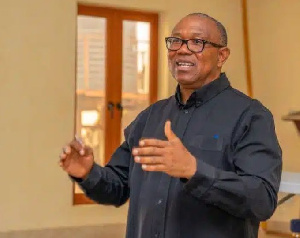
ADC Convention ‘Disorganized, Directionless,’ Says Femi Fani-Kayode

0


A former Minister of Aviation, Femi Fani-Kayode, has sharply criticized a recent factional convention of the African Democratic Congress (ADC), describing the gathering as disorganized and lacking direction.

In a statement shared publicly, Fani-Kayode recounted his observations of the event, which he said was marked by internal disagreements, poor organization, and what he portrayed as an absence of cohesion among participants.

According to him, the convention was held in a crowded venue with inadequate facilities, where attendees reportedly struggled with heat and discomfort. He alleged that tensions escalated during proceedings, leading to verbal altercations and moments of confusion among party members.

The former minister also highlighted what he described as “embarrassing incidents” during the event, including a speaker who mistakenly referenced another political party while addressing the gathering.

He claimed such occurrences reflected deeper issues within the faction.

Fani-Kayode further criticized the tone of speeches delivered at the convention, alleging that some remarks made by participants were unrealistic and indicative of a lack of strategic direction ahead of the 2027 general elections.
The outspoken politician concluded that the ADC, particularly the faction involved, faces significant challenges in presenting itself as a viable political force, asserting that the party is unlikely to make meaningful progress without internal cohesion and clear leadership.

The African Democratic Congress has yet to officially respond to the claims.

Brazilian firm, Petrobras, teams up with Arthur Eze’s Oranto Petroleum in offshore oil block operation in Central Africa

0


Brazil’s Petrobras has signed an agreement to acquire 75 per cent stake and assume operatorship of Block 3 offshore São Tomé and Príncipe from Oranto Petroleum.

The oil block is currently held by Oranto Petroleum, which has a 90 per cent interest and acts as operator, alongside the National Petroleum Agency of São Tomé and Príncipe (ANP-STP), which holds 10%.

Following completion of the transaction, the consortium will comprise Petrobras as operator with 75 per cent, Oranto with 15 per cent, and ANP-STP retaining its 10 per cent stake.

The deal is part of Petrobras’ strategy to strengthen exploratory activities in Africa and diversify its portfolio, as the company seeks to replenish oil and gas reserves through new frontier exploration and partnerships.

Petrobras resumed activities on the African continent in 2024 and already holds interests in blocks in São Tomé and Príncipe.

Completion of the transaction is subject to customary conditions, including government and regulatory approvals in São Tomé and Príncipe.

Billionaire, Prince Arthur Eze, founded Oranto Petroleum as African-focused exploration and production group.

Oranto Petroleum holds 21+ oil and gas licences across 11 countries, including Nigeria, Liberia, and South Sudan.

Early this year, Oranto Petroleum secured four offshore blocks in Liberia (LB-15, LB-16, LB-22, LB-24) with plans to invest $200 million per block.

Sun

Oyo schools struggle despite ₦N459bn education budget in 10 years

0


Oyo State has allocated more than ₦459 billion to education over the past decade, with the sector receiving funding exceeding 20 per cent of the annual budget in recent years.

Yet many public schools remain short of teachers, inadequate facilities, and inconsistent learning outcomes.

This special report investigates why huge spending has not translated into better learning outcomes for students across the state.

Impressive funding, but…

Analysis of budget data from 2016 to 2025 indicates that education received ₦459.35 billion out of a total ₦2.72 trillion, representing about 16.85 per cent of total spending. Annual allocations rose from ₦6.1 billion in 2016 to ₦145.35 billion in 2025. Despite the impressive figures, interviews with stakeholders and a review of available records suggest that increased funding has not consistently translated into improved learning conditions.


Entrance of Ikolaba Grammar School

Oyo State budget: A decade in review

Examining the annual allocations to education tells a tale of highs and lows. In 2016, the sector received ₦6.1 billion, 5.5 per cent of the total budget. The following two years saw further dips: ₦5.6 billion (4.4 per cent) in 2017 and ₦5.69 billion (4 per cent) in 2018.

By 2019, however, education got a significant boost, ₦18.2 billion, representing 10 per cent of a ₦182 billion budget. The tide truly began to turn in 2020, when the sector received ₦37.4 billion, 20.6 per cent of the ₦181.2 billion total. The upward momentum continued: ₦56.3 billion (21 per cent) in 2021, ₦54.1 billion (18.37 per cent) in 2022, ₦58.21 billion (18.78 per cent) in 2023, and ₦90.6 billion (20.88 per cent) in 2024.


The 2025 budget marked a high point, with ₦145.354 billion, which was 21.44 per cent of the total ₦678.086 billion, allocated to the sector.

It was gathered that while the numbers signal strong commitment on paper, the real measure lies in how the investments translate into learning outcomes for children in classrooms across the state.

High education spending, low academic outcomes

While education spending in Oyo gained momentum after 2019, crossing the 20 per cent benchmark in several years, available records of the West African Senior School Certificate Examinations (WASSCE) performance indicate fluctuating outcomes.


Ongoing ceiling of a classroom at Ikolaba Grammar School

In 2017, Oyo State celebrated its best result in 18 years, with a 54.18 per cent pass rate. Yet by 2025, the pass rate fell to 38.32 per cent. While officials linked the 2025 dip partly to examination hiccups, prompting the West African Examination Council (WAEC) to re-conduct some subjects at selected centres, stakeholders say the deeper issues are systemic.

A teacher, Nike Olalere, said irregularities during the 2025 examinations affected candidates’ performance.

She said: “You cannot really blame the Oyo State Government for the low pass rate in the 2025 WAEC results. The way the examination was conducted was an issue too.”

A parent, Dayo Adeniran, who said her son attended a public secondary school at Oluana, Idi-Ose in Akinyele Local Government, identified systemic issues like underfunding, poor teacher welfare, lack of running cost for some schools, buying of chalks and other materials by teachers themselves, and poor infrastructure in some schools as some of the factors contributing to low pass rate in qualifying examinations.

Beyond classrooms and exams, the human toll of educational deficits has also been described as stark.

The 2021 Multiple Indicator Cluster Survey (MICS6), conducted by the National Bureau of Statistics (NBS) and released in August 2022, revealed that Oyo State has the highest number of out-of-school children in the South West region, totalling approximately 227,842.

Missing links in spending

While Oyo State’s decade-long investments in education are substantial, transparency around how the funds are spent remains limited. Efforts to obtain detailed budget performance data from 2016 to 2025, including actual releases and expenditure breakdowns, were unsuccessful, as officials declined to provide the information.

Without this, it is difficult to determine how much of the ₦459 billion was released, how it was utilised, and what outcomes it achieved.

A subsequent request to the Ministry of Budget and Economic Planning produced data for the period, but discrepancies emerged when compared with publicly available records.
Visits to schools

At St. Stephen Anglican Primary School, a signpost lists projects funded under a World Bank-supported programme: renovation of a block of four classrooms, provision of school furniture, and drilling of a unit motorised borehole.

Within the same compound sit two schools with the same name—School One and School Two. School One appears relatively functional. In School Two, a block of classrooms stands dilapidated and unused.

A teacher directed the reporter to the head teacher, who declined to comment and referred all enquiries to the Ministry of Education.

“We cannot give you any information concerning this school. Kindly go to the Ministry of Education for any information. Please, don’t take pictures. If you do, you will put us in trouble. After you might have obtained clearance from the ministry, you can then come back,” one of the head teachers said.

A parent, who pleaded anonymity said, “I have two children in the school and I know the school very well. The government is trying but we still have a long way to go. A set of furniture was approved for this school in 2018. Can you imagine that the furniture were delivered to this school in February 2026?

“The school has a toilet, but it has gone bad. Then, there is no water. There is no borehole in the school. Whenever my children want to defecate, they come home,” she added.

One of her children, who did not go to school on that day, also told this reporter: “We can only come home to defecate during break time. If it is not break time, we usually lay papers or nylon on the ground and defecate into it. After that, we would carry the faeces and throw it into the latrine. We do this because the toilet is bad.”

A short distance away, at Community High School, Alegongo, Ibadan, renovation works were on-going across several classroom blocks, including new roofing and the installation of iron doors and windows. The administrative office was also being renovated, while construction of the perimeter fence continued.

Though the school principal and teachers did not agree to give any information, some of the students said the school has a well, from where they fetch water under close supervision of teachers. They added that they fetch the water into buckets for use in the toilets.

At Ikolaba Grammar School, near the Government House Quarters in Ibadan, renovation work was also in progress.

The school has separate toilet facilities for male and female students, supported by a borehole and a big overhead aluminium-like tank, which serves as the water reservoir.

Yet, as in other schools visited, the principal declined formal interviews and directed enquiries to the Ministry of Education.

Hidden barriers in classrooms

Executive Director, Mentoring Assistance for Youths and Entrepreneurs Initiative (MAYEIN), Ewa Orowale, said inadequate water and sanitation facilities disproportionately affect girls’ education.

“In schools lacking functional toilets and running water, a girl can miss up to 15 days in a term due to menstruation.

“Some toilets are reserved for teachers, forcing students to fetch water themselves. Others resort to going into the bush, exposing them to dangers, ranging from molestation to attacks by wild animals,” she explained.

She also mentioned insufficient classrooms, perimeter fencing deficits, outdated curricula, lack of sickbays, bullying, and challenges with teacher quality and attitude as other factors that compound educational inequities, particularly for female students.

Government responds

Executive Chairman, Oyo State Universal Basic Education Board (SUBEB), Dr Nureni Adeniran, said the Seyi Makinde administration has invested in infrastructure, teacher training and recruitment since 2019.

He stated that 13,859 staff have been trained, 289 classroom blocks and 60 model schools constructed, and 229 classrooms renovated, alongside the provision of desks, furniture and boreholes.

“The administration’s vision to drastically reduce the number of out-of-school children is gaining momentum daily,” Adeniran said.

He noted that about 60,000 children have returned to school. He added that 5, 678 teachers and 80 caregivers have been recruited, with on-going UBEC and BESDA projects delivering more facilities.

Meanwhile, the Chairperson, Teaching Service Commission (TESCOM), Olubukola Oladipo, said staff strength in secondary schools increased from 13, 730 in 2019 to 26, 436 after the recruitment of 10, 500 teaching and non-teaching staff.

“The expansion not only improves students’ academic performance but also provides employment opportunities with multiplier effects on households,” Mrs Oladipo said

She added that the state now operates 10 educational zones to improve service delivery.

Also, the Special Adviser to the Governor on Education Intervention, Suraj Tiamy, said 36 public schools are currently being renovated, with plans to reach about 100 in 2026.

“In each of the schools, we have four cubicle toilets. Additionally, there is also a borehole with solar light for clean water,”

Tiamy added that schools without boreholes would be covered before project completion. He noted that ₦10 billion was allocated in 2025 for renovations, covering classrooms, fencing, water supply and sanitation facilities.

• This report was facilitated by DevReporting in partnership with Education As a Vaccine (EVA) and supported by the Malala Fund.

Sun