Home Blog Page 485

Silenced by Fear: How Stigma and Culture Sustain the Underreporting of Domestic Violence

0

By Oluwatoyin Omotayo Esq

Domestic violence is one of the most pervasive human rights violations in the world today, yet it remains one of the least reported. While global statistics suggest that one in three women will experience some form of intimate partner violence in their lifetime, these figures only scratch the surface. Beneath them lies a deeper, more troubling reality, millions of cases remain hidden, unspoken, and unrecorded. The silence is not accidental, it is shaped by fear, reinforced by stigma, and sustained by cultural norms.

At the heart of underreporting is fear. Survivors often weigh the consequences of speaking out against the uncertainty of what follows. For many, reporting abuse does not guarantee safety, instead, it may escalate violence. Abusers frequently use threats of further harm, financial deprivation, or even death, to maintain control. In some cases, survivors fear losing custody of their children, being abandoned without financial support, or facing homelessness. When survival itself feels uncertain, silence can appear to be the safer choice.

This fear is compounded by a lack of trust in institutions. In many parts of the world, survivors question whether law enforcement or judicial systems will protect them or dismiss their experiences. Stories of victims being blamed, disbelieved, or retraumatised during reporting processes circulate widely, discouraging others from coming forward. When systems meant to provide protection instead become sources of secondary harm, underreporting becomes not just likely, but inevitable.

Stigma plays an equally powerful role. Domestic violence is often surrounded by shame, particularly in societies where family image and social reputation are highly valued. Survivors may internalise blame, believing they are responsible for the abuse or that they have failed in their roles as partners or spouses. The fear of being judged, ostracised, or labeled as “problematic” keeps many trapped in silence.

For women especially, societal expectations around endurance and sacrifice deepen this stigma. In some communities, leaving an abusive relationship is seen as more disgraceful than enduring it. Survivors are often told to “be patient,” “pray more,” or “keep the family together,” subtly reinforcing the idea that their suffering is a duty rather than a violation. This normalisation of abuse blurs the line between what is unacceptable and what is tolerated, making it harder for victims to even identify their experiences as abuse.

Cultural factors further entrench underreporting. In many societies, domestic violence is viewed as a private matter, something to be resolved within the home rather than exposed to the public or legal system. This belief creates an environment where intervention is discouraged, and silence is expected. Traditional gender roles can also reinforce power imbalances, granting men authority and limiting women’s autonomy, particularly in financial and decision-making matters. When dependence is built into the structure of relationships, leaving or even reporting becomes significantly more difficult.

In countries where cultural norms strongly emphasize respect for elders, marital permanence, or community cohesion, survivors may face intense pressure from family members to remain silent. Reporting abuse can be seen not only as a personal decision but as an act that brings shame upon an entire family. In such contexts, survivors are often isolated, caught between personal safety and collective expectations.

The intersection of fear, stigma, and culture creates a powerful barrier to reporting. It is not simply that survivors choose silence, rather, silence is often the only option that feels viable within the constraints they face. Understanding this is crucial. Efforts to address domestic violence cannot focus solely on increasing reporting rates without addressing the underlying conditions that make reporting unsafe or undesirable.

Breaking this cycle requires a multi-layered approach. First, systems must become genuinely survivor-centred, ensuring that those who report are protected, believed, and supported. This includes strengthening legal frameworks, improving law enforcement responses, and providing accessible shelters and financial assistance.

Second, public narratives must shift. Challenging stigma means actively confronting victim-blaming attitudes and redefining societal expectations around relationships and resilience. Survivors should not be seen as weak for leaving or speaking out, they should be recognized for their courage.

Third, cultural engagement is essential. Change cannot be imposed externally, it must come from within communities. Religious leaders, traditional authorities, and local influencers have a critical role to play in reshaping norms and speaking out against abuse. When respected voices challenge harmful beliefs, they create space for new, healthier narratives to emerge.

Finally, education remains a powerful tool. Teaching young people about healthy relationships, consent, and respect can disrupt the intergenerational transmission of violence. When future generations are equipped with the language and understanding to recognise abuse, the silence that surrounds it begins to weaken.

Underreporting is not merely a statistical issue, it is a reflection of deeper societal failures. It reveals where fear overrides safety, where stigma silences truth, and where culture protects harm instead of people. Addressing it requires more than awareness, it demands structural change, cultural introspection, and a collective commitment to ensuring that no survivor feels that silence is their only option.

Until then, the true scale of domestic violence will remain hidden, not because it does not exist, but because too many are forced to endure it unseen.
Oluwatoyin Omotayo Esq is the
Founder TOOF
Why Many Stakeholders See Sen. Sharafadeen Alli as Oyo’s Best Bet for 2027

0

After Winning Daily Independent’s 2025 Best Legislator Award
By seun oloketuyi

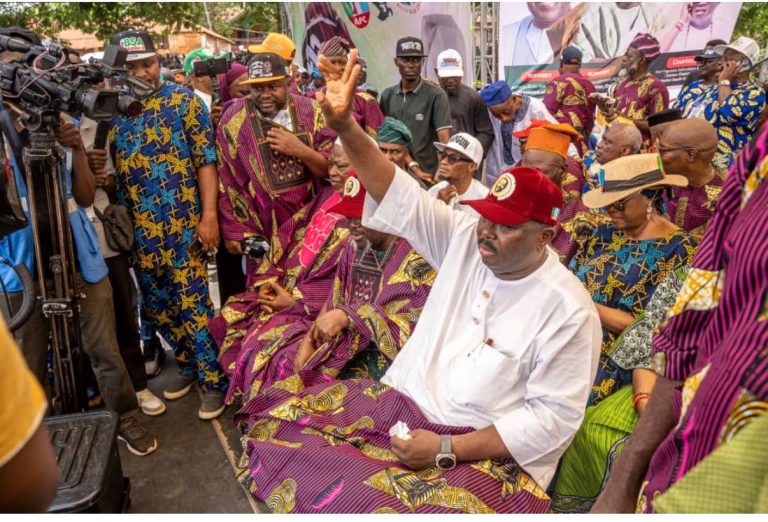
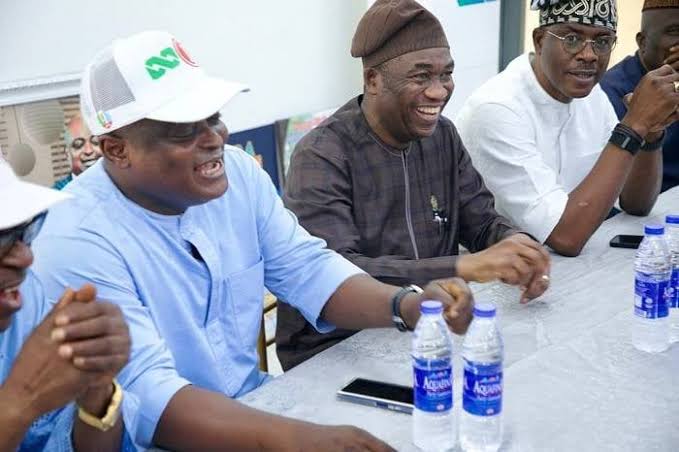
As the race for the 2027 Oyo State governorship gradually gathers momentum, growing voices within the All Progressives Congress (APC) are presenting Sharafadeen Abiodun Alli as a leading contender whose experience and policy direction position him as a strong option for the state’s next leadership. Supporters argue that his long standing involvement in governance across multiple levels gives him a rare blend of grassroots and executive experience. Notably, his profile received a further boost after he was honoured with the 2025 Best Legislator Award by the Daily Independent in Lagos.
Alli’s political journey began at the local government level as chairman of Ibadan North Local Government in 1991, a role often credited with shaping his grassroots appeal. He later moved to the heart of state administration, serving as Secretary to the State Government and Chief of Staff under former governor Rashidi Ladoja from 2003 to 2007, where he was involved in coordinating policies and overseeing implementation. His tenure as chairman of the Odu’a Group further expanded his profile into economic and corporate governance before his election to the Senate to represent Oyo South.
Within the All Progressives Congress, party leaders in the influential Ibarapa zone have already endorsed him as their preferred aspirant, citing his loyalty to the party, ability to unite stakeholders, and deep connection with grassroots structures. His declaration in Ibadan attracted key APC figures, including Minister of Power Adebayo Adelabu, former First Lady Florence Ajimobi, and Senator Teslim Folarin, reinforcing perceptions of growing internal backing.
Beyond endorsements, Alli has laid out a policy blueprint that focuses on strengthening local government autonomy, improving security, repositioning education as a hub for innovation, upgrading healthcare services, and revitalising the state economy through agriculture, rural electrification, and better road networks. Supporters say the agenda directly targets issues many residents identify as their most pressing concerns.
He has also criticised the Peoples Democratic Party led administration in the state, promising to address perceived governance lapses and revive local government administration. At the same time, his alignment with the reform agenda of President Bola Ahmed Tinubu is viewed by party insiders as a signal of potential federal–state collaboration that could attract development opportunities.
While the APC primaries remain ahead and other aspirants are expected to emerge, supporters say Alli’s mix of experience, endorsements, legislative recognition and policy focus explains why many within the party are already describing him as Oyo’s “best bet” for the 2027 governorship race.

LAGOS 2027: Hamzat Is Incoming Governor – Ojelabi, Obasa

0


”*According to Speaker Obasa, “Our father and Leader, The President has Spoken, he has told us the direction to go, and by the Grace of Almighty God, Insha Allah, Dr Obafemi Hamzat, the Deputy Governor is our incoming Governor in Lagos, come 2027.”*

The bid by the Deputy Governor of Lagos State, Dr. Kadri Obafemi Hamzat, to secure the All Progressives Congress (APC) governorship ticket got a boost on Thursday as the party’s chairman, Pastor Cornelius Ojelabi, backed the aspirant.
Also, the Speaker of the House, Hon. Mudasiru Obasa, Senator Ganiyu Olarenwaju Solomon (GOS), and other party chieftains declared their support for Hamzat.
They spoke during consultation parleys with the party leaders.
Hamzat led his team and visited the APC’s secretariat, located at Acme Road, Ogba, where he met the party leaders, including Ojelabi, in the company of the State Working Committee.
He also consulted Obasa and Senator Solomon at their residences.
Addressing the party leaders, Dr. Hamzat assured them of his plans for Lagos. According to him, the importance of Lagos in Nigeria cannot be overemphasized.
“The truth of the matter is that if Lagos fails, Nigeria will have problems and we must not fail.
“More so, we must ensure that what happened in 2023 should not happen again in 2027. We must ensure a resounding victory for our leader, Asiwaju Bola Tinubu in the next election and ensure a similar victory for APC in Lagos.
“Our opponents are trying to de-market our election, simply because they cannot win. That’s why they’re doing everything possible to disapprove of everything good that has been done by Tinubu’s administration,” he said.
In his response, Ojelabi affirmed the party’s commitment to Hamzat’s political aspirations.
“We support you, we trust you, and we are very confident of your competency and humility,” said Ojelabi.
At the residence of the Speaker of the Lagos State House of Assembly, Mudasiru Obasa, Senator Obanikoro, while extolling Hamzat’s virtue, said any sincere mind that can interrogate Hamzat’s pedigree will know that Lagos is in good hands.
“Lagos must not decline, but must grow higher and higher, and with Dr. Hamzat at the helm of affairs, Lagos will continue to soar higher and higher.”
In his remarks, Obasa affirmed to the gathering that Hamzat’s candidature “has been sealed”. I had discussions with those who matter, and the conclusion is that Hamzat will carry the party’s banner. We love you, we support you, and we will do everything to ensure that we win the election”.
According to Speaker Obasa, “Our father and Leader, The President has Spoken, he has told us the direction to go, and by the Grace of Almighty God, Insha Allah, Dr Obafemi Hamzat, the Deputy Governor is our incoming Governor in Lagos, come 2027.”
Senator Ganiyu Solomon urged Mushin residents to come out on Election Day to cast their votes, saying, “That’s the way you can demonstrate your loyalty to our party and our government.”

Residents Return to Mansur After Military Clears Terrorists

0

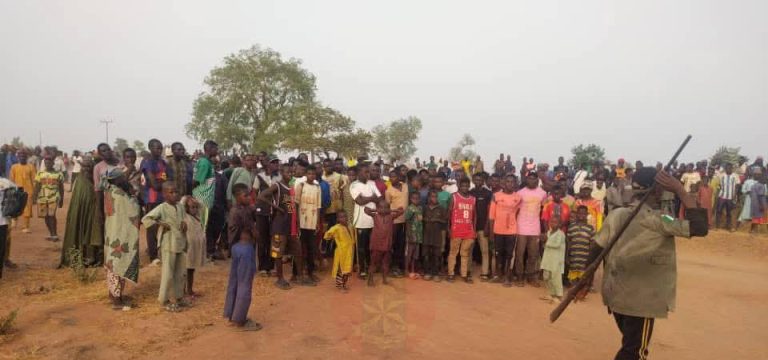
celebration in Mansur, Alkeleri Local Government Area of Bauchi State, on Wednesday, 22 April 2026, as residents returned en masse to reclaim their ancestral homes after months in exile.

The community had been deserted since 26 February 2026 when armed terrorists overran the village and forced families to flee for safety. For nearly two months, farmlands lay fallow and homes were abandoned.

The turnaround began with Operation BUGUN KARKANDA III, directed by Army Headquarters. This was a sweeping clearance operation conducted by the 33 Artillery Brigade. BUGUN KARKANDA III was preceded by Operation WUTAN DAJI, a deliberate follow-up operation aimed at flushing terrorists out of their strongholds.


The operation successfully cleared terrorists from the dreaded Dajin Madam Forest in Plateau State and Kumbodoro Forest in Taraba State. Other areas cleared of terrorists include Yankari Game Reserve, Bogwas and Rimi in Bauchi State, as well as Odere Forest, Shirnagol, Wanka and Kukarlwa in Plateau State. Similarly, Kumbodoro town and Angwan Jauro Sule in Taraba State were also secured.

Following the successful conduct of the clearance operations, communities such as Mansur, which were hitherto under the clutches of terrorists, became liberated.

Consequently, the operations transitioned into the consolidation phase, which involves the handover of cleared towns and villages to relevant security agencies and other Ministries, Departments and Agencies (MDAs) to maintain law and order, as well as facilitate the return of displaced communities to their ancestral homes.
On Wednesday, scenes of joy replaced fear as men, women and children sang and danced their way back into the village. Many were seen inspecting their homes and clearing bushes that had overtaken compounds during the period of displacement.

Community leaders commended the Chief of Army Staff, Lieutenant General Waidi Shaibu, for his swift intervention in restoring peace to the Mansur community, noting that the return of residents marks the beginning of a new chapter. For the villagers, the sight of soldiers on patrol now brings reassurance rather than anxiety.

2027: Lagos Assembly Speaker backs Deputy Governor Hamzat

0


The Speaker of the Lagos State House of Assembly, Mudashiru Obasa, has publicly endorsed Deputy Governor Obafemi Hamzat to succeed Governor Babajide Sanwo-Olu, as the ruling All Progressives Congress (APC) prepares for its Lagos governorship primary next month.

Obasa made the declaration when Dr. Hamzat paid him a visit at the Speaker’s Lodge in Ikeja, Lagos.

“I give my full support to it. I give it wholeheartedly, and I do not give such support elsewhere,” Mr. Obasa said.

The Speaker, who said he had just returned from Abuja, described the endorsement as consistent with the collective stance of the party’s leadership in Lagos.

“I just came back from Abuja, and nothing has changed. That is why we are here to support the position of our father and leader, in the interest of our incoming success, insha’Allah.”

Dr. Hamzat, who currently serves as deputy to Governor Babajide Sanwo-Olu, is widely regarded as a frontrunner for the APC ticket in Lagos, one of Nigeria’s most politically significant States.

Speaker Obasa’s endorsement adds to growing support from key party figures for the deputy governor as the primary draws closer.

Stakeholders Hail Dangote Refinery as Transformative National Asset at 2026 Bullion Lecture

0


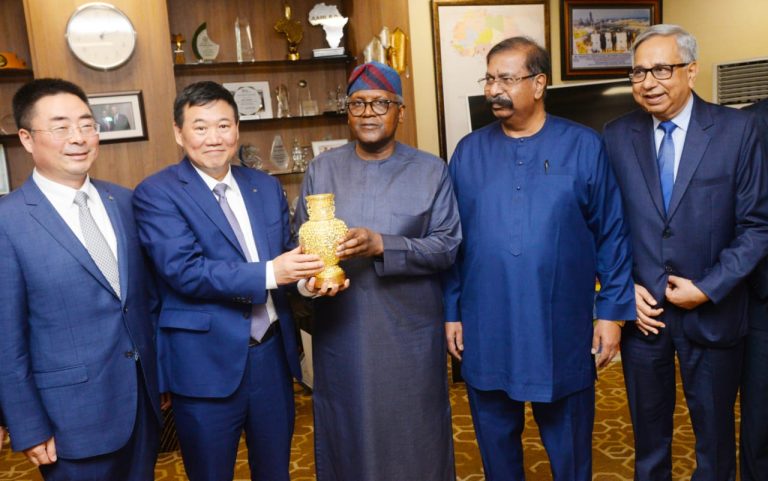
Public policy analysts, government officials, and other stakeholders in Lagos have hailed the strategic foresight and industrial courage of Aliko Dangote, President and Chief Executive of Dangote Industries Limited, describing the Dangote Petroleum Refinery as a transformative national asset deserving of collective appreciation by Nigerians.

This position was strongly articulated at the 2026 Bullion Lecture, organised by the Centre for Financial Journalism, where the Director-General of the Raw Materials Research and Development Council (RMRDC), Nnanyelugo Ike-Muonso, said Nigerians owe Dangote a profound debt of gratitude for investing in the world-class refinery.

Delivering the keynote lecture titled “From Resources to Prosperity: How Raw Materials Development, Value Addition and Innovation Can Catalyse Nigeria’s Industrial Renaissance,” Ike-Muonso said the refinery represents a decisive break from Nigeria’s long-standing dependence on crude oil exports with minimal domestic value addition.

According to him, Nigeria had historically exported crude oil only to re-import refined petroleum products such as Premium Motor Spirit (PMS), with limited economic benefit beyond crude sales.

“That narrative has now changed. Instead of exporting crude and importing PMS alone, the Dangote Petroleum Refinery processes crude locally to produce PMS, diesel, dual purpose kerosene (DPK), and valuable by-products for petrochemicals such as polypropylene. This represents a complete domestic value addition,” he said.

Ike-Muonso described the refinery as Nigeria’s most concrete example yet of how strategic industrial investment can unlock the full value of the country’s natural resources.
Against the backdrop of ongoing instability in the Middle East and its implications for global energy supply and price volatility, he said the Dangote Petroleum Refinery has emerged as a stabilising force and an African-led solution to global energy challenges.
“With the far-reaching consequences of the Middle East crisis on global energy markets, the Dangote Petroleum Refinery stands today as a monumental demonstration of strategic foresight, industrial courage and African self-reliance,” he said.
“Nigeria should, in fact, be praying for Aliko Dangote at this time.”

Ike-Muonso also presented comparative data on raw material value addition across countries, including the United States, India, Brazil, South Africa, and Kenya, noting that Nigeria records the lowest percentage of value addition.

He disclosed that the country loses an estimated $29 billion annually due to the export of raw materials without processing, partly due to energy deficits.
“Rather than exporting raw materials, Nigeria should be exporting processed raw materials and finished products,” he added.

Identifying obstacles to achieving full value addition, the RMRDC Director-General highlighted key structural challenges, including private infrastructure tax arising from companies’ reliance on self-generated power, logistics gaps with only about 30 percent of Nigeria’s road network paved, and capability gaps within the industrial ecosystem.

He stressed that sustained industrialisation remains Nigeria’s most viable pathway to broad-based economic prosperity, citing Dangote Industries’ investments as a model.
Earlier, Kelvin Dele Oye, Chairman of the Economic Research and Ethics Committee and former President of the Nigerian Association of Chambers of Commerce, Industry, Mines and Agriculture, also commended Dangote’s industrial contributions.

Oye decried what he described as an imbalance in the exploitation of Nigeria’s raw materials by foreign investors, often without meaningful value addition to the local economy.
He called for deliberate government policies and stricter regulatory vigilance to ensure that raw material exploitation benefits Nigerians while enabling local investors to compete favourably with foreign players.

The event, which marked the 10th anniversary of the Bullion Lecture, also featured the unveiling of a commemorative book titled “Pathways to Nigeria’s Socio-Economic Transformation.”

The book, authored by Ray Echebiri, Chief Executive of the Centre for Financial Journalism, documents lectures delivered since the inception of the Bullion Lecture series.

U.S. Seizes Second Tanker Carrying Iranian Oil

0

Navy destroyers are also shadowing several other vessels that left from an Iranian port before the U.S.-imposed blockade began, a U.S. military official said.

U.S. military forces stopped and boarded a second sanctioned tanker carrying oil from Iran in the Indian Ocean, the Pentagon said on Thursday, ramping up pressure on Tehran as the Trump administration seeks to resume negotiations to end the war.

A naval boarding team roped down from hovering helicopters and fanned out on the vessel, the M/T Majestic X, according to a Pentagon statement that included a 17-second video of the operation.

The military said the boarding was part of a “global maritime enforcement to disrupt illicit networks and interdict vessels providing material support to Iran, wherever they operate.”

President Tinubu Approves ₦68 Billion for Maiduguri Emergency Power Plant

0


Borno State Governor, Professor Babagana Zulum, has expressed gratitude to President Bola Ahmed Tinubu for approving ₦68 billion in operational support for the Maiduguri Emergency Power Plant (MEPP).

The funding will be disbursed as a monthly intervention of ₦2 billion from March 2026 to December 2028, specifically to bridge the existing funding gap in the plant’s operations.

The MEPP was initiated in 2021 as a presidential intervention to address the prolonged power outage in Borno State caused by insurgents vandalising critical power infrastructure, which had left the state without electricity for nearly two years. The plant was commissioned in 2021 and later upgraded to 50MW capacity in December 2023.

In a statement issued by his Special Adviser on Media, Dauda Iliya, Governor Zulum described the approval as timely and impactful: “On behalf of the government and people of Borno State, I wish to most profoundly appreciate President Bola Ahmed Tinubu (GCFR) for approving N2 billion monthly OPEX intervention funding from March 2026 to December 2028, totaling N68 billion to bridge the existing funding gap in the operations of the Maiduguri Emergency Power Plant (MEPP).

“This has not only revived economic activities but has also significantly improved livelihoods and strengthened efforts to address security challenges.”

Boko Haram committing war crimes – Amnesty condemns targeted killing of civilians

0

Amnesty International Nigeria said Boko Haram’s targeted killing of civilians in Pubagu in Borno State, Mayo Ladde in Adamawa State and other places constitutes war crimes.

The human rights group stated this in a Facebook post early Thursday.

Amnesty strongly condemned Boko Haram’s latest attack in Pubagu community, Askira Uba LGA of Borno state in which they killed 11 people on Tuesday, April 21, and Mayo Ladde in Hong LGA of Adamawa state, where they killed nine people.

The group described the killings as “vicious and unlawful”.

It said, “Apart from slaughtering people Boko Haram also burnt homes and places of worship in these communities.

“Such horrific killing of civilians by Boko Haram once again demonstrates its brazen disregard for life.

“These killings specifically targeting civilians amount to war crimes and perpetrators must be swiftly brought to justice.”

Amnesty reiterated that Boko Haram’s consistent targeting of civilians is unacceptable and must end.

Sun

No negotiating with terrorists, Ododo declares as Shettima warns against sabotage

0


• Dangote, Yari, governors, others pledge billions for Kogi security fund
From Adesuwa Tsan, Abuja

Kogi State Governor, Ahmed Usman Ododo, has declared that his administration would not negotiate with criminals, vowing instead to confront and crush all threats to peace.

This is as Vice President Kashim Shettima warned that entrenched forces were actively sabotaging efforts to stabilise Nigeria.

They spoke at the Kogi State Security Summit and Fundraising in Abuja yesterday, where stakeholders from government and the private sector pledged billions of naira to support the state’s Security Trust Fund initiative aimed at raising N500 billion.

Governor Ododo stressed that his administration would enforce zero tolerance for criminality, insisting that the era of appeasement had ended.

“I will not negotiate with criminals. I was not elected to pamper enemies of our peace. Those who choose crime must be ready to face the full weight of the law,” he declared.

He stressed that security remains the bedrock of development, noting that no meaningful investment or economic growth can thrive in an atmosphere of fear and instability.

The governor highlighted the changing dynamics of crime, including kidnapping, terrorism and cyber threats, which he said require modern, intelligence-driven responses.

He disclosed that his administration had invested in surveillance systems, communication equipment and operational logistics to strengthen security agencies, while also supporting local vigilantes.

However, Ododo acknowledged that government alone cannot address the challenge, urging private sector players and citizens to contribute to the Security Trust Fund.

“Security is a collective responsibility. What we are building is not just a fund, but a sustainable framework for peace, stability and prosperity,” he said.

Speaking through the Minister of State for Regional Development, Uba Maigari Ahmadu, Shettima said Nigeria faces a complex web of security challenges driven by “agents of chaos and profiteers of conflict” who thrive on instability.

He cautioned that such elements remain determined to frustrate the peace-building efforts of President Bola Ahmed Tinubu’s administration.

“We cannot afford complacency. The enemies of peace are organised, deliberate and adaptive. They are always lurking in the shadows to sabotage every effort to restore order and secure lives and livelihoods,” he said.

The Vice President noted that the federal government was deploying both kinetic and non-kinetic strategies to address insecurity, including strengthening intelligence, enhancing inter-agency collaboration and investing in long-term stability.

He commended the Kogi State Government for taking proactive steps, describing the summit as a timely intervention given the state’s strategic position as a gateway linking northern and southern Nigeria. “Kogi’s location is both a blessing and a responsibility. It must anticipate risks beyond its borders and organise responses with clarity and resolve,” he added.

Borno State Governor, Babagana Zulum, underscored the link between security and development, warning that military solutions alone cannot end insecurity.

“Without peace, there will be no security, and without security, there will be no development,” he said.

Drawing from Borno’s experience, Zulum revealed that the state had reduced insurgency by over 90 per cent through a combination of security operations and socio-economic interventions.

He urged governments to prioritise job creation, education, infrastructure and poverty reduction as part of a holistic approach to tackling insecurity.

“Increasing poverty, illiteracy and infrastructural deficits are major drivers of insecurity. Addressing them is critical to achieving lasting peace,” he said.

Earlier, a security expert from the University of Abuja, Dr. Ayuba Oche, emphasised the strategic importance of Kogi State, warning that insecurity in the state could have ripple effects across the country.

He called for stronger public-private partnerships, noting that security funding requires substantial resources beyond government capacity.

The fundraising segment of the event saw significant pledges from key stakeholders.

Chairman of Geregu Power Plc, Senator Abdulaziz Yari, who served as Chief Launcher, donated N500 million and pledged 10 operational vehicles, 20 drones and additional logistics.

The Dangote Group also contributed N250 million and promised further support in equipment and logistics.

In addition, seven governors, either present or represented, pledged N100 million each, while several corporate organisations operating in Kogi State made financial commitments running into billions of naira.

The summit is expected to produce actionable outcomes, including the establishment of security logistics bases across the state’s three senatorial districts to enhance rapid response capabilities.

Participants expressed optimism that the initiative would not only strengthen security in Kogi State but also serve as a model for other states seeking sustainable solutions through collaboration between government, private sector and communities.

Sun