Home Blog Page 465

Taraba 2027: Former Speaker joins race as Constituents purchase, presents forms to him

0


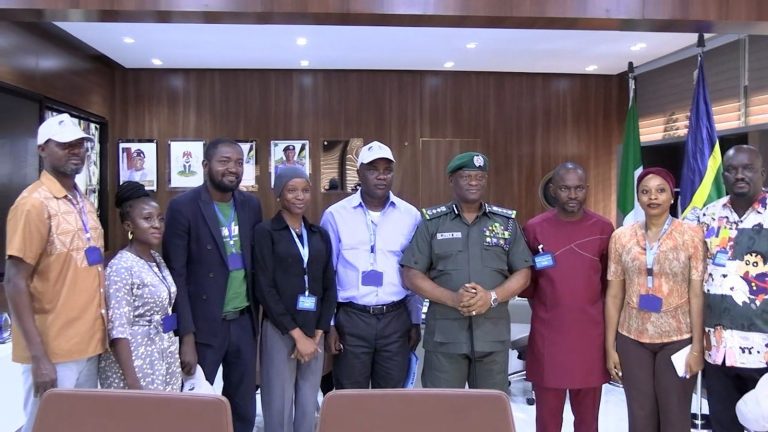
The immediate past Speaker of Taraba State House of Assembly Professor Joseph Albasu Kunini has declared that he will recontest for the Lau State House of Assembly Constituency election in line with the decision of his Constituents who bought and presented the All Progressives Congress APC interest and Nomination forms to him.

Professor Kunini made the declaration in Jalingo shortly after receiving the forms presented to him by critical stakeholders of the Lau State Constituency who urge him to shelve his ambition to contest for the Lau/Karim /Ardo Kola Federal Constituency.

He said that after representing the people of his constituency at the State Assembly for some time, he decided to vie for the higher position of House of Representatives but since his people have insisted that they still need him to represent them at the State Assembly, he is obliged to follow their decision.

“I must say that today is historic in so many ways and is particularly an emotional moment for me. My plans ahead of 2027 was to contest for the House of Representatives and I have gone far with the consultation already. So far, the response has been quite impressive. But then here we are, the people of my immediate Constituency whom I represented at the State House of Assembly have different plans.

“My political ambitions can never be more important than the choice of my people. I am but a servant anyway. And so, in as much as I had different plans, I can not turn down the sacrifices of these people who went out of their way to source for funds, purchase the forms for me and have just presented to me. They did not only ask me to set aside my ambition. They made a serious commitment. That is priceless.

“I have listened to them and their reasons for this decision and I must say that they have valid points. And so I want to declare to all of you here today and to the entire people of Lau State Constituency that I Professor Joseph Albasu Kunini have heed your call and have answered. I will vie for the State Assembly seat as you have requested and will serve you even better than before. I am humbled at the confidence you have reposed in me and I will not let you down” he said.

The leader of the delegation Hon. Emmanuel Umar Earlier noted that the stakeholders took the decision after painstaking consultation at all levels and have drawn conclusions that they still needed him at the State Assembly where he is closest to the people.

“Over the years, we have worked closely with you Professor Alkinjo and we know that if you contest for the House of Representatives, it will be a walk in the field for you. However, after due consideration, we please to be selfish for once. We still need you at the State Assembly. And so we urge you to shelve your ambition and answer our Clarion call. As a show of our commitment and seriousness, we have obtained the interests and nomination forms for you. All you have to do is to accept our offer which we make with sincere hearts”.

The Director General of Alkinjo campaign organisation Hon. Gelishion Bethuel while presenting the forms to Professor Kunini noted that “today, your track records and footprints across Lau Local Government Area speaks for you. I am proud to serve as your campaign DG because I know I am doing the will of our people. I am confident that when, it is no longer a matter of if but when, you emerge as Member again, you will surpass what you have done so far.

“Let me use this opportunity to urge all of you gathered here today to play politics by the rules. We are aware that the man we are working with is a peace loving person who does not believe in violence or manipulations. Let us therefore take this message to our people at the grassroots that he has accepted to do their bidding but we must not entertain the temptation to be drawn into unwholesome display in response to actions of the opposition”.

Hon. Nicholas Nwaniyafinwani, Former Chairman Lau Local Government Area in his remarks on behalf of other former Chairmen and elected officials in the Local Government Area noted that working with Kunini as a member made his work a lot easier and pledged the support of the stakeholders to his hitch free reelection.

Sun

Rhema Varsity gets double accreditation for Medicine, Radiography

0


Rhema University, Aba, Abia State has been granted double accreditation by the Medical and Dental Council of Nigeria (MDCN), the Radiographers Board of Nigeria (RBN) and the National Universities Commission (NUC) to graduate students in medicine and surgery as well as radiography.

The Vice Chancellor of the University,
Prof Ogbonnaya Onwudike disclosed this while briefing newsmen at the University campus.

“It is our joy to announce that we have received full accreditation to graduate our first set of students Medicine and Surgery. We have received full accreditation from the Medical and Dental Council of Nigeria (MDCN) and the National Universities Commission (NUC).

“We have also received approval from the Radiographers Board of Nigeria. They visited us on March 6,2026. Before then,the NUC had visited us for the programme and asked us to go ahead. The Radiographers Board also came for their own verification. The visit is important because if you graduate anyone in radiography, they won’t certify the person.

Prof Onwudike stated that the approval was granted in a letter dated March 17, signed by the Registrar of the Medical and Dental Council of Nigeria, (MDCN), Prof Fatima Kyari.

The letter read in part, “I am pleased to convey provisional approval for the final accreditation of your medical programmes.
“By this approval, the College can now conduct the 5th (final) MBBS professional examination that will allow the medical students graduate.”

Prof Onwudike informed that the MBBS examination to produce the first set of medical doctors by the University will commence on July 13, after which it will turn out her first set of medical doctors. He added that MDCN will send monitors for the examination.

The Vice Chancellor further disclosed that the University has full accreditation in Nursing Science, Banking and Finance,Mass Communication, Economics, Marketing, Political Science, among others, while an accreditation visit would soon be held for Medical laboratory science.

Prof Onwudike equally called for the amendment of the law establishing the Tertiary Education Trust Fund (TetFUND) to allow its activities to be extended to private universities.

He said the call on the federal government to amend the TetFUND law has become imperative to allow private universities to benefit from the TetFUND to enable them to develop themselves.

“Federal Government should as a matter of urgency, amend the law establishing TetFUND to enable it extend its interventions to privately owned universities because we train people from the same economy”, he said.

Sun

Otti mourns with founder of Gregory University, Prof Ibe over mother’s demise

0


Abia State Governor, Dr. Alex Otti has expressed sadness over the demise of the mother of the founder of Gregory University Uturu (GUU), Prof Gregory Ibe, Ugoeze Margaret Ibe.

Speaking at the weekend during the interment of the late Ugoeze at Amaokwe, Uturu in Isuikwuato Local Government Area of Abia State, Otti described the late mother of Professor Ibe as not just a parent; but a builder of character and a nurturer of dreams.

Represented by his Chief of Staff, Otti stated that the late Ugoeze was a pillar whose influence clearly reflected in the life and achievements of her son, including the establishment of Gregory University Uturu.

Otti noted that Prof Ibe mother’s legacy was evident in the generations she raised, the values she instilled, and the impact she made within her family and community.

“It is often said that behind every great man is a woman of virtue, discipline, and vision. Today, we recognize and honour that truth.”

The Governor urged the children of the deceased to find solace in the impactful life their mother lived.
“Her memory will continue to inspire, guide, and strengthen you in the years ahead. Indeed, those who live well never truly die; they live on in the hearts of those they touched and in the values they passed on”, Otti added.

In his tribute, the Deputy Speaker of House of Representatives, Benjamin Kalu noted that while the loss of a mother leaves a void words can scarcely fill, he asked the children to be comforted by the treasured memories of her love, guidance, and remarkable impact.

“It is also gratifying that she bequeathed a distinguished family and touched countless lives through whom her legacy will continue to live on.”

Prof. Ibe, the first son of his mother, described her as “a mentor” whose “greatest desire was that we, your children would continue on the path of righteousness which you laid for us as a solid foundation.”

While saying they would miss their mother greatly, he however promised they would uphold her legacies.

In his sermon, Rev. Fr. Stanislaus Onwuka of the Catholic Church, Uturu urged the living to leave legacies while alive.

Rev. Fr. Onwuka who asked people to life worthy of emulation while in earth, reminded all that they were given work to do by God and will soon be required to give account of their stewardship.

Sun

Shehu Sani Praises Senator Oluremi Tinubu’s Grassroots Engagement

0


Former federal lawmaker Shehu Sani has defended Nigeria’s current First Lady, Senator Oluremi Tinubu commending her visibility and outreach to ordinary citizens while criticising past occupants of the office for what he described as limited public impact.

In a strongly worded statement, Sani contrasted the present First Lady’s activities with those of her predecessors, noting that Nigerians previously “had First Ladies who confined themselves to the comfort and luxuries of Aso Rock” and showed little concern for the poor and vulnerable.

He also alleged that some former First Ladies were more focused on wielding influence behind the scenes or appearing only at elite social functions, adding that others spent significant portions of their time outside the country.

According to him, the criticism currently directed at the First Lady stems from her active engagement with citizens, particularly women across the country. He highlighted her regular visits to states, direct interactions with grassroots communities, and involvement in initiatives spanning education, healthcare, environment, skills acquisition, and agriculture.

Sani argued that even modest interventions by the First Lady’s office should be appreciated, stating that “one who gave a little is better than one who gave nothing.”

He further placed the current First Lady among notable past figures such as Victoria Gowon, Maryam Babangida, and Maryam Abacha, asserting that no other First Lady in Nigeria’s Fourth Republic has made the office as impactful to ordinary citizens as the present occupant.

Pastor: Oluremi Tinubu Commits No Sin — Pastor Adeboye

0


The General Overseer of the Redeemed Christian Church of God (RCCG), Enoch Adejare Adeboye, has stated that Nigeria’s First Lady, Oluremi Tinubu, will not be removed from her position as an ordained pastor in the church.

Speaking during a meeting after the monthly Holy Ghost Service, Adeboye explained that Oluremi Tinubu was ordained as an Assistant Pastor more than ten years ago, long before her husband, Bola Ahmed Tinubu, showed any intention of running for the presidency.

He emphasised that the First Lady went through the full process of ordination and has not violated any of the church’s guidelines.

“There are three sins that, if committed, would cause RCCG to remove any ordained pastor or assistant pastor. She has not committed any offence.

“No outsider will dictate to me what to do with my children. I will tell them to leave my children alone,” he said.

He added that the church will not bow to external pressure calling for her removal.

“They call us a branch of APC, but it is in RCCG that you will find governors from different political parties.

“If anyone is criticizing my children, do not join them. Any politician can worship in RCCG, but none will be given the microphone to speak, because our altar is not a campaign ground. Our duty is to pray for you and allow God to decide.”

Speaking on the 2027 electioneering year, Adeboye said, “What God will do in 2027 has already been determined by Him before you were born. Don’t let anybody argue with you; the will of God will be done. As regards 2027, all we will do is continue praying, because we know He answers prayers,” he affirmed.

IGP Advocates Nationwide Sensitisation On Environmental Crimes, Backs Police–NGO Collaboration

0


The Inspector-General of Police, Tunji Disu, has called for sustained nationwide sensitisation on environmental crimes, as a civil society organisation, CRUX Environmental Rights Advocacy and Development, seeks partnership with the Nigeria Police Force (NPF) to tackle ecological offences.

Disu made the call while receiving representatives of the organisation on a courtesy visit, where discussions centred on strengthening environmental law enforcement and community-based crime prevention.

He acknowledged that crimes against the environment posed serious threats to public health and safety, citing recurring flooding in Lagos as an example of the consequences of poor environmental practices.

“Whenever it rains, floods come and people blame the government, whereas refuse is often dumped indiscriminately in drainages. Our waters are polluted and constitute health hazards,” he said.

The police chief also raised concerns about wildlife depletion, illegal hunting, and the neglect of conservation efforts, noting that environmental protection required collective responsibility.

While responding to a proposal for the establishment of a specialised police unit on environmental crimes, Egbetokun said the Force would instead prioritise awareness creation within its ranks and across communities.

“What I will do is sensitise Commissioners of Police nationwide, who will in turn sensitise Divisional Police Officers to cooperate with you. Crime prevention is everybody’s business,” he said.

He urged citizens to report environmental violations and collaborate with law enforcement agencies, including the police and the Nigeria Security and Civil Defence Corps (NSCDC), to safeguard public infrastructure and natural resources.

Disu recalled past environmental incidents, including the toxic waste dumping in Koko, Delta, and noted the activities of scavengers, locally referred to as “Babambola,” which he said contributed to infrastructure vandalism and urban nuisance.

Earlier, Engr Koko Ademuyiwa, speaking on behalf of CRUX, said the proposed partnership aimed to establish a structured framework for combating environmental crimes such as illegal dumping, pollution, deforestation, unlawful mining, and wildlife trafficking.

He said the collaboration would involve capacity building, technical support, joint monitoring operations, and community engagement to strengthen enforcement and promote environmental justice.

Koko noted that despite constitutional provisions and existing environmental laws, enforcement remained weak due to limited technical expertise and coordination among relevant agencies.

He cited Section 20 of the 1999 Constitution, which mandates the protection of the environment, as well as provisions of the Police Act, 2020, which empower the police to prevent and investigate all forms of crime, including environmental offences.

According to him, the partnership would also leverage provisions of the Police Act that encourage inter-agency cooperation and specialised training, thereby enhancing the capacity of the Force to address environmental challenges.

He added that strengthening environmental law enforcement was critical to addressing broader human rights concerns, including the rights to life, health and a clean environment.

US court convicts Nigerians, others of $215m internet fraud

0

•1,000 victims in 47 US states, 19 countries affected

A US court in the Northern District of Ohio, has found two men and a woman guilty of involvement in an international email hacking scheme that defrauded more than 1,000 victims of approximately $215 million. The fraudulent scheme spanned 47 states and 19 countries.
The FBI Cleveland Division, the US Postal Inspection Service, and the US Border Patrol Sandusky Bay Intelligence Unit, led the investigations that resulted in the indictment, while Assistant US Attorneys, Gene Crawford and Robert Melching, led the prosecution for the Northern District of Ohio. A press release shared on the website of the US Attorney’s Office, Northern District of Ohio and also shared on X platform, indicated that on April 24, 2026, a jury in Toledo, Ohio, convicted Oluwafemi Michael Awoyemi, 40, of Romeoville, Illinois; Aruan Drake, 37, of Atlanta, Georgia, and Peter Reed, 35, of Oak Forest, Illinois, of Wire Fraud Conspiracy. US District Judge, James R. Knepp II, who presided over the trial, additionally, convicted Awoyemi and Drake of a money laundering conspiracy. But in total, 25 defendants were convicted for their different roles in the fraud and money-laundering scheme, commonly referred to as a “business email compromise”. The list of convicts include, Ayobami Osas Christopher, aka Lovely Man, 30, a naturalised U.S citizen residing in Lawrenceville, Georgia; Emmanuel Okereke, aka Omo Igbo, 42, a Nigerian national, residing in Atlanta; Olalekan Bashiru, aka Ola Bash, 36, a Nigerian national, residing in Chicago; Mark Dabney, 26, of Chicago; Casey Adesulu Jr., 28, of Houston; Jeremiah Agina, 29, a Nigerian national residing in Houston; Ayorinde Emmanuel Adebayo, 35, a naturalised U.S. citizen, residing in Olympia Fields, Illinois; Emily Agyemang, 35, of Joliet, Illinois. Others are Ademola Balogun, 43, a Nigerian national, residing in Chicago; Olabode Bankole, 37, a naturalised U.S. citizen residing in Loganville, Georgia; India Barnes, 37, of Atlanta; Emmanuel Essilfie, 28, a Ghanaian national residing in Naperville, Illinois; Chukwuemeka Evulukwu, 35, a naturalised U.S. citizen residing in Atlanta; Jeremiah Glinsey, 32, of Chicago; Lon Goodman, 69, of Whiting, Indiana; Shaquille I. Jackson, 33, of Chicago; Mikhail Keize, 31, of Loganville, Georgia; Katiera Lackey, 25, of Houston.

Also involved are Kingsley Owusu, 37, a naturalised U.S. citizen residing in Chicago: Anton Parker, 37, of Chicago; Carlton Pruitt, 27, of Bellwood, Illinois; and Ronnell Spencer, 35, of Chicago.

Sun

Access, Coronation, push cultural capital for national growth

0


Access Holdings Plc and Coronation Group have emphasised the role of cultural capital in national development.

The duo stressed that economic growth must be supported by investment in art and identity.

The position was expressed during a World Art Day virtual session held with Tate Modern.

Chief Communications and Marketing Officer of Coronation Group, Ngozi Akinyele, said national prosperity extends beyond financial metrics to include cultural and intellectual capital. She noted that while financial capital builds prosperity, cultural and intellectual capital give it meaning and shape identity.

Imokhuede urges shareholders to take up rights
The session, tagged: ‘In Conversation with Osei Bonsu: Inside Nigerian Modernism’, featured discussions on the evolution of Nigerian art and its global relevance.

Bonsu described Nigerian modernism as an independent artistic movement rooted in diverse cultural expressions.

Participants listed growing global interest in Nigerian art, including exhibitions at Tate Modern.

The Access Holdings’ Chief Communications Officer, Amaechi Okobi, said the collaboration has been supporting efforts to amplify African narratives globally.

Both firms said the initiative is part of broader efforts to promote cultural engagement and preserve Nigeria’s creative heritage.

Sun

2027: New dilemma for APC

0

•Alleged president’s ‘governors-in-charge’ order triggers defection plot, courtroom battles

What began as a presidential attempt to install order within the ruling All Progressives Congress (APC) is now threatening to unravel the party’s 2027 electoral prospects in ways that even the President’s closest allies are beginning to acknowledge in whispers.

Across the country, lawmakers, party chieftains and powerful political figures are already drawing up battle plans.

It was supposed to be a masterstroke of party management. When President Bola Ahmed Tinubu was reported to have declared that APC governors are the supreme leaders of the party in their states and that they alone will determine who receives the party’s tickets to various offices, he was, by his own calculation, solving a problem.

He was allegedly streamlining authority, cutting through the cacophony of competing voices, and creating a clear chain of command that would deliver the party into 2027 as a disciplined, unified force.

Instead, that directive may go down as the single most destabilising internal policy decision of his presidency. Across Nigeria’s 36 states and the Federal Capital Territory, the fallout is already underway. Members of the National Assembly who have served the party loyally, some for multiple terms, are learning that their political futures now rest entirely in the hands of governors who may owe them nothing, or who actively see them as rivals.

“Nobody hands over his destiny to another man,” one senior House of Representatives member told our correspondent, speaking on condition of anonymity. “If the governor wants to give my seat to his son or his errand boy, does Tinubu expect me to fold my arms and go home? I will find another way. And many of us will find that way together.”

The scale of what is being planned, according to multiple sources within the party, could dwarf anything Nigeria has seen in recent electoral cycles.

Feedbacks from multiple, independent sources within the APC’s National Working Committee (NWC), the National Assembly complex in Abuja, and several state capitals, paint a disturbing picture.

Senior members of the House of Representatives and the Senate, many of them first or second-term legislators with strong local bases, have been holding quiet, off-the-record consultations for weeks. The common thread: what to do if their governors refuse to support their return to Abuja.

It was gathered that at least three significant political movements are already in advanced discussions. The first involves a cluster of APC lawmakers from the South West, the President’s own political heartland, which believes that some governors in the region are preparing to impose loyalists on constituencies where sitting legislators have served competently.

These lawmakers are already in contact with the leadership of the other second tier political parties and, remarkably, elements within the Peoples Democratic Party, exploring the terms under which they could cross the aisle without losing their legislative seats under the constitution’s anti-defection provisions.

In the North West and North-Central, regions where the APC’s 2027 prospects are already complicated by security concerns and economic discontent, sitting senators and House members are openly telling party leaders that they have built structures independent of governors, and that if it comes to a contest, their structures will survive any governor’s displeasure.

Several of them have already made contact with the New Nigeria Peoples Party (NNPP) and the Social Democratic Party (SDP), which are positioning aggressively to absorb disaffected APC members ahead of the 2027 primaries.

The third, it was gathered, involves a bloc of APC lawmakers in states where governors either recently defected to APC or are themselves embattled. In these states, sitting National Assembly members who were in the APC long before the current governors crossed the carpet feel an acute sense of injustice.

One party source with knowledge of these consultations put it bluntly: “We are looking at a minimum of 40 to 50 House members who are seriously considering their options. If even half of them leave before or during the primaries, the APC will be contesting 2027 having gifted the opposition a ready-made battalion of experienced politicians with fully functional grassroots machinery.”

Defection, however, is not the only weapon being sharpened. For those who cannot or will not leave and there are many, the law courts beckon as both sanctuary and siege weapon.

This is where the new Electoral Act becomes a double-edged sword for the APC leadership. The Act explicitly recognises two additional modes of conducting party primaries beyond the convention-based delegate system: direct primaries, in which all registered party members in a constituency vote directly for their preferred candidate; and consensus arrangements, in which candidates can emerge through documented agreement among stakeholders.
APC NWC blames shift in deadline for sale of nomination forms on public holiday
If a governor attempts to impose a preferred candidate through a delegates’ primary that aggrieved members believe was manipulated, those members now have a statutory basis to challenge not just the outcome, but the very process. They can go to court arguing that they were denied their right to participate in a direct primary, or that no genuine consensus was sought.

Legal practitioners familiar with electoral litigation say the courts have shown increasing willingness to interrogate party primaries since the Act came into force.

“The era of a governor just writing names and announcing candidates is legally more vulnerable than it has ever been,” one senior advocate told our correspondent. “The Electoral Act has given aggrieved members ammunition they didn’t have before. And they know it.”

The implications for the APC are staggering. If a fraction of the planned court challenges materialise after the 2027 primaries, the party could find itself simultaneously fighting election campaigns and defending dozens of primary outcomes in tribunals across the country.

In constituencies where a court temporarily restrains a substituted candidate from flying the APC flag, the opposition would need only to stand aside and let the ruling party bleed itself.

The governors themselves are not unaware of the fire they are stepping into. Several, according to party sources, privately welcomed the President’s directive as a tool they can deploy against rivals and federal legislators who have used their Abuja platforms to undermine state executive authority.

But the more politically sophisticated among them understand that the directive is a double-edged privilege. Wielding it aggressively could destroy the very party structures they need to win re-election or deliver their preferred successors in 2027.

“The smart governors will negotiate,” a former party official told our correspondent. “They’ll give some ground to the sitting legislators in exchange for loyalty during the presidential campaign. The ones who try to clean house completely will create chaos that outlasts them.”

In 2027, President Tinubu will seek a second term. His re-election case will rest substantially on the APC’s performance in the National Assembly elections and the governorship races running concurrently.

If the ruling party goes into those elections with a depleted legislative caucus, a bruised Senate presence, and a trail of unresolved primary litigation in multiple states, the political environment will be significantly more hostile than anything the President currently enjoys.

The opposition, fractured after 2023, is watching these developments with the closest attention. Strategists within the PDP, the Labour Party, and several smaller parties now courting APC defectors understand that they do not need to build a perfect alternative.

They merely need to create a credible harbour for enough APC members to bleed the ruling party in enough constituencies to swing the National Assembly balance.

“This directive is the APC’s biggest internal threat since the merger itself,” said one former party chieftain. “Tinubu is a brilliant politician. But even brilliant politicians can miscalculate. This may be his.”

A serving National Assembly member from the North Central, when told that some colleagues were already in talks with other parties, did not express surprise. “My brother,” he said quietly, “some of them are not just in talks. Some of them have concluded.”

A state party chairman in the South-South summed up the dilemma: “We are chasing unity and creating division. That is the honest truth of where we are.”

Media aide to the National Chairman of the APC, Mr. Abimbola Tooki, in his reaction, denied knowledge of any such directive allegedly given by the president or any other leader.

“Where did the president issue such a directive? I hope you’ve reviewed the widely reported outcomes of that meeting, which did not include any of the issues you’ve raised here,” he said.

National Publicity Secretary of the APC, Felix Morka, did not respond to messages sent to his active mobile line as at the time of filing in this report.

Extrajudicial killings: Rights groups say 3000 lives wasted in 6 years

0

Killing
• Why extrajudicial killings persist
• Lawyers, activists cite recruitment failures, poor supervision, poor enforcement for constant police failings

The 28-year-old Mene Ogidi had his hands tied behind his back. He was seated on the bare ground, pleading for his life.

“I’ll tell you everything,” he begged. But moments later, a gunshot cracked through the air. Then another, and his body went limp.

It was the extra-judicial killing of Ogidi in Effurun, Delta State, on April 26, 2026, which was captured in a viral video, and greeted with global outrage.


A trigger-happy police officer, Usman Nuhu, an Assistant Superintendent of Police (ASP), fired at the restrained suspect at close range, in what police authorities later acknowledged as an extra-judicial killing. The officer has since been arrested, with promises of prosecution.

Sources described the case of Ogidi as the latest entry in a long bloody ledger tied to the Nigeria Police Force. They said it is a pattern of lethal force, weak accountability, and a justice system that struggles to close the gap between promise and consequence.

As gathered, what made the Delta killing particularly jarring was not just the act itself, but its visibility.

The victim was subdued. He posed no possible threat. Yet, he was executed in broad daylight.

For many Nigerians, the footage reopened the yet unresolved trauma from the #EndSARS protests, which was a nationwide uprising that forced the government to confront police brutality.

Investigation revealed that between 2020 and 2026, conservative estimates suggest that at least 900 Nigerians were killed in extra-judicial circumstances.

But human rights groups, in their various reports, insisted that the true figure could be as high as 3,000. They pointed to widespread underreporting, as well as alleged secret executions in detention facilities, and a persistent culture of impunity within law enforcement agencies.

A news report was published on the website of the Voice of Nigeria (VON) in October 2023. The source of the news is an international human rights group, known as Global Rights.

The report stated that Nigeria recorded over 800 extra-judicial executions in 2020, 2021, 2022, as well as January to June 2023, making a period of three and half years. The report added that a total of 127 cases were reported in the first half of 2023 alone. In the partial breakdown of the figures, the study stated that 271 cases of extra-judicial killings were recorded in 2020, while the number was 253 in 2022.

On April 25, 2026, a serving corps member, Abdulsamad Jamiu, was shot and killed in his room by suspected soldiers. The soldiers were allegedly from the Guards Brigade Quick Response Force in Dei-Dei, Shagari Estate, Abuja.

The Guards Brigade headquarters, in a statement, explained that Jamiu was caught in a crossfire on April 25 when troops responded to a distress call from residents reportedly under attack by armed robbers. But the deceased’s family rejected the military’s account of the incident.

About two months ago, a labourer, Oluwaseyi Adeoye, who worked with the Ogun State Government, was allegedly shot dead by a military operative during a demolition exercise at a company around Orile-Imo, along the Sagamu-Abeokuta Expressway in the Obafemi/Owode Local Government Area of the state.

He was part of a team from the Ministry of Physical Planning and Urban Development assigned to pull down illegal structures in the area.

The state town planning enforcement team was reportedly at the company to enforce building regulations concerning the acceptable height of the company’s fence when the incident occurred.

On January 1, 2026, a 13-year-old boy, Timothy Daniel, was allegedly shot in the head by a soldier attached to a company in Ikot Abasi Local Government Area of Akwa Ibom State. The boy was said to have confronted the solder after the latter allegedly made sexual advances to his 15-year-old elder sister, Miracle Daniel.

A source said Timothy and his sister were returning from Mount Zion Full Gospel Church along the Akongntekong Road, Ete community when the incident occurred.

In the same vein, on October 20, 2021, Al Jazeera, published a story of how one woman, Ukamaka Obasi lost three sons allegedly at the hands of Awukuzu SARS police officers.

In 2025, the news of torture rooms in Owerri, the Imo State capital, came to the fore. It is identified as the Tiger Base police unit. Amnesty International described the facility as a hub of systemic abuse.


As gathered, one victim, Japhet Njoku, was arrested in May 2025. He never came out alive. Another, Okechukwu Ogbedagu, reportedly died in custody, though an autopsy later pointed to asphyxiation.

Sources alleged routine torture, executions without trial, bodies quietly removed, and in some cases, detainees were reportedly taken out and shot. No court proceedings, no convictions, and no closure.

During the #EndBadGovernance protests in 2024 security forces responded with lethal force across multiple northern states.

According to Amnesty International, at least 24 people were killed by the police within a 10-day period.

In Kano, 12 protesters were shot dead at Rijiyar Lemo and Kofar Nasarawa. Jigawa recorded three deaths in Hadejia. Katsina reported one fatality at Kofar Sauri.

In Kaduna, one person was killed. In Maiduguri, three lives were lost at Bolori Junction, while at least three others were killed along the Abuja-Kaduna Expressway in Niger State. Many of the victims were shot at close range, with bullets aimed at vital organs.

Like the killing of Ogidi in Delta, the incidents also sparked outrage. But an observation raised by concerned Nigerians showed that the case of extra-judicial killing in Delta quickly gained national attention because of the viral video.

They argued that most cases of extra-judicial killings lacked a single viral video that is powerful enough to sustain national attention.

In Adamawa State, allegations linked to ‘Operation Farauta’ in 2023 mentioned another dimension of the crisis in rural and low-visibility operations. A 17-year-old student, Abdallah Abba, was taken from his home in Yola South by operatives. He was allegedly killed in custody.

Similarly, in Anambra State, viral reports of extrajudicial killings in 2023 led to the arrest of three police officers. Yet, as with many such cases, the judicial outcome remains unclear.

On December 25, 2022, which was Christmas Day, a tragedy struck in Ajah, Lagos. A pregnant lawyer, Bolanle Raheem, was driving home with her family when a police officer opened fire at close range. She died instantly.

The officer, later identified as Drambi Vandi, was arrested, taken to court and was also convicted and sentenced to death.

On August 19, 2021 in Sokoto State, the Shi’ite community was conducting their Ashura religious procession, a mourning event for the death of Imam Hussain. Then, members of the Nigeria Police Force allegedly opened fire on the peaceful mourners. The attack resulted in the deaths of four individuals.

While the initial response to the Sokoto killings followed a familiar path of denial, the tide turned in the courtroom years later. In a judgment delivered in March 2024, the Court of Appeal, Sokoto Division, condemned the police action as ‘deliberate, unwarranted, and unlawful.’

The court awarded N80million in damages to the victims’ families, a rare and significant judicial attempt to close the gap between the promise of constitutional protection and the consequence of state-sanctioned violence.

Rights groups asserted that the real number is significantly higher, due to underreporting, lack of official data, unrecorded custodial deaths, and weak investigations.

From Effurun to Kano, from Owerri to Yola, one question refuses to fade:

How many more Nigerians must die before justice becomes the rule, not the exception?

Why extrajudicial killings persist –Lawyers, activists

A rights activist and lawyer, Sonayon Hunjo, described the killing of a young man allegedly by a police officer in Delta State as an “alleged extrajudicial killing,” stressing that the final legal classification rests with the courts.

According to him, the killing fits the description of an extrajudicial act because it involves a state actor taking a life outside the bounds of due process.

However, he noted that whether the act constitutes murder would be determined after a thorough investigation and judicial proceedings.

“At this stage, it can properly be described as an alleged extrajudicial killing. Whether it amounts to murder is a legal question that can only be determined by a court after proper investigation and trial. Of course, the officers involved may ultimately be charged with murder,”Hunjo said.

The lawyer attributed the persistence of such incidents to a mix of systemic challenges within law enforcement agencies, including weak accountability mechanisms, inadequate training on the use of force, and poor supervision.

He also pointed to broader institutional and welfare concerns.

“These incidents continue due to weak accountability systems, poor training, and a policing culture that sometimes tolerates excessive force. In addition, stress, poor welfare, and possible psychological strain may also affect officers’ behaviour,” he explained.

Hunjo called for comprehensive reforms to curb police brutality, emphasising the need for strict enforcement of use-of-force regulations, improved recruitment standards and better training.

He also advocated stronger independent oversight, transparency in handling misconduct cases, and swift punishment of erring officers to serve as a deterrent.

On why such abuses persist despite reported dismissals and prosecutions, Hunjo said enforcement has often been inconsistent, while deeper institutional problems remain unresolved.

“Punishing individual officers without reforming the system allows the cycle to continue,” he said.

The lawyer cautioned against speculation regarding the circumstances surrounding the victim’s death, particularly claims that the deceased may have possessed sensitive information implicating the police.

“It would be purely speculative to suggest that the victim had such information. Conclusions must be based on credible evidence from a proper investigation,” he added.

He urged the authorities to conduct a thorough and impartial investigation into all aspects of the case, including the origin and contents of any parcel linked to the incident and the intended recipient.

A civil society leader and Executive Director of the Rule of Law and Accountability Advocacy Centre, Okechukwu Nwaguma, described the recent killing as both murder and an extrajudicial act, warning that entrenched impunity within the police system continues to fuel abuses.

Speaking on the incident, Nwaguma said the classification depends on perspective.

“In legal terms, if proven in court, the act constitutes murder under the criminal laws. However, from a human rights standpoint, it is more accurately described as an extrajudicial killing – the unlawful taking of life by a state agent without judicial process,” he explained.

According to him, the two terms are not contradictory but complementary, with “extrajudicial killing” highlighting abuse of state power, while “murder” establishes criminal liability.

Nwaguma attributed the persistence of police brutality to a combination of systemic failures, impunity within the Nigeria Police Force.

He identified weak accountability mechanisms, poor recruitment standards and inadequate training as key drivers of misconduct.

He noted that many officers operate with the belief that serious consequences are unlikely, often facing only internal disciplinary measures.

The RULAAC director also pointed to a “toxic institutional culture” in some police units that normalises brutality, extortion and abuse of power, as well as lapses in leadership.

“Supervising officers often fail to enforce discipline or are themselves complicit,” he said, adding that while psychological factors may influence individual behaviour, they are not the primary cause. “The system enables and protects misconduct.”

To curb such incidents, Nwaguma stressed the need for comprehensive structural reforms rather than reactive measures.

He called for independent investigations into alleged police abuses, insisting that the police should not be left to investigate themselves.

He also advocated transparent prosecution processes, strengthened oversight bodies such as the Police Service Commission and enforcement of command responsibility to hold senior officers accountable.

The adoption of technology, including body cameras and forensic systems as well as improved documentation practices, were also highlighted as critical steps.

Additionally, he noted that police welfare reforms, while not justifying misconduct, could help reduce corruption and improve professionalism.

Despite periodic dismissals and announcements of prosecution, Nwaguma said meaningful accountability remains elusive due to inconsistencies and weak follow-through.

“In many cases, what is publicly presented as prosecution does not translate into diligent investigation or sustained trial,” he said.

He cited recurring issues such as compromised evidence, poor investigation, witness intimidation and internal sabotage, all of which contribute to the collapse of cases in court.

“This creates both the perception and reality that consequences are avoidable,” he added.

On whether the victim may have possessed sensitive information that could implicate officers, Nwaguma said the possibility cannot be dismissed but must be handled with caution.

Such claims, he noted, could point to deeper issues, including potential criminal collusion involving law enforcement personnel.

He stressed that investigations must go beyond the immediate act to examine underlying motives and broader operational contexts.

Nwaguma called for decisive action against the officer involved and any accomplices, including dismissal, arrest, and prosecution for murder in a competent court.

He further urged authorities to investigate the entire operational team, including any vigilante collaborators and extend probes to supervising officers for possible negligence or complicity.

“Most importantly, the process must be transparent and followed through to its logical conclusion. Justice must not end at a press statement or first arraignment,” he said.

The rights advocate lamented that several past cases involving alleged unlawful killings by police officers failed to secure convictions due to compromised investigations.

He listed common shortcomings such as failure to preserve crime scenes, disappearance or manipulation of evidence, contradictory police reports and the absence of independent witnesses due to fear.

Nwaguma maintained that until accountability becomes consistent and certain, rather than selective, incidents of extrajudicial killings will persist.

“The real deterrent is not dismissal, but credible, consistent conviction and punishment under the law,” he said.

A human rights lawyer, Mr Nnemeka Amaechina, decried the rising cases of extrajudicial killings in Nigeria, warning that the trend reflects a deepening collapse of public trust in law enforcement institutions.

Amaechina said the crisis extends beyond the police to the wider architecture of governance, which he described as increasingly compromised.

According to him, the situation has created fear among citizens who would ordinarily rely on the police for protection.

“Ordinarily, the first place a citizen should run to when faced with danger is the police. But with what is happening today, people are afraid. The same institution meant to protect them can turn against them,” he said.

He alleged that some security operatives now act with impunity, carrying out unlawful killings in public without fear of consequences.

“These acts are no longer hidden. They happen in the open, in full view of the public. It shows we are in an era where perpetrators believe nothing will happen to them,” Amaechina stated.

The lawyer linked the trend to systemic failures in recruitment and accountability within the police, arguing that unqualified individuals have been allowed into the force, thereby undermining its core mandate.

He further alleged that corruption has eroded justice delivery, claiming that outcomes of complaints often depend on financial influence.

“In many cases, when you report a genuine issue, the outcome can be influenced by money. The complainant can suddenly become the accused,” he said.

Amaechina also warned that the deteriorating security and justice environment could discourage legitimate investment, leaving room only for individuals willing to exploit lawlessness.

He called for urgent collective action to address the situation, stressing that unchecked abuses could endanger more lives.

Another rights activist and lawyer, Chijioke Ifenkwe, described the recent killing of a young man by a police officer in Delta State as “murder” and a “clear-cut execution,” blaming the incident on deep-rooted systemic failures within Nigeria’s policing structure.

Speaking on the incident, Ifenkwe said the persistence of such killings reflects a lack of accountability and diminishing value for human life in the country.

According to him, reports of citizens dying at the hands of law enforcement have become alarmingly frequent.

He attributed part of the problem to recruitment challenges within the police force, arguing that poor welfare and treatment by the executive arm of government discourage qualified individuals from joining.

“The lowest quality of people in society are those interested in policing because the police themselves are not treated right. While improved training and capacity building may help, the underlying issues run much deeper”, he said.

The lawyer called for a comprehensive restructuring of the police, describing the current system as “faulty” and “failed,” with problems rooted in both the hierarchy and leadership.

He stressed that better political leadership would help curb abuses, warning that forcing police officers to shield criminal elements creates psychological and institutional breakdowns.

Ifenkwe also questioned the credibility of disciplinary measures within the force, expressing doubts about whether dismissals and prosecutions of erring officers are genuine or effective.

He raised concerns about transparency in the ongoing case, noting that suspects were reportedly taken to Abuja for prosecution with their identities concealed.

“There is no public trust to know if the real culprits are being tried. We can’t even trust the police itself. That is how bad the system is,” he said.

He further suggested the possibility that the victim may have been deliberately targeted, calling for a thorough investigation into whether the killing was intended to silence him.

“There is a huge chance the police could have been sent to silence him. That itself should be investigated—it could have been an assassination to cover the truth,” he added.

The activist urged the authorities to conduct open trials to rebuild public confidence and deter future misconduct.

“Let the public and other police officers see the consequences. Let everyone know there will be genuine accountability,” he said.

Ifenkwe warned that Nigeria risks normalising impunity if urgent reforms are not implemented, alleging that a culture of leniency has extended even to serious crimes.

He called for a “new wave” of systemic change to address what he described as a deeply flawed governance and justice framework.

Sun