Home Blog Page 462

Akwa Ibom: Eno floats new aviation ministry to back up airport

0


Akwa Ibom State Governor Pastor Umo Eno has announced the creation of a full-fledged Ministry of Aviation and Airport Development with a mandate to manage and oversee policies, strategies and programmes for aviation development in the state.

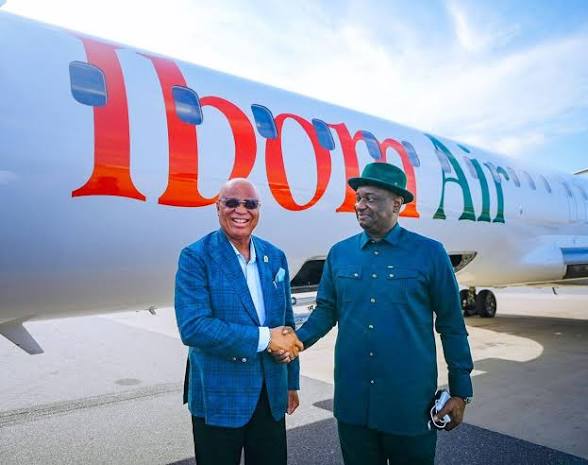
Eno announced the new Ministry of Aviation immediately after he returned to Uyo from Accra, Ghana, on a maiden international flight at Victor Attah International Airport in Uyo.

According to Eno, the new Ministry of Aviation will oversee affairs at the Victor Attah International Airport to ensure that the newly acquired international status of the airport is properly maximised and harnessed to its full potential.

Eno, while addressing journalists on arrival from Accra at the Victor Attah International Airport, mandated the Managing Director of Ibom Airport Development Company, Engr Uwem Ekanem, to immediately take charge of the new ministry pending the appointment of a substantive commissioner.

The problem of the problem
Akwa Ibom govt receives feasibility report, assures of Ibom Deep Sea project
He said the new ministry must ensure effective patronage of the Victor Attah International Airport and supervise the creation of a robust aviation ecosystem and network to ensure Akwa Ibom becomes an aviation hub.

On the new status of the airport, Eno explained that the flight from Uyo to and from Accra International Airport had validated the process.

“Today, after all the hard work put into the realisation of this moment, here we are, finally back on an international flight from Accra, landing in Uyo for the first time in the history of this airport.

“The prefix international has finally been validated.

“We have spared no expense to make this terminal a true marvel of beauty to behold, and we should all be very proud of ourselves as a people.”

Sun

LP releases 2027 primaries timetable, fixes nomination fees

0


The Labour Party (LP) has released its timetable and schedule of activities for the conduct of its 2026 primary elections, with concessions for women, people living with disabilities and youths.

The National Publicity Secretary of the party, Ken Asogwa who disclosed this in a statement on Monday in Abuja added that the timetable was released in accordance with the 1999 Constitution.

He also said it was released in compliance with the Electoral Act, 2026 and the Independent National Electoral Commission’s (INEC) revised timetable and schedule of activities for the conduct of the 2027 Elections.

According to him, the timetable indicates that the sale of nomination forms for all elective offices will start on May 6 and end on May 16.

Asogwa said that the submission of completed forms would begin on May 17 and end on May 18.

“Screening of aspirants for House of Assembly and Governorship election will be on May 20 while that of the National Assembly and the Presidential election will be on May 22,’’ he said.

He said that results of the screening would be published on May 23.

He added that appeals and petitions for house of assembly and governorship aspirants would be on May 24, while those for national assembly and presidential aspirants would take place on May 25.

He further said that the final list of cleared aspirants would be published on May 26.

According to him, party primaries for house of assembly and governorship positions will hold on May 27, while those for national assembly and presidential positions will take place on May 29.

Asogwa also announced the structured fees for nomination forms for various offices.

“For house of assembly, the expression of interest form costs ₦1,000,000, while the nomination form costs ₦2,000,000, bringing the total to ₦3,000,000.

“For the House of Representatives, the expression of interest form costs ₦1,500,000 and the nomination form ₦3,500,000, totalling ₦5,000,000.

“Senatorial aspirants are to pay ₦2,500,000 for the expression of interest form and ₦7,500,000 for the nomination form, amounting to ₦10,000,000.

“Governorship aspirants will pay ₦5,000,000 for the expression of interest form and ₦20,000,000 for the nomination form, totalling ₦25,000,000,’’ he said.

“For the presidential ticket, expression of interest form costs ₦10,000,000, while the nomination form costs ₦40,000,000, bringing the total to ₦50,000,000,’’ he said.

He, however, said that for the Abia Governor, Alex Otti, the National Working Committee of the party had decided to give him the form free of charge.


The spokesman said that in line with the party’s motto of “Equal Opportunity and Social Justice’’, concessions had been approved for certain categories of aspirants.

“Female aspirants, people living with disabilities and youths aged 25 to 30 would only be required to pay for the expression of interest forms for all positions,’’ he said.

He also said that the LP was calling on all prospective aspirants for the 2027 elections who were yet to register, to take advantage of the ongoing membership e-registration and register.

He said registration was open from May 3 to midnight of May 4, ahead of compilation and submission of the party’s membership register to INEC in compliance with the Electoral Act, 2026.

APC Extends Deadline for Aspirants’ Forms, Adjusts Screening Schedule for 2027 Election

0


The All Progressives Congress (APC) has announced an extension of the timelines for the sale and submission of Expression of Interest and Nomination Forms for aspirants ahead of the 2027 General Elections.

In a statement issued by the party’s National Publicity Secretary, Felix Morka, the decision also includes a review of the screening schedule for prospective candidates.

According to the revised timetable, the sale of nomination forms has been extended to midnight on Wednesday, May 6, 2026, while the deadline for submission of completed forms is now midnight on Thursday, May 7, 2026.

The party further disclosed that the screening of aspirants will take place from Friday, May 8 to Tuesday, May 12, 2026.

This will be followed by the publication of the list of screened aspirants on Wednesday, May 13, 2026.

The APC said the extension is part of efforts to ensure a smooth and inclusive process for all aspirants participating in its primaries ahead of the 2027 polls.

Why Obi, Kwankwaso left ADC

0


• 2 former presidents behind move
• Ex- Anambra gov cites toxic political environment, internal crisis for exiting party

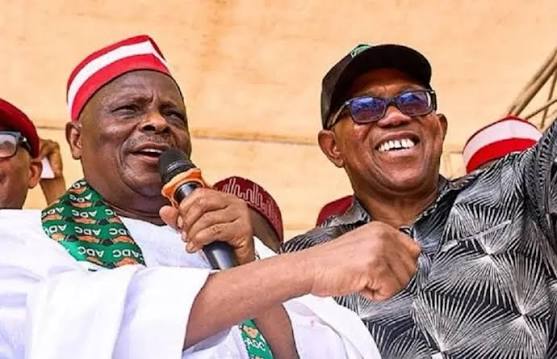
More details have emerged on why former Anambra State governor, Mr. Peter Obi and former Kano State governor, Rabiu Kwankwaso left the African Democratic Congress (ADC).

Daily Sun learnt that Obi, presidential candidate of the Labour Party (LP) in the 2023 election had on several occasions during coalition meetings pushed for the ADC to zone its presidential ticket to the South. This position was also supported by those in the camp of former Minister of Transportation, Chibuike Amaechi. At different fora, Amaechi had been quoted as saying that he would not be able to sell a northern candidacy to the South.

Kwankwaso, who had flown the New Nigeria Peoples Party (NNPP) flag in 2023, recently joined the ADC and had agreed to serve as running mate to Obi. However, Daily Sun learnt that among those in the coalition, the chairman of the ADC and former Senate president, Senator David Mark and former Osun State governor, Rauf Aregbesola, were not in support of zoning the ticket to the South.

Daily Sun also learnt that two former presidents, in addition to the embattled former Kaduna State governor, Nasir El-Rufai, are in support of the Obi–Kwankwaso alliance. El-Rufai, it is well known, had firmly backed Obi’s emergence.

Atiku’s camp, on the other hand, had firmly rejected the zoning of the ticket to the South. They were initially pushing for Obi to drop his presidential ambition and run as Atiku’s running mate for a second time, but he staunchly refused and insisted that he would be on the ballot in 2027. When Atiku saw that Obi was resolute about contesting, he turned to Oyo State Governor, Seyi Makinde, who sources say may be open to running as the former vice president’s running mate.

Beyond these internal disagreements, ADC’s ongoing court case added uncertainty as nobody could predict which way the ruling would go. The Supreme Court had initially ordered that the status quo be maintained, meaning David Mark’s leadership would remain in place, while the matter was referred back to the Federal High Court. Those in Obi’s camp grew anxious, and in light of the new Electoral Act, they felt compelled to act quickly. It had become clear that the party was unlikely to zone the ticket to the South.

Of the key figures in the coalition, Aregbesola and his allies favoured Atiku and were strongly opposed to Obi while El-Rufai and his allies backed Obi. It is also worth noting that Obi had publicly stated he would serve only one term. Under that scenario, the ticket would revert to the North after four years, potentially creating an opening for the likes of Kwankwaso who harbours presidential ambitions and even El-Rufai himself. This led other coalition members to conclude that zoning the ticket to the South would better serve their own long-term interests. Amaechi, too, had at one point said that selling a northern candidate to southern voters would be a very difficult task, suggesting he also favoured a southern ticket with an eye on his own future aspirations.

Coalition remains open to all —Abdullahi

Despite these tensions, the ADC’s spokesperson, Bolaji Abdullahi, maintained that it remains intact and has not collapsed. Amaechi and others are still involved, so it would be wrong for anyone to say that the coalition has broken down. The ADC, the spokesperson stressed, is open to everyone and the party is not taking sides.

Peter Obi breaks silence

Mr. Obi has cited worsening internal crises, external interference and growing hostility within party structures as reasons for leaving.

In a statement issued on his behalf by his media aide, Valentine Obienyem, in Abuja, yesterday, Obi described Nigeria’s political environment as increasingly toxic, marked by intimidation, insecurity and persistent scrutiny against individuals committed to sincere public service.

He lamented that institutions established to protect citizens now often work against them, while those pursuing genuine leadership faced pressure publicly and privately.

Clarifying his decision, Obi said his departure from the ADC was not driven by personal grievances with party leaders, including David Mark and Atiku Abubakar.

Other News
Shehu Sani mocks ADC leaders over Peter Obi, Kwankwaso exit
ADC crisis: Kwankwaso begins talks with PRP, NDC
ADC leaders move to stop Obi, Kwankwaso’s exit
“Let me state clearly: my decision to leave the ADC is not because our highly respected Chairman, Senator David Mark, treated me badly, nor because my leader and elder brother, Alhaji Atiku Abubakar.

“It is not as well that any other respected leaders did anything personally wrong to me. I will continue to respect them.”

He maintained that he has respect for both leaders, but cited internal division, legal disputes and the infiltration of destabilising forces within ADC.

According to Obi, the challenges mirror similar crises he previously encountered in the Labour Party, making meaningful political engagement increasingly difficult.

Obi, the presidential candidate of LP in 2023 dumped the party on February 14 this year and thereafter, joined ADC.

He also decried a societal culture where integrity, humility and due process were frequently mistaken for weakness rather than strength.

Obi expressed concern that sincere efforts toward nation-building were being undermined by suspicion, exclusion and political manoeuvres driven more by control.

He reaffirmed his commitment to Nigeria’s progress, stressing that citizens’ welfare remained his overriding priority.

He highlighted insecurity, poverty and displacement as pressing national concerns, insisting that his ambition was not to hold political office, but a just society.

Political drifter -APC

Meanwhile, the All Progressives Congress (APC) has lampooned Obi over what it described as his continued defection from one party to the other in desperation to contest in next year’s general elections.

APC’s National Publicity Secretary, Felix Morka, described him as a political rolling stone that gathers no moss.

The ruling party lambasted the former Anambra State governor for never willing to remain with one political party to build it, tagging him as “Nigeria’s inconsolable political drifter.”

APC frowned at his jumping from the All Progressives Grand Alliance (APGA) to the Peoples Democratic Party (PDP), from the Labour Party (LP) to the opposition coalition party, the African Democratic Congress (ADC) and now to National Democratic Congress (NDC).

The ruling party attacked Obi for preferring uncontested, unchallenged presidential ticket, wishing him well in his ambition.

“Peter Obi, a political rolling stone that gathers no moss… roaming again in search of a free, uncontested, unchallenged presidential ticket … never willing to remain to build any party … fantasizes to be president on a ticket delivered only a platter of gold… APGA – PDP – LP – ADC on to NDC … fare thee well, Nigeria’s inconsolable political DRIFTER,” the party noted.

Sun
APC primaries: NWC extends deadline as low purchase of forms hit party

0

• Govs seize party structures

Scores of aspirants across the 36 states have hit a cul de sac and are shunning the purchase of the All Progressives Congress (APC) nomination forms over widespread fears that governors elected on the platform of the ruling party have hijacked the process and pre-selected preferred candidates ahead of the primaries.

The growing apathy, which is cutting across governorship, National Assembly and State Assembly aspirants, has become alarming. The development has also forced the APC National Working Committee (NWC) to extend its earlier May 2 deadline for the sale and submission of forms on Thursday. Sources told Daily Sun that the extension is necessitated by the embarrassingly poor uptake of forms in several states.

The festering crisis first boiled over publicly when an uneasy calm descended on the APC national secretariat in Abuja on Monday, April 25, the official day the party was scheduled to commence sales, as no forms were made available and no payment accounts were provided to waiting aspirants.

It was reliably gathered that nomination forms were to be sent directly to state governors who would then make the documents available to their preferred candidates, leveraging on the consensus arrangement.

“The Presidency is fully in charge here, and there is nothing we can do,” a party official who asked not to be named told Daily Sun.

APC Presidential aspirant, Osifo Stanley was among the first to go public with the frustration. He declared in Abuja that he had been unable to obtain the party’s nomination form after making repeated efforts.

According to him, attempts to reach party officials and secure the necessary payment details proved abortive.

“I made several calls, but the account details required for payment were not made available to me,” he said. Sources within the party reveal that Stanley’s experience is not unique, with multiple aspirants eyeing governorship, National and State Assembly tickets reportedly are encountering similar obstacles.

The most candid admission of what is happening on the ground, however, came from Ebonyi State. The APC chairman in the state, Chief Stanley Okoro Emegha, recently advised party members seeking elective positions to obtain the governor’s permission before purchasing nomination forms, warning bluntly that “any money you pay to the party is non-refundable. Don’t buy any form without the governor’s directive.”

Critics describe the directive as a declaration that primaries have been replaced with permissions, adding that when one individual’s directive determines who is even allowed to participate, the contest has effectively been abolished. That is not internal democracy, it is a monarchy with party letterhead.

The governors’ grip on the process has the direct blessing of President Bola Ahmed Tinubu. Following a closed door meeting at the Presidential Villa, it emerged that Tinubu had empowered all APC governors to decide the fate of aspirants in their states. He had also said that it was necessary to preserve party unity and cohesion ahead of the 2027 polls.

Kwara State Governor, AbdulRahman AbdulRazaq, Chairman of the Nigeria Governors’ Forum, who addressed journalists after the meeting, said deliberations focused on measures to forge a stronger and more cohesive party, adding: “We have discussed the process moving forward so that there will be free and fair elections without rancour.”

Top members of the National Assembly had met with the president at the Villa, pleading for automatic tickets for their colleagues.
Tinubu, however, insisted that the governors of each state have the ultimate influence over aspirants, a position that has created deep unease among federal lawmakers, particularly those not in the good books of their state executives.

It was gathered that some lawmakers have privately admitted that they would not have defected to the APC had they known automatic tickets would not be guaranteed, and that they backed executive proposals in the National Assembly with the expectation of party tickets, but are now facing a very different reality.

A National Assembly source was equally blunt: “The governors have taken charge of the structures in their states, leaving many senators stranded.”

The fallout is already taking concrete form across many states. In Adamawa State, elders of the Gongola Peoples warned at a press conference in Abuja that any attempt to impose a governorship candidate would be firmly resisted, declaring: “We will not accept, tolerate, or allow any form of imposition on our people. Imposition only breeds resentment, weakens the party, and ultimately guarantees defeat at the general elections.”

In Niger State, stakeholders in Agwara/Borgu Federal Constituency defied Governor Umar Bago’s directive to adopt zoning and consensus, passing a communiqué resolving that all elective offices remain open to all qualified aspirants.

In Ogun State, APC members in Ijebu East Local Government Area, staged a protest at the governor’s office in Abeokuta, rejecting what they described as an attempt to impose candidates for both the House of Representatives and the State Assembly.

In Lagos, even with President Tinubu personally endorsing Deputy Governor Obafemi Hamzat as the party’s governorship candidate, governorship aspirant, Dr Samuel Ajose, insisted that the endorsement process was “being enforced on the party rather than emerging organically from the membership.”

A governorship aspirant, Maurice Vunobolki, has already dumped his ambition, citing plans to impose a candidate as the reason for his exit.

Party insiders told Daily Sun that a significant driver of the current crisis is the mass defection of PDP governors to the APC in 2024 and 2025.

Part of the agreement reached with defecting governors, according to insider sources, was an assurance of an automatic second term ticket, the promise of re-election serving as the inducement for crossing the aisle.

This assurance, Daily Sun gathered, has now created a power struggle as old APC members, who feel they are being shut out despite years of building the party, push back.

It was gathered that many of the defecting governors, apart from seeking a post-2027 soft landing, also demanded and secured approval to control party structures in their respective states.

Aligning with the position of President Tinubu, APC National Chairman, Nentawe Yilwatda, has publicly rejected demands for automatic tickets, stating that “there is no automatic ticket in the party’s constitution,” a position that has put defected governors and long-serving party loyalists on a direct collision course.

The APC national leadership has attempted to douse the fire. Senior voices within the party are now warning openly that the candidates’ imposition culture could exact a heavy electoral cost in 2027.

In some states where governors have already signalled their preferred candidates, many aspirants say they are still waiting for a clear sign that their money and their ambitions will not be wasted.

Sun

Cement makers’ revenue threatened by rising energy bills

0


Cement
•Experts ask FG to fix power, dollar, transport problems

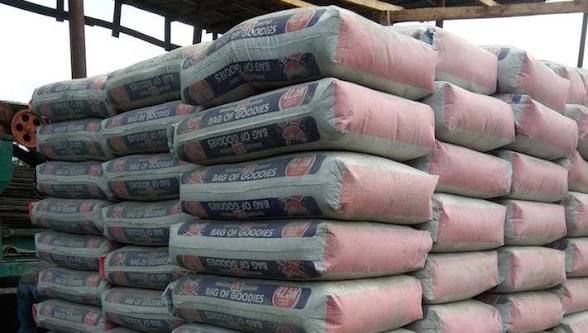
Despite posting robust revenue growth and margin expansion, rising energy costs and macroeconomic pressures could weigh on the cement sector’s outlook in the months ahead.

Combined revenues of major players, Dangote Cement, Lafarge Africa and BUA Cement, rose to approximately N1.89 trillion in the first quarter (Q1) of 2026, underpinned by improved pricing, recovering volumes and sustained demand from construction activities.

Specifically, Dangote Cement’s revenue stood at N1.198 trillion as against N994.66 billion recorded in 2025, its pretax and post-tax profits stood at N471.17 billion and N321.10 billion as compared to N311.97 billion and N209.25 billion, respectively.

BUA Cement’s revenue came in at N354.98 billion as compared to N290.82 billion, pretax and post-tax profits stood at N192.68 billion and N176.38 billion as against N99.74 billion and N81.12 billion respectively. On the other hand, Lafarge Africa’s revenue stood at N334.88 billion while pretax and post-tax profits came in at N149.12 billion and N97.95 billion as against N73.11 billion and N48.64 recorded in 2025.

The performance reflects a broad-based recovery across the industry, with companies benefiting from price adjustments in the domestic market and stronger demand conditions in key Pan-African operations. Volume growth, particularly outside Nigeria, has been supported by improving macroeconomic stability and infrastructure spending across several African markets.

However, the sector faces mounting cost pressures, especially from energy, which remains the largest component of production expenses as seen in the firms’ audited Q1 results. For instance, Dangote Cement’s gross margin expanded by 349 basis points (bps) year-on-year (y/y) to 62.5 per cent as cost of sales grew at a slower pace (+10.2 per cent y/y) relative to revenue.

Cost pressures were driven by higher raw material costs (+27.4 per cent y/y | 24.7 per cent of COGS), reflecting increased production volumes, and a modest rise in energy costs (+4.3 per cent y/y | 41.2 per cent of COGS), supported by continued use of alternative fuels.

In the case of Lafarge Africa, its gross margin expanded strongly by 11.84ppts y/y to 61.4 per cent, as cost of sales grew at a slower pace (+3.2 per cent y/y) relative to revenue. This reflects continued benefits from cost efficiency initiatives, including increased use of alternative fuels and raw materials.

BUA Cement on the other hand saw its gross margin expanding by 927bps y/y to 56.9 per cent, supported by the modest growth in COGS (+0.5 per cent y/y) relative to revenue. Cost containment was aided by relative exchange rate stability, lower energy costs (-9.9 per cent y/y), benefiting from the company’s diversified fuel mix at the Obu plant, and a significant reduction in operations and maintenance service charges (-40.6 per cent y/y).

Commenting on the results, analysts note that global oil price increases are beginning to filter through to input costs, raising concerns about the sustainability of recent margin gains.

They warn that these gains could come under pressure if energy prices remain elevated or if foreign exchange (FX) volatility resurfaces. The sector is also exposed to rising logistics and maintenance costs, which could further erode margins if not effectively managed.

Analysts at Cordros Research said, “Looking ahead, we expect earnings momentum to remain firm, supported by sustained volume recovery across the Group and continued price adjustments in the Nigerian market. However, we note that elevated energy costs, driven by higher global oil prices, remain a key risk, with potential to pressure margins if cost pass-through weakens”.

For his part, Founder, Cowry Asset Management Ltd, Johnson Chukwu, called on the FG to implement targeted measures to support the industry and mitigate emerging risks.

He said stabilising domestic energy supply, improving access to foreign exchange, and addressing infrastructure bottlenecks remain critical to reducing cost pressures.

“Ensuring reliable and affordable energy supply is critical. Without that, the industry’s cost base will remain vulnerable to external shocks, particularly from global oil markets. There also has to be increased investment in transport infrastructure, including rail networks, to ease the movement of bulk cement and reduce dependence on road haulage, which is both costly and inefficient”, Chukwu explained.

Sun

NGE, SERAP demand press freedom, end to northern Nigeria insecurity

0

The Socio-Economic Rights and Accountability Project (SERAP) and the Nigerian Guild of Editors (NGE) have urged the Federal Government to ensure more press freedom and adequate protection of journalists.

The groups made the call at a joint news conference in Ikeja to mark the World Press Freedom Day celebrated annually on May 3.

The joint news conference was addressed by SERAP’s Deputy Director, Mr Kolawole Oluwadare, and NGE Secretary, Mr Onuoha Ukeh, who was represented by Mr. Gabriel Akinadewo.

The conference was entitled: “Role of the Media in Promoting People’s Rights, Accountability and Access to Justice in the Context of Growing Insecurity in Nigeria.”

SERAP and NGE emphasised that protecting journalists and safeguarding information integrity were central drivers of peace, security and democratic stability.

According to them, any credible peace promotion or security strategy in Nigeria must integrate support for free, independent and pluralistic media, alongside humanitarian, institutional and economic responses.

The groups expressed concerns about the scale and persistence of killings, abductions, sexual violence, forced displacement and destruction of property in some parts of Nigeria, including Benue, Borno, Kwara, Plateau and Sokoto states.

They said that thousands had reportedly been killed and millions displaced, with rural communities repeatedly targeted and women and children bearing the brunt of the violence.

The groups urged the federal and state governments to prevent foreseeable harm, protect communities, investigate rights violations, prosecute perpetrators and their sponsors and ensure access to justice for victims.

They added that the violations constituted breaches of the country’s obligations under the constitution, the African Charter on Human and Peoples’ Rights, and the International Covenant on Civil and Political Rights.

“The humanitarian consequences remain severe; communities destroyed, livelihoods lost and victims left without effective remedies.”

They noted that Nigerian authorities had obligations to protect journalists and end insecurity, urging the authorities to exercise due diligence in preventing and addressing violations.

The SERAP and NGE said the UNESCO theme for 2026 World Press Freedom – “Shaping a Future of Peace” – showed that a free and independent media was central to peace and development.

They said that the erosion of independent journalism and civic information ecosystems directly contributed to governance breakdown, adding that attacks on journalists fueled corruption, weakened accountability and spread misinformation.

The groups recalled that Sections 22 and 39 of the Nigerian Constitution mandated media accountability and guaranteed freedom of expression.

They called on the authorities to protect civic space, promote ethical reporting and recognise killings and abductions as grave human rights violations.

They also urged prompt and independent investigations, prosecution of perpetrators and effective remedies for victims, including compensation and rehabilitation.

The groups called for more transparency in security operations, creation of public reporting systems and invitations to UN and African human rights rapporteurs for fact-finding missions.

They urged the National Assembly to convene a public hearing on insecurity and attacks on journalists.

Sun

2027: Anyim, Igariwey, Nwebonyi, others pick APC forms in Ebonyi

0


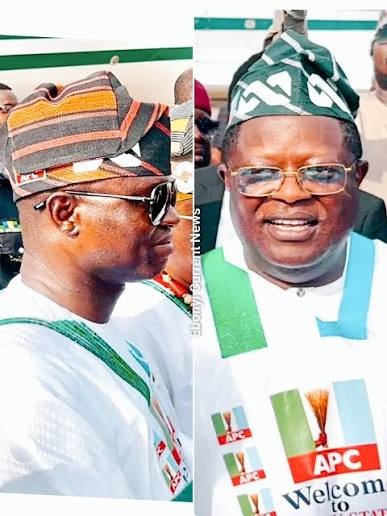
Chisom Anyim, son of the former Secretary to the Government of the Federation (SGF), Sen. Anyim Pius Anyim, Deputy Chief Whip of the Senate, Onyekachi Nwebonyi, Vice Chairman, House of Representatives Committee on Appropriation, Chief Iduma Igariwey, and Chairman, House Committee on Reformatory Institutions, Chinedu Ogah, are among the All Progressives Congress (APC) aspirants in Ebonyi that haveget purchased expression of interest and nomination forms for the party’s tickets for next year’s general election.

While Igariwey, Nwebonyi, and Ogah will be contesting National Assembly elections, Anyim will run for House of Assembly election to represent Ivo State Constituency.

The National Assembly aspirants picked their tickets last Saturday, at the party’s secretariat in Abakaliki, the state capital, while Anyim picked his own, yesterday.

Addressing journalists after picking the forms, Anyim, 25, said he was contesting the Ivo State Constituency election because of the political conducive environment Governor Francis Nwifuru has created in the state.

“His Excellency, the governor, has created an environment where the youths feel welcomed. He has created environment where the youths can thrive; he has created an environment where the voices of the youths matter to his ears.

“This alone gave me major motivation to come out and serve as a beacon of hope to the people of Ivo local government and to the youths of the state”, he said.

He opined that he was going to the House of Assembly to continue the great works leaders of Ivo local government, including his father, Sen. Anyim Pius Anyim, have done in the area.

“A lot of people are saying that I am too young, but, at the same time, never in the history has there been anyone too young to lead.

“And, most importantly, I am here to serve and not to obtain power. I am here to serve my people, and I am here to give them the life they deserve; give them shelter, give them food and give them comfort and, also, make them feel safe that they have no reason to fear or look over their shoulders or have a reason that when they are sleeping at night, they will be sleeping with one eye open. So, these are my reasons for coming out”, he stated.

Meanwhile, the All Progressives Congress (APC) in the state has expressed confidence in the party’s prospects for victory in the 2027 general elections, citing unity, grassroots support, and a consensus-driven strategy as key advantages.

Chairman of the party in the state, Chief Stanley Okoro Emegha, stated this in Abakaliki, the state capital, at the weekend.

Emegha dismissed concerns over internal disagreements, insisting that the party remains cohesive and focused on securing wins across all constituencies.

He attributed recent tensions within the party to “overzealousness” by a few individuals, stressing that such developments do not reflect the true position of the APC leadership in the state.

“Sometimes, overzealousness can push individuals beyond their limits, but this does not in any way undermine the unity of our party. We remain one family, and our decisions are taken in the overall interest of the people,” Emegha said.

He emphasised that the adoption of consensus candidates followed extensive consultations with stakeholders at the ward, local government, and state levels, describing the process as inclusive and democratic.

He said the party leadership, under Governor Francis Nwifuru, ensured that all interests were accommodated before arriving at a common position aimed at strengthening internal cohesion and enhancing electoral success.

Emegha maintained that all candidates flying the APC flag in Ebonyi would enjoy collective support, noting that electoral contests in the state are a shared responsibility among party members.

“No candidate stands alone. Every ticket belongs to all of us. We will work collectively to secure victory, as success in our constituencies reflects our strength and connection with the people,” he added.

Sun

2027: Desmond Elliot Eyes Fourth Term Amid Rising Political Challenge

0


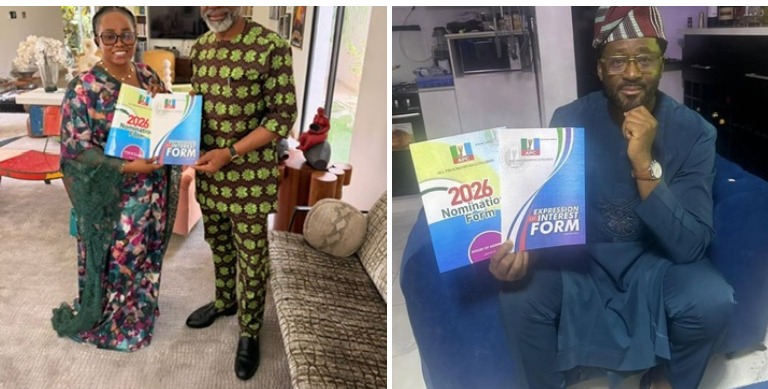
In the bustling political landscape of Surulere, a familiar name is once again at the center of public attention. Nollywood star-turned-lawmaker Desmond Elliot is making a bold bid to return to the Lagos State House of Assembly for a fourth consecutive term, despite growing uncertainty over his political future.

For months, whispers have circulated that Elliot’s hold on the Surulere Constituency I seat may be slipping. Yet, in a move that signals both resilience and confidence, the three-term legislator has officially obtained his party’s nomination form.

In a statement addressed to constituents, Elliot framed his decision as a call to deepen ongoing development efforts. He expressed gratitude for years of support and underscored the strategic advantage of seniority within the Assembly. According to him, a return would elevate his ranking status, potentially translating into greater influence and more tangible benefits for Surulere.

“Our strength has always been in our togetherness,” he noted, urging supporters to remain calm and united as the political process unfolds.
But Elliot’s path back to the Assembly is far from guaranteed.

Enter Barakat Odunuga-Bakare, a formidable contender who recently stepped down from her role as Special Adviser on Housing to Governor Babajide Sanwo-Olu. Her entry into the race has injected fresh energy—and tension—into the contest.

Backed by influential figures reportedly aligned with Bola Tinubu’s political circle, Odunuga-Bakare represents a new wave of ambition seeking to reshape the constituency’s leadership.

Her candidacy signals a broader shift within party dynamics, where loyalty, performance, and political alliances are being recalibrated ahead of the primaries.

For residents of Surulere, the unfolding contest is more than a clash of personalities—it is a referendum on experience versus change. Elliot offers continuity and institutional leverage; Odunuga-Bakare brings fresh perspective and strong political backing.

As the primary election approaches, anticipation is building. Party faithful, community leaders, and voters alike are watching closely, aware that the outcome will not only determine the next candidate but also shape the political direction of Surulere Constituency I.

In the end, the ballot—not speculation—will decide whether Desmond Elliot’s legislative journey continues or gives way to a new chapter in Surulere’s political story.

Nigerian Navy Destroys Illegal Refineries, Intercepts Oil Theft Equipment in Niger Delta

0


The Nigerian Navy has intensified its crackdown on crude oil theft and illegal refining activities in the Niger Delta, recording significant operational gains through coordinated missions by Nigerian Navy Ship (NNS) PATHFINDER and NNS SOROH.

The statement was signed by Navy Captain Abiodun Folorunsho, Director of Naval Information.

On May 1, 2026, personnel of NNS PATHFINDER, acting on credible intelligence, deployed an Anti-Crude Oil Theft (Anti-COT) patrol team comprising two gunboats and 20 personnel to the Ahoada West axis of Rivers State. During the operation, the team uncovered and dismantled five illegal refining sites located around the Egboama-Ogbogolo community.

The illegal facilities comprised about 15 dug-out pits, storage units, and reservoirs containing an estimated 85,000 litres of substance suspected to be crude oil, alongside 78,000 litres of suspected illegally refined Automotive Gas Oil (AGO).

Further assessment indicated that the products were sourced from a nearby wellhead situated a few metres from the refining sites, although the operating company could not be immediately identified.

The Navy subsequently destroyed the illegal refining infrastructure and products in line with established Anti-COT procedures. Suspects fled upon sighting the naval team, and no arrests were made.

In a related development, personnel of NNS SOROH, also acting on intelligence, responded to the movement of suspected oil thieves along the Soku Gas Plant pipeline corridor in Bayelsa State at about 7:00 p.m.

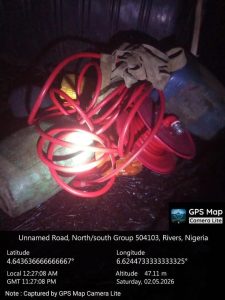
A thorough search of the area led to the discovery of equipment used for illegal pipeline connections and oil theft, concealed in nearby bushes. Items recovered include 10 jerrycans, a 300-metre 3-inch red hose, a 200-metre 4-inch brown hose, and a 20-metre blue pipe.

As with the earlier operation, no suspects were apprehended, as they reportedly fled before the arrival of naval personnel. All recovered items were handled in accordance with existing operational procedures.

The Navy said the operations highlight its sustained resolve to deny economic saboteurs freedom of action within Nigeria’s maritime and littoral domains. It added that efforts are ongoing to track and apprehend fleeing suspects, as well as dismantle associated criminal networks.

Reaffirming its commitment to protecting the nation’s critical assets, the Nigerian Navy pledged to sustain aggressive operations aimed at making the maritime environment hostile to criminal elements while ensuring it remains conducive for legitimate economic activities.

The public was also urged to continue providing credible information to security agencies to support ongoing operations.