Home Blog Page 457

Warri crisis: We’ll resist INEC conduct of election with our blood –Ijaw, Urhobo

0

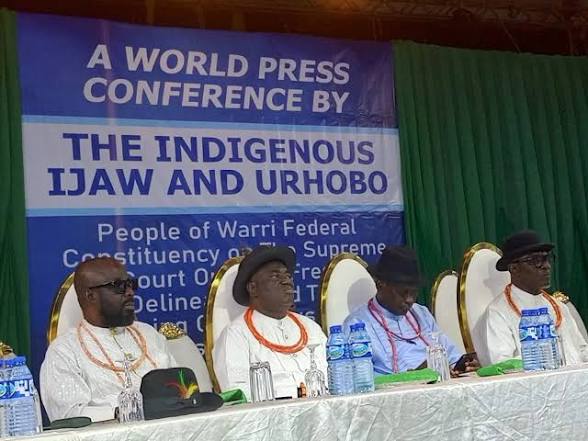
Leaders and stakeholders of the indigenous Ijaw and Urhobo communities of Warri federal constituency, yesterday, vowed to resist with every blood in their veins conduct of any election in the constituency by the Independent National Electoral Commission (INEC) in 2027 if it continues to delay the implementation of the Supreme Court’s order on delineation of electoral wards.

Speaking at a joint world press conference in Effurun, Uvwie Local Government Area, yesterday, leaders from Warri South, Warri South-West and Warri North, accused INEC of undermining democratic principles and delaying critical electoral processes.

They alleged that delay in releasing the field report is because INEC has been compromised by some conservative forces bent on sustaining minority rule over the majority in Warri territory, adding, “Justice is dying as the referee has joined the match.”

Leader of Okere-Urhobo Kingdom, Chief Victor Okumagba, who read the press conference statement, vowed that they would use every means possible to resist INEC if it fails to release the report of the already conducted delineation, saying, “We shall use all our possible means necessary to ensure that there is no election in the Warri Federal Constituency of Delta State in 2027.”

The elders and stakeholders including women and youths, recalled their previous appeal made on August 25, 2025, regarding INEC’s refusal to release and implement the fresh delineation of electoral wards in Warri, a process mandated by the Supreme Court of Nigeria in December 2022.

Despite INEC’s compliance with the court’s directive, the leaders lamented that the commission has since stalled the publication of the delineation report, risking the legitimacy of future elections.

“The Supreme Court ordered INEC to conduct a fresh delineation of all electoral wards in Warri. We are exhausted by broken promises and unfulfilled judicial orders,” High Chief Godspower T. D. A. Gbenekama, the Fiyewei of ancient Gbaramatu Kingdom said.

Continuing, he said: “If INEC refuses to act, we will take our destiny into our own hands. We are prepared to boycott the 2027 elections in protest, to demand justice and fair representation.

“The report is ready, but INEC has chosen cowardice over its legal obligation. This blatant delay threatens our democratic rights and could disenfranchise our people in the 2027 general election.”

Gbenekama disclosed that after their last press conference on the same matter, they were invited by the DSS and NSA office, insisting that this time around, “We cannot keep quiet in the face of oppression. We cannot pretend any longer. It is not a threat. It will be different for us to participate in the process that INEC is trying to conduct.”

Chief Gbenekama noted that the Ijaw and the Urhobo have not only been starved politically, they have also been punished economically.

He said that if the people cannot be allowed to exercise their rights, then they cannot continue to guarantee the Federal Government’s use of their resources to feed the country.

“We are tired of talking to our youths and women. The storm is building. We are ready to bear whatever brunt the President brings.”

A representative of Ogbe-Ijoh Kingdom, the Alaowei of Warri, Chief Denbo Denbofa Oweikpodor, said INEC was directed by the Supreme Court to implement the report on the delineation of Warri Federal Constituency, which he said is the constitutional rights of the people.

“The beneficiaries of the judgment want to enjoy their judgment.”

He cautioned INEC not to take them back to the dark ages of crisis in Warri Federal Constituencies,” pointing that the Federal Government was trying to make the government of Governor Sheriff Oborevwori unbearable with its action.
He added that it was not a threat but a reality, stressing that it is the turn of the Ijaw and Urhobo people of Warri just like the President claimed during his electioneering campaign in 2023 that it is ‘Emilokan’ (Meaning it’s my turn).

Speaking also, a representative of Isaba community, Chief Emmanuel Secondi said INEC is playing games with the delineation of polling units and wards in Warri Federal Constituency.

He said: “INEC has failed. INEC is evil, unconstitutional; it is biased to the people of Warri Federal Constituency. No delineation, no election, no politics.”

The leaders accused INEC of succumbing to external pressures and tribal biases, which they said had historically impeded fair representation for the indigenous peoples of Warri.

They pointed out that past judicial commissions and government reports, dating back to the 1990s, have also been ignored, perpetuating a cycle of marginalisation and unresolved conflicts.

Speaking on behalf of the womenfolks, a woman leader from Okere-Urhobo Kingdom, Mrs Onome Okumagba and the woman leader from Gbaramatu Kingdom, Vero Tangbowei, said INEC seems to be governed by cowards, vowing that as women they would use every means possible to ensure the Supreme Court’s judgment goes on before any election.

“INEC has a responsibility; there will be no election in the Warri Federal Constituency. We will do what women in situations like this do and ensure no election will go on.”

They urged INEC to do the needful by implementing the Supreme Court’s judgment with a warning not to push the Ijaw and Urhobo people to the wall from now till the end of the month of May.

A cleric from Diebiri Community, Rev. Akoh Samuel who also lent his voice said there would be no election in 2027 if INEC fails to implement the report.

“Justice delayed is justice denied,” Rev. Ako said, adding, “We will not stand by and watch our democratic rights be trampled upon. The time for action is now.”

A representative from Egbema Kingdom in Warri North, Chief David Keje who pointed out the map released by INEC to the audience called on the ECOWAS, US and other world leaders, to take note of the happenings in Warri Federal Constituency.

“We will no longer take any pleas from INEC. All we need are our polling units and wards. Anything outside that will be visited by the wrath of the Ijaw and the Urhobo. We’ll withhold the flow of oil because you cannot thwart our efforts.”

To the police and other security agencies, he said, “If they need force, we will use force. Tooth for tooth, iron for iron.”

Some youth leaders also spoke their minds on the matter, warning that INEC would implement the report in the interest of peace, fairness and justice as time waits for no one.

The stakeholders emphasised that their fight is not merely about electoral boundaries but about safeguarding their fundamental democratic rights.

They called on INEC to honour the Supreme Court’s ruling without delay and warned that continued inaction would lead to increased unrest and a breakdown of electoral integrity in the region.

Sun
NNPC, Chinese partners seal deal to revive PHC, Warri refineries

0

•NNPC remits N2.88trn in Q1, posts N276bn March profit

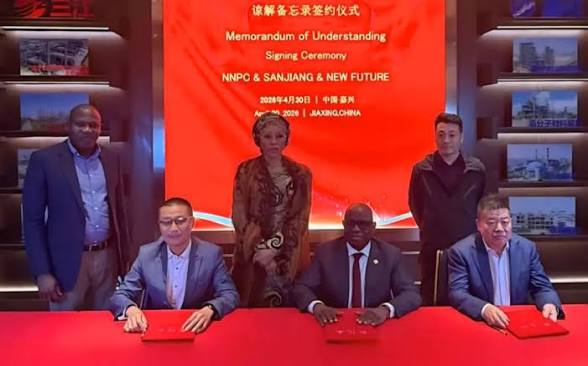
The Nigerian National Petroleum Company Limited (NNPC Ltd) has signed a Memorandum of Understanding (MoU) with two Chinese firms, Sanjiang Chemical Company Limited and Xingcheng (Fuzhou) Industrial Park Operation and Management Co. Ltd, to advance the restart, rehabilitation and expansion of the Warri and Port Harcourt refineries.

The agreement, signed in Jiaxing City, China on Thursday, April 30, 2026, follows more than six months of technical and management-level engagements aimed at unlocking new investment pathways for Nigeria’s refining and downstream petroleum sector.

NNPC said the partnership is expected to explore a potential Technical Equity Partnership (TEP) framework that would support the completion of outstanding works at both refineries, while also enhancing operational efficiency and long-term profitability. Speaking after the signing, the Group Chief Executive Officer of NNPC Ltd, Engr. Bashir Bayo Ojulari, described the MoU as a major milestone in ongoing efforts to restore Nigeria’s refining capacity and attract strategic technical partners.

He noted that the collaboration reflects a shared commitment to developing gas-based industrial hubs and expanding petrochemical capacity around co-located energy infrastructure.

“All parties recognise the mutually beneficial opportunities for developing refineries and harnessing gas and downstream petrochemical value chains,” he said, adding that the initiative would position both facilities for cleaner, more efficient and globally competitive operations.

The proposed collaboration also envisions upgrading refinery systems to higher performance standards, while integrating industrial park models to maximise value creation.

According to NNPC, the MoU sets the stage for further discussions, with any final agreement subject to due approvals and due diligence processes.

Chief Corporate Communications Officer of NNPC Ltd, Andy Odeh, reaffirmed that the partnership reflects the company’s broader strategy to reposition Nigeria’s downstream sector through strategic global alliances and investment-driven reforms.

Meanwhile, the corporation has remitted N2.88 trillion to the federation between January and March 2026, as it recorded a profit after tax of N276 billion in March, driven largely by stronger gas production.

The figures were disclosed in the company’s latest monthly report released on Monday, which noted that all production, sales and financial data remain provisional and subject to reconciliation with relevant stakeholders.

According to the report, revenue for March stood at N2.774 trillion, reflecting the scale of the national oil company’s operations and its continued role as a major fiscal anchor for the country.

Gas production rose to 7,731 million standard cubic feet per day (mmscf/d) in March, up from 7,458 mmscf/d recorded in February, which shows a steady upward trajectory since late 2025. Gas sales also increased to 5,059 mmscf/d from 4,893 mmscf/d in the preceding month, indicating stronger demand and improved distribution.

Crude oil and condensate production posted a modest increase to 1.56 million barrels per day (mmbopd) in March, compared to 1.51 mmbopd in February, suggesting a gradual recovery in output. However, crude oil and condensate sales declined to 17.27 million barrels in March from 23.08 million barrels in February, pointing to possible logistical or export constraints during the period despite improved production levels.

Providing context for the gains, the company said production improved following the early completion of turnaround maintenance on the OML 118 Bonga asset, delivered 12 days ahead of schedule.

The report, however, noted that performance was partly impacted by operational disruptions, including a leak on the Trans Forcados Pipeline, which led to outages across several assets between February 20 and March 25.

Despite these challenges, the company’s financial and operational performance highlights its continued importance to the nation’s economy, as it remains a dominant player across the upstream, midstream and downstream segments, with its statutory remittances forming a significant share of government revenue.

The company had earlier reported a profit after tax of N5.4 trillion on revenue of N45.1 trillion for the full year ended 2024. It also remitted N12.117 trillion to the Federal Government between January and October 2025, reinforcing its position as a key revenue driver for the federation.

A debt relief approved by Bola Tinubu in December 2025 also saw the clearance of $1.42 billion and N5.57 trillion from the company’s obligations to the Federation Account, further strengthening its financial standing.

Sun

Obi, Kwankwaso face fresh crisis in NDC as ADA founder Ardo threatens legal action

0


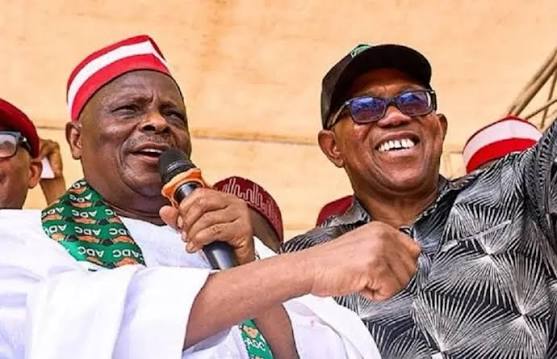
Fresh trouble seems to be looming for Peter Obi and Rabi’u Musa Kwankwaso as the promoter of the All Democratic Alliance (ADA), Dr Umar Ardo, has vowed to challenge the registration of the Nigeria Democratic Congress (NDC) in court, accusing the Independent National Electoral Commission (INEC) of irregularities in the registration.

Obi, the former Labour Party (LP) presidential candidate and former Kano State governor, Kwankwaso, formally joined the NDC on Sunday.

Ardo, who spoke with DCL Hausa, alleged that the NDC was registered without meeting the constitutional requirements, the Electoral Act and INEC’s guidelines.

But NDC founder and former Bayelsa State Governor, Seriake Dickson, has dismissed Ardo’s claims as sponsored propaganda meant to undermine a legitimately registered party.

Dickson, in a statement yesterday, said, “INEC registered new political parties following the lifting of the ban on the creation of new parties.

“A total of 171 political associations applied to the commission for registration. At a quarterly consultative meeting with political party leaders in Abuja in February 2026, INEC chairman, Prof. Joash Amupitan, revealed that only two of the 171 applicants had been granted registration, the Democratic Leadership Alliance (DLA) and the NDC, which was registered in compliance with a court order.”

He said the registrations were carried out in line with Sections 222 and 223 of the 1999 Constitution, Sections 75 and 79 of the Electoral Act 2022 and the Commission’s Regulations and Guidelines for Political Parties.

However, Ardo argued that the NDC did not go through the proper application process and therefore should not have been registered.

He said the NDC only submitted a letter of intent, was never shortlisted by INEC, never used the official INEC registration portal and failed to submit key documents, including a party constitution, manifesto and executive membership list, which are required under the law and INEC’s guidelines.

He said his association formally applied to register ADA, paid all the required fees and received a letter from INEC dated September 10, 2025, confirming it had met the conditions and qualified to proceed to the next stage of the registration process.

He said ADA provided all the necessary documents for verification, yet the association was denied registration alongside 13 other groups and has since taken the matter to court.

He then said he was surprised at the speed with which the NDC secured its court judgment.

He revealed that he spent N200 million on the registration process and had established offices across the country, only to be denied registration, while a group he claims did not follow due process was successful.

“The Nigeria Democratic Congress obtained registration without a proper application. It did not meet the requirements set by the law, the Constitution of the Federal Republic of Nigeria or INEC guidelines.

“It is clearly irregular. Even on INEC’s website, the party’s leadership is listed as having emerged by court order. Yet, at the time of the ruling, no names were submitted. The names were only provided after registration.

“Within 32 days of filing its case, the NDC secured judgment. Our own case has been in court for five months without a ruling. This kind of inconsistency brings instability and undermines peace in the country,” he said.

Ardo dismissed suggestions that he was acting on behalf of the current administration to destabilise the NDC ahead of the 2027 general elections, saying that he had challenged previous governments in court, including those of former Presidents Goodluck Jonathan and the late Muhammadu Buhari.

However, Dickson, in a previous statement, said the party’s registration process began in 2017, before Ardo considered forming a political party, and was only suspended because INEC placed a ban on the registration of new parties.

He said when INEC lifted the embargo, the NDC revived its application and was listed among the 171 associations.

Dickson said when INEC wrote to the NDC stating that its logo, which is a two-finger sign, was similar to the APC’s broom symbol, the NDC disputed this and offered to change the logo, but was denied.

On whether the judgment could be challenged, Dickson said that since INEC had accepted and complied with the ruling without filing an appeal, and since the appeal window had closed, no third party has the legal standing to contest the registration.

“We wrote to INEC notifying them of our intention to sue, and we went to court over this unlawful exclusion and upon this, the court enforced our rights to freedom of association, deemed us registered and directed INEC to register us, which they have implemented.

“No individual or group has the legal standing to contest the registration of a political party after a court judgment has been duly obeyed and implemented by INEC,” he said.

He also noted that the NDC was not the only party that was registered through court action, but that the Nigeria Democratic Party (NDP) is not being attacked by Ardo.

He expressed disappointment that a man he took as a friend and political ally had chosen to publicly attack the NDC.

Sun

PHOTO: Aliko Dangote in Norway

0


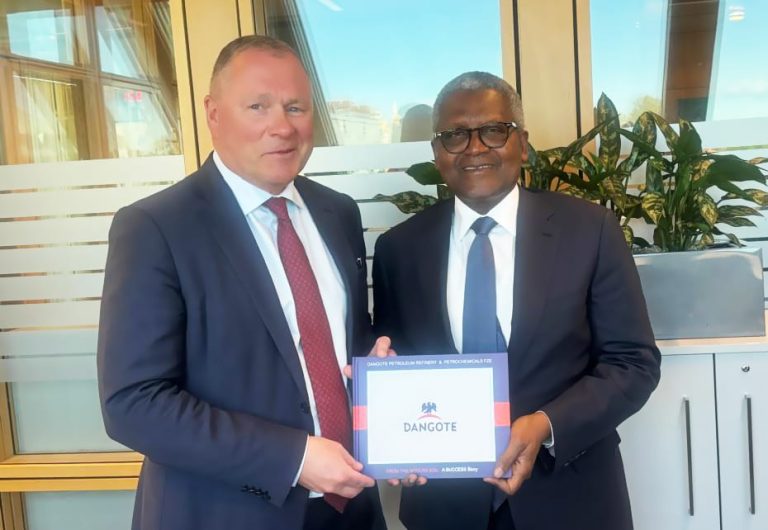
President/Chief Executive, Dangote Industries Limited, Aliko Dangote (right) presenting a sourvenir to the Chief Executive Officer of Norges Bank Investment Management (NBIM), Nicolai Tangen during a meeting in Norway.

Private Schools Strained as Rising Costs, Policy Gaps Threaten Sustainability — NAPPS

0


BY TAIWO OGUNMOLA -OMILANI

Private school operators across Nigeria are grappling with mounting financial pressures driven by soaring energy, transport, and operational costs, the National President of the National Association of Proprietors of Private Schools (NAPPS), Chief Yomi Otubela, has said.

In a detailed assessment of the sector, Otubela revealed that expenditure on diesel and petrol has surged by over 100 percent in many schools compared to the same period last year.

He attributed the increase to fuel price volatility and persistent logistics challenges, noting that most schools are relying on internal adjustments, delaying projects, and dipping into reserves—measures he described as unsustainable.

The NAPPS president also highlighted growing concerns over staff welfare and retention. According to him, while inflation has raised staff expectations, many schools lack the financial capacity to implement significant salary increases.

This has forced proprietors to adopt non-monetary incentives and phased salary adjustments. He added that the sector is witnessing a shortage of experienced teachers, as many educators exit the system or relocate abroad, further straining quality and stability.

On instructional materials, Otubela said costs have risen between 70 and 100 percent, with the price of paper alone significantly increasing per-student expenses. Maintenance and operational services have also recorded hikes of between 60 and 80 percent, as artisans adjust prices to reflect higher transportation and material costs.

Amid these pressures, some schools have reviewed tuition fees upward by 20 to 40 percent, while others have maintained existing rates to avoid losing students, albeit at significant financial strain. Transport services have also been affected, with bus fees rising between 30 and 60 percent. In some cases, schools have reduced routes, consolidated pick-up points, or entirely suspended bus services due to declining demand and unsustainable operating costs.

Otubela further noted that parents are increasingly struggling to meet financial obligations, with default rates rising to between 25 and 35 percent in some areas. Schools have responded by introducing instalment payment options and early payment incentives, though these measures have provided only limited relief.

Enrolment patterns are also shifting, with some parents withdrawing their children or transferring them to more affordable schools, reflecting the broader economic challenges facing households nationwide.
To cope, schools have implemented cost-cutting measures, including scaling down extracurricular activities, postponing excursions, and halting expansion projects.

The NAPPS president identified policy inconsistency as another major challenge, stating that frequent changes and lack of clarity in the education sector create uncertainty, hinder planning, and weaken overall system stability.

He expressed concern over the absence of direct government support for private schools, noting that the sector has not benefited from palliatives, grants, or tax relief despite its critical role in delivering education.

Otubela called for urgent government intervention, including tax waivers, access to concessionary loans at single-digit interest rates, improved access to foreign exchange for educational materials, and subsidised fuel for school transportation.

He also advocated the creation of structured education financing through dedicated banking windows to support approved schools nationwide.

He stressed that the most critical intervention would be targeted support for key operational inputs, particularly fuel and educational materials, alongside affordable financing options for school owners.

“The reality is that private schools in Nigeria are operating under immense pressure,” Otubela said, adding that a coordinated effort between government and stakeholders is essential to sustain the sector and protect the future of Nigerian children.

PDP NEC Appoints Interim National Working Committee, Unveils 2027 Election Timetable

0


The National Executive Committee (NEC) of the Peoples Democratic Party has appointed a 13-member Interim National Working Committee (INWC) to oversee the affairs of the party and coordinate preparations for the 2027 general elections.

The decision was reached at the party’s 103rd NEC meeting held in Abuja, following a recommendation by the Board of Trustees (BoT).

The move comes in the wake of a recent Supreme Court judgment which dismissed appeals and cross-appeals, leaving the party without a substantive leadership structure.

NEC said the appointment was necessary to prevent a leadership vacuum at a critical time, noting that both the BoT and NEC unanimously agreed on the formation of the interim body to steer the party forward.

The newly constituted INWC is chaired by Kabiru Tanimu Turaki, SAN, with Ambassador Taofeek Arapaja serving as Secretary. Other members include Hamza Akuyam Koshe, Dr. Daniel Woyenikuro, Richard Ihediwa, Isa Abubakar, Okechekwu Obiechina Daniel, Hon. Theophilus Dakas Shan, Comrade Ini Ememobong, Hon. Aribisala Adewale Idowu, Barr. Bara’u Shafi, Mrs. Anthonia Chinenyenwa, and Umar Dan Aji.

The committee has been inaugurated and directed to commence work immediately.
In addition, NEC approved the timetable and guidelines for the party’s pre-election activities ahead of the 2027 polls.

According to the schedule, the sale of Expression of Interest and nomination forms will run from May 5 to May 13, 2026, while the deadline for submission of completed forms is May 14.

Screening of aspirants is slated for May 15 to 18, with appeals fixed for May 21. The publication of cleared aspirants will follow on May 22, while ward primaries for all offices are scheduled for May 27. Appeals arising from the primaries will be handled on May 28.

NEC will meet on May 29 to approve all nominated candidates, ahead of a special convention on May 30 for final ratification.
The party also released the cost of nomination forms for various elective offices.

Aspirants for State Houses of Assembly are to pay ₦500,000 for Expression of Interest and ₦1.5 million for nomination forms. For the House of Representatives, the fees are ₦2 million and ₦5 million respectively, while Senate aspirants will pay ₦3 million and ₦7 million.
Governorship aspirants are required to pay ₦5 million for Expression of Interest and ₦35 million for nomination forms, while presidential hopefuls will pay ₦10 million and ₦90 million respectively.

NEC further announced concessions for certain groups, stating that women aspirants will be exempted from paying nomination fees and will only pay for Expression of Interest forms. Youths and persons living with disabilities are to pay 50 per cent of the nomination fees for their chosen offices.

The statement was signed by Comrade Ini Ememobong, National Publicity Secretary of the Interim National Working Committee, on May 4, 2026.

ASCON DG Unveils R.I.S.E. Model to Drive Public Sector Reform

0


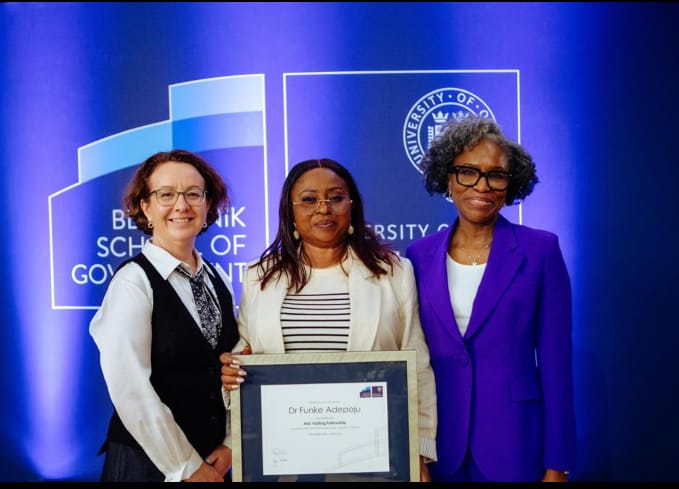
The Director-General of the Administrative Staff College of Nigeria (ASCON), Dr. Funke Adepoju Olayomi, has introduced a new policy framework aimed at transforming public sector training institutions into engines of governance reform.

Dr. Olayomi, who is also a visiting member of the AIG Imokhuede Foundation, presented the Reform-Inspired, Systems-driven, Execution-focused (R.I.S.E.) Model as a practitioner-driven approach to reposition institutions like ASCON for more impactful service delivery.

She explained that the framework is designed to shift public sector training institutions away from routine programme delivery toward sustained reform implementation, noting that the persistent gap between capacity building and tangible governance outcomes stems from structural institutional challenges rather than deficiencies in training.

Drawing on comparative experiences from countries such as Indonesia, Nepal and Kenya, the ASCON DG argued that the failure of many training interventions to yield measurable reforms underscores the need for a redesign of institutional frameworks guiding public administration.

According to her, the R.I.S.E. Model provides a structured pathway for aligning training with real governance outcomes, with ASCON positioned as the pilot institution for its implementation.

Dr. Olayomi added that the model is already gaining attention across the continent, with growing interest in its potential to reshape how public sector reforms are conceptualised and executed.

PDP NEC Appoints Interim National Working Committee, Unveils 2027 Election Timetable

0


The National Executive Committee (NEC) of the Peoples Democratic Party has appointed a 13-member Interim National Working Committee (INWC) to oversee the affairs of the party and coordinate preparations for the 2027 general elections.

The decision was reached at the party’s 103rd NEC meeting held in Abuja, following a recommendation by the Board of Trustees (BoT).

The move comes in the wake of a recent Supreme Court judgment which dismissed appeals and cross-appeals, leaving the party without a substantive leadership structure.

NEC said the appointment was necessary to prevent a leadership vacuum at a critical time, noting that both the BoT and NEC unanimously agreed on the formation of the interim body to steer the party forward.

The newly constituted INWC is chaired by Kabiru Tanimu Turaki, SAN, with Ambassador Taofeek Arapaja serving as Secretary. Other members include Hamza Akuyam Koshe, Dr. Daniel Woyenikuro, Richard Ihediwa, Isa Abubakar, Okechekwu Obiechina Daniel, Hon. Theophilus Dakas Shan, Comrade Ini Ememobong, Hon. Aribisala Adewale Idowu, Barr. Bara’u Shafi, Mrs. Anthonia Chinenyenwa, and Umar Dan Aji.

The committee has been inaugurated and directed to commence work immediately.
In addition, NEC approved the timetable and guidelines for the party’s pre-election activities ahead of the 2027 polls.

According to the schedule, the sale of Expression of Interest and nomination forms will run from May 5 to May 13, 2026, while the deadline for submission of completed forms is May 14.

Screening of aspirants is slated for May 15 to 18, with appeals fixed for May 21. The publication of cleared aspirants will follow on May 22, while ward primaries for all offices are scheduled for May 27. Appeals arising from the primaries will be handled on May 28.

NEC will meet on May 29 to approve all nominated candidates, ahead of a special convention on May 30 for final ratification.
The party also released the cost of nomination forms for various elective offices.

Aspirants for State Houses of Assembly are to pay ₦500,000 for Expression of Interest and ₦1.5 million for nomination forms. For the House of Representatives, the fees are ₦2 million and ₦5 million respectively, while Senate aspirants will pay ₦3 million and ₦7 million.
Governorship aspirants are required to pay ₦5 million for Expression of Interest and ₦35 million for nomination forms, while presidential hopefuls will pay ₦10 million and ₦90 million respectively.

NEC further announced concessions for certain groups, stating that women aspirants will be exempted from paying nomination fees and will only pay for Expression of Interest forms. Youths and persons living with disabilities are to pay 50 per cent of the nomination fees for their chosen offices.

The statement was signed by Comrade Ini Ememobong, National Publicity Secretary of the Interim National Working Committee, on May 4, 2026.

ASCON DG Unveils R.I.S.E. Model to Drive Public Sector Reform

0


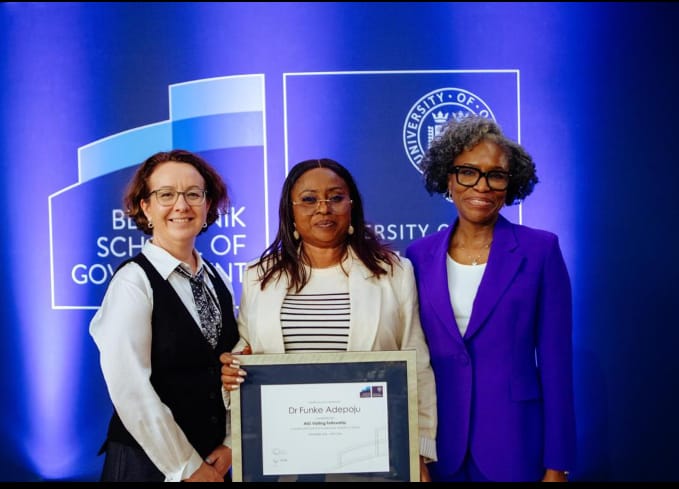
The Director-General of the Administrative Staff College of Nigeria (ASCON), Dr. Funke Adepoju Olayomi, has introduced a new policy framework aimed at transforming public sector training institutions into engines of governance reform.

Dr. Olayomi, who is also a visiting member of the AIG Imokhuede Foundation, presented the Reform-Inspired, Systems-driven, Execution-focused (R.I.S.E.) Model as a practitioner-driven approach to reposition institutions like ASCON for more impactful service delivery.


She explained that the framework is designed to shift public sector training institutions away from routine programme delivery toward sustained reform implementation, noting that the persistent gap between capacity building and tangible governance outcomes stems from structural institutional challenges rather than deficiencies in training.


Drawing on comparative experiences from countries such as Indonesia, Nepal and Kenya, the ASCON DG argued that the failure of many training interventions to yield measurable reforms underscores the need for a redesign of institutional frameworks guiding public administration.


According to her, the R.I.S.E. Model provides a structured pathway for aligning training with real governance outcomes, with ASCON positioned as the pilot institution for its implementation.


Dr. Olayomi added that the model is already gaining attention across the continent, with growing interest in its potential to reshape how public sector reforms are conceptualised and executed.

Police arrest 13 suspects over alleged assault of journalist in Rivers

0


The Police Command in Rivers has arrested 13 suspects over alleged assault of a journalist in Port Harcourt.

The journalist, Mr Allwell Ene, was reportedly attacked while investigating a phone purchase fraud at the Garrison area of the city.

The command’s spokesperson, ASP Blessing Agabe, briefing journalists on Monday in Port Harcourt, said that upon receiving report of the incident, operatives of the Olu-Obasanjo Police Division swiftly responded and rescued the journalist from the attackers.

She said that following the incident, the command promptly commenced an investigation and obtained a first-hand account of the incident from the journalist.

“Thereafter, a coordinated operation was launched, leading to the arrest of 13 suspects,” Agabe said.

The police spokesperson said that Ene was carrying out a solo investigation at a known crime-prone location frequently raided by the police, when he was attacked.

According to her, quite a number of people in the area are allegedly involved in phone theft and harassment of residents.

“Investigations are ongoing, and efforts are being intensified to ensure all perpetrators are brought to justice,” she added.

Agabe quoted the Commissioner of Police in Rivers, CP Olugbenga Adepoju, as advising journalists to avoid undertaking investigative assignments alone in high-risk areas.

He urged the media to collaborate with the police to ensure safety while carrying out investigative duties.

Adepoju reiterated the command’s commitment to protecting lives and property and combating criminal activities in Port Harcourt and its environs.