Home Blog Page 440

Hantavirus: WHO warns against stranding passengers at sea

0

‎
‎The World Health Organization (WHO) on Tuesday said countries must not leave people stranded at sea when they possess the capacity to manage health risks safely under international health regulations responsibly.

WHO Director-General Tedros Ghebreyesus disclosed this during an online media conference on hantavirus, reflecting on developments 10 days after the organisation was first informed about the unfolding health emergency.

Ghebreyesus said WHO requested assistance from Ulisses Silva when the ship approached Cabo Verde, leading to the evacuation of three passengers who developed symptoms associated with the virus.

He explained that WHO assessed the situation had exceeded Cabo Verde’s capacity to manage complete disembarkation and repatriation of all passengers aboard the vessel safely and within required health standards.

“Last Monday, WHO wrote to Prime Minister Pedro Sánchez asking if Spain would accept the ship and manage the disembarkation, with support from the world body.

“The European Union shared the same assessment, and the Prime Minister received the same request from the EU.

“He responded immediately in the affirmative,” Ghebreyesus added.

According to him, Spain and WHO worked closely under Spain’s leadership alongside the Netherlands government and the ship’s operator to coordinate the evacuation and disembarkation operation carried out successfully in two days.

The WHO chief thanked Pedro Sánchez for fulfilling Spain’s legal obligations under international law while also demonstrating solidarity, compassion and kindness toward passengers stranded aboard the ship for weeks.

“The operation was declared successful: all passengers have disembarked and left Tenerife, and MV Hondius is now on its way to the Netherlands,” Ghebreyesus said.

“Almost 150 people from 23 countries were on the ship for weeks in a frightening situation, with some passengers facing mental breakdown. WHO stressed they deserved dignity and compassion.

“WHO rejected calls to contain passengers on the ship for the full quarantine period, describing the proposal as inhumane, unnecessary and even cruel,” Ghebreyesus said.

Ghebreyesus said all suspected and confirmed cases had been isolated and managed under strict medical supervision, significantly minimising the risk of further transmission among passengers, crew members and affected communities globally.

He said there was currently no indication of a larger outbreak, although additional infections remained possible because of the virus’ long incubation period and emerging reports involving suspected Andes virus symptoms.

“WHO recommends active monitoring at a quarantine facility or at home for 42 days from the last exposure on May 10, which runs until June 12.

“Anyone who becomes symptomatic should be isolated and treated immediately,” Ghebreyesus said, emphasising the importance of swift medical intervention and continued monitoring to prevent further transmission of the virus internationally.

Ghebreyesus said WHO would continue collaborating with experts and affected countries through the International Health Regulations, insisting that solidarity remained the strongest protection against infectious diseases that disregarded national borders worldwide.

Hopes fade for Iran peace deal as Trump says ceasefire on ‘life support’

0


Hopes for peace deal on Iran faded on Tuesday after Donald Trump said a ceasefire with Iran was “on life support” as Tehran rejected a U.S. proposal to end the conflict.

Tehran also maintained its list of demands, as the U.S. president described it as “garbage.”

Iran has called for an end to the war on all fronts, including Lebanon, where U.S. ally Israel is fighting Iran backed Hezbollah militants.

It also emphasised its sovereignty over the Strait of Hormuz, demanded compensation for war damage, and called for an end to the U.S. naval blockade, among other conditions.

Trump said Iran’s response threatened the status of a ceasefire announced on April 7.

“I would call it the weakest right now, after reading that piece of garbage they sent us. I didn’t even finish reading it,” Trump said.

The U.S. had proposed ending the fighting before starting talks on more contentious issues, including Iran’s nuclear programme.

Hantavirus: WHO warns against stranding passengers at sea

0


‎
‎The World Health Organization (WHO) on Tuesday said countries must not leave people stranded at sea when they possess the capacity to manage health risks safely under international health regulations responsibly.

WHO Director-General Tedros Ghebreyesus disclosed this during an online media conference on hantavirus, reflecting on developments 10 days after the organisation was first informed about the unfolding health emergency.

Ghebreyesus said WHO requested assistance from Ulisses Silva when the ship approached Cabo Verde, leading to the evacuation of three passengers who developed symptoms associated with the virus.

He explained that WHO assessed the situation had exceeded Cabo Verde’s capacity to manage complete disembarkation and repatriation of all passengers aboard the vessel safely and within required health standards.

“Last Monday, WHO wrote to Prime Minister Pedro Sánchez asking if Spain would accept the ship and manage the disembarkation, with support from the world body.

“The European Union shared the same assessment, and the Prime Minister received the same request from the EU.

“He responded immediately in the affirmative,” Ghebreyesus added.

According to him, Spain and WHO worked closely under Spain’s leadership alongside the Netherlands government and the ship’s operator to coordinate the evacuation and disembarkation operation carried out successfully in two days.

The WHO chief thanked Pedro Sánchez for fulfilling Spain’s legal obligations under international law while also demonstrating solidarity, compassion and kindness toward passengers stranded aboard the ship for weeks.

“The operation was declared successful: all passengers have disembarked and left Tenerife, and MV Hondius is now on its way to the Netherlands,” Ghebreyesus said.

“Almost 150 people from 23 countries were on the ship for weeks in a frightening situation, with some passengers facing mental breakdown. WHO stressed they deserved dignity and compassion.

“WHO rejected calls to contain passengers on the ship for the full quarantine period, describing the proposal as inhumane, unnecessary and even cruel,” Ghebreyesus said.

Ghebreyesus said all suspected and confirmed cases had been isolated and managed under strict medical supervision, significantly minimising the risk of further transmission among passengers, crew members and affected communities globally.

He said there was currently no indication of a larger outbreak, although additional infections remained possible because of the virus’ long incubation period and emerging reports involving suspected Andes virus symptoms.

“WHO recommends active monitoring at a quarantine facility or at home for 42 days from the last exposure on May 10, which runs until June 12.

“Anyone who becomes symptomatic should be isolated and treated immediately,” Ghebreyesus said, emphasising the importance of swift medical intervention and continued monitoring to prevent further transmission of the virus internationally.

Ghebreyesus said WHO would continue collaborating with experts and affected countries through the International Health Regulations, insisting that solidarity remained the strongest protection against infectious diseases that disregarded national borders worldwide.

Yuan Strengthens 6.8426 Against Dollar

0


The central parity rate of the Chinese currency renminbi, or the Yuan, strengthened 41 pips to 6.8426 against the dollar on Tuesday.

This is according to the China Foreign Exchange Trade System.

In China’s spot foreign exchange market, the Yuan is allowed to rise or fall by two per cent from the central parity rate each trading day.

The central parity rate of the Yuan against the dollar is based on a weighted average of prices offered by market makers before the opening of the interbank market each business day.

I can only afford N5,000 feeding allowance for my 2 children, man tells court

0


A Civil Servant, Hassan Isah, on Tuesday told an an Upper Area Court in Mararaba, Abuja that he can only afford N5,000 monthly feeding allowance for his two children.

Isah, who resides in Angwan Albarka, Mama Dele Junction, Mararaba, Karu LGA, made this known after the Judge, Malam Mohammed Yakubu, told him N5,000 was not enough to feed his children monthly.

“It is My Lord. I can only afford N10,000. I have other responsibilities. I have a child out of wedlock .

“I also take care of my mother as well as my siblings’ school fees.

“She can leave the children for me; my twin brother will take care of them when I go to work.

“I also have so much debt that I am paying,” Isah said.

Earlier, Jamila Rabiu, his wife, had requested for a maintenance fee of N100,000 monthly, an order mandating the respondent to shoulder the children’s school expenses and medical care.

The judge, however, ordered Isah to pay monthly feeding upkeep of N20,000 for the two children. The amount, the judge said, is separate from medical bills, school fees or clothing.

It was reported that earlier on Feb. 11, 2026, Rabiu had filed a petition seeking the dissolution of her marriage under Khul’i, seeking custody of her two children. The petitioner filed the report against Isah, under the Islamic Law Practice and Procedure.

The petitioner, who resides at Angwan Albarka, Mama Dele Junction, Mararaba, Karu LGA, said she got married to the respondent under Islamic Law on April 8, 2017.

She alleged that she had suffered domestic violence in the hands of her husband.

“My husband also engages in unreligious things. I can’t remain in a marriage where my husband is not complying by Islamic obligations.

”I no longer have any love for him,” she told the court .She said continuing to live with the respondent would force her to go against the teachings of her religion.She said that she was ready to refund the N40,000 dowry paid on her head to free herself from the marriage under the principle of Khul’i. She had then prayed the court for the dissolution of the marriage under Khul’i in accordance with Islamic Law, Practice and Procedure, and to get custody of her children.It was reported that she was granted divorce in accordance with Islamic Law on April 28, 2026.

I can only afford N5,000 feeding allowance for my 2 children, man tells court

0


A Civil Servant, Hassan Isah, on Tuesday told an an Upper Area Court in Mararaba, Abuja that he can only afford N5,000 monthly feeding allowance for his two children.

Isah, who resides in Angwan Albarka, Mama Dele Junction, Mararaba, Karu LGA, made this known after the Judge, Malam Mohammed Yakubu, told him N5,000 was not enough to feed his children monthly.

“It is My Lord. I can only afford N10,000. I have other responsibilities. I have a child out of wedlock .

“I also take care of my mother as well as my siblings’ school fees.

“She can leave the children for me; my twin brother will take care of them when I go to work.

“I also have so much debt that I am paying,” Isah said.

Earlier, Jamila Rabiu, his wife, had requested for a maintenance fee of N100,000 monthly, an order mandating the respondent to shoulder the children’s school expenses and medical care.

The judge, however, ordered Isah to pay monthly feeding upkeep of N20,000 for the two children.

The amount, the judge said, is separate from medical bills, school fees or clothing.

It was reported that earlier on Feb. 11, 2026, Rabiu had filed a petition seeking the dissolution of her marriage under Khul’i, seeking custody of her two children.

The petitioner filed the report against Isah, under the Islamic Law Practice and Procedure.

The petitioner, who resides at Angwan Albarka, Mama Dele Junction, Mararaba, Karu LGA, said she got married to the respondent under Islamic Law on April 8, 2017.

She alleged that she had suffered domestic violence in the hands of her husband.

“My husband also engages in unreligious things. I can’t remain in a marriage where my husband is not complying by Islamic obligations.

”I no longer have any love for him,” she told the court .

She said continuing to live with the respondent would force her to go against the teachings of her religion.

She said that she was ready to refund the N40,000 dowry paid on her head to free herself from the marriage under the principle of Khul’i.

She had then prayed the court for the dissolution of the marriage under Khul’i in accordance with Islamic Law, Practice and Procedure, and to get custody of her children.

It was reported that she was granted divorce in accordance with Islamic Law on April 28, 2026.

Oshiomhole Links Ramaphosa’s Silence on Xenophobia to MTN Economic Interests

0


Former Edo State governor and senator, Adams Oshiomhole, has alleged that South African President Cyril Ramaphosa remained silent over xenophobic attacks because of his economic interests tied to telecommunications giant MTN Group.

Speaking on the recurring xenophobic attacks against foreigners in South Africa, Oshiomhole claimed that Ramaphosa is a major shareholder in MTN and would only react strongly when his business interests in Nigeria are threatened.

“I am happy that, after I made the point that the president of South Africa is a major shareholder in MTN and, as of the time I spoke, he has found it very convenient to keep quiet,” Oshiomhole said.

The former Nigeria Labour Congress president further alleged that Ramaphosa used anti-foreigner sentiments during his election campaign, claiming that foreigners were taking jobs meant for South Africans while citizens suffered from hunger and unemployment.

According to Oshiomhole, such rhetoric contributed to hostility toward other Africans living in South Africa.

He said: “During the campaign of President Cyril Ramaphosa for election to the office of the president in South Africa, he made the issue that foreigners were doing the jobs of South Africans and now South Africans are hungry, and they have transferred aggression against black people.”

Oshiomhole added that targeting Ramaphosa’s business interests in Nigeria would compel the South African leader to speak out against xenophobic violence.

“So, I said, when you hit Ramaphosa as president, you touch his economic interest in Nigeria; he will speak out,” he stated.

The comments come amid renewed concerns over attacks on foreign nationals, particularly Nigerians, in South Africa, which have repeatedly strained diplomatic relations between both countries.

2027: I’d be happy to work with Peter Obi – Kwankwaso

0


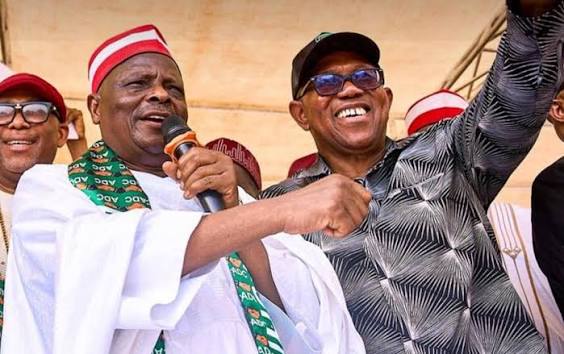
Rabiu Kwankwaso has said he is open to working with Peter Obi ahead of the 2027 presidential election.

Kwankwaso made the statement during an interview on Arise Television’s Prime Time programme, where he discussed possible political collaboration under the Nigeria Democratic Congress.

He confirmed that discussions around cooperation were already underway, especially on tackling insecurity in Nigeria.
“Both of us, my humble self and Peter Obi, have agreed to tackle the issue of insecurity head-on to ensure there is peace and stability in this country,” Kwankwaso said.

When asked if he would accept a vice-presidential slot if Obi emerges as a presidential candidate, he responded in the affirmative.
“If the party decides that I should be the running mate of any candidate from the south under the circumstances, I’d be happy to work together with him,” he said.

Kwankwaso added that he believes a joint ticket with Obi could offer strong leadership capacity for the country.

“Personally, I cannot remember any better combination, no matter how much time is given to find those who can beat us in terms of doing the right thing for this country,” he added.

Both politicians recently joined the Nigeria Democratic Congress after leaving their former parties as coalition talks intensify ahead of the 2027 elections.

Sun

Senate sets 14-day deadline for senators-elect to be sworn in

0


• To declare seats vacant

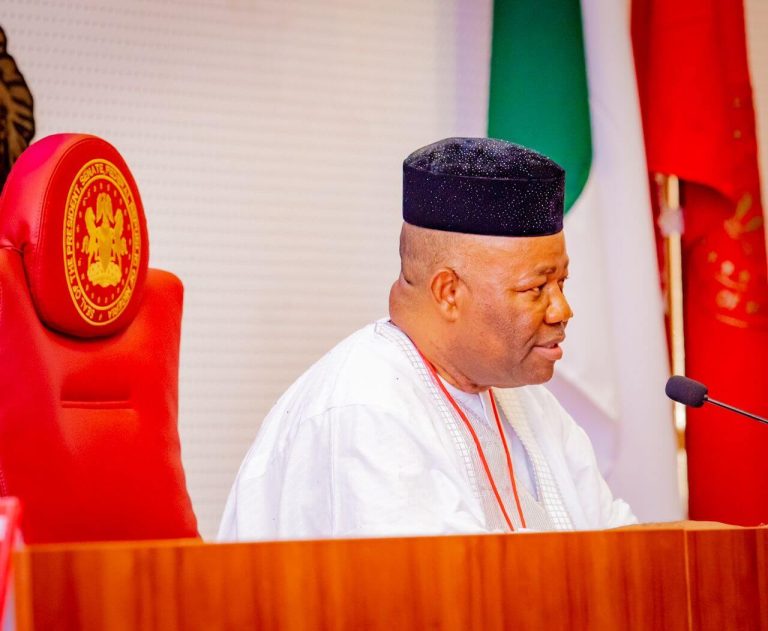
Senators-elect who fail to take their oath of office within 14 legislative days from election risk losing their seats under the Senate amended standing orders.
This was even as the Senate retained the controversial provision restricting eligibility for presiding officers to only ranking senators who would have completed at least two terms.

These provisions, as stated in the amended Senate Standing Rules, are expected to significantly shape the battle for the senate presidency in 2027 by shutting out incoming senators and restricting the contest largely to returning, ranking lawmakers in the current Senate.

Under the amendment, any senator-elect unable to take the Oath of Allegiance and Oath of Membership on the first sitting of the Senate may still be sworn in at a subsequent sitting by the Senate President, “provided that such swearing-in shall take place within 14 legislative days from the first sitting.”

However, failure to be sworn in afterwards could lead to the loss of the seat as the Senate may declare the seat vacant and notify the Independent National Electoral Commission (INEC) to conduct a fresh election in the affected senatorial district.

The Rule, 2(e) reads thus: Oath of office/swearing in of absent senators-elect.

Any Senator-elect who is unable to take the Oath of Allegiance and Oath of Membership on the first sitting of the Senate shall be entitled to be sworn in by the President of the Senate at any subsequent sitting of the Senate, provided that such swearing-in shall take place within 14 legislative days from the first sitting; and where a senator-elect fails, neglects or is unable to take the oath within the period specified in paragraph (f), the Senate may, subject to the provisions of the Constitution of the Federal Republic of Nigeria, take appropriate steps to declare the seat vacant and notify the Independent National Electoral Commission to conduct a fresh election in the affected senatorial district.”

This amendment is seen as an attempt to prevent prolonged vacancies in the Senate arising from litigation, political disputes or delayed appearances by elected lawmakers after inauguration.

Similarly, according to the amended Senate Rules adopted by the chamber, being ranking senators who have served previously in the Senate or the House of Representatives is no longer enough to qualify an interested person in becoming the Senate President or Deputy Senate President.

He or she must also be a member of the 10th and 11th Senate. Consequently, according to the amended eligibility rule, only senators who are currently in the 10th Senate, if reelected in 2027 to serve in the 11th Senate, are eligible to run for presiding positions.

By implication, reelected senators in the 10th Assembly who get re-elected in 2027 have been pre-qualified to run for Senate president and deputy Senate president, alongside other considerations such as zoning.

The new Rule 3 reads thus: ‘Presiding officers and other officers/qualification of presiding officers.’

A Senator-elect may, before taking the Oaths prescribed in the Seventh Schedule to the Constitution of the Federal Republic of Nigeria, take part in the election of the President and Deputy President of the Senate.

Nomination of Senators to serve as Presiding Officers shall be in accordance with the ranking of Senators and shall be strictly adhered to. In determining ranking, the following Order shall apply- Senators returning based on number of times re-elected; Senators who had been members of the House of Representatives and Senators elected as Senators for the first time.

The appointment of Senators as chairmen and members of committees shall be carried out in such a manner as to reflect the six geopolitical zones of the country and there shall be no predominance of Senators from a few geopolitical zones.

On the eligibility of Senators to contest election as presiding officer, the rule said: “A Senator shall not be eligible to contest as a presiding officer in an election unless he has been elected and served as a Senator for at least two full terms of eight years, one term of which shall immediately precede such election.

“A Senator shall not be eligible to be appointed as a Principal Officer of the Senate unless he has served as a Senator for at least a term of four years, which shall immediately precede such an appointment.”

The Senate, however, reversed only the aspect of the amended rules requiring senators-elect to be sworn in before participating in the election of presiding officers, following concerns over possible constitutional inconsistencies.

The rescinded aspect of the amendment now states: “A Senator-elect may, before taking the Oaths prescribed in the Seventh Schedule to the Constitution of the Federal Republic of Nigeria, take part in the election of the President and Deputy President of the Senate.”

Following widespread confusion over the amendment, the chairman of the Senate Committee on Judiciary, Legal Matters and Human Rights, Adeniyi Adegbomire, explained that the Senate merely reverted to its long-standing parliamentary tradition where senators-elect vote for presiding officers before taking their oaths.

“In the past, you didn’t have to be sworn in before you vote for the Senate President and Deputy Senate President, and now, they said you should be sworn in first, before election. Members were of the opinion that the constitution says ‘you may,’ so that there won’t be any controversy thereafter, we decided to revert to the old Order.”

Similarly, Senate Leader Opeyemi Bamidele also clarified that oath-taking before voting may give rise to constitutional inconsistencies and unintended tensions with provisions of the 1999 Constitution, particularly Section 52.

The amendment had initially marked a departure from long standing parliamentary practice where senators-elect first elect presiding officers under the supervision of the Clerk of the National Assembly before taking their oath of office.

Other amendments approved by the Senate include changes to sitting hours, committee representation across geopolitical zones, suspension procedures and the creation of new committees on Livestock Development, Reparations and Repatriations, as well as regional development commissions.

Sun

FG reforms reason economy thriving despite US, Iran war, global crisis -Uzodinma

0

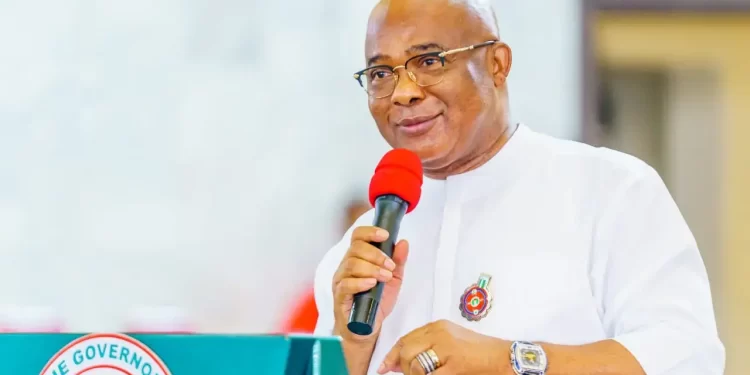
Governor of Imo State and Chairman of the Progressive Governors’ Forum, Hope Uzodimma has declared that amid gulf conflicts, Strait of Hormuz blockade, soaring oil prices and global inflation chaos, Nigeria is not only surviving but also thriving.

Uzodimma, who is also the Director General of Renewed Hope Ambassadors, made the declaration at an interactive session with members of the diplomatic community yesterday.
He noted that the country was emerging stronger from bold economic reforms under President Bola Tinubu.

He positioned Nigeria as Africa’s resilient giant, crediting Tinubu’s reforms for building macroeconomic shock absorbers.

“I want to address the global context now, because I know your governments have been watching how Nigeria, as one of the larger economies on the continent, is absorbing the shocks of the past few months,” Uzodimma said. “Recent conflicts in the Gulf and the Middle East, and the closure and blockade of the Strait of Hormuz that followed, have placed considerable pressure on global oil prices and shipping costs. Inflation has risen across most major economies. Currency volatility has been the rule rather than the exception in emerging markets.”

He cited grim forecasts: IMF’s 0.3-point cut to Nigeria’s 2026 growth due to war-related fuel and fertiliser woes; UNDP’s double-digit inflation warning for Nigeria, Egypt, Ethiopia and Angola. “Nigeria has held up well under these conditions,” Uzodimma countered. “Headline inflation, which peaked above 27 percent at the start of this administration, declined steadily through 11 consecutive months of disinflation, reaching 15.06 percent in February of this year, the lowest level since November 2020. March ticked up to 15.38 percent from Hormuz ripple effects, but the central point is that Nigeria entered a period of major external shock with a stable foreign exchange architecture, healthy reserves and an inflation trajectory that had already been bent downwards.

“We are absorbing the shock with the macroeconomic shock absorbers that this administration’s reforms put in place. That is the test of a stable economic architecture, and so far, we are passing it.”

According to him, growth backs the claim: “Real GDP growth tells the same story. The economy expanded by 4.07 percent in the fourth quarter of 2025, the second quarter in a decade, excluding the post-pandemic rebound. The full year 2025 closed at 3.87 percent, improving on 3.38 percent the year before.” Valued at N441.5 trillion (up from 372.8 trillion), IMF still eyes 4.1 percent for 2026. All sectors drove Q4—agriculture at 4.0 percent, industry, services with oil at 1.58 million bpd, rising to 1.546 million in March (peaks at 1.84 million).

Uzodimma singled out subsidy removal as a game-changer, calling it “the single largest organised corruption pipeline in our public finances” that functioned as an extraction system. He noted that subsidies were claimed on “imaginary volumes of petrol,” with huge volumes rerouted across borders and allocations inflated by cartels. “Successive governments knew this, commissioned reports about it but left the regime in place because dismantling it carried an immediate political cost. To his credit, President Tinubu dismantled it on his first day in office.”

This move, he said, eliminated over 60 percent of high-impact federal corruption, unlocking trillions of Naira. The Federation Account Allocation Committee (FAAC) disbursements have surged from N10.14 trillion in 2023 to monthly figures of N1.8 to N2.6 trillion recently, with states receiving N700 to N800 billion monthly. “State governments now receive net allocations in the order of N700 to N800 billion monthly, with February’s disbursement to states reaching N784 billion, a 23 percent increase over the allocation in the same month in the previous year,” Uzodimma highlighted. “The era of state governors travelling to the federal capital to ask for emergency bailouts to pay basic salaries is over.”

The governor detailed massive infrastructure gains, emphasising federal projects now benefiting states. The 700-km Lagos-Calabar Coastal Highway, connecting nine states, has its first 47 km operational since December 2025, slashing travel times from two hours to 30 minutes and boosting property values by 35 percent in areas like Ibeju-Lekki. The 1,068-km Sokoto-Badagry Superhighway, conceived 45 years ago, is 40 percent complete in key sections, with recent approvals for $516.3 million in loans.

Uzodimma shared a human story: “A few days ago, a video circulated on Nigerian social media in which a farmer described the difference one of these new highway sections had brought to his life. Before the road was reconstructed, transporting his farm produce to market took him 40 minutes. After the reconstruction, the same journey now takes him less than 10 minutes. He spoke about the saved fuel and the saved repair costs. Multiply that farmer by the millions along these corridors, and you begin to see what the freed resources are actually doing.”

He added that nationwide, over 440 road projects and 2,700 km of superhighways are underway, including the long-abandoned East-West Road. Ports are being refurbished with £746 million from a UK deal, and states are investing in power, roads, youth schemes and minimum wage hikes.

On foreign exchange, Uzodimma defended the Naira float against initial criticism. Reserves have climbed from $32 billion in mid-2024 to $49.4 billion by March 2026, 13 months of import cover. The Naira closed April at 1,374 to the dollar, with parallel market premiums under two percent. Diaspora remittances tripled to $600 million monthly, FDI commitments hit $50 billion and rating agencies like Fitch and Moody’s upgraded Nigeria.

“Predictability is key for investors,” he noted, saying, “An investor coming into Nigeria today can build a financial model that holds… The chaos that used to make Nigeria’s macroeconomic indicators effectively fictitious has been retired. That is the gift of the float.”

Despite global shocks like the Strait of Hormuz blockade, inflation fell to 15.06 percent in February, the lowest since 2020 and GDP grew 4.07 percent in Q4 2025, with the economy now at N441.5 trillion.

Uzodimma spotlighted citizen-focused gains: The Nigerian Education Loan Fund has disbursed N242.4 billion to 1.388 million students’ interest-free. Tax reforms exempt low earners (under N800,000 annually) and small businesses, with VAT at 7.5 percent. The digital economy is booming, with 107 million internet users and five unicorns. Security advances include recruitment drives, state police legislation and a US joint operation against ISIS affiliates.

In oil and gas, Dangote Refinery is operational, enabling domestic PMS refining after decades. Agriculture grew four percent, food inflation halved to 14.3 per cent and non-oil exports hit $3.2 billion in H1 2025.

He said: “A country that has absorbed an external shock of the magnitude caused by the closure of the Strait of Hormuz and continues to grow at four per cent is a country that is not merely surviving its reform period. It is moving through it. And what comes out on the other side will be a Nigeria more competent, more competitive and more credible than the one any of us has known.”

Sun