Home Blog Page 428

All eyes on Homeland Security Adviser

0


* High expectations, scepticism over Famadewa’s appointment


For more than a decade, Major General Adeyinka Famadewa (rtd) watched Nigeria’s national security conversations with growing frustration.


•Bandits
In 2023, he captured that frustration in an unusual comparison that quickly drew attention. He likened Nigeria’s endless security debates to the 1990s Salt-N-Pepa hit “Let’s Talk About Sex”, a situation where everyone talks endlessly, yet little of real value is achieved.

Today, the retired intelligence officer has moved from being a critic to a key player. His recent appointment as Special Adviser to the President on Homeland Security, announced by the Office of the Secretary to the Government of the Federation, introduces not only a new office within Nigeria’s security structure but also a fresh approach to tackling internal threats.

For many security analysts and former military colleagues, the appointment signals a strategic shift toward strengthening Nigeria’s internal security coordination at a time when terrorism, kidnapping, cybercrime, and organised violence continue to challenge the country.

A strategic appointment

Among those who welcomed the appointment was retired Brigadier General Sani Usman, who described Famadewa as a highly respected intelligence officer with extensive experience in military operations, strategic planning, and administration.

Usman said the retired Major General built a reputation during his years in service for calm leadership, operational competence, and unwavering commitment to national security objectives.

“He is consistently described by colleagues as firm, intelligent, focused, and capable of handling sensitive assignments with maturity and professionalism,” Usman said.

According to him, Famadewa’s appointment was well deserved and timely, given the country’s persistent internal security challenges.

Usman also explained that the new office differs significantly from that of the National Security Adviser (NSA).

While the NSA oversees broader national security policy, intelligence coordination, defence strategy, and high-level advisory responsibilities, the Homeland Security office is expected to concentrate more directly on domestic security coordination.

He said the office would likely focus on protecting critical infrastructure, strengthening border security, managing emergency response systems, addressing cyber threats, combating domestic terrorism, and improving inter-agency cooperation.

“In essence, while the NSA oversees the broader national security architecture, Homeland Security concentrates on internal threats and the protection of citizens and national assets,” he explained.

Usman, who currently serves as Consultant Director of Corporate Affairs and Information Services at the Nigerian Army Resource Centre, added that modern Homeland Security practice extends beyond conventional military operations.

According to him, it now involves technology deployment, intelligence gathering, public awareness campaigns, community engagement, and strategic communication aimed at strengthening public confidence and national resilience.

Also, a Security & Strategic Studies Expert who is also a Fellow of the Nigerian Army Resource Centre, Dr Steve Ubochi Okwori has described the appointment of the retired general as a strategic move aimed at ending the ruthless attack of innocent citizens of the country by invaders.

The consultant, who recalled first meeting the retired officer during the maiden Fellows and Members Summit of the centre in 2022, said Famadewa demonstrated exceptional intellect, composure, and strategic insight during the engagement.

According to him, Famadewa served as moderator during the summit session where he participated as one of the speakers, adding that his interaction with the retired general revealed a disciplined and highly professional intelligence officer with deep administrative and strategic competence.

He described Famadewa as a “thoroughbred intelligence military officer” with a strong understanding of contemporary security challenges, particularly in national security management, inter-agency coordination, and strategic leadership.

The security expert noted that the retired general’s years of service and professional record within the Nigerian military establishment reflected his commitment to national service and positioned him to contribute meaningfully to the country’s evolving security framework.

Speaking on the distinction between the office of the National Security Adviser and that of the Special Adviser on Homeland Security, the consultant explained that both positions differ in operational focus and strategic responsibilities.

Okwori said while the National Security Adviser coordinates Nigeria’s broader national security framework, including defence, intelligence, counterterrorism operations, foreign security relations, and military strategy, the Special Adviser on Homeland Security focuses more on domestic security concerns.

According to him, homeland security involves the protection of critical infrastructure, institutions, borders, and citizens against both traditional and emerging threats such as terrorism, cybercrime, organised crime, kidnapping, and border insecurity.

The Intelligence Officer behind the strategy

To the average Nigerian, Famadewa may still be relatively unknown. However, within military intelligence circles, he is regarded as one of the country’s most experienced strategic security minds.

A member of the 37 Regular Course of the Nigerian Defence Academy, he was commissioned into the Nigerian Army Intelligence Corps in 1990.

Over the years, he built an academic and professional profile that combines science, management, and advanced security studies.

He graduated with a degree in Chemistry, and later earned an MBA, and a Master’s degree in Strategic Studies. His professional development also took him through several globally recognised institutions, including the Harvard Kennedy School, the Canadian Forces College, the George C. Marshall European Center for Security Studies, and the Galilee International Management Institute.

Throughout his military career, he held several critical intelligence positions, including Commander of the Counter-Intelligence Command and Director of the Intelligence Production Centre for the Nigerian Army.

Perhaps one of his most significant contributions to Nigeria’s security system came during his service as Principal General Staff Officer to the National Security Adviser between 2015 and 2021.

During that period, Famadewa played a major role in establishing the Intelligence Fusion Centre (IFC), an initiative designed to improve intelligence sharing among Nigeria’s key security agencies, including the DSS, NIA, DIA, and the Police.

The initiative sought to eliminate long-standing institutional rivalries and improve coordination among agencies responsible for national security.

Analysts say the fusion model was intended to reduce intelligence gaps that have often allowed terrorist groups and criminal networks to operate undetected.

A different security philosophy

Unlike many traditional military strategists who prioritise purely force-based responses, Famadewa has consistently argued for what he describes as a “multidimensional approach” to national security.

As a Senior Fellow at the Nigerian Army Resource Centre, he repeatedly advocated reforms that go beyond conventional military deployments. One of his longstanding arguments is that military personnel operating in different parts of Nigeria should possess strong linguistic and cultural understanding of local communities.

According to him, fluency in major Nigerian languages such as Hausa, Igbo, and Yoruba can significantly improve trust-building and intelligence gathering at the grassroots level.

He has also advocated stronger civil-security cooperation, insisting that the military should not be viewed as an all-encompassing solution to every security problem. Instead, he believes effective Homeland Security requires stronger policing systems, community participation, proactive intelligence operations, and preventive risk management.

For Famadewa, the real challenge is not merely responding to attacks after they occur but identifying and neutralising threats before they materialise.

Expectations and scepticism

Despite widespread praise for the appointment, the creation of the Homeland Security portfolio has also generated debate among observers.

Some critics argue that Nigeria’s security structure already contains multiple overlapping offices, including the National Security Adviser, the Minister of Defence, and the Minister of Police Affairs. To them, the new office risks becoming another bureaucratic layer within an already complex system.

On the other hand, supporters of his appointment insist the office fills a major gap in Nigeria’s security architecture by focusing specifically on internal threat coordination and domestic resilience.

From theory to action

As he transitions from the research halls of Abuja to the centre of government decision-making at Aso Rock Presidential Villa, expectations surrounding Famadewa’s new role remain high.

For a man who once criticised Nigeria’s security conversations as repetitive and unproductive, the challenge ahead is now deeply personal.

His task is no longer to analyse the country’s security failures from the sidelines, but to help design solutions that are capable of delivering measurable results.

Whether the new Homeland Security office becomes a transformative institution or simply another bureaucratic layer may depend largely on how effectively Famadewa translates his long-held theories into practical outcomes.

For now, one thing is certain: the retired General who once complained that “so much was said and yet so little was achieved” has officially entered the arena where words must give way to action.

Sun
2027: SDP writes INEC, submits Adebayo’s details as presidential candidate

0


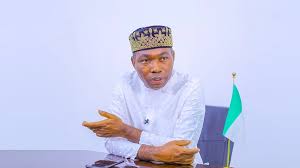
The Social Democratic Party (SDP) has formally submitted the name of its presidential candidate, Adewole Adebayo, to the Independent National Electoral Commission ahead of the 2027 general election.

In a letter addressed to the electoral commission following the party’s national convention and presidential primary held in Bauchi on May 9, 2026, the party, through its secretary, Dr. Olu Agunloye, said it was officially forwarding the details of its elected presidential standard bearer for the 2027 presidential poll.

The SDP stated that the convention and direct primary election were conducted peacefully and successfully at the Abubakar Tafawa Balewa Stadium, Bauchi, where Adebayo emerged as the sole aspirant and secured majority support from delegates and party members.

According to the letter, titled “Submission of the Name and Other Details of SDP Presidential Candidate,” the party informed INEC that “the presidential candidate nominated by the Social Democratic Party for sponsorship in the 2027 presidential election is Prince Adewole Ebenezer Adebayo.”

The party also confirmed that Adebayo would contest for the office of President of the Federal Republic of Nigeria under the SDP platform.

The correspondence further requested the commission to provide the necessary nomination documents, including Forms EC9, EC9A, EC9B, EC9C, EC9D and EC9E, for the formal completion of the candidate nomination process.

Adebayo, who was the SDP presidential candidate in the 2023 election, was returned unopposed at the party’s convention in Bauchi after emerging as the sole aspirant for the ticket.

Sun

2027: APC names Amaewhule, Wike allies winners in Rivers primaries

0


The All Progressives Congress (APC) has declared Speaker of the Rivers State House of Assembly, Martin Amaewhule, and other allies of Federal Capital Territory Minister, Nyesom Wike, winners of its House of Representatives primaries across Rivers State.

The party announced the results after Saturday’s primaries held in the state’s federal constituencies, with candidates emerging largely from the political bloc aligned with Wike ahead of the 2027 general election.

The exercise followed the disqualification of four aspirants believed to be loyal to Governor Siminalayi Fubara, including three serving members of the House of Representatives. The APC had cleared 20 other aspirants to participate in the contest.

Results were declared at the party secretariat in Port Harcourt by the chairman of the APC House of Representatives Primary Election Committee, Wahab Owokoniran. Officials of the Independent National Electoral Commission, including Rivers Resident Electoral Commissioner, Dr Johnson Sinikiem, monitored the process.

Amaewhule emerged unopposed for Obio/Akpor Federal Constituency 1, polling 17,968 votes to clinch the party’s ticket.

Announcing the result, Owokoniran said Amaewhule satisfied the requirements of the party’s constitution and guidelines and was duly returned as the APC candidate.

Several other aspirants also secured tickets, with some winning unchallenged and others defeating rivals in direct contests.

In Port Harcourt Federal Constituency 1, sole aspirant Igwe Precious polled 5,885 votes. Dumnamene Dekor retained control of Khana/Gokana Federal Constituency after defeating Israel Ngbuelo by 17,073 votes to 1,220.

Cyril Hart defeated Philemon Tombodiea in Degema/Bonny Federal Constituency, while Felix Nweke ran unopposed in Eleme/Tai/Oyigbo. Isobo Solomon also recorded a comfortable victory over Luke Enerine in Akuku-Toru/Asari-Toru.

Other winners included Chukwuemele Obuzor for Ahoada West/Ogba-Egbema-Ndoni, Fredrick Apiafi for Andoni/Opobo-Nkoro, Chibuzor Nwamaka for Etche/Omuma, Joy Nyebuchi for Ikwerre/Emuoha, Blessing Amadi for Port Harcourt Constituency 2, Linda Steward for Okrika/Ogu-Bolo, and Solomon Bob for Abua/Odual/Ahoada East.

Owokoniran described the primaries as peaceful, saying the process contradicted widespread perceptions of political violence in Rivers State.

“We have declared all constituency results. The exercise was conducted peacefully. There was no violence, no rancour and no disruption,” he said.

The APC committee chairman added that the conduct of party members during the primaries showed growing political maturity and expressed confidence in the party’s chances in the 2027 elections.

Rivers APC Publicity Secretary, Chibike Ikenga, urged successful aspirants not to become complacent, warning that winning the primary did not amount to victory in the general election.

He said the party would continue efforts to reconcile aggrieved members and strengthen internal unity ahead of the main contest.

The outcome of the primaries further underlines Wike’s firm grip on APC politics in Rivers, with many of the successful candidates linked to the “Rainbow Coalition” or “Joint Coalition”, the political alliance backing President Bola Tinubu’s re-election bid in the state.

Sun

APC dismisses claims of rift with governors over primaries

0


Felix Morka, APC National Publicity Secretary, has dismissed reports suggesting that the All Progressives Congress’s decision to commence nationwide primaries was due to internal disagreements between the party leadership and state governors.

Speaking on ARISE News, Morka said the move to begin the primaries had nothing to do with any rift within the party, insisting that the process was part of the APC’s normal democratic procedure ahead of the elections.

According to him, the party remains united, and suggestions of tension between governors and the national leadership over the conduct of the primaries were inaccurate.

He explained that President Bola Ahmed Tinubu had made it clear that where consensus among aspirants is possible, it should be encouraged because it helps preserve party unity and reduces unnecessary conflict.

“The President made it clear that where consensus is possible, it should be embraced, because consensus simply means agreement, a meeting of minds among those involved in decision-making,” Morka said.

Osun APC holds primary, vows to settle any disputes internally
He noted that consensus is often a better option than a highly contested primary, provided it is based on genuine agreement among stakeholders and not forced on party members.

“In that sense, it is always preferable to a tense, contested process when genuine agreement can be reached,” he added.

Morka stressed that the APC remains committed to transparent primaries and internal democracy, whether through consensus or direct contests where necessary.

He maintained that the objective is to ensure a peaceful and credible process that strengthens the party ahead of the general elections rather than creating division.

The APC spokesman also urged party members to avoid interpreting every political decision as evidence of crisis, saying the party leadership and governors remain focused on maintaining unity and delivering electoral success.

Sun

Anxiety over APC’s make-or-break primaries

0


•Fear of parallel primaries, litigation, violence in Rivers, Ogun, Kano, others, as potential losers weigh options

The All Progressives Congress (APC) has ditched the consensus arrangement and begun direct primaries nationwide from Friday, May 15 to pick candidates for the 2027 elections.

The move follows a failure to secure unanimous agreement among aspirants and marks a significant shift in the party’s internal power dynamics, triggering Section 87(2) of the Electoral Act 2026.

For the first time since 2015, the ruling party is placing its fate in the hands of registered members at the ward level. With President Bola Tinubu recently reaffirming party structures over automatic tickets for lawmakers, the May 15-23 window becomes a make-or-break contest in all 8,809 wards nationwide. This is less about ideology and more about control. The question is whether APC can manage the process without fracturing itself before the general elections.

The trigger is legal and political. Section 87(2) of the Electoral Act 2026 states that where a political party is unable to secure the written consent of all cleared aspirants for a consensus candidate, it shall revert to direct primaries for the nomination of candidates. In most states, the consensus option earlier adopted by the party leadership was anything but unanimous. That provision gives individual aspirants effective veto power and prevents party leadership from imposing a unity list if even one aspirant refuses to step down.

Politically, the timing fits Tinubu’s strategy. As far back as late 2024, the president had signaled that party structures, not high-level endorsements, would determine who gets APC tickets. It’s a break from the old order where governors and power brokers produced delegate lists and handed out tickets with minimal input from the base. That system produced winners but also post-primary lawsuits, defections, and resentment that weakened the party in several states. Direct primaries, in theory, cut out the middlemen.

The stakes are clear. For years, governors controlled state APC structures and used them to determine who ran for what. That made them kingmakers and potential threats to the presidency. Direct primaries bypass that gatekeeping. The leverage now shifts to three groups: the presidency, which can mobilise resources and security for preferred candidates; local strongmen with ward-level loyalty; and money politics, because 8,809 wards mean 8,809 mobilisation points.

On paper, this transfers nomination power from party power brokers to registered party members. In practice, it will test APC’s organisational capacity and its willingness to accept unpredictable outcomes. The party tried direct primaries in Osun and Ekiti in 2018. The results were mixed. There was less delegate manipulation, but also logistical nightmares, allegations of vote buying, and parallel primaries in some areas. Scaling that to every ward in the country is a different proposition.

Who benefits? Incumbents with a genuine grassroots base stand to gain, because they can mobilise ward by ward without relying on state governors. Tinubu loyalists in states where governors are lukewarm or hostile also have an opening. New entrants who can organise at the ward level without Abuja connections get a fairer shot than under consensus. The losers are likely to be governors who lost control of party machinery after 2023, Abuja-based politicians with no ward presence, and defectors from the People’s Democratic Party (PDP) and other parties who expected automatic tickets.

Risks of implosion, lawsuits

The risks for APC are real. If losers reject results, there will be parallel primaries and a flood of lawsuits. The credibility of the process hinges on the membership register. Ghost members and inflated registers could undermine the whole exercise and give ammunition to the opposition.

Logistically, deploying INEC and security agencies to secure 8,809 venues simultaneously poses a big challenge. The 2023 general elections showed how thinly stretched security can be.

Ultimately, if APC implodes in states, PDP, ADC, and the emerging NDC coalition could pick up easy wins. Civil society groups have already warned that INEC’s biggest challenge in 2027 is the perception that results are predetermined. Direct primaries can either improve that perception or make it worse. For voters, the difference between a credible ward-level vote and a chaotic, money-driven exercise will be obvious.

For Tinubu, this is a stress test of his hold on the party. A clean, credible process strengthens his narrative of reform and discipline. It signals that APC can evolve beyond the godfather model. A messy process validates critics who say the party is a platform for winning elections, not a vehicle for internal democracy. Either way, the presidency will be judged on how it manages disputes and enforces discipline afterward.

Beyond APC, the outcome matters for Nigeria’s democracy. If the ruling party can pull off credible direct primaries, it raises the bar for PDP, ADC and others. It forces all parties to build real structures at the ward level instead of relying on Abuja deals. If it fails, it sets the tone for a chaotic 2027 cycle where money and violence determine outcomes more than membership.

The era of buying a ticket through consensus is ending, at least for APC. The era of winning it ward by ward is beginning. The real test now is whether the party can sustain the discipline to see it through, and whether members will use the power they’ve been given.

High tension in states

Anxiety is already building over disputes likely to arise from the direct primaries, especially in states with a history of factional fights or where sitting governors are not fully aligned with President Tinubu.

Ogun State

Political temperature is rising over the clash between Governor Dapo Abiodun and Ogun East Senator Otunba Gbenga Daniel. An aide to Governor Abiodun said Daniel’s refusal to accept a consensus arrangement forced the Ogun East senatorial primary scheduled for Monday.

He said: “APC stakeholders have unanimously endorsed Governor Dapo Abiodun as the consensus candidate for the Ogun East Senatorial District. However, Otunba Gbenga Daniel is insisting on direct primaries. His refusal to yield is a proof of his obstinacy, as all other aspirants have already stepped down. On Monday, he is set to challenge my principal, as the Senate Screening Committee has cleared him to contest.

“”He is not backing down. In fact, it would not be surprising if he attempts to conduct a parallel primary, regardless of whether he secures INEC supervision.

“Ultimately, I am confident my principal will scale the primary hurdle. His strategy is watertight, and he has been successfully mobilising support across every nook and cranny of the district. His victory is certain.”

Daniel himself has warned against intimidation: “I have heard that people may be scared from coming out to vote, but they should not be intimidated. This is a democratic process and everyone has the right to participate freely.”

He spoke further: “In a free and fair primary, I will not only win, I will win overwhelmingly”.

At the grassroots, APC members in Abeokuta South staged a protest demanding membership cards and fair play: “We don’t want imposition in our local government. We want free and fair primaries, and we need adequate security during the process”. Ogun Central chieftain, Olanrewaju Olutunji also alleged that “many members were increasingly worried that some individuals were secretly making efforts to impose favoured candidates. Several members at the ward levels have faced threat and intimidation for voicing against imposition”.

Rivers State

The situation in Rivers State is more complex. While Nyesom Wike controls the FCT and runs a rival PDP structure, he also retains influence in APC. That, combined with unresolved disputes between the Tony Okocha and Emeka Beke factions, raises the risk of parallel primaries between Tinubu loyalists and Wike’s camp. Both sides will claim to hold the authentic ward register.

Tensions deepened after the screening exercise disqualified 65 of 98 aspirants over issues including “inducement and attempted bribery, submission of unsworn affidavits, invalid voter cards, and lack of party membership slips”. Several aspirants linked to Governor Siminalayi Fubara and Tonye Cole were among those affected, prompting Wike to meet APC National Chairman Nentawe Yilwatda amid the fallout.

Kano State

Former APC National Chairman, Abdullahi Ganduje still has a grip on the party, but Senator Barau Jibrin’s faction is challenging his control of the structure. Ganduje will try to install loyalists, but Barau’s bloc has strong ward-level support. The standoff could produce multiple parallel primaries and a repeat of the Zamfara experience.

Across Kano, Taraba, Jigawa and other states, aggrieved aspirants are already mobilising petitions and possible legal challenges. Party stakeholders warn that “attempts to impose candidates could trigger defections, anti-party activities and deepen internal divisions ahead of the primaries”.

Ondo State

Governor Lucky Aiyedatiwa’s push for consensus drew resistance from party stakeholders and aspirants. Aggrieved aspirants under the Ondo State Progressive Aspirants platform raised the alarm over an alleged plot to intimidate opponents. Spokesman Jimi Adekanle said: “Within the APC’s internal framework, consensus is expected to emerge through negotiations, consultations, and voluntary agreement among aspirants and stakeholders”. He alleged that the move violated the Electoral Act 2026 and warned that those recruited for planned attacks “were assured they would operate under the cover of security personnel”.

Kaduna

In Kaduna, Governor Uba Sani holds the governorship, but former Governor Nasir El-Rufai’s loyalists still control parts of the structure. Though El-Rufai is now in the ADC, his allies may sabotage the process or run parallel primaries, leaving the party open to legal challenges over the register.

Zamfara

Zamfara has a history of INEC nullifying APC primaries due to disputes. Now, Minister of State for Defence, Bello Matawalle, a Tinubu loyalist, is up against former Governor Abdulaziz Yari, who commands his own bloc. Both claim control of the APC structure. If they follow the old script, the outcome is predictable.

Benue

In Benue, Governor Hyacinth Alia has been at odds with SGF George Akume, who controls the APC structure nationally and wants loyalists in place. The prolonged power tussle makes a split primary likely at the ward level.

Similar fractures exist in Kogi between Governor Usman Ododo and Yahaya Bello, in Delta between new defectors and old APC members, and in Imo between Governor Hope Uzodimma and Rochas Okorocha.

Implication for the 2027 Elections

The first implication is that APC risks walking into 2027 with the same wound it suffered in 2019 and 2023: self-inflicted primaries crises. States like Zamfara, Rivers, and Kano already cost the party governorships or federal seats when INEC nullified results or courts ruled against parallel primaries. If 8,809 ward-level contests produce 10-15 states with competing winners, the litigation will drag into September. That leaves APC candidates with no time to campaign, while PDP, ADC, and the NDC consolidate early. Internal democracy means little if it ends in court and disillusionment.

Second, these fights reveal the limits of Tinubu’s control over the party. Direct primaries were meant to weaken governors and transfer power to the presidency. But in states where ex-governors and ministers have defected to NDC or retain ward-level loyalty, the presidency can’t enforce outcomes without appearing autocratic. The result is a fractured middle ground: governors keep state-level tickets, Abuja controls some federal seats, and nobody has full control. That might preserve APC’s numerical strength on paper, but it weakens discipline and makes it harder to present a united front against the opposition’s “rescue Nigeria” narrative.

Third, the disputes also create an opening for APC to rebuild credibility if managed well. Voters are tired of Abuja-imposed candidates and consensus deals that bypass the base. Oyo APC aspirants put it bluntly: “Imposition is a betrayal of democracy, and we reject it totally, completely and without compromise”. They added that “let consensus never become a cover for exclusion or manipulation. The process must be transparent, free, fair and clean”, and condemned “the flaunting of cash and every form of inducement that corrupts the process of selecting our leaders”.

Senator Ayo Arise echoed the call for transparency: “The party is making a lot of effort to ensure a free and fair contest, having played down consensus, which leaves the fate of most politicians in the hands of a few people if not properly checked”. He stressed that “as long as electoral malpractice is not introduced, disputes will not be difficult to resolve. Once a person has gone through the primary and lost fairly, the next step is to accept the outcome”.

APC National Chairman Prof. Nentawe Yilwatda warned that the party “will not tolerate any act capable of disrupting the smooth conduct of the primaries”. He said any aspirant or supporter found instigating violence or undermining the process “will face severe disciplinary measures, including immediate suspension from the party”.

APC’s gamble on direct primaries will define its 2027 campaign before the first ballot is cast. On paper, the move returns power to the party’s base and buries the backroom consensus deals that have bred resentment and defections. In practice, the May 15-23 window is a stress test of whether the ruling party can manage democracy within its own ranks.

If APC pulls off credible primaries in most states, it gains more than candidates. It gains a story. “We let members choose” is a message that cuts through voter cynicism better than any campaign slogan. It forces PDP, ADC, and NDC to explain why they still rely on elite bargains. It also gives Tinubu political capital to demand loyalty and discipline after the primaries.

But if the process collapses into parallel primaries, litigation, and violence in states, the damage is immediate. Candidates will enter the general election bruised, broke, and distracted by court cases. The opposition will inherit ready-made fractures to exploit.

The choice for APC is simple. Use direct primaries to rebuild trust from the ward up, or use them to settle old scores and risk losing both. In Nigerian politics, there is a saying that parties that can’t manage their primaries can rarely manage the country.

Sun

Ifako-Ijaiye LAHA Seat: Primaries Heat Up as APC Screening Appeal Committee Clears Ojeleye

0


The All Progressives Congress (APC) Screening Appeal Committee has officially cleared Comrade Adewale Ojeleye, a journalist and experienced grassroots mobilizer, to contest in the primaries for the Lagos State House of Assembly (LAHA), representing the Ifako-Ijaiye 01 Constituency.

Initially, the screening committee had declined to clear Ojeleye for the primaries, prompting him to appeal the decision.

Following this, he was invited for questioning and re-verification of his party membership, academic qualifications, tax clearance, and contributions to the party.

After careful consideration, the Screening Appeal Committee, led by Chairman Mr. Peter Nansoh, Secretary Chief Pamson Dagyat, and member Mr. Jonathan Gukut, announced Ojeleye’s approval to participate in the primaries.

With this decision, he joins other aspirants cleared for the primaries, including Adewale Temilope Adedeji, Ajiboye Afolabi, Lawal Qadri Adewale, and Akinyemi Temitope.

In his response, Ojeleye expressed gratitude to the Appeal Committee and reaffirmed his dedication to the APC. “I thank the members of the Appeal Committee and commend our party’s leadership. I also want to emphasize my commitment to purposeful representation and effective governance that truly addresses the needs of the people,” he stated.

Ojeleye assured his constituents that his focus in the Lagos State House of Assembly will be their best interests. A grassroots mobilizer, media manager, and business administration strategist from the Saala community in Ifako-Ijaiye, Ojeleye possesses a deep understanding of local challenges. He envisions a fresh start, aiming to provide quality representation that effectively balances lawmaking with initiatives designed to positively impact constituents.

His campaign is marked by a strong commitment to community engagement and actionable solutions, positioning him as a candidate who genuinely understands and addresses the needs of his constituency.

Otunba Bola Fisayo Emerged as APC flagbearer for Ondo EAST-WEST Federal Constituency

0

Otunba Bola Fisayo has been declared winner of APC primary election held across the 22 wards of the Federal Constituency.
Announcing the results, the returning office Dr. André Akuche declared Otunba Bola Fisayo the winner having scored a total vote of 12,783 votes, Otunba Ade Adeniyi scored a total vote of 3,128 coming second while Hon. Abiola Makinde scored a total vote of 1,052 and Dr. Michael Akintomide Ajilo scored a total vote of 1011.
The total valid vote cast was 17974
Dr. Jibayo Adeyeye one of the Aspirants had earlier withdrawn from the race.
Otunba Bola Fisayo appreciated the party members for the mandate given to him and assured the party that unprecedented and adequate representation will be guaranteed in the federal constituency.

Hon. Fuad Atanda Lawal emerges as the APC candidate for the House of Representatives

0

Hon. Fuad Atanda Lawal emerges as the APC candidate for the House of Representatives, Eti-Osa Federal Constituency, following the party’s primary election.

LATE BUHARI’S SON, YUSUF BUHARI, SWEEPS APC REPS PRIMARY WITH MASSIVE 5,849 VOTES VICTORY

0


Yusuf Muhammadu Buhari, son of Nigeria’s late former President Muhammadu Buhari, has recorded a crushing victory in the APC primary election for the Sandamu/Daura/Mai’adua Federal Constituency seat.

Yusuf Buhari secured an overwhelming 5,849 votes to defeat Hon. Auwal Lawal Daura, who polled just 21 votes, in a result that has stirred major reactions across Katsina political circles.

APC Primaries: Violence in Alimosho, Mushin As Police Arrest 10 Suspects, Recover Gun

0


The Police Command in Lagos State has apprehended 10 suspects over the violence that erupted at the All Progressives Congress primaries election at Egbe in the Alimosho area of the state.

The incident, which occurred on Onilewura Street, Liasu Road, on Saturday, caused panic among party members and residents as hoodlums stormed the venue ,shooting sporadically.

The incident disrupted the process, forcing voters and party officials to flee for safety.

Several party members sustained varying degrees of injuries in the incident.

The suspects also took advantage of the chaos to rob residents and participants of their mobile phones and other valuables.

Confirming the incident, the Deputy Police Public Relations Officer, ASP Femi Adeoye, said no life was lost during the attack, contrary to rumours circulating in some quarters.

He said the suspects linked to the chaos had been taken to the Ikotun Divisional Police Station for further investigation.

According to him, one locally made gun was recovered from the suspects during the operation.

“The hoodlums responsible for the disturbance have been arrested and taken to Ikotun Divisional Police Station. A gun was also recovered from them,” he said.

Adeoye assured residents and party supporters that investigations would be carried out fully to determine the sponsors of the suspects and their motive,promising perpetrators would be made to face the wrath of the law.

He also urged residents to remain calm and continue to cooperate with security agencies by providing useful information that could assist ongoing investigations.

Also, violence erupted on Saturday at the APC primaries in Mushin Local Government Area of Lagos State, forcing party members and supporters to flee for safety.

The incident occurred before the commencement of voting for the party’s House of Representatives primary for Mushin Constituency II.

This led to a stampede as delegates and party faithful hurriedly left the scene.

Among the leading aspirants contesting the party’s ticket were: Seye Oladejo and the incumbent lawmaker, Hon. Oluwatoyin Fayinka, seeking re-election.

Other aspirants were also participating in the contest.