Home Blog Page 417

Crisis may deepen if judiciary keeps determining outcomes of elections –Jonathan

0


Former President Goodluck Jonathan at the opening ceremony of the Nigerian Bar Association (NBA) Abuja Law Week 2026, on Wednesday.

Former president, Goodluck Jonathan, has warned that Nigeria’s democracy faces a deepening legitimacy crisis if the judiciary continues to determine electoral winners instead of the ballot box, declaring that politicians now rush to courts after elections because they believe judges can be manipulated to overturn the will of the people.

He spoke at the opening ceremony of the Nigerian Bar Association Abuja Law Week 2026, held at the NBA House in Abuja, under the theme: Safeguarding Nigeria’s Democratic Process. Attending as Special Guest of Honour, the former president used the occasion to deliver what amounted to a pointed diagnosis of the systemic ailments threatening the country’s democratic foundations ahead of the 2027 general elections, touching on judicial independence, electoral integrity, voter apathy, political thuggery and the urgent need for institutional reform.
Jonathan painted a stark picture of a country where post-election litigation has become so normalised that it now constitutes a parallel system of determining political power. Drawing a pointed comparison with South Africa, he recounted how a former South African deputy president expressed bewilderment upon learning that Nigerian politicians routinely challenge election outcomes in court.

“She asked me, ‘why would somebody go to court after losing an election?’ In South Africa, going to court after losing an election is strange. While in Nigeria, not going to court is strange.”

The former president argued that courts should not declare winners in disputed elections but should instead order fresh polls where irregularities are established.

“The judiciary will do their work, but they should not declare any candidate. If they are not satisfied with the process of the election, then they should go back to the field. Let the ballot decide who wins,” he stated.

Jonathan also raised questions about the consistency of Nigeria’s multi-layered electoral litigation structure, noting an apparent contradiction in how disputes are handled at different levels of government.

“Governorship election takes three levels, tribunal, Appeal Court and Supreme Court. Presidency takes two. Are you telling me electing a governor is more important than electing a President?” he asked.

He lamented that Nigeria recorded the lowest voter turnout on the African continent despite being the most populous nation on the continent, and called on the Independent National Electoral Commission to investigate the root causes beyond the commonly cited explanation of voter apathy.

He attributed part of the erosion of public trust in elections to political thuggery, which he said had become a normalised and, in some circles, financially rewarding profession.

“Nigeria is the only country where thuggery is a profession. Some thugs, when they are travelling out of this country, fly first class while university professors struggle to buy economy tickets. That country is like a canoe turned upside down.”

Jonathan further urged the NBA to collaborate with the National Assembly in reviewing Nigeria’s electoral and judicial laws, and floated the idea of establishing a Constitutional Court dedicated exclusively to the resolution of electoral disputes.

In his keynote address, former Attorney General of the Federation and Minister of Justice, Mohammed Adoke, warned that Nigeria’s democracy was standing at a precarious crossroads with public confidence in elections continuing to erode despite more than two decades of unbroken civilian rule.

Adoke argued that the mere continuity of elections did not amount to democratic credibility, stressing that the more fundamental question was whether citizens genuinely trusted the outcomes.

He cited the 2023 general elections, during which voter turnout stood at only 27 per cent, the lowest since 1999, while electoral violence claimed 89 lives.

According to him, vote-buying, electoral violence, weak internal party democracy and poor enforcement of electoral laws had combined to hollow out the country’s democratic process. “Vote-buying has transformed elections into economic transactions rather than democratic choices.”

Adoke also criticised political parties for allegedly imposing candidates and circumventing the democratic primaries mandated by the Electoral Act 2022, warning that overreliance on the judiciary to resolve political disputes was gradually stripping voters of their rightful role in determining who governs them.

“The phrase ‘go to court’ has become a silent reminder that the electorate’s participation in determining leaders is gradually eroding,” he stated.

He reserved praise, however, for Jonathan’s conduct during the 2015 presidential transition, describing him as a democratic legend who chose national peace over personal ambition at a critical moment in the country’s history.

President of the Nigerian Bar Association, Afam Osigwe, SAN, said it was deeply troubling that 27 years after Nigeria’s return to civil rule, safeguarding democracy remained the dominant anxiety in national conversation.

Osigwe said the increasing role of the judiciary in determining electoral outcomes was a matter of serious concern, warning that power must never be obtained outside constitutional and democratic processes.

“Without people mounting a military coup, people through violence, thuggery and electoral manipulation come to power in Nigeria,” he said bluntly.

He commended Jonathan for his peaceful concession of defeat in 2015, recalling the former president’s declaration that his ambition was not worth the blood of any Nigerian, and urged all political actors to adopt that same spirit ahead of 2027.

“That should be the mantra of every democratic process,” Osigwe said, calling on Nigerians to commit to enthroning an electoral process that would serve as a reference point for the continent.

The event was attended by the Chief Judge of the High Court of the Federal Capital Territory, Justice Husseini Yusuf, who was represented; President of the African Bar Association, Ibrahim Maku; Chairman of the NBA Abuja Branch, Steve Emelieze, SAN; Chairman of the 2026 Law Week Planning Committee, Dr Chinedu Obienu; and Onyeka Obiajulu, Secretary of the NBA Abuja Branch, among other dignitaries.

Sun

Oyo police confirm abduction of 2 CRIN staff, dismiss reports of mass kidnap in Ibadan

0


The Oyo State Police Command has confirmed the abduction of two staff members of the Cocoa Research Institute of Nigeria (CRIN) by unidentified gunmen, while dismissing reports circulating on social media alleging a fresh mass kidnapping in parts of Ibadan.

In a statement issued on Tuesday, the Command said the incident was reported at about 6:00 p.m. on May 19, 2026, at the Idi-Ayunre Divisional Police Headquarters by the Chief Security Officer of CRIN.

The statement, signed by the Police Public Relations Officer, DSP Ayanlade Olayinka, said the attackers stormed the institute’s premises, abducted two staff members and fled to an unknown destination.

According to the police, preliminary investigations revealed that about six armed men carried out the operation before escaping into nearby forests.

Following the report, the Commissioner of Police, Abimbola Ayodeji Olugbemiga, ordered the immediate deployment of tactical and intelligence teams, including operatives of the Anti-Kidnapping Squad, to rescue the victims and apprehend the suspects.

The Command said intensive bush combing and coordinated search operations had since commenced across surrounding forests linked to the incident.

Olayinka further disclosed that during one of the operations on May 20 at about 8:10 a.m., operatives intercepted two suspicious persons identified simply as Shehu and Abubakar.

He said the suspects allegedly volunteered to lead security operatives to the kidnappers’ hideout after preliminary interrogation.

“However, while approaching the suspected location, the team came under gunfire attack from armed men believed to be members of the kidnapping syndicate,” the statement said.

The police spokesperson added that operatives repelled the attackers and successfully extracted the two suspects, who are currently in the custody of the Anti-Kidnapping Squad for further investigation.

The Command also expressed concern over what it described as false and sensational reports claiming that another mass abduction occurred in Abanla community and other parts of Ibadan.

It clarified that no such incident had been reported anywhere within the Ibadan metropolis apart from the CRIN kidnapping case already under investigation.

The police warned that the spread of unverified security reports could create fear and panic among residents, undermine public confidence in ongoing operations and divert security resources from genuine emergencies.

The Command urged media organisations, bloggers and social media users to verify security-related information through appropriate channels before publication.

It also reassured residents that security measures had been strengthened across affected areas and other strategic locations in the state to prevent criminal activities.

Residents were advised to remain calm, vigilant and continue providing credible information to security agencies to aid ongoing operations.

Sun

Nigeria now produces 10,000 passports per hour, decades of delay ended with centralised system -Minister

0


Minister of Interior, Olatunji Olubunmi-Ojo, said Nigeria has entered a new era in passport production with the establishment of a world-class centralised personalisation centre in Abuja, a development he described as the first of its kind since 1963.

Speaking at the International Civil Service Conference 2026 in Abuja, the minister said the reform has transformed passport production from a slow, manual and fragmented process into a system driven by automation, integration and efficiency. He said the country can now produce “nothing less than 10,000 passports per hour” under the new arrangement, stressing that the innovation marks a major shift in the management of internal security services and public administration.


“For the first time since 1963, we have a world-class centralised personalisation centre in Abuja,” Olubunmi-Ojo said. “And what that means is that from a system that could do 400 or 500 passports per hour, all over the world, we could barely do three, four thousand a day or per hour. Today, we are in a position to do nothing less than 10,000 passports per hour with a centralised level of control.”

The minister said the centre was part of a broader effort to modernise the ministry’s operations and eliminate the inefficiencies that had long plagued passport issuance. According to him, the old system left room for delays, duplication and unnecessary contact between applicants and officials, a situation he said was no longer acceptable in a digital age.

“When we came aboard, we inherited over 200,000 backlogs of passports, and it was like it was a miracle for you to get a passport you pay for,” he said. “But today, to the glory of God, we started that, we automated the process. Let people speak to systems, not people speaking to people. When people speak to systems, it enhances efficiency.”

Olubunmi-Ojo said the automation drive has helped the ministry clear a huge chunk of the inherited backlog in record time. He disclosed that 270,000 pending passport applications were cleared in less than three weeks, adding that the ministry has since produced more than 3.6 million passports.

“We cleared 270,000 backlogs in about three years. We’ve cleared it in less than three weeks,” he said. “And today we have been able to produce over 3.6 million passports since we came aboard.”

He said the transformation was not accidental but the result of a deliberate push to fix a broken process and replace it with one that gives citizens faster and more predictable service. For him, the passport system is one of the clearest examples of how public institutions can move from bureaucracy to results when technology is properly deployed.

The minister said the new system also reflects a wider principle of governance that he has repeatedly pushed within the ministry: that public service must be judged by outcomes, not excuses. “In the 21st century, business as usual has no place in public service,” he said earlier in the address. “Nigerians didn’t invest their trust in us, either as politicians or public servants, to proffer excuses. The only thing that counts and matters is results.”

He argued that reform begins with a clear understanding of the problem, saying the government must first know “what is” before deciding “what ought to be.” In his words, “You must understand the problem for you to proffer solutions,” adding that too often institutions attempt to solve challenges they do not fully understand.

Olubunmi-Ojo also framed the passport reform as part of a larger citizen-focused approach to governance. He said the ministry is moving away from a process-centered system to one that puts the experience of the public first. “True transformation demands transitioning from process-centered administration to governance that prioritizes citizens’ experience,” he said.

The minister insisted that the old culture of preserving outdated processes must give way to innovation. “If the usual is what makes you comfortable, then you can never be outstanding and you can never be extraordinary,” he said. “You do not need to be a genius to do what is usual and to do what is normal.”

He said the ministry’s achievement in passport production shows what is possible when leadership is willing to confront entrenched habits and demand better systems. “Visionary leadership is not defined by authority or position, but by the capacity to imagine systems that function better than those inherited.”

Olubunmi-Ojo added that he will not blame himself for the ministry he inherited in 2023, but that he would take responsibility if he leaves the same problems behind for his successor. “I will never blame myself for the Ministry of Interior that I inherited in 2023,” he said. “But the blame will always be mine if I hand over the same Ministry of Interior, the same situation to my successor.”

The passport reforms, he said, are proof that with the right systems in place, public institutions can deliver faster service, stronger control and greater public confidence. He described the new Abuja centre as a symbol of that shift, saying it demonstrates that Nigeria no longer has to accept delays and inefficiency as normal.

“The era of waiting and bringing corn is gone,” he said, using a local expression to describe the end of unnecessary delays and informal bottlenecks. “That issue of waiting and bringing corn, that is not us as Nigerians. And the system has been built to solve these problems”.

Sun

Presidency moves to rewrite 26-year telecom policy

0


•Eyes N1.6tn revenue, 2m jobs

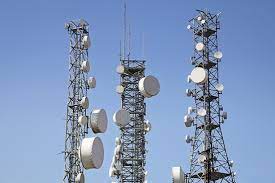
The Presidency has begun an ambitious overhaul of Nigeria’s telecommunications policy for the first time in 26 years, signalling a major reset of the country’s digital economy strategy aimed at unlocking an estimated N1.6 trillion in additional tax revenue and nearly two million jobs.


The proposed review of the National Telecommunications Policy 2000 took centre stage at a high-level policy workshop organised by the Nigerian Communications Commission (NCC) in Lagos on Wednesday, where government officials, telecom operators, regulators and development partners agreed that the country’s digital future can no longer run on an outdated framework.

The move comes as authorities confront mounting challenges threatening telecom infrastructure and digital expansion, including fibre vandalism, multiple taxation, right-of-way bottlenecks, high energy costs and widening connectivity gaps.

Delivering the keynote address, Hadiza Bala Usman, Special Adviser to President Bola Tinubu on Policy and Coordination, declared that the 26-year-old policy no longer reflects the realities of a rapidly evolving digital economy.

According to her, telecommunications has outgrown its traditional role of voice communication and now underpins virtually every critical sector of national life.

“The National Telecommunications Policy 2000 was developed at a defining moment in Nigeria’s reform journey. It supported liberalisation, attracted investment and transformed telecommunications into one of Nigeria’s most dynamic economic sectors,” she said.

However, she stressed that the country now faces a vastly different reality.

“More than two decades later, Nigeria has changed. Technology has changed. The economy has changed. The expectations of citizens have changed,” Usman stated.

She argued that the policy review must move beyond cosmetic amendments and deliver a modern telecommunications framework capable of driving national development, digital governance and economic competitiveness.

“A policy is not merely a document. It is the expression of a country’s priorities and the basis through which government choices become measurable outcomes,” she said.

Usman warned that obsolete or poorly coordinated policies often create duplication of functions, weak implementation and limited impact.

She outlined key priorities for the proposed framework to include broadband expansion, affordability of digital services, protection of telecom infrastructure, quality of service, innovation, cybersecurity, consumer protection and digital inclusion.

The presidential aide said the review aligns with President Tinubu’s Renewed Hope Agenda and the administration’s Eight Presidential Priorities, insisting that the exercise should be viewed as a national economic assignment rather than a routine sectoral review.

“The telecommunications policy review should not be approached only as a sectoral obligation. It should be understood as a national development assignment,” she said.

Usman also demanded stronger collaboration among regulators, operators, investors, state governments and security agencies, particularly on issues affecting fibre deployment and infrastructure protection.

According to her, telecom facilities must now be treated as critical national infrastructure.

“Fibre cuts, vandalism, theft, multiple taxation, right-of-way bottlenecks, delayed approvals, energy constraints and insecurity do not affect operators alone. They affect businesses, schools, hospitals, financial systems and public institutions,” she warned.

Earlier, Executive Vice Chairman of the NCC, Aminu Maida, said the telecom industry had transformed dramatically since the 2000 policy opened the sector to competition.

He recalled that before liberalisation, the sector was dominated by NITEL with fewer than 500,000 active lines serving over 120 million Nigerians.

“The policy served its time well. It helped open the market, attract private investment and establish stronger independent regulation,” Maida said.

He noted that the industry later evolved into an infrastructure-driven sector focused on broadband rollout, fibre deployment, spectrum planning and universal access.

Despite the gains, Maida admitted that structural challenges continue to slow progress.

“These are not merely operational challenges for operators. They are national development issues because they affect the resilience and reach of digital services,” he said.

The NCC chief said Nigeria is now entering what he described as an advanced regulatory frontier, driven by emerging technologies such as 5G, artificial intelligence, satellite broadband, cloud infrastructure, Internet of Things and cybersecurity.

“This is no longer a narrow telecommunications conversation. Telecommunications is no longer just one sector within the economy; it is productivity infrastructure for the entire economy,” Maida declared.

He cited projections indicating that deeper digitalisation across sectors could significantly reshape Nigeria’s economy.

According to him, a GSMA study projects that stronger digital integration could add about two percentage points to Nigeria’s GDP by 2028, while generating close to two million jobs and N1.6 trillion in additional tax revenue.

“The policy choices we make today will determine Nigeria’s ability to broaden its tax base, improve public services, create jobs and build a more inclusive economy,” he added.

Maida said the workshop was designed to assess the implementation of the National Telecommunications Policy 2000, identify gaps and produce recommendations for a future-ready National Telecommunications Policy 2026.

Also speaking, Ayuba Shuaibu, Director of Policy, Competition and Economic Analysis at the NCC, said the workshop offered stakeholders a crucial opportunity to rethink the future of the communications industry.

“The National Telecommunications Policy 2000 laid the foundation for liberalisation, investment and innovation. But the sector has evolved significantly,” he said.

Shuaibu noted that issues such as technological convergence, cybersecurity, data governance and collaborative regulation now require a more forward-looking policy framework.

Stakeholders at the workshop are expected to submit recommendations that will guide the development of a new telecommunications policy designed to accelerate Nigeria’s digital transformation and strengthen its ambition to emerge as a leading digital economy in Africa.

Sun

Frank Edoho denies estranged wife Sandra’s claims, initiates legal battle

0


Media personality and television host Frank Edoho has denied allegations made against him by his estranged wife, Sandra Edoho, insisting the claims are false and confirming that he has chosen to pursue the matter through legal channels.

In a statement posted on his official Instagram page, Edoho acknowledged the public attention the allegations have generated but maintained his innocence.

“Over the past few days, a number of grave allegations concerning my person have been circulated in the public space. I am fully aware of the concern, commentary, and attention this has generated,” he stated.

He firmly rejected the claims, stressing: “Let me state, clearly and unequivocally, that the allegations made against me are false.”

Explaining his decision to avoid a public confrontation, Edoho said restraint was necessary in handling sensitive matters of this nature.

“At moments such as this, experience teaches that not every accusation merits a public contest, nor does every provocation require an answer in the court of public opinion. There are times when restraint is not weakness but wisdom, and this is one of them,” he said.

He added that the matter is now being addressed through legal processes. “I have chosen to address these issues through the appropriate legal channels, where facts, not noise, will prevail.”

Edoho also expressed concern over the ripple effects of the controversy on individuals not directly involved.

“I am deeply saddened that during this situation, individuals who have absolutely no connection to these issues have had their names, identities, and privacy drawn into public discourse. For that, I am sincerely sorry,” he wrote.

He extended apologies to sponsors, brand partners, and collaborators who may have been affected.

“I wish to extend my sincere apologies to my sponsors, brand partners, collaborators, professional associates, and everyone whose goodwill, trust, and reputation may have been affected,” he added.

On the legal proceedings, Edoho said he would not be making further public comments.

“Because these issues are now the subject of ongoing legal and investigative processes before the relevant authorities and the courts, it would be inappropriate for me to make further substantive comments at this time.”

He also appealed for privacy for his children, describing the situation as deeply personal and difficult.

“This is an especially difficult period, most of all for my children, who neither chose this moment nor deserve to bear the weight of public intrusion arising from it,” he said.

“I respectfully ask that their privacy be protected, and that space be given for the lawful processes now underway to run their course.”

Edoho concluded by reaffirming his commitment to his family, stating: “Above all, I am a father, deeply committed to the welfare, dignity, and protection of my children.”

Sun

Recap: Tension as Alleged Loyalists Disrupt APC Primary in Oshodi-Isolo

0


Tension reportedly erupted yesterday at the APC primary election in Oshodi-Isolo Constituency I after alleged loyalists of Oshodi-Isolo LG Chairman, Hon. Kehinde Oloyede, popularly known as Kendoo, stormed the venue and disrupted the process, according to eyewitnesses.


@officialapcng @apclagos1
#APCPrimaryElection #OshodiIsolo

Tension Rises at Agege APC Primaries as Crowd Targets Obasa, Chants Against Egunjobi

0


Tension reportedly escalated during the primary election in Agege on Wednesday after Speaker of the Lagos State House of Assembly, Mudashiru Obasa, was seen appealing to leading aspirant, Hon. Gbenga Abiola.

Eyewitnesses said the atmosphere became charged as some residents and party supporters reacted loudly at the venue, chanting “Egunjobi ole!” amid the unfolding political drama.
The development drew massive attention from party faithful and onlookers, with the crowd’s reaction further heightening tensions surrounding the primaries in the Agege area.

The incident has since sparked conversations across social media platforms, as political observers continue to monitor developments from the Lagos APC primary elections.

Update: Fubara Withdraws from APC Governorship Primaries

0


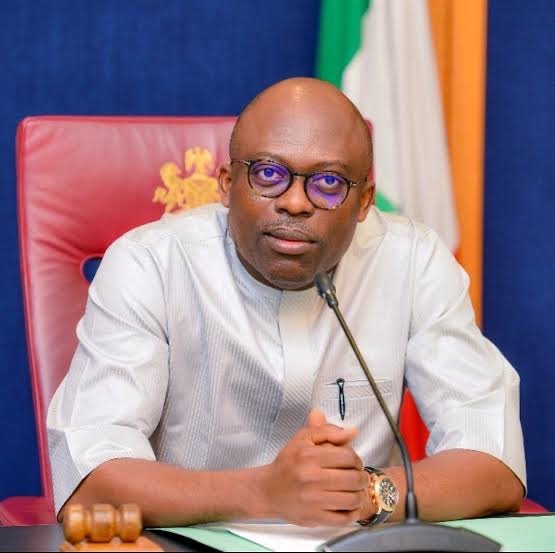
MY DECISION TO WITHDRAW FROM THE RIVERS STATE GUBERNATORIAL PRIMARIES

Fellow Rivers People,

After deep reflection and extensive consultations with my family, friends, and associates, I have taken the difficult but necessary decision to withdraw from the APC gubernatorial primaries. I do so with a full heart and with a firm commitment to support whoever emerges as the candidate of our great party.

Leadership is ultimately about sacrifice. There comes a time when personal ambition must yield to the greater good of the people. Rivers State is bigger than any individual, and at this critical moment, the peace, stability, and unity of our dear state must take precedence over every personal interest.

To my supporters who stood firmly with me throughout this journey who gave their time, resources, prayers, and unwavering hope, I offer my deepest gratitude. I understand the disappointment, the anger, and the pain many of you may feel. Much has indeed been invested and much sacrificed along the way. But please know that your loyalty and trust were never in vain. My silence over this period was deliberate and strategic, guided always by the higher interest of our state and our people.

As our elders say, not everything a hunter sees in the forest is spoken of in the marketplace. Some truths are best borne quietly, not out of fear, but out of wisdom and restraint for the sake of peace and a greater purpose. It is enough to say that I have faced immense pressures and difficult choices, but my love for Rivers State remains greater than anything else.

I sincerely thank our great party, the All Progressives Congress, for the platform and support extended to me throughout this process. I also express my profound appreciation to His Excellency, President Bola Ahmed Tinubu, GCFR, for his support and encouragement.

The APC remains our collective home, and I urge all party faithful and supporters to remain steadfast and committed as we continue to build a stronger and more united future together.

Let it be clearly understood that I stepped aside from participating in the upcoming River’s state Gubernatorial election not out of weakness, fear, or surrender, but out of conviction and sacrifice so that Rivers State may move forward in peace and unity and I remain committed to serving the good people of Rivers state till the end of my term.

Thank you, and may God bless Rivers State.

Sir Siminalayi Fubara, GSSRS
Governor, Rivers State
May 20, 2026 .

Tonye Cole Withdraws from Rivers APC Governorship Primaries

0


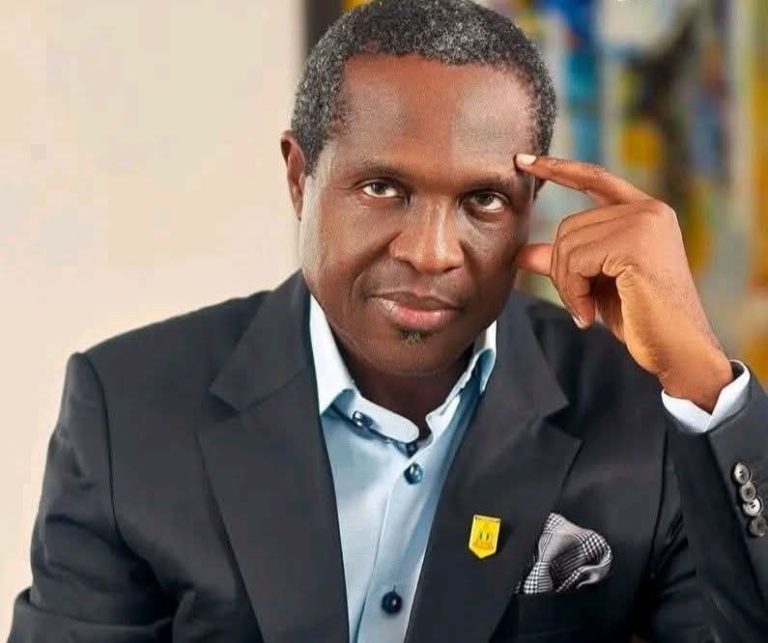
A governorship aspirant on the platform of the All Progressives Congress in Rivers State, Tonye Patrick Cole, has announced his withdrawal from the party’s forthcoming gubernatorial primaries.

Cole made the announcement in a statement on Tuesday evening, saying the decision followed consultations with party stakeholders and was aimed at preserving unity within the Rivers State chapter of the APC ahead of the 2027 general elections.

According to him, the national leadership of the party recently convened a stakeholders’ meeting where extensive discussions were held on the future of the APC in Rivers State and the need for members to present a united front during and after the primaries.

The former governorship candidate stated that after consultations with his political associates, supporters, and other stakeholders, he resolved to step down from the race in the interest of peace, party unity, and collective progress.

Cole pledged his support to whoever eventually emerges as the party’s candidate, stressing that his decision was guided by patriotism and commitment to the stability and success of both the party and Rivers State.

He thanked party faithful, youths, women groups, elders, and supporters across the state for their loyalty and encouragement throughout his political journey.

The APC chieftain also urged his supporters to remain peaceful and cooperate fully with the leadership of the party as preparations intensify for the 2027 elections.

He reaffirmed his commitment to the ideals of the APC and pledged to continue working for the development of Rivers State and the success of the party at all levels.

ETI-OSA POLITICAL STORM: Stakeholders Reject Alleged Imposition, Say “No to Fifth Term”

0


Petition alleges intimidation, cyber harassment, voter suppression, and attempts to influence party primary process in Eti-Osa Constituency II
A major political controversy is unfolding within Eti-Osa Constituency II of Lagos State following a petition by concerned party stakeholders alleging intimidation, coercion, cyber harassment, and attempts to undermine internal party democracy ahead of the forthcoming Lagos State House of Assembly primary election.

The petition, submitted by individuals identifying themselves as concerned stakeholders within the constituency, raises serious concerns over what they describe as coordinated efforts to influence the outcome of the party’s primary election and impose a preferred candidate on party members.

At the center of the controversy is the reported push for the return of incumbent lawmaker Hon. Olusegun Yishawu for what would represent a fifth consecutive term in the Lagos State House of Assembly — an uninterrupted tenure that would amount to approximately twenty years of representation within the same constituency.

The development has sparked growing resistance among some stakeholders who insist that the constituency should not be subjected to what they describe as political monopolization.
“Our message is simple and clear: No to a fifth term,” the stakeholders declared in the petition.

According to them, the principle of democratic participation and inclusiveness demands periodic leadership renewal and broader opportunities for representation.
They argue that continued concentration of political representation in the hands of a single individual over two decades could potentially weaken political development and contradict the ideals of fairness and internal democracy.

The petition also makes allegations against former Minister of Finance Hon. Wale Edun, claiming that he has been exerting influence and pressure on aspirants and political stakeholders in support of Hon. Yishawu’s bid.

The stakeholders alleged that aspirants have faced pressure to step aside and support a preferred candidate.
In addition, they claimed that substantial financial inducements — allegedly amounting to hundreds of millions of naira — have been offered to persuade contestants to withdraw from the race.
The petition further alleges that some aspirants who reportedly refused to sign what were described as “voluntary withdrawal agreements” are now facing various forms of intimidation and political pressure.

Among the allegations raised are claims of cyber bullying, cyber stalking, harassment, threats, and voter suppression tactics allegedly intended to weaken opposition within the party.

The stakeholders argued that such developments could create perceptions of unfairness and raise concerns regarding equity and internal democratic processes within the party.
Political observers note that internal party contests often play a critical role in determining broader electoral stability, particularly in highly strategic constituencies such as Eti-Osa.

Analysts warn that unresolved grievances surrounding candidate selection processes can generate divisions capable of affecting party cohesion and public perception.
The petitioners expressed concern that if the allegations remain unaddressed, the situation could negatively impact confidence in the integrity of the primary election process and potentially create avoidable tensions within the constituency.

They subsequently called on the party’s National Working Committee and Lagos State leadership to immediately investigate the allegations and ensure transparency in the primary process.
Specifically, they requested a comprehensive investigation into claims of intimidation, coercion, voter suppression, cyber bullying, and political harassment.

They also urged party leaders to provide a level playing field for all aspirants, prevent candidate imposition, protect contestants and supporters from intimidation, and uphold principles of fairness, justice, and equal opportunity.
Despite the concerns raised, the stakeholders reaffirmed their loyalty and commitment to the party and expressed confidence that the leadership would act to preserve peace and democratic credibility within Eti-Osa Constituency II.

As political activities intensify ahead of the primaries, attention now shifts to party authorities and how they will respond to the growing concerns emerging from one of Lagos State’s closely watched constituencies.

At the time of publication, the individuals named in the petition had not publicly responded to the allegations.