Home Blog Page 407

Nigeria, Türkiye seal mining pact to boost investment, tackle illegal operations

0


The Federal Government has signed a Memorandum of Understanding (MoU) with the Republic of Türkiye to strengthen bilateral cooperation in the solid minerals sector, as both countries seek deeper economic ties and expanded investment opportunities.

The agreement was signed during the Istanbul Natural Resources Summit in Istanbul, with Nigeria’s Minister of Solid Minerals Development, Dele Alake, saying the partnership would help Nigeria tap into Türkiye’s technological expertise in mining exploration, digitisation, licensing systems, training and capacity building.
According to a statement issued by Lara Owoeye-Wise, Special Assistant on Media to the minister, Alake said President Bola Ahmed Tinubu fully supports efforts aimed at strengthening bilateral cooperation between both countries in mining and energy development.

“Türkiye is one of the countries we are confident of building strong bilateral cooperation with, particularly in the area of solid minerals development. Nigeria is open to working with the Turkish government to strengthen governance structures, improve technical capacity, and advance sustainable mining development in our country,” Alake stated.

The minister noted that reforms introduced in Nigeria’s mining sector over the past three years have improved the business environment and attracted genuine investors into the industry.

He said government had introduced measures to sanitise the sector, improve ease of doing business and create incentives for foreign investors interested in long-term partnerships.

“We have significantly improved the ease of doing business and strengthened institutional support for investors. Investors can now repatriate profits after due process, while government incentives have continued to attract serious mining stakeholders into Nigeria,” he added.

Alake disclosed that the reforms had already triggered increased Foreign Direct Investment inflows into the sector, while also assuring investors of stronger security and protection for lawful mining activities.

He revealed that Mining Marshals set up by the Federal Government had intensified operations against illegal mining across the country.

According to him, over 300 illegal mining operators, including foreign nationals, have been arrested, while more than 150 prosecutions are ongoing nationwide.

He further disclosed that over 100 illegal mining sites had been recovered and returned to legitimate licence owners in efforts to restore investor confidence.

Responding, Türkiye’s Minister of Energy and Natural Resources, Alparslan Bayraktar, described the partnership as strategic and timely, noting that global energy security now requires stronger international cooperation.

Bayraktar commended Nigeria’s ongoing reforms in the mining sector and expressed the readiness of Turkish companies to invest in the country.

“We are ready to invest in Nigeria because of the remarkable initiatives your government has put in place. We look forward to cooperation, support, and guidance that will enable both countries achieve meaningful results,” he said.

The Turkish minister also disclosed that several Turkish companies were interested in expanding operations into Nigeria beyond mining, especially in the energy and hydrocarbon sectors.

He noted that Türkiye is strategically deepening engagement with African markets, with Nigeria positioned as a major gateway for broader economic partnerships across the continent.

Meanwhile, speaking at a panel session titled “Energy Security in a Shifting Global Landscape: Connectivity and Cooperation,” Alake stressed the importance of global peace in achieving sustainable energy security.

“Without reducing conflicts around the world, economic imperatives and global energy security efforts will continue to face significant challenges,” he said.

Sun

Group hails new Benin president on inauguration

0


A group, Benin United in Solidarity (BUS) Nigeria, has congratulated new President of Benin Republic, Mr. Romuald Wadagni, on his inauguration.

Wadagni, a former finance minister, took office on Sunday, succeeding Patrice Talon.

He was elected on April 12 with 94 percent of the ballot.
In a statement signed by the group’s Coordinator, Steven Degboe, BUS described Wadagni’s emergence as well-deserved.

“We, the members of the Beninese diaspora in Nigeria, extend our sincere congratulations to the newly elected President, Mr. Romuald Wadagni, on his well-deserved election as President of the Republic of Benin,” the statement reads in part.

The group also congratulated Minister of Economy, Finance, and Microfinance, Mr. Yenoussi Nicolas, on his appointment.

“All members of BUS – Benin United in Solidarity Nigeria – pray that Almighty God grants the President the wisdom, strength, and intelligence needed to lead the country toward a better future.

“We also pray that God grants the Minister the experience, courage, and ability to work hand in hand with the President for the development and prosperity of the Republic of Benin.

“We, members of the Beninese diaspora in Nigeria, hereby congratulate the President and all the newly appointed ministers.

“May God grant them strength, wisdom, and unity to lead the affairs of Benin toward greater success,” the statement further reads.

Sun

BREAKING: APC Chairman Nullifies State Primary Results, Says Only NWC Can Declare Winners

0


Yilwatda made the clarification on Sunday during an appearance on Channels Television’s Politics Today programme aired at 7pm on May 25, 2026.

The National Chairman of the All Progressives Congress (APC), Nentawe Yilwatda, has declared that no state chapter or electoral committee of the party has the authority to announce winners of the party’s ongoing primary elections, insisting that only the National Working Committee (NWC) can ratify and officially declare results.

Yilwatda made the clarification on Sunday during an appearance on Channels Television’s Politics Today programme aired at 7pm on May 25, 2026.

According to the APC chairman, all results from the primaries conducted across the country must be transmitted to the party’s national headquarters in Abuja, where the NWC will carry out final verification before any winner is officially recognized.

The states cannot announce winners until the NWC gives its verdict,” he stated during the live interview, stressing that the party’s constitution and internal guidelines place the final authority for primary election declarations on the national leadership.

The directive effectively nullifies several results already announced by state chapters and local collation committees following the recently concluded primaries.

The development comes amid growing controversies trailing the APC primaries in some states, with allegations of irregularities and manipulation emerging from different camps.

In Cross River State, some aspirants had reportedly rejected the outcome of the exercise, alleging that the process was marred by irregularities and lacked transparency.

Similarly, Ned Nwoko, who had earlier claimed victory in his contest, alleged that the process was compromised against him despite what he described as his legitimate win.

The APC leadership’s latest position is expected to trigger fresh political reactions within the party as aspirants await the final decisions of the National Working Committee.

Hon Akarachi Amadi: Redefining representation through impact and development

0


By El-ameen Ibrahim

A new wave of grassroots transformation is steadily reshaping Mbaitoli/Ikeduru Federal Constituency in Imo State, driven by the purposeful and people-oriented leadership of Hon. Engr. Akarachi Amadi, the federal lawmaker representing the constituency in Nigeria’s House of Representatives.

It is instructive to know that Amadi’s stellar performance is being acknowledged and appreciated by the people of Mbaitoli/Ikeduru who voted massively for his re-election during the All Progressives Congress (APC) House of Representatives primary election where he was returned unopposed with the APC ticket — to continue his impactful representation at the Green Chamber

In the APC primary election for the Lower Chamber of the National Assembly held on Saturday, May 17, 2026, at the Federal Constituency, Amadi was declared as the unopposed and consensus winner of the Mbaitoli/ Ikeduru Federal Constituency in Imo State, having emerged as the sole candidate for the constituency.

Announcing the results, the Returning Officer, Dr Paul Ajunwa, stated that Amadi was the sole candidate for the election, saying that he polled 3,537 votes to secure his re-election to the Green Chamber — as the voters insisted that the federal lawmaker has lived up to expectations and should continue to touch the lives of the people through his mega empowerment and remarkable programmes.

Incidentally, what unfolded on Sunday, April 5, 2026 across the Mbaike axis was far more than a routine empowerment programme. It was a bold public presentation of a comprehensive development vision—one that seeks to reposition Mbaitoli and Ikeduru as thriving hubs of economic growth, social advancement, and sustainable community development.

The event, which attracted an impressive gathering of traditional rulers, political stakeholders, youth leaders, community representatives, business figures, and members of the National Assembly, became both a celebration of achievements and a declaration of a bigger future ahead for the constituency.

At the heart of the intervention was a massive empowerment package valued at over N200 million, accompanied by the distribution of 67 transformers and an extensive range of economic support tools including tractors, buses, SUVs, tricycles, motorcycles, generators, sewing machines, grinding machines, and agricultural inputs.

For many residents, it was not merely an exercise in distribution—it was the visible manifestation of governance delivering practical value to ordinary people.

Hon. Amadi made it clear that the initiative was not designed as a fleeting political spectacle or seasonal populism, but as part of a deliberate and structured development agenda targeted at economic inclusion, infrastructure renewal, and long-term prosperity.

According to him, leadership must ultimately be judged by tangible impact on the lives of the people.

“Your trust is my greatest asset, and I will continue to justify it through service, transparency, and results,” he declared.

He stressed further that representation only acquires meaning when it translates into improved living standards, expanded opportunities, and renewed hope for citizens.

“I remain committed to building a future where every voice in our constituency is heard, valued, and represented in every decision I make.”

Empowering Minds Through Education

One of the defining highlights of the programme was the lawmaker’s aggressive investment in education and human capital development.
Hundreds of students currently benefiting from scholarship schemes under his sponsorship were showcased as living proof of a growing commitment to empowering the next generation.

Amadi explained that the scholarship initiative was intentionally structured to reward excellence and break the barriers preventing indigent students from accessing higher education.

Under the scheme, students from Mbaitoli/Ikeduru who score above 200 in the Joint Admissions and Matriculation Board (JAMB) examinations are offered sponsorship opportunities to study in public universities across Nigeria.

For many families struggling with economic hardship, the initiative has become a lifeline and a pathway to social mobility.

“Education remains the greatest weapon against poverty,” Amadi noted. “We made a promise that every student who scores above 200 in JAMB will have the opportunity to pursue university education under our scholarship programme anywhere in Nigeria.”

Stakeholders at the event acknowledged that the initiative is already changing educational aspirations across the constituency and restoring confidence among young people about their future.

Lighting Up Communities, Powering Economic Growth

Beyond education, the lawmaker unveiled one of the most ambitious rural electrification interventions seen in the constituency in recent years.

The deployment of 67 transformers across the 63 autonomous communities within Mbaitoli/Ikeduru is expected to significantly improve electricity access, boost local businesses, enhance learning environments, and stimulate economic activity.

Describing electricity as the backbone of modern development, Amadi said the intervention was designed to revive productivity and improve quality of life across rural communities.

“Electricity is not a luxury—it is a necessity for development. When power improves, businesses flourish, students learn better, and communities become economically stronger.”

Communities across Atta, Amaimo, Uzoagba, Mbieri, Eziama, Ikeduru hinterlands, and surrounding areas are expected to benefit from phased installations and rehabilitation of power infrastructure under the initiative.

Driving Economic Inclusion and Youth Empowerment

Recognising the economic realities confronting many families, Amadi also rolled out a constituency-wide transport and enterprise support initiative aimed at empowering commercial operators, traders, artisans, and unemployed youths.

Through the distribution of buses, motorcycles, tricycles, and other mobility tools, the programme seeks to reduce transportation challenges while simultaneously creating employment and income-generating opportunities.

Small-scale entrepreneurs are also expected to benefit from grants, vocational support, and equipment distribution targeted at turning skills into sustainable livelihoods.

Observers described the empowerment model as strategic and forward-looking—one that prioritises self-reliance over dependency and productivity over handouts.

Visible Projects, Visible Leadership

The empowerment programme is only one component of a much broader development framework already unfolding across Mbaitoli/Ikeduru.

Hon. Amadi highlighted numerous completed and ongoing projects spread across the constituency, including the construction and renovation of over 20 classroom blocks in communities such as Atta, Amaimo, Umudim, Ifakala, Obazu Mbieri, Umunoha, Nkwo Orji axis, and beyond.

Other interventions include primary healthcare centres, solar-powered boreholes, rehabilitation of town halls, skill acquisition centres, and the increasingly celebrated “Light Up Mbaike” rural electrification project.

Community leaders present at the gathering testified that many of these interventions are already improving access to education, healthcare, and social infrastructure at the grassroots level.

A Lawmaker with Legislative Substance

Beyond constituency projects, Amadi’s legislative footprint is also beginning to attract attention at the national level.

The federal lawmaker disclosed that he has sponsored 38 bills currently at different stages in the National Assembly, underscoring his commitment to combining effective lawmaking with practical constituency development.

For him, representation must bridge the gap between policymaking in Abuja and realities on the ground back home.

He projected confidently that by the end of his tenure, every community within Mbaitoli/Ikeduru would have at least one visible project directly connected to his stewardship.

A New Standard for Constituency Representation

The event also drew high-profile dignitaries including the Speaker of the House of Representatives, Rt. Hon. Tajudeen Abbas, represented by Hon. Abubakar; former Minister of Youth Development, Dr. Jamila Ibrahim; Imo State APC Chairman, Hon. Austin Onyedebelu; commissioners, lawmakers, and prominent business leaders.

Speaking on behalf of the Speaker, Hon. Abubakar praised the intervention as a model of responsive and people-centred representation consistent with the true expectations of democratic governance.

For a constituency long challenged by infrastructural deficits, youth unemployment, limited electricity access, and economic pressures, the scale of the interventions has begun to redefine public expectations of leadership.

Indeed, the message emerging from Mbaitoli/Ikeduru is becoming increasingly unmistakable: representation can no longer be measured merely by speeches, motions, or appearances on the floor of parliament. It must now be measured by roads built, classrooms renovated, businesses empowered, students educated, communities electrified, and lives transformed.

And in Hon. Engr. Akarachi Amadi, many residents believe they are witnessing a new generation of leadership—one determined not merely to occupy office, but to leave behind visible footprints of progress, prosperity, and enduring development.

Ibrahim, a public affairs analyst and commentator, contributes this piece from Abuja
Dangote Refinery Reshaping Nigeria’s Downstream Oil Sector — EIU

0


The operational expansion of the 650,000 barrels-per-day Dangote Petroleum Refinery and Petrochemicals is fundamentally transforming Nigeria’s downstream oil sector, significantly reducing the country’s dependence on imported refined petroleum products and strengthening its external economic position, according to the Economist Intelligence Unit (EIU).

In its latest assessment of Nigeria’s fuel market and regulatory environment, the EIU stated that the refinery has already altered a sector previously characterised by heavy reliance on imported fuel despite Nigeria being Africa’s largest crude oil producer.

According to the report, the refinery met nearly 80 per cent of Nigeria’s domestic petrol demand in April and produced sufficient volumes to satisfy local consumption needs as operations approached full capacity.

The EIU described Nigeria’s downstream petroleum sector prior to the refinery’s emergence as “long dysfunctional,” noting that the country had remained almost entirely dependent on costly imported fuel while producing about 1.5 million barrels of crude oil daily.

It stated that the refinery’s operations have reduced fuel import dependence, improved domestic availability of petroleum products, and strengthened Nigeria’s balance of payments through lower import demand and increasing exports of refined petroleum products.

“The gradual ramp-up of the 650,000 barrel/day Dangote refinery since May 2023 has transformed Nigeria’s long dysfunctional downstream sector,” the report stated.

“The country’s main refineries, all state-owned, had been inoperative for years and Nigeria was almost entirely reliant on costly imported fuel.”

The research and analysis arm of The Economist Group, London, further noted that the refinery’s attainment of full operational capacity and its planned expansion would support Nigeria’s economic growth and foreign exchange earnings over the medium term.

“Meanwhile, the attainment of full capacity at, and an increase in exports from, the Dangote refinery will support real GDP growth and foreign exchange earnings in 2026 and 2027 and beyond, as a planned doubling of the plant’s output comes on stream around the end of the decade,” the report added.

Industry analysts said the refinery is increasingly positioning Nigeria as an emerging refining and export hub, reshaping energy trade flows across Africa and reducing vulnerabilities associated with fuel import dependence.

The EIU also observed that the refinery’s expansion coincided with major reforms in Nigeria’s downstream sector, including the removal of fuel subsidies and the introduction of market-driven pricing mechanisms.

However, the report noted that the transition from a state-dominated fuel import structure to large-scale domestic refining has generated resistance from interests linked to the old import regime.

The latest tensions followed the decision by the Nigerian Midstream and Downstream Petroleum Regulatory Authority (NMDPRA) to relax restrictions on petrol imports despite the refinery’s growing capacity to meet domestic demand.
Dangote Industries subsequently initiated legal action, arguing that continued import approvals undermine domestic refining investments and contradict the objectives of the Petroleum Industry Act, which seeks to encourage local refining capacity and reduce import dependence.
Analysts further noted that the availability of large-scale domestic refining capacity has improved Nigeria’s energy security and reduced exposure to external supply shocks and foreign exchange volatility.

The Centre for the Promotion of Private Enterprise (CPPE) also cautioned against unrestrained importation of petroleum products, warning that such a policy could weaken Nigeria’s industrialisation drive and discourage investment in domestic refining.
Chief Executive Officer of CPPE, Muda Yusuf, stated that continued dependence on imported fuel had historically contributed to pressure on foreign reserves, exchange rate instability, and fiscal leakages.

The refinery’s growing impact is also being reflected in Nigeria’s broader macroeconomic indicators. Earlier this month, S&P Global Ratings cited increased domestic refining capacity and rising hydrocarbon exports among the key factors supporting Nigeria’s sovereign credit rating upgrade — the country’s first in 14 years.

Beyond Nigeria, analysts said the Dangote Refinery is increasingly being viewed as a strategic industrial asset for Africa, where many countries remain heavily dependent on imported fuel despite rising demand for transportation, manufacturing, and power generation.

Court Declares Jonathan Eligible to Contest 2027 Presidential Election

0


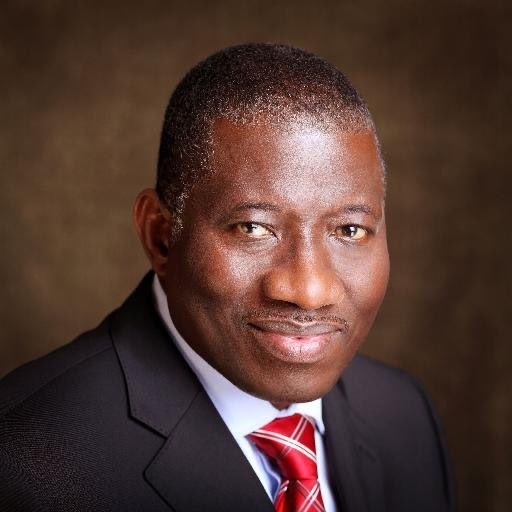
A Federal High Court sitting in Abuja has ruled that former Nigerian President Goodluck Jonathan is eligible to contest the 2027 presidential election.

The court’s decision affirmed Jonathan’s constitutional right to seek re-election, effectively clearing a major legal obstacle that had surrounded discussions about his possible return to active politics.

Jonathan, who served as Nigeria’s president from 2010 to 2015, has remained a prominent figure in national and international diplomacy since leaving office. Speculation over his potential political comeback has intensified in recent months ahead of the 2027 general elections.
The judgment is expected to further fuel political debates and consultations among stakeholders across the country as political parties begin early alignments ahead of the next electoral cycle.

Details of the suit and the court’s full reasoning were not immediately available at the time of filing this report.

AON rejects NCAA’s debt claims, seeks direct TSC collection

0


…Pushes for June 1, 2026 rollout
…Says regulator should focus on oversight, not revenue

The Airline Operators of Nigeria (AON) has denied owing cost recovery charges to the Nigeria Civil Aviation Authority (NCAA), insisting that all services rendered by the regulator to domestic airline operators are paid for fully in advance on a cash-before-service basis.

In a statement from the airline body, it said that no domestic airline in Nigeria receives NCAA regulatory services without first making the full payment of invoices issued to it by the NCAA, describing suggestions domestic operators are indebted to the NCAA for regulatory services are factually inaccurate.

It said that what the NCAA refers to as ‘outstanding charges’ relates solely to the five percent (5%) Ticket Sales Charge (TSC), a tax imposed by NCAA on passengers which it said is not in consonance with the dictates of international aviation.

The AON then urged the Federal Government to urgently amend the Civil Aviation Act to empower the NCAA to collect whatever appropriate fees and charges are due it directly from passengers or whoever else, without routing such through the domestic airlines from June 1, 2026.

It said doing this will relieve domestic airlines of the financial burden of acting as collection agents for the NCAA, since airlines currently bear banking transfer charges and other transaction costs in the process of transmitting funds to the NCAA.

The airline body reiterated its position that the NCAA is a regulator, not a revenue-generating agency and that it does not fund any aspect of the airline businesses or render any direct service to passengers. The AON said every service the NCAA provides to airline operators are fully paid for in advance before such is rendered.

The statement read: “The AON notes that several member airlines maintain dedicated accounts, from which the NCAA draws down its monthly remittances, until the force majure caused by the Iran -Isreal/USA conflict, that had put a lot of financial pressures on airlines worldwide.

“Notwithstanding this arrangement, the AON had formally appealed to the Federal Government through the office of Honourable Minister of Aviation and Aerospace Development, to suspend the payment of all statutory charges temporarily, as an interim measure to assist airlines in managing their cash flows during the current period of severe financial stress caused by the increase in the cost of Jet Al.

“As an interim response, President Bola Tinubu graciously granted a 30% concession, while waiting for the government decision on the other aspects of the AON intervention request.

While the AON acknowledges and appreciates this gesture, we had appealed for a meeting with Mr. President to discuss further reliefs, a request that is yet to be granted,” the AON said.

Speaking further on reports by that airlines owe billions in debt to the NCAA, the AON said the 5% Ticket Service Charge in question was introduced over 45 years ago under the Government of General Gowon by the then Federal Civil Aviation Authority (FCAA) and its continued relevance has not been reviewed ever since.
It said the FCAA was at the time an arm of the Civil Aviation Department (CAD), housed in Marina under the Ministry of Transportation. As the CAD was not a ministry-level aviation unit, it had limited budgetary resources.

“The Gowon regime of the 1970s had built airports in all 12 States of the federation and these airports required maintenance and operational budgets that were not provided for in the sector’s budget hence the introduction of the *5% TSC.*

“Notably, Nigeria Airways, the only domestic airline operating at the time, did NOT pay the 5% TSC. Only foreign Airline carriers were required to pay. Importantly and worthy of note is the fact that the FCAA has since over time evolved into the NCAA, NAA, and NIMET. The NAA in turn evolved into the present-day FAAN and NAMA.

“Meanwhile, the aviation industry was deregulated in 1982, allowing for indigenous entrepreneurs to compete in the market, resulting in the new entrant private airlines that have remained the mainstay of the industry and the backbone of the Nigerian economic renaissance.

“With the creation of each of these agencies, separate taxes, fees, charges, and levies were introduced for the Nigerian Airline operators to cover their respective services. Meanwhile, the 5% TSC, which was originally a policy instrument was surreptitiously introduced into the legislation by the NCAA, despite the vehement opposition from the AON and other industry stakeholders,” AON said.

It further stated that domestic airlines, in addition to this 5% TSC, still pay separately ànd directly for services provided by the various industry agencies, including the NCAA itself.

AON said that the 5% TSC is an ad valorem tax applied to an airline’s gross earnings, not profits and that the global aviation industry operates at a profit margin of between 1.5% and 2.5% at best.

“International standard and best practice provides that aviation should be a cost-recovery sector of strategic importance. In Nigeria, however, the industry is being subjected to unsustainable financial pressures, in the guise of imposed taxes, fees, charges and levies.

“The AON uses this occasion to once again draw the attention of the Federal Government to the unsustainable burden of these multiple taxes, fees, charges and levies arbitrarily imposed on domestic airline operators. We make payments to the Nigerian Airspace Management Agency (NAMA), the Federal Airports Authority of Nigeria (FAAN), and several other service providers and statutory bodies.

“The financial impact of these taxes, fees, charges and levies is adverse, burdensome and excruciating, especially at this precarious period, when the entire world has been exposed to the exogenous shocks of the Iran – Israel / USA crisis. The aviation sector is crucial to the economy as a catalyst and enabler for economic growth, the survival of the sector therefore demands urgent and deliberate policy action.

“The AON remains committed to constructive engagement with the government and all stakeholders to achieve a growth-oriented sector, designed to enable the accelerated growth of key sectors of the economy and the improvement and sustenance of a healthy quality of life for the citizenry,” it said.

Sun

Wike slams Fubara for seeking second term

0

• Says form collection breached impeachment truce

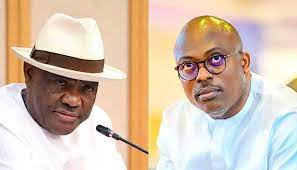
Minister of the Federal Capital Territory (FCT), Nyesom Wike, continued his criticism of Rivers State Governor Siminalayi Fubara, yesterday, accusing him of reneging on an agreement not to seek a second term.

Wike made the comments during an inspection tour of major road and city projects in Abuja that he said are ready for commissioning in June to mark President Bola Tinubu’s third anniversary.

The governor had picked the All Progressives Congress (APC) governorship nomination form but later stepped down from the contest.

“In the first place, he (Fubara) ought not to have collected the form because the agreement was reached that the impeachment should be dropped while he should also not talk about a second term. Collecting the form didn’t show signs of gentlemanship…” Wike said, condemning what he described as a breach of a deal that secured the dropping of impeachment proceedings against Fubara.

Wike said he was not surprised by the outcome of the APC primary that produced Kingsley Chinda as the APC governorship candidate, but used the occasion to reprimand Fubara for what he framed as a breach of trust. “But whatever it is, he has withdrawn and somebody has emerged as the governorship candidate of the All Progressives Congress,” the minister added.

The rebuke came amid Wike’s assessment of several FCT projects inspected — the Renewed Hope City access road in Karsana, the 17km Old Keffi Road rehabilitation, FCT Highway 105 (Airport Road to Kuje), the Kuje–Gwagwalada Road (Phase 1) and the Abuja City Gate remodeling — which he said are at advanced stages and ready for commissioning.

Wike described the inspection day as “one of the happiest days” because the projects are primed for inauguration. He noted that the Renewed Hope City access road was 98 percent complete and commended Lubriks for “delivering an exceptional job on the vital corridor,” which will open access to thousands of affordable housing units in the FCT.

He also highlighted finishing works on the 17km Old Keffi Road from Kado Village and Life Camp junction through the Dei‑Dei axis, saying contractors were wrapping up asphalt paving and street light installations. Once complete, the road will link communities such as Saburi, Gwagwa, Idu and Karmo directly to the Outer Northern Expressway (ONEX), reducing travel time.

Praising Arab Contractors for work on FCT Highway 105, Wike described the transformed route as “a stellar example of governance in action.” He also commended Gilmor for completing Phase 1 of the Kuje–Gwagwalada Road, saying it had “vividly transformed the visual landscape of the entire Kuje area.”

“It’s a very fantastic job. I am sure anybody who goes there will admire it, and that is what is called governance. That’s showcasing governance. I’m very proud of the contractor, that is Arab Contractors. We are very proud of what they have done,” he said.

At the Abuja City Gate remodeling site — a facelift handled by Julius Berger Plc and described by Wike as the First Lady Senator Oluremi Tinubu’s brainchild — the minister said the project was on track for handover by early June and will give the capital “a modern, welcoming new look.”

“This is what you have when you have a good woman who means well for the administration of her husband. I am talking about the first lady of Nigeria, Senator Oluremi Tinubu. This is her brainchild. I am sure she will be happy with what she has seen,” Wike said.

Sun

UBA unveils innovation hub at UNILAG

0

United Bank for Africa (UBA) Plc has deepened its longstanding relationship with the academic community and reaffirmed its commitment to innovation, youth empowerment, and nation-building by commissioning the UBA Innovation Hub and Business Office at the University of Lagos (UNILAG).

The facility was commissioned by the Group Chairman, UBA, Tony Elumelu, represented by Group Managing Director/Chief Executive Officer, Oliver Alawuba, supported by other senior executives of the bank and members of the university leadership, led by the Vice Chancellor of the University of Lagos.

The commissioning marks another defining chapter in the enduring relationship between UBA and one of Nigeria’s foremost institutions of higher learning. The project also reflects UBA’s historic connection with the University of Lagos and Nigeria’s education ecosystem.

UBA was the first bank to establish a campus branch in Nigeria in the 1960s, pioneering financial inclusion and institutional banking support within the nation’s higher education environment.

Adding a personal dimension to the occasion, UBA Group Chairman, Tony Elumelu, himself an alumnus of the University of Lagos, described the commissioning as both symbolic and strategic.

“Returning to my alma mater for this commissioning makes this moment particularly meaningful. Universities remain the birthplace of ideas, innovation, and future leadership. Through this investment, UBA is reaffirming its belief in young people and in the role institutions like the University of Lagos will continue to play in shaping Africa’s future.”

He added that UBA’s philosophy of empowering people and building institutions remains central to its growth agenda across Africa.

The Vice Chancellor, Professor Folasade Tolulope Ogunsola, who emphasised that Elumelu remains “a son of the university”, commended UBA for sustaining a relationship built on impact, innovation, and institutional support.

“The Group Chairman of UBA, Mr Tony Onyemaechi Elumelu, CFR, one of Africa’s most celebrated entrepreneurs and philanthropists, is, in the truest and most meaningful sense, a son of this University,” Ogunsola said.

Ogunsola continued, “The intellectual rigour, the ambition, and the broadness of vision that he would go on to demonstrate as he transformed a struggling bank into a pan-African institution of global stature, that fire was sharpened here.”

The newly commissioned four-floor complex has been designed as a shared platform that promotes collaboration between academia and industry. Under the arrangement, UBA will operate its dedicated Business Office within the facility, providing direct access to innovative banking services, financial advisory services, enterprise support, and engagement opportunities for students, faculty, and the wider university community. The remaining floors of the complex will serve broader institutional and developmental purposes for the University’s use.

Also speaking, UBA’s Group Managing Director/CEO, Oliver Alawuba, noted that the Innovation Hub and Business Office represent an intentional investment in talent, enterprise, and future economic transformation.

“UBA continues to create platforms that connect knowledge with opportunity. This facility will provide students and the university community access to ideas, networks, innovation support, and financial services that help unlock potential and prepare future leaders for a rapidly changing world,” he said.

In another major highlight of the event, the University of Lagos announced the renewal of UBA’s sponsorship and support for the Professorial Chair in Finance, further strengthening collaboration between academia and industry and advancing thought leadership, research, and professional excellence in financial studies.

Alawuba stressed that the UBA Professorial Chair remains the bank’s most enduring academic contribution.

“Our most enduring academic contribution remains the UBA Professorial Chair of Finance, established in January 1972 as the first-ever Finance Professorial Chair in a Nigerian university. It was designed to strengthen finance education, deepen banking research, and support thought leadership in Nigeria’s financial sector. I am pleased that the Executive Management of UBA has approved an additional ₦61.67 million to further strengthen the Endowment Fund for the Chair and sustain its work through the current professorship tenure.”

The commissioning of the UBA Innovation Hub and Business Office reinforces the bank’s broader mission of enabling sustainable development through strategic investments in education, entrepreneurship, technology, and human capital across Africa.

United Bank for Africa is one of the largest employers in the financial sector on the African continent, with 25,000 employees group-wide and serving over 45 million customers globally. Operating in twenty African countries, the United Kingdom, the United States of America, France and the United Arab Emirates, UBA provides retail, commercial and institutional banking services, leading financial inclusion and implementing cutting-edge technology.

Sun

Group condemns attacks on female politicians, urges parties to uphold due process in nominations, sanction breaches

0


Women in Politics Forum (WiPF) on Monday condemned a surge of violence, intimidation and systemic exclusion against female aspirants during party primaries ahead of the 2027 general elections, and called on political parties and security agencies to uphold due process and prosecute those responsible.

In a press statement, WiPF Executive Director Ebere Ifendu said the primaries have exposed worrying abuses of the “consensus candidate” mechanism that have shut women out of contesting elective positions.


“The Forum views with grave alarm the alarming wave of violence, intimidation, and systemic exclusion being visited upon women aspirants across Nigeria’s political parties in the current primary election season,” Ifendu said. “What is unfolding is not merely a breach of democratic norms, it is a deliberate and orchestrated assault on the political rights of Nigerian women.”

Ifendu said many women entered the cycle on the strength of commitments from party leaders and had purchased nomination forms in good faith, only to face exclusion.
“Responding to these assurances, a significant number of women purchased expression of interest and nomination forms to contest at various levels across multiple political parties. These women acted in good faith, investing their resources and reputations based on promises made.”

She added that the misuse of consensus arrangements — long a feature of party politics — has reached “embarrassing proportions” and has contributed to a decline in women emerging as candidates. “The abuse of the ‘consensus candidate’ mechanism, a practice not new but now reaching embarrassing proportions, has led to a significant and unjustifiable decline in the number of women emerging as candidates.”

Ifendu highlighted what she described as a spate of targeted attacks and discriminatory practices: direct intimidation to force women to withdraw, refusal by party officials to sell nomination forms to female aspirants, technology-facilitated harassment, and physical assaults.

“WiPF has documented a sharp increase in multi-dimensional violence targeting women aspirants. These acts include direct intimidation to compel women to withdraw their ambitions; deliberate refusal by party officials to sell nomination forms to female aspirants; technology-facilitated violence designed to harass and discredit women in the public sphere; and direct physical attacks.”

She singled out two incidents. First, the disqualification of a sitting senator, Senator Ipalibo Banigo, which Ifendu called “frivolous and untenable” and a warning to other women. “Most egregiously, a sitting senator, Senator Ipalibo Banigo, was disqualified on frivolous and untenable grounds, sending a chilling message to women aspirants across the country.”

Second, a physical attack inside a party secretariat on Senator Ireti Kingibe and another female aspirant, which the forum described as “unconscionable.” “In a particularly shocking incident, Senator Ireti Kingibe and a fellow female aspirant were physically assaulted within the premises of their own party secretariat, an attack that represents an unconscionable violation of their safety and democratic rights.”
Ifendu warned the coordinated exclusion and violence risk further eroding women’s already low representation in government, currently about 4 percent. “WiPF is deeply concerned that these coordinated acts of violence and exclusion will further erode women’s representation in governance, which already stands at an embarrassing 4%, one of the lowest in Africa and the world.”

The statement set out specific demands. WiPF called on the Nigeria Police Force to “immediately arrest, investigate, and prosecute all identified assailants involved in the physical attack on Senator Ireti Kingibe and her fellow female aspirant. No political actor must be allowed to operate above the law.”

The forum also directed political parties to ensure their nomination processes follow established rules and to stop weaponising the consensus mechanism to exclude women. “The weaponisation of the consensus mechanism to exclude women is illegal, anti-democratic, and will not be tolerated,” Ifendu said.

WiPF further urged security agencies to be deployed proactively to protect women during primaries and asked party organs to review and reverse Banigo’s disqualification and any other unjust exclusions. “Security agencies must be deployed proactively to ensure the safety of women participating in party primaries across all states,” the statement said. “WiPF calls on the relevant party organs to review and reverse the baseless disqualification of Senator Ipalibo Banigo and any other female aspirant whose exclusion cannot be justified by the rules of the party.”

Ifendu warned of sustained pushback if actions are not taken. “Let it be clearly understood: Nigerian women will not remain silent in the face of this level of political impunity and rascality. WiPF will mobilise all available legal, civil society, and international mechanisms to hold accountable every individual, party official, or institution that stands as an obstacle to women’s full and equal participation in Nigeria’s democracy.”

Sun