Home Blog Page 387

Jide Kosoko Urges Creatives to Promote Unity, Civic Responsibility After Schoolchildren Abduction

0


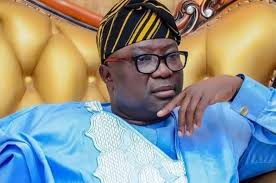
Veteran Nollywood actor, Jide Kosoko, has called on members of Nigeria’s creative industry to play a more active role in addressing societal challenges following the abduction of schoolchildren in parts of the country.

In a message addressed to fellow creatives, Kosoko said that while it is important to lend support to calls on governments at all levels to secure the safe release of the abducted children, such advocacy alone is insufficient.
According to him, creatives have a significant responsibility to contribute to nation-building through the content they produce and the influence they wield.

He urged practitioners in the entertainment industry to use their platforms to educate the public on decency, orderliness, and civic responsibility, stressing that such efforts could help foster a more disciplined and responsible society.

Kosoko also called for an end to the promotion of violence in films, encouraging filmmakers to produce content that promotes unity, love, and humanity.

The actor further emphasized the need to educate citizens on their role in enhancing national security.

He advised Nigerians to remain vigilant, avoid the reckless display of wealth, and promptly report suspicious activities to the appropriate authorities.
“Our stories shape society.

If we change the stories we tell, we will change the Nigeria we live in,” he said.

Kosoko’s remarks come amid growing concerns over insecurity and renewed calls for collective action to address the challenges facing the country.

Regina Askia: Some Nigerian politicians treat public office like chieftaincy titles to pass to their kids

0

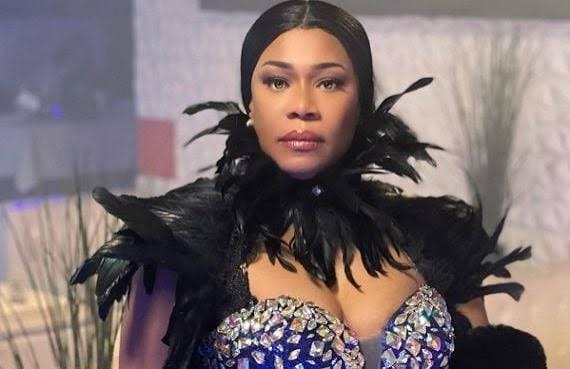
Regina Askia, the Nigerian-born American-based family nurse practitioner, has taken a hit at Nigerian public office holders, accusing them of treating elective positions as if they were hereditary family titles.

In a recent Instagram post, the former Nollywood actress reminded Nigerians that the country is meant to operate as a “democratic nation”.

She also raised concerns about the growing trend of public officials attempting to hand over political power to their children and relatives.

The Cable

NIGERIA POLICE FORCE CONFIRMS SAFE RESCUE OF ABDUCTED WOMAN AND HER TWIN SONS

0

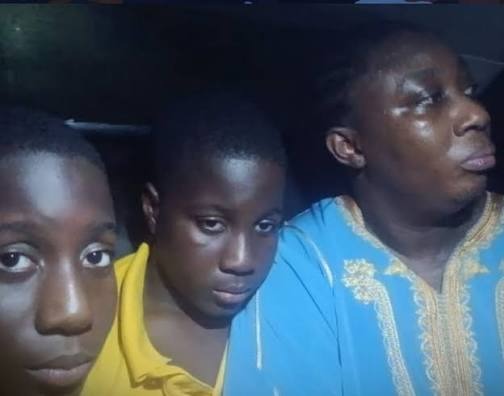
The Nigeria Police Force announces the successful rescue of Mrs. Olaide Busayo Adegoke John-Paul and her 12-year-old twin sons, Peter and Paul, who were abducted on June 3, 2026, in Ibadan, Oyo State.

The hostages were rescued during a coordinated operation by the Force Intelligence Department Intelligence Response Team (FID-IRT) in Ibadan at approximately 7:30 p.m. on Saturday, June 6, 2026. Mrs. Adegoke and her children were abducted while she was driving them to school at about 7:30 a.m. on June 3, 2026.

The rescue was achieved through sustained intelligence gathering, surveillance, and tactical operations. These efforts enabled investigators to track the kidnappers’ movements, resulting in a confrontation with FID-IRT operatives.

During the confrontation, two suspected kidnappers were fatally wounded and two rifles were recovered. The victims were rescued unharmed and are now in safe custody, receiving medical care and support.

The Inspector-General of Police commends the courage, professionalism, and effectiveness of the FID-IRT operatives and all officers involved. Their resilience and commitment were instrumental in the safe rescue of the hostages.

Security operatives have intensified efforts in the area to apprehend fleeing members of the kidnapping syndicate. Preliminary intelligence indicates that some suspects escaped with gunshot injuries. Operations are ongoing to track, arrest, and bring all involved to justice.

The Nigeria Police Force appreciates the public’s support, cooperation, and patience during the operation. We remain committed to combating violent crime, protecting lives and property, and ensuring the safety of all citizens.

DCP ANTHONY OKON PLACID,
Force Public Relations Officer
Force Headquarters, Abuja
6th June,2026

Not a fodder for politics: Orire abduction & security challenges

0


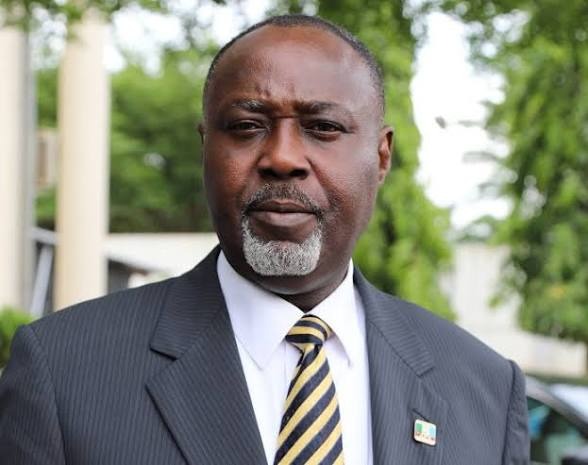
By Tunde Rahman

The recent abduction of schoolchildren in Ahoro-Esiele Community, Orire Local Government Area of Oyo State, remains deeply distressing. On May 15, 2026, heartless kidnappers abducted 38 schoolchildren, killing one teacher in a heinous assault on our nation’s security and educational system.

The Nigerian Union of Teachers and students across the country have taken to the streets in protest. The action is understandable. However, this and similar tragic incidents should never be used as political fodder, especially in the midst of our country’s challenging security situation.

Anyone who has fallen victim to kidnapping or is a close relation of a victim will appreciate the enormity of the pain and trauma involved. I know how it feels because I went through such trauma in April when my cook, who had a phobia of air travel, was kidnapped in broad daylight in Kabba, Kogi State, while travelling from Lagos to Abuja. He was one of the 18 passengers in a Chisco Transport Company bus abducted at gunpoint alongside their driver by daredevil bandits on April 15. He spent 13 days in captivity before we were able to secure his release through a combined effort coordinated by the Commissioner of Police in Kogi State. The ordeal he described—at the hands of kidnappers, mostly Fulani, with only one able to speak even basic English—was harrowing. What the families of the 18 abducted endured to secure their release is better left unsaid.

With more cases of kidnapping making the headlines, there is a tendency for some to think the government is helpless and not doing enough to combat this scourge. This perception is simply inaccurate.

President Bola Tinubu views the security situation as an existential threat. He is doing everything possible, leaving no stone unturned to put the security monster in a chokehold and ensure that the security and safety of Nigerians – the raison d’étre of government – is guaranteed.

After the Orire abduction, the President sent a high-powered delegation led by his Chief of Staff, Hon. Femi Gbajabiamila, including the National Security Adviser, Nuhu Ribadu and Minister of Defence, General Christopher Musa, among others, to empathise with the families and relations of the victims and comfort the leaders and people of Ogbomoso and Orire communities. The visit was in addition to the ongoing efforts by security agents to trace and apprehend the kidnappers, secure the release of the abducted students and teachers, bring them back to their families and also bring the criminals to justice.

There are indications that the government is close to securing the safe release of the abducted children and teachers. The government has not abdicated its responsibility and continues to work tirelessly to strengthen security across the country. To those sponsoring or exploiting kidnapping and banditry for political gain ahead of 2027, your days are numbered—the government will find you and bring you to justice.

This new security challenge presents a significant opportunity to restate what the Tinubu administration has been doing to confront insecurity in the land, protect Nigerian citizens, and end the security problem for good. These efforts have already yielded some positive results. The desired full outcome will soon emerge.

President Tinubu’s security strategy against kidnapping, banditry and terrorism, for the avoidance of doubt, rests on two legs: kinetic and non-kinetic. On the kinetic side, where intelligence gathering and the use of force are involved, the administration has moved from capacity building to precision targeting. The country’s national security architecture has recently been reset, with a new counterterrorism doctrine anchored in unified command, intelligence gathering, community stability, and counterinsurgency.

Nigeria has collaborated with the United States over this security challenge. And since May 2023, Nigeria-US security cooperation has shifted from training and provision of equipment to real-time intelligence fusion, precision strikes, and targeting high-value terrorist commanders. The Nigeria-AFRICOM (United States Africa Command) model emphasises fewer bombs, greater accuracy, and other measures.

In 2024, Nigerian Air Force strike precision rose to 67% as opposed to 41% in 2022, according to official sources. The recent Joint Nigeria-US strike in Arege, Borno State, which degraded ISWAP’s Command Centre, reducing attacks on military outposts and civilian communities, is a case in point.

According to reports, 21 suspected ISWAP terrorists were killed in that joint operation. Credible sources had disclosed that three of the 21 terrorists eliminated were middle-level commanders responsible for coordinating raids into Monguno and Damasak.

On 16 May 2026, both President Tinubu and President Trump confirmed that Abu-Bilal al-Minuki, alleged to be the second-in-command of ISIL (ISIS) globally, was killed in a joint counterterrorism operation conducted by Nigeria and US armed forces targeting terrorists in the Lake Chad area.

Last year, the Defence Headquarters announced that between 2024 and 2025, armed forces in various theatres neutralised over 13,000 terrorists, arrested 4,375 suspected terrorists, convicted 124 terrorists and insurgents, and over 124,000 fighters and their dependents surrendered to the authorities.

In November last year, President Tinubu declared a nationwide security emergency and designated bandits as terrorists to enable harsher responses, with the firm words: “The terrorists lurking in our forests will have no more hiding places”. He directed that the police recruit 20,000 additional officers, raising the total recruits to 50,000, as well as new recruitment in the military/DSS.
Only last week, the President also approved the recruitment of 1000 forest guards for Oyo State in the wake of the Orire abduction.

President Tinubu restated that the police remain the frontline agency in internal security. But they must work with the military, the Directorate of State Services, the National Security and Civil Defence, and other security agencies, explaining that cooperation among security agencies is “vital to eliminating banditry, kidnapping, and armed robbery.”

President Tinubu is also known to have committed substantial funds to the security operations. There has been an increased budgetary allocation to the military. For instance, the 2026 budget earmarked N5.41trillion for Defence and Security – the largest single allocation – to procure modern equipment and boost operational capacity.

Yet, force alone is not enough. Non-kinetic strategies—stakeholder engagement, crime prevention, and de-radicalisation—remain active, with over 124,000 insurgents and dependents exiting through Operation Safe Corridor since 2023.

President Tinubu frames insecurity as ‘foreign to our culture’ and an economic drag, a conviction underscored in tying security to the Renewed Hope Agenda, which prioritises economic diversification, productivity, and human capital to undercut drivers of violence.

This recent security problem also provides an opportunity to address the controversy trailing President Tinubu’s appointment of General Adeyinka Famadewa (rtd) as Special Adviser on Homeland Security. Some have insinuated that the appointment was an attempt to whittle down the influence of the National Security Adviser, Mallam Nuhu Ribadu.

Famadewa’s appointment was informed by the need to put more hands on deck in a bid to tame insecurity and bring terrorists and bandits to justice. It is neither an attempt to curb the powers of NSA Ribadu nor an attempt to curb the influence of top Northerners in government, as some writers have insinuated. The President has often said that he would do whatever is required to end insecurity in the land, including putting more men on the job and more boots on the ground.

The NSA has always been a key ally of President Tinubu. He remains so to date. He remains one of the closest to the President, and nothing has undermined that in my view. Mallam Ribadu, as NSA, remains in charge of the country’s national security architecture. Indeed, all good hands must be on deck to bring this menace to an end.

*Rahman is Senior Special Assistant to President Tinubu on Media & Special Duties.

HURIWA raises alarm over ₦2,000 cooking gas price

0


The Human Rights Writers Association of Nigeria (HURIWA) has expressed concern over the continued rise in cooking gas prices across the country, warning that the cost of Liquefied Petroleum Gas (LPG) reaching ₦2,000 per kilogram in some locations is worsening the hardship faced by millions of Nigerians.

In a statement signed by its National Coordinator, Emmanuel Onwubiko, the rights group described the development as a reflection of weak market regulation and government inaction. HURIWA argued that cooking gas, which remains a basic household necessity, is gradually becoming unaffordable for ordinary Nigerians already battling high food prices, rising transport fares and increasing electricity costs.

The organisation warned that many families are now being forced to make difficult choices between purchasing cooking gas and meeting other essential needs. It added that the rising cost of LPG is no longer merely an economic issue but one that directly affects the welfare and living conditions of citizens.
According to HURIWA, allowing the price of a critical household energy source to rise unchecked could deepen energy poverty and expose vulnerable households to greater hardship. The group maintained that access to affordable cooking fuel should be treated as a matter of public interest, especially at a time when many Nigerians are struggling to cope with inflation.

The association also criticised what it described as inadequate oversight of the energy market, calling on the Federal Government and relevant regulators to investigate the factors driving the latest surge in prices. It urged authorities to identify and sanction operators engaging in exploitative practices while implementing measures capable of stabilising the LPG market.

HURIWA further warned that if cooking gas continues to move beyond the reach of average households, more Nigerians may resort to firewood and charcoal for cooking. It noted that such a shift could increase deforestation, worsen environmental degradation and expose families to health risks associated with smoke inhalation.

The group therefore called for urgent intervention to protect consumers from what it described as excessive pricing, insisting that governance should ultimately be measured by its impact on the welfare of citizens and the affordability of essential goods and services.

Sun

2027: Religion, ethnicity will decide president – Moghalu

0


•Says it’s 3-horse race among Tinubu, Atiku, Obi •Escalating insecurity my greatest fear for next year’s polls •INEC must use off-cycle guber polls to redeem image, make bold statement for 2027


The Labour Party (LP) candidate in last year’s Anambra State governorship election, Dr George Nnadubem Moghalu, has built an impressive career, spanning business entrepreneurship, public administration, and active politics, having spent many decades in public service and nation-building.

Fielding questions from Sunday Sun in Abuja, Moghalu, while appraising the recently conducted party primaries across political parties ahead of next year’s general elections, described it as scandalous and embarrassing.

A founding member of the All Progressives Congress (APC), he expressed fears over the possibility of the escalating insecurity in the country affecting the 2027 general elections.

The former Managing Director of the National Inland Waterways Authority (NIWA) described next year’s presidential election as a three-horse race among President Bola Tinubu, Atiku Abubakar and Peter Obi, explaining that it will be one of the most keenly contested presidential polls in the recent time.

How will you reappraise the primaries conducted by the various political parties?

The fact is that the party primaries for the 2027 general elections raised a lot of concerns because across board, the whole exercise looks scandalous and embarrassing. We know how long the primaries took place, but up till now there are no confirmation as to the candidates who won the exercise, despite the fact that results were publicly announced at the collation centres.

The situation may be based on the positions of the party leaderships that the final decision must come from the NWC, which is right. Since they must follow the constitutional provisions to provide room for the Appeal Committees to meet where there are situations of concern, take decisions, to forward to the NWC to come out with a decision.

Generally speaking, the process to the primaries is of great concern. Some of the ones we saw on the televisions, including the scandalous nature of the counting of the votes, for me as a politician who is involved, I felt very embarrassed. But what can you say again?

The truth is that every other political party must urgently do a lot to redeem their images, but as to whether the primaries are something one can rely on, it is a no, no, no, one cannot.

Comparing the primaries with the ones you conducted as a member of the national leadership of APC, how do you put them side by side?

That was why I said that I feel so concerned because I really don’t understand what went wrong completely. I didn’t participate in these primaries so I may not have the full information to be able to do the comparing and contrasting. However, if I remember the primaries we conducted while I was in the party’s leadership, there were quite a world of difference.

There were situations we conducted primaries on Saturday, the Appeals Committees met on Sunday and by Monday the results will be out. Decisions were taken, emergency sessions were held by the NWC, and then came up with final positions so that if there was need for reconciliation, there will be enough time to do so.

If there are concerns, you will be able to address them, and then be able to move forward. So, there is quite a lot of concern. I am really worried, because it does not impact positively on our polity. It does not at all because it paints a very gloomy picture.

Do you share the sentiment that the 2027 presidential election will still be a three-horse race among the incumbent president, Bola Tinubu, Atiku Abubakar and Peter Obi?

It is not far from the truth to claim that next year’s presidential election will still be a three-horse race comprising the same candidates that contested the 2023 presidential election. It is not wrong to describe it so. It is practically not wrong because that is actually what it looks like.

President Tinubu on one side, former vice president Atiku Abubakar on one side, and Mr Peter Obi on one side. That is actually what it looks like now. Granted that other political parties have candidates, but these three have an edge over other candidates, reason being that they have been tested, having gone through such elections previously.

Apart from these, other candidates that emerged from various other political platforms, good as they may be, qualified, experienced as they may all be, they have not been tested on the national plane. What anyone cannot wish away is that the presidential election is going to be quite competitive.

This is because the incumbent will come with his message, in addition to presenting his report card. Atiku will also come with his own message, banking on his experience to puncture whatever the incumbent presented. It is the same thing with Peter, who will be coming with his experience, knowledge of the system, and to what extent they can criticise or condemn what the other has done. It is practically going to be the three candidates.

What would be the strengths and weaknesses of the three candidates?

In every political outing there are aspects that are advantageous to the competing candidates. For the incumbent, his major advantage is that he has so many things to say. He has a report card to present. When I took over, it was like this. This is where we are, this is where I am projecting that we are going to be. This was where we were before I took over, this is where we are today. This is where we are going to, and things like that. So, the incumbent has that advantage, which is performance-driven, and deliverables.

As for Atiku, he also has advantage. He will bank on the strength of the massive votes from the North. If you look at the political equation now, it tends to confirm that he has serious advantage as the only viable presidential candidate from the North.

It will be foolhardy for anybody to erase tribe and religion from our polity, no matter how much effort we all put in place. Bad as it is, nobody should encourage that, but these are the realities on ground, which you cannot wave off with the left hand.

These are realities on ground that also stand as an advantage for him. He also has his experience to market. He has equally built some bridges across the country when he was in government, since he left government and across the political parties he has moved to. He has actually built bridges.

The same thing is also applicable to Peter Obi. He also has some experience that you cannot take away from him. He also has the youth momentum, which we saw in the 2023 presidential election. It was clear that there was a momentum by the youths who want to make a statement.

We saw what they rightly described as Obi wave in many parts of the country. You cannot also rule out the possibility of it coming up again in 2027. It is not a case of an unknown quantity, but a case of a known quantity who has a constituency whose loyalty he can bank on.

These are realities that we are going to face as we go into 2027 presidential election. And for me, I see it as around the corner we are talking of six months away, which in the life of a political pursuit in a life of an administration of four years, is not long.

Very soon, active politicking will start, and then people will start expressing concerns, expressing views, and presenting areas of advantage because we are talking about numbers, politics and voting are about numbers. We will also look at the sentiments of the people, and be able to address them.

Having followed the political activities, especially the build-up to the 2027 elections, what are your biggest fears?

One of my biggest fears, worries and concerns, is certainly insecurity. We are in a very precarious situation now as to the issue of insecurity, and it is giving me great concern. I am worried, I pray about it, I ask questions as to how we can address the issue and put it behind us because we can’t be talking about a stable economy, and stable polity in an insecure environment.

I feel very concerned about it because it has become very difficult to travel by road to several parts of the country. This is the kind of concern a lot of people have, I am very worried about it and the fact that the news about our nation is consistently in the negative, which has to do with issue of insecurity. It is of great concern and worry today as we approach the election season and the election proper.

Yes, the government, from what I read in the media, since I am not part of government to be able to be very knowledgeable on the workings, is making efforts, but it must increase it.

My prayer is that it materialises in practical terms, so that the impact of all these efforts can be felt in the lives of our people. Insecurity has actually become issue of great concern that something drastic has to be done to overcome it.

How do you rate INEC so far in the preparation to the 2027 general elections?

For me, every election provides INEC an opportunity to redeem its image. INEC has a responsibility to itself and to Nigerians to do everything humanly possible to win the confidence of the people. And the only way it can do that is by organising free, fair, credible and transparent electoral process.

Unless it does that, it cannot win the confidence of the people. Somebody asked how we can address voter apathy and I said that it behoves on INEC because it is when INEC performs, and seemed to have performed in this election, people will now say if this is the case, why don’t we get involved?

These off-season elections provide INEC an opportunity to make a statement, but if we complaint after every election, if people feel their votes don’t still count, how then do you get the electorate to actually participate? We also complain about vote buying, ballot box stuffing and snatching, mutilation of results among others. They are not in INEC’s favour.

It is of great concern to quite a lot of Nigerians that INEC must do everything possible to redeem its image. There are by-elections and two off-cycle elections, for example, the Ekiti and Osun governorship polls before the general elections in January that INEC needs to make a statement through their activities.

The commission needs to use the election to convince the Nigerian electorate by deploying whatever it takes to organise credible elections for people to applaud it for doing very well. When it happens, it gives confidence to the people that their votes will count.

It will also motivate them to be involved, or that their involvement will be appreciated. When we find ourselves in situations like this, we can guarantee it. So, INEC has a responsibility to itself first and to Nigerians who are watching.

Have you come out of your self-imposed sabbatical after losing the Anambra governorship election?

I am no more on sabbatical. I have actually started engaging politically, talking to people, and people equally consulting me. I am going to be fully involved in the preparation for the 2027 elections proper and you can take it to the bank. I have already returned to the APC.

Some people will wonder if you are turning your back against Peter Obi by returning to the APCs?

I can’t turn my back against Obi because we have personal relationship, even though we have never been in the same political party ironically, except during my short stint with the LP in pursuit of my governorship ambition. That was the only time we stayed together in the same political party. Otherwise, all the relationships we had; have always been at different parties.

In fact, we contested against each other in 2003 while he was in APGA and I was in the ANPP. We have never been in one political party, but that has never infringed on our relationship. We have always kept our relationship because for me, I see political parties as platforms for the realisation of individual ambitions.

Honestly, truth be told, the defining line in terms of ideology between political parties is not there. That is why people can be in party A today, and party B tomorrow in pursuit of the same ambition, because if you look at it, generally speaking, of all the political platforms, the people are the focal point.

The people appear to be the ideology and the binding force for all the political parties. It is a matter of name, it is a matter of platform, it is a matter of vehicle to get to the desired destination like I tried to explore the possibility of using LP to get to my desired destination, having been unfairly treated in my party.

I didn’t join APC, I was a founder, I was among those who founded APC, but at a point I was not fairly treated. I considered it the height of disrespect and betrayal. Then I had to look for another platform to express my ambition, and when I couldn’t succeed, I returned to my party, following the involvement of quite a lot of people that talked to me, including APC Deputy National Chairman South and North, and our leader, Dr Chris Ngige.

People started talking, and telling me that I cannot build a house and abandon it, and then after due consideration with my supporters, we agreed that I should return to the APC.

As a founding member of APC, is this the APC of your dream?

This is a very complex question. Why do I say so? It is because not all the founders share the same dream, but one thing binding us is the desire to create a political platform that will stand the time, pursue democratic principles, nurture democracy, and a platform that will stay over time.

That was the common denominator among us, apart from what the individuals have in mind with regards to ambitions. The truth about it is that in as much as I will not want to criticise or condemn the present leadership, or the extent they have gone, there is quite a lot of lacuna.

There is quite a lot of deficiencies that can be resolved. It is a learning process. The political party is a human organisation that has life on its own and that is adaptable to changes.

As we get along, changes can take place, but there is quite a lot to be done to actualise the real ambition of the founding fathers, which is to build a solid, democratic platform to nurture democracy to full manifestation.

Eleven years down the line for APC, has the party been a blessing or curse to Nigeria?

My perception is that the party has done its best, and will keep doing its best until the desired objective is actualised. I would not want to say that APC is a curse to Nigeria because there are good things the party has done in some areas, just as there are failures in some areas.

I must be honest to say that all the promises that APC made have not really materialised. That is the truth, but there are also areas we have to commend the party for what it has done. There is room for improvement.

As a stakeholder in Anambra, what is your assessment of the performance of the state governor so far?

If I am not happy, what choice do I have? That is the problem with presidential democracy. Every presidential democracy has a fixed mandate; we are now faced with four years. My position is that the governor is doing his best, I can only encourage him. I can only support him since everything about my ambition is about the people.

However, there are things they are doing which I would have done completely differently, and that is why we have different views about policies. But we are faced with accepting his own views concerning the issues on ground.

As a citizen of our state, I will not say that I don’t have access to the governor, because I know if I call him, he will pick, I know if I book appointment to see him, he will grant my request. What that means is that if there are areas I feel things are not working the way they should, I can develop policy statement as a document, and give him when I see him.

If he wants me to defend it, I will defend it, and then be able to encourage him and advise him, because nobody knows everything. If we desire to go to Onitsha from Abuja, while some will go through Lokoja, some will go through Nasarawa, but the mission is that we are meeting at Onitsha.

How will APC come out from the challenges of the primaries it conducted?

The most important thing is to admit the challenge. The moment you appreciate that you have a problem, the solution becomes nearby. For me, the solution to all these challenges is openness, being able to get people together, brilliant minds, being honest about your own intentions, you must be honest about your own intention, because the party is in a position to help government to succeed.

It is the party that produced the government, so there is crisis and there is no doubt about it. It is written all over the place. There are too many aggrieved people and you must open up a channel for discussion. You must appreciate there is crisis, and that there are many aggrieved people. And then start reaching out to them. That is the only way for a political cohesion.

Any need to apply sanctions?

It depends on what the offences are. If you strictly follow what is written in the constitution of the party, then better for you, because you can have a fall-back position. But the moment you want to cut corners to please Mr A or Mr B, you run into a problem.

The party should be strong enough to support the government to succeed, because the party birthed the government, but if you try to turn the circle around for government to be able to support party, then it becomes an anomaly.

As a Buhari person, how do you feel when Nigerians say that they did not feel any positive impact of the eight years of his administration?

Some people are missing him, some people are not missing him, which is like their entitlement. I had a personal relationship with late President Buhari, because I had access to him, served under him. So, for me, I miss him. He made impact to Nigeria politically, in everything about him, because one thing you cannot take away from him was his honesty of purpose.

No matter how you disagree with him, you cannot take away the fact that he has integrity and honesty of purpose. He was somebody you knew where he was standing on any given matter. There were no grey areas. It is either black or white.

So, for me, that endeared him to me. If I have issues or things of concern, I went straight to him. I told him, we shared it, we discussed it. He would tell me why he was taking the portion he took.

Do you share the concerns that the National Assembly members are the worst hit in the APC primaries?

My prayers are with them. The only unfortunate thing is that they never knew that the web they were knitting for someone would also catch them. My prayers are with them. I sympathize with them. I wish them well.

What are your thoughts on the escalating insecurity in the country?

It is really very painful. I feel sad. I feel disturbed. I am very worried, but I plead with everybody, let us not politicise the menace, because it goes beyond that. I feel very worried especially when I remember the last two incidents of kidnapping of the school children in Oyo and Kebbi states and what they are going through.

It is quite painful. How do you explain to those traumatised children in the forest even after they have regained freedom? How do you explain this to their parents? What are you going to tell the family whose husband, father were beheaded? So, it is very sad.

Today we are no longer talking about the Chibok schoolgirls, yet they are peoples’ daughters. They have been forgotten because new cases coming up on a daily basis have eclipsed it. I weep secretly and pray that the mercy of God will locate them and touch the hearts of these kidnappers.

The children didn’t do anything wrong by wanting to go to school, their parents, the teachers didn’t also do anything wrong by trying to train and bring up the children. They should rather be encouraged, but this is the way we are paying them back. It is very painful.

Sun
Abducted General, wife beg govt

0


• Plead with Katsina gov, traditional rulers for release of arrested bandits, 200 cows in new video

A week after they were kidnapped in Katsina State, the abductors of retired Major General Rabe Abubakar, former military spokesman, and his wife, have released a video showing the couple pleading with the Kaduna State government and district heads to accept the demands of the kidnappers so as to facilitate their release.

The former military spokesman and his wife were reportedly abducted along the Marabar Musawa–Kafinsoli Road in Matazu Local Government Area of Katsina State, near Zakin Baure village.

In the four-minute video circulating on social media, the wife of the retired general appealed to the authorities and community leaders to facilitate their release by addressing the demands made by their captors.

According to her, the abductors are demanding the release of three individuals identified as Sani, Aminu and Nasiru, whom they claimed were being held by security agencies. She also stated that the kidnappers were seeking the return of livestock allegedly seized from them.

The woman said two of the detained individuals were arrested in Jikamshi, while the third was apprehended in Kano.

She appealed to the Katsina State Government and traditional leaders in five local government areas to intervene and help secure compliance with the demands in order to facilitate the couple’s freedom.

“We are pleading with you. Please help us, help us for the sake of Allah. These people have a serious complaint. Three of their children have been kidnapped: Aminu, Sani, and Nasiru. They want them released. Also, their livestock was taken. Two hundred cows were stolen from them.

“We are begging you for the sake of Allah, for the sake of Allah! Anyone who has any influence or power in this matter — anyone whom Allah has placed in a position of authority, especially the leaders of Katsina State — we are begging you, please help us. Intervene and grant this request so that our own request can also be granted and our children can be released.

“These three children, we beg you to help free them. Two were kidnapped from here in their own area, and the third was taken separately in Kano State.

“We hope that the responsible leaders — whoever has these animals in their possession — will help release these children. We are also begging you, for the sake of Allah, to return their livestock to them.

“If the children and the animals are returned, then we will hold a meeting to establish peace. We want this area to have peace.

“Everyone — especially the poor — should be happy again. People should return to their farms and live in peace and tranquillity, without trouble or fear.

“This is what we are begging from you today — from the Governor’s representative down to the five District Chairmen in charge of this zone. We are pleading with you to help us, for the sake of Allah, for the sake of Allah!

Speaking briefly in the video, Major General Abubakar called for efforts aimed at restoring peace, noting that the abductors had indicated a willingness to engage in dialogue and pursue peaceful coexistence.

The retired officer, who once served as Director of Defence Information, urged stakeholders to explore avenues that could lead to a peaceful resolution of the situation.

Reports also indicated that a notorious bandit leader, identified as Kachallah Muhammad, who is said to operate in parts of Katsina State, has reportedly established communication with the family of the retired general regarding the abduction.

As of the time of filing this report, neither the Katsina State Government nor relevant security agencies had issued an official statement in response to the video or the demands reportedly made by the abductors.

Sun

2027: INEC data leak raises fresh fears

0


•Stakeholders express outrage, want electoral body to punish perpetrators

Nigeria is approaching 2027 at a dangerous crossroads. The threats ahead are not merely political; they are deeply technical and legal. At the centre of this storm is the Independent National Electoral Commission (INEC), tasked with organising a massive national exercise while fighting a war on two fronts: protecting its data from hackers and defending its timetable from court orders.


This leaves Nigerian democracy at a critical tipping point. The credibility of the 2027 polls will likely be decided long before election day, not at polling units, but in server rooms and courtrooms. Any misstep from the commission now will do more than delay the timeline. It will break the fragile trust holding the entire democratic process together. INEC cannot afford to slip, because public trust has no spare tyre.

Yet the road ahead looks uneven because two critical pillars are under pressure at the same time. One carries INEC’s data — the voter register, Bimodal Voter Accreditation System (BVAS), and INEC Election Result Viewing Portal (IReV). The other carries INEC’s calendar — primaries, candidate lists, election dates. When both pillars crack together, the journey becomes dangerous for voters, candidates, and democracy itself.

Two potholes, one road

Allegations of a data hack and INEC’s timetable problems are not separate potholes. They feed each other. Even mere suspicion is enough to make parties question every figure INEC releases. For opposition figures and civil society groups tracking the road to 2027, an insider breach is almost as concerning as an external hack.

Dr Idayat Hassan, Director of the Centre for Democracy and Development, CDD, put it bluntly: “When INEC’s own database leaks through insider credentials, it is no longer a technical error. It is a governance failure. Voters will ask: if Emeka Ike’s data is public today, whose data is next tomorrow?”

Yiaga Africa’s Programme Manager, Cynthia Mbamalu, echoed the fear: “The 2023 election was lost in the court of public perception before it was lost at the tribunal. If INEC cannot secure voter data now, the IReV portal will face even deeper suspicion in 2027. Trust is built before election day, not after.”

Critics argue the incident highlights vulnerabilities in INEC’s administrative and operational safeguards. That raises the stakes for how the commission tightens its data security protocols and credential management ahead of upcoming off-cycle gubernatorial elections in Ekiti and Osun, and the next general cycle.

Legal Minefields

Beyond the data lane, INEC’s timetable is also under siege. Courts are now deciding party primaries, delegate lists, and even who attends NEC meetings. Almost all major parties now have two NECs, two chairmen, two candidate lists, all backed by court orders. The PDP is not only battling factional NEC meetings in Abuja but also presidential primaries. The Wike-led PDP faction nominated Sandy Onor as its presidential candidate, while the Saminu Turaki faction declared Goodluck Jonathan the candidate in absentia at their convention. In the ADC, Atiku Abubakar won the primaries conducted by the David Mark faction, but the group led by Dumebi Kachikwu nominated Kachikwu instead. One faction of the Social Democratic Party (SDP), elected Adewole Adebayo as candidate, while the Gabam faction produced Akeem Atanda through a parallel congress.

The Labour Party still has two chairmen claiming legitimacy. The New Nigeria People’s Party (NNPP) is struggling to expand beyond Kano. For the opposition, a clean timetable and clean data are survival tools. Without them, they fragment further.

Court orders on the timetable also become weapons inside opposition parties. One faction conducts a primary and gets INEC monitoring. The other runs to court, gets an order stopping INEC from recognising it, then conducts a parallel primary. By the time INEC is free to act, the party has two candidates for one ticket. Voters in 2023 saw this in Zamfara APC. It ended in post-election litigation and voter apathy.

So an uneven road means different things to different drivers. The APC can possibly navigate it with state power and federal access. Opposition parties easily crash into every pothole because they have no cushion.

If INEC cannot convincingly rebut data hack allegations, voters will not trust BVAS or IReV in 2027. If INEC cannot implement a binding timetable, candidates will not trust the nomination process. When both trust deficits exist at the same time, losers will head to court before collation even begins. That puts the electoral commission in a dilemma.

More troubling is a subsisting court order freezing parts of the election timetable. A Federal High Court in Abuja recently issued a landmark judgment nullifying key portions of INEC’s schedule for 2027. The court ruled that INEC overstepped its legal boundaries by shortening statutory timelines set by the National Assembly. The suit, filed by political parties including the SDP, challenged INEC’s authority to independently shorten deadlines.

Chief Chekwas Okorie, speaking with Sunday Sun on the subsisting court order on INEC’s timetable, argued: “Part of INEC’s trust deficit stems from its election guidelines. A court of competent jurisdiction has ruled that they are contrary to the Electoral Act and the Constitution of Nigeria. Many party members, especially aspirants who feel short-changed, are now moving to other parties to seek nomination. INEC is in a difficult situation. If it denies those parties the right to submit candidates, it will be courting trouble.

“Surprisingly, INEC has gone to the Court of Appeal to challenge the matter. What will INEC lose by obeying the judgment of the court? What will it gain by prolonging the matter in court and heightening tension in the polity?

“Parties are now relying on the new judgment to readjust their programmes, including admitting fresh candidates who are moving away from parties where they have been short-changed.

“The whole confusion in the polity lies with INEC. INEC should simply obey the judgment of the trial court which ruled that its timetable does not conform with the electoral provisions and the Constitution of Nigeria.”

Constitutional lawyer and Senior Advocate of Nigeria, Mr Mike Ozekhome, warned that the judgment exposes deeper risks: “INEC cannot legislate by timetable. Once the commission begins to truncate timelines, it invites litigation. And litigation in Nigeria is a tool for political warfare.”

The data leakage controversy erupted after a media aide to the FCT Minister published the private Continuous Voter Registration details of Nollywood actor Emeka Ike on X. The leaked information included his profile photo, Voter Identification Number, and registration centre. The incident sparked heavy criticism over data protection within the electoral body. Political figures like former Vice President Atiku Abubakar demanded explanations on how internal records ended up in the public domain.

In a statement issued on Tuesday by his media aide Phrank Shaibu, Atiku said: “INEC’s statement has moved this issue beyond conjecture. The Commission confirmed that voter information was accessed through credentials assigned to personnel participating in the on-going CVR exercise and that such information was released without authority. What Nigerians want to know is simple: how did information in a restricted database find its way into the hands of political actors?”

“The fact that there was no external hack does not diminish the gravity. If anything, it raises more troubling questions about internal controls and the possibility of political interference,” he added.

Civil society groups have been louder. The Socio-Economic Rights and Accountability Project, SERAP, said: “INEC must treat this as a data protection breach under the Nigeria Data Protection Act 2023, not just an internal memo. Nigerians deserve to know who accessed what, when, and why. Anything less is complicity.”

Party stakeholders have also raised the alarm. Okorie noted that the leakage had heightened tension in the polity. He said: “This is a matter of very serious concern to every well-meaning Nigerian. Even before this matter came to public knowledge, INEC had been in the eye of the storm over a trust deficit. While the new INEC leadership is still battling to reassure Nigerians of its preparedness to deliver a credible election in 2027, this leakage has shown that its technology is not safe.

“Yet INEC has not issued any convincing statement on the leakage. The fact that it came from an aide to the Minister of the FCT further defies logic. This is a minister who is a leader of the opposition party, boasting that he will ensure the return of the President, an APC candidate. His personal aide has now proved that the backend of INEC’s database is not reliable. It can be easily accessed.

“This is a situation that may make or mar not just the coming election, but even the unity of Nigeria as a country. Everything points to the fact that we may not have a rancour-free election in 2027. The President should step in. I am scared to the bone marrow that we are approaching an election under these circumstances. I do not have confidence that this INEC leadership is well attuned to giving Nigerians a reliable, free and fair election. The signs are very ominous.”

Rights activist Ankio Briggs re-echoed the concern: “The truth of the matter is that Nigeria is in a big mess when it comes to democratic norms. The breach of INEC’s database is a serious criminal offence.

“Today, El-Rufai is being prosecuted for allegedly tapping the telephone line of the National Security Adviser. The leakage of INEC data is as criminal as that.

“If INEC cannot protect a private citizen’s voting information, then the integrity of the electoral process can easily be compromised. I do not think INEC can guarantee a free and fair election under these conditions.

“INEC must assure Nigerians that our private information is safe. If it cannot do so, then it cannot guarantee the credibility of the 2027 election.

“The result that will come out of this already compromised system cannot be said to be free and fair. It erodes the confidence of the electorate.”

However, INEC said preliminary findings show no external breach of the CVR database, no hacking incident, and no unauthorised access to its ICT infrastructure from outside. The commission disclosed this in a statement by National Commissioner Mohammed Kudu Haruna, amid allegations circulating online.

According to INEC, the information was accessed through valid user credentials assigned to personnel in the on-going voter registration exercise, but was released without authorisation. The commission assured Nigerians that the broader database housing over 90 million registered voters remains secure and intact.

Even at that, the leakage has cast a shadow of doubt on the integrity of the process. More concerning is the possibility of internal sabotage. Stakeholders are worried because institutional trust is fragile. When people lose faith in the referee, the entire game is thrown into jeopardy. Technical explanations or PR statements are not enough to dispel public scepticism. When voters can no longer trust the neutrality of the umpire, the process collapses. What follows is chaos, not an election.

From technical glitch to national security

If data security fails in a system as sensitive as elections, suspicion of an inside job becomes the most logical and damaging conclusion. In cybersecurity, the strongest firewalls mean nothing if someone on the inside hands over the keys.

Prof Sam Egwu, political scientist at Bingham University, framed the stakes: “Elections in Nigeria are won and lost on perception. If citizens believe INEC is compromised from within, turnout will drop and post-election violence will rise. A leaked database is not just an IT problem. It is a threat to national cohesion.”

If INEC only fixes the technical glitch without exposing the human actors, it signals that complicity carries no consequences. To serve as a deterrent, prosecution of internal saboteurs must be transparent, swift, and severe under the Electoral Act.

The scar tissue from 2023 is still raw. The failure of real-time result transmission via IReV — blamed then on technical glitches — bruised public confidence. When a similar breach happens again, the public does not see a new mishap. They see a pattern.

APC National Publicity Secretary, Felix Morka, while defending INEC, also admitted the perception problem: “The commission has explained that there was no external hack. But explanations do not win trust. Only actions do. INEC must discipline any staff found culpable and publish the report. Nigerians are watching.”

When major figures like Atiku Abubakar question the process before voting begins, it creates a volatile environment. It primes the electorate to reject any outcome that does not favour them. That is where the risk of civil unrest begins.

Security is not just about code and servers. It is about perception. If INEC wants to save 2027 from a crisis of legitimacy, it cannot treat a database leak as an IT problem. It must treat it as a national security breach, expose the bad actors, and prove to Nigerians that the umpire cannot be bought or broken from within. Until that happens, Nigeria will keep driving toward 2027 on rims, loud, shaky, and one pothole away from a crash.

Sun

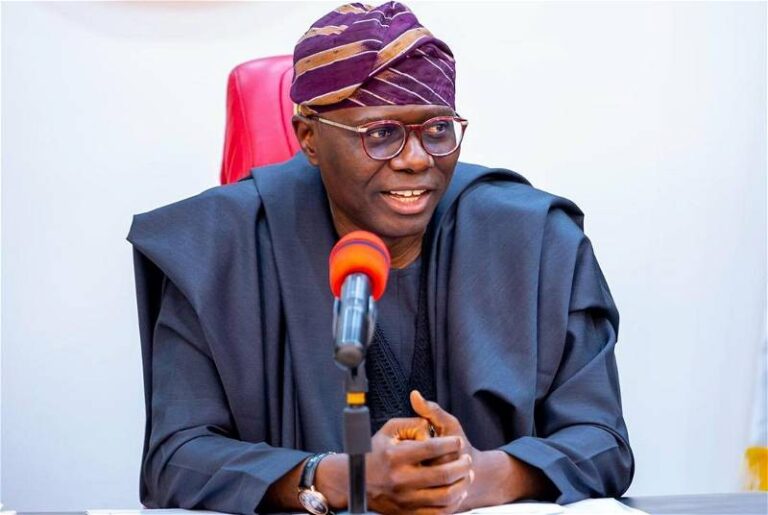
We Won’t Bow to Terror, Nigeria Shall Overcome, Sanwo-Olu Rallies Support for Tinubu and Security Agencies

0


Recent security incidents in parts of our country have understandably generated concerns amongst citizens. But moments like this in our national life requires that we remind ourselves of our natiomal character as a people. We are Nigerians. Our will is strong and our spirit is unbreakable.

This is the time we must stand united as one people behind our nation’s leader, President Bola Ahmed Tinubu (GCFR) and all of our armed forces. The forces of evil confronting our nation do not ask for our political affilliation before they kill, maim and destroy. So must our resolve and support for our nation be devoid of political leanings and divisive rhetorics.

Every life lost is a tragedy. Every community threatened by violence deserves our solidarity, support, and protection. As a people, we must continue to keep the victims of these unfortunate incidents in our thoughts and prayers. We must be united in our prayers for the teachers and students abducted from Orire Local Government in Oyo State.

In trying moments like this, Nigerians must never lose faith in our nation or in our collective ability to overcome adversity. We are Nigerians. The seed of greatness lies within each and everyone of us.

Our country has faced many challenges throughout its history. We have confronted economic setbacks, political instability, social tensions, and security threats. Yet, through resilience, courage, and unity of purpose, we have always emerged stronger. This moment will be no different.

The security challenge confronting our nation today is not insurmountable. The forces seeking to spread fear and instability do not represent the character of our people or the future of our country. Their actions are designed to weaken our resolve and diminish our confidence. We must deny them that victory because, we are Nigerians.

I urge Nigerians across every state, region, faith, and ethnic background to remain united. This is not a time for division or despair. It is a time to reaffirm our common identity and our shared commitment to peace, progress, and national development.

As citizens, we all have a stake in the security and stability of our country. Government alone cannot win this battle without the support, cooperation, vigilance, and active intelligence sharing by the local communities. Communities must remain alert. Citizens must continue to support lawful efforts aimed at protecting lives and property. Together, we can create an environment where criminal elements find no refuge and no support.

I wish to reiterate my confidence in the leadership of President Tinubu and in the ability of our security and intelligence services to be able to defeat the forces of evil unleashing terror attacks on soft targets within the civilian population in our land.

Every day, brave men and women put themselves in harm’s way to defend our nation and preserve our freedoms. They deserve our prayers and our motivation to lift their spirits as they take on these forces of evil.

The work being done to strengthen our security architecture, improve intelligence gathering, and confront criminal networks across the country requires patience, determination, and national unity. Lasting solutions are rarely achieved overnight, but progress is possible when a nation stands firmly behind those charged with protecting it.

As Governor of Lagos State, I speak not only for the people of our state but also as a Nigerian who believes deeply in the promise of this country. I am convinced that our best days remain ahead of us. The challenges before us today must not define us. What should define us is how we respond—with courage instead of fear, with unity instead of division, and with hope instead of despair.

To our young people, I say: remain hopeful. To our families and communities, I say: remain resilient. To those serving on the frontlines of our nation’s security efforts, I say: remain steadfast. And to every Nigerian, I say: keep faith with our country.

This battle shall be won. Nigeria will prevail because the collective strength of our people is greater than the evil agenda of the few who are bent on making us live in fear and despair. Together, we will build a Nigeria safer within her communities and confident of her future.

May God continue to bless Lagos State and the Federal Republic of Nigeria.

Babajide Olusola Sanwo-Olu
Governor, Lagos State

Florence Ajimobi Joins Hundreds of Women at Oyo Prayer, Fasting Rally

0


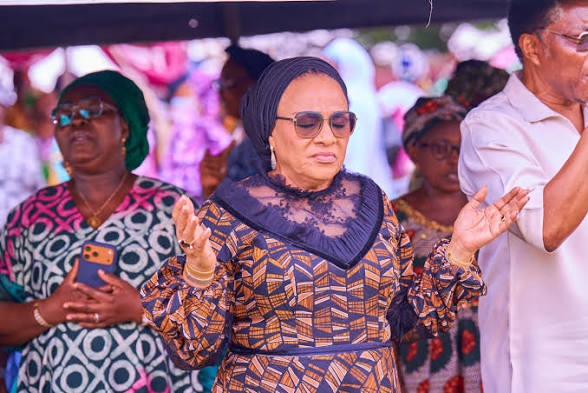
Former First Lady of Oyo State, Florence Ajimobi, on Saturday joined hundreds of women from across the state at the Oyo State Prayer and Fasting Rally organised by the Women Intercessory Network.

The event, which attracted participants from different parts of Oyo State, focused on seeking divine intervention amid growing concerns over insecurity, kidnapping, and other challenges confronting communities across the state and the nation.

Speaking at the gathering, Ajimobi described the turnout as encouraging, noting that the rally demonstrated the commitment of women to intercede for the peace and progress of Oyo State.

The participants offered prayers for peace, protection, healing, restoration, and divine intervention in troubled communities. Special prayers were also said for families, individuals in captivity, political leaders, and the overall safety and prosperity of residents.

Ajimobi commended the organisers for providing a platform for collective intercession and applauded the women who responded to the call to stand in the gap for the state and the country.

She emphasized the importance of unity in prayer, saying that when people of faith come together with a common purpose, hope is renewed and communities are strengthened.

The former First Lady expressed optimism that Oyo State and Nigeria would continue to experience peace, wisdom, and sustainable development through God’s guidance and intervention.

#sayeverything