Home Blog Page 382

Tinubu has plunged Nigeria into N200trn debt –Obi

0

•Says FG’s excessive borrowing without accountability affirms imprudent governance

Presidential candidate of the Nigeria Democratic Congress (NDC), Peter Obi, has blasted the administration of President Bola Tinubu, accusing the Federal Government of reckless borrowing, financial mismanagement, and lack of accountability in the deployment of public funds.

Obi, in a post made on his X handle on Tuesday, said the Tinubu administration had driven Nigeria’s total debt to approximately N200 trillion through what he described as “remarkably imprudent borrowing,” warning that the trajectory was unsustainable and deeply damaging to the nation’s economic future.

Citing data from the Federation’s Budget Office, the former Anambra State governor disclosed that the Federal Government borrowed N11.89 trillion in the first three quarters of 2025 from January to September exceeding its own planned borrowing target of N10.34 trillion by approximately N1.54 trillion.

He noted that under a responsible and accountable government, such an overshoot would necessitate rigorous scrutiny and explanation from relevant governmental bodies but that this is not the reality under the current administration.

He said more alarming is the gross underfunding of capital expenditure during the same period and of the N17.58 trillion earmarked for capital projects, only N3.10 trillion which is 17.66%, was actually allocated. This leaves a deficit of approximately N14.488 trillion, or 82.34% of planned capital expenditure, completely unfunded.

The former governor questioned where the balance of borrowed funds was deployed, given that capital projects received only a fraction of what was planned.

Obi described the absence of any official explanation for the unaccounted funds as “the most disturbing aspect of the financial management fiasco” under the Tinubu government. He demanded transparency, pointedly asking whether the unspent funds were channelled into recurrent expenditure, used for entertainment at Aso Rock, or diverted to what he called a “Renewed Hope Agenda 2027 Election Campaign Fund.”

He said: “Data from the Federation’s Budget Office reveals that the Bola Tinubu government borrowed N11.89 trillion in the first three quarters of 2025 (January to September), exceeding the planned borrowing target of N10.34 trillion by approximately N1.54 trillion. Under a responsible and accountable government, such an overshoot would necessitate rigorous scrutiny and explanation from relevant governmental bodies. Regrettably, this is not the reality under the current administration.

“Compounding this issue, only N3.10 trillion of the borrowed funds was allocated to capital expenditure during the same January-September 2025 period. This constitutes a mere 17.66% of the N17.58 trillion earmarked for capital projects, leaving a deficit of roughly N14.4N14.488 trillion, or 82.34% of planned capital expenditure unfunded.

“The most disturbing aspect of the financial management fiasco under Bola Tinubu is that there is no explanation or Tinubu is that there is no explanation or information regarding how the balance was utilised or deployed. The question that Nigerian information regarding how the balance was utilised or deployed. The question that Nigerians are rightly asking and deserve anNigerians answer to is what happened to the balance? Was it deployed for recurrent expenditure/ consumption, for the entertainment of guests to Aso Rock or transferred to the Renewed Hope Agenda 2027 Election Campaign Fund? Nigerians deserve an answer on how our economy and resources are most unpatriotically managed.”

The Chairman of the Alliance for Economic Research and Ethics LTD/GTE, Dele Oye, recently lamented the unprecedented rise in public debt under the current administration, noting that the N65.9 trillion borrowed by the Bola Ahmed Tinubu administration in the last 24 months exceeds more than five times the total debt Nigeria incurred in the first 55 years of its independence.

Oye, who is the immediate past chairman of the Organised Private Sector of Nigeria (OPSN), noted that while successive governments accumulated debt over decades, the current administration alone has added N65.9 trillion in two years, compared to just N12 trillion accumulated over the first 55 years of Nigeria’s independence.

He revealed that with Nigeria’s total public debt of ₦159.28 trillion as of April 2026, according to the Debt Management Office, every single Nigerian owes N670,000, lamenting the speed at which Nigeria’s debt profile has expanded in recent years.

Oye cautioned that unless urgent measures are taken to strengthen revenue generation and fiscal discipline, the rising debt burden could place long-term pressure on public finances and constrain government spending on critical sectors.

He said, “Cast your mind back to 2006. Nigeria had just pulled off one of the most celebrated fiscal feats in African history. President Olusegun Obasanjo paid $12 billion to extinguish $30 billion in Paris Club debt. Nigeria was, briefly, externally debt-free. The Excess Crude Account was flush. The future looked fundable. Twenty years later, that golden moment reads like a fairy tale. Under President Goodluck Jonathan, debt crept back to N12.06 trillion by 2015 manageable, but the warning signs were already blinking. Then came the Buhari years.

“In eight years, the debt exploded from N12.06 trillion to N87.38 trillion, a 620% increase. The Central Bank was pressed into printing money through “Ways and Means” advances; N23.7 trillion of this was eventually securitised into long-term bonds, effectively converting a government overdraft into a generational liability. President Bola Tinubu’s administration has added a further N65.9 trillion in just two years. To put that in perspective: it took Nigeria’s first 55 years of independence to accumulate N12 trillion in debt. The current administration has added more than five times that amount in 24 months.”

According to Oye, “Governments love to quote the debt-to-GDP ratio. Nigeria’s is 35.5% well below the IMF’s 55% distress threshold, and far more comfortable-looking than South Africa’s 78.8% or Kenya’s 65.6%. Politicians wave this number like a clean bill of health.

“Do not be deceived. The number that actually matters is the debt service-to-revenue ratio of how much of every naira earned goes straight to paying creditors. Nigeria’s ratio stood at 116.8% in 2024, easing only slightly to 113% in Q1 2025, according to the Nigerian Economic Summit Group (NESG). In January 2025 alone, the CBN’s own data showed the Federal Government paying out N696.27 billion in debt service against total retained revenue of just N483.47 billion. That is a 144% coverage ratio in a single month.

“The reason for this paradox is brutally simple: Nigeria has a large economy but collects almost nothing from it. The country’s tax-to-GDP ratio is just 8.2%, the lowest among major African economies. South Africa collects 24% of its GDP in taxes. Kenya collects 16%. Ghana collects 13%. The Sub-Saharan African average is 15%. Nigeria, Africa’s largest economy by GDP and most populous nation, manages 8.2%. Every percentage point Nigeria fails to collect is a school not built, a road not paved, a soldier not paid.

“The 2026 Appropriation Act, signed by President Tinubu in April 2026, totals N68.32 trillion, the largest budget in Nigeria’s history. Of this, N15.8 trillion is earmarked for debt servicing alone. That single line item exceeds the entire N15.4 trillion budgeted for recurrent non-debt expenditure. It is more than Nigeria will spend on education, health, and security combined.

“Meanwhile, the fiscal deficit in the 2026 budget is projected at approximately ₦25.3 trillion roughly 4.5% of GDP, well above the 3% ceiling mandated by the Fiscal Responsibility Act. The law is being broken in the very document that is supposed to uphold it.”

Noting that Nigeria has the potential to overcome the challenges, Oye said, “Nigeria has the tools. It has talent. What it has lacked, consistently and consequentially, is the political will to deploy them.”

Sun
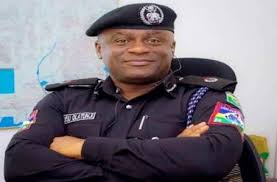
Oyo school abduction: IGP deploys DIGs, others to rescue pupils, teachers unhurt

0

…Orders clampdown on unregistered, concealed vehicle number plates

The Inspector-General of Police (IGP), Olatunji Disu, has assured Nigerians that the Police, working in collaboration with other security agencies, will do everything within their power to ensure the safe rescue of the abducted pupils and teachers in Oyo State.

The IGP also ordered the deployment of Deputy Inspectors-General of Police (DIGs) to strengthen ongoing rescue operations aimed at securing the release of the victims.

Disu disclosed this during a conference with senior police officers in Abuja. He also directed the immediate nationwide enforcement against vehicles operating without registration number plates, as well as those with concealed, defaced, or altered number plates.

According to him, the Police would no longer tolerate such practices, noting that unregistered or disguised vehicles are frequently used by kidnappers, terrorists, and other criminal groups to evade detection and arrest.

“From this moment, enforcement will be strict and uniform. There will be no preferential treatment,” he said.

While noting that significant progress had been made in efforts to rescue the abducted pupils and teachers, the IGP said the full operational capacity of the Nigeria Police Force, in coordination with other security agencies, had been deployed to secure their safe return.

“We are making progress and will not relent until every hostage is brought home safely,” he said.

Disu further stated that the deployment of DIGs, which takes effect from June 15, 2026, is aimed at improving supervision, operational coordination, and accountability across police formations nationwide.

He explained that the reform is intended to bring strategic leadership closer to field operations and enhance rapid response to emerging security threats.

Presenting the Force’s operational achievements since its last strategic meeting, the IGP said: “Since our last conference on May 5, 2026, the Force has arrested eight suspected terrorists, 29 murder and culpable homicide suspects, 65 armed robbery suspects, 55 kidnapping suspects, and 42 suspected cultists.

“Our operations also led to the rescue of 88 kidnapped victims. In addition, 114 assorted firearms and 843 rounds of ammunition were recovered, while 28 stolen vehicles were also recovered.”

The IGP cited a recent operation in the Federal Capital Territory (FCT), where intelligence reports revealed that five suspected kidnappers were heading to Abuja to carry out criminal activities.

“Through coordinated intelligence and operational deployment, the suspects were intercepted and arrested before they could execute their plans. This demonstrates the importance of proactive policing and intelligence-driven operations in preventing crime before it occurs,” he said.

He described the achievements as evidence of improved intelligence gathering and proactive policing strategies.

To further strengthen security, the IGP directed Commissioners of Police to establish coordinated “Handshake Patrols” between neighbouring states to prevent criminals from exploiting jurisdictional boundaries.

He also ordered enhanced surveillance along major entry and exit routes nationwide, improved intelligence sharing, and joint operational responses where necessary.

“Criminals do not respect state boundaries. Our response must be equally seamless,” he said.

The IGP urged officers to deepen collaboration with communities and strengthen intelligence gathering through public trust and engagement. He also called for proactive communication with the media to counter misinformation and ensure accurate reporting of police operations.

He commended officers and men of the Force for their dedication and urged them to intensify efforts to rid the country of criminal elements.

Sun

PenCom Hosts Kenyan Pension Regulators on Technical Study Visit

0


BY TAIWO OGUNMOLA -OMILANI


The National Pension Commission (PenCom) has hosted a delegation from Kenya’s Retirement Benefits Authority (RBA) on a four-day technical study visit to Abuja, underscoring Nigeria’s growing recognition as a model for pension reform and regulatory innovation across Africa.

The four-member Kenyan delegation, led by Mr. John Keah, Director of Market Conduct and Industry Development at the RBA, is in Nigeria from June 8 to 11, 2026, to understudy PenCom’s regulatory and supervisory frameworks.

Speaking at the opening session of the visit in Abuja, Keah said the engagement highlights the importance of cross-border collaboration among pension regulators seeking to strengthen retirement systems and improve pension outcomes for citizens.

According to him, Kenya and Nigeria share several structural similarities in their pension systems, making Nigeria’s experiences particularly relevant to ongoing reforms in Kenya.

“We are here to learn from Nigeria’s experiences and assess how some of those lessons can be adapted to our environment. We are particularly interested in PenCom’s Environmental, Social and Governance (ESG) initiatives, risk-based supervision framework, strategies for expanding pension coverage to the informal sector, and the Diaspora Pension Arrangement,” he said.

Keah also commended the governance safeguards embedded in Nigeria’s pension architecture, describing the Diaspora Pension Arrangement as an innovative initiative with significant potential to enhance retirement security and reduce old-age poverty.

Receiving the delegation, PenCom Director-General, Ms. Omolola Oloworaran, reaffirmed Nigeria’s commitment to knowledge sharing and regional collaboration aimed at strengthening pension systems across the continent.

Represented by the Director of the Surveillance Department, Mr. Abdulrahaman Muhammad Saleem, the Director-General highlighted the significant growth recorded under Nigeria’s Contributory Pension Scheme (CPS) since its introduction.

She disclosed that pension assets under management have risen to over ₦32 trillion, representing approximately 10.4 per cent of Nigeria’s Gross Domestic Product (GDP).

According to her, the steady growth in pension assets reflects the success of reforms implemented since 2004.
Oloworaran noted that the industry’s expansion has been driven by sustained regulatory reforms, stronger governance standards and enhanced supervisory mechanisms designed to protect contributors’ funds and improve retirement outcomes.

The PenCom boss described the Federal Government’s recent settlement of outstanding accrued pension rights liabilities as one of the most significant milestones in the history of the CPS.

She explained that the intervention addressed a longstanding challenge that had left many retirees from Treasury-funded Ministries, Departments and Agencies (MDAs) facing delays in accessing their accrued pension rights due to funding constraints and delayed budget releases.

“The issuance of a Federal Government bond to settle accrued rights liabilities has transformed the retirement experience for public sector employees. Accrued pension rights are now transferred directly into retirees’ Retirement Savings Accounts (RSAs), enabling immediate access to investment returns and eliminating lengthy waiting periods,” she said.

While acknowledging the progress made so far, Oloworaran stressed that PenCom remains committed to advancing reforms that will further strengthen governance, enhance retirement security and ensure the long-term sustainability of the CPS.

The technical study visit, themed ‘Risk-Based Supervision and ESG Integration in Pension Funds,’ features presentations and interactive sessions led by various PenCom departments.

The programme also includes visits to selected Pension Fund Administrators (PFAs) and a concluding feedback session focusing on lessons learned, emerging risks and future areas of collaboration between the two regulatory institutions.

The engagement is expected to deepen cooperation between Nigeria and Kenya while promoting the exchange of regulatory best practices that support the development of more resilient, inclusive and sustainable pension systems across Africa.

Epe LG Restricts Motorcycle, Tricycle Operations to 6am–10pm

0


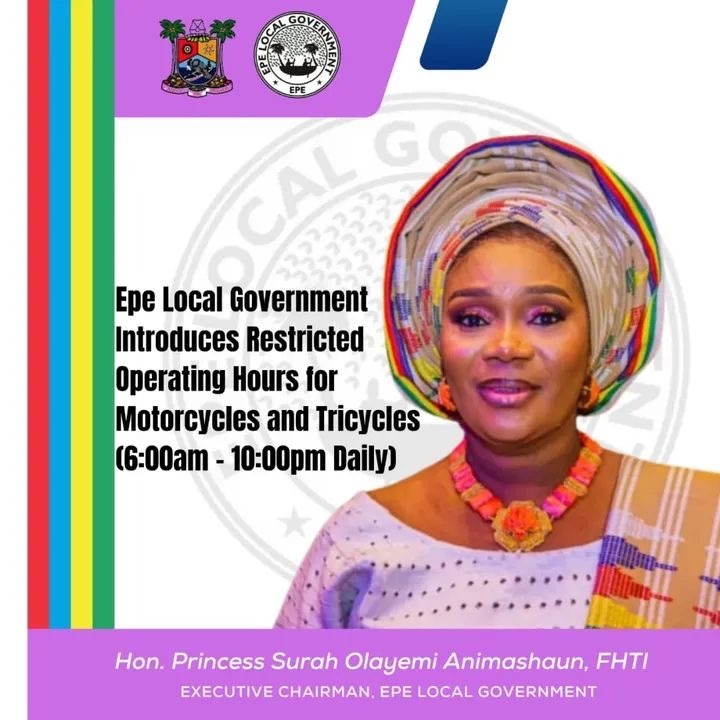
The Chairman of Epe Local Government, has announced a new regulation restricting the movement and commercial operations of motorcycles (Okada) and tricycles (Keke Napep) within the council area to between 6:00 a.m. and 10:00 p.m. daily.

According to a statement issued by the council, the decision followed extensive consultations with security agencies and key stakeholders aimed at enhancing security and public safety across Epe communities.

Under the new directive, all motorcycle and tricycle operators are prohibited from operating or moving within the local government area beyond 10:00 p.m.

The council said the measure forms part of ongoing efforts to curb night-time criminal activities, strengthen security, and protect lives and property.

The statement emphasized that all riders, park operators, and transport unions are expected to comply strictly with the regulation, warning that violators will face appropriate sanctions in accordance with the law.

The council further disclosed that security agencies, including the police and other relevant enforcement bodies, have been notified and directed to ensure full compliance with the directive.

While appealing for understanding and cooperation from residents, the local government assured that the policy is designed to promote peace, maintain public order, and create a safer environment for all members of the community.

The council reiterated its commitment to implementing policies that support security and sustainable development across Epe Local Government Area.

Tinubu Approves N10bn Emergency Fund, Sets Up Presidential Task Force on Ebola Preparednes

0


President Bola Ahmed Tinubu has approved the establishment of a Presidential Task Force on Ebola Virus Disease Preparedness and Emerging Public Health Threats, alongside the immediate release of N10 billion as emergency intervention funding to strengthen Nigeria’s readiness against potential outbreaks.

The emergency fund is aimed at enhancing the operational preparedness of the National Centre for Disease Control and Prevention (NCDC) and supporting critical national public health emergency response activities across the country.

The Presidential Task Force on Ebola will be chaired by the Chief of Staff to the President, Mr. Femi Gbajabiamila, and will comprise representatives from relevant Ministries, Departments and Agencies (MDAs), as well as state governments.
The move follows recent reports of Ebola outbreaks in the Democratic Republic of Congo (DRC) and Uganda, raising concerns about the possible importation of the disease into Nigeria.

President Tinubu’s approval came after a high-level stakeholder meeting chaired by the Chief of Staff to assess Nigeria’s preparedness and develop strategies to prevent the spread of the virus into the country.

Participants at the meeting included representatives of the Ministry of Interior, the Federal Airports Authority of Nigeria (FAAN), the Nigeria Immigration Service (NIS), the Nigerian Civil Aviation Authority (NCAA), the Lagos State Government, and other key stakeholders.

The President also directed all states hosting international airports and border corridors, as well as relevant MDAs, to submit detailed preparedness plans, funding requirements and intervention needs for coordinated implementation.

Among the immediate measures approved are the intensification of passenger screening at all international airports, including enhanced temperature checks and crowd-control protocols. Authorities will also strengthen monitoring of passengers arriving through high-risk routes serviced by airlines such as Air Uganda, RwandAir, Air Tanzania, TAAG Angola Airlines, Kenya Airways and Ethiopian Airlines.

In addition, referral and isolation centres will be activated immediately at the international airports in Lagos and Abuja, with similar facilities to be established at other airports across the country.

The Task Force is also expected to implement mandatory QR code-based pre-arrival health declaration systems for passengers arriving from or transiting through designated high-risk countries.

Other preventive measures include the disinfection of departure halls, cargo terminals, baggage handling areas and airport facilities.
Furthermore, President Tinubu directed the advisory group to engage security, diplomatic and aviation authorities on the regulation of flights originating from affected and other designated high-risk countries.

The Task Force has also been mandated to designate specific airports or terminals for high-risk flights to facilitate controlled screening and isolation procedures, while considering adjustments to flight schedules to minimise interaction between high-risk passengers and other travellers.

The measures form part of the Federal Government’s proactive efforts to safeguard public health and prevent any resurgence of Ebola within Nigeria.

Atiku challenges Lawal to substantiate ADC primary rigging claim

0


Former Vice President Atiku Abubakar has dismissed allegations by former Secretary to the Government of the Federation, Babachir Lawal, over the conduct of the African Democratic Congress (ADC) presidential primary, insisting that the claims lack evidence and should not be taken as fact without proof.

In a statement issued on Tuesday by his Senior Special Assistant on Public Communication, Phrank Shaibu, Atiku urged Lawal to back his allegations with verifiable documentation, warning against what he described as attempts to undermine internal party processes through unsubstantiated public commentary.

Shaibu said Lawal’s recent television appearance presented serious accusations without supporting evidence.
“Nigerians who watched Mr Lawal’s interview were confronted with a man armed with outrage but bereft of evidence; rich in allegations but poor in facts,” he said.

He added that despite spending considerable time making claims about irregularities in the ADC presidential primary, Lawal failed to provide any form of proof.

“Mr Lawal spent nearly an hour making grave accusations about the conduct of the ADC presidential primary. Yet he failed to produce a single piece of verifiable evidence. No document. No petition. No result sheet. No witness statement. No recording. Nothing,” Shaibu stated.

According to the statement, the absence of documentary or testimonial evidence undermines the credibility of the allegations, especially given the seriousness of claims relating to electoral processes.

Atiku also suggested that Lawal’s intervention reflected dissatisfaction with the outcome of the primary rather than an objective assessment of the process, noting that his public comments appeared aligned with his earlier political preferences during the contest.

The statement further pointed to what it described as inconsistencies in Lawal’s narrative, arguing that it was contradictory to portray Atiku as politically insignificant while simultaneously alleging that he possessed the influence to manipulate outcomes across thousands of wards.

“Such claims are internally inconsistent. It cannot be argued on one hand that a political actor is inactive, and on the other that the same individual controls outcomes nationwide,” Shaibu said.

The former Vice President also rejected attempts to diminish his political record, citing his role in Nigeria’s economic liberalisation and contributions to reforms in key sectors, including telecommunications and private sector development.

Shaibu said Atiku would not be drawn into prolonged exchanges based on what he described as politically motivated allegations lacking substantiation.

“As far as we are concerned, this is the final response to Mr Lawal’s increasingly desperate attempts to remain politically relevant through sensationalism and character assassination,” he said.

“The facts remain unchanged. The truth remains intact. And no amount of bitterness can alter either.”

The development highlights renewed tensions within Nigeria’s opposition political space, as key figures continue to trade accusations over internal party processes and leadership legitimacy.

Sun

2027: INEC fixes June 26 to issue official Access Code to parties to upload candidates’ details

0


Warns that political parties’ litigation is distracting polls

The Independent National Electoral Commission (INEC) has revealed that it will on June 26 officially issue an official Access Code to the political parties to enable them upload the details of the candidates who emerged victorious at the recent primaries.
INEC data leak left me feeling unsafe for first time – Emeka Ike
Voter data leak: Police arrest INEC officer, quizz Wike’s aide
Chairman of the commission, Prof Joash Amupitan, made the disclosure in his remarks during a meeting with the national leaderships of the political parties in Abuja on Tuesday.

Amupitan also expressed concern over how the alarming increasing rate of intra party litigations within the leaderships of the political parties becoming a big distraction to the commission’s efforts to concentrate on the preparations for next year’s general elections.

He further cautioned the political parties that the success of the 2027 general elections will depend on the stakeholders upholding the electoral guidelines in the build-up to the elections.

Sun

Israel, a peace loving nation – Envoy

0


…Commemorates 78th independence anniversary in Abuja

The Israeli Ambassador to Nigeria, Michael Freeman, has said that Israel is a peace-loving nation with the full intent to live harmoniously with its neighbours.

The envoy stated this during the country’s 78th birthday in Abuja.

Freeman explained that Israel never wanted the conflicts of the past seventy-eight years, nor the war of the last three years, and not even any of the wars Israel had been forced to fight.

He further said the Abraham Accords have already shown what is possible when nations choose cooperation over conflict.

Freeman said: “They stand as a model for our region and for the world—a reminder that peace is not merely an aspiration; it is a catalyst for prosperity, innovation, investment, and opportunity.

“Yet there are still those who reject that vision.

“Only this week, Israel and Lebanon, with American mediation, agreed to a framework designed to advance peace and stability.

“Hezbollah immediately rejected it.”

Freeman also said instead of diplomacy, instead of disarming, the Iranian proxy fired rockets into Israel and continued to hold the Lebanese people hostage.

He added that Israel responded as it made clear it would.

“Over the last 24 hours, Iran launched ballistic missiles into Israeli civilian population centers.

“Whilst we are here in this hall, millions of Israeli men, women and children – including our friends and families, are currently sheltering in bomb shelters.

“Every time a path to peace emerges, Iran and its proxies choose violence, murder and terror over coexistence,” Freeman further said.

While stating that the people of Israel deserved peace, the envoy also said the people of Lebanon deserved peace as well.

“The people of the entire Middle East deserve peace.

“It is time to stop allowing Iran and other extremists and outside actors to hold the future of our region hostage.

“Let the people of the Middle East choose cooperation over conflict,” he also said.

He recalled the vision of Israel’s first prime minister, David Ben-Gurion 78 years ago of prosperity over violence and hope over hatred.

According to Freeman, “It remains Israel’s vision today.

“And perhaps that is the greatest lesson of Israel’s story.
“All we have ever wanted was to return to Zion, our ancient homeland, and build a flourishing Jewish and democratic state.

“To build life, to build a future, and to build hope.

“And despite every challenge, that is exactly what we have done.”

The Israeli envoy added that when Israel was founded, it was a nation of just 650,000 people, without oil, no vast natural resources, as much of Israel’s land was desert.

“We faced security threats from the moment we declared independence.

“Yet we refused to accept that geography was destiny.

“We learned how to grow food in the desert. We pioneered drip irrigation and precision agriculture.

“We turned seawater into drinking water.

“We became a global leader in medicine, cybersecurity, artificial intelligence, and innovation.

“Israel did not become a technological powerhouse because our challenges were small.

“Israel became a technological powerhouse because our challenges were enormous.

“We learned that every problem contains within it the seed of an opportunity.

“And that lesson has shaped our nation ever since.

“But Israel’s story is not only about what we have achieved.

“It is about what we can achieve together,” Freeman also said.

In her remarks, the Minister of Arts, Culture, Tourism and Creative Economy, Hannatu Musa Musawa, said Israel is a country known around the world for its innovation, its technology, its resilience.

The minister also said Israel and Nigeria share so much as they are both nations of deep faith, of rich traditions, of diverse cultures.

“We are both nations that understand the power of storytelling, of music, of dance, of art, to bring people together.

“And we are both nations that believe in the power of our people. Our greatest resource is not what lies beneath the ground, but what lies within our people — their creativity, their ingenuity, their determination,” Musawa said.

Sun

BREAKING: Reps summon service chiefs, Ribadu over rising insecurity

0


The house of representatives has summoned the service chiefs and Nuhu Ribadu, national security adviser (NSA), to appear before the parliament over the rising incidents of insecurity across the country.

The green chamber passed the resolution during Tuesday’s plenary following the adoption of a motion sponsored by Sulaiman Gumi, lawmaker representing Gummi/Bukkuyum federal constituency in Zamfara state.

credit thecable

From Local Council Aspirant to Lagos Deputy Governorship Candidate: The Remarkable Rise of Damilola Sonayon-James

0


In politics, setbacks often appear as dead ends. Yet for Damilola Sonayon-James, what seemed like a series of disappointments became stepping stones to a much bigger opportunity.

Just a year ago, Sonayon-James was pursuing her ambition of becoming a local government chairman in Badagry. Like many young politicians eager to make an impact at the grassroots level, she sought her party’s nomination ahead of the local government elections.

However, her aspiration was cut short when she failed to secure the ticket.
Undeterred, she turned her attention to another important administrative role—the position of Secretary to the Local Government (SLG).

Expectations were high, but when the Lagos State Government released the approved list of Supervisory Councillors, Secretaries to Local Governments and Special Advisers for the state’s 57 Local Governments and Local Council Development Areas on February 27, 2026, her name was absent.

For many politicians, two consecutive disappointments might have signaled the end of a political season. For Sonayon-James, however, it was merely the beginning of a new chapter.

What she did not know at the time was that events were unfolding in a direction far beyond the confines of local government politics.

While she was focused on serving at the council level, destiny appeared to be preparing her for a broader stage.

Just days later, on March 3, 2026, the All Progressives Congress (APC) held its State convention. At the gathering, Sonayon-James emerged as the APC Deputy Woman Leader in Lagos State. The appointment elevated her profile significantly within the party structure and introduced her to a wider political audience across Lagos.

The position marked a turning point in her political journey. After experiencing setbacks in her quest for local government leadership and the SLG position, she found herself serving at the state party level, contributing to the APC’s political machinery in Africa’s largest city.

Even then, few could have predicted the next twist in her story.

At the time of her appointment as Deputy Woman Leader, becoming a senior official in a future state administration may have seemed ambitious enough. The prospect of emerging as a deputy governorship candidate for Lagos State would have appeared even more remote.

Yet politics often rewards persistence, preparation and timing.
Three months after assuming her role as APC Deputy Woman Leader, Sonayon-James achieved what many considered unthinkable.

In June 2026, she was selected as the APC Deputy Governorship candidate alongside the party’s governorship candidate, Dr. Kadri Obafemi Hamzat, for the 2027 Lagos governorship election.

The development transformed her from a relatively little-known grassroots politician into one of the most prominent female political figures in Lagos State.

If the APC ticket succeeds at the polls in 2027, Sonayon-James will assume office as Deputy Governor of Lagos State—a position that places her at the heart of governance in Nigeria’s commercial capital and one of Africa’s most influential economic centres.

Lagos, with a population exceeding 20 million people, remains the nation’s largest contributor to internally generated revenue and a major hub for commerce, innovation and investment.

Her elevation would also be historic. Should she take office in 2027, Sonayon-James is expected to become the youngest Deputy Governor in Lagos State’s history and one of the youngest deputy governors Nigeria has ever produced, drawing comparisons with Mahadi Aliyu, who became Deputy Governor of Zamfara State at the age of 38.

Her journey serves as a reminder that political careers do not always follow a straight path.

Sometimes, the opportunities that appear lost create room for even greater possibilities. From an unsuccessful bid for a local government chairmanship to standing on the threshold of becoming Lagos State’s Deputy Governor, Damilola Sonayon-James’ story underscores the unpredictable nature of politics and the enduring belief that setbacks can sometimes be preparations for greater responsibilities.