Home Blog Page 38

Midterm Election: American Electorate Deserves Next Nobel

0

BY TAIWO OGUNMOLA -OMILANI

Prize, Says Shehu Sani
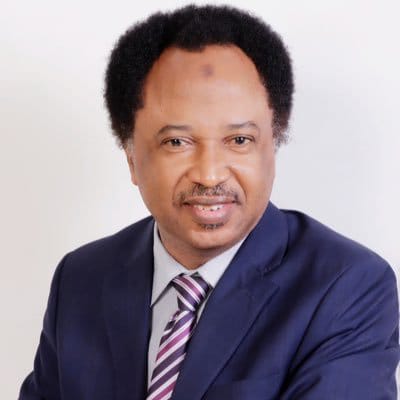
Former Kaduna Central Senator, Shehu Sani, has said the American electorate deserves the next Nobel Prize for demonstrating tolerance, inclusivity and a strong commitment to peace through its voting choices in the midterm elections.

Sani said American voters had elected Muslims, Nigerians, Somalis, Indians and Arabs, describing the outcome as a powerful moral message to a world grappling with division, hatred and discrimination.

In a statement, posted on his X page, Sani said the electoral choices of Americans reflected a commitment to peaceful coexistence in a turbulent and troubled world.

He noted that many of the candidates who emerged victorious in the United States might have struggled to secure electoral victories in their countries of origin.

“The American electorate voted for Muslims, voted for Nigerians, voted for Somalis, voted for Indians and voted for Arabs.

“It’s not just a vote but a strong moral message of peace for a turbulent and troubled world, and a world embroiled and entangled in a web of divisiveness, hatred and discrimination.

“Most of those who won elections in the US would have found it difficult to win in their home country.

“The American electorate deserves the next Nobel Prize,” Sani wrote.

Atiku Condemns Court Judgment Removing David Mark-Led ADC Leadership, Vows Appeal

0

The Presidential Candidate of the African Democratic Congress (ADC), Atiku Abubakar, has condemned
Thursday’s court judgment purporting to remove the Senator David Mark-led leadership of the party, describing it as a calculated attempt to weaken the ADC and frustrate his presidential ambition.

Atiku said the timing of the judgment was suspicious, noting that it came barely a day after a massive crowd welcomed him in Sokoto during the launch of the ADC campaign.

In a statement issued on Thursday by Phrank Shaibu, Director of Strategic Communication of the ADC Presidential Campaign Council, Atiku said the turnout in Sokoto reflected Nigerians’ growing desire for change and relief from the prevailing economic hardship.

“The people of Sokoto came out in their thousands because they are hungry for change and believe in our promise to make life affordable again. What we witnessed in Sokoto is only the beginning.

The people of Kebbi will have their say, and so will Nigerians across the country as our campaign moves forward,” he said.

Moniepoint MFB Enables USSD Access for FG’s ₦50,000 Relief Fund

0

​Moniepoint Microfinance Bank has launched a USSD feature allowing customers to check their eligibility for the Federal Government’s ₦50,000 National Emergency Relief and Stabilisation Intervention (NERSI) and receive their payouts directly.

​Spearheaded by the Federal Ministry of Humanitarian Affairs and Poverty Reduction, the NERSI scheme offers direct financial aid to vulnerable Nigerian households to help ease current economic hardship.

​As an official payment partner for the program, Moniepoint is using its digital infrastructure to ensure smooth disbursement.

Account holders can check if they qualify by dialing 557327# from their registered mobile numbers. Eligible customers will be prompted on-screen to accept the ₦50,000 payment, which will be credited to their Moniepoint account free of charge.

Water privatisation: Group pushback as Lagos bans borehole drilling

0

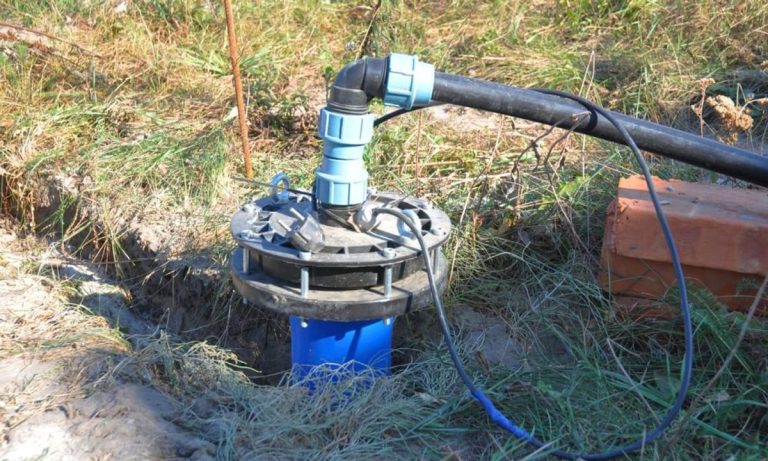
A coalition of civil society organisations, community groups and trade unions has warned the Lagos State Government against criminalising residents’ daily struggle for water while failing to provide reliable public supply.

The Our Water Our Right Africa Coalition (OWORAC), a network comprising more than fifty national and regional groups and communities, declared that any attempt by state task forces to seal domestic and residential boreholes will be met with coordinated mass action across every local government area in Lagos.

The coalition’s pushback follows growing public anxiety sparked by a statement attributed to the Executive Secretary of the Lagos State Water Regulatory Commission (LASWARCO), Oluwabukola Adeyemo, which warned that drilling boreholes and extracting groundwater without state authorisation is illegal and could attract property sealing and criminal prosecution. The Commission had also announced a dedicated reporting hotline, urging residents and community leaders to blow the whistle on unauthorised drilling and abstraction.

Reacting to the development, the groups stated that LASWARCO must urgently provide clarity on the scope of its enforcement, noting that its sweeping tone has generated deep confusion and fear across working-class neighbourhoods.

The coalition stressed that any regulatory exercise must start with an absolute and faithful acknowledgement of what the governing statute actually says. Under the Lagos State Environmental Management and Protection Law of 2017, the primary legal instrument cited by the regulator, the law explicitly distinguishes between commercial extraction and domestic survival.

“Specifically, Section 253(1) of the law provides that ‘a person may, without obtaining a licence from the Lagos State Water Corporation (LSWC), allow, construct, dig or extend any well, borehole or other work in a residential premises for abstraction of water supply and to an extent necessary for a supply of water for the domestic purpose of a household.’

“This statutory exemption is reinforced under Section 259(2), which makes it clear that licensing requirements apply strictly to commercial and industrial abstractors, stating that the location of a borehole other than those for domestic use shall be authorised by first obtaining the appropriate licence.

“By deliberately omitting these statutory exemptions from its public threats and threatening indiscriminate crackdowns, LASWARCO has overstepped its bounds, creating needless panic among already suffering residents, while recklessly encouraging neighbours to turn on one another over water, an essential daily need,” the groups stated.

The coalition noted that the state’s aggression is especially contemptible when measured against its own utility records. Official disclosures by the Lagos Water Corporation reveal that its network accounts for barely 34,424 registered connections, representing roughly 1.03 per cent direct coverage in a megacity of over twenty million people. Even by the corporation’s own generous defence that these connections serve multi-tenant plots covering about 8.3 per cent of residents, over 91 per cent of the population remains completely abandoned by the public grid.

“In reality, public taps across the state have been dry for decades, while massive, multi-billion-naira waterworks at Iju, Adiyan, and Ishasi rot away in an embarrassing state of operational underperformance,” the coalition remarked.

To compound this institutional neglect, Section 252 of the 2017 Law insulates the Lagos Water Corporation from paying a single naira in damages or compensation to citizens for the total failure or interruption of public water supply.

“A government that actively absolves itself of the constitutional duty to deliver water cannot legitimately turn around to criminalise and extort citizens who were forced to become their own mini-water authorities and service providers despite paying heavy taxes to the state,” the statement stressed.

The groups described domestic boreholes in Lagos as a distressing necessity promoted by state failure, noting that the burden is even heavier in ecologically blighted settlements.

“In areas like Baruwa, Iludun, and Ajegunle, where prolonged petroleum pipeline contamination has poisoned subterranean aquifers, as well as coastal corridors like Lekki, where poor drainage and the complete absence of centralised wastewater management have led to severe sewage pollution and saline intrusion, citizens cannot safely draw groundwater at all,” the coalition said. “This crisis has trapped residents in acute water poverty, forcing families to spend ruinous sums daily to purchase water from third-party vendors while the state looks away.”

Where groundwater remains usable, the statement observed that citizens continue to sustain whole neighbourhoods through communal solidarity, extending taps out to the street, sharing water with neighbouring compounds and pooling money for electricity or fuel to keep pumps running.

“Rather than criminalising these self-funded lifelines, the state government ought to wear a garb of humility to study and support these community-led models of service delivery, learning how ordinary communities manage to share water so seamlessly without multi-million-dollar, pro-privatisation consultants and institutions dictating terms,” the coalition advised. “These organic lifelines demonstrate the capacity for cooperation and collective responsibility within our communities, even as they completely shatter the state’s worn-out propaganda that handing public water utilities over to private entities and predatory multinational water corporations is the only way forward.”

The coalition drew a sharp contrast between LASWARCO’s heavy-handed threats against struggling households and its lenient treatment of industrial water extractors. The groups recalled that when LASWARCO carried out regulatory engagements with multinational giants such as Nigerian Bottling Company, Guinness Nigeria and FrieslandCampina WAMCO in late 2024, the Commission publicly admitted it had spent more than seven years in polite diplomatic discussions despite ongoing compliance defaults.

“It is unconscionable that the state could spend years patiently negotiating with multinational corporations guzzling millions of litres for private profit, yet threaten task forces, property sealings and criminal charges against ordinary citizens drawing water for their pots and buckets,” the statement asserted. “If anyone is depleting communal aquifers and putting our groundwater at risk of sinking, it is these mega-extractors, not families trying to survive.”

The groups also raised concerns that LASWARCO’s sweeping warning could pave the way for dismantling community water lifelines ahead of the introduction of state-endorsed private water schemes.

“We are not blind to the covert agenda underway. This aggressive threat to criminalise all boreholes is a calculated, manufactured siege designed to herd desperate residents into a captive market and bulldoze communities into forced prepaid water metering schemes. Water is a lifesaving, fundamental human right. Access to it can never be subjected to an exclusionary, pay-or-perish discriminative model,” the statement read.

To resolve concerns prompted by LASWARCO’s threats, the coalition urged the Commission to immediately clarify that the 2017 law exempts domestic boreholes and wells, guaranteeing that residential homes will not face sealing, harassment or prosecution.

Rather than privatising the Lagos Water Corporation, the coalition urged the state government to prioritise universal access to safe, piped public water, redirect rigorous regulatory enforcement toward high-volume commercial abstractors and industrial polluters, and rehabilitate derelict waterworks to ensure equitable distribution across all communities. Furthermore, they demanded comprehensive governance reform within the utility, institutionalising transparent management frameworks that grant workers, communities, trade unions and civil society groups a direct say in how it is run.

Concluding the statement, the coalition called on Community Development Associations, youth councils, labour unions, artisans, market women and neighbourhood networks across Lagos to remain vigilant, organised and ready to actively defend their domestic lifelines.

“The state is formally put on notice that any attempt by LASWARCO or armed task forces to enter residential communities, demand illegal permits or seal domestic boreholes will be treated as an unlawful provocation and met with immediate legal, public and coordinated mass resistance across every community in Lagos until the social contract of universal public water delivery is fully restored.”

The statement was jointly signed by leaders of the following coalitions:

Adewale Ojo – Chairman, Committee for the Defence of Human Rights (CDHR), Lagos State
Dagga Tollar – Secretary, Movement for Socialist Alternative (MSA)
Miriam Ginika John – President, Advocacy Initiative for Restoring Women and Girls Education for Promotion of Justice to Save Lives (Rowgles Advocacy Initiative)
Chief Akeem Muraina Mosunro – Baale Ifako Tuntun (Onibari 1), Ifako Ijaiye Community
Towolawi Jamiu – PRO, Oworo Youth Forum (OYF)
Adebayo Saheed Adedeji – Leadership Council, Movement for African Emancipation
Zikora Ibeh – Assistant Executive Director, Corporate Accountability and Public Participation Africa (CAPPA)
Ibrahim Oluwatobiloba – President, Voices of the Masses and Support for Credible Leadership
Balogun Hameed – Director, Research, Frontline Socio-Economic Research Centre
Tunde Yusuf – Secretary, Ajegunle People’s Movement (APM)
Okechukwu Nwanguma – Executive Director, Rule of Law and Accountability Advocacy Centre (RULAAC)
Peluola Adewale – National Mobilisation Officer, Joint Action Front (JAF)
Alex Omotehinse – President, Centre for Human and Socio-economic Rights (CHSR)
Hassan Taiwo Soweto – Member of the Organising Committee, #EndBadGovernance Movement, Lagos State
Gbenga Komolafe – General Secretary, Federation of Informal Workers Organisation of Nigeria (FIWON)
Akin Okunowo – National Coordinator, Anti-Cult Alliance Movement (ACAM)
Felix Ikupolosi JP – Chairman, Iludun Town Association
Rufus Olusesan – National President, Precision, Electrical and Related Equipment Senior Staff Association (PERESSA)
James Oyewole – Chairman, Baruwa Water Pollution, Baruwa Community
Oladunni Segun – Amilcar Cabral Ideological School – Movement (ACIS-M)
Mary George-Peluola – Director, Women Advocate Research Documentation Centre (WARDC)
Chinedu Bosah – National Secretary, Campaign for Democratic and Workers Rights (CDWR)
Comrade Philip Imonikhe – President, Pulp, Paper and Paper Products Printing and Publishing Senior Staff Association of Nigeria
Comrade Dare Adeyemo – Chairman, Lagos State Council, National Union of Nigeria Welders (NUNIWE)
Comrade Adeola Adepegba – National President, Nigeria Union of Private Cab Operators (NUPCO)

PSN urges FG to declare drug insecurity national threat

0

The Pharmaceutical Society of Nigeria (PSN) has called on the Federal Government to declare pharmaceutical insecurity a national security threat, warning that drug diversion, illicit trafficking and counterfeit medicines are fuelling insecurity and undermining public health.

The society also urged the government to establish a Federal Drug Management Agency backed by law, insisting that the proposed Medipool drug procurement scheme must operate within a public sector framework.

The President of the PSN, Ayuba Tanko, made the call at the opening ceremony of the society’s 99th Annual National Conference, tagged PSN-IJELE 2026, at the International Convention Centre, Awka, Anambra State.

Tanko said the government must retain control of the pharmaceutical supply chain, particularly the procurement, storage, distribution and dispensing of medicines, to protect the country against drug diversion, counterfeiting and the financing of organised crime.

He said the Federal Government’s approval of Medipool as a National Group Purchasing Organisation in May 2025 had generated controversy over its legality and implications for public health and national security.

The PSN president acknowledged that pooled purchasing could reduce medicine costs, prevent stock-outs and improve transparency, but warned against handing over the entire drug supply chain of public health facilities to a private company.

He said the society’s objection was not to group purchasing itself but to the structure and legality of the proposed arrangement.

Tanko argued that the government must retain direct control of medicines because of their public health and security implications, particularly the risks associated with controlled and psychoactive drugs.

He said the involvement of a private company in the drug-utilisation chain could weaken collaboration between the government and regulatory agencies, including the Pharmacy Council of Nigeria (PCN), the National Agency for Food and Drug Administration and Control (NAFDAC) and the National Drug Law Enforcement Agency (NDLEA).

He cited the NDLEA’s identification of controlled drug abuse, particularly tramadol and pentazocine, as a driver of banditry, terrorism and violent extremism.

Tanko also expressed concern over counterfeit medicines, saying NAFDAC destroyed fake and substandard products worth about N1.5 trillion between June 2025 and June 2026 and secured 64 conviction.
He called for the replacement of open drug markets with licensed, coordinated wholesale centres under strict government supervision.

The PSN president also recommended integrating community pharmacists into the national security architecture to help identify and report suspicious drug activities.

He urged the government to fast-track the Drug Revolving Fund and Drug Management Agency Bill, which he said passed its first reading in the House of Representatives in 2025.

The proposed law, he said, should protect the revolving fund from diversion, establish pricing rules, ensure competitive procurement and provide for private-sector partnerships.

Tanko said Medipool’s role should be limited to functions such as price negotiation or framework supply, selected competitively and on a non-exclusive basis.

He also called for a presidential committee on the pharmaceutical sector, to be led by a registered pharmacist and comprising representatives of relevant regulatory agencies and the PSN.

On workers’ welfare, Tanko commended the Nigeria Labour Congress, the Trade Union Congress and the Joint Health Sector Unions for their engagements with the Federal Government on the adjustment of the Consolidated Health Salary Structure (CONHESS).

He said the October 22 and 27 negotiations secured commitments to pay 19 months’ arrears of allowances to health workers in three tranches within three months, beginning December 2026.

He added that the National Salaries, Incomes and Wages Commission had promised to complete an updated cost implication for the CONHESS adjustment within three weeks, enabling the Presidential Committee on Salaries to consider implementation.

Tanko urged the labour unions to ensure that the adjustment was concluded with the necessary circular and salary tables before the end of 2026.

Makinde unveils manifesto, proposes 51% votes for election of president

0

.Insists govt must make life easier for citizens, tackles Tinubu over electricity crisis

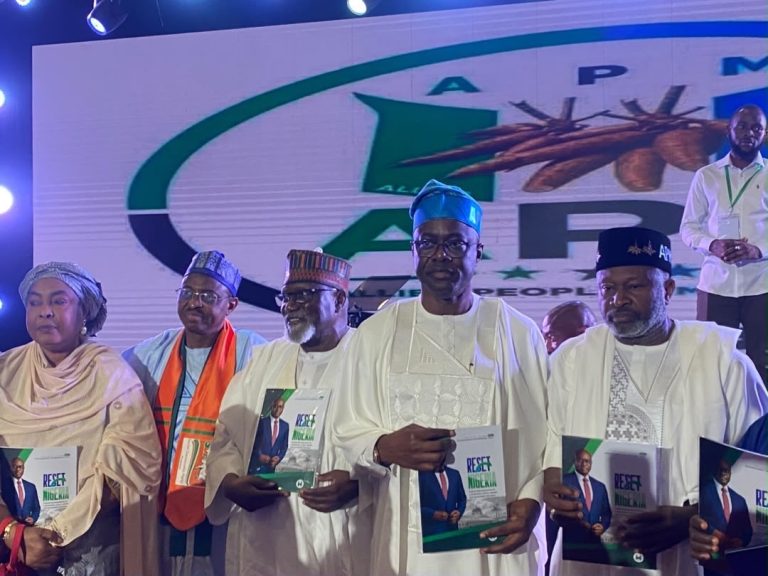
The Allied Peoples Movement (APM) presidential candidate and Oyo State Governor, Seyi Makinde, has proposed a major overhaul of Nigeria’s electoral system to ensure that no presidential candidate emerges victorious without securing at least 50 per cent plus one of the total votes cast, as he unveiled his manifesto for the 2027 general election with a pledge to run a four-year transitional government of national unity.

Makinde, who unveiled his Reset Nigeria Agenda in Abuja, yesterday, said Nigeria’s greatest challenge was not a lack of natural or human resources but a shortage of ideas among those entrusted with leadership, insisting that successive governments had failed to translate the country’s enormous potential into improved living conditions for ordinary citizens.

The governor, who promised to devote his four-year tenure, if elected, to economic recovery, security reforms, institutional strengthening and socio-political restructuring, said his administration would pursue a fundamental reset of the country through broad national consultations, constitutional reforms and policies designed to reduce the cost of living, create jobs and restore public confidence in government.

He argued that Nigeria’s current electoral arrangement, which allows a presidential candidate to emerge without securing an absolute majority of votes cast, had contributed to political instability, encouraged post-election compromises and weakened democratic institutions, stressing that a president should command the support of a clear majority of the electorate.

Makinde said his proposed electoral reform would not abolish the existing multi-party system but would compel political parties and presidential candidates to build broader national consensus across ethnic, religious, regional and political divisions before assuming office.

According to him, the proposal forms part of a wider national conversation on the future of Nigeria’s political and constitutional arrangements, which his proposed transitional government would facilitate without seeking to benefit from the outcome.

“My personal opinion, which is something we will have a conversation about, is that our diversity should become a source of strength and unity for Nigeria rather than a source of division. Ideally, the presidential system works best with a two-party structure. However, we currently operate a multi-party system, and people may want the opportunity to pursue their political ambitions independently. Therefore, I am not going to interfere with the multi-party arrangement we currently have.

“However, I believe that anyone aspiring to become President of Nigeria should not emerge with less than 33 per cent of the votes in a system where the remaining voters may have voted against them. When someone emerges under such circumstances, they may enter government and begin compromising the political system itself. They may start asking other political actors to bring the mandates they received from their supporters to join the government.

“Where those political actors resist, they may be subjected to pressure. They did that to Governor Bala and myself. Rather, we insist on standing on the side of the Nigerian people. What we are proposing is that, to become President of Nigeria, a candidate must secure at least 50 per cent plus one vote.

“That way, candidates and political parties will have to engage in discussions across party lines and other divisions to secure the support needed to form a government that commands the respect of the majority of Nigerians. That is why the proposal under our Reset Agenda is to establish a transitional government of national unity.”

The APM standard-bearer said he was prepared to sacrifice any personal political advantage that might arise from the proposed constitutional restructuring, declaring that he would not seek to become a beneficiary of the political arrangements developed under his administration.

“Today, Wednesday, November 4, 2026, I offer myself as a guinea pig by announcing to Nigerians that whatever constitutional and political arrangements we eventually develop, I will not be a beneficiary. If I intend to benefit personally from the arrangements, there is a possibility that manipulation could set in. But I do not want that to happen.”

Turning to the economy, Makinde said Nigeria was endowed with abundant natural resources, a large population and considerable human capital but had continued to struggle with poverty, unemployment, rising production costs and declining purchasing power because successive leaders had failed to develop workable solutions to the country’s problems.

“Nigeria has the resources and the capacity to achieve greatness. Nigeria is rich in natural resources and human resources, but our leaders are poor in ideas.

“Our simple proposition is that government must make life easier for the people. That is all,” he declared.

The governor explained that his manifesto was developed following extensive consultations with Nigerians across the six geopolitical zones, including town hall meetings at which citizens were asked to identify their priorities and describe the kind of country they wanted.

He said the Reset Nigeria Agenda was anchored on the conviction that every Nigerian deserved to live in safety, earn a decent living, access opportunities and develop their abilities, while economic growth and government reforms must produce measurable improvements in the welfare of citizens.

Makinde identified four fundamental concerns behind his presidential ambition, including the failure of macroeconomic reforms to improve household welfare, weak public institutions, widespread poverty and the inability of government policies to deliver tangible benefits to the population.

He argued that macroeconomic stability should not be celebrated merely on the strength of economic statistics when millions of Nigerians continued to struggle with food prices, unemployment, inadequate incomes and the rising cost of essential goods and services.

According to him, the success of economic reforms must be measured by their impact on ordinary Nigerians, particularly their ability to afford food, secure employment, run profitable businesses and maintain a reasonable standard of living.

He said his economic programme would focus on addressing the structural factors responsible for the high cost of living, particularly expensive energy, poor infrastructure and the unfavourable operating environment confronting manufacturers and other businesses.

“Our economic agenda focuses on reducing the structural cost of living. We must lower the cost of production and enable Nigerian businesses to become competitive. For instance, no matter how hard I try, a manufacturer who relies on generators powered by diesel will continue to incur high production costs.

“We must make it possible for manufacturers to connect to the national electricity grid and access electricity at a lower cost. Of course, the cost of energy remains a major burden on businesses. We export plastics and many other products to the Republic of Benin. Today, some businesses are leaving Nigeria because our operating environment is not competitive enough.”

The presidential candidate maintained that Nigeria could not build a competitive manufacturing sector or create sufficient employment opportunities while businesses continued to depend heavily on expensive alternative sources of electricity.

He said reducing energy costs, improving infrastructure and creating a more predictable business environment would be central to his administration’s efforts to encourage investment, expand domestic production and strengthen the country’s competitiveness.

Makinde also questioned the impact of petroleum pricing on ordinary Nigerians, particularly why increases in international crude oil prices should translate into additional hardship for citizens without corresponding benefits from the country’s status as an oil-producing nation.
He insisted that economic policies must be designed and implemented with the welfare of the population as their primary consideration rather than leaving households and businesses to absorb rising costs without adequate relief.

The governor also took a swipe at President Bola Tinubu’s administration over the country’s persistent electricity crisis, accusing the Federal Government of failing to fulfil its promise to improve power supply while attempting to shift responsibility to state governments.

He recalled that Tinubu had publicly linked his administration’s electoral fortunes to its ability to address the electricity challenge and urged Nigerians to hold the President accountable for that commitment.

“We must hold those in government accountable for their promises. This administration made several promises. We all remember when they said that if they failed to fix electricity, Nigerians should not vote for them again. For God’s sake, Nigerians must hold them accountable to that statement because they have not provided reliable electricity. Instead, they shift the blame, saying they have given states the autonomy to regulate the electricity market within their jurisdictions.

“Yes, but should a baby that has just been born start crawling, walking and running at the same time? They signed the electricity autonomy and regulation bill in 2023. It is now three years. The intention was to encourage states to develop their electricity markets. Of course, different states have different capacities and circumstances. However, you cannot simply shift the blame. You have national electricity assets, and you must manage them properly. You cannot abandon your responsibility and blame the states.”

Makinde said granting states greater regulatory powers over electricity did not absolve the Federal Government of its responsibility to manage national electricity infrastructure and ensure that the country’s power sector functioned effectively.

He maintained that the different capacities of states to develop their electricity markets made it necessary for the Federal Government to provide effective leadership and coordination rather than treating decentralisation as an excuse for persistent failures.

On governance and accountability, the APM presidential candidate promised that his administration would introduce measurable performance targets within its first 100 days in office and subject its achievements to public scrutiny.

He said every government promise would be linked to a responsible institution, a clearly defined implementation plan and measurable outcomes that Nigerians could independently verify.

Makinde also stressed the need to strengthen democratic institutions, arguing that government should be accountable to citizens and that political authority must be exercised in the public interest.

He said the country’s founding fathers had recognised the importance of dialogue and compromise in managing Nigeria’s diversity, noting that the nation needed to return to the principles of inclusion, collective responsibility and national consensus that informed its early constitutional development.

“Our founding fathers started this journey, just as the vice-presidential candidate mentioned. Somewhere along the line, in the way a relay race is conducted, one person runs the first lap before handing over the baton to another runner. I think we dropped the baton somewhere along the line. Therefore, we must now return to rebuilding the Nigeria our founding fathers envisioned.

“We want a Nigeria that works for every Nigerian, irrespective of the part of the country they come from, their religious background or their ethnic identity. Our founding fathers understood that we had differences and rivalries in this country. That was why they organised constitutional conferences and engaged in discussions about the future of Nigeria. I believe our founding fathers were undoubtedly among the best this country had to offer at that time.”

He said the proposed transitional government of national unity would provide an opportunity for Nigerians from different political, ethnic, religious and professional backgrounds to deliberate on the country’s future and agree on constitutional and institutional arrangements capable of promoting stability and development.

Also speaking, the APM vice-presidential candidate, Lawal Daura, advocated an inclusive system of governance, saying Nigeria’s democracy could only flourish in an atmosphere of peace, security, stability, prosperity and respect for fundamental democratic rights.

Daura warned against the suppression of opposition political parties, stressing that a vibrant opposition was essential to democratic accountability, the reduction of political tension and the strengthening of national institutions.

He maintained that opposition parties should be regarded as partners in the democratic process rather than enemies of the government, arguing that political competition should not prevent national cooperation on issues affecting the welfare and security of Nigerians.

The vice-presidential candidate said he and Makinde had agreed that the country’s challenges required a broad national conversation involving political parties, government representatives, civil society organisations and other stakeholders.

He advocated a national conference where Nigerians from different backgrounds could openly examine the country’s problems, address longstanding disagreements and agree on a common direction for national development.

Similarly, the National Chairman of the Social Democratic Party (SDP), Sadiq Gombe, who attended the manifesto unveiling, described Makinde as a “shining light of the opposition” and commended Bauchi State Governor and APM national leader, Bala Mohammed, for what he described as his contributions to sustaining democracy and strengthening opposition politics in Nigeria.

Gombe said the involvement of political leaders from different platforms in the event underscored the importance of cooperation among opposition stakeholders in the country’s democratic development.

In his remarks, the APM National Chairman, Yusuf Dantalle, called on Nigerians to resist attempts to deploy state institutions against democratic competition, stressing that the country’s political future should not be subordinated to the interests of any individual or political party.

Dantalle said the manifesto unveiling was fundamentally about Nigeria’s future and the need to establish a government capable of responding to the aspirations of citizens, noting that political parties were merely platforms for pursuing national development.

He expressed concern over the deteriorating security situation, saying kidnapping and other violent crimes had created widespread fear and made it increasingly difficult for Nigerians to go about their legitimate activities without apprehension.

According to him, the security challenge had become so serious that even residents of the Federal Capital Territory could no longer take their safety for granted.

He urged Nigerians to place national interest above partisan considerations and support democratic processes that would guarantee security, accountability, economic opportunities and improved living conditions for citizens.
Skyview’s legal owner of Lekki property possesses C of O, court judgment

0

The Skyview Property, a Lagos-based real estate development company, has dismissed as frivolous, cheap blackmail and a campaign of calumny the recent claims in some publications by one Alhaji Akeem Osuolale Ogunseye that he has the right to a property at Plot 77, Lekki Phase 1, Lekki Peninsula Scheme 1 with Certificate of Occupancy issued in the name of Samuel Alao Ajibode.

The real estate company, in a statement signed on its behalf by Mr Daniel Itua stated that in 2008 it legally purchased the landed property in question from the then owner, who had purchased it from the original owner, Mr Ajibode and had the Certificate of Occupancy as well as a Deed of Conveyance executed by Ajibode in his favour. Skyview also has a subsisting judgement from the Lagos High Court declaring it the rightful owner of the property.

The Company added that there was nothing in this landed matter that concerned the Assistant Inspector General of Police (IGP), Mr Moshood Jimoh, who only intervened to restore peace and ensure that both parties await the decision of the trial court, which was then hearing the case.

“The recent campaign of blackmail against AIG Jimoh and Skyview is a mere attempt to whip up public sentiment by a person who has no right in law and in fact to the property in question but has resorted to self-help and the use of violence to scare our workers from the property. We will not succumb to the blackmail.

“While we possess all the relevant documents conferring ownership of the said property on us, we want to state clearly that when the said Alhaji Ogunseye and his boys went to the property and wreaked violence on our workers, we reported the case to the then Commissioner of Police, Lagos Command, Mr Jimoh who only ordered that both parties should await the judgement in Court and that the police could not do anything on a sub judice matter. He also made all the parties agree to await the judgement of the Court since they have joined issues in the Court.

“As a law abiding corporate person, our company only returned to the site to commence development after the judgement of Hon. Justice K. A. Jose, delivered on June 30th, 2025 in which she issued “an order of perpetual injunction restraining the first Defendant, his agents and privies from further trespassing on the property situate at Plot 37, Block 77, Lekki Peninsula Scheme 1, Lekki, Lagos and from further harassing the claimant (Skyview Properties), its servants, employees, agents and privies in respect of any matter relating to the property.

“It should be noted that the said Mr Ogunseye is an agent of Mr Ajibode and the claim that they have a subsisting case at the Court of Appeal goes to no issue as they have no Stay of Execution order from the appellate Court which could prevent Skyview Properties from moving on with the execution of its approved plan by the Lagos State Ministry of Physical Planning and Development.

“Mr Ajibode who is the architect has eloped to the United States after using the said Alhaji Ogunseye to initiate the unwarranted claims. Ajibode had sold the land to an individual in 1992 and submitted his C of O as well as executed a Deed of Conveyance to the said buyer. Skyview Properties in turn bought from the buyer and paid adequate consideration for the property. We also paid money to Ajibode to execute another Deed of Conveyance to our Company.

“It was long after the conclusion of the transaction that Ajibode again returned with a demand which the Company considered as an extortion plan. He was demanding N50m. It was when Skyview told him we would not succumb to this game of blackmail that the said Alhaji Ogunseye came into the picture as the masquerade behind the public dance and mobilised some people to forcefully enter the property but were resisted

“Our move to file a Court case and petition the Police Commissioner was a demonstration of the Company’s commitment to due process and judicial process instead of taking the law into our hands or resorting to self-help as the said Ogunseye did.

“We restate the fact that the subsisting Court judgement is in our favour and there is no judicial order restraining Skyview or that is contrary to the judgement of the Lagos High Court.

We hereby advise members of the press to always check their facts thoroughly before rushing to publish based on the baseless claims of people who want to subvert the rule of law while manipulating the media to present themselves as victims while in fact, they are the people breaking the laws and subverting due process.

“Our Company is a responsible corporate body and will not do anything that will either break the law, compromise due process, or cause any breakdown of law and order”, the company stated.

UK envoy urges Nigeria to use 2027 elections to showcase strong democracy

0

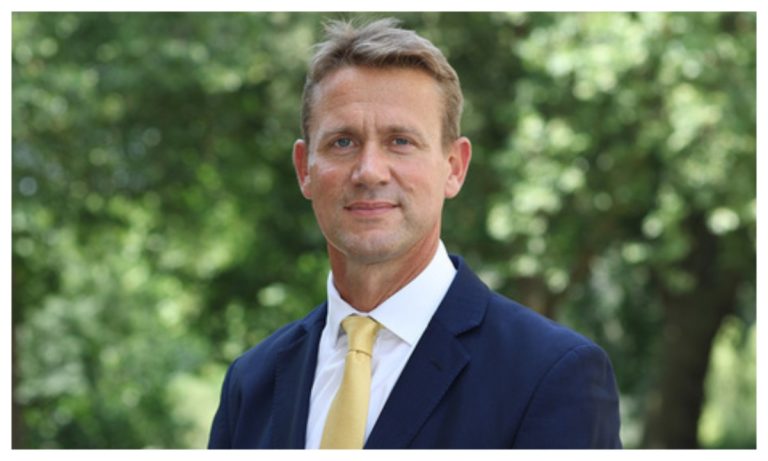
British High Commissioner to Nigeria, Pete Vowles, has called on the country to make the 2027 general elections an opportunity to demonstrate the strength and credibility of its democratic institutions to the international community.

Vowles made the appeal during a visit to the headquarters of the Independent National Electoral Commission (INEC) in Abuja, where he met with the commission’s leadership to discuss preparations for the next general elections.

The envoy, who said he had been in Nigeria for eight weeks, explained that the visit was intended to familiarise himself with INEC’s activities and understand the arrangements being made for the 2027 polls.

He noted that Nigeria’s democratic development carries significance beyond its borders, considering the country’s population and influence across West Africa and the African continent.

Vowles said the forthcoming elections would provide an opportunity for Nigeria to demonstrate how democratic institutions could function effectively in a country with a large population and diverse interests.

“The reason I suppose that we wanted a courtesy call is perhaps an obvious one, but just the recognition of how much Nigeria’s democracy matters to Nigeria, to 240 million Nigerians, to the region and to the world,” he said.

Explaining the purpose of his engagement with INEC, the British envoy said he wanted to appreciate the importance of Nigeria’s democracy and gain insight into the commission’s election preparations.

He added: “I would probably say that in our conversation, we talked about how the forthcoming elections are a really important opportunity for Nigeria to showcase to the world how a strong democracy in a large, diverse country should operate.”

In his response, INEC Chairman, Professor Joash Amupitan, assured Vowles that the commission was working towards delivering credible and inclusive elections in 2027.

He said his administration was prioritising public confidence in the electoral process, better operational performance and the protection of votes cast by Nigerians.
Amupitan also acknowledged the United Kingdom’s contributions to Nigeria’s electoral development through the Foreign, Commonwealth and Development Office (FCDO) and other development partners.

He called for deeper cooperation between both countries, particularly in addressing emerging threats to election credibility.

According to the INEC chairman, areas requiring increased collaboration include strengthening cybersecurity systems, improving the technical capacity of electoral personnel and tackling the misuse of artificial intelligence to spread disinformation.

He also identified foreign information manipulation and interference (FIMI) as a growing concern requiring coordinated attention.

“The integrity of Nigeria’s democracy matters not only to our citizens but to the peace, stability and economic growth of the entire West African sub-region and the African continent,” Amupitan said.

He further assured the international community that the commission would discharge its responsibilities without political interference.

“We assure you and the international community that INEC remains resolutely independent, impartial and committed to delivering a 2027 general election that meets the highest global standards,” he stated.

On preparations to improve voter participation, Amupitan disclosed that INEC had introduced a nationwide campaign to encourage registered voters to collect their Permanent Voter Cards (PVCs).

He said the exercise was being implemented across all 774 local government areas, with the collection process decentralised to ward-level centres to make access easier for eligible voters.

The chairman also pointed to the INEC Candidates Nomination Portal (ICNP) as part of measures to protect the nomination of candidates by political parties in accordance with Section 29 of the Electoral Act 2026.

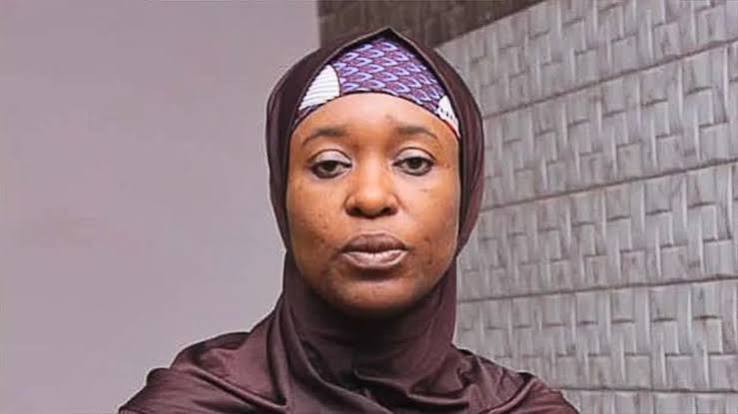
2027: Aisha Yesufu urges Nigerians to fund Obi’s campaign

0

Activist and supporter of Peter Obi, Aisha Yesufu, has called on Nigerians to contribute financially to the presidential campaign of the Nigeria Democratic Congress (NDC) candidate ahead of the 2027 general election.

Yesufu made the appeal in a video posted on X on Wednesday, saying Obi could not be expected to shoulder the financial burden of the campaign alone.

She urged supporters to make contributions, however small, describing the effort as a collective responsibility to take ownership of the country’s political future.
“There is no way we can say that we want to rescue a nation, we want to get back our nation, we want the people to own this nation, and then we say that we are going to leave everything to Mr Peter Obi to fund,” she said.

“So please, every one of us, we need you to put in something. Let the citizens fund this election. Let us be the ones that say our one naira; we go here, and it will be used for this or that.”

The activist recalled that Obi was initially reluctant to embrace public fundraising during the 2023 presidential election. However, she said she persuaded him that allowing citizens to contribute would make them more involved in the campaign.

“Mr Peter Obi never wanted us to use public fundraising. But I remember saying to him, people need to be involved. And when people give, they are emotionally invested,” she said.

Yesufu maintained that the previous arrangement, in which Obi largely financed campaign activities, was no longer sustainable, insisting that supporters must now contribute their widow’s mite.

“It can no longer work. Every one of us has to put in our own widow’s mite,” she said.

She also clarified that the proposed fundraising was separate from the NDC’s official campaign funds, explaining that the party would announce its own account details for supporters who wished to donate directly to it.

“This is what we, as citizens, are going to use to fund the things that we can do for Mr Peter Obi. The party are going to put out their own accounts,” she said.

“Those who want to donate to the party, please wait for their account. This particular account that is here is for Peter Obi’s campaign donated by citizens.”

The activist pledged to account for every contribution received, citing her handling of the fundraising exercise during the 2023 election.

“In 2023, I was accountable, and I accounted for every dime. And in 2027, by the grace of God, I will also be accountable. And I will account for every dime,” she said.

APC KICKS OFF PRESIDENTIAL CAMPAIGN IN SOUTH-WEST

0

•As Shettima, Sanwo-Olu, Others Storm Ado-Ekiti to Drum Up Support for Tinubu

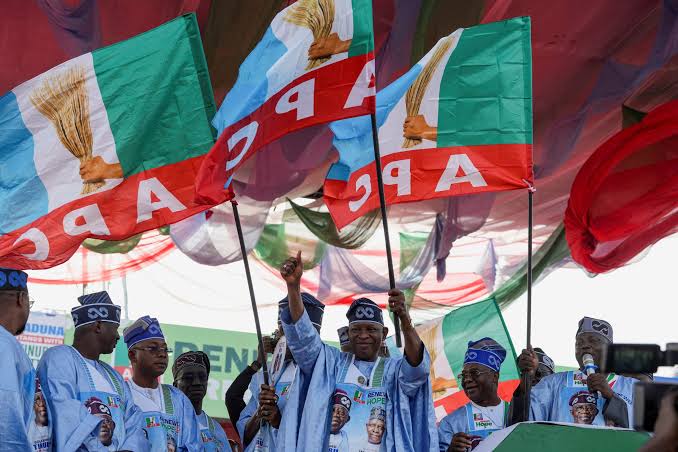
Leaders of the ruling All Progressives Congress (APC) converged on Ado-Ekiti on Thursday to kickstart the South-West presidential campaign for the re-election of President Bola Tinubu.

The campaign rally, held at the Ekiti Parapo Pavilion in Ado-Ekiti, was led by the Vice President and APC Vice-Presidential candidate, Senator Kashim Shettima. He was joined by the APC National Chairman, Prof. Nentawe Yilwatda, governors and other party leaders at the national, zonal and state levels.

Lagos State Governor and South-West Zonal Coordinator of the APC Presidential Campaign Council (PCC), Mr. Babajide Sanwo-Olu, accompanied by his wife, Dr. Ibijoke Sanwo-Olu, was in Ado-Ekiti to canvass votes for President Tinubu and other APC candidates in next year’s general elections.

The campaign drew a large crowd of serving and former public office-holders, party members and Ekiti residents, who trooped out en masse to express their support for President Tinubu’s re-election.