Home Blog Page 356

Terrorism: US designates Nigerian, 2 others, 6 entities ISIS financiers

0

The United States Department of State has designated a Nigerian, two others and six entities as financiers of ISIS.

The three individuals and six entities, the United States Department of State said, cut across Europe, the Middle East and West Africa, where they have enabled ISIS to move money across borders.


The spokesperson, United States Department of State, Thomas Pigott, in a statement in Washington DC, said that under the leadership of President Donald Trump, the United States is dismantling ISIS’s ability to finance terrorism around the world.

“We are cutting off the financial lifelines from around the world that enable ISIS to fund attacks, support its regional affiliates and threaten civilians, including religious minorities.

“Today’s designations target three individuals and six entities operating across Europe, the Middle East and West Africa, who have enabled ISIS to move money across borders, exposing a network that spans from France and Syria to Turkey and Nigeria,” Pigott said.

He further said the actions reflected the United States’ unrelenting pressure on ISIS, which continued to decentralise its operations and rely on financial intermediaries to connect its global network.

“Among those designated is a France-based facilitator, who provided information concerning the use of explosives to ISIS supporters, a Syria-based operator, who used cryptocurrency to transfer funds on behalf of ISIS associates in multiple countries, including the United States and a Nigeria-based facilitator, whose money exchange businesses served as conduits for ISIS financing.

“The United States also reaffirms its strong partnership with Nigeria, which joined the United States in the May 16 operation that resulted in the killing of Abu-Bilal al-Minuki, the number two official in ISIS.

“We will continue to use every diplomatic and legal tool available to hold ISIS and its supporters accountable, wherever they operate and however they move money. We remain fully committed to protecting American lives, defending religious minorities and working with international partners to eliminate the threat that ISIS poses to global peace and security,” he added.

Sun

APC Wins All Three Councillorship By-Elections in Lagos

0


The All Progressives Congress (APC) has recorded a clean sweep in the councillorship by-elections conducted by the Lagos State Independent Electoral Commission (LASIEC), winning all three vacant seats contested across different local government areas of the State.

The by-elections were held in Orimedu I Ward C in Ibeju-Lekki Local Government Area, Bajulaiye/Fola Agoro Ward F in Shomolu Local Government Area, and Kayode/Fadeyi Ward H in Odi-Olowo/Ojuwoye Local Council Development Area (LCDA).

Results released by LASIEC on Tuesday showed overwhelming victories for APC candidates in all three wards, further consolidating the party’s dominance at the grassroots level in Lagos State.

In Ibeju-Lekki Local Government Area, APC candidate Rufai Kafayat Abosede emerged victorious in Orimedu I Ward C after polling 8,386 votes. Her closest challenger, Samsideen Adeleke of the African Democratic Congress (ADC), secured 27 votes.
Similarly, in Odi-Olowo/Ojuwoye LCDA, APC candidate Shotayo Samiat Adebigi won the Kayode/Fadeyi Ward H seat with 3,820 votes.

The ADC candidate, Ifeanyi Abidemi Onwenu, polled 260 votes, while the National Democratic Party (NDP) candidate received 26 votes.
In Shomolu Local Government Area, APC’s Kehinde Halimat Jolaosho secured victory in Bajulaiye/Fola Agoro Ward F with 2,546 votes. The ADC candidate, Ifeanyibech Anyamebech, garnered 157 votes, while the NDP candidate polled 23 votes.

LASIEC explained that the by-elections were conducted to fill vacancies created by the deaths of councillors who previously represented the affected wards.

According to the commission, the elections were necessary to ensure continued representation of residents in line with democratic principles and the provisions of Lagos State electoral laws.

“The elections were necessitated by vacancies due to the unfortunate demise of the elected councillors representing the respective wards, which must be filled in line with democratic principles and the LASIEC laws,” the commission stated.

The Chairman of LASIEC, Justice Bola Okikiolu-Ighile (retd.), monitored the elections alongside other commissioners and the Permanent Secretary of the commission, AbdulRafiu Omowole Fashola.

The electoral body commended voters, political parties, election officials, and security agencies for ensuring a peaceful and orderly process across the three wards.

According to LASIEC, electoral materials arrived on schedule, voters exercised their civic responsibilities without disruption, and the exercise was conducted in a secure, transparent, free, fair, and credible manner.

The commission reaffirmed its commitment to strengthening democracy at the grassroots level, pledging to continue improving electoral processes through innovation, transparency, and stakeholder engagement.

The outcome of the by-elections means the APC has retained control of the three councillorship seats, reinforcing its strong political presence across Lagos State’s local government system.

Burna Boy becomes African artiste on billboard Hot 100 entries

0


Grammy-winning Nigerian Afrobeats singer, Damini Ogulu, popularly known as Burna Boy, has become the African artiste with the highest number of entries on the Billboard U.S. Hot 100 chart.

He surpassed fellow Nigerian singer, Temilade Openiyi, known professionally as Tems.

Ogulu, announced the milestone on his social media platforms on Tuesday, describing it as a significant achievement in his career.

It was reported that Burna Boy and Tems were previously tied with eight entries each on the prestigious chart.

However, Burna Boy secured a ninth entry through his collaboration with Colombian singer, Shakira, on the official FIFA World Cup song, “Dai Dai.”

The song debuted at No. 75 on the Billboard Hot 100, bringing Burna Boy’s total number of entries on the chart to nine, the highest by any African artiste.

The track gained further momentum following a performance by Burna Boy and Shakira at the opening ceremony of the FIFA World Cup in Mexico.

It was reported that the achievement placed Burna Boy ahead of Tems, who now holds the second-highest number of Billboard Hot 100 entries among African artistes.

The “Last Last” crooner is also the first African artiste to chart at least one song on the Billboard Hot 100 in six consecutive years.

His Billboard Hot 100 entries include “Loved By You” (2021), “Last Last” (2022), “Sitting On Top of the World”and “Talibans II” (2023), “Just Like Me” and “We Pray” (2024), “WGFT” (2025), as well as “Only You” and “Dai Dai” (2026).

It was reported that Burna Boy recently surpassed 40 million monthly listeners on Spotify, marking a career high on the streaming platform.

The Afrobeats star has also received multiple nominations ahead of the 2026 Grammy Awards.

IGP Bans Unauthorised Social Media Use by Police Officers

0


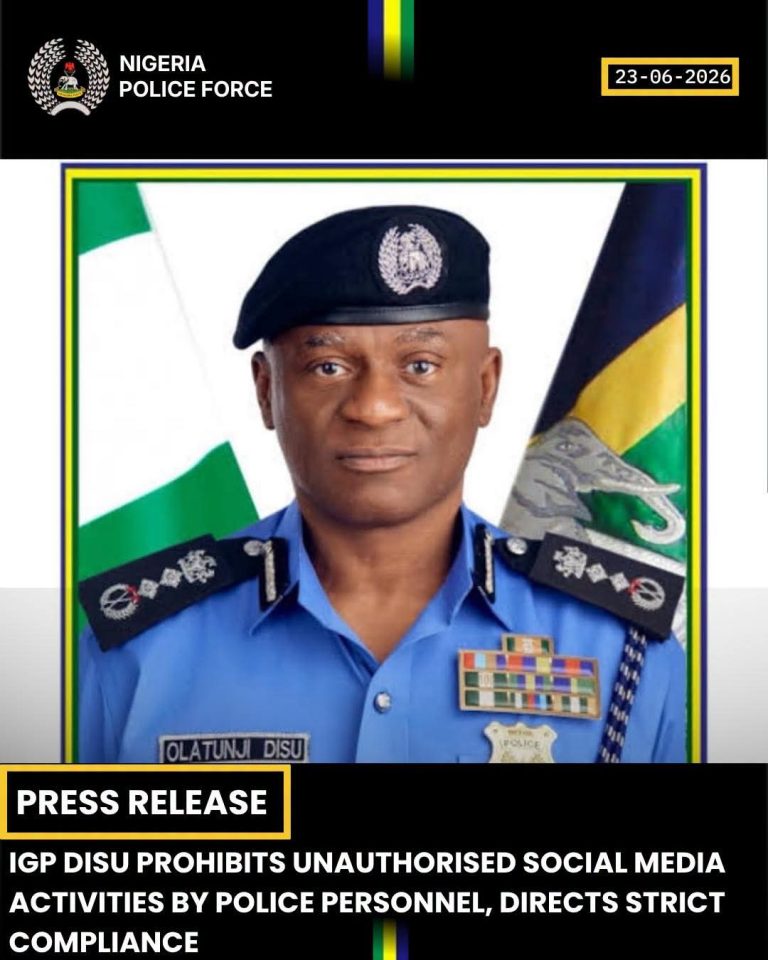
The Inspector-General of Police (IGP), Olatunji Disu, has directed all officers and personnel of the Nigeria Police Force (NPF) to desist from engaging in unauthorised social media activities capable of undermining the integrity, professionalism and public image of the Force.

The directive follows growing concerns over the increasing trend of police personnel creating and publishing videos, conducting live sessions and engaging in other social media activities while in uniform or in situations that identify them as members of the Nigeria Police Force without official authorisation.

The directive was contained in a statement issued on Tuesday by the Force Public Relations Officer, CSP Anietie Okokon Edem Iniedu, at the Force Headquarters, Abuja.

The IGP stressed that while social media remains an important tool for communication and public engagement, its use by serving officers must be guided by existing laws, regulations and the Nigeria Police Force Social Media Policy.

He noted that officers are prohibited from creating or sharing unauthorised content while in police uniform, commenting publicly on official police matters, disclosing sensitive operational information, or using their status as police officers for personal promotion, entertainment or commercial gain.

To ensure compliance, Commissioners of Police, Heads of Departments, Commanders and other supervisory officers have been directed to immediately sensitise personnel under their commands and enforce strict adherence to the directive.

The IGP warned that supervisory officers would be held accountable for any failure to take appropriate action against violations within their areas of responsibility.

He further directed the Force Intelligence Department (FID) and the Professional Standards Department (X-Squad) to intensify monitoring of social media platforms and identify officers involved in activities inconsistent with the professional standards and values of the Nigeria Police Force.

The Force reiterated its commitment to discipline, professionalism and responsible public communication, assuring members of the public of its continued dedication to maintaining public trust and institutional integrity.

VIDEO: Ojelabi Urges APC Members to Remain United After Lagos Primaries

0


The Chairman of the All Progressives Congress (APC) in Lagos State, Cornelius Ojelabi, has called on party members to remain united and committed to the party’s ideals following the conclusion of its primary elections ahead of the forthcoming general elections.

Speaking after the primaries, Ojelabi noted that the exercise was highly competitive, with 91 aspirants contesting for 24 positions and 184 aspirants vying for 40 seats in the Lagos State House of Assembly.

He commended the leadership of President Bola Tinubu for providing party members the opportunity to freely participate in the democratic process and exercise their rights.

“You can imagine how competitive such a process will be. However, as a progressive family, I want to thank the President of the Federal Republic of Nigeria, who is never blind to the needs of the people, for giving members of our party the opportunity to go out and exercise their rights,” Ojelabi said.

The APC chairman stressed that no individual should be politically victimized for rendering quality service, urging party faithful and candidates to serve as worthy ambassadors of the APC.

He appealed to aspirants and supporters who may be dissatisfied with the outcome of the primaries to remain committed to the party, describing the APC as a common home for all members.

“Now that the primaries have come and gone and we are moving towards the general election, let us appeal to those who may feel aggrieved today to remember that this is our common home. We will all continue to work together, and it is our responsibility to consolidate and strengthen the foundation we have built,” he said.

Ojelabi emphasized the need for inclusiveness and reconciliation, assuring members that there was sufficient room within the party structure to accommodate everyone.

He also highlighted what he described as a landmark achievement, noting that Nigeria currently has the youngest deputy governor in its history, which he said reflects the party’s commitment to youth inclusion and leadership development.

The Lagos APC chairman urged members to continue demonstrating support, loyalty and dedication to the party as it prepares for future electoral contests.

He further called for greater efforts toward strengthening the APC across the South-West region, while expressing appreciation to party members on behalf of Lagos State Governor Babajide Sanwo-Olu for their commitment and contributions to the success of the primaries.

Ojelabi concluded by urging party stakeholders to move forward with determination and a shared sense of responsibility in building a stronger and more united APC.


We’re building infrastructure for a knowledge-driven economy – Tinubu

0


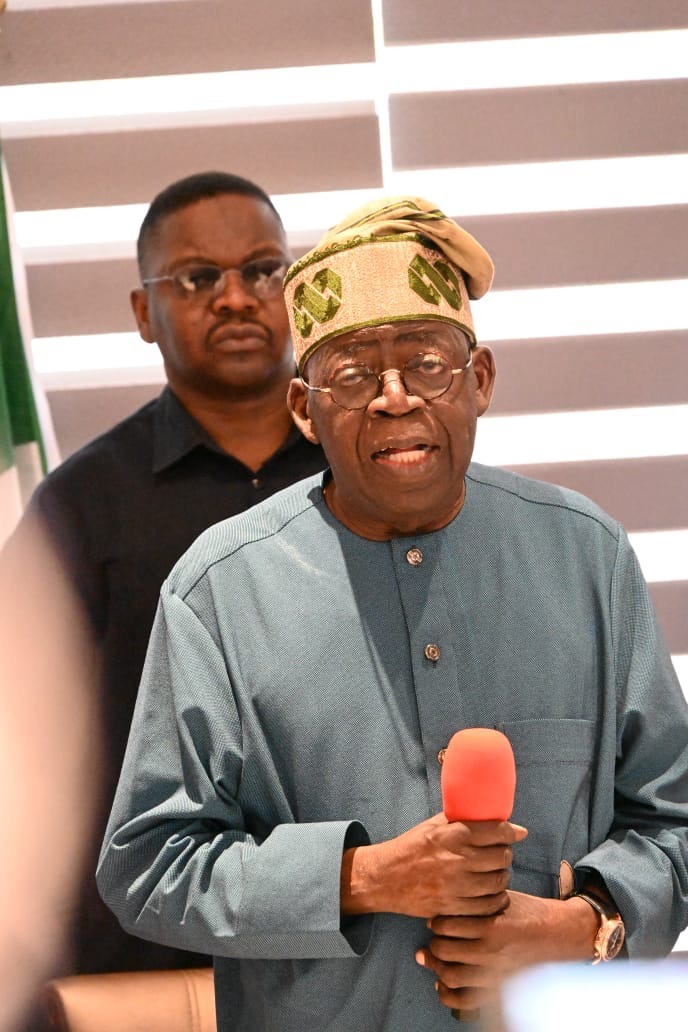
President Bola Tinubu has said that his administration was building road infrastructure to lay the needed physical foundation for a knowledge-driven economy, stressing that education, justice, and innovation need roads to thrive.

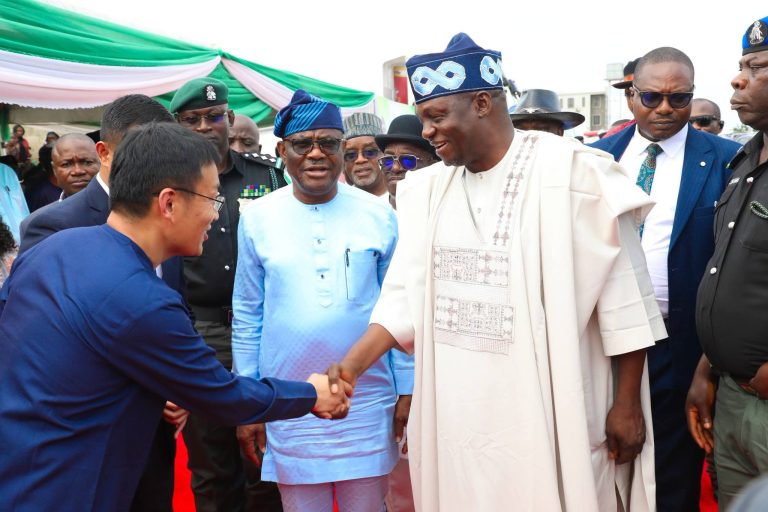
Tinubu stated this in Abuja on Tuesday, while flagging off the construction of Collector Road CO1 in the Institutional Research District, from Nile University to Ring Road III.

Represented by the National Chairman of the All Progressives Congress, Prof Nentawe Yilwatda, the President said that the project included dualisation of the road from Baze University roundabout to Nile University, that is the Base University.

He noted that three years into his administration, the results were speaking out.

“From the Southern Parkway to the Institution and Research District, we are laying the physical foundation for a knowledge-driven economy.

“Today, we provide those roads that are needed to provide justice, education, and innovation to our people.

“To the university community, this road is more than a route. It is a connection between learning, law, and the future of our capital,” he said.

He pointed out that the Institution and Research District was designed to be the intellectual heart of Abuja, adding that universities, law chambers, research centers, and innovation hubs were growing in the area.

He, however, stressed that ideas could not move if roads do not move and connect the heart and people together.

Tinubu further said: “Under the Renewed Hope Agenda, we made a choice to finish what was started and to start what we must finish.

“The first phase of this corridor connecting the Body of Benchers, Nile, and Base University is done and ready for commissioning. Today, we begin the next phase to Ring Road III to complete the loop.

“That is how we build a city—with a plan. Not a city of abandoned pieces. Infrastructure must be continuous, and it must also be useful to the people within the environment”.

He commended FCT Minister Nyesom Wike for turning FCT into a delivery agency, stressing that the transformation of Abuja under the minister’s watch is bold, visible and worthy of commendation.

He said, “Wike, your energy is unmatched. You took over a capital with many stalled projects and turned the FCTA into a delivery agency. ‘Mr. Projects’ is not a slogan, it is a record. You have revived sleeping roads, built new interchanges, and brought development to satellite towns. You have domesticated the Renewed Hope Agenda; street by street, district by district. The transformation of Abuja under your watch is bold, visible, and worthy of commendation. Well done, Minister Wike.”

In his remarks, Wike explained that the project was considered following a plea by the Body of Benchers to provide access roads to ease the movement of people in and out of the area.

He assured FCT residents that the Tinubu administration would fulfill all the promises made to the people of FCT, adding that the project would be completed by January 2027.

The minister said that he would continue to deliver life-impacting projects to FCT residents as directed by Tinubu, stressing that the delivery would not be affected by 2027 political activities.

Earlier, acting Executive Secretary, Federal Capital Development Authority, Mr Richard Dauda, said that the Institutional Research District of the FCT is located in Phase III of the city.

Dauda said that the area was planned to accommodate educational institutions like universities, research institutions, and other government institutions as provided in the Abuja master plan.

He added that the district was being developed in stages, with this project being a major intervention in the opening of this district.

He explained that the scope of the current stage involved the construction of Collector Road CO1, from the Nile University to Ring Road III with a total length of about six kilometres.

He added that the project also included the dualisation of the section from the Base University Junction to Nile University.

NSITF, South Africa’s Rand Mutual Assurance Forge Partnership to Strengthen Social Protection in Africa

0


The Managing Director and Chief Executive Officer of the Nigeria Social Insurance Trust Fund (NSITF), Barr. Oluwaseun Faleye, has said that collaboration between the Fund and South Africa’s Rand Mutual Assurance (RMA) will help strengthen social protection systems across Africa.
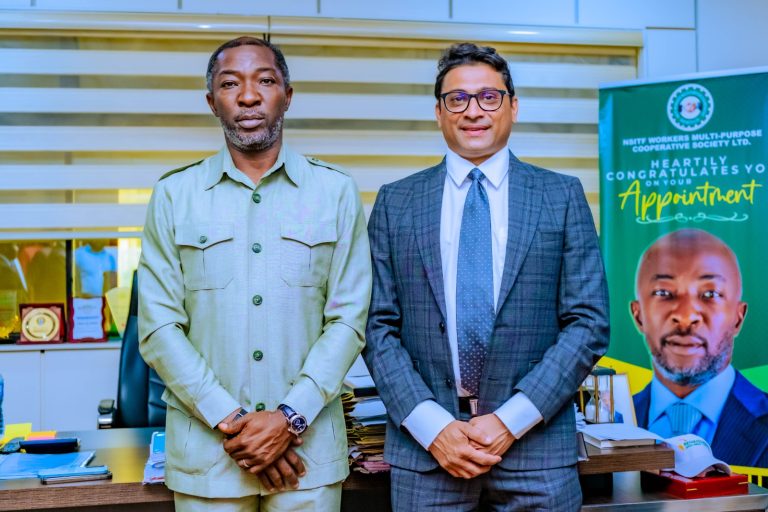
Faleye made the remark on Tuesday while hosting a high-level delegation from RMA, led by its Group Chief Executive Officer, Bilal Adam, at the NSITF headquarters in Abuja.

He described the visit as the beginning of a strategic partnership between two of Africa’s leading social insurance institutions.

“Your visit marks the beginning of what we hope will evolve into a mutually beneficial and enduring relationship between our two organizations and highlights our shared commitment to advancing workers’ compensation, occupational safety and health, and social security administration on the African continent,” Faleye said.

Speaking on RMA’s history and achievements, the NSITF boss noted that the South African institution, established in 1894, has built a strong reputation as one of Africa’s foremost workers’ compensation and social insurance organizations.
“We are particularly delighted to receive an institution of such remarkable pedigree. Your evolution from a specialized compensation scheme for the mining industry into a modern, purpose-driven social insurer with a strong emphasis on prevention, rehabilitation, care, and shared value creation is both admirable and inspiring,” he added.

Faleye stressed that the future of social protection lies in collaboration, innovation, and the exchange of experiences among institutions with similar mandates.

“At NSITF, we view this visit not merely as a courtesy engagement but as the beginning of a strategic partnership capable of transforming workers’ compensation and occupational injury insurance administration across our respective jurisdictions,” he said.

He noted that Nigeria and South Africa, as two of Africa’s largest economies, have a responsibility to provide leadership and promote best practices that will strengthen social protection systems across the continent.

According to him, the engagement offers both organizations an opportunity to learn from each other, compare experiences, identify areas of mutual interest, and explore innovative solutions to emerging workplace challenges.
Faleye expressed optimism about collaboration in areas such as digital transformation, claims administration, occupational health and safety, rehabilitation and return-to-work programmes, capacity building, research, and policy development.

“As institutions with a common purpose of protecting workers and supporting employers, we must continue to innovate and build resilient systems that place the dignity and wellbeing of workers at the centre of our operations,” he said.

The NSITF chief reaffirmed the Fund’s commitment to strengthening the Employees’ Compensation Scheme (ECS), describing it as a critical social protection mechanism that guarantees compensation, rehabilitation, and support for Nigerian workers who suffer workplace injuries, occupational diseases, disabilities, or death arising from employment.

He noted that the changing nature of work and emerging occupational risks require social insurance institutions to continuously improve their systems and adopt innovative approaches that prioritize workers’ welfare.

According to Faleye, the ECS remains one of Nigeria’s most important social security interventions, providing medical care, rehabilitation services, compensation benefits, and support to employees and their dependants in cases of work-related injury, disability, or death.

He emphasized that collaboration, knowledge sharing, and the exchange of professional experiences are essential to strengthening social protection systems and ensuring that workers receive timely and adequate compensation.

The Managing Director said the Fund is focused on advancing key areas that will improve the implementation of the scheme, including digital transformation, efficient claims administration, occupational safety and health, rehabilitation programmes, return-to-work initiatives, capacity development, research, and policy enhancement.

“These areas are essential to building a modern and responsive compensation system that protects workers while supporting employers and contributing to national productivity,” he said.

Faleye added that the Employees’ Compensation Scheme not only guarantees compensation for workers and their dependants but also provides employers with an organized and sustainable framework for managing workplace liabilities.

He expressed confidence that a Memorandum of Understanding (MoU), expected to be drafted and presented for ratification and signing by the NSITF Management Board during the visit, would open a new chapter of cooperation between both institutions.

“Together, let us continue to build stronger institutions, safer workplaces, and a more inclusive and resilient social protection system for the benefit of workers across Africa,” he said.

As part of the visit, both organizations are expected to hold a series of engagement sessions to share experiences and explore practical areas of collaboration aimed at enhancing workers’ compensation and social insurance administration across the continent.

LAGOS FIRE RESCUES MAN FROM DRAINAGE CHANNEL AT IYANA-IPAJA

0


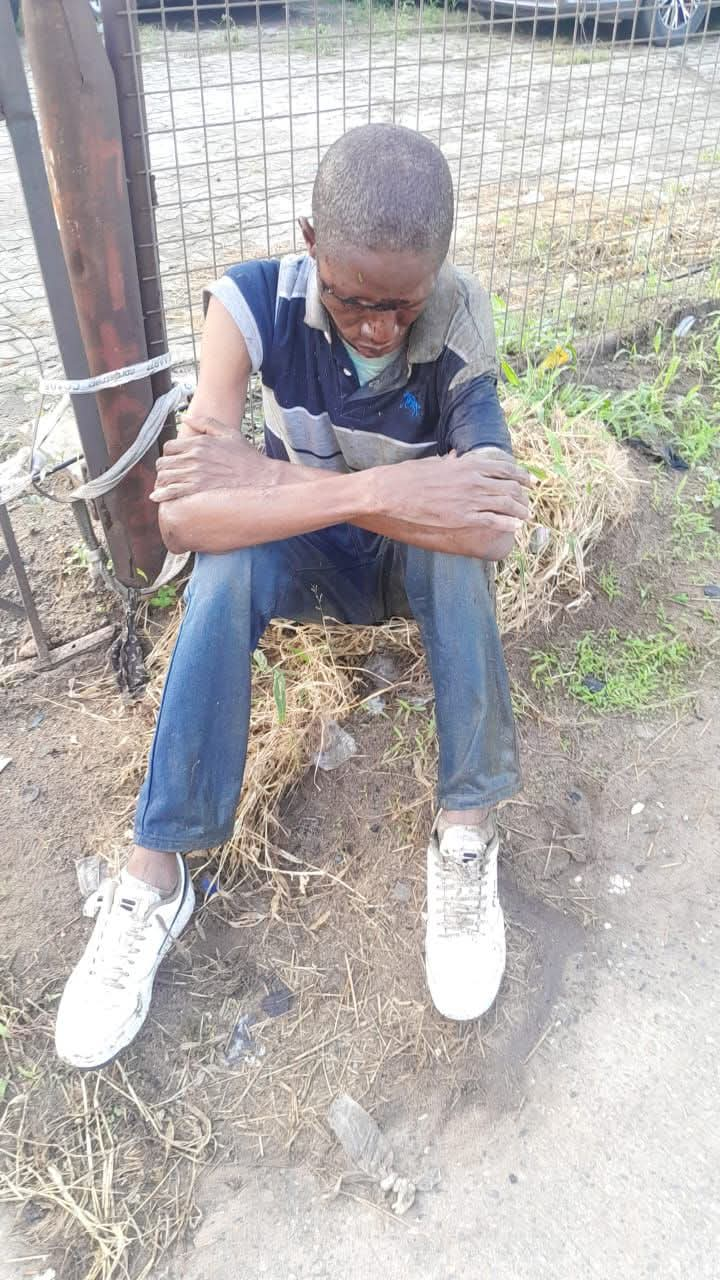
The Lagos State Fire and Rescue Service successfully carried out a rescue operation involving an adult male at Al-Moruf Bus Stop, Iyana-Ipaja, within Orile-Agege Local Council Development Area (LCDA) of Lagos State.

The emergency distress call was received at 07:06 hours, prompting the immediate deployment of rescue personnel from the Agege Fire Station. The team arrived at the scene at 07:23 hours and swiftly commenced rescue operations.

Preliminary findings revealed that the victim, a male adult estimated to be about 48 years old, accidentally fell into a drainage channel approximately five feet deep. The individual was reportedly under the influence of alcohol at the time of the incident.

The rescue team successfully extricated the victim from the drainage channel alive and unharmed. No injuries or casualties were recorded, and the victim was found to be in stable condition following the rescue.
The cause of the incident remains under investigation.

The Controller General of the Lagos State Fire and Rescue Service, Margaret Adeseye, has reiterated the importance of public vigilance and personal safety, particularly around drainage channels, construction sites, and other environmental hazards. She further advised members of the public to avoid actions that may endanger their lives and to promptly report emergencies through the appropriate channels.

The Lagos State Fire and Rescue Service remains committed to safeguarding lives and property through prompt emergency response and continuous public safety advocacy.

Maria Fadairo
Senior Public Affairs Officer
Lagos State Fire and Rescue Service

The burden of reform and the reward of perseverance

0

By Dare Ojepe

There are moments in the life of a nation when history demands a choice between comfort and courage.

Comfort whispers that difficult decisions can be postponed. Courage insists that problems deferred only become more expensive for future generations. Comfort seeks temporary relief. Courage seeks lasting solutions.

In May 2023, when President Bola Ahmed Tinubu assumed office, Nigeria stood at precisely such a crossroads.

The nation faced a fragile fiscal outlook, an unsustainable fuel subsidy regime, foreign exchange distortions, rising debt obligations, declining productivity, infrastructure deficits, and persistent security challenges. For years, these structural weaknesses had been acknowledged but insufficiently addressed. The consequences were evident: a nation of immense potential constrained by the accumulated weight of postponed reforms.

The easier path would have been to preserve the status quo.

The chosen path was reform.

Three years later, the debate before Nigerians is not whether these reforms have demanded sacrifice. They have. The more important question is whether those sacrifices are laying the foundation for a stronger, more productive, and more prosperous nation.

The answer lies not in slogans but in evidence.

One of the most consequential decisions of the administration was the removal of fuel subsidy. For decades, the subsidy regime consumed vast public resources while creating opportunities for inefficiency, rent-seeking, and smuggling. The reform was painful, but it represented a fundamental shift in national priorities: away from financing consumption and toward financing development.

The significance of this decision extends beyond federal finances. Increased revenues accruing to the Federation Account have translated into improved allocations to states and local governments, providing sub-national administrations with greater capacity to undertake infrastructure projects, strengthen primary healthcare, improve educational facilities, support environmental initiatives, and deliver services closer to the people.

Indeed, monthly allocations from the Federation Account Allocation Committee have reached historic levels, with approximately ₦1.969 trillion distributed among the Federal Government, states, and local governments in a recent allocation cycle. Such figures are not merely accounting statistics. They represent roads that can be rehabilitated, schools that can be renovated, primary healthcare centres that can be upgraded, and communities that can finally receive long-awaited development interventions.

This is where reform becomes real.

For the local government chairman seeking to improve service delivery, for the council manager struggling with inadequate resources, for the community leader advocating development projects, and for the ordinary citizen seeking evidence that government can work, fiscal reform at the centre creates opportunities at the grassroots.

The story of reform is therefore not merely a story about Abuja. It is a story about every ward, every community, and every local government in Nigeria.

Likewise, the administration’s foreign exchange reforms sought to restore transparency, eliminate distortions, and improve confidence in the Nigerian economy. While the transition has not been without difficulty, the objective has been clear: to create a more predictable environment capable of attracting investment, stimulating production, and supporting sustainable growth.

Economic transformation is often misunderstood because its earliest stages are rarely accompanied by immediate comfort. Foundations are laid before structures emerge. Seeds are planted before harvests appear.

Yet signs of transition are becoming increasingly visible.

Infrastructure development has accelerated across strategic sectors. Major transport corridors, road networks, energy investments, and logistics projects are being advanced not merely as construction exercises but as instruments of national productivity.

The Lagos-Calabar Coastal Highway, the Sokoto-Badagry Super Highway, ongoing federal road rehabilitation programmes, rail modernization efforts, and investments in energy infrastructure represent a vision of economic integration capable of connecting markets, reducing transportation costs, stimulating commerce, and unlocking regional opportunities.

History teaches that no nation has achieved lasting prosperity without investing in the physical infrastructure upon which enterprise depends.

Equally significant has been the administration’s emphasis on human capital development.

For generations, countless young Nigerians viewed higher education not simply as a matter of academic merit but as a question of financial survival. Talent often collided with poverty, and ambition was too frequently constrained by circumstance.

The introduction and expansion of the student loan programme has begun to alter that reality. To date, more than ₦206 billion has been disbursed to over 1.16 million beneficiaries across approximately 270 tertiary institutions nationwide. Behind these figures are young Nigerians whose dreams remained alive because access to education was no longer determined solely by family income.

There is the student from a modest household who can now remain in school without imposing impossible burdens on parents. There is the aspiring engineer, teacher, doctor, entrepreneur, and innovator whose future has been strengthened through deliberate public policy.

A government’s greatest legacy is not merely the infrastructure it builds but the opportunities it creates. In this regard, the administration has invested not only in roads and bridges but also in human potential.

Consider also the entrepreneur seeking a more stable economic environment in which to invest, expand operations, and create jobs.

Consider the farmer whose productivity depends on improved infrastructure, access to markets, and policies that encourage domestic production.

These are not abstract beneficiaries.

They are Nigerians.

And the true measure of governance is ultimately found not in policy documents but in the lives transformed by public policy.

The administration’s agricultural agenda similarly reflects an understanding that food security is inseparable from national security. A nation that cannot feed itself remains vulnerable. By supporting domestic production, strengthening agricultural value chains, encouraging mechanization, and promoting investment in the sector, the government seeks to build resilience while expanding opportunity.

Security remains an area where Nigerians rightly demand continued progress. The challenge is substantial, and no responsible assessment would suggest that all threats have disappeared.

However, governance should be judged not solely by the persistence of challenges but by the seriousness of the response. Continued investments in security architecture, intelligence coordination, military operations, and law enforcement reflect an administration that understands that development cannot flourish where insecurity prevails.

Yet perhaps the most important achievement of the past three years cannot be measured in kilometres of roads, budgetary allocations, or investment commitments.

It is the restoration of a principle.

The principle that leadership sometimes requires difficult decisions.

For too long, Nigeria postponed necessary reforms because the political cost appeared too high. The result was a growing accumulation of structural weaknesses transferred from one administration to another.

The Tinubu administration chose a different course. Whether one agrees with every policy or not, few can deny that it has confronted challenges many others preferred to defer.

This is not a small matter.

Nations rarely decline because they lack potential. More often, they decline because they lack the courage to address known problems.

Three years after assuming office, President Bola Ahmed Tinubu’s administration can point to more than promises. It can point to unprecedented fiscal restructuring, expanded revenues available to states and local governments, over ₦206 billion in student loans reaching more than 1.16 million beneficiaries, ambitious infrastructure programmes spanning the federation, and a determined effort to confront structural challenges that successive administrations acknowledged but often postponed.

These achievements do not suggest that the work is finished.

Indeed, they strengthen the argument that it is not.

As the nation approaches another electoral cycle, the central question is therefore not whether the journey has been demanding.

The central question is whether a country that has finally embarked upon structural reform should abandon the process before its benefits are fully realized.

History offers a clear warning. The greatest waste in public policy is not failed reform. It is interrupted reform.

Roads abandoned midway become monuments to lost opportunity. Institutions restructured halfway become victims of uncertainty. Economic reforms reversed before maturity become casualties of impatience.

Transformation requires continuity.

The strongest case for a second term is therefore not partisan; it is developmental.

It is the argument that infrastructure already commenced should be completed. That economic reforms already initiated should be consolidated. That investments in education, agriculture, technology, and security should be strengthened. That a nation seeking renewal must possess the discipline to sustain its reconstruction.

This is not merely a conversation about one administration.

It is a conversation about the character of a nation.

Do we remain trapped in the cycle of short-term thinking that has too often delayed our progress? Or do we demonstrate the maturity to see difficult reforms through to their logical conclusion?

The true question before Nigeria is not whether reform has been costly. Every meaningful transformation carries a price.

The question is whether a nation that has finally summoned the courage to confront its deepest structural weaknesses possesses the patience to complete the journey.

History seldom rewards societies that abandon reconstruction midway. It rewards those that persevere long enough for sacrifice to mature into prosperity.

Nations rise when vision is matched by perseverance, when sacrifice is sustained by hope, and when leadership is granted the time required to convert difficult reforms into enduring progress.

The future is not inherited.

It is built.

And every generation must decide whether it will merely witness history or possess the courage to shape it.

– Ojepe is the Senior Special Assistant to the President on Education and Youth Engagement
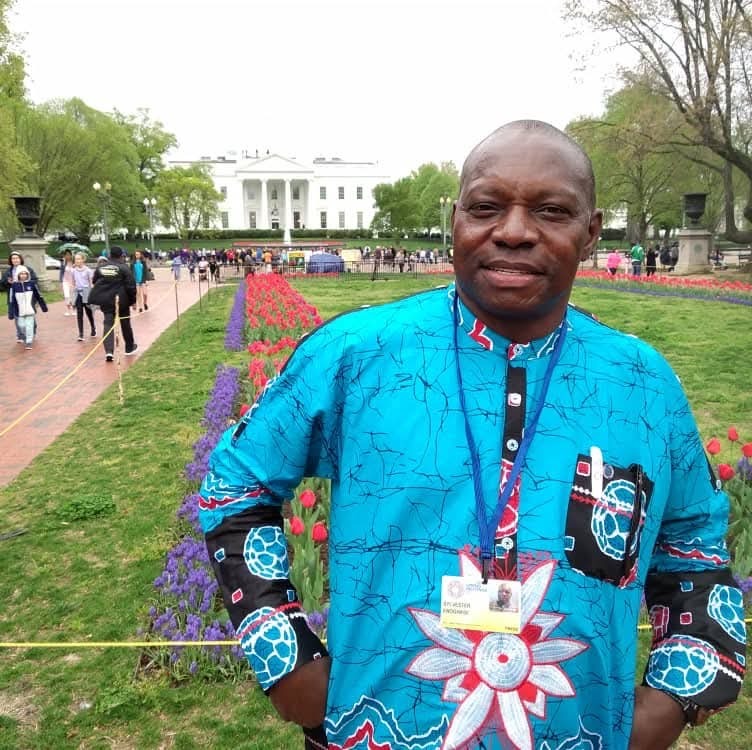
Coleman Industries Mourns Daily Independent Business Editor, Sylvester Enognase

0


Coleman Technical Industries Limited, manufacturers of Coleman Wires and Cables, has expressed deep sorrow over the death of Mr. Sylvester Enognase, Business Editor of Daily Independent, who reportedly passed away shortly after returning from the International Labour Conference (ILC) in Geneva, Switzerland.

The Managing Director of Coleman Technical Industries Limited, Mr. George Onafowokan, described Enognase’s death as shocking and a great loss to the journalism profession and the manufacturing sector.

According to Onafowokan, the late journalist was a dedicated professional who consistently supported the growth and development of Nigeria’s manufacturing industry through his insightful reportage and commitment to business journalism.

“We are deeply saddened by the passing of Mr. Sylvester Enognase. He was a committed journalist and one of our valued media partners who was always interested in the growth of the manufacturing sector and the nation’s industrial development,” he said.

On behalf of Coleman Technical Industries Limited, Onafowokan extended his condolences to the bereaved family, praying that God would grant them the strength and fortitude to bear the loss.

He also prayed for members of the Commerce and Industry Correspondents Association of Nigeria (CICAN), the body of journalists covering the commerce and industry sector, asking for God’s protection and guidance over them during this difficult period.

The late Enognase was widely respected among his colleagues for his professionalism, dedication to duty, and contributions to business and industry reporting in Nigeria.