Home Blog Page 354

Hijrah Lecture: Obasa, Islamic Scholars Urge Citizens to Take Greater Responsibility for Security

0


BY TAIWO OGUNMOLA -OMILANI


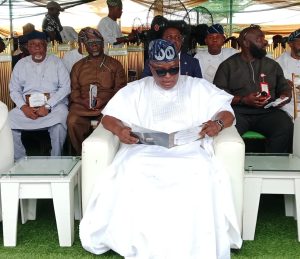
The Speaker of the Lagos State House of Assembly, Rt. Hon. Mudashiru Obasa, has called on Nigerians to take greater responsibility for the security of their communities, stressing that safeguarding lives and property should not be left to government and security agencies alone.

Obasa made the call at the 17th Annual Hijrah 1448 A.H. lecture, where religious leaders and security experts gathered to discuss the role of citizens in promoting peace, security and national development.

Speaking at the event, the Speaker challenged citizens to reflect on their contributions to ensuring security within their immediate environment.

“They have told us what should be our responsibility and that of leaders. The question is: what have we contributed to ensure security in our immediate environment? We should be able to create security on our own.

There are different associations that we must collaborate with to ensure the protection of lives,” he said.
Obasa noted that security posts exist across local governments but emphasized that citizens must also play their part in maintaining peace and order.

He described the annual Hijrah lecture as a reminder that every individual has a duty to society and urged Nigerians to leave lasting legacies through positive actions that impact their communities.

Chairman of the 17th Annual Hijrah celebration, Hon. Owolabi Ajani, said the occasion was not merely about celebrating rights and privileges but also about fulfilling obligations and contributing meaningfully to national development.

According to him, Islam places great emphasis on peace, justice, accountability and the sanctity of human life.
“The Holy Quran teaches us to obey lawful authority, promote righteousness, preserve societal harmony and work collectively for the common good,” he said.

Ajani urged Nigerians to demonstrate patriotism, uphold moral values, respect constituted authority and reject violence, extremism, criminality and other actions capable of threatening national peace and stability.

He stressed that security should not be seen as the exclusive responsibility of government and security agencies, describing it instead as a collective duty that requires vigilance, cooperation and commitment from all members of society.
One of the guest lecturers, Sheikh Bukhari Ayinla, an alumnus of the University of Lagos, spoke on the theme, “Sacred Covenant of Citizenship: Islam, Security and Our Duty to the Nigerian State.”

He maintained that citizens have an important role to play in safeguarding the country.

“The security of a nation is not the responsibility of security agencies alone. Citizens must also be their own security. The people of a country should not allow their nation to be destroyed,” he said.

Ayinla urged Nigerians to avoid excessive criticism of leaders and instead contribute positively to nation-building, noting that those in authority may not always satisfy every expectation.

Another guest lecturer, Air Commodore (Imam) Lukman Lawal, Deputy Director of Islamic Affairs at Defence Headquarters, Abuja, delivered a lecture on “Ethics of Security and Citizenship in Islam.”
He emphasized the sanctity of human life in Islam, citing Quran 5:32, which states that whoever kills a soul unjustly is as though he has killed all mankind.

Lawal said government alone cannot solve Nigeria’s insecurity challenges and advised citizens, including activists, to exercise their right to freedom of expression responsibly and without undermining public peace.

He commended the efforts of the military in combating insurgency and banditry, insisting that security remains the foundation of national development.
The cleric also highlighted Islamic teachings on the protection of non-Muslims, noting that Islam values and protects all human lives regardless of religious affiliation.

According to him, Islam equally places great importance on privacy and forbids unlawful intrusion into the affairs of others.
Quoting Quran 49:12, Lawal said believers are instructed not to spy on one another, adding that protecting the privacy and dignity of individuals is an important aspect of Islamic teachings.

Also speaking, Islamic scholar and founder of Sheikh Da’wah, Sheikh Albaarizy, urged citizens to be proactive in addressing security challenges rather than relying solely on divine intervention.
“God needs people to take responsibility. Where action is required, merely calling upon God will not be enough. We all have responsibilities and must remain vigilant,” he said.

Albaarizy encouraged Nigerians to be alert to suspicious activities in their communities and take necessary precautions to safeguard themselves and their families.
He warned that many security challenges had escalated because people ignored early warning signs, expressing optimism that collective action and divine guidance would help address the nation’s problems.

The speakers unanimously agreed that achieving lasting peace and security in Nigeria requires the active participation of citizens, community leaders, religious institutions and government agencies working together for the common good.

Group Condemns Nomination of Ex- FUOYE VC Fasina for Amb Post Amid Sexual Harassment Probes

0


A Coalition of Civil Society Organizations has expressed concern over the nomination of Professor Abayomi Sunday Fasina, the immediate past Vice-Chancellor of the Federal University Oye-Ekiti (FUOYE), for appointment as an Ambassador of the Federal Republic of Nigeria and calls for an immediate withdrawal of the nomination.

According to the Group, the nomination raises fundamental questions about Nigeria’s commitment to constitutionalism, accountability, integrity in public service, the protection of human rights, and the administration of justice, particularly in circumstances where serious allegations of sexual harassment, abuse of office, victimization, and violations of fundamental rights remain the subject of ongoing judicial proceedings.

“As a coalition that has actively engaged on issues relating to institutional accountability, sexual harassment prevention, access to justice, and the protection of victims’ rights, we closely monitored developments surrounding allegations made against Professor Fasina.” These allegations have not only attracted significant public concern but have also resulted in both criminal and civil proceedings that remain unresolved.”

It is a matter of public record that following complaints and advocacy efforts by civil society organizations and other stakeholders, the allegations were reported to the Independent Corrupt Practices and Other Related Offences Commission (ICPC), a statutory agency vested with powers to investigate and prosecute acts bordering on corruption, abuse of office, and related misconduct. Following its investigation, the Commission deemed it appropriate to initiate criminal proceedings, which are currently pending before a court of competent jurisdiction.

It is equally a matter of public record that related proceedings concerning allegations of sexual harassment and workplace victimization are also pending before the National Industrial Court in Abuja and Lagos by different victims indicating an habitual trend.

The issue before the Nigerian public is therefore not whether Professor Abayomi Fasina has been found guilty by a court of law. The constitutional presumption of innocence remains sacrosanct and must be respected. Rather, the issue is whether it is appropriate, prudent, and consistent with the principles of public accountability to nominate an individual currently facing unresolved allegations of this magnitude with overwhelming evidence and ongoing judicial scrutiny to represent the Federal Republic of Nigeria on the international stage.

Public appointments, particularly diplomatic appointments are expressions of public trust. Ambassadors serve as representatives of the Nigerian state and embody the values, integrity, and moral authority that Nigeria seeks to project globally. Consequently, the standards applicable to such appointments must extend beyond the narrow question of criminal conviction and encompass broader considerations of public confidence, ethical leadership, institutional credibility, and respect for the rule of law.

The nomination of an individual who is presently the subject of ongoing criminal and civil proceedings arising from allegations of sexual harassment, abuse of authority and human rights violation risks creating the perception that accountability mechanisms can be rendered inconsequential where the individuals involved possess sufficient influence or status. Such a perception is particularly damaging at a time when survivors of sexual violence continue to face significant barriers in reporting abuse, accessing justice, and obtaining institutional protection.

Furthermore, the nomination raises legitimate concerns regarding the potential impact of executive action on public confidence in ongoing judicial processes. While the courts remain independent and capable of determining matters before them, actions that appear to confer state endorsement or elevation upon persons whose conduct remains under active judicial consideration may inadvertently undermine public trust in the impartiality and effectiveness of accountability systems.

This concern becomes even more significant when viewed against Nigeria’s constitutional commitments and international obligations. Sections 34 and 42 of the Constitution of the Federal Republic of Nigeria, 1999 (as amended), guarantee the rights to dignity of the human person and freedom from discrimination. Nigeria is also a State Party to numerous international and regional human rights instruments, including the Convention on the Elimination of All Forms of Discrimination Against Women (CEDAW) and the Protocol to the African Charter on Human and Peoples’ Rights on the Rights of Women in Africa (Maputo Protocol), which impose obligations on the State to prevent, address, and remedy gender-based discrimination and abuse. Appointments to high public office should reflect and not undermine these commitments.

As a Coalition, we therefore respectfully call on:

1. The President of the Federal Republic of Nigeria to reconsider and withdraw the nomination of Professor Abayomi Fasina pending the final determination of all ongoing criminal and civil proceedings involving allegations of sexual harassment, abuse of office, victimization, and related misconduct.

2. The National Assembly to exercise its constitutional oversight responsibility with the highest regard for integrity, accountability, and public confidence, and to subject the nomination to rigorous scrutiny in light of the unresolved proceedings.

3. Relevant public institutions and stakeholders to reaffirm their commitment to survivor-centred justice, institutional accountability, and the principle that no public office should be insulated from legitimate scrutiny.

4. The Federal Government of Nigeria to demonstrate, through both policy and practice, that allegations of sexual harassment and abuse of authority are treated with the seriousness they deserve and that accountability remains a cornerstone of democratic governance.

This moment presents an important opportunity for Nigeria to demonstrate that public trust, integrity, and accountability remain indispensable qualifications for public service.

Headline: Customs Seizes N273.7m Worth of Smuggled Goods

0


The Nigeria Customs Service (NCS) has intensified efforts to protect local industries and preserve jobs with the interception of prohibited imported goods valued at over N273 million in Cross River State.

Speaking during a press briefing in Calabar on Wednesday, June 24, 2026, the Customs Area Controller of the Cross River/Calabar Free Trade Zone/Akwa Ibom Area Command, Comptroller Giwa Dauda, said the seizures were part of the Service’s ongoing campaign against smuggling and illegal importation.

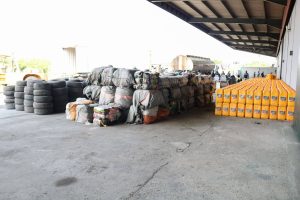
Dauda disclosed that Customs operatives intercepted two 20-foot containers loaded with 1,996 kegs of foreign refined vegetable oil along the Odukpani–Calabar Highway on June 14, 2026. The products, with a Duty Paid Value (DPV) of N195.5 million, were concealed in a truck intercepted during a routine patrol operation.


According to him, the seizure underscores the Service’s commitment to supporting local manufacturers who have invested heavily in Nigeria’s vegetable oil industry.

“Allowing the influx of prohibited foreign products into the domestic market would undermine local production capacity, discourage investment, and threaten thousands of jobs across the agricultural and manufacturing value chains,” he said.

Dauda noted that refined vegetable oil is among the items listed under the Federal Government’s import prohibition policy, which is aimed at stimulating local production, promoting self-sufficiency, and strengthening Nigeria’s industrial base.
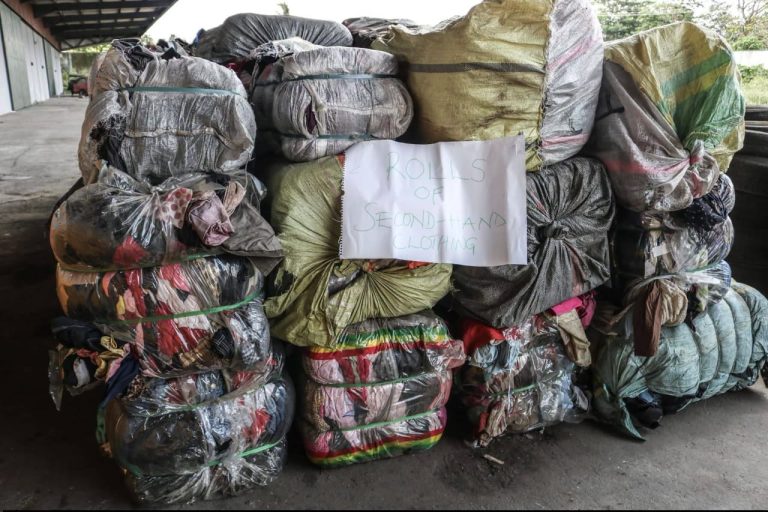
In addition to the vegetable oil, the Command also seized 1,500 used tyres and 105 jumbo bales of second-hand clothing. Altogether, the confiscated items had a combined Duty Paid Value of N273.7 million.

The Area Controller further revealed that officers intercepted 800 litres of Premium Motor Spirit (PMS), bringing the total volume of petrol seized by the Command in 2026 to 5,760 litres.

He explained that the seized fuel was disposed of in line with approved safety procedures due to its highly combustible nature.
Dauda warned smugglers and other economic saboteurs to desist from illegal importation activities, stressing that such practices weaken local industries, distort market competition, and undermine government efforts to diversify the economy through industrialisation.

He reaffirmed the commitment of the Nigeria Customs Service to enforcing government trade policies and protecting Nigeria’s economic interests through sustained anti-smuggling operations.

14 Convicted, Jailed for Assaulting KAI Officers and Damaging Vehicle in Oshodi

0


Fourteen individuals arrested for allegedly assaulting officials of the Lagos State Kick Against Indiscipline (KAI) Corps and damaging an official vehicle during an enforcement operation in Oshodi have been convicted and sentenced to three months’ imprisonment each.

The defendants were arraigned on Wednesday before a Magistrate Court sitting in Bolade, Oshodi, following their arrest on Tuesday while KAI personnel were carrying out lawful duties in the area.

According to authorities, the suspects attacked KAI officers and vandalised their operational vehicle during the incident.
At the court proceedings, all 14 defendants
pleaded guilty to the charges brought against them. Consequently, the court convicted and sentenced each of them to three months in prison.

The convicted persons are:
Zaradeen Sheu
Abdullahi Bello
Saheed Oladele
Dan Halima Umar
Nofiu Ibrahim
Abubakar Sari
Alfred Magnus
Sanni Adamu
Umar Sabi
Dayabu Danmar
Seidu Adam
Isa Muhammed
Yakubu Umar
Abubakar Muktari
The conviction underscores the Lagos State Government’s commitment to protecting law enforcement personnel and ensuring that individuals who obstruct or attack officers carrying out their lawful responsibilities are brought to justice.

Hijrah Lecture: Obasa, Islamic Scholars Urge Citizens to Take Greater Responsibility for Security

0


BY TAIWO OGUNMOLA -OMILANI

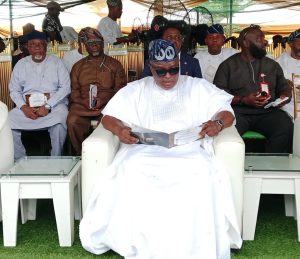
The Speaker of the Lagos State House of Assembly, Rt. Hon. Mudashiru Obasa, has called on Nigerians to take greater responsibility for the security of their communities, stressing that safeguarding lives and property should not be left to government and security agencies alone.

Obasa made the call at the 17th Annual Hijrah 1448 A.H. lecture, where religious leaders and security experts gathered to discuss the role of citizens in promoting peace, security and national development.

Speaking at the event, the Speaker challenged citizens to reflect on their contributions to ensuring security within their immediate environment.

“They have told us what should be our responsibility and that of leaders. The question is: what have we contributed to ensure security in our immediate environment? We should be able to create security on our own.

There are different associations that we must collaborate with to ensure the protection of lives,” he said.
Obasa noted that security posts exist across local governments but emphasized that citizens must also play their part in maintaining peace and order.

He described the annual Hijrah lecture as a reminder that every individual has a duty to society and urged Nigerians to leave lasting legacies through positive actions that impact their communities.

Chairman of the 17th Annual Hijrah celebration, Hon. Owolabi Ajani, said the occasion was not merely about celebrating rights and privileges but also about fulfilling obligations and contributing meaningfully to national development.

According to him, Islam places great emphasis on peace, justice, accountability and the sanctity of human life.
“The Holy Quran teaches us to obey lawful authority, promote righteousness, preserve societal harmony and work collectively for the common good,” he said.

Ajani urged Nigerians to demonstrate patriotism, uphold moral values, respect constituted authority and reject violence, extremism, criminality and other actions capable of threatening national peace and stability.

He stressed that security should not be seen as the exclusive responsibility of government and security agencies, describing it instead as a collective duty that requires vigilance, cooperation and commitment from all members of society.
One of the guest lecturers, Sheikh Bukhari Ayinla, an alumnus of the University of Lagos, spoke on the theme, “Sacred Covenant of Citizenship: Islam, Security and Our Duty to the Nigerian State.”

He maintained that citizens have an important role to play in safeguarding the country.

“The security of a nation is not the responsibility of security agencies alone. Citizens must also be their own security. The people of a country should not allow their nation to be destroyed,” he said.

Ayinla urged Nigerians to avoid excessive criticism of leaders and instead contribute positively to nation-building, noting that those in authority may not always satisfy every expectation.

Another guest lecturer, Air Commodore (Imam) Lukman Lawal, Deputy Director of Islamic Affairs at Defence Headquarters, Abuja, delivered a lecture on “Ethics of Security and Citizenship in Islam.”
He emphasized the sanctity of human life in Islam, citing Quran 5:32, which states that whoever kills a soul unjustly is as though he has killed all mankind.

Lawal said government alone cannot solve Nigeria’s insecurity challenges and advised citizens, including activists, to exercise their right to freedom of expression responsibly and without undermining public peace.

He commended the efforts of the military in combating insurgency and banditry, insisting that security remains the foundation of national development.
The cleric also highlighted Islamic teachings on the protection of non-Muslims, noting that Islam values and protects all human lives regardless of religious affiliation.

According to him, Islam equally places great importance on privacy and forbids unlawful intrusion into the affairs of others.
Quoting Quran 49:12, Lawal said believers are instructed not to spy on one another, adding that protecting the privacy and dignity of individuals is an important aspect of Islamic teachings.

Also speaking, Islamic scholar and founder of Sheikh Da’wah, Sheikh Albaarizy, urged citizens to be proactive in addressing security challenges rather than relying solely on divine intervention.
“God needs people to take responsibility. Where action is required, merely calling upon God will not be enough. We all have responsibilities and must remain vigilant,” he said.

Albaarizy encouraged Nigerians to be alert to suspicious activities in their communities and take necessary precautions to safeguard themselves and their families.
He warned that many security challenges had escalated because people ignored early warning signs, expressing optimism that collective action and divine guidance would help address the nation’s problems.

The speakers unanimously agreed that achieving lasting peace and security in Nigeria requires the active participation of citizens, community leaders, religious institutions and government agencies working together for the common good.
Sundiata Post CEO Max Amuchie Appointed Expert Peer Reviewer by Global Open-Science Network

0

ABUJA, Nigeria — In a major milestone for indigenous African and scholarship and media leadership, the global open-science discovery network ScienceOpen has officially appointed Dr. Max Nwabueze Amuchie as an Expert Member and Peer Reviewer in Social and Behavioural Sciences.

In an email conveying the appointment on Tuesday, ScienceOpen stated that the decision was based on Dr. Amuchie’s extensive publication history verified through his Open Researcher and Contributor ID (ORCID) profile.
Dr. Amuchie, the CEO and Theorist-In-Chief of Sundiata Post Media Ltd and Lead Researcher for the Sundiata Post Intelligence Unit (SPIU), joins an elite global cohort of international scholars tasked with evaluating, validating, and shaping scientific, governance, and policy literature on the world stage.

This international elevation comes on the heels of Dr. Amuchie’s extensive work in developing groundbreaking, macro-theoretical frameworks designed to analyse complex geopolitical realities in the Global South. He is the architect of The Insecurity Triad framework for African security analysis, The Trinity of State Decay (TSD) theory, and the Decoupling Sovereignty Index (DSI)—original, quantitative, and analytical instruments used for understanding, categorising, and measuring conflict, structural degradation, and functional sovereignty.

To anchor these frameworks in global academia, Dr. Amuchie’s research works have already been widely published and archived across premier scholarly platforms. His papers and data indices are preserved in world-class open-science repositories including Harvard Dataverse and Zenodo. Furthermore, his output is accessible on the Social Science Research Network (SSRN) and Mendeley—the latter owned by Elsevier, the world’s largest corporate academic publishing house. His research footprints also extend to the Social Science Open Access Repository (SSOAR), operated by GESIS – Leibniz Institute for the Social Sciences in Germany, as well as Figshare. In addition, his papers are available on major global scholarly networks such as ResearchGate and Academia.edu, and are actively indexed on Google Scholar.
Commenting on his appointment by ScienceOpen, Amuchie emphasised that the recognition represents a significant step forward for the Global South intellectual sovereignty.
“For too long, the Global South has been treated primarily as a subject of external geopolitical analysis rather than a creator of macro-theoretical blueprints,” Amuchie said. “This elevation on a premier open-science platform like ScienceOpen provides an unassailable global platform to validate indigenous African and Global South research. It ensures that our original frameworks—born out of rigorous field observations and deep academic inquiry—are recognised as primary tools for understanding state structures worldwide.”
Amuchie is a seasoned professional in the Nigerian media landscape, having served as a Member of the Editorial Board and later Abuja Bureau Chief at BusinessDay; held senior editorial positions at ThisDay, and served as Managing Editor at Leadership newspapers. He was also the CEO and Editor-in-Chief at Truetales Publications Ltd. He is an alumnus of the University of Calabar and the University of Lagos. He also maintains The Sunday Stew, a highly regarded weekly syndicated column exploring faith, character, and the structural forces shaping contemporary society.

As an official Peer Reviewer on ScienceOpen, Amuchie’s vetting powers will bridge the gap between high-velocity media dissemination and rigorous, citable academic indexing. This appointment establishes a formidable foundation for the Sundiata Post Intelligence Unit (SPIU) as it continues to pioneer data-driven, sovereign policy analysis across Africa and the wider Global South.

Headquartered in Berlin, Germany, with its primary technical and editorial operations hub in Boston, Massachusetts, USA, ScienceOpen is a leading independent open-science discovery network and research platform. Founded on the principles of Open Access, the platform democratises knowledge by breaking down academic paywalls so that researchers, policymakers, and journalists can freely share and critique global research.
ScienceOpen operates an innovative, transparent post-publication peer review system. It aggregates a massive, interconnected global database of over 85 million research records and articles. To maintain absolute academic integrity, only scholars who meet strict criteria—including a verified track record of published, peer-reviewed scientific literature linked to their international ORCID ID—are appointed as Expert Members and Peer Reviewers. These experts possess the formal authority to critique manuscripts, evaluate new analytical theories, and curate specialised research collections that shape validated scientific and policy data on the world stage.

Actress Rashidat Anjorin: Loneliness once made me ask a man out, contemplate suicide

0


Rashidat Anjorin, the actress and filmmaker better known as Indomie, has recalled her struggles with loneliness, revealing that she once sank into depression so severe that she contemplated suicide.

Speaking as a guest on the ‘Talk to B’ podcast, Anjorin recounted how prolonged isolation took a significant toll on her mental health, pushing her into a dark place at one stage of her life…

The Cable

Senators not responsible for official vehicle procurement — Adaramodu

0


The Chairman of the Senate Committee on Media and Public Affairs, Senator Yemi Adaramodu, has said members of the National Assembly do not take part in procuring official vehicles assigned to them.

Adaramodu, who represents Ekiti South Senatorial District, said the National Assembly bureaucracy handles the process of selecting, buying and allocating vehicles for committee work and other legislative duties.

He spoke while reacting to a Federal High Court judgment which reportedly voided the National Assembly’s N110 billion vehicle procurement and allowance scheme.

According to the senator, lawmakers are beneficiaries of official vehicles but do not determine how the procurement is carried out.

“The bureaucracy determines and provides official vehicles for committee work and legislative assignments. No vehicle is registered in the name of any senator,” he said.

He explained that the vehicles remain government assets throughout the tenure of lawmakers and are deployed only for official assignments.

Adaramodu added that a senator can only take ownership of an official vehicle after leaving office, subject to government-approved procedures and payment arrangements.

“Senators were not taken to court. Procurement is handled by the appropriate departments within the National Assembly bureaucracy. Legislators have no role in the purchasing process,” he said.

The lawmaker maintained that any legal challenge over the procurement should be directed at the relevant administrative units of the National Assembly rather than individual senators.

The comments followed a ruling by the Federal High Court in Lagos in a suit filed by the Socio-Economic Rights and Accountability Project against Senate President Godswill Akpabio and Speaker of the House of Representatives Tajudeen Abbas.

Justice Bogoro, in the May 6 judgment, held that the N110 billion expenditure breached procurement laws, constitutional provisions and public trust.

The court also ordered the National Assembly leadership to ensure that future procurement and public spending comply with due process, transparency, accountability and value-for-money principles.

The judge held that lawmakers had a conflict of interest because they were beneficiaries of an expenditure they approved.

“The beneficiaries of the expenditure are the very officials approving it, and the expenditure confers direct pecuniary and material benefits,” the court held.

Justice Bogoro also cited the country’s economic hardship, saying the allocation of N110 billion for lawmakers’ benefit failed to place national interest first.

Sun

Car crushes lady to death in Rivers varsity, 2 suspects arrested

0


A tragic incident occurred on Tuesday night, when a speeding vehicle in a convoy knocked down and crushed a young woman identified as Eno, believed to be in her early 20s, to death on Road A within the Rivers State University (RSU) campus.

According to sources, the impact of the accident caused the victim to hit her head on the tarred road, resulting in fatal injuries.

Some vehicles in the convoy and their occupants reportedly fled the scene after realizing that the young woman had died.

Sources within the university community disclosed that the institution’s security personnel and the police were immediately alerted, prompting authorities to cordon off all exit points from the campus.

It was gathered that operatives of the Nkpolu Divisional Police Headquarters, led by the Divisional Police Officer (DPO), CSP Henry Ogbuefi, in collaboration with the university’s internal security team, later apprehended two suspects identified as Onunaka K. and Daniel Ikechi, drivers of a Toyota Camry Spider and a Mercedes-Benz E300, respectively. The suspects are said to be students of the university.

As of press time, the suspects were reportedly being detained at the Nkpolu Divisional Police Headquarters in Mile 3, Diobu, while the body of the deceased had been recovered and deposited in a mortuary.

An anonymous official of the institution disclosed that the management would issue an official press statement later in the day.

The state Police Command has confirmed the incident and arrest of two suspects.

Sun

US judge blocks Trump administration arrests at immigration courts

0


A federal judge in California has barred the Trump administration from arresting migrants at immigration courts across the United States.

The ruling, delivered on Tuesday by US District Judge P. Casey Pitts, blocks a practice in which Homeland Security agents waited outside immigration courts to detain migrants after their asylum hearings.
The tactic became more common after President Donald Trump returned to office, with Immigration and Customs Enforcement officers reportedly arresting migrants as they left court buildings.

Many migrants facing immigration proceedings are required to attend hearings, while failing to appear can in some cases lead to deportation orders. Critics argued that the arrests left them with the difficult choice of attending court and risking detention or missing their hearing and facing possible removal.

Judge Pitts ruled that the policy breached the Administrative Procedure Act, describing it as “arbitrary and capricious.”

He said ICE and the Executive Office for Immigration Review failed to provide adequate reasons for implementing the policy.

The judge also held that the presence of immigration agents around courtrooms had created a “chilling” effect, discouraging migrants from appearing for proceedings.

Homeland Security general counsel James Percival criticised the decision, arguing that people ordered deported by immigration judges should be treated in the same way as criminal defendants convicted in court.

“A district judge ordering otherwise is naked judicial activism in service of an anti-American, open borders agenda,” Percival said in a post on X.

The decision is the latest legal setback for Trump’s immigration enforcement drive, which has sought to expand arrests and deportations of undocumented migrants.

Sun