Home Blog Page 348

Death knell for apprenticeship, as potential trainees shun artisanal vocations

0


Fashion apprenticeship
Auto technicians, bricklayers, tailors lament, urge govt to invest in skills acquisition programmes

Nigeria is gradually drifting towards a skills crisis, as youths continue to lose interest in and shun apprenticeship.

The warning came last week at a forum where artisans and experts lamented the growing dearth of trainees in workshops across the country. Youths are abandoning skill acquisition, leaving ageing masters with no successors, they bewail.

At the various automobile engineering, welding, tailoring, hairdressing and bricklaying workshops, the benches that trained a generation are now sitting idly, gathering dust.

Mr Peter Afia, a generator mechanic who specialises in petrol engines, raised concern over the shortage of apprentices and trainees.

He added that the youth of these days just want to live big without enduring any form of hardship or making the slightest form of sacrifice.

Afia, also known as Sir P, stated that there is a need for the government to continue to assist and encourage those who are willing to acquire skills through the various empowerment programmes.

“Youth of nowadays want something big. They see their colleagues using flashy cars, and they want to belong. They are not willing to learn any skill, and they prefer to engage in internet fraud, infamously known here as Yahoo Yahoo so that they can make quick money.

“As an engineer, I train my apprentices without collecting money from them. That is how I have been doing since I started this job. It is the grace God has given to me to impart knowledge to the people. And in the last 20 years, I have trained more than 40 trainees.

“My boss, Mr Bassey, a Ghanaian, took me as a son. He showed me love, and he was like a father to me. That is why I have vowed to reciprocate that to people who trained under me and that has been what keeps me going,” he said.

Hameed Kehinde, an automobile engineer in Ikeja, Lagos, said the problem with the youth of these days still remains that many of them cannot endure the sacrifices involved in training as artisans. He added that the youth of today are not submissive to their elders or bosses and they are impatient.

“When you talk about the youth of today, you are talking about a generation of young men and women that lack patience. They like to climb the ladder from the top and not from the bottom. That is why you see them getting involved in various cyber crimes like Yahoo Yahoo, rituals and kidnapping.

“The danger in all of these is that those of us that are the older generation are leaving the stage for those that have lost the value of hard work, integrity, patience and respect for elders.

“We are leaving the stage for youth that are supposed to be the ambassadors of the future, but that are now engrossed in a number of social vices. We cannot be proud of the young people of today that deeply get involved in gambling, cultism and rituals because they are interested in toeing the fast track. They don’t want to endure and sacrifice at all.

“The problem of artisans losing trainees by the day is bad to the extent that even parents these days are also not helping matters. They want their children to get rich at all costs. Unfortunately, the society has also failed to address the issue of youth empowerment. Skills acquisition for the children has to do with the relationship between the parents and the artisans.

“For instance, as an automobile engineer, I have taught graduates from prominent universities and polytechnics that come to acquire practical knowledge of automobiles from me. The new knowledge of automobile engineering today involves education because most of the vehicles we repair now are advanced, automatic and technologically driven. Therefore, we also use technology like scanners and a few other technological appliances to do our jobs.

“I implore parents to support any of their children that is interested in learning skills. This is the best we can do to fill the gap and restore sanity in the society”, he said.

Mr Adekunle Balogun, a building contractor, blamed the society for shifting focus on hard work and dignity of labour as prerequisites for success and wealth.

According to him, the society plays key roles in determining societal values that dictate how things are done on daily basis.

Balogun said the society has shifted its appeal from hard work to side hustle. He also added that during his days as a trainee at the technical school in Ogun State, students were serious and determined to make it in life by being hardworking.

He restated the need for the society to adjust and refocus the societal values on what can endure rather than things that are fleeting and uncertain.

“During our days, we heard people say there was dignity in labour and people respect whoever that was diligent and hardworking, irrespective of the kind of jobs such a person was doing then. In those days, bricklaying was a skill that was meant for just anyone, even without parents or guardians, because the trainees of those years needed little tools to do their jobs.

“ The belief then was that a bricklaying apprentice or trainee would still be able to afford the tools needed to start his job after freedom. But nowadays, things have changed. None of the youth is really interested in learning bricklaying. They prefer quick money and easy means of livelihood.

“Nigeria of today is even worse than when we were growing up. You can hardly survive the present economy without having to do more than what can sustain you and your family.

“As a building contractor, I started my journey from the scratch and I thank God that today, the sacrifices, endurance and patience later paid off. So, I will advise the youth of today to be focused and stay away from Yahoo Yahoo and other vices that can put them to shame. They should learn a skill. Even as a graduate, nothing stops you from learning a skill because I believe that no knowledge is a waste.

“Whether you are an engineer, a fashion designer, a cobbler or a barber, none of these skills are wasted. Bricklaying is a tedious skill. It is not for a lazy trainee, but even at that, it has a great future. Government at all levels are now advocating youth engagement in the various vocational skills at primary, secondary and tertiary institutions”, he said.

Mr Johnson Olatoye, an automobile electrician, noted that the issue of lack of trainees in artisans’ workshops did not start today.

The present situation in the country, he said, no longer guarantees free food for a lazy man. He pointed out that the society is responsible for what is happening today because the focus is more on education. That, he stated, has given room for why the society undermines the artisans as ne’er-do-wells.

Olatoye also stated that there has been unnecessary pressure from some parents to their children. The pressure, he said, has to do with how some parents compare their children with their age mates in the society.

He highlighted the disadvantage of social media as one of the tools of distraction to the young generation of today, even as he advised parents to monitor their children daily and ensure that they provide for their needs according to their means.

“Parents should understand that the youth of this generation are very smart and impatient. They cannot endure and that is why they are not interested in learning any skill. But no matter the situation, we should continue to tell them that there is a future in skill acquisition. And that whoever that can sacrifice and endure to learn would enjoy the best of life,” he stated.

In her views, Mrs Temitope Banjo, a popular fashion designer in Ikorodu Lagos, who is also the director of Temitope Stitches, said young girls of today are no longer interested in learning skills because they are easily distracted by the societal appeal for quick money.

Madam Banjo stated further that young ladies today are always distracted with what they see, forgetting that many of the riches, and affluence displayed in real life or on social media have little or no value.

“Young girls of today look for Yahoo boys that can take care of them. They don’t want to endure the years of learning. However, fashion designing is a skill for the future but when you look at the youth of these days, you begin to wonder what they intend to do with their lives.

“But I think the parents also have a role to play by advising and guiding the children so that they would not lose focus. Parents should know the kinds of friends their children go out with. It is our responsibility as parents to train these children in the way of God so that they would not miss their steps when they grow up,” she stated.

Mr. Timothy Uwah, also known as Talented, is a phone repairer. He blamed the dearth of apprenticeship on the Nigerian economy.

Uwah said the failure of the government to make artisanal vocations more attractive was the reason for the problem.

“Our youth are on the fast track. Whoever decides to learn any skill now will have to endure years of struggle and the economic situation is not too good. You can imagine the sacrifices we endure before gaining this knowledge. None of the youth of today can endure the struggle,” he said.

Mr Monsuru Omitola, another engineer, expressed concern about the shortage of apprentice artisans. He said the future of the country lies in the ability to appreciate artisans and those that are well trained in different kinds of skilled job.

“Today, I am happy that I am seeing the rewards of my sacrifices as a trained engineer. There is nothing a graduate can achieve that an artisan cannot achieve in terms of the luxuries that bring comfort to life,” he said

Meanwhile, MrJoseph Isong advised the youth not to despise skills training. He also explained that it is also good to combine that with education, including acquiring university education.

According to him, education would help in transforming whatever one does as an artisan. He stated further that there is no limit to what an educated person can achieve because education provides better opportunities for whoever that is willing to learn and acquire practical knowledge in any area of life.

“I am a graduate. I am also an engineer. I handle repairs and maintenance of all kinds of petrol generators. I use my knowledge as a graduate to do my job as a professional and that has really helped my career,” he stated.

Sun
State police: Sparks fly over execution, others

0


• As battle moves to state assemblies, security experts list conditions for successful take off

A new legislative framework is taking shape in Nigeria to shift the country from a centralised police system to state-controlled policing. The constitutional amendment passed by the National Assembly now moves the debate to the states’ Houses of Assembly. The structural limits of centralised policing sit at the heart of Nigeria’s current insecurity. Because policing has long been controlled almost exclusively from Abuja, a bottleneck forms when responding to highly localised threats: banditry and kidnapping in the North-West, Boko Haram in the North-East, and farmer-herder clashes in the North-Central and South. The federal police are also overstretched and underfunded. Officers are often deployed to communities where they don’t speak the language or know the terrain, making intelligence gathering difficult. That crisis has pushed Nigeria to a constitutional tipping point.

After decades of debate, the Senate has now passed the Constitution of the Federal Republic of Nigeria (Alteration) (State Police) Bill, 2026. If 24 state Houses of Assembly endorse it, Nigeria will see its most far-reaching security reform since 1999. The bill creates a constitutional basis for autonomous State Police Services while preserving a Federal Police Service with clear powers to intervene when national security is threatened.

With this development, policing ceases to be the exclusive duty of a centrally controlled federal institution. Under the new law, states can establish, fund, and recruit their own personnel, subject to national minimum standards. At the same time, the Federal Police Service retains responsibility for terrorism, cybercrime, organised crime, arms trafficking, border security, and inter-state crimes.

Experts say this dual structure creates as much risk as opportunity. Legislation is not implementation. Nigeria’s reform history shows that good intentions without detailed transition plans often create new problems. To avoid administrative chaos or the political weaponisation of local forces, they argue a rigorous, phased transition is vital.

Security expert Patrick Agbambu, however, questions the entire premise. Speaking to Sunday Sun, he said Nigeria does not need a state police, but a decentralisation process that allows Deputy Inspectors-General of Police and Assistant Inspectors-General of Police to function effectively in their zones. “I don’t think creating a state police is what we need if we are serious about solving insecurity in this country. Establishing state police will not solve our problem. Let us not be deceived. State police have not worked in any country,” he argued.

Agbambu noted that advocates say state police will take policing closer to the people. “That is true. There is a need to take the police closer to the people. But is state police the solution? No,” he maintained. He further pointed to Nigeria’s past experiments: “We had a regional police system in the First Republic. The Babangida regime also experimented with something akin to state police when officers were ordered to return to their states of origin. It failed because communities without their own policemen were oppressed. The government had to discontinue it.”

For most stakeholders, the National Assembly must now work with the Police Service Commission on four issues: standardised training, clear jurisdictions, sustainable funding, and independent oversight. Without effective coordination, they warn, this historic shift risks becoming another missed opportunity. According to them, the transition will only succeed if it passes three tests: legal, capacity, and trust.

The legal framework

As passed by the Senate, the bill answers the biggest jurisdictional question. The Federal Police Service handles national crimes and threats. State police services enforce state laws, maintain public order, and protect lives and property within their states. That separation is the foundation for a seamless transition. Agbambu, however, insists “it is not about who takes control.” He said: “We have governors who work seamlessly with their commissioners of police. A commissioner of police can say no to a governor who asks him to do something unconstitutional or to target the opposition.”

The bill also requires each state House of Assembly to enact its own State Police Service law and obtain certification that national standards are met before operations begin. This prevents a chaotic rush to launch. It also creates a reconstituted National Police Council to coordinate policy and cooperation between federal and state institutions. Safeguards for federal intervention are central. Under the new law, the Federal Police Service can temporarily assume command of a state police during an actual or imminent breakdown of order, a national security threat, serious administrative incapacity, or evidence of partisan, ethnic, religious, or sectional persecution. But this requires presidential authorisation, Senate oversight, and judicial review. That three-layer check addresses fears of federal overreach while protecting states from abuse. State Commissioners of Police will also change. Unlike now, where the Inspector-General deploys them, governors will appoint CPs on the recommendation of the National Police Council. Removal requires legislative approval by the State House of Assembly. The design balances state control with federal oversight.

Governor Uba Sani of Kaduna defended the safeguards on a national television programme. “You can appoint the commissioner of police, but you cannot sack him. Not even the State Assembly can sack him alone. It requires approval from the Police Service Commission or National Police Council, plus the National Assembly and State Assembly. The safeguards against abuse are in the Act.”

The next stage is state ratification. A constitutional amendment does not need all 36 State Houses of Assembly; it requires a two-thirds majority, or at least 24 states, before it goes to President Bola Tinubu for assent. Most states are expected to pass the bill quickly. States in the South-West, which pioneered Amotekun, the North-Central, and parts of the North-West and South-East facing severe banditry, kidnapping, and communal clashes have been the loudest advocates for decentralised policing. The Nigeria Governors’ Forum has broadly backed the shift, arguing that a centralised command in Abuja is overstretched and ill-equipped for local intelligence.

Even so, some analysts expect a few State Houses of Assembly to stall or debate the bill over two concerns: cost and political weaponisation. Security expert Jackson Olalekan-Ojo put it bluntly to Sunday Sun: “Will officers be paid like civil servants? Will their salaries come as and when due? Will they be used as political thugs? Will they be used to witch-hunt opponents? Those are the questions we must answer. If these questions are not properly answered, we will be enacting a law that produces lawlessness.”

Establishing, equipping, training, and paying a state police force is a major fiscal commitment. Smaller states with low internally generated revenue that rely heavily on federal allocations may balk, especially in the current economic climate. Lawmakers in states with vocal opposition or deep distrust of the governor may also hesitate. Despite safeguards built into the bill, including Section 17(7) which forbids state police from targeting political critics or opponents, critics worry governors will still use local forces to intimidate rivals.

Capacity and funding

The bill acknowledges capacity gaps upfront: “No state would be permitted to commence operational policing until such service is certified as meeting prescribed national standards.” That certification clause is the key transition tool. It forces states to prove funding, training, and equipment before officers hit the streets. According to available data, Nigeria spends about $3.5 billion yearly on the current police force. The bill empowers states to fund their own services, but fiscal reality means poorer states will struggle. Agbambu raised the funding question directly: “According to the IGP, the existing police will be split 60-40. The federal police will retain 40 per cent, while 60 per cent will go to the states. If the federal government pays a policeman N100,000, will Ondo or Anambra be willing, or able, to pay the same?”

He warned that many states already owe civil servants months of salaries: “You cannot arm a man and then owe him two or three months’ salary. You will create anarchy.”

His recommendation: “Let the federal government cede a percentage of revenue allocation to the states so they have enough to carry out these new responsibilities.”

Olalekan-Ojo echoed the inequality risk: “Each state knows its funding capacity. Lagos may recruit 200,000 officers. Oyo may recruit 50,000. The numbers may differ, but salaries and other remuneration should be uniform. I do not want a situation where rich states are well policed while poor states are not, forcing criminals to migrate to poorly policed states.” To prevent this, he proposed: “The federal government can create a ‘state police equalisation fund’ to support poorer states.” Without a federal funding formula or minimum budget benchmark, Nigeria risks a two-tier system where wealthier states have modern forces and poorer states have underpaid constables. Experts argue that inequality itself becomes a security threat as criminals migrate to weaker states.

The bill also creates State Police Service Commissions to handle recruitment, promotion, and discipline. This is the firewall against sons-of-the-soil quotas and the political enlistment of thugs. Agbambu also flagged duplication: “Many states already have security outfits. In the South-West, for example, you have Amotekun in several states, while Lagos has the Neighbourhood Watch. If we now create another state police, we will be duplicating structures. Will Amotekun be merged into the state police? For me, we are not getting it right.”

He also faulted the timing: “The President set up a committee to work on state police. That committee is still sitting. It has not submitted its recommendations, yet both chambers have already passed a bill.”

For a seamless transition, the National Police Council must set one national curriculum delivered through a central academy and state command schools, so every officer learns the same use-of-force rules and investigation standards.

Personnel is the most sensitive issue. The bill replaces the Nigeria Police Force with a Federal Police Service. Stakeholders insist rebranding must include a clear absorption plan for the existing 370,000 officers, plus Amotekun, NSCDC, and vigilantes already on the ground. Vetting must remove bad actors while retaining experience to avoid a security vacuum. Olalekan-Ojo outlined how recruitment should work: “The Nigeria Police should handle it, with the DSS involved in profiling and the military supporting training. The DSS must conduct background checks first. After that, there should be a proper interview, jointly conducted by the police and DSS. Only those who scale through should be recruited.”

He added: “We must change their mentality and orientation. We must re-indoctrinate them. If that is done, we can say we have the right personnel.” He cautioned against rushing: “We should be looking at nine to ten months before this can take off. It is like a seed. You cannot plant it today and expect fruit in a week.”

Public trust

Public trust in the police sits below 30 per cent. The bill tries to rebuild it through structure. The appointment and removal process for CPs, plus independent State Police Service Commissions, insulates officers from direct governor control. The provision for federal intervention when state police are used for partisan persecution also acts as a deterrent against misuse. But law alone does not create legitimacy. The transition must deliver real community policing: officers recruited from the LGAs they serve, speaking local languages, and gathering intelligence through trust. Digital case files and mandatory NHRC audits should be part of the national minimum standards the National Assembly prescribes.

Agbambu’s view is that funding and welfare, not structure, are the real issues: “The biggest challenge facing the Nigeria Police today is not directives from the IGP. It is remuneration, tools to work, welfare, and morale. Will state police solve these? I doubt it,” he concluded.

#EndSARS showed that abuse by any police unit can trigger a national crisis. The bill’s standards must include a ‘never again’ clause for SARS-style units. The bill also requires Senate oversight and judicial review for any federal takeover of state police. That transparency is essential to public confidence. Citizens need to know intervention is legal, not political. The 2026 bill gets three things right: it creates the dual structure, it sets national standards before launch, and it builds safeguards for federal intervention and state independence. Those are the blueprints for a seamless transition. But blueprints don’t build houses. As 36 state assemblies domesticate the law and seek certification, Nigeria must focus on the details the bill mandates: funding formulas, uniform training, independent commissions, and clear communication to citizens. If the bill’s standards are strictly adhered to, state police can become the reform that finally matches security architecture to Nigeria’s size and complexity. If the process is rushed, oversight is skipped, or recruitment is politicised, the bill will not deliver 37 professional forces. It will deliver 37 armed factions. Now that the Senate has passed the bill, the real test begins: can Nigeria implement what it has legislated?

Concerns

The Senate’s hasty passage has reignited debate over the risks of state police. Supporters argue it removes the need to wait for operational clearance from Abuja. By bringing security closer to the people, they say, it can foster mutual trust. Officers who understand local languages, geography, and cultural dynamics, they add, will gather intelligence more effectively. Critics and human rights advocates warn of the opposite. State governors, they say, could use local forces to suppress political opponents or minorities. There are also questions about whether poorer states can afford to train, equip, and sustain a modern police force. Another concern is operational clashes between state and federal police. The only safeguard, they argue, is clear legal boundaries to prevent jurisdictional turf wars. The bill already answers some of these concerns. But many still question the speed of passage. Senator Ali Ndume told a television network he supports state police, but not the rushed process: “I support state police wholeheartedly. But the Senate is supposed to be mature and deliberate. I’m not comfortable with the President bringing anything and we just rush to pass it. I voted for the bill. My concern is the intricacies — the legal implications, funding, and how it will operate.”

Prof. Chidi Anselm Odinkalu criticised the passage without a public hearing. On X, he wrote: “They say Nigeria needs state police to work. The Senate passed a bill for that in minutes, without publishing it or holding a public hearing. The plan is transparent: establish state police before 2027 and hand APC governors lawful militias. That is how to make state police work!”

Sun

2027: Endless lawsuits tie opposition parties’ hands

0

• Six months to polls, courtroom battles, leadership wars keep PDP, NDC, ADC, LP in turmoil

With barely six months to the 2027 general elections, Nigeria’s main opposition parties are sinking deeper into a season of leadership wars and courtroom battles, even as the ruling All Progressives Congress (APC) consolidates its structures and prepares to face a divided and depleted field.

From the Peoples Democratic Party (PDP), once the country’s dominant opposition platform, to the African Democratic Congress (ADC), the Labour Party (LP), and the Nigeria Democratic Congress (NDC), the story is the same.

Parallel leaderships, rival conventions, duplicated candidates and an unending procession of lawsuits before the courts hold sway. For thousands of candidates already cleared to contest next year’s polls, the result is a creeping sense of uncertainty, with many unsure whether the platforms on which they hope to run will survive the litigation that has consumed their parties.

In the PDP, the crisis has produced two parallel primaries and, consequently, two presidential candidates. The Abdulraman Mohammed led National Working Committee, which enjoys the backing of the Minister of the Federal Capital Territory, Nyesom Wike, has settled for former Cross River senator Sandy Onor as the party’s presidential flag bearer for 2027.

On the other side, the Tanimu Turaki led Interim National Working Committee insists it has nominated former President Goodluck Jonathan as the authentic PDP candidate. Last Wednesday, both camps issued certificates of return to their respective gubernatorial and National Assembly candidates at separate ceremonies, underlining just how entrenched the division has become.

For now, the Mohammed led faction holds the upper hand, as it is the leadership recognised by the Independent National Electoral Commission (INEC). The Turaki camp, however, has gone to court through its Board of Trustees, seeking an order compelling INEC to recognise it instead, one of at least two other suits on the PDP crisis currently before different courts.

Speaking at a recent National Executive Committee meeting at the party’s Wadata Plaza secretariat in Abuja, Wike declared that the battle for the PDP’s soul had already been won and lost, insisting the worst was over.

According to him, the access code that INEC issues to political parties for the 2027 process was due by 26 June, and his camp had nothing to fear.

But Ini Ememobong, spokesman for the Turaki led faction, dismissed the significance of the access code, arguing that what ultimately matters is whose candidates appear on the ballot. He likened the contest to a marathon rather than a sprint, recalling that his faction fielded a candidate in Ekiti without the benefit of INEC’s portal access.

The ADC, which has presented itself as a coalition platform for the 2027 contest, is faring no better. The party is currently split three ways; there is a faction led by former Senate President David Mark, considered the mainstream bloc and presently recognised by INEC; a faction led by Kingsley Ogga; and another led by former deputy national chairman, Nafiu Bala.

The Mark camp counts former Vice President Atiku Abubakar among its prominent allies.

The ADC’s national publicity secretary, Bolaji Abdullahi, confirmed that the party is contending with three separate cases in court, including a suit by Bala challenging Mark’s leadership, a suit on the party’s deregistration, and another filed by aggrieved state chairmen.

Abdullahi, however, played down the disruption, insisting that the party has weathered legal assaults since its formation and would not be distracted.

Ogga, for his part, maintained that his camp’s case was about holding the party to its own constitution rather than serving any personal interest.

It is a sentiment shared by Ememobong of the PDP, who alleged that the wave of litigation rocking opposition parties had been deliberately orchestrated by the APC led federal government to keep its rivals in disarray.
He pointed to past remarks attributed to President Bola Ahmed Tinubu, in which the president reportedly expressed satisfaction at seeing the opposition divided, as evidence of a state engineered strategy.

Abdullahi echoed the charge, describing the scale of legal harassment facing opposition parties as unprecedented in Nigeria’s political history, and warning that it does not augur well for the country’s democracy.

The LP offers perhaps the starkest illustration of opposition disarray. Despite a string of court judgments that, for now, favour the faction led by Nenadi Usman, the rival camp loyal to former national chairman, Julius Abure insists that the battle is far from over and is awaiting a final verdict from the Supreme Court.

The standoff has produced parallel structures, separate congresses and conventions, and remarkably, two presidential candidates for a single party.

The Usman led faction has settled on Dr Chibuzo Okereke, a governance expert and public policy scholar at Miva Open University, Abuja, presenting him through a consensus process as a reform minded candidate with a background in institutional development and accountability.

The Abure led faction, on the other hand, has nominated Prince Kennedy Ahanotu, its immediate past National Youth Leader, projecting him as a fresh and youthful face capable of mobilising young Nigerians, and insisting his emergence followed valid congresses conducted under its leadership.

The Abure faction’s Deputy National Chairman, Dr Ayo Olorunfemi, maintained that only the Supreme Court could finally settle the leadership question, and argued that even an adverse ruling could not automatically hand victory to the Usman camp’s candidates.

But Elder Yusuf Solomon Danbaki, a former Kaduna State LP chairman, now standing as a Kaduna Central senatorial candidate under the Usman faction, declared the fight already over, dismissing Abure’s parallel primaries as little more than a distraction.

With both sides claiming legitimacy and fielding rival presidential candidates, the LP heads towards 2027 weakened and divided against a resurgent APC.

Adding to the opposition’s woes is the unfolding crisis around the Nigeria Democratic Congress (NDC), a party that only months ago appeared to be emerging as a fresh rallying point for disaffected opposition figures.

The trouble began with a December 2025 judgment in which the Federal High Court ordered INEC to register the NDC after the party challenged the commission’s earlier refusal to recognise it.

But in a fresh ruling delivered on 26 June, 2026, the same court set aside that judgment, acting on an application from the unregistered Peace Movement Party (PMP), which claims it had sought registration using the same “Victory” symbol as far back as 2015.

The NDC insists that the latest ruling did not order its deregistration and maintains it remains a lawfully registered party pending its appeal.

The judgment has rattled nerves within its ranks, coming at a critical juncture as INEC begins uploading candidates for the 2027 polls.

Legal analysts say the ruling has created genuine uncertainty over the party’s status and could raise questions about the validity of its nominations should the litigation drag on, though the NDC dismisses such concerns, insisting its primaries followed the Electoral Act and INEC’s guidelines to the letter.

Beyond the courtroom, unease is spreading among the party’s rank and file. Sunday Sun gathered that some aspirants who paid substantial sums for nomination forms are anxious that the legal dispute could imperil their ambitions despite their financial and political investment, while disgruntled unsuccessful aspirants have added to the murmurs of discontent within the party.

The NDC leadership has sought to calm frayed nerves, insisting that the legal challenge is politically motivated and expressing confidence that the Court of Appeal will overturn the ruling.

National chairman, Cleopas Zuwoghe, maintained that the Federal High Court is not the final judicial authority in the land. He said the party still has faith in the Nigerian judiciary, adding that it would pursue the matter through the appellate process and remained confident that justice would prevail.

Across the PDP, ADC, LP and NDC, the pattern appears to be the same; internal power struggles spilling into the courts, parallel leaderships claiming legitimacy, and candidates left to navigate an uncertain path to the 2027 ballot.

Opposition figures argue that the convergence of these crises, at the same moment and just months before the polls, is no accident, but rather evidence of a coordinated effort to weaken their parties while the APC consolidates its grip on power.

However, the APC and handlers of President Tinubu have consistently denied any such design.

Sun

NDC deregistration bid: Nigerians now seeing Tinubu’s true colours – Atiku

0


Nigeria’s former vice president, Atiku Abubakar, has called out President Bola Tinubu over the Federal High Court’s ruling vacating its December 10, 2025 judgement compelling the Independent National Electoral Commission (INEC) to register the Nigeria Democratic Congress (NDC) as a political party.

In a statement on Saturday, Atiku said the development shows Tinubu’s true colours and accused his administration of undermining democratic competition ahead of the 2027 general election.

“Nigerians are now seeing the true colours of President Tinubu, who pretends to be a democrat, but his body language and the sinister activities of his agents contradict his mouthed commitment to free and fair elections.

“Participation of citizens in a free, fair and credible poll is the soul of democracy, and any attempt to stifle such freedom of choice could be a trigger to chaos and anarchy.

“Tinubu cannot be a champion of democracy under military dictatorship and now become the worst enemy of everything that democracy stands for.

“You can’t attempt to rule the people against their will and still pretend that you’re committed to free and fair elections in 2027,” Atiku said.

“If you’re truly popular and your policies have positively bettered the lives of the citizens, you shouldn’t be afraid of a free and fair competition,” he added.

Sun

Delta Police Arrest Two Suspected Cable Vandals, Recover Stolen Electric Cables

0


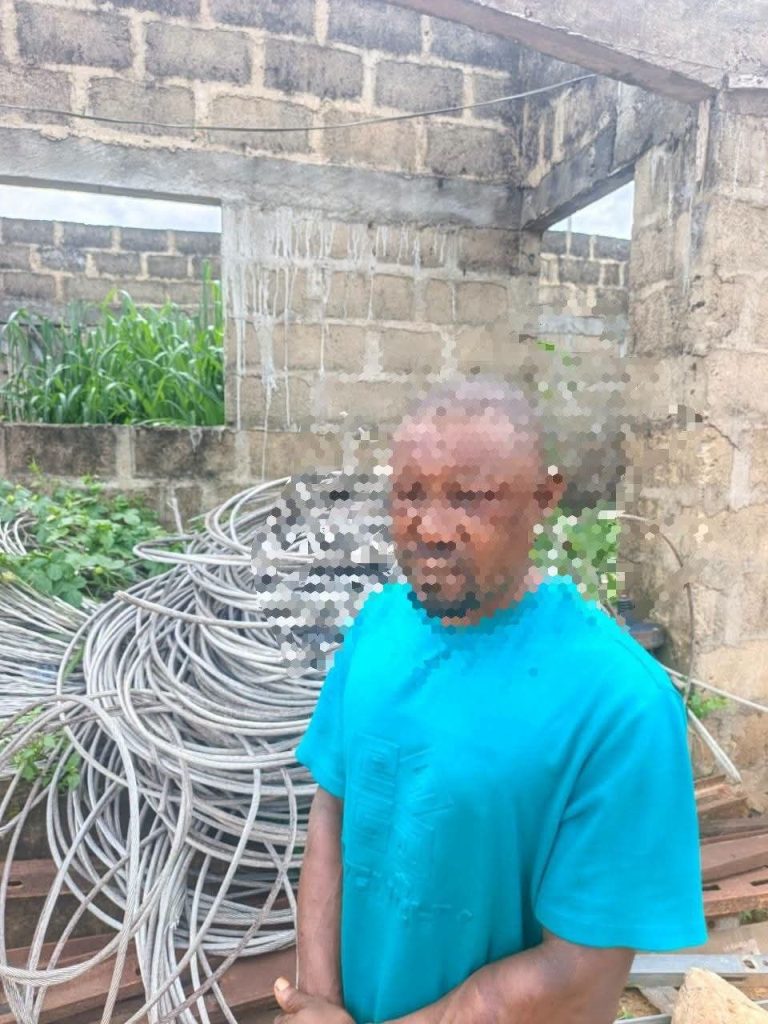
The Delta State Police Command has arrested two suspected electric cable vandals and recovered vandalised electric cables in a renewed crackdown on the destruction of critical national infrastructure across the State.

The Police Public Relations Officer, SP Bright Edafe, disclosed that the suspects were arrested on June 25, 2026, during a joint operation by operatives of the Kwale Police Station and members of a local vigilante group.
According to the police, the operatives acted on credible intelligence that suspected vandals were dismantling and stealing electric cables along the Ibabu–Ugiliamai Road.

Upon arriving at the scene at about 10:30 a.m., the suspects attempted to flee. During the operation, one of the suspects sustained injuries and is currently receiving treatment at a hospital, while the other was taken into police custody.

The suspects were identified as Osakwe Sunday, 28, and Ekene Obocha, 34.

Police said the vandalised electric cables were recovered as exhibits.

Reacting to the arrest, the Commissioner of Police, Delta State Command, CP Yemi Oyeniyi, warned criminal elements to desist from vandalising government infrastructure and other public assets.

He reaffirmed the command’s commitment to identifying, arresting, and prosecuting those involved in acts of vandalism, while urging members of the public to continue providing timely and credible information to the police to aid crime-fighting efforts.

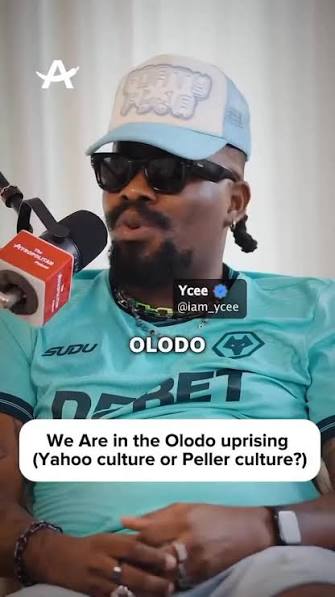
Social media virality is overshadowing real talent — YCee

0


Nigerian rapper and musician YCee has said that the potential provided by social media platforms such as TikTok for people to achieve traction without intervention from traditional music industry gatekeepers is harming the music industry’s skill level.

Speaking in a recent interview with Naija FM Lagos, the ‘Jagaban’ crooner bemoaned that the practice has led many record label executives to pursue viral or trending acts rather than capabilities.

He also said that social media virality has resulted in an infusion of many inexperienced musicians and “accidental artists” into the music industry.

He blamed social media-fame for the sharp drop in lyrical substance in the music industry over the years.

YCee said, “Platforms like TikTok have made it easier for a lot of people to do music to the extend that even someone who is not an artist would start posing as a artist once they do a sound and it goes viral.

“Sadly, music executives with power and funding no longer focus only on talent—they are now chasing virality.”

Sun

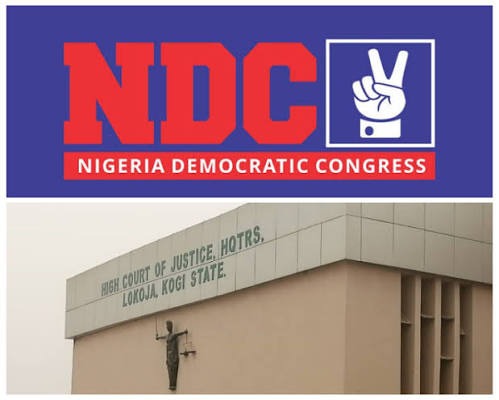
Court ruling: INEC speaks on NDC, announces next move

0


The Independent National Electoral Commission (INEC) has stated that it has yet to obtain the Certified True Copy (CTC) of the Federal High Court judgement that overturned an earlier ruling mandating it to register the Nigeria Democratic Congress (NDC) as a political party.

Adedayo Oketola, INEC’s Chief Press Secretary and Media Adviser to the Chairman, made the announcement in a statement issued on Saturday.

Although the commission is aware of media reports on the judgement given by the Federal High Court sitting in Lokoja on June 26, it is unable to comment until it receives and reviews a certified copy.

“The Independent National Electoral Commission, INEC, is aware of reports circulating in the media regarding the judgment delivered on Friday, June 26, 2026, by the Federal High Court sitting in Lokoja, which set aside an earlier order concerning the registration of the Nigeria Democratic Congress.

“However, as of this moment, the Commission has not yet received the Certified True Copy, CTC, of the court’s order,” the statement said.

INEC stated that its legal department would study the judgment upon receipt of the CTC before advising the commission on the next course of action.

“Once the Commission’s legal department receives and thoroughly studies the CTC of the judgment, INEC will take an informed, lawful decision in line with the court’s directives.

“Until then, we cannot comment on the specifics of the ruling, and the public is urged to await the Commission’s formal position on the matter,” Oketola added.

Justice Isah Dashen of the Federal High Court in Lokoja had on Friday set aside the court’s December 10, 2025, judgment directing INEC to register the NDC as a political party.

The court held that the rights of the Peace Movement Party were affected by the earlier judgment because it was not joined in the suit despite claiming ownership of the logo relied upon in securing the registration order.

Justice Dashen consequently ordered that all parties be restored to the positions they occupied before the December 2025 judgment and directed that the substantive suit be heard afresh with all necessary parties joined.

The NDC has rejected the ruling and announced plans to appeal the decision. Its National Chairman, Senator Moses Cleopas, maintained that the party had not been deregistered and argued that the trial court lacked jurisdiction to revisit a matter on which it had already delivered a final judgment.

Sun

Lagos police nab man with suspected human hand, gun

0

A 21-year-old man has been arrested by operatives of the Lagos State Police Command for allegedly being in possession of a suspected human hand, firearms and other dangerous items.

The suspect was arrested during a routine stop-and-search operation along the Lekki-Epe Expressway.

In a statement, the Lagos State Police Public Relations Officer, SP Abimbola Adebisi, said officers intercepted an unregistered commercial shuttle bus conveying six occupants and arrested one of the passengers after discovering a suspected human body part, firearms and suspected stolen items in his possession.

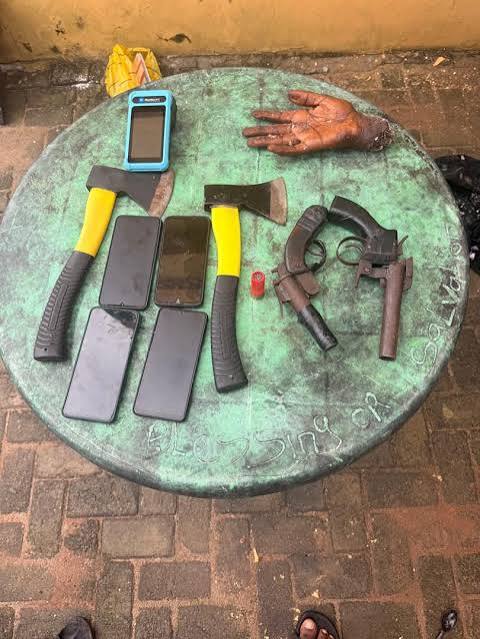
She said: “During a search of the vehicle and its occupants, the suspect, Samson Onilewaji, 21, was found in possession of a suspected human right hand, two locally made pistols, one live cartridge, two axes, one POS terminal and five ATM cards.

“The suspect confessed to recently robbing three individuals of their personal belongings, including the recovered POS terminal and ATM cards. Efforts are ongoing to identify and contact the victims for the return of their recovered property.

“Investigation is also ongoing to ascertain the identity of the owner of the recovered suspected human hand, the circumstances surrounding its possession, and its intended use. Further efforts are being intensified to identify and apprehend other criminal associates connected with the suspect. The suspect will be charged to court upon the conclusion of the investigation.”

The Commissioner of Police, Lagos State Command, CP Tijani Fatai, reiterated the command’s commitment to combating violent crime and other criminal activities across the state.

He urged residents to remain vigilant and continue supporting the police with timely and credible information that would aid crime prevention and enhance public safety.

Sun

IGP Launches Operation “Kosaye” To Flush Out Kidnappers, Criminals From Lagos, Ogun States

0


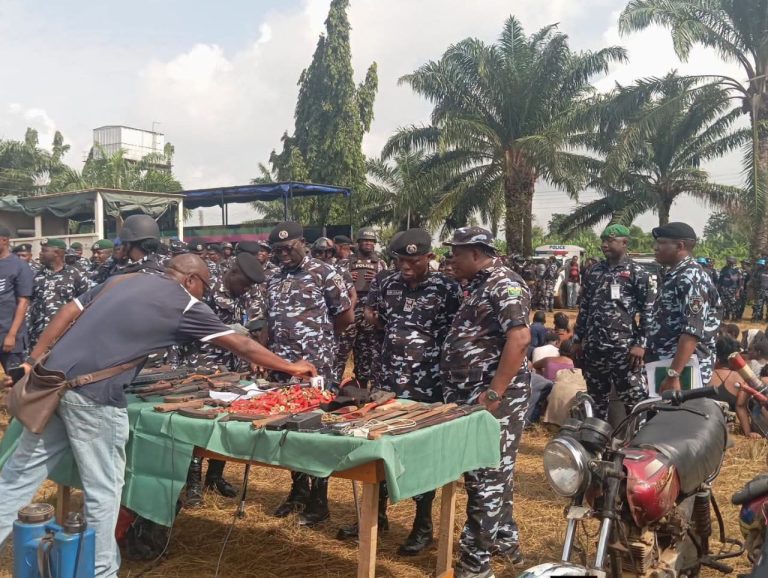
The Inspector-General of Police, Olatunji Disu, has officially launched “Operation Kosaye” (No Chance) in Lagos and Ogun States as part of renewed efforts to rid both states of kidnapping, banditry and other violent crimes.

The operation, supported by the Lagos and Ogun State Governments through the provision of logistics, is aimed at clearing forests, border communities, criminal hideouts and other black spots used by kidnappers and other criminal elements.

Addressing journalists at the Ogun State Police Training School Iperu, Commissioners of Police in Ogun and Lagos States Bode Ojajuni and Tijani Fatai, said the security operation had already recorded remarkable successes, with the rescue of five victims kidnapped along the Ijebu Ode Sagamu Benin expressway on Thursday 25th June and neutralisation of five kidnappers as well as the arrest of four others.

The CPs explained that all identified forests and bushes across Lagos and Ogun States, including areas bordering Ondo and Oyo States have been combed and cleared of kidnappers and bandits.

They said that no resident is currently being held captive by criminal gangs within the operational areas, while several criminal hideouts and illegal shanties have also been dismantled.

The Police Chiefs urged members of the public to remain calm and continue to support security agencies with credible information, especially by reporting anyone with gunshot wounds or suspicious movements to the nearest police station.

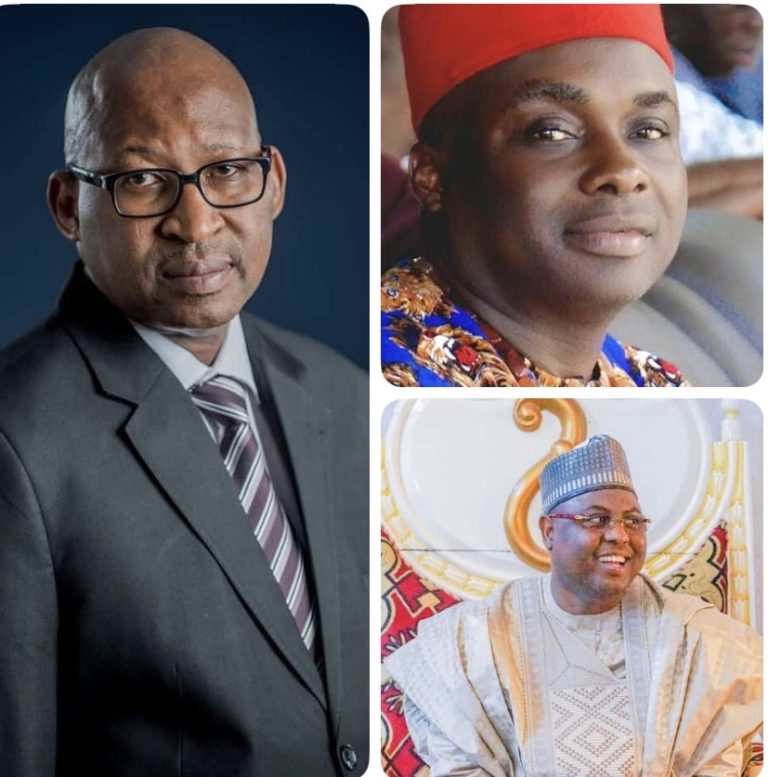
Tinubu Appoints Namdas as BCDA DG, Obahiagbon, Umeoji to NDPHC Board

0


President Bola Ahmed Tinubu has approved the appointment of Abdulrazak Sa’ad Namdas as the new Director-General of the Border Communities Development Agency (BCDA).

Namdas succeeds Dr. Dakorinama Alabo George, who resigned from the position to contest an elective office in his home State.

A former member of the House of Representatives who represented the Ganye/Jada/Mayo Belwa/Toungo Federal Constituency of Adamawa State, Namdas served as spokesperson of the 8th House of Representatives.

He also contested in the recently concluded governorship primary election in Adamawa State.

A seasoned journalist and public relations practitioner, Namdas previously served as Chief Press Secretary to former Adamawa State Governor Boni Haruna.
In a related development, President Tinubu appointed Hon. Patrick Obahiagbon as Executive Director, Strategy and Commercial, of the Niger Delta Power Holding Company (NDPHC).

The President also reappointed Mr. Chukwuma Umeoji as Executive Director, Corporate Services, of the NDPHC.

Obahiagbon replaces Engineer Omoregie Ogbeide-Ihama, who resigned from the position to pursue his political ambition in his home state. Obahiagbon previously served in both the Edo State House of Assembly and the House of Representatives.
Umeoji, a former member of the House of Representatives who represented Aguata Federal Constituency of Anambra State in the 9th National Assembly, was reappointed after earlier stepping down from the office to pursue his political ambition.

According to a statement issued by the Special Adviser to the President on Information and Strategy, Bayo Onanuga, all the appointments take immediate effect.