Home Blog Page 342

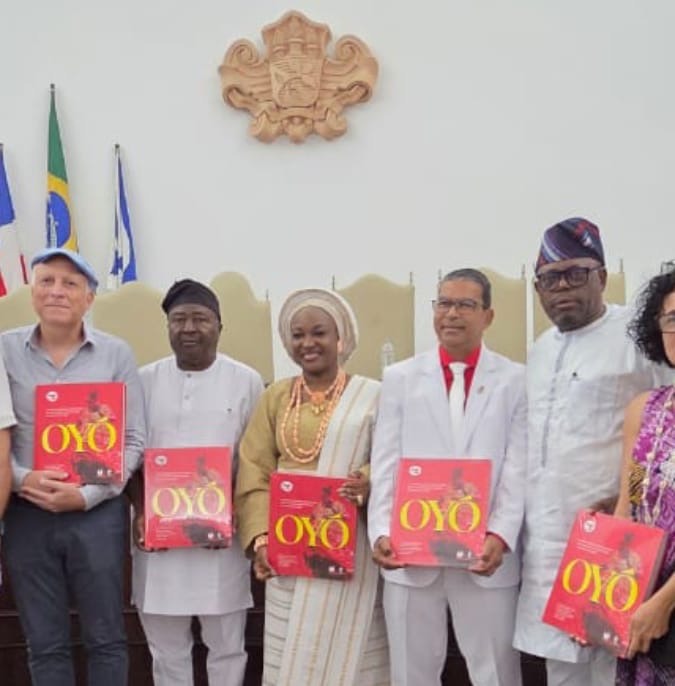
LASU Begins 4th International Afro-Brazilian Conference in Brazil, Strengthens Nigeria-Brazil Ties

0


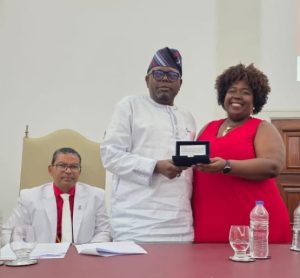
The Lagos State University Centre for Afro-Brazilian Studies (LASUCAS) has commenced its 4th International Conference in Salvador, Bahia, Brazil, bringing together academics, policymakers, diplomats, traditional rulers and cultural stakeholders from Nigeria and Brazil.

The conference, themed “South-South Cooperation: Nigeria and Brazil’s Roles in Fostering Collaboration among Emerging Economies,” is focused on strengthening partnerships between the two countries in the areas of economic growth, technological innovation, cultural exchange and sustainable development.

Participants are expected to explore ways of deepening bilateral relations between Nigeria and Brazil, with discussions centred on expanding South-South cooperation, promoting mutual progress and advancing reforms in global governance in response to evolving global realities.

Among the dignitaries at the event were the Alaafin of Oyo, His Imperial Majesty, Oba Akeem Owoade, and Ayaba Abiwunmi Owoade; the Portuguese Ambassador to Nigeria, Mr Paulo Santos; and the Lagos State Attorney-General and Commissioner for Justice, Mr Pedro Lawal, who represented Governor Babajide Sanwo-Olu.

Also in attendance were the Vice-Chancellor of the Universidade Federal da Bahia (UFBA), Professor Miguez, and the Vice-Chancellor of the State University of Bahia (UNEB).

The Vice-Chancellor of Lagos State University, Professor Ibiyemi Olatunji-Bello was represented by the University Orator, Professor Henry Hunjo.

The LASU delegation, led by the Director of LASUCAS, Professor Tayo Ajayi, includes Professor Salami Dada of the Faculty of Management Sciences; Associate Professor Sunday Bamisile, Assistant Director of LASUCAS; Dr Adetola Oye, former Head of the Department of Foreign Languages; and the Deputy Registrar of LASUCAS, Dr (Mrs) Victoria Opaleye.

Other participants include Professor Adejumo of the University of Lagos, Mrs Paula Gomes, long-time Cultural Attaché to the Alaafin of Oyo, as well as several Brazilian traditional religion practitioners and cultural leaders.

The conference is expected to provide a platform for scholarly engagement, policy dialogue and cultural diplomacy, while reinforcing the longstanding historical relationship between Nigeria and Brazil and advancing the objectives of South-South cooperation.

Labour Rejects Fresh Plans To Sell Unity Schools

0


BY TAIWO OGUNMOLA -OMILANI


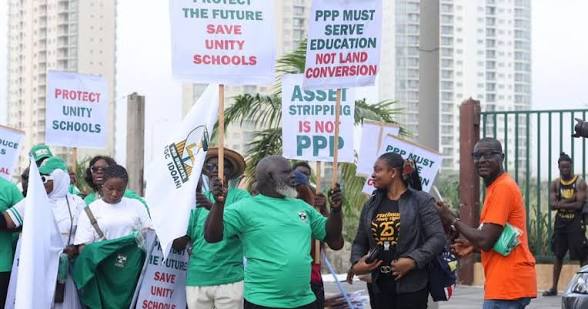
Alarmed by renewed efforts to sell Federal Government Colleges to Private Business Individuals under the guise of Public Private Partnership (PPP), the Association of Senior Civil Servants of Nigeria (ASCSN) has called on well-meaning Nigerians to reject the plan because it will make quality secondary education inaccessible to millions of Nigerian children.

Reacting to report that the Federal Government has approved the concessioning of King’s College, Lagos, to Old Boys Association, the ASCSN stated that once that was done, the remaining 119 Federal Government Colleges would be shared by the political elites and their stooges and consequently killed the Unity School System.

In a press statement issued in Abuja on Wednesday and signed by its National President, Comrade Shehu Mohammed, and the Secretary-General, Comrade Joshua Apebo, the Union recalled that the Prime Minister in the First Republic, Sir Tafawa Balewa in1966 conceived the idea of setting up Federal Government Colleges to be models of secondary education where Nigerian children irrespective of ethnic, social and economic backgrounds of their parents, will converge and interact in the Schools and begin to see themselves as Nigerians.

“Thus, the first three unity colleges were established in 1966 at Okposi (later moved to Enugu) for Eastern Region, at Warri for Western Region, and at Sokoto for Northern Region.

“Today, there are 120 Federal Government Colleges located in different parts of the Federation and they continue to provide quality education which makes them first choices for prominent Nigerians to place their Children and Wards,” the union added.

The ASCSN chieftains recalled that in 1978 as a military Head of State, General Olusegun Obasanjo, started the crusade that Federal Government should not run secondary school, a project he continued to pursue when he became a Civilian President in 1999, and thereafter proceeded to disarticulate the junior arms of the schools as a prelude to phasing out the unity schools.

“To checkmate the process, the union engaged the Government in prolonged dialogues, carried out a 7-week strike, took the matter to court and mobilized sister trade unions, students unions, parents/teachers Associations, civil society groups, leaders of thought, religious leaders, traditional rulers, etc., to resist the plot to sell unity schools to portfolios business persons.

This struggle continued until July 2010 when President Goodluck Jonathan ordered the resumption of the junior components of the Unity Colleges and normalcy returned to the Unity School System.

“It must be realized that once education becomes a commodity only for the rich, it will be a violation of section 18 of the 1999 constitution as amended which stipulates that Government shall provide free, compulsory and universal primary education; free secondary education; free university education; and free adult literacy programme,” the union emphasized.

According to the labour leaders, in the United States, there are about 20,000 to 24,000 Government-funded secondary schools; in the United Kingdom, about 4,180 to 4,200 Government-funded secondary schools; while in Germany, there are about 8,900 state-run schools.

“All these schools are funded and run free. Since these are capitalist societies, we do not know where Nigerian Politicians got the idea from that Government cannot run secondary schools.

“We have always canvassed the view that Old Boys Association and other private entreprenuers who wish to own secondary schools can set up their own instead of angling to convert unity colleges, the collective patrimony of Nigerians, into their private estates,” the union leaders stressed.

The labour leaders stated that once these schools are taken over by private entrepreneurs, they will convert them and the vast expanse of land thereof into hotels and shopping malls to satisfy their insatiable greed.

They accordingly enjoined the Federal Government not to cede the Unity Schools to private individuals but to sustain them as legacy inherited from the first Prime Minister, Sir Tafawa Balewa, and other previous Administrations.

Chinese envoy, Yu Dunhai meets Odume

0


The Chinese envoy announced the meeting in a post on X.
Yu said: “Today, I had the pleasure of meeting H.E. Ambassador Bianca Odumegwu-Ojukwu @Ojukwu_Bianca, Nigeria’s Minister of Foreign Affairs @NigeriaMFA.”

The Chinese Ambassador further said China and Nigeria enjoy a time-honoured friendship.

He added that under the strategic guidance of President Xi Jinping and President Bola Ahmed Tinubu, the China–Nigeria Comprehensive Strategic Partnership has continued to gain strong momentum, delivering fruitful outcomes in mutually beneficial cooperation.
Yu also said as both countries mark the 55th anniversary of the establishment of diplomatic ties, China is ready to deepen cooperation with Nigeria.

“As we commemorate the 55th anniversary of diplomatic relations and the China–Africa Year of People-to-People Exchanges, China stands ready to work with Nigeria to further consolidate political mutual trust, deepen strategic communication, expand practical cooperation, fully capitalize on the zero-tariff policy dividends, and jointly write a new chapter in the #ChinaNigeria Comprehensive Strategic Partnership,” Yu stated.

Meanwhile, the Chinese Ambassador to Nigeria, Yu Dunhai, has expressed his warm sentiments to the students of Ahmadu Bello University, Zaria, for their outstanding achievement at an international competition in China.

The Chinese Ambassador, in a post on X, said: “Warm congratulations to the students of Ahmadu Bello University for their outstanding achievement at the international competition in China! This people-centered medical innovation not only showcases the exceptional talent of Nigerian youth, but also stands as a vivid testament to the practical cooperation between China and Nigeria in education and technology.”

Yu further said he looked forward to seeing more young talents contribute to the friendly exchanges between both countries.

The Nigerian Television Authority (NTA), had in a report on X titled “Ahmadu Bello University Students Boosts Nigeria’s Profile Again With Awards In China,” stated that knowledge becomes meaningful when it is used to solve human problems.

“This has found expression in the work of female team of the medical students of Ahmadu Bello University, Zaria, which developed a diagnostic device capable of producing multiple test results within seconds. The innovation earned the team top honours at an international competition and secured a research grant from Huawei ICT during the 2025/2026 event in China,” the NTA wrote.

Sun

INEC restores NDC portal access, uploads Obi, Senate candidates despite legal dispute

0


The Independent National Electoral Commission (INEC) has restored access to the Nigeria Democratic Congress’ candidate nomination portal, allowing the party to begin uploading names of its candidates for the 2027 general election despite the ongoing legal battle over its registration.

The National Leader and former Bayelsa State governor, Seriake Dickson, disclosed this yesterday on his X account, saying the development followed NDC’s filing of a notice of appeal and an application for stay of execution against the recent judgment of the Federal High Court in Lokoja.

Dickson said the appeal and accompanying applications had been served on INEC alongside a covering letter urging the electoral commission to act in line with the law.

He maintained that the NDC remains a duly registered political party and that all its primaries were validly conducted under the supervision of INEC. According to him, the only outstanding process was the administrative submission of candidates’ names through the commission’s nomination portal.

He disclosed that his name as National Assembly candidate and that of the presidential candidate, Mr. Peter Obi, had already been uploaded to the portal.

Dickson added that the name of the vice presidential candidate would be uploaded after the completion of the necessary documentation while the nomination of other candidates across the country was also underway.

“The Nigeria Democratic Congress has come to stay and remains a duly registered party in Nigeria which has participated in all the political processes so far. Nomination processes have already been concluded and, in the eyes of the law, candidates have already emerged from the party for all offices across the country in primaries observed, monitored and recorded by INEC.

“What is left is the administrative process of submitting the names to INEC, and we have been granted access to the portal to upload our qualified candidates,” he said.

The former Bayelsa governor urged party members and supporters not to panic, assuring them that there was sufficient time to complete the submission of candidates’ names within INEC’s timetable.

He noted that the party had until July 11 to upload names of its National Assembly candidates and July 17 to submit those of governorship and State House of Assembly candidates.

Dickson also appealed to aggrieved aspirants who lost in the primaries to remain committed to the NDC, saying reconciliation efforts had already commenced. He assured them that they would be fully integrated into the party’s campaign structures and committees ahead of the elections.

The NDC leader thanked INEC Chairman, Professor Joash Amupitan, for what he described as the commission’s professionalism in handling the matter and expressed confidence that the judiciary would resolve the pending appeal in accordance with the law.

The development comes days after the NDC filed an appeal against the Federal High Court judgment that created uncertainty over the party’s legal status. The party has consistently argued that the judgment neither dissolved nor deregistered it and insists it remains a legally recognised political party pending the determination of its appeal.

Sun

Publish certificates of candidates to boost public trust, Obi tasks INEC

0


Presidential candidate of the Nigeria Democratic Congress (NDC), Mr. Peter Obi, has called on the Independent National Electoral Commission (INEC) to publish the academic credentials submitted by candidates seeking elective office to strengthen public confidence in the electoral process.

Obi made the call in a statement while reflecting on questions contained in the nomination forms completed by candidates contesting elections in the country, yesterday.

The former Anambra governor said a section of the form, which asks whether a candidate has ever presented a forged certificate to INEC, raised broader questions about accountability and transparency in public office.
“Further in the same Section E, Question 6, was: ‘Have you ever presented a forged certificate to INEC?’ Again, the answer is either Yes or No.

“This raises another important question: Why shouldn’t INEC, in the interest of ensuring that our leaders are exemplary in following the rules and to strengthen public confidence in our electoral process, publish the academic certificates and credentials submitted by every candidate seeking elective office?”

Obi noted that making such documents publicly available would enhance trust in the democratic process and reinforce the integrity of those seeking public office.

“Transparency strengthens democracy and builds public trust,” he said. The NDC presidential candidate also used the statement to question the priorities of Nigeria’s political leadership amid worsening insecurity and economic hardship.

According to him, a question in the nomination form asking whether a candidate had ever been adjudged a person of unsound mind prompted reflection on the state of leadership in the country.
“Can we, as the political leaders of today’s Nigeria, truly say we are exhibiting the characteristics of a sound mind?”

He said it was difficult to justify the intense focus on politics at a time when many Nigerians are struggling with insecurity, poverty and hunger.

“When Nigerians, including children and security personnel, are being abducted into the bushes, citizens cannot travel safely on our highways, several million Nigerians are uncertain where their next meal will come from, and several billions are being siphoned frivolously through non-existent agencies and projects, should politics really be our primary preoccupation?”

He added that the country’s security and economic challenges should be treated as a national emergency requiring urgent and coordinated action.

“A sound-minded leadership would have declared these existential challenges a national emergency and immediately mobilised all relevant institutions, security agencies, experts, community leaders, and other critical stakeholders to confront them with urgency and resolve,” Obi said.

“At a moment like this, the survival, security, and stability of Nigeria must take precedence over every other consideration. This is a time for decisive action, not political calculation or the pursuit of partisan advantage.”

He urged leaders to focus on competence, character and service, saying Nigeria’s challenges require a departure from “politics as usual” and a renewed commitment to addressing the needs of citizens.

Sun

FG moves to fast-track operation of UBEC smart, bilingual schools, inaugurates committee

0


Federal Government has inaugurated the Universal Basic Education Commission (UBEC) Ministerial Implementation and Monitoring Committee for Smart Schools, Bilingual Schools and Alternative Schools, charging members to ensure that completed education projects are fully operational and delivering quality learning to Nigerian children.

Emeritus professor and expert in Literacy Education, University of Ibadan, Rashid Aderionye, was appointed chairman of the Committee. He is expected to work with 13 other persons.

At the inauguration in Abuja, yesterday, Minister of Education, Dr. Tunji Alausa, said the committee’s primary responsibility was not merely to monitor infrastructure projects but to ensure that schools are completed, handed over, staffed and opened to learners.

He said the committee’s work aligns with President Bola Tinubu’s Renewed Hope Agenda, which places education at the centre of Nigeria’s economic growth, national cohesion and global competitiveness.

The minister noted that smart schools are designed to equip children with digital skills for the modern economy, while bilingual schools are intended to promote linguistic inclusion and national integration.

He added that alternative schools are aimed at expanding access to quality education for vulnerable children, particularly girls, out-of-school children and other underserved groups.

The minister noted that despite substantial investments by UBEC in basic education, many projects remain incomplete, while several completed schools are yet to be handed over to the state governments or opened for academic activities.
He warned that completed schools left unused represent lost opportunities for thousands of Nigerian children and undermine public confidence in the government’s ability to deliver.

He directed the committee to work closely with UBEC, state governments, State Universal Basic Education Boards (SUBEB) and contractors to ensure outstanding projects are completed, furnished and equipped, while also facilitating the provision of electricity, water, internet connectivity and adequate teachers where necessary.

He stressed that the committee’s success would not be judged by the number of meetings held or reports produced but by the number of schools that become fully operational and begin educating children.

“The era when projects are declared completed on paper while remaining inaccessible to beneficiaries must come to an end. This committee must track every project from conception to completion, handover, operation, staffing, student enrolment and measurable learning outcomes.

He also commended the Minister of State for Education, Suwaiba Said Ahmad, for her commitment to improving foundational learning and acknowledged the investments made by UBEC in expanding access to quality basic education. He assured Nigerians that the Federal Ministry of Education would provide the committee with the necessary support to deliver on its mandate.

Reaffirming the Federal Government’s commitment to improving basic education, the minister declared that under the Renewed Hope Agenda, no publicly funded educational infrastructure would remain abandoned, idle or under-utilised.

He formally inaugurated the committee and urged its members to discharge their responsibilities with professionalism, transparency and a strong focus on results.

Sun

APC final candidates’ list: Govs, heavyweight senators, others lose out

0


• Suswam, Elegbeleye, 5 other senatorial, 19 Reps candidates dropped

The political landscape within the All Progressives Congress (APC) has shifted dramatically following the confirmation that the party has issued nomination forms to candidates cleared to contest the 2027 general elections.

This development, coming 24 hours after an exclusive report by Daily Sun first revealed that the party was secretly distributing forms to selected aspirants, indicates that the window for change has officially closed for aggrieved politicians.

Meanwhile, the party has dropped former governor of Benue State, Gabriel Suswam, former Ondo State House of Representatives member, Gbenga Elegbeleye and five other senatorial candidates from the final lists of the party’s candidates forwarded to the Independent National Electoral Commission (INEC).

Also dropped and replaced candidates are 19 House of Representatives candidates that emerged victorious in the May party’s primary elections. According to the document, states affected include Kogi, Abia, Benue, Taraba, Ondo, Niger, Kwara, Kaduna and Ebonyi.

In the correspondence sent to the electoral umpire and signed by both the National Chairman and National Secretary, Nentawe Yilwatda and Ajibola Basiru respectively, the party’s national leadership attributed the changes to the reports of the Primary Election Appeal Committee.

Titled: “Forwarding of approved list of senatorial and House of Representatives candidates, the letter read: “We write to formally forward the attached list of the party’s candidates for the affected senatorial and House of Representatives candidates constituencies arising from the report of the Primary Election Appeal Committee.”

“Following the determination of Appeals from the recently concluded primary elections, the Reports of the Appeal Committee were reviewed and subsequently considered and approved by NWC of the APC as the party’s final position on the affected constituencies.

“In accordance with the Electoral Act 2022 (as amended) and INEC’s regulations and guidelines, we hereby transmit the enclosed list of the approved candidates for seven senatorial districts and 19 House of Representatives constituencies for your records and necessary action. Please accept the assurance of our highest regards.” i

The affected senatorial candidates and their replacements include, Kogi West where Senator Sunday Karimi replaced Aro Samuel Bamidele, Abia South Senatorial districts where Edinburgh Uchenna Erondu was replaced by Prince Paul Ikonne, Benue North East senatorial district where Gabriel Suswam was replaced by Emmanuel Memga Udende, Benue North West where Titus Tartenger Zam replaced Benjamin T Aber.

Others are Taraba North senatorial district where Mohammed Kabir Bello was replaced by Shuibu Isa Lau, Ondo Central where Taiwo Fasorati was substituted by Adeniyi Adegbonmire and Ondo North senatorial zone where Gbenga Elegbeleye was replaced by Olajide Ipinsagbe.

In the lists for the House of Representatives in Benue Dickson Tarkighir replaced Ikper Chris Terfa in Makurdi/Human Federal Constituency, Sesoo Ikpagher replaced Livinus Tsar Adzor in Vandekiya/Konshsha Federal Constituency, Terser Ugbor substituted Kohol Shedrach Iornem in Kwnade/Ushngo Federal constituency, Sekav Dzua Iyortyom replaced Gideon Inyom in Buruku Federal Constituency while Nongo David was replaced by Austin Asema Achado in Gwer East/Gwer West Federal Constituency.

In Taraba, Peter Abel Diah replaced Sanusi Mohammed Galadima in Gashaka/Kurmi/Sardauna Federal Constituency, while Abubakar Lado Abdullahi substituted Adamu Tanko in Seleja/Tafa/Gurara Federal Constituency and Adamu Suleiman was used to replace Adamu Usman in Lavun/Idati/Mokwa both from Niger State.

In Kwara, Raheem Tunji Olawuyi replaced Olasumbo Florence Oyeyemi in Ekiti/Irepodun/Oke-Ero Federal Constituency and Mohammed Mamman substituted Bello Tauheed Abubakar in Edu/Patigi/Moro Federal Constituency.

In Ondo, Donald Ojogo replaced Akingboye Leke in Ilaje/Ese-Ode Federal Constituency, Festus Olarewaju replaced Rasaq Obe in Idanre Federal Constituency, Oluwatimehin Akintomide replaced Kayode Ijalana in Owo/Ose Federal Constituency, Okunjinmi John Odimayo replaced Olumuyiwa Daramola in Okitipupa/Irele Federal Constituency, Michel Olamidotun Akintomide substituted Abiola Makinde in Ondo West/Ondo East Federal Constituency while Festus Ayodele Adefiranye replaced Oyerinmade Matthew in Ile-Olu/Oke-Igbo/Odigbo Federal Constituency.

In Kaduna, Abia and Ebonyi, the party forwarded names of Abdulazeez Kaka as replacement for Samaila Abdu Suleiman in Kaduna North Federal Constituency, Samuel Okezie as replacement for Chris Nkwonta in Ukwa East/Ukwa West Federal Constituency Abia while Ekumankama Joseph Nkama replaced Iduma Igaiwe Enwo in Afikpo North/Edda Federal Constituency, Ebonyi State.

•Promise kept

Findings show that President Bola Tinubu largely kept to his promise of giving state governors a free hand to determine party candidates, though this strategy has plunged several state chapters into deep crisis.

The control handed to the governors has left several heavyweight senators and high-profile aspirants across the country losing out in the fierce battle for return tickets.

Incumbents who failed to secure their party’s backing find themselves politically stranded as the impact of the strict anti-defection laws prevents them from easily switching platforms late in the game.

This has sparked severe internal rifts, with disgruntled lawmakers lodging official complaints and promising political retaliation against what they describe as a deliberate sidelining of established party figures.

The ticket struggle had provoked widespread tension, particularly in Edo and Delta States where the senatorial primaries proved especially contentious.

In Edo South, the primary descended into chaos, characterised by pockets of violence across various local government wards. Prominent aspirants such as Osagie Ize-Iyamu and the incumbent lawmaker, Senator Neda Imasuen, lost out under controversial circumstances.

Imasuen expressed bitter disappointment over the conduct of the exercise, alleging that he was completely prevented from casting his vote, which forced him to flee the venue to avoid violence before seeking redress through the party’s appeal process.

In Delta North, a similar crisis unfolded as Senator Ned Nwoko rejected the primary results. Nwoko claimed he held ward-by-ward evidence of victory, leading to duelling declarations of success that have thoroughly split the local leadership.

A look at the final candidates’ list reveals that the casualties of the governors’ leverage span every geopolitical zone, cutting down some of the upper chamber’s most visible figures.

In the South West, the battle lines were harshly drawn in Ogun East, where former governor Senator Gbenga Daniel lost his return ticket following a fierce and highly publicised feud with the state Governor Dapo Abiodun, over the control of the party structure.

A similar fate befell Senator Olubiyi Fadeyi in Osun Central, who, despite recently defecting to the ruling party to boost its legislative majority, found no protection from the local party apparatus when the final tickets were distributed.

The North Central zone suffered the heaviest clearance of incumbent lawmakers, highlighting the total grip of the region’s governors.

In Benue State, the internal power struggle claimed both Senator Emmanuel Udende of Benue North-East and Senator Titus Zam of Benue West, both of whom were denied return tickets as the state leadership opted for replacements.

In Plateau Central, Senator Diket Plang was sidelined while in Kwara South, the veteran lawmaker Senator Oyelola Ashiru failed to secure his ticket amidst the broader administrative reshuffle dividing the state.

In Kogi East, where Senator Isah Jibrin has long maintained a strong legislative presence, the party executive chose to advance a new face, shutting the door on his re-election bid.

The pattern repeated itself in the South East, where Senator Osita Izunaso of Imo West was cut from the roster, proving that even ranking status offered no immunity against the governors’ lists.

Among the governors themselves, the absolute right to name successors and legislative candidates did not hold universally.

In Kwara State, the person the governor wanted as his successor failed to scale through the governorship primary, with the presidential preference, Yakubu Salihu Danladi, receiving the Independent National Electoral Commission (INEC) nomination form instead.

Similarly, Ondo State Governor, Lucky Orimisan Aiyedatiwa, was overridden by the presidency in favour of loyalists tied to the Minister of Interior, Olubunmi Tunji-Ojo.

With the party finalising its full candidate submission list, the contrast between the concessions given to some governors and the direct presidential interventions in other states has left the APC navigating a treacherous path.

A senior APC chieftain noted that while the president mostly allowed governors to run their states’ affairs, the resulting fallout, parallel primaries and high-profile casualties show that the party leadership will have to work overtime to heal these self-inflicted wounds before the general elections.

Sun
FLOODING: LAGOS SUES FOR CALM FOLLOWING PERSISTENT RAINFALLS

0

•As Sanwo-Olu Approves Immediate Dredging Maintenance Of 28 Additional Primary Channels

The Lagos State Government on Tuesday called for calm and understanding from residents following the massive flash flooding experienced in many parts of the State over the last two weeks, with the Governor, Mr Babajide Sanwo-Olu approving the immediate dredging maintenance of 28 additional primary channels across the state.

Speaking against the backdrop of the heavy downpours which caused flash flooding in many communities, the Honourable Commissioner for the Environment and Water Resources, Mr. Tokunbo Wahab, said the rainfalls were an extreme weather event that produced an unusually high volume of water within a short period, overwhelming drainage channels in some locations and resulting in temporary flooding across parts of Victoria Island, Lekki, Ikeja, Gbagada, Mushin, Mafoluku and several other areas.

According to the Commissioner, the incident was not peculiar to Lagos, as a similar heavy rainfalls also affected other African Countries on the same day, even in North America.

The Commissioner stressed that while the State Government continues to invest significantly in drainage construction, channelisation, desilting and other flood control infrastructure, residents also have an important role to play in reducing the impact of flooding.

He urged residents to desist from indiscriminate disposal of refuse into drains, canals and waterways, illegal reclamation of wetlands, construction on drainage alignments and other activities that obstruct the free flow of stormwater, noting that such actions worsen flooding during periods of intense rainfall.

He also advised motorists to avoid driving through flooded roads during heavy downpours and appealed to residents, particularly those in flood-prone areas, to heed weather advisories and comply with safety instructions issued by relevant government agencies and which the ministry issues on a daily basis.

Amotekun rescues Ondo kidnap victim, arrests father, three sons

0


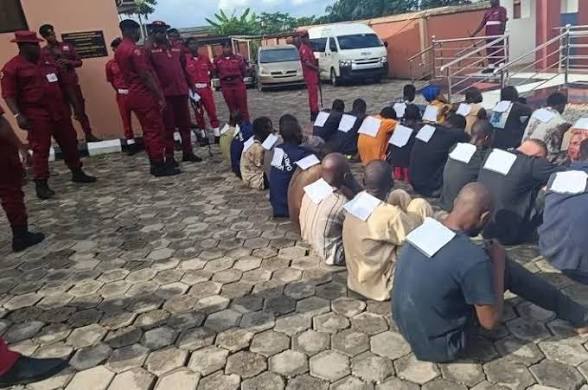
The Ondo State Security Network Agency, codenamed Amotekun, says it has rescued a kidnap victim and arrested a father and his three sons at Oba-Ile, Akoko, in Akoko South West Local Government Area of the state.

Amotekun Corps Commander, Mr Adetunji Adeleye, made the disclosure while parading 28 suspects for kidnap-related cases and 15 others for criminal offences on Tuesday in Akure.

“Today, we have Usman, 33; Wahab, 27; Yakubu, 18; and their father, Iliasu, 56, arrested in Oba Akoko, Ondo State.

“Not only that, we equally recovered drugs, drinks, cigarettes and what looked like a camouflage used to cover the eyes of the kidnapped victim,” he said.

Adeleye explained that the suspects were arrested after the victim’s family reported the incident to the command.

The Amotekun commander, who said that the victim was kidnapped on his way to Oba Akoko, explained that the family arranged ransom without informing Amotekun.

“In spite of the ransom payment, the kidnappers refused to release the victim. They also threatened the family not to report the incident.

“This eventually brought the family to the Amotekun office, and we immediately swung into action. ‎

“At the end of the day, we found a family, a father and three sons directly involved, using cattle as cover.

“In the course of the operation, they (kidnappers) attacked our men, but we succeeded in rescuing the victim,” he said.

Adeleye also said the kidnappers tortured the victim with knives and cutlasses on the head, while the victim had been rushed to a nearby hospital.

According to him, Amotekun personnel recovered over 75 per cent of the ransom paid. ‎

“As far as the command is concerned, we do not encourage the payment of ransom. Since the money belongs to the family, it has been returned to them.

‎“In fact, we handed over all the money recovered at the scene to a member of the victim’s family for safekeeping, and we only brought it here for display,” he said.

BANK OF INDUSTRY ANNOUNCES KURAMO CAPITAL AS THE MANAGER OF DICE FUND OF FUNDS

0


….iDICE Programme Launches $170 Million Fund of Funds to Accelerate Venture Capital Investment in Nigeria’s Tech and Creative Ecosystem.

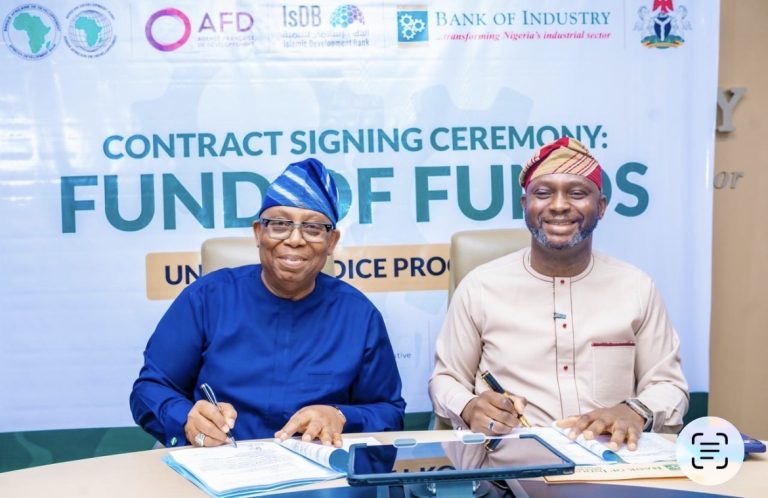
The Bank of Industry (BOI), the Implementing Agency for the Investment in Digital and Creative Enterprises (iDICE) Programme of the Federal Government of Nigeria, today announced the appointment of Kuramo Capital Management as Fund Manager of the DICE Fund of Funds. The contract signing ceremony, held in Abuja between BOI’s Managing Director and the Chief Executive of Kuramo Capital, marks a pivotal milestone in Nigeria’s accelerating commitment to empowering its technology and creative entrepreneurs.

The DICE Fund of Funds is structured to achieve a minimum total capitalisation of $170.6 million, with the Federal Government contributing an anchor commitment of $85.3 million through the iDICE Programme. Kuramo Capital is mandated to raise matching private-sector capital on a dollar-for-dollar basis. This represents one of the largest dedicated government investments in technology and creative sector startups in African history.

The iDICE Programme represents the Federal Government of Nigeria’s most ambitious intervention in the digital economy and creative sectors. Co-financed by the African Development Bank (AfDB), Agence Française de Développement (AFD), and the Islamic Development Bank (IsDB). The programme was designed with a clear mandate: to promote entrepreneurship, drive innovation, create jobs at scale, and position Nigeria as Africa’s leading hub for the knowledge economy.

iDICE is implementing its investment mandate through a suite of complementary funds. In November 2025, the Programme achieved a landmark first milestone when it made Nigeria’s inaugural direct government investment into a private venture capital fund — a cornerstone commitment to Ventures Platform’s VP Pan-African Fund II, which closed at $64 million with co-investors including the International Finance Corporation (IFC), British International Investment (BII), Standard Bank of South Africa, and Proparco.

The signing of the DICE Fund of Funds contract with Kuramo Capital is the latest in a series of significant milestones being delivered across the iDICE Programme. As of June 2026, implementation is well advanced on all three programme pillars — skills and enterprise development, access to finance, and ecosystem enablement — with activities running in all six geopolitical zones.
Specifically, on skills & enterprise development, iDICE launched the iDICE Startup Bridge three months ago, with the first cohort of 185 founders well advanced in the week four of training.

Applications for Cohort 2 opened on the 24th of June 2026, and applications for the growth lab, the post-MVP track, expected to open in July 2026, offering growth-stage tech startups access to potential equity funding of up to $100,000.

The programme has commenced the setup and revamp of digital and creative hubs in 66 institutions (36 universities and 30 polytechnics) across the country in collaboration with NUC and NBTE. Hence working with the academia to link research and project outcomes to industry.

As part of the programme’s access to finance component, BOI has also rolled out the BOI/iDICE Debt Fund and & IsDB Murabaha Debt Fund. Both debt products has set aside a combined financing of $110 million for start-ups in the technology and creative sectors

THE DICE FUND OF FUNDS: REACHING EVERY CORNER OF NIGERIA

The DICE Fund of Funds will invest across Nigeria’s 36 states and the Federal Capital Territory. It will deploy capital through indirect investments in selected closed-end venture capital and micro-venture capital funds focused on technology and creative sector businesses.

The Fund has a geographic mandate that ensures that capital reaches founders in the entire country, breaking the historical concentration of venture investment in a handful of urban centres.

The Fund targets a net Internal Rate of Return (IRR) of 20% and a net money multiple of 2.4x, structured with the government’s commitment as a junior tranche acting as 30% first-loss capital — a deliberate risk architecture designed to de-risk the fund structure, improve the risk-return profile for co-investors, and crowd in additional private capital.

Speaking on the Fund, Dr Olasupo Olusi, MD/CEO of the Bank of Industry had this to say – “By investing in Ventures Platform’s Fund II, and now by establishing the DICE Fund of Funds with Kuramo Capital, we are deepening the Federal Government’s objective of upscaling Nigeria’s technology and creative sectors by catalysing strategic investments in high-growth, technology-enabled enterprises.

The Bank of Industry is proud to be the executing agency driving this historic investment into the hands of Nigeria’s innovators.”.

Wale Adeosun, CEO of Kuramo Capital Management said “The DICE Fund of Funds represents a landmark moment for Africa’s venture capital ecosystem. Nigeria is demonstrating that a government can be both a serious anchor investor and a credible market-builder. We are honoured to be entrusted with this mandate and committed to deploying every resource at our disposal to raise the matching capital, invest wisely, and deliver returns that justify this historic confidence”.

While congratulating BOI & Kuramo Capital for this milestone on the iDICE Programme, Nigeria’s Vice President Kashim Shettima stated that “the commencement of investing by iDICE is an exciting milestone and a leap forward in the determined efforts of the Government of Nigeria, under the leadership of His Excellency President Bola Ahmed Tinubu, to deliver on our vision of unleashing the full potential of Nigeria’s young people, in line with the Renewed Hope agenda”.

WHAT THIS MEANS FOR NIGERIA’S START-UP FOUNDERS

For Nigeria’s technology and creative entrepreneurs, the establishment of the DICE Fund of Funds — combined with iDICE’s earlier investment in Ventures Platform $64 million Fund — represents a structural shift in the availability of early-stage capital. The days when a Nigerian founder had to depend almost entirely on foreign venture capital, or navigate a landscape with few domestic institutional investors, are changing.

By deploying capital through both direct startup investments and established venture capital fund managers, the Fund creates multiple access pathways for founders across the entire country.