Home Blog Page 337

Dangote Cement pays N3.3trn dividends in 15 years

0


The Group Managing Director of Dangote Cement Plc, Mr Arvind Pathak, says the company has paid more than N3.3 trillion in dividends to shareholders over the past 15 years.

Pathak disclosed this at the company’s 17th Annual General Meeting on Thursday in Lagos.

He said the milestone reflected the company’s commitment to creating sustainable value for investors.

According to him, shareholders will receive a record dividend of N45 per share for the 2025 financial year, representing a 50 per cent increase from the N30 per share paid for 2024.

“The decision to increase our dividend by 50 per cent to N45 per share demonstrates the strength of Dangote Cement’s earnings capacity and cash generation capability.

“The latest dividend announcement reflects the strength of our business model, resilient financial performance and a disciplined approach to balancing expansion with superior returns to shareholders.

“Over the years, investors have benefited not only from robust dividend payments but also from significant capital appreciation in the company’s stock,” he said.

Pathak said the company’s growth strategy remained focused on expanding production capacity, improving operational efficiency and strengthening its pan-African footprint.

He said Dangote Cement was targeting an installed production capacity of 80 million tonnes per annum by 2030 through strategic investments across Africa.

According to him, the company commissioned a three million tonnes per annum (3Mta) grinding plant in Côte d’Ivoire in 2025, further strengthening its presence in West Africa.

“With this addition, Dangote Cement now operates fully commissioned assets in 11 African countries, with a total installed capacity of 55Mta, comprising 33.5Mta in Nigeria and 19.7Mta across our pan-African operations,” he said.

Pathak reiterated the company’s commitment to making Africa self-sufficient in cement and clinker production while sustaining strong returns for shareholders.

Also speaking, the Chairman of Dangote Cement Plc, Mr Emmanuel Ikazoboh, reaffirmed the company’s commitment to delivering consistent returns to shareholders while maintaining high standards of corporate governance and operational excellence.

Ikazoboh said the company would continue to pursue strategies that enhanced profitability, strengthened corporate governance and created sustainable value for all stakeholders.

He noted that Dangote Cement had built one of the most impressive dividend records on the Nigerian Exchange.

He recalled that the company previously increased its dividend by 50 per cent from N20 to N30 per share, demonstrating its consistent commitment to rewarding shareholders despite challenging economic conditions.

WHO declares Hantavirus outbreak over, warns of escalating Ebola crisis

0


The World Health Organization (WHO) has officially declared the recent Hantavirus outbreak over.

The declaration was made after the final person exposed aboard the cruise ship MV Hondius completed quarantine, tested negative, and returned home.

Speaking during an online briefing on Thursday, WHO Director-General, Dr Tedros Ghebreyesus, said that no new infections have been recorded since May 25, marking the end of the international public health response to the outbreak.

According to him, the outbreak resulted in a total of 13 confirmed cases and three deaths.

“Health authorities successfully identified and monitored more than 650 contacts across 33 countries and territories, helping to prevent further transmission through coordinated international surveillance and quarantine measures,” he said

The body, however noted that though it had declared the outbreak over, it emphasised that scientific investigations would continue.

“The organization is working with governments and research partners to improve understanding of Hantavirus transmission and disease progression in preparation for future outbreaks.

“WHO is also coordinating a multinational study involving 21 countries to examine how Hantavirus develops in infected patients.

“Findings from the study are expected to support the development of improved diagnostic tests, treatments, and vaccines,” he said.

While celebrating the end of one outbreak, the director-general warned that the Ebola outbreak in the Democratic Republic of the Congo (DRC) was continuing to worsen.

“The country has recorded an average of 38 new confirmed Ebola cases each day over the past two weeks, reflecting sustained community transmission.

“As of July 2, DRC had confirmed 1,406 Ebola cases, including 438 deaths.

“The outbreak remains one of the most challenging public health emergencies currently facing the region,” he said.

According to him, the response has nevertheless expanded significantly.

“Testing capacity has increased to 10 laboratories located closer to affected communities, allowing faster diagnosis and more efficient public health interventions.

“Contact tracing has also improved, with approximately four out of every five identified contacts now being monitored,” he said.

Ghebreyesus noted that more contacts still needed to be identified for each confirmed case to interrupt transmission chains effectively.

He said that treatment capacity has grown to about 650 beds across 22 health centres, although roughly 96 percent of available beds are already occupied.

“WHO and its partners are working to establish an additional 300 treatment beds to meet rising demand,” he said.

He said another major milestone was the enrolment of the first patient in the PARTNERS clinical trial assessing the effectiveness of the monoclonal antibody MBP134 and the antiviral drug Remdesivir, administered individually and in combination.

He said that the study was coordinated by DRC’s National Institute for Biomedical Research with WHO and international partners.

“Patients participating in the clinical trial will receive comprehensive supportive medical care and close monitoring.

“WHO also pledged to ensure broader access to the medicines should they prove safe and effective during the study.

“WHO further announced the emergency use listing of the first molecular diagnostic test specifically designed to detect Bundibugyo virus, representing another step forward in strengthening outbreak preparedness and laboratory capacity,” he said.

He, however, said that in spite of these advances, the Ebola response continued to face serious obstacles, particularly insecurity and mistrust.

According to him, an Ebola treatment centre in Ituri Province was recently attacked, leaving two people dead, forcing patients to flee, and destroying parts of the facility.

He condemned the violence, stressing that attacks on health facilities endanger patients and frontline workers while undermining efforts to control disease transmission and save lives.

“To strengthen coordination, WHO and the United Nations have appointed Julien Harneis as Senior Ebola Coordinator following a joint endorsement by WHO director-general and UN Emergency Relief Coordinator, Tom Fletcher.

Ghebreyesus also reported encouraging developments in Uganda, where no new Ebola cases have been recorded since June 21.

“However, authorities have confirmed a case of Marburg virus disease in Kyegegwa District, detected through enhanced Ebola surveillance.

“Health officials are monitoring all identified contacts, none of whom have developed symptoms so far,” he said.

He said the concurrent outbreaks of hantavirus, Ebola and Marburg highlighted the need for stronger international collaboration in tackling global health emergencies.

He noted that WHO member states would resume negotiations next week on the Pathogen Access and Benefit Sharing system under the WHO Pandemic Agreement, expressing confidence that countries remain committed to reaching consensus.

“WHO expressed concern over the devastating earthquake in Venezuela, where more than 2,300 people have died, more than 5,000 have been injured, and nearly 16,000 have been left homeless.

“WHO has released 1.5 million dollars from its Contingency Fund for Emergencies and dispatched more than six metric tons of emergency medical supplies, with an additional 28 metric tons expected shortly.

“The organization also highlighted air pollution as a persistent global health crisis that receives far less attention than disease outbreaks or natural disasters,” he said.

According to him, the new WHO data indicate that 6.5 billion people remain exposed to dangerous levels of fine particulate matter (PM2.5), contributing to an estimated 6.7 million premature deaths annually.

He said that the greatest burden falls on low- and middle-income countries, particularly in sub-Saharan and Northern Africa.

Also, he drew attention to the growing health risks posed by digital environments to children and young people.

He called for stronger regulation of social media platforms, warning that addictive platform designs, harmful online content, misinformation, and extensive data collection threaten children’s mental health, privacy, and overall well-being.
Dangote Cement pays N3.3trn dividends in 15 years

0


The Group Managing Director of Dangote Cement Plc, Mr Arvind Pathak, says the company has paid more than N3.3 trillion in dividends to shareholders over the past 15 years.

Pathak disclosed this at the company’s 17th Annual General Meeting on Thursday in Lagos.

He said the milestone reflected the company’s commitment to creating sustainable value for investors.

According to him, shareholders will receive a record dividend of N45 per share for the 2025 financial year, representing a 50 per cent increase from the N30 per share paid for 2024.

“The decision to increase our dividend by 50 per cent to N45 per share demonstrates the strength of Dangote Cement’s earnings capacity and cash generation capability.

“The latest dividend announcement reflects the strength of our business model, resilient financial performance and a disciplined approach to balancing expansion with superior returns to shareholders.

“Over the years, investors have benefited not only from robust dividend payments but also from significant capital appreciation in the company’s stock,” he said.

Pathak said the company’s growth strategy remained focused on expanding production capacity, improving operational efficiency and strengthening its pan-African footprint.

He said Dangote Cement was targeting an installed production capacity of 80 million tonnes per annum by 2030 through strategic investments across Africa.

According to him, the company commissioned a three million tonnes per annum (3Mta) grinding plant in Côte d’Ivoire in 2025, further strengthening its presence in West Africa.

“With this addition, Dangote Cement now operates fully commissioned assets in 11 African countries, with a total installed capacity of 55Mta, comprising 33.5Mta in Nigeria and 19.7Mta across our pan-African operations,” he said.

Pathak reiterated the company’s commitment to making Africa self-sufficient in cement and clinker production while sustaining strong returns for shareholders.

Also speaking, the Chairman of Dangote Cement Plc, Mr Emmanuel Ikazoboh, reaffirmed the company’s commitment to delivering consistent returns to shareholders while maintaining high standards of corporate governance and operational excellence.

Ikazoboh said the company would continue to pursue strategies that enhanced profitability, strengthened corporate governance and created sustainable value for all stakeholders.

He noted that Dangote Cement had built one of the most impressive dividend records on the Nigerian Exchange.

He recalled that the company previously increased its dividend by 50 per cent from N20 to N30 per share, demonstrating its consistent commitment to rewarding shareholders despite challenging economic conditions.

Court dissolves marriage over irretrievable breakdown

0


An Oyo State High Court in Ibadan on Thursday dissolved the marriage between one Stanley Kanye and Mercy Olawemo on the grounds of irretrievable breakdown.

Justice Oluwaseun Ademola-Salami said the petitioner, Olawemo, had in 2024 sought the dissolution of the marriage contracted on Dec. 29, 2022.

The petitioner also sought N10 million emotional and harassment damages against the respondent.

Ademola-Salami considered that parties had lived apart for one year when Kanye went abroad in 2023 and failed to communicate with the petitioner.

She also considered that parties were in agreement with the dissolution of the marriage.

She, therefore, granted the petitioner’s prayer and dissolved the marriage on the grounds of irretrievable breakdown.

However, she did not grant the N10 million damages, claiming that the petitioner did not justify the plea.

The judge held that the parties should bear their costs and dissolved the marriage under Section 15 of the Matrimonial Causes Act.

It was reported that Mr B. A. Ogunleye represented the respondent, while A. B. C. Ademilua stood for the petitioner.

Obi to Nigerians: Don’t lose faith in electoral process

0


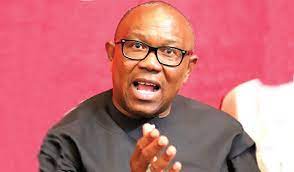
Presidential candidate of the Nigeria Democratic Congress (NDC), Mr Peter Obi, has urged Nigerians not to lose faith in the country’s electoral process despite their experiences in the 2023 general elections.

Obi made the appeal on Thursday while visiting Continuous Voter Registration (CVR) centres at Nise and Nri civic centres in Anambra.

The presidential candidate encouraged eligible residents to register ahead of the 2027 general elections.

He said the outcome of the 2023 elections should not discourage anyone from participating in future elections, stressing that voting remained the most effective means of building a better country.

According to him, obtaining a Permanent Voter Card (PVC) and voting are civic responsibilities that will enable Nigerians to elect leaders capable of improving education, healthcare and employment.

“While I move around registration centres, I try to encourage those yet to register because it is their civic responsibility.

“That is the way we can collectively build a better country where government will care about the people’s education, health and employment,” he said.

Obi acknowledged that many Nigerians believed their votes did not count in previous elections.

He, however, urged them not to be discouraged, insisting that citizens should remain committed to doing the right thing for the nation’s future.

“I urge all Nigerians who are of voting age and have not registered to go out and register to vote in the coming election.

“We can not give up because it did not work yesterday. We only work for a better future by doing the right thing. I assure you that your votes will count this time around,” he said.

Commenting on his party’s appeal against the recent Lokoja court judgment, Obi expressed confidence that the judiciary would deliver justice.

“As per our appeal, I’m sure the judiciary will do the right thing. All we are interested in is to do our part,” he said.

Buy One, Get Two? Why the Alli–Adedeji Ticket Is Reshaping Political Conversations in Oyo State

0


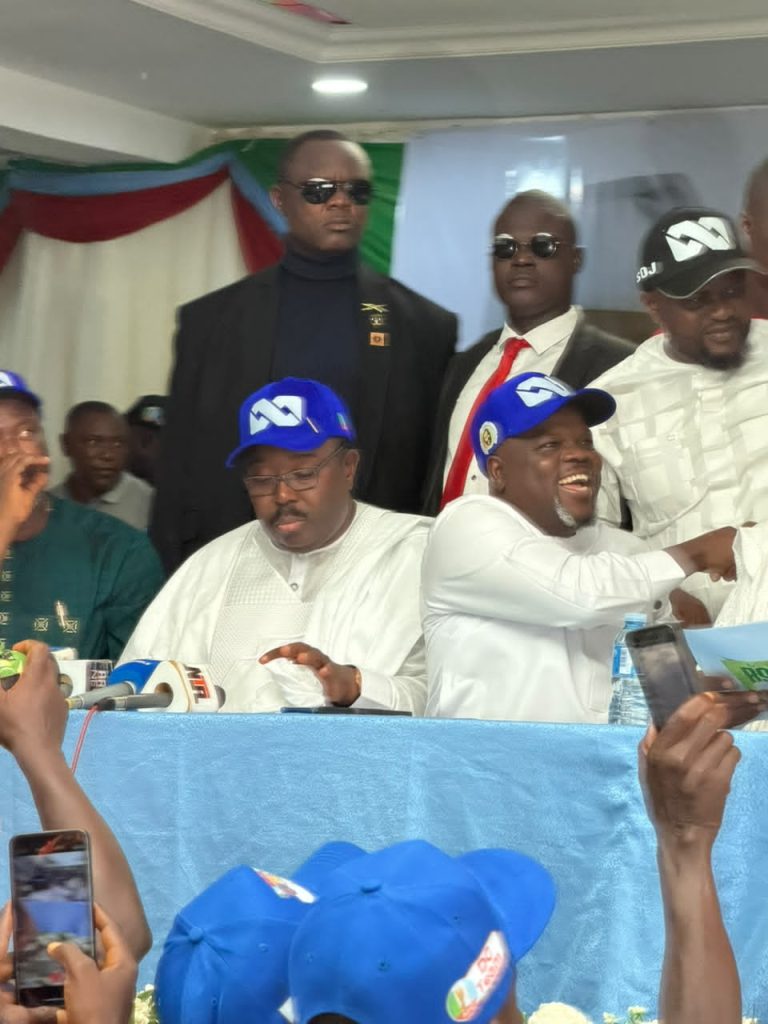
Every election season comes with a defining narrative. Sometimes it is a candidate’s track record. Sometimes it is the promise of change. At other times, it is the strategic combination of personalities assembled to lead a campaign. In Oyo State, one phrase has increasingly found its way into political conversations following the unveiling of Prince Adedeji as the running mate to Senator Sharafadeen Abiodun Alli in the forthcoming governorship election: “Buy One, Get Two.”
Ordinarily associated with the world of commerce, the phrase has been adopted by supporters of the APC ticket to convey what they believe is a partnership that offers more than the conventional relationship between a governor and deputy governor. In their view, the ticket combines two different leadership profiles—one rooted in years of political and legislative experience, the other in administration, professional exposure, and institutional engagement.
Whether that description ultimately convinces the electorate remains an open question. Yet one thing is undeniable: the choice of Prince Adedeji has shifted the conversation beyond the identity of the governorship candidate to the value of the partnership itself.
In modern Nigerian politics, the selection of a running mate is rarely a ceremonial exercise. It is one of the most consequential decisions a governorship candidate makes. Beyond satisfying constitutional requirements, it signals the type of government a candidate hopes to build. Political parties increasingly seek running mates who complement—not duplicate—the strengths of the principal candidate.

Senator Alli: Experience at the Centre of the Ticket
For Senator Sharafadeen Abiodun Alli, the governorship ambition represents another chapter in a political career that has spanned executive and legislative responsibilities. Over the years, Alli has occupied positions that exposed him to both policy formulation and governance. His tenure as Secretary to the State Government placed him at the heart of government coordination, while his service in the National Assembly has further strengthened his understanding of legislation, constituency representation, and federal-state relations.
Supporters argue that these experiences have equipped him with a practical understanding of the machinery of government. They point to his familiarity with public administration, political negotiation, and stakeholder management as qualities that distinguish him from many first-time contenders.
Another attribute frequently associated with Senator Alli is his connection with grassroots politics. Throughout his political career, he has maintained visibility across communities in Oyo State, building relationships with party leaders, community associations, artisans, professionals, market groups, and traditional institutions. To his supporters, this network reflects an understanding of local realities and the everyday concerns of ordinary residents.
Those who have followed Oyo politics over the years also note that Alli’s appeal has often extended beyond election periods. His political style has been described as one that prioritise consultation and consensus-building, qualities many believe are essential for governing a politically vibrant state such as Oyo. While critics, like those of every major political figure, may hold different views about his record, even many neutral observers acknowledge that Senator Alli brings considerable experience to the governorship contest.

Prince Adedeji: A Different Dimension
If Senator Alli represents political experience, Prince Adedeji is widely viewed as introducing a different dimension to the ticket. His emergence immediately attracted attention because it broadened discussions beyond politics alone. Rather than selecting another career politician, the APC chose someone whose profile is associated with administration, professional management, and institutional engagement.
Supporters believe this is where the “Buy One, Get Two” narrative derives much of its strength. They argue that governance in today’s Nigeria requires more than political popularity. It also demands administrative competence, strategic planning, efficient coordination of government institutions, and an appreciation of how public policy affects investment, economic development, education, healthcare, and infrastructure.
Prince Adedeji’s supporters contend that his professional background positions him to contribute in these areas. His royal heritage is also seen by admirers as an added advantage, particularly in a state where traditional institutions continue to play meaningful roles in community development, peacebuilding, and social cohesion.
For them, his emergence broadens the ticket’s appeal beyond conventional political structures, reaching professionals, young voters, and stakeholders who increasingly expect governance to be driven by competence as much as political experience.

Why Supporters Call It ‘Buy One, Get Two’
Political partnerships are often judged by whether the strengths of both candidates complement one another. In the case of the Alli–Adedeji ticket, supporters argue that this complementarity is exactly what distinguishes the alliance. They see Senator Alli providing political leadership, legislative experience, institutional memory, and an understanding of governance, while Prince Adedeji contributes administrative insight, organisational discipline, and a fresh perspective on public management.
The argument is not that one leader possesses all the answers, but that together they bring different competencies that could strengthen decision-making and improve the overall functioning of government. This is why the phrase “Buy One, Get Two” has resonated among many supporters. Rather than portraying the deputy governorship position as secondary, the narrative presents both men as individuals whose respective strengths could work in tandem if entrusted with the responsibility of governing the state.
The message is also strategic. Across Nigeria, voters increasingly pay attention not only to governorship candidates but also to those who may eventually serve as deputy governors. The expectation is that governance should be a collaborative effort rather than one centred solely on a single individual.

The Road Ahead

Political narratives can generate excitement, shape public perception, and influence campaign momentum. They can define how candidates are introduced to voters and frame the issues that dominate public debate.
Ultimately, however, elections are not decided by slogans alone. As campaigns gather pace across Oyo State, Senator Alli and Prince Adedeji will have to convince voters that the qualities attributed to them can be translated into practical solutions for the challenges confronting the state. Issues such as economic growth, infrastructure, education, healthcare, agriculture, youth employment, security, and social welfare will remain central to the campaign conversation.
The “Buy One, Get Two” description has undoubtedly become one of the most talked-about themes surrounding the APC ticket. Whether it remains a memorable political slogan or evolves into a message that resonates at the ballot box will depend on how effectively the candidates communicate their vision and how the electorate responds. For now, the partnership has achieved one notable objective: it has sparked a conversation about leadership, teamwork, and what Oyo State should expect from those seeking its highest offices.

Suswam’s Alleged N3.1bn Fraud Trial Adjourned to July 16

0


Justice Peter Lifu of the Federal High Court in Maitama, Abuja, has adjourned the trial of former Benue State Governor, Gabriel Suswam, until July 16, 2026, for the adoption of final written addresses in the alleged N3.1 billion fraud case.

Suswam and his former Commissioner of Finance, Omadachi Okolobia, are being prosecuted by the Economic and Financial Crimes Commission (EFCC) on an amended 11-count charge bordering on theft, criminal breach of trust, illegal award of contracts, and money laundering involving N3.1 billion, said to be proceeds from the sale of the Benue State Government’s shares in Benue Cement Company.

The EFCC alleged that the defendants carried out the fraud through Elixir Securities Ltd and Elixir Investment Partners Limited.

The prosecution called nine witnesses during the trial, while Suswam was the sole witness for the defence.

The defendants were first arraigned in November 2015 before Justice Ahmed Mohammed.

The case was subsequently transferred to Justice Okon Abang before his elevation to the Court of Appeal, after which it returned to Justice Mohammed following an appellate court ruling.

In December 2023, while the prosecution was about to close its case, Justice Mohammed was elevated to the Court of Appeal, prompting the reassignment of the matter to Justice Peter Lifu for a fresh trial.

The defendants were re-arraigned before Justice Lifu on March 21, 2024. After the prosecution closed its case, both defendants filed a no-case submission, which Justice Lifu dismissed on July 23, 2025, holding that the prosecution had established a prima facie case requiring them to enter their defence.

The defence opened its case on October 10, 2025, with the matter now set for the adoption of final written addresses on July 16, 2026.

United Capital forecasts marginal rise in June inflation to 15.95%

0


The Research Department of United Capital Plc has projected a marginal increase in Nigeria’s headline inflation rate to 15.95 per cent in June 2026, from 15.93 per cent recorded in May.

The projection is contained in the company’s June research report made available to the News Agency on Thursday in Lagos.

According to the report, the expected increase is largely driven by rising prices of some food items, particularly tomatoes, although the impact was moderated by lower prices of Premium Motor Spirit.

It said the survey recorded mixed movements in food prices in June compared with May.

“Logistics costs dropped as easing geopolitical tensions drove down global crude oil prices. Meanwhile, the price of tomatoes increased significantly.

“Since tomatoes form a major component of cooking in the average Nigerian household and most restaurants, the increase usually exerts upward pressure on consumer expenditure and, consequently, inflation.

“The rise in tomato prices in June was mainly due to reduced supply, as the dry season harvest has ended and the rainy season is now in full swing,” the report stated.

The report also noted that yam prices increased by eight per cent in June compared with May, while the prices of rice and beans declined.

According to the report, rice prices fell marginally as both local and imported varieties recorded slight price reductions, while beans prices declined by five per cent.

It stated that if the projection materialises, it would mark the fourth consecutive monthly increase in the country’s inflation rate ahead of the Monetary Policy Committee (MPC) meeting of the Central Bank of Nigeria (CBN) scheduled for July 20 and July 21.

The report, however, questioned whether the MPC would respond with further monetary policy tightening.

It attributed the moderation in inflationary pressures to lower fuel prices, supported by easing geopolitical tensions that reduced crude oil prices.

According to the report, the average price of Bonny Light crude declined by 21.81 per cent to 87.70 dollars per barrel in June from 112.16 dollars per barrel in May.

Similarly, the average pump price of PMS fell by five per cent to N1,249 per litre in June from N1,312 per litre in May.

The United Capital projected that inflation would remain within the 15 per cent range between July and October, with gradual moderation expected as the harvest season improves food supply.

“Recent increases in tomato and yam prices largely reflect seasonal supply constraints associated with the onset of the rainy season.

“As harvest activities improve food supply, inflationary pressures are expected to ease, making June 2026 a likely seasonal peak rather than the beginning of a sustained upward trend,” the report stated.

The research firm advised the MPC to retain current policy rates at its July meeting.

It said the CBN was more likely to continue managing liquidity through Open Market Operations than implement another rate hike.

The report added that fixed-income yields were expected to remain broadly stable in the short to medium term, barring major inflation or policy surprises.

It also said the recent correction in the equities market had created opportunities for a rebound as investors reposition ahead of the release of half-year corporate earnings.

On the foreign exchange market, the report said the naira appreciated marginally by 0.2 per cent on a monthly average basis, with the average exchange rate improving from N1,370 per dollar in May to N1,367 per dollar in June.

However, it noted that the currency weakened slightly at the official closing rate, depreciating to N1,380 per dollar in June from N1,373 per dollar in May.

EFCC Declares Ekiti-Born Man Wanted Over Alleged Fraud, Forgery

0


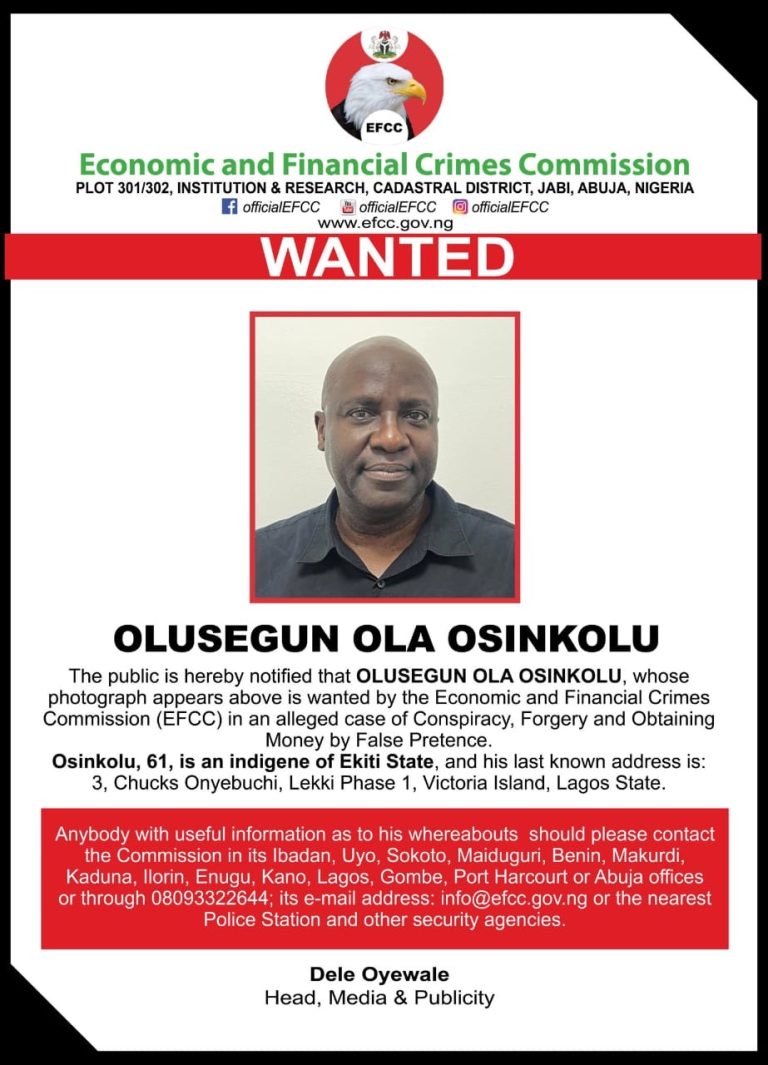
The Economic and Financial Crimes Commission (EFCC) has declared 61-year-old Olusegun Osinkolu wanted over alleged offences bordering on conspiracy, forgery and obtaining money by false pretence.

In a wanted notice issued by the anti-graft agency, the EFCC said Osinkolu, an indigene of Ekiti State, is being sought in connection with an ongoing investigation into the alleged crimes.

The Commission disclosed that his last known address is No. 3, Chucks Onyebuchi, Lekki Phase 1, Victoria Island, Lagos State.

The EFCC appealed to members of the public with useful information on his whereabouts to contact the Commission through any of its offices in Ibadan, Uyo, Sokoto, Maiduguri, Benin, Makurdi, Kaduna, Ilorin, Enugu, Kano, Lagos, Gombe, Port Harcourt or Abuja.

The agency also urged anyone with relevant information to report to the nearest police station or other security agencies. The notice was signed by the Head of Media and Publicity, Dele Oyewale.

Lagos Battles Mounting Waste as Residents Await Relief Amid Rainy Season

0

BY TAIWO OGUNMOLA -OMILANI


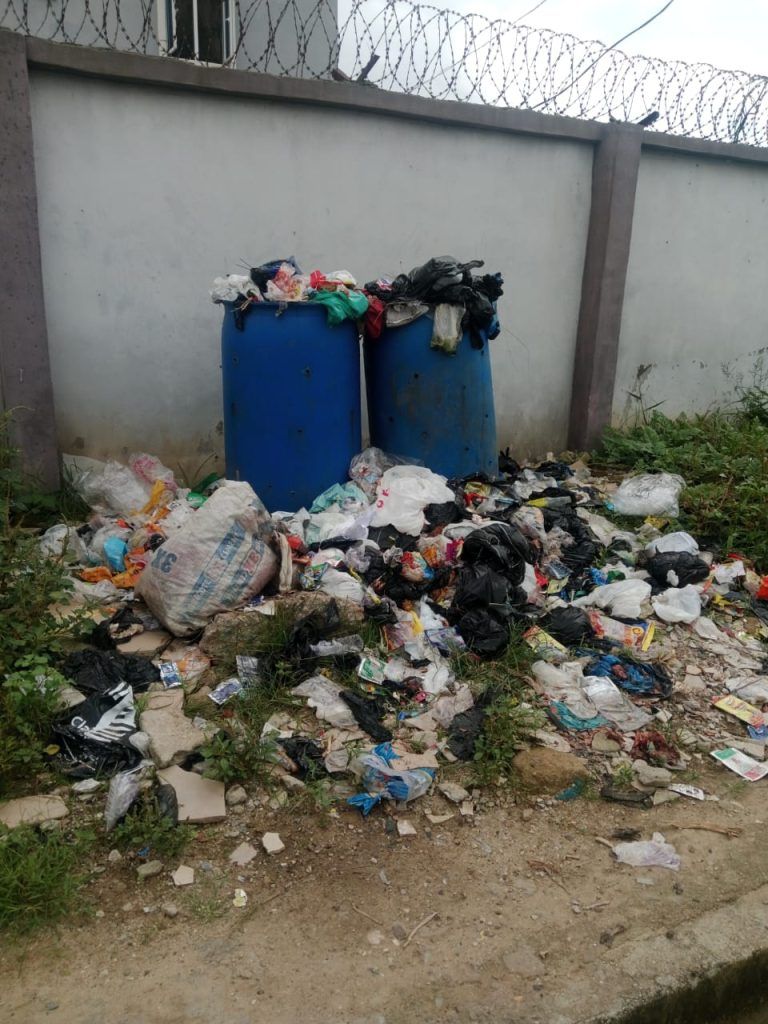
Despite an order by Lagos State Governor, Babajide Sanwo-Olu, for an immediate scale-up of waste evacuation across the state, heaps of refuse continue to line residential streets, raising fresh concerns over environmental sanitation and flooding as the rainy season intensifies.

Across several communities, waste bags are now a common sight in front of homes, with residents saying collection has become irregular. Environmental experts warn that if heavy rainfall washes the refuse into drainage channels, blocked waterways could worsen flooding in many parts of the State.

The governor had recently directed the Lagos Waste Management Authority (LAWMA), the Lagos State Environmental Protection Agency (LASEPA), and the Ministry of the Environment and Water Resources to intensify waste clearance in affected areas.

“I have directed an immediate scale-up of waste evacuation across Lagos following the recent build-up of refuse in some parts of our state,” Sanwo-Olu said.

However, residents who spoke with UPSHOT said the situation has yet to improve significantly.
Some complained that, beyond the growing piles of refuse outside homes, a number of residents now dispose of waste indiscriminately by dumping it on roadsides and inside drainage channels, further worsening environmental conditions.

Mrs. Adediya Foluke, a resident, said waste collection in her neighbourhood has become inconsistent, leaving the area dirty and attracting rats and insects into homes.

“The LAWMA truck in our area has not been consistent in collecting waste. The environment is becoming very dirty, and rats and insects are now finding their way into our houses,” she said, urging private operators working with LAWMA to improve the regularity of waste collection.

To understand the cause of the delays, UPSHOT spoke with managers of two LAWMA waste collection trucks who requested anonymity.
According to them, the rainy season has made it increasingly difficult to dispose of refuse at the Olusosun dumpsite and facilities around Ojota due to long queues.

“We always queue during this period to discharge waste. Sometimes it takes days before we can offload, and we even have to sleep in our trucks while waiting,” one of the operators said.
Acknowledging the challenge, Governor Sanwo-Olu said the state government is working to acquire more waste evacuation trucks while pursuing long-term solutions to improve waste management.

He stressed that the scale of Lagos’ daily waste generation presents a major operational challenge but assured residents that his administration remains committed to addressing the problem.

“Lagos generates over 13,000 tonnes of waste every single day. Managing this requires a massive effort, but our determination to fix the current challenge is absolute,” the governor said.

As residents await improved waste collection, concerns remain that prolonged delays, combined with heavy rainfall, could heighten the risk of flooding and pose serious public health threats across the state.