Home Blog Page 330

United Kingdom: Alade, AMCON CEO, Receives 16th African Business Leadership Awards

0


The Managing Director/Chief Executive Officer of Asset Management Corporation of Nigeria (AMCON), Mr Gbenga Alade, at the 16th African Business Leadership Awards (ABLA), received the African Business Leadership Special Commendation Award in the United Kingdom (UK).

The event, which was held at the iconic Cromwell Committee Room 4A, House of Lords, UK, and was organised by the African Leadership Organization, publishers of African Leadership Magazine, also saw the AMCON CEO inducted into the prestigious African Leadership Council (ALC).

The African Leadership Organisation, which is chaired by the former President of Tanzania, His Excellency, Dr Jakaya Kikwete, said it selected Mr Alade to be conferred with the award for “African Business Leadership Special Commendation Award, with induction into the prestigious African Leadership Council (ALC),“ following his accomplishments in the business sector.

The award ceremony, which was held between July 2-3,2026, at the House of Lords, Westminster, London, also featured an address by the governor of Imo State, Senator Hope Uzodimma, who was represented by one of his commissioners.

A letter by the Founder and Executive Chairman of the African Leadership Magazine, Dr Ken Giami, to Alade, the AMCON CEO, stated that Alade was selected thus: “In recognition of this distinguished honour, you are cordially invited to receive the Award at the 16th African Business Leadership Awards (ABLA) Ceremony, scheduled for July 3, 2026, at the House of Lords, London, United Kingdom.

“You will also participate in an exclusive Honourees’ Interview Session to be featured in the Special ABLA Honourees’ Edition of African Leadership Magazine, to be unveiled in London, and distributed globally to policymakers, institutional investors, development finance institutions, corporate leaders, and multilateral partners.

“In further recognition of your outstanding leadership within Africa’s financial and economic management ecosystem, you will also be presented with the U.S. Special Commendation from the State of South Carolina during the event. This additional honour underscores the growing global recognition of Africa’s financial leadership and reflects the strengthening institutional bridge between African economic institutions and key policy and investment stakeholders in the United States.”

Part of the letter read, “By this award and recognition, Alade has joined a distinguished circle of African leaders who have won the awards, including H.E. Julius Maada Bio, President of Sierra Leone; H.E. Évariste Ndayishimiye, President of Burundi; H.E. Adama Barrow, President of The Gambia; H.E. Abiy Ahmed, Prime Minister of Ethiopia; H.E. Jakaya Mrisho Kikwete, former President of Tanzania; and Dr. Akinwumi Adesina, President of the African Development Bank, and a host of others.

Alade was accompanied to receive the awards by the Executive Director, Asset Management, Dr Aminu Mukhtar Dan Amu, a member of the Board of Directors of AMCON, Mr Charles Iyore, and the Head of Corporate Communications Department of AMCON, Mr Jude Nwauzor.

*PHOTO CAPTION*:
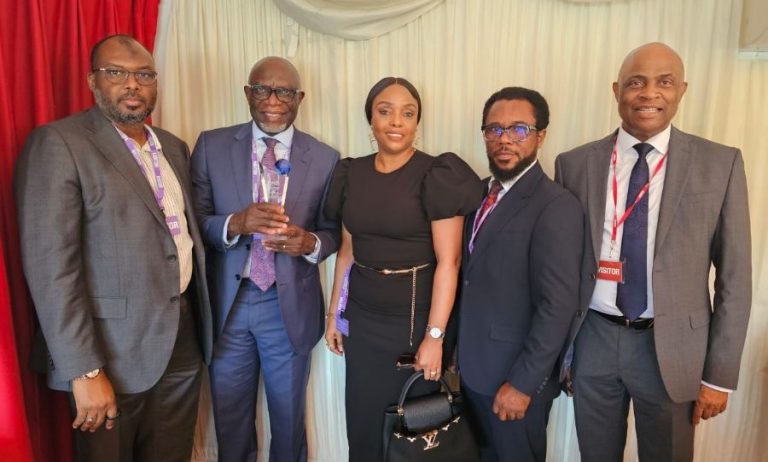
L-R: Executive Director, Asset Management Corporation of Nigeria (AMCON), *Dr Aminu Muhtar Dan Amu*; the award recipient, and Managing Director/CEO, AMCON, *Mr Gbenga Alade*, and his wife, *Mrs Yetunde*; Head, Corporate Communications Department, *Mr Jude Nwauzor*; and a Non-Executive Director, and Board Member of AMCON, *Mr Charles Iyore*, at the just concluded 16th African Business Leadership Awards (ABLA) at House of Lords, United Kingdom.

Again, FG under fire over PFIPC scandal

0

The faction of the Peoples Democratic Party (PDP) led by Kabiru Turaki has challenged President Bola Tinubu to order a forensic investigation into the scandal surrounding the Presidential Foreign Intervention Promotion Council (PFIPC) and suspend all officials linked to the controversy.

PDP, in a statement issued by Ini Ememobong, the national publicity secretary, described the controversy as “a damning revelation of the incompetence and negligence of the APC-led federal government.”

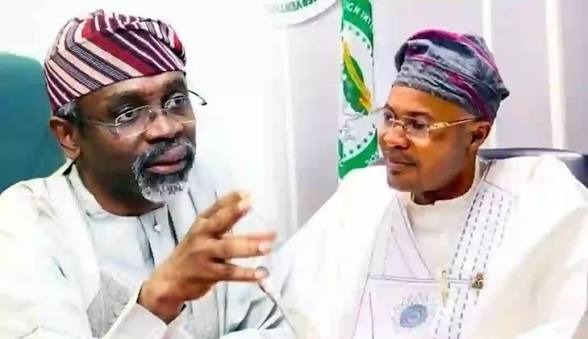
The embattled PFIPC Director General, Mathew Adeniyi Adeyemi and Femi Gbajabiamila, Chief of Staff to President Bola Tinubu, have been at daggers drawn over the existence of the agency.

The controversy began on June 11 when Gbajabiamila issued a public disclaimer disowning the appointment of Adeyemi as the head of PFIPC.

But Adeyemi challenged the disclaimer and urged Tinubu to establish an independent panel to investigate the matter.

The debate spiked on July 1 after the presidency issued a statement backing Gbajabiamila and accusing Adeyemi of forging an appointment letter and falsely presenting himself as a presidential appointee.

The Police has filed an eight-count criminal charge against Adeyemi, according to Bayo Onanuga, presidential spokesperson.

In his statement challenging Gbajabiamila’s disclaimer, Adeyemi alleged that the disagreement was triggered by his refusal to part with 48 percent of the agency’s take-off grant.

He also claimed to have paid N400 million to secure his appointment, with a remaining balance of N200 million.

A princely N1.3 billion was allocated to the council in the approved 2026 budget and the account it opened with the CBN through the office of the accountant-general of the federation (OAGF).
Reacting, the PDP faction said allegations made by Adeyemi against Gbajabiamila and the presidency’s response through Bayo Onanuga, special adviser on information and strategy to the president, exposed “deep institutional failures within the federal government” and have confirmed that the APC-led Federal Government is running the country with alarming recklessness, where nepotism and cronyism have displaced merit and impunity has become standard practice.”

The party noted that the presidency’s position on the controversy raised more questions than answers on how an alleged impostor could have secured office space in a government facility, been assigned staff, received budgetary allocations, operated Central Bank-registered accounts, and interacted with agencies such as the EFCC.

“From the appointment of deceased persons into government offices, to the inclusion of undeserving individuals on the presidential pardon list, the N800 billion Progressive Governors Forum scandal, and numerous other avoidable blunders, this administration has demonstrated a troubling pattern of institutional failure.

“If the Presidency’s account is correct, that Prince Adeyemi is an impostor, then it means the Federal Government is so porous and vulnerable.

“If, on the other hand, Prince Adeyemi’s account is accurate… then this is yet another act of shameless corruption added to a long and growing queue of unchallenged corrupt officials in this administration. Anyway this pendulum swings, the Nigerian people lose.”

It said if the presidency’s explanation were accepted, it would still amount to “a monumental failure of the state” because an impostor allegedly operated undetected at the highest levels of government.

The faction added that a responsible government would have immediately ordered an independent forensic investigation, suspended officials implicated in the matter, introduced reforms to prevent a recurrence and apologised to Nigerians.

Instead, it alleged that the federal government was attempting to downplay public concerns while hoping the controversy would fade.

“We therefore call on the president, Asiwaju Bola Tinubu, to immediately order a forensic investigation of this scandal by a reputable firm of international standing, announce the suspension of all key officials connected to the matter, order a comprehensive reorganisation of the Presidency, and issue an unreserved apology to Nigerians for this deeply embarrassing situation.”

The PDP added that the presidency owed Nigerians “more than explanations” and must demonstrate accountability, warning that failure to do so would further erode public trust and strengthen calls for a change of government in 2027.

Sun

Musical Mary returns for performances this weekend at Eko Hotel & Suites

0

The stage musical Mary will return to the Eko Hotels & Suites theatre this weekend for two performances as part of the venue’s July theatre programme.

The production, based on the biblical story of Mary, explores the experiences of the mother of Jesus by focusing on her personal struggles, faith and resilience.

Through music and drama, it presents the story from a human perspective.


One of the production’s notable creative features is its portrayal of Joseph through two contrasting characters, representing devotion and temptation, a dramatic approach designed to explore the emotional and psychological aspects of the story.

Mary will be performed on July 11 and 12 at 6 p.m. at Eko Hotels & Suites. It is one of four productions scheduled for the hotel’s July theatre season.

Sun

Nigeria, 8 others account for 83% of global gas flaring worth $54bn –World Bank

0

World Bank on glass building. Mirrored sky and city modern facade. Global capital, business, finance, economy, banking and money concept 3D rendering animation.

Nigeria has been listed among nine countries responsible for more than 83 per cent of global gas flaring in 2025.

This is according to the latest Global Gas Flaring Tracker Report released by the World Bank’s Global Flaring and Methane Reduction Partnership (GFMR) in collaboration with the Payne Institute at the Colorado School of Mines.

The report identified Nigeria alongside Russia, Iran, Iraq, Venezuela, Mexico, Libya, Algeria and the United States as the countries accounting for the overwhelming majority of global gas flaring last year. Collectively, the nine nations produced just 46 per cent of the world’s crude oil but were responsible for more than four-fifths of all gas flared globally.

Gas flaring occurs when natural gas produced during crude oil extraction is burned instead of being captured for domestic use, exports or industrial applications. The practice not only wastes a valuable energy resource but also contributes significantly to greenhouse gas emissions.

According to the report, global gas flaring rose for the third consecutive year, increasing from 157 billion cubic metres (bcm) in 2024 to 167 bcm in 2025.

The World Bank estimated that flaring generated about 429 million tonnes of carbon dioxide equivalent emissions in 2025, including around 50 million tonnes from unburned methane, one of the most potent greenhouse gases.

For Nigeria, the report comes as the country continues to position natural gas as the cornerstone of its energy transition strategy. The Federal Government has repeatedly pledged to end routine gas flaring through initiatives such as the Nigerian Gas Flare Commercialisation Programme (NGFCP), while encouraging investments in gas processing infrastructure and domestic gas utilisation.

Nigeria also holds one of Africa’s largest proven natural gas reserves and is seeking to leverage the resource to boost electricity generation, support industrialisation, expand gas-based industries and increase export earnings.

However, the latest findings suggest that significant challenges remain in converting associated gas that would otherwise be flared into commercially viable products.

The report noted that more than 60 per cent of the increase in global gas flaring during 2025 came from Russia, Mexico and Iran, with Russia retaining its position as the world’s largest gas-flaring country after recording a nine per cent increase in flaring volumes.

Globally, the amount of gas flared in 2025 exceeded the volume of liquefied natural gas (LNG) transported through the Persian Gulf during the year and was roughly equivalent to Africa’s annual gas consumption.

The World Bank valued the wasted gas at approximately $54 billion, underscoring the enormous economic losses associated with continued flaring.

According to the report, eliminating routine gas flaring worldwide would require between $70 billion and $100 billion in upfront investment. It stressed that the technologies needed to capture and utilise associated gas already exist, with inadequate infrastructure, weak gas markets, financing constraints and poor regulatory enforcement remaining the key obstacles.

The report noted that reducing routine gas flaring could significantly improve energy security by increasing gas supplies for power generation, industries and clean cooking. It estimated that one billion cubic metres of natural gas can generate around four billion kilowatt-hours of electricity.

While global flaring increased, some countries recorded notable progress. The United States reduced flaring by seven per cent following the commissioning of the Matterhorn Express Pipeline, while Kazakhstan has cut gas flaring by 87 per cent since 2012 through stronger regulations and sustained investments in gas infrastructure.

The World Bank said these examples demonstrate that with the right policy framework, infrastructure investments and regulatory enforcement, countries can substantially reduce gas flaring while improving energy security, creating economic value and lowering greenhouse gas emissions.

Sun

South Africa’s xenophobia tensions could force Nigeria to act – Mohammed

0


Former Minister of State for Foreign Affairs, Dr Nurudeen Mohammed, has warned that escalating xenophobic tensions in South Africa could compel Nigeria to adopt stronger diplomatic measures if the situation continues to deteriorate.

Speaking on the growing hostility towards foreign nationals in South Africa on ARISE News, Mohammed said anti-immigrant sentiment has become a major social issue, with many South Africans expressing strong opposition to illegal immigration.

According to him, while South African political leaders have not openly endorsed attacks or mob actions against foreigners, they have also failed to take a firm enough stance to discourage such behaviour.

“One of the social issues is that Citizens of South Africa feel strongly against illegal immigrants.

“South African politicians are not openly supporting the mob, but equally enabling them, he said.

Mohammed argued that the continued pressure on politicians from citizens demanding tougher action against undocumented migrants has contributed to an environment where xenophobic attitudes are becoming more pronounced.

He cautioned that if the trend persists, Nigeria could have legitimate grounds to take stronger diplomatic action to protect its citizens and safeguard bilateral relations.

“This will give a country like Nigeria probable cause to take more drastic actions, he added.

The former minister stressed the need for South African authorities to address concerns over illegal immigration through lawful and institutional measures rather than allowing public hostility to fuel attacks on foreign nationals.

Sun

Plateau: Six killed, one injured in fresh attacks on Riyom, Barkin Ladi communities

0


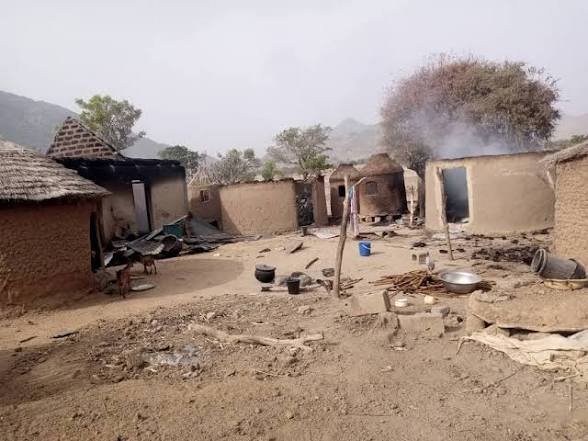
The Berom Youth Moulders-Association (BYM) has confirmed that six people were killed and one other injured in separate attacks on communities in Barkin Ladi and Riyom local government areas of Plateau State.

BYM, in a statement signed by its National Publicity Secretary, Rwang Tengwong, said the first attacks occurred on Saturday when six people were killed after gunmen attacked Ta-Hoss in Riyom Local Government Area and Sabon Layi in Barkin Ladi Local Government Area, while the second attack occurred in the early hours of Sunday in Kwi, Riyom Local Government Area.

Tengwong described the attacks as a continuation of the sustained campaign of terror against peaceful Plateau Christian communities, particularly in Riyom and Barkin Ladi local government areas.


He condemned the continued siege on Berom land by bandits and called on security agencies to be alive to their responsibilities and flush them out of the affected areas.

The statement said, “The Berom Youth Moulders-Association (BYM) under the leadership of Barr. Dalyop Solomon Mwantiri strongly condemns the fresh wave of coordinated attacks by armed Fulani terrorists that claimed the lives of six innocent people and left one woman critically injured in separate attacks on Ta-Hoss, Riyom LGA, and Sabon Layi, Barkin Ladi LGA on Saturday, 4th July 2026, and Kwi, Riyom LGA in the early hours of Sunday, 5th July 2026.

“At about 2:00 p.m. on Saturday, 4th July 2026, Armed Fulani terrorists operating from the Fulani Settlement in Bangai axis attacked farmers on their farmland at Rinyan Village in Ta-Hoss Community, Riyom Local Government Area.

“The attackers shot dead Mrs Hudung Luka (40) and critically injured Mrs Ladi Istifanus (50).

“Later that same night, terrorists invaded Sabon Layi Community in Barkin Ladi Local Government Area and brutally murdered Sunday (25), Benjamin James (33) and Godwin Yakubu (27).

“In the early hours of Sunday, 5th July 2026, the terrorists struck again, killing Mr Peter Bulus in Kwi Village, Riyom Local Government Area.

“These attacks are not isolated incidents but form part of a persistent pattern of violence deliberately targeting innocent civilians, farmers, and rural communities.

“The repeated killings continue to instil fear, displace families, and threaten the livelihoods of the Berom people.

“BYM is deeply concerned by recent security intelligence reports indicating that armed Fulani terrorists are allegedly camped in different locations across Plateau State with the objective of launching coordinated attacks on vulnerable communities.

“This disturbing development calls for immediate, intelligence-driven security operations to identify, dismantle, and neutralise these camps before more innocent lives are lost. Security agencies must act proactively rather than waiting to respond after attacks have occurred.”

While extending his condolences to the bereaved families, Tengwong called on the Federal Government, the Plateau State Government, the military, the police, the Department of State Services, the Nigeria Security and Civil Defence Corps, and all other security agencies to immediately identify, arrest and prosecute the perpetrators and their sponsors.

BYM also demanded intensified surveillance of identified flashpoints and decisive action based on available intelligence to forestall further attacks.

Sun

Dangote Cement Unveils Sustainability Scorecard, Targets 80 Million Tonnes Capacity by 2030

0


Dangote Cement Plc has unveiled a comprehensive sustainability scorecard, reaffirming its commitment to responsible growth by placing Environmental, Social and Governance (ESG) principles at the core of its ambition to become Africa’s most sustainable and globally competitive cement manufacturer.

The company reaffirmed its commitment to sustainable industrialisation before shareholders and other stakeholders at its 17th Annual General Meeting (AGM) in Lagos, outlining sustainability strategies aligned with the broader Dangote Industries Limited (DIL) Vision 2030.

Presenting the company’s 2025 Sustainability Scorecard, Chairman of Dangote Cement Plc, Mr. Emmanuel Ikazoboh, said sustainability has evolved from a compliance requirement into a core business strategy that drives growth, resilience and long-term value creation across the continent.

As part of its decarbonisation agenda, the company approved plans in 2024 to reduce its net carbon dioxide (CO₂) emissions intensity by an additional 20 per cent while accelerating the transition to cleaner transportation.

According to Ikazoboh, by 2027, all fleet trucks operating in Nigeria, except those at the Gboko plant, will run on Compressed Natural Gas (CNG), while electric trucks are expected to be introduced from 2026.
Dangote Cement also announced plans to strengthen its position as Africa’s leading cement exporter through expanded port infrastructure at Apapa, Onne and Lekki.

The company is pursuing capacity expansion programmes aimed at increasing installed production capacity to 80 million tonnes per annum (MTPA) by 2030, including new operations in Botswana and Zimbabwe.

On human capital development, the company said it created 625 direct green jobs across its operations and increased social investment spending by 56 per cent. Graduate trainee recruitment also rose by 74 per cent, reflecting its commitment to developing Africa’s next generation of industrial talent.

To support workforce development, Dangote Cement invested ₦2.1 billion in employee training and development, with the goal of becoming the employer of choice across its operating countries through an inclusive, high-performance workplace.

On climate action, the company reported a 6.5 per cent reduction in CO₂ emissions intensity compared with its 2021 baseline. It also recorded a 1.7 per cent improvement in energy efficiency, a four per cent reduction in overall energy consumption and an eight per cent decline in water consumption.

The company attributed these achievements to its decarbonisation strategies, including the use of alternative fuels, improved energy efficiency and reduced clinker factor, which have integrated climate objectives into long-term investment decisions.
In the area of governance, Dangote Cement strengthened its ESG framework by introducing an Artificial Intelligence Risk Management Policy, Biodiversity Policy and Disability Inclusion Policy, while integrating 297 local vendors into its ESG-focused supply chain programme.
Ikazoboh said sustainability governance has matured significantly over the past decade, with executive accountability, climate risk oversight and ESG performance management now fully embedded in the company’s strategic and operational processes.

On circular economy and biodiversity, he highlighted the expansion of the DangCircular initiative, which promotes waste reduction, recycling and circular economy practices.

The company co-processed more than 437,000 tonnes of waste as alternative fuel, reducing reliance on fossil fuels while improving resource efficiency.

He also announced the launch of the Dangote Tree-to-Forest Programme across all operational locations during the 2025 financial year. The initiative aims to afforest 200 hectares in each country of operation over five years by planting 700 trees per hectare to restore ecosystems and enhance climate resilience through carbon sequestration.
Dangote Cement traced its sustainability journey to 2017, when it established the Dangote Seven Sustainability Pillars and began reporting in line with Global Reporting Initiative (GRI) standards.

Since then, it has introduced sustainability champions, executive ESG accountability systems, climate disclosure frameworks, biodiversity restoration initiatives and enterprise-wide sustainability policies.

The company’s climate governance efforts have also improved its ESG ratings, earning a B score in climate and water security disclosures from the Carbon Disclosure Project (CDP). It has also committed to voluntarily adopting the IFRS Sustainability Standards ahead of mandatory implementation.

According to the company, sustainability is the engine driving Vision 2030, ensuring that industrial expansion is balanced with environmental stewardship, social progress and corporate resilience.

“Growth with embedded sustainability creates enduring industrial leadership,” the company said, noting that its roadmap translates Vision 2030 into practical priorities across people, climate, governance and nature.

Dangote Cement said it remains committed to combining industrial expansion with responsible business practices while strengthening its role in Africa’s infrastructure development, economic transformation and environmental sustainability.

“As we build Africa’s largest and most sustainable cement business, we are creating a platform for long-term growth, resilience and shareholder value.

Our sustainability strategy is not separate from our business strategy—it is the foundation upon which we will achieve Vision 2030.

We invite investors to join us as we expand our footprint, deepen our export leadership, and shape the future of sustainable industrialisation across Africa,” Ikazoboh said.

Obi renews call for Tinubu’s resignation over IMF’s ₦8.83tn off-budget claim

0


The presidential candidate of the Nigeria Democratic Congress (NDC), Peter Obi, has renewed his call for President Bola Tinubu to resign following the International Monetary Fund’s (IMF) disclosure that about ₦8.83 trillion in Nigeria’s 2025 expenditure was not captured in the budget.

The IMF’s Resident Representative in Nigeria, Christian Ebeke, had said the off-budget spending, estimated at 2 per cent of Nigeria’s Gross Domestic Product (GDP), made the country’s fiscal deficit appear smaller than its actual borrowing needs.

Reacting on Sunday via his X page, Obi described the revelation as evidence of poor fiscal accountability and alleged grand corruption in the current administration.

“The IMF now reveals that about ₦8.83 trillion in expenditure undertaken in 2025 is not reflected in the budget.

“This expenditure is not budgeted and is therefore not under legislative oversight or administrative scrutiny. This is horrible.

“It is more than the entire combined budget for education (₦3.52 trillion) and health (₦2.38 trillion).

“If such an amount is properly used and accounted for, it could transform Nigeria’s public health and education sectors.

“It could create hundreds of cottage industries that can provide jobs for thousands of graduates and build a solid foundation for economic development.

“But we cannot account for it. This is not an isolated incident. This is a pattern of grand corruption that has become part of this administration.

“We have a lot to worry about regarding the state of corruption under President Tinubu.

“The sort of corruption that is ingrained in total disregard of elementary rules of public finance management poses a grave danger to national security and the stability of the Nigerian state.

“The capture of the Nigerian state and the plunder of its resources are actions that undermine the basis of state stability and deepen poverty and state failure.”

Obi also insisted that the latest IMF disclosure, alongside worsening insecurity and economic hardship, justified his earlier demand that Tinubu should step down.

“A few days ago, I called on President Tinubu to resign from office for incompetence, lack of capacity, lack of compassion, and failure to improve on his campaign promises. Some people thought perhaps the call was excessive.

“But with the daily revelations of pervasive corruption in this administration and its total lack of commitment to the welfare and security of Nigerian citizens, the only reasonable action is for President Tinubu to resign from office.

“The collapse of elementary forms of due process under Tinubu and the increased evidence of rampant looting of Nigerian public finances reinforce the need for greater accountability.

“It is now time for Nigerian citizens to rise within the law and hold this administration to account.”

Obi’s renewed call comes a day after former Vice President Atiku Abubakar urged the Economic and Financial Crimes Commission (EFCC) and the Independent Corrupt Practices and Other Related Offences Commission (ICPC) to investigate the IMF’s disclosure on the alleged off-budget expenditure.

Sun

My ICAN journey started at 13 – Nigeria’s youngest chartered accountant

0


Nigeria’s youngest chartered accountant, Osasere Okundaye, has revealed how her journey with the Chartered Accountants of Nigeria (ICAN) began.

Speaking on Saturday during the Power Must Change Hands monthly programme at the Mountain of Fire and Miracles Ministries headquarters in Magboro, Ogun State, Okundaye, who is 16 years old, said her ICAN journey began at age 13.

Her disclosure comes after she was announced as the country’s youngest chartered accountant on Monday.

In her testimony before the congregation, Okundaye shared that she was encouraged by her parents to enrol for ICAN’s accounting technicians scheme (ATS) examinations instead of waiting until she was old enough for university admission.

“I am 16 years old. I started this ICAN journey three years ago after finishing my secondary school early.

“My parents encouraged me to start writing the ICAN examinations through ATS instead of just waiting around until I got to the right age for university.
“I wasn’t an accounting student in secondary school, so the exams, especially at the first level, proved very difficult, more difficult than they probably were for other people at the same level.

“But I had to put in extra effort, and with the grace of God, I was able to pass that first level. Ever since then, it has been a success,” she said.

Speaking further, Okundaye shared that she suffered a setback after failing one of her final examination papers in 2025.

“Last year, I failed one of my final papers, unfortunately, which I had to rewrite earlier this year in May.

“To the glory of God, I passed that examination, and now I can say that I am a qualified accountant of the institute at 16 years old.”

Sun

SERAP demands National Assembly probe ₦1.3bn allocation to ‘fictitious’ presidential council

0


The Socio-Economic Rights and Accountability Project (SERAP) has called on the leadership of the National Assembly to disclose all records relating to the allocation of over ₦1.3 billion to the alleged Presidential Foreign Intervention Promotion Council (PFIPC)/Presidential Economic Advisory Council in the 2026 Appropriation Act.

The organisation also urged the National Assembly to launch an immediate investigation into the controversial budgetary provision following the Presidency’s declaration that the council does not exist.

In a Freedom of Information (FoI) request dated July 4, 2026, and signed by its Deputy Director, Kolawole Oluwadare, SERAP asked Senate President Godswill Akpabio and Speaker of the House of Representatives Tajudeen Abbas to release certified copies of all documents relating to the consideration and approval of the ₦1,302,978,784 allocation.

The rights group further requested the disclosure of records identifying members of the National Assembly committees that considered the allocation, as well as the names and official designations of government officials who appeared before the committees to defend the budget proposal.

SERAP also sought clarification on whether the allocation was contained in the Executive’s original Appropriation Bill or was introduced during the legislative budget process.

It asked the National Assembly to disclose whether any lawmaker questioned the legal status, establishment or operational mandate of the Presidential Foreign Intervention Promotion Council during deliberations and what actions were taken in response.

According to the organisation, the Presidency’s public denial of the existence of the council has raised serious concerns about the integrity of Nigeria’s appropriation process and the effectiveness of legislative oversight.

“These conflicting accounts raise serious concerns regarding the integrity of Nigeria’s appropriations process, legislative oversight, public financial management and accountability,” SERAP stated.

The organisation argued that the National Assembly has a constitutional responsibility not only to approve budget proposals submitted by the Executive but also to thoroughly scrutinise and verify all appropriations before authorising public expenditure.

“Nobody has a more sacred obligation to obey the law than those who make the law. The National Assembly ought to keep an eye on what the Executive is doing and to keep the Presidency and agencies of government in check, including before and during the appropriation process by thoroughly scrutinising Executive budget proposals,” the group said.

SERAP maintained that Nigerians have a constitutional right to know whether public funds were appropriated for an entity that was not lawfully established and, if so, how such an allocation was approved.

The organisation said the requested documents would enable citizens to determine whether the National Assembly fulfilled its constitutional responsibilities under Sections 80, 81, 88 and 89 of the 1999 Constitution in scrutinising and approving the 2026 budget.

It warned that failure to comply with the request within seven days would leave it with no option but to institute legal proceedings against the National Assembly in the public interest.

“We would be grateful if the recommended measures are taken within seven days of the receipt and/or publication of this letter. If we have not heard from you by then, SERAP shall take all appropriate legal actions to compel you and the National Assembly to comply with our request,” the organisation stated.

SERAP argued that making the documents public would strengthen confidence in the National Assembly, improve transparency in the management of public funds and enhance citizens’ ability to hold public institutions accountable.

The organisation also cited Nigeria’s Freedom of Information Act, the 1999 Constitution, the African Charter on Human and Peoples’ Rights, the International Covenant on Civil and Political Rights, and the globally recognised Tshwane Principles on National Security and the Right to Information as legal frameworks supporting its demand for disclosure.

According to SERAP, the records sought concern issues of exceptional public importance because they relate directly to the integrity of Nigeria’s budget process, the lawful establishment and funding of public institutions, and the proper use of public resources.

The call follows a statement issued by the Presidency on July 1, 2026, denying the existence of the Presidential Foreign Intervention Promotion Council (PFIPC)/Presidential Economic Advisory Council, despite its reported allocation of over ₦1.3 billion in the 2026 Appropriation Act.

Sun