Home Blog Page 318

Lawal: I rejected 300 m naira ransom demand for my abducted brothers

0

Governor, Dauda Lawal, has revealed that he refused to pay a ₦300 million ransom demanded by kidnappers after his brothers were abducted in 2019, insisting that yielding to criminals only fuels the cycle of kidnapping across the country.

Speaking on Thursday at the ARISE News/THISDAY Town Hall Conference in Abuja, Lawal said he made the difficult decision not to negotiate with the abductors, maintaining that ransom payments encourage criminal groups to continue targeting innocent Nigerians.

Recalling the incident, the governor said the kidnappers demanded ₦300 million for the release of his brothers, but he rejected the demand outright.

“My own brothers were kidnapped in 2019, and these criminals demanded about ₦300 million. I told them I was not going to pay a dime. If they wanted to kill them, they should go ahead,” Lawal said.

According to him, the abductors eventually released his brothers after about three months in captivity without receiving any ransom.

Lawal argued that ending ransom payments would reduce the financial incentive driving kidnappings, adding that criminals would be forced to reconsider the practice if victims’ families refused to negotiate.

“I will not negotiate, and I will not pay ransom to any criminal, no matter what happens,” he said.

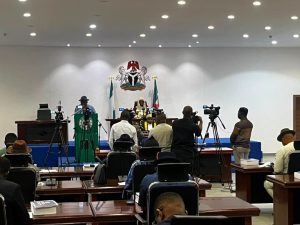
The governor also renewed his call for the establishment of state police, arguing that governors cannot be held fully accountable for security when they lack operational control over the police and other security agencies.

He described the designation of governors as “chief security officers” of their states as misleading, noting that they have limited authority over security operations despite being expected to safeguard lives and property.

According to Lawal, creating state police would make governors directly accountable for security while enabling state governments to recruit, equip, train and adequately fund law enforcement personnel based on local security realities.

He also expressed concern over the welfare of personnel in the Nigeria Police Force, citing inadequate funding, poor training and insufficient welfare packages as factors undermining the effectiveness of officers.

Highlighting his administration’s security investments, Lawal said the Zamfara State Government currently finances more than 30 per cent of security operations in the state.

He disclosed that the government has supplied more than 500 operational vehicles to security agencies over the past three years, in addition to 35 armoured personnel carriers and mine-resistant ambush protected vehicles to strengthen the fight against banditry.

The governor added that the state had also acquired surveillance and attack drones to enhance intelligence gathering and improve operational capabilities against criminal groups.

Lawal maintained that the long-term solution to insecurity lies in strengthening security institutions through improved funding, modern equipment, advanced technology and better welfare for personnel, rather than negotiating with armed groups or paying ransom demands.

Sun

Reps seek review of bilateral ties with S’Africa, demand probe of death of Nigerians, others

0


The House of Representatives has urged the Federal Government to immediately undertake a comprehensive review of bilateral engagement with the Republic of South Africa over the xenophobic attacks against Nigerians and other Africans resident in the country.

According to House, the government should suspend relations, recalibrate some specific areas of bilateral cooperation, where necessary as well as strengthen consular services, legal assistance, emergency evacuation arrangements and reintegration support for Nigerian victims.

The parliament, while seeking more diplomatic engagement with South Africa over the issue also implored the government to formally engage the African Union, the South African Development Community (SADC) , the United Nations (UN) and the African Commission on Human and People’s Rights on Protection of African Nationals in South Africa.

Furthermore, the House urged government to immediately summon the South African High Commission to Nigeria to provide a comprehensive explanation regarding the recent killings, and to communicate to Nigeria, in clear terms, the official position of the South African government on the protection of Nigerian citizens and other African nationals.

It also urged the Federal Government to demand an independent, transparent, impartial, and internationally monitored investigation into the death of affected Nigerians and all other African victims, so as to ensure that the perpetrators are identified and prosecuted.

This followed the adoption of a motion by Yusuf Gagdi and Billy Osawaru on xenophobic attacks against Nigerians and other Africans resident in South Africa.

Leading debate on the motion, Gagdi informed the House that South Africa has over the years witnessed repeated waves of xenophobic violence targeted at Nigerians and other African nationals.

The lawmaker noted that the development has resulted in the loss of innocent lives, destruction of businesses, unlawful arrest of Nigerians, forced displacement, and widespread fear.

“Recent reports, Mr. Speaker, indicate a fresh escalation of attacks targeting Nigerians, Ghanaians, Zimbabweans, Zambians, Mozambicans, Malawians, and other African nationals lawfully residing in South Africa.

“The federal government of Nigeria has confirmed the recent killing of two Nigerian citizens, including one who reportedly died while in South African police custody and another one who was brutally murdered in front of his business premises.

“These tragic incidents, Mr. Speaker, have once again exposed Nigerians and other African nationals to grave danger despite repeated diplomatic engagement between Nigeria and South Africa.”

Gagdi expressed concern that the “xenophobic violence has become recurring, systematic, and increasingly deadly. The repeated attacks have continued despite previous assurances by the government of South Africa that adequate measures will be taken to guarantee the safety of foreign nationals.

“Innocent Africans continue to lose their lives, while criminal perpetrators often escape justice, thereby encouraging impunity.

“Any inflammatory, Mr. Speaker, or hateful public statement capable of inciting hostility against Nigerians or other African nationals as presented by the South African General Minister is irresponsible, unacceptable, and capable of aggravating an already existing volatile security situation.

“The continued attack, Mr. Speaker, undermined the ideals of African unity. It equally undermined, Mr. Speaker, the ideals of pan-Africanism, regional integration, and peaceful coexistence upon which the African Union was founded.”

Gagdi called for a decisive action, stating that “continued inaction may embolden perpetrators and weaken confidence of regional institutions established to protect African citizens. Those recurring attacks threaten diplomatic relations, economic cooperation, and continental integration.

“The continuous killing of Nigerians abroad, particularly in South Africa, without adequate accountability, diminishes confidence in the collective commitments of African states to uphold human rights, justice, and the rule of law.”

Osawaru, in his contribution, blamed South African security agencies for the recurring attacks on Nigerians, saying they had “the blood of Nigerians on their hands.”

He said despite Nigeria’s diplomatic engagements, South Africa continued to undermine Nigeria’s sovereignty and fail to protect its citizens.

Osawaru urged the Federal Government to adopt a tougher stance, saying Nigeria “must not remain a toothless bulldog.”

He also proposed an amendment to the motion calling for Nigeria to cut diplomatic ties with South Africa.

Kayode Moshood (Lagos, APC) said Nigeria contributed millions of dollars to the anti-apartheid movement, noting that the resources could have been invested in the country’s own development.

Okey-Joe Onuakalusi (Lagos, NDC) said Nigeria must respond firmly to countries that treat its citizens with hostility, adding that the names of Nigerians killed in South Africa should be compiled and presented before the International Criminal Court (ICC).

At the close of the debate, Benjamin Kalu, the deputy speaker, subjected Osawaru’s proposal for Nigeria to sever diplomatic ties with South Africa to a voice vote, but the House rejected it.

Kalu said Nigeria has the capacity to respond in kind to South Africa but would instead pursue diplomatic channels.

Sun

Lagos Queries Sanitation Officer Over Alleged Bribery in Viral Video

0


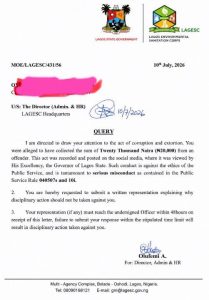
The Lagos State Government has issued a query to an officer of the Lagos State Environmental Sanitation Corps following a viral video allegedly showing the official receiving a bribe from a lawbreaker.

The Commissioner for the Environment and Water Resources, Tokunbo Wahab, described the alleged conduct as unacceptable, stating that it runs contrary to the rules, ethics, and core values of the agency.

According to Wahab, the officer has been issued a query, while a Personnel Management Board (PMB) will be constituted to investigate the incident in line with the provisions of the Lagos State Civil Service Rules and Regulations.

He reiterated that the Lagos State Government maintains a zero-tolerance policy towards corruption and all forms of misconduct in the public service, adding that any officer found culpable would face appropriate disciplinary measures in accordance with the relevant regulations.

The commissioner also reminded residents that offering a bribe is as unlawful as receiving one, urging Lagosians to obey the law and refrain from attempting to compromise enforcement officers.

He said collective commitment to integrity would strengthen public trust and help build a more accountable and responsible society.

Zambia’s Vice President Escapes Unhurt in Military Helicopter Crash

0


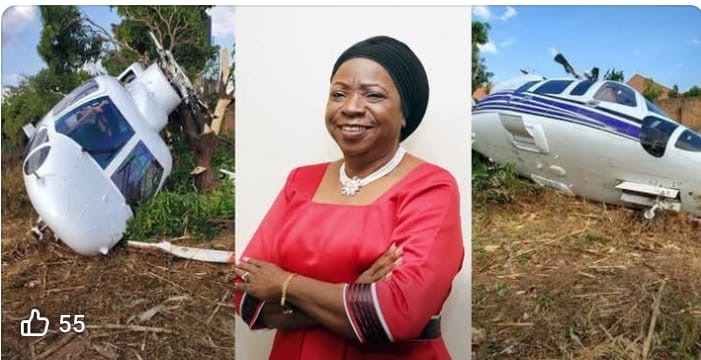
Zambia’s Vice President, Mutale Nalumango, escaped unhurt after a military helicopter crashed shortly after take-off from a campaign rally in Nakonde, near the Tanzania border.

According to Zambian authorities, all eight people on board, including the vice president, survived the crash without sustaining any injuries.
Nalumango said the helicopter went down moments after leaving the ground.

Although the aircraft was extensively damaged in the incident, all occupants were safely evacuated.

GRACE SCHOOL UNDERSCORES COMMITMENTTO PROMOTION OF CHINESE LANGUAGE

0


….HOSTS CHINESE CONSUL GENERAL

Grace Schools, Gbagada, Lagos is set to host the Chinese Consul, General, Yan Yuqing on Tuesday, July 15,2026.

The visit is aimed at strengthening the bond between the School and the Chinese Consulate. Grace Schools have major promoters of Chinese culture and language in Nugeria. The Schools, both Primary and Secondary have included Chinese language in their curriculum.

Mrs Olatokunbo Edun, Executive Director, Grace schools says the schools have made huge investment in the training of teachers in Chinese language. She added that the schools have forged a partnership with the Confucius Institute, University of Lagos to provide adequate training and exposure for the teachers.

Edun says the visit of the Consul General which is the second by a Chinese Consul General is poised to appraise the depth of teaching and promoting Chinese language.

The visit would also enable the school to showcase all the concrete efforts undertaken to develop globally recognized students.

Edun asserted further that Chinese cultural displays, poem recitation, Chinese language promotion are part of the major highlights of the visit.

Senate passes legal practitioners, proceeds of crime recovery amendment bills

0


The Senate yesterday passed the Legal Practitioners Act Repeal and Re-enactment Bill 2026, alongside the Proceeds of Crime Recovery and Management Amendment Bill 2026.

The bills were passed following the presentation and consideration of reports by the Senate Committee on Judiciary, Human Rights and Legal Matters, chaired by Adeniyi Adegbonmire.

Presenting the committee’s report, Adegbonmire, a Senior Advocate of Nigeria (SAN), said the legal practitioners’ bill would repeal the existing legal practitioners’ acts and provide a modern regulatory framework for Nigeria’s legal profession.

He said that the committee conducted thorough scrutiny of the legislation and recommended amendments aimed at strengthening regulation of the legal profession and improving access to justice.

Adegbonmire described the legal profession as the backbone of the rule of law, stressing that Nigeria deserved a constitutional, transparent and credible regulatory framework.

“The committee is satisfied with the recommended amendments. The bill will provide the framework required for effective regulation of the legal profession,” he said.

The committee also presented its report on the Proceeds of Crime Recovery and Management Amendment bill, recommending its passage with amendments after a detailed legislative consideration.

According to the senator, the bill seeks to establish a Proceeds of Crime Recovery and Management Agency, with full legal personality to manage recovered assets.

He said that the proposed agency would oversee the recovery, preservation, management and disposal of properties reasonably suspected to have been derived from unlawful activities across Nigeria.

“The bill addresses a genuine gap in Nigeria’s anti-corruption architecture. Its objectives are legitimate, its necessity is urgent and its provisions serve the public interest,” he said.

Following consideration of the reports, the senate dissolved into the Committee of the Whole and considered the bills clause-by-clause, after which it approved the reports, read both bills for the third time and passed them.

Senate President, Godswill Akpabio, commended members of the Judiciary Committee for their diligence in scrutinising the bills.

Akpabio also applauded the senators for supporting the measures, saying that the passage of the bills would strengthen the country’s legal and institutional frameworks.

“I pray that those implementing these laws will act with probity, accountability and integrity in the best interest of Nigeria,” he said.

Sun

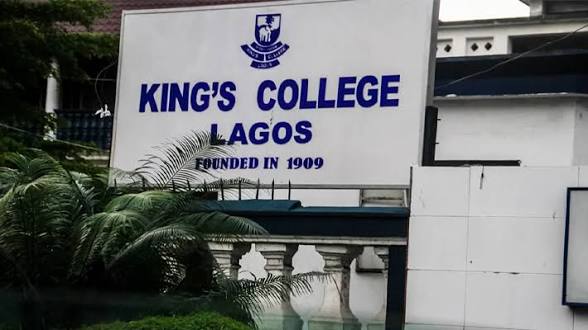
King’s College: Why we disagree with concessioning –parents community

0


Federal Government’s concessioning of King’s College Lagos has continued to attract rejection from the school’s unit of the Association of Senior Civil Servants of Nigeria (ASCSN).

The parents community of the foremost unity college also disagreed with the arrangement.

The Federal Government had approved concessioning of the college to its old boys association.
Chairman of King’s College Lagos Unit of ASCSN, Mr Enang Samuel, all the staff of the college rejected the concession.

He said that the Federal Government should retain ownership of the college and continue to operate it.

The chairman stressed that concessioning the 116-year-old school would serve private interests rather than public good.

He urged the government not to commercialise the college, saying that King’s College Lagos workers would resist the concession through lawful means.

“All members of staff of King’s College reject this concession and are prepared for any legitimate action to defend government ownership of the college and protect public interest,” he said.

Mr Olatunji Ojulari, chairman of King’s College Lagos Parents Community, expressed displeasure at the development.

Ojulari said the college remained a national monument.

“We respectfully but totally disagree with the concession approval.

“Our forefathers never donated this land for commercial purposes but to guarantee affordable quality education for generations of Nigerians.”

He said that implementing the concession would undermine the school’s vision by placing quality education beyond the reach of many families.

“Ojulari said that King’s College Lagos had been delivering excellent education at an affordable cost.

“Concession of the school will impose financial burdens on countless parents,” he said.

According to him, those wishing to establish private schools should invest their own resources and land.

“King’s College belongs to Nigerians and should never become a commercial enterprise.”

A teacher, who pleaded anonymity, said she was uncomfortable with the arrangement noting that the true intentions were not clear to many stakeholders.

“I have reservations because nobody truly knows the intentions behind this development.”

She noted that King’s College Lagos had benefitted from a longstanding partnership with the King’s College Old Boys Association.

According to the teacher, scholarship awards and other interventions by the association had promoted teaching and learning in the college.

“I believe that the partnership can continue without altering the college’s status as a government-owned institution,” she said.

A King’s College Lagos student, who also pleaded anonymity, said the concession had generated mixed feelings among students.

He expressed hope that the Federal Government and the old boys association would work together to preserve the school’s rich heritage and improve infrastructure in the college.

“We want a situation in which the government and the old boys will work together to protect our school’s legacy, improve learning facilities and put students’ welfare and academic excellence first,” he said.

Sun

UBEC recovers N100bn dormant education funds

0


The Universal Basic Education Commission (UBEC) has declared that it is charting a new course for Nigeria’s basic education sector after recovering and mobilising more than N100 billion in previously dormant matching grants, describing the feat as a major breakthrough in efforts to improve learning outcomes across the country.

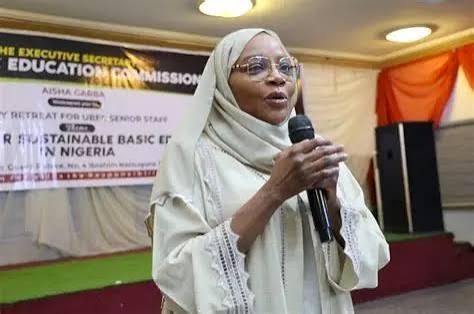
The Executive Secretary of UBEC, Aisha Garba, stated this at a media luncheon with education correspondents in Abuja, yesterday.


She said the commission had moved beyond policy reforms to delivering tangible results that are transforming schools, strengthening teachers and creating better opportunities for millions of Nigerian children.

Garba said the mobilisation of the inaccessed education funds by states and the Federal Capital Territory (FCT) marked a turning point in the implementation of the Federal Government’s education reforms.

“Today, UBEC is writing a new chapter in basic education. Guided by our 2025–2031 strategic blueprint and aligned with the Renewed Hope Agenda of the Federal Government, we are moving beyond reforms to delivering measurable results that are improving schools, empowering teachers and expanding opportunities for millions of Nigerian children,” she said.

She explained that the recovered N100 billion was already being deployed by states to improve school infrastructure and provide a more conducive learning environment for pupils.

She disclosed that, in collaboration with State Universal Basic Education Boards (SUBEBs), UBEC had constructed over 4,600 classrooms, renovated more than 6,100 classrooms, provided 2,780 toilet facilities and 678 boreholes, while supplying over 334,000 pieces of school furniture to public schools nationwide.

According to her, the commission had also established more than 2,300 Early Childhood Care Development and Education Centres (ECCDEC) expanding access to quality foundational education for young learners.

She further revealed that UBEC had invested over N20.4 billion in teacher professional development, saying no education system could rise above the quality of its teachers.

She noted that the investment was strengthening classroom instruction, improving school leadership and enhancing accountability through the Effective Schools Programme and School-Based Management Committees.

On technology-driven learning, the UBEC boss said the commission was scaling up Digital Literacy Centres (DLC), expanding smart schools and introducing pupils to emerging technologies such as artificial intelligence, coding and robotics to prepare them for the future.

She added that more than 7.8 million instructional materials had been distributed to schools across the country to improve literacy, numeracy and foundational learning, adding that the commission was equally expanding educational opportunities through Open Schooling, Integrated Qur’anic and Tsangaya Education, girl-child education and inclusive education programmes to ensure that every Nigerian child has access to quality basic education regardless of location or social background.

She also highlighted the ongoing institutional reforms aimed at strengthening transparency, improving project monitoring and promoting data-driven decision-making to maximise the impact of education investments.

She described the media as a strategic partner in national development, urging education correspondents to continue providing balanced and factual reports that will promote accountability, strengthen public confidence and attract greater stakeholder support for basic education reforms.

She also stressed that, although the government would continue to provide leadership and funding, meaningful transformation of the education sector requires the active participation of parents, teachers, communities, development partners and the media.

“Our achievements demonstrate that UBEC is not only investing in schools but also building a stronger, more resilient and future-ready basic education system,” she said.

Sun

Coalition of Lagos indigenous people petitions Sanwo-Olu over renaming of old streets

0

Lagos State Governor, Babajide Sanwolu has been asked to urgently halt the renaming of historic streets by the Chairman of Lagos Mainland Local Government before it generates a crisis.

In a ‘Save Our Soul’ petition to the governor in Lagos, yesterday, by the Coalition of Indigenous Peoples of Lagos State (COLIP) and signed by its spokesperson, Chief Adesunbo Onitiri, the group said the action of the Council was a dangerous attempt to erase very important heritage of Lagos State, particularly the indigenous peoples.

The petition, titled, “Save our historic street names: A petition for the preservation of Lagos heritage, state: “The Coalition of Lagos Indigenous Peoples (COLIP) has received with great concern the announcement by the Chairman of Lagos Mainland Local Government, approving the renaming of a number of historic streets within the council area.
“While we have no objection whatsoever to recognising and honouring distinguished sons and daughters who have served their communities with dedication, we strongly object to doing so by erasing the historical identity of Lagos.

“Street names are far more than signposts. They are part of the living history of a city. They tell the story of how Lagos evolved and remind successive generations of the people and events that shaped our society.”

COLIP said the proposed renaming of Freeman Street, Glover Street and Jones Street raises profound historical and cultural questions.

“Henry Stanhope Freeman was the first Governor of the Lagos Colony following the Treaty of Cession in 1861. John Hawley Glover served as Governor of Lagos and established Glover’s Hausas, widely regarded as the foundation of today’s Nigerian Army.

“Dr. Curtis Adeniyi-Jones was one of Nigeria’s foremost medical pioneers, a distinguished nationalist, a co-founder of Nigeria’s first political party and an outstanding public servant.

“Whether one agrees with every aspect of colonial history is beside the point,” the COLIP argued, stressing that history cannot simply be rewritten because contemporary politics finds it inconvenient.

“Every period of our history, whether glorious or controversial, forms part of the story of Lagos,” COLIP said.

The group noted that the world’s great cities understand this. London, Paris, Rome and many others have retained historic street names for centuries because they recognise that heritage is an asset, not an obstacle to development. Perhaps, the finest example is Singapore.

“Although Singapore has transformed itself into one of the world’s most technologically advanced and prosperous cities, it has carefully preserved its colonial buildings, historic districts, street names and cultural landmarks.

“Rather than demolishing or renaming its past, Singapore integrated its heritage into its future, creating one of the world’s leading tourist destinations and a city admired for respecting its history while embracing modernity.

“Lagos can and should do exactly the same. The Yaba, Ebute Metta and Oyingbo axis represents one of the most historically significant parts of Lagos.

“It is closely associated with the development of the Nigerian railway system, which for decades, was the backbone of the nation’s transportation network, moving passengers, petroleum products and goods throughout Nigeria.”

COLIP noted that instead of preserving and celebrating this remarkable history, “we appear determined to erase it.

“If today’s leaders wish to leave their own lasting legacy, there are far better ways of doing so.

“Let new roads, bridges, schools, hospitals, health centres, libraries, community centres, innovation hubs, sports facilities, digital learning centres and other public infrastructure bear their names after they have conceived, funded and delivered them.”

It pointed out that history should never become the casualty of political expediency.

We must also ask a simple question. “If every administration renames streets to honour people of its choice, what prevents the next administration from changing them all over again?

“Where does it end? Lagos cannot continue to erase its past one street at a time.

“For several years, there have been proposals to introduce Heritage Blue Plaques on the homes and buildings associated with distinguished Lagosians, similar to those found in many historic cities around the world.

“Such plaques celebrate achievement while preserving history. They do not destroy one legacy to create another.

“We, therefore, call upon the Chairman of Lagos Mainland Local Government to immediately suspend the proposed renaming of these historic streets and to engage historians, traditional institutions, resident associations, professional bodies, indigenous Lagos organisations and other stakeholders before taking any further action.

“We respectfully call upon His Excellency, the Governor of Lagos State, to intervene in this matter in the interest of preserving the rich historical and cultural heritage of Lagos.

“We urge the governor to direct that all proposals to rename streets of historical significance across Lagos State be suspended pending the development of a comprehensive Heritage Preservation Policy, prepared in consultation with historians, traditional institutions, professional bodies, indigenous Lagos organisations and other relevant stakeholders.

“We further call upon the Governor to champion legislation establishing clear guidelines for the naming and renaming of streets, public buildings and landmarks, ensuring that places of historical significance cannot be altered arbitrarily by successive administrations.

“We also call upon the Lagos State House of Assembly to enact legislation protecting historic street names and other heritage assets so that the history of Lagos can never again be erased by administrative discretion.

“Lagos is Nigeria’s former capital and one of Africa’s oldest and most historically significant cities. Its identity has been built over centuries.

“That identity belongs not only to those living today, but also to future generations that deserve to inherit the history, which shaped their city. A society that loses its history gradually loses its identity.

“Let us honour today’s achievers by celebrating what they built today, not by removing the recognition earned by those who came before them.

“As the saying goes, a man who is in a hurry to erase his past will not have much of a future, for he too will one day be erased by those who come after him.

“Let us preserve the history of Lagos. Let us protect its identity. Let us leave future generations a city that remembers where it came from,” COLIP concluded.

Sun
Tinapa coming back to life before December -Gov Otu

0


Governor Bassey Otu of Cross River has promised that the Tinapa Business and Leisure Resort will come back to life before the end of the year.

Responding to questions from newsmen in Calabar yesterday, he disclosed that his administration had engaged in lengthy negotiations to recover and reposition the business resort that the state recently recovered from Asset Management Corporation of Nigeria (AMCON).

Otu explained that the decision to focus on reviving Tinapa was driven by financial realities and the need to protect existing public investments.
“The state has invested more than 400 million US dollars in Tinapa over the years, making it impossible for his administration to abandon the facility.

“Leaving it unattended would have led to further deterioration of the infrastructure and a waste of the huge public investment already committed to the project.

“I am confident that before the end of the year, Cross River residents would begin to witness a transformed Tinapa.”

He revealed that rehabilitation work was already ongoing at the retail emporiums and other commercial facilities within the complex.

He added that the government also restored the power generation infrastructure by providing a reliable gas supply to guarantee stable electricity for businesses operating there.

The governor further announced that an anchor tenant has already committed to operating in Tinapa, a move he believed would attract more investors and increase commercial activities.

He also disclosed plans to construct a jetty to improve access to the resort and create more opportunities for local businesses.

On the proposed gas project, Otu said his administration had to make difficult choices because of limited financial resources.

He noted that Cross River rremained one of the states receiving the lowest federal allocations and that many inherited projects were initiated based on revenue projections that never materialised.

He explained that the government’s priority was to complete and revive abandoned investments before embarking on new mega-projects.

According to him, once those projects become fully operational and begin generating value, the state will be better positioned to pursue initiatives such as the gas project.

Otu also highlighted progress made in completing abandoned government infrastructure across the state.

He cited the completion of buildings now occupied by the Local Government Service Commission, noting that several ministries and agencies were gradually relocating into modern office facilities.

“The administration’s goal is to provide a better working environment for civil servants, improve morale within the public service and strengthen service delivery.

” We will also ensure that government operates more efficiently for the benefit of Cross River residents.

Sun