Home Blog Page 315

FG approves ₦50,000 WAEC, NECO registration fee from 2027

0

The Federal Government has approved an increase in the registration fees for the West African Examinations Council (WAEC) and the National Examinations Council (NECO) Senior Secondary School Certificate Examinations (SSCE), raising the cost to ₦50,000 per candidate from 2027.

The approval, conveyed through the Federal Ministry of Education, will see the NECO SSCE registration fee rise from ₦30,000 to ₦50,000, while the WAEC fee will increase from ₦27,000 to the same amount.

WAEC concluded its 2026 Senior School Certificate Examination a few weeks ago, while the NECO examination is currently underway.

The decision is contained in a memo dated June 18, 2026, signed by the Director of Senior Secondary Education at the Federal Ministry of Education, Adeniji Ibrahim, on behalf of the Minister of Education.

According to the information contained in a memo, the fee adjustment followed a policy decision reached during a meeting between the Minister of Education and examination bodies on March 31, 2026, where both WAEC and NECO were directed to adopt a uniform registration fee for their internal SSCE examinations.

Part of the memo reads, “The West African Examinations Council has requested an upward review of the examination fees for the Senior School Certificate Examination for school candidates, with effect from 2027.

“You may recall that at a meeting of examination bodies held with the Honourable Minister of Education on 31st March, 2026, where the need for upward review of examination fee was discussed, the Honourable Minister of Education directed that the West African Examinations Council and the National Examinations Council should adopt a uniform fee for the conduct of WAEC and NECO SSCE.

“Consequently, I am directed to convey the Honourable Minister of Education’s approval of the sum of Fifty Thousand Naira (₦50,000) only, as the new examination fee for candidates with effect from NECO SSCE Internal 2027.

“You are to bring the content of this letter to all stakeholders.”

The new fee is expected to place additional financial pressure on several state governments that sponsor candidates for the examinations, with concerns that outstanding debts owed to both examination bodies could rise further.

Education stakeholders also fear the increase may make it more difficult for thousands of candidates to register for the examinations, particularly in states where governments do not subsidise or fully fund SSCE registration.

In Lagos State, the government currently pays the registration fees for candidates sitting the WAEC Senior School Certificate Examination, while parents who can afford it bear the cost of NECO registration for their children. The latest increase is expected to significantly raise the financial burden on families without government support.

Sun

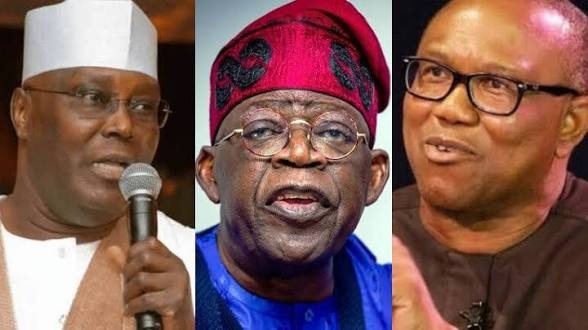
APC: Why Atiku, Obi pose no threats to Tinubu – Morka party spokesman

0


• Only mischief-makers speak against Muslim-Muslim ticket

Felix Morka, a human rights lawyer, is the National Publicity Secretary of the ruling All Progressives Congress (APC).

Speaking to Sunday Sun in Abuja, Morka delved into several issues, particularly the chances of the opposition in the forthcoming presidential election, why the APC continued with the Muslim-Muslim presidential joint ticket, the reality of the claim that Nigerians don’t like the ruling party, and how Peter Obi can always win the presidential election online.


Morka
With the realities and positive indices on the ground in favour of the APC, will it be right to say that the 2027 presidential election has been won and lost?

No, we, at the APC, don’t speak in that language. We don’t speak of future elections as having been won or lost. It is an election that we are preparing to contest. We are preparing vigorously to contest that election. We are doing everything that we need to do as a party to increase our prospects for victory.

We are working very hard. We are not taking that election for granted, and we never take any election for granted. We are not going to begin now to take a major national election for granted. Which is why every day we are engaging with our members. We have done a presentation of duly completed INEC nomination forms for Mr President and Mr Vice President.

We brought leaders of the party together to celebrate that moment and to send a signal not just to our party members but to Nigerians that we mean business, and that we have every confidence in the candidate we are offering Nigerians. We have every confidence in the future that, as our candidate, he will help our party to win the next election decisively.

We are not taking anything for granted. We are, instead, doubling our efforts to ensure that Nigerians see that we are a better alternative amongst all the competing political parties.

In your calculations, what are the strengths and factors that will give APC an edge over other parties in the 2027 presidential election?

I can tell you that the APC is a strong contender in the next presidential election. Not just because we are the governing party, but because we are a party that understands the logic of elections. We understand the power of the people. We understand that the electorate are the ultimate deciders of who governs and who doesn’t govern.

We understand that for them to decide in our favour, we need to continue to demonstrate that the mandate we have already is put into optimum use, not just to develop the country, but to break away from the tradition of retrogression, which has characterised governance in this country. We are taking the provision of infrastructure seriously. We are taking education seriously.

The APC has turned Nigeria into a massive construction site. There is no state you visit today that you won’t see massive physical projects, whether they are roads, whether they are housing, whether they are bridges, and whatever you may think. Our governments are building and rebuilding schools and hospitals. Our universities are functioning better than they have not functioned in a very long time.

They have been open to students to learn without any interruption. It is a far cry from what used to happen when students would spend one month in school and stay two years at home. That has become a thing of the past. It is not by accident.

This is by an intentional reengineering of relationships of infrastructure delivery, support, funding for schools, careful planning, and a very heightened consciousness that the era must end, and it has ended. Everywhere you turn to, the APC is showing and demonstrating records that previous governments could only imagine or dream of.

Mention any department; if you take the economy for example, the fundamentals of the economy of this country have never been this good. We are now witnessing very stable stability of the Naira in relation to the Dollar. People can plan.

People are able to say that I have N100,000, I want to travel in the next one month, I am going to use X amount to buy foreign exchange, and that plan stays with very little or no alteration.

That is leadership, that is governance, that is economic reengineering. Take the hospitals, for example; cancer centres have been built, and primary healthcare centres are being built across this country. In my district, I see them, and I know it is happening elsewhere.

Take our foreign trade, for example; our balance of payments has never been this consistently good. They have never been this consistently good, where we have emerged as the best in Africa when it comes to trade surplus.

It means that Nigeria is now consistently exporting more than we are importing, which is why our foreign exchange position has also increased; foreign investment and foreign remittances are pouring in.

All of these are contributing to the stability of the Naira to the point now that international financial institutions talk about the Naira and that we need to devalue the Naira more. But we are not doing that. Market forces will rule. The fact of the matter is that elections are a referendum about governance. With everything I am saying, I can continue over and over.

Take the oil exports, for instance; for the first time in history in a long while, our production of oil and exports have exceeded our OPEC quota. How do you explain that? This country was struggling to export 700,000 barrels of oil a day. Today we are now just starting at two million barrels of oil a day. That is massive.

Can we do more? Yes, but have we started that journey to doing more? Yes. My point is that all of the indicators are good. Inflation is coming down, purchasing power has improved from where it was three years ago, but it still has a lot of ceiling, headroom to even come down, so that people can afford their basics, so their money can go further than is going today.

What exactly are your fears for the 2027 election, and secondly, from all the positives you have enumerated, what are those factors that will count against the APC in the 2027 presidential election?

An election is a contest, and in a contest, you take nothing for granted. We don’t sit down to worry too much about a lot of things. The reason we don’t worry too much is that, rather than worry, we spend that time building bulwarks against any threat to our prospects of victory. It means that if we know that there is something we need to do better, we start ahead, so that by the time we get there, we have transformed the basis of our concern.

So, that is why it is difficult for me to enumerate things that we consider to be negatives or threats to us because anything you mention now as a possible threat, we are already engaging it. Take all of the false narratives spewed by the opposition; they tell a lot of stories to gaslight Nigerians.

But if you tell a Nigerian student who has an older sibling who spent six or seven years studying a four-year course that this government is not doing well with education, he will not accept it. You can’t gaslight such a Nigerian because the record will nullify your attempt to do so. That student will say no and defend it with the hitch-free academic journey.

It means something has been done well. When the opposition wants to spew narrative, we counter with record. If you notice, that is why all the opposition leaders from Peter Obi to Atiku Abubakar and all of the mouthy opposition leaders are dumb right now.

They have nothing to say against the economy. They have shifted. When this administration started, it was the economy, but now, even in their extreme folly, they have lost the courage to speak about the economy as they did in the beginning because they say in my place that when sand is too much in the food, even the blind will notice.

Their lies have become their own albatross. My point is that we are very confident about the future. We are hoping that Nigerians who are watching, experiencing the goodwill of this administration will still vote for us. Let me tell you, people on the internet, which is the playground of the likes of Peter Obi and Atiku Abubakar, but elections are not won in that space.

Elections are won with real people who go out to vote, and there is the reason that the APC has consistently won the majority of contests at all levels since 2023. There is a reason for that. They make a lot of noise claiming that Nigerians don’t like the APC. But every time an election is called, the APC wins. Look at the Ekiti State governorship election and the margin of our victory.

We even completely blew to pieces the previous record in the distance between us and others. Where were the NDC, the ADC and the Labour Party (LP) in that election? We are nullifying their lies with records of achievements, and Nigerians are feeling that. In every society, it is the vocal minority who are very empty that make the loudest noise.

Somebody confident, who understands where they stand, who is benefiting from the government, does not need to go online every day to rant. It is those who never do well, who never believe that anything is positive about their country, who just want to condemn everything about the country, who are the ones online every day waiting for one to make a post to comment nonsense.

One person will comment a million times, and you think that the country is on fire. The country is not on fire, and when elections come, the real Nigerians will go out to the polls and vote with their PVCs. That is what I know, by the grace of God, will happen in 2027.

As for my fears, I have said that we don’t have any major fear, and I said that whatever fears you may mention, or we normally have going into an election, we are working day and night to nullify or transform those concerns.

We are ahead in doing our homework like a diligent student going into an examination who has a schedule to read, study, not just course content, but also outside the scope, to gain knowledge of related subjects and the field of study; don’t panic when the exam comes.

The student will definitely do better than the ones who have been partying and clubbing. When you are diligent in building and in prosecuting your case, especially when you have the facts on your side, most likely you come out on top.

Won’t it be overconfidence that APC is sticking to a Muslim-Muslim ticket again?

Tell me exactly what the Muslim-Muslim ticket has done to Nigeria? How has the Muslim-Muslim ticket affected Nigerians negatively for them to now reject the ticket?

That language of Muslim-Muslim ticket was the language of the 2023 election invented by the opposition to discredit the candidacy of our party. That language today is no longer current. Anybody speaking that language today is just a mischief-maker. It is not relevant today because, since the administration of President Tinubu and Shettima, both Muslims, nobody has gone to the National Assembly or anywhere to sponsor a bill to force any Nigerian to become Muslim.

That was the argument, and the fear then. Otherwise, Senator Shettima, the incumbent vice president, is a brilliant citizen of this republic and a loyal citizen. He has done his job as vice president. Stood by the President and created very little or zero controversy for the President. He has discharged the duties of his office diligently, professionally, and to the delight of APC and Nigerians without any scandal associated with him.

I don’t think that there is a Nigerian today who is going to say they are not going to vote because a man who has been vice president for four years is a Muslim. Was he supposed to change his religion in four years? No Nigerian expected that. Right now, all that story about political viability based on religious consideration is utterly nonsensical.

Nigerians are looking at substance, and the quality of the leaders that they have, and so far, the combination of the president and his vice president has been stellar. They have achieved what many presidents in the history of our country didn’t achieve in two terms. And if you combine some precedents, what they didn’t achieve over a long period of time, this president has done in four years. That is remarkable.

Can you dispel the fears in some people’s minds that with insecurity, APC’s closeness to INEC, and by extension the judiciary, the 2027 election has been concluded or may not hold?

That is not the question I would like to answer because there is no basis for it. There is nothing that has happened or in the making which suggests that there will be no election in 2027. That is a nonsensical speculation. Secondly, when you say APC’s closeness to the judiciary and to INEC, under the Constitution of the Federal Republic and the Act setting up INEC that created the process by which the Chairman of INEC and commissioners are appointed, APC did not invent that legal procedure for the appointment of senior officials of INEC.

It is wrong to frame that question in relation to APC as though the APC did something to procure what you call closeness, because by closeness I understand you to be referring to a process for the appointment of those senior officials.

Again, if you say teleguiding, you have to prove that APC is teleguiding them because I don’t understand what you mean by saying teleguiding. APC does not teleguide, has never teleguided, and does not plan to teleguide in the future. So, when you say teleguiding, that is actually a very subjective, accusatory language, and it is actually condescending because you are saying that a national institution like the INEC can be teleguided.

You are saying that eminent Nigerians who are called upon to serve in those institutions of the judiciary and INEC are teleguided. You are suggesting that Judges from High Courts to the Supreme Court are being teleguided. That is rude and insolent for those institutions, and I take very strong exception to that.

Was the perceived crisis in APC after primaries real or speculation? Again, did the Electoral Act that stopped aspirants from contesting primaries in two political parties affect APC more than the opposition parties?

Nobody stopped anybody from leaving our party. Assuming without conceding that the Electoral Act made provisions that made it difficult or impossible for someone who contested a primary in one party to go to another party, how is that the business of the APC? That is a national law. That is a statute. That is the law of the land passed by the National Assembly and signed into law.

If APC is affected, every other party is affected. There is no such thing as APC was affected. It is a law that applies uniformly to all political parties. Whatever you are analysing in relation to APC was also present in relation to other parties. APC cannot be made to take the rap for that.

APC did not pass the law; a multi-party National Assembly passed that law, and whatever the effect may be, it is universal to all parties. You can’t isolate APC and say it was affected more than others. No, APC may be affected to the degree of its membership, to the degree of the expression of interest in its platform, but that is not anything APC did.

That is just a proportional thing. If anybody was affected at all, and like I said earlier, I am not conceding the premise of your question. I am only responding hypothetically that if you say that APC was affected more, I am saying that every other party was affected to the extent of the number of their membership or the extent of their people who express an interest to run on the platform.

Having seen the presidential candidates of other parties, Peter Obi, Atiku, did they pose any threat to Tinubu?

They pose no threat. Why would they pose any threat? Peter Obi poses no threat; Atiku poses no threat because these are not individuals who have even started to tell Nigerians why they are running for the office of president. Simply being flippant in condemning President Tinubu does not give or confer any basis or ground on which Nigeria should think of them as an alternative to the President.

These individuals you mentioned, Atiku and Peter Obi or any other person out there, simply dreaming about the presidency, have not even started the process because to start the process of offering yourself to be president, you must first articulate your vision for the country.

You must first articulate a programme that you are offering to Nigerians, and because there is an incumbent president who is contesting, you must articulate not just your programme and vision, but also articulate them in relation to the vision and programmes of the incumbent president. You must tell Nigerians what is the difference between you, what you are offering, and what the incumbent president is offering.

You must tell them how you are going to do the economy better. You must tell them how you are going to create power better. You must tell them how you are going to provide security better. On all the relevant factors of consideration, you must demonstrate that you have superior alternative ideas for Nigerians to take you seriously; unless and until you do that, you are not to be taken seriously by Nigerians.

I know that Nigerians don’t take Peter Obi seriously. He only has a bunch of noisemakers online who tell him what he wants to hear, but Nigerians in the inclusive sense cannot possibly take Peter Obi seriously when he cannot even answer correctly how he is going to provide electricity. He only responded, ‘Trust me’.

The response ‘trust me’ is not a political programme, political identity, superior political offering, and does not distinguish him from the President. How will Nigerians trust him when there is a man in the office who has demonstrated capacity, delivered and exceeded expectations on so many levels? You want Nigerians to leave empirical achievements to enter a dark world of ‘trust me’ nonsensical promise by Peter Obi.

How do you dispel the impression that Nigerians don’t like the APC?

It is not just an impression but a concocted impression to gaslight Nigerians, which is not working. We are a political party, and we know that those with that impression want to use it to score a cheap political point. The point I am making is: how do you situate the impression that Nigerians don’t like the APC with our long, consistent record of electoral victory?

I don’t need to say much, but if you take the elections conducted since 2023 into consideration, all the people that voted in those elections are Nigerians who chose the APC among the competing political parties.

So, anything else they say outside the electoral process that gives the APC consistent victories is simply idle talk from people who don’t know what to say or how to respond to the APC. They don’t speak on behalf of Nigerians.

They are speaking from the abundance of their own folly, not speaking on behalf of Nigerians. They speak through the polls, which have consistently delivered the APC as the preferred party of choice and party to beat. And come 2027, they will vote the APC to confirm how the ruling party has convinced them.

In the real sense of it, there will not be any competition for the APC in 2027. They are noisemakers and people who think that they are entitled to be President because, in their lifetime, they have contested the presidency, lost serially, and still think they cannot retire until they become President.

Look at Peter Obi raising the alarm that they are trying to kill him, and I wonder: since when did this extreme sort of childish sentiment become political capital? Who will go to the poll and vote based on an adult whining like a baby? Who does that? Nobody

Sun
PFIPC N1.3bn budget scandal: National Assembly under pressure

0


Though the mystery of how the Presidential Foreign Intervention Promotion Council (PFIPC) came into being is still under investigation, it has already cast a shadow of doubt over the National Assembly’s oversight and budget scrutiny. With a ₦1.3 billion budget appropriated to an agency the Federal Government has since disowned, questions naturally arise about how a scandal of this magnitude could escape the eagle eyes of the leadership of the Senate and that of the House of Representatives.


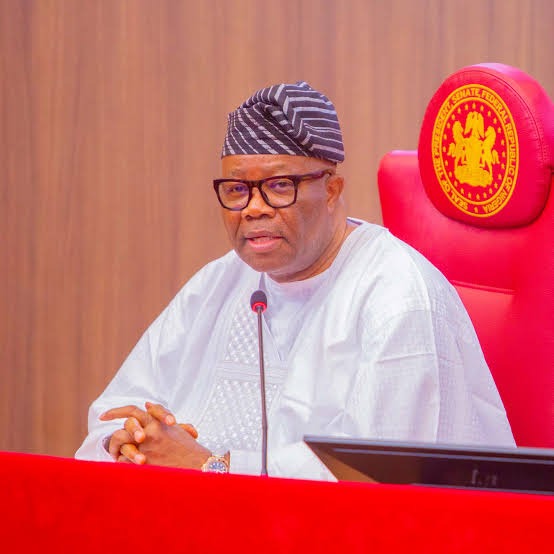
Senate President, Godswill Akpabio
Commenting on this fiscal anomaly, the Secretary General of the Ijaw Elders Forum, Efiye Bribena, said in a telephone discussion with Sunday Sun berated the National Assembly. “Publicly available facts show it is the most obsequious legislature in this country’s history. Both the Senate and the House of Representatives approved a N1.3 billion budget for a fake agency, yet they see no need to investigate how that figure slipped through. This oversight implies clear complicity. It also raises serious questions about how a fake agency could operate out of the Presidency, suggesting that the executive branch itself is culpable.”


This administrative blind spot is not an isolated oversight but part of a deeper institutional malaise. The 10th National Assembly has repeatedly faced intense public blowback over systemic budget padding, a practice where lawmakers quietly inflate fiscal estimates or insert unauthorised, vague projects into the national budget for personal or political gain. The most glaring manifestation of this occurred when Senator Abdul Ningi blew the whistle on an astronomical ₦3.7 trillion allegedly padded into the 2024 budget for projects without specified locations. Rather than opening a transparent investigation to redeem its image, the Senate’s swift move to suspend the whistle-blower only fuelled public suspicion, reinforcing the belief that the legislature’s budgeting process has been weaponised as a tool for political patronage.

Compounding this crisis of confidence are persistent allegations regarding the monetisation of the legislative process itself. The hallowed chambers have been rocked by claims that lawmakers routinely engage in financial lobbying—popularly termed lobbying with money—where massive cash sums allegedly change hands to fast-track friendly executive bills or clear ministerial nominees with minimal friction.

Bribena pointed to the rapid passage of laws as proof of this breakdown: “Out of 109 senators and 360 representatives, not a single person raised an alarm over this N1.3 billion allocation. This legislative rot mirrors the executive corruption gripping the country. For instance, a recent police bill passed its first, second, and third readings in a single day without any public hearing or standard legislative procedure. This is not democracy; it is a criminal enterprise.”

When legislative actions can seemingly be bought, influenced, or rewarded with robust financial allowances, the independence of the parliament as a co-equal branch of government is completely compromised.

Ultimately, these recurring scandals have fundamentally eroded the moral authority of the 10th National Assembly, shifting its public perception from a democratic watchdog to a mere rubber stamp for the executive arm. Chief Chekwas Okorie shared this damning assessment in an interview with Sunday Sun.

His words: “The recent N1.3 billion budget approval is the final nail in the coffin for the 10th National Assembly’s reputation. To me, this is the most complacent, subservient, and incompetent legislature since independence. They kowtow to the executive, approving massive sums without a shred of interrogation or oversight. However, the rot extends beyond the legislature. The Presidency—including the Chief of Staff, Secretary to the Government of the Federation, Attorney General, Accountant General, Auditor General, and Head of Service—must answer for the ghost workers reportedly on the government payroll.”

From the controversial procurement of luxury SUVs amid national austerity to Senate President Godswill Akpabio’s infamous hot-mic gaffe about sending “holiday tokens” to lawmakers’ bank accounts, the legislature continues to project a culture of self-aggrandisement. By prioritising financial compromises and self-serving budget insertions over strict fiscal discipline, the current assembly has left Nigerians asking a painful question: whose interests are these 469 lawmakers truly representing?

Trust deficit

When public trust in elected lawmakers collapses, the damage isn’t just a matter of hurt feelings or bad press; it triggers a dangerous, systemic breakdown across the entire country. When the people look at the 10th National Assembly and see financial self-interest instead of representation, the consequences ripple out in three major ways: Democratic apathy, public indignation and institutional decay.

When citizens believe the national budget is merely a cake to be shared among politicians, they lose all incentive to participate in the democratic process. This deep-seated distrust manifests as severe voter apathy, where citizens stay away from polling booths because they believe their votes cannot change a pre-determined, monetised system.

Rights activist, Annkio Briggs, highlighted how poverty and financial inducement prevent citizens from exercising their constitutional powers to correct these anomalies:

“The law allows citizens to recall a representative who is not performing by collecting signatures in their district. However, poverty has been weaponised against the people. In the recent Ekiti State election, people openly accepted 20,000 Naira and voters’ cards to cast ballots. The very people who should recall failed politicians are trapped by poverty and fear, allowing corrupt leaders to use money to stop any accountability. It is a win-win for corruption and the corrupt. The losers are the ordinary people.”

Beyond elections, it breeds a culture of tax resistance. It becomes incredibly difficult for the state to drive civic compliance or collect taxes when the public is convinced that hard-earned public funds will simply be funnelled into unvouched agencies or padded constituency projects.

In a healthy democracy, the National Assembly acts as a pressure valve—a place where the grievances of the masses are debated and resolved through policy. When that valve is welded shut by corruption, public frustration has nowhere to go but the streets. The collapse of legislative integrity directly fuels volatile mass protests and civil disobedience, as citizens realise that agitation is the only language the political class understands.

Faced with this gridlock, Bribena suggested that traditional democratic corrections are no longer viable: “Ultimately, holding these lawmakers accountable through traditional means is nearly impossible. The recall process is ineffective, and Nigeria’s flawed electoral system ensures the public has little say in who gets elected. When abnormality becomes the norm, the only real solution left to rescue the country from this national embarrassment is a total revolution.”

Even worse, it creates a dangerous vacuum. When the masses stop believing in constitutional representation, they often turn their loyalty toward ethnic champions, populist agitators, or extremist groups who promise the protection and voice that the state has failed to provide.

The erosion of legislative trust doesn’t stay within Nigeria’s borders; it actively deters foreign direct investment (FDI). International investors and development partners look at an assembly that passes disowned agency budgets or suspends its own whistleblowers and see a massive sovereign risk. They see an environment where laws can be bought, contract enforcement is unstable, and oversight is non-existent. Domestically, it leads to total distrust of the government. When the legislature lacks moral authority, the executive arm is emboldened to bypass them entirely, leading to a breakdown of checks and balances, policy inconsistency, and an economy stuck in a loop of high debt and low productivity.

The collapse of robust opposition oversight

While it is easy to pin the blame entirely on the ruling All Progressives Congress (APC), the harsh reality is that the opposition parties, including the Peoples Democratic Party (PDP), Labour Party (LP), and New Nigeria Peoples Party (NNPP), are deeply embedded in the exact same system. Chief Chekwas Okorie observed that this institutional failure crosses party lines, weakening the political alternative:

“This incompetence is handing the opposition ammunition for the 2027 campaign, yet the opposition itself is compromised, with many lawmakers merely acting as lackeys for state governors. This ‘rubber-stamp’ culture dominates both state and national assemblies,” he said.

When it comes to the perks and compromises of office, the line between the majority and the minority completely blurs. For instance, when the controversial ₦160 million luxury SUVs were distributed to lawmakers, or when Senate President Akpabio slipped up about sending “holiday tokens” to bank accounts, the outrage from opposition lawmakers was virtually non-existent. Minority party members queued up alongside their APC colleagues to collect these allowances. By accepting these lavish perks during a punishing national economic crisis, opposition lawmakers effectively compromised their moral authority to criticise the ruling party’s extravagance.

Budget padding is not an APC-exclusive enterprise; it is a bipartisan phenomenon. When constituency project funds are inflated or inserted into the budget, those allocations go to districts represented by both ruling and opposition lawmakers. When Senator Jarigbe Agom-Jarigbe (a PDP senator) revealed that senior senators received ₦500 million each for constituency projects, it exposed a bipartisan hierarchy of privilege. Opposition lawmakers routinely cooperate in passing these inflated budgets because doing so ensures their own localised political machinery remains well-funded.

In a functional democracy, the minority leader and opposition caucuses are supposed to act as a shadow government, aggressively vetting executive bills and probing questionable spending. Instead, the 10th Assembly has seen a trend of opposition lawmakers acting as co-travellers with the executive. Key controversial bills and approvals pass with minimal friction or debate from the minority benches. Rather than offering alternative policy directions, much of the opposition has been weakened by internal leadership tussles or co-opted by political patronage, leaving the public with a unified political class that protects its own interests above all else.

This seemingly complete collapse of both oversight and genuine opposition explains why the 10th National Assembly has earned the public reputation of being a toothless bulldog, a legislature that can bark during televised hearings but completely refuses to bite. Annkio Briggs lamented this lack of consequence and the absence of political honour in the country:

“Where was this National Assembly when all these things passed through them? But then, this is Nigeria, so it is also very believable that the country can find itself in this position. It is a National Assembly that approves anything that comes from the presidency. This means they clearly failed to provide oversight. It confirms what they already told us: they will do whatever the presidency wants. It is utterly unacceptable, yet Nigerians will accept it. Nothing will come of this. In any other country, the Chief of Staff would have resigned or been suspended. In Nigeria, it doesn’t matter whether you fail or succeed, as long as you hold power. Politicians do what they like, and this will just blow over.”

When the political class is bound together by shared spoils, any outward display of legislative aggression is usually just theatre. It is a common thing to see committees summon ministers, heads of ministries, departments, and agencies (MDAs), or corporate executives. They talk tough, threaten arrests, and express deep anger for the cameras. But once the doors close and executive sessions begin, the fire fizzles out.

According to Bribena, the executive’s handling of the N1.3 billion scandal mirrors this protective script:

“Because of this potential culpability, there is an obvious attempt to sweep the matter under the carpet. The President gave a directive for an investigation, yet it conveniently excludes the Chief of Staff, whom the Chief Culprit explicitly accused. Furthermore, the President publicly declared total confidence in the Chief of Staff, signalling a cover-up. The agency was reportedly inaugurated by the Chief of Staff and funded through executive power, making a genuine inquiry improbable.”

The probes rarely result in indictments, prosecutions, or recovered funds. The public has come to view these hearings not as accountability, but as a leverage tactic to negotiate a bigger slice of the pie. To break this pattern, Okorie argues that investigations cannot be left to internal political structures: “Furthermore, the current approach to investigating budget padding is a charade. Using government-controlled probes to investigate government officials is just taking the public for a ride. We need an independent body of eminent Nigerians to conduct open, public hearings to truly hold officials accountable. It is time for anti-corruption agencies like the ICPC and EFCC to actually do their jobs rather than waiting for a presidential directive.”

On the rare occasion a lawmaker does bite, like Senator Ningi raising the alarm over the ₦3.7 trillion budget discrepancies, the system immediately turns on itself. Instead of the Assembly using its vast constitutional powers to investigate the claim, the bipartisan machinery closes ranks to protect the status quo. The whistleblower is silenced, the public is told to move on, and the toothless nature of the house is laid bare.

Ultimately, a legislature that cannot bite ceases to be a co-equal branch of government. It hands absolute power to the executive arm, transforming the historic principle of checks and balances into a mere suggestion. When both the ruling majority and the minority opposition are fed from the same budget, the National Assembly stops acting as a check on executive power and instead becomes its shield.

To break this cycle, Okorie insists that the ultimate responsibility returns to the citizens: “Ultimately, the power rests with the Nigerian electorate. We must stop selling our votes and choosing candidates based on ethnic or religious sentiments. To break this cycle, we must demand and enforce a system where all elected officials are required to interface with their constituents every quarter. That is the only way to keep them on their toes and ensure accountability.”

Without such systemic civic demands, this legislative theatre offers zero protection, leaving the nation’s resources exposed to the very people elected to guard them.

Senate speaks

Spokesman of the Senate, Senator Yemi Adaramodu, told Sunday Sun that it was unnecessary to counter the position already taken by President Bola Ahmed Tinubu on the issue.

He added that it was needless for the Senate to issue statements on the issue, when the ICPC had already been mandated to investigate the issues amd report within 30 days.

He said if the ICPC reaches oht to ask for any inputs from the Senate it will not hesitate to provide any needed information or response.

“President Bola Ahmed Tinubu has already mandated the ICPC to investigate and report back within 30 days. If the ICPC needs any inputs from us, we will provide what they need.

“But it is needless to keep issuing statements and explain the same issue. We should allow the ICPC to investigate and come up with their findings. So, we are here and will support the President anytime,” Senator Adaramodu told Sunday Sun

Disturbing development

Sonayon Hunjo, one of the lawyers and public affairs analysts who spoke to Sunday Sun on the issue, described the controversy surrounding the reported ₦1.3 billion allocation to the non-existent Presidential Foreign Intervention Promotion Council (PFIPC) in the 2026 Appropriation Act as a disturbing development that exposes weaknesses in Nigeria’s budgeting process.

Hunjo said the budgeting process is expected to undergo rigorous scrutiny at different stages, making such an occurrence a cause for concern.

According to him, while the controversy raises serious questions, it would be premature to draw conclusions before a comprehensive investigation is conducted.

“The situation is understandably disturbing because the budget process is expected to be rigorous and subject to multiple layers of scrutiny. At this stage, it would be premature to jump to conclusions without a full investigation,” he said.

Hunjo noted that the allocation could have resulted from administrative lapses, inadequate verification procedures, poor inter-agency coordination or the inclusion of budget items that were not subjected to sufficient scrutiny before approval.

“Whatever the cause, it points to a weakness in the system that requires urgent attention,” he added.

On whether the incident represented a failure of oversight or an act of corruption, the legal practitioner said both possibilities should be thoroughly investigated.

He explained that if those responsible failed to verify the legal status and legitimacy of the agency before approving the allocation, it would amount to a serious oversight failure.

However, he maintained that if investigations reveal that officials deliberately inserted or facilitated the allocation for an entity without legal existence or operational legitimacy, it would raise serious issues of corruption and abuse of public trust.

“The facts must be carefully established through a transparent investigation,” he stressed.

Hunjo also urged the National Assembly to strengthen its budget oversight mechanisms to prevent similar incidents in future.

He recommended that lawmakers ensure every agency seeking public funds is properly verified and backed by the necessary legal framework.

According to him, the legislature should work more closely with the Budget Office, the Ministry of Finance and other relevant institutions to maintain an accurate and up-to-date register of government agencies and programmes.

He further advised committees responsible for budget scrutiny to conduct more rigorous reviews during budget defence sessions and ensure that officials found culpable of negligence or wrongdoing are appropriately sanctioned.

“Greater transparency and accountability in the budget process will help restore public confidence and prevent a recurrence of such incidents,” he said.

Reflecting on the broader implications of the controversy, Hunjo said the incident underscores the need for stronger institutions, greater transparency and sustained vigilance in public financial management.

He added that while the controversy was unfortunate, it also presented an opportunity to review and strengthen existing budgetary processes.

“Nigerians expect that every naira appropriated in the national budget will be directed towards legitimate public purposes, and all stakeholders must work together to ensure that this expectation is met,” he said.

Another lawyer and former Chairman of the Nigerian Bar Association (NBA), Ikeja Branch, Dave Ajetomobi, called for a comprehensive clean-up within both the executive and legislative arms of government.

Ajetomobi, reacting to the development, described the incident as an indication of deeper systemic problems in the budgeting process, alleging that several fictitious entities could be serving as channels for the diversion of public funds.

“I don’t have much to say other than that the executive and legislative arms of government should embark on a massive house cleaning. There are more fake bodies like this being used to siphon money belonging to the masses,” Ajetomobi said.

He urged the relevant authorities to thoroughly investigate the circumstances surrounding the controversial budget allocation and ensure that those responsible are identified and held accountable.

The senior lawyer stressed that greater transparency, accountability and stricter oversight of the budgeting process are necessary to prevent a recurrence and restore public confidence in the management of government finances.

Sun

Budget funding: Tinubu faces resistance from NASS

0


•Non-execution of constituency projects threatens members’ reelection bids
•Senators plot own push back

The relationship between the House of Representatives and the Executive arm of government appears to be heading for a complete breakdown, as lawmakers gear up for a showdown with President Bola Ahmed Tinubu over the poor implementation of the 2026 budget.

Indications that members are unhappy with the President came to the fore last Wednesday, when they moved to summon Tinubu to appear before the parliament, alongside his financial management team, to explain the abysmal funding of the 2024, 2025 and 2026 Appropriation Acts.

Mascot Ikwechegh, who represents Aba North/Aba South Federal Constituency of Abia State, jolted the Speaker, Tajudeen Abbas, when he proposed that President Tinubu should be summoned over the poor implementation of national budgets from 2024. He made the proposal while moving a motion drawing the attention of the House to the low level of implementation of the appropriation acts.

Although the House leadership managed the situation, which had degenerated into a rowdy session, by pointing out that the proposal to summon the President was not contained in the original prayers of the motion, the overwhelming support the idea attracted underscores the depth of anger in the Green Chamber against the Executive.

The push to summon the President was triggered by a recent memo from the Office of the Accountant-General of the Federation, which halted the processing of payments for Zonal Intervention Projects, popularly known as constituency projects, pending clearance from the Ministry of Special Duties.

Sunday Sun gathered that members, already restive over delays in implementing the capital component of the 2024, 2025 and 2026 budgets, view the directive as a ploy to further stall the release of funds meant for their constituency projects.

An inside source disclosed that most members have so far received only 30 per cent of their allocations for these projects. Frustrated by the state of affairs and under enormous pressure to fulfill promises made to their constituents ahead of the 2027 general elections, the lawmakers decided to go for broke.

Benedict Etanabene, who represents Okpe/Sapele/Uvwie Federal Constituency of Delta State, speaking on a point of privilege at Wednesday’s plenary, urged the House to test the relevant sections of the 1999 Constitution, as amended, by inviting President Tinubu to appear before parliament over the budget implementation.
“The bottom line is that there was an instruction in that memo from the Office of the Accountant General that all matters on the constituency projects be suspended immediately,” Etanabene said. “Mr Speaker, these are budgetary provisions. I am touched because my constituents who have heard, read and seen the provision as contained in the budget are also worried that all this will no longer be achieved based on this circular that has been produced by the Accountant General of the Federation.”

The scale of what is at stake helps explain the intensity of the feeling in the chamber. Each ordinary member of the House of Representatives has about N1 billion allocated in this year’s budget for constituency intervention projects, while committee chairmen have a minimum of N3 billion each.

Principal officers, meanwhile, have at least N10 billion, apiece tied to the same budget line, and members of what are considered more favoured committees also enjoy a bigger stake in the appropriation.

This year’s dispute is especially sharp because lawmakers need the funds for two competing reasons. Those seeking re-election require the projects to campaign ahead of 2027, while those who failed to secure their party’s ticket to return need the money as something to fall back on once they leave office. Senators find themselves in an identical position.

Following the back and forth arguments, and the flirtation with the idea of summoning the President, the matter appeared to have been resolved.

One of the measures already put in place by an anxious House leadership is the constitution of a high powered ad hoc committee to interface with relevant government agencies over the issue.

The committee, chaired by the chairman of the House Committee on Appropriation, Abubakar Bichi, is expected to report back to the House within four weeks. The expectation is that appreciable progress will have been made on the Zonal Intervention Project question before campaigning begins in earnest for the 2027 general election.

Yet, despite these efforts at appeasement, it has since become clear that the issue is far from settled. What is emerging instead is a broader souring of relations between the presidency and the parliament, one that goes beyond a single budget line.

There are growing fears within the National Assembly that, if not properly managed, the rift could spill over and affect major requests from the presidency, including the constitutional amendment currently being handled by the parliament.

Sources within the Green Chamber warn that a parliament nursing grievances over unreleased funds is unlikely to be in a generous mood when the Executive seeks support on other fronts.

Sun

Jawondo alleges fraud in APC Kwara governorship primary

0


A member of the Kwara State All Progressives Congress (APC) Elders’ Caucus and former Attorney General and Commissioner for Justice in the state, Salman Jawondo (SAN), has alleged that the party’s 2026 governorship primary was marred by fraud.

Jawondo claimed that the process which produced Danladi-Salihu as the APC governorship candidate lacked transparency, insisting that no voting took place during the exercise.

According to him, the primary election was initially scheduled for Thursday, with party members turning out in anticipation of voting before it was postponed to Friday.

He said that by 3:00 p.m. on Friday, party members were still waiting for the exercise to commence. At about 4:00 p.m., attendees were directed to the Banquet Hall, and barely an hour later, the results had already been announced.

“There was no election anywhere in Kwara State. The primary was originally scheduled for Thursday, and people turned out to vote, but it was postponed until Friday. By 3:00 p.m. on Friday, everyone was still waiting. At about 4:00 p.m., an announcement directed people to the Banquet Hall, and by 5:00 p.m., the results had already been announced. There was never any voting process,” Jawondo said.

The senior advocate maintained that the process that produced Danladi-Salihu as the party’s governorship flagbearer was fraudulent, raising concerns over the credibility of the primary election.

Sun

EFCC Arraigns  Construction Company GMD for Alleged $600,000 Fraud in Enugu

0


The Enugu Zonal Directorate of the Economic and Financial Crimes Commission, EFCC has arraigned one Egwuche Chinyere Gladys,  Group Managing Director of Brass Engineering and Construction Nigeria Limited before Justice F. O. Giwa-Ogunbanjo of the Federal High Court sitting in Independence Layout, Enugu State, for alleged abuse of office and embezzlement of public funds to the tune of $600, 000 (Six Hundred Thousand United States Dollar).

Gladys was arraigned alongside a company, Brass Engineering and Construction Nigeria Limited on a twelve-count charge bordering on money laundering.

Count one of the charges reads: “That you, Brass Engineering and Construction Nigeria Limited and Mrs. Egwuche Chinyere Gladys, while being the Group Managing Director of  Brass Engineering and Construction Nigeria Limited on the 13th of March, 2023 at Abakaliki, within the jurisdiction of the Federal High Court of Nigeria, accepted cash payment of $50, 000 (Fifty Thousand United States Dollar), being part payment for a 180220TPH Granite Stone Crushing Line you sold to Patan Nigeria Ltd and Reinforce Global Resources Ltd (JV) which exceeded the statutory required threshold of N10, 000, 000. 00 (Ten Million Naira) without passing through a financial institution and in violation of this provision, you thereby committed an offence contrary to Section 2 (1) of the Money Laundering (Prevention and Prohibition) Act, 2022 and punishable under Section 19 (2) (b) of the same Act”.

Count three of the charges reads: “That you, Brass Engineering and Construction Nigeria Limited and Mrs. Egwuche Chinyere Gladys, while being the Group Managing Director of  Brass Engineering and Construction Nigeria Limited on the 15th of March, 2023 at Abakaliki, within the jurisdiction of the Federal High Court of Nigeria, accepted cash payment of $50, 000 (Fifty Thousand United States Dollars), being part payment for a 180220TPH Granite Stone Crushing Line you sold to Patan Nigeria Ltd and Reinforce Global Resources Ltd (JV) which exceeded the statutory required threshold of N10, 000, 000. 00 (Ten Million Naira) without passing through a financial institution and in violation of this provision, you thereby committed an offence contrary to Section 2 (1) of the Money Laundering (Prevention and Prohibition) Act, 2022 and punishable under Section 19 (2) (b) of the same Act”.

The defendant pleaded “not guilty” to the charges.    In view of her plea,   counsel to the EFCC,  Assistant Commander of the EFCC, ACE II Rotimi Enitan Ajobiewe prayed the court for a trial date to enable the prosecution to prove its case and for the defendant to be remanded at the facility of the Nigerian Correctional Service, NCoS in Enugu.

However, the defence counsel, Roy O. U. Nwaeze, SAN, informed the court about a pending bail application before it, moved it and prayed the court to grant bail to his client.

Justice Giwa-Ogunbanjo thereafter granted the defendant bail in the sum of N200, 000, 000. 00 (Two Hundred Million Naira) with two sureties in like sum.  Each of the sureties  must have a property within the jurisdiction of the court. The court equally ordered the defendant to deposit her international passport with the court’s Registrar  and EFCC to verify the addresses of the sureties within seven days.

The matter was adjourned to November 11, 2026 for trial.

The defendant, whilst being the Group Managing Director of Brass Engineering and Construction Nigeria Limited, allegedly accepted cash payment of $50, 000 (Fifty Thousand United States Dollar)s, in 12 tranches between March 13, 2023 and April 11, 2023, totaling $600, 000 (Six Hundred Thousand United States Dollar). The said cash payment, allegedly, was part payment for a 180220TPH Granite Stone Crushing Line, the defendant and her company sold to Patan Nigeria Limited and Reinforce Global Resources Limited, which exceeded the statutory required threshold of N10, 000, 000. 00 (Ten Million Naira), as it did not pass through a financial institution.

EFCC Arraigns Construction Company GMD for Alleged $600,000 Fraud in Enugu

0


The Enugu Zonal Directorate of the Economic and Financial Crimes Commission, EFCC has arraigned one Egwuche Chinyere Gladys,  Group Managing Director of Brass Engineering and Construction Nigeria Limited before Justice F. O. Giwa-Ogunbanjo of the Federal High Court sitting in Independence Layout, Enugu State, for alleged abuse of office and embezzlement of public funds to the tune of $600, 000 (Six Hundred Thousand United States Dollar).

Gladys was arraigned alongside a company, Brass Engineering and Construction Nigeria Limited on a twelve-count charge bordering on money laundering.

Count one of the charges reads: “That you, Brass Engineering and Construction Nigeria Limited and Mrs. Egwuche Chinyere Gladys, while being the Group Managing Director of  Brass Engineering and Construction Nigeria Limited on the 13th of March, 2023 at Abakaliki, within the jurisdiction of the Federal High Court of Nigeria, accepted cash payment of $50, 000 (Fifty Thousand United States Dollar), being part payment for a 180220TPH Granite Stone Crushing Line you sold to Patan Nigeria Ltd and Reinforce Global Resources Ltd (JV) which exceeded the statutory required threshold of N10, 000, 000. 00 (Ten Million Naira) without passing through a financial institution and in violation of this provision, you thereby committed an offence contrary to Section 2 (1) of the Money Laundering (Prevention and Prohibition) Act, 2022 and punishable under Section 19 (2) (b) of the same Act”.

Count three of the charges reads: “That you, Brass Engineering and Construction Nigeria Limited and Mrs. Egwuche Chinyere Gladys, while being the Group Managing Director of  Brass Engineering and Construction Nigeria Limited on the 15th of March, 2023 at Abakaliki, within the jurisdiction of the Federal High Court of Nigeria, accepted cash payment of $50, 000 (Fifty Thousand United States Dollars), being part payment for a 180220TPH Granite Stone Crushing Line you sold to Patan Nigeria Ltd and Reinforce Global Resources Ltd (JV) which exceeded the statutory required threshold of N10, 000, 000. 00 (Ten Million Naira) without passing through a financial institution and in violation of this provision, you thereby committed an offence contrary to Section 2 (1) of the Money Laundering (Prevention and Prohibition) Act, 2022 and punishable under Section 19 (2) (b) of the same Act”.

The defendant pleaded “not guilty” to the charges.    In view of her plea,   counsel to the EFCC,  Assistant Commander of the EFCC, ACE II Rotimi Enitan Ajobiewe prayed the court for a trial date to enable the prosecution to prove its case and for the defendant to be remanded at the facility of the Nigerian Correctional Service, NCoS in Enugu.

However, the defence counsel, Roy O. U. Nwaeze, SAN, informed the court about a pending bail application before it, moved it and prayed the court to grant bail to his client.

Justice Giwa-Ogunbanjo thereafter granted the defendant bail in the sum of N200, 000, 000. 00 (Two Hundred Million Naira) with two sureties in like sum.  Each of the sureties  must have a property within the jurisdiction of the court. The court equally ordered the defendant to deposit her international passport with the court’s Registrar  and EFCC to verify the addresses of the sureties within seven days.

The matter was adjourned to November 11, 2026 for trial.

The defendant, whilst being the Group Managing Director of Brass Engineering and Construction Nigeria Limited, allegedly accepted cash payment of $50, 000 (Fifty Thousand United States Dollar)s, in 12 tranches between March 13, 2023 and April 11, 2023, totaling $600, 000 (Six Hundred Thousand United States Dollar). The said cash payment, allegedly, was part payment for a 180220TPH Granite Stone Crushing Line, the defendant and her company sold to Patan Nigeria Limited and Reinforce Global Resources Limited, which exceeded the statutory required threshold of N10, 000, 000. 00 (Ten Million Naira), as it did not pass through a financial institution.

NCDMB partners King-Fahji to train 50 Lagos youths on digitalised oil field operations, data analytics

0


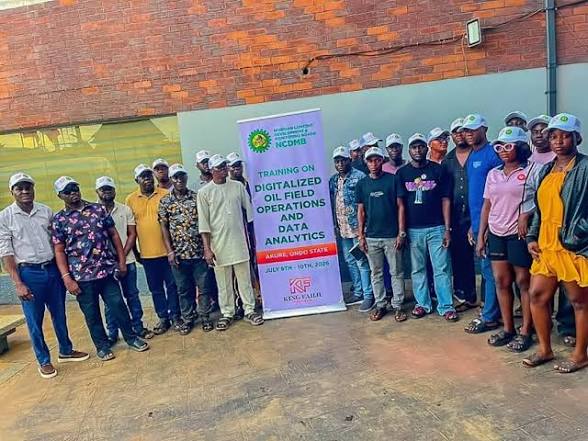
The Nigerian Content Development and Monitoring Board (NCDMB), in collaboration with King-Fahji Nigeria Limited, has successfully concluded a training programme on digitalized oil field operations and data analytics for 50 youths in Badagry, Lagos State.

The training, held in Badagry, was designed to equip young Nigerians with practical skills in modern oil field technologies, digital operations, and data-driven decision making in line with the NCDMB’s mandate to develop indigenous human capacity for the oil and gas industry.

During the training, beneficiaries were taken through modules on oil field automation, SCADA systems, real-time data monitoring, data analytics tools and predictive maintenance. The hands-on approach ensured participants gained industry-relevant competencies needed for the evolving digital landscape of the sector.

King-Fahji Nigeria Limited, which is the executing firm, commended the participants for their commitment and assured them that post-training mentorship and linkage to industry opportunities would be provided to help them transition into employment and entrepreneurship.

Beneficiaries expressed appreciation to NCDMB and King-Fahji describing the training as timely and impactful for their career growth in the energy and technology sectors.

At the end of the programme, the 50 participants received certificates of completion and starter packs. Stakeholders say the graduates are now positioned to support digital transformation efforts in Nigeria’s oil and gas operations.

NCDMB partners King-Fahji to train 50 Lagos youths on digitalised oil field operations, data analytics

The Nigerian Content Development and Monitoring Board (NCDMB), in collaboration with King-Fahji Nigeria Limitef, has successfully concluded a training programme on digitalized oil field operations and data analytics for 50 youths in Badagry, Lagos State.

The training, held in Badagry, was designed to equip young Nigerians with practical skills in modern oil field technologies, digital operations, and data-driven decision making in line with the NCDMB’s mandate to develop indigenous human capacity for the oil and gas industry.

During the training, beneficiaries were taken through modules on oil field automation, SCADA systems, real-time data monitoring, data analytics tools and predictive maintenance. The hands-on approach ensured participants gained industry-relevant competencies needed for the evolving digital landscape of the sector.

King-Fahji Nigeria Limited, which is the executing firm, commended the participants for their commitment and assured them that post-training mentorship and linkage to industry opportunities would be provided to help them transition into employment and entrepreneurship.

Beneficiaries expressed appreciation to NCDMB and King-Fahji describing the training as timely and impactful for their career growth in the energy and technology sectors.

At the end of the programme, the 50 participants received certificates of completion and starter packs. Stakeholders say the graduates are now positioned to support digital transformation efforts in Nigeria’s oil and gas operations.

Sun