Home Blog Page 299

LAWMA Arrests Four for Illegal Waste Dumping in Lagos

0

The Lagos Waste Management Authority (LAWMA) has intensified its enforcement against illegal waste disposal, arresting four environmental offenders for allegedly dumping refuse illegally.

The suspects — Chijekwu Okafor, 22; Abubakar Muhammed, 24; Jubril Isa, 23; and Henry Omoro, 35 — have been transferred to the Lagos State Task Force for prosecution.

LAWMA said the latest arrests bring the total number of offenders apprehended for illegal waste dumping since Tuesday, July 14, 2026, to 16.

The agency reiterated that illegal waste disposal is a violation of Lagos State environmental laws and vowed to sustain efforts to identify, arrest and prosecute offenders as part of its commitment to keeping the state clean and livable.

Tinubu Signs Executive Order to Harmonise Virtual Assets Regulation

0


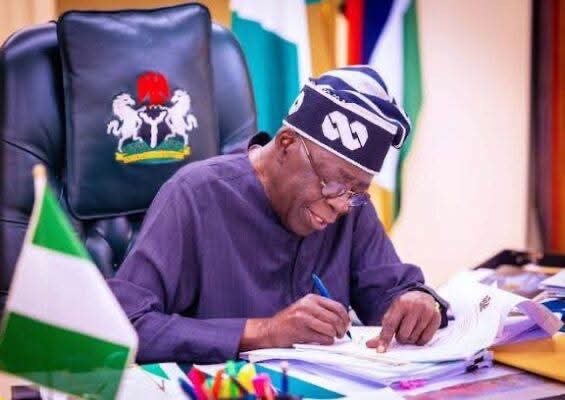
President Bola Ahmed Tinubu has signed the Presidential Executive Order on Virtual Assets Coordination, 2026, to harmonise the regulation of virtual assets, strengthen collaboration among key financial and regulatory agencies, protect Nigerians from fraud, and safeguard the integrity of the country’s financial system while promoting responsible innovation.

The statement was signed by the Special Adviser to the President on Information and Strategy, Bayo Onanuga.


The President signed the Order pursuant to Section 5 of the 1999 Constitution of the Federal Republic of Nigeria (as amended), and it takes immediate effect.

According to the Presidency, the Order addresses the increasingly fragmented regulatory environment created by the rapid growth of virtual assets, which now blur the traditional boundaries between currencies, money, commodities, and securities.

It noted that overlapping responsibilities among regulatory agencies, coupled with existing gaps in oversight, have exposed Nigeria to risks such as money laundering, terrorism financing, cybersecurity and data privacy threats, fraud, and revenue losses.

The government also observed that unregistered and fraudulent operators have exploited these gaps, leading to significant financial losses for many Nigerians.

To address these challenges, the Executive Order establishes a Virtual Asset Council, chaired by the Central Bank of Nigeria (CBN), with the Nigeria Revenue Service (NRS) and the Securities and Exchange Commission (SEC) serving as vice-chairs.

Other members include the Nigerian Financial Intelligence Unit (NFIU) and the Office of the National Security Adviser (ONSA).

The Council will provide policy direction, promote inter-agency collaboration, and work with the Attorney-General of the Federation to develop a harmonised legal and institutional framework that aligns the virtual assets sector with Nigeria’s national security, economic, and social objectives.
The Order also creates a Virtual Asset Office, which will serve as the Council’s operational arm.

The office, with its secretariat domiciled at the CBN, will coordinate information sharing, applications, and reporting among participating agencies through an integrated supervisory technology platform while ensuring each agency retains ownership and control of its data.

The Presidency stressed that the Executive Order does not establish a new regulator or transfer statutory powers from existing agencies. Instead, it coordinates the responsibilities of the relevant institutions.
Under the framework, registration of operators will be determined by the nature of their activities.

The SEC will regulate activities involving securities-related virtual assets, while the CBN will oversee payment, settlement, custody, and other services involving non-security virtual assets. The Virtual Asset Council will resolve any disputes regarding regulatory jurisdiction.

As part of the initiative, the CBN will launch a regulatory sandbox that will allow eligible operators to test virtual asset products, blockchain-based solutions, and related services under close regulatory supervision before they are introduced into the wider market.

The Presidency said the sandbox would enable regulators to assess the impact of emerging technologies on monetary sovereignty, financial stability, market integrity, consumer protection, financial inclusion, and revenue generation.

The CBN is expected to announce further details of the sandbox, while the Nigeria Revenue Service will unveil a tax policy for the virtual assets sector to provide clarity for taxpayers and service providers, improve compliance, and ensure the sector contributes fairly to national revenue.
In addition, the Federal Government is finalising a comprehensive Virtual Assets White Paper, which will outline Nigeria’s long-term policy direction and implementation priorities for the sector.

The Virtual Asset Council has also been directed to develop a Harmonised Implementation Framework within 30 days to facilitate the effective and timely implementation of the Executive Order.

US Reps pass bill to withhold all assistance to Nigeria until terror attacks are addressed

0


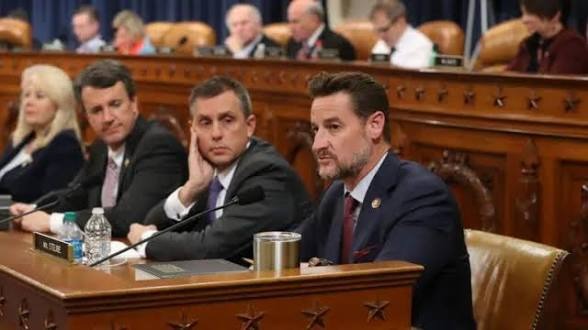
The US House of Representatives has agreed to an amendment bill that would increase withholding of assistance to Nigeria from 50 percent to 100 percent until it takes effective steps to prevent and respond to violence within its territory.

Gregory Stuebe, who represents Florida’s 17th congressional district in the House, proposed the amendment on Wednesday.

Lawmakers later agreed to the move with a voice vote.


The House had first proposed to half funds appropriated for Nigeria in April until the secretary of state certified that the Nigerian government had taken “effective steps to prevent and respond to violence and hold perpetrators accountable.”

Speaking in support of his motion, Steube said withholding only 50 percent of the funds appeared to reward the Nigerian government “despite failure to meet its fundamental obligation to protect citizens.

“I rise in strong support for my amendment to increase the withholding threshold for assistance to Nigeria, from 50 percent to 100 percent. While keeping in place benchmarks that demand Nigeria take effective steps to address the violence and persecution that continue to devastate the country.

“Nigeria has faced a horrific wave of violence that its corrupt government has failed to address.

“For years, and especially in recent months, Christians and other religious minorities in Nigeria have been subjected to violence and terrorism at the hands of extremists operating with impunity.

“Christian women and girls continue to be abducted, assaulted, tortured, and killed. Their churches are burned, and entire communities are erased.

“If the aid conditions included in the bill are important enough to withhold half of all the funding to the Nigerian government, then they are important enough to withhold all of the funding.

“The generosity of our taxpayers is a reflection of the American values we hold so firmly.

Never should we allow their hard earned tax dollars to be funnelled to corrupt regimes that fail to uphold religious freedom, fail to adequately confront terrorism, and fail to protect the innocent from persecution.

“So, why are we rewarding a government that fails to meet such a basic obligation?”

Steube said it is absurd to expend foreign aid to Nigeria in the face of rising insecurity, especially as America’s national debt approaches $40 trillion.

He said his amendment proposal would ensure that US aid is appropriately leveraged to defend, reflect, and uphold American values.
In 2025, US President Donald Trump redesignated Nigeria a country of particular concern (CPC) over Christian genocide claims, before following up with a missile strike on Nigerian territory on Christmas Day.

Nigeria and the United States have since entered a military partnership targeting terrorists in the country’s arid and vast northern region.

Meanwhile, the British High Commission has reaffirmed its commitment to supporting Nigeria’s legislative frameworks to ensure funding, transparency and respect for human rights in the country’s security sector.

The commission’s Head of Development Cooperation, Ms Cynthia Rowe, stated this at a roundtable on national security at the ongoing 2026 National Assembly Open Week in Abuja.

Rowe said that the UK Government, through its Strengthening Peace and Resilience in Nigeria (SPRiNG) programme, welcomed the initiative.

According to her, sustainable security requires strong and accountable institutions that are responsive to the needs of the people.

“The UK Government remains committed to supporting Nigeria’s legislative frameworks to ensure that security interventions are transparent, well-resourced and firmly rooted in respect for human rights,” she said.

Rowe commended the roundtable, describing it as a step toward codifying reforms that would protect vulnerable communities and foster long-term stability.

She said that the roundtable’s discussion areas perfectly aligned with the SPRiNG programme’s security sector reform objectives.

Rowe said that it addressed pressing issues such as banditry, kidnapping and farmer-herder conflicts.

She added that it also explored critical need for inter-agency collaboration, technology and innovation in security operations and 21st-century community engagement.

In his remarks, the Team Leader of the SPRiNG programme, Mr Ukoha Ukiwo, underscored the importance of a legislative framework in ensuring transparency.

Ukiwo said that programmes’ interventions across states continually highlighted that operational peace-building must be backed by robust legal frameworks.

“The focus of this roundtable on state policing, security funding and accountability is incredibly timely.

“By bridging the gap between grassroots realities and legislative action, we can ensure that informal and formal security architectures work cohesively to build formidable resilience in communities across Nigeria.”

Ukiwo said that the SPRiNG programme stood ready to support follow-up engagements with relevant stakeholders to ensure that the resolutions from the dialogue were actively implemented.

Sun

Bala Wunti to Senate: No N210trn missing from NNPC accounts

0

…Says audited accounts were wrongly interpreted
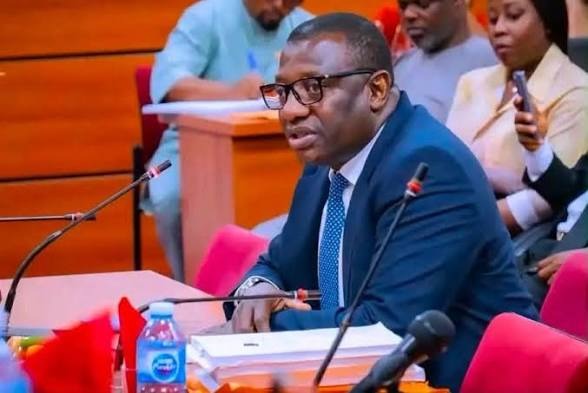
Former Group General Manager of the National Petroleum Investment Management Services (NAPIMS), Bala Wunti, has dismissed allegations that N210 trillion is missing from the accounts of the Nigerian National Petroleum Company Limited (NNPC Ltd.), telling the Senate that a detailed review of the company’s 2023 audited financial statements revealed no evidence of missing funds.

Appearing before the Senate Committee reviewing NNPC Ltd.’s 2023 audited accounts on Tuesday, Wunti said the widely circulated claim was the result of a fundamental misunderstanding of accounting principles rather than proof of financial misconduct.

Addressing lawmakers, the former NAPIMS boss said his independent examination of the audited statements found no reference to the alleged missing N210 trillion.

“I have gone through this document page by page. I have not found where N210 trillion was mentioned,” Wunti told the committee.

He explained that the disputed amount emerged after two completely different balance-sheet entries were incorrectly combined and presented as missing money.

According to him, about N107 trillion represented sundry receivables—funds owed to NNPC Ltd. by third parties—while another N103 trillion reflected accrued expenses, which are liabilities the company is obligated to pay.

Wunti stressed that under globally accepted accounting standards, the two entries serve entirely different purposes and cannot be merged to suggest that funds had disappeared.

“Receivables are money other people owe you. Accrued expenses are money you owe other people. Accounting standards require these items to be reported separately. They cannot simply be added together and described as missing money,” he said.

Based on his review of the audited financial statements, Wunti declared under oath that there was no factual basis for allegations that N210 trillion had vanished from NNPC Ltd.’s books.

The Senate committee had invited Wunti, who previously supervised upstream investments at NNPC, to conduct an independent assessment of the company’s 2023 audited accounts and present his findings.

Although he noted that his tenure did not cover the entire period under review, Wunti said it substantially overlapped with the years captured in the audit, giving him firsthand knowledge of the accounting framework, financial reporting processes and operational structure of the national oil company.

He also sought to explain what he described as the unique accounting framework of national oil companies, saying NNPC Ltd.’s financial reporting is more complex than that of conventional commercial enterprises.

According to him, unlike private corporations, NNPC Ltd. simultaneously functions as a commercial business, serves as custodian of Nigeria’s oil and gas assets on behalf of the Federation and performs strategic national energy security responsibilities.

These multiple roles, he explained, require separate accounting records and reporting frameworks, making the company’s audited financial statements more intricate than those of ordinary corporate organisations.

Wunti recalled that before the enactment of the Petroleum Industry Act (PIA), the defunct Nigerian National Petroleum Corporation combined commercial, regulatory and policy responsibilities within a single organisation.

While the PIA separated many of those responsibilities, he said NNPC Ltd. still maintains distinct accounting records to reflect both its commercial activities and its management of assets belonging to the Federation.

The former NAPIMS chief, who headed the agency from March 2020 before serving as Chief Offshore Investment Officer of NNPC Upstream Investment Management Services until December 2024, maintained that no case of fraud or missing funds was reported during his time in office.

“There was no reported fraud or money missing throughout the period under my stewardship,” he told lawmakers.

Wunti also addressed another issue raised before the committee, disputing reports that N5.8 billion was spent to incorporate NNPC Ltd. after the implementation of the Petroleum Industry Act.

He explained that the actual statutory payments made to the Corporate Affairs Commission (CAC) and the Federal Inland Revenue Service (FIRS) for filing fees and stamp duties amounted to approximately N2.45 billion.

According to him, the larger N5.8 billion figure resulted from accounting entries recorded separately across different books because one arm of the organisation paid the statutory charges on behalf of government shareholders, while another reflected the same transaction in its reporting records.

“The only money paid was about N2.45 billion, and it went directly to government institutions. No third party received any payment,” he said.

To prevent similar controversies in future, Wunti urged stronger collaboration among NNPC Ltd., the Office of the Accountant-General of the Federation and the Office of the Auditor-General of the Federation to deepen understanding of the company’s accounting framework and reporting procedures.

He also called for greater appreciation of the constitutional and statutory provisions governing NNPC Ltd., particularly the Petroleum Industry Act, arguing that a proper understanding of the legal framework would lead to more accurate interpretation of the company’s financial statements and reduce public misconceptions.

Following the presentation, Chairman of the Senate Committee, Senator Ibrahim Dankwambo, said members would examine Wunti’s report alongside the audited financial statements before deciding whether further clarification would be required.

The committee subsequently adjourned proceedings to continue its review of the submissions.

The Senate’s ongoing scrutiny of NNPC Ltd.’s 2023 audited accounts has drawn widespread public attention amid allegations of financial irregularities and conflicting interpretations of figures contained in the company’s audited financial statements.

Sun

Names of those who died as far back as 2011 remain on INEC’s records -Amupitan

0

• As Commission partners NIMC for transparent election, clean voter register

The Independent National Electoral Commission (INEC) has entered into partnership with the National Identity Management Commission (NIMC) to ensure a credible voters register and transparent elections in next year’s polls.

Chairman of the commission, Joash Amupitan, made the disclosure when he received NIMC’s Director-General/Chief Executive Officer, Abisoye Coker-Odusote and her management team who visited him in Abuja, yesterday.

He declared that the newly signed NIMC Act 2026 lays the foundation for a new electoral system in Nigeria built on verified identity and stronger data integrity.

Amupitan expressed confidence that with NIMC’s database now covering more than 136 million enrolled Nigerians, deeper cross-platform integration between the two commissions would allow for continuous auditing, verification and elimination of duplicate or underage entries on the voter register.

“Also, INEC’s newly introduced online voter registration platform is deliberately anchored on the National Identification Number (NIN) as a verification protocol, a critical step toward a more seamless Continuous Voter Registration (CVR) process,” he said.

Explaining how the partnership will authenticate voter register, the INEC boss revealed that it would significantly reduce the overall cost of conducting elections.

“Entries belonging to Nigerians who died as far back as 2011 remain on INEC’s records, alongside cases of duplication. The commission looks forward to leveraging NIMC’s data architecture to progressively clean up the register.”

“A credible, well-quantified voter register would significantly reduce the overall cost of conducting elections. INEC currently has to print materials in excess of the more than 100 million entries on its register to accommodate discrepancies,” he said, adding; “a comprehensive quantification exercise is planned for after the general election.”

The INEC chairman was candid about the identity-related challenges that have long confronted the commission, noting that; “voter identity can easily be stolen, easily be impersonated, and easily be duplicated.
He expressed confidence that the new legal framework and the technology behind it, would make such infractions far easier to detect and address.

He recalled that he had personally raised the need for stronger identity safeguards during an appearance before the Senate and commended the National Assembly for providing what he described as the legislative leeway now serving as the foundation for a more credible electoral system.

He noted that INEC’s newly introduced online voter registration platform is deliberately anchored on the National Identification Number (NIN) as a verification protocol, describing it as a critical step toward a more seamless Continuous Voter Registration (CVR) process.

He further disclosed that, pursuant to Section 18 of the Electoral Act, INEC has made provision for citizens whose Permanent Voter Cards (PVCs) have been defaced, destroyed or rendered illegible to obtain replacements, including printable PVCs for cases reported at least 90 days before an election, to ensure that no eligible voter is disenfranchised.

Touching on the state of the voter register, the Chairman revealed that entries belonging to Nigerians who died as far back as 2011 remain on INEC’s records, alongside cases of duplication, adding that the commission looks forward to leveraging NIMC’s data architecture to progressively clean up the register.

He explained that a credible, well-quantified voter register would significantly reduce the overall cost of conducting elections, noting that INEC currently has to print materials in excess of the more than 100 million entries on its register to accommodate discrepancies.

While adding that a comprehensive quantification exercise is planned for after the general election, the INEC Chairman also flagged the emerging role of artificial intelligence in electoral operations, describing the technology as powerful but requiring deliberate control and protocols to safeguard the efficiency and credibility of data systems, a concern he said would form part of continued collaboration between the two commissions.

Commending the NIMC leadership for what he called the “ruggedness” of effort behind the passage of the Act, Prof. Amupitan disclosed that technical teams from both commissions have already begun engaging on the identified areas of collaboration, with INEC’s team on standby to work faster and maximise outcomes ahead of the 2027 polls. He described the partnership as a “digital trust network” capable of reinforcing confidence not only in Nigeria’s identity ecosystem but also in the work of the Electoral Commission.

Earlier in her remarks, the NIMC Director-General, Coker-Odusote, informed the INEC leadership that the NIMC Act 2026 was signed into law by President Bola Tinubu, on 26 June 2026, following nearly two decades of legislative reform. She explained that the new Act repositions NIMC as the root authority for Nigeria’s Public Key Infrastructure, describing this as the bedrock of digital trust, and formally the home of the country’s digital public infrastructure.

She assured that identity remains the foundation of effective governance and credible election planning, pledging NIMC’s full support to INEC in delivering a fair and transparent 2027 General Election.

Sun

Akpabio admits he has never seen National Assembly budget

0


Senate President Godswill Akpabio has disclosed that he has never seen the National Assembly’s budget despite occupying the country’s third highest political office, as senators called for greater transparency in the legislature’s financial management.

Akpabio made the revelation during Thursday’s plenary while responding to a motion seeking to review the National Assembly’s procurement process and establish an internal tenders board for contract awards.

The motion, sponsored by Senator Sunday Karimi (Kogi West), followed growing concerns over the management of the legislature’s finances, including persistent technical faults in the recently renovated chambers despite billions of naira reportedly spent on the project.

Responding to the debate, Akpabio said lawmakers must first understand how the National Assembly’s budget is prepared and managed before embarking on procurement reforms.

“We can set up a small committee to work with the management of both chambers… because personally I’ve never seen the budget of the National Assembly,” he said.

The Senate President then sought clarification from former Speaker of the House of Representatives and Senator representing Sokoto South, Aminu Tambuwal, on whether the leadership of the Green Chamber had access to its budget.

“You were a speaker… maybe in the House of Representatives, they show you?”

Tambuwal replied:

“Yes.”

Akpabio responded:

“You see. That’s the point. So, the fault lies here in the Senate.”

He further suggested that the Senate President plays little role in the management of the legislature’s finances.

“The way I do things, not that I’m nonchalant, it’s as if they make it a closed thing, and that the Senate President doesn’t have anything to do with the management’s funds and all that,” he said.

Calling for greater openness, Akpabio said both chambers should jointly scrutinise the legislature’s finances before pursuing changes to procurement procedures.

“We should start with ourselves, and we should get the two chambers to know exactly what is going on.”

“We should also debate and understand the budget. We should know how much is coming, what is going to where, and what is going to where.”

He also faulted the timing of Karimi’s proposal, saying it ought to have been discussed with the Senate leadership, the Clerk to the National Assembly and management before being presented during plenary.

“Talking about internal tenders board and all that, should it be in the public glare before we clean up our house?” he asked.

“We should start with ourselves, and we should get the two chambers to know exactly what is going on. We should also debate and understand the budget. We should know how much is coming, what is going to where and what is going to where. This motion is premature.”

Earlier, Karimi argued that establishing an internal tenders board would strengthen the National Assembly’s constitutional autonomy by allowing it to oversee procurement and contract awards within its approved budget.

Several senators, however, opposed the proposal.

Senator Binos Yaroe questioned the accountability process surrounding the National Assembly’s budget.

“Who scrutinises that budget? To which committee does the National Assembly submit its budget? It is important for us to have clarity on these points,” Yaroe said.

Similarly, Senator Yahaya Abdullahi argued that the legislature’s major challenge was not procurement but the lack of a functional budget and research office.

“The issue of the problems that we have in the National Assembly regarding the management of finances, and the budget do not just solely lie in the process of procurement,” Abdullahi said.

“The problem had been that the National Assembly has not set up a budget and research office, of which there have been legislations over several assemblies.”

“What is happening today is that we don’t even know, and we don’t even see the budget of the National Assembly being presented here so that we can interrogate and understand the lines of expenditure.”

“My opinion is that the senator should step down on this motion. Let us get the house right first before we talk about the issues that Distinguished Senator Karimi is raising.”

Following the debate, Karimi agreed to withdraw the motion after Akpabio urged him to allow the Senate first address concerns over budget transparency and internal financial management before considering broader procurement reforms.

Sun

Obidient Movement accuses EFCC of targeting Obi’s supporters in naira abuse probe

0


The Obidient Movement has alleged that the Economic and Financial Crimes Commission (EFCC) is using its investigation into alleged naira abuse to target supporters of its presidential candidate, Peter Obi.

The allegation followed the interrogation of two prominent members of the movement, Peter Akah and Oruche Precious, who were questioned by the anti-graft agency over alleged naira abuse before being released on Thursday.
They were, however, instructed to return for further questioning.

In a statement issued on Thursday, the movement condemned what it described as the “invitation, prolonged interrogation, and apparent harassment” of its members, insisting that the investigation was politically motivated.

The group accused the EFCC of focusing on opposition figures while allegedly overlooking more serious corruption allegations involving politically exposed persons.

“This is a targeted attempt to intimidate key supporters of our principal, Mr Peter Obi, while the real criminals robbing Nigeria blind are given executive treatment,” the statement read.

“This is a targeted attempt to intimidate key supporters of our principal, Mr Peter Obi, while the real criminals robbing Nigeria blind are given executive treatment.”

The movement also criticised EFCC Chairman Ola Olukoyede, alleging that the commission had failed to pursue high-profile corruption cases involving members of the ruling All Progressives Congress (APC), while directing its attention towards Obi’s supporters.

Other News
Court forfeits Aisha Achimugu’s N4.6bn jewellery, N4.3bn exotic cars to FG
Court adjourns Blessing CEO’s alleged N36m fraud trial to July 20
Ex-CCT chairman Danladi Umar granted N100m bail over alleged abuse of office
It further claimed that politicians facing corruption allegations often avoid scrutiny by joining the APC and urged the anti-graft agency to prioritise investigations into major corruption cases instead of what it described as politically motivated actions.

“A serious agency would have beamed its searchlight on the Association of Past & Present Criminals (APPC), who have continued to find shelter in the APC,” the movement said.

“Nigerians already know that the easiest way to avoid any form of scrutiny is to join the APC. That is why anyone who has a major corruption case is more likely to join the party to escape the harassment of the EFCC.”

Reaffirming its support for the two members, the Obidient Movement called on the EFCC to discontinue the investigation, maintaining that it would continue to stand by its supporters.

“If the commission truly wants to fight corruption, it must focus its energy on the APC and APPC. By the time it is done thoroughly investigating members of the criminal SPV, Nigeria would be rid of more than 95 per cent of its corruption,” it said.

“We will not stand idly by and watch the EFCC perform a political hatchet job for Tinubu and the APC.

“We stand firmly behind Peter for Nigeria and Mama Pee, and we strongly advise the commission to stop straining at gnats while swallowing camels.”

The EFCC had not responded to the allegations as of the time of filing this report.

Sun

Malian Woman Makes History by Giving Birth to Nine Babies

0


A 25-year-old woman from Mali, Halima Cissé, made global headlines after giving birth to nine babies at once—five girls and four boys.

The nonuplets were delivered prematurely at 30 weeks via Caesarean section in a highly coordinated medical operation involving a team of 32 doctors, nurses, and specialists.

The successful delivery highlighted the complexity of multiple births and the critical role of specialized medical care in ensuring the safety of both mother and babies.

The remarkable birth has also drawn attention to the importance of support systems in parenting, with many observers noting that raising children is often a shared responsibility involving family members, healthcare professionals, teachers, mentors, and the wider community.

The story has sparked conversations among parents about the value of family support, spiritual guidance, shared experiences with other parents, and professional coaching in navigating the challenges of raising children.

Court Convicts Two for impersonating EFCC Officers

0


Justice M. Zubairu of the Federal Capital Territory, High Court Jikwoyi, Abuja on Thursday, July 16, 2026 convicted Haruna Mamuda and Sadiq Umar for parading themselves as officers of the Economic and Financial Crimes Commission, EFCC to defraud the public.

They were convicted on a five- count charge bordering on impersonation, criminal conspiracy and unlawful representation

Count one of the charge reads; That you, Haruna Mamuda, Sadiq Umar (a.k.a. Abubakar Hashimu Umar), and Salifu Olije Mustapha (now standing trial before the High Court of the Federal Capital Territory, Court 21, Kubwa), sometime in March 2026, within the jurisdiction of this Honourable Court, did conspire among yourselves to commit an offence, to wit: personating a public servant by falsely presenting yourselves as officers of the Economic and Financial Crimes Commission (EFCC), and thereby committed an offence contrary to Section 96 of the Penal Code Act and punishable under Section 132 of the same Act.

Count four reads :That you, Sadiq Umar (a.k.a Abubakar Hashimu Umar) sometime in March 2026, within the jurisdiction of this Honourable Court falsely personated an officer of the Economic and Financial Crimes Commission (EFCC) and in that assumed character defrauded unsuspecting members of the public, and thereby committed an offence contrary to and punishable under Section 132 of the Penal Code Act.

They pleaded guilty to all the charges when read to them.

In view of their guilty plea, prosecution counsel, R.U Adagba urged the court to convict them accordingly.

Counsel to the first convict, Anamegbumam Innocent pleaded with the court for leniency as he claimed that his client had shown remorse for the offense charged against him, adding that, the first convict is married with kids and had cooperated with the officers of the Commission.

Also, counsel to the second defendant, Bemdo Asan prayed the court to also temper justice with mercy, explaining that there has been no previous records of conviction on his client.

Responding, Adagba urged the court to sentence the defendants accordingly.

“My lord, the first defendant is a dismissed member of the Nigerian Army, his sentence will serve as a deterrent to the society at large. I also want the court to factor in the judgment that they were brought in from the Department of State Security Services, DSS where they are been charged for terrorism financing and kidnapping” she said

Justice Zubairu adjourned the matter to July 22, 2026 for sentencing. He also ordered that they remain in custody with the EFCC.

Omisore absent as APC flags off governorship campaign in Osun

0


Former National Secretary of the All Progressives Congress (APC), Senator Iyiola Omisore, was conspicuously absent from the official flag-off of the governorship campaign of the party’s candidate, Bola Oyebamiji, in Ile-Ife on Thursday.

Although the reason for his absence from the campaign event, held in his hometown, could not be ascertained, Omisore has not attended any party function since he was disqualified from the governorship race.

The campaign council of the APC candidate visited the Ooni of Ife, Oba Adeyeye Ogunwusi, at his palace.
The monarch warned against bloodshed in Osun, urging politicians and supporters to conduct themselves peacefully throughout the election.

“I beg you with my crown, on election day, vote peacefully. We do not want bloodshed. Osun people are known for their virtues. Let us set a good example. Let everything be peaceful.

“I do not want anyone carrying guns. I have said my own. The state is greater than any one of us. Politics will come and go, but Osun will remain,” the Ooni said.

The monarch also appreciated President Bola Tinubu for his efforts, especially in tackling insecurity and preventing bandits from invading Yorubaland.

“May God continue to strengthen and guide the administration as it works to improve Nigeria,” he added.

He urged the APC to remain united and work as one family.

“I also commend the example being set within the APC in reconciliation. Continue to remain united. I encourage you to see yourselves as one family. When I saw Dotun Babayemi, I knew all is well by the grace of God. To our son, Kayode Adereti, I urge you to continue setting a good example, never bring shame to the party and do not disappoint Ile-Ife,” the Ooni said.

The APC candidate, Oyebamiji, said he had assessed the condition of roads in Ile-Ife.

“By the grace of God, when I become your governor, we will commence work on the Enuwa–Fajuyi Junction Road. We have also assessed the Ilare–Sabo Road and the Aderemi Road to Ondo Road. We will renovate all dilapidated primary schools in Ile-Ife.

“We also plan to establish a modern market befitting the status of Ile-Ife as the cradle of the Yoruba race. We want a magnificent market that will make anyone visiting from any part of the world recognise immediately that this is the cradle of the Yoruba race.

“By the grace of God, these are some of the projects the Oyebamiji administration will undertake because we understand the importance of Ile-Ife.

“We assure the people of quality healthcare delivery. We will take better care of civil servants in ways they have never experienced before, especially teachers.

“We will invest heavily in their training so they can provide quality education to our children. Their capacity-building programmes will not be limited to Nigeria; we will also sponsor them for training abroad to expose them to global best practices in teaching.

“We are also working on plans to improve electricity supply across the state to support our artisans and other businesses that depend on power for their livelihoods.

“We have already begun discussions with a German company, which has indicated its readiness to generate 3.5 megawatts of electricity. We have reached an advanced stage in the discussions. The only thing left is for us to win the election, assume office and sign the agreement so that work can commence,” Oyebamiji said.

Sun