Home Blog Page 289

Nigeria will elect Christian-Christian ticket someday — Gov Sule

0


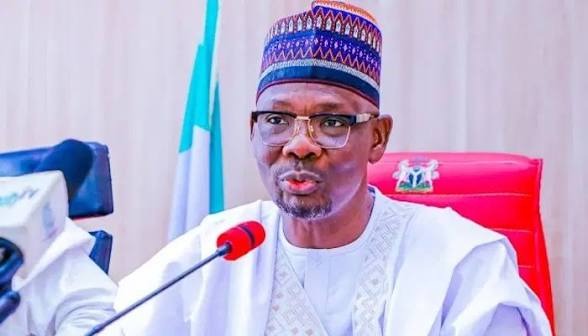
Nasarawa State Governor Abdullahi Sule has expressed confidence that Nigeria will one day elect a president and vice-president on a Christian-Christian ticket, insisting that the country’s Constitution does not require religious balancing in presidential tickets or political appointments.

Sule made the remarks on Tuesday during an appearance on Channels Television’s Politics Today while responding to criticism by the Nigeria Democratic Congress (NDC) vice-presidential candidate, Rabiu Kwankwaso, over issues of political representation.

Dismissing the criticism, the governor said it was expected from an opposition politician. “I think it is normal for Senator Kwankwaso, whom I respect a lot, to say that because he’s opposition. He cannot say anything good. It is expected of him to say that,” he said.

Sule argued that the 1999 Constitution promotes inclusiveness and federal character but contains no provision requiring religious balancing. “There is no place where it talks about religion. Section 14 didn’t talk about religion. Section 15 did not talk about religion,” he stated.

The governor cited the victories of President Bola Tinubu and Vice-President Kashim Shettima in 2023, as well as the late MKO Abiola and Babagana Kingibe’s Muslim-Muslim ticket in the 1993 presidential election, as evidence that Nigerians vote beyond religious considerations.

“You can see both elections have been clear that the Muslim-Muslim ticket has won. I pray that one day Nigeria will have a Christian-Christian ticket, and it will win; that’s what I pray to see,” Sule said.

He, however, maintained that his decision to retain Emmanuel Akabe, a Christian, as deputy governor was based on competence rather than religion.

“I have always had a Christian as a deputy, Emmanuel Akabe. We thought it was important because Emmanuel Akabe is competent and our state is different from Nigeria,” he said.

Sule added that political realities differ across states, noting that states such as Enugu and Bayelsa already operate Christian-Christian leadership without generating controversy.

Sun

CBN confirms opening PFIPC accounts on Accountant-General’s directive

0


The Central Bank of Nigeria (CBN) has confirmed that it opened two domiciliary accounts linked to the controversial Presidential Foreign Investment Promotion Council (PFIPC) following a directive from the Office of the Accountant-General of the Federation (OAGF), but insisted that the accounts were never funded or operated.

The disclosure was made on Monday by the Director of Banking Services at the CBN, Abdullahi Hamisu, while appearing before the House of Representatives Ad Hoc Committee investigating the legal basis, operations and budgetary allocation of the PFIPC, including the N1.3 billion appropriated to the council in the 2026 Appropriation Act.

Representing the Governor of the Central Bank, Olayemi Cardoso, Hamisu told lawmakers that the apex bank received a formal mandate dated July 29, 2025, from the Office of the Accountant-General directing it to open the accounts for the Presidential Economic Advisory Council/Presidential Foreign Investment Promotion Council.

He explained that the accounts, one denominated in United States dollars and the other in British pounds sterling, were opened after the bank carried out its standard account-opening procedures.

However, he stressed that the accounts remained dormant throughout their existence.

According to him, the accounts were neither funded nor used for any financial transactions.

Responding to questions from members of the committee on whether the CBN sought proof of an enabling law establishing the council before opening the accounts, Hamisu said the bank acted solely on the official instruction received from the Office of the Accountant-General.

“We don’t ask for an enabling Act. We received a mandate from the Office of the Accountant-General of the Federation to open the accounts for the council,” he told the lawmakers.

The revelation comes amid conflicting positions by government institutions over the existence and operations of the PFIPC.

On July 1, the Presidency alleged that Adeniyi Adeyemi, who claims to be the Director-General of the council, used forged documents to facilitate the opening of a CBN account after allegedly misleading the Office of the Accountant-General.

The Presidency, in a statement issued by the Special Adviser to the President on Information and Strategy, Bayo Onanuga, also alleged that police investigations uncovered 34 bank accounts allegedly linked to Adeyemi, including nine accounts opened in the names of entities described as fictitious agencies.

However, the Office of the Accountant-General had maintained that the PFIPC had no operational account with the Central Bank.

Its Director of Public Relations, Bawa Mokwa, explained that although an application to open an account was initiated, the process was never completed because the required documentation to activate the account was not submitted.

The controversy surrounding the PFIPC intensified in June after the Presidency distanced itself from the council, insisting that no such body exists under the administration of President Bola Tinubu, despite the council having a budgetary allocation in the 2026 Appropriation Act, an office within the Federal Secretariat and reports that it recruited about 300 staff members.

The Chief of Staff to the President, Femi Gbajabiamila, also denied appointing Adeyemi to head the council.

Adeyemi has consistently maintained that his appointment was legitimate and has challenged the Presidency’s position, calling on President Tinubu to constitute an independent panel to investigate the controversy surrounding the PFIPC.

Sun

2027: Why Obi-Kwankwaso ticket is dead on arrival in Kano – Ganduje

0


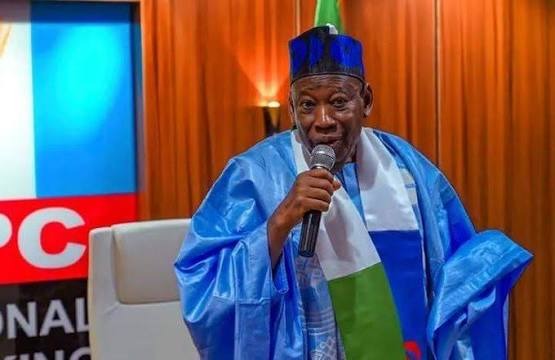
Former National Chairman of the All Progressives Congress (APC), Abdullahi Ganduje, has dismissed the prospects of a Peter Obi-Rabiu Kwankwaso presidential ticket ahead of the 2027 general election, declaring that such an alliance would fail to gain support in Kano State.

Speaking with journalists on Tuesday, the former Kano State governor said the proposed ticket, expected to run on the platform of the Nigeria Democratic Congress (NDC), lacked the political strength, leadership credentials and governance record required to secure victory in the state.

“I don’t think Peter Obi and Kwankwaso’s ticket will succeed in Kano. It will not succeed. In fact, it is dead on arrival,” Ganduje said.

Questioning Obi’s record as governor of Anambra State, Ganduje argued that the former Labour Party presidential candidate had not demonstrated the level of governance experience needed to lead Nigeria.

“Because Peter Obi was a governor in the South-East geopolitical zone, a governor in Anambra State. What did he do as a governor? What legacy did he leave as a governor?” he asked.

“And from that, what other responsibility in governance did he hold that he made a mark to the extent that we believe he will be able to manage this country effectively and efficiently?”

Ganduje also criticised the political record of former Kano State governor Rabiu Kwankwaso, noting that unlike other governors in the state, he failed to secure two consecutive terms in office.

“Kwankwaso too, he was a governor of Kano State. He was not able to be a governor back-to-back,” Ganduje said.

“So far, the two other governors in Kano were able to win elections back-to-back. Mallam Ibrahim Shekarau was able to spend eight years straight. Myself, I was able to spend eight years straight.

“But he was not able, after the first term, he was not able to make it until after eight years, then he was able to come back.”

The former APC chairman further argued that Kwankwaso had not built a legacy strong enough to convince Kano residents or Nigerians that he was fit to serve as the country’s vice-president.

“So I don’t think, even in Kano, what legacy specifically can you say that he has left in Kano that will convince the people of Kano, will convince the people of Nigeria that he will be a successful vice-president of the Federal Republic of Nigeria?” he said.

Ganduje maintained that the proposed Obi-Kwankwaso alliance lacked the political appeal to challenge effectively in Kano, insisting, “I think that, as I earlier said, is dead on arrival.”

Sun

Lagos Lawmaker Jubreel Abdulkareem Earns PhD from Babcock Varsity

0

BY TAIWO OGUNMOLA -OMILANI


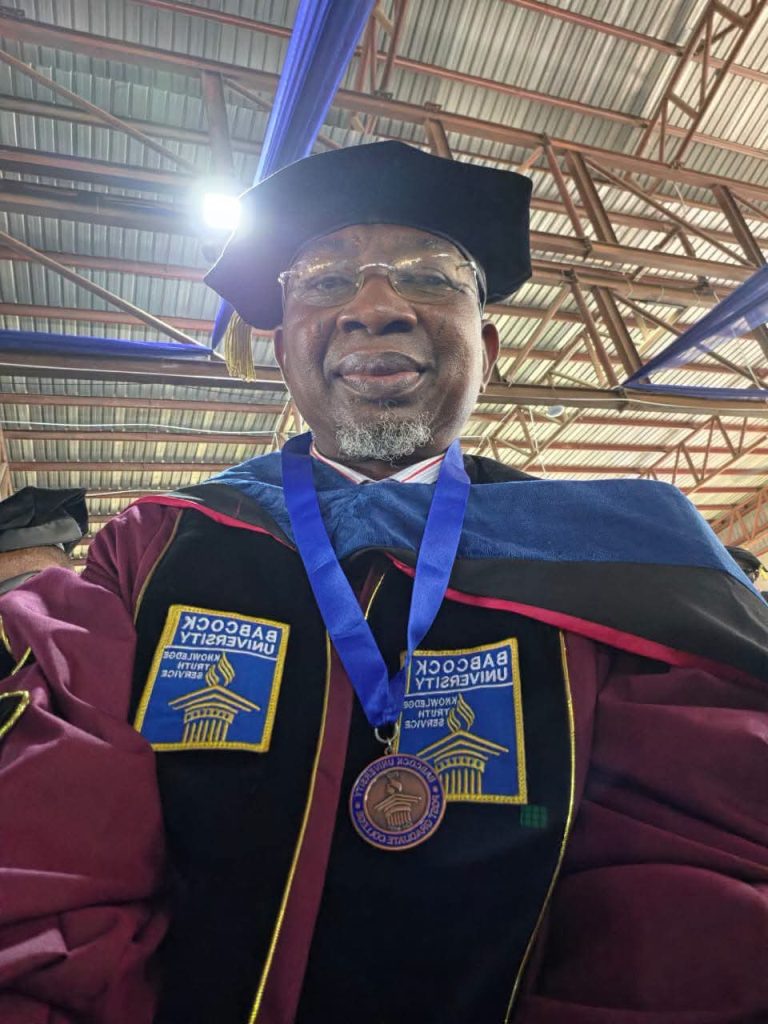
Lawmaker representing Agege Constituency II in the Lagos State House of Assembly, Hon. Jubreel Abdulkareem, has earned a Doctor of Philosophy (PhD) degree from Babcock University, Ilishan-Remo, Ogun State.

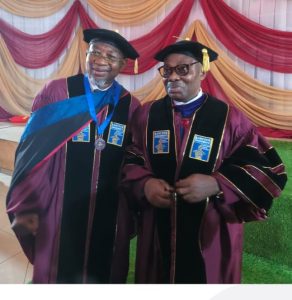
Abdulkareem was among the graduates honoured at the university’s postgraduate convocation ceremony held on the institution’s main campus.

The lawmaker, who was elected into the Lagos State House of Assembly in 2023, currently serves as the Chairman of the House Committee on Home Affairs, where he oversees legislative matters relating to internal security and public safety.

Before his election into the Assembly, Abdulkareem served as the Executive Chairman of Agege Local Government for two terms, during which he implemented several grassroots development initiatives.

He recently lost his bid to secure his party’s ticket in the primary election ahead of the next legislative polls.

Congratulating the lawmaker on his academic achievement, admirers described the PhD as a reflection of his dedication to public service, scholarship and personal development.

They noted that balancing the demands of legislative responsibilities with the rigours of postgraduate studies demonstrated exceptional commitment, discipline and leadership.

According to the congratulatory message, Abdulkareem’s accomplishment serves as an inspiration to young people, reinforcing the belief that learning is a lifelong pursuit regardless of career or public office.

The message also commended his contributions to the development of Agege Constituency II, describing his record in public office as exemplary.
Supporters expressed confidence that the knowledge and research skills acquired through his doctoral programme would further enhance his contributions to governance and public policy.

They wished the lawmaker continued success in his academic and public service endeavours, describing the PhD as another milestone in his career.

Outgoing British High Commissioner Praises Tinubu’s Economic Reforms, Hails NRS Partnership

0


BY TAIWO OGUNMOLA -OMILANI


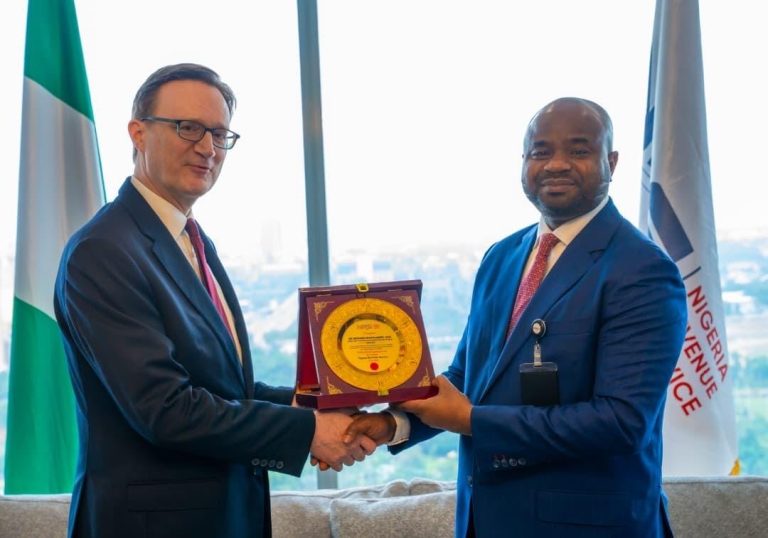
Outgoing British High Commissioner to Nigeria, Richard Montgomery, has commended President Bola Tinubu’s economic reforms, describing them as critical to placing Nigeria on a stronger economic footing despite the short-term hardship experienced by citizens.

Montgomery made the remarks on Tuesday during a farewell visit to the headquarters of the Nigeria Revenue Service (NRS) in Abuja, according to a statement issued by the Special Adviser to the NRS Chairman, Dare Adekanmbi.

The British envoy acknowledged that reforms such as currency devaluation and efforts to tame inflation had imposed temporary difficulties on Nigerians but insisted they were necessary to restore the country’s economic vitality.

Reflecting on his three-year diplomatic assignment in Nigeria, Montgomery said he had witnessed significant progress in the country’s economic management and would continue to brief the United Kingdom’s new Prime Minister on the importance of the reforms.

He praised the contributions of key members of the economic management team, including Central Bank of Nigeria Governor Olayemi Cardoso, Minister of Finance and Coordinating Minister of the Economy Wale Edun, NRS Chairman Dr Zacch Adedeji, and Taiwo Oyedele, for driving tax and fiscal reforms.

According to him, the government’s efforts to strengthen fiscal management, improve revenue administration, attract investment and enhance Nigeria’s credit ratings have laid a solid foundation for long-term economic growth.

Montgomery urged the government to focus on raising Nigeria’s economic growth rate from about four per cent to seven per cent over the next four years, saying such growth would significantly improve the living standards of ordinary Nigerians.

The outgoing High Commissioner also described the Nigeria Revenue Service as “one of our best partners,” commending the agency’s collaboration with His Majesty’s Revenue and Customs (HMRC), particularly in peer reviews and institutional reforms.

He lauded Adedeji for providing both technical expertise and political leadership in implementing the reforms.

Responding, Adedeji expressed appreciation for Montgomery’s support throughout his tenure, noting that the British envoy’s technical assistance and encouragement had played an important role in shaping the agency’s reform agenda.

The NRS chairman said the relationship between Nigeria and the United Kingdom had evolved beyond development assistance into a strategic partnership, expressing confidence that the cooperation would continue under Montgomery’s successor while wishing the diplomat success in his future endeavours.

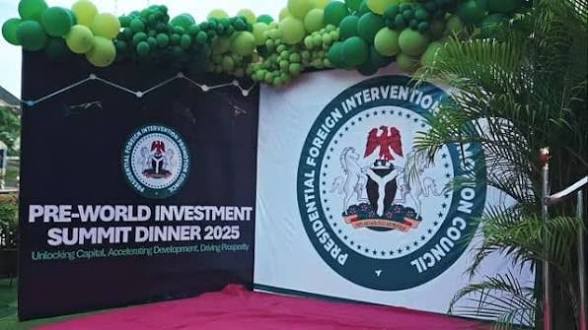
Foreign affairs ministry: We didn’t approve PFIPC’s request to host world investment summit

0


The ministry of foreign affairs says it neither granted any request from the purported Presidential Foreign Investment Promotion Council (PFIPC) nor had any official dealings with the council.

Umar Ahmed, permanent secretary of the ministry of foreign affairs, spoke on Tuesday when he appeared before the house of representatives ad hoc committee investigating the PFIPC imbroglio and the N1.3 billion allocated to the council in the 2026 Appropriation Act.

thecable

CBN Retains Interest Rate at 26.5%

0


The Monetary Policy Committee (MPC) of the Central Bank of Nigeria (CBN) has retained the Monetary Policy Rate (MPR) at 26.5 per cent following the conclusion of its 306th meeting in Abuja.


CBN Governor Olayemi Cardoso announced the decision during a press briefing on Tuesday, saying the committee resolved to keep the benchmark interest rate unchanged as part of efforts to sustain macroeconomic stability and consolidate recent economic gains.

The decision marks another consecutive hold on the policy rate, reflecting the apex bank’s cautious approach to managing inflation and maintaining stability in the foreign exchange market.

Reacting to the announcement, Chief Economist at SPM Professionals, Paul Alaje, commended the MPC for maintaining all policy parameters after its July meeting.

According to Alaje, the decision to keep the rates unchanged will help prevent market uncertainty, support the ongoing moderation in inflation, and safeguard the gains recorded in the economy.

He added that policy consistency would boost investor confidence while allowing the impact of previous monetary tightening measures to continue filtering through the economy.

Lagos Assembly Begins Consideration of Requests on Infrastructure Funding, ₦200bn Bond Issuance

0


BY TAIWO OGUNMOLA -OMILANI

The Lagos State House of Assembly on Tuesday received two funding requests from the Lagos State Government seeking legislative approval for infrastructure financing initiatives aimed at accelerating development across the State.

The requests were conveyed in separate letters from the Commissioner for Finance, Mr. Abayomi Oluyomi, and read on the floor of the House by the Clerk, Mrs. Adenike Oshinowo.

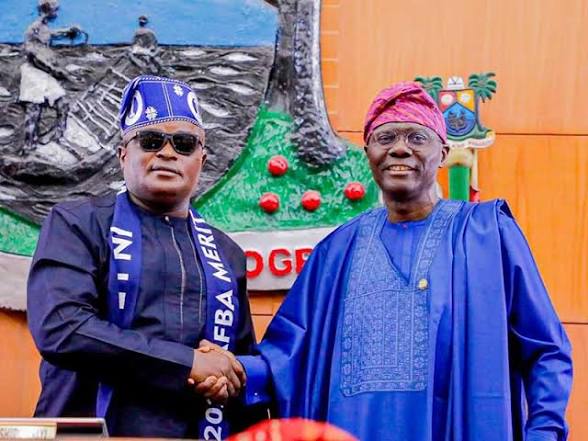
Following the presentation, the Speaker of the House, Rt. Hon. Mudashiru Obasa, referred both requests to the Joint Committee on Economic Planning and Budget and the Committee on Finance for further scrutiny. The committees were directed to report their findings to the House on Thursday.

The first request sought the Assembly’s resolution authorising Lagos State’s participation in the Federation Account Allocation Committee (FAAC) Receivables Discounting Programme under the Lagos State Infrastructure Finance Fund.

According to the letter, the programme is designed to provide immediate liquidity for the State by leveraging future FAAC allocations to finance critical infrastructure and capital projects.

The Commissioner explained that the initiative would enable Lagos to access third-party funding estimated at about $17 million for developmental projects.

Oluyomi stated that the government’s participation in the programme requires a formal resolution of the House of Assembly, stressing that the approval would facilitate the implementation of key infrastructure initiatives across the State.

In the second request, the Commissioner sought legislative approval for Lagos State’s proposed ₦200 billion Series V bond issuance under its ₦1 trillion Debt and Hybrid Instruments Issuance Programme.

He noted that the State has consistently relied on the debt capital market to secure funding for major infrastructure and social development projects aimed at driving economic transformation.

The proposed bond, according to the letter, would finance several priority projects, including the New Massey Children’s Hospital, Lagos Island General Hospital, the Lagos Rail Mass Transit Line, the Omu Creek Bridge, and other strategic infrastructure across the State.

The Commissioner urged the lawmakers to adopt the proposed resolutions to enable the State government proceed with the necessary arrangements to access the capital market, assuring the Assembly of the government’s commitment to prudent financial management and sustainable infrastructure development.

Senate extends probe of Safe Schools Initiative, expands investigation to TETfund

0

TETFund, NELFUND, UBEC, Humanitarian Ministry, NSIPA

The Senate has expanded the mandate of its Ad-hoc Committee investigating the Safe Schools Initiative (SSI) Programme and granted it a three-week extension to conclude its assignment, widening the scope of the probe to include the Tertiary Education Trust Fund (TETFund), Nigerian Education Loan Fund (NELFUND), Universal Basic Education Commission (UBEC), Federal Ministry of Humanitarian Affairs and Poverty Alleviation, and the National Social Investment Programme Agency (NSIPA).

The resolution followed a motion moved on the floor of the Senate by the Chairman of the Ad-hoc Committee, Senator Orji Uzor Kalu (APC, Abia North) on Tuesday, pursuant to Orders 41 and 51 of the Senate Standing Orders, 2026 (as amended), seeking an expansion of the committee’s terms of reference and additional time to conclude its investigation.

Presenting the motion, Senator Kalu informed the Senate that preliminary investigations by the committee had revealed significant intersections between the implementation and funding mechanisms of the Safe Schools Initiative and several federal institutions responsible for educational funding, student welfare, social intervention programmes and humanitarian support.

He noted that investigating the Safe Schools Initiative in isolation would result in an incomplete assessment of issues relating to school security, educational infrastructure and intervention programmes designed to support vulnerable learners across the country.

“The issues surrounding student security, educational infrastructure funding and social intervention schemes for vulnerable learners across the country are deeply interwoven. Investigating the Safe Schools Initiative without reviewing these complementary bodies will result in fragmented legislative oversight,” Kalu stated.

According to him, expanding the committee’s mandate has become imperative to enable the Senate deliver a comprehensive and actionable report capable of strengthening accountability, safeguarding Nigerian students and ensuring transparency in the management of intervention funds.

Under the expanded mandate, the committee will undertake a comprehensive evaluation of financial flows, operational bottlenecks and accountability structures across the Safe Schools Initiative and the affected agencies.

It will also review social safety net allocations connected to school feeding programmes, emergency relief interventions for displaced students and educational rehabilitation initiatives administered through the Federal Ministry of Humanitarian Affairs and Poverty Alleviation and NSIPA.

The committee is equally expected to audit infrastructure and security-related intervention projects funded by TETFund across beneficiary tertiary institutions, assess NELFUND’s disbursement processes, operational readiness, administrative efficiency and student access frameworks, while also examining interventions undertaken by UBEC in basic education.

While seeking the Senate’s approval, Senator Kalu explained that time constraints arising from the committee’s extensive schedule and other legislative engagements had affected planned visits to some locations critical to the investigation.

“We’re supposed to submit our report, and there are four key areas that were not done. I needed the permission of the Senate so that we can conclude it in the next two or three weeks and come back with a report,” he said.

Responding, Senate President Godswill Akpabio sought the opinion of lawmakers on granting the committee additional time to conclude its work.

Following a voice vote overwhelmingly supported by senators, the Senate approved the committee’s request for a three-week extension.

The Safe Schools Initiative investigation was inaugurated by the Senate in December last year amid growing concerns over persistent attacks on schools despite years of funding commitments and policy interventions aimed at protecting educational institutions across Nigeria.

The investigation was further necessitated by the abduction of 25 female students of Government Girls Comprehensive Secondary School, Maga, Kebbi State, during which bandits reportedly killed the school’s Vice Principal, reigniting national concerns over the safety of students and teachers in vulnerable communities.

The Safe Schools Initiative was launched in May 2014 following the abduction of 276 schoolgirls from Chibok, Borno State. Conceived as a partnership between the Federal Government, the United Nations and private sector stakeholders, the programme was designed to strengthen security infrastructure around schools, particularly in conflict-prone areas.

The ongoing Senate probe has already uncovered concerns over the utilisation of funds released to implementing agencies. During an investigative hearing, the committee raised questions over the disbursement of ₦15 billion released in 2023 for the programme, with the Nigerian Police Force receiving the largest allocation of ₦6.225 billion.

Other allocations disclosed include ₦3.362 billion to the Nigeria Security and Civil Defence Corps (NSCDC), ₦2.250 billion to Defence Headquarters and ₦519 million to the Federal Ministry of Education, while the exact amount released to the Department of State Services (DSS) was not publicly disclosed during the hearing.

The committee had also queried alleged financial irregularities and consultancy expenditures associated with the programme and subsequently directed the Safe Schools Financing Office to provide a reconciled and comprehensive breakdown of all funds released, expenditures incurred, names of contractors and supporting documentation relating to the Central Bank of Nigeria Trust Fund account.

The National Coordinator of Financing Safe Schools in Nigeria, Hajia Halima Iliya, had informed the committee during one of it’s engagements that the initiative received contributions from both domestic and international partners, including $10 million from the Federal Government, $10 million from Nigerian business leaders, $1 million from the African Development Bank, €2 million from the German Government, $4 million from the Norwegian Government managed through UNICEF, as well as additional support from USAID, the Qatar Foundation and United Nations agencies.

With the latest expansion of its mandate, the Senate Ad-hoc Committee is expected to provide a more holistic assessment of how educational and humanitarian intervention funds are being deployed across relevant institutions and determine whether existing programmes are effectively addressing the safety, welfare and educational needs of Nigerian students.

Sun