Home Blog Page 276

We remain indebted to Nigeria despite xenophobic concerns – South African envoy

0


The South African government has reaffirmed its gratitude to Nigeria for its role in the struggle against apartheid, while pledging to strengthen bilateral ties amid renewed concerns over xenophobic attacks against Nigerians living in the country.

The assurance was given on Monday when South Africa’s Minister of International Relations and Cooperation, Ronald Lamola, met with Nigeria’s Minister of State for Foreign Affairs, Ambassador Sola Enikanolaiye, in Abuja.

Lamola said South African President Cyril Ramaphosa had asked him to deliver a special message to President Bola Tinubu.

Although Tinubu delegated the meeting to Enikanolaiye, discussions centred on the growing diplomatic concerns arising from attacks on Nigerians and other African nationals in South Africa.

The South African minister described Nigeria’s contribution to the anti-apartheid struggle as historic, saying the sacrifices made by Nigerians would never be forgotten.

“We remain deeply indebted to the people of Nigeria for their sacrifice,” Lamola said.

He added that the South African government remained firmly opposed to xenophobia, racism, discrimination, homophobia and every form of intolerance.

While acknowledging concerns over attacks on foreign nationals, Lamola maintained that South Africa had a sovereign responsibility to enforce its immigration laws and tackle criminal activities, including drug trafficking, internet fraud and irregular migration.

According to him, migration has become a continental challenge requiring collective action under the African Union’s framework on orderly and regular migration.

“We believe that Nigeria and South Africa have a shared responsibility to respond to these challenges within the African continent,” he said.

Lamola said the details of President Ramaphosa’s message to President Tinubu would be discussed during a closed-door meeting.

Responding, Enikanolaiye said President Tinubu directed the meeting to openly address the recurring attacks against Nigerians in South Africa, describing the issue as one that threatens the long-standing relationship between Africa’s two largest economies.

The minister urged the South African authorities to take decisive steps to halt what he described as recurring Afrophobic attacks targeting Nigerians and other African nationals.

According to him, official records indicate that 98 Nigerians have been killed in mob and hate-related attacks in South Africa since 2022, while five Nigerians have reportedly lost their lives this year alone.

He noted that some Nigerians repatriated from South Africa claimed the actual figures could be higher.

Enikanolaiye stressed that Nigeria does not support criminality but insisted that suspects should be arrested, prosecuted and punished through lawful judicial processes rather than subjected to mob violence.

“Nigeria will not support drug traffickers or any criminal activity, but those accused of crimes must be treated in accordance with the rule of law, South Africa’s Constitution and international human rights standards,” he said.

He also questioned why security agencies allegedly failed to intervene during several attacks, noting that many of the victims were legally resident in South Africa.

The minister said nearly 1,500 Nigerians had been repatriated from South Africa this year, describing the humanitarian situation as heartbreaking.

“I shed tears when I received the first batch of evacuees. I saw children, women and the elderly returning home with almost nothing after their properties had been looted and destroyed. That is not the Africa we want,” Enikanolaiye said.

He reaffirmed Nigeria’s commitment to maintaining cordial relations with South Africa and expressed confidence that sustained dialogue would help restore trust, strengthen cooperation and uphold the ideals of African unity.

Sun
Xenophobic attacks: Tinubu snubs Ramaphosa’s special envoy

0


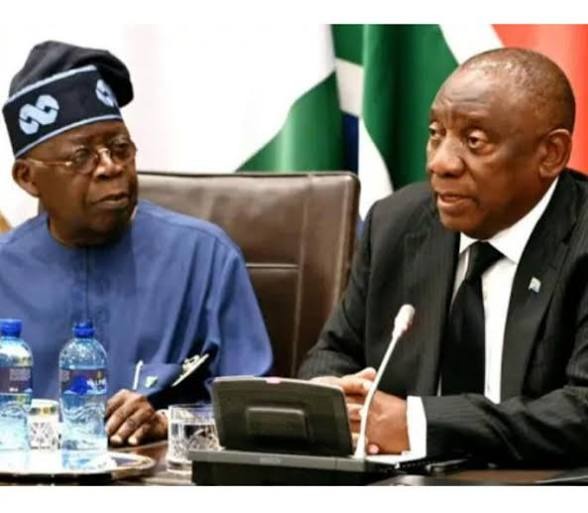
President Bola Tinubu has declined to receive a special envoy dispatched by South African President Cyril Ramaphosa.
The refusal is coming amidst growing concerns over persistent xenophobic attacks against Nigerians in South Africa.

A Daily Sun source disclosed that the South African delegation, led by the Minister of International Relations and Cooperation, Ronald Lamola, had arrived Abuja on Friday, July 24, with what was described as a “very important message” for the Nigerian leader.

The development comes less than 24 hours after the reported killing of a Nigerian national, Chika Ibe, who was allegedly picked up from his residence at Parksig Villas Complex in Bellville, Cape Town, and tortured to death by personnel of the South African Police Service (SAPS).

Recall that Nigeria has maintained a firm stance against xenophobic attacks in South Africa.

At the 69th Ordinary Session of the Authority of Heads of State and Government of ECOWAS which took place recently in Lungi, Sierra Leone, Vice President Kashim Shettima, who represented President Tinubu, condemned the attacks and pledged that Nigeria would push for stronger measures against xenophobia at the African Union.

Speaking on the recurring Afrophobic attacks targeting African nationals in South Africa, Shettima called for a united continental response to protect the rights and dignity of Africans living across the continent.

He disclosed that the Federal Government had evacuated 1,490 Nigerians affected by previous xenophobic violence and reaffirmed Nigeria’s commitment to working with regional and continental institutions to address the crisis.

Diplomatic sources disclosed that Nigeria’s Minister of Foreign Affairs, Bianca Odumegwu-Ojukwu, advised that it was not an appropriate time for President Tinubu to receive the South African envoy, citing the continued attacks on Nigerians, their businesses and properties in South Africa.

According to the sources, the Foreign Affairs Minister stressed that the South African delegation could not secure an audience with the President without a prior appointment and concrete commitments from Pretoria.

She was also said to have insisted that South Africa must present a signed copy of the Memorandum of Understanding on the Early Warning Mechanism (EWM), which both countries signed in Abuja on October 22, 2025, before further diplomatic engagement can proceed.

South Africa has reportedly failed to ratify the agreement, citing what Nigerian officials described as inadequate reasons. The Early Warning Mechanism was designed to strengthen cooperation between both countries in monitoring threats of violence, protecting citizens, and addressing consular matters.

It also provides for rapid communication channels to de-escalate security risks involving foreign nationals and to prevent criminal acts, reprisals and xenophobic attacks against citizens of either country.

Officials at the Ministry of Foreign Affairs noted that the framework could have facilitated compensation claims for Nigerians whose businesses and properties were destroyed during xenophobic attacks in South Africa. However, South African authorities have so far declined to compensate victims of the attacks.

As at the time of filing this report, Presidency sources disclosed that President Tinubu had yet to agree to meet the South African envoy.

The outcome of a telephone conversation reportedly initiated by President Ramaphosa over the weekend also remained unclear.

“Observers believe South Africa’s diplomatic outreach may be driven by concerns over the potential impact of deteriorating relations on South African investments and businesses operating in Nigeria, as well as Nigeria’s growing campaign for tougher continental measures against xenophobia and Afrophobic attacks,” the source said.

Meanwhile, there were indications earlier yesterday that the President changed his mind and decided to meet with the South African delegation.

Daily Sun however gathered that the President made a U-turn on the matter.

“The President woke up and said why does he need to meet with them when their people are killing Nigerians. The president stood his ground and did not grant them audience,” the source said.

Following President Tinubu’s refusal to meet with Ramaphosa’s special envoy, the Minister of State, Foreign Affairs, Ambassador Sola Enikanolaiye, received the delegation at the Tafawa Balewa House in Abuja.

Delivering Ramaphosa’s message, the South African Minister of International Relations and Cooperation, Ronald Lamola, said the need to reaffirm the historic friendship and solidarity between Nigeria and the Republic of South Africa prompted the meeting.

Lamola who dwelt on the violence against foreign nationals living in South Africa, affirmed the role played by Nigeria during the fight against apartheid in South Africa, which he said, was a sacrifice that will remain evergreen in the hearts of the people of South Africa.

“We remain deeply indebted to the people of Nigeria for their sacrifice.” Lamola further said President Ramaphosa and his government remained firmly opposed to xenophobia, racism, discrimination, homophobia and all forms of intolerance.

While also saying that South Africa had a sovereign duty to enforce its immigration laws and combat irregular migration and criminal activities, Lamola stated that migration had become a continental challenge that required African countries to work together within the framework of the African Union’s protocols on orderly and regular migration.

“We believe that Nigeria and South Africa have a shared responsibility to respond to these challenges within the African continent,” Lamola also said.

Enikanolaiye said President Tinubu permitted the meeting to address the perennial attacks on Nigerians living in South Africa in an honest and sincere approach.

The former Permanent Secretary, Ministry of Foreign Affairs called on the South African government to devise urgent and concrete steps to end the everyday Afrophobic attacks against Nigerians and other African nationals.

He stated that the violence against Nigerians living in South Africa was a threat against the decades of strategic partnership between Africa’s two largest economies.

While citing the way and manner Nigeria supported the emancipation of South Africa during the apartheid regime in South Africa, Enikanolaiye also pointed out the harmonious relationship between both countries in transforming the Organisation of African Unity into the African Union, including the advancement of the New Partnership for Africa’s Development (NEPAD).

He noted that the xenophobic attacks that were first witnessed in 1995, had been repeated subsequently in 1998, 2006, 2015, 2016, 2019, 2021, 2024 and 2026.

Enikanolaiye made reference to available records which showed that 98 Nigerians had been killed in mob and hate-related attacks in South Africa since 2022.

He, however, warned that Nigeria does not condone criminality, even as he stated that anyone accused of crimes should be arrested, prosecuted and punished through the judicial process rather than subjected to mob justice.

“Nigeria will not support drug traffickers or any criminal activity, but those accused of crimes must be treated in accordance with the rule of law, South Africa’s Constitution and international human rights standards,” Enikanolaiye said.

Sun

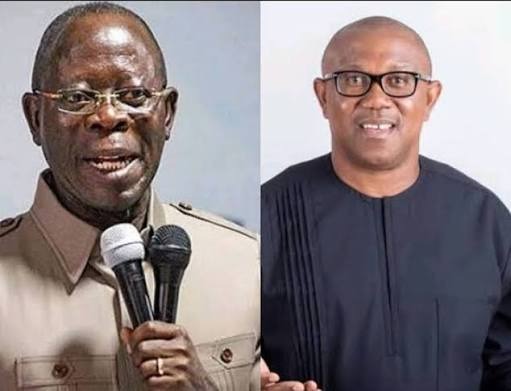
Oshiomhole dismisses Peter Obi as APC’s biggest threat in 2027

0

Senator Adams Oshiomhole has downplayed concerns that Labour Party’s 2023 presidential candidate, Peter Obi, poses the greatest political challenge to the All Progressives Congress (APC) ahead of the 2027 general election, arguing that Obi’s electoral performance was largely the product of public frustration with the final months of former President Muhammadu Buhari’s administration.

The senator representing Edo North made the remarks on Monday during an appearance on Beyond The Headlines, where he rejected suggestions that the ruling party was underestimating Obi’s political influence after his strong showing in the 2023 presidential election.

According to the former Edo State governor, the circumstances that boosted Obi’s popularity were exceptional and are unlikely to be repeated.
“No, not at all. Obi was produced by an unusual situation when a ruling party decided to destroy itself, making anybody running on its platform almost unelectable. It was that confusion that produced those votes,” Oshiomhole said.

He attributed the public discontent to the naira redesign policy and the severe fuel scarcity that characterised the build-up to the 2023 election, saying many Nigerians became disillusioned after being unable to access their own money.

“People had money in the bank but couldn’t access it. They queued all night at ATM machines just to withdraw ₦10,000, and after a week, even the ATMs were dry,” he said.

Oshiomhole noted that the cash shortage forced many citizens to rely on Point of Sale (POS) operators, who charged significant fees just to obtain cash.

“Someone asked why people would queue all night to withdraw ₦5,000, then queue again for fuel, and still expect them to queue on election day to vote for the same government. That anger was what produced Obi.”

The former Nigeria Labour Congress president argued that widespread frustration, rather than Obi’s political appeal alone, shaped the election’s outcome.

Recalling interactions with voters during the campaign, Oshiomhole said many blamed the government for the hardship caused by the cash crunch.

“A woman in my village told me, ‘You said I should keep my money in the bank, but when I went to collect it, they said there was no money. At the POS, they deducted ₦2,000 from ₦5,000. How do I survive?’”

Despite acknowledging the anger among Nigerians at the time, Oshiomhole maintained that the controversial policies were not official programmes of the APC.

“I told her what Buhari was doing at that time was not APC policy. It was that anger that influenced the outcome of the election,” he said.

The senator insisted that Obi’s performance in 2023 reflected an extraordinary political moment rather than a lasting electoral threat to the ruling party ahead of the 2027 polls.

Sun

Police smash cattle theft syndicate, foil abduction, arrest suspects in Ogun

0

The Ogun State Police Command has arrested two suspected cattle thieves, recovered six stolen cows and a vehicle, and foiled an attempted abduction along the Lagos–Ibadan Expressway.

The command disclosed this in a Tuesday statement signed by the Police Public Relations Officer (PPRO), DSP Oluseyi Babaseyi.

According to the statement, operatives of the Sagamu Division arrested Abiodun Kamilu, 35, and Adesanya Segun, 37, after a distress call on July 25 reported that suspected cattle thieves had invaded a cow yard in the Maskoli Area of Sagamu and stolen seven cows.
The police said operatives immediately mobilised and commenced patrols around exit routes.

Acting on credible information, they intercepted suspicious vehicles along the Sagamu–Ijebu-Ode Expressway.

“Their swift intervention frustrated the criminal operation, leading to the arrest of the two suspects and the recovery of six of the seven stolen cows, as well as the operational vehicle abandoned during the failed escape,” the statement said.

The vehicle recovered was a blue Nissan Cabster bus believed to have served as the syndicate’s operational vehicle.

The police said investigation is ongoing to apprehend other members of the syndicate and recover the remaining stolen cow.

In a separate operation, operatives of the Command’s Safer Highway Patrol Team at about 7:10 p.m. on July 26 thwarted a suspected abduction attempt at Onigaari.

The police said the team responded to gunshots during a routine patrol.

“The swift response and tactical presence of the police forced the hoodlums to abandon their criminal mission and flee into the adjoining bush,” the statement added.

The victim was rescued unhurt and escorted to the Ogunmakin Police Post alongside his vehicle for safety and necessary procedures.

Efforts are ongoing to arrest the fleeing suspects.

The Ogun State Commissioner of Police, CP Bode Ojajuni, commended the professionalism and vigilance displayed by the operatives.

He said the successes reflect the command’s enhanced operational capacity and resolve to confront all forms of criminality.

Ojajuni urged residents to remain vigilant and provide timely information to the police, assuring that every actionable report will receive prompt attention.

Members of the public can report suspicious activities through Gateway Shield Toll-Free: 0800 000 9111, or emergency lines: 09164859299 and 09154293464.

Sun

Iyabo Famiyesin, nee Amokeodo, celebrates 70th birthday in grand style

0

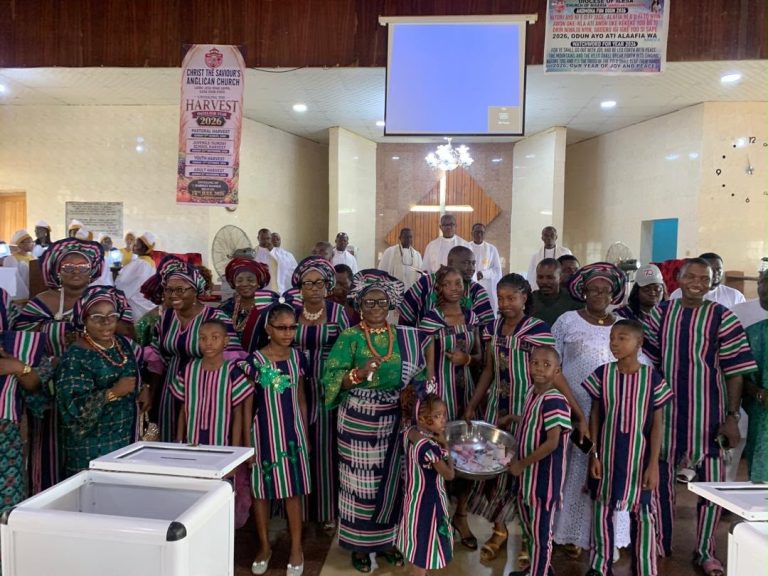
Seven decades after beginning a life devoted to shaping young minds, veteran educationist and former Principal of Methodist High School, Ilesa, Osun State, Chief (Mrs.) Iyabo Famiyesin (née Amokeodo), has been celebrated for a legacy that extends far beyond the classroom, with family, colleagues and education stakeholders gathering to honour her outstanding contributions to learning and human development.

The platinum jubilee celebration, held on Saturday in Ilesa, transformed into a tribute to a woman whose career in education has spanned public service, private school administration and mentorship, earning widespread admiration across the educational community.

Relatives from the Famiyesin and Amokeodo families, friends, former colleagues, associates and members of the National Association of Proprietors of Private Schools (NAPPS), Ilesa West Chapter, were among dignitaries who attended the colourful celebration.

Activities commenced with a thanksgiving service at the Christ the Saviour Anglican Church, Cappa, Ilesa, where the officiating minister, Very Rev Agboola Raphael Ayodeji, in his sermon, acknowledged marvelous things that God is doing in the life of the celebrant.
Ayodeji also reflected on the importance of gratitude to God for a purposeful and fulfilled life and urged worshippers to remain thankful for divine grace and enduring accomplishments.

The celebration later shifted to Kings Event Centre, opposite the School Board along Ife Road, Ilesa, where guests were entertained with music, refreshments and a reception that featured goodwill messages, presentations and warm tributes celebrating the life and achievements of the celebrant.

Many speakers described Iyabo Famiyesin as an education administrator whose influence has continued to resonate through generations of students and teachers.

Having served as Principal of Methodist High School, Ilesa, she later established His Grace Foundation School, Ireti Ayo, Ilesa, where she has continued her commitment to mentoring young learners and promoting quality education within the private school system.

One of the major highlights of the reception was a tribute delivered by the Chairman of the National Association of Proprietors of Private Schools (NAPPS), Ilesa West Chapter, Mr. Azeez Akeem, who commended the celebrant for her enduring commitment to educational development and her dedication to mentoring younger generations.

He said “On behalf of the Executive Council and the entire members of NAPPS Ilesa West Chapter, I heartily congratulate our esteemed member, Chief (Mrs) Iyabo Famiyesin, on the joyous occasion of her 70th Birthday, celebrated today — Saturday, July 25, 2026.

“Today, we honour and celebrate an exceptional educationist, an inspiring mentor, and a distinguished school proprietor whose life has been devoted to the advancement of quality education and the development of future generations.

“As the former Principal of Methodist High School, Ilesa, you served with remarkable distinction, discipline and unwavering commitment, leaving behind an enviable legacy of academic excellence and moral uprightness. Even after your retirement from public service, your passion for nurturing young minds continued through the establishment of His Grace Foundation School, Ireti Ayo, Ilesa, where your vision and dedication have continued to transform lives.

“Within the NAPPS family, you have remained a dependable colleague, a source of wisdom, and a shining example of professionalism and integrity. Your wealth of experience, humility, and unwavering commitment to the growth of private education have enriched our association and inspired fellow school proprietors.

“As you celebrate this remarkable milestone of seventy fruitful years, we thank God for a life richly spent in service to God, education and humanity. Your legacy is evident in the countless students you have mentored, the educators you have inspired, and the many lives you have positively influenced.

“On behalf of all members of NAPPS, Ilesa West, I pray that Almighty God will continue to bless you with excellent health, renewed strength, divine protection, overflowing joy, and many more years of peace, fulfilment and impactful service. May your latter years be filled with greater accomplishments and abundant grace.

“Congratulations and Happy 70th Birthday, Chief (Mrs) Iyabo Famiyesin!

“Thank you for being a pride to the teaching profession, an outstanding school proprietor, and a valued member of the NAPPS family. We celebrate you today and always.”

The celebration also provided an opportunity for guests to reflect on the pivotal role experienced educators continue to play in nation-building through character development, leadership and academic excellence.

For many in attendance, the occasion was more than a birthday celebration. It was a recognition of a distinguished career defined by service, discipline and an unwavering commitment to education.

As the festivities drew to a close, family members, friends, associates and professional colleagues offered prayers for Iyabo Famiyesin’s continued good health, strength and many more years of impactful service, describing her journey as an enduring source of inspiration to educators and younger generations alike.

Speaker Obasa, Lawmakers Attends 2026 National Conference of State Legislatures in Chicago

0


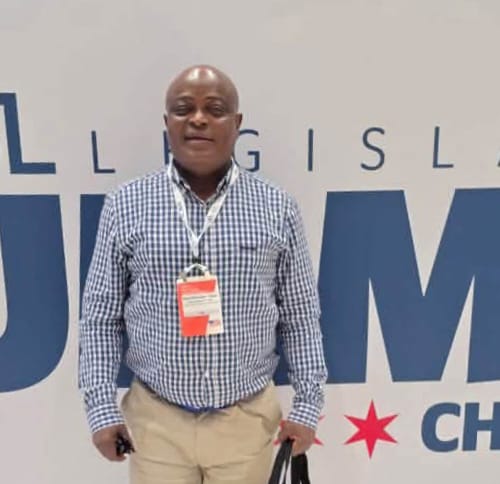
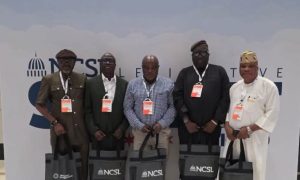
Speaker of the Lagos State House of Assembly, Mudashiru Obasa, has announced his participation in the 2026 National Conference of State Legislatures (NCSL) in Chicago, Illinois, where he will engage with fellow legislators and global legislative leaders on innovative approaches to governance.

The conference is scheduled to hold from July 27 to 29.
Obasa said leadership requires continuous learning and the exchange of ideas that strengthen institutions and improve the lives of the people, adding that the engagement aligns with that objective.

According to him, the knowledge and perspectives gained from the conference will enrich legislative work in Lagos State and reinforce the commitment to effective lawmaking, accountable leadership, and the continued development of the State.

Enugu Launches ETTW TV to Showcase Transformation, Investment Opportunities

0


Enugu State Government has launched a new television programme, Enugu to the World (ETTW), to showcase the state’s ongoing transformation, emerging investment opportunities and the people, policies and projects driving its development.


The weekly 30-minute talk show and documentary-style current affairs programme provides an in-depth look at the transformation taking place across Enugu, with particular focus on infrastructure renewal, education and human capital development, healthcare, agriculture, tourism, business and investment, youth and sports development, women empowerment and support for small and medium-scale enterprises.


Through compelling storytelling, project inspections, documentaries and interviews, ETTW presents Enugu’s development journey through the voices and experiences of Ndi Enugu, government officials, policy experts, development partners, business owners, investors, community leaders, youths, students, market men and women and other stakeholders.


The programme also examines the impact of the reforms and investments of the administration of Governor Peter Ndubuisi Mbah, providing factual insights, expert perspectives and firsthand accounts of the changes taking place across the state.


With its diverse segments, including Big Lens, Enugu in the News, Real Talk, Nkowa Enugu, 042 Teasers, Akụkọ Ndị Be Anyị, Enugu Diary and Vox Pop, ETTW explores governance, infrastructure, investment, innovation, culture, entertainment and the everyday experiences of the people of the state.


Beyond documenting the administration’s projects and policies, ETTW seeks to deepen public understanding of Enugu’s rapidly evolving economy and position the state as an increasingly attractive destination for investors, businesses, tourists and development partners in the South East and beyond.


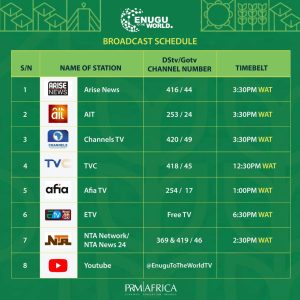
Currently airing on ARISE News (DStv Channel 416, GOtv Channel 24) on Mondays at 3:30 pm; AIT (DStv Channel 253, GOtv Channel 93) on Tuesdays at 3:30 pm; Channels Television (DStv Channel 420, GOtv Channel 48) on Wednesdays also at 3:30 pm; TVC News (DStv Channel 418, GOtv Channel 45) on Thursdays at 1:30 pm; Afia TV (DStv Channel 254, GOtv Channel 17) on Fridays at 1:30 pm; ETV–Enugu State Television (broadcasts terrestrially in Enugu on UHF 50) on Saturdays at 7 pm; and the NTA Network (DStv Channels 251 and 146 for NTA News 24, and Channel 114 for NTA 2) on Sundays at 2.30 pm and across digital platforms, including YouTube (@EnuguToTheWorldTV). You can also catch highlights and snippets of the programme on its social media platforms: Facebook (Enugu To The World), Instagram (@enugutotheworld), and X (formerly Twitter) (@Enugumatters).


The programme is also designed to connect Ndi Enugu at home and in the diaspora with developments in their home state while providing Nigerians and the international community with a closer look at the opportunities emerging from Enugu’s transformation.


Viewers are invited to follow the weekly programme and share in the story of Enugu, a state of great minds, where Tomorrow Is Here!

What WHA79 Says About Nigeria’s Health Reforms

0


By Chinedu Moghalu

The Seventy-ninth World Health Assembly, which concluded in Geneva on 23 May 2026, may be remembered less for its resolutions than for the view of health they expressed. Across deliberations on financing, antimicrobial resistance, workforce mobility, emergency preparedness and universal health coverage, health was treated as a concern of economic policy, industrial development, national security and social resilience.
The Assembly adopted the WHO Strategy on the Economics of Health for All 2026–2030, approved an updated Global Action Plan on Antimicrobial Resistance and amended the WHO Global Code on the International Recruitment of Health Personnel. Together, these decisions placed sustainable financing, One Health action, ethical recruitment and co-investment within a wider view of health as a foundation of development.
Nigeria had already incorporated these principles into its reforms: national ownership, coherent planning, stronger primary healthcare, domestic financing, local manufacturing, workforce development, digital systems, regulatory capacity, community participation and emergency preparedness.
That direction was established on 12 December 2023, when President Bola Ahmed Tinubu launched the Nigeria Health Sector Renewal Investment Initiative and secured the Health Renewal Compact among the Federal Government, the thirty-six states, the Federal Capital Territory and development partners. Implemented through the Sector-Wide Approach (SWAp), it replaced fragmented programmes with common priorities, coordinated implementation and clearer accountability. The Presidential Initiative to Unlock the Healthcare Value Chain (PVAC) extended the same logic into manufacturing, investment, regulation, research and supply security. Under the leadership of the Coordinating Minister of Health and Social Welfare, Professor Muhammad Ali Pate, presidential intent has become a national reform programme.
The framework brings governments, public institutions, development partners and private enterprise together around shared priorities. It also bears directly on WHA79’s decision to pursue a Member State-led, WHO-hosted reform of a global health architecture weakened by fragmentation, duplication and poor alignment with country priorities. Nigeria presented its experience of one plan, one budget and one reporting framework, with all thirty-six governors and development partners aligned to national priorities. That experience gave substance to its call for country ownership and fair African representation.
Public Health at National Scale
The value of national reform is determined far from the conference room—in the clinic where a woman seeks antenatal care, the community where a child is due for vaccination, and the household deciding whether it can afford treatment. Nigeria’s reform programme is beginning to acquire meaning in those places.
Across the federation, revitalisation has commenced in more than 4,100 primary healthcare centres, with over 3,100 completed. What matters is what functioning facilities make possible: earlier diagnosis, safer deliveries, routine immunisation and dependable care closer to home.
Financial protection is also widening. More than six million Nigerians entered health insurance between 2023 and 2025. The Federal Government financed more than 40,000 caesarean sections, placing lifesaving obstetric care within reach of women for whom the cost might otherwise have proved prohibitive. This accords with WHA79’s new strategy for integrated emergency, critical and operative care.
Infrastructure cannot provide care without people, equipment and supplies. More than 78,000 frontline health workers have been trained towards a target of 120,000, while recruitment has increased. Essential medicines, maternal and newborn supplies, reproductive-health equipment and cold-chain facilities have also been deployed nationwide. These investments attract less attention than a new hospital, but often determine whether a facility can provide care.
Nigeria’s outbreak responses offer another indication of public-health capacity. It became the first African country to deploy the mpox vaccine and mounted large vaccination campaigns against cholera and meningitis. Annual attendance at health facilities rose from 34.5 million in 2023 to 43 million in 2025, alongside gains in antenatal care, skilled birth attendance and routine immunisation.
Serious burdens remain. Maternal and child mortality are still unacceptably high, inequalities between states persist, and many communities lack dependable access to quality care. The relevant test is whether a country has the direction, institutions and instruments to confront such problems at scale. On that measure, Nigeria’s reforms deserve wider recognition.
Nigeria’s Leadership on Antimicrobial Resistance
WHA79’s updated AMR plan recognises antimicrobial resistance as a threat to human health, animal health, agriculture, food systems and the environment. Its prevention-first approach places laboratories, surveillance, infection control, vaccination, water and sanitation, responsible prescribing and reliable access to quality medicines within a single One Health framework.
Nigeria had begun assembling these elements through its Second One Health National Action Plan on AMR 2024–2028, NHSRII, SWAp arrangements, regulatory reforms, investments in diagnostics and laboratories, and local production of health commodities. It treats AMR as a health-system and governance challenge, not a narrow question of antibiotic use.
Nigeria remains the designated host of the Fifth Global High-Level Ministerial Conference on Antimicrobial Resistance. Although the June meeting was postponed, preparations continue. The mandate recognises Nigeria’s convening role and gives weight to its case that AMR containment depends on functional primary healthcare, capable laboratories, quality-assured medicines, effective regulation, workforce competence and coordination across human, animal, agricultural and environmental systems.
A New Compact on Health-Worker Mobility
The National Policy on Health Workforce Migration, approved in 2024, treats mobility as a governance issue shaped by global demand, wage differentials, training capacity and professional rights.
The amended WHO Code encourages co-investment to benefit source and destination countries. Countries benefiting from Nigerian-trained professionals should participate in partnerships for education, specialist training, institutional development and workforce expansion. International mobility cannot be fair if the systems that produce health workers are weakened by the labour markets that depend upon them.
Leadership from Every LGA
The National Health Fellowship recruited one young fellow from each of the 774 local government areas; its fellows have undertaken more than 1,500 community projects. This connects national reform with local knowledge, public service and leadership succession.
Traditional and religious leaders are also assuming a deeper role in public-health policy. Vaccination, maternal health, nutrition, antimicrobial stewardship and outbreak response are shaped within families, congregations and communities. Trusted social institutions influence behaviour, encourage service uptake and reinforce accountability. Their formal inclusion, alongside local governments, civil society and the private sector, has broadened the Health Renewal Compact beyond its original institutional signatories.
Health Sovereignty Through Production
Covid-19 demonstrated the danger of dependence on external markets for vaccines, diagnostics, medicines, oxygen and other critical products. Through PVAC, Nigeria has organised demand, improved the policy environment for manufacturers and mobilised investment in pharmaceuticals, diagnostics, vaccines, medical oxygen, devices and research.
The Presidential Executive Order on health-sector manufacturing has supported local producers, while Medipool is being established as a pooled procurement mechanism. Financing commitments from the European Investment Bank and Afreximbank are intended to support more than ninety projects valued at about US$5 billion.
Nigeria seeks the ability to produce, test, regulate, purchase and deploy health technologies within a coherent national system. Investments in digital health, clinical research, genomics and regulation also correspond with WHA79’s emphasis on precision medicine and stronger pharmacovigilance, including the responsible use of digital tools and real-world data. These capabilities would support routine services, outbreak response and future preparedness while contributing to employment, research and industrial development.
Nigeria’s Continental Responsibility
Nigeria’s reforms accord with the African Union and Africa CDC’s New Public Health Order, which emphasises capable institutions, expanded manufacturing, workforce development, domestic investment and respectful international partnerships.
Nigeria’s scale gives its progress continental consequence. A stronger health system improves regional surveillance, broadens Africa’s market for health products and adds weight in negotiations over financing, technology and access. Its success will help determine whether Africa’s public-health agenda becomes operational.
The Test of Delivery
The direction has been established; the harder work lies in sustaining it across the federation. That will require more reliable financing and more consistent results across states. Facilities must remain functional after construction, commodities available after initial distribution, and data useful for decisions rather than reporting alone. Public trust must be earned through service, transparency and visible improvement.
The reform will ultimately be judged by functioning facilities, competent personnel, reliable diagnostics, safe medicines, financial protection, effective surveillance and measurable improvements in the lives of Nigerians.
Nigeria has established a reform architecture connecting primary healthcare, insurance, workforce policy, industrial development, health security, digital systems, regulation, research and community implementation. Its ambition is national, but its lessons reach beyond Nigeria.
WHA79 confirms that Nigeria’s reforms are moving with the emerging global consensus on country ownership, sustainable financing, workforce mobility, antimicrobial resistance and health sovereignty. Under President Tinubu and Professor Pate, the course has been set. Its worth will rest on a simpler test: whether it delivers reliable care, financial protection and better health for Nigerians.

Chinedu Moghalu is a lawyer, strategic communications expert, and public policy adviser with over two decades of leadership across government, international organisations, and development institutions. Currently, senior special adviser to Nigeria’s coordinating minister of health and social welfare.

LAGOS TASKFORCE COMBS METROPOLIS, CLAMPS DOWN ON CRIMINAL ELEMENTS

0


“There Is No Room for Criminality in Lagos. Desist or Relocate” — Taskforce Chairman

In furtherance of its statutory mandate and in alignment with the THEMES Plus Agenda of the Lagos State Government, particularly its zero-tolerance stance against environmental degradation, drug abuse, and criminality, the Lagos State Environmental and Special Offences (Enforcement) Unit (Taskforce) has intensified its routine enforcement operations across the metropolis.

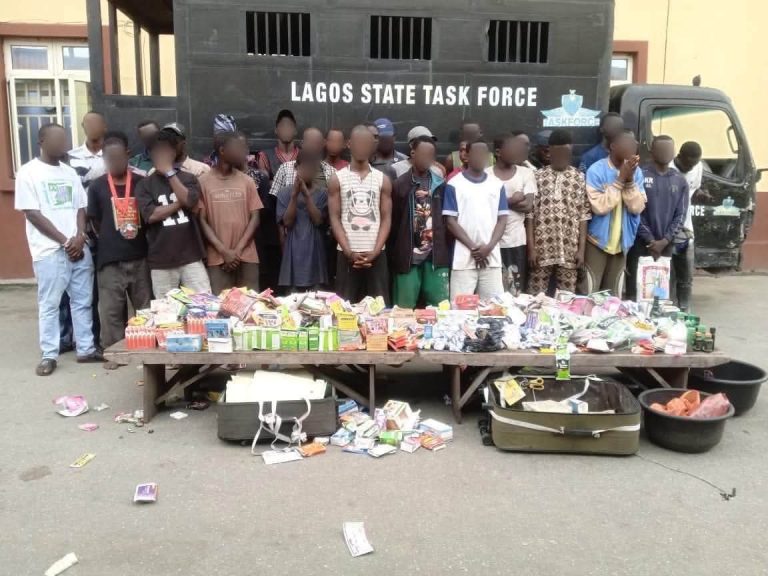
The early morning operation, conducted on Monday, July 27, 2026, targeted street urchins, miscreants, suspected drug addicts and peddlers, illegal commercial motorcyclists (Okada riders), street traders, illegal ticket touts, and other criminal elements whose activities pose threats to public safety and environmental order.

Areas covered during the exercise included Ikate Bus Stop, Marwa Bus Stop, Muri Okunola Park in Victoria Island, Obalende Underbridge, Law School Junction, and other adjoining locations along the Lekki-Epe Expressway, where the presence of suspected criminal elements had become noticeable.

At the end of the operation, a total of 33 suspects were arrested, while several exhibits were recovered. Items seized include substances suspected to be Tramadol, Indian hemp, Colorado, marijuana, cannabis, as well as dangerous weapons and objects such as scissors and cutlasses.

The enforcement exercise successfully restored normalcy to all affected areas.

The Agency disclosed that all arrested suspects have been charged before the appropriate court in accordance with the provisions of the Lagos State Environmental Management and Protection Law, 2017 and the Lagos State Transport Sector Reform Law, 2018, where applicable.

Speaking during a debriefing with officers at the Agency’s Headquarters, the Chairman of the Lagos State Taskforce, CSP Adetayo Akerele, reiterated the Agency’s unwavering resolve to make Lagos uninhabitable for criminal elements.

“There is no room for criminality in Lagos State. Those engaged in criminal activities should either desist or relocate. We remain committed to enforcing the laws of the State and ensuring that residents continue to enjoy a safe, secure, and orderly environment,” he stated.

CSP Akerele further charged officers to sustain the momentum of ongoing enforcement operations, urging them to intensify efforts in tackling criminality across the State, just as the Agency successfully curtailed the menace of illegal Omotaku operations on Lagos roads.

The Lagos State Taskforce reaffirmed its commitment to sustaining intelligence-driven enforcement operations across the State to rid the metropolis of criminal elements and maintain law and order.

How Kalu, others changed my view of APC, Says Canadian-Based Nigerian

0


A Nigerian in Canada, Bashorun O. Adegbulugbe, says his view of the All Progressives Congress has changed over time after watching some members of the party closely.

Speaking in a statement on July 17, 2026, Adegbulugbe said he once believed the APC was made up only of “demons, evil and bad politicians.”

“My opinion was based on the actions of people like Nyesom Wike, Senator Godswill Akpabio, Engr. David Umahi and Hope Uzodinma,” he said.

But according to him, that impression began to shift after he observed the work of other APC members. He mentioned the Central Bank Governor, Olayemi Cardoso, the Minister of Finance, Wale Edun, Minister of Information, Idris Malagi, and Senator Orji Uzor Kalu.

“I interacted with Distinguished Senator Orji Uzor Kalu and listened to the Minister of Information, Idris Malagi. I also saw the good works of Olayemi Cardoso and Olawale Edun,” Adegbulugbe said.

He admitted that the party still has its problems.

“In APC, while we have treasury looters, executive womanisers, fraudsters, pen robbers, political idol worshippers, arrogant and incompetent governors and ministers, we have equally seen people working very hard to improve the economy and nation builders determined to unite Nigerians,” he said.

Adegbulugbe argued that no political party is made up of only good or only bad people.

“The world is not divided into good and bad people. We are all capable of good and bad and it is a choice we make. APC is not a political party of demons and NDC is not a political party of angels. We have good and bad people in APC, LP, PDP, ADC, etc. This is a fact we must take home,” he said.

He said Nigeria needs more public officials like Cardoso, Edun, Malagi and Kalu.

“These are men working behind the scene to improve the image of this government through benefits delivery for the common man. These are not noise makers or attention seekers,” he added.

Looking ahead to the 2027 elections, Adegbulugbe advised President Bola Tinubu on the kind of people he should surround himself with if re-elected.

“In the likely event that President Tinubu is re-elected for a second term, Tinubu must distance himself from people like Wike, Uzodinma, Umahi and Akpabio.

“These people did not make Bola Tinubu. Bola Tinubu made them what they are today and he must not allow them destroy him or his Government,” he said.

He ended his statement by commending some APC members.

“Well done Senator OUK, Idris Malagi and Cardoso. I wish Wale Edun a happy and peaceful retirement,” Adegbulugbe said.

Rubby Obinna
July 18, 2026.