Home Blog Page 271

Kwara captives face forced marriage, execution threat from terrorists

0


Families of 176 residents abducted from Woro community in Kaiama Local Government Area of Kwara State have renewed calls for urgent federal intervention after terrorists allegedly threatened to force female captives into marriage and execute the remaining hostages if their demands are not met.

The victims, most of whom are women, children and nursing mothers, were kidnapped during a coordinated attack on Woro and neighbouring communities, including Nuku and Kososo, on or about February 3, 2026.

Community leaders said more than 200 residents were killed in the assault, while scores of others were taken away by the attackers.

Nearly six months after the attack, the abductees remain in captivity, with relatives expressing growing fears over their safety.

The armed group, identified in various reports as suspected Boko Haram fighters or heavily armed bandits, has reportedly continued to hold the victims in remote locations despite repeated appeals for their release.

Fresh concerns emerged that the abductors had allegedly warned that “they would marry the beautiful ones and kill the rest” if their demands were not met.

A community member, Abdul Ibrahim, who spoke with BBC Hausa, said the threat had deepened fears among relatives.

“They said they would marry the beautiful ones and kill the rest,” Ibrahim said, adding that the terrorists had refused to soften their position despite months of negotiations.

Relatives said they had raised more than ₦155 million through public donations and crowdfunding campaigns in an effort to secure the release of their loved ones.

However, they alleged that the terrorists rejected the money and insisted on a much higher ransom.

Community members said peaceful demonstrations organised to draw attention to the prolonged captivity had yielded little result, prompting renewed appeals to the Federal Government and the Kwara State Government to intensify rescue efforts.

Traditional leaders, including the Dan Sardaukin Kaiama and Suleiman Bukata, urged security agencies to treat the case with the same urgency that led to the successful rescue of abductees in Oyo State.

“The government should accord this matter the same level of urgency given to other recent rescue operations. These people have suffered for too long,” one of the community leaders appealed.

Earlier reports published in April indicated that the terrorists had issued a one-week ultimatum, claiming they could no longer bear the cost of feeding the hostages.

According to community sources, the armed group threatened to marry off some of the young women while executing captives they considered “liabilities”.

The sources also alleged that the hostages were being taught Arabic and Islamic studies while in captivity.

Recent accounts indicate that the abductors are unwilling to negotiate with the Kwara State Government, insisting that discussions must be conducted directly with the Federal Government.

Community leaders said ransom demands have reportedly risen to about ₦2 billion, while security operations across forests in Kaiama and surrounding communities have yet to locate the victims.

Families also disclosed that one of the women who was pregnant at the time of the abduction reportedly gave birth while in captivity, underscoring the worsening humanitarian conditions facing the hostages.

Traditional rulers, community organisations and other stakeholders, including Salihu Bio, whose wife remains among those abducted, have continued to demand swift federal intervention, warning that the prolonged captivity of the victims reflects the deteriorating security situation across Kaiama and adjoining communities.

As of the latest reports, the 176 abductees remain in captivity, with no official confirmation of a breakthrough in efforts to secure their release.

Sun
What Ishaq Oloyede’s Tenure Says About JAMB

0


*By Azu Ishiekwene*

If the Joint Admissions and Matriculation Board (JAMB) was sick when Professor Ishaq Oloyede was appointed Registrar 10 years ago, it might have been said that even great institutions have their difficult times. That’s not unusual. But JAMB wasn’t sick.

It was dying and becoming so irrelevant that those it was supposed to serve were wishing it dead. JAMB was not just a problem; it had become the problem of gaining admission to higher institutions, with heartbreaking stories of thousands of candidates for whom hard work and good WAEC grades no longer seemed to matter.

Beating the system became the sport, and fraudulent coaches, often assisted by JAMB insiders, established “miracle centres” with large signboards offering hallelujah promises of how to pass your exam without sitting for it. We can smile now, but believe me, it was not a laughing matter.

Centralised national school placement was not always the thing. Before JAMB was created in 1978, universities and other higher institutions conducted their own admissions. But once JAMB was established and admissions were centralised, schools’ discretion was curtailed.

As the demand for higher education outstripped supply and public and private higher schools proliferated, standards collapsed. The regulator, which was supposed to serve candidates, began to serve itself instead, feeding off the misery of desperate candidates.

It was at this point, where desperation met corruption, that Oloyede was appointed JAMB registrar.

The power of one
In an article entitled “JAMB: Dirty Secrets of a Cut-off War,” which I wrote nearly a decade ago, I cited how the broken admission system was only able to cater to the needs of about 25 per cent of largely qualified students who applied yearly, and how registrars and admission officers were worsening the problem by trading in cut-off marks.

As if the problem outside was not serious enough, the problem inside JAMB at the time was even worse. As I wrote in an article last year, one of the biggest dramas in the institution’s 48-year history unfolded two years after he was appointed registrar, following his exceptional record as vice-chancellor of the University of Ilorin.


JAMB introduced computerised examinations in 2014, but the system, still in its infancy, was marred by delays, confusion, and scratch-card fraud.


Oloyede ordered an investigation, which found that the place was infested with snakes, including boa constrictors in human form, that had allegedly swallowed millions of naira from scratch card sales.

Snake-charmer’s den

One Philomina Chieshe, a clerk at JAMB’s Benue State office, “swallowed” N36 million from the sales of scratch cards and told investigators and the court that it was indeed a snake that had mysteriously devoured the money.

Seven years after she was arraigned before Justice Peter Affen at the FCT High Court, Abuja, in 2019, neither Chieshe nor any of the reptiles in the scratch-card hole have been held accountable for the fraud. Apart from swallowing N36 million, which was equivalent to $100,000 at the time, the snakes also appear to have swallowed the court and the prosecutors.

This was the mess Oloyede inherited – a regulatory institution no longer fit for purpose, but never short of scandalous, self-serving ingenuity.

The original idea of JAMB, which, interestingly, was recommended by vice chancellors of seven federal universities at the time, was to serve as a clearinghouse. Multiple admissions by candidates were creating a problem for the growing number of those seeking admission. While some candidates were offered multiple admissions and ultimately used only one, other qualified candidates were shut out. So, JAMB was a child of necessity.

Band-Aid or what?
As a sworn enemy of centralised systems, which often breed corruption and tyranny, I expressed the view, even in the early days of Oloyede’s tenure, that the system was unreformable. I thought the best we could hope for was a Band-Aid before JAMB finally collapsed under the weight of its corruption.

Oloyede’s tenure has proved that occasionally, elephants dance. Over the last 10 years, the board has transformed from a snake-infested wasteland of corruption and mediocrity into one of Nigeria’s most responsive and better-run public institutions. To promote openness, accountability, and inclusiveness, it has expanded the decision-making process to include independent and other professionals to monitor and evaluate the board’s activities, particularly the UTME exam.

A new sheriff
Of course, some problems remain, like the increasing and more sophisticated cases of impersonation and the challenges presented by the misuse of Artificial Intelligence (AI), parents’ active involvement in examination fraud, and the rising cost of managing examinations, which could be up to four times the present cost of N4 billion, when the Federal Government’s review of the allowances and benefits of civil servants takes effect in October.

The new registrar, Professor Olusegun Aina, will find, as he takes over, that sooner than later, JAMB may be heading into a serious financial crisis due to rising operational costs. Unless steps are taken, it could move from a regulator that remitted over N55 billion to the federal treasury – compared to less than N60 million the year before Oloyede took office – to an institution that will struggle to survive financially.

In the months ahead, the examiner will be facing its own test, its own JAMB question, namely: how will it square its finances without raising examination fees?

As Oloyede leaves office, he leaves behind a legacy of transforming one of the most lethargic public institutions into a regulator that combines fairness and transparency, especially using biometric controls, CBT centres, e-PINS, USSD, and other digital payment systems.

Today, JAMB operates as one of Africa’s largest and most centralised university admissions systems, through the Central Admissions Processing System (CAPS), which has been recognised for improving efficiency and transparency in admissions.

Looking ahead
His sterling tenure has not completely cured my pessimism about centralising admission, especially in a country like Nigeria, already chafing under the tyranny of many things federal. Yet, Oloyede has demonstrated that where there is a will, it’s possible to find a way and make a difference.

His tenure and the public appreciation of his work, even during very difficult times – notably staff negligence that nearly marred the 2025 UTME exam – show that public service can indeed advance the greater public good. His successor has the unique advantage of building on a firmer foundation; yet, that advantage can quickly become his albatross if he mismanages it.

*Ishiekwene is the Editor-In-Chief of LEADERSHIP and author of the book, Writing for Media and Monetising It.*

Onafowokan Hands Over MAN Ogun Leadership to Awofisayo After Four-Year Tenure

0
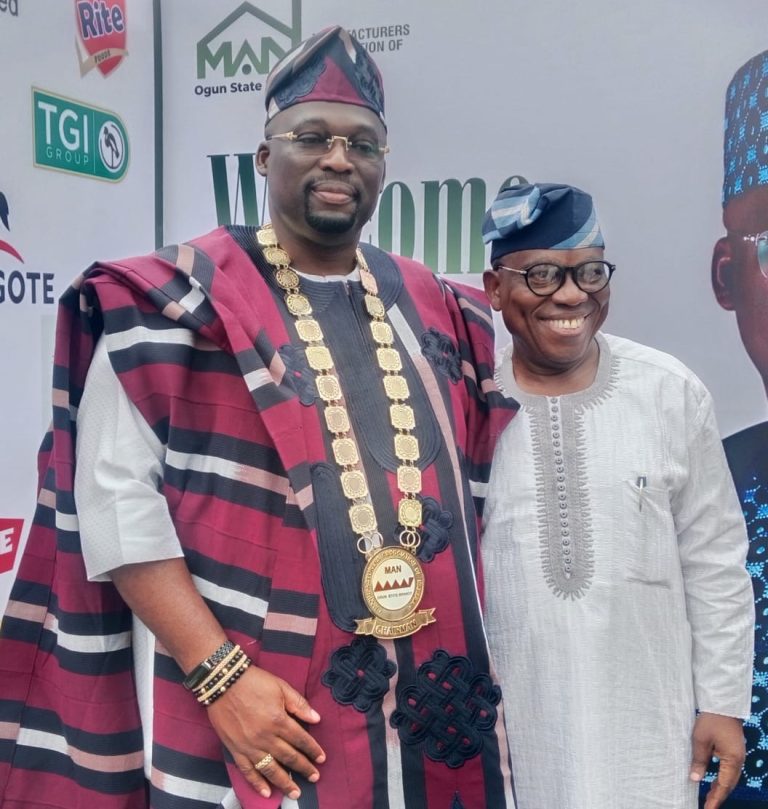
Outgoing chairman, MD Coleman Technical Industries limited, Mr. George Onafowokan and the incoming chairman, Mr. Matins Awofisayo Managing Director Harvestfield industries limited at the 41st MAN AGM in Abeokuta Ogun State

BY TAIWO OGUNMOLA -OMILANI


The leadership of the Manufacturers Association of Nigeria (MAN), Ogun State Branch, has changed hands, with the outgoing Chairman, Mr. George Onafowokan, Managing Director of Coleman Technical Industries Limited, handing over to Mr. Martins Awofisayo, Managing Director of Harvestfield Industries Limited.

The transition took place on Thursday during the private session of the 41st Annual General Meeting (AGM) of the association, held at the Obasanjo Presidential Library (OOPL) Marquee in Ogun State.

Onafowokan, who served as Chairman of the Ogun State Branch for four years, said his tenure recorded significant achievements, including growth in membership, improved subscription collections, stronger advocacy and enhanced engagement with stakeholders.

He said the branch’s membership increased from about 290 companies to more than 360 during his tenure, describing the growth as a reflection of members’ confidence in MAN and its role as the foremost voice of manufacturers in Nigeria.

He also disclosed that the branch sustained more than 100 per cent annual subscription collection throughout the period, attributing the achievement to the commitment and loyalty of members.

“As I stand before you today, this 41st Annual General Meeting marks the conclusion of my tenure as Chairman of the Manufacturers Association of Nigeria, Ogun State Branch, having had the rare privilege of serving this great branch for four eventful and fulfilling years,” Onafowokan said.

He described his tenure as one of the most rewarding experiences of his professional journey, noting that the administration strengthened advocacy and stakeholder engagement, expanded membership, improved subscription performance, defended manufacturers against unfair regulatory practices and enhanced the operational capacity of the branch secretariat.

According to him, the achievements recorded were the result of collective efforts by the Branch Executive Committee, Branch Council members, past chairmen and the entire membership.

Onafowokan expressed appreciation to members of the Executive Committee and Branch Council for their cooperation, counsel, sacrifices and support throughout his tenure.
In his acceptance speech, the new Chairman, Awofisayo, pledged to build on the achievements of the outgoing administration and make Ogun State more conducive for members of the association.

“We will make Ogun comfortable for all the members and I will build on the legacy of Onafowokan,” Awofisayo said.

He also pledged to work closely with past chairmen of the association, saying their experience and contributions would be valuable to his administration.

LAWMA CLOSES SHOPS ALONG TEJUOSHO-OJUELEGBA CORRIDOR OVER ILLEGAL WASTE DUMPING

0

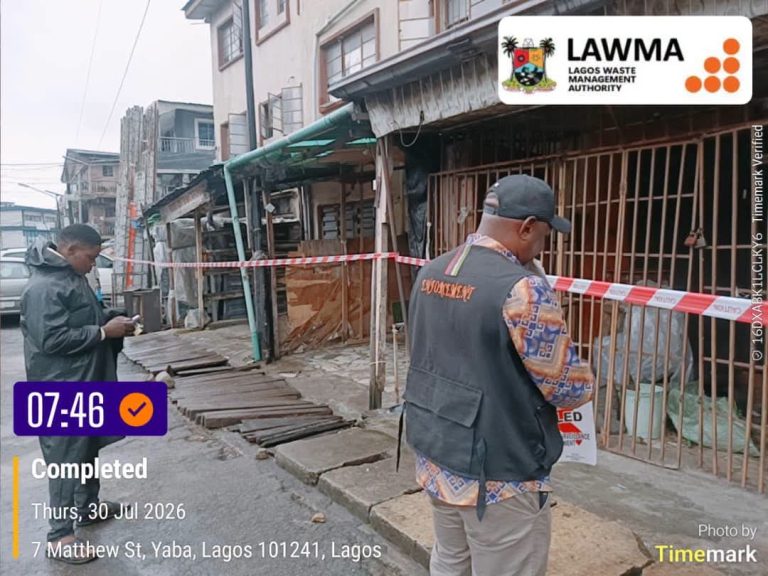
The Lagos Waste Management Authority (LAWMA) has sealed shops and business premises along the Tejuosho–Ojuelegba corridor over persistent indiscriminate dumping of refuse on the road median, in violation of the Lagos State environmental sanitation laws.

The enforcement operation, carried out on Thursday by LAWMA’s Waste Investigation Surveillance and Enforcement (WISE)Team, followed repeated warnings and sustained non-compliance by traders, whose activities had continued to undermine environmental sanitation efforts and deface public infrastructure along the corridor.

Speaking on the development, the Managing Director/Chief Executive Officer of LAWMA, Dr. Muyiwa Gbadegesin said that the action became necessary to restore environmental order, safeguard public health and reinforce compliance with waste management regulations in the state.

He noted that despite sustained advocacy and previous engagements with traders and market leaders, indiscriminate waste disposal persisted, leaving the Authority with no option but to enforce the relevant provisions of the Lagos State environmental laws.

“The affected shops and market stalls will remain sealed until the traders comply fully with the prescribed sanitation requirements and the Authority is satisfied that adequate measures have been put in place to prevent a recurrence,” he said.

Dr. Gbadegesin added that road medians, drainage channels and other public spaces were not designated waste disposal points, warning that LAWMA would continue to take decisive enforcement action against individuals and businesses found engaging in acts capable of degrading the environment.

He urged traders, market associations and residents to patronise their assigned PSP operators, dispose of waste responsibly and support government’s efforts to maintain a clean and healthy environment.

The LAWMA Managing Director reaffirmed the Authority’s commitment to combining sustained public enlightenment with firm enforcement to promote environmental compliance and improve the quality of life for all Lagos residents.

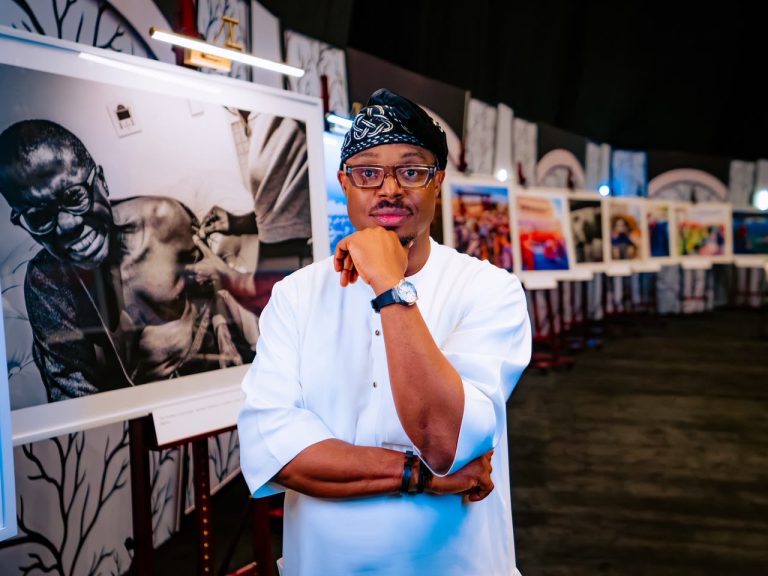
Sanwo-Olu’s Lens of Lagos: Against All Odds, A City’s Soul in Pictures

0

By Gboyega Akosile

The grand ballroom of Eko Hotels and Suites, Victoria Island, became a living canvas of Lagos’ story as Governor Babajide Sanwo-Olu unveiled Against All Odds, a photographic chronicle of his administration’s journey through some of the state’s defining moments in his first term and part of the second term. The atmosphere carried a symbolism that words could scarcely capture. White-cap chiefs and Lagos monarchs, resplendent in flowing white regalia, gave the evening the splendour of an Eyo procession, as though history, tradition and governance had converged to celebrate the enduring spirit of Africa’s largest city.

The occasion drew an impressive cross-section of Nigeria’s political, business and cultural leadership, once again reflecting Lagos’ place at the centre of the nation’s public life. Senate President Godswill Akpabio, represented by Deputy Senate President Barau Jibrin, joined Governors Hope Uzodinma of Imo State and Babagana Zulum of Borno State. Also in attendance were Deputy Speaker of the House of Representatives Benjamin Kalu; Deputy Governor of Lagos State, Dr. Obafemi Hamzat; Speaker of the Lagos State House of Assembly, Mudashiru Obasa, diplomats, captains of industry, traditional rulers and leading figures from across the country.

For Governor Sanwo-Olu, the evening was not simply about the unveiling of a book. It was about preserving the story of a city whose greatest strength lies in the resilience of its people.

“Books about leaders are usually written when the story has ended. This one is different,” he said. “The true subject is Lagos itself—the market woman rebuilding her store, the nurse who had not seen her family for weeks during the pandemic, the young person demanding to be heard, the engineer on a bridge project, the school child walking into a classroom that did not exist a year before.”

Authored by the Governor’s official photographer, Ademola Olaniran, Against All Odds traces some of the most defining chapters in Lagos’s recent history. Its pages revisit the uncertainty of the COVID-19 pandemic, the challenges of the EndSARS protests, the Abule-Ado explosion and tragic building collapses that tested the resolve of both government and citizens. They also celebrate milestones that have altered the state’s landscape, from the Blue and Red Rail Lines to the Lekki Deep Sea Port, alongside significant investments in housing, healthcare, education and food security.

That central message of resilience echoed through the goodwill messages delivered by guests.

Representing Senate President Godswill Akpabio, Deputy Senate President Barau Jibrin described Against All Odds as far more than a collection of photographs. In his view, it is a visual record of governance under extraordinary circumstances and a lasting tribute to the determination of Lagos and its people.

He observed that while the photographs capture landmark projects and physical development, they also preserve the human stories behind them—stories of courage, sacrifice and hope. According to him, Governor Sanwo-Olu’s leadership had shown courage in moments of crisis and foresight when opportunities for transformation emerged.

“This book is more than photographs; it is a testimony of governance under pressure, of decisions taken at critical times, and of a city that continues to rise above challenges,” Barau said. He noted that future generations would find in its pages not merely a record of projects completed but a faithful account of how Lagos navigated one of the most demanding periods in its history.

Lagos State Deputy Governor, Dr Obafemi Hamzat, who is also part of the Sanwo-Olu administration’s experience, reinforced that sentiment, reminding guests that photographs possess a unique ability to preserve history beyond words.

“History is not only written in words; it is also captured through the lens. This work reminds us that leadership is not merely about policies and projects but about the people whose lives are touched by those decisions,” he said.

Guests moved through an exhibition drawn from the book. The images required little explanation. Healthcare workers wrapped in protective equipment during the pandemic stood alongside young Nigerians demanding justice during the EndSARS protests. Engineers watched over the rise of new rail infrastructure, while communities scarred by tragedy reflected the resilience for which Lagos has become known.

One photograph, however, drew particular attention. It showed four Lagos governors jointly holding a model train, an image that captured the continuity of vision that has shaped the state’s development across successive administrations.

Reflecting on that journey, Sanwo-Olu said: “Trial upon trial, grief upon grief, yet Lagos never stopped building. Lagos never stopped moving forward.”

He paid tribute to President Bola Ahmed Tinubu and former Governors Babatunde Raji Fashola and Akinwunmi Ambode, describing them as architects of modern Lagos. Lasting progress, he said, depends on each administration building on the work of its predecessors rather than dismantling it.

“In this state, we do not tear down what our predecessors built; we build upon it. I inherited dreams, and I have laboured to hand over the foundations,” Governor Sanwo-Olu declared.

For Ademola Olaniran, whose camera has documented many of those defining moments, the publication represents the preservation of a shared history.

He said during his remarks that “some leaders are blessed with great stories, while others find great storytellers. This is a great story, and I believe it deserves to be preserved.”

The presence of Lagos’ traditional rulers lent another layer of meaning to the occasion. Their white regalia and quiet dignity reflected the enduring partnership between tradition and modern governance, reminding guests that while Lagos continues to evolve, it remains firmly rooted in its heritage.

As photographs from the book illuminated giant screens across the ballroom, one message became unmistakably clear. Governance in Lagos is not an abstract exercise of policies and statistics. It is found in the determination of families rebuilding after loss, the dedication of healthcare workers, the ambition of young people and the daily enterprise of millions who keep the city moving.

Like many defining moments in Lagos’ public life, the unveiling of “Sanwo-Olu: Against All Odds” reached beyond ceremony. It brought together government, traditional institutions, business leaders, development partners and citizens in a collective reflection on where the state has been and where it is headed. By the close of the evening, the book had become more than a photographic record. It had emerged as Ademola “Demo” Olaniran and his team of photographers envisioned, a portrait of a city that has endured adversity, embraced change and continues to write its story with confidence and purpose.

…Akosile is Special Adviser, Media and Publicity, to Governor Babajide Sanwo-Olu.

Catholic bishops to Tinubu: Nigeria drifting towards one-party state, democracy under threat

0

• Warn of shrinking political space, insecurity, electoral distrust
• Say nation is bleeding from multiple crises


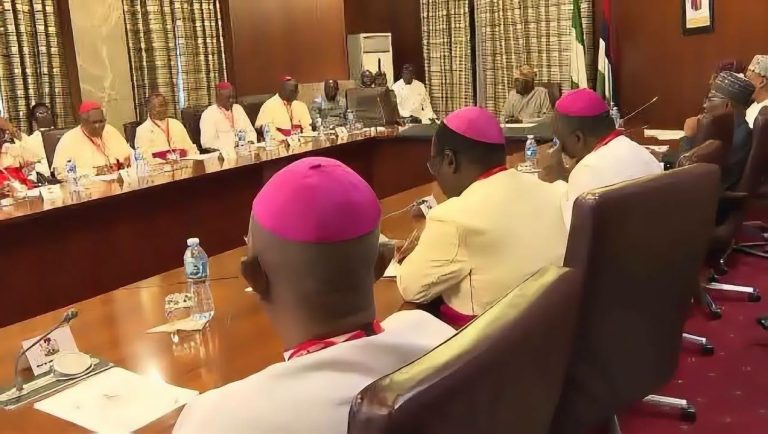
The Catholic Bishops’ Conference of Nigeria (CBCN) on Tuesday delivered a blunt assessment of the nation’s political and security climate to President Bola Tinubu, warning that Nigeria is steadily drifting towards a one-party state, with democratic institutions, public confidence, and national unity increasingly under strain.

The warning was delivered by the newly elected President of the CBCN, Archbishop Matthew Man-Oso Ndagoso, who led a delegation of Catholic bishops to the Presidential Villa, Abuja, where they held talks with the President on the state of the nation.

Speaking on behalf of the bishops, Ndagoso said growing concerns over the shrinking political space and the weakening of opposition parties have fuelled widespread fears that Nigeria’s hard-won democracy is being eroded.

He reminded President Tinubu of his own pro-democracy credentials, recalling his role in the struggle against military dictatorship in the 1990s, which forced him into exile.

According to the Archbishop, many Nigerians now find it troubling that the democratic ideals for which Tinubu once fought appear to be under pressure.

“Many voices are screaming over what they consider to be the constriction of the political space,” Ndagoso said, adding that many citizens believe the country is gradually being steered towards a one-party state.

He stressed that only President Tinubu’s actions—not assurances—would convince Nigerians that such fears are unfounded.

The bishops urged the President to rein in officials of the ruling party, including governors, members of the National Assembly and local government chairmen, insisting that the All Progressives Congress (APC) must demonstrate respect for democratic values and the rule of law.

According to Ndagoso, President Tinubu’s enduring legacy should not be the weakening of political opposition but the strengthening of democratic institutions capable of outliving any administration.

The Catholic leaders warned that the perceived narrowing of political competition could further undermine confidence in future elections.

Expressing concern over declining voter participation, they noted that many Nigerians have become disillusioned with the electoral process because they no longer believe their votes count.

To restore public trust, the bishops called for adequate funding and institutional independence for the Independent National Electoral Commission (INEC), insisting that the 2027 general elections must be free, fair, transparent and credible.

They cautioned that any electoral process lacking integrity would deepen public cynicism and pose a serious threat to Nigeria’s democratic stability.

Beyond politics, the bishops painted a grim picture of the country’s security and socio-economic conditions.

They lamented the worsening wave of insecurity, citing persistent attacks by terrorists, bandits and other armed groups on schools, churches, farming communities and major highways, often without swift or decisive response.

The delegation also expressed deep concern over the nation’s economic hardship, rising cost of living, and the persistent crisis in the electricity sector, which they described as nearing collapse.

Ndagoso further raised concerns over the state of religious freedom, particularly the security challenges confronting Christian communities in parts of northern Nigeria.

He argued that the country’s political, economic and security challenges are deeply interconnected, warning that a weakened democratic space makes it increasingly difficult for citizens and institutions to hold government accountable.

The bishops urged the Federal Government to take urgent and decisive steps to rebuild public confidence, strengthen democratic institutions and address the nation’s mounting security and economic challenges before they further threaten Nigeria’s unity and stability.

Sun

2027: We’re already campaigning with projects delivery

0

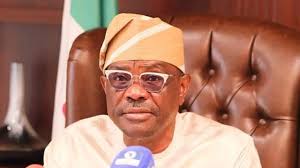
Minister of Federal Capital Territory (FCT) Nyesom Wike on Wednesday said the start of political campaigns ahead of the 2027 general elections will not derail ongoing infrastructure works in the territory, insisting that the administration’s record of delivery is its strongest campaign message.

“We are already campaigning with our performance. The major campaign is to provide the dividends of democracy. What are you going to tell the people when you have nothing to show? Our campaign is showing what we have done,” Wike told journalists while inspecting two major road projects in Abuja.

He said governance and politics would not conflict under his watch, adding that the visible transformation across the FCT has effectively become the Tinubu administration’s report card. “All we have to do is go back to the people and tell them we made promises and kept them. People want to see your report card, not empty rhetoric. As far as the FCT is concerned, we have shown our report card, and we have no problem winning any election whenever INEC fixes it,” he said.

The minister inspected the Arterial Road N16 — a key link from Ring Road II to Ring Road III that connects Jahi with Gwarimpa and Karsana — being executed by CBC Global, and the 7.3-kilometre Tunga Madaki–Zuba road, which connects to the Abuja–Kaduna Highway and is handled by China Civil Engineering Construction Corporation (CCECC).

Expressing satisfaction with progress on the Arterial Road N16, Wike said the contractor had given a January completion target. “The road is very critical. If they deliver it by January as promised, I will be highly impressed. On our part, we will ensure adequate funding because once this road is completed, the entire Gwarimpa axis will be opened up,” he said.

He also praised CCECC’s work on the Tunga Madaki–Zuba road, noting the company’s track record for timely delivery and its assurance of a December finish. “I’m very impressed with what they are doing. The promises we made during the flag off and commissioning of these projects are likely to be fulfilled. Despite the rains slowing earthworks, they have concentrated on drainage construction, which is progressing well,” Wike said.

The minister said he had approved relocation of electricity poles along the Tunga Madaki–Zuba route to allow for installation of streetlights. He commended the commitment of several Chinese firms involved in major FCT projects, saying many start work without waiting for mobilisation payments because of confidence in the government’s willingness to honour contracts.

“What gives us happiness with these companies, particularly the Chinese companies, is that they don’t wait for mobilisation before starting work. They know the government will pay, and funding has not been a problem. As soon as I return to the office, I will ensure that funds are made available so we can achieve what we have promised,” he said.

Wike urged contractors to maintain the quality and pace of work, stressing that the FCT Administration’s routine monitoring is intended to ensure timely completion of roads and other public facilities under the Renewed Hope Agenda of the Tinubu administration.

The inspections form part of ongoing supervision by the FCT Administration aimed at delivering key infrastructure across the territory ahead of future electoral cycles.

Sun

Como ban heading in youth academy, cite reason

0


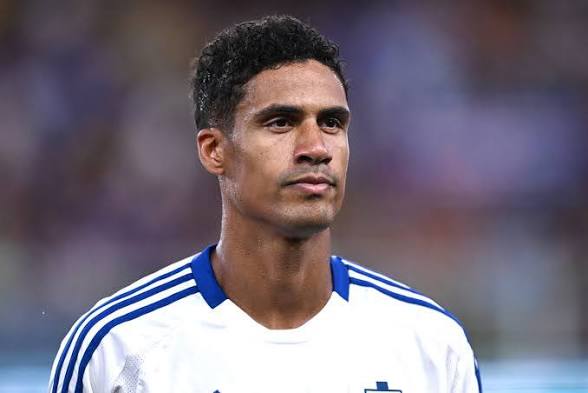
Raphaël Varane
The new rules were developed with input from board member, Raphaël Varane

Italian Serie A side, Como have banned heading for players under 11 in their youth academy, citing the need to protect children’s brain development and reduce avoidable head impacts.

Under new academy rules announced last week, headers are now prohibited in training and matches for under-8, under-9 and under-10 teams.

According to the club, corners for those age groups will be taken as throw-ins played on the floor.

From Under-12 level, players can begin heading with a light rubber ball, limited to once a month and a maximum of five headers per session.

Como said the move is part of a new vision to “reduce avoidable head impacts, support player welfare and encourage better long term technical development”.

The policy was developed with input from board member and former France defender, Raphaël Varane, who sits on the Como Board of Education.

In a video shared by the club last Friday, Varane said he suffered two major concussions at age 16 and learned about the risks from medical staff during his career.

“I had the luck during my career to meet some very specific staff; some medical professionals.

“I learned a lot from them. I learned a lot from them about the effect of concussion,” the 33-year-old former Real Madrid and Manchester United defender said.

Similar guidance already exists elsewhere in Europe.

FA began phasing it out for U12s in England in 2024 following a two-year IFAB trial.

Como also issued general guidance at all age levels of its academy, which says coaches “will reduce repetitive and unnecessary heading exposure” and that over-inflated balls would be avoided.

The club said the rule change would not impact the enjoyment of the game, and that training would instead emphasize time on the ball and decision-making.


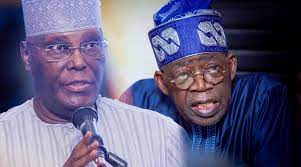
2027: Your biggest opponent is your record, Atiku tells Tinubu

0


Former Vice-President and African Democratic Congress (ADC) presidential candidate, Atiku Abubakar, has told President Bola Tinubu that his greatest political obstacle ahead of the 2027 general election is not the opposition but the performance of his administration, urging him to focus on addressing Nigeria’s worsening economic and security challenges.

Atiku made the remarks in a statement issued on Wednesday by his Senior Special Assistant on Public Communication, Phrank Shaibu, in response to President Tinubu’s comments that opposition politicians were “crying wolf” over alleged favouritism ahead of the next election because they were “afraid of their own shadows.”

The president had made the remarks on Tuesday while receiving the leadership of the Catholic Bishops’ Conference of Nigeria (CBCN), led by Archbishop Matthew Ndagoso of Kaduna, at the Presidential Villa in Abuja.

During the meeting, Tinubu assured the bishops that the Independent National Electoral Commission (INEC) would conduct free, fair and credible elections in 2027, insisting that all political parties would be given equal opportunities.

However, Atiku described the president’s response as “the lamentation of a drowning man,” accusing him of resorting to political bravado instead of addressing pressing national concerns.

He expressed disappointment that Tinubu’s comments came in response to an appeal by the Catholic bishops for peaceful, transparent and credible elections, arguing that Nigerians expected reassurance on electoral integrity rather than political attacks.

According to Atiku, the president should be more concerned with rising inflation, widespread hunger, insecurity, unemployment, exchange rate volatility and declining investor confidence.

“The president should wrestle with the millions of Nigerians who now skip meals because food has become a luxury,” Atiku said.

“He should wrestle with the insecurity that has turned farming communities into graveyards and highways into hunting grounds for criminals.

“He should wrestle with the unemployment that has robbed an entire generation of hope. He should wrestle with an economy suffocating under policy inconsistency, reckless borrowing and dwindling investor confidence.”

The former vice-president argued that political rhetoric would not erase the hardship faced by ordinary Nigerians.

“A government that has little to celebrate inevitably seeks refuge in chest-thumping. But Nigerians are no longer interested in political performances. They are interested in performance in government,” he said.

He added that “empty slogans cannot fill empty stomachs,” insisting that threats against political opponents would neither reduce food prices nor restore the value of the naira.

Atiku maintained that Tinubu’s administration would ultimately be judged by its record, saying every struggling business, unemployed graduate, unpaid worker and victim of insecurity reflected the consequences of government policies.

“His greatest opponent is his own record. Every unpaid worker, every struggling business, every unemployed graduate, every victim of insecurity and every hungry family is a living testimony to the consequences of his administration’s choices. That is the contest he has consistently failed to win,” he stated.

He further described democracy as “a marketplace of ideas and accountability,” urging the president to devote the remainder of his tenure to solving the country’s challenges rather than engaging in what he called imaginary political battles.

“The Nigerian people are not looking for a wrestler. They are looking for a leader. History will not remember who shouted the loudest. It will remember who governed the best,” Atiku added.

Also reacting to Tinubu’s remarks, the African Democratic Congress faulted the president for focusing on the opposition instead of confronting insecurity and other governance challenges.

In a statement signed by the party’s National Publicity Secretary, Bolaji Abdullahi, the ADC said elections are won through performance and not political rhetoric, urging the president to channel his energy towards tackling terrorism, banditry, kidnapping and the country’s worsening economic difficulties.

Sun

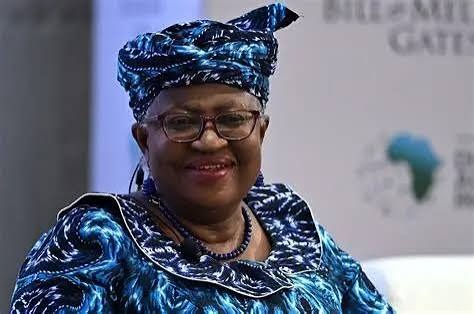
Okonjo-Iweala recounts how Nigeria won historic Paris Club debt relief

0

The Director-General of the World Trade Organisation (WTO), Ngozi Okonjo-Iweala, has recounted how a carefully executed public communication strategy played a decisive role in helping Nigeria secure its historic Paris Club debt relief during the administration of former President Olusegun Obasanjo.

Speaking on Thursday at the public presentation of “The Pain and the Promise,” a new book by communications expert and public affairs analyst, Paul Nwabuikwu, Okonjo-Iweala said the success of the country’s economic reform programme depended not only on sound policies but also on convincing Nigerians to embrace difficult but necessary reforms.

The former Minister of Finance recalled that she returned to Nigeria from the World Bank in 2003 with the mandate to stabilise the country’s finances and negotiate the cancellation of its roughly $30 billion debt owed to the Paris Club of creditors.

“I had been brought in from the World Bank to help straighten up and strengthen Nigeria’s weak finances, including getting rid of the $30 billion of the country’s debt owed to the Paris Club,” she said.

According to her, achieving that objective required sweeping economic reforms that demanded public understanding and sacrifice.

“To do this work, I knew Nigeria would have to undertake serious economic reforms of the type that would demand understanding and sacrifices from Nigerians.”

Okonjo-Iweala said she recognised early that the reform agenda would only succeed if citizens clearly understood why the policies were necessary, prompting her to recruit Paul Nwabuikwu to lead public communications for the economic team.

“One important component in my mind then was that we would need a crack communications person or team to help us reach Nigerians, to explain all of this in simple language. That is where Paul came in.”

She described Nwabuikwu as “smart, articulate, compassionate, a terrific writer and communicator,” crediting his communication strategy with helping the government build public confidence throughout the reform process.

“I can say without fear of contradiction that we wouldn’t have had as much success with the reform programme if we had not had a masterful steering of communications from Paul.”

She stressed that successful reforms in a democracy go beyond introducing new laws or policies.

“Reform is not just about writing new laws and enforcing new policies. It’s about persuading people, explaining trade-offs and building enough trust that governments can keep pushing through obstacles.”

Reflecting on Nigeria’s current challenges, the WTO chief lamented that persistent ethnic, religious and regional divisions continue to hinder national development.

She argued that lasting progress would remain elusive unless Nigerians united around a common national vision that transcends sectional interests.

“Until Nigerians can overcome the ethnic, religious and regional divides embedded in our society to forge a social compact that agrees key directions for the nation… Nigeria will find it difficult to move forward at the pace required to create enduring prosperity for our people.”

Okonjo-Iweala also urged Nigerians to prioritise competence over ethnic or regional considerations, insisting that talent exists across every part of the country.

“I believe in talent from every corner of Nigeria. There’s no place in Nigeria that doesn’t have talented people. I don’t care what part of the country you come from.

“I just wanted you to do your job and do it professionally.”

Reviewing Nwabuikwu’s 300-page book, she described it as a compelling account of Nigeria’s political, economic and social evolution over the past three decades, recommending it particularly to young Nigerians seeking a deeper understanding of the country’s history and governance.

Nigeria secured a landmark Paris Club debt relief agreement in 2005, with creditors writing off about $18 billion—roughly 60 per cent of the country’s estimated $30 billion bilateral debt.

The historic deal was concluded under the Obasanjo administration and fully implemented on April 21, 2006.

Also speaking at the event, former Minister of Aviation, Osita Chidoka, said Nigeria needs constructive critics, public officials willing to accept scrutiny, and citizens prepared to bridge the gap between government and the people.

“There is pain, and I must say we all know that much of it is self-inflicted and not necessarily prolonged, but there is also promise in our people, in our creativity, and in the possibility of that thoughtful engagement,” Chidoka said.

Sun