Home Blog Page 267

N2.8trn debt: FG to end electricity subsidy next year

0


The Federal Government on Friday unveiled plans to begin phasing out electricity subsidies from 2027. Government said it is part of sweeping reforms aimed at rescuing Nigeria’s financially distressed power sector.

Minister of Power, Joseph Tegbe, disclosed the plan at a Media Stakeholders Session in Lagos on Friday, saying the gradual withdrawal of subsidies would form part of efforts to restore the commercial viability of the electricity market without denying Nigerians the benefits of improved power supply.

But it ruled out any immediate increase in electricity tariffs. “There is no policy by this administration to increase electricity tariffs beyond its current level,” Tegbe said.

He added that the government’s immediate focus remains improving electricity supply, accelerating universal metering and ensuring consumers pay only for the electricity they consume.

The decision to phase out subsidies comes as the Nigerian Electricity Supply Industry grapples with one of its worst liquidity crises in years, with government subsidy obligations and unpaid gas debts now exceeding N2.7 trillion.

Official figures from the Nigerian Bulk Electricity Trading Plc (NBET) show that the Federal Government’s outstanding electricity tariff shortfall climbed to N1.78 trillion within 11 months, while debts owed to gas suppliers under the Gas Stabilisation Fund reached N986.45 billion. The mounting obligations have strained the finances of electricity generation companies and gas suppliers, raising concerns over the sustainability of power generation.

The figures further showed that between April 2025 and April 2026, electricity distribution companies issued invoices worth N3.16 trillion, of which the Federal Government was expected to cover N1.86 trillion, representing about 58.8 per cent of the total as subsidy for customers in Bands B to E whose tariffs remain below cost-reflective levels.

The huge subsidy burden has compounded liquidity challenges across the electricity value chain, limiting the ability of generation companies to pay gas suppliers, finance maintenance and invest in additional capacity.

Against this backdrop, Tegbe said the Federal Government was advancing a Power Sector Bond initiative to settle longstanding obligations owed to generation companies, gas suppliers and other market participants.

According to him, clearing the legacy debts is critical to restoring investor confidence, unlocking fresh investment and returning commercial discipline to the Nigerian Electricity Supply Industry.

The minister also announced a comprehensive “Resetting the Sector” agenda designed to tackle structural weaknesses across generation, transmission, distribution and market governance.

He revealed that Nigeria had consistently generated about 5,000 megawatts over the past two weeks, attributing the improvement to better operational coordination across the electricity value chain. However, he stressed that increased generation alone would not solve the country’s electricity crisis.

“Electricity must be generated, transmitted, distributed and paid for. All these components must function simultaneously,” he said.

The minister said as part of the reform programme, the ministry will undertake a comprehensive technical audit of the national transmission network, harmonise federal and state electricity regulations, strengthen three strategic transmission corridors covering Lagos, Enugu-Port Harcourt and Abuja-Kaduna-Kano, modernise transmission infrastructure, optimise under-utilised electricity assets and implement a Super Grid Programme to expand the country’s transmission backbone.

On metering, Tegbe said the government had placed the Presidential Metering Initiative at the centre of its reforms and inaugurated a “Power Force” comprising 5,000 Nigerian youths who will be trained and deployed nationwide for meter installation to close the country’s metering gap while creating skilled jobs.

He said Nigerians should begin to witness noticeable improvements in electricity availability within the next few months, while a stronger, more reliable and financially sustainable electricity market is expected to emerge over the next two to three years.

“Resetting the sector is not about buzz words. It is about execution, discipline, coordination and measurable outcomes. We will measure our success by improvements experienced in the daily lives of Nigerians,” the minister said.

Sun

Concerns mount as refuse dumps litter Lagos roads

0

• Health experts warn of looming outbreak of cholera, typhoid, dysentery, others


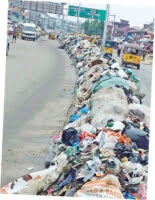
From the median of Ikorodu Road to the bus stops and markets at Idimu, Oshodi, Bariga, Egbeda, Mile 2 and other parts of Lagos, the streets of Nigeria’s commercial capital seems to have become a long refuse dump,

In June 2026, the state governor, Mr. Babajide Sanwo-Olu declared zero tolerance for waste dumping on roads and announced a new “Waste Police” to support enforcement.

The order came after viral videos showed refuse taking over major roads and bus stops. Several weeks later, the reality on ground tells a different story. The directive given by the governor has made little or no difference as Lagos continues to wear the filthy garment of waste at every bus stop.

A city drowning in refuse

Along the Ikorodu Road axis including Owode Onirin and Owode Elede, the median has been taken over by heaps of refuse. Black polythene bags pile up and the stench hits passersby from 50 metres away.

Mile 12 market at Ketu, a popular foodstuff market that attracts people from different parts of Lagos, is one of the worst hit. Oshodi, a major hub for trading and road transport has also turned into a horrible site of waste dumps. At the time of filing this report, some parts of the popular bus terminal had been taken over by refuse heaps.

At Ire Akari Estate in the Isolo area, heaps of refuse comfortably sit in front of buildings in the entire neighbourhood. From Ilasa to Iyana Isolo along the Oshodi-Apapa Expressway, the median has been littered with refuse. Even the popular Daleko Bridge, a commercial hub in Mushin, has a huge refuse dump.

The scene runs across most parts of Lagos. From Gbagada Expressway, Anthony Oke, and Oworonsoki, road medians meant for aesthetics are now dumping points.

The garbage dumped on the median of Orile-Mile 2-Badagry Expressway, an international route that connects other West African countries to Lagos are bad advertisements for the city that prides itself as the Centre of Excellence.

At Okokomaiko, sacks of refuse are dumped on the roadside. At Alaba Rago, fresh plants are beginning to grow on the refuse heaps that have not been evacuated for long.

A drive through parts of Alimosho into Ikeja is also a tour of refuse sites. Moving from Okoko to Mile 2 and Orile, the ubiquitous refuse heaps at the various bus stops – Iyana Iba, Volks, Trade Fair, Abule Ado, Agboju, Mile 2, Alaba Suru, Alafia and Orile assault the sensibilities of visitors coming from other countries in the West African sub-region with offensive odour oozing out from the waste bags and refuse that litter the floor.

The deep drainage system built during the construction of the Mile 2-Okokomaiko ten-lane Road, to solve the flooding problem on that stretch has become a dumping space for empty containers of water, soft drinks, and sachet water, among others.

Thursdays are declared environmental sanitation days for markets and shops. However, all the waste brought out during the desilting of the drainage system is left for the next rain to wash them back into the gutters. This is noticeable along the Egbeda-Akowonjo Road.

Along the LASU-Isheri Road, the refuse dumps on the median at Igando Bus Stop constituted another eyesore, expanding, displacing street beggars and roadside hawkers who often occupy the space.

Respite came last weekend when evacuation of the wastes began. Yet, the environment remained filthy.

Urgent attention is required to evacuate huge refuse dumped at Ejigbo, Idimu- Orisumbare towards Egbeda as well as Ijegun, Iyanna Ipaja on both the streets and roads. As they are littered, the rains help to spread the refuse and create discomfort for residents.

Along Ijegun/Isheri Osun Road to Jakanda Estate gate in Isolo the garbage heaps have continued to pile up day after day. Also, commuting from Lawanson Bus Stop to Itire in Surulere has been cumbersome and hectic in recent times. This is due to heaps of garbage on the road.

After Lawanson Bus Stop, going to Itire is a daunting task; the smelly refuse heaps are an eyesore. The garbage heaps are high and vast.

When asked about the unchecked proliferation of dumpsites along the road, an official of the Lagos State Waste Management Authority (LAWMA) said they were short of vehicles, and where they dump the refuse these days is an area near Ogun State.

Lawanson Road refuse

What residents say

Residents are concerned about the capacity of the PSP operators and the Lagos Waste Management Authority, pointing at service gaps, zero efforts by the waste management authorities to evacuate the wastes, and lack of strict enforcement.

Stella Nkam, a business woman in Ejigbo noted that sensitisation campaigns, and community policing all matter, but are not sustainable.

“They made announcements in Ejigbo against indiscriminate dumping of waste, and it went on for months, but as soon as they stopped, the people continued dumping refuse there.

“When enforcement pauses, the refuse returns. We need daily or every-other-day pickup in high-density areas.”

Gift Essien, a resident of Agege area said: “Some people don’t have toilets. They drop their waste in a refuse sack. When it falls, we go and pack it ourselves. The worst part is that they pack faeces alongside the refuse. After packing the waste, before the next day, it gets filled up again, so we do the cleaning repeatedly.”

“A mega city should be known for its cleanliness, not odour. For progress, not piles of waste. And until the Lagos State government, PSP operators, and the people who call Lagos their home decide to act together, Lagos will continue to wear this filthy garment,” Segun Adesanya, a resident declared.

An old landlord, who spoke on the condition of anonymity, recalled what some past governments did to manage waste.

“In the days of Alhaji Lateef Jakande as the governor of Lagos State, he built five dumpsites at various locations. The authorities then used to convert the refuse into fertilisers and sold to farmers at a subsidised rate. Today, all those dumpsites have been shut down, including the nearby ones where refuse is dumped.

“I learnt that refuse is now disposed towards Badagry. That distance alone is a challenge, and the reason garbage is littered on the streets and roads.”

At Tejuosho Bus Stop in Yaba, Chinedu Anyatuonwu was blunt: “We pay for waste, but the PSP man comes when he likes. So people get tired and throw it on the median. If there’s no consequence for not collecting, and no consequence for dumping, what do you expect?

“Also, children see their parents and other adults throw nylon and garbage on the road. They grow up thinking it is normal and do the same. We need to teach in schools that cleanliness is not the government’s job alone.”

Risikatu, a LAWMA sweeper around Cole Street, on Lawanson, blamed residents and the authorities around the area, saying their lapses are the reason the road is overtaken by filth.

“They come to dump their waste on the main road at night, simply because they don’t want to pay their LAWMA bills.”

A resident, Ikenna, who sells second-hand refrigerators around Zamba in Lawanson, pleaded that the government should come to their rescue since the foul smell from the refuse dumps could be injurious to their health.

Mukaila, a motor park worker, chipped in: “This was exactly what killed an elderly man and his son at Johnson Bus Stop, Ijesha, recently. The baba was crossing the road holding his young boy. Unfortunately, they stepped on banana peels from the garbage heap on the road, and father and son fell, and an oncoming trailer crushed them.

“Lawanson refuse dump is a child’s play compared to that in Idi-Oro, Mushin,” Lamidi, a bus driver, loading at Abiodun bus stop said, pointing at the mountain of trash. “They come from Idi-Araba and Idi-Oro at midnight to drop trash here. They dare not try it during the day because we always chase them. After chasing them, when we resume work in the morning, the whole place is littered with refuse.”

Emeka and his team fry buns, puff-puff, and doughnuts along Mushin Road, close to Idi-Oro. Making his snacks and displaying it opposite the refuse heaps is bad for his business, but he has to survive. To maintain hygiene, he covers his food items every time, especially when the sun is out, to avoid the perching of flies.

We’re brewing next outbreak, physicians warn

The mountain of refuse in some parts of Lagos has its health implications for which health experts have warned of dangerous consequences. Folake Akinwumi, a public health physician said, “We are brewing the next outbreak. Indiscriminate dumps are basically open-air laboratories for disease. We are seeing spikes in gastroenteritis, especially in children under five, during the rainy season. Leachate from waste enters shallow wells and drainage. When it rains, that water crosses into homes in low-lying areas like parts of Ajegunle and Makoko.

“We are also treating more cases of typhoid and cholera. Rats and cockroaches breed in those heaps. That means leptospirosis and Lassa fever risk goes up. The flies move from waste to food in 30 seconds. If you eat akara by the roadside next to a dump, you’re essentially eating the dump.

“We can build all the transfer stations in the world. If people still throw waste into the gutters because the bins are full and the trucks don’t come to pack the wastes, we haven’t solved the waste issue.”

Confidence Nelson, Environmental Health Officer, noted, “My biggest fear is antimicrobial resistance and respiratory disease. When people burn waste to reduce the pile, they release dioxins and particulate matter. Asthma admissions go up.

“Then there’s the vector issue. Mosquitoes breeding in stagnant water trapped by plastics cause malaria and dengue. We have also started seeing more skin infections, fungal and bacterial, because people wade through flood water mixed with refuse.

“The implication for residents is simple: your medical bill goes up, school attendance drops, and productivity drops. A city cannot be healthy with dirty streets.

“What breaks my heart is the sanitation-poverty link. In areas where people lack toilets and dump faeces in sacks with refuse, you get direct fecal-oral transmission. That’s cholera, dysentery, Hepatitis A.

“We tell residents, keep your environment clean, but if there’s nowhere to put waste, the message doesn’t land. We need collection, we need toilets, and we need behaviour change together. If we don’t act, we are one heavy rainfall away from a major outbreak. Flood plus waste equals epidemic.”

PSP operators give reasons wastes are piling up

The President of the Association of Waste Managers of Nigeria (AWAMN), Dr Olugbenga Adebola, has dismissed claims that Private Sector Participants (PSPs) engaged in waste collection in Lagos State are at loggerheads with the state government.

Adebola said there was no basis for such allegations, insisting that the operational challenges confronting waste operators were largely caused by inadequate access to waste disposal facilities rather than political considerations.

According to him, the major obstacle facing PSP operators is the time spent at disposal sites, which limits the number of waste collection trips they can make daily.

“There is no magic about it or any political affiliation. When waste is dumped promptly, the trucks are freed to return and collect more waste from residents and businesses,” he stated.

Adebola urged critics to visit Lagos disposal facilities to assess the situation firsthand, asking whether they had recently observed the long queues of refuse trucks waiting to offload waste.

He noted that the Lagos State government and the Lagos Waste Management Authority (LAWMA) were already implementing measures to address the operational bottlenecks through improved waste management infrastructure.

His remarks came as LAWMA commissioned the rehabilitated Road E and newly constructed disposal platforms at the Olusosun Disposal Facility in Ojota to improve access and reduce delays in waste evacuation operations.

Speaking at the commissioning, LAWMA Managing Director and Chief Executive Officer, Dr. Muyiwa Gbadegesin, described the project as a strategic intervention aimed at eliminating operational bottlenecks and improving the efficiency of waste evacuation across the state.

He explained that heavy rainfall had damaged sections of Road E, slowing the movement of compactor trucks responsible for evacuating municipal waste from different parts of Lagos.

According to him, the rehabilitated road and additional disposal platforms would allow more trucks to discharge waste simultaneously, significantly reducing turnaround time at one of the state’s busiest disposal facilities.

“This project represents another important milestone in our commitment to building a more efficient and resilient waste management system for Lagos. By improving access to the disposal facility and expanding operational capacity, we are addressing immediate challenges while laying the foundation for long-term improvements in waste evacuation across the state,” Gbadegesin said.

He disclosed that the intervention formed part of Governor Babajide Sanwo-Olu’s broader strategy to strengthen critical waste management infrastructure through collaboration with the private sector.

Gbadegesin commended Zoomlion Nigeria Limited for rehabilitating the road under its Corporate Social Responsibility initiative, adding that the partnership had evolved into a broader technical collaboration supporting the engineering and management of waste infrastructure in Lagos.

He further revealed that Zoomlion was constructing Transfer Loading Stations at Olusosun and Solous III, each with a processing capacity of 2,500 metric tonnes of waste daily, while the state was also investing in Material Recovery Facilities, waste-to-energy plants, biogas facilities and additional compactor trucks to improve waste evacuation capacity.

The LAWMA boss said Olusosun currently receives about half of the municipal solid waste generated daily in Lagos, making sustained investment in infrastructure essential to maintaining efficient waste management operations.

He expressed confidence that the rehabilitated road, additional disposal platforms and ongoing investments in transfer loading stations would significantly reduce operational bottlenecks, improve turnaround time for compactor trucks and strengthen environmental management across the state.

Meanwhile, LAWMA has intensified enforcement against environmental offenders, sealing shops and business premises along the Tejuosho-Ojuelegba corridor over persistent indiscriminate dumping of refuse on road medians.

Gbadegesin said the enforcement followed repeated warnings and sustained non-compliance by traders, stressing that the affected premises would remain sealed until they complied with the state’s environmental sanitation regulations.

He reiterated that road medians, drainage channels and other public spaces were not designated waste disposal points and warned that the authority would continue to enforce environmental laws against violators.

Sun

Catholic priest stabbed to death in Kogi

0

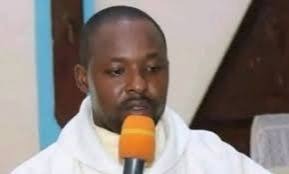
A Catholic priest identified as Rev. Fr. Samuel Opeyemi Oyetoro, was allegedly stabbed to death on Thursday in Ajaokuta, Kogi State, and his remains abandoned along the roadside.

Rev. Fr. Oyetoro was a parish priest at St. Mary’s Catholic Church, Egbe in Yagba West Local Government Area of the state. The tragic death of the priest has thrown the Catholic community and many residents of Kogi State into mourning.

The circumstances leading to his death in Ajaokuta, which is far away from his area are yet to be unraveled, as at the time of filing this report. It was learnt that the priest was born in Egbe, Yagba West Local Government Area of Kogi State, and was a native of Ayetoro in Ijumu Local Government Area of the state. Confirming the incident, the state Police Public Relations Officer (PPRO), ASP Saliu Oyiza Afusat, said the incident occurred on 29th July 2026, at about 9:30 am, adding that the Police received information that a lifeless body of an unidentified male was found by the roadside along Church Road, Ajaokuta.

“Operatives promptly mobilised to the scene, where it was observed that the deceased had sustained severe machete cuts on the head. The body was evacuated to the ASCL Hospital, where he was confirmed dead by a medical doctor, and was thereafter deposited at the mortuary for autopsy.

“The deceased was later identified as Rev. Fr. Samuel Opeyemi of St. Paul Parish, Ayetoro Gbede, Ijumu LGA, Kogi State. “The case is currently under investigation, and efforts are ongoing to apprehend those responsible.

“Upon the conclusion of the preliminary investigation, the case will be transferred to the State Criminal Investigation Department (SCID) for discreet investigation.

“We will provide further updates as the investigation progresses,” she added.

Sun

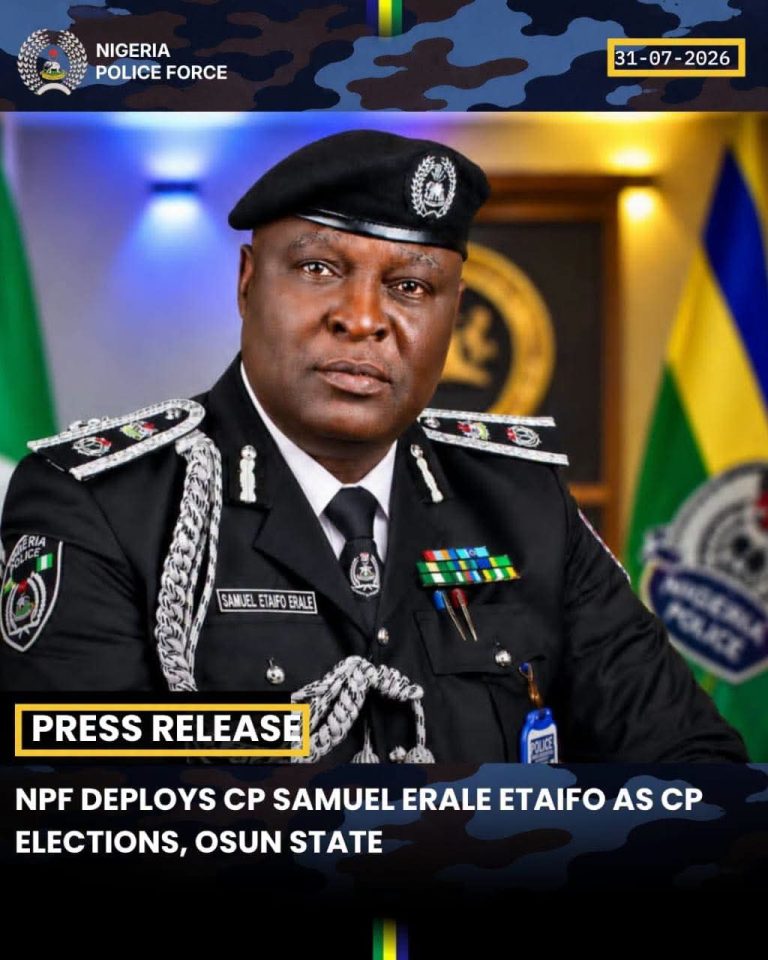
Osun 2026: IGP deploys CP Etaifo to coordinate election security

0


The Inspector-General of Police (IGP), Olatunji Disu, has deployed a Commissioner of Police, Erale Samuel Etaifo, to Osun State to oversee and coordinate security for the August 15 governorship election.

The deployment was announced in a statement on Friday by the Police Public Relations Officer, Abiodun Ojelabi.

“The deployment underscores the resolve of the Nigeria Police Force to ensure that the electoral process is conducted in a peaceful, transparent and secure atmosphere, while guaranteeing the safety of voters, electoral officials, election observers, media practitioners and all law-abiding residents of the state,” Ojelabi said.

He explained that Etaifo would work closely with other security agencies and relevant stakeholders to enforce compliance with the Electoral Act, the Code of Conduct for Security Personnel on Electoral Duty and other laws governing the election.
The Osun State Police Command assured residents that comprehensive security measures had been put in place to safeguard lives, property and sensitive election materials before, during and after the poll.

Ojelabi said all deployed personnel had been directed to remain impartial, professional and respectful of citizens’ rights, irrespective of political affiliation.

The command warned political actors, supporters and other stakeholders against actions capable of disrupting public order.

While urging residents to remain law-abiding, cooperate with security operatives and report suspicious activities through official emergency channels, the command said: “Electoral violence, vote-buying, voter intimidation, the spread of misinformation and every other form of criminality will be met with the full weight of the law.

“The Nigeria Police Force remains committed to providing a level playing field for all political parties and ensuring that the will of the people prevails through a peaceful, credible and transparent electoral process.”

Sun

Bello commends Tinubu’s security gains, meets NSA Ribadu

0

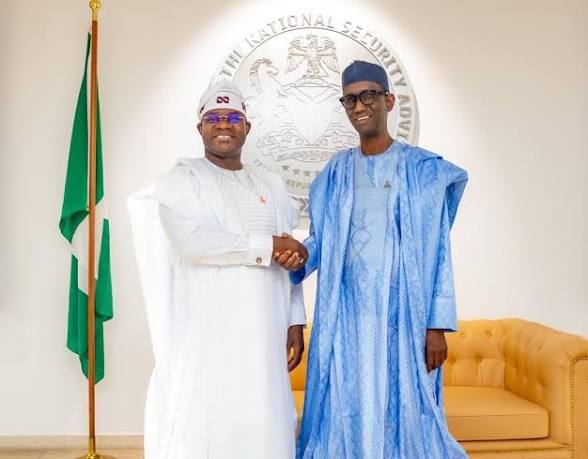
Former Governor of Kogi State, His Excellency Yahaya Bello, CON, on Friday commended President Bola Ahmed Tinubu for the steady progress being made in the fight against insecurity across the country.

Bello gave the commendation during a meeting with the National Security Adviser, Mallam Nuhu Ribadu, at the Office of the National Security Adviser in Abuja.

Speaking after the meeting, the former governor noted that the recent foiling of an attempted abduction of schoolchildren in Kogi State underscored the level of support the state continues to receive from the Federal Government. He attributed the successful operation to the vigilance, professionalism and improved coordination among the nation’s security agencies, describing it as clear evidence that intelligence-driven security operations are yielding positive results.

“I want to use this opportunity to commend Mr President and our leader, President Bola Ahmed Tinubu, for his relentless efforts in tackling insecurity across the nation. I also want to commend him and your humble self on the recent foiling of an attempted abduction of schoolchildren in Kogi State, which underscores the level of support the state continues to receive from the Federal Government. I attribute the successful operation to the vigilance, professionalism and improved coordination among the nation’s security agencies, which is clear evidence that intelligence-driven security operations are yielding positive results,” he said.

Bello particularly praised the National Security Adviser for providing strategic leadership and fostering stronger collaboration among the various security and intelligence agencies. According to him, the synergy under Ribadu’s coordination has significantly strengthened the country’s capacity to respond swiftly to emerging security threats.
He also commended President Tinubu for his unwavering commitment to restoring peace and security across Nigeria, noting that the administration’s sustained investment in intelligence gathering, security coordination and operational support has continued to bolster the morale and effectiveness of security personnel working tirelessly to protect lives and property.

Commenting on the recent rescue of the abducted schoolchildren in Oyo State, Bello applauded President Tinubu, the National Security Adviser and the security agencies for their painstaking efforts, professionalism and determination in securing the victims’ safe release. He paid tribute to the brave officers who made the ultimate sacrifice during the operation, describing their courage and selflessness as a testament to their commitment to the defence of the nation.
“Mr President also deserves commendation for the recent rescue of the abducted schoolchildren in Oyo State. I equally commend you, my brother, the National Security Adviser, and, of course, the security agencies for your painstaking efforts, professionalism and determination in securing the safe release of the victims. I also pay tribute to the brave officers who made the ultimate sacrifice during the operation. Their courage and selflessness remain a testament to their unwavering commitment to the defence of our country,” he said.

The National Security Adviser, while thanking the former governor for the visit, stressed that the security of lives and property is everyone’s responsibility and that collective action is essential to overcoming insecurity in Nigeria.
“I want to warmly welcome you to my office this afternoon, my brother. The issue of insecurity concerns everyone in this country, and I believe that if we all play our part at our various levels, we shall overcome insecurity in Nigeria,” he said.

The former governor further urged Nigerians to continue supporting the efforts of the Federal Government and the security agencies by remaining vigilant and providing timely, credible information that could assist security operations. He noted that tackling insecurity requires collective responsibility and sustained cooperation between citizens and security institutions.

Bello expressed confidence that, under the leadership of President Tinubu and with the strategic guidance of the National Security Adviser, Nigeria would continue to record significant gains in the fight against criminality.

He maintained that the ongoing security reforms and strengthened inter-agency collaboration were laying a solid foundation for lasting peace, stability and national development.

Sun

Safe Schools: Senate Deepens Fund Probe as Kalu-Led Committee Meets Education, Finance Ministers, demand Accountability

0


…Tinubu’s Ministers pledge transparency as Senate widens investigation into funding, operational gaps and implementation of Safe Schools Initiative

The Senate Ad-hoc Committee investigating the Safe Schools Initiative (SSI) Programme has intensified its probe into the administration of billions of naira allocated to securing Nigerian schools, expanding its investigation to cover financial flows, donor funding, operational bottlenecks and accountability mechanisms across key government institutions.

At Friday’s investigative hearing at the National Assembly, Abuja, Chairman of the Committee, Senator Orji Uzor Kalu, declared that the Senate would leave no stone unturned in ensuring that every kobo appropriated for the protection of Nigerian students and educational institutions is properly accounted for.

The committee received the Minister of Education, Dr. Tunji Alausa, alongside senior officials of the Federal Ministry of Education, including the Permanent Secretary, Mr. Abel Olumuyiwa Enitan, representatives of the Federal Ministry of Finance and directors overseeing Safe Schools Financing and School Safety.

Later in the day the Committee met with the Minister of Finance and Coordinating Minister of the Economy, Mr. Taiwo Oyedele, and members of his delegation.

In his opening remarks Senator Kalu explained that while the committee was originally constituted to investigate the implementation and funding of the Safe Schools Initiative Programme, preliminary findings had necessitated an expansion of its mandate.

According to him, the investigation will now comprehensively evaluate financial flows, operational efficiency, accountability frameworks and structural challenges across ministries, departments and agencies connected to the programme.

“We are not here for a witch-hunt,” Kalu stated. “This is a constitutional responsibility under Sections 88 and 89 of the 1999 Constitution as amended. Our mandate is to ensure financial discipline, value for money and ultimately protect Nigerian students and vulnerable citizens.”

The former Senate Chief Whip noted that because of the sensitive nature of school security and the country’s security challenges, portions of the deliberations would be held behind closed doors.

“Banditry, terrorism and attacks on schools are matters of national security. We will not discuss sensitive operational issues in public because we do not want to expose information that could be useful to criminals,” he said.

He emphasized that the government remains a continuum irrespective of changes in political leadership or appointments.

“Whether these funds were released before the present ministers assumed office or not, government remains responsible for accounting for every kobo entrusted to it. That is why this committee is carrying out this assignment.”

Kalu further stressed that ministers owe Nigerians accountability through their representatives in Parliament.

“This is the seat of democracy. Every minister appointed by the executive must be accountable to the representatives of the Nigerian people. No minister should ignore invitations from the National Assembly because oversight is a constitutional responsibility.”

He commended both ministers for consistently honouring invitations from the National Assembly, describing such actions as a demonstration of respect for democratic institutions.

EDUCATION MINISTER DEFENDS REFORMS, TRANSFERS SAFE SCHOOLS PROGRAMME
Speaking before the committee, Minister of Education, Dr. Tunji Alausa, reaffirmed President Bola Tinubu’s commitment to securing educational institutions across Nigeria.

“The President has made it clear that the security of our children, teachers and schools is non-negotiable,” he said. “Security of lives, security of property and the protection of our national sovereignty remain top priorities of this administration.”

He described education as the cornerstone of the President’s Renewed Hope Agenda and disclosed that most of the financial transactions currently under investigation predated his appointment as minister.

According to Alausa, nearly all the major disbursements being investigated occurred between five and seven years ago.

“Since I assumed office, the only significant disbursements have been targeted interventions to security agencies, including the Nigeria Police Force and the Nigeria Security and Civil Defence Corps, administered through the Federal Ministry of Finance,” he explained.

The minister disclosed that one of his administration’s major reforms was establishing a full-fledged Safe Schools Department within the Federal Ministry of Education, replacing what was previously a relatively small unit.

He further revealed that shortly after assuming office, he formally requested the transfer of the Safe Schools Initiative’s financing component from the Federal Ministry of Finance to the Ministry of Education.

“When I became Minister of Education, I wrote to the then Minister of Finance requesting that the Safe Schools financing structure be moved to the Ministry of Education,” he said. “Although there was support for the idea, administrative constraints delayed the process.”

Alausa confirmed that the transfer process has now been completed.

“Today, the Safe Schools Initiative is officially domiciled in the Federal Ministry of Education. We have also established a dedicated Safe Schools Department to coordinate policy, implementation and monitoring.”

He disclosed that the ministry is currently collaborating with the Office of the National Security Adviser, the Department of State Services, the Armed Forces, the Nigeria Police Force and other security agencies to develop a comprehensive national framework for school safety.

According to him, the initiative goes beyond deploying security personnel to schools.

“Safe Schools are much broader than physical security. It includes perimeter fencing, solar-powered lighting, water and sanitation facilities, recruitment of school security personnel, deployment of technology and the establishment of effective monitoring systems.”

The minister maintained that school safety requires central coordination and collaboration with state governments to guarantee nationwide implementation.

SENATORS DEMAND ACCOUNTABILITY, RULE OUT WITCH-HUNT
Vice Chairman of the Committee, Senator Sahabi Yau, commended the minister for appearing before the committee and supported the decision to hold sensitive discussions in executive session.

“We are ready to account for every intervention within our knowledge,” he said. “At the same time, we must protect information that concerns national security.”

Other members of the committee emphasized that Parliament was merely carrying out its constitutional responsibilities and noted that what began as a noble intervention programme may have suffered implementation challenges requiring legislative scrutiny.

Senator Anthony Ani observed that while the current minister inherited many of the issues under investigation, institutions must remain accountable for their actions.

“The government is continuous, and institutions must account for past actions so that future public officials will understand the importance of transparency and responsibility,” he stated.

FINANCE MINISTER PLEDGES FULL TRANSPARENCY

Addressing the committee, Minister of Finance and Coordinating Minister of the Economy, Mr. Taiwo Oyedele, pledged the ministry’s full cooperation with the Senate’s investigation.

He described the Safe Schools Initiative as a critical national priority requiring collective commitment from both the executive and legislative arms of government.

“This is not just about today; it is about the future of our country,” Oyedele said. “We want every student to be able to go to school knowing that the country is able to protect them, and their teachers as well.”

He acknowledged that issues relating to the timeliness of funding releases and transparency mechanisms require continuous improvements, adding that efforts were already underway to strengthen accountability within the programme.

“On our part, we are committed to transparency. We are committed to working with the National Assembly to address any issues that we may find, whether those issues happened before my appointment or not.”

Echoing Senator Kalu’s position, the Finance Minister noted that government is a continuum and that public officials must accept responsibility for the institutions they lead.

“Whenever we find anything that has not been done properly, it is for us to acknowledge it and find solutions so that going forward, everything will be better and the Nigerian people will be the beneficiaries.”

Speaking with journalists after the meeting, Oyedele explained that school safety remains a shared responsibility involving the Federal Government, state governments and multiple federal institutions.

He clarified that the management of intervention funds through the Federal Ministry of Finance was largely a function of existing government financial structures rather than institutional rivalry.

“What is even the priority for us is how we ensure that funding is adequate and monies are released on time so that some of these crimes can be prevented rather than us trying to do damage control,” he said.

The minister further appealed for greater national unity in confronting insecurity, cautioning against narratives that inadvertently undermine government efforts to combat terrorism and criminality.

SENATE EXPANDS INVESTIGATION
The Senate Committee disclosed that its expanded investigation will scrutinize budgetary allocations and actual releases from 2023 to date, intervention and co-funding mechanisms, international donor funding directed towards the Safe Schools Initiative, challenges affecting fund disbursements and proposals for structural reforms.

The committee subsequently adjourned into executive session with both ministers to deliberate on sensitive operational and security-related matters excluded from public proceedings.

Friday’s hearing marks a significant escalation in the Senate’s oversight of the Safe Schools Initiative and signals Parliament’s determination to establish a transparent financial trail for funds earmarked for protecting Nigeria’s schools.

With the Senate broadening its mandate and both ministers pledging full cooperation, Nigerians may soon receive clearer answers regarding how resources allocated for one of the country’s most critical educational and security interventions have been managed over the years.

Police Deploy CP Samuel Etaifo to Oversee Security for Osun Governorship Election

0


The Nigeria Police Force has deployed Commissioner of Police Samuel Erale Etaifo to Osun State as the Commissioner of Police in charge of election security ahead of the forthcoming governorship election.

According to a statement by the Force Public Relations Officer, CSP Ani Iniedu, the deployment is part of the Force’s comprehensive election security strategy aimed at ensuring a peaceful, secure and credible electoral process.

Etaifo will oversee and coordinate election security operations across the state, working with other security agencies and relevant stakeholders to safeguard voters, election officials and electoral materials.

The statement noted that the Commissioner of Police, Osun State Command, CP Ibrahim Gotan, remains in charge of the State Command and will continue to supervise routine policing activities while providing the necessary administrative and operational support for the election.

The Police also reminded all personnel deployed for election duties to maintain the highest standards of professionalism, neutrality and strict compliance with the law, including the Code of Conduct for Security Personnel on Electoral Duty.

The Inspector-General of Police, Olatunji Rilwan Disu, urged members of the public, political actors and other stakeholders to remain peaceful, law-abiding and cooperate fully with security agencies to ensure a safe, credible and successful electoral process.

Nigerian Army Rescues 14 Kidnap Victims Along Lagos–Benin Expressway in Edo

0


Troops of the 4 Brigade, Nigerian Army, under the 2 Division participating in Operation WABAIZIGAN, have rescued 14 kidnapped victims following a swift response to a kidnap incident along the Lagos–Benin Expressway in Ovia North East Local Government Area of Edo State.

The Army said the operation, which underscores its commitment to protecting lives and denying criminal elements freedom of action, began at about 9:30 p.m. on July 30, 2026, when troops on routine patrol received credible intelligence about the abduction.

Acting swiftly, the troops pursued the kidnappers along their escape route, mounting sustained pressure that forced the criminals to abandon 11 of the abducted victims before fleeing into the surrounding forest.

In a follow-up clearance operation on July 31, troops combed the forest and rescued the remaining three victims, bringing the total number of rescued victims to 14.
According to the Army, all the rescued victims underwent preliminary debriefing and medical assessment and were confirmed to be in stable condition.

They were subsequently reunited with their families or allowed to continue their respective journeys.

The Army added that efforts are ongoing to track down and apprehend the fleeing kidnappers.

It said the successful operation highlights the Nigerian Army’s operational readiness, intelligence-driven approach and determination to combat kidnapping and other violent crimes in collaboration with other security agencies.

The Army also urged members of the public to continue providing timely and credible information to security agencies, describing public support as critical to sustaining operational successes and enhancing security across Edo State.

Meanwhile, the Commander, 4 Brigade Nigerian Army, Brigadier General Ahmed Balogun, commended the troops for their professionalism, resilience, courage and proactive conduct during the operation.

He reassured residents of Edo State and commuters within the Brigade’s area of operations of the Army’s commitment to protecting lives and property, adding that troops would continue aggressive operations to deny criminal elements safe havens and ensure a secure environment for law-abiding citizens.

7-Year-Old Achieves Guinness World Record as Youngest Editor of Published Anthology

0


A seven-year-old has earned a place in the Guinness World Records after being recognised as the Youngest Editor of a Published Anthology.

According to the Guinness World Records certificate, the record was achieved at the age of 7 years and 290 days. The feat recognises the child’s remarkable accomplishment in editing a published anthology at an age when most children are still in primary school.

A photograph released to mark the achievement shows the young record holder proudly displaying the official Guinness World Records certificate and medal.

The milestone highlights the child’s exceptional literary talent and dedication, earning global recognition through the prestigious Guinness World Records.

Two Chinese Nationals Bag 25 Years Jail Term For Illegal Mining

0


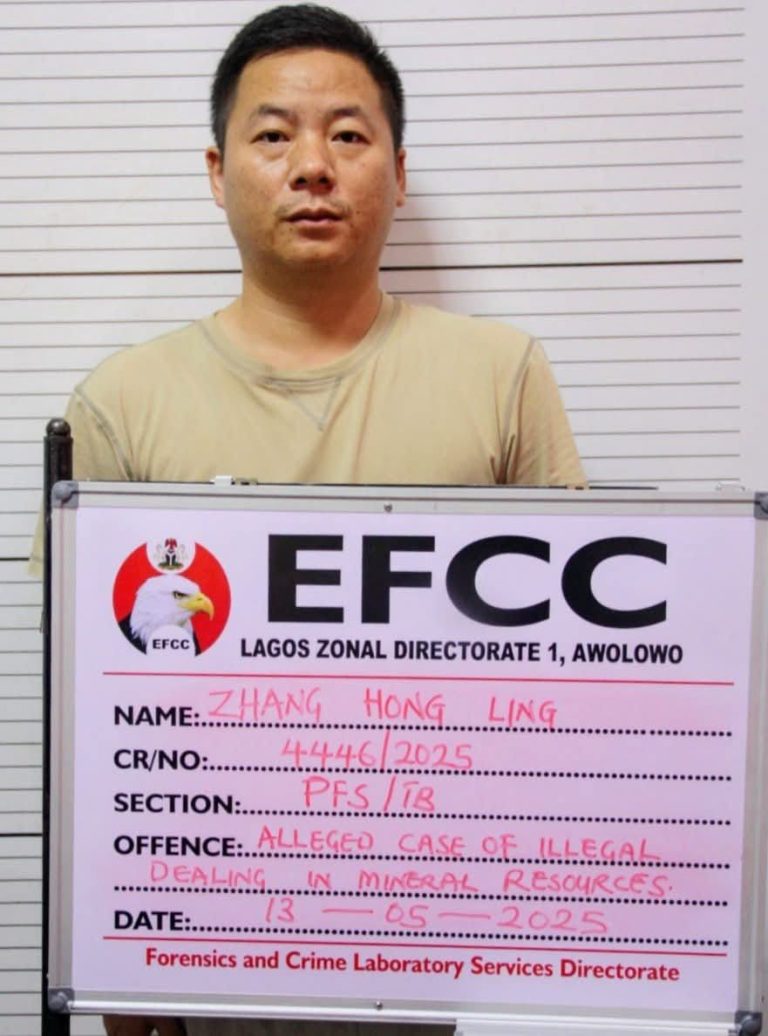
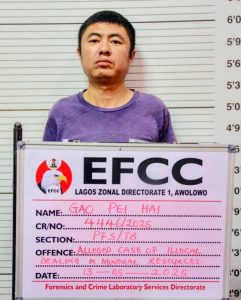
Justice Akintayo Aluko of the Federal High Court in Ikoyi, Lagos, has convicted and sentenced two Chinese Zhang Hong Lin and Gao Pei Hai, for conspiracy and the illegal mining of solid minerals.

The Lagos Zonal Directorate 1 of the Economic and Financial Crimes Commission (EFCC) arraigned the
defendants on a five-count charge, which included conspiracy and the unlawful possession of mineral resources intended for export without lawful authority.

The defendants pleaded guilty when the charges were read to them.

Following their guilty pleas, prosecution counsel, Hannatu Kofarnaisa called the investigating officer, Matthew Orogwu, who reviewed the facts of the case and tendered documentary evidence before the court.

After presenting the evidence, the EFCC’s counsel urged the court to convict and sentence the defendants in line with the charges.

In his judgment, Justice Aluko found both defendants guilty on all five counts and sentenced each of them to five years’ imprisonment on each count, with an option of a ₦50 million fine covering all five counts.

The court also ordered the forfeiture of the recovered mineral resources to the Federal Government of Nigeria.

One of the charges reads: “That you, Zhang Hong Lin, Gao Pei Hai, and Gao Pei Yu (currently at large), sometime in 2025 in Lagos, within the jurisdiction of this Honourable court, conspired among yourselves, with the intent to defraud the Federal Government of Nigeria of revenue accruing therefrom, and without the permission of the appropriate authority, engaged in the exportation of mica products, copper-bearing, and lithium-bearing mineral resources out of Nigeria, thereby committing an offence contrary to Section 1(8)(a) of the Miscellaneous Offences Act, 1983, and punishable under Section 8 of the same Act.”