Home Blog Page 265

Lack of internal democracy: APC may soon crumble like PDP – Eta, ex-national chairman

0

• Why Atiku, Obi are no threat to Tinubu
• Over 80% of Buhari’s staff preferred Atiku in 2023
• There’s no guarantee that 2027 election won’t be rigged

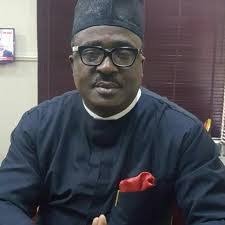
Ntufam Hilliard Eta is a former interim acting National Chairman and National Vice Chairman (South South) of the All Progressives Congress (APC). He is currently the Chairman of the National Youth Service Corps (NYSC) Governing Board.

Speaking to Sunday Sun in an exclusive interview, recently in Abuja, the Cross-River born politician, weighed in on myriads of issues, particularly the forthcoming 2027 presidential election. He dismissed any possibility that either the presidential candidate of the African Democratic Congress (ADC) Atiku Abubakar, or that of the Nigeria Democratic Congress (NDC), Peter Obi, might pose any form of threat to President Bola Tinubu’s re-election bid.

He bluntly and brazenly criticised the escalating lack of internal democratic process in the nomination of the candidates of his party, disclosing that revolution is not only looming very large in the ruling party but warned that APC could crumble like the Peoples Democratic Party (PDP) very soon.

Have you forgiven your party, the APC?

That is a very unusual way to start this interview. What you would have asked is whether I am begrudging the APC? Since I ventured into politics at a very tender age, experience has taught me that in dealing with human beings, one is likely to come across their idiosyncrasies, extremisms, and tendencies. One is likely to encounter attrition, altercations, differences in opinion, in their worldview, and cosmology.

Anybody with such a basic understanding venturing into politics, they cannot have a situation to begrudge persons or organisation. Remember that it is free entry and free exit as guaranteed by the constitution; the over 200 million of us have the right of association and the right of free speech.

If anyone is no longer comfortable in their association, they are at liberty to discontinue. The reason I am in APC is that the founding fathers and the principles aligned with my idea of politics and approach to bring into governance, if given an opportunity to govern the people.

It will take more than what happened in 2020 to put a wedge between me and my ideas. Although those ideas are fading away, I still hold on to the truth that indeed what we created in 2013 was perhaps the most progressive platform that Nigerian political history has had to record.

Are you saying that APC treated you fairly?

I was not talking about being treated fairly. I was talking about my deep understanding of the issues of associating with other human beings and my ability to tolerate their excesses in pursuit of my ideals and ideas in politics. It is not a case of who is going to forgive whom.

My understanding of politics is different from the way others understand it. My understanding of politics allows me the liberty and the comfort of interpreting issues in the way God has given me the ability to interpret, and if others interpret politics as a score to settle, I do not.

I believe that as long as a political party is peopled by human beings, they cannot remove altercations, disagreements, and acrimony. But the ability to understand that the bigger picture is how you conduct yourself if you have government and the people, and the approach of governance you bring to bear if the people have given you their mandate. Every other thing falls in comparison, in faith and in importance.

Your flexibility in handling what happened then was commendable, but what do you tell those insinuating that the parastatal board appointment given to you is enough settlement?

I believe that I am qualified to be in any available position in Nigeria; I believe that I am intellectually layered enough to carry the requirements and the responsibilities of any office that God, in His infinite mercy, may find in the heart of the President or any other leader to so give me.

I do not think that the office of the chairman of the NYSC Board can be a settlement for me. I don’t even know what settlement means in this context. But if it means what is usually understood in the Nigerian political palace, then count me out. I believe that I have the capacity, the creativity, the presence of mind to get into any office and use the instrumentality of that office for the good of the Nigerian people.

The way you fought during the misunderstanding with the APC leadership shows you had a mission to achieve as the national chairman; what was that mission?

The mission was to bring about the presidency of Asiwaju Bola Tinubu, no more, no less. I knew from that time that he was going to be, perhaps, the most consequential president that we will ever have. I knew that he was the transformational leader we have been waiting for.

I knew that with him, Nigeria would be in capable hands. I knew that what is happening today was going to happen. I knew it was going to happen, but I didn’t know that it was going to happen this fast. I knew he was perhaps the most courageous President that we will ever have.

And today, three years later, I believe that those who are discernible, those who are pure of heart, will agree with me that all of my expectations have come to pass. That is why, because of Nigeria, I had to fight that battle. And as the Holy Book says, I fought a good fight.

Are you saying that this is the APC of your dream with what Nigerians are going through today?

No, no, no. But are you talking about the government or the APC? The government of today is beyond my dreams. I did not know that Nigerians coming from the pool that constituted the government would achieve what the president has achieved in three years. I cannot say the same thing about my party.

I cannot say that the ideal which my party was created is still abiding; I cannot say so of the platform and the predication on which it lives its life today. But, for the presidency and for the man who is presiding today, I believe that by the time he is done with Nigeria, the country will never be the same again.

With 13 years of APC existence under President Tinubu and late President Buhari, can you say that the ruling party has met the expectations of Nigerians?

Let me say that if you do a proper analysis of the presidents of Nigeria, you will discover that whereas you would give late President Muhammadu Buhari a very poor mark in economic management, he will get a little pass mark in the provision of infrastructure, especially roads and rails.

Obasanjo will also get a little pass mark in the provision of turbines, especially in the electricity sector.

But, from 1960 till date, none of them has fundamentally altered the course of Nigeria the way President Tinubu has done. For example, for decades, those who understood the challenges of the energy sector and the deficit that Nigeria was experiencing had always sought for the decentralisation of the energy sector.

Not one single president dared to decentralise power. This President did it a few months after he took over power. And when people say that he promised to give light to Nigeria, for me, that is the light that he has given to Nigeria.

We must ask the governors, the heads of some sub-national governments, whether they have switched on the light he has given. This is the first time in the history of Nigeria that states have the legal framework, supported by the constitution, to generate, transmit, and distribute light. If any state government has not done what it needs to do for its people, then the governor should be held responsible.

Another area he has done well is security. Nigeria’s security architecture has been a challenge that successive presidents have contended with since 2009. They’re contended with domestic violence, terrorism, and banditry; all of them have been presented with the idea of expanding and being creative in tackling our security and enabling a sustainable architecture.

It is only this president that deemed it fit, first, to establish the National Forest Guard to take charge of our forests after training. This same president has also endorsed state police law into the process in a manner that, if the various Assemblies, National and State, are through with it, will establish state police. This means that policing will be localised, and we know the benefits of localising police or policing.

Another one is the one he just did recently. For the first time, a wholesome enlargement of the military, the Nigeria army bases. I am very sure he will also do the same with the Air Force and the Navy. What that means is that for the first time in Nigeria, we have a President who is not afraid to take difficult decisions.

Remember that previously, there was no time four academic sessions went simultaneously, seamlessly, without a strike disrupting the programme and making a four-year course last five to seven years. This is the first time in the educational sector that indigent students have an opportunity to further without involving themselves in hook-ups and Yahoo.

President Tinubu has been fundamental in his impact on the sectors that are very dear to the Nigerian people. The infrastructural intervention in Nigeria is replicative of what happened in Yakubu Gowon’s era as president. Never have Nigerians and Nigeria seen this level of infrastructural intervention in this country. No government has ever been able to do this.

There are so many other things he has done too numerous to elaborate. But holistically, I still maintain that he is perhaps the most consequential President that has ever ascended that office in Nigeria. When he said he was aiming and dreaming of a one-trillion-dollar economy, even well educated Nigerians, out of their emotions and sentiments, questioned a dream on the media platforms, instead of adopting it as a Nigerian dream.

I ask, what is wrong with the president dreaming that this Nigeria should become a $1 trillion economy? If he says it is going to happen within a time frame, and it did not happen, is there anything wrong in dreaming?

But in which area has he failed to impress you?

I only enumerated a few areas because he equally did well in the stock exchange, growth rate, foreign reserve, and upsurge of foreign direct investment. However, there are certain other areas I disagree with Mr. President, which I would want him to turn his attention to. They may not be exhaustive.

For instance, our trade policy. We go to China to buy consumer goods we have the advantage of producing in this country, especially the ones we have produced previously. We import all manner of goods from China. What we have done is to take our jobs to China and create unemployment in Nigeria.

I want this very courageous government to look into this imbalance and see how local industries can be protected to return to where we were producing our batteries, ceramics, textiles, shoes, among others. Nigeria was producing those things before.

The Minister of Trade and Investment should help the President because one thing some of us who admire this president have seen is that he is almost running the government single-handedly, even though he has appointed people to help him. I want to appeal to the Minister of State in our Trade Industry to look at our trade regime and bring some reforms that will make Nigeria productive in the areas we have a comparative advantage.

There is no reason Nigeria should be importing biscuits, toothpicks, and toothpaste from China. There was a time Nigeria was self-sufficient in those things, and we cannot continue to export our jobs to China.

Secondly, there is price gouging that has not helped the reforms to trickle down to the people. The Nigerian middlemen are the ones causing high food inflation today. Nigeria government has invested a lot in CNG, which one would have expected would have brought down the cost of transportation. This has not happened. As long as the cost of transportation is high, the cost of food items will also be high.

Again, importers are exploitative, and I disagree with the president when he left market forces to regulate the cost of the items. Market forces can only do so if it is perfect. This market is nowhere near perfect at all. It is about 70 to 75 per cent informal, unregulated, out of control of government, and almost impossible to use market forces to settle the issue of cost of goods, especially food items.

We must return to a regime where we force Nigerians to do certain things because if we don’t force them, they will not do it. We are a peculiar kind of people. Nigerians need a strong hand in that area. The other areas he should also shift his attention to should be health and education.

Government has done a lot in education, as I said earlier, but we must go beyond that and ensure that the products of tertiary institutions become employable. Anybody who has a different opinion is not being truthful to themselves. We must dialogue to review things. I am not an expert in the area, but something must be done to return our school system to imbue in our children the kind of depth and structure education used to give in the past.

In health, we have done the same things over and over again without achieving results. Albert Ensign thinks that it is madness to do the same thing over and over again and expect a different result. The Nigerian government has invested so much money in teaching hospitals and training doctors, yet our health institutions are consistently deteriorating.

The working environment is nothing to write home about, and I believe that the private sector should be heralded in because health is a big business. The government can do more in terms of health insurance, but in the provision of health itself, the private sector should be invited in to treat health as a business that it is.

Why is APC jittery over the 2027 presidential election despite the achievements you have enumerated?

If there any party that is not jittery, it should be the APC. Why would the APC be jittery? We have a presidential candidate who in 2023 had too many obstacles on his way, but he was able to win the election, let alone now. What obstacles do we have now?

Is it from Atiku, only talking about identity politics, or Peter Obi destroying himself every time he opens his mouth? What is it for the APC to be jittery about? Every time Obi opens his mouth, he destroys himself, letting people know that there is nothing about him.

The only thing Atiku is doing is identity politics, claiming that he is from the North. The people that will support Atiku are a small group of Fulanis in Nigeria. Not even all the Fulanis, because some of them are progressive. The Asawas, the Middle Belters, the Christians, and the non-indigenous people in the North will not support Atiku.

The 2027 presidential election is going to be an anti-climax. President Tinubu is going to win by a landslide. Take my region, for example; beyond the Igbo-speaking areas of the South-South, there is nobody from the zone who will not vote for Asiwaju, and we know the reason.

Obi and Atiku said they would not give us the Calabar Coastal Road. They said that they would concentrate on building other roads, yet we are the geese laying all the golden eggs. They said that they are going to cancel everything Asiwaju has done, including those things that are very important to us. We will stay with Asiwaju so that they will not cancel them.

When you said that Tinubu would win a landslide do you mean that Obi and Atiku are no threats?

Were they threats to the APC in 2023? People always forget this. There was no incumbent in 2023. Yes, it was an APC government, but there were people in Aso Rock Villa that did not want Asiwaju to be the president. I am not the kind of person who will hold the truth. Eighty per cent of people in that Villa wanted to return power to Atiku.

Asiwaju ran against his party, his government, Obi, and Atiku and still defeated all of them. Is it now that he is in power and recorded achievements that he will not win? In America, they use mid-term elections to determine the popularity of either the president or party in power. Why is ours different? Why should the media refuse to use the APC winning every election as a referendum on Asiwaju?

What was the result of the off-season elections in the country? Were Obi and Atiku not involved in the FCT elections held recently? The Labour Party (LP) won in FCT in the 2023 election, but why did they not win again? Are Nigerians foolish?

All politics is local, and there is no polling unit on social media. When the time comes, all those people writing nonsense on the internet will go back to their villages. Someone like Randy Peters is from my state. You will hear his result. He is a candidate of NDC in Ogoja, Yala, and we will see and hear after the election.

What is your take on the fear across Nigeria that APC may not allow free, fair, transparent elections next year?

That has always been the fear. In 2015, when APC contested against the incumbent, the opposition parties then were not afraid. It was so hot that then President Jonathan postponed the election for two weeks because he was afraid. I don’t know what is happening to the opposition parties today.

I know that every election in Nigeria, from 1960 till today, has always been rigged. We do not have the sophistication and technology to make it not be rigged. I cannot guarantee that the 2027 election will not be rigged. That would be utopian.

It has not happened in America, and till today, the Democrats still think that Kamala Harris won the last election, and Trump also believes he won in 2020. Wherever human beings conduct elections, there must be a little undermining of the processes. Nigeria is not going to be different.

Do you have fears about APC not winning the 2027 election?

No, I do not have fears, but I don’t know about others. Asiwaju is going to be re-elected. However, what could be my fear is the governors, whether in my party or not; it is the problem of Nigeria, not the presidency.

I will give you an example. The presidency takes about half of Nigeria’s common wealth while the governors and the local governments take the remaining half. Among all the things I earlier enumerated that the president has done, can you compare them in terms of investment which the states are doing?

Nigerians, led by the media, should not take their eyes off the federal ball, but should also wander their eyes to the state ball, because if they take their eyes off the state balls, 50 per cent of our commonwealth is routed in the gutters of Nigeria.

The governance at the state level, the subnational levels, is abysmally low in terms of corporate governance, best practices, competencies, and processes; we need to do something about the states. We need to begin to hold governors accountable to make them responsive to the needs of their people.

In some states in the North, a governor will bankroll WAEC registration for about 80 students, and will do an increment of five after eight years. By the time he leaves office, it will be 85 people that are going for WAEC, and it does not concern them, especially in the North. I must be very frank in naming the region.

Governance in the North is abysmally low, and one of the reasons Nigerians must pay attention to what is happening to the humongous amount of money going to the states. The states, through the instrumentality of Nigeria constitution, are responsible for the conduct of local elections. It’s only in a few instances, maybe the one Akwa-Ibom conducted under Mr Victor Attah, and the one El-Rufai conducted in Kaduna, almost every other one was a charade.

These are the people who, when they are contesting elections, want the best from the federal government and INEC. For instance, Peter Obi is looking for a free, fair, and proper election in 2027, yet he could not deliver to the local government people of Anambra State in eight years.

This is something that Nigerians should bother themselves with, not talking about the president, everybody. I would like to reiterate that the president controls only about 50 per cent of our commonwealth while the sub-nationals control the rest. Last month, they shared about N2.3 trillion, which means that the state and the local governments took over N1 trillion, yet people are not bothered.

Don’t you think some Nigerians may be surprised that you didn’t include the crisis rocking the APC in most states and even at the national level as a fallout of the primaries among your fears for the 2027 election?

I earlier said that a political party is populated by human beings, and you cannot expect that members will all be satisfied. But having said that, let me also reveal that I am one of those spearheading very serious reforms in terms of internal democratic practices of my party. I am not satisfied with the processes that throw up candidates for our party.

We have had 27 years of democracy, and the time has come for the governing party, which incidentally is mine, to think very seriously about internal democratic processes in such a way that let the electoral preference of the people matter and become the candidates of our party in such a way that middlemen, especially the governors, are alienated from the process.

As the ruling party, nothing stops us from deploying technology, like AI and ICT to ensure that the internal democratic processes of our party are responsive and reflective of a party in the 21st century.

Is Yilwatda the kind of APC national chairman a ruling party should have?

I have not properly evaluated our chairman. I don’t have any relationship with him; I have also not interacted with him, and it will be very unfair to judge him. I intend to have a very robust relationship with him because, as I earlier said, I am going to engage all the stakeholders in trying to find a way of reform.

We need to reform our party; what happened to the PDP will happen to us. Anybody who says that it is impossible is living in dreamland because it has happened before. Do you remember the time the PDP had as many governors and members of the National Assembly as we have today?

If it could happen to them, it can happen to us, especially if we are repeating the same mistakes that they made. One of the great mistakes they made was in not institutionalising a proper internal democratic process, and the same thing is plaguing us. We need these reforms.

Do you share the fears in some quarters that some APC governors may sabotage President Tinubu in next year’s election?

No, but there is no act to definitely read the mind of a person based on the construction of his face. Take it with a pinch of salt. But I have said earlier that the duo of Obi and Atiku are unfortunately not the kind of people to wrest power from Asiwaju, and Asiwaju is not Jonathan.

Why has it become difficult for you to contest for elective positions, probably legislature, governorship, despite your courage, charisma?

That is a tough question. I am not dead yet. I have not breathed my last, and I don’t think that it is going to come in a very short while. I am going to be here for a while, and you cannot say that it is completely closed for me. I understand people are concerned that a man with my vigour and intellectual equipment is found outside of an elective office.

Nevertheless, there are other areas they can contribute to national development, and very soon we will vigorously demand reforms in my party. We are going to demand very serious reforms in our party.

Some have asked me if it was fear or lack of financial resources. It hasn’t happened.

What has happened is that God is in charge of all of those things, and we are just pencils in His hands, and we don’t determine when. It is not within our capacity to determine.

Sun
Lagos police nab alleged kingpin of N1bn vehicle theft syndicate

0


The Lagos State Police Command has arrested Ismaila Jaji, popularly known as Otunba, the alleged kingpin of a vehicle fraud syndicate linked to the fraudulent acquisition of 29 vehicles valued at over N1 billion across Lagos.

Jaji, who had been on the run for several months, was apprehended following sustained investigations and confessional statements by earlier arrested members of the syndicate, who allegedly identified him as the mastermind behind the fraud that had operated for almost one year.

His arrest followed a directive by the Commissioner of Police, Lagos State Command, CP Fatai Tijani, ordering the State Criminal Investigation Department (SCID), Yaba, to intensify investigations and ensure the arrest of all members of the criminal network.

The police commissioner had earlier assured the public during a media briefing, where some of the recovered exotic vehicles were displayed, that the alleged leader of the syndicate, Otunba Jaji, would be apprehended. His arrest has now fulfilled that promise.

A police source disclosed that the syndicate specialised in fraudulently obtaining exotic vehicles from unsuspecting automobile dealers by pretending the vehicles were needed for legitimate business or political engagements before diverting and selling them for personal gain.

According to the source, the suspects deceived reputable vehicle dealers by claiming the vehicles were required for genuine transactions.

“They obtained the vehicles using dud or post-dated cheques before selling and transferring them to third parties, while concealing the identities of the principal beneficiaries through intermediaries,” the source said.

The source explained that the breakthrough followed the harmonisation of three separate investigations, which later expanded to 12 cases involving conspiracy, obtaining goods by false pretence, fraudulent conversion, stealing and the issuance of dud cheques.

“Although the complaints were lodged separately by different victims, detectives established that they were all perpetrated by the same organised criminal syndicate,” the source added.

Police investigations identified members of the syndicate as Adeyemo Muritala, Fatai Eleku, Fatai Balogun, Ismail Ajayi, Bashiru Babatunde, Ismaila Jaji, popularly known as Otunba, and another suspect identified simply as Segun.

The source further revealed that intelligence-led policing, supported by the AUTOREG vehicle tracking platform, led to the recovery of 16 vehicles, 12 of which have already been returned to their rightful owners.

According to the police, vehicles valued at approximately N534 million are still outstanding, while efforts have been intensified to recover the remaining vehicles and arrest other fleeing members of the syndicate.

“We remain committed to apprehending all those involved, recovering the outstanding vehicles and ensuring that everyone connected with the crime is brought to justice,” the source said.

He noted that investigations had exposed a well-coordinated criminal syndicate rather than isolated cases of vehicle fraud.

The police also advised vehicle dealers to thoroughly verify the identities and credentials of prospective buyers and exercise extreme caution in transactions involving post-dated cheques, unfamiliar intermediaries or suspicious payment arrangements.

The ongoing investigation is being coordinated by the Financial Crimes Section of the State Criminal Investigation Department (SCID), Yaba, under the direct supervision of the Deputy Commissioner of Police in charge of the department, Mr Dayo Akinbisehin.

Sun

2027: INEC releases details of presidential candidates

0


The Independent National Electoral Commission (INEC) has officially released the detailed credentials of presidential and vice presidential candidates for next year’s general elections, displaying their names and particulars at the state headquarters of the commission across the country for public claims and objections.

The commission, in compliance with the provisions of the Electoral Act, 2026, displayed the names of the flagship candidates comprising the incumbent, Bola Tinubu, Peter Obi and Atiku Abubakar, the candidates of the All Progressives Congress (APC), Nigeria Democratic Congress (NDC) and the African Democratic Congress (ADC) respectively, among many others.

Blanking out former president, Dr Goodluck Jonathan, perhaps for obvious reason despite purchasing the expression of interest and nomination forms of the Peoples Democratic Party (PDP), the display of candidates’ details exercise, which is part of the commission’s timetable and schedule of activities is aimed at promoting transparency and providing members of the public with the opportunity to scrutinise the credentials and other particulars submitted by the candidates seeking elective offices.

Curiously, an analysis of the documents displayed showed that President Tinubu blanked out in providing the details of the year he obtained his First School Leaving Certificate (FSLC) and his secondary school, contrary to his counterparts like Atiku and Obi that provided more details.

While Obi, claimed in the academic details he provided that he attended St Augustine Primary School and Christ the King College (CKC) both in Anambra State, and finished 1973 and 1978, respectively, Atiku only disclosed that he attended and finished primary and secondary school in 1954 and 1961 respectively without providing details on the names of the schools he attended, President Tinubu had bluntly blanked out both the schools attended and the years he graduated in his forms.

Performing the exercise of publication of the presidential candidates’ details on behalf of the Federal Capital Territory (FCT) Resident Electoral Commissioner (REC), the Administrative Secretary, Mrs. Bimbo Oladunjoye, noted that the it is a statutory requirement under Section 29(3) of the Electoral Act, 2026, mandating the commission to display the personal particulars, affidavits and other relevant documents of candidates in the constituencies where they intend to contest elections.

The displayed credentials covered the presidential and National Assembly candidates contesting elections in the Federal Capital Territory.

She further explained that the exercise is conducted simultaneously at all INEC offices across the six Area Councils to ensure easy access for members of the public.

While stressing that the display of candidates’ particulars is an important aspect of the electoral process, she said that it enhances openness, accountability and public confidence in the conduct of elections.

Oladunjoye, therefore, encouraged citizens, political parties, Civil Society Organisations (CSOs), the media and other election stakeholders to take advantage of the exercise by examining the information displayed carefully and take necessary action.

She reassured that the commission remains committed to strictly comply with the law and the implementation of its timetable and schedule of activities for the 2027 general elections.

“The Commission is on course with its preparations for the 2027 general elections and will continue to carry out every stage of the electoral process in accordance with the Constitution, the Electoral Act, 2026, and the Commission’s Regulations and Guideline.

“The public display of candidates’ personal particulars is a key legal requirement designed to strengthen transparency and accountability in the electoral system, in line with Section 29(3) of the Electoral Act, 2026,” she explained further.

The electoral umpire equally reaffirmed its commitment to conducting free, fair, credible and transparent elections, urging all stakeholders to continue to support the commission in ensuring a successful electoral process.


Confusion persists over tinted glass permit

0


ν Motorists outraged as police resume enforcement despite court order
ν ‘Police focusing on symptoms

For thousands of Nigerian motorists, a routine drive has become an exercise in uncertainty. At police checkpoints across the country, many drivers claim they are being stopped and questioned over tinted windows. While some alleged that they are asked to produce tinted glass permits, others are reportedly ordered to remove factory-fitted tinted glass or risk having their vehicles impounded. In some cases, motorists allege they have been intimidated, delayed or pressured to pay money to avoid further trouble.

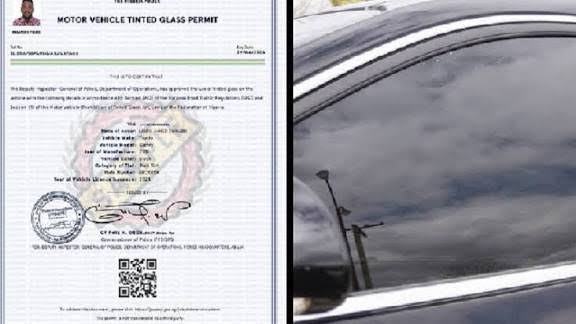
Recently, in a widely circulated viral video, a motorist travelling along Owerri Road was stopped by a police officer and ordered to remove the tinted film from his vehicle. The driver, who was obviously shocked at such ridiculous request, explained that he had obtained a valid tinted glass permit.

Questioning the basis for the officer’s directive, the motorist said: “If I have a valid permit issued after complying with all the necessary requirements, why am I being asked to peel off the tint? Who decided that a permit holder must still remove the tinted glass? Wasn’t the permit issued by the police themselves?

“If the permit is no longer recognised, why was it issued in the first place? And what was the purpose of the money collected from me during the application process?

“I have complied with all the requirements and possess every document required by law. I am simply asking for an explanation as to why I am still being ordered to remove my tinted glass despite holding a valid permit,” the visibly bewildered motorist queried.

Yet, the legal status of the enforcement itself remains the subject of court proceedings. The contradiction has created one of the most confusing law enforcement controversies in recent years—a situation in which a policy announced by the Nigeria Police Force (NPF), challenged in court by the Nigerian Bar Association (NBA), and temporarily halted by judicial orders, continues to generate uncertainty on Nigerian roads. The result is a classic contest between the rule of law and the exercise of state power, with ordinary citizens bearing the consequences.

A policy that sparked controversy

The controversy began in April 2025 when the then Inspector-General of Police, Kayode Egbetokun, announced the reintroduction of a digitised tinted glass permit system.

Under the arrangement, motorists whose vehicles had factory-fitted tinted windows would be required to apply annually for permits through the Police Specialised Services Automation Project (POSSAP) portal.

The police justified the policy on security grounds. According to the Force, criminals increasingly exploit heavily tinted vehicles to perpetrate kidnapping, armed robbery, including “one chance” and other violent crimes because the windows prevent security personnel from identifying occupants. Police authorities argued that modern vehicles increasingly come with factory-installed privacy glass, making it necessary to establish a standardised process for identifying legitimate users while preventing abuse by criminals.

Initially, enforcement was scheduled to begin on June 1, 2025. However, widespread public criticism, reports of harassment, fears of extortion and legal challenges forced the police to postpone implementation.

Judicial intervention

Before enforcement could fully commence, the controversy over the policy landed before the courts. The Nigerian Bar Association, through its Section on Public Interest and Development Law (NBA-SPIDEL), filed an action before the Federal High Court in Abuja, questioning the legality of the policy. Separately, human rights lawyer John Aikpokpo-Martins instituted another suit before the Federal High Court sitting in Warri.

The plaintiffs argued that the Nigeria Police lacked constitutional or statutory authority to impose fresh financial obligations on citizens through administrative directives. They also questioned the legality of compelling Nigerians to obtain annual permits for factory-fitted tinted glass supplied by vehicle manufacturers.

More importantly, the plaintiffs raised concerns over the destination of the fees collected under the scheme, alleging that payments were being made into the account of a private company rather than the Federation Account or the Treasury Single Account.

The NBA described the policy as unconstitutional, illegal, extortionate and inconsistent with citizens’ constitutional rights, including the rights to privacy, dignity, freedom of movement and ownership of property.

On October 3, 2025, the Federal High Court in Warri directed all parties to maintain the status quo, effectively restraining the police from enforcing the policy pending the hearing of an interlocutory application. The court order immediately changed the legal landscape.

Suspension that brought temporary relief

Following the court order and mounting public outrage, a high-level meeting involving the Inspector-General of Police, senior members of the Police Management Team, legal representatives of the police and officials of the Nigerian Bar Association was convened. At the meeting, both sides reportedly agreed that enforcement of the policy would remain suspended pending the determination of the cases before the courts. When the matter later came before the Federal High Court in Abuja, counsel representing the police informed the court of the agreement to suspend enforcement.

Relying on that undertaking, the court struck out the pending motion for interlocutory injunction. Many Nigerians believed the controversy had effectively been laid to rest pending final judgment.

Fresh enforcement rekindles controversy

Days after the court proceedings, the former Force Public Relations Officer, Benjamin Hundeyin, announced that enforcement of the tinted glass permit policy would commence on January 2, 2026. The announcement reignited public outrage with the NBA accusing the police of reneging on the undertaking made before the court and warned that the planned enforcement amounted to contempt of court.

The association maintained that the police could not lawfully reactivate enforcement while the substantive suits challenging the legality of the policy remained pending. It further threatened committal proceedings against the Inspector-General of Police and other officials should the enforcement continue in defiance of judicial proceedings. This threat would later force the police to pause its enforcement until the recent weeks.

For many legal observers, the disagreement raised profound constitutional questions about obedience to court orders and respect for the rule of law.

Uproar, confusion over renewed enforcement

But while lawyers continue their arguments in courtrooms there are fresh indications that the police might have surreptitiously re-commenced the enforcement of the suspended policy. In the recent weeks, different accounts of alleged harassment of motorists by police officers at checkpoints on social media have continued to assail people’s sensibilities over the policy.

Motorists complain that different police officers appear to interpret the policy differently. Some insist motorists must present tinted permits immediately.

Others acknowledge that enforcement has been suspended. Still others reportedly ignore the legal controversy altogether and continue demanding permits during routine stop-and-search operations. The confusion has created fertile ground for abuse.

A motorist in Oyo State recently narrated how he was stopped by officers despite driving a vehicle without tinted windows. According to him, an officer insisted that he search online for “Tinted Permit Oyo State” before eventually allowing him to proceed after another officer intervened.

Ironically, according to him, the online search reportedly showed that enforcement of the permit policy remained suspended pending ongoing court cases and that officers should not harass motorists over factory-fitted tinted glass.

His account contradicted the account of the motorist along Owerri Road, who in a viral video presented a valid tinted glass permit, medical reports and all supporting documents issued by the police. Yet the police officer who flagged him down insisted he peel off the tinted film from his vehicle before another officer intervened.

Security experts, lawyers, rights groups at odds.
The police insist that regulating tinted vehicles is essential for national security. Few Nigerians disagree that criminals have used heavily tinted vehicles to conceal weapons, evade surveillance and commit crimes. Security experts acknowledge that unrestricted use of extremely dark aftermarket tints can complicate policing. However, many argue that the permit policy misses the real problem.

Security analyst Lawal Sadiq believes intelligence gathering—not permit issuance—is the real weapon against insecurity. According to him, criminals today often operate far from conventional police checkpoints, making intelligence-driven policing more effective than roadside document inspections.

He argues that while regulation is necessary, focusing excessive attention on permits risks addressing symptoms instead of the deeper security challenges confronting the country.

His words: “During random stop and search by the security agents on our highways the chances of stopping vehicles with tinted-glasses by the police is higher than those of vehicles with transparent glasses. So, this reality has made the use of vehicles with tinted glasses less attractive. And more importantly, in Nigeria today most of the major attacks by criminals are no longer carried out on the highways or roads where motorists using tinted windows would pass. What this therefore means is that our security operatives should focus more on intelligence gathering in addressing insecurity in the country.”

Executive Director of the Human Rights, Liberty Access and Peace Defenders Foundation (HURIDE), Dede Uzor A. Uzor, argued that the enforcement drive risks becoming another avenue for extortion rather than a genuine crime-fighting strategy. According to him, “criminals can easily obtain permits through forged or questionable medical reports, making it difficult for security agencies to distinguish between legitimate users and criminal elements.”

Uzor maintained that Nigeria’s security challenge stems more from weak intelligence than from the use of tinted vehicle windows, stressing that effective intelligence gathering should be the police’s primary focus instead of relying on permit enforcement.

Former Deputy Chief Whip of the Anambra State House of Assembly, Chief Tony-Uche Ezekwelu, also acknowledged that motorists should comply with the law by obtaining permits where required. However, he argued that permits alone cannot address insecurity without modern security infrastructure.

“The police should adopt technology-driven policing by deploying scanners and other electronic detection equipment at checkpoints instead of depending solely on physical vehicle inspections In addition, all occupants of tinted vehicles, including those in VIP convoys, should be required to wind down their windows at security checkpoints for proper identification.

“Combining lawful permit enforcement with advanced surveillance technology, improved intelligence, and uniform security procedures would be far more effective in combating kidnapping, arms trafficking, and other crimes than relying on tinted glass permits alone,” he submitted.

But while some Nigerians argue that tinted windows provide protection from heat, glare and enhance privacy, there is a school of thought which believes that the security risks far outweigh any perceived benefits, especially in a country grappling with rising cases of kidnapping, armed robbery and violent crime.

Among those calling for stricter regulation is Port Harcourt-based constitutional lawyer, Chief Festus Ogwuche, who argues that the effectiveness of any policy on tinted glass depends not merely on its introduction but on its consistent enforcement.

According to him, the Nigeria Police Force has often struggled to sustain major security policies, with successive Inspectors-General introducing new directives that gradually fade due to weak implementation.

For Ogwuche, the issue goes beyond policy inconsistency. He contends that Nigeria’s current security realities no longer justify widespread use of tinted windows.

“While there may have been a case for tinted glass decades ago, the country’s worsening security situation has changed the equation. Criminals have increasingly exploited tinted vehicles to conceal their identities while carrying out kidnappings, abductions and other violent crimes.

“Motorists travelling in vehicles whose occupants cannot be seen naturally raise security concerns. Darkened windows provide criminals with the anonymity needed to monitor potential targets, move victims and evade detection,” he stated.

Echoing similar concerns, the National Coordinator of the Centre for Basic Rights Protection and Accountability Campaign, Prince Wiro, described the enforcement of regulations on tinted vehicles as an important step towards strengthening public safety.

He noted that effective documentation and regulation of vehicles with tinted glass could make it easier for security agencies to identify suspects after crimes are committed.

Wiro pointed to the activities of “one-chance” robbery syndicates, particularly in Rivers State, where some operators reportedly use minibuses fitted with tinted windows to trap unsuspecting passengers before robbing them.

“Ensuring proper permits and documentation for legitimately tinted vehicles will make it more difficult for criminals to operate anonymously,” he said.

However, Wiro warned that enforcement must be carried out professionally and transparently. He expressed concern that some unscrupulous police officers could exploit the policy as another opportunity to extort motorists, urging the authorities to put adequate oversight mechanisms in place.

Lagos-based lawyer and public affairs analyst, Sonayon Hunjo, said the debate has shifted from the legality of tinted windows to whether public institutions are respecting judicial authority. He questioned the police’s apparent inconsistency, noting that the Force suspended enforcement in October 2025, citing pending court cases and consultations with the Nigerian Bar Association (NBA), but now insists that no court order ever restrained the policy.

Hunjo said: “If litigation justified suspending enforcement then, the police owe Nigerians an explanation for what has changed.

“In a constitutional democracy, obedience to court orders is not discretionary. Disagreements with judicial decisions should be resolved through the courts rather than by unilateral interpretation.”

In his submission, former Chairman of the Nigerian Bar Association (NBA), Makurdi Branch, Barr. Justin Gbagir, challenged the police’s argument that enforcing tinted glass permits is an effective crime-fighting strategy. He argued that criminals can commit offences with or without tinted windows and that obtaining a permit does not prevent a vehicle from being used for criminal activities.

Gbagir acknowledged that the permit requirement remains part of the law but stressed that alleged violations should be prosecuted in court rather than becoming an avenue for roadside harassment. “Law enforcement agencies should embrace modern crime-fighting tools such as surveillance technology, tracking systems and command-and-control centres instead of relying heavily on tinted glass enforcement,” he urged.

Gbagir’s concerns align with the view of Lazarus Mom of Lawyers Alert who noted that while the police are entitled to adopt crime-prevention strategies, concentrating on tinted windows is unlikely to address Nigeria’s growing insecurity. He pointed out that criminals could simply switch to vehicles without tinted windows, rendering the policy ineffective as a security measure.

“Sustainable crime prevention depends on intelligence gathering, thorough investigations and stronger community policing,” he said. “Since many modern vehicles are factory-fitted with tinted windows for health, environmental and energy-efficiency reasons, making blanket enforcement is increasingly impractical.”

Factory-fitted versus aftermarket tint

Analysts are of the opinion that one of the major misconceptions surrounding the controversy is the assumption that every tinted vehicle is illegal. Many modern vehicles are manufactured with factory-fitted privacy glass. These are installed by manufacturers and often comply with international safety standards. By contrast, aftermarket tints involve the application of additional dark films after purchase, some of which significantly reduce visibility.

Legal practitioners argue that even while the broader permit policy remains before the courts, law enforcement agencies retain powers to investigate genuinely suspicious vehicles or enforce existing traffic and security laws where necessary. What remains contentious is whether motorists with factory-fitted tinted windows can lawfully be compelled to obtain fresh permits or face sanctions while the legality of the policy is still being determined by the courts.

A test of the rule of law

Beyond tinted windows, analysts said the dispute has evolved into something much larger and has become a test of whether government agencies can suspend enforcement after giving undertakings before the courts, only to later revive the same policy before judicial determination. It also raises fundamental questions about administrative powers, citizens’ constitutional rights and accountability in public administration.

For motorists, however, the constitutional debate offers little comfort when confronted by officers at roadside checkpoints. Most drivers simply want clarity. They want to know whether they are legally required to possess permits. They want assurance that factory-fitted tinted glass will not become an excuse for harassment.

Above all, they want the certainty that comes when law enforcement operates within clearly defined legal boundaries. Until the courts finally pronounce on the legality of the policy—or the authorities provide unambiguous directives consistently obeyed by officers on the roads—the confusion is likely to persist. And in that uncertainty lies the greatest danger. When citizens cannot distinguish between what the law actually requires and what individual officers demand at checkpoints, the space for intimidation, extortion and abuse inevitably widens.

For now, the tinted glass permit controversy remains more than a dispute over vehicle windows. It has become another measure of Nigeria’s commitment to the rule of law and whether judicial authority can effectively restrain executive power in the daily lives of ordinary citizens.

Sun

NEWLY DEPLOYED OSUN CP PAYS COURTESY VISIT TO INEC CHAIRMAN

0


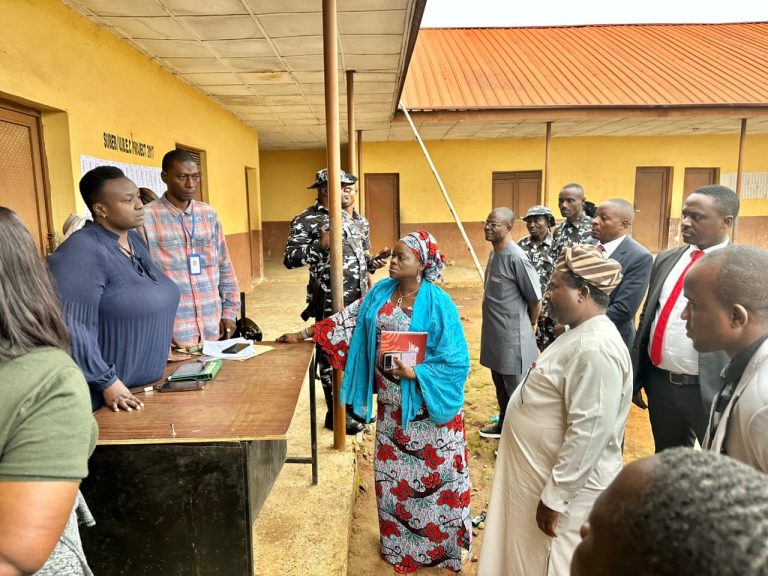
The newly deployed Commissioner of Police for Osun State, CP Samuel Etaifo Erale, today paid a courtesy visit to the Chairman of the Independent National Electoral Commission (INEC), Prof. Joash Amupitan, SAN, at the Commission’s State Head Office in Osogbo.

The visit followed the Commissioner’s assumption of duty in the state after his deployment by the Inspector-General of Police. During the meeting, CP Erale formally introduced himself to the INEC Chairman and reaffirmed the commitment of the Nigeria Police Force to maintaining a cordial working relationship with the Commission in the discharge of its electoral responsibilities.

Prof. Amupitan welcomed the new Commissioner of Police to Osun State and expressed confidence in the continued collaboration between INEC and the Police to promote peaceful, secure and credible electoral processes.

CP Erale’s deployment comes after the redeployment of the immediate past Commissioner of Police by the Inspector-General of Police yesterday.

Osun Governorship Election: INEC Concludes Readiness Tour, Seeks Media Partnership

0


The Chairman of the Independent National Electoral Commission (INEC), Prof. Joash Amupitan (SAN), on Saturday declared the commission fully prepared for the August 15 Osun State governorship election, assuring voters that the democratic process would not be undermined by violence or intimidation.

Prof. Joash Amupitan gave the assurance during a media briefing at the end of a five-day readiness assessment tour of the state, following the commission’s statewide mock accreditation exercise conducted across selected polling units in the three senatorial districts.

The INEC chairman said the exercise, which tested the functionality of the Bimodal Voter Accreditation System (BVAS), confirmed the commission’s technological and operational preparedness for the election.
According to him, the mock accreditation demonstrated improved voter verification, with most accreditations completed through facial recognition within seconds, while technical issues identified during the exercise were promptly resolved by the commission’s ICT team.

“The mock accreditation exercise is our quality control protocol. What we saw today confirmed that our technological defence against identity theft and result manipulation is robust and fully operational,” he said.

Atiku Replies Obasanjo, Defends Role in Third-Term Battle, Political History

0


Former Vice President of Nigeria and African Democratic Congress (ADC) presidential candidate, Atiku Abubakar, has responded to recent remarks by former President Olusegun Obasanjo, describing them as an attempt to rewrite history and defending his role in opposing the controversial third-term agenda.

In a statement issued on Saturday by his Senior Special Assistant on Public Communication, Phrank Shaibu, Atiku said he received Obasanjo’s latest comments with sadness rather than anger, arguing that personal resentment should not distort historical facts.

According to Atiku, his opposition to the third-term agenda remains one of the defining moments of his political career, stressing that he stood firmly by the Constitution and has no regrets over resisting what he described as attempts to undermine Nigeria’s democracy.

He maintained that the struggle against the third-term bid was about protecting constitutional democracy rather than a personal dispute between two individuals, adding that “democracy won that battle” and that history had already delivered its verdict.

The former Vice President also referenced recent commendation by the Director-General of the World Trade Organization (WTO), Dr. Ngozi Okonjo-Iweala, who he said praised the economic management team under the Obasanjo administration as the best Nigeria has had.

Atiku argued that the recognition underscored his contributions to the country’s economic reforms despite Obasanjo’s criticism.

Atiku further claimed that he played a significant role in supporting Obasanjo during his imprisonment, assisting his family, advocating for his release and helping him rebuild politically after regaining his freedom.

He said he mobilised political structures and alliances that contributed to Obasanjo’s emergence as President.

While insisting he does not regret those actions, Atiku said acts of kindness should not be repaid with what he described as revisionism, maintaining that any objective account of Obasanjo’s political journey would acknowledge his contributions.

The former Vice President also expressed concern that political leaders were focusing on old disagreements instead of addressing Nigeria’s pressing challenges, including economic hardship, unemployment and insecurity.

According to him, the 2027 general election should centre on rebuilding the country, improving security, reviving the economy and restoring hope to Nigerians rather than revisiting past political disputes.

Atiku said he had remained restrained over the years out of respect for the office Obasanjo once occupied and for their past relationship, but added that such restraint should not be mistaken for weakness.

He concluded by reaffirming his commitment to Nigeria’s future, saying history would ultimately judge the actions of all those involved and that the Nigerian people would deliver the final verdict.

INEC Publishes Personal Details of Presidential Candidates for 2027 Election

0


The Independent National Electoral Commission (INEC) on Saturday published the personal particulars, academic credentials and other supporting documents submitted by candidates for the January 16, 2027 presidential election.

The publication, in line with INEC’s Revised Timetable and Schedule of Activities for the 2027 General Election and the Electoral Act, marks the beginning of the statutory period for public scrutiny of the qualifications of presidential candidates.

The commission made available the EC9 forms and accompanying documents submitted by the candidates.
Among those whose details have been published are President Bola Tinubu of the All Progressives Congress (APC), former Vice President Atiku Abubakar of the African Democratic Congress (ADC), Peter Gregory Obi of the Nigeria Democratic Congress (NDC), as well as other presidential contenders and their running mates.

The documents contain each candidate’s personal information, educational qualifications, occupation, employment history, sworn declarations and supporting certificates submitted to INEC as part of the nomination process.

The publication also signals the commencement of the period during which members of the public may inspect the documents and, where there is evidence that any declaration is false, challenge the information in court.

Under Section 33 of the Electoral Act, any person with reasonable grounds to believe that information contained in a candidate’s affidavit or other documents submitted to INEC is false may institute legal action against the candidate.

Ceuta Crisis: Spain Returns 37,500 Migrants To Morocco, Blames Traffickers

0


More than 37,500 migrants who entered Spain’s North African enclave of Ceuta have returned to Morocco, according to Spain’s Interior Ministry, as Prime Minister Pedro Sánchez blamed human trafficking networks.

PHOTOS: NAF Airlifts First Batch of Troops for ECOWAS Peace Mission in Guinea-Bissau

0


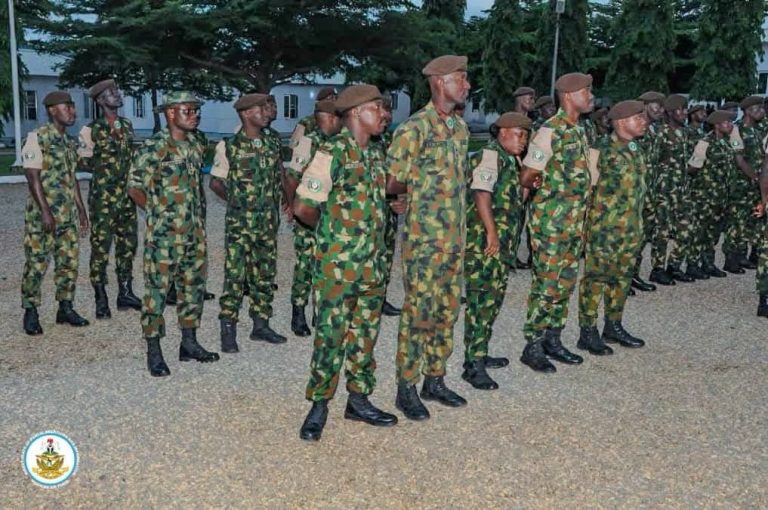
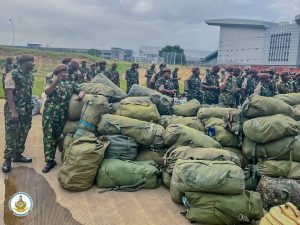
The Nigerian Air Force (NAF) on Saturday airlifted the first batch of Nigerian troops deploying under NIGCOY 5 to the ECOWAS Stabilisation Support Mission in Guinea-Bissau (ESSMGB).

The deployment is part of Nigeria’s contribution to the ECOWAS peace support mission aimed at promoting stability and security in Guinea-Bissau.

Credit: X | NigAirForce