Home Blog Page 261

Nigerians may pay less for petrol as oil prices tumble

0

A sharp drop in global crude oil prices has raised fresh hopes that Nigerians could soon see lower petrol prices if the decline is sustained.

The fall in oil prices came on Monday after United States President Donald Trump signalled a shift from military action against Iran to renewed diplomatic talks, easing fears of a wider conflict in the Middle East. The development calmed global oil markets, where traders had been worried that fighting in the region could disrupt crude supplies.

Brent crude, the international benchmark used to price Nigerian oil, dropped by more than 4.8 per cent to around $83.70 per barrel, while the U.S. West Texas Intermediate (WTI) crude fell by over 5 per cent to about $79.60 per barrel. The decline marked one of the biggest single-day losses in recent months.
The price drop followed Trump’s announcement that he had suspended plans for a military strike on Iran and was instead pursuing a deal aimed at ending tensions over Tehran’s nuclear programme and reopening the strategic Strait of Hormuz.

In a message posted on his Truth Social platform, Trump said: “Iran and all other players have requested time to finalize a deal.”

The Strait of Hormuz is one of the world’s busiest oil shipping routes, with nearly a fifth of global crude exports passing through it. Any threat to shipping in the area usually pushes oil prices higher because traders fear supply shortages.

For weeks, uncertainty surrounding the conflict had driven oil prices sharply upward, raising the cost of petrol, diesel, aviation fuel and other refined products across many countries, including Nigeria.

Energy analysts say the latest decline in crude prices could eventually translate into lower fuel prices if the trend continues.

Nigeria now operates a deregulated downstream petroleum market, meaning petrol prices largely reflect global crude prices, exchange rates, shipping costs and local distribution expenses.
When crude oil becomes cheaper, the cost of producing refined petroleum products also falls. If marketers are able to buy fuel at lower international prices, consumers could benefit through reduced pump prices, although the adjustment may not happen immediately.

Industry experts, however, caution that Nigerians should not expect an instant reduction because local petrol prices are also influenced by the naira’s exchange rate, transportation costs, taxes and marketers’ existing inventories purchased at higher prices.

They note that marketers typically sell existing stock before adjusting prices to reflect lower replacement costs.

Market still watching Middle East Despite Monday’s sharp decline, analysts say uncertainty remains high as investors continue to monitor developments between the United States and Iran.

While hopes of diplomacy have eased fears of an immediate supply disruption, traders remain cautious because negotiations could still collapse, potentially reigniting tensions and sending oil prices higher again.

Another factor supporting lower prices is the decision by OPEC+ to gradually increase oil production from September. However, supply challenges in parts of the Middle East and other producing countries continue to limit the full impact of additional output.

For Nigeria, lower crude prices present mixed implications. Consumers could benefit from cheaper petrol if marketers pass on the savings, but reduced oil prices may also shrink government revenue since crude oil remains the country’s biggest source of foreign exchange earnings.

Whether Nigerians eventually enjoy cheaper fuel will depend on how long the decline in global oil prices lasts and whether other factors, particularly the exchange rate and distribution costs, remain stable.

Sun
Catholic Bishops’ visit: Hashim expresses concern over Tinubu, Nigeria’s democracy

0


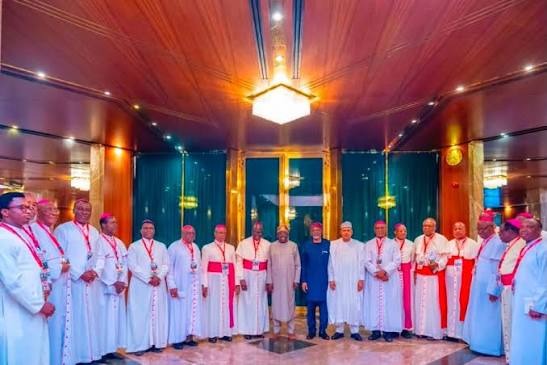
Former presidential candidate of the Accord Party and Co-Chairman of the Movement for Democratic Renewal, Dr. Gbenga Olawepo-Hashim, has expressed concern over President Bola Tinubu’s recent remarks during a meeting with Catholic Bishops at the State House, warning that the 2027 general election must not fall below the democratic standards established in 2015.

In a statement yesterday, Hashim said he was saddened rather than angered by the President’s public remarks, adding that after repeatedly listening to the recording, he was left deeply concerned.

According to him, the President’s public communication appeared markedly different from the Tinubu he interacted with between 2018 and 2021.

“I listened to the recording over and over again. That was not the Bola Tinubu I knew between 2018 and 2021. I was left deeply concerned. I am not making a medical diagnosis, but the President’s public communication gives me the impression that he may require genuine help.”

Hashim stressed that his comments were motivated by concern for both the President and the country rather than partisan considerations.

“Unlike many Nigerians who are angry with him, I genuinely feel pity for President Tinubu. My greatest worry is that those around him appear more interested in securing another election than in ensuring he receives the care he deserves. If they truly care for him, they should prioritise his wellbeing and the national interest above politics,” he added.

The former presidential candidate, however, cautioned that whatever challenges the President may be facing must not be allowed to undermine Nigeria’s democracy or electoral process.
He recalled that the 2015 general election, in which former President Goodluck Jonathan conceded defeat and peacefully transferred power to the opposition, remains a high point in Nigeria’s democratic history.

“That election elevated Nigeria’s democratic standing before the world. Ironically, the beneficiary of that democratic maturity was the party that produced President Tinubu. History must not be reversed,” he said.

Hashim stated that the credibility of the 2027 general election would serve as a defining test for Nigeria’s democracy.

“Let it be clearly stated across Nigeria and beyond: any election that falls short of the 2015 democratic standard will not be acceptable to the Nigerian people or to Nigeria’s friends around the world.”

He urged the Independent National Electoral Commission (INEC), security agencies, and other democratic institutions to discharge their constitutional responsibilities with neutrality, professionalism, and strict adherence to the rule of law.

“The credibility of the 2027 election will determine the future of our democracy. Nigeria needs free, fair, and credible elections, not coronations. Our institutions must serve the Constitution, not any individual or political party,” he said.

Hashim maintained that Nigeria’s democracy is greater than any government, political party, or individual ambition, warning against attempts by what he described as political cabals to weaken democratic institutions.

“This is a defining moment. We owe future generations a democracy stronger than the one we inherited. Nigeria must move forward, not backwards,” he added.

Sun

Navy sustains pressure on militants, destroys another camp in Cross River creeks

0


The Nigerian Navy Ship (NNS) Victory has sustained its offensive against militant elements in Cross River State, destroying another suspected militant camp at Ine Ikoridung coastal settlement in Bakassi Local Government Area.

The operation was carried out following credible intelligence indicating that the suspected militants had relocated to the remote coastal settlement after sustained naval patrols forced them to abandon their former base at Dayspring Island.
According to the Nigerian Navy, the suspects fled into the creeks on sighting NNS Victory patrol gunboats approaching the area. Troops subsequently cordoned off the settlement and conducted a thorough search of the identified huts believed to have been occupied by the fleeing militants.

Items recovered during the operation included five empty cartridges, one military camouflage vest, one police camouflage vest, one military pullover, one military jungle hat, and a notebook containing records of suspected militant fighters and the correctional facilities where they are serving prison terms.

To prevent the criminals from returning to the location, the troops destroyed all the identified huts used as hideouts.

Speaking on the operation, the Base Information Officer, Lieutenant Commander Sulaiman Bala, said the relocation of the group to the remote coastal settlement was a direct consequence of the sustained operational pressure mounted by the Nigerian Navy.

“The relocation of the group to a remote coastal settlement is a result of continuous operational pressure from the Nigerian Navy, which is restricting their freedom of action and forcing them to abandon established hideouts,” Bala said.

He reaffirmed the commitment of NNS Victory to sustaining the ongoing offensive against criminal elements operating within the maritime domain.

According to him, the naval base will continue to maintain maximum operational pressure on militants and other criminal groups until peace and security are fully restored across the state’s coastal and maritime environment.

Sun

Presidency sets Sept. 3 deadline for State Police Bill

0


The Presidency on Monday kicked off the final legislative push for the establishment of state police, unveiling a seven-week timetable that will culminate in the submission of an Executive Bill to President Bola Tinubu by September 3 as part of efforts to overhaul Nigeria’s policing architecture.

The proposed National Policing Bill, expected to provide the legal and operational framework for a dual federal-state policing system, will subsequently undergo nationwide public consultations before being transmitted to the National Assembly.
Briefing State House Correspondents after the inaugural meeting of the Presidential Working Group on the National Policing Bill at the Presidential Villa, Abuja, Chairman of the committee and Chief of Staff to the President, Femi Gbajabiamila, described the exercise as one of the Tinubu administration’s most far-reaching institutional reforms.

He said the administration was determined to ensure that the proposed state police system is backed by a comprehensive legal framework capable of seamless implementation.

“The approved work programme is a seven-week, milestone-driven exercise running from July 27 to September 14, 2026,” Gbajabiamila said.

“The resulting Executive Bill package is scheduled for presentation to the President on September 3. Subject to his approval, a national consultation on the completed draft will follow before the Bill is transmitted to the National Assembly.”

He stressed that the ambitious timeline would not compromise the quality of the legislation.

“The timetable is demanding, but it is not a shortcut. Legal drafting, policy research, data analysis and implementation modelling will proceed simultaneously with rigorous review mechanisms.”

According to him, the final legislative package will extend beyond a conventional bill to include implementation guidelines, fiscal projections, legal audits, state readiness assessments, risk analysis, implementation work plans and other supporting documents designed to ensure effective execution.

Gbajabiamila said President Tinubu constituted the committee to ensure that once constitutional amendments creating state police are completed, the country would have an implementation-ready framework.

“Our mandate is to produce a technically robust National Policing Bill that will move Nigeria from a single federal police structure to a functional dual-policing architecture,” he said.

In a move aimed at broadening public participation, the Chief of Staff announced that Nigerians would be invited to submit memoranda over the next 10 days through a dedicated website, nationalpolicingbill.com, where citizens can also monitor the progress of the reform.

“The whole idea behind state policing is for every Nigerian to take ownership of the process. Whether you are a student, a market woman, an academic or a security practitioner, your contribution matters,” he said.

On concerns over the financial capacity of some states to establish police services, Gbajabiamila dismissed suggestions that poorer states would be excluded from the reform.

“There is no cost to securing lives and property,” he said.

“We will not engage in guesswork. The financial implications will be determined through empirical, state-by-state assessments. Where a state is genuinely unable to establish its own police service, the Nigeria Police Force will continue to provide policing until such a state is ready.”

Attorney-General of the Federation and Minister of Justice, Lateef Fagbemi, assured Nigerians that the proposed legislation would incorporate minimum national standards to guarantee professionalism and prevent abuse of state police by political actors.

“It is important that state policing does not become a weapon of political persecution or oppression,” Fagbemi said.

“There must be minimum standards to ensure that every Nigerian enjoys the same level of protection, whether served by the federal or state police.”

Also speaking, Ogun State Governor Dapo Abiodun said the Working Group was developing the practical framework that would make the proposed constitutional amendment workable, noting that issues relating to funding, jurisdiction, command structure and operational responsibilities were being addressed.

He disclosed that the committee was considering federal financial support to assist states with the take-off of their police services.

“Some states may not have the same financial capacity as others. Part of our recommendations is expected to include federal grants to support the establishment of state police,” he said.

Abiodun also welcomed the decision to involve Nigerians in the drafting process through public consultations, saying it would strengthen public confidence and national ownership of the proposed reform.

Concluding the briefing, Gbajabiamila argued that decentralised policing was consistent with global best practices in federal democracies and insisted that Nigeria could no longer rely solely on the existing centralised policing structure to tackle growing security challenges.

“I do not know of any federal system anywhere in the world that operates a unitary policing structure,” he said.

“The time for state police is long overdue. There is now a broad national consensus that Nigeria must adopt a new policing model capable of effectively protecting lives and property.”

SuN

Peter Obi Urges Youth to Champion Peace, Human Rights Through Impactful Leadership

0
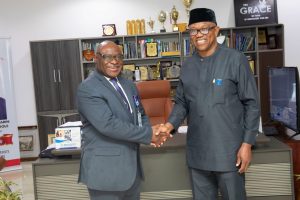
L-R. Babcock University Vice-Chancellor, Prof Afolarin Ojewole and Mr. Peter Obi, ADC Presidential candidate at the 10th session of Babcock International Model United Nations held recently


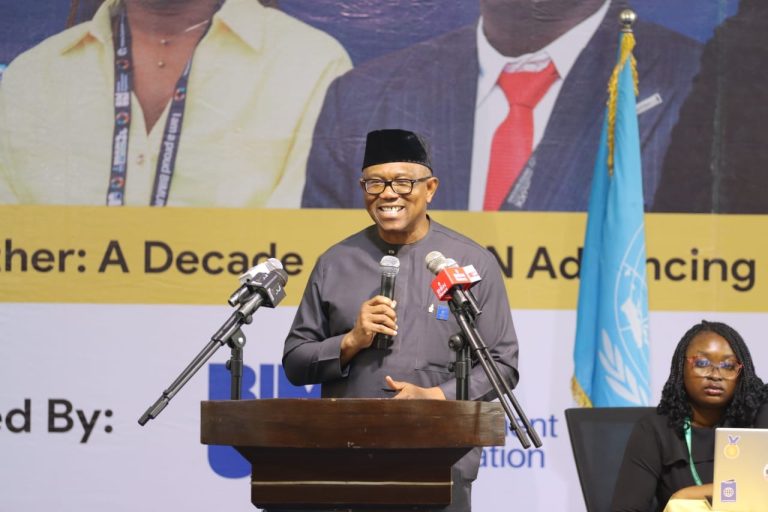
Former Governor of Anambra State, Peter Obi, has called on young people to embrace responsible leadership, promote peace, and work towards sustainable development, stressing that leadership should be measured by impact, accountability and service.

Obi made the call during a keynote interaction at the 10th session of the Babcock International Model United Nations (BIMUN) held at Babcock University, Ilishan-Remo, Ogun State.

The conference, which attracted more than 450 delegates from 22 countries, was themed: “Better Together: A Decade of BIMUN Advancing the United Nations’ Vision for Peace, Development and Human Rights.”

Addressing the delegates, Obi encouraged them to become agents of positive change, emphasizing that true leadership goes beyond speeches.

“Leaders must learn to listen. Leadership is not about speeches, but impact—how people feel. We must work together as a family to stop abuses of human rights and ensure development reaches everybody,” he said.

Earlier, President and Vice-Chancellor of Babcock University, Prof. Afolarin Ojewole, described BIMUN as a platform that promotes peace-building and sustainable development.

He urged participants to uphold integrity and values in leadership, telling them that their generation has a defining role in building bridges instead of barriers.
Representing the UN Resident Coordinator, Peace and Development Officer, Ms. Kehinde Osotimehin, said global challenges such as conflict, climate change, inequality, poverty and misinformation require collective action. She reminded delegates that they are “leaders of today,” urging them to embrace dialogue, cooperation and mutual respect in line with the United Nations’ Youth, Peace and Security agenda.

BIMUN founder and strategist, Samuel Chiemela, said the conference has produced more than 6,450 alumni from 21 countries over the past decade, many of whom now serve in government, civil society and international organisations.

According to Chiemela, the 2026 edition provides delegates with a structured environment to learn diplomacy, consensus-building and policy development through simulations modelled after United Nations committee processes, equipping them with skills to contribute meaningfully to global peace and sustainable development.

WBW: Paediatrician advocates 30–45 minutes breastfeeding per session

0


A Paediatrician, Dr Temitayo Ishola, has urged mothers to breastfeed babies every two hours for 30 minutes to 45 minutes to ensure effective breastfeeding.

Ishola, Head of the Paediatric Department, General Hospital, Ebute-Meta, made the call during the hospital’s 2026 World Breastfeeding Week lecture for nursing mothers and pregnant women.

World Breastfeeding Week is a global campaign observed annually from Aug. 1 to Aug. 7, having commenced in 1992.

It was established by the World Alliance for Breastfeeding Action (WABA) to commemorate the 1990 Innocenti Declaration by WHO and UNICEF promoting, protecting and supporting breastfeeding.

It was reported that the 2026 theme is: “Breastfeeding for a Sustainable Start in Life: Strengthens What Already Works.”

Ishola said adequate breastfeeding would prevent unnecessary crying and discourage early introduction of infant formula.

She said exclusive breastfeeding was recommended because babies’ intestines were tender and absorbed breastmilk better than other foods.

According to her, breastmilk contains all nutrients required for growth, cognitive development and immunity, eliminating the need for formula or water.

“I want to correct the misconception on colostrum, which is the thick yellowish milk produced during the first one to five days.

“People often refer to it as spoiled milk because of its colour. It is not bad.

“It is the best milk. It contains everything the baby needs to grow healthy for months and serves as the baby’s first vaccine.

“Another misconception is getting pregnant while breastfeeding. It does not affect the baby or the mother.

“A pregnant nursing mother should discontinue breastfeeding only on health grounds and on her doctor’s advice,” she said.

Also speaking, Mrs Victoria Joel, Chief Nursing Officer and Head, Child Welfare Clinic, stressed the importance of attending antenatal clinics.

According to her, breastfeeding education begins during antenatal care, where mothers learn techniques, lactation support and how to manage breastfeeding challenges.

She advised mothers to practise exclusive breastfeeding, warning that introducing water or formula before six months reduced breastmilk’s nutritional benefits.

Reflecting on the 2026 theme, Mrs Opeyemi Ede, Chief Nursing Officer II, said it emphasised exclusive breastfeeding for six months and complementary feeding with continued breastfeeding until two years.

Ede said understanding breastfeeding benefits and initiating breastfeeding early were essential for effective breastfeeding.

“Breastfeeding should begin within the first hour of life. Delayed initiation may affect milk flow.

“Breastfeed on demand because frequent sucking increases milk production.

“Position your baby properly to ensure good attachment and prevent back pain.

“Eat nutritious meals and drink plenty of fluids to support milk production. Breastmilk contains 87 to 88 per cent water.

“Let us continue advocating exclusive breastfeeding to give every child the best start in life,” she said.

She urged mothers to rest adequately and seek support from healthcare providers, family and friends to sustain effective breastfeeding.

Ede listed benefits of breastfeeding to include improved brain development, stronger immunity, natural family planning, uterine contraction and reduced hospital visits.

Speaking on the importance of breastfeeding, Dr Chukwubundom Nwobodo, Medical Officer, Obstetrics and Gynaecology Department, said breastfeeding remained beneficial to both mother and child.

“Breastfeeding provides colostrum, serves as natural contraception and strengthens the bond between mother and child,” he said.

Commenting on breast pumps, Dr Yetunde Abodunrin, Senior Medical Officer, General Out-Patient Department, advised mothers expressing breastmilk to maintain proper hygiene.

“Breastmilk can be safely stored in a refrigerator for four days.

“Women with inverted nipples should begin massage and cleaning during pregnancy,” she said.

Some nursing mothers and a pregnant woman told NAN that the lecture had improved their understanding of exclusive breastfeeding.

Mrs Ifeoma Iredu, a nursing mother, said she learnt valuable lessons and would apply them.

“Breastmilk should be given on demand. The more the baby sucks, the more milk the mother produces,” she said.

Mrs Basirat Idris, a trader, said the lecture addressed her concerns as a working mother by teaching proper expression and storage of breastmilk.

Mrs Adenike Adeyanju, a pregnant woman, said she would practise exclusive breastfeeding because of its benefits.

TikToker undergoes traditional cleansing after filming Oloolu masquerade procession

0


A female TikTok user, said to be Wasilat, narrowly escaped death after allegedly recording a procession linked to the annual Oloolu Masquerade Festival in Ibadan, Oyo State.

The incident, which has gone viral on social media, sparked widespread debate after videos showed the woman undergoing traditional cleansing rites at the Oloolu compound.

Speaking with PUNCH Online on Monday, Chief Adeola Oloko, the spokesperson of the Olubadan of Ibadanland, Oba Rashidi Ladoja, said the woman did not record the sacred Oloolu masquerade itself but filmed Alawo Oloolu, a figure associated with the Oloolu tradition.

He said the traditional custodians confirmed that the woman captured the procession while it was moving through the Ibadan axis.

“She did not capture Oloolu; she mistook it for Alawo. We contacted the Mogaji of the Oloolu compound, and he confirmed that a woman who mistook Alawo of Oloolu for the real Oloolu masquerade captured it on the street.,” Oloko said.

He added that shortly after uploading the footage, the woman reportedly developed unusual health challenges, prompting her family to seek help from the traditional custodians.

“After posting it, she realised the blood in her body began to dry. So her family reached out to the Oloolu people immediately, and they attended to her in accordance with the tradition of the land.

“We have told people to obey simple instructions; women are not supposed to see Oloolu, but out of curiosity, she disobeyed,” he said.

Oloko, however, said he could not verify claims circulating on social media that the woman disguised herself as a man to secretly record the procession.

“I cannot confirm she disguised herself as a man. Those are accounts on social media. But she took the footage or photo on the street,” he added.

Team Nigeria’s Historic Commonwealth Games Campaign: How DG Olopade executed hitch free competition

0


By Seun Oloketuyi

When the 2026 Commonwealth Games came to an end in Glasgow, Scotland, Team Nigeria had every reason to celebrate. The athletes returned home with more than medals; they brought back a renewed sense of pride after producing one of the country’s finest performances at the Games. Nigeria finished as the highest-ranked African nation, placing seventh overall with 24 medals: 10 gold, seven silver and seven bronze. It was truly an outstanding campaign, marked by unforgettable performances, record-breaking achievements and moments that will be remembered for years to come.

For years, Nigeria’s participation at major international competitions was often overshadowed by stories of unpaid allowances, poor welfare and administrative challenges. Those issues frequently became part of the conversation before the competition had even begun.

This time, the story was different. Under the leadership of National Sports Commission Chairman Shehu Dikko and Director General Bukola Olopade, athlete welfare took centre stage. Preparations went smoothly and the usual distractions that had affected previous competitions were absent. As a result, the athletes competed with confidence, knowing they had the support they needed. That confidence was reflected in their performances.

Nigeria’s first gold medal came through Esther Nworgu, who delivered an impressive performance in the women’s lightweight para powerlifting event to give Team Nigeria the perfect start. One of the defining moments of the Games came from Goodness Nwachukwu, who won gold in the women’s F42 discus throw and, in the process, broke her own world record. It was one of Nigeria’s standout performances in Glasgow.

On the track, Ezekiel Nathaniel made history by becoming the first Nigerian man to win Commonwealth Games gold in the men’s 400m hurdles. His victory further highlighted Nigeria’s growing strength in athletics.

In the field events, Chukwuebuka Enekwechi added another historic achievement by winning Nigeria’s first ever Commonwealth Games gold medal in the men’s shot put, while Idris Riluwan continued the country’s dominance in para powerlifting with another gold medal-winning performance.

Although she was nursing an injury, Tobi Amusan refused to let that stop her from competing. The world record holder battled through the pain to claim bronze in the women’s 100m hurdles, once again demonstrating the determination and resilience that have made her one of Nigeria’s finest athletes.

Nigeria’s success was not limited to these athletes. Samuel Ogazi won gold in the men’s 400m, Ruth Usoro secured silver in the women’s long jump, while medals in relay events and other disciplines highlighted the depth of talent within the Nigerian team.

By the end of the Games, Nigeria had not only finished as Africa’s top-performing nation but had also shown what is possible when athletes are given the right support.

The success in Glasgow was about more than medals. It demonstrated the importance of proper planning, athlete welfare and effective leadership. With Shehu Dikko and Bukola Olopade providing an environment free from the administrative challenges that had often overshadowed previous competitions, the athletes were able to focus entirely on representing their country.

The result was a historic Commonwealth Games campaign that saw Team Nigeria break records, make history and reinforce its position as one of Africa’s leading sporting nations. As the team returns from Scotland, the medals will rightly be celebrated. But Glasgow 2026 will also be remembered for showing what is possible when talented athletes receive the support they deserve.

Team Nigeria’s performance was not just a victory on the medal table, it was proof that good leadership, proper preparation and unwavering determination can inspire excellence and bring honour to the nation.

Purple Reunion Ends Divorce Drama in Court

0


A divorce case took an unexpected turn on Monday as a couple appeared before a Shari’a Court in Kaduna dressed in matching purple outfits to announce reconciliation.

The couple, Juwairiyya Ahmad and Yusuf Musa, arrived at the Magajin Gari court signalling a dramatic end to a marital dispute that had reached litigation.

Ahmad, who initiated the divorce proceedings, informed the court that family intervention had succeeded in restoring peace between her and her husband.

She told the court that extensive discussions involving both families helped resolve their differences and paved the way for reconciliation.

“We have reconciled after our parents intervened through discussions and dialogue,” Ahmad told the court.

Seeking to reinforce her statement, Ahmad informed the court that her father was present and could provide further details.

Her father, who declined to mention his name, revealed that Musa’s family made significant efforts to mend the fractured relationship.

He said his in-law arrived with Musa’s guardian and a respected Imam to facilitate peace talks and seek an amicable resolution.

According to him, the discussions focused on addressing concerns that had strained the marriage and threatened its future.

He told the court that Musa had pledged to abandon any conduct that allegedly caused distress to his wife.

“My in-law brought his guardian and a respected Imam to speak with me.

“He has promised to stop whatever bad treatment he was doing to his wife,” the father said.

He further disclosed that the reconciliation process would be formalised through a written undertaking by Musa’s guardian.

He explained that the document would contain commitments aimed at preserving harmony and preventing a recurrence of the dispute.

The undertaking, he said, would subsequently be submitted before the court for official record purposes.

Presiding Judge, Malam Mu’awiya Shehu, welcomed the reconciliation and urged the couple to embrace patience and mutual understanding.

He advised them to resolve disagreements privately and avoid escalating domestic misunderstandings whenever possible.

The judge stressed that dialogue, tolerance and family support often provide better solutions than prolonged conflict.

“You should be patient with each other and try to solve your misunderstandings at home without involving third parties,” Shehu advised.

He ordered that the written undertaking be submitted promptly and directed that it would serve as a consent judgement of the court.

The ruling brought a dramatic conclusion to proceedings, with the couple leaving the courtroom united after arriving as litigants.

NYSC issues fresh guidelines ahead of orientation camp

0


The National Youth Service Corps (NYSC) has unveiled fresh guidelines for prospective corps members ahead of the forthcoming orientation exercise, stressing the need for strict compliance with registration procedures and safety measures.

In an advisory posted on its official X handle on Monday, the scheme urged prospective corps members to avoid travelling at night to their designated orientation camps, citing security concerns.

“Prospective Corps Members are advised not to travel at night to the orientation camp,” the statement read.

NYSC also warned that candidates whose graduation dates on their call-up letters do not match those on their statements of results would not be admitted into the orientation camp.

“Prospective Corps Members with discrepancies in the date of graduation on their call-up letters and the date on their statement of results will not be registered in the orientation camp,” it stated.

According to the scheme, affected candidates are expected to resolve such discrepancies with their Student Affairs Officers (SAOs) before reporting to camp.

“They should sort out such issues with the Student Affairs Officers (SAOs) before reporting to the camp,” the statement added.

The agency further advised prospective corps members to complete all required documentation before arriving at the orientation camp, including printing, signing and submitting the mandatory registration form.

“Prospective Corps Members are advised to print and sign the form, which is to be submitted during registration at the orientation camp,” the NYSC said.

It also outlined the procedure for applicants seeking to correct their dates of birth, directing them to obtain a 19- or 20-digit WAEC Verification PIN and process the correction through their NYSC dashboard.

The process requires applicants to select the “Correction of Date of Birth” option, enter their WAEC Verification PIN, provide their examination details, verify the information and submit the request.

The NYSC urged all prospective corps members to comply with the directives to ensure a seamless registration process and avoid unnecessary challenges during the orientation exercise.

Sun