Home Blog Page 256

Wike Bans Keke, Okada Operations in Abuja City Centre Over Security Concerns

0


The Minister of the Federal Capital Territory (FCT), Nyesom Wike, has announced a ban on the operation of commercial tricycles (Keke) and motorcycles (Okada) in key parts of the Abuja metropolis, including Wuse, Garki, Maitama, Asokoro, and the Central Business District (CBD).

The Federal Capital Territory Administration (FCTA) said the measure is aimed at improving security, easing traffic congestion, and reducing road accidents, warning that violators of the directive would be arrested and prosecuted.

Speaking with journalists in Abuja on Tuesday, Wike said the decision was driven by the growing security challenges facing the nation.

“We are doing this not to cause a nuisance, but because of the security situation, which has become a major concern in our country. Bandits and other criminal elements often use motorcycles to carry out their activities. So, it is a serious problem,” he said.

The minister disclosed that he had directed the FCT Secretary to identify areas where the operation of tricycles and motorcycles would be restricted, noting that implementing such a policy across the entire FCT would be difficult.

“I have directed the Secretary to identify areas where the operation of tricycles (Keke) and motorcycles should be restricted. However, it will be difficult to enforce such restrictions across the entire Federal Capital Territory, especially within the city. They are currently working on that,” Wike stated.

Addressing the issue of street begging, Wike said the FCTA would also intensify efforts to remove destitute persons from the streets of Abuja, arguing that the capital city should not become a destination for beggars from neighbouring states.

“The issue of destitute beggars is another challenge. Each time we remove them from the streets, they return. People ask why we do not provide accommodation for them and their children. But how can we continue to do that? It would only encourage more people to come from places like Kogi, Nasarawa, Niger, and Kaduna. That is simply not sustainable. So, we try to return them to their states of origin,” he said.

The minister further revealed that the FCTA would step up enforcement operations, including night-time patrols, within the next month to strengthen security across the nation’s capital.

“Within the next month, we intend to intensify our operations, including those carried out at night. I understand that Abuja is the nation’s capital and is surrounded by four states, which makes the challenge even greater. Nevertheless, we will do the best we can,” Wike added.

The FCTA maintained that the restrictions form part of broader efforts to enhance public safety and maintain order within the Federal Capital Territory.


TikTokers In Banking Halls: Why Nigerian Banks Are Losing The Trust War

0

By

*Dr. Akin Olaniyan*

The fact that the digital mob spent a whole weekend “dragging a bank” for taking action against one of its staff who misused social media on-premise should leave no one in doubt that in the ever-evolving landscape of online communication, lines are blurring. Full disclosure at thit point: I worked in Zenith Bank for 13 years as a corporate communications specialist but I do not have the bank’s approval to speak on this matter. As usual my interest is in the digital culture that raises a young woman who believes her job as a banker does preclude her from using her office – including her banks vaults as prop for selfies. To stay silent would be to encourage other ill-informed and poorly-trained, young men and women who want the dignity and discipline of a corporate career but still want to be allowed to maintain the visible but chaotic lifestyle of a content creator.

From viral challenges to influencers vying for likes and shares, clout-chasing is far more destructive that most people would like to admit. In addition to messing up the psyche of those whose livelihood and wellbeing depends on it, there is a real chance that if allowed, it could destroy what is remaining of public trust in corporate institutions. We know Nigerian youth mirror global patterns, spending several hours daily on platforms like YouTube, TikTok, and Instagram Reels. For this demographic, social media is no longer just a pastime – it is an aspirational pathway. Regardless, the growing belief that nothing – inculding bank vaults – is sacred when some clout-chasing, content creating youth is on the payroll should worry right-thinking people.

The Becca Oluwabukola Case is typical of a collision of two worlds. The young woman, known online as “GRWM Becca,” worked as a bank teller at Zenith bank in Nigeria. She began creating content in 2018, and by publicly-available accounts often arriving at the office as early as 6:30 a.m. to film because she lacked a suitable recording space at home . The first incident occurred in July 2022 when she posted a video joking about a salary increment she considered “outrageously low.” The bank cited its social media policy and disciplined her. She was suspended, then reinstated, and ironically “converted to permanent staff” shortly after – a fact she noted as irony . Her name surfaced again in 2026. Becca received “several warnings” for posting videos on TikTok. She did a vlog and was summoned for videoing her office area. She took the video down. A week later, she received another query alleging “inappropriate exposure of the bank’s sensitive area” . She appeared before a disciplinary committee, apologised, and later received a call informing her she had been asked to “resign effective immediately” . This is not an isolated story. The social media ecosystem is saturated with videos of bankers filming themselves on bank premises – and Becca noted that she is not the only one filming these spaces. That is scary but not totally surprising.

To understand Becca’s case, one must understand the strength of the motivation. Nigeria’s youth have embraced the creator economy as many young people are forced to innovate in the face of economic hardship, unemployment, and shrinking opportunities . Unlike conventional industries that often require capital or connections, the attention economy lowers entry barriers: a smartphone, internet connection, creativity, and consistency can now create economic opportunities that previously seemed impossible .
Byung-Chul Han’s framework for understanding this compulsion is a bit unerving for me but his argument that we live in a time when demand for total visibility has become an economic imperative, is helpful here.

The “pornographication” of society – that compulsion to make all things explicit, visible, and stripped of all nuance, he argues, . erodes the boundary between what should remain private and what is put on display. Becca was not just filming her workplace. She was participating in a culture that rewards total visibility, regardless of context or consequence. This is the quiet rebellion of the attention economy: young professionals using the only tool available to them – visibility – to push back against institutions long-regarded as custodians of tradition. Becca’s TikTok should not be seen just as content. It resembles a form of resistance.

What was once a top-down, gatekept ascent to celebrity – controlled by record labels and television stations – has evolved into a lucrative, bottom-up ecosystem. Anyone with a platform can build an audience and monetise attention . For young people facing high unemployment, influencing has become a legitimate career path. Maybe even more attractive than banking. For young professionals, the attention economy presents an irresistible proposition: visibility is attainable, fame is accessible, and influence is monetisable. The “dream job” is no longer a traditional corporate career but the influencer lifestyle . This creates a fundamental tension. The workplace – particularly in banking, where regulatory obligations demand confidentiality – operates on a different logic: control, hierarchy, and discretion. The attention economy, by contrast, values visibility, authenticity, and personal branding. The friction between these two worlds is where communication governance gaps become exposed.

Becca’s case would be merely an HR curiosity were it not for the deeper crisis it illuminates: Nigerian banking is losing the trust war. Watching a bank “harrassed” by the digital mob underlines the need for a more critial look at the issues. Between March and August 2025, Nigerian banks and fintech companies accounted for 4,615 complaints, representing the highest volume of consumer grievances across all sectors of the economy . The FCCPC resolved over 9,000 complaints and recovered more than ₦10 billion during this period . Fraud losses paint an even more alarming picture. Financial institutions lost N52.26 billion to fraud in 2024, up sharply from N17.67 billion in 2023 . While the number of fraud cases declined in 2025, actual losses remain staggering at N25.85 billion . Social engineering accounted for 47 per cent of total fraud volume and N17.84 billion in losses . The KPMG 2025 West Africa Banking Industry CX Survey reveals the trust consequences: only 33 per cent of customers feel very secure about how their digital transactions are handled, while 53 per cent do not fully trust their bank’s digital platforms. As KPMG notes, “Security has moved from a backend compliance requirement to a frontline customer experience issue” . Customers are increasingly dissatisfied with reactive approaches that focus on dispute resolution after losses occur. Instead, they want banks to embed preventative safeguards directly into everyday banking journeys .

Becca’s case reveals governance failures that Nigerian banks must urgently address – failures that are inextricably linked to the broader trust deficit. First, the absence of clear, communicated policy. Becca claimed she reduced workplace-related posts after understanding the bank’s concerns. Yet she continued filming at the office – suggesting two things – either the the policy did not clearly distinguish between acceptable and prohibited content or she was so desperate as to be willing to ignore. Second, inconsistent enforcement. Becca noted that “the social media is saturated with videos of bankers filming themselves” . Inconsistent enforcement breeds resentment and signals that policy is arbitrary, not governed. Third, the “personal versus corporate” boundary is undefined. Becca’s story revealed why young employees blur the line: she lacked a recording space at home. She filmed at the office early in the morning because she had no access to her phone during official hours .

The deeper issue is that the attention economy will continue to make these collisions inevitable. First, the line between personal and professional digital identities has blurred. Nigerian youth are not just passive consumers – they are producers, curators, and entrepreneurs. For many, their online identity is as important as their professional identity. They see no contradiction between working in a bank and building a TikTok following. Second, the pursuit of attention is intensifying. The attention economy’s algorithms reward engagement, not nuance. The desire for visibility drives young professionals to push boundaries, not because they are reckless, but because the system rewards it. Third, the monetisation of attention creates perverse incentives. When a young person can earn more from a viral TikTok than from months of bank salary, the risk-reward calculation changes. The challenge for institutions is not to outlaw the pursuit of attention, but to govern its expression.

The cost of failing to govern communication is measurable – and it is rising. The banking sector, according to the SenateSHJ Crisis Index 300, is among the most vulnerable to reputational crises, suffering an average 37% share price drop following such events. Recovery, when it happens, takes an average of 741 days – over two years. In Nigeria, the urgency is amplified. The CBN’s 16-day fraud-refund rule has transformed reputational risk into a quantifiable, time-bound balance sheet liability. In this environment, a viral TikTok video featuring a bank’s “sensitive area” is not just an HR issue – it is a regulatory risk and a reputational exposure. Banks might not be able to ban employees from participating in the attention economy. But they can – and must – provide a governance framework that protects the institution while respecting employees’ digital lives.

Becca Oluwabukola’s story is not an anomaly. It is the logical endpoint of a cultural collision between the attention economy’s lure of visibility and the corporate workplace’s demand for control. Nigerian banks cannot afford to treat such cases as isolated HR incidents. They are symptoms of a governance gap that, if left unaddressed, will only widen as more young professionals pursue digital fame alongside corporate careers – and as public trust in the financial system continues to erode. The question is not whether Nigerian banks need communication governance. The question is: who will define the standard?

*Dr Akin Olaniyan is Convener of the Centre for Social Media Research, Lagos, and a regular commentator on digital culture*

Ex American President, Barack Obama celebrates 65th birthday

0


Happy birthday, Barack! 65 never looked better. Every day, you make me a better person, and I’m thankful for all the ways you show up for our family and our country. Love you. ❤️

2027: Tinubu has courage to fix Nigeria, says Wike

0

The Minister of the Federal Capital Territory (FCT), Nyesom Wike, has declared that President Bola Tinubu remains the only credible leadership option for Nigeria.

Wike insisted that no other potential presidential contender has demonstrated the courage or capacity to confront the country’s long-standing economic challenges.

Speaking during his monthly media briefing on Tuesday in Abuja, Wike defended Tinubu’s economic reforms, particularly the removal of the petrol subsidy, describing the decision as the boldest taken by any Nigerian president in decades.
According to him, while the reforms have imposed temporary hardship on Nigerians, they have strengthened state finances, improved infrastructure funding, and ended the era when states depended on bank loans to pay workers’ salaries.

“Asiwaju is the only person we have now. He has not done everything, and nobody says he has, but he has shown the courage to take decisions others refused to take. Give him credit for that,” Wike said.
The minister argued that Nigerians should not expect an economy weakened over many years to recover within a short period.
“When problems have accumulated for over 15 years, people expect them to be solved in one year. It doesn’t work that way. Healing takes time, but it will happen,” he said.
Wike described the fuel subsidy regime as “a cancer,” recalling that as governor he had to rely on bank borrowing to meet salary obligations because of declining allocations to states.

“The fuel subsidy consumed over ₦3 trillion at a time. Today, states receive more money. Pensioners are being paid, governors no longer queue before bank managers to borrow money just to pay salaries, and there are more resources for infrastructure,” he said.
He maintained that leadership is defined by the willingness to make difficult decisions rather than by popular sentiment.

“Everybody agreed that subsidy was a scam, but no president had the political will to remove it. President Tinubu took that decision. No decision is 100 per cent perfect, but leadership is about taking responsibility,” he added.

Osun 2026: Adeleke confident of victory in governorship poll

0

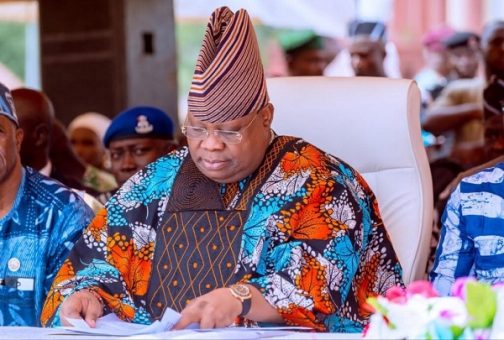
Osun State Governor, Senator Ademola Adeleke, has expressed confidence that his party will win the August 15 governorship election, citing what he described as visible progress recorded across the state under his administration.

Adeleke made the declaration in a statement posted on his official X account on Tuesday, where he thanked residents for their continued support and assured them that he would not take their trust for granted.

“I appreciate the overwhelming love and support people of Osun State continue to show our campaign. I do not take your trust for granted,” he wrote.
The governor said his administration had brought visible changes to the state over the past three years, urging residents to acknowledge the difference in governance.
“Today, Osun is witnessing the difference that purposeful, people-centred governance can make. You have seen the contrast.

You are experiencing the progress across the state,” he stated. With less than 15 days to the election, Adeleke said the momentum was on his side and expressed confidence that the Accord Party would emerge victorious.
“There is no turning back. Together, we will keep moving Osun forward. I’m confident ACCORD will win on August 15. Tell your neighbours: NO SHAKING, Imole is coming back,” he said.

Adeniyi: How Customs recruited 3,852 officers

0

The Nigeria Customs Service (NCS) Comptroller-General, Bashir Adewale Adeniyi, revealed on Tuesday how the service recruited 3,852 officers.

Addressing the press on the 2024/2025 recruitment exercise in Abuja, he said the volume of applications for the exercise was extraordinary.

The NCS received a total of 573,680 applications for the 3,852 available places.

According to him, the NCS verified and assessed all applicants.

Adeniyi said the exercise followed a high rate of retirement and turnover in the senior and management cadre, which has stressed the administrative machinery of the NCS.

“The volume alone was extraordinary: the Service received 573,680 applications for 3,852 places. Every one of those applications had to be received, verified and assessed.
“The Service also carried, over this same period, an unusually high rate of retirement and turnover among its senior and management cadre, which placed real strain on the administrative machinery that runs an exercise of this size,” he said.

In the breakdown, the Customs boss stressed that a total of 3,852 candidates have been offered places across the three cadres of entry: 1,275 in the Superintendent Cadre, 367 in the Inspectorate Cadre and 2,210 in the Customs Assistant Cadre.

He presented the final list, recalling that it concludes the exercise that opened in December 2024.

Adeniyi said every candidate on the list has passed through several distinct layers of scrutiny: application screening, computer-based examination, and verification of credentials against the national identity database.

The Customs said that where a record did not reconcile, the NCS checked it again.

Adeniyi, however, said successful candidates will now proceed to physical and medical assessment, and to a final review at Board level.

He stressed that “That is the honest reason this list is issued in August rather than in March.”

According to him, an exercise of this scale, in a country of this size, attracts interest from many quarters.

Defending the integrity of the exercise, he said, “That is neither unexpected nor improper in itself. What I can tell you is that the list I place before you today is one I am prepared to defend on its” “merits, and the standards the Service set for itself at the beginning of this process are the standards that produced it.”

According to him, the competition was severe.

The Customs boss said, “From 573,680 applications, 3,852 candidates were selected. That is an overall success rate of 0.67 per cent, or roughly one place for every 148 applicants.

“The intensity differed by cadre. The Superintendent Cadre drew 276,995 applications for 1,275 places, a ratio of one in 217.

“The Inspectorate Cadre was the most competitive of the 3: 128,604 applications for 367 places, or one in 350.

“The Customs Assistant Cadre received 168,081 applications for 2,210 places, one in 76.”

The Customs boss admonished the more than 560,000 Nigerians who applied and whose names are not on this list. NigerianEntrepreneur Support


Adeniyi consoled them, stressing “You were not rejected; you were unlucky in a field of extraordinary competition.

“Many of you met every requirement the Service set. There were simply not enough places.

“I encourage you to remain engaged with the Service, to keep your credentials current, and to apply again. As I will explain shortly, the next opportunity is not years away.”

The Customs boss said the exercise considered geopolitical distribution.

Adeniyi noted that, being a national institution, the exercise reflects that.

All 36 states of the Federation and the Federal Capital Territory, according to him, are represented on the final list, without exception.

Continuing, he said, “The allocation is equal across states by design. Each of the 36 states receives an identical number of places in each cadre: 35 in the Superintendent Cadre, 10 in the Inspectorate Cadre and 60 in the Customs Assistant Cadre, giving 105 places to every state. The Federal Capital Territory receives 72 places in accordance with the applicable formula. No state received more than another.

“Aggregated by geopolitical zone, the North West holds 735 places and the North Central 702, reflecting the seven states in each of those zones together with the Federal Capital Territory.

“The North East, South South and South West each hold 630 places, being six states apiece, and the South East holds 525, being five.


WAEC: How to check 2026 results online

0

The West African Examinations Council (WAEC) is expected to release the 2026 Computer-Based West African Senior School Certificate Examination (CB-WASSCE) results for private candidates in the coming days.

Candidates can access their results through the WAEC online portal, the official mobile application or via SMS once the results are released.

To check the results, candidates must have their 10-digit examination number, a valid WAEC e-PIN and its serial number, as well as an internet-enabled device or a mobile phone for SMS access.


The WAEC Result Checker e-PIN, which serves as the access key to the result portal, costs ₦5,000. According to WAEC, scratch cards purchased in previous years remain valid and can be used up to five times, provided they are used for only one candidate’s examination number. Each candidate requires a separate card.

How to buy a WAEC e-PIN
Candidates should visit waeconline.org, click Buy WAEC Result Checker, select the appropriate examination type and choose Get Started.

Applicants will be required to enter their email address and other requested details before selecting a preferred payment option and completing the ₦5,000 payment.

After a successful transaction, the WAEC serial number and e-PIN will be generated immediately.

How to check your result online
Candidates should visit the official WAEC result portal through waec.org using any web browser.

They are required to enter their 10-digit examination number, comprising the seven-digit centre number and three-digit candidate number, before selecting 2026 as the examination year.

Applicants should then select School Candidate Result, enter the e-PIN and serial number before clicking Submit to view their results.

How to check using the WAEC mobile app
Candidates can also download the WAEC Result Checker application from the Google Play Store.

After opening the app, users should enter their examination number, examination year, PIN and serial number. The result will be displayed and can also be downloaded directly from the application.

How to check by SMS
Candidates without internet access can check their results through SMS on MTN, Glo and Airtel networks.

Users should type WAECExaminationNumberPIN*ExaminationYear in the required format and send it to 32327. Standard SMS charges apply, while the result will be delivered as a text message.

Understanding WAEC grades
WAEC grades range from A1 to F9.

A1, B2 and B3 represent distinction and merit, while C4, C5 and C6 are recognised as credit passes.

D7 and E8 are ordinary passes below credit level, while F9 indicates failure.

For admission into most Nigerian universities, candidates are expected to obtain at least five credit passes, including English Language and Mathematics, with C6 being the minimum acceptable credit grade.

If your result is withheld
A withheld result usually indicates that WAEC is investigating a suspected examination malpractice involving the candidate, examination centre or registration entry.

Affected candidates are advised to visit their school’s examination officer or the nearest WAEC state office with their examination number and result printout for clarification.

If you believe your grade is incorrect
Candidates who wish to challenge their results can submit complaints through the official WAEC portal or visit any WAEC state office.

The examination body also provides an approved process for result verification and review through its official channels.

Sun

How AI is fuelling cybercrime surge in Nigeria – Interpo

0

Artificial intelligence is driving 55 per cent of reported cybercrimes across Africa, enabling attacks to become faster, more sophisticated and harder for victims and digital platforms to detect, according to Interpol’s African Cyberthreat Assessment Report 2026.

The report, released on Monday, also identified significant data breach incidents in South Sudan, South Africa, Nigeria and Namibia between January 2024 and September 2025.

Ransomware incidents were similarly prevalent across South Africa, Nigeria, Namibia, Senegal, and Zambia, with attackers increasingly targeting healthcare institutions, utility providers, and public service portals to maximise disruption and extortion potential.


The 40-page report relied on survey data from 36 African countries.

Business email compromise (BEC) involves attackers tricking workers into sending money or private data by pretending to be bosses or trusted partners.

West Africa was observed as the most active region for BEC detections.

“Ransomware detections in 2025 provided by TrendAI reached record levels in Cabo Verde, with 16,997 detections, the second highest in Africa, while Nigeria recorded 5,822, reflecting the country’s dual role as an origin and target of cybercrime,” the report reads.

The Interpol report noted that the sophistication of these BEC campaigns have increased dramatically, with AI now used to generate highly convincing email correspondence that mimics executive tone, internal jargon, and signature styles with near-perfect fidelity.

In 2025, TrendAI data indicated that 70 percent of BEC detections originated in South Africa and 29 percent from Nigeria.

The report described BEC as the financial engine of transnational cybercrime.

Microsoft-identified threat actors based in South Africa, active since 2017, primarily target US-based enterprises and use compromised email accounts and money mule networks to divert funds to offshore accounts.

In addition, Interpol said threat actors based in Nigeria, active since 2021, have become central to international money laundering operations, routing illicit proceeds through crypto exchanges, shell companies, and mobile payment platforms.

Mali recorded the highest sextortion detections in West Africa, with 3,494 incidents, suggesting growing infrastructure for automated blackmail campaigns.

The crypto economy in the region was valued at $205 billion in transactions between July 2024 and July 2025 and became a magnet for fraud, the report said. Of this figure, Nigeria accounted for $92 billion.

South Africa, Kenya, and Nigeria were also among countries with the highest vulnerabilities for data breaches.

In 2024, the National Identity Management Commission (NIMC) enforced a policy mandating that every SIM card be linked to a unique and verifiable national identification number (NIN).

The Interpol said while the policy significantly reduced fraud, cybercriminals adapted rapidly by exploiting gaps in KYC enforcement and registering SIM cards under false names with the help of AI.

Sun

Wike accuses Cardinal Onaiyekan of partisanship in 2023 election

0

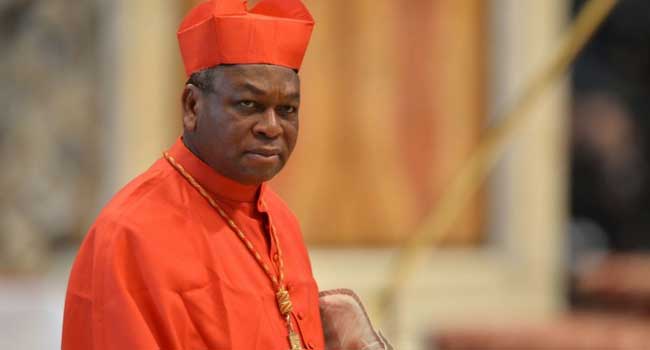
The Minister of the Federal Capital Territory (FCT), Nyesom Wike, has accused Archbishop Emeritus of the Catholic Archdiocese of Abuja, Cardinal John Onaiyekan, of taking sides during the 2023 general election, arguing that the cleric cannot be regarded as an impartial commentator on national issues.

Wike made the remarks during a media parley on Tuesday while reacting to the controversy surrounding Onaiyekan’s comments after a recent meeting between President Bola Tinubu and members of the Catholic Bishops’ Conference of Nigeria (CBCN).

Following the meeting, the cardinal had alleged that those around President Tinubu were presenting him with a misleadingly positive picture of the country and suggested that the President was already focused on securing re-election in 2027.


Responding, Wike said public interventions by respected religious leaders should be balanced, warning that constant criticism of government without acknowledging its achievements could be interpreted as political bias.

“If a religious leader is perceived or seen to be taking a side, which is very clear, it is very difficult for people to begin to see those comments as being helpful,” he said.

“I am aware of the position of Cardinal Onaiyekan; all of us know, it’s not hidden, whom he supports; everybody knows that.”

The FCT minister maintained that while governments should be criticised where necessary, they should also receive credit for policies and programmes that deliver positive results.

“It’s not every time you say things are bad; nobody has heard you say government has done this well,” Wike said.

“The point I am trying to make is that, as a leader, commend government when government has done well in certain areas; criticise government and say, look, you have done this well, but you should improve in these other areas.”

He argued that persistent criticism without recognition of progress would naturally lead the government to conclude that such remarks were politically motivated.

When reminded that the Catholic bishops had insisted their position was not partisan, Wike rejected the claim, insisting that many religious leaders openly backed candidates during the 2023 presidential election.

“Don’t tell me they’re not partisan. You know what happened in the 2023 election. People took sides, religious leaders took sides, it was very open,” he said.

“I would be stupid to sit here for anybody to tell me this person is impartial. No. We know ourselves in this country; we know who belongs to where. Who did they support in 2023? It was very obvious,” Wike added.

Sun

Tinubu hails Team Nigeria’s Commonwealth Games feat, reaffirms commitment to ports devt

0

… Applauds athletes for winning 24 medals in Glasgow

… Pledges continued investment in training facilities and sporting institutions

President Bola Tinubu has congratulated Team Nigeria on its impressive performance at the Commonwealth Games in Glasgow, Scotland, praising the athletes for winning 24 medals and reaffirming his administration’s commitment to investing in sports development across the country.

In a statement issued on Tuesday by his Special Adviser on Information and Strategy, Bayo Onanuga, the President described the team’s performance as a reflection of the resilience, discipline, determination and excellence that define the Nigerian spirit.

Team Nigeria finished the Games with 24 medals, comprising 10 gold, seven silver and seven bronze.

President Tinubu commended the athletes for flying the nation’s flag with honour and dignity, saying their achievement was a testament to their hard work and perseverance.

He noted that beyond the medals won, the experience gained by the athletes would serve as a solid foundation for greater accomplishments in future international competitions, while inspiring young Nigerians to embrace the values of commitment, discipline and national service.

The President also praised the leadership of the Nigeria Olympic Committee and the National Sports Commission for their commitment to the development of sports and their sustained support for Nigerian athletes.

He urged members of Team Nigeria to remain focused and continue striving for excellence in future competitions.

“Whether on the podium or through courageous performances in the competition, every member of Team Nigeria has represented our nation with honour, dignity, and pride”, the President said.

Tinubu also expressed appreciation to the athletes and officials who contributed to Nigeria’s participation at the Games.

“On behalf of the Government and the people of the Federal Republic of Nigeria, I express profound appreciation to our athletes, coaches, technical officials, medical personnel, administrators, and all those whose dedication and sacrifice made Nigeria’s participation at the Games possible”, he said.

The President reiterated his administration’s resolve to strengthen the country’s sporting sector through sustained investments.

“My administration remains steadfast in its resolve to invest in sports development, strengthen our sporting institutions, improve training facilities, and create greater opportunities for our talented athletes to excel on the continental and global stage”, he added.

@Thenation