VIDEO: Wike’s Aide, Lere Olayinka, Accuses Peter Obi of Disrespecting National Anthem
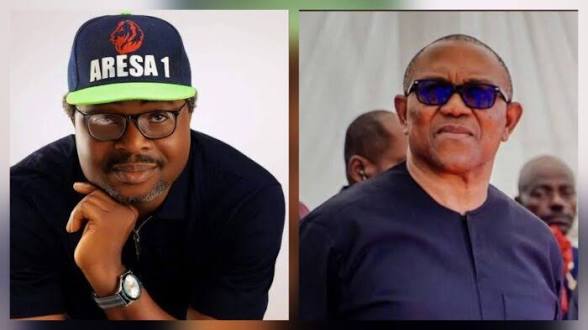
Lere Olayinka, aide to the Minister of the Federal Capital Territory (FCT), Nyesom Wike, has accused former Labour Party presidential candidate, Peter Obi, of disrespecting the Nigerian National Anthem.
Olayinka said Obi might not understand the implications of disrespecting the National Anthem of a country he is seeking to govern.
Reacting on his social media page, he insisted that the law must be obeyed by all citizens, accusing Obi and his supporters of participating in an act of disrespect towards Nigeria.
Citing Section 24(a) of the 1999 Constitution (as amended), Olayinka said Nigerians are mandated to “abide by the Constitution, …respect its ideals and its institutions, the National Flag, the National Anthem, the National Pledge, and legitimate authorities.”
He, however, accused Obi and his supporters of disregarding the country’s laws.
“But to Peter Obi and his rebellious gang, the laws of Nigeria must not be obeyed. Nigeria must operate like a jungle just because one PACKAGED FRAUD wants to be President,” he said.
Olayinka also questioned Obi’s educational background, expressing disappointment over the alleged conduct. “And Peter Obi claimed to be educated? Sad!” he added.
The Governor of Lagos State, Mr. Babajide Sanwo-Olu, has applauded President Bola Tinubu for his contributions to the development of Lagos, urging residents to show appreciation for the President’s infrastructural interventions in the State by supporting his second-term bid.
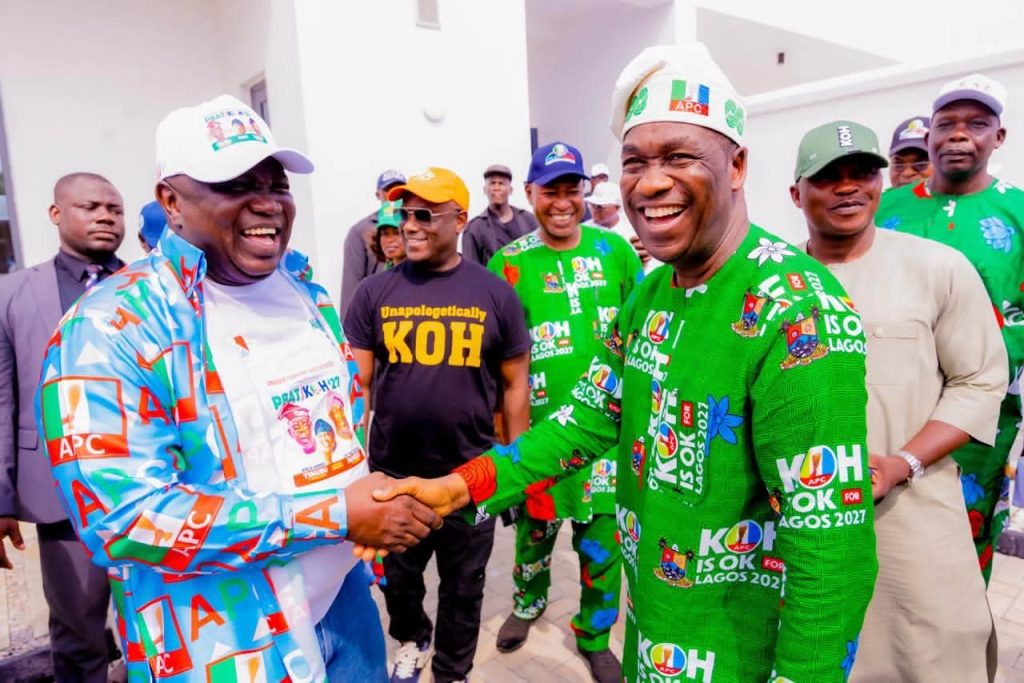
Governor Sanwo-Olu spoke while addressing party faithful at the All Progressives Congress (APC) Lagos East Senatorial District rally held at the Epe Recreational Ground, Epe.
He said President Tinubu laid a solid foundation for Lagos over two decades ago, providing the blueprint for the State’s sustained growth and development.
“The President deserves more than our votes. He deserves our prayers and our support. I therefore urge Lagos residents to demonstrate your appreciation for the President’s leadership by turning out in large numbers on January 16 to express your support and vote massively for him,” he said.
Governor Sanwo-Olu added that Lagos has become one of Africa’s most sought-after city-states through deliberate policies, strategic planning and visionary leadership initiated under the President’s political and administrative stewardship.
He noted that President Tinubu’s transition from Governor of Lagos State to President has provided an opportunity to replicate his development philosophy across Nigeria, with ongoing interventions and projects spanning the six geopolitical zones.
While acknowledging the Federal Government’s support for critical infrastructure projects in Lagos, including the proposed Green Line Rail and Lekki International Airport, Governor Sanwo-Olu said the projects would boost economic activity, strengthen connectivity and consolidate Lagos’ position as a leading investment destination.
Governor Sanwo-Olu also urged residents to vote for his deputy, Dr. Obafemi Hamzat, as the next Governor of Lagos State to ensure continuity in good governance. He also canvassed votes for all APC candidates in next year’s general elections.
Also speaking, the Lagos State Deputy Governor and APC governorship candidate, Dr. Kadri Obafemi Hamzat, said the purpose of the campaign visit to Lagos East was to canvass support for all APC candidates, urging residents to come out en masse on election day to vote rather than stay at home.
He noted that President Tinubu has recorded significant achievements in infrastructure, education, healthcare and other critical sectors, stressing the need for Lagosians to support the continuation of the administration’s development efforts.
“On election day, let us not stay at home. Come out with your PVC and ensure that everyone in your neighbourhood votes. We have the highest number of registered voters in Nigeria. Let us come out to vote for President Bola Ahmed Tinubu and every candidate that will support the continuity of his good work,” he said.
In his remarks, the Senator representing Lagos East Senatorial District, Senator Tokunbo Abiru, urged Lagosians to demonstrate their appreciation for the President’s efforts by supporting his re-election for a second term, noting that Lagos State has capable leaders to sustain the administration’s development agenda.
“We have capable people in Lagos. So, on election day, let us come out in our numbers to vote for all APC candidates and ensure that they all return to power,” Abiru said.
The immediate past Governor of Lagos State, Mr. Akinwunmi Ambode, emphasised the APC’s consistency and longstanding presence in Lagos politics, noting that the party has remained committed to its political identity rather than moving between political platforms.
Ambode described the APC as a party that represents the people. He stressed the importance of cooperation between the party and the electorate, saying that “the left hand washes the right hand, and the right hand washes the left hand” to illustrate the need for mutual support.
He also drew attention to the history of the APC compared with other political parties, noting that some of the other contenders and their parties were relatively new, while the APC has a longer history of governance and political experience.
In his remarks, Lagos APC Chairman, Pastor Cornelius Ojelabi, urged eligible voters who were yet to collect their Permanent Voter Cards (PVCs) to do so, describing the card as their investment in the future and a vital instrument for participating in the democratic process.
He admonished residents to come out and exercise their civic responsibility, expressing confidence in the party’s vision of development and concluding that unity remains its strength and victory its destination.
Earlier in his welcome address, the Director-General of the PBAT-KOH Campaign Council, Lagos State, Senator Musiliu Obanikoro, urged Lagosians to remain steadfast in their support for the APC and to vote for all candidates of the party in the 2027 general elections to sustain the State’s tradition of progressive governance, continuity and development.
Describing Dr. Kadri Obafemi Hamzat and President Bola Ahmed Tinubu as the most prepared men for the development of both the State and the country, Senator Obanikoro stressed the impressive track record and experience of both candidates.
In the same vein, the Chairman of Ibeju-Lekki Local Government and Chairman of Conference 57 — the umbrella body for the 57 Local Government and Local Council Development Area (LCDA) Chairmen — Hon. Sesan Olowa, called on party members and supporters to intensify grassroots mobilisation across Lagos East, urging them to take the APC message to every household, neighbourhood, community, village and town in the Senatorial District.
Former Minister of Foreign Affairs, Yusuf Maitama Tuggar, has condemned the growing hostility against fellow Africans in parts of the continent, particularly South Africa, describing it as a contradiction of the principles of pan-Africanism.
He called for renewed commitment to African unity, solidarity and economic integration, warning that discrimination against citizens of other African countries undermines the continent’s shared aspirations.
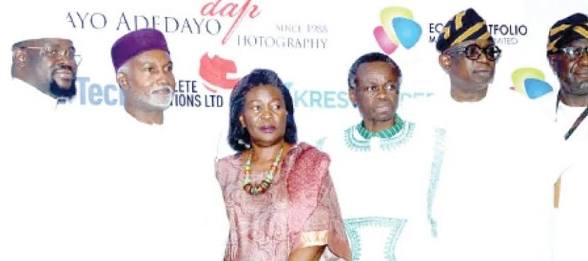
He spoke at the 2026 end-of-year event of The Bridge Club, which featured renowned African scholar and public intellectual, Professor P.L.O. Lumumba, as keynote speaker. The former minister expressed disappointment that Nigerians and other black Africans were being targeted in South Africa, recalling Nigeria’s significant contributions to the country’s liberation from apartheid.
He said Nigeria had supported the anti-apartheid struggle through scholarships for South African students, assistance to liberation movements across Southern Africa and other diplomatic and economic measures.
According to him, Nigerians of his generation grew up with a strong commitment to the liberation of Africa from racist regimes.
He recalled that survivors of the June 1976 Soweto massacre were accommodated in Nigerian boarding schools and supported with scholarships after Nigeria adopted them as its own.
He also cited the establishment of the South African Relief Fund, following the intervention of Mrs Maude Obanye, wife of a Nigerian diplomat, as evidence of Nigeria’s historic commitment to African solidarity.
He further recalled that Nigeria took difficult economic and diplomatic decisions in opposition to apartheid, including the nationalisation of Barclays Bank and British Petroleum in support of the liberation struggle.
He said the current hostility against fellow Africans represented a departure from the ideals that inspired the continent’s liberation movements.
“These are but a very few of the reasons why Nigerians cannot fathom why they and other black Africans are being targeted in South Africa,” he said.
Describing the incidents as Afrophobia rather than simply xenophobia, Tuggar argued that the distinction was significant because non-black foreigners appeared to be treated differently.
He, however, cautioned against using historical circumstances to justify discrimination, insisting that “context is not justification.”
The former minister traced some of the divisions among African countries to colonial administrative policies, which he said created ethnic, cultural and economic divisions that continued to shape relationships across the continent.
He also warned that Africa’s inability to translate political liberation into economic cooperation had undermined its development prospects.
He urged African countries to prioritise manufacturing, industrialisation and regional trade instead of relying on the export of raw materials and the importation of finished products. He identified the African Continental Free Trade Area (AfCFTA) as an opportunity to address the imbalance and build a more integrated continental economy.
“The path to Pan-Africanism is through the continental free trade area,” he said.
He also advocated free movement of labour across Africa, arguing that economic integration would remain incomplete unless citizens could move freely between countries to work, invest and contribute to development.
The former minister called for stronger cooperation between Nigeria and South Africa, describing their relationship as critical to the continent’s economic and political future.
Earlier, President of The Bridge Club, Abdulhakeem Mustapha, said continued discrimination against Africans in other African countries contradicted the ideals of continental unity.
Mustapha maintained that pan-Africanism should be reflected in everyday conduct, institutional practices and the treatment of citizens from other African countries.
“How can we preach pan-Africanism while tolerating attitudes and practices that diminish the humanity and dignity of fellow Africans?” he asked.
He said the destiny of African countries was interconnected and that no nation could achieve sustainable prosperity by undermining the dignity and security of others.
He explained that the club deliberately selected the theme to encourage intellectual engagement with one of the continent’s pressing challenges.
He described The Bridge Club as a community of accomplished individuals from different professional, cultural and social backgrounds, united by friendship, mutual respect and a shared commitment to contributing positively to society.
According to him, the club’s philosophy is reflected in its name, which represents the need to build bridges across differences, connect people and promote understanding.
Mustapha, who was concluding nine years as president of the club, said leadership should be measured by the relationships built, institutions strengthened and opportunities created for others.
He expressed appreciation to members who supported his administration and urged them to sustain the values of camaraderie, tolerance, generosity and mutual respect.
He said the greatest legacy of the organisation should be a united family and a community capable of making meaningful contributions to society.
The event attracted professionals, members of the diplomatic community, business leaders, public servants and other distinguished guests.
You cannot intimidate us or silence the people -NDC • Demands investigation into attacks
The Nigeria Democratic Congress (NDC) has condemned the attack on its supporters by suspected political thugs during a town hall meeting in Lagos yesterday, vowing not to be intimidated or prevented from exercising its democratic rights.
It described the incident as an assault on democracy and citizens’ fundamental rights, alleging that the violence was part of a calculated attempt to intimidate Nigerians and discourage them from participating in the 2027 general elections.
In a statement by its national campaign council spokesperson, Dr. Chiogo Ikokwu, the NDC demanded an immediate investigation into the attack and the arrest and prosecution of those responsible.
The party also sympathised with those injured in the incident, wishing them a speedy and full recovery.
It said: “No political party or group has a monopoly on Nigeria and no one has the right to use violence, intimidation or thuggery to silence opposing voices.
“Nigeria is not a conquered territory and political participation is not a crime.”
The NDC warned those behind the attack against assuming that violence would weaken its supporters or undermine the people’s determination to demand political change, saying, “Those who believe they can intimidate Nigerians into silence must understand that democracy belongs to the people, not to political thugs and their sponsors.”
The NDC further alleged that the attack was part of an attempt to spread fear and discourage voters ahead of the 2027 elections, insisting that such efforts would fail.
It urged Nigerians to turn out in large numbers during the elections and vote for the Obi/Kwankwaso presidential ticket, describing the move as part of a peaceful demand for accountable leadership and a new direction for the country.
“The people’s determination to reclaim their democratic voice will be stronger than any threat. The NDC and its supporters will not be silenced or bullied out of exercising their democratic rights,” it said.
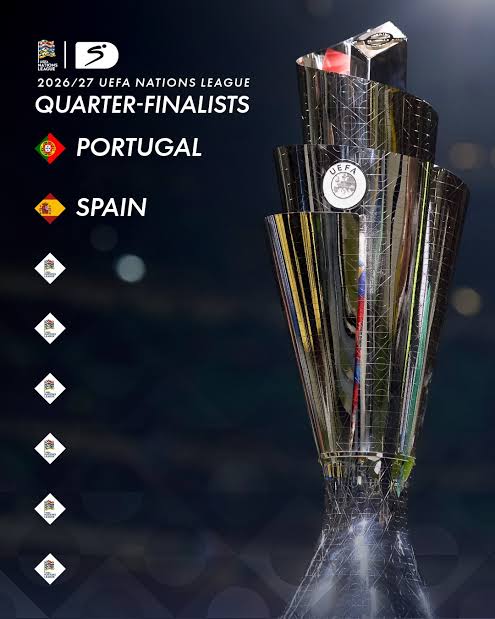
England, Italy, Portugal and Spain are the four countries to have secured places in the quarter-finals of the 2026/27 UEFA Nations League.
England secured qualification on Thursday after defeating Croatia 2-1 at Wembley, with Harry Kane scoring the decisive goal from the penalty spot.
Morgan Rogers had given England the lead in the first half before Petar Sucic equalised for Croatia in the 59th minute. Kane later restored England’s advantage to seal the victory. The win means England join Spain, Germany and Portugal in the last eight of the competition.
Portugal and Spain had secured their quarter-final places earlier in the group stage, while Germany and England have now joined them.
The quarter-finals will take place between March 25 and 30, 2027, while the Nations League semi-finals and final are scheduled for June 9 to 13, 2027.
US firm to build $100m gas processing plant in Bayelsa
…Project’ll curb flaring impact on our citizens – Gov Diri The Bayelsa State Government and United States-based energy company, Fulcrum LNG Incorporated, have sealed a partnership to build a multi-million-dollar gas gathering and processing facility in Bayelsa State.
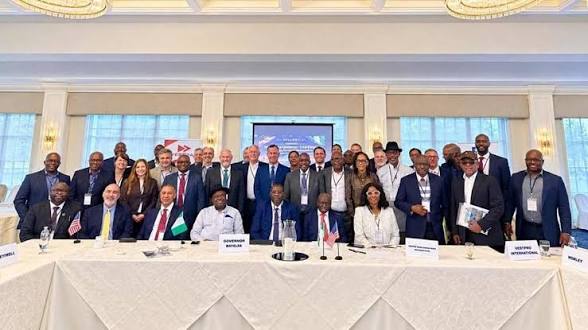
The agreement was reached on Wednesday at the close of the two-day inaugural US-Nigeria Governors’ G2B Forum on Energy, Mining and Infrastructure held at the Sweet Water Country Club, Sugar Land in Texas.
The Forum, facilitated by Westpaq International, in collaboration with the United States Department of Commerce and the US Commercial Service, Houston, brought together the Governor of Bayelsa State and representatives of Nasarawa, Ogun and Ondo states, alongside over 15 top American energy, mining and financial firms, including Honeywell, KBR, Worley, Lummus Technology, VGas and others. The project will be executed in phases, beginning with the gathering and commercialisation of flared gas to power the state’s Independent Power Plant and emerging industrial clusters, while curbing environmental pollution.
This will be followed by a comprehensive integrated gas monetisation and development plan to harness the state’s vast gas reserves.
Speaking after a closed-door meeting with Governor Douye Diri, the Fulcrum LNG Chief Executive Officer, Mr. Jesus Bronchalo, said the governor’s presentation at the roundtable sparked his company’s interest, describing the partnership as holding great prospects for both parties.
Bronchalo said Fulcrum would begin a comprehensive field study of Bayelsa’s flare sites to determine the appropriate technology and gathering infrastructure.
He noted that a similar project the company is executing in Guyana is valued about $3 billion, adding that the investment size for Bayelsa would be determined after the feasibility study and is likely to exceed the scale of its South American operations.
“From FID to commissioning will take about 12 months,” Bronchalo said.
“First, we need to understand the problem on the ground, where those facilities are and why gas is being flared. We will come to Bayelsa to understand the magnitude.
“Some flares may be so remote or uneconomic that gathering may not be viable. The key question is whether the flaring is due to lack of infrastructure to move the gas or lack of re-injection capacity. Once we know that, we can determine the best option. “The way we do it, we invest 100 percent. If the government wants equity, then it brings capital for that portion.”
Responding, Governor Diri described the deal as a win-win and assured of his government’s commitment to immediate commencement, noting the administration had about 15 months left in office.
He said the project was critical to both environmental protection and industrialisation.
“Our interest is how this project will reduce the effects of environmental pollution on our people and boost our industrialisation drive.”
Earlier, during his presentation at the roundtable, Diri noted that Bayelsa holds an estimated 15 to 20 percent of Nigeria’s proven gas reserves and supplies about 60 percent of the gas utilised by the NLNG Company in Bonny, Rivers State.
He added that the state has the longest atlantic coastline in Nigeria at 203km, with direct access to the Gulf of Guinea.
He also spoke about the Agge Deep Seaport as a natural deep seaport that requires no dredging, describing it as Nigeria’s deepest natural port and the natural first port of call for vessels entering the country.
Facilitator of the Forum and CEO of Westpaq International, Mr. Samuel Diminas, expressed delight at the outcome, commending Senator Ben Murray-Bruce for his role in ensuring the Forum’s success.
Diminas affirmed that Westpaq would continue to interface with all parties to ensure prompt commencement, adding that the project holds immense economic opportunities for Bayelsa and Nigeria.
On Diri’s delegation were the Adviser on Oil and Gas, Dr. Daru Owei; Managing Director of Bayelsa State Electricity Company Limited, Olice Kemenanabo; Director-General, Bayelsa Investment Promotion Agency, Patience Abah; former Secretary to Bayelsa State Government, Mr. Kemela Okara and the Chief Executive Officer, Century Energy Group, Chief Ken Etete.
NASS Moves To End Decades of Boardless Ruke At PTDF, Seeks Six-Zone Board By Staff Reporter — Abuja
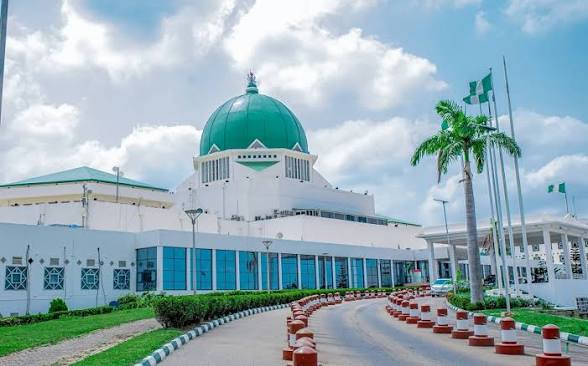
The National Assembly has begun moves to amend the Petroleum Technology Development Fund (PTDF) Act to finally give the agency a statutory Management Board, ending decades in which one of Nigeria’s most strategic petroleum institutions has operated without a governing board.
The amendment is sponsored by Hon. Olusola Steve Fatoba and Hon. Adeyemi Akeem Adeniyi, both members of the House of Representatives, and is being framed as a major institutional reform to strengthen oversight, accountability, transparency and equitable representation in the Fund.
Established to develop indigenous manpower and expertise for Nigeria’s petroleum industry, the PTDF plays a central role in training professionals, supporting research, promoting technological innovation and reducing dependence on foreign expertise. But under its current legal framework, its day-to-day administration and executive leadership are largely concentrated in the office of the Executive Secretary, with no statutory board to provide strategic direction or collective decision-making.
Supporters of the reform insist the move is not an attack on the office of the Executive Secretary or on past occupants. Rather, they argue no public institution of national importance should be structured in a way that makes effective oversight dependent primarily on a single office, or on the personality and administrative style of whoever holds it.
A properly constituted board, operating within clearly defined statutory powers, would separate policy oversight from day-to-day executive administration, provide a framework for collective decision-making, and create clearer lines of authority, financial supervision, auditing and reporting obligations, proponents say.
At the heart of the proposal is equitable representation of Nigeria’s six geopolitical zones — North-West, North-East, North-Central, South-West, South-East and South-South. Advocates say a national institution funded to serve all Nigerians must reflect the federal character of the country, strengthen national ownership, broaden perspectives and reinforce public confidence.
That representation, they stress, must not replace merit. Board members should be chosen on clearly defined professional qualifications, relevant industry experience, integrity and demonstrable capacity to contribute to the Fund’s mandate — combining competence with equitable national representation.
The reform is also being presented as complementing the governance agenda of President Bola Ahmed Tinubu’s administration, particularly its emphasis on institutional accountability, transparency, efficiency and responsible management of public resources. Good governance, supporters argue, is measured not only by individuals, but by the strength of the institutions they administer.
Lawmakers are being urged to use the amendment to settle key details: the board’s powers and responsibilities, tenure provisions, qualifications for members, a clear separation between board oversight and the Executive Secretary’s operational duties, and safeguards to protect PTDF management’s operational independence so the board does not become another layer of bureaucracy.
The proposal is not new. PTDF’s own institutional publication, examining its enabling legislation and proposed governance arrangements under the Petroleum Industry Bill, had previously highlighted the need for a board structure and for separating the responsibilities of the governing board from those of the Executive Secretary.
For now, Fatoba and Adeniyi are receiving commendation for bringing the issue to the legislative front burner and opening it to national debate. But stakeholders say success will depend on the quality of legislative scrutiny and engagement with petroleum industry professionals, governance experts and relevant government institutions.
As the amendment progresses, supporters say the ultimate objective is clear: a PTDF that is stronger than any individual, more accountable, more inclusive, and governed by a structure that reflects the aspirations of the entire federation — six geopolitical zones, one national interest, and one shared responsibility to build a stronger Fund for generations to come.
The Federal Government has identified 269 federal laws as obsolete, archaic and spent, and will drop them from the statute books as part of a comprehensive review of the Laws of the Federation of Nigeria (LFN).
A further 663 enactments, together with their subsidiary legislation, have been earmarked for inclusion in the LFN 2025. They will be transmitted by President Bola Tinubu to the National Assembly for consideration and passage, to bring them in line with international best practice.
The Attorney-General of the Federation and Minister of Justice, Prince Lateef Fagbemi, SAN, disclosed this in Abuja on Thursday while receiving the report of the Law Review Committee, chaired by Olawale Fapounda, SAN.
First review in over two decades, Fagbemi noted that the last official review of the Laws of the Federation was done in 2004. He said more than twenty years had passed, during which Nigeria had seen significant legislative, constitutional, institutional and technological changes.
According to him, new enactments and amendments had accumulated over the period, making a comprehensive review imperative to keep federal laws coherent, current, accessible and responsive to the country’s needs.
He described the exercise as a major milestone in the Federal Government’s efforts to strengthen the justice sector and modernise the legal framework.
The AGF said the Laws of the Federation must serve as a reliable reference for the courts, legal practitioners, public institutions, investors and the general public.
Fagbemi said the Committee examined 932 federal enactments and 731 pieces of subsidiary legislation. Of the 932 enactments, 663 were identified for inclusion in the LFN 2025.
The work was carried out through fourteen thematic Working Groups, supported by retreats and technical engagements in different locations.
These sessions, he said, allowed the groups to harmonise their outputs, benchmark international best practices and strengthen quality assurance. He commended the Chairman and members of the Committee for their diligence and professionalism, particularly in the face of logistical and technical challenges.
The AGF said the next step was to submit the report to the President for onward transmission to the National Assembly.
He called for the cooperation of lawmakers in ensuring timely consideration of the proposed measures, noting that the exercise required the continued collaboration of the Executive and the Legislature.
He warned that the two-decade gap between reviews must not be repeated because of its negative consequences for national development.
“We must strengthen our capacity to track new enactments, amendments and subsidiary legislation so that our laws remain current and responsive to emerging developments,” he said.
He added that the exercise must establish a sustainable foundation for periodic review and updating of the laws, with the ultimate aim of building a modern, coherent and accessible legal framework that promotes the rule of law, strengthens the administration of justice, supports effective governance, protects citizens’ rights and contributes to national development and security.
Fagbemi stressed that the quality, accuracy and practical utility of the final publication must remain the priority.
He thanked development partners and collaborating institutions for their support: the ROLAC Programme, the Law Commission of England and Wales, LexisNexis South Africa, the Lagos State Law Reform Commission and Law Pavilion.
Fapounda, said it took the Committee more than two years to review, harmonise and consolidate the federal legislation.
He identified areas requiring further legislative attention, including archaic statutory language, cumbersome cross-references, outdated chapter numbers and inconsistencies in the sequencing of some Acts.
He thanked the Federal Government for funding the Committee’s work.
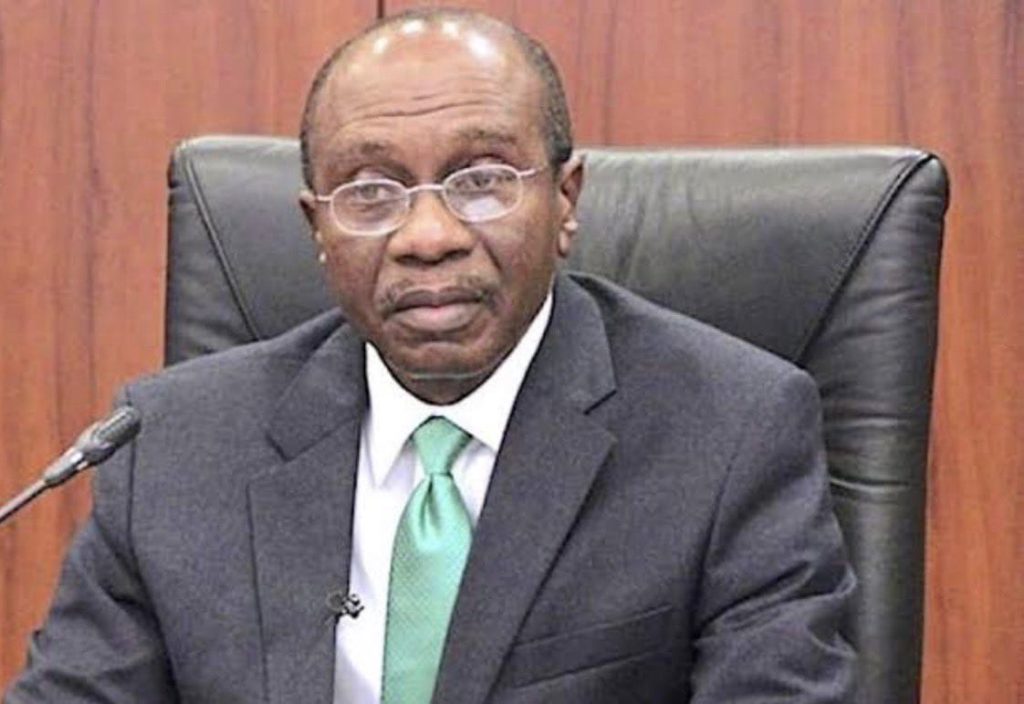
Alvan Gurumnaan, the Eighth Prosecution Witness (PW8) and the team leader of the investigators in the ongoing $4.5bn alleged fraud trial involving the former Governor of the Central Bank of Nigeria (CBN), Mr Godwin Emefiele, and his co-defendant, Henry Omoile, on Thursday, November 12, narrated to the Special Offences Court in Ikeja, Lagos State, how Emefiele allegedly used cronies to acquire properties worth far beyond his legitimate income across Lagos and other parts of Nigeria while in office.
Emefiele is being prosecuted before Justice Rahman Oshodi by the Economic and Financial Crimes Commission (EFCC), Lagos Zonal Directorate 1, on a 19-count charge bordering on receiving gratification and making corrupt demands while serving as CBN Governor.
Gurumnaan, while continuing his evidence-in-chief under examination by prosecution counsel and Director of Public Prosecutions (DPP) of the Federation, Rotimi Oyedepo (SAN) , revealed that Emefiele’s statement was recorded following intelligence received by the special operations team he led. He told the court that Emefiele allegedly used associates to acquire numerous properties whose value was beyond what his legitimate income as CBN Governor could justify.
The witness listed the properties to include a pair of twin duplexes in Lekki Phase 1; two mansions on Queens Drive, Ikoyi; an uncompleted factory in Agbor, Delta State; a printing and minting company on Adekunle Lawal Street, Ikoyi; and a warehouse in Ogun State containing containers worth hundreds of billions of naira. Others include two-storey buildings comprising 94 luxury flats under construction, an industrial park, and an estate in Abuja housing over 700 duplexes under construction. Gurumnaan told the court that all the aforementioned properties had been duly forfeited to the Federal Government of Nigeria following court judgments. He said, “My Lord, several courts have given judgments in favour of the EFCC, forfeiting assets and properties belonging to Emefiele. He accepted and came to court that the properties belong to him.
“We also discovered that the first defendant was building a factory in his hometown in Agbor, Delta State, which has also been forfeited to the Federal Government of Nigeria.
“There is also a property, My Lord, on Adekunle Lawal Street in Ikoyi, Lagos, which the first defendant purchased. It had belonged to the Nigerian Printing and Minting Company, where he served as Chairman of the Board, and he sold the property to himself.
“The property, a block of eight flats in Ikoyi, has also been forfeited to the government. During our investigation, another warehouse belonging to the first defendant was recovered in Ogun State, on the outskirts of Lagos.” However, counsel to the first defendant, Olalekan Ojo (SAN), urged the court to discountenance the evidence concerning the properties in Agbor and on Adekunle Lawal Street, arguing that they were not contained in the charge before the court.
Oyedepo, who appeared alongside B. Bilkisu C. C. Okezie and Z. B. Atiku, tendered a document containing a Supreme Court judgment as an exhibit.
Justice Oshodi thereafter adjourned the matter until November 13, 2026, for a ruling on the admissibility of the exhibit and the continuation of the trial.
The Economic and Financial Crimes Commission (EFCC), Lagos Zonal Directorate 1, has arraigned a businessman, Ashley Segun Oshin, before Justice Ismail O. Ijelu of the Lagos State High Court sitting in Ikeja, over an alleged One Hundred and Twenty-Two Thousand British Pounds Sterling, £122,000, investment fraud.
Oshin was arraigned on a one-count charge bordering on obtaining money by false pretence, contrary to Section 1(3) of the Advance Fee Fraud and Other Fraud Related Offences Act, 2006.
The charge reads:
“That you, Ashley Segun Oshin, between 2009 and 2010, with intent to defraud, induced Miss Oluwafemi Fajana and Mr. Abiodun Adeogun to deliver to you the aggregate sum of £122,000 (One Hundred and Twenty-Two Thousand British Pounds Sterling) by falsely representing to them that the said sum would be invested in a debenture fund of Oschards Limited and would yield a 40 per cent annual return on investment, which representation you knew to be false.”
He pleaded not guilty to the charge when it was read to him.
Following his plea, prosecution counsel, M.S. Owede informed the court that the charge was filed on June 29, 2026. He subsequently requested a trial date and an order remanding the defendant in a Correctional Centre pending the determination of the case.
Owede also sought time to respond to the defendant’s bail application, explaining that the EFCC detention facility was already full and had no available space.
However, defence counsel, Samuel N. Umoren, informed the court that he had filed a bail application dated November 10, 2026, which had been served on the prosecution. He urged the court to hear the application and sought an early date for its hearing.
He also requested that the defendant be remanded in EFCC custody.
Justice Ijelu subsequently adjourned the case to November 18, 2026, for trial and hearing of the pending bail application.
The defendant was remanded in a Correctional Centre pending further proceedings.