Home Blog Page 201

Former Finance Minister Kemi Adeosun Marks 33rd Wedding Anniversary Without Husband

0


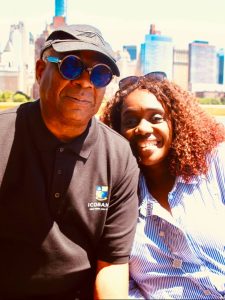
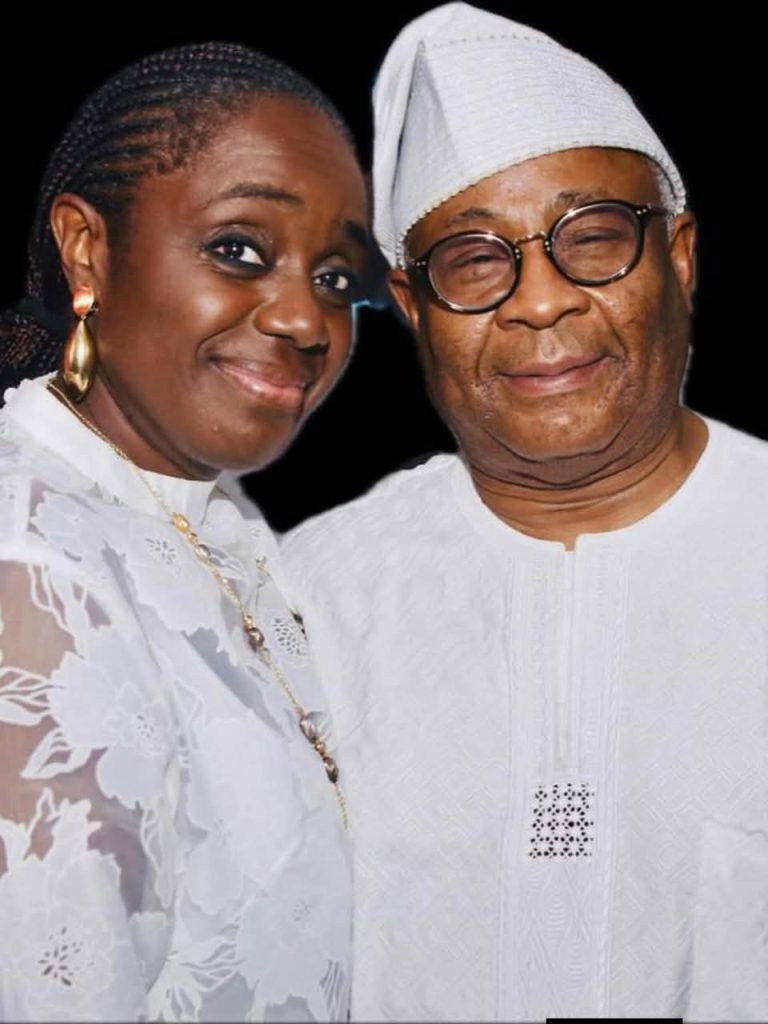
Former Minister of Finance, Kemi Adeosun, has marked her 33rd wedding anniversary with an emotional tribute to her late husband.
Adeosun, who shared the tribute on Saturday, August 23, expressed gratitude to God for the years they spent together and for the privilege of being his wife and the mother of their three children.

She wrote: “Today, August 23rd, I am celebrating our 33rd wedding anniversary, though you are not here. I choose to bless God for the privilege of being your wife and mother of three incredible young people.”

Reflecting on their marriage, the former minister described the 33 years as a period filled with love and laughter, which she said she continues to cherish.
Adeosun also expressed her belief that her husband is in heaven, saying she imagined him “living it up in a serious mansion.”

Despite his absence, she said she would continue to praise and trust God, drawing inspiration from Psalm 34:1.
She added: “As for me, I will bless the Lord at all times. Psalm 34:1. Even when I don’t understand, I will still bless God.”

101-year-old great-grandmother arrested as NDLEA busts cocaine-in-fufu racket

0


The National Drug Law Enforcement Agency (NDLEA) has recorded a string of major breakthroughs across the country’s land and maritime borders in the past week, topped by the arrest of a 101-year-old great-grandmother for alleged drug dealing and the discovery of cocaine smuggled inside cassava fufu.

In a statement issued on Sunday by the agency’s Director of Media and Advocacy, Femi Babafemi, NDLEA operatives also intercepted two containers of Thai-origin synthetic cannabis, known as “Loud”, valued at over N4.4 billion at the Apapa and Lekki ports in Lagos, marking the agency’s first-ever seizure of drugs shipped into Nigeria through a maritime route from Thailand.


In the most striking case, operatives on August 15 arrested Esther Ogunmabo, 101, at Ilisan, Ogun State, with 90 grams of skunk packaged in retail sachets.

101-year-old great-grandmother arrested as NDLEA busts cocaine-in-fufu racket
The centenarian told operatives she turned to drug peddling after her provisions shop was destroyed by fire and that a daughter based in Lagos supplied her with the substance every four days.

NDLEA Chairman Brig. Gen. Mohamed Marwa (rtd) ordered that she be granted bail and placed on counselling due to her age, while her daughter was arrested.

In Akwa Ibom, a joint intelligence-led operation on August 21 intercepted a wooden boat ferrying illicit drugs to fishing settlements in Cameroon.

Three suspects were arrested, including 27-year-old Kingsley Effiong John, who was found with 20 grams of cocaine concealed inside a wrap of edible fufu alongside 435 grams of skunk. A total of 42.622kg of narcotics was recovered from the trio.

At the Lagos ports, the Thai Loud consignments were disguised behind legitimate goods.

A container at Apapa, declared to contain dry fish, rice, spare parts, soap and inverter batteries, was found to hold 1,090.5kg of Loud in 2,181 sachets, while a watchlisted container at Lekki Deep Sea Port yielded 400kg of the substance hidden beneath 798 reams of A4 paper.

Other operations during the week included the interception of 24,410 tramadol pills hidden in waybill packages inside a bus travelling from Enugu to Zuba, leading to the arrest of the consignment’s owner in Kontagora, Niger State; the destruction of 10,000kg of skunk cultivated on a four-hectare cannabis farm in Ijare Forest, Ondo State; the seizure of 1.325kg of methamphetamine and cannabis from a car intercepted along the Ogbomosho-Ilorin Expressway in Kwara State; and the arrest of a 65-year-old woman in Ibadan with a 4.68kg cocktail of Loud, tramadol, codeine syrup, diazepam and flunitrazepam.

Further raids recorded seizures in Kano, Seme (Lagos), and Abia State, the latter yielding Loud, Colorado, tramadol and rohypnol from a residence in Umuahia South.

Alongside enforcement, NDLEA commands nationwide continued sensitisation activities under its War Against Drug Abuse (WADA) campaign, engaging schools, religious institutions and community leaders in Kano, Oyo, Kebbi, Taraba, Edo and Ogun states.

Marwa commended operatives across the affected commands and urged continued commitment to what he described as the agency’s “balanced approach” to drug control.

Sun

PRA Congratulates Abdulaziz Yari on Appointment as APC Presidential Campaign DG, Pledges Grassroots Support for Renewed Hope

0


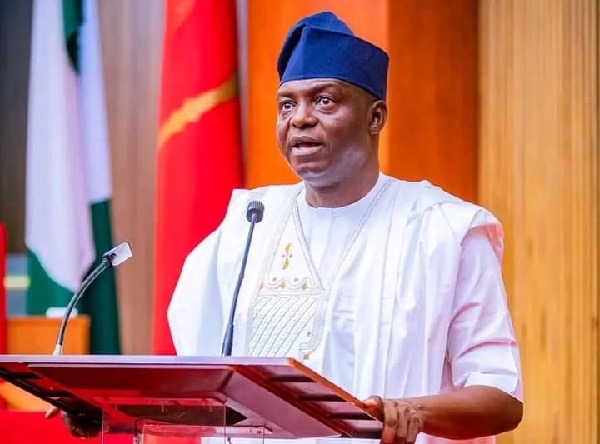
The Progressive Redemption Alliance (PRA) has warmly congratulated Distinguished Senator Abdulaziz Abubakar Yari on his well-deserved appointment as Director-General of the All Progressives Congress (APC) Presidential Campaign Council for the 2027 general elections.

In a statement issued by its Convener, Comrade Olajide Wolimoh, the Alliance described the appointment as a strategic masterstroke that reflects the APC leadership’s clear understanding of the demands of a high-stakes national campaign.

Wolimoh noted that Senator Yari brings to the role a rare combination of executive experience, legislative exposure and deep grassroots political understanding. As a former Governor of Zamfara State and a serving Senator, Yari has demonstrated the capacity to mobilise diverse stakeholders, manage complex political structures and deliver results under pressure.

“The choice of Senator Abdulaziz Yari as Director-General of the Presidential Campaign Council is both timely and inspiring,” Wolimoh stated. “He is a tested mobiliser, a bridge-builder and a politician who understands the pulse of the Nigerian electorate across regions. His appointment sends a strong signal that the APC is assembling a competent, experienced and results-oriented team to prosecute the 2027 campaign.”

The PRA Convener also extended warm congratulations to other members of the newly constituted Presidential Campaign Council, describing them as capable hands whose collective experience will enrich the campaign architecture.

Positioning the Progressive Redemption Alliance, Wolimoh emphasised that the PRA is a socio-political movement rooted in the grassroots and driven by organic members who remain committed to progressive and people-centred values. The Alliance, he explained, draws from the redeeming ideals of social justice and mass empowerment historically associated with progressive politics, while fully embracing the practical opportunities offered by the Renewed Hope Agenda of President Bola Ahmed Tinubu.

“The PRA is not a gathering of political spectators. We are a formation with real structures and loyal followership across several states. Our members believe in politics that serves the ordinary people. We therefore look forward to working closely with the Presidential Campaign Council under the leadership of Senator Yari to deepen grassroots mobilisation, expand the reach of the Renewed Hope message, and contribute meaningfully to the re-election of President Bola Ahmed Tinubu and victory for the APC at all levels in 2027,” Wolimoh declared.

He expressed confidence that with disciplined coordination, inclusive engagement and effective communication of the administration’s achievements and vision, the campaign would successfully connect with Nigerians and secure a decisive mandate for continuity and progress.

The Progressive Redemption Alliance wished Senator Yari and the entire campaign team wisdom, strength and resounding success in the important national assignment.

EPL: Maresca reveals City’s plan to replace Rodri

0

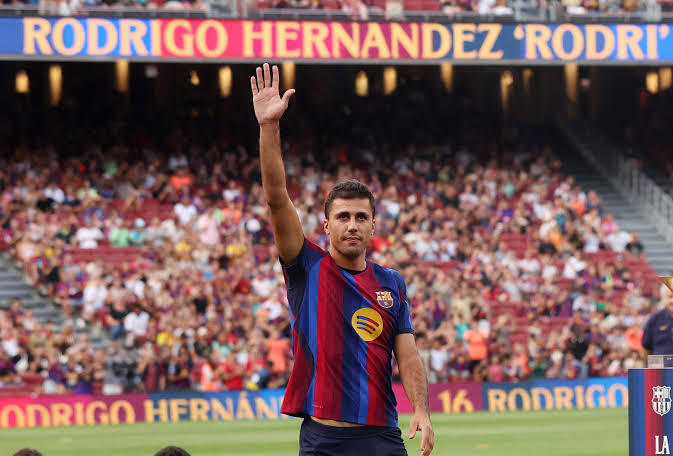
Manchester City will seek a replacement for Rodri following the Spain international’s departure for Barcelona, manager Enzo Maresca has said.

Rodri left City earlier this week after seven seasons at the Etihad Stadium, joining Barcelona in a deal reportedly worth about £65m. The 30-year-old won four Premier League titles, the 2023 Champions League and the 2024 Ballon d’Or during his time at City.

Asked how City would replace such an influential player, Maresca said: “We try to find the new Rodri, it is what it is.”


The City manager noted that Rodri had not achieved the highest honours in football when he first arrived at the club.

“Before Rodri arrived here, he didn’t win the Ballon d’Or, he didn’t win the Champions League, he didn’t win the Club World Cup.

“He joined the club, then he achieved many important things,” Maresca said.

Rodri made nearly 300 appearances for City before leaving with one year remaining on his contract after an extension failed to materialise.

Maresca said City had previously replaced several key players successfully, citing David Silva, Kevin De Bruyne, Sergio Aguero, Erling Haaland and Fernandinho.

“When David Silva was here, everyone was worried, and Kevin [De Bruyne] arrived,” he said.

“When Sergio [Aguero] was here, everyone was worried [about] when he was going to leave and Erling [Haaland] arrived. Fernandinho? Rodri arrived.”

He added: “When they leave, you need to be good in recruiting the next one.”

“They are all similar: David, Kevin, Fernandinho, Rodri, Erling. It is normal, it is change, it is not a problem. Go again and try to do the right things.”

Rodri’s departure leaves City needing to identify another midfielder capable of eventually filling the role occupied by the former Spain international.

People are trying to make money from us — Ogogo’s daughter cries out

0

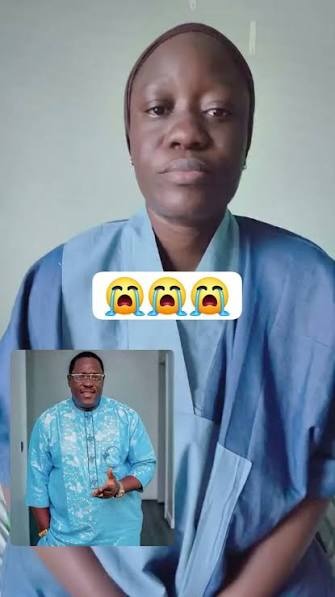
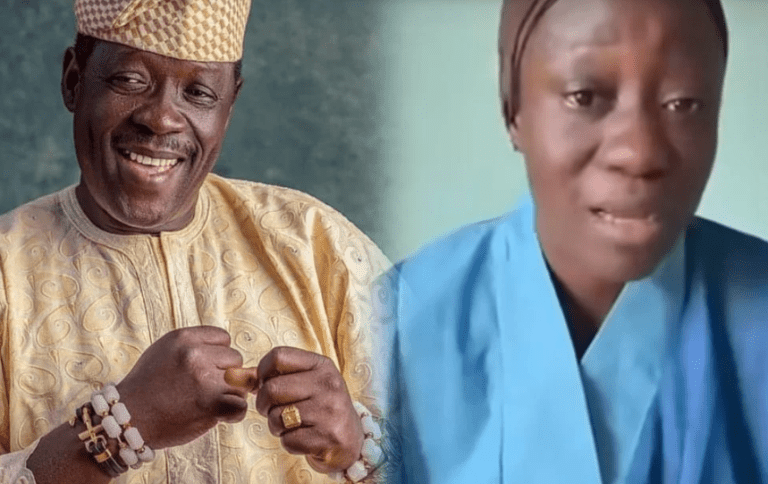
Kira Taiwo, daughter of veteran Yoruba actor Taiwo Hassan, popularly known as Ogogo, has raised concerns over alleged attempts by some individuals to profit from her family’s struggle as the actor battles stage-four cancer.

Kira made the allegation during an emotional TikTok live session on Saturday, where she spoke about the financial and emotional difficulties confronting the family.

According to her, some people claiming to have solutions for her father’s condition had allegedly demanded large sums of money from the family.

“My father is a good father. Some people are even trying to make money with us in this whole situation. Fear God. This one will come and bring solution, N800k, N5m, 11,000 dollars, N18,000 dollars. Do you want to make us broke? We are not billionaires,” she said.

Kira stressed that the family’s immediate concern was finding effective treatment for the actor rather than meeting what she described as overwhelming financial demands.

She also revealed that the situation had affected her own physical and emotional wellbeing.

“I want to check my BP, I am not okay too,” she said.

The actor’s daughter further spoke about the impact of Ogogo’s illness on his brother, whom she affectionately referred to as her “big daddy”.

Kira said she became aware of her uncle’s distress through the family’s group chat, where relatives regularly discuss the actor’s condition.

“That was the video my big daddy saw and on the group chat, where we always have our discussion about daddy’s health, I saw my cousin wrote something like, my big daddy was asking ‘Is Taiye going to die?’” she said.

She described the relationship between the two brothers as exceptionally close, saying the entire family had been deeply affected by Ogogo’s health crisis.

“My big daddy and my daddy, we are the children, we don’t even know who they love more. We don’t even know if it is we who are being or themselves. It is too much. My big daddy loves my daddy too much,” Kira said.

She added that she was concerned about her uncle’s emotional state, saying she believed he was struggling to cope with the possibility of losing his brother.

Kira also explained that she had withdrawn from social media because seeing images of her father had become emotionally difficult for her.
“I don’t know how I will feel. I don’t even know how I will see the world again. If anything happens to my daddy… Please don’t think I am here to ask for sympathy or anything,” she said.

Her latest comments followed earlier appeals by Kira and her sister, Lima Taiwo, for assistance in finding medical treatment for their father.

The sisters recently disclosed that the actor was battling stage-four cancer and appealed to Nigerians, medical professionals and well-wishers with access to cancer treatment to help the family.

Lima had said the actor’s condition had deteriorated to the point where some hospitals were no longer willing to continue his treatment.

She explained that the family only became aware of the seriousness of his illness about three weeks before their appeal because his physical appearance had not initially indicated the severity of his condition.

“You see him, you can’t even know that. Something is wrong that bad. It’s just starting to show. We didn’t even know until like three weeks ago,” Lima said.

She clarified that the family was not seeking financial donations but medical assistance that could help the actor receive further treatment.

Kira also appealed to medical professionals and individuals with access to cancer treatment facilities to contact the family.

“What I’m here for, what I’m here for is that if you can treat my daddy, if you can start chemo for him, whether it’s medical or herbs, please, I’m begging you, guys,” she said.

She added that the family had received significant financial support from a relative, whom she identified as Senator Yayi, to help cover the actor’s medical expenses.

Kira further revealed the emotional impact of watching her father struggle with the illness, saying she had never seen him experience such pain.

She appealed for urgent assistance, saying her father had expressed fear of dying.

“He’s saying that he doesn’t want to die. Please, I’ve never seen my daddy in that kind of pain before,” she said.

Ogogo, 66, is a veteran of Nigeria’s Yoruba-language film industry whose career spans more than four decades. He has featured in more than 300 films and remains one of the notable figures in the genre.

Sun

People are trying to make money from us

0

Ogogo’s daughter cries out
Kira Taiwo, daughter of veteran Yoruba actor Taiwo Hassan, popularly known as Ogogo, has raised concerns over alleged attempts by some individuals to profit from her family’s struggle as the actor battles stage-four cancer.

Kira made the allegation during an emotional TikTok live session on Saturday, where she spoke about the financial and emotional difficulties confronting the family.

According to her, some people claiming to have solutions for her father’s condition had allegedly demanded large sums of money from the family.

“My father is a good father. Some people are even trying to make money with us in this whole situation. Fear God. This one will come and bring solution, N800k, N5m, 11,000 dollars, N18,000 dollars. Do you want to make us broke? We are not billionaires,” she said.

Kira stressed that the family’s immediate concern was finding effective treatment for the actor rather than meeting what she described as overwhelming financial demands.

She also revealed that the situation had affected her own physical and emotional wellbeing.

“I want to check my BP, I am not okay too,” she said.

The actor’s daughter further spoke about the impact of Ogogo’s illness on his brother, whom she affectionately referred to as her “big daddy”.

Kira said she became aware of her uncle’s distress through the family’s group chat, where relatives regularly discuss the actor’s condition.

“That was the video my big daddy saw and on the group chat, where we always have our discussion about daddy’s health, I saw my cousin wrote something like, my big daddy was asking ‘Is Taiye going to die?’” she said.

She described the relationship between the two brothers as exceptionally close, saying the entire family had been deeply affected by Ogogo’s health crisis.

“My big daddy and my daddy, we are the children, we don’t even know who they love more. We don’t even know if it is we who are being or themselves. It is too much. My big daddy loves my daddy too much,” Kira said.

She added that she was concerned about her uncle’s emotional state, saying she believed he was struggling to cope with the possibility of losing his brother.

Kira also explained that she had withdrawn from social media because seeing images of her father had become emotionally difficult for her.
“I don’t know how I will feel. I don’t even know how I will see the world again. If anything happens to my daddy… Please don’t think I am here to ask for sympathy or anything,” she said.

Her latest comments followed earlier appeals by Kira and her sister, Lima Taiwo, for assistance in finding medical treatment for their father.

The sisters recently disclosed that the actor was battling stage-four cancer and appealed to Nigerians, medical professionals and well-wishers with access to cancer treatment to help the family.

Lima had said the actor’s condition had deteriorated to the point where some hospitals were no longer willing to continue his treatment.

She explained that the family only became aware of the seriousness of his illness about three weeks before their appeal because his physical appearance had not initially indicated the severity of his condition.

“You see him, you can’t even know that. Something is wrong that bad. It’s just starting to show. We didn’t even know until like three weeks ago,” Lima said.

She clarified that the family was not seeking financial donations but medical assistance that could help the actor receive further treatment.

Kira also appealed to medical professionals and individuals with access to cancer treatment facilities to contact the family.

“What I’m here for, what I’m here for is that if you can treat my daddy, if you can start chemo for him, whether it’s medical or herbs, please, I’m begging you, guys,” she said.

She added that the family had received significant financial support from a relative, whom she identified as Senator Yayi, to help cover the actor’s medical expenses.

Kira further revealed the emotional impact of watching her father struggle with the illness, saying she had never seen him experience such pain.

She appealed for urgent assistance, saying her father had expressed fear of dying.

“He’s saying that he doesn’t want to die. Please, I’ve never seen my daddy in that kind of pain before,” she said.

Ogogo, 66, is a veteran of Nigeria’s Yoruba-language film industry whose career spans more than four decades. He has featured in more than 300 films and remains one of the notable figures in the genre.

Tinubu’s reforms reducing, not inducing poverty – APC chairman, Yilwatda

0

* Nigerians should ask what govs are doing with current huge allocations
* Lessons we’ve learnt from Osun guber poll

The National Chairman of the All Progressives Congress (APC), Prof Nentawe Yilwatda, was in Oyo State from August 19 to 20, 2026, on a working visit that combined high-level political consultations with engagements on the party’s preparations for the 2027 general elections.

At an encounter with journalists during the visit, Yilwatda spoke on the economic and political issues shaping Nigeria as the President Bola Tinubu administration enters a crucial phase ahead of the 2027 polls.

He also spoke on other issues.

Prior to the current administration, state governors received significantly lower monthly federal allocations. Today, monthly allocations to the three tiers of government have increased dramatically from billions to trillions of Naira. But what are the impacts of the increased statutory allocations on the average Nigerian on the street?

That is a fundamental question. Under President Bola Ahmed Tinubu, our party has implemented bold economic reforms, ranging from fuel subsidy removal and exchange rate unification to broad tax policy restructuring.

These measures have channelled vastly higher revenue directly into the coffers of the three tiers of governments. But I can’t tell what the governors are doing, because it’s your duty to go and ask them. While it is the responsibility of citizens and the media to hold state governors accountable for how those trillions are being utilised at the sub-national level, I can speak directly to what President Tinubu is executing at the federal level. At the national scale, we are driving toward a $1trillion economy. Look at our massive infrastructure investments: the monumental coastal highway project is visibly underway across national media.

Furthermore, Nigeria currently lacks functional deep seaports capable of handling modern mega-vessels, forcing importers to incur massive trans-shipment and batching costs from deep-water ports in neighbouring countries like Benin Republic. To eliminate those extra costs for Nigerian businesses and consumers, President Tinubu’s administration is constructing five modern deep seaports integrated with the coastal road network.

On fiscal policy, our tax reforms are specifically designed to reduce the cost of living for everyday citizens. Essential items, such as basic food products, education, healthcare, housing, and construction materials, have been exempted from taxation. Furthermore, low-income earners making ₦800,000 or less per annum are now fully exempt from personal income tax.

So, the tax reform has reduced the cost of living for Nigerians. You don’t get taxed on education. You don’t get taxed on food items. You don’t get taxed on housing. You don’t get taxed on building materials. So, the basic thing that a common man needs to live, we’ll remove tax on them. Small businesses and micro-enterprises with an annual turnover of less than ₦100million no longer pay corporate income tax.

In the past, informal trade workers, market women selling akara, local carpenters, small scale miners, were constantly harassed for taxes. Today, their tax burden is zero.

We are systematically removing fiscal burdens from the most vulnerable segment of the population.

So, when opposition critics claim these policies induce poverty, we ask: How can a government that completely exempts low-income earners, small businesses, food, healthcare, and education from taxes be accused of impoverishing its people?

What we’ve done is that we have freed a lot of people, who are at the lower ebb to ensure they don’t pay tax. So, when people say our party is bringing poverty in the country, we ask them; how do you tell me that a government that has relieved people of tax and has also ensured that the basic things that allow us to live are tax-free, how do you say that, that government is bringing poverty to the people? Well, but that’s the opposition. So, we as a government, we are doing our best.

Finally, consider our federal road infrastructure projects. Look at the on-going works along the Lagos-Ibadan Expressway and the expansion down to Ilorin. For over two decades, these vital arterial roads received only temporary asphalt patches that degraded every two to three years.

Today, the Tinubu administration is constructing heavy-duty concrete pavements engineered to last for over 100 years. These are verifiable facts on the ground that anyone can inspect.

What is your assessment of the cohesion in APC at this juncture?

Look, we are one big family, and whatever issues exist are purely family matters. It is completely normal for siblings within the same household to experience slight disagreements.

However, these are internal affairs that can easily be resolved within our party structures. We are pleased to note that the party remains stable, resilient, and strong. From our on-going engagements with party leaders and stakeholders, everyone is fully committed to working together to ensure our collective success. So, we are in good shape

Reflecting on the last Osun State governorship election, what key lessons has the APC drawn from the outcome?

For us, the Osun State election was by no means a failure; it was actually a very commendable showing for our party. Despite the incumbent state government deploying the full weight of its apparatus, including local government chairmen and executive appointees, the APC put up a formidable fight. That performance demonstrates the true strength and character of our party.

We prepared thoroughly and remain steadfastly committed to free and fair elections.

You would recall that the election was peaceful, transparent, and completely free of rancour. The APC demonstrated incredible political maturity, effectively debunking the pre-election narrative spun by the opposition, who had alleged that state machinery and security agencies would be used against them.

Yet, immediately following the election, those same opposition figures admitted it was one of the finest, freest, and fairest elections ever conducted. All those wild accusations vanished overnight. Just 24 hours prior, they were levelling all sorts of allegations. That turn of events underlines our party’s democratic maturity.

In fact, that same spirit of sportsmanship inspired the opposition candidate to publicly declare his support for President Bola Ahmed Tinubu’s second-term vision.

What concrete steps should party members and the public expect regarding aggrieved members who feel dissatisfied with internal processes?

That is precisely why reconciliation mechanisms exist. Reconciliation is an on-going process, not a one-off event. It requires time, patience, and continuous engagement.

We will systematically review our current position, build on the progress made so far, and move forward together as a united house.

Has the APC formally accepted the outcome of the Osun State governorship election?

The primary stakeholder directly involved in the process was the candidate, who contested the election. As a party, the National Working Committee (NWC) has not officially sat down to review the entire election process and adopt a formal position. Taking an official party position is a deliberate process that requires inviting the candidate, examining all reports, and conducting a thorough review of the events in Osun State. Therefore, a definitive party position will be determined in due course.

There have been complaints from some APC members who felt hurt, excluded or aggrieved by the party’s internal processes, especially congresses and primary elections. What is your response to them?

This is not for Oyo State alone. Anywhere anybody made a mistake in a state, it is our mistake because the committee was set up by us and they are representing us.

If anybody is hurt, if anybody is injured, if anybody is prevented or excluded in any form or the other, we take responsibility.

On TV, before Nigerians, we take responsibility of all that had happened. I appeal to everybody that we are sorry.

I want our members at the polling-unit, ward and local government levels across the country to see this as a family matter. Whatever disagreements we have had, whatever has happened, we should forgive one another, reconcile and remain united. This is important because we are preparing for 2027, and we cannot go into that election as a divided house. We must bring everybody together. We must ensure that those who are hurt, those who feel excluded and those who feel injured are brought back into the family.

Oyo State is particularly important to us because of its strategic importance and its large voting population, second only to Lagos.

So, we are paying attention to Oyo State, but this appeal goes beyond Oyo. It is an appeal to our members across the country. Let us forgive one another, reconcile and move forward as one family.

APC vs opposition: Battle for 2027 begins

0

* Ruling party, opposition face off as campaign begins
* We’ll campaign on results, reform delivery – APC
* What we’ll do differently on economy, security, job creation

The 2027 general election is shaping up to be a highly competitive contest. As outlined in its schedule of activities, the Independent National Electoral Commission (INEC) officially lifted the ban on political campaigns on Wednesday, August 19, 2026. With the green light given, opposition parties and their candidates now have a six-month window to present alternative policy options capable of resolving the nation’s pressing security and socioeconomic challenges.

President Bola Ahmed Tinubu will be running for a second term, framing continuity and consolidation as the primary APC campaign slogan. But with economic pain still raw, incumbency is a double-edged sword. Ahead of the full commencement of electioneering, opposition parties have vehemently criticised the administration’s reforms, leveraging the inherent hardship as a key tool to fuel public resentment against the continuity agenda.

Though still lacking a clear unified direction, talks of a coalition remain very much alive. In a renewed effort to forge a common front, the G-100 group initiated a “Unity Summit” scheduled for August 31 to fine-tune how opposition forces can collaborate against President Tinubu. Led by Dr. Salihu Lukman, former APC National Vice Chairman (North-West), the group maintains that unity is essential to avoid repeating past missteps.

“As opposition parties, we seem to be fragmented,” Lukman stated, representing a coalition of figures across the PDP, ADC, NDC, APM, PRP, and SDP. “If we continue down this path, we are almost certain to repeat the 2023 scenario, essentially handing victory back to the ruling party and returning to square one,” he state.

Who bells the cat?

Despite the formal start of the campaign season, no major party has fully unveiled its campaign itinerary, nor does any candidate enjoy an unobstructed path to victory. In Nigerian politics, the opening stretch of a campaign is rarely about granular policy details—it is about strategic signalling. It signals to voters who came prepared, who is panicking, and who truly grasps the core issues of the election. The APC is forced to defend a challenging economic record, the PDP is chasing internal unity, the Labour Party is fighting to maintain its momentum, and groups like the ADC and NDC have yet to provide persuasive answers to the electorate’s hardest questions. The APC, which originally planned early rallies, shelved them to extend stakeholder consultations. APC National Publicity Secretary, Felix Morka, clarified that the delay was strategic.

“The party is coming up with a comprehensive and well-thought-out nationwide campaign schedule after necessary consultation with critical stakeholders and affected candidates. There is no law that says we must start on Wednesday.”

For the ruling party, 2027 will inevitably serve as a referendum on the Tinubu administration. Opposition figures recognise this, filling their speeches with references to food prices, fuel costs, joblessness, and insecurity. They are reading the national room correctly. However, some analysts have asserted that armchair expertise is easy when one does not bear the burden of governance.

APC’s delivery defence versus opposition strategies

As political parties roll out their strategic positioning, the ruling APC disclosed that its campaign would centre heavily on verified results and the delivery of promised reforms. Speaking through his Special Adviser on Media and Communication Strategy, Abimbola Tooki, APC National Chairman, Prof Nentawe Goshwe Yilwatda, addressed inquiries regarding how the party plans to tackle economic hardship, security challenges, inflation, and poverty. Tooki emphasised that the ruling party had recorded landmark achievements across multiple sectors to sustain an issue-based campaign. On economic matters, the APC noted that the next phase focuses on transitioning from macroeconomic stabilisation to household-level impact. The party intends to deepen on-going reforms while placing a sharper focus on translating overall growth into job creation, reduced business overheads, and improved purchasing power for ordinary citizens. The party emphasised that citizens should not merely read economic improvement figures on paper; they must feel the impact directly in their homes and businesses by supporting micro, small, and medium-sized enterprises (MSMEs), expanding productive sectors, and attracting sustainable investment.

Regarding inflation and the cost of living, the APC acknowledged that macro stabilisation remains insufficient while families struggle with daily essentials like food and transport. In response, the party plans to support stronger measures to boost local agricultural production, optimise supply chains, lower logistics expenses, and expand targeted social interventions for vulnerable households. The primary objective is to ease the real-world pressure experienced by families in their everyday lives rather than relying solely on paper metrics.

Addressing poverty reduction and national security, the APC detailed a shift from short-term dependency toward sustainable economic opportunity. While social protection programmes remain intact, they will be tied directly to skills acquisition, affordable financing, agricultural growth, and enterprise development.

On national security, the party outlined an emphasis on intelligence-led operations, enhanced inter-agency coordination, strengthened border management, technology integration, and continuous action against terrorism, banditry, kidnapping, and crude oil theft.

Additionally, the APC leadership highlighted communication and accountability as vital elements of its campaign approach. Recognising that citizens must fully understand policy decisions, the ruling party pledged to explain programmes more transparently, acknowledge existing difficulties honestly, and report progress against clear targets.

The party concluded that its central message to voters is straightforward: structural reforms have been established, and the next phase is focused entirely on tangible delivery and measurable improvements across the country.

Rhetoric and alternative policy blueprints

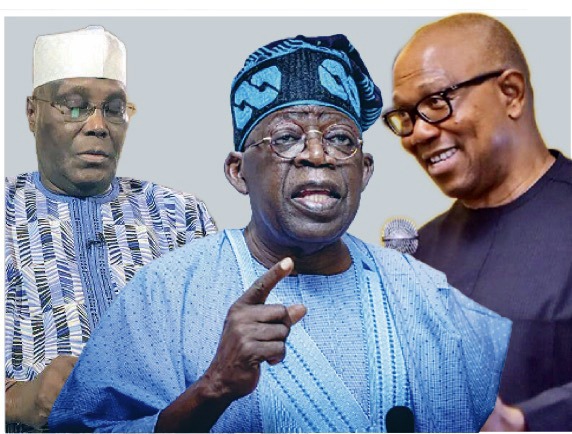
At this critical juncture, the spotlight naturally falls on leading opposition figures like former Vice President Atiku Abubakar of the ADC and Peter Obi of the NDC. Both men remain formidable figures on the political chessboard, yet their current engagement with the public raises important questions about substance versus opposition posture.Atiku Abubakar continues to present himself as the experienced statesman with the gravitas and structural reach to reset the national economy. His supporters emphasise his background in economic deregulation, public-private partnerships, and fiscal decentralisation. However, much of Atiku’s public commentary in recent months has centred on attacking the Tinubu administration’s implementation of subsidy removal and exchange rate unification. Criticising the administration in a recent interview, he promised to restore fuel subsidy if elected. “I did not oppose the removal of the oil subsidy, but where is the money? Where did it go? It was intended to reduce poverty and help children attend school. Where is the money now? It seems they are just stealing it. If elected, I will bring back the oil subsidy, and whoever stole the money must refund it,” Atiku said.

While these criticisms resonate with the populace feeling the pinch of inflation and fuel subsidy removal, Atiku has yet to roll out an updated, detailed policy paper that explicitly demonstrates how his proposed fiscal framework would curb soaring living costs without reintroducing unsustainable government subsidies. All major presidential candidates backed fuel subsidy removal as the only fix for persistent scarcity. Proposing its restoration now is a stark U-turn—a policy somersault that threatens to plunge the nation back into systemic fraud and rent-seeking.
Critiquing both sides of the political divide, renowned oil expert, Martin Onovo, described Atiku as a desperate politician who cannot be trusted, while simultaneously characterising the current subsidy regime under the Tinubu administration as inherently flawed. Speaking in a telephone interview with Sunday Sun, Onovo argued: “While I think Atiku is desperate and cannot be trusted, I also know that Tinubu’s policy is reckless and technically fraudulent. Ordinarily, subsidy is the difference between the cost of production and the price. It is technically dubious for the administration to use the price in the international market for a local product. Why will anybody tell us to pay international price for a local product? Why should Dangote import what we produce?”

Onovo further pointed to international precedents and historical domestic frameworks to illustrate his point: “The price of petrol in Iran or Venezuela is not the same in the US. But what they are telling us in Nigeria is that we should pay international price. During the Abacha administration, Professor Sam Aluko established the production cost and asked the government to put the surplus into the PTF. That is the right thing to do. That is what I would have done if I was the president. When I ran for Presidency in 2015, I said that I would sell petrol at N45 per litre. So, the first thing is to eliminate the corruption in the sector. With the onset of campaigns, I expect all candidates to speak to security issues. For me, that is the first thing. The second thing is poverty. Poverty has many dimensions—it has dimensions of inflation, lack of access to healthcare delivery, food security and so on,” he said.

Similarly, Peter Obi, whose 2023 run energised a massive demographic of young Nigerians, remains a potent symbol of alternative governance. Obi’s political capital is built on messages of fiscal discipline, production-centred economic growth, and cutting the cost of governance.

Outlining its foundational platform, the Nigeria Democratic Congress (NDC) announced that its campaign will centre on shifting the national economy from consumption to production while aggressively tackling insecurity, inflation, unemployment, and multidimensional poverty. Speaking in an interview with Sunday Sun, the party’s National Publicity Secretary, Osa Director explained that the party intends to distinguish itself through open, sincere engagement with the country’s pressing challenges. Central to the NDC’s economic strategy is a plan by its presidential candidate, Peter Obi, to prioritise industrial revival by reopening moribund factories and establishing a supportive environment for local industries to thrive. The party also plans to address foreign exchange volatility to help stabilise the Naira and allow it to find its true value.

According to the party leadership, boosting domestic production serves as the most effective mechanism to expand supply, lower inflation, and generate widespread employment to lift citizens out of poverty.

On national defence, the NDC pledged to ensure security agencies are properly compensated, well-equipped, and continuously trained. While acknowledging recent military pay adjustments, the party emphasised that eliminating the diversion of security funds into private accounts will remain a strict priority under an NDC-led administration.

Acknowledging that economic recovery requires time, the party spokesman noted that commitment and sound policy execution will gradually pull the nation out of its current doldrums. The NDC confirmed that while its national campaign structure will be formally unveiled shortly, candidates running for National Assembly seats have already been directed to begin outreach at the local level.

Adding to the alternative perspectives emerging across the opposition spectrum, Action Democratic Party (ADP) National Chairman, Yabaji Sani, says the party’s 2027 campaign will focus on insecurity and the economy, arguing both can be fixed with political will.

On security, Sani stated Nigeria had sufficient resources and personnel to tackle insecurity but lacks accountability. He said security chiefs across the police, army, navy and air force must be held responsible for incidents within their jurisdictions. According to him, funding must come with consequences, including sackings, to end “business as usual.” He compared Nigeria to other nations with fewer resources but better security outcomes, attributing their success to accountability.

On the economy, Sani dismissed it as “not rocket science,” saying Nigeria’s comparative advantage lies in oil and gas. He argued the sector must be effectively managed to generate revenue for investment in agriculture and other areas. He accused the current administration of failing to properly manage the sector, alleging crude oil theft is worse and more opaque than before. Sani advocated adopting international best practices, citing the United States’ use of technology to monitor oil production and sales. He said Nigeria sells crude on FOB terms instead of CIF, which limits leverage in bilateral trade. He concluded that an ADP government would prioritise transparency, accountability and proper management of oil and gas proceeds, describing it as the foundation for funding other sectors and driving economic growth ahead of 2027. Yet, in this early phase of the 2027 cycle, Obi’s messaging has predominantly mirrored general public frustration rather than offering structured strategic roadmaps. His widely shared commentary focuses heavily on pointing out administrative lapses, fuel price hikes, and public sector waste.

While identifying these issues keeps his base engaged, the 2027 electorate will require more than diagnostic outrage.

Beyond highlighting what is wrong, Obi must present technical, operational blueprints detailing how an NDC administration would stabilise the Naira, lower energy costs, and overhaul the national security architecture within legal and institutional frameworks. Noise is cheap; actionable ideas are rare and expensive. Beyond rhetoric, the electorate will be looking for candidates who can articulate clear, realistic solutions to the nation’s myriads of problems. If candidates fail to clearly outline these solutions, widespread voter apathy remains a serious risk.

The economics of a six-month campaign

Unlike previous election cycles, this six-month campaign calendar introduces an extraordinary financial and logistical endurance test for political parties. Running a continuous national campaign for half a year in a country as geographically vast and ethnically diverse as Nigeria requires immense financial capital. An extended campaign schedule implies continuous operational costs: maintaining campaign headquarters across 36 states and 774 local government areas, funding media placement, financing nationwide travel, procuring campaign collateral, and deploying thousands of agents to polling units on election day. An edge will naturally belong to political structures capable of sustaining funding from the ward level all the way to the presidential stage. This reality places a heavy burden on opposition parties.

While the ruling APC can leverage incumbent network density and institutional advantages, opposition figures must rely heavily on private donations, party dues, and personal fortunes. In a tight financial environment, maintaining momentum over six continuous months without running out of resources or over-leveraging campaign finances will test the managerial competency of every presidential candidate.

N10bn spending limits and enforcement challenges

This financial reality collides directly with the statutory framework governing election spending. Under Section 92 of the Electoral Act 2026, campaign expenditure ceilings have been significantly revised upward to reflect economic inflation. The statutory spending limit for presidential candidates now stands at ₦10 billion, up from the ₦5 billion limit imposed during the 2022 framework. Furthermore, Section 92 restricts individual contributions to a single candidate to a maximum of ₦500 million, while prescribing penalties—including fines equivalent to one per cent of the permitted threshold, up to 12 months imprisonment, or both—for candidates who knowingly exceed these limits.While the ₦10 billion ceiling offers candidates greater statutory breathing room, political analysts and civil society organisations express deep scepticism regarding compliance and enforcement. In real terms, executing a six-month, nationwide presidential campaign across 176,000 polling units easily eclipses statutory thresholds when accounting for logistics, broadcast advertising, ground operations, and grassroots mobilization. This gap between statutory regulation and operational reality exposes a chronic enforcement deficit.

INEC is tasked with monitoring campaign accounts and auditing party finances, yet the commission faces significant institutional limitations in auditing complex, decentralised campaign expenditures. In practice, off-the-books spending, third-party support groups, and unmonitored cash transactions regularly bypass official accounting channels. Unless INEC, in collaboration with anti-graft agencies, establishes robust real-time financial tracking mechanisms, the ₦10 billion spending limit risks remaining a symbolic statutory benchmark rather than an enforced rule of law.

Voter mobilisation and key deciders

Beyond the airwaves and financial logistics, voter participation remains a critical vulnerability. Electoral data reveals millions of uncollected Permanent Voter Cards (PVCs) alongside new registration windows that political parties have largely overlooked. An election cannot be won with supporters who are unable to vote; the party that pairs campaign energy with aggressive voter registration and PVC collection drives will secure a distinct advantage.

As electioneering intensifies, three key factors will likely define the outcome. First, the economy will play a central role. If food inflation and energy costs remain acutely high into late 2026, the demand for change will become the default voting impulse. Second, public sentiment regarding security will depend heavily on whether local government areas and major transport corridors experience tangible safety improvements. Finally, youth participation will be decisive, as voters under 35 constitute over 40 per cent of registered voters and demand direct digital engagement, clear economic roadmaps, and accountability over traditional political town halls.

As the dust settles on the first week of official campaigning, three realities about the general election have become unmistakable. First, this will be a contest defined less by slogans and more by substance. With President Bola Ahmed Tinubu seeking a second term on a platform of continuity, and the opposition rallying around the language of rescue and fairness, voters are being forced to choose between defending a painful reform agenda and trusting an alternative that is yet to be fully articulated. The economy, therefore, sits at the centre of the campaign. Food inflation, fuel costs, joblessness, and the daily struggle for survival will weigh heavier on the ballot than party logos or regional loyalties. Whichever candidate can credibly explain how to ease these burdens without promising miracles will own the most powerful argument.

Second, structure and stamina will matter more than noise. The six-month campaign window introduced by INEC is an endurance test. It favours parties with deep pockets, strong grassroots networks, and the discipline to sustain visibility from ward to national level. The APC holds the advantage of incumbency and state machinery. But the opposition’s survival depends on whether the G-100’s Unity Summit and similar coalition talks translate into a real electoral alliance, and whether parties like the ADC and NDC can move beyond criticism to present detailed policy blueprints. Nigerians have heard diagnoses before; they will demand prescriptions.

Third, the election will ultimately be decided by mobilisation, not just messaging. Millions of PVCs remain uncollected, youth voters under 35 constitute over 40 per cent of the electorate, and trust in INEC’s processes will be tested daily. The party that pairs its campaign rallies with aggressive voter registration, PVC collection, and digital engagement will convert enthusiasm into votes.

Campaign 2027 has started with signals. In the months ahead, those signals must become solutions. Because when Nigerians go to the polls, they will not just be voting against hardship. They will be voting for hope that feels tangible, leadership that feels competent, and a future that feels possible.
SEC proposes ₦30m fee, ₦2bn capital for crypto operators

0

The Securities and Exchange Commission has proposed a ₦30 million registration fee and a minimum capital requirement of up to ₦2 billion for digital asset operators in Nigeria.

The proposals are contained in SEC’s draft rules on “Digital and virtual asset operations, custody and markets”, released on August 20.

Under the proposed framework, digital asset exchanges, digital asset custodians, digital asset platform operators, digital asset offering platforms and real-world asset tokenisation platforms would each pay a ₦30 million registration fee.

The commission also proposed different minimum capital requirements for operators. Digital asset exchanges and custodians would require ₦2 billion each, while digital asset platform operators, digital asset offering platforms and real-world asset tokenisation platforms would require ₦500 million each.

Virtual asset service providers would require a minimum capital of ₦200 million, in addition to a ₦100,000 processing fee and ₦300,000 application fee.

SEC also proposed that regulated entities maintain a fidelity insurance bond covering at least 25 per cent of their minimum paid-up capital.

For companies seeking to operate under the Accelerated Regulatory Incubation Programme, the commission proposed a ₦200,000 initial assessment fee and a ₦2 million application fee.

The framework further introduces ongoing supervisory charges based on the turnover of regulated entities. A digital asset exchange under the incubation programme would pay 0.015 per cent of adjusted turnover, while other entities would pay 0.0075 per cent.

After full registration, the supervisory fee would rise to 0.025 per cent of adjusted turnover for digital asset exchanges and 0.015 per cent for other regulated entities, payable quarterly or at a frequency determined by the commission.

The commission also proposed restrictions on how much retail investors can put into digital asset offerings.

Under the proposed rules, a retail investor would not be allowed to invest more than ₦1 million in a single issuer or ₦10 million across digital asset offerings within a 12-month period.

SEC said investors seeking to commit more than ₦1 million or five per cent of their net worth, whichever is higher, would be subject to additional safeguards.

The digital asset offering platform would have to provide a prominent risk warning, obtain the investor’s express consent and confirm that the investor understands the nature and risks of the investment.

It would also be required to assess the investor’s knowledge, experience, financial position and ability to bear potential losses before accepting the investment.

SEC said platforms must keep records of the warnings, consent and assessments while maintaining systems to monitor and enforce the prescribed investment limits.

Institutional, qualified and high-net-worth investors, as well as other categories recognised by the commission, may be exempted from the proposed limits.

The proposed framework states that no person or company would be allowed to conduct digital or virtual asset business in Nigeria, or target Nigerian residents, without registration, approval or authorisation from SEC.

Operators would also be required to comply with Nigeria’s corporate governance code and other governance requirements prescribed by the commission.

For foreign stablecoin issuers seeking to operate in Nigeria, SEC proposed requirements including the appointment of a local representative, proof of authorisation in an acceptable foreign jurisdiction and compliance with Nigeria-specific reserve, liquidity and redemption requirements.

The commission also proposed mandatory registration under the Accelerated Regulatory Incubation Programme for companies seeking to operate in Nigeria’s cryptocurrency market.

Yari Accepts Appointment as APC Presidential Campaign Council DG

0


Senator Abdulaziz Yari Abubakar has accepted his appointment as Director-General of the All Progressives Congress (APC) Presidential Campaign Council for the 2027 elections.

In a statement released on Saturday in Abuja, the Zamfara West senator expressed deep gratitude and seriousness over the responsibility.

“I accept this responsibility with deep gratitude and full seriousness. My sincere thanks go to President Bola Ahmed Tinubu and the party for the trust placed in me, and to our party leadership for the confidence. I do not take it lightly,” Yari said.

He described a campaign as more than an election, calling it “a conversation with the Nigerian people in every state, every language, every faith about the future we are building together.”

Yari pledged that the campaign would be conducted with discipline, unity and respect for all.

He said the work begins immediately and there is a place for everyone. To Nigerians of every political leaning, he urged a choice of progress over division, adding that the party would earn public confidence through its record rather than noise.

“By the grace of God, and with the effort of us all, we will deliver victory in January 2027,” he concluded.