Home Blog Page 20

Chatham House member condemns INEC chairman’s harassment in London, calls for UK investigation

0

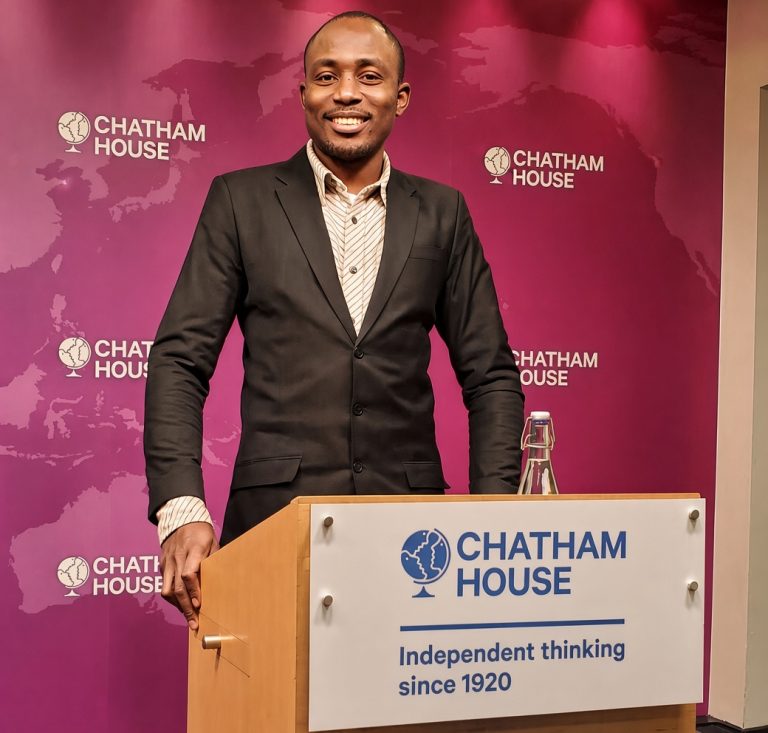
A United Kingdom-based Nigerian and member of Chatham House, Tunmise Ajiboye, has strongly condemned the recent confrontation, harassment and blocking of the Chairman of the Independent National Electoral Commission (INEC), Professor Joash Amupitan (SAN), by diaspora protesters in London.

Ajiboye has called on United Kingdom authorities to investigate the incident thoroughly and ensure that anyone involved in the dastardly act is held accountable under the law.

Professor Amupitan was in London to deliver an address on Nigeria’s 2027 general elections and democratic trajectory at Chatham House, in an event hosted in partnership with the Kimpact Development Initiative, when he was targeted by the protesters.

In a statement made available to our correspondent on Saturday, Ajiboye noted that Chatham House remained one of the world’s most respected platforms for policy dialogue, international affairs and democratic engagement.

He expressed deep disappointment that such a prestigious event was marred by an ambush outside the venue and near the UK Parliament area.

He said that, during the incident, Professor Amupitan’s vehicle was surrounded and blocked until security agents and Chatham House officials intervened.

“As a member of Chatham House, I understand the value of this institution as a space where leaders, policymakers, academics, and citizens exchange ideas freely and respectfully.
“To turn the environment around such an institution into a scene of intimidation and mob action is a betrayal of the very democratic principles such engagements seek to promote,” Ajiboye said.

Denouncing the conduct as unacceptable, Ajiboye emphasised that no Nigerian, whether at home or in the diaspora, should support the harassment of a public official performing official duties.

He stressed that an electoral referee should be held accountable through proper democratic channels rather than being attacked before the 2027 elections had even taken place.

Ajiboye also aligned himself with the stance of former Kaduna Central Senator Shehu Sani, who condemned the incident as an unfair and premature attack on an electoral referee, describing Sani’s position as responsible and consistent with democratic values.

While acknowledging that Nigerians had a right to demand free, fair and credible elections in 2027 and that legitimate grievances must be heard, Ajiboye maintained that unlawful conduct was never justified.

“Ambush, intimidation, and mob action cannot produce the democracy we claim to desire. They only weaken public confidence, embarrass Nigeria before the international community, and create an atmosphere where violence replaces dialogue,” he stated.

Ajiboye urged UK authorities to investigate the incident thoroughly. He further appealed to Nigerians in the diaspora to channel their frustrations into lawful advocacy, voter education, constructive engagement with INEC and peaceful democratic participation.

“Nigeria’s democracy will not be saved by disorder. It will be saved by credible institutions, responsible citizens, peaceful participation, and respect for the rule of law,” Ajiboye added.
NRS unveils tax incentives, advisory hub to support businesses, creative industry

0

The Nigeria Revenue Service (NRS) has introduced new initiatives and tax incentives to promote business growth, attract investment and open up opportunities in Nigeria’s creative economy.

The initiatives are an Investment and Tax Advisory Hub and a Creative Economy Tax and Investment Initiative. They are meant to give entrepreneurs and investors practical guidance on tax compliance, available incentives and business formalisation.
The NRS announced them at a tax policy dialogue held on the sidelines of the Creative Africa Nexus Weekend (CANEX WKND) 2026 in Lagos. The session brought together tax officials, policymakers, investors and creative industry stakeholders to discuss how Nigeria’s evolving tax framework can support businesses, especially those in the creative and cultural industries.

The NRS Executive Director, People, Stakeholders and Communication, Obinna Ihedioha, said the two platforms would allow closer engagement between the tax authority and operators in the creative economy.

He said the advisory hub would help businesses understand their tax obligations, incentives and investment opportunities, while the creative economy initiative would deepen collaboration with industry players.

Ihedioha said the service recognised the creative economy’s potential to contribute to Nigeria’s gross domestic product (GDP) and the wider African economy. He added that the NRS would keep exploring policy initiatives and, where necessary, legislative adjustments to meet the sector’s peculiar needs.

The NRS Director, Government Business South Directorate, Abuja, Mustapha Akaje, outlined incentives under the Nigeria Tax Act 2025 and other laws.

He said qualifying investors in designated sectors, including the creative and cultural industries, could get a five per cent tax credit on eligible capital expenditure, subject to conditions including a minimum investment of N250 million.

Akaje said small companies with annual turnover of N100 million or less and fixed assets below N250 million could qualify for zero company income tax and exemption from the four per cent development levy.

He added that there were also reliefs for qualifying start-ups, research and development spending, and eligible investments under the Nigeria Startup Act 2022. Businesses in export processing and free trade zones might enjoy company income tax exemptions if they met prescribed export requirements.

On cross-border business, he said eligible taxpayers could get credit for qualifying taxes paid in other countries against their Nigerian tax liabilities, subject to agreements and conditions.
He stressed that the incentives were not automatic and that businesses must meet the statutory requirements to qualify.

The NRS Assistant Director (Tax), Kazeem Lawal, urged creative entrepreneurs to formalise their businesses. He said many were commercially successful but limited their growth by operating without formal structures, often routing business transactions through personal accounts without proper records.

According to him, formalisation gives a business a distinct identity and credibility, and makes it easier to attract investors, partnerships and deals with local and international companies.

“Formalisation is about moving from being a successful creator to building a sustainable business that can outlive the creator,” he said.

Lawal clarified that small businesses exempted from collecting Value Added Tax (VAT) as agents of government were not automatically exempt from paying VAT on taxable goods and services they bought. He added that VAT refunds had been streamlined, with eligible refunds expected within 30 days without a prior audit, although later verification was still possible.

The NRS Assistant Director, Field Operation Monitoring Department, Simeon Onyegbula, advised businesses to obtain tax identification numbers and keep proper accounting records to benefit from incentives.

He said not every expense qualified for deduction and that personal expenses could not be passed off as business costs. Taxpayers, he said, must keep invoices, receipts and ledgers to support claims, and only expenses incurred wholly and exclusively for business qualified. Where an expense served both purposes, only the business portion was allowed.

The NRS Executive Director, Finance and Corporate Services, Mohammed Abubakar, called for more engagement to simplify the technical provisions of tax laws. He cautioned that earning income abroad did not automatically qualify a taxpayer for double taxation relief, as that depended on the taxpayer’s circumstances and whether a double taxation agreement existed with the other country.

He also noted that personal income tax matters might fall under the relevant state tax authorities, depending on an individual’s residence, and urged the NRS to sustain engagements with industry stakeholders to bridge the knowledge gap and improve voluntary compliance.

The officials said the evolving tax framework was meant to create a more enabling environment, encourage formalisation and attract investment into strategic sectors.

They added that sustained collaboration between government and the private sector would be critical to unlocking the creative economy’s potential and advancing Nigeria’s ambition of building a trillion-dollar economy.

Bauchi governor suspends Emir of Lame

0

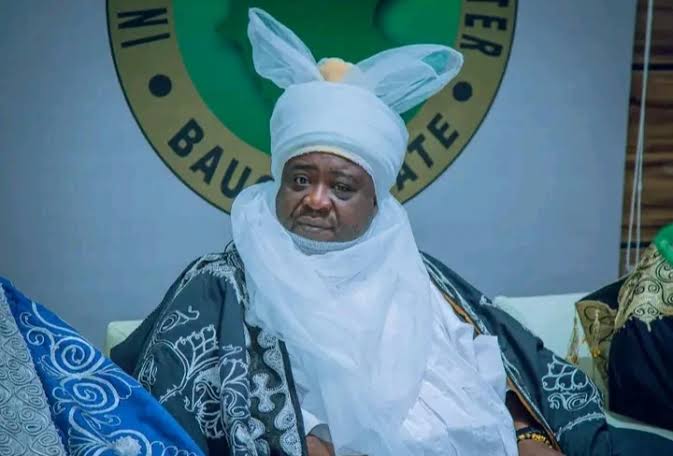
The Bauchi State Government has suspended the Emir of Lame, Alhaji Aliyu Yakubu Lame, over allegations of abuse of office, unlawful interference in land administration and unauthorised collection of levies, among other alleged misconduct.

Governor Bala Mohammed approved the immediate suspension and constituted a 12-member Administrative Panel of Inquiry to investigate the allegations and submit its report within three weeks.
The state government, in an official statement, said the decision followed several petitions and intelligence reports from community leaders, stakeholders and security agencies over activities allegedly capable of threatening peace, security and peaceful coexistence in the Lame Emirate.

Other allegations against the traditional ruler include undue interference in the operations of mining companies and arbitrary exercise of traditional authority.

The government said the Ministry for Local Government and Chieftaincy Affairs had earlier requested a written explanation from the Emir in line with the principles of fairness and the right to a fair hearing.

Although the Emir responded to the allegations, his explanations were considered unsatisfactory, prompting the government to establish an independent panel to investigate the matter.

It stressed, however, that the allegations remained unproven and that the suspended monarch would be given the opportunity to defend himself before the panel.

The panel is chaired by a retired Deputy Inspector-General of Police, Sani Mohammed, while a retired Director of the Department of State Services, Musa Mohammed Yankari, is among its members.

Other members represent the Nigeria Police Force, the Department of State Services, the Nigeria Security and Civil Defence Corps, the Ministry of Justice, the Ministry of Environment, the Ministry of Natural Resources Development, the Toro Local Government Council and the Local Government Service Commission.

The Director of Chieftaincy Affairs in the Ministry for Local Government and Chieftaincy Affairs will also serve on the panel, while the ministry’s Director of Administration and Human Resources will act as secretary.

The panel is expected to examine the petitions, review relevant documents and evidence, invite concerned parties, hear the Emir’s defence and submit its findings and recommendations to the state government within three weeks.

The government also directed the suspended Emir to remain within the Lame Emirate throughout the investigation, except where permission to travel is granted by the appropriate authority.

He was further prohibited from performing or interfering in the traditional, administrative and official affairs of the Emirate Council pending the conclusion of the inquiry.

According to the government, the measures were approved under the Bauchi State Chieftaincy (Appointment and Deposition) Law 2026 as a precautionary step to protect the integrity of the investigation, prevent possible interference with witnesses and official records, and maintain peace in the community.

Meanwhile, the Senior Councillor of the Lame Emirate Council, Alhaji Bala Abubakar Gumau, popularly known as Galadiman Lame, has been directed to oversee the day-to-day administration of the emirate pending the outcome of the investigation.

The arrangement, the government said, is intended to ensure continuity in traditional leadership and community administration during the period of the Emir’s suspension.

The state government appealed to residents of the emirate, traditional titleholders, community leaders, youths and other stakeholders in Toro Local Government Area to remain calm and law-abiding.

It also urged residents to cooperate with security agencies and the investigative panel and to avoid actions capable of escalating tensions or undermining the inquiry.

The government reaffirmed its commitment to protecting the dignity and integrity of traditional institutions while ensuring accountability, due process and the principles of natural justice in the handling of the matter.

Afreximbank commits $75m SME finance facility to Development Bank of Nigeria

0

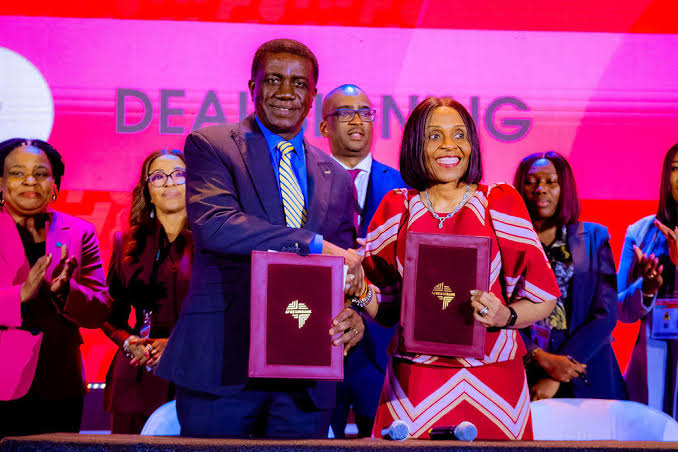
The African Export-Import Bank (Afreximbank) has committed a $75 million finance facility to the Development Bank of Nigeria (DBN) to widen access to finance for Nigerian small and medium-sized enterprises (SMEs), including eligible businesses in the creative economy.

The facility was announced during the Creative Africa Nexus (CANEX) WKND 2026 in Lagos. The Executive Vice President, Intra-African Trade and Export Development, Afreximbank, Kanayo Awani, and the Managing Director and Chief Executive Officer of DBN, Dr Tony Okpanachi, led the ceremonial signing for their institutions.
DBN will route the loan through its Participating Financial Institutions (PFIs) to fund eligible small businesses. The facility will support working capital, asset acquisition, pre-export and post-export financing, and supply chain activities. Businesses in fashion, film, music, design and the wider creative industries are among the intended beneficiaries.

Under Afreximbank’s Export SME Development programme, the financing will come with capacity-building and export-readiness support to help beneficiary firms become export-ready and reach regional and international markets.

Afreximbank and DBN will also jointly develop a capacity-building programme to strengthen the PFIs’ ability to support export-oriented SMEs. In addition, Afreximbank will give the businesses access to its trade platforms, including MANSA, TRADAR, the Pan-African Payment and Settlement System (PAPSS) and ATEX. It will also support market access through the Africa Buyer Programme, the Afreximbank Trade and Development Centre (ATDC) and the Intra-African Trade Fair (IATF).

Awani said the partnership went beyond providing capital.
“We are taking an integrated approach that combines finance with capacity building, export-readiness support and access to markets,” she said. According to her, the aim is to help Nigerian SMEs move from promising local businesses to sustainable exporters, while working with participating financial institutions to improve how they understand, finance and support SMEs.

She added that, for creative enterprises, the arrangement advanced CANEX’s ambition to turn African talent and ideas into sustainable businesses that could compete internationally.

Okpanachi said the partnership was another important step in DBN’s commitment to expanding access to finance for Nigerian micro, small and medium enterprises (MSMEs).

He said the $75 million would provide much-needed financing through the bank’s PFIs and create opportunities for businesses, particularly those in creative and export-oriented sectors, to strengthen their productive capacity and access new markets.

Okpanachi also said the capacity-building and market-access parts of the deal were particularly important to DBN. By strengthening financial institutions’ ability to support export-ready businesses and connecting Nigerian enterprises to wider markets, he said, MSMEs would be helped to move from local businesses to competitive participants in regional and global value chains.

The partnership combines DBN’s wholesale lending network with Afreximbank’s trade finance expertise, capacity building and market access support.

Obasanjo, Gonsalves back reparations as CANEX WKND session revisits slavery, colonialism

0

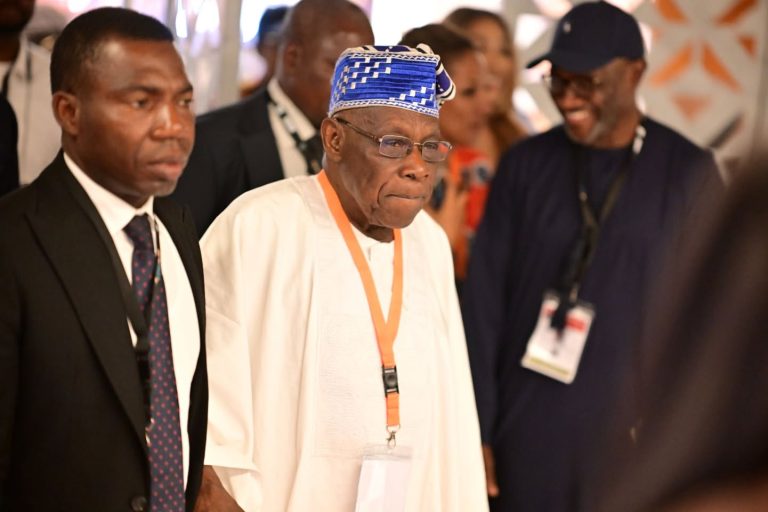
Former President Olusegun Obasanjo has said Africans and people of African descent must never forget the slave trade, adding that forgiveness should follow only if those responsible show remorse, as speakers at the Creative Africa Nexus Weekend (CANEX WKND) 2026 in Lagos pressed the case for reparations.

Obasanjo spoke at a session titled “A Conversation Inspired by Lest We Forget”, held at Live Theatre 1, alongside the former Prime Minister of St Vincent and the Grenadines, Dr Ralph Gonsalves, and Professor Paulette Angela Ramsay of Jamaica.
The session was inspired by the book Lest We Forget: Slavery, Slave Trade, Colonization, Emancipation and Reparation, which Ramsay said grew out of Obasanjo’s call for an insider’s account by African and diaspora scholars, politicians and policymakers.

Obasanjo compared the slave trade to the Holocaust. He said that if the world forgot, nobody would insist the Holocaust had happened, adding that millions of Africans had also died in the slave trade.

“As a Christian, we will forgive if they show remorse, those who committed this sin, this atrocity, but we must never forget,” he said.

He said global Africans, including those in the Caribbean, the Americas and the Pacific, should remember that they were one people who had been divided by greed and must unite in their own interest for their own prosperity.

Gonsalves said the United Nations General Assembly, on 25 March 2026, acknowledged the transatlantic slave trade and racialised chattel enslavement of Africans as the greatest crime against humanity.

He said reparations were about repairing the present-day legacies of underdevelopment, harm and pain. He said the Caribbean Community (CARICOM) had a 10-point plan for reparatory justice, starting with a full formal apology and ending with debt relief and financial compensation. The plan also covers health, education, housing, poverty, technology, memorials and the return of stolen artefacts.

According to him, the British government has said it will consider some matters but does not call them reparations. He said many of them were already covered by the Sustainable Development Goals, which he said were distinct from reparations because reparations required a special, multi-generational approach.

Ramsay said reparations should not be reduced to money. She said they must include an apology, restitution, the return of artefacts held in museums abroad and an end to the ongoing exploitation of Africa’s resources, such as minerals used in making semiconductors.

She said Ghana presented a resolution on the matter at the United Nations on 25 March this year, and that reparations concerned all global Africans, not only the Caribbean. She called on governments to protect Africans’ intellectual and creative production through legal frameworks and to put African history in school curricula.

She said African people’s story was one of survival, and that the past should be remembered “without bitterness”.

Bakassi Deep Seaport will redefine Nigeria’s maritime economy – Tinubu

0

•President flags off project, as Otu hails historic milestone
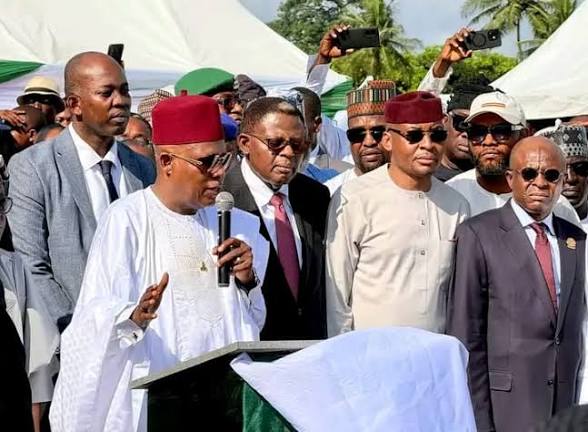
President Bola Ahmed Tinubu has described the groundbreaking of the Bakassi Deep Seaport as a defining milestone in Nigeria’s economic diversification and said it was a strategic national investment.

Represented by his Vice President, Senator Kashim Shettima at the ceremony in Bakassi on Friday, November 13, 2026, the President said the port would open new commercial corridors, stimulate industrialisation and create jobs. He commended Governor Bassey Edet Otu and the people of Cross River for sustaining the vision and advancing it towards actualisation.

Tinubu recalled that the project was conceived in 2014, with an Environmental and Social Impact Assessment developed in March 2015, before receiving renewed impetus under Otu. Designed as a 20-metre-draft facility, the port is expected to accommodate large vessels that currently bypass Nigerian ports. It is also linked to a 260-kilometre superhighway to move cargo to markets across the country. He credited Otu’s determination with helping to overcome institutional and financial obstacles, including efforts to secure a $3.5 billion Afreximbank financing arrangement and formalise the PPP framework in February 2025.

“This is beyond a Cross River dream. It is a Nigerian project. It is a poverty breaker,” he declared.

He stressed that the port would complement, not undermine, Lagos. “Lagos is not our enemy. Lagos is our elder brother in trade. No country eats with one hand. No country carries all its loads on one shoulder. That shoulder will break,” he said.

More than 80 per cent of Nigeria’s foreign trade, he noted, passes through Lagos, contributing to congestion and rising costs. A second major maritime gateway, he argued, would strengthen the national economy: “When Calabar works, Nigeria works on two legs.”

The President said Nigeria had not fully exploited its Gulf of Guinea coastline, while neighbouring countries benefited from trade Nigerian ports could attract. The Bakassi project, he maintained, would help retain regional cargo, expand international market access and strengthen the country’s maritime competitiveness.

Tinubu further observed that roughly 90 per cent of cargo moves by sea, yet Nigeria handles only a fraction of regional cargo trade despite its economic weight in West Africa. The port, he said, would help close that gap, reduce dependence on a single gateway and position the country to capture a greater share of maritime commerce.

He acknowledged the territorial and economic losses Cross River suffered following the Bakassi peninsula ruling and the loss of oil revenue, but said these setbacks had not diminished the people’s courage, hospitality or resilience. “The peninsula was not the end of your story, but the beginning of your next chapter,” he declared, urging residents to protect the project from political interference and regard it as an inheritance for future generations.

The state governor, Senator Bassey Otu, in his speech, hailed the groundbreaking and credited President Tinubu’s Renewed Hope Agenda with providing the decisive federal support that revived the project. He said political, administrative, legal and environmental challenges had stalled implementation until Tinubu’s plan to expand and upgrade maritime corridors created a fresh opportunity for Cross River.

Lauding Tinubu for guiding the state through the processes leading to the Certificate of Compliance and final federal approval, Otu described him as “a bastion of economic diversification and social equity.” He recalled Calabar’s long maritime heritage, saying the new facility would reinforce Cross River’s established littoral status. He said the project’s approval and delivery demonstrated the value of cooperation between the federal and state governments.

The governor said the state had completed preparatory work, including an Environmental Impact Assessment and hydrographic, geotechnical and geophysical surveys, and secured federal approvals. The project is to be delivered through a Public-Private Partnership arrangement, with an initial funding approval of $2.27 billion. He said logistics, trade, fishing, shipping, tourism and shipbuilding would benefit, positioning Cross River as a Gulf of Guinea maritime hub. The surveys, he added, exposed flaws in the 1903 navigational charts, which the Federal Government replaced on October 1, 2026, affirming the state’s littoral status.

Otu disclosed that selected Cross Riverians were undergoing specialised training for construction and operational roles, with knowledge transfer planned. He pointed to the state’s three-way economic corridor—the airport, seaport and Lagos-Calabar Coastal Highway—to facilitate cargo movement and attract investors. He invited investors in maritime and related industries to take advantage of the project’s prospects and the state’s investment-friendly environment, including a one-stop investment hub and tax incentives. He described the economic possibilities as boundless and called on development partners to help build a resilient economy.

Toluwanisings: Police arraign prophet, one other over desecration of corpse, defamation

0

The Oyo State Police Command said it has arraigned two individuals, Prophet Moses Idowu aka Woli Arugbo Ojo and Oladapo Joshua of Dunmininu TV, before a court of competent jurisdiction over offences bordering on the unlawful publication of false information, defamatory statements, indignity to a deceased human body and conduct likely to cause a breach of public peace.

Their arraignment followed their conduct after the death of singer Olayemi Bayonle Bolaji, popularly known as Toluwanisings.

The command said it had conducted separate investigations into their alleged involvement in the circulation of videos and publications containing unsubstantiated allegations concerning a deceased person and members of his family, actions capable of causing emotional distress to the bereaved family and disturbing public peace.

In the first case, Prophet Idowu was arrested following an incident in which he visited a morgue where the corpse of Toluwanisings was kept, claiming to possess spiritual powers to resurrect him.

The police disclosed that in the course of the incident, the suspect recorded a video of the deceased’s body and subsequently circulated the footage on social media without the consent or authorisation of the deceased’s family, thereby subjecting the remains to indignity and causing further distress to the bereaved family.

Beyond the unauthorised recording and publication of the deceased’s body, the suspect also allegedly made publications accusing the deceased’s wife, Mrs Olayemi Elizabeth Damilola, and his manager of being responsible for the death, without any substantiated evidence to support such claims.

Consequently, the suspect was arraigned on four counts bordering on the unlawful recording and publication of false information, unlawful publication of defamatory matter, improperly offering indignity to the dead human body by recording and publishing its image without the consent and authority of the family, and conduct likely to cause a breach of public peace.

Following his arraignment, the court ordered that he be remanded at the correctional centre, while the matter was adjourned to December 2, 2026, for further proceedings.

Similarly, in a related development involving Toluwanisings, the command arrested one Oladapo Joshua of Dunmininu TV on November 12 over the alleged publication of false and defamatory information on social media platforms.

The police said the suspect in the published videos accused the Personal Assistant to the deceased and members of his family of being responsible for his death, thereby further spreading allegations against individuals already affected by the loss.

The police further said investigation revealed that the suspect proceeded to produce and circulate videos containing unsubstantiated allegations concerning the deceased, his wife and other family members, despite being aware of an undertaking signed by the concerned parties restraining individuals from making publications, whether in print or through any other medium, concerning the deceased.

The command added that this was in addition to several warnings and cautions issued by both the family and the police against the circulation of unverified information.

Despite these interventions, the suspect went ahead with the publications, the police said.

Consequently, Oladapo Joshua was arraigned on charges bordering on the publication of false news on Facebook, unlawful publication of defamatory matter and conduct likely to cause a breach of public peace. The court adjourned the matter to December 11,02026, for further proceedings.

The command said the two cases underscore its concern about the growing tendency of some individuals to use social media platforms to circulate unverified allegations, expose sensitive images and make defamatory publications, particularly in circumstances involving death and other emotionally sensitive matters.

Radio Nigeria confirms Adenike Adegoke as Substantive Director, Lagos operations

0


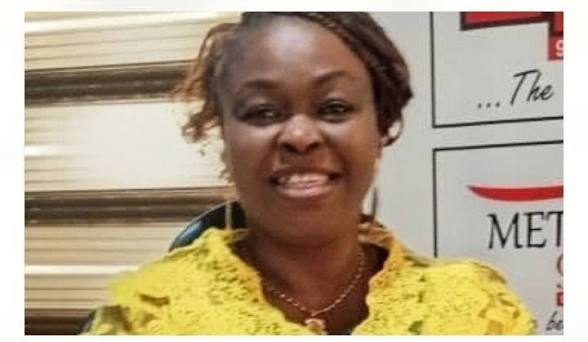
The Federal Radio Corporation of Nigeria (FRCN) has confirmed Princess Adenike Wuraola Adegoke as the substantive Director of Radio Nigeria Lagos Operations.

The confirmation, contained in a letter dated October 14, 2026, and signed by the Head, Secretary /Legal Adviser, Olubukola Shonibare, on behalf of the Director-General, Dr Mohammed Bulama, takes immediate effect.

According to the letter, the management expects Princess Adegoke to deploy her potentials and wealth of experience towards the growth and development of the Corporation.

In her new capacity, she will take charge of the administration and operations of Radio Nigeria’s three Lagos-based FM stations: Bond 92.9 FM, Metro 97.7 FM and Radio One 103.5 FM.

Speaking at a brief meeting of the Committee of Management of Radio Nigeria Lagos Operations in Ikoyi, Princess Adegoke expressed appreciation to the Director-General for the confidence reposed in her.

She pledged to justify the trust by working closely with members of her management team to sustain and build on the achievements of her predecessor, Mrs Bolanle Owoyemi.

Before her confirmation, Princess Adegoke served in an acting capacity as Director, Lagos Operations, for ten months, from November 2025 to October 2026.

She was previously Director of Academic Planning at the National Broadcast Academy (the training arm of Radio Nigeria) and General Manager of Bond 92.9 FM from 2017 to 2025.

Her tenure at Bond FM was marked by notable achievements, including the station’s recognition as FRCN’s Most Outstanding FM Station in 2024 and its emergence as Radio Station of the Year at the Nigeria Media Nite Out Awards on two occasions.

A veteran broadcast journalist, Princess Adegoke holds a Master of Arts Degree in Linguistics from the University of Ibadan and a Bachelor of Arts Degree in Linguistics from the University of Ilorin.

She began her journalism career as a reporter and editor with the News Agency of Nigeria in Jos, Plateau State, during her National Youth Service Corps programme.

She joined Radio Nigeria in 1993 and has, over the years, served in various capacities, including reporter, editor, current affairs officer and presenter.

She also produced World Scope, a Radio Nigeria Lagos programme dedicated to international affairs.

Her contributions to journalism and leadership have earned her several honours, including the Hero of Humanity Award in 2024, Global Creative Leaders Award in 2023 and Distinguished Heroes Award in 2021.

She is also the author of Bond FM: Vessel of National Integration, published in 2022.

Princess Adegoke belongs to several professional bodies, including the Nigerian Guild of Editors, Nigeria Union of Journalists, National Association of Women Journalists and Nigerian Institute of Public Relations. She is also an associate of the Nigerian Institute of Management.

2027: Lalong, Dariye, Plateau APC stakeholders mobilise for Tinubu’s re-election

0

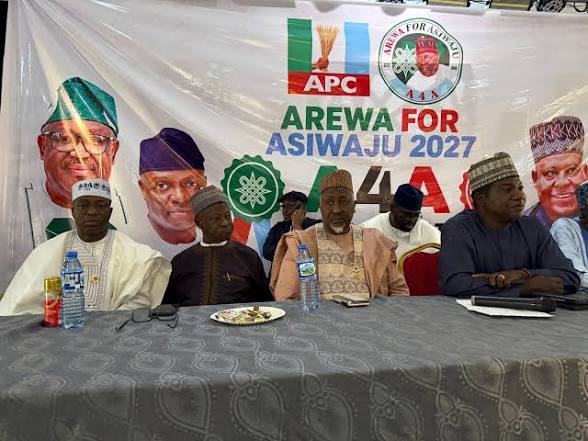
Former Plateau State governors Simon Lalong and Joshua Dariye, and other prominent political leaders and stakeholders of the All Progressives Congress (APC) in the state chapter, have promised to mobilise massively for the re-election of President Bola Tinubu in next year’s presidential election.

Endorsing President Tinubu’s re-election in the 2027 poll, the stakeholders pledged to rally the support of the electorate for the ruling party across the state.
Organised under the umbrella of Arewa for Asiwaju (A4A), its leaders comprise former governors, former ministers, former senators, members of the House of Representatives, former commissioners and local government chairmen.

The statement by Edwin Olofu, Head, Media Relations, Arewa for Asiwaju (A4A), disclosed that the endorsement was made at a high-level stakeholders’ meeting held in Jos, the Plateau State capital.

The participants, according to the statement, unanimously adopted President Tinubu, the Plateau State governor and other APC candidates for the forthcoming elections through a voice vote.

The engagement, chaired by the Deputy Chairman of the Board of Trustees of A4A and former governor of Plateau State, Senator Simon Lalong, also resolved to work towards ensuring that the APC secured victory in all elective positions in the state.

Lalong, who spoke during the meeting, noted: “The stakeholders were convinced that President Tinubu was committed to Nigeria’s development. His continued leadership would guarantee accelerated socio-economic growth and national transformation.”

Equally, former Plateau State governor Joshua Dariye commended the Tinubu-led administration for its contributions to Plateau State and the country at large, maintaining that President Tinubu deserved another term to consolidate on the achievements of his administration.

In his remarks, the Director-General of A4A and former governor of Jigawa State, Muhammad Badaru Abubakar, urged “Northern Nigeria to reciprocate the spirit of equity, fairness and political inclusion by giving President Tinubu overwhelming support in 2027.”

While expressing satisfaction with the commitment demonstrated by the Plateau political stakeholders, Badaru described their endorsement as a significant step towards strengthening the APC’s electoral prospects in the state and across Northern Nigeria.

“The political commitment demonstrated at the meeting would translate into millions of votes for President Tinubu and other APC candidates in the 2027 general elections,” he noted.

Edo identifies 129 erosion sites, moves to avert environmental disaster

0

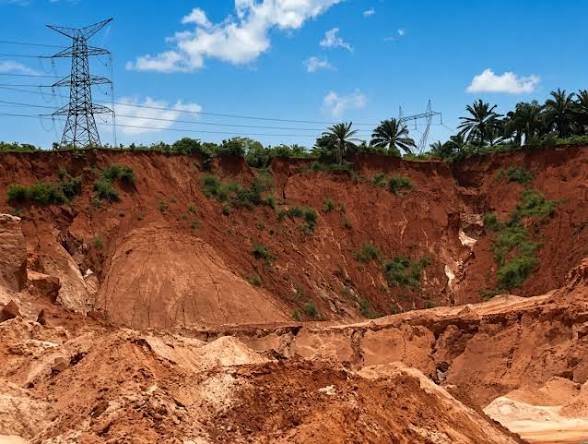
The Edo State Government has identified 129 critical ecological sites, including gully erosion hotspots, requiring urgent intervention to prevent further environmental degradation and protect vulnerable communities across the state.

The Chairman of the Edo State Ecological Funding and Management Commission, Ambassador Terry Igiebor, disclosed this on Friday in Benin City, following the commission’s statewide assessment tour of 16 local government areas.
Igiebor explained that the exercise was undertaken to identify communities grappling with severe environmental challenges, assess the extent of the damage and determine the scale of intervention required to address the situation.

He listed gully erosion, blocked drainage channels, deforestation and environmentally induced road deterioration among the major ecological threats uncovered during the assessment.

Describing the situation in some rural communities as alarming, the commission chairman expressed concern over residents living dangerously close to deep and expanding erosion channels, warning that urgent action was necessary to prevent further loss of lives and property.

He recalled a tragic incident involving a 57-year-old man who reportedly lost his life following an erosion-related disaster, adding that some communities had also recorded cases of children being swept away by floodwaters.

Against this backdrop, Igiebor assured residents that identified emergency locations would receive priority attention before the commencement of the next rainy season.

He disclosed that the commission was developing a one-year intervention roadmap, noting that findings from the ongoing assessment would also serve as critical input into the state’s 2027 budget.
To strengthen its intervention capacity, he said the commission was exploring funding opportunities through the Federal Government’s Ecological Project Office, the World Bank, the United Nations and other international development partners.

The chairman further emphasised that the law establishing the commission guaranteed the equitable distribution of ecological interventions across Edo State’s three senatorial districts to ensure that no community was sidelined in the allocation of resources.

According to him, particular attention would be given to vulnerable communities whose residents lacked the financial capacity, influence or access to government officials to draw attention to their environmental predicaments.

He maintained that access to ecological intervention should not be determined by a community’s ability to lobby government officials, stressing that areas facing genuine environmental emergencies deserved timely and equitable attention.

On measures to tackle the recurring ecological challenges, Igiebor revealed that the commission was planning an environmental education and orientation programme to sensitise residents on the causes of erosion, flooding and other environmental hazards.

He identified indiscriminate waste disposal, blocked drainage channels and poor environmental practices as major contributors to flooding and ecological degradation, insisting that residents must complement government interventions by embracing responsible environmental practices.

Igiebor added that the commission would unveil its master plan and work schedule to clearly outline the responsibilities of communities and other stakeholders in tackling the environmental challenges.

He stressed that sustainable solutions must go beyond emergency interventions to address the root causes of ecological degradation, noting that responsible environmental practices would significantly reduce the enormous financial resources required for environmental remediation.