Home Blog Page 199

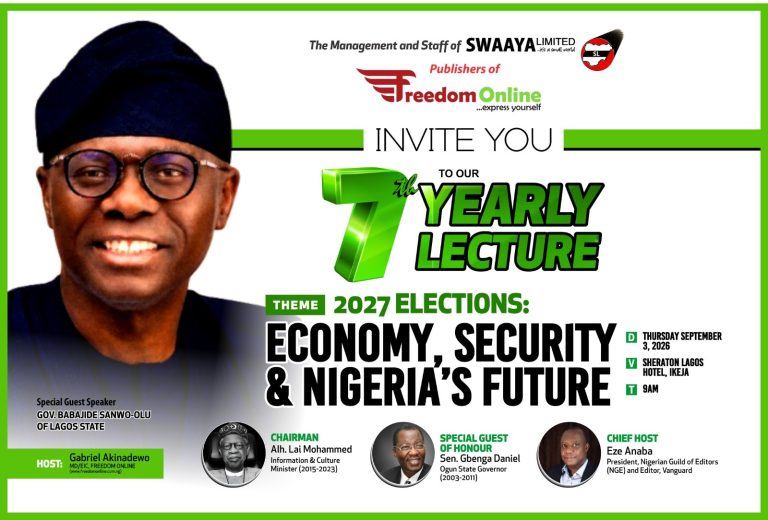
Sanwo-Olu, Lai Mohammed, Gbenga Daniel to discuss 2027 elections, insecurity at 7th Freedom Online lecture

0


Challenges facing the economy and insecurity, especially associated with elections in a developing economy like Nigeria, will be the focus of discussion at the seventh yearly lecture of Freedom Online (www.freedomonline.com.ng) on September 3 in Lagos.

Freedom Online, according to a statement by its Managing Director/Editor-in-Chief, Gabriel Akinadewo, is focusing on how to tackle insecurity during the lecture “because it has become a monster, threatening to consume the nation-state called Nigeria.

“What does the future hold for Nigeria after the 2027 general elections? How will the election be conducted in a way that will be acceptable to all? Will the outcome lay a solid foundation for the future of the country?

“We believe that actions of politicians, security agents and INEC officials, before, during and after the election will, one way or the other, decide the fate of the more than 200 million Nigerians in this geographical space. Obviously, insecurity, part of which is thuggery during elections, leads to poverty, underdevelopment and other social vices. Nigeria’s political, economic and social fabric is disintegrating because of this time bomb and the outcome of the election will go a long way to decide Nigeria’s future in global affairs”.

Akinadewo said Governor Babajide Sanwo-Olu of Lagos State is the Special Guest Speaker while former Information & Culture Minister, Alhaji Lai Mohammed and former Ogun State Governor, Senator Gbenga Daniel, are the Chairman and Special Guest of Honour respectively.

The President of the Nigerian Guild of Editors (NGE) and Editor of Vanguard, Eze Anaba, is the Chief Host.

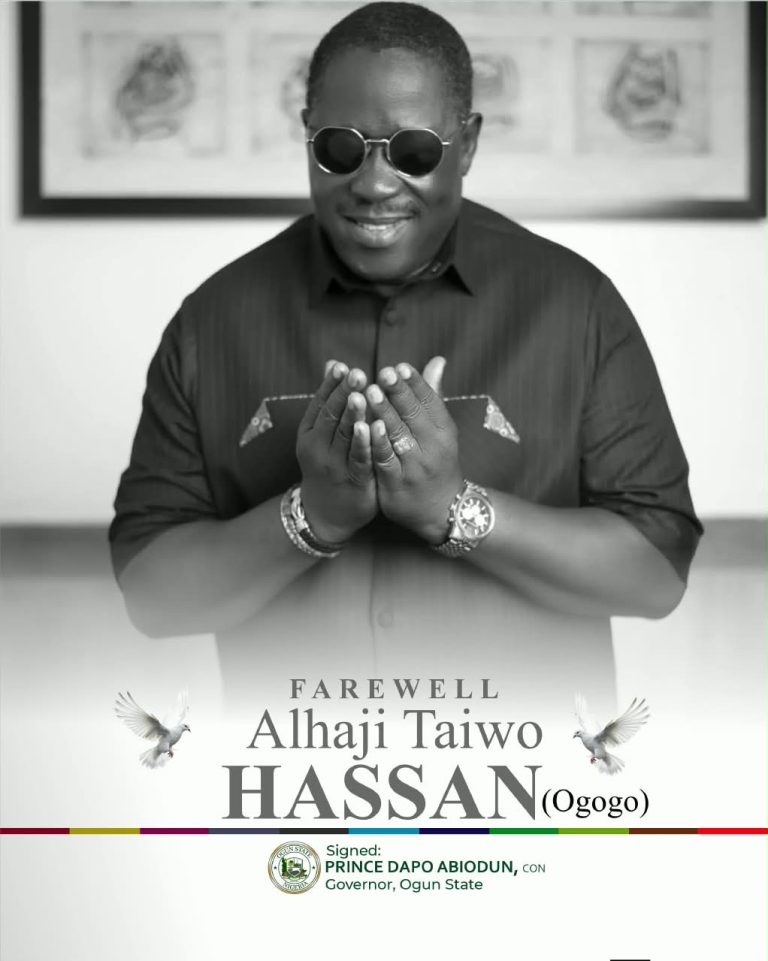
Governor Abiodun Mourns Veteran Actor Taiwo Hassan, Ogogo

0


Ogun State Governor, Dapo Abiodun, has expressed deep sadness over the death of veteran actor and illustrious son of the state, Alhaji Taiwo Hassan, popularly known as Ogogo.

Abiodun described the death of the renowned actor as a painful and irreplaceable loss to his family, the people of Ilaro and Yewaland, Ogun State, and the Nigerian entertainment industry.

In a condolence message, the governor said Ogogo was a cultural icon whose remarkable career brought joy to millions of people while contributing immensely to the growth of Nigeria’s film industry and the promotion of Yoruba culture and values.

According to him, the late actor’s legacy and contributions to the entertainment industry and Yoruba culture would continue to live on for generations.

“On behalf of our family, Government and the good people of Ogun State, we commiserate with his family, the people of Ilaro and the entertainment industry,” Abiodun said.

He prayed that Almighty Allah forgive Ogogo’s shortcomings, grant him Al-Jannah Firdaus and give his family, friends and other loved ones the fortitude to bear the loss.

Government should stop funding sports

0


By Ehi Braimah

​


Nigeria should stop pretending that pouring public money into sports is the same thing as developing sports. It is not. For decades, government has funded football through grants, interventions, bonuses, camps, competitions, travel and assorted forms of financial assistance. Yet, the more government spends, the more dysfunctional the system appears to become. At what point do we admit that the model itself is broken?

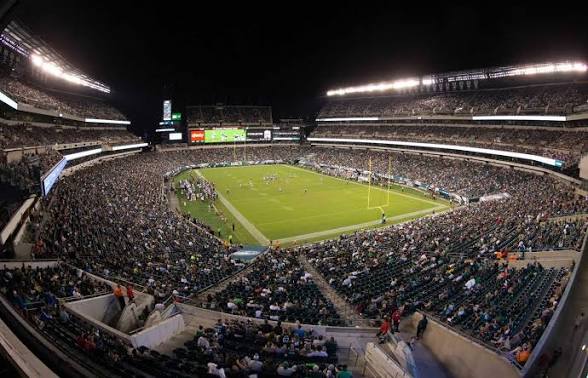
The latest evidence is staring us in the face. The Super Eagles did not participate at the 2026 FIFA World Cup in the United States, Canada and Mexico. Nigeria also missed Qatar 2022 which means the Super Eagles have now missed two consecutive World Cups. This is particularly painful and a bitter pill to swallow because Africa had ten places at the expanded 48-team tournament. Nigeria still could not make it. The Eagles finished second in their qualifying group and subsequently lost to DR Congo on penalties in the African play-off.

Football is Nigeria’s drumbeat. It is one of the few things capable of bringing together Nigerians across ethnic, religious, political and social divides. When the Super Eagles play, the country stops, and when they win, Nigeria celebrates together.That is why this failure hurts so much.

But the crisis is deeper than the Super Eagles. The Super Falcons, once the undisputed queens of African women’s football, have suffered an even more devastating setback. Nigeria lost 1-0 to Cameroon in the WAFCON quarter-final and subsequently lost 2-1 to South Africa in the play-off for a place in the 2027 Women’s World Cup in Brazil. Consequently, Nigeria will miss the Women’s World Cup for the first time since the competition began in 1991. This is not an ordinary footballing disappointment – it is an egregious warning signal.

And the response cannot simply be another change of personnel. I have seen this movie before. Whenever Nigerian football enters crisis mode, the familiar chorus begins: sack the NFF president; dissolve the board; bring in new people; start afresh. But where has that taken us?

We do not have a single enduring football structure, or world-class facilities. The lack of a properly functioning grassroots development system and the absence of a sustainable football economy appear to compound our misery. We keep changing the occupants of the house without repairing the house.

That is why I do not subscribe to the clamour by Shehu Dikko and others seeking to take over Nigerian football. Those who have been part of the system – including Dikko – that produced today’s crisis should not simply return under another arrangement and promise us another “new beginning”. Nigerians deserve to know what went wrong, who is responsible and, most importantly, what structural reforms will prevent a repetition.

The question is not merely whether Ibrahim Gusau, the Nigerian Football Federation (NFF) President, and the board and should go. The bigger question is: what system replaces them?

There is no escaping the issue of accountability. The House of Representatives has previously moved to investigate allegations concerning about $25 million in FIFA and CAF grants received by the NFF between 2015 and 2025.  More recently, the NFF itself confirmed that documents relating to a ₦12 billion Federal Government intervention fund are with the EFCC and ICPC as part of ongoing investigations.

Importantly, no wrongdoing has been established against any individual merely because an investigation exists, or that stories of alleged corruption are always what we hear. But the fact that such a substantial public intervention is under investigation makes transparency imperative.

There have also been media investigations raising questions about payments from NFF funds into private accounts. One investigation reported at least ₦152.6 million in payments to private accounts linked to officials, staff and associates between 2018 and 2026. These allegations require proper investigation, not political spin or the influence of godfathers.

The NFF, on its part, says its accounts are audited and that FIFA and CAF funds are tied to specific purposes and subject to monitoring. Its 2025 Congress approved audited financial statements for 2024 and passed a vote of confidence in the Gusau-led board. That is precisely why Nigerians need independent, verifiable accountability, not competing narratives.

If the books are clean, open them, and if the money was properly spent, show us. If there were failures, identify them, and if officials are culpable, let the law take its course. That is how a serious football economy works.

Government must also accept responsibility for creating a system that encourages dependency. Why should government be paying the Super Eagles’ win bonuses? Why should a national football federation continually return to government for money to perform its core responsibilities? Why should taxpayers repeatedly finance a professional sport that possesses enormous commercial potential? Questions that need answers.

This is definitely not an argument for abandoning sports – it is abusiness case for changing the role of government. My view is that government should provide infrastructure, establish the regulatory framework, protect the integrity of competitions and create an enabling environment for private investment.

Government should not be the perpetual financier of professional football. This Father Christmas mentality must end. Look at the state of our sporting infrastructure and see the shame we have brought upon ourselves because of poor visionary leadership at the helm. CAF’s rejection of several traditional home grounds for Nigerian clubs in the 2026/27 continental competitions is a humiliating reminder that Nigeria still lacks enough facilities that meet international standards.

Rangers, Rivers United and Shooting Stars were among the clubs whose traditional venues were not approved, leaving them to adopt alternative grounds. The Federal Government itself has acknowledged the problem, approving major rehabilitation work at the Moshood Abiola National Stadium in Abuja because its condition has limited its use by national teams. If we didn’t have the Godswill Akpabio International Stadium, the Nest of Champions owned by the Akwa Ibom State government in Uyo, where would the Super Eagles have been playing their FIFA-graded home matches?

This is the absurdity of Nigerian sports: we can spend billions managing crises but cannot consistently maintain the infrastructure that would prevent them. Morocco offers one of the best examples in Africa of what a country’s sports infrastructure should look like. Perhaps that explains why the country has a “strong hold” on CAF.

Secondary-school sports have virtually disappeared as a serious talent-development pipeline. Adults sometimes compete in sporting events designed for children; grassroots competitions are sporadic; facilities are in a permanent state of decay, and leagues struggle. When an athlete or team produces an accidental success, we celebrate it as if it were the product of a functioning system. That is clearly not the case – it is usually an outlier.

The reality is that we are trying to climb the tree from the topand then wonder why we keep falling. The National Sports Commission under Chairman Shehu Dikko must therefore act – and act now. The Commission has a historic opportunity to redefine the relationship between government and Nigerian sports. Its stated ambition of creating a sustainable sports economy cannot remain another slogan – it must become a measurable programme of reform.

The first step should be to distinguish clearly between government’s responsibility and the sports industry’s responsibility. Government should fund infrastructure; support grassroots and school sports, and provide a carefully structured seed funding to revive dead or dying leagues.

Government should also use the National Lottery Trust Fund more strategically. Nigeria already has a mechanism specifically designed to support good causes, including sports. The Lottery Trust Fund states that 20 percent of lottery proceeds is allocated to the Trust Fund and that sports will receive 20 percent of the Fund’s sectoral allocation.

Why are we not using this mechanism more aggressively and transparently to rebuild grassroots sports? Why are we not creating sustainable facilities instead of endlessly funding short-term participation? Why are we not demanding measurable outcomes from every naira invested?

The United Kingdom provides an instructive lesson – not because the British government simply “funded the Premier League”, as is sometimes suggested, but because football evolved into a powerful commercial ecosystem supported by regulation, investment, broadcasting, infrastructure and private capital. The Premier League’s revenues grew dramatically from about £170 million in 1991/92 to £5.15 billion in 2018/19, and close to £7 billion in 2024/25.

That is the direction Nigeria should be heading because it is possible for sports to become big business. Let the NFF president who wants to lead Nigerian football tell the Congress how he intends to raise money to run football without perpetual government spoon-feeding.

In addition, let every candidate publish a five-year commercialisation plan and explain how they will attract sponsors. How will they grow broadcast revenue? How will they improve match-day revenue? How will they develop licensing and merchandising? Do they even understand the business case of turning sports into a profitable enterprise?

How much revenue can the domestic league generate? Can we make Nigerian football attractive to investors? Can football administrators guarantee transparency? And, above all, how will they spend other people’s money? More questions without answers.

Corporate Nigeria will invest in sports when it sees stability, accountability, transparency and commercial opportunity. No serious investor wants to enter a dysfunctional system where rules change arbitrarily, accountability is weak and political influence determines outcomes. Corporate sponsors want to sit at a table with people who understand sports business and how to scale opportunities.

A football model without processes, predictable regulations, audited accounts and measurable returns will not be supported by sponsors as we see in other parts of the world. Potential corporate sponsors want institutions with safe guards, not personalities. Government must take the back seat always.

This is where the National Sports Commission must demonstrate leadership. Dikko should resist the temptation to become another political centre of gravity in Nigerian sports. The Commission must not simply replace one form of interference with another. Instead, it should strengthen federations while holding them accountable without government control.

Chairman Dikko, the answer to our challenges in sports is good governance, transparency and accountability, which we can also describe as “responsible stewardship”. All the contending forces and political factions aiming for the nation’s football Glass House in order to take over the NFF should show us their plans for institutional reforms.

Meanwhile, let me repeat myself: government should only provide the seed money, infrastructure and enabling environment for sports to develop and thrive in Nigeria, and then back off. If the environment is right, private capital will come. If the rules are clear, sponsors will come, and if accounts are transparent, investors will come.

It is also evident that if the leagues are properly organised, broadcasters will show interest, just as fans will return when the competitions are credible. This is because our passion for sports, especially football, has turned into a huge movement of friends and fans. Then, of course, the money will follow. It is not rocket science. Nigeria does not lack talent – what we lack are systems and the institutional confidence to unlock commercial opportunities.

The current football crisis is therefore bigger than Gusau and Dikko. It is also bigger than the NFF. It is a crisis of a model that has failed and that is the reform Nigeria needs. Anything else is simply another change of faces. And Nigerians have had enough of changing faces while the house continues to collapse.

Braimah is a PR specialist, marketing strategist, and publisher/editor-in-chief of Naija Times (www.ntm.ng) and Lagos Post (www.lagospost.ng). He is a strong advocate forAfrican prosperity and can be reached through: ehi.braimah@neomedia.com.ng

Kwara: Monarch, woman abducted by suspected bandits

0


Suspected bandits have reportedly abducted the traditional ruler of Igbesi community in Isin Local Government Area of Kwara State, alongside several residents, during an attack on the community.

The attackers also reportedly kidnapped the first wife of the Baale of Dabu community in Ifelodun Local Government Area, popularly known as Iya Ayoka.

The separate incidents, which occurred in communities across Kwara South, have raised fresh security concerns among residents in the area.


The traditional ruler was reportedly abducted when suspected bandits attacked Igbesi at about 11pm on Saturday.

Sources said the attackers took the monarch and several other residents to an undisclosed location. As of Sunday, no ransom demand had reportedly been made for their release.

The abduction of the monarch was confirmed by the Kwara State Commissioner of Police, CP Ojo Adekimi, on Sunday night that security agencies had commenced efforts to locate and rescue him.

Adekimi said, “The police were collaborating with other security agencies and relevant stakeholders to secure the safe release of the traditional ruler”.

He explained that the circumstances surrounding the incident were still being established, adding that the late hour of the attack made it difficult to immediately determine the number of attackers involved.

The CP said, “Security operatives were already in the bush as part of efforts to track the perpetrators”, adding that his men had recovered some rustled cattle during the operation.

He, however, clarified that the recovered cattle were not connected with the abduction of the monarch.

In a separate incident, the first wife of the Baale of Dabu community in Ifelodun Local Government Area, popularly known as Iya Ayoka, was also reportedly abducted by suspected bandits.

The chairman of Ifelodun Local Government Area, Alhaji Femi Yusuf, confirmed the incident to Newsmen, saying security operatives were already on the trail of the abductors and working to rescue the woman.

He, however, described the incident as an isolated occurrence, stressing that the security situation in the council had improved considerably in recent times.

Sun

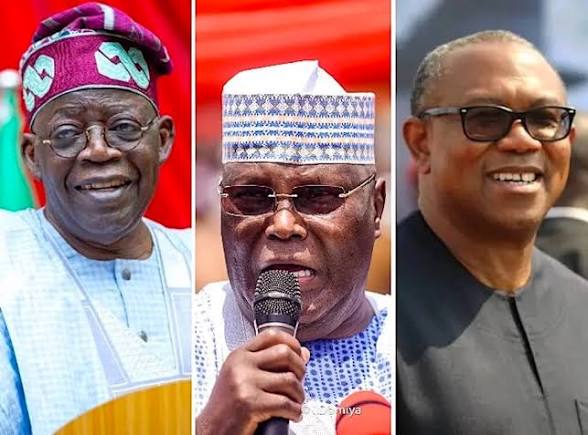
Tinubu, Atiku, Obi differ on economy, security, education, others

0


As campaigns for the 2027 general election formally take off, leading presidential candidates have unveiled competing visions for Nigeria, offering sharply different approaches to the economy, security, education, healthcare, governance and the country’s political structure.

President Bola Tinubu of the All Progressives Congress (APC), former Vice President Atiku Abubakar of the African Democratic Congress (ADC) and Peter Obi of the Nigeria Democratic Congress (NDC) are anchoring their campaigns on distinct economic and governance programmes, while candidates of smaller parties, including Omoyele Sowore, Donald Duke and Adewole Adebayo, are also pushing alternative policy choices.

The emerging contest is increasingly being defined by competing arguments over whether Nigeria should continue with the Tinubu administration’s reform programme, adopt a production-driven alternative or pursue more fundamental political and economic restructuring.

•Tinubu: consolidate reforms, target $1trn economy

President Tinubu is campaigning on the Renewed Hope Agenda, first presented in 2023, and the Renewed Hope National Development Plan for 2026 to 2030.

The President has positioned the reforms of his first term, particularly the removal of petrol subsidy, exchange-rate reforms and measures aimed at increasing government revenue, as the foundation of his second-term bid.

The administration has maintained that the reforms, though painful in the short term, are necessary to correct longstanding economic distortions and place the country on a more sustainable growth path.

Government officials have described 2026 as a turning-point year, with the emphasis shifting from economic stabilisation to accelerated growth. This is reflected in the 2026 national budget of about N58.18 trillion.

The administration has also set a target of building a $1 trillion economy by 2030 through manufacturing, infrastructure development and diversification away from dependence on crude oil.

Projects including the Kano-Maradi railway have been cited by the government as evidence of its infrastructure drive.

On security, Tinubu has pointed to institutional reforms and operational gains recorded since 2023, while pledging to deepen the measures. He has acknowledged the hardship caused by the reforms, describing it as the cost of repairing long-standing weaknesses in the economy.

APC National Chairman, Prof. Nentawe Goshwe Yilwatda, said the ruling party would base its campaign on its record and delivery of the reforms promised to Nigerians.

The President’s Special Adviser, Tooki Abimbola, said the APC would campaign on results rather than rhetoric.

“The APC will campaign on results, not rhetoric. The next phase is about moving from reform to delivery, from macroeconomic stabilisation to household-level impact, and from security operations to sustainable security,” he said.

He said the party would focus on expanding productive sectors, supporting MSMEs, attracting investment and creating opportunities for young Nigerians.

On the cost of living, Abimbola said the administration recognised that macroeconomic stability would mean little if households continued to struggle with food, transportation and other basic necessities.

He said the government would therefore support increased food production, improved supply chains, reduced logistics costs and targeted interventions for vulnerable households.

However, some government claims about the reach of its interventions have faced scrutiny. Independent reviews of programmes, including a presidential loan and grant scheme said to have reached more than 900,000 small businesses, have questioned the figures when compared with available disbursement records.

•Atiku: production, restructuring, security

Atiku, who emerged as the ADC presidential candidate from its 2026 primaries, is campaigning on a programme drawn from his acceptance speech, the party’s policy positions and the Atiku Economic Recovery Plan (AERP) 2027 launched in August 2026.

His agenda places security, education, the economy, healthcare and restructuring among its major priorities.

On security, Atiku has promised to expand the armed forces and police, provide modern equipment, improve training and welfare and strengthen coordination among security agencies.

His education proposal includes free and compulsory primary and secondary education, alongside greater emphasis on leadership, entrepreneurship, technology and innovation.

In healthcare, he has pledged increased funding for primary healthcare centres and specialist hospitals while encouraging private investment in medical facilities to reduce the number of Nigerians travelling abroad for treatment.

A major component of the AERP is a proposed production subsidy under which qualifying public and private refineries would have access to domestic crude at preferential prices, subject to conditions on output, efficiency, transparency and domestic supply.

The plan also proposes a fixed annual spending ceiling in the federal budget, independent audits and mechanisms to ensure that the benefits of such interventions reach consumers.

Atiku has further called for a public reconciliation of an estimated N30 trillion in Federation Account entries linked to energy and past subsidy claims. The ADC platform also emphasises a production-driven economy, a living wage, an independent electoral body, zero-impunity governance and performance audits of public spending.

Food security is proposed as a national security priority, while restructuring and greater devolution of powers remain central to the party’s political message.

As of the time of filing this report, the ADC leadership had not responded to inquiries from Daily Sun.

•Obi: from consumption to production

Peter Obi is campaigning on the message that “Nigeria can work, and Nigeria must work,” with the central plank of his economic programme being a shift from consumption to production.

His proposals include securing farming communities, expanding irrigation, improving rural roads and storage facilities, and connecting farmers to finance and markets.

He has also promised to strengthen manufacturing and agro-processing to increase production and exports of finished goods.

On public finance, Obi has pledged to reduce wasteful government spending and ensure that public expenditure is tied to clear outcomes, while increasing revenue without undermining private businesses.

His security plan includes improved intelligence gathering, better coordination among security agencies, technology-supported policing and stronger border management.

He has also advocated support for lawful community-based early-warning systems and greater decentralisation of security management, while maintaining federal-state coordination.

Obi has proposed reforms across basic education, universities and technical and vocational training. In healthcare, he has focused on strengthening primary healthcare, improving access to essential medicines and equipment, and tackling high maternal and infant mortality.

He has also released a region-by-region development plan covering the six geopolitical zones and the Federal Capital Territory.

National Publicity Secretary of the NDC, Osa Director, said the party intended to distinguish itself through what he described as openness and sincerity in addressing the country’s problems. “Our primary priority is to move Nigeria from a consumption economy to a production economy,” he said.

According to him, the party intends to revive moribund industries, create a business-friendly environment, stabilise the naira and address insecurity as a prerequisite for attracting both foreign and domestic investment.

He argued that increased production and employment would help bring down inflation and reduce poverty.

•Sowore: revolutionary change

Omoyele Sowore of the African Action Congress (AAC) is campaigning on what he describes as revolutionary change.

Among his proposals are the use of artificial intelligence in the management of public finances and drone technology for defence and security operations.

Sowore has also proposed free education at all levels and the abolition of WAEC and NECO examination fees.

•Duke: education, healthcare, security

Donald Duke, presidential candidate of the Peoples Redemption Party (PRP), is focusing his campaign on education, healthcare, infrastructure, security and reform of the justice system.

Duke has also called on opposition political parties to form a coalition against the APC.

On the economy, the former Cross River State governor has called for a fundamental shift from the current policy direction, arguing that Nigeria must turn its natural and human resources into productive assets and make citizens’ welfare the central measure of economic performance.

He has particularly criticised the handling of fuel subsidy and argued that economic performance should be assessed through employment, income per capita and improvements in living standards rather than government revenue or foreign reserves alone.

Adebayo: power, productivity, institutions

Adewole Adebayo of the Social Democratic Party (SDP) has presented a five-point agenda focused on insecurity, unemployment, low productivity, inadequate power supply and weak institutions.

He has set a target of 75,000 megawatts of electricity and warned against what he described as a drift towards one-man rule.

With the January 2027 polls approaching, the competing programmes are expected to form the basis of increasingly intense campaigns, as the candidates seek to persuade voters that their respective approaches offer the most credible path out of Nigeria’s economic, security and governance challenges.

Sun
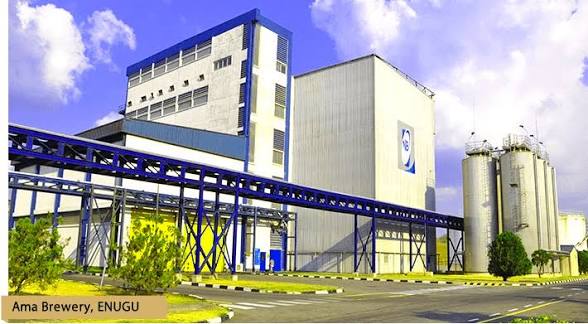
Beer prices may rise as brewers battle N113bn H1 tax bill, higher energy costs

0

Nigerians may soon pay more for beer as rising tax bills and high energy costs put pressure on the country’s major breweries.

Nigerian Breweries Plc, Guinness Nigeria Plc and International Breweries Plc recorded a combined N112.87 billion in tax expenses in the first half (H1) of 2026, up from N71.39 billion in the same period of 2025. This represents an increase of about 58 per cent.

The increase came as the companies continued to battle high electricity, gas, diesel, transportation and other operating costs.

The rising expenses could make it harder for the brewers to continue absorbing higher production costs, raising the possibility that some of the burden could eventually be passed on to consumers through higher beer prices.

Financial results filed with the Nigerian Exchange Limited (NGX) showed that the three companies recorded stronger profit before tax (PBT) during the period. However, higher tax charges reduced the amount of profit left after tax.

Nigerian Breweries recorded the highest tax expense at N63.37 billion, compared with N43.83 billion in H1 2025.

Its profit before tax increased by 18.2 per cent year-on-year (y/y) to N156.33 billion, while profit after tax rose by only 5.1 per cent to N92.95 billion.

The company’s effective tax rate also increased to 40.5 per cent from 33.1 per cent a year earlier.

Guinness Nigeria recorded a tax expense of N13.03 billion, up from N7.32 billion in H1 2025.

Its profit before tax rose to N38.34 billion from N23.83 billion, while profit after tax increased to N25.30 billion from N16.51 billion.

Its effective tax rate rose to 34 per cent from 30.7 per cent.

International Breweries recorded a tax expense of N36.47 billion, compared with N20.24 billion in the previous year.

The company’s profit before tax increased to N74.79 billion from N61.53 billion.

However, it recorded a loss after tax of N38.31 billion, against a profit of N41.29 billion in H1 2025.

Its effective tax rate also climbed to 48.8 per cent from 32.9 per cent.

The figures show that while the breweries’ businesses performed better before tax, higher tax charges and other costs significantly affected their final earnings.

However, the N112.87 billion tax expense should not be taken to mean that the three companies paid N112.87 billion in cash to the Federal Government during the period.

Tax expense is an accounting figure that can include both current and deferred tax. For instance, Nigerian Breweries reported cash tax paid of N14.32 billion during the period, far below its N63.37 billion tax expense.
For consumers, the bigger concern may therefore be the combined effect of taxes and rising energy and distribution costs.

Brewing is a power-intensive business. Breweries need electricity, gas, diesel and other energy sources to keep their factories running. Higher energy prices therefore increase the cost of making beer and can also push up transportation and distribution costs.

The situation is coming at a difficult time for the industry as breweries try to recover sales volumes in a market where consumers are becoming increasingly sensitive to price increases.

Nigerian Breweries’ results illustrate the challenge. Its revenue increased by 8.9 per cent to N803.68 billion in H1 2026, while its gross and earnings before interest, tax, depreciation and amortisation (EBITDA) margins improved.

However, operating costs remained high, particularly selling and distribution expenses, as the company spent more on distribution, advertising and trade incentives to attract customers, support sales and protect its market share.

Analysts at Cordros Research said the breweries’ earnings remained exposed to several risks despite expectations of improved tax and foreign exchange conditions.

“However, elevated energy costs, which should keep distribution expenses under pressure, alongside sustained trade incentive spending to defend market share and a softer-than-expected volume recovery, remain the key risks to the breweries’ outlook,” the research firm said.

The warning suggests that beer prices could come under fresh pressure if energy and other operating costs remain high.

Higher beer prices could also put additional pressure on household budgets, particularly as consumers already face rising costs of food, transportation and other basic needs. Some consumers may respond by buying cheaper brands, reducing consumption or switching to alternatives.

Earlier in the year, the breweries announced price increases on some of their products, citing the prevailing economic conditions and rising costs of doing business.

The International Monetary Fund (IMF), in its Article IV assessment of Nigeria, had also warned that higher food and transport costs could weigh on economic activity and increase inflationary pressure.

However, the rising tax burden also highlights the Federal Government’s need to increase revenue to fund public services and infrastructure.

Minister of Finance and Coordinating Minister of the Economy, Taiwo Oyedele, has repeatedly argued that stronger government revenue would provide more money for infrastructure, electricity, transportation and other public services.

If such investments improve power supply, roads and other infrastructure, manufacturers could eventually benefit from lower operating costs.

For now, however, breweries are caught between rising costs and consumers who are becoming less able to absorb further price increases.

With taxes, energy, distribution and other expenses all putting pressure on their businesses, the key question is how much of the additional cost the companies can continue to absorb.

If the pressure persists, the cost could move down the supply chain, from breweries to distributors and retailers, and eventually reach consumers.

For beer drinkers, that could mean paying more for their favourite brands in the months ahead if breweries decide that absorbing the rising cost of taxes, energy and logistics is no longer sustainable.

Sun

2027: Kawu urges Yari-led APC campaign council to acknowledge hardship, reconnect with Nigerians

0


Senator representing Kano South, Kawu Sumaila, has urged members of the newly constituted All Progressives Congress (APC) Presidential Campaign Council to acknowledge the economic hardship confronting Nigerians and make the government’s measures to ease the burden a central part of their engagement with voters.

Sumaila gave the charge on Sunday in a goodwill message to the Director-General of the campaign council, Abdulaziz Yari, and other members of the over 200-member team constituted ahead of the 2027 presidential election.

He said the success of the campaign would depend largely on how effectively the council reconnects the APC-led government with Nigerians, particularly voters at the grassroots.

The senator cautioned against a campaign strategy focused solely on listing the achievements of President Bola Ahmed Tinubu’s administration, saying the team must also demonstrate empathy and acknowledge the difficulties being experienced by households.

“We must approach our citizens with deep empathy, active listening, and genuine sensitivity to the economic hardships and socio-economic challenges currently affecting everyday families.

“Our campaign must demonstrate that we truly feel their pain, understand their daily struggles, and are sincerely committed to delivering meaningful reliefs,” he said.

Sumaila urged the campaign council to ensure that grassroots constituents were carried along in the mobilisation process while explaining the policies and programmes of the Tinubu administration in terms that voters could understand.

He warned that a failure to bridge the gap between the government, the APC and the electorate could create perceptions capable of undermining the party’s electoral prospects.

“Disconnect between leadership and the electorate creates misperceptions and misunderstandings that ultimately undermines both the President and the party,” he said.

The senator’s call comes as the APC prepares to defend Tinubu’s record in the 2027 election amid growing opposition criticism of the administration’s economic policies, particularly the removal of petrol subsidy and the resulting increase in the cost of living.

Sumaila said the campaign council should therefore combine the communication of government achievements with a clear explanation of the steps being taken to provide relief to citizens.

“We must leverage our collective expertise to clearly convey the President’s key policies, programs, and strategic vision so the public fully recognises his commitment to national progress,” he said.

He also urged the campaign team to operate within the provisions of the Electoral Act and the Constitution, arguing that compliance with electoral laws would be important to sustaining public confidence in the election.

On party unity, Sumaila called on APC leaders and members to resolve internal disagreements and work together for Tinubu’s re-election.

“Victory depends on complete solidarity. We must heal internal rifts, set aside differences, and ensure that all key stakeholders, party leaders, and members at every level are fully carried along as equal partners in this mission,” he said.

He congratulated Yari and other members of the campaign council on their appointments and wished them success in the assignment.

Sun

Fuel subsidy removal: Naira has become useless under Tinubu – Kenneth Okonkwo

0


Kenneth Okonkwo has faulted the Federal Government’s decision to remove the fuel subsidy, arguing that the policy has intensified economic hardship and weakened the purchasing power of Nigerians.

Okonkwo made the remarks during an appearance on Channels Television’s Sunday Politics, while explaining Atiku’s proposal to make petrol more affordable if elected president in 2027.

The ADC chieftain described the subsidy removal as an “ill-advised” policy, arguing that Nigerians had yet to see sufficient benefits from the savings the government says it has generated.

He pointed to the current price of petrol, which he said is around N1,300 per litre, to illustrate the pressure faced by households.

According to him, filling a vehicle with a 100-litre tank would cost about N130,000, an amount he said was almost twice the N70,000 minimum wage.

“N130,000 is almost two times the minimum wage of a Nigerian. Meaning 70,000 naira paid to a Nigerian can only afford him half a tank of his vehicle. No rent, no food, no medical, nothing,” he said.

Okonkwo stressed that Atiku’s proposal should not be interpreted as an attempt to recreate the previous subsidy regime.

He said the former vice president’s approach would instead rely on making crude oil available to domestic refineries at affordable rates, thereby reducing the cost of refined petroleum products.

“Atiku is not going back to that. And cannot even go back to that. Why? We have our local refineries now working,” he said.

The former actor also criticised the performance of the naira under President Bola Tinubu, arguing that nominal wage increases had not translated into improved living standards because of inflation and currency depreciation.

“Naira has become useless in Tinubu’s government. This government is destroying our currency, destroying our economy,” Okonkwo said.

He explained that Atiku’s proposed Atiku Fuel Affordability Plan (AFAP) would focus on lowering production costs rather than subsidising fuel consumption.
“What Atiku is talking about is that oil is our product. We do not have any basis for producing it in our land by ourselves and still selling it to Nigerians at an unaffordable price,” he said.

Asked about Atiku’s previous position on fuel subsidy, Okonkwo acknowledged that the former vice president had described the old subsidy system as unsustainable.

However, he argued that Atiku’s current proposal was different because it would seek to reduce the cost of production and make locally refined petroleum more affordable.

Okonkwo further compared the purchasing power of the minimum wage under the previous administration with its current value, arguing that Nigerians were worse off despite the increase from N30,000 to N70,000.

“50% of the 30,000 Naira people were earning before Tinubu came into office has greater value than the 70,000 he’s offering Nigerians,” he said.

He maintained that Atiku’s economic strategy would focus more on strengthening the purchasing power of the naira than simply increasing nominal wages.

“Atiku is aiming at increasing the quality of Naira, not the quantity of it,” Okonkwo said.

On how Atiku would manage the economy differently, he said the ADC candidate would draw on his experience in government and what he described as “institutional memory and experience” in tackling Nigeria’s economic and security challenges.

President Tinubu announced the removal of petrol subsidy during his inauguration on May 29, 2023. The decision triggered an immediate increase in petrol prices and has remained one of the most contentious aspects of his administration’s economic reforms.

The Federal Government has consistently defended the policy, arguing that the savings from subsidy removal have increased funds available to the government.

On Wednesday, Finance Minister and Coordinating Minister of the Economy, Taiwo Oyedele, said the removal of the petrol subsidy generated N15.8 trillion in savings for the Federation between June 2023 and December 2025.

Atiku has nevertheless said he would introduce a targeted intervention to make petrol more affordable if elected president in 2027, reigniting debate over the economic merits and consequences of subsidy removal.

Sun

Ogigo: Actor Femi Adebayo writes: You were a true pillar of Yoruba cinema,

0


Sir T…

Some people leave behind memories. Some leave behind a legacy that time can never erase.

Thank you for the years, the stories, the lessons and the moments that made us fall in love with the craft.

You were a true pillar of Yoruba cinema, and your impact will live on in generations to come.

Rest well, Sir Taiwo Hassan. You will forever be Ogogo to us.

Adieu, legend.

Update: Nollywood Mourns as Veteran Actor Taiwo Hassan ‘Ogogo’ Dies at 66

0


Veteran Nollywood actor, Prince Jide Kosoko, has announced the death of popular Yoruba actor, Alhaji Taiwo Hassan, popularly known as Ogogo.

According to Kosoko, Ogogo died on Sunday, August 23, 2026, at about 3:00 p.m. He was aged 66.

The actor is expected to be buried according to Islamic rites on Monday, August 24, 2026, at Pavilion, Ilaro, Ogun State, by 11:00 a.m.

Reacting to the development, fellow actor Saudi Balogun mourned Ogogo in an emotional tribute.
“You can rest now, my brother Taiwo Hassan Ogogo. May Almighty Allah guide you through Aljannah. This is truly painful,” he wrote.

The news of Ogogo’s death has thrown colleagues, friends and fans across the Nigerian film industry into mourning, with many paying tribute to the veteran actor and celebrating his contributions to Nollywood.
Ogogo was widely regarded as one of the prominent figures in the Yoruba film industry, where he built a successful career spanning several decades.