Troops of the Joint Task Force North West, Operation FANSAN YAMMA, have repelled successive waves of terrorist attacks on communities in Anka Local Government Area of Zamfara State, with air support, while neutralising one terrorist in separate operations in Kaduna State.
The operations also led to the recovery of two fabricated rifles, two motorcycles and other items as part of sustained efforts to deny terrorists freedom of action across the Joint Operations Area.
On November 14, 2026, troops of Sector 2 swiftly responded to attacks by terrorists riding motorcycles on Wuya and Yarzabia communities in Anka Local Government Area of Zamfara State.
The troops engaged the attackers with superior firepower, forcing them to retreat. The terrorists subsequently regrouped and launched a second wave of attacks but were again decisively repelled, as the troops maintained their defensive positions. Reinforcements later arrived and extended operations to adjoining communities, while troops sustained aggressive patrols to reassure residents and prevent further incursions.
In a coordinated air-ground operation on the same day, the Air Component of Operation FANSAN YAMMA deployed a combat aircraft to provide air support to troops responding to the attacks.
During the mission, the aircraft identified terrorists attempting to move a large herd of suspected rustled cattle away from the affected communities. The terrorists were subsequently engaged in multiple air strikes, which neutralised scores of them.
Similarly, troops of Sector 1, acting on credible intelligence about suspected terrorist activities around farmlands in Aguba Village, Kajuru Local Government Area of Kaduna State, conducted a fighting patrol to the area on November 14.
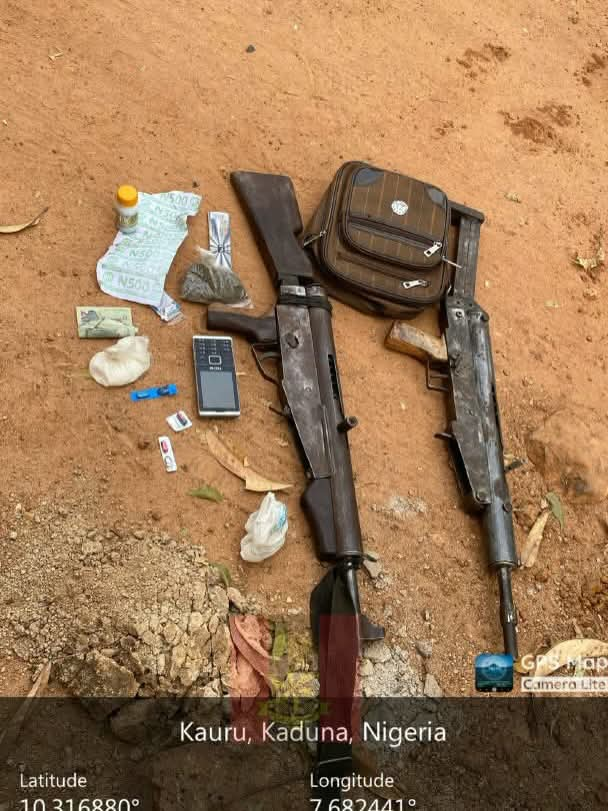
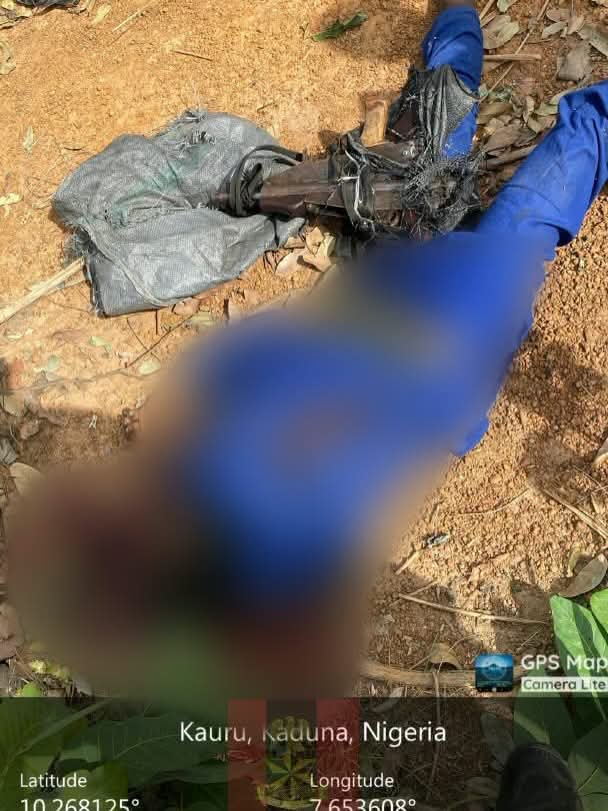
The troops encountered the terrorists and engaged them in a firefight, neutralising one while others fled. A subsequent search of the area led to the recovery of two fabricated rifles, a mobile phone, substances suspected to be cannabis and other illicit drugs, as well as recharge cards. In another operation on the same day, troops of Sector 1, acting on intelligence about the movement of terrorists along the Buruku–Kaduna Road, encountered armed terrorists and engaged them in a firefight.
Overwhelmed by the troops’ response, the terrorists fled into an adjoining forest, abandoning two motorcycles, which were recovered. Troops continued pursuit and exploitation operations to deny the fleeing terrorists freedom of action.
The operational successes underscore the determination of Operation FANSAN YAMMA troops to sustain pressure on terrorist elements, protect vulnerable communities and create a secure environment for farming and other socioeconomic activities across the North-West.
The Theatre Command commended the resilience and fighting spirit of the troops, urging them to sustain the operational momentum.
Members of the public were also encouraged to continue providing timely and credible information to security agencies, as the Joint Task Force remains committed to restoring lasting peace and security across the region.
The All Progressives Congress (APC) governorship candidate in the 2026 election, Bola Oyebamiji, has reiterated that the relationship between the party and Accord Party remains intact.
He made this known in his remarks during a massive statewide rally held in Osogbo, the state capital. The rally procession moved from the Stadium through Ayotoro, Igbona, Old Garage, and Olaiya, before finally terminating at the party secretariat in Ogo-Oluwa.
Speaking at the end of the trek, Oyebamiji noted that the massive turnout was a clear signal that the party’s target of two million votes for the re-election of President Bola Tinubu in Osun is entirely achievable.
“The essence of this event is to sensitize our people and prepare them to vote for Asiwaju Bola Ahmed Tinubu, our President, and all our candidates in the APC.
“You can see the crowd. This is a show of strength. It is fantastic, massive, and entirely organic, not an imported crowd. This is to tell the whole of Nigeria that Osun is ready, and re-electing our President is non-negotiable,” Oyebamiji said. Addressing political alliances, Oyebamiji added, “We have a good relationship with Accord. Of course, they are welcome anytime, any day, and we are going to work together.”
Also speaking at the event, Senator Francis Fadahunsi emphasized that the organic support for President Tinubu is expected to translate into massive electoral figures.
He described the President as “our own,” noting that any region wishing to attract tangible development must support Tinubu and all APC candidates.
The Executive Director of Marine and Operations at the Nigerian Ports Authority (NPA), Olalekan Badmus, stated that the rally demonstrated the formidable strength of the APC under the leadership of Adegboyega Oyetola, the Minister of Marine and Blue Economy. He noted that the mobilization solidly backs President Tinubu and all national and state assembly candidates.
Dr. Akin Ogunbiyi, an APC senatorial candidate in Osun East, also expressed optimism that President Tinubu would win Osun State convincingly, assuring that the party would deliver overwhelming votes across all elective positions.
Dispelling rumors of internal discord, the Osun State APC Chairman, Tajudeen Lawal, firmly denied any rifts within the party. He insisted that the APC remains completely united and strategically positioned to deliver the state for President Tinubu.
Stakeholders in the fight against gender-based violence have identified weak institutions and poor coordination among agencies as major obstacles to protecting children from sexual abuse, calling for stronger institutional structures, adequate funding and improved public reporting of suspected cases.
They made the call at the Lagos premiere of A Tray of Locust Beans, a short film produced by Lufodo Productions in collaboration with Kinsman Studios, which examines child sexual abuse, institutional responsibility and the importance of timely intervention.
The premiere which held in Lagos featured a panel discussion involving gender advocate and former First Lady of Ekiti State, Bisi Fayemi; veteran actress and Executive Producer of the film, Joke Silva; the film’s director, Orobosa Ikponmwen; lawyer and gender-based violence advocate, Barrister Rita Ilevbare; and Executive Secretary of the Lagos State Domestic and Sexual Violence Agency (DSVA), Mrs Titilola Vivour-Adeniyi.
Speaking during the discussion, Vivour-Adeniyi said although Lagos State had established laws, policies and institutions to address domestic and sexual violence, weak coordination among the agencies continued to undermine effective responses.
“We have the laws, we have policies, and we have institutions. But I think what is lacking is we need to strengthen those institutions,” she said.
She listed the existing child protection framework to include Family Support Units and family courts, but stressed the need for stronger collaboration among relevant institutions.
Vivour-Adeniyi also urged members of the public to develop a culture of reporting suspected cases of abuse, noting that protecting children required collective responsibility.
She said cases of domestic and sexual violence could be reported to the Lagos State DSVA through its toll-free line, 08000-333-333.
Similarly, Ilevbare, who coordinates the Ekiti State Sexual Assault Referral Centre, called on government to provide adequate funding for survivor support services, stressing that legislative provisions alone could not guarantee justice for victims.
Recounting the real-life case that inspired the film, she traced its origins to a petition in 2011 and the subsequent intervention of the then First Lady of Ekiti State. According to her, the case contributed to policy developments and the establishment of the Sexual Assault Referral Centre, which has since served more than 630 women.
While acknowledging the importance of legislative progress, she said functional institutions, sustained resources and access to justice were necessary to translate policies into meaningful protection for survivors.
“Policy itself does not translate to justice, but it provides a foundation that gives us the basis to work,” she said.
Fayemi, whose short story inspired the film, also called for greater individual involvement in efforts to address violence against women and girls, saying social change should not be left to government officials and policymakers alone.
“Not all of us will be a first lady. But there’s something that you can do to ensure that we break that cycle of violence and oppression,” she said.
She urged Nigerians to recognise the responsibility that came with the positions and platforms they occupied, regardless of their status in society.
For Silva, the decision to bring the story to the screen was informed by its real-life origins and the importance of showing how timely intervention could change the future of an abused child.
The film follows Mabel, a 13-year-old girl who experiences sexual abuse and an ensuing pregnancy, navigating a system that often fails children in vulnerable circumstances.
Drawing attention to Mabel’s eventual academic achievement, Silva said the intervention she received was critical to ensuring that her circumstances did not determine her future.
“She was the best graduating student. Imagine if nothing had been done,” she said.
Director Ikponmwen said the film was deliberately told from Mabel’s perspective to enable audiences to understand her experiences and appreciate the importance of taking action against abuse.
“I like stories that when you watch them, it drives action. It drives change,” she said.
She said the intention was to move audiences beyond merely watching the story towards recognising their responsibility in addressing the issues it raised.
The film, based on a short story by Fayemi and drawn from a real case handled in Ekiti State, was written by Ololade Okedare and Ayobola Eniola. It features Somachi Chilaka, Joke Silva and Korede Lawal, with Silva, Soji Jacobs and Fayemi as executive producers.
The premiere also attracted former Governor of Ekiti State, Dr Kayode Fayemi, while Prof. Rasaki Ojo Bakare, representing the Ekiti State Governor, Mr Biodun Oyebanji, led a state delegation and conveyed goodwill from the government and people of the state.
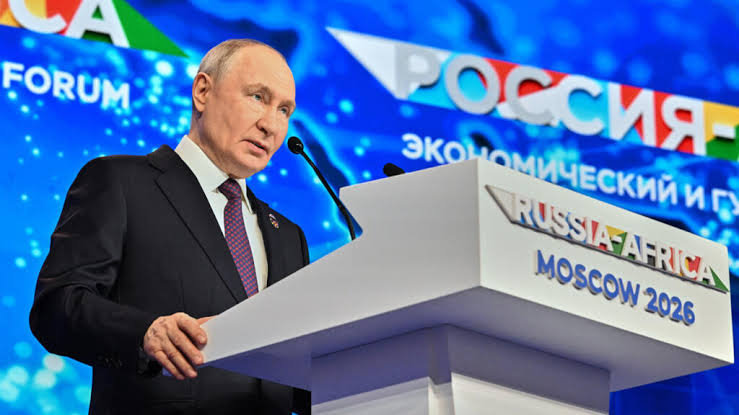
Russia’s growing diplomatic and security engagement with African countries has yet to translate into significant economic benefits or reliable security partnerships, raising questions about Moscow’s ability to achieve its ambitions on the continent.
Martin Minns, Co-Executive Producer of the Pan-African podcast Panel 54, said Russia’s economic contribution to Africa remained limited compared with those of the United States, Europe and China, while its security interventions had produced uneven results.
Minns made the observations in an analysis titled: “Can Russia Reach the Summit of Its Ambitions in Africa?”, following the third Russia-Africa Summit held in Moscow on October 28 and 29, 2026.
Martin Minns
The summit, initially scheduled to take place in Libya, brought together 22 African heads of state, according to the Kremlin. Although this was an increase from the 17 leaders who attended the second summit in St. Petersburg in 2023, it fell significantly short of the 43 leaders who participated in the inaugural edition in Sochi in 2019.
The Kremlin attributed the lower attendance to what it described as “outrageous” Western pressure—a position Minns said might have some merit, though he questioned Moscow’s characterisation of the alleged pressure.
However, he argued that focusing on attendance figures missed the more critical questions of what African countries had gained from the gatherings and whether the engagements had produced sustainable partnerships.
According to Minns, Russia’s interest in Africa is driven by a desire to counter Western influence, build non-aligned partnerships, secure access to mineral resources and expand its defence exports. Yet Moscow’s ability to achieve these goals is constrained by limited economic investment, declining arms exports and the heavy resources required to sustain its military footprint on the continent.
Citing investment data, Minns noted that Russian capital accounted for less than one per cent of foreign direct investment into Africa, far trailing major partners such as the US, Europe and China. Furthermore, Russia’s global arms exports fell by 64 per cent between 2021 and 2025, leaving it ranked third behind the US and China in major arms supplies to Africa during that period. On security, Minns said Russia’s deeper involvement in the Sahel had failed to deliver dependable security guarantees. He pointed to figures showing that annual deaths linked to violent extremism in the region surged from an average of 927 between 2016 and 2019 to 10,470 between 2022 and 2025.
This escalation, he said, raised doubts about the effectiveness of Russian security partnerships, particularly as Moscow struggles to sustain external commitments while fighting the war in Ukraine—a conflict that has resulted in more than 1.2 million casualties and stretched Russia’s military and diplomatic bandwidth.
Minns also identified the recruitment of African nationals into the Russian military as a major factor damaging Moscow’s image across the continent.
Citing a 2024–2025 Afrobarometer survey across 38 African countries, he noted that public perceptions of Russian influence were less favourable than those of the US, the European Union and China, with 72 per cent of respondents aware of the Ukraine war preferring their countries to remain neutral.
He further referenced an October 2026 report by the Hague-based group Journalists for Justice, titled: “The Death Contract: How Russia Recruits Africans to Fight and Die in Ukraine,” which documented 3,034 African citizens from 40 countries recruited into the Russian armed forces, often through deception and false promises of civilian jobs.
These concerns prompted African leaders to seek direct assurances at the Moscow summit. Kenyan President William Ruto secured an agreement with Russian President Vladimir Putin to designate Kenya a non-source country for military recruitment, and announced the appointment of a defence attaché in Moscow to coordinate the repatriation and compensation of affected Kenyans.
Similarly, Ghanaian President John Dramani Mahama raised the issue with Putin, prompting Ghana’s Foreign Ministry to announce that the Russian leader had agreed to bar Ghanaians from participating in the Ukraine war, even through voluntary enlistment.
While welcoming the agreements, Minns cautioned that their success would depend on strict enforcement and the ability of governments to stop recruiters from exploiting alternative channels, especially amid Bloomberg reports that Moscow is expanding recruitment efforts in countries such as Zimbabwe, Burundi and Sierra Leone.
Beyond recruitment, Minns described Africa’s broader engagement with Russia as “diversified non-alignment,” noting that African governments increasingly view Moscow as just one of several international partners through which to pursue trade, security and global representation, rather than an exclusive ally.
Ultimately, Minns argued, the true test of the Moscow summit lies not in diplomatic declarations, but in whether agreements yield measurable development and security outcomes.
“A summit in Moscow gives some idea as to the scale of Russia’s ambitions; it’s what follows that will reveal how far it can realistically meet them. As they say: talk is cheap,” Minns said.
The Southeast campaign structure of President Bola Tinubu has intensified its mobilisation drive ahead of the 2027 general elections, with the Deputy National Leader of the Renewed Hope for Greater Nigeria (RHGN), Mazi Franklin Ngoforo, distributing 5,000 smartphones and other smart devices to members of the newly established Booth Army across the region.
Ngoforo, who presented the devices in Owerri on Friday, described the gesture as his personal contribution to the Tinubu re-election campaign.
He said the initiative was designed to strengthen grassroots mobilisation, improve communication and ensure effective coordination of voters before and during Election Day. According to him, the deployment of the devices would equip the Booth Army with the necessary tools to drive an organised and technology-supported campaign across the five Southeast states.
The RHGN leader declared that the organisation would leave no stone unturned in ensuring that the Southeast makes a strong political statement at the polls in support of President Tinubu. He said the distribution represents a strategic investment in grassroots engagement and an indication of the seriousness with which the region’s campaign machinery is approaching the 2027 elections.
Ngoforo maintained that the Tinubu administration had made significant interventions in the Southeast, particularly in addressing the insecurity that once ravaged parts of the region and extending infrastructural development and economic empowerment initiatives to Ndigbo.
He argued that the region had benefited from the administration’s development agenda just like other parts of the country, adding that these achievements should inform the political choices of the electorate in 2027.
He expressed confidence that a second term for President Tinubu would further strengthen the integration of the Southeast into the national political and economic mainstream, insisting that sustained engagement with the Federal Government would help consign the marginalisation of Ndigbo to history.
He urged the Booth Army to deploy the devices effectively in building an extensive grassroots network capable of translating the region’s support for Tinubu into votes at the ballot.
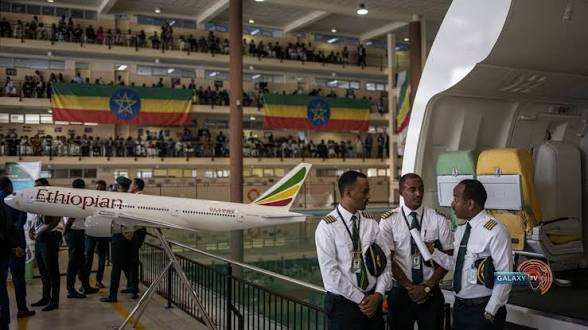
The Federal Government has warned Nigerians with underlying health conditions to take precautions when travelling through Addis Ababa, Ethiopia, following the reported deaths of 16 Nigerians who suffered medical complications while transiting through the city this year.
The Ministry of Foreign Affairs disclosed the deaths in a travel advisory issued on Saturday, saying Nigeria’s diplomatic mission in the Ethiopian capital recorded the fatalities, which were reportedly linked to health complications associated with the city’s high-altitude environment.
The government specifically advised travellers with cardiovascular and respiratory conditions to consult their doctors before booking flights involving stopovers in Addis Ababa.
According to the ministry’s spokesperson, Oluwafemi Adeniyi, Addis Ababa is approximately 2,355 metres above sea level, where lower atmospheric pressure and reduced oxygen availability could pose health risks to people with certain pre-existing medical conditions.
“This year, Nigeria’s Diplomatic Mission in Addis Ababa has recorded 16 deaths involving Nigerians transiting through the city, reportedly linked to health complications associated with high altitudes,” the advisory stated.
The ministry explained that although healthy travellers generally adapt to reduced oxygen levels at high altitudes, people with certain cardiovascular and respiratory ailments could face increased health risks.
“While healthy individuals are generally able to adapt to reduced oxygen levels in high-altitude environments, persons with certain pre-existing medical ailments, particularly cardiovascular and respiratory conditions, may experience increased health risks in such conditions,” it said.
It urged Nigerians whose medical conditions could worsen in high-altitude environments to exercise caution when selecting flights with stopovers in the Ethiopian capital.
However, the ministry clarified that the advisory was not intended to discourage Nigerians from travelling to or transiting through Addis Ababa.
“The Federal Government wishes to emphasise that this advisory is not intended to discourage Nigerians from transiting through or travelling to Addis Ababa,” the statement added.
The government said the warning was aimed at ensuring that medically vulnerable travellers understood the possible risks and sought appropriate medical advice before travelling. It also reaffirmed its commitment to protecting the health, safety and welfare of Nigerians abroad.
•Nigerians raise questions over 1.6m fake voters in electoral body’s list
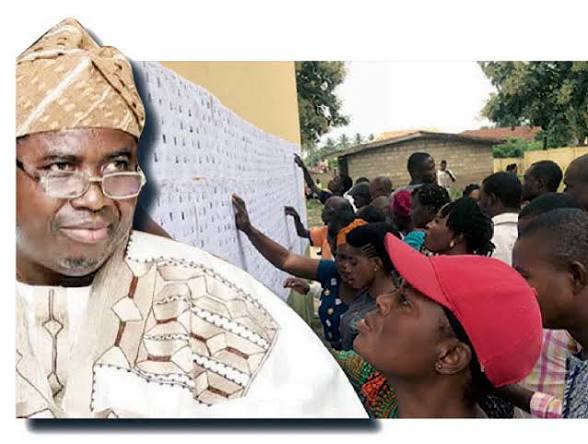
The controversy surrounding the Independent National Electoral Commission’s (INEC) preliminary register of voters has become one of the most troubling developments ahead of Nigeria’s 2027 general elections.
What initially appeared to be a technical problem involving questionable voter records has developed into a serious institutional credibility crisis, raising questions about the integrity of the electoral process, the competence of registration officials and the preparedness of the electoral umpire for another nationwide election.
At the centre of the controversy are allegations of artificial intelligence (AI)-generated photographs, multiple voter registrations, suspicious identities, names of deceased persons and other irregularities discovered in the preliminary voters’ register published by INEC. The scandal is particularly disturbing because the voters’ register is the foundation upon which the credibility of an election rests. It determines who is qualified to vote, the number of registered voters in each polling unit and, ultimately, the legitimacy of the electoral mandate produced by the ballot. The discovery of questionable entries has therefore triggered a fundamental question: if INEC cannot guarantee the integrity of the list of people qualified to vote, how can Nigerians be confident in its capacity to conduct a credible election?
How the scandal unfolded
The controversy gathered momentum after INEC displayed its preliminary register of voters nationwide between October 9 and 15, 2026, for public scrutiny, claims and objections. Following the publication of the register online on October 26, Nigerians began drawing attention to suspicious entries. Some of the photographs appeared to have been generated artificially using AI, while other entries raised questions about duplicate registrations, unusual names and deceased persons allegedly remaining on the register. Some of the questionable records were reportedly traced to registration areas in Edo State, particularly Etsako West and Esan Central. The development generated public outrage and forced INEC to acknowledge that irregularities had occurred within its registration system. More disturbing was the admission by the commission’s Director of Information and Communication Technology, Lawrence Bayode, that some registration officers had allegedly abused their authorised access to introduce questionable records into the database.
INEC subsequently announced an investigation into the circumstances surrounding the irregularities, while its chairman, Professor Joash Amupitan, assured Nigerians that the preliminary register was undergoing a comprehensive verification exercise. The commission’s explanation that the register was still preliminary did little to extinguish public concerns. Rather, it raised questions about how such questionable entries passed through the registration and verification processes in the first place.
Unending questions about 1.6 million invalid registrations
The controversy assumed a more alarming dimension on November 9 when INEC announced that it had removed 1,608,660 confirmed invalid registrations from the preliminary register following its nationwide clean-up exercise. The commission also disclosed that 873 records belonging to verified deceased persons had been removed separately, bringing the combined number of deleted records to 1,609,553.
According to Amupitan, the commission harvested 11,088,238 records from the three phases of the 2025/2026 Continuous Voter Registration exercise. Its Automated Biometric Identification System (ABIS) initially flagged 1,545,052 records for further examination. Following further screening, public complaints and adjudication, the commission confirmed the invalidity of 1,608,660 registrations.
More significantly, INEC identified 54 persons across 10 states allegedly involved in the registration irregularities. The commission promised administrative disciplinary action and possible prosecution of those found culpable. This disclosure has shifted the debate from the existence of questionable voter records to the possibility of deliberate manipulation involving personnel entrusted with protecting the integrity of the electoral database.
While the clean-up is expected to instil public confidence, it has raised more questions than answers. The questions stakeholders are asking are: Who were the beneficiaries of the questionable registrations, and were there political interests behind the manipulation? Why were suspicious entries not detected and eliminated before the preliminary register was published? Does the removal of 1.6 million invalid records sufficiently address the problem, considering INEC’s admission that historical duplications dating back to 2011 remain? What guarantees exist that genuine voters will not be disenfranchised during the clean-up exercise?
That scepticism is captured by Prof Tayo Bello, who insisted that the issue was not technical but moral.
“We should realise one thing: There must be justice, fairness and equity. Planning for an election that involves the totality of the country requires INEC to follow due process in all its conduct. My take is that INEC should follow the agreed process disseminated to the public. And there must be transparency in that due process.
“We all know that we are in the era of technology and its attendant problems. The question we should ask ourselves is: How did INEC arrive at an AI-generated register? It means some people within and outside INEC are working toward a certain goal.
“They said they deleted 1.6 million voters in the clean-up of the register. What was the total number of registered voters before they deleted those names? How are we sure that 1.6 million is the only AI-generated figure? These are issues that are likely to cause problems for the election that has not even been conducted. At the end of the day, the people will contest that figure. They will come out to say it was part of the AI-generated register.
“The only way INEC can restore confidence in the electoral process is to show transparency in its conduct. On the day of election, once voting ends, they should upload the results on the IReV portal in real time. If they don’t do that, people may not likely agree with the result based on what they have seen in the pre-election matters. There is now a melody being played around: ‘Rig and die.’ INEC should just sit up.”
Danger of the scandal
The significance of the controversy goes beyond the number of questionable records discovered. It touches on the very foundation of electoral democracy and the confidence Nigerians repose in the institution responsible for conducting elections. The most troubling aspect is the possibility that some of the irregularities were deliberately introduced to compromise the electoral process. If registration officials could manipulate records, introduce questionable photographs or circumvent biometric verification procedures, it becomes necessary to investigate whether the objective was merely to inflate registration figures or create opportunities for electoral fraud.
Although the discovery of invalid registrations does not, by itself, establish that INEC or any political party planned to rig the 2027 elections, stakeholders say the circumstances demand a thorough investigation. They challenged the commission to establish who introduced the questionable records, who authorised the transactions, whether any political interests were involved and what safeguards failed.
These are genuine concerns because Nigeria’s electoral politics is significantly influenced by the distribution of registered voters across states, local government areas and senatorial districts. Voter registration figures are frequently deployed by political parties to assess their electoral strength, determine campaign strategies and make projections about possible outcomes. An improperly inflated register could therefore distort the political calculations of parties and candidates. It could also create opportunities for electoral manipulation, particularly if questionable records are allowed to influence the deployment of electoral materials and the assessment of polling-unit results.
What this means is that the 2027 elections will be conducted against the background of declining public confidence in Nigeria’s electoral institutions. In this circumstance, INEC needs to appreciate that the credibility of an election is not determined only by what happens on election day. It begins with voter registration, continues through party primaries and candidate nominations, and extends to accreditation, voting, collation and declaration of results. A compromised register could undermine confidence in the entire process, even where the actual voting exercise is properly conducted.
The commission cannot afford to enter the 2027 elections with unresolved questions about the authenticity of its voters’ database.
Public affairs commentator, Efiye Bribena, goes further. For him, the biggest threat to a credible election is INEC itself: “For me, the most critical issue is the mess INEC has made of the voters’ register. That is more threatening than any other thing. How can you have AI-generated information in the voters’ register? They said they know the people who did it. What are they doing about it? How many people have they interrogated or prosecuted for gross violation of electoral laws?
“This is the biggest threat to our democracy because it means that INEC itself is involved in the attempt to create a flawed voters’ register with AI-generated information. It means we are not prepared for this election in January. If we cannot trust the electoral umpire to give a credible election, then democracy is under threat.”
He links the rising incidence of election-induced violence with the compromised register. According to him, violence is to keep real voters away, and a compromised register is to fill the vacuum. “If people that are supposed to vote cannot come out, they will use the AI-generated voters’ register to fill the vacuum. You can imagine my two daughters who just came back to the country and wanted to register in this registration exercise but they could not register. Throughout the period, they made several efforts to register, but they couldn’t. Yet, we have an AI-generated register.”
Perhaps the most embarrassing aspect of the scandal is that some of the suspected manipulations have been traced to personnel within the commission. This raises questions about internal supervision, access controls, institutional discipline and the effectiveness of INEC’s technological infrastructure.
Critics say it is not enough to announce that 54 officials have been identified for disciplinary action. Nigerians deserve to know their identities, the states where the infractions occurred, the specific offences committed and the outcome of investigations. Where criminal conduct is established, prosecution should follow. Administrative transfers or internal reprimands would not be sufficient to restore public confidence.
This presents INEC with a much bigger challenge: conducting a comprehensive audit of the national register rather than limiting its intervention to the latest registration exercise. People have charged the commission to explain how it intends to reconcile historical records, eliminate multiple registrations and ensure that every legitimate voter is accurately represented. It must also address the concerns of genuine voters who may have been affected by the clean-up exercise.
Gen Ishola Williams (retd) says INEC is putting itself in a position of distrust: “They said they know the people who hacked their data but nobody has been punished so that hacking does not continue. Everything needs to be done to protect the system from being hacked. This means that all political parties have to work closely with the agencies of government set up to protect the INEC website to ensure that people do not introduce fake names into their data. It is by so doing that people can trust INEC that they are not acting on behalf of the government. For now, many people believe that INEC is working for the Federal Government. Therefore, anything that has to be done to protect the data system from being hacked must be done in cooperation with the political parties. That is very important to maintain the trust.
“In the future, we may not have enough money to do an election. You go and do some research and check back. Every four years we have an increase in the amount of money being demanded by INEC to conduct an election. In other countries, it’s decreasing. But in Nigeria it’s increasing. For next year, INEC may demand about one trillion naira for the coming election. And a quarter of that will be stolen because nobody cares. Now this is being complicated with the introduction of new technology. Our young people who have a good knowledge of this system now can use it to manipulate the electronic data system. It will require a lot of money to be able to procure the system for maintenance.
“In Nigeria, there is always controversy about INEC before and during elections. At the end of the day, everything ends up in court. Everybody knows that it is the judiciary that determines who is elected or not elected.”
INEC’s credibility is on trial
The scandal presents a major test for the leadership of Professor Amupitan, who assumed responsibility at a critical period in Nigeria’s electoral history. His handling of the controversy could significantly influence public perception of INEC ahead of 2027. While the chairman deserves recognition for acknowledging the irregularities, ordering investigations and announcing the removal of invalid records, the commission must understand that transparency cannot end with press conferences and assurances.
It must demonstrate that the clean-up exercise is independent, comprehensive and verifiable. The identification of 54 officials is an important starting point; the consensus is that Nigerians need to see concrete consequences. Many public affairs commentators insist that the commission must publish an appropriately detailed account of the investigation, subject to due process, and make clear whether the officials acted individually or as part of a coordinated operation. To come out clean, INEC should make available sufficient information to enable independent experts to assess the integrity of its database without compromising voters’ personal information. The commission must also strengthen the security of its registration platform, restrict unauthorised access and introduce more effective audit trails to ensure that every alteration to the register can be traced to an identifiable officer.
Political implications ahead of 2027
The timing of the scandal makes it even more consequential. Nigeria is approaching another fiercely contested general election in which political parties are already positioning themselves for power. The opposition will understandably demand greater scrutiny of the register, while the ruling All Progressives Congress (APC) and other political stakeholders have a responsibility to ensure that the electoral process is not compromised. INEC must avoid giving the impression that it is responding to public pressure selectively or protecting particular political interests.
The controversy could also become another source of litigation, particularly if political parties or candidates believe that irregular voter figures in particular locations could influence electoral outcomes. The commission should therefore act before the final register is certified, rather than wait until the election results become subjects of legal disputes.
INEC has indicated that the final register is expected to be published in December 2026. That deadline makes the remaining period particularly important. The commission must use the opportunity to complete its verification, reconcile historical records and address complaints from genuine voters.
It is in this atmosphere of distrust that Tunji Shelle, former chairman of the Lagos State chapter of the Peoples Democratic Party (PDP), now a chieftain of the African Democratic Congress (ADC), identified a number of issues threatening the credibility of INEC and its capacity to conduct a free, fair and credible election:
“The job of INEC is to ensure that things are properly done, right from the registration exercise to the collection of PVCs. Yet, up till date, some people are still having problems collecting their PVCs. I met a lady recently. She told me she had been struggling for months to collect her PVC and she couldn’t. They are giving her another date to come this month. How sure is she that she will get it?
“It’s like everything is designed to favour the APC. It’s like they are working together. Even the law passed by the National Assembly reflects that some of the things INEC is doing are programmed to favour a particular party. INEC, APC and the National Assembly are working together to destabilise the system and to frustrate other opposition parties.
“Just about two months before the election, they have not displayed the clean copy of the voter register. They said they have removed 1.6 million voters. Is that a good number? A number of people are already embedded in the register through AI or through other means. So, I don’t believe in the 1.6 million they are claiming. It’s much more than that. So many people have died between 2023 and today. That number can never, even conservatively, represent the total number of names that have been added either through AI or through other means.
“I’m aware that APC members and their representatives in marketplaces are collecting PVCs from people. What they are doing with all these things, I can’t understand. I’ve seen it happen at Sura Market. Market women were gathered and their PVCs were being collected. Whatever they wanted to do with it, I don’t know. To achieve what? It means some people are working directly with INEC staff. In fact, most of the people that are doing registration are APC staff. I know that for sure in Lagos State. I’ve been the chairman; I know everything that used to go on during elections. Most of the people that are in INEC office as of today are APC members. Some of the Resident Electoral Commissioners are card-carrying members of APC. The INEC chairman is chosen by the President. He will dance to the dictates of the person who appointed him.
“INEC should come out clean. They should do their work the way it should be done. If a case of fraud is reported, they should take it up and investigate. Unfortunately, they will sit down and say it is the work of the police. Vote-buying will take place; nothing will happen because they are the ones who have money to buy votes.
We want a credible, free and fair election. But once the leadership of INEC is compromised, how can we have confidence that the election will be credible?
“The man in charge of AI data protection was sincere enough to say that there was internal sabotage within INEC. They said they were already looking into it and would sanitise the register. How many names would they be able to find? All along, they have had measures to check all these, but they didn’t want to do it. All I want is that all the people who are accredited to vote should be allowed to vote and their votes should count. The results at the polling units should be transmitted the way they should be transmitted, like it was done in Osun State.
“In the 2023 election, the transmission was delayed because of a glitch. We pray there will be no glitch this time around. If there is any glitch, it is the fault of INEC.
“Those who manipulated the register with AI-generated names and identities are working for somebody. INEC has already identified that there is internal sabotage. They are covering them up because somebody influential is using them. If not, they should publish the names of those individuals responsible for the action. If they are eventually cleared by the court, it is okay. They will not do it because somebody is behind it. They are paid to do it.
“The majority of the staff in INEC are members of the ruling party. As far as Lagos is concerned, I know that for sure.
“We hope that agents of opposition parties will work together on the day of the election to ensure that only those with PVCs are allowed to vote.
“There is another dimension. There are some hidden polling units that are not known to everybody. Votes will be registered in those places. While the opposition is taking up some of these things, somebody is sponsoring members of the opposition to go to court. The PDP governors who are to provide viable opposition have all left the party and joined APC so that their sins will be forgiven. If there is real democracy and everybody stands where he is, there will be sanity. We will be able to challenge the excesses of the ruling party. It has never been this bad.
“I don’t have any trust in the ability of INEC to conduct a free and credible election. There was a place in Lagos here. They realised that the faces of the people there were going to vote for the opposition. They allowed the voting to go normally. At the end of the day, before counting started, they carried the ballot away. So, the election in that place was nullified.
“I know that the opposition is ready to fight for its rights. But can the opposition fight the irregularity of vote buying? Who has the money to buy votes other than those in government? They are the only ones who have the financial muscle to buy votes. And the judiciary is not helping matters.”
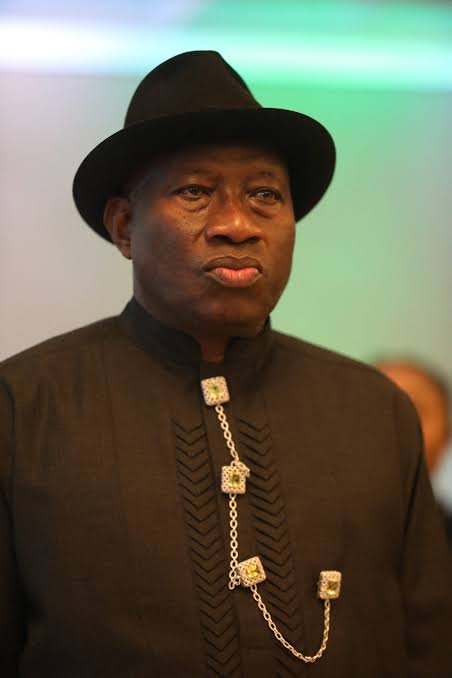
Former President Goodluck Jonathan yesterday noted that Nigeria’s poor leadership recruitment process, especially using religion, language and ethnicity to recruit potential leaders was hindering the country’s progress and development.
He, therefore, called for far-reaching reforms in the country’s democracy, noting that such poor leadership recruitment process might ensure the failure of the dreams of Nigeria’s founding fathers.
Jonathan spoke yesterday at the maiden Herbert Macaulay Colloquium, organised by the Macaulay Heritage Foundation in partnership with the Lagos State Ministry of Tourism, Arts and Culture, at the Nigerian Institute of International Affairs (NIIA), Victoria Island, Lagos. He was chairman of the event.
Jonathan noted that Nigeria’s founding fathers had dreamt and worked to have a united country where every citizen, irrespective of ethnic, religious or social background, would enjoy equal rights, dignity and opportunities, a nation where citizens would determine their destiny, control their resources and deploy them for national development and the welfare of the people.
He regretted that Nigeria had yet to meet up with those expectations 66 years after independence. He noted: “Although the country had recorded progress in some areas, challenges such as poor leadership, institutional weaknesses, corruption, policy inconsistency, inadequate infrastructure, insecurity and dependence on raw material exports had continued to undermine national development.”
He commended the descendants of Macaulay, especially Chief Bode George, for organising the colloquium.
While welcoming guests to the event, George said the event was organised to examine the strategies and methods through which Macaulay challenged British colonial rule and championed the interests of Nigerians.
He described the late nationalist as a rare gift to the country, noting that his contributions to the country’s political development deserved greater recognition.
George appealed to President Bola Tinubu and the Federal Government to return Macaulay’s former residence to his descendants to enable them to establish a permanent heritage hall where younger generations could learn about his contributions to Nigeria.
The keynote speaker, Prof Jide Oshuntokun noted that Nigeria should be understood as a multinational state rather than a nation-state, averring that it has diverse ethnic, linguistic and cultural identities.
He said the country should develop a shared sense of belonging that would enable its different nationalities to coexist peacefully under one government.
He explained that nationalism should be understood as the willingness of people with common historical, linguistic and territorial connections to live together under a united government.
•Tinubu blaming opposition for hardship is corporate dishonesty •Wike’s Rainbow Coalition recipe for political anarchy
The South East Coordinator of Kwankwaso National Network (KNN), and a chieftain of Nigeria Democratic Congress (NDC), Dr Ukpai Iro Ukpai, has said that the premise that governors completely control the electoral choices of their states is a flawed, outdated political assumption. According to him, if governors truly controlled votes, the dramatic political shifts Nigeria witnessed in the 2023 elections would never have occurred.
In an interview with Vincent Kalu, the 2023 governorship candidate of the New Nigeria Peoples Party (NNPP), for Abia State, noted that the All Progressives Congress (APC) governors are realising too late that in trying to secure the presidency, they have compromised their own kingdoms with the presence of Nyesom Wike’s Rainbow Coalition.
What is your view on the 2027 elections campaigns?
The campaigns, especially presidential campaigns, so far, have become a spectacle of money, intimidation, and political arrogance, rather than a serious engagement between candidates and the electorate.
We are witnessing thugs and thuggery, smashed cars and buses, blood, and deaths, from Asaba to Katsina, and in between. We are seeing lavish displays of affluence by the tiny clique of rulers, backed up by state-funded machinery, expensive cars and buses paraded by the ruling party, especially during their presidential campaigns, for public view and review.
We are seeing rented crowds. Frequently, you see those rented crowds openly mocking the renters/sponsors, on camera, that they have only delivered their physical presence to complete the transaction, and that they have neither delivered their consciences nor their convictions.
So, the campaigns are largely characterised by a ruling party trying very hard to buy its way back into relevance, while the opposition works tirelessly to channel the raw energy of, mostly the youths, unadulterated pain of everyday Nigerians.
On one side, you have the heavy, state-funded machinery of the incumbent trying to force consent and acceptance by the citizens/voters. With the ruling party, we are witnessing a transactional sprint rather than a transformational campaign.
On our side, we are leading an organic movement of a populace demanding their country back. The alliance between Peter Gregory Obi and Rabiu Musa Kwankwaso, both astute politicians, bringing with them their Obidient Movement and Kwankwasiyya Movement/Kwankwaso National Network, respectively, has really energised the campaign space positively.
Nigeria has never seen such energy and passion before from the electorate. Social and mainstream media (online) roars, the campaign grounds (offline – on the streets) bustle whenever Obi-Kwankwaso visits any city. This contrasts with the ruling party’s campaign rallies so far.
The state of the main political parties just two months to voting indicates that all is not well with them. Even the once ‘untouchable’ ruling APC has started unravelling. Internal frictions and contradictions within the ruling party, and leading opposition aggrieved party members who feel cheated out in the mostly transactional party primaries parties exacerbated by have come to the surface.
The proxy war between Nyesom Wike and the APC governors has already escalated into a public structural battle, causing significant fractures across some APC controlled states, notably Imo, Kwara, and Gombe. Wike’s Rainbow Coalition has exposed a fundamental contradiction: a political arrangement designed to secure presidential support for the ruling party may simultaneously weaken the ruling party’s control over governorship and legislative contests. The ruling APC built a house of cards by forcing governors into their fold, but by unleashing a ‘Rainbow Coalition’ to police those same governors, they have set fire to their own foundation and it is disorganising their campaigns badly. I expect the opposition parties to be alert and take advantage. Opposition must learn to sing ‘as e dey sweet us e dey pain them.’
Are you satisfied with the way the campaigns are going on?
Absolutely not. We are seeing a deliberate attempt to drown out substantive policy ideas with political noise. Nigerians want a debate on ideas, but the ruling party is giving us a circus. I hope the opposition doesn’t get distracted because Nigerians want change.
The 2027 electioneering campaign may go down as the most frivolous, transactional, and tissue-based campaign in Nigeria’s history.
If I were to draw a Nollywood type – metaphor to make myself clearer to you, it would go like this: Political campaigns in a democracy should be like the last part of the rituals before the coronation of the king (winner) at the central village square. Properly understood, and well-practised, political campaigns are like the libations that are poured for, and kola nuts broken with the people; it is the rituals that deify and sanctify the throne before the coronation.
Trifling with campaigns is usually a dangerous thing because the contestant, even if he /she wins and is crowned, did not successfully complete the rituals in all the traditional posts. In our 2026 case, some contestants have refused to visit the important village posts where they should meet the villagers. When they did, instead of trying to pacify the people who are suffering from the economic and insecurity plague that their administrations inflicted on them (at the federal and sub national levels), are allegedly offering them cash as inducements, taunting them with lavish displays of affluence, and arrogance to boot.
What we are witnessing from the ruling party, especially in their presidential campaigns, is: Imakwa ndi anyi wu (Do you know who we are?) politics. If we go by my metaphor, in our case, the minimum state posts any serious presidential contender should visit during campaigns is 24 plus FCT. Like they say in this clime, if you know, you know.
Some other contestants running to be president make the whole thing like it is a joke given that they and their parties are nowhere to be seen. They make their party’s presidential ticket seem worthless. One begins to wonder whether the electoral act should not be revised to ensure that only political parties who meet certain criteria can enlist candidates at the presidential level. It is my considered view that only the NDC presidential campaign, and to a lesser extent the ADC presidential campaign, has so far, by their comportments, candour, and presentations, shown respect to the Nigerian people (their potential employers) and put out the right campaign messages. Nigerians still expect more from them, though. What I am saying, in effect, is that in a democracy, campaigning is a democratic obligation, an opportunity for scripting a covenant between the candidate and the people.
Political hostilities, violent attacks, threats, intolerance have characterised the electioneering. What’s your take on this?
When the ruling party cannot defend their economic and security record; when they cannot justify the astronomical cost of living and multidimensional poverty ravaging the land amidst windfall from removed subsidy plus excessive borrowing, weaponised desperation becomes the only campaign strategy.
But it’s not all gloom and doom. Very touching is the trending video showing NDC Presidential candidate, Peter Obi and the NDC National Leader, Senator Seriake Dickson in a boat ride joined by the sea horses in a typical Ijaw boat regatta. They were travelling from Yenagoa to meet with the people, to campaign to the people in the creeks of Ijaw land. It is encouraging and it shows respect for the people. That video depicts ‘we are in it together’ politics or what I call ‘Ubuntu’ politics.
If all things were equal here in our politics, the electorate would find it very easy to choose those who govern them from 2027.
What should be the campaign messages?
The messages from the campaigns give me no joy at all. Except in a few cases, we are not seeing issue-based campaigns but tissue-based campaigns. You see too much personality, too much money, too much spectacle; too little policy, too little conscience and accountability, and too little respect for the electorate. We are witnessing politicians, especially from the ruling class, not taking the people seriously.
President Tinubu, contestant from the ruling party, told his party, by extension the Nigerian people, bluntly, that he will not present himself to them in some sections of the country. The ruling party’s only defence for the pain they have inflicted on the Nigerian people is to blame the opposition. That’s more like rubbing insults into injury. The only campaign message that matters to a hungry Nigerian is a roadmap to affordable food, safe streets, and stable jobs. Everything else is gibberish.
President Tinubu during the flag-off campaign for his re-election in Kaduna, recently, said the hunger and hardship in the country were caused by the opposition. What’s your position on this?
To stand before thousands of Nigerians and blame the opposition for the current unprecedented economic hardship is the height of intolerance and insensitivity. The All Progressives Congress (APC) has been in power at the centre for over a decade. They have, since then, been in full control of the levers of power. To look backward and blame the opposition is corporate dishonesty. I am consoled that Nigerians are no fools.
The parties are shouting over the discovery of AI-generated photographs in the INEC voters register, which the electoral umpire has admitted. What does this portend for the elections?
I find the discovery of AI-generated photographs in INEC’s preliminary Register of Voters deeply troubling. And we must understand why this is more than a technical or administrative error.
The admission by INEC that artificial photographs and questionable registration records entered its system, reportedly through the actions of some registration officers, raises very serious questions about the integrity of its internal controls.
An electoral register containing improperly created identities is a serious threat to the integrity of the process. It creates a serious integrity question that must be investigated before those records can be trusted.
When the authenticity of the register is in question, the credibility of the election itself is put under suspicion. It lays a red carpet for election riggers. INEC is therefore not merely managing a database. It is safeguarding the sovereignty of the Nigerian people. Removing suspicious photographs is not enough. Nigerians deserve to know who inserted them, how they got in, and whether they were ever used to compromise the electoral process in previous elections.
How should INEC handle this matter?
In the first, INEC must initiate an immediate, transparent, and independent forensic audit of all 103 million entries before the December 15 database cleanup deadline.
Secondly, the internal registration officers must be investigated, and if found guilty, they must be publicly named, stripped of their institutional authority, and prosecuted under the law.
Finally, the Bimodal Voter Accreditation System (BVAS) must be technically configured so that on election day, it will only recognise living Nigerians, with blood and flesh not the digital footprints of fake Nigerians.
The five South East governors have endorsed President Bola Tinubu as the region’s presidential candidate. What is your opinion on this?
But, Governor Alex Otti, has distanced himself from Governor Hope Uzodimma’s declaration. Let’s separate the political survival of a few privileged individuals from the democratic will of millions of suffering South East electorate. The South-East electorate is highly sophisticated, you know, independent, and notoriously anti-establishment.
A governor possesses only one vote on election day; mark that very well. But the delicious irony is this: while these APC governors are busy endorsing the president, the president’s own federal actors are busy undermining the governors back home. Take a look at the serious tension in Imo State right now. Governor Hope Uzodimma is supposedly leading the charge for the President in the South East, yet Wike’s ‘Rainbow Coalition’ is actively entering Imo, bypassing the governor’s structure, and organising aggrieved politicians who have an axe to grind with the State chief executive. This is happening nationwide. The ruling party wants to have it both ways—they want the governors’ state machineries, but they also want Wike’s aggressive, cross-party coalition to absorb the rebels. It is a recipe for political anarchy.
When you see a ruling party generating this level of internal friction in its own strongholds just 64 days to an election, it tells you that their dominance is nothing but a grand illusion.
An endorsement means nothing when the candidate you are endorsing is funding a shadow coalition to destabilise your home base. The APC governors are realising too late that in trying to secure the presidency, they have compromised their own kingdoms.
Since the governors are in control of their states, what is the fate of Peter Obi and the NDC?
The premise that governors completely control the electoral choices of their states is a flawed, outdated political assumption. If governors truly controlled votes, the dramatic political shifts we witnessed in the 2023 elections would never have occurred.
Peter Obi’s political fate does not rely on the blessings of South East governors or any state governor for that matter; it rather rests on his ability to sustain an organic, anti-establishment movement across Nigeria and on the conscience of the suffering masses who desire a Nigeria that is possible. And, he and his deputy, Senator Kwankwaso, are doing very well as they move around the country identifying with suffering Nigerians.
Obi is the darling of the suffering masses and the youths of Nigeria who have been orphaned by the ruling establishment, who want a new Nigeria. You can see that all over the country. No other Nigerian politician has the organic movements he and Kwankwaso have, from South to North and from West to East – their political bases. Obi has transcended regional politics as he is seen as a statesman and politician.
Many have wondered why some Igbo leaders continue to attack Peter Obi?
Our silence is not a sign of weakness; it is a deliberate refusal to participate in a coordinated distraction. The public spat between figures like Governor Soludo, Minister Umahi, and Peter Obi is exactly what the ruling class in the ruling party wants.
We don’t want to reduce the national conversation to a regional civil war. They have tried to make Obi look like an Igbo politician or a President for the South East. We did not fall for their distraction. If you allow them, they will trivialise and tribalise the election so that Nigerians stop focusing on the issues that unearth their incompetence and corruption and ask for change.
As leaders, our responsibility is to keep our people focused entirely on the main issue: the failure of the federal government to secure our borders and fix our economy, the marginalisation of the South East, the absence of a seaport in Igboland, the diversion of railroads and pipelines from the South East, the injustice meted out to one of us, and the absence of other meaningful federal infrastructure in Igboland. These people attacking Obi, by their positions, have the opportunity to ask questions about these, but they selfishly refuse to.
Enugu State Governor, Chief Peter Mbah, has warned that the South-East risks further political isolation if it fails to make strategic political choices in the 2027 general elections.
Mbah, who spoke during the inauguration of As Tinubu, Mbah Moves (ATM), a political support group convened by the Minister of Innovation, Science and Technology, Kingsley Udeh, in Enugu, urged the people of the region to support President Bola Tinubu’s re-election bid.
He said the region could not secure its political future through isolation but by building strategic alliances across the country, arguing that although the South-East aspired to produce Nigeria’s president, such ambition would require political calculations, alliances and partnerships with other geopolitical zones.
The governor recalled how prominent Igbo leaders, including the late Dr Nnamdi Azikiwe and Dr Michael Okpara, built political alliances with other regions to advance the interests of the South-East in the First Republic.
“If we make a mistake in 2027, the danger is that we are still going to continue to be isolated. We are still going to continue to be ignored. Nobody would care because we have not been strategic in making ourselves relevant,” he said.
Mbah noted that Tinubu won the 2023 presidential election without significant support from the South-East, arguing that the region should consider the political implications of failing to support him again in 2027.
“Imagine that the president won his election in 2023 without the support of the South-East. And this was when he wasn’t a president. The likelihood is that if we don’t support him this time again, he’s still going to win. What do you think that holds for us in the South-East?” he asked.
He urged the people to support Tinubu’s re-election, describing him as a unifier and defending his economic reforms, particularly the removal of fuel subsidy and unification of the foreign exchange rates.
The governor said the policies, though difficult, were necessary to restore confidence in the economy, attract private investment and create the foundation for shared prosperity. He also cited federal infrastructure projects, including the Enugu-Onitsha Expressway and the proposed direct cargo flight from Enugu to Guangzhou, China, as developments that would benefit the South-East.
Mbah charged ATM members to take their mobilisation beyond the inauguration venue and reach communities, markets, families and polling units, warning APC supporters against complacency.
“Let us fight as though we’re the underdogs. Let us come out and campaign vigorously. Do not leave any stone unturned. You have to cover the ground. Get to our families, get to our kindreds, knock at their doors and tell them what you see around you,” he said.
Earlier, Udeh said ATM would deploy technology to make its political mobilisation measurable, disclosing that the group had established a digital situation room and dashboard to monitor membership and activities across polling units.
He said the initiative would eliminate unverified membership claims, explaining that prospective members would register with their Permanent Voter Cards (PVCs) and Voter Identification Numbers (VINs) through an online portal.
Udeh also disclosed that the platform had a reward system designed to encourage members to recruit others, adding that membership growth and mobilisation efforts would be tracked through a database.
“We don’t make claims. We say we have 20,000 members or 50,000 members by word of mouth. No, it will be tracked by records, by database,” he said.
The ATM Coordinator, Onyebuchi Igboke, said members, many of whom previously operated in civil society, had decided to mobilise grassroots support for Mbah and Tinubu.
He said the group would deploy technology, knowledge and community networks to educate voters and ensure that its political activities translated into measurable electoral support.