Home Blog Page 168

HAMMED TAJUDEEN AKANBI: THE UNENDING MEDIA ONSLAUGHT AND THE BAIL APPLICATION YET TO BE HEARD

0

As social-media narratives intensify around the murder trial, court proceedings tell a more complicated story about Akanbi’s bail, detention and presumption of innocence

The criminal proceedings involving Alhaji Hammed TajudeenAkanbi have, for several months, generated intense public interest, particularly across social media. Beyond the allegations before the court, however, an equally significant controversy has emerged over the true status of his bail application and the increasingly blurred line between criminal prosecution and trial by media. A recurring narrative across some online platforms is that Akanbi has applied for bail on several occasions and has repeatedly been refused by different judges of the Lagos State High Court.

A review of the chronology of the proceedings presents a materially different picture. The substantive bail application filed following Akanbi’s arraignment before Justice A.T. Muyideen has, according to the sequence of proceedings, not been heard and determined on its merits. What have subsequently come before vacation judges were applications seeking leave for the pending bail application to be heard during the court’s annual vacation.

That distinction is important.

Bail is ultimately an incident of the constitutional presumption of innocence. An accused person standing trial has not been convicted merely because a criminal charge has been filed against him. Detention pending trial is principally intended to secure attendance at trial and protect the administration of justice, rather than operate as punishment before conviction.

THE FIRST APPLICATION: HABEAS CORPUS BEFORE JUSTICE ALEBIOSU

Following Akanbi’s arrest in April 2026 and subsequent investigation by the State Criminal Investigation Department, Panti, he remained in police custody for more than 40 days without a court order. A fundamental-rights enforcement action was pending before Justice Alebiosu, and an application in the nature of habeas corpus was subsequently brought challenging his continued detention. By the time judgment was delivered on August 7, 2026, however, the circumstances had changed. The State had filed a criminal charge against Akanbi before Justice A.T. Muyideen. The court consequently declined to consider the request for his release on the original premise that he was being detained by the police without being charged to court.

That proceeding cannot properly be equated with a substantive bail application being heard and refused following arraignment in the criminal charge.

AKANBI’S HEALTH AND THE EVENTS PRECEDING HIS ARRAIGNMENT

The circumstances surrounding Akanbi’s health provide another important dimension to the controversy. While in police custody, his health reportedly deteriorated considerably. He was said to have collapsed on about three occasions at SCID, Panti, with one incident allegedly requiring the intervention of persons around him, including the police prosecutor handling proceedings against him. His condition eventually resulted in his transfer to the Police Hospital, Ikeja, on June 14, 2026.

By June 16, his condition reportedly prevented his production before the Magistrates’ Court at Ogba. The Magistrate consequently adjourned proceedings and directed that he be medically fit before his next production, with provision for an appropriate officer of the health facility to update the court should he remain medically incapable of attending. The Director of Public Prosecutions was represented during those proceedings.

Then came June 25. A production warrant issued by Justice A.T. Muyideen was reportedly served on Akanbi at about 10:30 p.m. on June 24. He was produced before the court the following day.He arrived at the court premises in an ambulance and with oxygen attached to his nose.

His plea could not be taken that day.

The court ordered that he be remanded at the Ikoyi Correctional Centre. The correctional facility, however, reportedly declined to admit him because of his medical condition. He was eventually returned to the Police Hospital in Ikeja following a further order of the court. The case was adjourned to July 3, 2026 for arraignment.

Between June 25 and July 3, his condition reportedly deteriorated further, leading to his referral from the Police Hospital to the Federal Medical Centre, Ebute Metta.

JULY 3: THE SUBSTANTIVE BAIL APPLICATION

Akanbi was eventually brought before Justice Muyideen on July 3, 2026 in a wheelchair. He pleaded not guilty. By then, an application seeking his release on bail had been filed in the substantive criminal proceedings. But the application was not heard.

The Director of Public Prosecutions served a counter-affidavit and response in court that day. A request that the bail application be heard within the same week, particularly because of Akanbi’sreported medical condition, did not result in an immediate hearing. The matter was instead adjourned, with November 3, 5, 10, 19 and 25, 2026 fixed for trial in view of the intervening court vacation. Consequently, the substantive bail application before the trial court remained undetermined.

WHAT HAPPENED BEFORE THE VACATION JUDGES?

With the substantive application still pending and Akanbi’shealth reportedly deteriorating, an attempt was made on July 20 to obtain leave for the bail application to be heard during the annual vacation.

The application came before Justice O.O. Martins. The court declined the request after relying on an endorsement on the case file by Justice Muyideen indicating that pending applications and motions had been adjourned until November 3, 2026. The application for leave was accordingly refused. This was an application for permission to have the bail matter heard during vacation. It was not a determination of the substantive bail application itself.

Another attempt was subsequently made to secure a vacation hearing following further medical reports concerning Akanbi’scondition. That application came before Justice A.M. Ipaye on August 27, 2026. The court declined the application on the basis that previous applications seeking leave had been presented before vacation judges, including Justice O.O. Martins and Justice Sonaike, and regarded another application as an abuse of court process.

There is, however, an important factual controversy surrounding that conclusion.

The August 6 application before Justice Sonaike was reportedly brought by the two other defendants standing trial alongside Akanbi, rather than by Akanbi himself. If that account of the court record is correct, treating it as Akanbi’s second attempt to obtain vacation leave would raise an obvious question about the premise upon which the subsequent application was considered.

Whatever view is ultimately taken of the vacation applications, one fact remains central to the present controversy: an application seeking leave to have a bail motion heard is different from the hearing and determination of the bail motion itself.

THE OTHER TRIAL: SOCIAL MEDIA

While these proceedings have unfolded in court, another trial appears to have been taking place outside it. Since February 2026, Akanbi has been the subject of sustained social-media commentary over the murder allegations.

A significant turning point was the public intervention of AIG Jimoh Moshood of the Nigeria Police Force. At a media briefing during the controversy, photographs of Akanbi in handcuffs were displayed and statements were allegedly made portraying him as a murderer, land grabber and a source of trouble to several homes.

This was occurring against the background of sustained online publications concerning Akanbi.

Among the social-media personalities specifically identified in the controversy is Rukayat Omolara, who operates under the handle @rukkydgreat on Instagram and TikTok. Another platform repeatedly mentioned is @islander_events on Instagram, said to be owned by Muhammed Olanrewaju Isiaq.

It has been alleged that these online publications were sponsored or encouraged by Aare Bashir Fakorede, who is identified as a major complainant in the criminal proceedings. That remains an allegation and should not be mistaken for a judicial finding.

The controversy subsequently widened when Chief Femi Falana, SAN, a prominent human-rights lawyer, publicly commented on the matter and called for Akanbi’s prosecution for murder while investigation was reportedly still ongoing.

But perhaps the most consequential social-media intervention came from Martins Vincent Otse, popularly known as VeryDarkMan (VDM).

Akanbi, while receiving medical treatment, had publicly appealed to VeryDarkMan and President Bola Ahmed Tinubu for intervention and a thorough investigation of the murder allegation, maintaining that the accusation against him arose from a land dispute involving himself and some of the complainants. VeryDarkMan subsequently released and discussed purported investigative documents, voice notes and other materials relating to the case.

Those publications significantly altered the online conversation surrounding the prosecution. Among other things, the audio materials circulated by VDM were presented as demonstrating the existence of a substantial land dispute between Akanbi and some of the complainants, particularly Aare Bashir Fakorede.

The publications also drew public attention to an important distinction that had become obscured in some of the online commentary: the charge presently involving Akanbi concerns the alleged murder of Sheriff Ishola Salami, while the killing of Prince Ademola Akinloye has also featured prominently in the wider media narrative surrounding him.

The evidential value of any document, recording or voice note circulated on social media is ultimately a matter for a competent court where such material is properly placed in evidence. Social-media publication cannot substitute for the judicial process.

The same principle applies equally to material favourable or unfavourable to Akanbi.

PRESUMPTION OF INNOCENCE CANNOT DEPEND ON SOCIAL-MEDIA POPULARITY

There is a larger institutional issue at stake.

A criminal trial cannot become a popularity contest in which guilt or innocence depends on which side commands more bloggers, followers, influencers or media coverage. The constitutional presumption of innocence protects the unpopular accused just as much as it protects everyone else. Akanbi may ultimately be found guilty or not guilty. That determination belongs to the court after hearing admissible evidence from the prosecution and defence.

The danger arises when public institutions or influential individuals appear to reach conclusions ahead of that process.The criminal justice system cannot simultaneously insist that an accused person is presumed innocent and permit him to be publicly presented as already guilty before his trial has run its course.

HAS AKANBI REALLY BEEN DENIED BAIL FOUR TIMES?

Against this background, the assertion that Akanbi has applied for bail four times and been refused four times deserves careful scrutiny.

The chronology does not support such a simplistic characterisation.

There was an earlier habeas corpus application arising from his prolonged police detention. There is a substantive bail application before Justice Muyideen following his arraignment. There have also been attempts to obtain leave for that substantive application to be heard during the court’s vacation.These are legally and procedurally distinct events.

Most importantly, the substantive bail application filed before the court trying Akanbi has yet to be heard and determined on its merits. That distinction should matter to anyone interested in an accurate account of the proceedings, irrespective of his or her view of the allegations against Akanbi.

WHEN PRE-TRIAL DETENTION BECOMES PUNISHMENT

Akanbi’s case also raises a broader question about the administration of bail in Nigeria. An accused person is not supposed to serve punishment while awaiting the determination of whether he committed an offence.

The purpose of bail is generally to reconcile the liberty of an unconvicted person with the need to ensure his attendance at trial, prevent interference with witnesses or evidence, and protect the proper administration of justice. According to the account surrounding Akanbi’s detention, he spent more than 50 days in police custody before his eventual arraignment and has continued to experience significant health challenges.

It is further claimed that during portions of his treatment at the Police Hospital there were periods when police officers were not stationed immediately around him, yet there was no reported attempt to escape. Perhaps one of the more troubling episodes allegedly occurred on June 25 after the Ikoyi Correctional Centre declined to receive him because of his medical condition. Akanbi was reportedly left around Oba Akinjobi Way, Ikeja, for several hours until about 10:30 p.m., when Justice Muyideensubsequently directed that he be returned to the Police Hospital where he had been receiving treatment.

These circumstances deserve attention independently of the question of whether Akanbi is ultimately guilty or innocent. The legitimacy of a criminal justice system is tested not only by its capacity to convict the guilty, but also by its willingness to preserve due process for those whose guilt has not been established.

WHY THE SUDDEN INSISTENCE ON CORRECTIONAL CUSTODY?

It is equally necessary to dispel the prosecution’s narrative that the Police could no longer have Akanbi in police custody following his arraignment. The question is simple: having kept Akanbi in police custody for over 60 days, including a substantial period without a valid court order, why the sudden urgency to move him to a correctional centre when he was already undergoing treatment at the Police Hospital? More significantly, the correctional facility itself reportedly declined to admit him because of his medical condition, resulting in the court directing that he be returned to the Police Hospital. The issue, therefore, is not indefinite police custody after arraignment, but why his peculiar medical circumstances could not have been judicially accommodated without first attempting to remove him from ongoing medical care.

WHAT IF AKANBI IS INNOCENT?

There is no justification for replacing a trial before a competent court with a trial on Instagram, TikTok, blogs or at press conferences. Neither should material circulated by Akanbi’ssupporters automatically establish his innocence. Both propositions flow from the same principle: guilt or innocence must be determined by evidence subjected to the judicial process.

Those who accuse him are entitled to pursue their complaints and present whatever admissible evidence they possess. Akanbiis equally entitled to challenge that evidence, present his defence, seek bail and insist upon the constitutional presumption of innocence. The courts must be allowed to do their work without external pressure from either side.

William Blackstone’s famous formulation remains relevant centuries later: “It is better that ten guilty persons escape than that one innocent suffer.” That principle does not pronounce Akanbi innocent. Neither does it pronounce him guilty. It simply leaves a question that should trouble anyone concerned about the integrity of criminal justice:

What if Hammed Tajudeen Akanbi is indeed innocent?
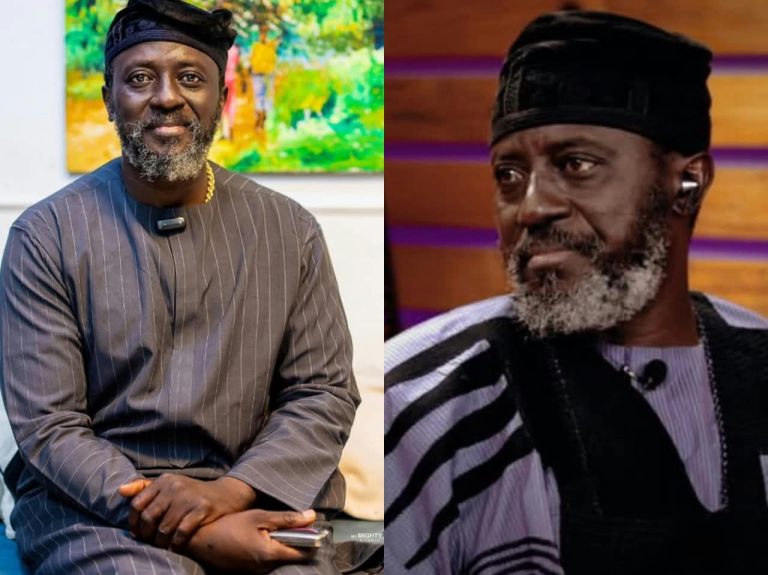
I’m a divorcee and a proud father of three. The children live with me. I love children, and right now we all sleep on the same bed.

0


I believe in love, and I’m open to giving it a second chance with the right person, God willing.

My message to everyone is this: Marry right.
Nobody plans to fail in marriage. But if you marry wrong, it leaves a scar. Life will never look the same again.

• Kunle Omisore

New York City bans students from using AI until high school

0

New York City is moving to restrict students below the high school level from using artificial intelligence tools in public schools, introducing a tougher approach to the technology’s growing role in education.

Under the new policy, students from kindergarten through eighth grade will not be allowed to use AI for school-related purposes. The technology will become available from ninth grade, although its use will be limited to approved educational activities.

The decision follows concerns from teachers and parents about how early exposure to AI could affect children’s ability to think independently, as well as concerns surrounding mental health and the wider consequences of excessive technology use.

The restrictions also cover AI-powered “companion” chatbots designed to provide emotional or psychological support, according to reports on the new rules.

However, the policy does not prohibit educators from using AI. Teachers will still be permitted to use approved AI systems for tasks such as preparing lessons and drafting communications.

New York City’s education authorities are also introducing tighter controls around students’ screen use. Middle school students in grades six through eight are expected to have no more than 45 minutes of screen-based activity during class, while the recommended limit for elementary pupils is 30 minutes.

The latest restrictions represent a significant change from an earlier framework introduced in March, which gave students greater freedom to use AI for research, exploration and creative assignments under teacher supervision.

The earlier approach drew criticism from some parents and educators who believed the rules did not go far enough in protecting younger pupils.

Schools Chancellor Kamar Samuels acknowledged concerns over how the policy had previously been communicated, saying education officials had “missed the mark” and would consider parents’ feedback.

Officials have also been working on a more comprehensive guide to AI use in schools, with input from teachers, elected representatives, education experts and union officials.

The issue has attracted particular attention because New York City operates the largest public-school system in the United States, serving more than 900,000 students.

The authorities now face the challenge of determining how schools can benefit from AI while ensuring that younger pupils continue to develop critical thinking, creativity and other skills without becoming overly dependent on the technology.

New York City bans students from using AI until high school

0


New York City bans students from using AI until high school
New York City is moving to restrict students below the high school level from using artificial intelligence tools in public schools, introducing a tougher approach to the technology’s growing role in education.

Under the new policy, students from kindergarten through eighth grade will not be allowed to use AI for school-related purposes. The technology will become available from ninth grade, although its use will be limited to approved educational activities.

The decision follows concerns from teachers and parents about how early exposure to AI could affect children’s ability to think independently, as well as concerns surrounding mental health and the wider consequences of excessive technology use.


The restrictions also cover AI-powered “companion” chatbots designed to provide emotional or psychological support, according to reports on the new rules.

However, the policy does not prohibit educators from using AI. Teachers will still be permitted to use approved AI systems for tasks such as preparing lessons and drafting communications.

New York City’s education authorities are also introducing tighter controls around students’ screen use. Middle school students in grades six through eight are expected to have no more than 45 minutes of screen-based activity during class, while the recommended limit for elementary pupils is 30 minutes.

The latest restrictions represent a significant change from an earlier framework introduced in March, which gave students greater freedom to use AI for research, exploration and creative assignments under teacher supervision.

The earlier approach drew criticism from some parents and educators who believed the rules did not go far enough in protecting younger pupils.

Schools Chancellor Kamar Samuels acknowledged concerns over how the policy had previously been communicated, saying education officials had “missed the mark” and would consider parents’ feedback.

Officials have also been working on a more comprehensive guide to AI use in schools, with input from teachers, elected representatives, education experts and union officials.

The issue has attracted particular attention because New York City operates the largest public-school system in the United States, serving more than 900,000 students.

The authorities now face the challenge of determining how schools can benefit from AI while ensuring that younger pupils continue to develop critical thinking, creativity and other skills without becoming overly dependent on the technology.

Sun

Senate, NITDA back digital solutions for job creation, business growth

0

The Senate and the National Information Technology Development Agency (NITDA) have backed deployment of digital solutions to strengthen business trust, formalise Nigeria’s informal sector and expand opportunities for job creation for Nigeria’s teeming unemployed youth.

Senate Committee Chairman on Housing and Urban Development, Senator Aminu Waziri Tambuwal, who spoke yesterday in Abuja, at the unveiling of a telecommunications and business identity platform Sky ID, said the National Assembly would continue to support legislation that creates an enabling environment for technology-driven businesses and employment.

Tambuwal stated that lawmakers had a responsibility to make laws that would support initiatives capable of improving businesses and creating opportunities for Nigerians.

He said: “First and foremost, our job is primarily to make laws for the good governance and order of the country.

“We shall continue to make such laws that will enable these types of initiatives and several others that have the capabilities and ability to support Nigerians in their businesses and create jobs for our young people.”

Also speaking, NITDA Assistant Director, Dr Ahmed Yusuf Tambuwal, said digital innovation could play a significant role in transforming Nigeria’s informal sector, where a large proportion of Nigerians operate.

Tambuwal explained that digital tools could help small businesses formalise their operations, manage their businesses more efficiently and expand their customer base, giving them the capacity to pursue larger business opportunities.

He said: “I think this particular initiative is very important for the informal sector. As you are well aware, the informal sector is where the largest population of Nigerians operate.

“With this innovation, a lot of small businesses are going to be formalised. They will be able to manage their businesses better, expand their customer base and, while remaining small businesses, gain the capacity to manage bigger business opportunities.

“This is very good for the informal sector and could contribute significantly to job creation and economic growth.”

He added NITDA was supporting stakeholders in the digital economy through policies, regulations and frameworks designed to simplify participation in the sector by businesses and individuals.

“We have a number of policies and regulations aimed at simplifying how businesses and individuals can participate in the digital economy. Through our policies, regulations and frameworks, we are able to support this type of business. We actively support good initiatives such as this through partnerships, funding and many other methods,” he said.

Earlier, Founder and Chief Executive Officer of IT Sky Solutions, Almustapha Liman, said the idea behind Sky ID was driven by the need to strengthen trust and accountability in business interactions in Nigeria.

Liman said businesses and individuals needed reliable systems through which their identities could be established and verified, particularly as digital communication and transactions increasingly become part of everyday commercial activities.

He argued that the challenge was not necessarily the character of Nigerians but the absence of systems capable of encouraging accountability and discouraging abuse.

“In any society in the world, you will find the good, the bad and the ugly. But if a system is put in place that can check the activities of individuals, it can discourage people from doing what is not right,” he said.

According to Liman, the identity and verification component of the initiative could help build greater confidence among businesses and their customers while also contributing to efforts to address some of the trust and security challenges confronting business interactions.

He said the private sector also had a responsibility to contribute to the development of systems that promote trust, adding that technology should not only facilitate communication but also help strengthen relationships between businesses and their customers.

Liman linked the initiative to employment generation, saying the company had created jobs through its operations and network of channel partners.

He said about 1,000 people had been employed through the company’s operations in India, while its channel-partner network, some of which he said had between 400 and 500 workers, could potentially translate into several thousand additional jobs.

Liman said the company’s longer-term ambition was to extend the trust and verification model beyond Nigeria by developing what he described as a “social trust network across Africa.”

He said such a network could enable Africans and African businesses to communicate and transact with greater confidence across national borders.

“We are building a social trust network across Africa, whereby someone from another nation should be able to communicate or transact with another party anywhere globally,” he said.

Senate, NITDA back digital solutions for job creation, business growth

0


The Senate and the National Information Technology Development Agency (NITDA) have backed deployment of digital solutions to strengthen business trust, formalise Nigeria’s informal sector and expand opportunities for job creation for Nigeria’s teeming unemployed youth.

Senate Committee Chairman on Housing and Urban Development, Senator Aminu Waziri Tambuwal, who spoke yesterday in Abuja, at the unveiling of a telecommunications and business identity platform Sky ID, said the National Assembly would continue to support legislation that creates an enabling environment for technology-driven businesses and employment.

Tambuwal stated that lawmakers had a responsibility to make laws that would support initiatives capable of improving businesses and creating opportunities for Nigerians.

He said: “First and foremost, our job is primarily to make laws for the good governance and order of the country.

“We shall continue to make such laws that will enable these types of initiatives and several others that have the capabilities and ability to support Nigerians in their businesses and create jobs for our young people.”

Also speaking, NITDA Assistant Director, Dr Ahmed Yusuf Tambuwal, said digital innovation could play a significant role in transforming Nigeria’s informal sector, where a large proportion of Nigerians operate.

Tambuwal explained that digital tools could help small businesses formalise their operations, manage their businesses more efficiently and expand their customer base, giving them the capacity to pursue larger business opportunities.

He said: “I think this particular initiative is very important for the informal sector. As you are well aware, the informal sector is where the largest population of Nigerians operate.

“With this innovation, a lot of small businesses are going to be formalised. They will be able to manage their businesses better, expand their customer base and, while remaining small businesses, gain the capacity to manage bigger business opportunities.

“This is very good for the informal sector and could contribute significantly to job creation and economic growth.”

He added NITDA was supporting stakeholders in the digital economy through policies, regulations and frameworks designed to simplify participation in the sector by businesses and individuals.

“We have a number of policies and regulations aimed at simplifying how businesses and individuals can participate in the digital economy. Through our policies, regulations and frameworks, we are able to support this type of business. We actively support good initiatives such as this through partnerships, funding and many other methods,” he said.

Earlier, Founder and Chief Executive Officer of IT Sky Solutions, Almustapha Liman, said the idea behind Sky ID was driven by the need to strengthen trust and accountability in business interactions in Nigeria.

Liman said businesses and individuals needed reliable systems through which their identities could be established and verified, particularly as digital communication and transactions increasingly become part of everyday commercial activities.

He argued that the challenge was not necessarily the character of Nigerians but the absence of systems capable of encouraging accountability and discouraging abuse.

“In any society in the world, you will find the good, the bad and the ugly. But if a system is put in place that can check the activities of individuals, it can discourage people from doing what is not right,” he said.

According to Liman, the identity and verification component of the initiative could help build greater confidence among businesses and their customers while also contributing to efforts to address some of the trust and security challenges confronting business interactions.

He said the private sector also had a responsibility to contribute to the development of systems that promote trust, adding that technology should not only facilitate communication but also help strengthen relationships between businesses and their customers.

Liman linked the initiative to employment generation, saying the company had created jobs through its operations and network of channel partners.

He said about 1,000 people had been employed through the company’s operations in India, while its channel-partner network, some of which he said had between 400 and 500 workers, could potentially translate into several thousand additional jobs.

Liman said the company’s longer-term ambition was to extend the trust and verification model beyond Nigeria by developing what he described as a “social trust network across Africa.”

He said such a network could enable Africans and African businesses to communicate and transact with greater confidence across national borders.

“We are building a social trust network across Africa, whereby someone from another nation should be able to communicate or transact with another party anywhere globally,” he said.

Sun

Why being mysterious is no longer relevant in entertainment – Kcee

0

Music star Kingsley Okonkwo, popularly known as Kcee, has said maintaining a mysterious image no longer has the same impact it once did in the entertainment industry.

Kcee said the trend could completely lose its relevance within the next five years, stressing that artists need to remain visible and consistently engage with the public to stay relevant.

Speaking in an interview with Selah Meditate, the singer said entertainers can no longer afford to remain distant from their audience.

He also claimed that discussions with some American professors reinforced his view that the era of mystery in entertainment would soon become outdated.

He explained that absence used to create value but things have changed. He emphasised that artists need to be extroverted now.

“The mysterious factor won’t be relevant in five years. I spoke with some professors in America, and they confirmed it. AI can now do what we are doing.

“Absence used to create value in 2021–2022, but things have changed. Artists need to be in people’s faces,” Kcee stated.

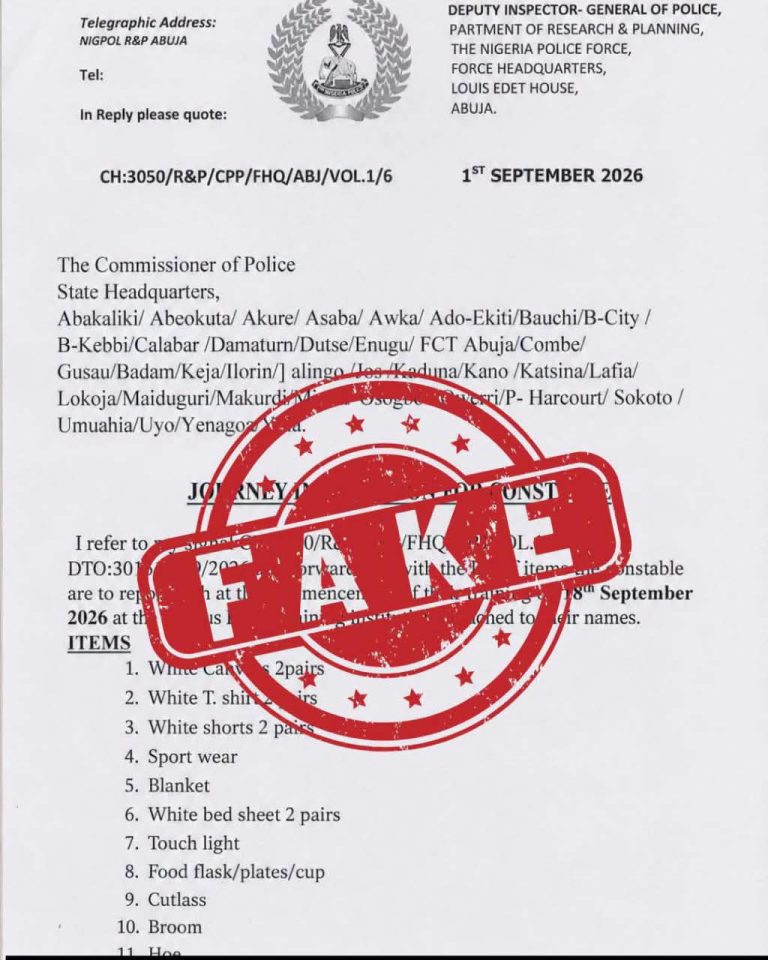
Police Disowns Fake Notice Directing Constable Recruits to Report for Training Sept. 18

0

The Nigeria Police Force has disowned a publication circulating on social media directing prospective Police Constable recruits to report for training on September 18, 2026.

The Force, in a disclaimer, said the publication did not emanate from the Nigeria Police Force and should be disregarded.

It advised all prospective trainees to rely solely on information communicated through their respective recruitment portals and the official communication channels of the Nigeria Police Force for verified updates on the recruitment and training exercise.

The Force also urged members of the public to refrain from circulating unverified information capable of causing confusion or misleading prospective recruits.

A/ Ibom: Eno, Akpabio receive new aircraft for Ibom Air to mark 39th anniversary

0

Akwa Ibom state governor pastor and the Senate President Godswill Akpabio jointly received the fifth brand new Airbus A220-300 at Victor Attah International Airport as part of activities to mark the 39th anniversary of the state creation .

Speaking at Victor Attah International Airport Uyo during official reception and water-cannon ceremony for the newly acquired Airbus , Eno the additional aircraft would strengthen the Airline operations and position aviation industry in the state .

He expressed hope that the expansion of Ibom Air’s fleet would create greater opportunities for the state in the aviation industry adding that September is the month of showing gratitude to God by the people.

“This is a month of gratitude. Today, we are here to welcome the Airbus. We are expecting growth in the aviation sector

“Our investment in Ibom Air was also aimed at developing indigenous manpower and creating opportunities for Akwa Ibom people in the aviation industry”

According to him, out of 30 pilots 14 of Ibom Air’s pilots are indigene of Akwa Ibom, while 10 others are indigene undergoing cadet pilot training at Addis Ababa, Ethiopia, with another 10 receiving training at an aviation school in Zaria.

Eno disclosed that the figures demonstrated the state’s increasing participation in the aviation business as his administration would continue to support initiatives capable of equipping young people with skills and opening up opportunities for them.

“The development was part of a broader effort to ensure that investment in the airline translated into both improved air transport services and human-capital development within the state”

Eno paid glowing tributes to previous Governors of the State for their vision and contributions in the development of the State’s aviation industry and promised to continue to invest in its growth and expansion.

He particularly thanked President Bola Tinubu for his support to Akwa Ibom and specially applauded him for approval of an international status for the airport which enhanced direct flight to the airport by other airlines outside the country.

On his part, the Senate President, Godswill Akpabio congratulate Eno for acquiring a new Airbus for Ibom Air and pledged his support for initiatives aimed at advancing the development of the state

The Senate President who was accompanied by colleagues in the National Assembly commended Eno for his investment in Ibom Air and other development initiatives across the state expressed support for the ARISE development agenda.

He commended Eno for completing projects initiated by previous administrations adding that governance is a continuity.

“I’m very excited to be here today to receive the new Airbus A220-300 series in Akwa Ibom State. This shows the height of progress under the administration of Gov. Umo Eno”

2027: Peter Obi seeks service, Tinubu, Atiku seek power – NDC chieftain

0

A chieftain of the Nigeria Democratic Congress (NDC), Ibrahim Abdulkarim, has drawn a sharp distinction between Peter Obi and his major opponents ahead of the 2027 presidential election, describing the former Anambra State governor as a candidate driven by service rather than the pursuit of power.

Abdulkarim, who spoke on Channels Television’s Politics Today on Tuesday, said Obi was offering himself to Nigerians to deliver the changes many young people believe they cannot achieve on their own.

“You look at these three candidates. What is different between the three of them? Bola Ahmed Tinubu, Atiku Abubakar, they are looking for power. Mr. Peter Obi is looking for service.

“He wants to come and offer himself to change what we feel the young people, we cannot do for ourselves. That’s the bottom line. That’s what change is.

“And also what we are trying to tell people exactly to key into is that this Nigeria, this seat that I’m sitting down here and showing you here, a lot of politicians sat at this table. A lot of analysts sat at this table. A lot of people tell you, I’m sure what you are hearing on this chair is different from your conversation with them privately.

“Most of the big men in this country know the problem, know what is wrong with us. They have the solutions. Some will tell you, sure, I can’t say it.

“Some say, I can’t; we can’t do it. But what we are trying to do is that we have seen somebody who has the courage and he wants to do it. And we, the young Nigerians, we said we have to cut ourselves and get a Nigeria that we want through this man.

“Because if we support him, he’s not, we are not supporting him; we are supporting ourselves. And we are seeing that.”

Abdulkarim also spoke about what he described as social and economic divisions in northern Nigeria, arguing that entrenched inequality had contributed to a sense of exclusion among ordinary citizens.
“Let me tell you where this is coming from: the North. In the North, there is an unofficial caste system just like India. The elite and the have-nots are there, those that are struggling are there, and then some even feel so entitled that Nigeria just belongs to them. You understand?

“So what we are jumping at and what we really want to do is to liberate our people, liberate the young people, and make Nigeria to be one.”

The NDC chieftain further said he wanted a president who would be transparent, accessible and willing to regularly communicate government policies and reforms to Nigerians.

“Let me tell you, if we have a president that is going to be fair to everybody, tell us the truth, and also at least appear on your channel like this one, no matter, irrespective of who he is as a president, to come in a studio like this, or you have media people to follow him, that he can update them every day on every reform that he is taking.”

When asked whether he considered Obi better than the other presidential contenders, Abdulkarim gave an emphatic response.

“By far!”

He also suggested that the experience of the 2023 election had changed the outlook of Obi’s supporters, saying they were now more alert to the challenges involved in securing electoral victory.

“So now, you agree, you made an inference that the obedience and Peter Obi supporters, all your structure, were naive, because you never thought that you were going to be rigged. But this time around, your eyes are open.”